

Unlocking Automotive Excellence in 3D: A Deep Dive into the BMW 3 Series E36 Cabrio 325i Model
The allure of classic automobiles transcends generations, captivating enthusiasts with their distinctive designs, engineering prowess, and the stories they tell. For 3D artists, game developers, architects, and visualization specialists, bringing these iconic machines into the digital realm presents both a challenge and an immense opportunity. It demands not just technical skill but also a keen eye for historical accuracy and an understanding of how to optimize assets for diverse platforms.
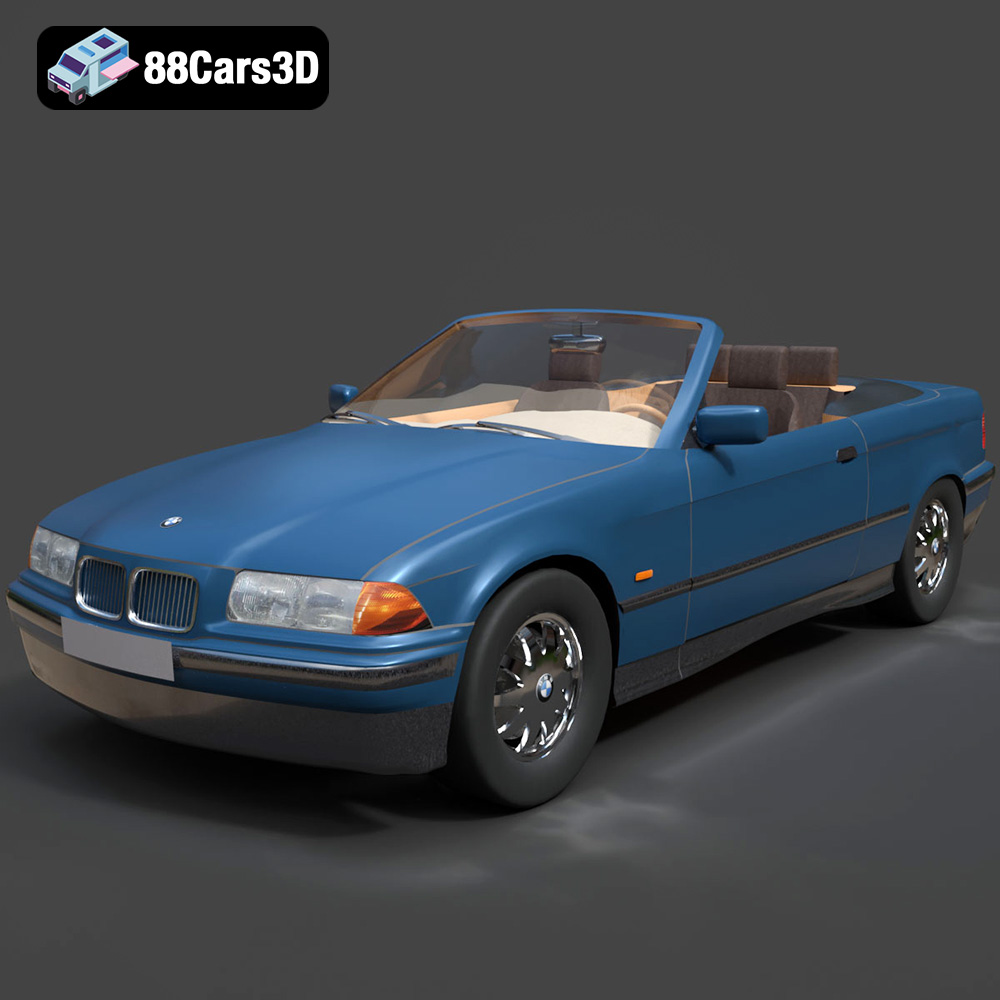
Today, we’re taking a closer look at a prime example of digital automotive mastery: the BMW 3 Series E36 Cabrio 325i 1998 3D Model. This meticulously crafted asset from 88cars3d.com offers a gateway to experiencing the timeless appeal of a quintessential German convertible from the late 90s. More than just a static object, this model is engineered for versatility, offering clean geometry, balanced detailing, and robust compatibility, making it perfect for high-quality rendering, immersive animation sequences, realistic simulations, and seamless integration into game development projects. Whether you’re aiming for a photorealistic studio render or a performant asset for a real-time environment, understanding the underlying technicalities and the vast potential of such a model is crucial.
Understanding 3D Model File Formats
When working with 3D models, especially complex automotive assets like the BMW 3 Series E36 Cabrio 325i 1998 3D Model, understanding the various file formats is paramount. Each format serves a specific purpose, offering different levels of compatibility, data retention, and optimization for particular workflows. Choosing the right format ensures smooth integration, preserves critical model data, and maximizes efficiency in your project pipeline.
.blend – The Blender Powerhouse
The .blend file format is native to Blender, the popular open-source 3D creation suite. When you acquire a .blend file, you’re getting a fully editable Blender scene. This means it contains not just the mesh data (geometry, UVs, normals) but also materials (including advanced PBR setups), textures, lighting, cameras, animation data, modifiers, and even custom scripts. For artists primarily working in Blender, this format offers the most flexibility. You can easily modify the topology, adjust materials, re-rig, or re-animate the BMW E36 to suit highly specific requirements without losing any scene-specific information.
.fbx – The Industry Standard for Interchange
FBX (Filmbox) is a proprietary file format owned by Autodesk and is widely considered the industry standard for interoperability between different 3D software applications and game engines. It excels at transferring 3D models with animations, skeletal data, skinning, blend shapes, lights, and cameras. For assets like the E36, .fbx is ideal for exporting to game engines like Unreal Engine and Unity, or for transferring between DCC (Digital Content Creation) tools like 3ds Max, Maya, and Blender. While it supports materials, the complexity of materials might be simplified during export/import, often requiring re-setup in the target application, though PBR texture maps (albedo, normal, roughness, metallic) transfer well.
.obj – The Universal Mesh Format
The Wavefront .obj (Object) format is one of the oldest and most widely supported 3D file formats. It’s a universal format known for its simplicity and cross-software compatibility. An .obj file primarily stores geometric data: vertices, UV coordinates, vertex normals, and faces. It also references external .mtl (Material Template Library) files for basic material properties like diffuse color, specular color, and texture maps. While it doesn’t store advanced PBR materials, animation, or scene hierarchy, its robust support across virtually all 3D software makes it an excellent choice for straightforward mesh transfer. When fidelity of geometry is key and you plan to rebuild materials in your target application, .obj for the BMW E36 is a reliable option.
.glb – Optimized for AR, VR, and Web
GLB (GL Transmission Format Binary) is the binary version of glTF, a royalty-free specification for the efficient transmission and loading of 3D scenes and models by applications. GLB packs all necessary assets (geometry, materials, textures, animations) into a single file, making it incredibly convenient for web-based 3D viewers, augmented reality (AR), and virtual reality (VR) applications. Its optimization for real-time rendering and small file size makes it perfect for displaying the BMW E36 Cabrio in interactive web experiences or mobile AR apps where quick loading and smooth performance are essential.
.stl – The 3D Printing Workhorse
STL (Stereolithography) is the de facto standard file format for 3D printing. It represents a 3D model as a series of connected triangles, describing only the surface geometry of an object without color, texture, or other model attributes. If your goal is to create a physical replica of the BMW E36 Cabrio 3D model, converting it to .stl is the necessary step. It’s important to ensure the mesh is watertight (no holes) and that the polygon count is sufficient for the desired print resolution, which is usually handled through conversion tools and mesh cleanup.
.ply – Precision Mesh for CAD and Analysis
PLY (Polygon File Format or Stanford Triangle Format) is another format for storing 3D data, particularly known for its ability to store properties beyond just geometry, such as color, transparency, normals, texture coordinates, and even reliability information. It can be ASCII or binary. PLY is often used in scientific applications, 3D scanning, CAD (Computer-Aided Design), and reverse engineering, where precise mesh data and additional per-vertex or per-face attributes are important for analysis or complex manufacturing processes. For specialized engineering visualizations involving the BMW E36, .ply offers a robust data foundation.
.unreal – Engine-Ready Asset for Real-Time
The .unreal format, or more accurately, the structure associated with an Unreal Engine project, signifies an asset that has been specifically prepared and integrated into Unreal Engine. This isn’t a single file format like .fbx, but rather a collection of assets (static meshes, materials, textures, blueprints, and potentially level data) organized within an Unreal project structure. Receiving a model in this “engine-ready” state means it has likely undergone optimization, proper material setup using Unreal’s physically based rendering (PBR) system, collision mesh generation, and potentially LOD (Level of Detail) implementation. For game developers or anyone working within the Unreal ecosystem, this provides a massive head start, allowing immediate deployment of the BMW E36 into real-time environments.
.max – The 3ds Max Project
Similar to .blend for Blender, the .max file is the native project file format for Autodesk 3ds Max, a powerful 3D modeling, animation, and rendering software. A .max file contains the complete scene data, including geometry, modifiers, materials (V-Ray, Corona, Standard, etc.), lights, cameras, animation keyframes, and scene hierarchy. For professionals utilizing 3ds Max for high-end automotive rendering or complex animation sequences, having the BMW E36 Cabrio 325i model in its native .max format ensures full editability and access to all scene components as originally designed, making advanced customization and integration seamless.
The availability of the BMW 3 Series E36 Cabrio 325i 1998 3D Model in such a comprehensive range of formats underscores its versatility and value for professionals across various disciplines. Whether you’re a Blender enthusiast, an Unreal developer, or a 3ds Max power user, 88cars3d.com ensures you have the right starting point.
Crafting Digital Realism: The E36 Cabrio 3D Model’s Foundation
Achieving photorealistic quality and optimal performance in 3D projects starts with the foundation of the model itself. The BMW 3 Series E36 Cabrio 325i 1998 3D Model exemplifies best practices in its construction, ensuring it meets the rigorous demands of professional workflows across rendering, animation, and real-time applications.
Exterior Fidelity: Capturing the E36’s Soul
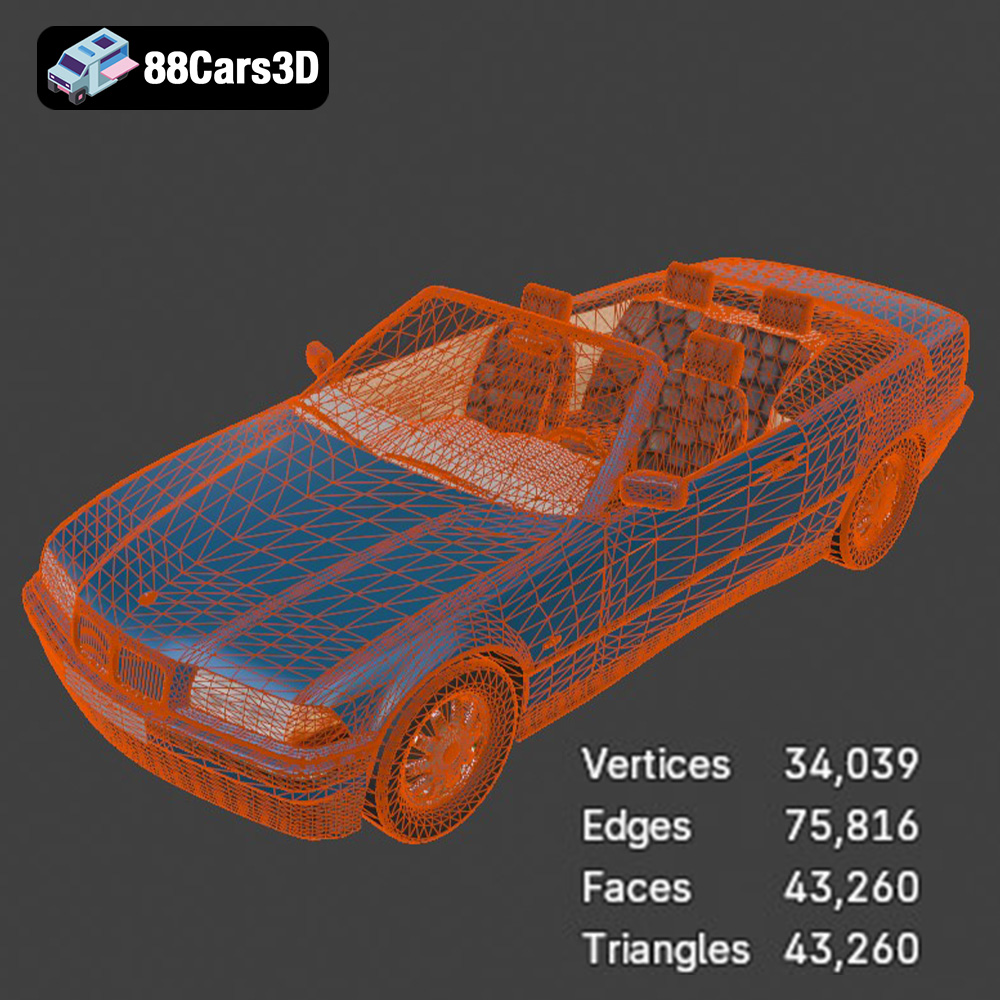
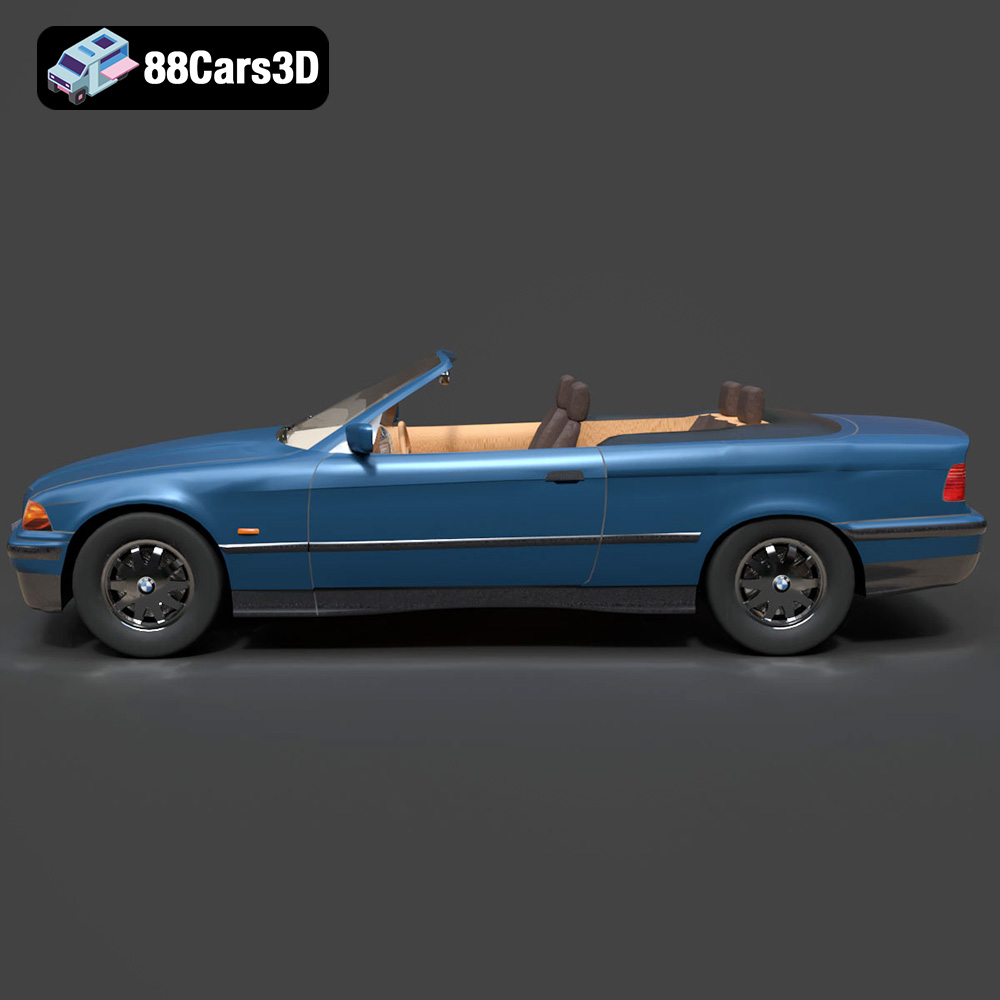
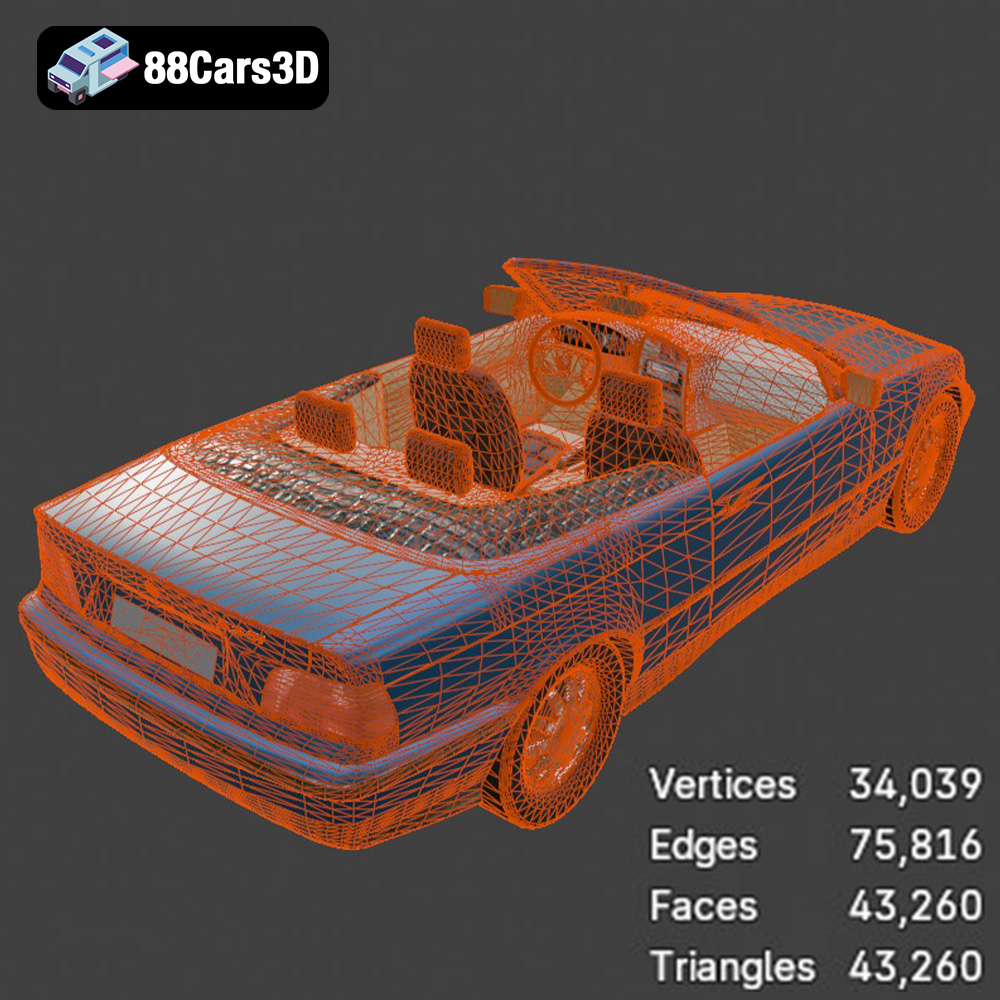
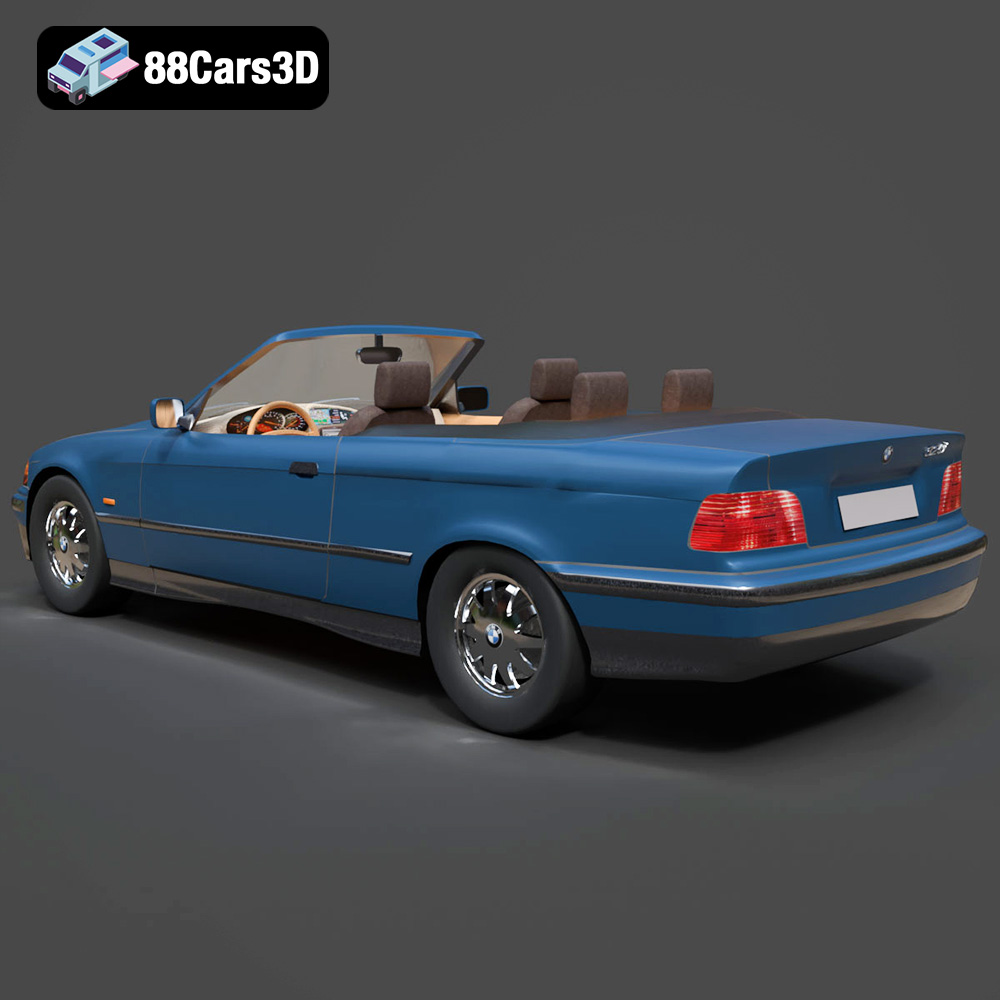
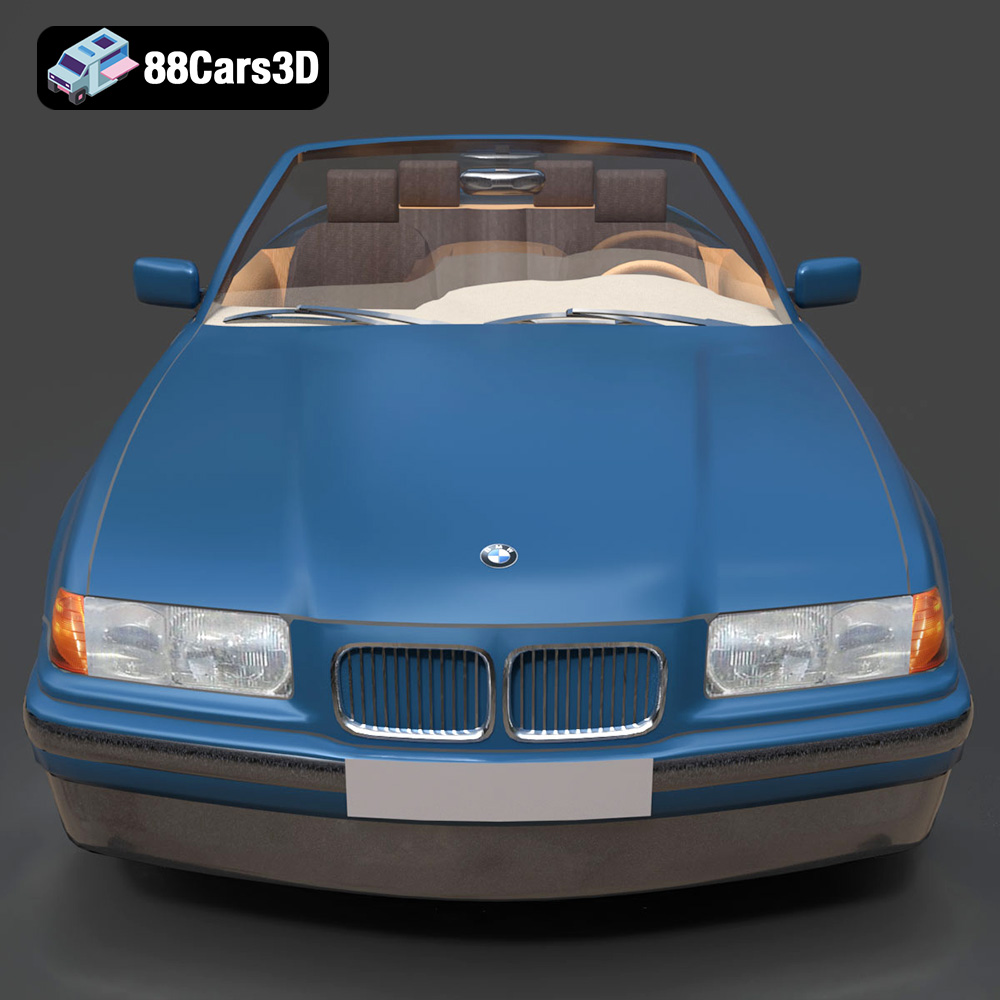
The product description highlights “authentic body panels reflecting the E36’s classic lines” and “detailed headlights and taillights with realistic material definitions.” This isn’t just aesthetic appeal; it speaks to precise modeling techniques. The model utilizes clean, quad-dominant topology, which is critical for smooth subdivision surfaces and distortion-free deformation during animation. Quad-based meshes are easier to edit and texture, preventing unsightly pinches or artifacts that often plague triangulated or messy geometry. The “accurate real-world scale” is another technical advantage, guaranteeing seamless integration into existing scenes or CAD environments without scaling issues, which is crucial for architectural visualization or engineering simulations. Furthermore, separated components for doors, wheels, and suspension with “proper pivot points” are essential for rigging and animation, allowing for realistic opening and closing actions or dynamic vehicle movements without complex manual adjustments.
Interior & Mechanical Precision: Beyond the Surface
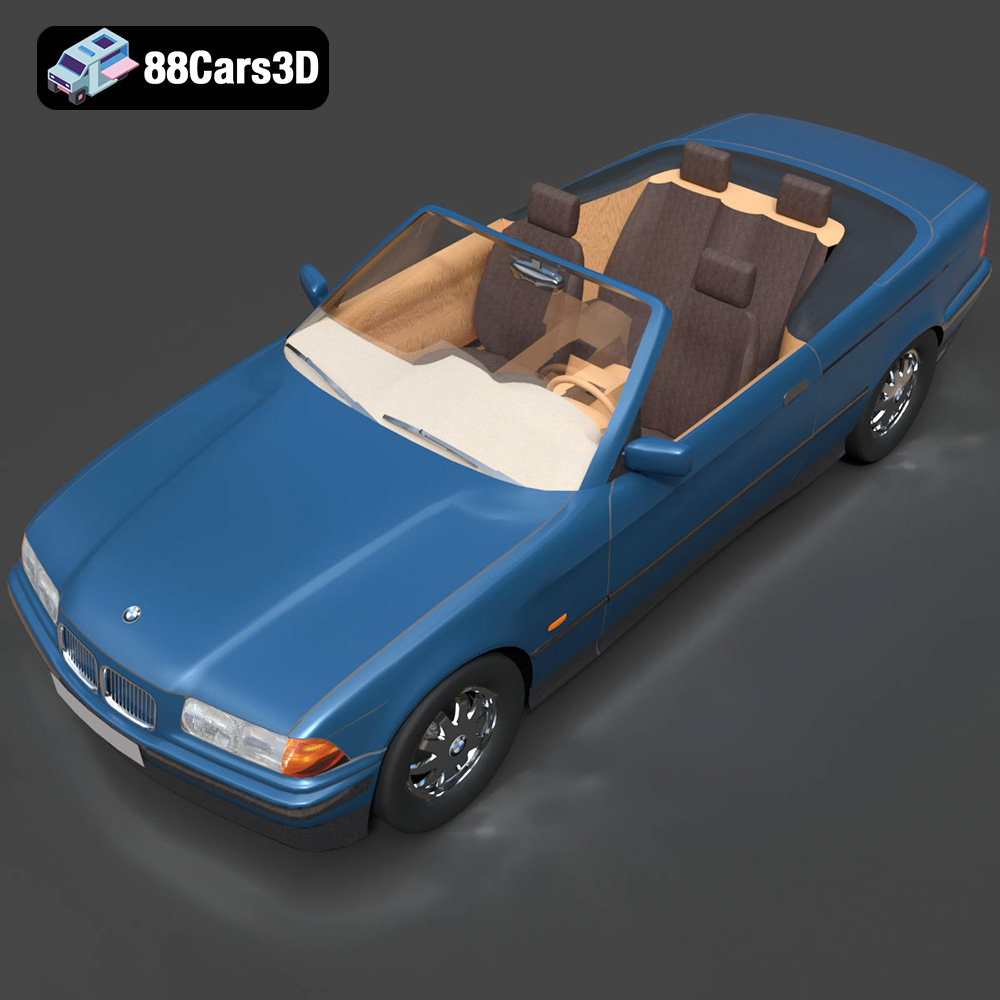
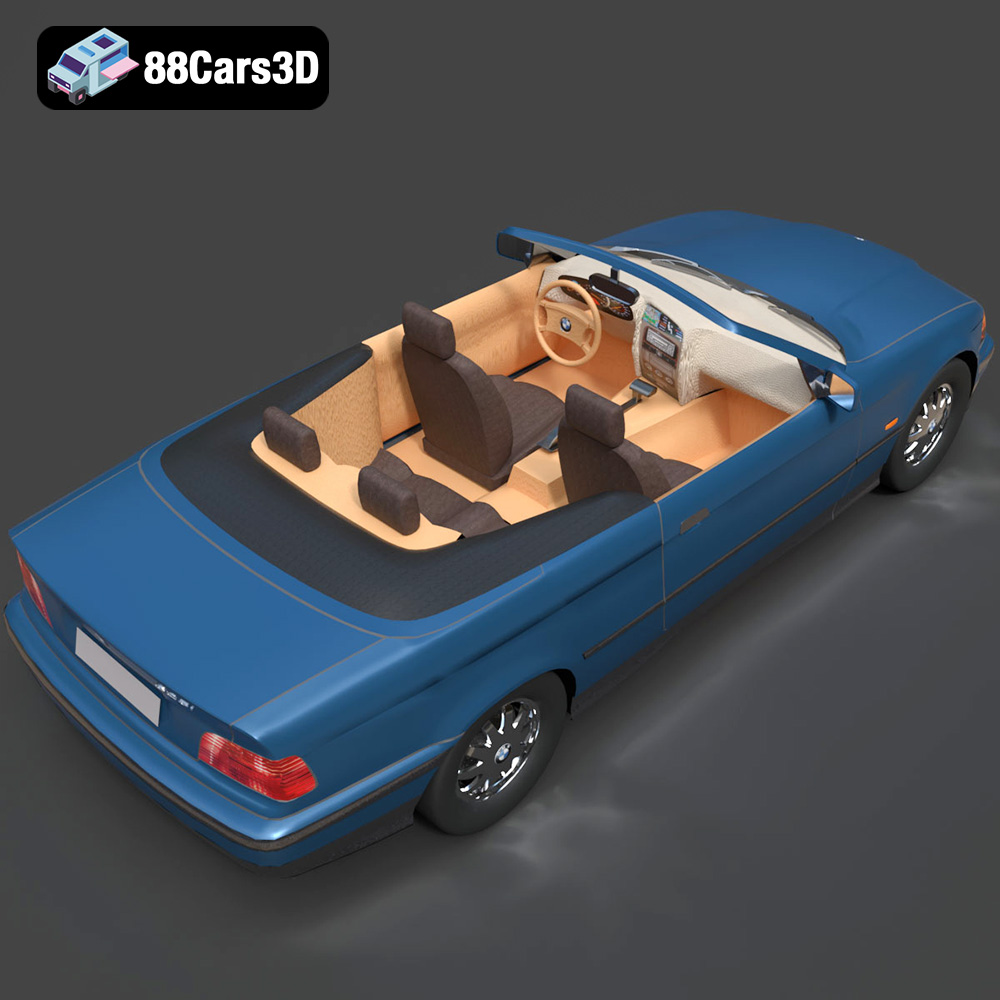
The attention to detail extends beyond the exterior. Features like a “detailed dashboard with instruments and controls,” “comfortable seating upholstery,” and a “steering wheel and gear shifter replicated with precision” are vital for close-up renders and immersive experiences. This level of interior fidelity is particularly important for virtual tours, AR/VR applications, or cinematic shots where the camera might linger inside the cabin. The “optimized mesh quality suitable for close-up renders” indicates a careful balance between polygon count and visual accuracy. While performance-heavy in a game engine, such detail allows artists to achieve stunning realism in high-resolution renders. The underlying “organized hierarchy” makes navigating and manipulating these complex interior elements straightforward for any experienced 3D artist.
Professional Workflows: Integrating the E36 into Your Pipeline
The true value of a high-quality 3D car model lies in its versatility and ease of integration into various professional pipelines. The BMW 3 Series E36 Cabrio 325i 1998 3D Model is engineered precisely for this, supporting a wide array of applications from cinematic rendering to interactive game environments.
Automotive Rendering & Visualization in 3ds Max/Blender
For artists focused on photorealistic automotive rendering, the model’s clean topology and accurate detailing are invaluable. In software like 3ds Max or Blender, professionals can leverage powerful render engines such as V-Ray, Corona Renderer, Cycles, or Eevee to achieve stunning visuals. The .max and .blend formats provide the native scene files, allowing full access to the model’s hierarchy, materials, and potential lighting setups. Artists can easily adjust PBR (Physically Based Rendering) material properties—like roughness, metallic, and normal maps—to simulate realistic paint finishes, chrome reflections, or tire textures. Combined with studio-quality lighting, HDRIs (High Dynamic Range Images) for environmental reflections, and advanced camera effects, this model can be transformed into breathtaking marketing visuals for automotive showcases or cinematic sequences. Its real-world scale ensures accurate physical light interactions and shadows.
Game Development with Unreal Engine/Unity
The “optimized as a game asset” claim is critical for game developers. The .fbx and .unreal formats are specifically tailored for integration into real-time engines like Unreal Engine and Unity. For a model to perform well in a game, it needs efficient geometry, proper UV mapping for texture atlases, and often multiple Levels of Detail (LODs) to scale visual complexity based on distance. While explicit poly count numbers are not provided, “optimized mesh quality” and “clean geometry” imply a structure that is ready for further optimization or already balanced. Developers can easily set up physics assets, collision meshes, and attach components for interactive elements like operable doors or working headlights. The organized hierarchy simplifies the rigging process for vehicle physics and animation blueprints, making the BMW E36 Cabrio an ideal base for racing simulations, open-world environments, or interactive car configurators.
AR/VR and Simulation: Immersive Experiences
The advent of Augmented Reality (AR) and Virtual Reality (VR) demands highly optimized 3D assets that can be rendered smoothly in real-time on various devices. The .glb format is specifically optimized for this, providing a lightweight, self-contained model perfect for WebGL-based experiences, mobile AR apps, or VR training simulators. For simulation and training, the model’s accurate scale and detailed components (interior, suspension) make it suitable for driving simulators, engineering visualizations, or educational content. The ability to visualize the mechanics or interact with the interior in a simulated environment offers significant benefits for design review, training modules, or even virtual showrooms.
The Art of Customization: Elevating Your Vision
While the BMW 3 Series E36 Cabrio 325i 1998 3D Model arrives ready for use, its true power lies in the extensive customization options it offers. A professional 3D artist rarely uses an asset straight out of the box; adaptation is key to making it unique and fitting specific project requirements.
Material Adaptation and Texturing
The ability to “easily adjust paint finishes, reflections, and decals to match specific liveries or design preferences” is a testament to the model’s well-organized material setup and clean UV mapping. Artists can quickly swap out texture maps for the body paint, apply custom PBR materials for unique metallic or matte effects, or even create intricate livery designs. This extends to modifying “material properties for metal, chrome, plastic, and rubber components.” For instance, the chrome trim can be adjusted for a more brushed look, rubber can be made shinier or duller, and plastic components can reflect light differently based on wear or type. This granular control allows for endless variations, from a pristine showroom model to a weathered classic, or even a highly stylized concept.
Lighting and Environment Setups
Lighting is arguably the most critical element in conveying mood and realism in 3D rendering. The BMW E36 model can be transformed dramatically by simply “adapt[ing] lighting setups to achieve various moods and environments, from daylight to night scenes.” In a studio environment, softbox lighting can highlight the car’s curves, while a harsh, direct sun with strong shadows evokes a different feel. For game development, integrating the car into an existing environment’s lighting system is seamless, ensuring it looks natural within the game world. Cinematic renders can use complex three-point lighting or global illumination setups to achieve a high degree of photorealism, demonstrating the car in various scenarios, from a bustling city street at dusk to a serene coastal drive at dawn.
Case Studies & Practical Applications
To truly appreciate the utility of a professional 3D model like the BMW 3 Series E36 Cabrio 325i 1998 3D Model, it helps to consider its real-world applications across various industries. Such assets are fundamental tools in modern digital content creation.
Studio Showcase: A Marketing Campaign Example
Imagine a marketing agency tasked with revitalizing a classic car brand’s image or creating nostalgic content for a luxury car magazine. Instead of expensive physical photoshoots, they could acquire the BMW E36 Cabrio 3D model from 88cars3d.com. Using 3ds Max or Blender, a skilled visualization artist could place the model in various photorealistic studio environments, complete with custom lighting rigs and reflective floor surfaces. They could generate a series of high-resolution images showcasing the car’s authentic lines, detailed interior, and convertible soft top. Furthermore, an animation specialist could create a compelling fly-around video, demonstrating the doors opening, wheels turning, and the soft top retracting—all animated with precision thanks to the model’s organized hierarchy and pivot points. This approach offers unparalleled flexibility for shot composition, material adjustments, and even last-minute design tweaks, far surpassing the limitations of physical photography.
Game World Integration: An Open-World Racing Title
Consider a game development studio building an open-world racing simulator set in the late 90s or early 2000s. The BMW E36 Cabrio 325i is a perfect candidate for player vehicles or AI traffic. By importing the .fbx or .unreal version of the model into Unreal Engine, developers can immediately start integrating it into their game. They would apply the necessary game-specific materials, set up collision meshes for realistic crashes, and create LODs to ensure performance across different hardware configurations. The separated components (doors, hood, trunk, wheels) could be rigged for damage models, allowing players to experience visual degradation during races. Furthermore, the detailed interior would be crucial for a first-person cockpit view, providing an immersive driving experience that leverages the model’s “optimized mesh quality suitable for close-up renders.”
Architectural Visualization and Automotive Integration
Architectural visualization (arch-viz) firms often need high-quality automotive assets to populate their rendered scenes. A modern apartment complex might benefit from the timeless elegance of the E36 Cabrio parked in its driveway. Using the .max or .blend file, an arch-viz artist could easily place the BMW 3 Series into their exterior renders. They could adjust the paint color to match a specific aesthetic, and the realistic material definitions would ensure it reflects the surrounding environment authentically, making the scene feel lived-in and dynamic. Beyond aesthetics, urban planning simulations could use such a model to assess traffic flow or visual impact, where accurate real-world scale and detailed geometry are paramount for credible results.
Conclusion
The digital landscape for 3D content is constantly evolving, demanding models that are not only visually stunning but also technically robust and versatile. The BMW 3 Series E36 Cabrio 325i 1998 3D Model stands out as a prime example of a meticulously crafted asset that meets these professional demands. Its clean, quad-dominant topology, accurate real-world scale, detailed exterior and interior features, and organized hierarchy ensure optimal performance across a multitude of applications.
From high-end automotive rendering in 3ds Max and Blender to seamless integration into game development pipelines with Unreal Engine, and even efficient deployment in AR/VR and simulation environments, this model offers a solid foundation. Its comprehensive file format support—including .blend, .fbx, .obj, .glb, .stl, .ply, .unreal, and .max—guarantees compatibility and flexibility for artists and developers regardless of their preferred software. The inherent customization options, from material adaptation to lighting setups, empower creators to truly make the model their own, fitting it perfectly into any project vision.
For professionals seeking to elevate their projects with a touch of classic automotive excellence and unparalleled digital quality, this BMW E36 Cabrio 325i 3D model is an invaluable asset. Explore its full potential and discover a world of creative possibilities at 88cars3d.com, where quality and versatility drive innovation.
Featured 3D Model
BMW 3 Series E36 Cabrio 325i 1998 3D Model
Experience the timeless appeal of the iconic BMW 3 Series E36 Cabrio 325i with this meticulously crafted 3D model. Representing a quintessential German convertible from the late 90s, this model captures the distinctive styling and sporty elegance that defined a generation. Built with clean geometry and balanced detailing, it ensures optimal performance for various applications. Ideal for high-quality rendering, immersive animation sequences, realistic simulations, and integration into game development projects.
$10.79
Product Image Gallery
Related Tags
.1998
.325i
.3series
.arvr
.blend
.bmw
.cabrio
.car
.classiccar
.convertible
.e36
.fbx
.gameasset
.glb
.max
.obj
.ply
.rendering
.simulation
.sportsCar
.stl
.unreal
