

Elevating Digital Automotive Design: A Deep Dive into High-Quality 3D Car Models
In the dynamic world of digital content creation, the demand for exceptionally crafted 3D models continues to grow. From blockbuster game titles and cinematic advertisements to immersive AR/VR experiences and detailed engineering simulations, the backbone of compelling visual narratives often lies in the quality of its assets. Among these, 3D car models hold a particularly prominent position, serving as critical components for a myriad of industries. They are more than just virtual objects; they are complex digital sculptures that embody design, engineering, and performance.
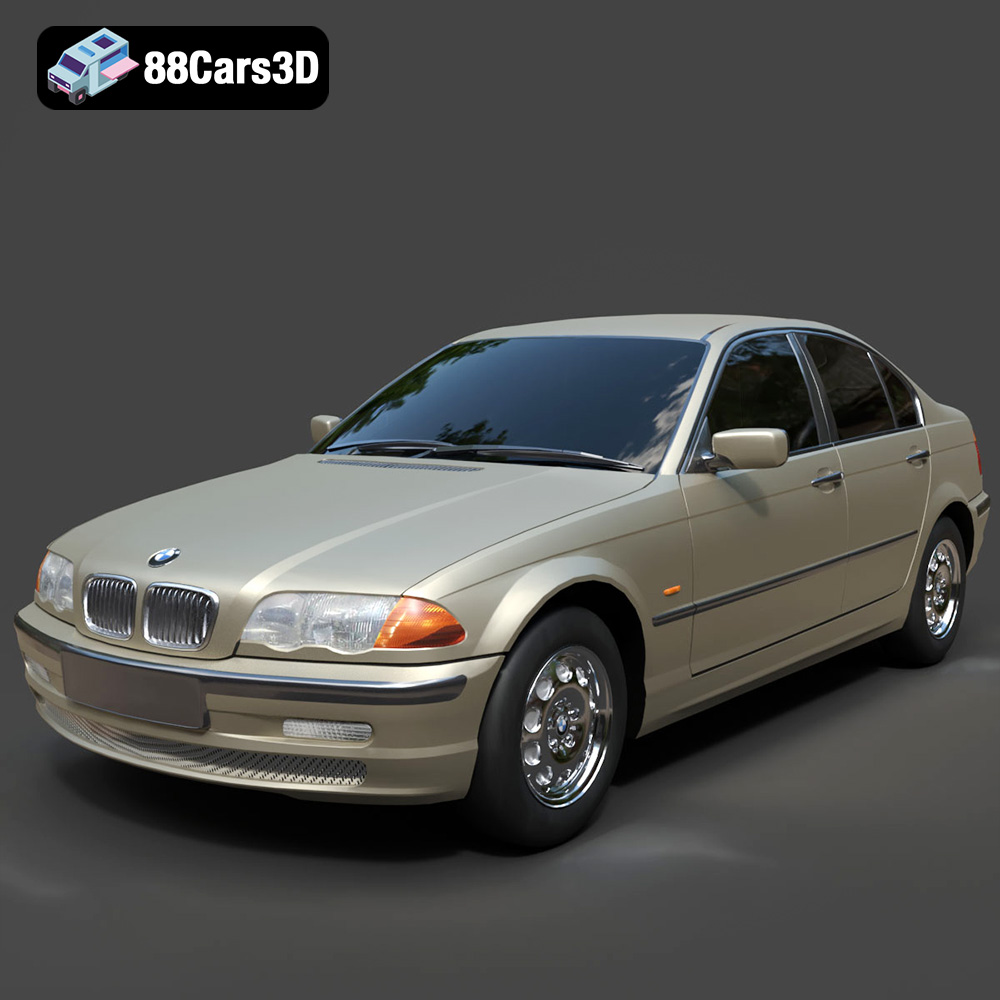
Today, we’re taking a closer look at what makes a truly professional 3D car model invaluable, using the meticulously crafted BMW 3 Series E46 3D Model as our prime example. This iconic vehicle, celebrated for its balanced performance and timeless design, translates into a versatile digital asset that exemplifies the high standards expected in contemporary 3D production. Whether you’re a seasoned automotive renderer, a game developer seeking realistic vehicles, or an architect integrating contextual street scenes, understanding the technical nuances and application possibilities of such models is paramount. Let’s embark on a journey through the intricate world of high-fidelity 3D car models and explore how assets like the BMW 3 Series E46 3D Model can transform your projects.
Understanding 3D Model File Formats: Choosing the Right Tool for the Job
The journey of a 3D model, from creation to deployment, often involves navigating a landscape of diverse file formats. Each format is designed with specific use cases, software compatibility, and technical characteristics in mind. Understanding these distinctions is crucial for seamless workflow integration and optimizing your assets for their intended purpose. When you acquire a high-quality asset, such as the BMW 3 Series E46 3D Model available at 88cars3d.com, it typically comes bundled with several formats, ensuring maximum flexibility.
.blend – The Blender Powerhouse
The .blend format is native to Blender, the popular open-source 3D creation suite. When a model is provided in .blend, it signifies a fully editable Blender scene, complete with materials, textures, lighting, and often, an organized scene hierarchy. This format is ideal for artists who primarily use Blender and require the flexibility to modify the model extensively, from adjusting topology and materials to setting up custom animations or integrating it into a larger Blender project. It preserves all native Blender data, making it a robust choice for ongoing development within that ecosystem.
.fbx – The Industry Standard for Interoperability
.fbx (Filmbox) is arguably the most widely used proprietary 3D file format for exchanging 3D data between different software applications. Developed by Autodesk, it excels at storing not just mesh data, but also complex animation, rigging, skinning, camera, and lighting information. This makes it the go-to format for game engines like Unreal Engine and Unity, as well as for transferring models between DCC (Digital Content Creation) software like 3ds Max, Maya, and Cinema 4D. Its robustness and widespread support ensure that the BMW E46, when exported as .fbx, will maintain its material assignments, UV mapping, and hierarchical structure across various professional pipelines.
.obj – The Universal Exchange Format
The .obj (Wavefront Object) format is a simpler, more universal ASCII-based or binary format. It’s renowned for its excellent cross-software compatibility, making it readable by virtually any 3D software. While it handles mesh data (vertices, normals, UVs, faces) and can reference material libraries (.mtl files), it does not typically store animation, rigging, or scene hierarchy in the same comprehensive way as .fbx. For models like the BMW 3 Series E46 where the primary need is robust mesh transfer without complex animation data, .obj serves as a highly reliable and universally accessible option.
.glb – Optimized for Web and AR/VR
.glb (GLB Binary) is the binary equivalent of the GL Transmission Format (.gltf), an open standard for 3D scenes and models. Designed for efficient transmission and loading of 3D assets, .glb packages all necessary data (geometry, materials, textures, animations) into a single file. This optimization makes it perfect for AR (Augmented Reality), VR (Virtual Reality), and browser-based applications where file size and load times are critical. Deploying the E46 as a .glb allows for quick, high-quality display in web viewers or AR apps without complex setup.
.stl – The Heart of 3D Printing
.stl (Stereolithography) is the de facto standard for 3D printing. It represents a 3D model as a collection of triangular facets, defining only the surface geometry without color, texture, or other CAD attributes. For applications requiring physical output, converting the BMW E46 3D Model to .stl ensures compatibility with most 3D printers and slicing software, allowing for the creation of intricate physical scale models.
.ply – Precision Mesh for CAD and Analysis
The .ply (Polygon File Format) is a versatile format for storing 3D data, particularly from 3D scanners. It can store a variety of properties including color, transparency, surface normals, and range data, making it useful for high-precision mesh representation, CAD (Computer-Aided Design), and scientific analysis. While less common for general 3D asset exchange, its ability to carry rich data makes it valuable for specialized engineering or research workflows involving the BMW E46.
.unreal – Engine-Ready Asset for Real-Time Environments
The .unreal format signifies an asset specifically prepared or packaged for Unreal Engine. This often means the model has already been imported, optimized, and potentially configured within an Unreal project. It could include pre-set materials, collision meshes, LODs (Levels of Detail), and even basic blueprints or vehicle setups. For developers working with Unreal, an .unreal file for the BMW 3 Series E46 3D Model offers a tremendous head start, minimizing import issues and accelerating integration into game or visualization projects.
.max – The 3ds Max Master File
Finally, the .max format is the native file type for Autodesk 3ds Max, a leading software for 3D modeling, animation, and rendering. An .max file contains the complete scene, including geometry, materials, textures, lighting, cameras, animation data, and plugins. For users of 3ds Max, this provides full editability and access to all modifiers and scene settings used in the model’s creation, making it perfect for custom rendering setups, animation sequences, or detailed scene composition involving the E46.
The comprehensive range of formats offered for models like the BMW 3 Series E46 at 88cars3d.com ensures that creative professionals have the right tool for any task, streamlining workflows and maximizing the potential of their 3D automotive assets.
Mastering Automotive Rendering with High-Fidelity 3D Car Models
Automotive rendering is an art form that blends technical precision with creative vision. High-fidelity 3D car models are the canvas upon which artists paint photorealistic scenes for advertising, film, and product visualization. The BMW 3 Series E46 3D Model, with its clean geometry and balanced detailing, provides an excellent foundation for achieving stunning visual results.
Studio Lighting and Material Setup
The realism in automotive renders largely hinges on sophisticated lighting and physically-based rendering (PBR) materials. For the BMW E46, this means meticulously tuning parameters for its metallic paint finish, chrome accents, transparent glass, and rubber tires. In a software like 3ds Max or Blender, artists often employ HDRI (High Dynamic Range Image) environments combined with targeted studio lights (like area lights or spot lights) to simulate professional photo studio setups. The E46’s authentic body panels and precisely modeled components mean that reflections and refractions will behave realistically, enhancing the sense of presence. Adjusting the roughness and metallic values of the paint, for instance, can perfectly emulate the E46’s factory finish or a custom livery, while anisotropic reflections on the paint can add that extra layer of automotive sheen.
Cinematic Shots and Animation
Beyond static renders, the BMW 3 Series E46 3D Model is engineered for dynamic animation. Its separated components—doors, hood, trunk—with properly set pivots allow for easy rigging and cinematic sequences. Imagine an animated scene showcasing the E46’s engine bay, or a dramatic opening of its doors in a virtual showroom. Camera angles play a crucial role here, with techniques like tracking shots, dollies, and sweeping arcs used to highlight the car’s design lines and dynamism. Motion blur, depth of field, and lens flare effects can further enhance the realism, blurring the lines between digital and real-world footage. Professionals might use this model to create breathtaking advertisements or integrate it into larger architectural visualization projects, demonstrating its versatility in various rendering scenarios.
Driving Immersion: Integrating 3D Car Models into Game Engines
The interactive nature of video games and real-time experiences demands 3D assets that are not only visually impressive but also highly optimized. The BMW 3 Series E46 3D Model is designed with game development in mind, offering a robust foundation for building immersive virtual worlds and racing simulations.
Optimization for Real-Time Performance
Game assets need to strike a delicate balance between visual fidelity and performance. While the BMW E46 model boasts detailed exterior and interior features, its “clean and optimized mesh quality” is paramount for real-time applications. This typically involves efficient polygon counts, carefully managed texture atlases, and the implementation of Levels of Detail (LODs). LODs are simplified versions of the model that automatically switch based on distance from the camera, significantly reducing rendering overhead without a noticeable drop in quality from afar. Additionally, properly set up collision meshes ensure realistic physical interactions within the game engine, crucial for racing games or open-world environments where the E46 might encounter obstacles.
Rigging and Vehicle Blueprints
For a 3D car model to function as a driveable vehicle in a game engine like Unreal Engine or Unity, it requires a comprehensive rigging setup. The “organized hierarchical structure with properly set pivots” of the BMW 3 Series E46 3D Model is a massive advantage here. This allows developers to easily attach wheels, suspension components, steering mechanisms, and doors to their respective pivot points, facilitating realistic vehicle physics and animations. In Unreal Engine, this translates to creating vehicle blueprints where the E46 model can be assigned skeletal meshes, physics assets, and input controls, bringing the digital car to life as a fully interactive element within the game world.
Beyond the Screen: AR/VR, Simulation, and 3D Printing
The utility of high-quality 3D car models extends far beyond traditional rendering and game development. Innovations in augmented reality, virtual reality, advanced simulations, and 3D printing are opening up new frontiers for assets like the BMW 3 Series E46 3D Model.
Virtual Showrooms and Interactive Experiences
AR/VR applications are revolutionizing how consumers interact with products. Imagine stepping into a virtual showroom and exploring the BMW E46 in full 3D, able to change its paint color, open its doors, and inspect its interior with a VR headset. Or, using AR on a smartphone, you could project the E46 onto your driveway, scaled to real-world size. The .glb format, optimized for web and AR/VR, is instrumental here, ensuring efficient loading and smooth interaction. This allows automotive brands or even enthusiasts to create compelling, immersive experiences, leveraging the detailed fidelity of models found on 88cars3d.com to showcase design and features in an entirely new way.
Precision for Simulation and Training
Simulation and training platforms demand extreme accuracy. Whether it’s for professional driving simulators that replicate real-world vehicle dynamics, or educational modules for automotive engineering students, the BMW E46 3D Model offers the necessary precision. Its real-world scale and accurate geometry make it suitable for vehicle dynamics studies, crash simulations, or ergonomic analysis within virtual environments. The .ply format, known for its precision in mesh representation, could be utilized in specialized CAD or analysis workflows, ensuring that the digital model behaves and appears as accurately as its physical counterpart in complex simulations.
Bringing Digital to Physical: 3D Printing
The ability to transform a digital model into a tangible object is a powerful application. The BMW 3 Series E46 3D Model, when prepared as an .stl file, becomes suitable for 3D printing. Enthusiasts can print highly detailed scale models of their favorite E46, or designers can rapidly prototype physical components. This process involves ensuring the mesh is manifold (watertight) and has appropriate wall thickness for successful printing. The inherent clean topology of the BMW E46 model simplifies this conversion, offering a pathway from the digital realm to physical craftsmanship, allowing for unique collectibles or educational tools.
The Technical Edge: What Defines a Premium 3D Car Model?
The term “high-quality” in 3D modeling is often used, but what does it truly signify, especially for complex assets like 3D car models? It’s a combination of meticulous artistic execution and robust technical engineering. The BMW 3 Series E46 3D Model embodies these principles, offering distinct advantages that elevate professional workflows.
Topology and Mesh Integrity
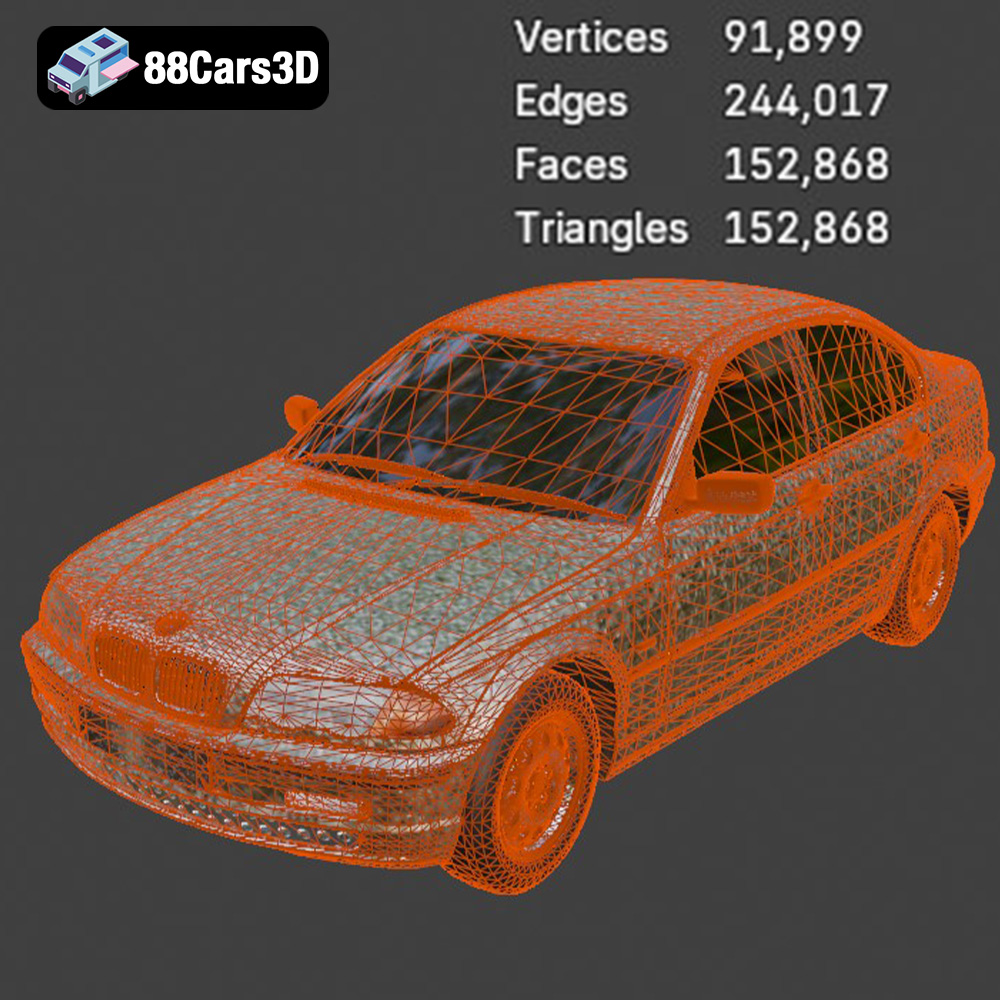
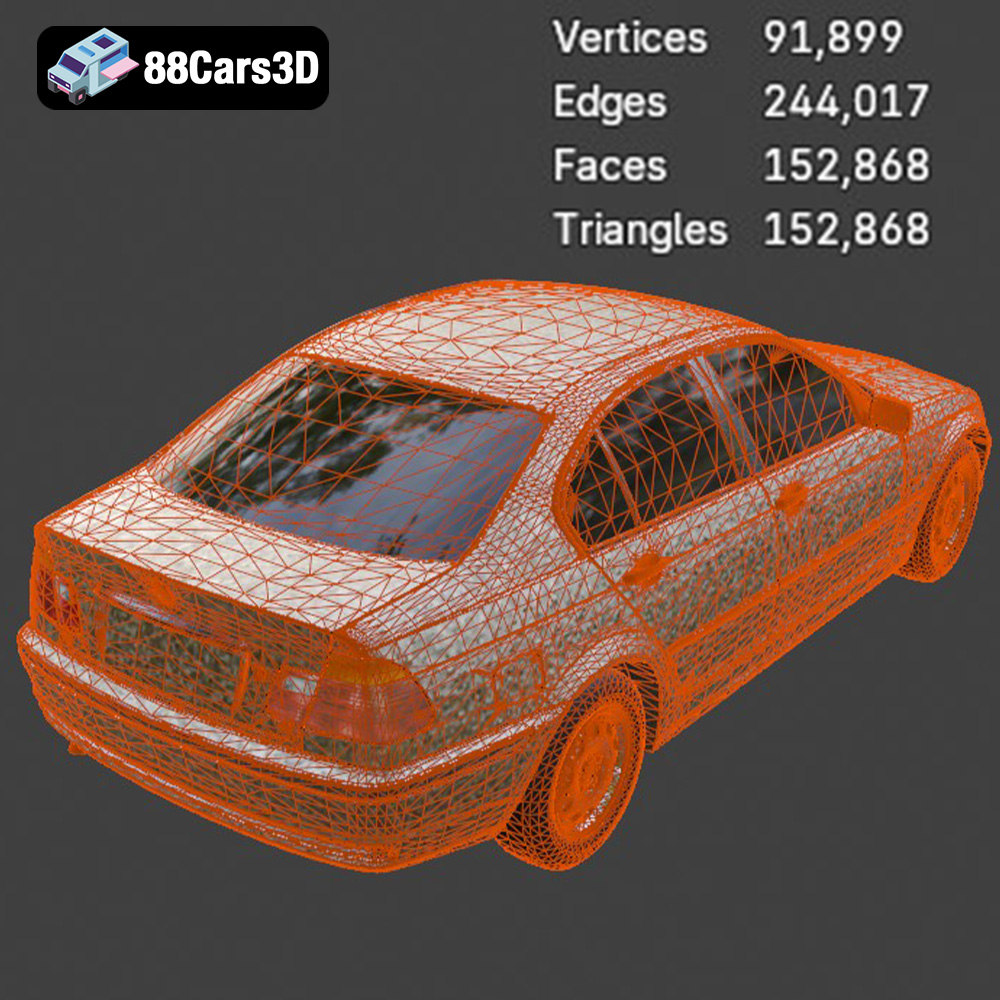
At the core of any premium 3D model is its topology – the arrangement of polygons that form the surface. The BMW E46 model boasts “clean, quad-dominant topology.” This is crucial because quad-based meshes (made primarily of four-sided polygons) are ideal for smooth subdivision (e.g., applying a subdivision surface modifier in Blender or a TurboSmooth in 3ds Max) and deformation. This ensures that when the model is rendered at high resolutions or animated, its surfaces remain smooth and free of unsightly pinching or artifacts. This attention to detail in the underlying mesh structure is what allows for the smooth curves of the E46’s body panels and the crisp edges of its grille to be faithfully represented, even under close inspection or complex lighting scenarios.
Real-World Scale and Asset Organization
Accuracy in 3D modeling goes beyond visual appeal; it extends to physical dimensions. The BMW E46 3D Model is “modeled to real-world scale,” which is a fundamental requirement for professional integration. This ensures that when the model is imported into a scene, a game engine, or a simulation environment, it fits perfectly without requiring manual scaling, which can introduce errors or inconsistencies. Furthermore, “organized hierarchical structure with properly set pivots for easy rigging and animation” speaks volumes about the model’s usability. A well-organized scene, with components logically grouped and pivot points correctly placed (e.g., the center of a wheel for rotation, the hinge of a door for opening), saves countless hours for animators and technical artists. This foresight in asset preparation is a hallmark of truly professional 3D car models, distinguishing them from less polished alternatives.
Conclusion: Driving Innovation with Exceptional 3D Car Models
The world of 3D visualization is constantly evolving, and at its heart lies the need for high-quality, versatile assets. The BMW 3 Series E46 3D Model stands as a testament to the blend of artistic craftsmanship and technical excellence required in today’s digital landscape. From its meticulously recreated exterior and interior features to its robust technical foundation of clean, quad-dominant topology and real-world scale, it is built to meet the rigorous demands of professional production across various platforms.
Whether your goal is to produce stunning automotive renders, integrate a highly detailed vehicle into a game, create immersive AR/VR experiences, or perform precise simulations, this model provides an invaluable starting point. Its comprehensive file format support ensures compatibility with a wide array of software and pipelines, making it an indispensable asset for any project requiring realistic 3D car models. By choosing assets of this caliber, you not only enhance the visual fidelity of your work but also streamline your workflow, freeing up valuable time for creative iteration. Explore this exceptional model and more at 88cars3d.com, and elevate your digital automotive projects to new heights.
Featured 3D Model
BMW 3 Series E46 3D Model
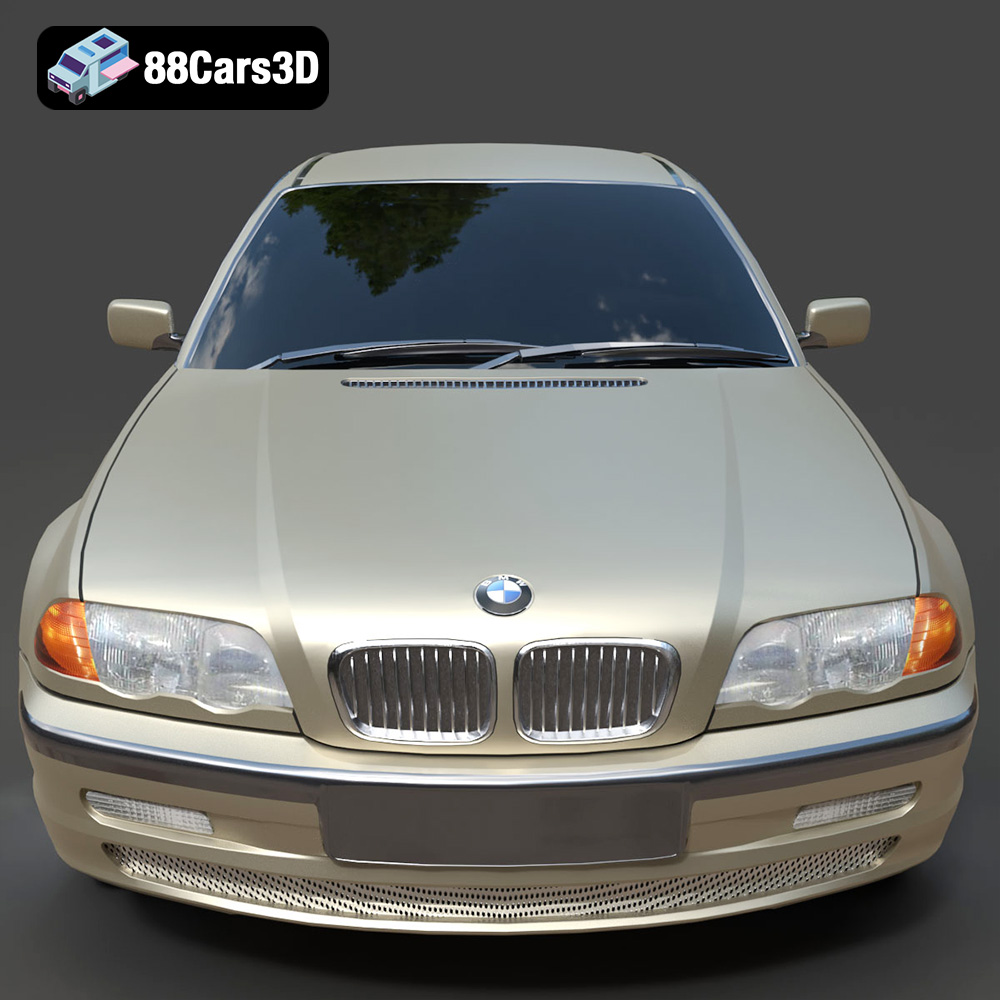
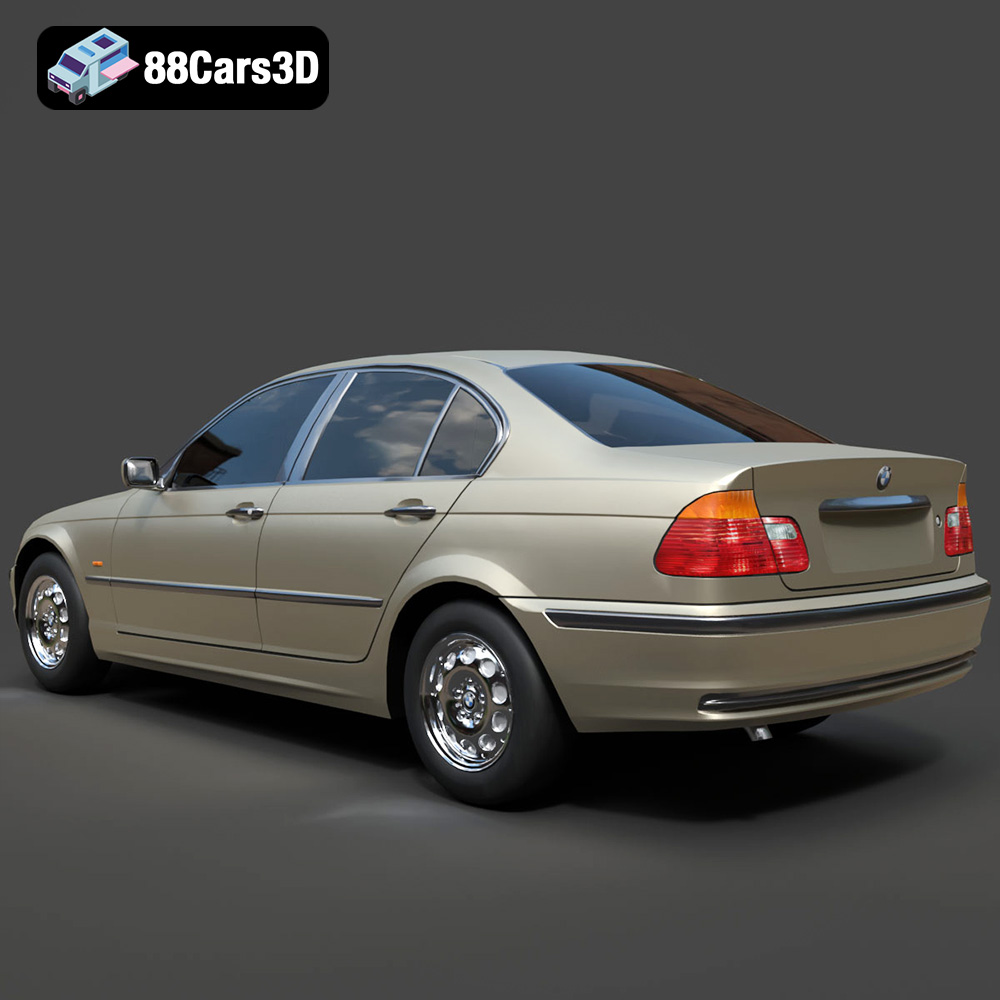
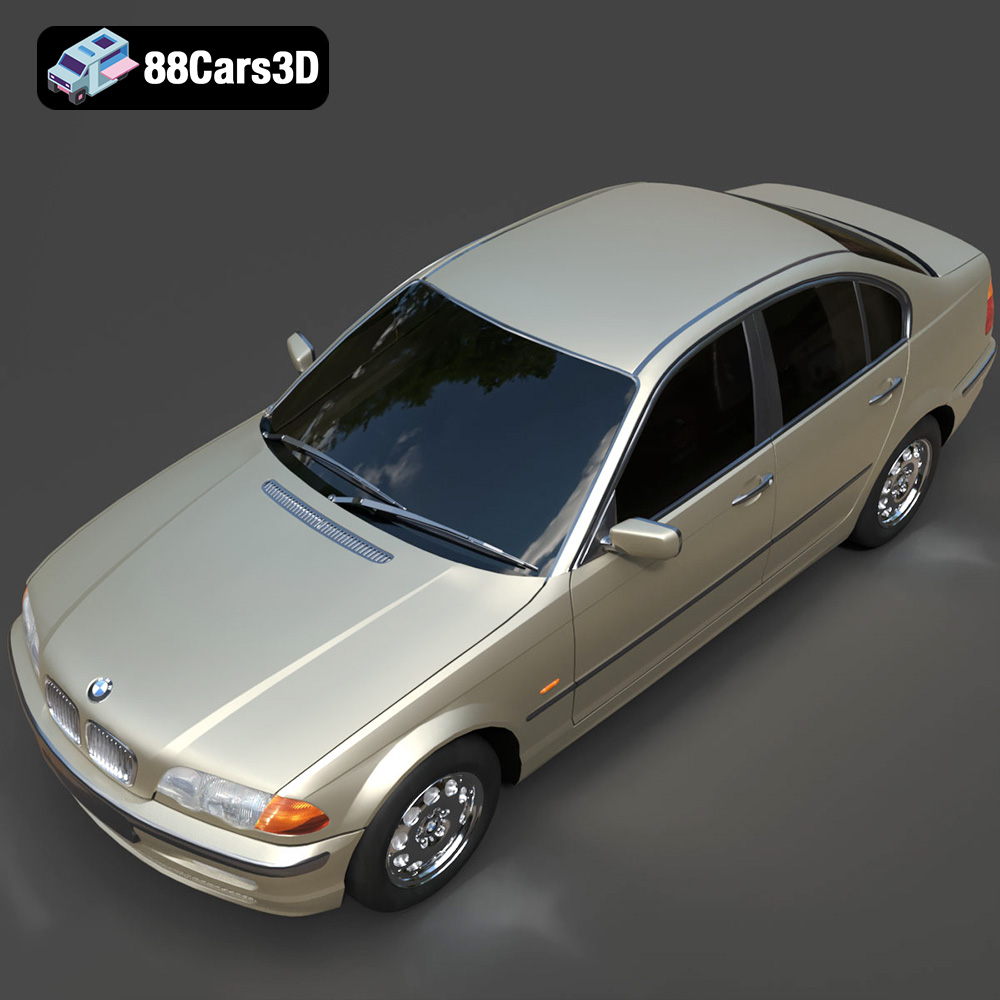
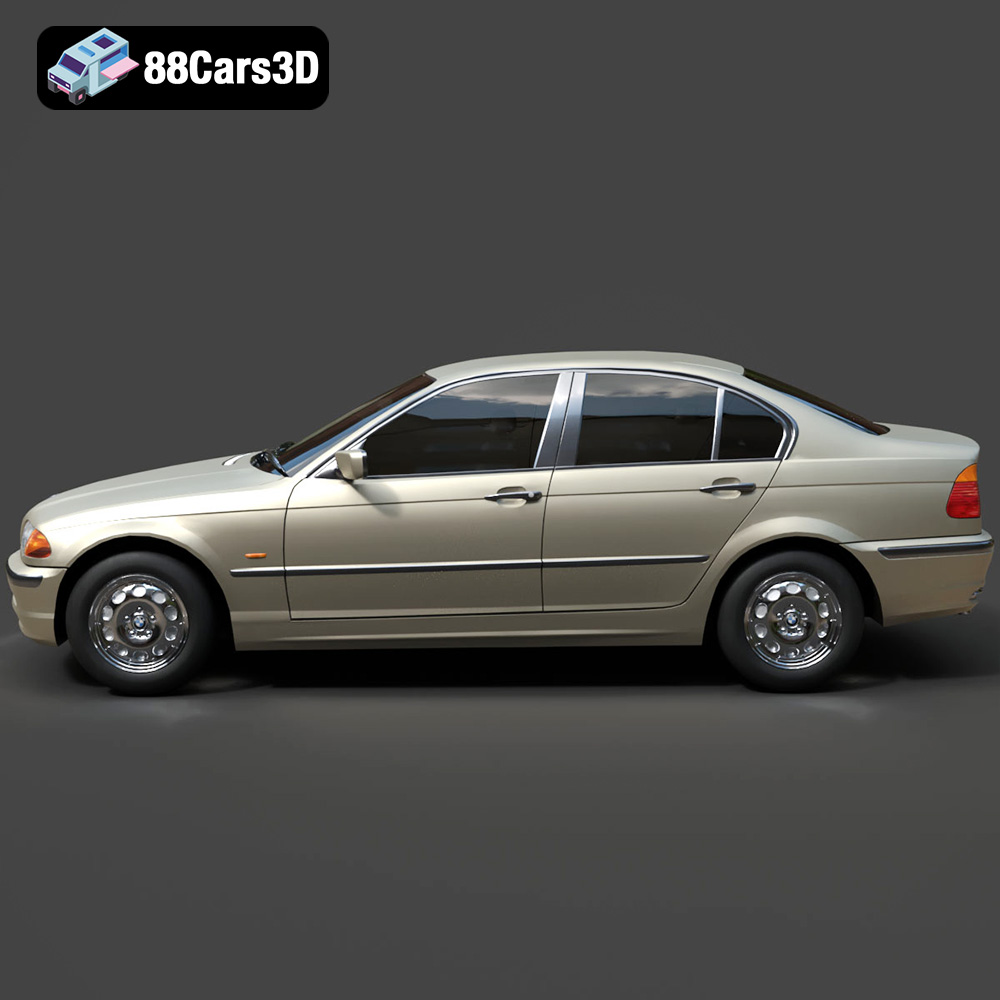
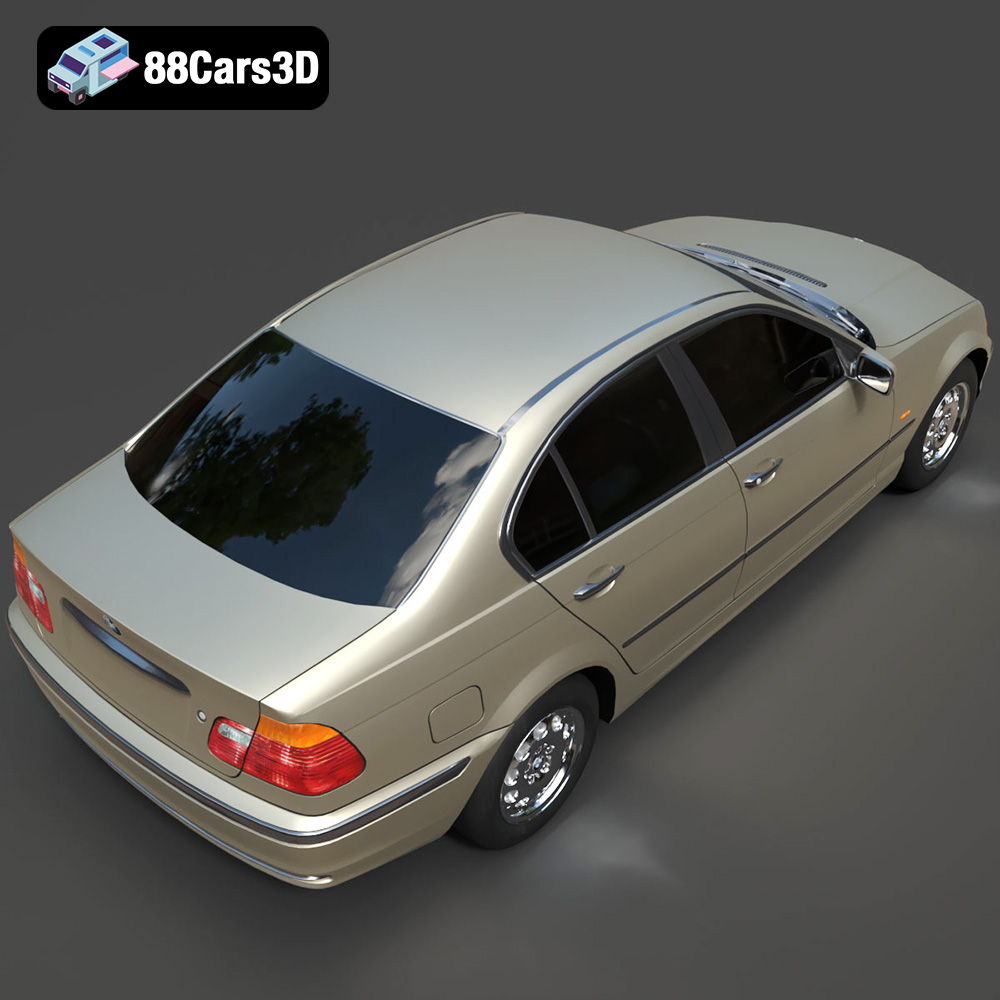
Experience the iconic German engineering with our meticulously crafted BMW 3 Series E46 3D model. This faithful digital recreation captures the timeless design and dynamic presence of the beloved E46 generation, known for its balanced performance and elegant aesthetics. Built with clean geometry and balanced detailing, this model is perfectly suited for a wide array of professional applications, including high-fidelity rendering, realistic animation sequences, detailed simulation projects, and seamless integration into game development environments.
Exterior Features:
- Authentic body panels, grille, and badging reflecting the E46’s classic design.
- Precisely modeled headlights, taillights, and turn indicators with transparent materials.
- Detailed alloy wheels, performance tires, and visible brake calipers.
- Separated components such as doors, hood, and trunk for easy animation and scene interaction.
- Accurate side mirrors, door handles, and window trims.
Interior / Mechanical Features:
- Faithfully recreated dashboard, steering wheel, and instrument cluster.
- Detailed front and rear seating, door panels, and center console with controls.
- Basic representation of the engine bay and undercarriage components, optimized for detail where visible.
- Clean and optimized mesh quality for efficient rendering and real-time performance.
Technical Advantages:
- Clean, quad-dominant topology ensuring smooth subdivisions and deformations.
- Modeled to real-world scale for accurate integration into existing scenes.
- Organized hierarchical structure with properly set pivots for easy rigging and animation.
Applications:
- Rendering & Visualization: Create stunning studio renders, automotive advertising, and cinematic scenes.
- Game Development: Ideal as a highly detailed vehicle asset for racing games, open-world environments, and interactive experiences.
- AR/VR: Develop immersive virtual showrooms, interactive training modules, and augmented reality applications.
- Simulation & Training: Utilize for driving simulators, vehicle dynamics studies, and educational platforms.
- 3D Printing: Ready for conversion to .stl for creating physical scale models.
Customization Options:
- Easily modify paint finishes, apply custom liveries, and adjust graphic details.
- Tune material properties for various looks, including metallic paint, chrome accents, rubber tires, and interior fabrics.
- Adapt lighting setups to achieve diverse moods and environments within your scenes.
Elevate your projects with this versatile and high-quality BMW 3 Series E46 3D model, designed for professional use across various digital media platforms. Its attention to detail and robust technical foundation make it an invaluable asset for any enthusiast or developer.
Included File Formats:
- .blend – Blender project with materials
- .fbx – Compatible with Unreal, Unity, and major 3D engines
- .obj – Universal format for nearly all 3D software
- .glb – Optimized for AR, VR, and web-based visualization
- .stl – Ready for 3D printing
- .ply – Mesh format for analysis and CAD workflows
- .unreal – Unreal Engine project setup
- .max – Editable 3ds Max scene for rendering and animation
Tags:
.bmw,.3series,.e46,.sedan,.car,.sportscar,.automotive,.rendering,.simulation,.gameasset,.arvr,.blend,.fbx,.obj,.glb,.stl,.ply,.unreal,.maxLamborghini Diablo SV 1995 3D Model
$10.79
Product Image Gallery
Related Tags
.3series
.arvr
.automotive
.blend
.bmw
.car
.e46
.fbx
.gameasset
.glb
.max
.obj
.ply
.rendering
.sedan
.simulation
.sportsCar
.stl
.unreal
