Accelerating Creativity: The Indispensable Role of High-Fidelity 3D Car Models
In the rapidly evolving landscape of digital content creation, the demand for realistic and production-ready 3D car models has never been higher. From breathtaking cinematic sequences and immersive virtual reality experiences to high-performance game environments and precise architectural visualizations, a meticulously crafted vehicle asset forms the cornerstone of visual excellence. Professionals across industries continually seek assets that not only look stunning but are also technically robust, optimized for diverse pipelines, and flexible enough to meet the rigorous demands of modern projects.
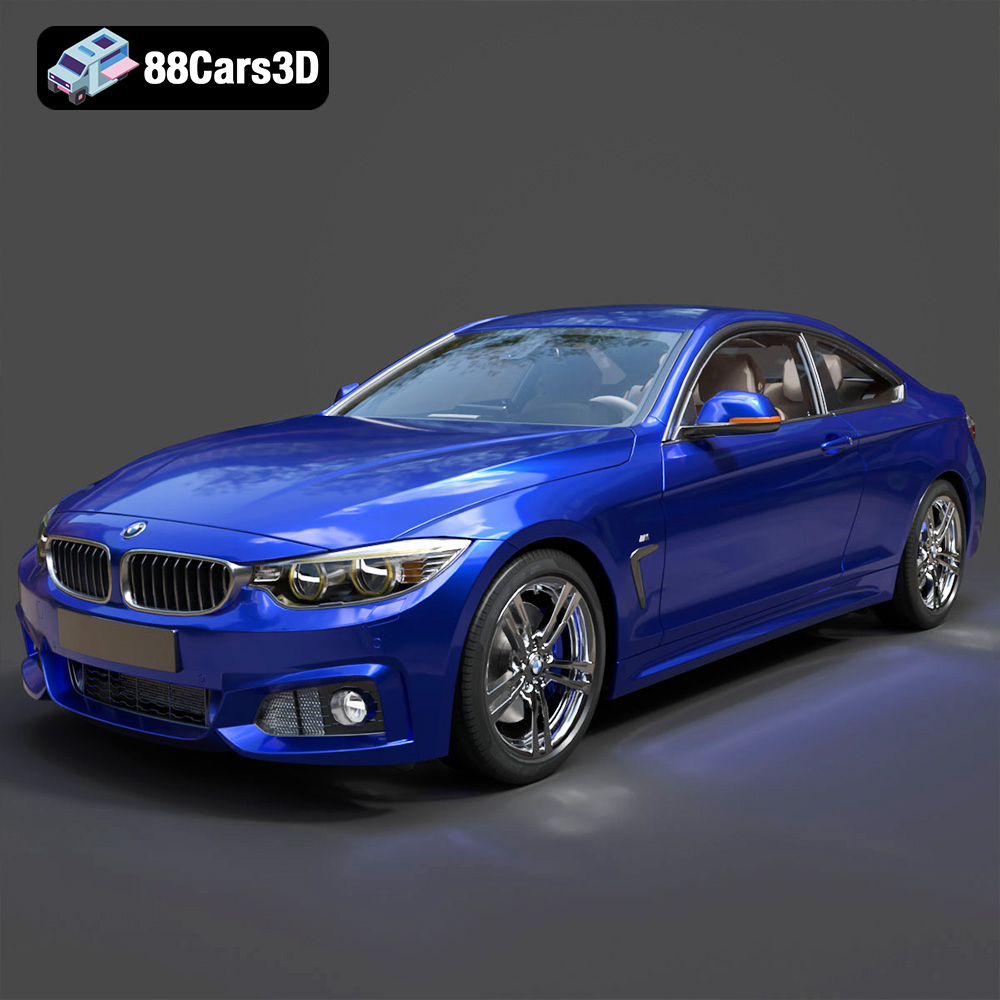
Achieving this level of quality from scratch is a significant undertaking, requiring countless hours of dedicated modeling, texturing, and optimization. This is where pre-built, professional-grade 3D car models become invaluable, empowering artists and developers to focus on their core creative tasks rather than reinventing the wheel. Today, we’ll delve into the multifaceted world of premium automotive 3D assets, exploring their technical nuances, diverse applications, and the workflows they streamline. As a prime example of such excellence, we’ll frequently reference the BMW 4 Series Coupe M Sport 2014 3D Model – an asset that epitomizes the blend of aesthetic detail and technical precision sought after by professionals, readily available on 88cars3d.com.
Understanding 3D Model File Formats: A Gateway to Project Versatility
The utility of a 3D model is often defined by its compatibility and the specific data it carries. A truly versatile asset, such as the BMW 4 Series Coupe M Sport 2014 3D Model, provides a range of file formats, each serving distinct purposes across various software and pipelines. Understanding these formats is crucial for any professional working with 3D content.
.blend – The Heart of Blender Projects
The .blend format is native to Blender, the powerful open-source 3D creation suite. When you acquire a .blend file, you’re not just getting geometry; you’re often receiving a fully editable scene. This typically includes mesh data, materials, textures, UV maps, lighting setups, cameras, and even animations or modifiers. For the BMW 4 Series model, the .blend file would provide the ability to dive deep into its construction, modify materials, adjust lighting, or even dissect its topology for learning purposes. It’s ideal for users who want complete control and flexibility within the Blender ecosystem, allowing for seamless integration into existing Blender projects.
.fbx – The Industry Standard for Interchange
.fbx (Filmbox) is a proprietary file format developed by Autodesk, widely recognized as the industry standard for exchanging 3D data between various software applications and game engines like Unreal Engine and Unity. It’s incredibly robust, capable of storing not just geometry, but also materials (with PBR parameters), textures, bone animations, skeletal data, cameras, and even light information. For real-time pipelines, .fbx is often the go-to choice because of its excellent support for animation and hierarchal scene structures. The BMW 4 Series .fbx file is optimized for performance in game engines, making it a critical component for game developers.
.obj – The Universal Geometry Carrier
The .obj (Wavefront Object) format is one of the oldest and most universally compatible 3D file formats. It’s primarily a geometry definition file, storing vertices, normals, UV coordinates, and faces. While it can reference external material (.mtl) files, its strength lies in its simplicity and widespread support across virtually all 3D software. For the BMW 4 Series, an .obj file guarantees that the core mesh data can be imported into any application, serving as a reliable fallback or a base for new material setups in unfamiliar environments.
.glb – Optimized for AR, VR, and Web
.glb (GLB format for GL Transmission Format) is an increasingly important format, especially for interactive experiences on the web, augmented reality (AR), and virtual reality (VR). It’s a binary version of glTF, designed to be a self-contained asset that includes model geometry, PBR materials, textures, and animations in a single file. This “all-in-one” nature makes .glb incredibly efficient for streaming and rapid loading in web browsers or AR/VR applications, minimizing download sizes and rendering overhead. The BMW 4 Series .glb file would be perfectly suited for an interactive car configurator on a website or an AR app showcasing the vehicle in a real-world setting.
.stl – The Backbone of 3D Printing
.stl (STereoLithography) is the most common file format used for 3D printing and CAD software. It represents a 3D model as a series of connected triangles, describing only the surface geometry of an object without color, texture, or other properties. While not suitable for rendering or animation, its simplicity makes it ideal for additive manufacturing processes. The BMW 4 Series .stl file allows for the creation of physical prototypes or scale models, essential for product design reviews or tangible promotional materials.
.ply – Precision Mesh for CAD or Analysis
The .ply (Polygon File Format) is another format for storing 3D data, particularly useful for scan data and scientific applications. It can store a wider range of properties than .obj or .stl, including color per vertex, transparency, surface normals, and range data. This makes it suitable for applications requiring high precision and additional data associated with the mesh, such as CAD, engineering analysis, or visualizing complex point cloud data. For the BMW 4 Series, a .ply file could be used for detailed dimensional analysis or for precise integration into engineering simulations.
.unreal – Engine-Ready for Real-Time Environments
The .unreal format, or more accurately, assets packaged specifically for Unreal Engine, implies a model that has been meticulously prepared and configured for direct use within the engine. This goes beyond a simple .fbx import. It often means proper material setups (using Unreal’s PBR shader system), correct scale, collision meshes, LODs (Levels of Detail), and potentially even Blueprint integrations. A .unreal file for the BMW 4 Series signifies that the asset is truly “plug-and-play” for Unreal Engine developers, saving considerable time on import and setup.
.max – The Versatility of 3ds Max
Similar to .blend for Blender, the .max format is the native file format for Autodesk 3ds Max. This format provides the most comprehensive data within the 3ds Max environment, including not only geometry, materials, and textures but also scene setup, lighting, cameras, animation keyframes, and any modifiers or procedural tools used during its creation. For users deeply integrated into the Autodesk ecosystem, the .max file of the BMW 4 Series Coupe M Sport 2014 3D Model offers the ultimate flexibility for advanced rendering, animation, and scene composition.
The availability of all these formats for the BMW 4 Series Coupe M Sport 2014 3D Model underscores its versatility and value. It ensures that regardless of your software preference or project requirements, you have a high-quality starting point.
The Art of Automotive Rendering: Bringing the BMW 4 Series to Life
Automotive rendering is a specialized field that demands an exceptional eye for detail, understanding of light physics, and mastery of rendering software. A high-quality 3D car model, such as the BMW 4 Series Coupe M Sport 2014, is the foundation upon which stunning visual narratives are built. It allows artists to produce photorealistic images and animations for marketing, design reviews, or cinematic productions.
PBR Material Workflow for Unparalleled Realism
The BMW 4 Series model comes with PBR-ready materials, a critical feature for achieving photorealism. Physically Based Rendering (PBR) materials accurately simulate how light interacts with surfaces in the real world. This involves meticulously crafted textures for:
- Albedo/Base Color: The base color of the surface, excluding any light or shadow information.
- Roughness: Determines how rough or smooth a surface is, affecting the spread and intensity of reflections.
- Metallic: Indicates whether a material is a conductor (metal) or a dielectric (non-metal), influencing reflection properties.
- Normal Maps: Adds surface detail without increasing polygon count, simulating bumps and scratches.
- Ambient Occlusion: Simulates soft shadows where surfaces are close together, adding depth.
Applying these PBR textures to the BMW 4 Series allows for precise replication of its metallic paint, the reflectivity of its glass, the subtle texture of its tires, and the intricate details of its interior, creating an illusion of tangible reality within the digital space. Software like 3ds Max with V-Ray or Corona Renderer, or Blender with Cycles, can leverage these PBR maps to generate breathtaking results.
Advanced Lighting Techniques for Dynamic Moods
Lighting is arguably the most crucial element in rendering. For an automotive model like the BMW 4 Series, achieving the right lighting can transform a static image into a powerful visual statement. Professionals utilize a combination of techniques:
- HDRI (High Dynamic Range Image) Lighting: Environment maps providing real-world lighting and reflections, perfectly mimicking outdoor scenes or studio setups.
- Area Lights and Spotlights: Strategically placed to highlight specific curves, accentuate body lines, and create dramatic shadows.
- Global Illumination: Simulating how light bounces around a scene, adding realism to indirect lighting and color bleed.
By carefully orchestrating these elements, artists can evoke specific moods – from the vibrant glow of a sunny afternoon to the sleek, reflective ambiance of a car showroom, all while showcasing the meticulous detail of the BMW 4 Series Coupe M Sport 2014 3D Model.
Post-Processing and Compositing for the Final Polish
Once a raw render is complete, post-processing in tools like Adobe Photoshop or Blackmagic Fusion is essential. This stage involves:
- Color Correction and Grading: Adjusting hues, saturation, and contrast to achieve a desired aesthetic.
- Depth of Field: Adding realistic camera blur to draw focus to specific parts of the car.
- Lens Effects: Simulating lens flares, chromatic aberration, or vignetting for a photographic feel.
- Motion Blur: For animations, accurately portraying speed and movement.
These final touches elevate the render of the BMW 4 Series from a good image to an exceptional piece of visual art, ready for high-impact marketing campaigns or detailed product showcases.
Integrating High-Fidelity Car Models into Game Development
The world of game development places unique demands on 3D assets. While visual fidelity is paramount, performance and optimization are equally critical for maintaining smooth framerates and responsive gameplay. A well-constructed asset like the BMW 4 Series Coupe M Sport 2014 3D Model from 88cars3d.com provides a significant head start for game developers.
Real-Time Optimization Strategies for Immersive Gameplay
For game engines like Unreal Engine and Unity, raw high-poly models must undergo rigorous optimization. The BMW 4 Series model, being “game-engine ready,” implies that these steps have likely been considered:
- Levels of Detail (LODs): Creating multiple versions of the model with varying polygon counts. The highest detail is used when the car is close to the camera, and progressively lower-poly versions are swapped in as it moves further away, drastically reducing rendering load without noticeable quality loss.
- Collision Meshes: Simplified, invisible meshes that define the physical boundaries of the car, used for accurate collision detection with the environment and other vehicles.
- Optimized UV Maps and Texture Atlases: Efficient UV layouts prevent texture stretching, and combining multiple textures into a single atlas reduces draw calls, improving performance.
- Efficient Material Setup: Utilizing PBR materials tailored for game engines, often with baked lighting and reflections to further optimize real-time calculations.
The inclusion of an .fbx file and a pre-configured .unreal file for the BMW 4 Series means developers can drop it directly into their projects with minimal setup, ensuring excellent performance and visual quality.
Setting Up the BMW 4 Series in Unreal Engine
Integrating a high-fidelity car model into Unreal Engine involves several key steps. With the provided .unreal or .fbx format, the process is streamlined:
- Import: Drag-and-drop the .fbx file directly into the Content Browser, ensuring proper import settings for materials, textures, and skeletal meshes (if animated).
- Material Instance Creation: Utilize Unreal’s robust material system to create material instances from base PBR shaders, allowing for easy color changes (e.g., different paint finishes for the BMW 4 Series) without recompiling shaders.
- Physics Asset Setup: Configure the car’s physics asset for realistic suspension, wheel rotation, and collision response.
- Blueprint Integration: For interactive elements, a vehicle Blueprint is created, incorporating engine parameters, wheel physics, and control inputs to make the BMW 4 Series fully driveable within the game world.
A pre-configured asset dramatically reduces the time spent on these essential, often tedious, setup tasks.
Performance Considerations and Scaling
For open-world games or simulations featuring numerous vehicles, performance scaling is vital. The BMW 4 Series Coupe M Sport 2014 3D Model, designed with professional-grade geometry, allows for further optimization if needed:
- Polygon Reduction: If a game requires an even lower poly count than the provided LODs, tools like Decimate in Blender or ProOptimizer in 3ds Max can further reduce geometry while preserving visual fidelity through normal maps.
- Dynamic Material Instances: Allowing players to customize car colors or liveries in real-time without needing entirely new texture sets.
- Instancing: For multiple identical cars, engine instancing significantly reduces draw calls by rendering multiple copies of the same mesh.
This proactive approach to asset creation ensures that the BMW 4 Series can perform optimally in various game scenarios, from a single hero car to a bustling virtual city.
Beyond Visualization: AR/VR, 3D Printing, and Real-World Applications
The utility of a high-quality 3D car model extends far beyond traditional rendering and game development. The BMW 4 Series Coupe M Sport 2014 3D Model, with its diverse file formats, is an exemplary asset for emerging technologies and niche industrial applications.
Immersive Experiences with AR/VR
Augmented Reality (AR) and Virtual Reality (VR) are transforming how we interact with digital content. Imagine placing a virtual BMW 4 Series M Sport directly onto your driveway via an AR app, or exploring its interior in full 360-degree VR. The .glb file format, specifically optimized for these applications, is crucial here. Its compact, self-contained nature ensures quick loading and smooth performance on mobile devices or VR headsets.
Case Study: An automotive manufacturer could use the BMW 4 Series .glb model for an interactive AR car configurator. Prospective buyers could customize paint colors, rim designs, and interior trims in real-time, viewing the changes directly in their environment, providing an engaging pre-purchase experience without needing a physical showroom visit. The model’s detailed geometry and PBR materials would ensure a realistic representation.
Prototyping with 3D Printing
While the BMW 4 Series is a finished product, the underlying principles of its 3D model can be applied to automotive design and prototyping. The .stl file format is the standard for 3D printing, enabling the creation of physical models. Engineers and designers can print scale models for aerodynamic testing, ergonomic evaluations, or simply as tangible representations during concept development.
Case Study: During the design phase of a new car component, a team could integrate a simplified version of the BMW 4 Series’ chassis (or a specific part of it) to test the fit and aesthetics of a newly designed headlight assembly. The .stl model would allow for rapid iteration and physical evaluation before committing to expensive tooling. The precision of the 3D car model ensures accurate representation for prototyping.
Scientific & Engineering Applications
The highly detailed polygon mesh found in formats like .ply can be invaluable for scientific and engineering analysis. These formats preserve intricate geometric data, making them suitable for specialized simulations or data visualization.
Case Study: In an accident reconstruction scenario, the precise geometry of the BMW 4 Series Coupe M Sport 2014 could be imported into simulation software to analyze collision dynamics, deformation patterns, and impact forces. Forensic engineers could use this data to understand the exact circumstances of an incident, relying on the accuracy of the 3D model for their calculations and visualizations. Similarly, aerodynamicists could use the .ply data to run precise CFD (Computational Fluid Dynamics) simulations to analyze airflow over the vehicle’s body, even if the primary design intent for the model was visualization.
The versatility demonstrated by the range of file formats and applications of the BMW 4 Series Coupe M Sport 2014 3D Model underscores its value as a truly professional asset for a multitude of industries.
Optimizing Your Workflow with Professional 3D Assets
Time is a valuable commodity in any production pipeline. Investing in high-quality, pre-made 3D car models like those found on 88cars3d.com is a strategic decision that significantly optimizes professional workflows, regardless of the project’s scale or complexity.
Time-Saving through Asset Acquisition
Creating a photorealistic 3D car model from scratch is an incredibly labor-intensive process. It involves:
- Blueprinting and Reference Gathering: Sourcing accurate blueprints, photographic references, and technical data.
- Modeling: Building the intricate geometry, ensuring clean topology and correct proportions, which alone can take weeks for a complex vehicle.
- UV Unwrapping: Creating efficient UV layouts for texture application.
- Texturing: Developing PBR materials for paint, glass, rubber, interior fabrics, and various metallic surfaces.
- Rigging (for animation): Setting up hierarchies and controls for doors, wheels, steering, etc.
- Optimization: Creating LODs, collision meshes, and ensuring game-engine readiness.
By purchasing a professional asset like the BMW 4 Series Coupe M Sport 2014 3D Model, artists and studios bypass these initial, time-consuming stages. The model is already built, textured, and optimized, allowing teams to immediately jump into rendering, animation, or game integration.
Ensuring Asset Quality and Compatibility
Not all 3D car models are created equal. Professional assets, like those offered by 88cars3d.com, distinguish themselves through several key quality indicators:
- Clean Topology: Well-structured mesh with quads (four-sided polygons) and minimal triangles, essential for smooth deformations and subdivision.
- Accurate Proportions and Details: Meticulous adherence to real-world dimensions and nuanced design elements. The BMW 4 Series model’s description highlights its “meticulous capture of aggressive styling and dynamic characteristics.”
- Logically Grouped and Named Components: Easy navigation and manipulation within 3D software. Components like ‘door_front_left’, ‘wheel_rear_right’, ‘body_paint’ simplify scene management.
- PBR-Ready Materials: Consistent and physically accurate material setups that translate well across different render engines.
- Multiple File Formats: Guaranteeing compatibility with a wide array of software and pipelines, from 3ds Max to Unreal Engine to AR/VR platforms.
These attributes ensure that the BMW 4 Series Coupe M Sport 2014 3D Model is not just aesthetically pleasing but also technically sound and production-ready, minimizing potential headaches down the line.
Customization and Iteration
Even with a pre-built asset, the ability to customize is paramount. A well-constructed 3D car model facilitates quick iterations and adaptations:
- Material Modifications: Easily change paint colors, reflectivity, or add custom decals for branding or creative expression.
- Scene Integration: Seamlessly place the vehicle into diverse environments, whether a futuristic city, a historical street, or a virtual showroom.
- Animation Potential: Utilize existing hierarchies to animate doors, steering, or wheels for dynamic presentations.
The professional-grade geometry and organized structure of the BMW 4 Series model empower artists to iterate rapidly, experiment with different looks, and integrate it into highly specific project requirements without compromising quality.
Why Choose Premium 3D Car Models from 88cars3d.com?
In a marketplace flooded with digital assets, discerning professionals understand the critical difference that quality makes. 88cars3d.com stands out as a dedicated online marketplace committed to providing high-fidelity 3D car models that meet the stringent demands of modern production pipelines. The BMW 4 Series Coupe M Sport 2014 3D Model is a testament to this commitment.
Every asset featured on 88cars3d.com is curated to deliver “unparalleled realism” and “professional-grade geometry.” This means investing in models that are:
- Visually Stunning: Meticulously detailed to replicate real-world vehicles with incredible accuracy.
- Technically Sound: Optimized for performance, with clean topology and efficient UVs.
- Versatile: Provided in a multitude of industry-standard formats, ensuring compatibility across all major 3D software and game engines. The inclusion of .blend, .fbx, .obj, .glb, .stl, .ply, .unreal, and .max for the BMW 4 Series model exemplifies this versatility.
- Production-Ready: Saving valuable time and resources by allowing immediate integration into projects for rendering, game development, AR/VR, or 3D printing.
Choosing 88cars3d.com means choosing efficiency, reliability, and ultimately, superior results for your automotive visualization, simulation, and interactive experiences. Whether you’re working on a high-stakes automotive advertisement, developing the next big racing game, or creating an innovative AR application, having access to assets like the BMW 4 Series Coupe M Sport 2014 3D Model ensures your projects start on a strong foundation.
Conclusion
The digital realm thrives on visual fidelity, and in the specialized domain of automotive representation, the demand for excellence is non-negotiable. High-quality 3D car models are not merely decorative elements; they are foundational assets that empower artists, developers, and engineers to realize their creative and technical visions with efficiency and precision. From the intricate detailing required for photorealistic automotive rendering to the rigorous optimization demanded by cutting-edge game assets and immersive AR/VR experiences, a well-crafted 3D vehicle is an indispensable tool.
The BMW 4 Series Coupe M Sport 2014 3D Model exemplifies the pinnacle of professional-grade assets, offering meticulous detail, PBR-ready materials, and a comprehensive suite of file formats (.blend, .fbx, .obj, .glb, .stl, .ply, .unreal, .max) to cater to every conceivable workflow. By leveraging such assets, creators can drastically reduce production times, ensure cross-platform compatibility, and achieve stunning visual outcomes that truly resonate with audiences.
In an industry where innovation and speed are key, the strategic acquisition of premium 3D car models from trusted sources like 88cars3d.com allows professionals to streamline their workflows, elevate their output, and focus on the artistry and ingenuity that define their projects. Invest in quality, and let your creative engines roar.
Featured 3D Model
BMW 4 Series Coupe M Sport 2014 3D Model
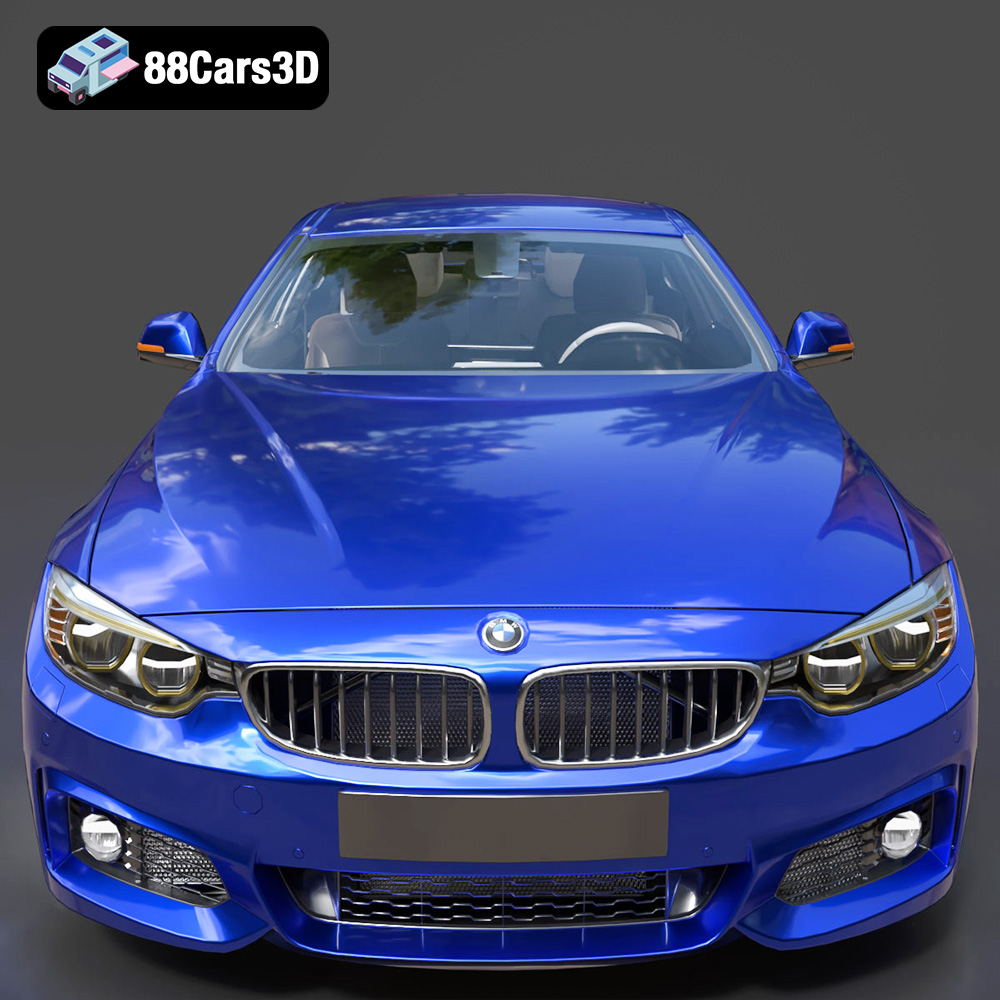
Bring unparalleled realism to your projects with the BMW 4 Series Coupe M Sport 2014 3D Model. This asset meticulously captures the aggressive styling and dynamic characteristics of the M Sport package, making it perfect for high-fidelity simulations and visualizations. The model boasts professional-grade geometry optimized for performance and detail. It includes realistic, PBR-ready materials replicating paint, glass, and rubber textures. All components are logically grouped and named, ensuring easy manipulation and integration into any professional pipeline. This versatile asset is ideal for various industries, including video game development (optimized for both Unreal Engine and Unity), architectural visualization, automotive marketing, cinematic rendering, and interactive AR/VR experiences.
$14.99
Product Image Gallery