Elevating Digital Automotive Design: The Unseen Power of Premium 3D Car Models
In the dynamic worlds of automotive design, game development, cinematic rendering, and architectural visualization, the quality of a 3D asset can make or break a project. The difference between a passable visual and an utterly convincing one often lies in the meticulous detail and technical integrity of the underlying 3D model. We’re not just talking about aesthetics; we’re talking about professional-grade geometry, optimized PBR materials, and seamless integration into diverse pipelines.
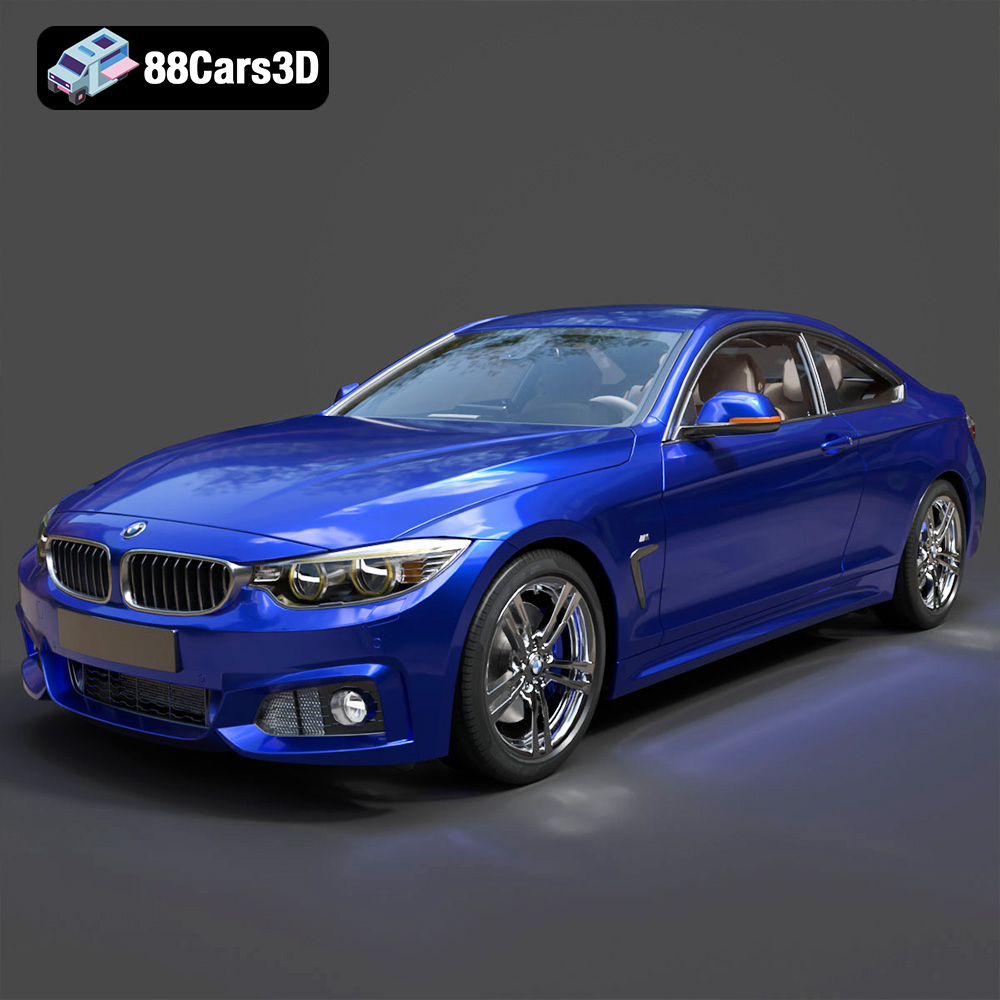
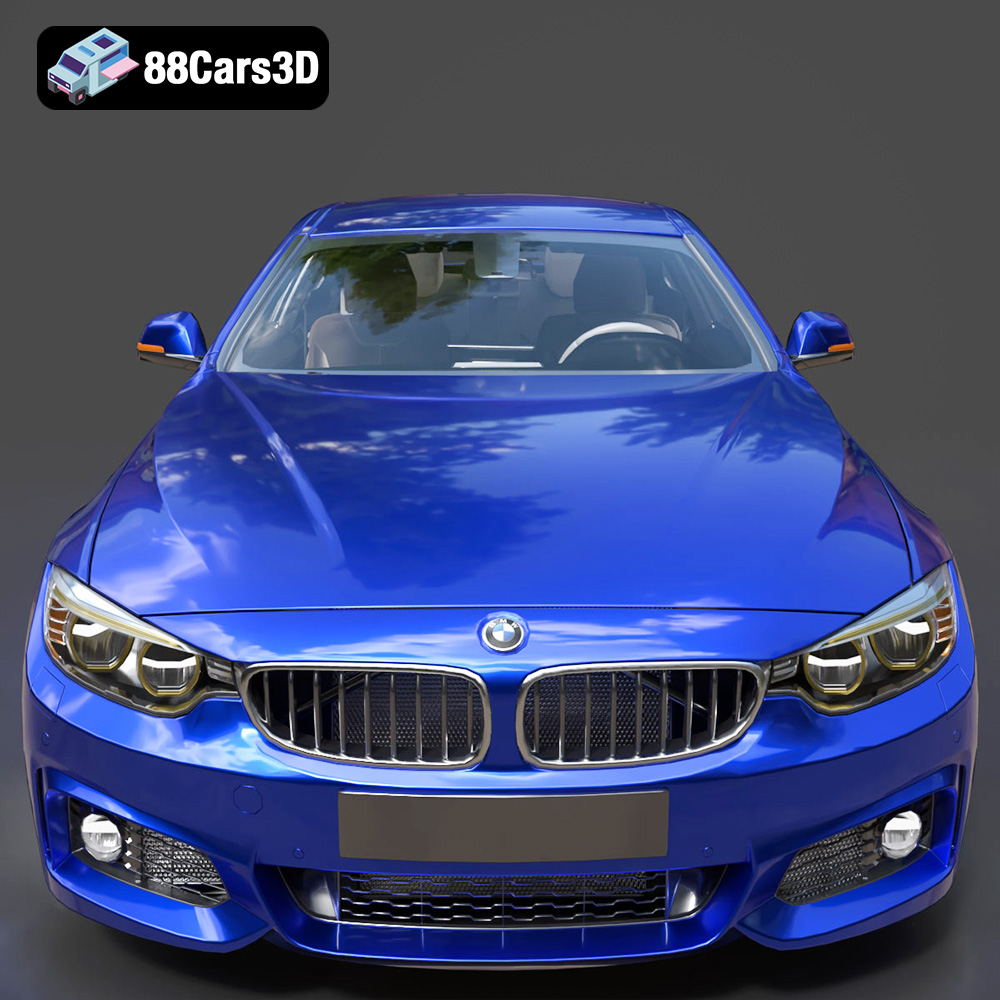
Today, we delve into the core of what makes a 3D car model truly exceptional, using a prime example that embodies these principles: the BMW 4 Series Coupe M Sport 2014 3D Model. This isn’t merely a digital representation; it’s a versatile, high-fidelity asset engineered to inject unparalleled realism into any project. From its aggressive M Sport styling to its meticulously crafted components, this model showcases the standards professionals expect and provides a robust foundation for everything from high-stakes marketing campaigns to immersive virtual experiences. Let’s explore the technical nuances and practical applications that underscore the value of such an asset in today’s demanding digital landscape.
Understanding 3D Model File Formats
The choice of a 3D model file format is far more than a simple preference; it dictates compatibility, feature support, and the ultimate utility of an asset across various software and platforms. A truly versatile 3D car model, such as the BMW 4 Series Coupe M Sport 2014 3D Model available on 88cars3d.com, provides a comprehensive array of formats to cater to virtually any professional workflow. Understanding each format’s strengths and limitations is crucial for maximizing project efficiency and output quality.
.blend – The Blender Native Ecosystem
The .blend format is the native file type for Blender, the powerful open-source 3D creation suite. A .blend file typically encapsulates an entire Blender scene, including mesh data, materials, textures (often packed within the file), lighting setups, camera positions, animation data, and even modifiers and physics simulations. This format offers maximum editability and full control over every aspect of the model within Blender. For artists who primarily work in Blender, having a .blend file means instant access to a ready-to-render scene, allowing for quick modifications, custom renders using Cycles or Eevee, and easy integration into larger Blender projects without needing to re-import or re-configure elements.
.fbx – The Industry Standard for Interchange
Autodesk’s .fbx (Filmbox) format is arguably the most widely adopted interchange format in the 3D industry, particularly for game development and animation pipelines. It excels at transferring comprehensive scene data, including geometry (meshes, polygons, NURBS), materials, textures, animations (skeletal and blend shapes), camera, and lighting information, between different 3D applications like Maya, 3ds Max, Cinema 4D, and game engines such as Unreal Engine and Unity. Its robust support for animation and hierarchy makes it ideal for animated car models or complex scene exports, ensuring that the BMW 4 Series Coupe M Sport 2014 3D Model can be dropped directly into a real-time environment with minimal fuss.
.obj – The Universal Mesh Standard
The .obj (Wavefront OBJ) format is a simple, universal 3D geometry definition format known for its widespread compatibility. It primarily stores mesh data (vertices, UVs, normals, faces) and can reference external material files (.mtl) for basic color and texture mapping. While it doesn’t support advanced features like animation, rigging, or complex material networks, its simplicity ensures near-universal readability across almost all 3D software. For foundational modeling tasks, archival purposes, or when maximum compatibility is paramount, the .obj version of a 3D car model is invaluable.
.glb – Optimized for AR, VR, and Web
The .glb (GL Transmission Format Binary) is an increasingly important format, especially for modern interactive experiences. It’s the binary version of glTF, a compact, efficient, and runtime-agnostic format designed for transmitting 3D scenes and models for web-based applications, augmented reality (AR), and virtual reality (VR). A .glb file embeds all necessary assets—geometry, textures, materials, animations—into a single, self-contained file, making it incredibly easy to share and display in browsers or AR/VR viewers. For showcasing the BMW 4 Series Coupe M Sport 2014 3D Model in an interactive web configurator or an AR product preview, .glb is the format of choice.
.stl – Precision for 3D Printing
The .stl (Stereolithography) format is the standard for 3D printing. It represents 3D surfaces as a collection of unconnected triangular facets, defining only the surface geometry without color, texture, or other advanced attributes. While not suitable for rendering or animation, its precise geometric definition makes it indispensable for additive manufacturing. If you need to produce a physical prototype or a scale model of the BMW 4 Series Coupe M Sport 2014, the .stl file ensures accuracy for 3D printers.
.ply – Detailed Polygon Mesh for Analysis
The .ply (Polygon File Format), also known as the Stanford Triangle Format, is a format designed to store graphical objects as a list of polygons. It supports properties such as color, transparency, normals, texture coordinates, and data confidence values, which can be attached to vertices and faces. It’s often used in scientific computing, CAD, 3D scanning, and applications where precise mesh data, potentially with additional attribute information, is required for analysis or specialized visualization. For detailed inspection or conversion to other CAD-specific formats, .ply offers a robust data structure.
.unreal – Engine-Ready for Real-time Environments
The .unreal file (or specific asset packages exported/configured for Unreal Engine) represents an asset that is pre-configured and optimized for direct import and use within the Unreal Engine ecosystem. This might involve optimized mesh data, PBR material instances, collision meshes, LODs (Levels of Detail), and potentially even basic blueprints or asset dependencies set up for immediate functionality within the engine. For game developers or real-time visualization specialists using Unreal, this format streamlines the integration of the BMW 4 Series Coupe M Sport 2014 3D Model, saving significant time on setup and optimization.
.max – The 3ds Max Master File
The .max format is the native file type for Autodesk 3ds Max, a leading software for 3D modeling, animation, and rendering. Similar to .blend, a .max file stores all scene data, including geometry, complex material setups (e.g., V-Ray, Corona), lighting, cameras, animations, and modifiers. For professionals working within a 3ds Max pipeline, the .max file provides the highest level of control and flexibility, allowing for advanced rendering techniques, complex animation sequences, and integration with other 3ds Max specific tools and plugins, making the BMW 4 Series Coupe M Sport 2014 3D Model truly customizable.
The Foundation of Realism: Professional 3D Car Models
Achieving photorealistic visuals in any digital medium begins with a foundational truth: the quality of your 3D assets. In the realm of automotive rendering and visualization, this truth is amplified. A premium 3D car model is not just about looks; it’s about robust engineering that allows for endless creative possibilities without compromising performance or fidelity. When sourcing 3D car models, like those found on 88cars3d.com, understanding the underlying technical excellence is paramount.
The Demand for High-Fidelity Automotive Assets
From captivating automotive configurators and cutting-edge racing games to stunning marketing visuals and immersive AR/VR experiences, the appetite for hyper-realistic vehicle representations continues to grow. Clients and audiences expect nothing less than perfection. This demand pushes the boundaries of 3D artistry and technical optimization, requiring assets that can perform flawlessly across a spectrum of applications, from static renders requiring millions of polygons to real-time engines demanding tight poly budgets and efficient materials. The BMW 4 Series Coupe M Sport 2014 3D Model is engineered precisely to meet these diverse, high-fidelity requirements, ensuring it delivers impact whether viewed up close in a cinematic render or as part of a bustling virtual environment.
Key Characteristics of a Production-Ready Model
A truly production-ready 3D car model distinguishes itself through several critical characteristics:
- Optimized Geometry: Clean, quad-based topology is essential for smooth subdivision, deformation, and texture mapping. It ensures that the model can be scaled in detail (e.g., via Level of Detail – LODs) without artifacts. The geometry of a premium asset like the BMW 4 Series Coupe M Sport 2014 3D Model will feature accurate poly counts that strike a balance between visual fidelity and performance, with particular attention paid to critical areas like panel gaps, wheel arches, and intricate grille details.
- PBR-Ready Materials & Textures: Physically Based Rendering (PBR) is the modern standard for achieving realistic material interactions with light. A high-quality model will come with well-calibrated PBR textures (Albedo/Base Color, Metallic, Roughness, Normal, Ambient Occlusion, etc.) that accurately represent real-world materials like car paint (metallic flake, clear coat), glass, rubber, chrome, and intricate interior fabrics. These materials are often pre-configured for common renderers or engines.
- Clean UV Mapping: Efficient and distortion-free UV mapping is crucial for applying textures accurately and without stretching. Overlapping UVs should be minimal or intentional, and key components should have dedicated UV space. This ensures that custom liveries, decals, or high-resolution textures can be applied to the BMW 4 Series Coupe M Sport 2014 without compromise.
- Logical Organization: A professional model is always well-organized. This means logically grouped and named objects (e.g., “Body,” “Wheel_FL,” “Door_Driver”), proper pivots, and real-world scale. This structure dramatically streamlines the integration process, saving valuable artist time and preventing frustration.
- Scalability: The ability to adapt to different project requirements, whether it’s for an ultra-high-resolution render or a low-poly mobile game, is key. While not always explicitly included, a well-built base mesh allows for the creation of various LODs or optimized versions.
Deep Dive into the BMW 4 Series Coupe M Sport 2014 3D Model’s Technical Excellence
The BMW 4 Series Coupe M Sport 2014 3D Model is a testament to the meticulous craftsmanship demanded in professional 3D production. It’s designed not just to look good, but to perform flawlessly across a spectrum of applications, from the most demanding cinematic renders to performance-critical real-time simulations. Let’s dissect the technical elements that elevate this model to a professional standard.
Geometry and Topology for Optimal Performance
At the heart of any high-quality 3D asset is its geometry. The BMW 4 Series Coupe M Sport 2014 3D Model boasts professional-grade geometry, meaning it adheres to best practices for clean, efficient, and render-ready meshes. This typically involves:
- Clean Quad-Based Topology: The model is constructed predominantly with quad polygons, which are ideal for smooth subdivision, clean deformations, and stable rendering. This avoids pinching or unsightly artifacts common with triangulated meshes, especially when using subdivision surface modifiers.
- Optimized Poly Count: While exact poly counts vary based on the level of detail (LOD) provided or intended use, a professional model balances visual fidelity with performance. Critical details like the M Sport aerodynamic elements, intricate grille patterns, and headlight designs are accurately captured without an excessive polygon budget, ensuring it’s suitable for both high-end rendering and real-time engines.
- Accurate Proportions and Scale: The model is built to real-world scale, ensuring correct physical representation and seamless integration into scenes with other real-world scaled assets. Panel gaps are modeled with precision, contributing significantly to the visual authenticity of the vehicle.
- Thoughtful UV Unwrapping: The UV layouts are cleanly unwrapped, minimizing texture distortion and allowing for efficient texture painting and application. Non-overlapping UVs on primary surfaces are crucial for PBR workflows, enabling precise control over how light interacts with different material zones.
PBR Texturing and Material Fidelity
Achieving truly convincing visuals relies heavily on the quality of materials and textures. The BMW 4 Series Coupe M Sport 2014 3D Model features realistic, PBR-ready materials that mimic real-world properties:
- Physically Based Rendering (PBR): The materials are set up using PBR principles, ensuring they react to light in a physically accurate manner. This includes precise maps for Albedo (Base Color), Metallic, Roughness, Normal, and potentially Ambient Occlusion, each calibrated to represent the chosen material (e.g., glossy paint, matte rubber, reflective chrome).
- High-Resolution Textures: Textures are provided at resolutions suitable for close-up renders, ensuring crisp details for badges, tire sidewalls, and interior elements. The metallic flake in the paint, the subtle wear on tires, and the reflectivity of glass are all finely tuned.
- Modular Material Setup: Materials are often instanced or logically separated, allowing artists to easily change properties like paint color, rim finish, or interior trim without affecting other parts of the model. This flexibility is invaluable for creating multiple variations or client revisions.
Organized Structure for Seamless Integration
Beyond the raw mesh and textures, the organization of a 3D model is a hallmark of professional quality. The BMW 4 Series Coupe M Sport 2014 3D Model’s components are logically grouped and named, ensuring easy manipulation and integration:
- Hierarchical Grouping: Objects are grouped hierarchically (e.g., wheels are parented to axles, which are parented to the chassis), simplifying animation and scene management. This makes it straightforward to rotate wheels, open doors (if animated), or adjust suspension.
- Clear Naming Conventions: All meshes, materials, and textures follow clear, consistent naming conventions (e.g., “BMW_4Series_Body,” “Wheel_Front_Left,” “Material_Paint_Blue”). This eliminates guesswork and significantly speeds up workflow for other artists or developers.
- Proper Pivots: Pivot points are correctly placed for rotational parts (e.g., the center of a wheel for rotation, the hinge for a door), making animation setup intuitive and accurate.
This level of technical detail ensures that the BMW 4 Series Coupe M Sport 2014 3D Model from 88cars3d.com is not just a pretty face, but a robust and adaptable asset ready for the most demanding professional pipelines.
Professional Workflows: From Studio Rendering to Real-time Engines
The true value of a high-quality 3D car model lies in its adaptability across diverse professional workflows. The BMW 4 Series Coupe M Sport 2014 3D Model is designed to be a versatile asset, catering to the specific needs of different industries and software environments. Its comprehensive file format support, including .max, .blend, .fbx, and .unreal, ensures it can seamlessly integrate into various pipelines.
Automotive Rendering with 3ds Max and Blender
For studios focused on high-fidelity automotive rendering, marketing visuals, and architectural visualization, 3ds Max and Blender are often at the core of their operations. The inclusion of native .max and .blend files with the BMW 4 Series Coupe M Sport 2014 3D Model offers immediate, deep integration.
- 3ds Max Workflow: Artists can open the .max file directly, finding the model pre-configured with materials optimized for popular renderers like V-Ray or Corona. This allows for immediate scene setup, focusing on lighting, camera angles, and advanced rendering techniques like caustics or depth of field to produce stunning, photorealistic images or cinematic animations for car configurators, commercials, or showroom displays. The editable nature of the .max file also means complex animations, such as multi-car stunts or detailed interior walkthroughs, can be orchestrated with precision.
- Blender Workflow: Similarly, the .blend file provides a complete Blender scene, ready for rendering with Cycles or Eevee. Artists can leverage Blender’s powerful modeling and sculpting tools for any custom modifications, or utilize its robust animation capabilities. This is ideal for independent artists or studios building virtual environments, short films, or high-quality concept art. The PBR materials integrate flawlessly, ensuring consistent visual quality regardless of the chosen render engine. Imagine creating a dynamic product shot of the BMW 4 Series Coupe M Sport 2014 against a breathtaking backdrop, all within Blender’s intuitive interface.
Game Development with Unreal Engine and Unity
The game industry demands optimized assets that perform efficiently in real-time environments. The BMW 4 Series Coupe M Sport 2014 3D Model is game-engine ready, specifically optimized for Unreal Engine and Unity, thanks to its .fbx and .unreal file formats.
- Unreal Engine Integration: The dedicated .unreal file or an optimized .fbx allows for straightforward import into Unreal Engine. Developers can leverage Unreal’s advanced rendering features, such as Lumen for global illumination, Nanite for high-detail geometry streaming, and Niagara for particle effects, to bring the car to life in racing simulators, open-world games, or interactive architectural walk-throughs. The model’s clean topology and PBR materials ensure that it can be efficiently integrated with LODs (Level of Detail) and collision meshes, crucial for maintaining performance across different platforms and ensuring realistic physics interactions. A virtual driving experience featuring this meticulously modeled BMW would feel incredibly authentic.
- Unity Workflow: For Unity developers, the .fbx format is the ideal bridge. It transfers the mesh, UVs, and PBR material setup with high fidelity. Developers can then create material instances, set up prefabs, and integrate the vehicle into gameplay mechanics, ensuring it performs optimally in a wide range of game scenarios. Whether it’s a mobile racing game or a high-end PC simulation, the BMW 4 Series Coupe M Sport 2014 3D Model provides a solid foundation for vehicle implementation.
Expanding Horizons: AR/VR and 3D Printing
Beyond traditional rendering and gaming, the BMW 4 Series Coupe M Sport 2014 3D Model extends its utility into emerging technologies like Augmented Reality (AR), Virtual Reality (VR), and even physical production via 3D printing.
- AR/VR Experiences with .glb: The .glb format is specifically optimized for AR/VR and web-based visualization. This allows for the creation of interactive product configurators on websites, where customers can explore the BMW 4 Series Coupe M Sport 2014 in 3D, change colors, and view it in AR overlayed onto their real-world environment. In VR, it enables fully immersive virtual showrooms or driving experiences, providing unparalleled engagement and realism. This lightweight, self-contained format is crucial for delivering rich 3D content efficiently over the web and mobile devices.
- 3D Printing and Prototyping with .stl: For designers, engineers, or enthusiasts who require a physical manifestation of the model, the .stl file format is invaluable. It provides the tessellated surface data necessary for 3D printers to produce accurate physical prototypes, scale models, or custom parts. This allows for tactile evaluation of design concepts or the creation of bespoke collectibles, demonstrating the model’s versatility beyond purely digital applications.
The comprehensive file formats and robust technical specifications of the BMW 4 Series Coupe M Sport 2014 3D Model make it an indispensable asset for any professional aiming to deliver top-tier automotive visualization or interactive experiences across multiple platforms. This versatility is a hallmark of the premium 3D car models available at 88cars3d.com.
The Impact of High-Quality Assets on Project Success
In the competitive landscape of digital content creation, the difference between a good project and a groundbreaking one often boils down to the quality of its foundational assets. Investing in premium 3D car models, such as the BMW 4 Series Coupe M Sport 2014 3D Model, is not just about aesthetics; it’s a strategic decision that profoundly impacts project timelines, budgets, and overall success.
Accelerating Production and Reducing Costs
Time is money in any professional environment. The alternative to using a pre-made, high-quality asset is building one from scratch. This process involves weeks, if not months, of dedicated work from experienced 3D artists, encompassing modeling, UV unwrapping, texturing, material setup, and optimization. Such an undertaking can be incredibly costly in terms of both labor and lost opportunity.
- Significant Time Savings: By acquiring a production-ready model like the BMW 4 Series Coupe M Sport 2014, studios can drastically cut down on modeling and texturing phases. The asset is already meticulously detailed, PBR-ready, and organized, allowing artists to immediately focus on scene composition, lighting, animation, or integration into game engines. This accelerates project timelines, allowing teams to meet tighter deadlines with confidence.
- Optimized Resource Allocation: Instead of dedicating senior artists to foundational modeling tasks, they can be deployed to more complex, creative challenges unique to the project. This optimizes the use of valuable artistic talent and ensures that resources are allocated where they deliver the most impact. The initial investment in a high-quality 3D car model is almost always dwarfed by the cost of developing an equivalent asset in-house.
Enhancing Visual Storytelling and Client Impressions
At its core, 3D visualization is about telling a compelling story, whether it’s showcasing a product, immersing players in a game world, or presenting an architectural vision. The realism and detail of the assets directly influence the effectiveness of that storytelling.
- Unparalleled Realism and Immersion: A high-fidelity model, with its accurate geometry and PBR materials, creates an undeniable sense of realism. This immersion is critical for engaging audiences, building credibility, and creating an emotional connection with the subject matter. For automotive brands, this translates to more impactful marketing campaigns and compelling product presentations. The aggressive styling and dynamic characteristics of the BMW 4 Series Coupe M Sport 2014 are rendered with such fidelity that it evokes the same passion as its real-world counterpart.
- Stronger Client Presentations: When presenting concepts or final deliverables to clients, superior visual quality makes a significant difference. A polished, realistic 3D car model elevates the entire presentation, demonstrating professionalism and attention to detail. This can lead to faster approvals, increased client satisfaction, and stronger client relationships, ultimately securing future projects.
Future-Proofing Your Digital Library
A well-chosen 3D asset is an investment that pays dividends over time. The versatility and technical robustness of models like the BMW 4 Series Coupe M Sport 2014 ensure their longevity and applicability across a range of future projects.
- Adaptability to New Projects: Because these models come in multiple industry-standard formats (.fbx, .obj, .glb, .max, .blend, .unreal), they are highly adaptable. They can be repurposed for different clients, new game titles, updated AR experiences, or even transformed for 3D printing, ensuring that the initial investment continues to yield returns.
- Consistency and Quality Assurance: Building a library of consistently high-quality 3D car models helps maintain a professional standard across all your digital output. This consistency reinforces brand identity and assures clients of reliable, top-tier results. Browsing 88cars3d.com reveals a commitment to this very standard, offering assets that are ready for immediate deployment and long-term utility.
Ultimately, choosing to integrate premium 3D car models into your workflow is a decision that impacts every facet of your project, from efficiency and cost to creative potential and client satisfaction. It’s an investment in excellence that pays off in superior results and a more streamlined production pipeline.
Conclusion
The journey through the intricate world of professional 3D car models reveals a profound truth: success in digital content creation hinges on the quality and technical robustness of your foundational assets. We’ve explored how crucial features like optimized geometry, PBR-ready materials, logical organization, and multi-format compatibility underpin the creation of truly compelling visuals and efficient workflows across diverse industries.
The BMW 4 Series Coupe M Sport 2014 3D Model stands as an exemplary representation of these principles. Its meticulous detailing, aggressive M Sport styling, and comprehensive suite of file formats—from .max and .blend for high-end rendering to .fbx and .unreal for real-time game development, and .glb for cutting-edge AR/VR experiences—make it an indispensable tool for any professional. This model isn’t just an image; it’s a gateway to accelerating production, reducing costs, and elevating visual storytelling to new heights.
For designers, game developers, architects, and marketers who demand nothing but the best, investing in such a versatile and technically sound asset is a strategic imperative. It’s about unlocking creative potential and delivering impactful results that captivate audiences and impress clients. To explore this exceptional model and discover a vast array of other professional-grade 3D car models, be sure to visit 88cars3d.com. Elevate your projects with assets that are built for excellence, ready for any challenge, and designed to bring unparalleled realism to your digital creations.
Featured 3D Model
BMW 4 Series Coupe M Sport 2014 3D Model
Bring unparalleled realism to your projects with the BMW 4 Series Coupe M Sport 2014 3D Model. This asset meticulously captures the aggressive styling and dynamic characteristics of the M Sport package, making it perfect for high-fidelity simulations and visualizations. The model boasts professional-grade geometry optimized for performance and detail. It includes realistic, PBR-ready materials replicating paint, glass, and rubber textures. All components are logically grouped and named, ensuring easy manipulation and integration into any professional pipeline. This versatile asset is ideal for various industries, including video game development (optimized for both Unreal Engine and Unity), architectural visualization, automotive marketing, cinematic rendering, and interactive AR/VR experiences.
$14.99
Product Image Gallery