

Unleashing Automotive Nostalgia: A Deep Dive into the BMW 5 E34-535i 3D Model for Professional Workflows
In the vast landscape of automotive design, some vehicles transcend mere transportation to become icons of engineering and aesthetic prowess. The BMW 5 Series E34, particularly the 535i variant, stands as a testament to a golden age of German automotive excellence. For 3D artists, game developers, architects, and visualization specialists, recreating such a classic demands precision, detail, and an understanding of nuanced design. This is where a meticulously crafted 3D car model like the BMW 5 E34-535i 3D Model becomes an invaluable asset, offering unparalleled quality and versatility for a myriad of professional applications.
From high-fidelity cinematic renders to immersive real-time simulations, a robust 3D model forms the bedrock of any successful project. This particular model, available on 88cars3d.com, encapsulates the timeless elegance and robust engineering of the E34-535i, making it an indispensable tool for those aiming to bring automotive history to life in the digital realm. It’s engineered for optimal performance, balancing intricate detailing with clean, efficient geometry, a crucial factor whether you’re working on an automotive rendering project or developing a fast-paced racing game.
Understanding 3D Model File Formats: Choosing the Right Tool for the Job
The flexibility of a professional 3D model is often defined by the range and quality of its included file formats. Each format serves a specific purpose, optimized for different software, engines, or end-use applications. The BMW 5 E34-535i 3D Model comes packed with a comprehensive suite of formats, ensuring seamless integration into virtually any pipeline. Understanding these formats is crucial for maximizing efficiency and achieving the desired results.
.blend – The Blender Powerhouse
The .blend file format is native to Blender, an incredibly powerful and popular open-source 3D creation suite. When a model is provided in .blend format, it typically means it’s a fully editable Blender scene, complete with materials, textures, lighting setups, and often, modifiers and rigging. For artists primarily working in Blender, this is the most convenient format, offering direct access to the model’s construction, allowing for easy customization of materials, topology adjustments, or even animation setup within the native environment. It ensures that all aspects of the original creation, from shader nodes to scene organization, are preserved and readily accessible.
.fbx – The Industry Standard for Interchange
Autodesk’s .fbx (Filmbox) format is arguably the most widely adopted interchange format in the 3D industry. It’s ideal for transferring 3D data between various software applications and, critically, for game engines like Unreal Engine and Unity. FBX files can store a vast array of information, including geometry (meshes), materials, textures, animations, rigging, cameras, and lights. Its robust nature makes it perfect for real-time pipelines where efficient asset transfer and consistent data integrity are paramount. The .fbx version of the E34-535i model ensures that developers can import it into their engine of choice with minimal hassle, preserving key data for immediate use.
.obj – The Universal Mesh Format
The .obj (Wavefront OBJ) format is a universal 3D geometry definition file that has been around for decades. While it’s less comprehensive than .fbx, typically storing only geometry, UV data, and material references (often in an accompanying .mtl file), its simplicity ensures broad compatibility across almost all 3D software. For cross-software compatibility or situations where only the pure mesh data is needed, .obj is an excellent choice. It’s a reliable fallback when other formats might present compatibility issues, making the BMW E34-535i model accessible to the widest possible range of users.
.glb – Optimized for AR, VR, and Web
.glb (GLB format, a binary form of glTF – GL Transmission Format) is an increasingly important format optimized for efficient transmission and loading of 3D scenes and models. It’s particularly well-suited for web-based 3D, augmented reality (AR), and virtual reality (VR) applications. A .glb file packages geometry, materials, textures, and animations into a single, self-contained binary file, reducing file sizes and simplifying deployment. This means the E34-535i model can be effortlessly integrated into browser-based configurators or immersive AR/VR experiences, offering quick loading times and high visual fidelity.
.stl – The 3D Printing Standard
The .stl (Stereolithography) format is the de facto standard for 3D printing. It represents a 3D model as a series of connected triangles, describing only the surface geometry of the object. While it doesn’t store color or texture information, its ubiquitous support by 3D printing software and hardware makes it essential for physical prototyping or creating scale models. If you wish to bring the classic E34-535i to life as a tangible desk model, the .stl file provides a ready-to-print solution.
.ply – Precision Mesh for CAD and Analysis
.ply (Polygon File Format or Stanford Triangle Format) is another mesh format primarily used in scientific and academic contexts, particularly for storing data from 3D scanners and for applications involving precision mesh analysis or CAD workflows. It can store a wider range of properties than .stl, including color, transparency, and sometimes even normal vectors per vertex. While less common for general 3D asset distribution, its inclusion ensures that the BMW E34-535i model is suitable for specialized engineering visualization, reverse engineering, or detailed structural analysis.
.unreal – Engine-Ready for Real-time Environments
The inclusion of an .unreal project setup signifies a model that is truly optimized and ready for deployment within Unreal Engine. This often means the asset has been properly imported, materials configured with Unreal’s PBR (Physically Based Rendering) system, LODs (Levels of Detail) potentially set up, and possibly even basic collision meshes or blueprints included. This provides an immense head start for developers, saving significant time on asset preparation and integration, making the E34-535i an immediate asset for complex real-time projects.
.max – The 3ds Max Project
The .max file format is native to Autodesk 3ds Max, one of the leading 3D modeling, animation, and rendering software packages in the industry. Similar to the .blend file for Blender users, the .max file provides a fully editable scene within 3ds Max. This means artists can access all aspects of the model’s creation, including modifiers, materials (V-Ray, Corona, Arnold), lighting, and animation setups. For those entrenched in the 3ds Max ecosystem, this format offers the most control and flexibility for customization and advanced rendering techniques of the BMW E34-535i.
Mastering Automotive Rendering with the E34-535i
Automotive rendering is an art form that demands both technical proficiency and an artistic eye. The BMW 5 E34-535i 3D Model provides an exceptional foundation for creating breathtaking visuals, whether for marketing, cinematic sequences, or architectural visualizations.
High-Fidelity Visuals in 3ds Max & V-Ray/Corona
For artists working in 3ds Max, the included .max file is a gateway to photorealistic rendering. Leveraging powerful renderers like V-Ray or Corona, the model’s clean geometry and flexible material setups allow for stunning results. The process typically involves:
- Scene Setup: Importing the E34-535i into a studio environment or an exterior scene, often using HDRI maps for realistic lighting.
- Material Refinement: Adjusting the PBR materials (metal, chrome, rubber, glass) to react accurately to light. This involves fine-tuning glossiness, reflectivity, IOR (Index of Refraction) for glass, and subtle imperfections. The model’s “flexible material setups” are crucial here, enabling quick iteration.
- Lighting & Camera: Strategic placement of virtual lights to highlight the car’s iconic lines and body panels. Crafting cinematic camera angles, depth of field, and motion blur to convey speed or a sense of presence.
- Post-Production: Enhancing renders with color grading, bloom, lens flares, and subtle atmospherics in tools like Adobe Photoshop or After Effects.
The E34’s “authentic body panels” and “precisely modeled headlights” become focal points in these high-fidelity renders, capturing the very essence of the executive sedan.
Artistic Freedom with Blender’s Cycles & Eevee
Blender users benefit from the dedicated .blend file, offering immediate access to the model within its native environment. With Blender’s Cycles renderer, artists can achieve physically accurate ray-traced renders with impressive speed, especially when utilizing GPU acceleration. Eevee, Blender’s real-time render engine, provides an excellent preview and can even generate beautiful, stylized renders for animation. The “quad-dominant topology” is a significant advantage here, allowing for smooth subdivision surfacing without pinching, crucial for maintaining the E34’s elegant curves.
- Node-Based Materials: Utilizing Blender’s powerful shader node editor to create custom paint flakes, metallic sheens, and realistic glass shaders.
- Animation & Rigging: The “logically organized hierarchy with properly set pivot points” makes rigging for car animations (wheel rotation, suspension compression, door opening) much more straightforward.
- Lighting & Environments: Seamless integration with Blender’s environmental lighting systems, allowing for quick setup of dynamic scenes from sunny day to moody night drives.
Integrating the E34-535i into Game Development Workflows
The demand for high-quality game assets is ever-increasing, and a classic car like the BMW 5 E34-535i offers immense potential for racing simulations, open-world adventures, and immersive interactive experiences. The model’s optimized structure and variety of formats make it game-ready.
Unreal Engine Integration and Optimization
The included .unreal project setup provides a significant head start for developers using Unreal Engine. The .fbx format is also perfect for import, and the model’s clean geometry is a strong foundation for game optimization.
- DataSmith Workflow: Using Unreal Engine’s DataSmith importer can streamline the process, preserving scene hierarchy, materials, and UVs.
- PBR Material Setup: Converting the model’s materials to Unreal’s PBR workflow, ensuring realistic appearance under various lighting conditions. Creating material instances allows for quick color changes (paint finishes) and material property adjustments directly within the engine.
- LODs and Collision: While not explicitly mentioned, a professional game asset typically requires multiple Levels of Detail (LODs) to optimize performance at varying distances. The clean mesh of the E34-535i facilitates the generation of these LODs. Creating accurate collision meshes is also essential for realistic physics and interaction within the game world.
- Blueprinting for Interactivity: Utilizing Unreal’s Blueprint system to add interactive elements such as opening doors, working headlights, or even a drivable physics setup. The “separated major exterior components” and “properly set pivot points” are key enablers for this.
Unity Engine Workflow and Asset Preparation
For Unity developers, the .fbx format is the go-to. Importing the E34-535i into Unity involves similar steps to Unreal, focusing on material conversion and optimization.
- Import Settings: Adjusting import settings in Unity for mesh scale, normals, and material generation.
- Standard PBR Materials: Applying Unity’s Standard (or HDRP/URP) PBR materials and connecting appropriate textures for albedo, metallic, roughness, and normal maps.
- Performance Optimization: Implementing LODs and ensuring efficient draw calls. The model’s “clean and optimized mesh structure” is invaluable for this, minimizing polygon count where possible without sacrificing detail.
- Physics & Scripting: Attaching Wheel Colliders and custom scripts to create a drivable vehicle, leveraging Unity’s robust physics engine.
Beyond Visualization: AR/VR and Simulation Applications
The versatility of the BMW 5 E34-535i 3D Model extends far beyond static renders and traditional games. Its optimization for various formats makes it an ideal candidate for cutting-edge AR/VR experiences and sophisticated simulations.
Immersive AR/VR Experiences with .glb
The .glb format is tailor-made for augmented and virtual reality platforms. Imagine bringing the classic E34-535i directly into your living room via an AR application on your smartphone, or exploring its meticulously detailed interior in a VR showroom. The single-file nature and optimization of .glb ensure quick loading and smooth performance on mobile and standalone VR devices.
- WebAR & WebVR: Deploying the model on websites using frameworks like A-Frame or three.js, allowing users to interact with the car directly in their browser.
- Mobile AR: Integrating into native iOS (ARKit) or Android (ARCore) applications for real-world placement and interaction.
- VR Showrooms: Building interactive VR environments where users can walk around the E34-535i, open its doors, examine its engine, and even customize its paint and interior in real-time.
The model’s “detailed dashboard with instrumentation” and “optimized engine block” are particularly impactful in these close-up, interactive scenarios.
Driving Simulations and Training Modules
For professional driving simulators or educational training programs, realism is paramount. The BMW 5 E34-535i 3D Model, with its accurate real-world scale and detailed mechanical features, is perfectly suited for such applications.
- Physics-Based Simulations: Integrating the model into advanced physics engines to simulate realistic driving dynamics, suspension behavior, and collision responses.
- Technical Training: Utilizing the “optimized engine block and visible drivetrain components” to create interactive training modules for mechanics or automotive students, allowing them to visualize and understand internal components.
- Virtual Prototyping: For specialized engineering visualizations, the model’s clean geometry and accurate proportions can serve as a basis for virtual prototyping or design review within a simulated environment.
Technical Prowess: Geometry, UVs, and Optimization
The true mark of a professional 3D car model lies not just in its visual fidelity but in its underlying technical structure. The BMW 5 E34-535i 3D Model boasts several critical advantages that ensure its usability and longevity across diverse projects.
Quad-Dominant Topology and Subdivision
The model is built with “maintained quad-dominant topology for easy subdivision and deformation.” This is a cornerstone of high-quality 3D modeling. Quads (four-sided polygons) deform predictably, making them ideal for animation and for applying subdivision surface modifiers (like TurboSmooth in 3ds Max or Subdivision Surface in Blender). This allows artists to switch between a lower-poly base mesh for efficient workflow and a high-resolution, smooth mesh for rendering, without introducing artifacts or unsightly pinching. This flexibility is essential for both high-fidelity automotive rendering and optimized game assets.
- Edge Flow: The clean topology implies careful attention to edge flow, which ensures that curves are smooth and details like panel gaps or creases are sharply defined without requiring excessive polygons.
- Non-Destructive Workflows: Quad-dominant meshes are easier to edit and modify, allowing for non-destructive adjustments to the model’s shape or adding new details if required.
Accurate Real-World Scale and Organization
The model is built to “accurate real-world scale to ensure seamless integration into existing scenes.” This seemingly simple detail is vital. Importing a model that is incorrectly scaled can lead to numerous headaches, from incorrect lighting behavior to issues with physics simulations or inconsistencies in a combined scene. Furthermore, the “logically organized hierarchy with properly set pivot points for easy rigging and animation” saves countless hours. A well-organized scene, with components like doors, wheels, and steering wheels correctly parented and pivoted, is a joy to work with, drastically simplifying animation setup and scene management.
- UV Mapping: While not explicitly detailed, a professional model of this caliber would invariably feature clean, non-overlapping UV maps. These are essential for applying textures efficiently, baking ambient occlusion, lightmaps, or normal maps, and ensuring consistent texture resolution across the model.
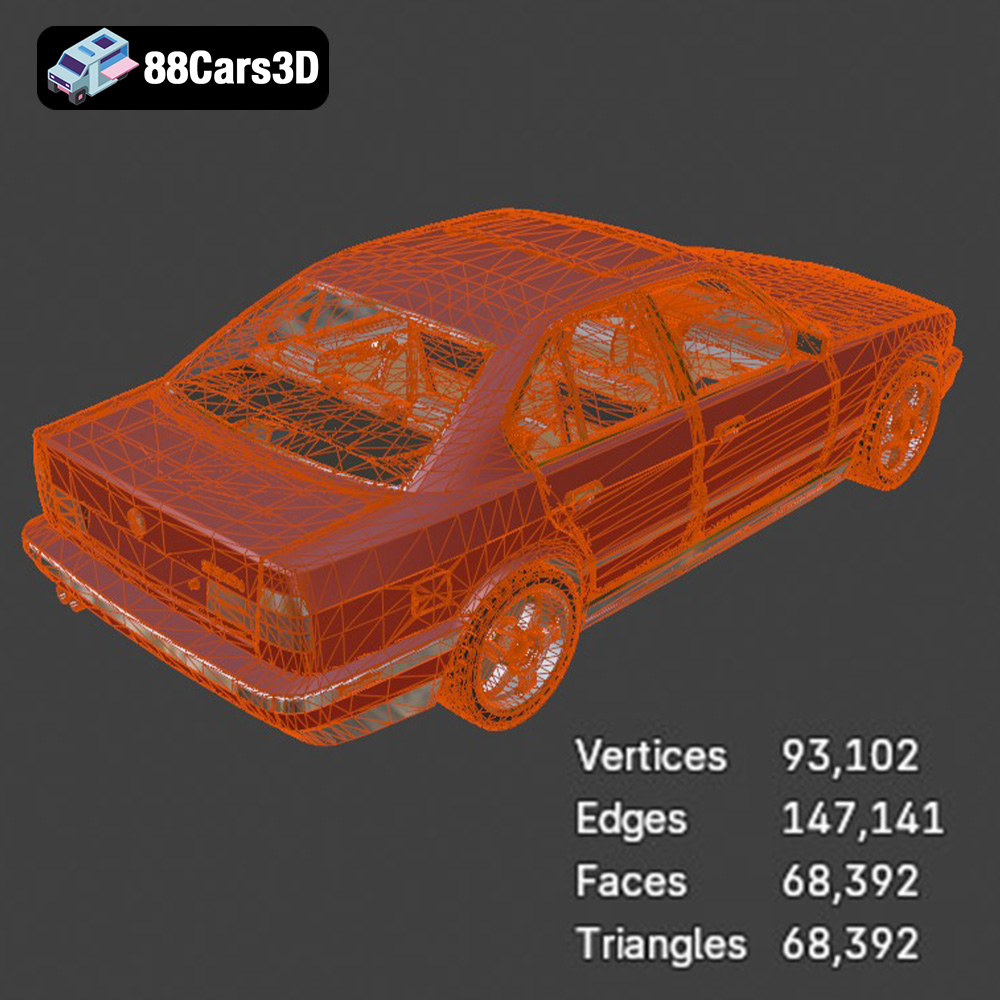
- Poly Count Strategy: An “optimized mesh structure” suggests a balanced polygon count. It’s high enough to capture the necessary details without subdivision for close-up renders, yet structured to allow for efficient decimation or LOD generation for real-time applications where performance is critical.
Conclusion: The Timeless Value of a Premium 3D Asset
The BMW 5 E34-535i is more than just a car; it’s a piece of automotive history. Its presence in the digital realm, facilitated by a high-quality 3D car model, opens up a world of creative possibilities. From the intricate details of its exterior to the carefully modeled interior and engine components, this asset provides an unparalleled foundation for artists, developers, and designers.
Whether your project involves crafting stunning automotive rendering visualizations, building immersive game worlds, or developing cutting-edge AR/VR experiences, the BMW 5 E34-535i 3D Model from 88cars3d.com offers the technical precision and artistic fidelity required. Its comprehensive file formats, robust geometry, and meticulous attention to detail ensure a smooth workflow and exceptional final results. Investing in such a versatile and meticulously crafted asset is not just about acquiring a model; it’s about acquiring a reliable partner for your professional creative endeavors, empowering you to bring automotive legends to life with stunning realism and efficiency.
Featured 3D Model
BMW 5 E34-535i 3D Model
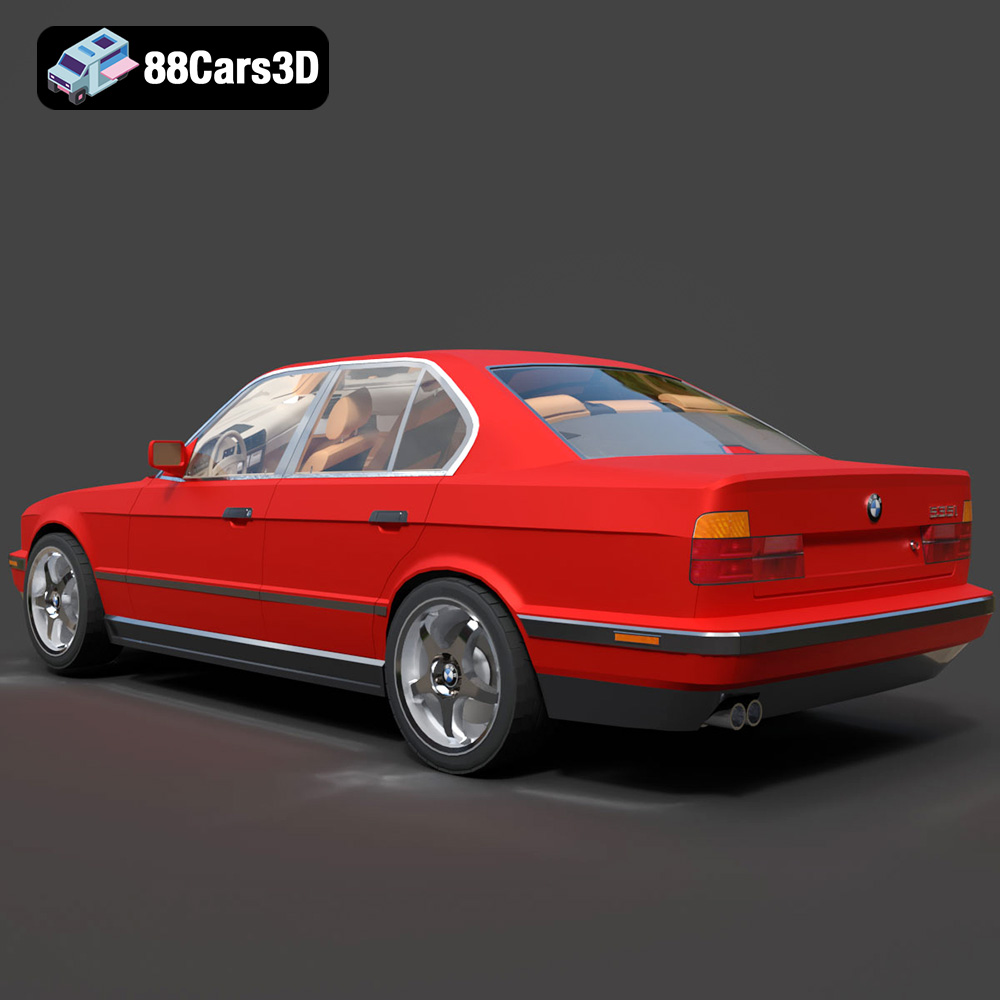
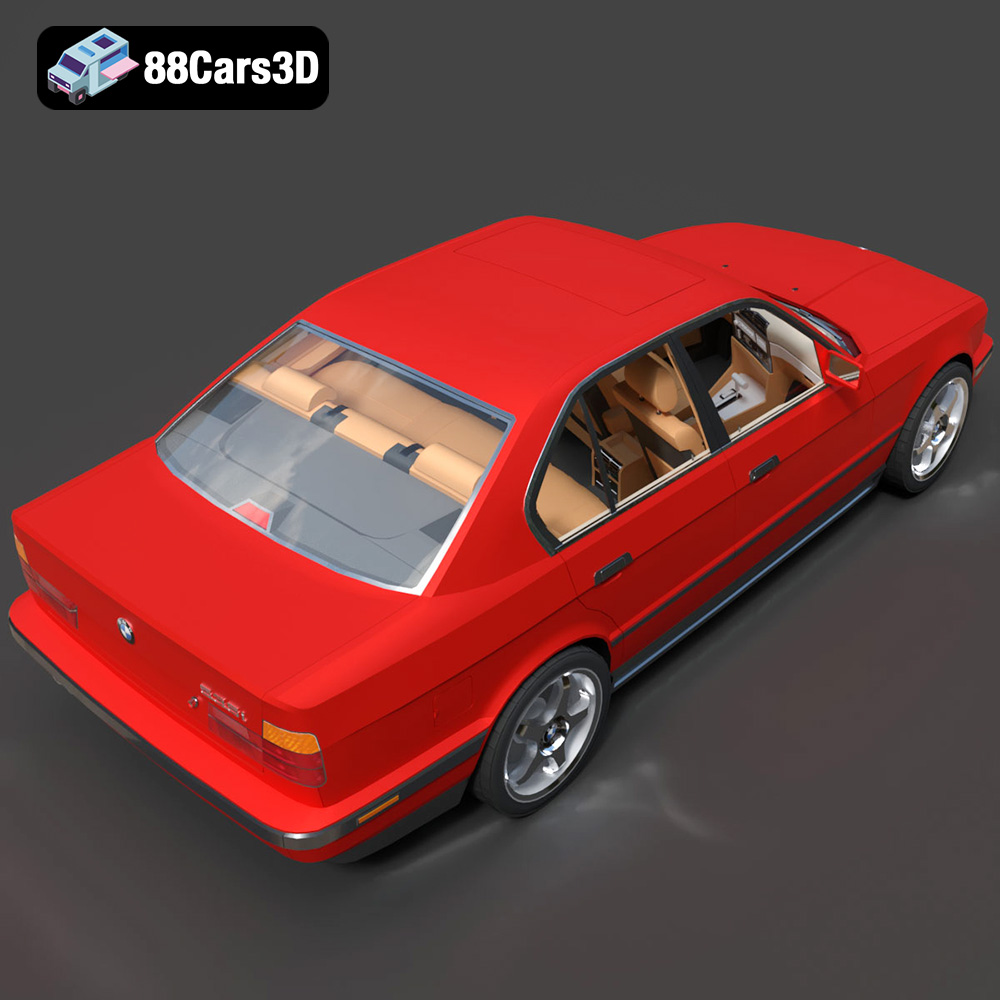
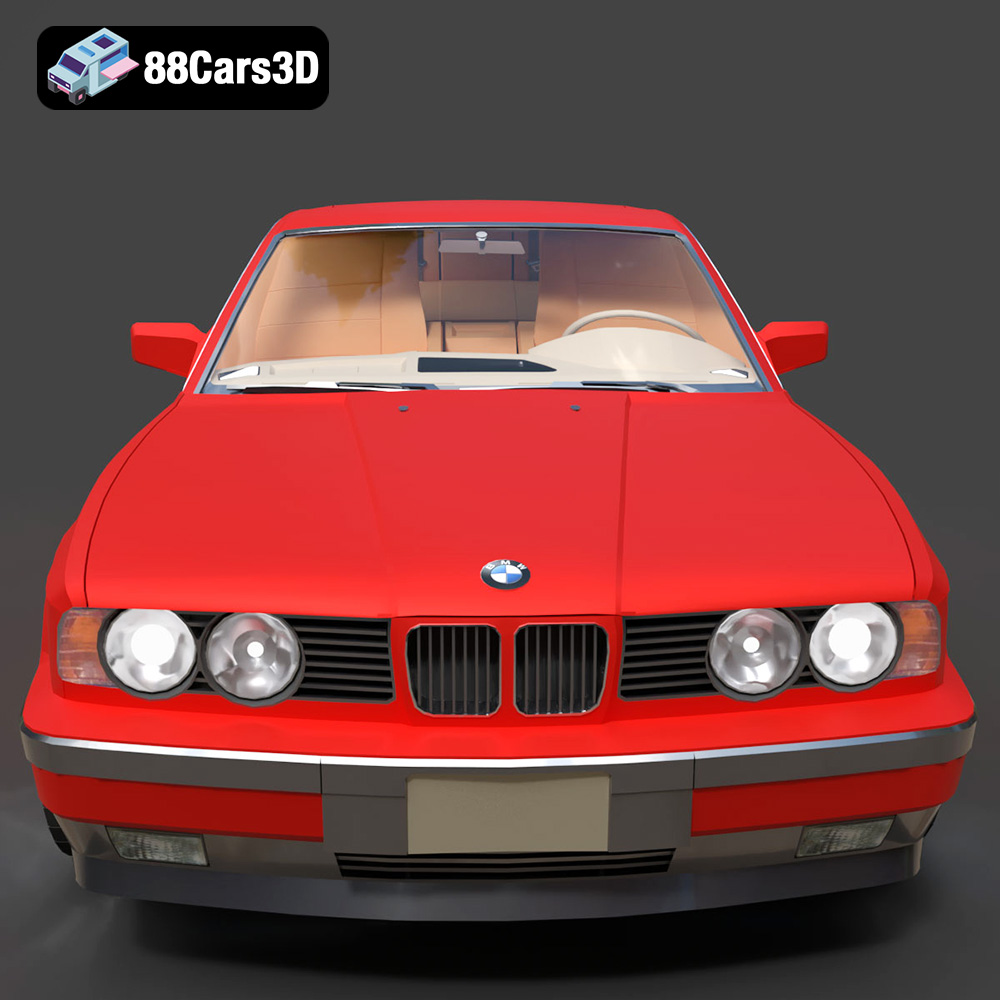
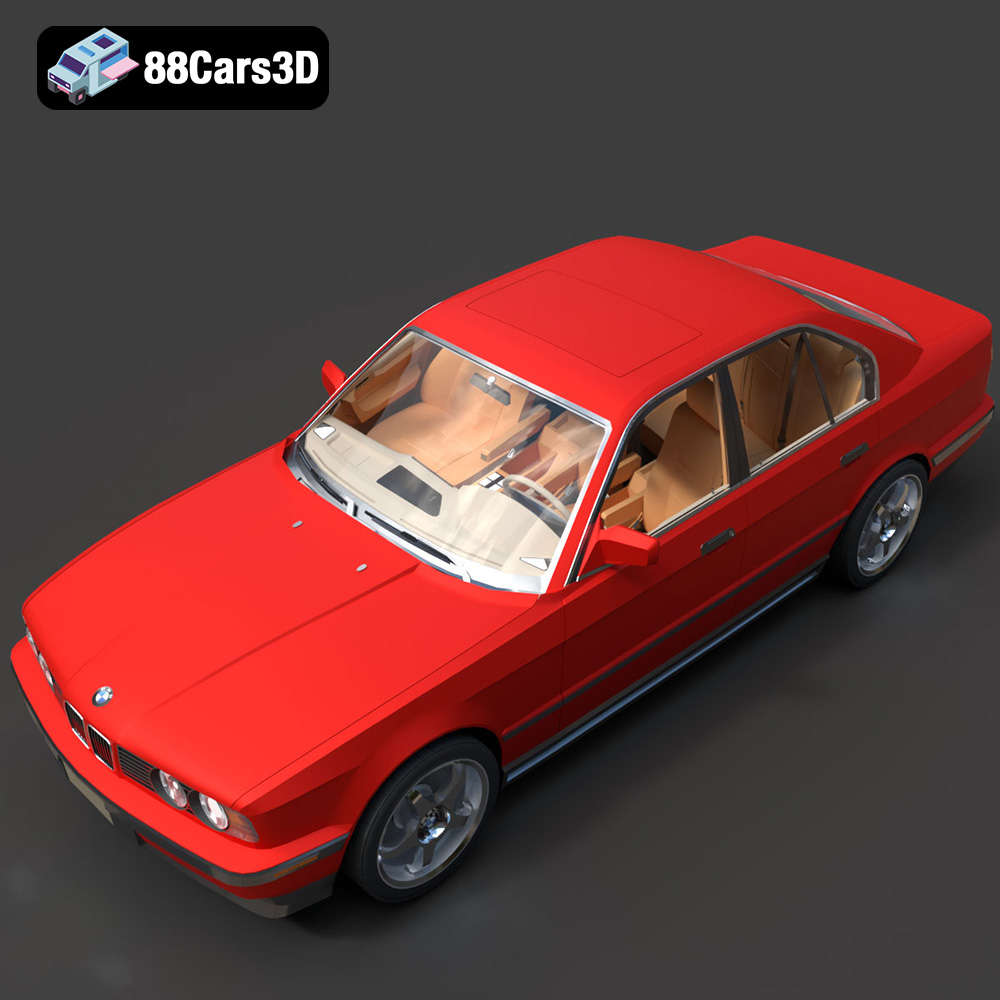
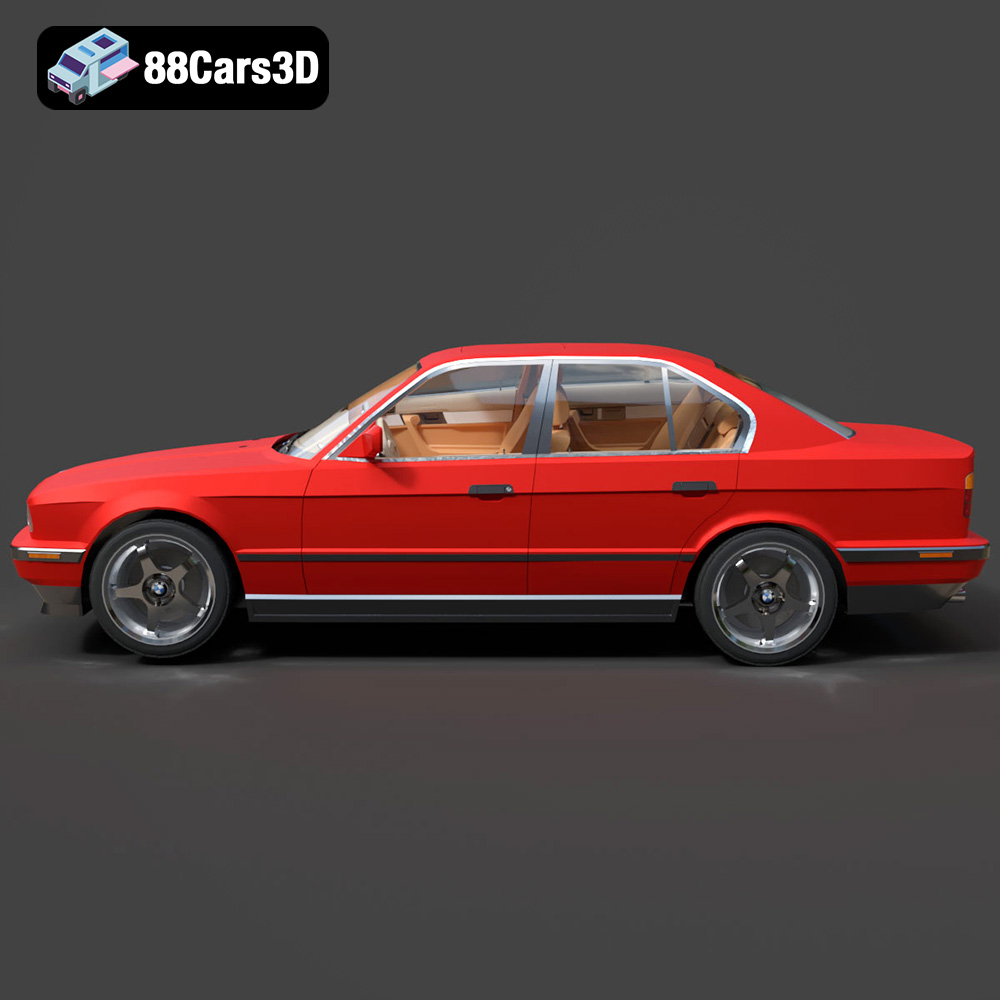
Experience the timeless elegance and robust engineering of the classic BMW 5 Series E34-535i with this meticulously crafted 3D model. Representing a pivotal era in BMW’s design philosophy, this model captures the essence of the executive sedan, blending performance aesthetics with sophisticated lines. Built with clean geometry and balanced detailing, it is engineered for optimal performance across a variety of professional applications, including high-fidelity rendering, realistic animations, detailed simulations, and immersive game development.
$10.79
Product Image Gallery


Related Tags
.535i
.5e34
.arvr
.blend
.bmw
.classiccar
.executivecar
.fbx
.gameasset
.glb
.max
.obj
.ply
.rendering
.retromodel
.sedan
.simulation
.stl
.unreal
