The world of 3D modeling continually pushes the boundaries of digital creativity, transforming ideas into breathtaking visual realities. For enthusiasts and professionals in automotive design, film production, game development, and architectural visualization, the demand for high-quality, authentic 3D car models is ever-present. These digital assets are more than just polygons and textures; they are the foundation upon which stunning renders, immersive experiences, and engaging simulations are built.
Among the vast catalog of vehicles, classic cars hold a special allure. They represent eras of design innovation, engineering prowess, and cultural significance. Capturing this essence in a digital format requires immense skill and attention to detail. This is where a meticulously crafted asset like the BMW 5 Series E12 528i 3D Model truly shines. It’s not merely a representation; it’s a digital resurrection of a beloved automotive icon, poised to elevate any project that calls for its elegant lines and historical gravitas. Available on platforms like 88cars3d.com, such professional-grade 3D car models empower creators to integrate automotive heritage seamlessly into their modern workflows.
The Enduring Legacy of Classic Automotive Design in 3D
Classic cars are more than just vehicles; they are pieces of art, engineering marvels, and cultural touchstones. Their distinctive aesthetics, often characterized by flowing lines, chrome accents, and a sense of timeless elegance, make them incredibly desirable subjects for 3D artists. Recreating these machines in a digital environment presents unique challenges and rewards, requiring a deep understanding of both automotive history and advanced 3D modeling techniques.
Capturing Authenticity in Digital Form
The process of transforming a physical classic car into a high-fidelity 3D model involves painstaking research and precision. Artists delve into blueprints, historical photographs, and real-world examples to ensure every curve, panel gap, and emblem is accurately represented. This dedication to authenticity is crucial, especially for projects where historical accuracy is paramount, such as period films, museum exhibits, or automotive restoration simulations. A professionally developed 3D car model, like the BMW 5 Series E12 528i, ensures that the digital rendition carries the same visual weight and historical integrity as its physical counterpart.
The E12 528i: A Design Icon Reimagined
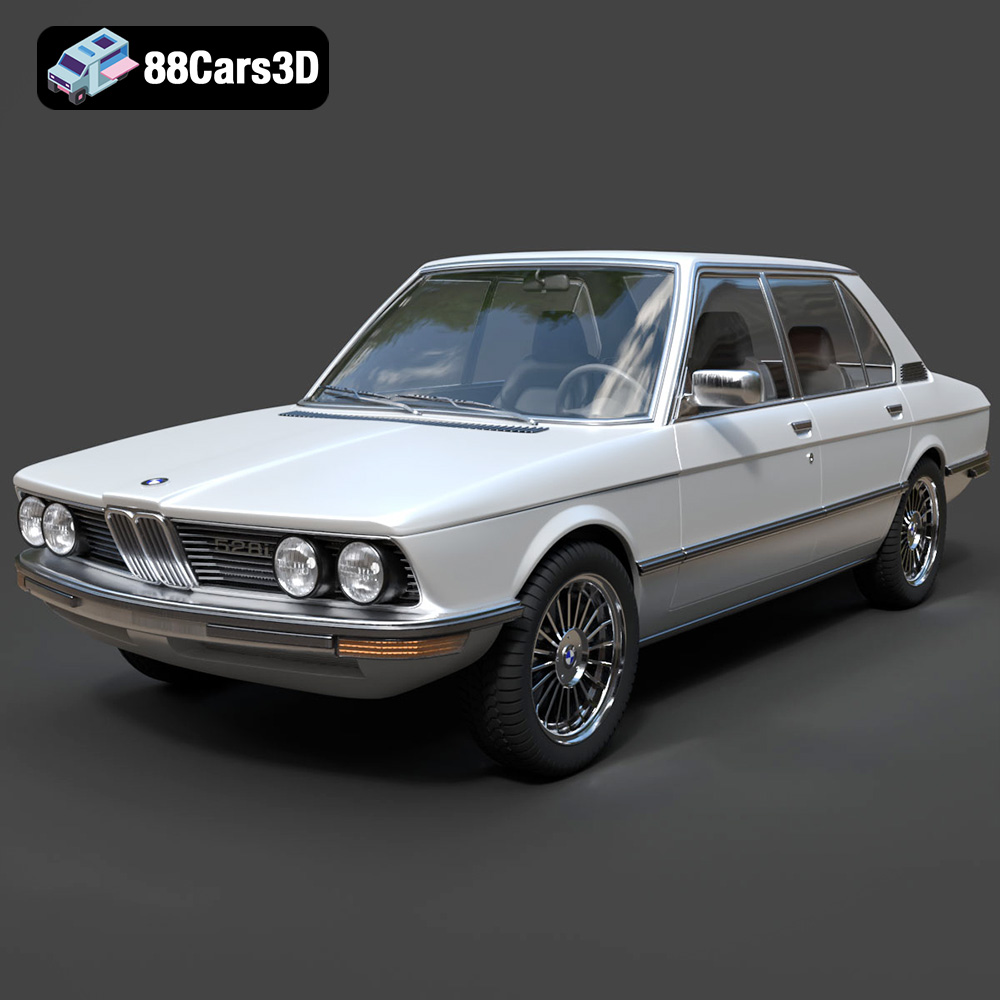
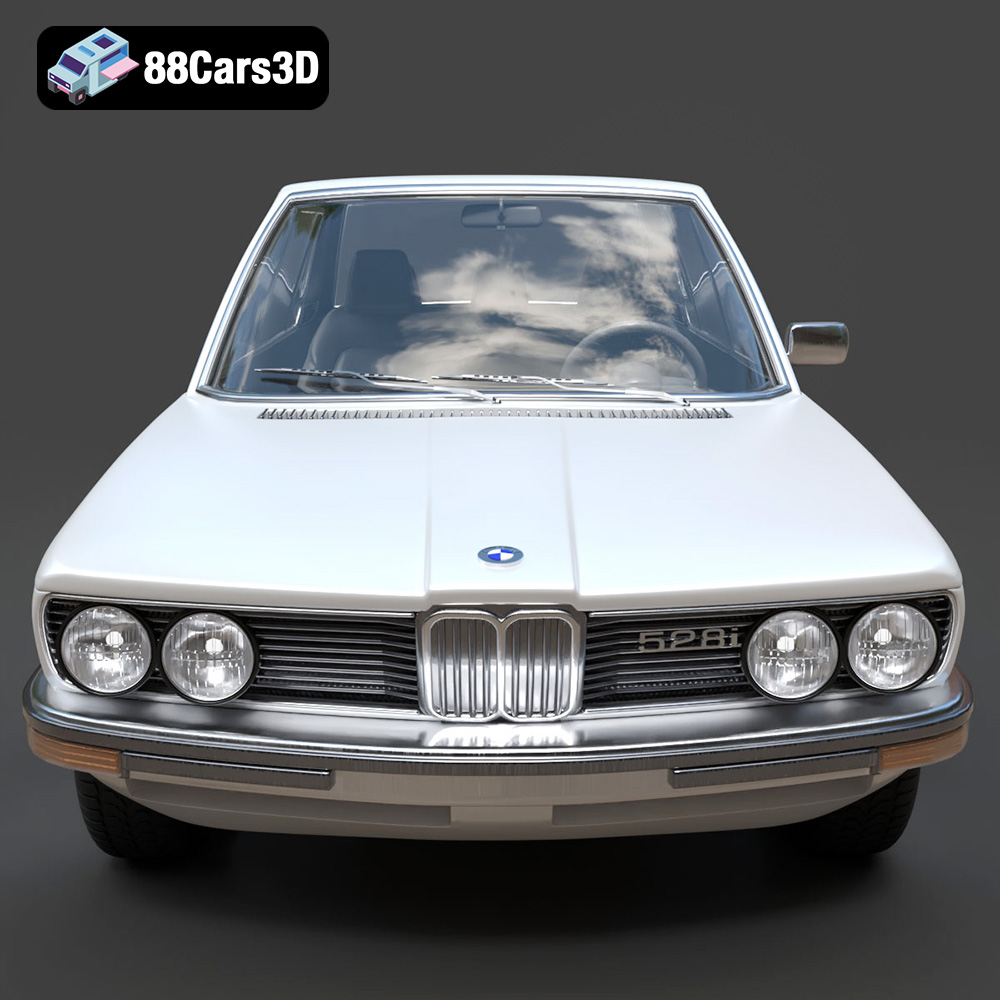
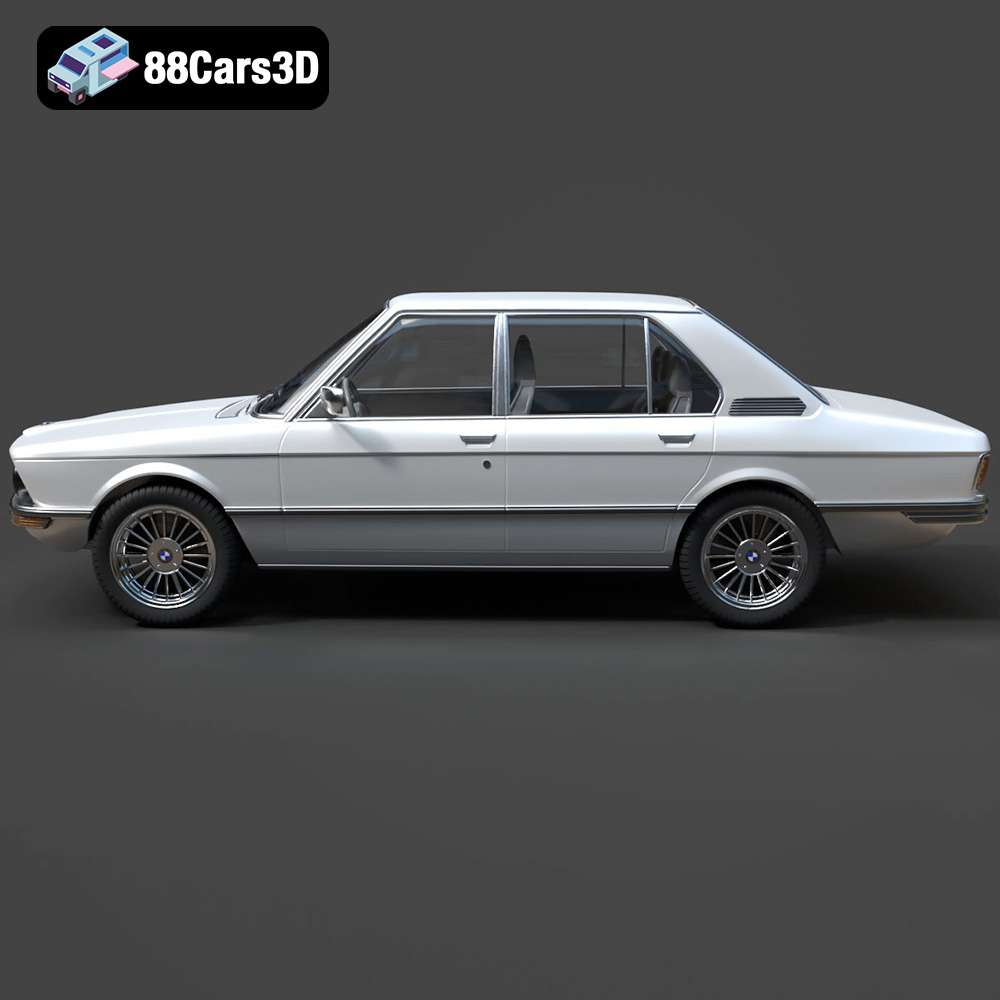
The BMW 5 Series E12, the first generation of BMW’s iconic mid-size sedan, launched in 1972, quickly became a benchmark for executive sedans. Its clean lines, distinctive shark nose, and driver-focused interior embodied BMW’s “ultimate driving machine” philosophy. The 528i variant, known for its robust performance, cemented its status as a desirable classic. For 3D artists, replicating such a revered model demands a high degree of precision. The BMW 5 Series E12 528i 3D Model exemplifies this commitment, offering a digital asset where every exterior panel, lighting fixture, and badge has been meticulously recreated. This meticulous approach ensures that whether viewed in a close-up render or integrated into a sprawling virtual environment, the car’s iconic design language is unmistakably present.
Understanding 3D Model File Formats
Choosing the correct file format is a critical decision in any 3D workflow, directly impacting compatibility, performance, and the eventual utility of your 3D car models. The BMW 5 Series E12 528i 3D Model from 88cars3d.com is provided in a comprehensive suite of formats, catering to a wide array of professional applications. Understanding the nuances of each is essential for efficient project management and optimal results.
Versatility for Diverse Workflows (.blend, .max, .obj)
- .blend – Fully editable Blender scene with materials: Blender has rapidly become a powerhouse in the 3D industry due to its open-source nature and robust feature set. A .blend file offers the maximum flexibility, providing the raw, editable scene including meshes, materials, textures, lighting setups, and even animation data. For those working within the Blender ecosystem, this format is ideal for making modifications, fine-tuning shaders, or integrating the model into existing Blender projects. It allows for deep customization of the BMW E12 model, from adjusting paint finishes to re-rigging components.
- .max – Editable 3ds Max project for animation and rendering: For professionals entrenched in the Autodesk ecosystem, the .max format is indispensable. 3ds Max is a long-standing industry standard for architectural visualization, animation, and high-end rendering. A .max file provides an editable project, complete with intricate scene setups, advanced material configurations for renderers like V-Ray or Corona, and potential animation rigs. This format is perfect for users who need to integrate the BMW E12 into complex scene compositions, apply advanced rendering techniques, or create sophisticated automotive animations directly within 3ds Max.
- .obj – Universal format for cross-software compatibility: The Wavefront .obj format is one of the most widely supported and robust file formats for exchanging 3D geometry between different applications. It stores mesh data (vertices, normals, UVs) and can reference external material (.mtl) files. While it doesn’t typically store advanced scene information like lights or complex material graphs, its universality makes it an excellent choice for broad compatibility. When importing the BMW E12 as an .obj, you can be confident it will open in almost any 3D software package, serving as a reliable base for further work, even if materials need to be reconstructed.
Real-time and Web-Optimized Solutions (.fbx, .glb, .unreal)
- .fbx – Ideal for Unreal, Unity, and real-time pipelines: Autodesk’s Filmbox (.fbx) format is the de facto standard for exchanging 3D data between DCC (Digital Content Creation) tools and game engines. It supports not only geometry and UVs but also crucial elements like materials (often simplified PBR setups), rigging, animation, and camera data. For game development with Unreal Engine or Unity, .fbx is the go-to format for importing the BMW E12, ensuring that its optimized topology and basic material assignments translate effectively into the real-time environment.
- .glb – Optimized for AR, VR, and browser-based display: The GL Transmission Format (glTF), especially its binary form (.glb), is rapidly becoming the industry standard for 3D on the web and in AR/VR applications. It’s designed for efficient transmission and loading of 3D scenes and models, including geometry, materials (PBR), animations, and skinning. A .glb version of the BMW E12 is perfect for interactive web viewers, augmented reality experiences on mobile devices, or virtual reality simulations, providing a compact yet feature-rich asset.
- .unreal – Engine-ready asset for real-time environments: This custom format indicates a model specifically prepared and potentially packaged for direct use within Unreal Engine projects. Such assets often come with pre-configured materials, collision meshes, LODs (Levels of Detail), and sometimes even basic blueprints, significantly reducing the setup time for game developers. The inclusion of an .unreal file for the BMW E12 means it’s truly game-engine ready, streamlining its integration into high-performance real-time scenes.
Specialized Applications (.stl, .ply)
- .stl – Suitable for 3D printing output: The Stereolithography (.stl) format is synonymous with 3D printing. It represents a 3D model as a collection of unconnected triangular facets, making it ideal for manufacturing processes like Fused Deposition Modeling (FDM) or Stereolithography (SLA). While it lacks color, texture, or material information, an .stl file of the BMW E12 allows for the physical manifestation of the digital model, whether for prototyping, creating scale replicas, or producing custom parts.
- .ply – Precision mesh format for CAD or analysis: The Polygon File Format (.ply) is a versatile format for storing 3D data, particularly from 3D scanners, and is well-suited for applications requiring precise mesh data, such as CAD, scientific visualization, or detailed analysis. It can store various properties like color, transparency, and even normal vectors per vertex or face. While less common for general rendering, a .ply version of the BMW E12 can be valuable for specific engineering, simulation, or data-driven design projects where mesh integrity and detailed point cloud-like data are critical.
The Art of Automotive Rendering: Bringing the BMW E12 to Life
Automotive rendering is a specialized field where artistry meets technical prowess. It involves transforming a raw 3D model into a photorealistic image or animation, complete with intricate lighting, realistic materials, and compelling environments. For a classic like the BMW 5 Series E12 528i, rendering is about capturing its soul, presenting it in a way that evokes nostalgia and admiration.
Achieving Photorealism with Advanced Materials and Lighting
The foundation of a convincing render lies in its materials and lighting. High-quality 3D car models, such as those found on 88cars3d.com, come with expertly configured materials that accurately simulate paint, glass, rubber, chrome, and other components. These materials often utilize Physically Based Rendering (PBR) workflows, ensuring that light interacts with surfaces in a scientifically accurate manner. For the BMW E12 model, this means the metallic flake in the paint reflects light realistically, the chrome trim gleams authentically, and the glass accurately refracts the environment. Coupled with sophisticated lighting setups – from studio HDRI environments to complex outdoor scenes with sun and sky systems – these elements converge to create breathtaking automotive renderings that are virtually indistinguishable from real-world photography.
Integration into Architectural Visualization and Film Production
The versatility of professional-grade 3D car models extends far beyond simple product shots. In architectural visualization (arch-viz), vehicles serve as crucial context elements, adding life, scale, and narrative to digital buildings and urban scenes. Imagine the BMW E12 528i parked elegantly outside a contemporary villa or cruising down a tree-lined street in a period-specific render. Its classic design provides a powerful visual anchor, enhancing the realism and storytelling of the architectural environment. Similarly, in film production, accurate 3D car models are invaluable for visual effects, allowing directors to place vehicles in impossible scenarios, re-create historical scenes, or augment live-action footage with digital doubles. The BMW E12 model, with its fully detailed interior and engine bay, is suitable for close-up renders required in high-stakes film sequences.
Leveraging the BMW E12 Model’s Detail in Rendering Suites
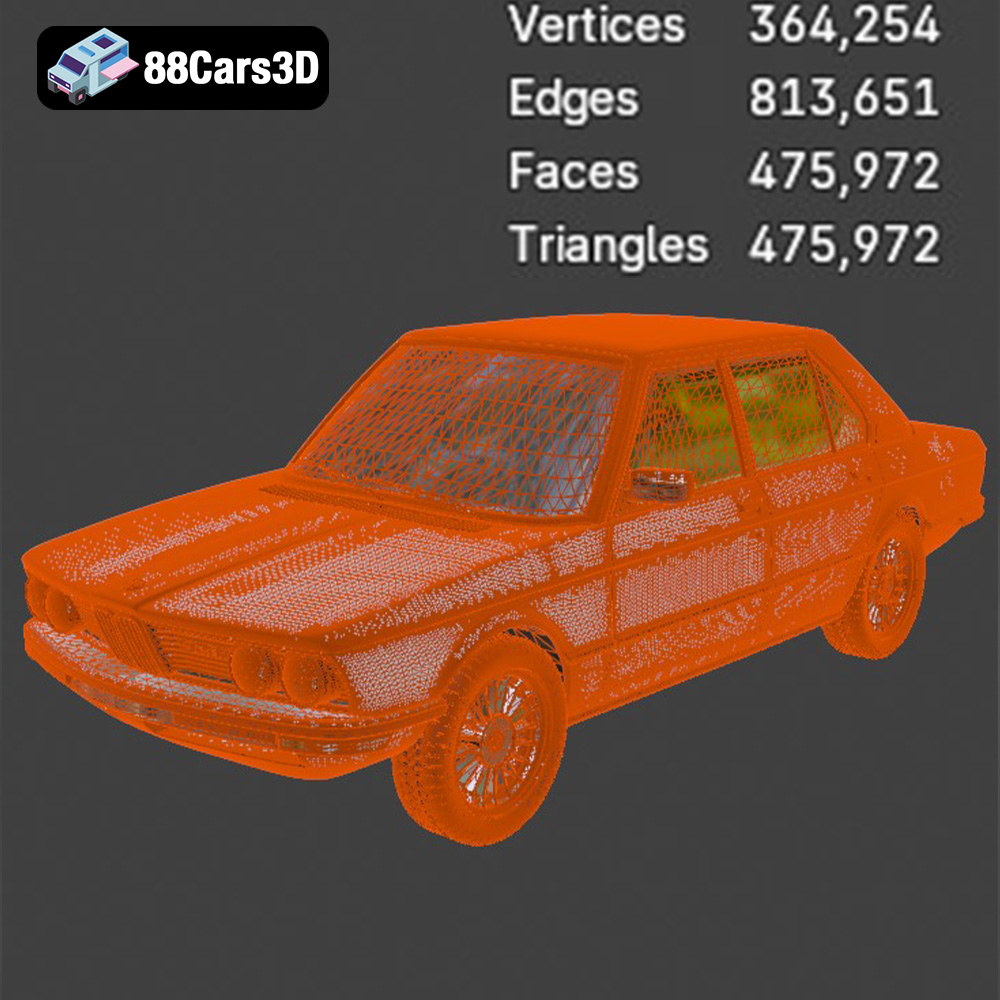
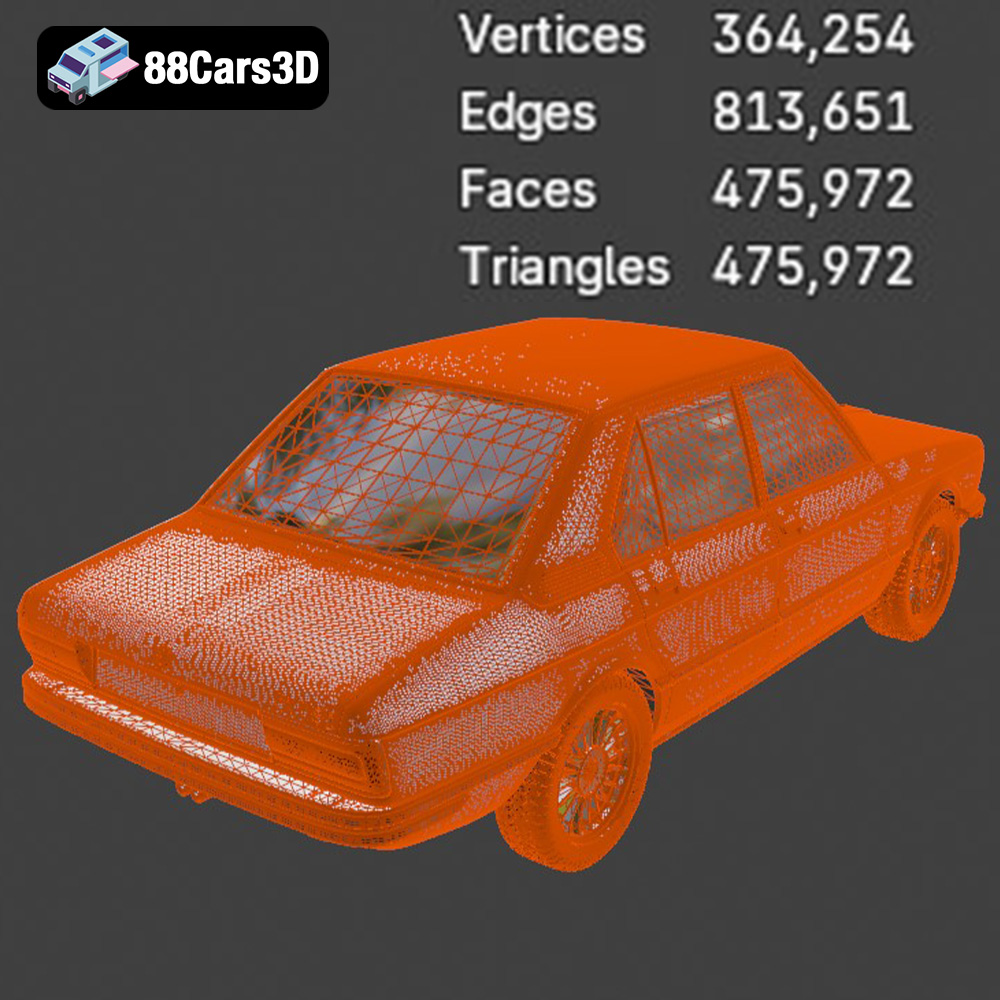
Whether you’re working in 3ds Max with V-Ray or Corona, or Blender with Cycles or Eevee, the intrinsic quality of the BMW E12 528i 3D Model simplifies the rendering process. Its professional-grade topology and clean, optimized geometry ensure smooth subdivision, critical for achieving high-detail surfaces without introducing rendering artifacts. The included materials, pre-configured for realism, serve as an excellent starting point, often requiring only minor tweaks to match specific scene lighting or stylistic choices. This saves countless hours for artists, allowing them to focus on the creative aspects of composition, camera work, and environmental storytelling rather than fundamental model preparation.
Optimizing 3D Car Models for Real-time Game Engines
The interactive nature of game development demands a different set of optimizations compared to static rendering. While photorealism is still a goal, it must be achieved within strict performance budgets. High-quality 3D car models designed for game development, like the BMW 5 Series E12 528i 3D Model, are built with these constraints in mind, ensuring smooth performance in demanding real-time environments such as Unreal Engine and Unity.
Performance Considerations for Unreal Engine and Unity
Game engines like Unreal and Unity prioritize efficiency. Every polygon, texture resolution, and shader instruction contributes to the overall rendering cost. For a complex asset like a car, careful optimization is crucial. This often involves judicious poly count management, the creation of Level of Detail (LOD) models, and streamlined material setups. The BMW 5 Series E12 528i 3D Model is engineered with optimized geometry, making it a robust foundation for real-time applications. Its game-engine ready formats, such as .fbx and .unreal, facilitate quick and efficient integration, allowing developers to focus on gameplay mechanics and environmental design.
LODs, UVs, and Texture PBR Workflows
To maintain performance, game assets often utilize LODs – simplified versions of the model that swap in when the object is further from the camera. A high-quality 3D car model will have clean UV unwraps, which are essential for applying textures without distortion and for efficient lightmap generation. Modern game engines predominantly use PBR (Physically Based Rendering) workflows for materials, relying on maps like Albedo (Base Color), Normal, Roughness, Metallic, and Ambient Occlusion. The materials included with the BMW E12 3D model are configured for realism, providing accurate reflections and surface textures, ready to be translated into the PBR systems of Unreal or Unity.
Simulating Driving Dynamics with Accurate Geometry
Beyond visual fidelity, accurate geometry in a 3D car model is vital for realistic physics and driving simulations in games. A well-modeled vehicle body provides a precise collision mesh, enabling accurate interaction with the environment and other objects. The detailed interior and engine bay of the BMW E12 528i 3D Model are not just for show; they can also be used for intricate vehicle damage systems, first-person cockpit views, or even VR training simulations. The professional-grade topology ensures that suspension, wheels, and other mechanical parts can be rigged and animated with precision, contributing to a more immersive and believable driving experience.
Beyond Visualization: AR, VR, and 3D Printing with Classic Cars
The utility of high-quality 3D car models extends beyond traditional rendering and game development, venturing into the exciting realms of augmented reality (AR), virtual reality (VR), and even physical manifestation through 3D printing. These technologies unlock new possibilities for interaction, education, and creation with iconic vehicles like the BMW E12.
Immersive Experiences with AR/VR Applications
AR and VR offer unprecedented ways to interact with 3D models. Imagine standing next to a full-scale BMW 5 Series E12 528i in your living room via an AR app, or exploring its meticulously detailed interior in a VR showroom. For automotive companies, these technologies provide engaging marketing tools; for collectors, they offer virtual garage experiences. The optimized geometry and .glb format of the BMW E12 model are perfectly suited for these lightweight, interactive environments, allowing for seamless integration into mobile AR apps, web-based VR experiences, and high-fidelity VR simulations. The model’s authentic representation ensures that the immersive experience is both realistic and captivating.
Prototyping and Collectibles via 3D Printing
3D printing bridges the gap between the digital and physical worlds. While a 3D car model is primarily a digital asset, formats like .stl open up avenues for physical creation. This could range from printing scale models of the BMW E12 for collectors, creating custom dashboards or interior components for real-world classic car restorations, or even prototyping design modifications. The precision mesh provided by formats like .ply also aids in ensuring geometric accuracy for these physical outputs. The ability to transform a digital model into a tangible object adds another layer of value and utility to high-quality 3D assets.
The Role of Optimized Formats like .glb and .stl
For AR/VR, the .glb (GLB) format is paramount due to its efficiency and ability to package geometry, materials, and animations into a single, compact file, ideal for streaming over the web or deployment on resource-constrained devices. Its PBR material support ensures visual fidelity in real-time. For 3D printing, the .stl format, while simpler in terms of data, provides the triangulated mesh data that 3D printers understand. The availability of both these specialized formats for the BMW 5 Series E12 528i 3D Model underscores its versatility and readiness for a wide spectrum of modern and emerging applications, showcasing why resources like 88cars3d.com are indispensable for sourcing such adaptable assets.
Mastering Professional 3D Workflows with the BMW E12 Model
In the professional 3D industry, efficiency and quality go hand-in-hand. Artists and studios constantly seek ways to streamline their workflows without compromising on visual fidelity. Integrating pre-made, high-quality 3D car models like the BMW 5 Series E12 528i can significantly enhance productivity and the overall standard of a project.
Streamlining Asset Integration in 3ds Max and Blender
Whether your primary DCC application is 3ds Max or Blender, the BMW E12 model is designed for smooth integration. The inclusion of native .max and .blend files means you’re not starting from scratch with generic imports. Instead, you’re working with files that retain their original material setups, potentially lighting, and even organizational structures. This allows artists to quickly drop the car into a scene, make minor adjustments, and proceed with rendering or animation. The clean, optimized geometry ensures that subdivision modifiers work flawlessly, providing high-detail results without the need for extensive mesh cleanup – a common time-sink with lower quality assets.
Ensuring Consistency Across Projects
For studios working on large-scale projects, consistency is key. Using a professionally modeled 3D car model ensures that the asset maintains a high standard of quality across different scenes, artists, and even software packages. The BMW E12 528i model’s meticulous recreation of every panel, fixture, and badge guarantees that its digital presence is consistent and authentic, regardless of the context. This reliability is critical for maintaining brand image in marketing materials, historical accuracy in documentaries, or visual continuity in game environments.
The Value of Pre-optimized 3D Car Models
Developing a complex 3D car model from scratch is an incredibly time-consuming and expensive endeavor. Sourcing pre-optimized 3D car models like those offered by 88cars3d.com provides significant advantages. These models come with professional-grade topology, optimized geometry, and pre-configured materials, essentially delivering a “plug-and-play” asset ready for immediate use. This dramatically reduces development time and costs, allowing artists and studios to allocate resources to other critical aspects of their projects, such as scene development, animation, or post-production. The immediate availability of detailed interiors and engine bays further enhances this value, providing flexibility for diverse shot requirements from wide angles to extreme close-ups.
Conclusion
In the dynamic landscape of 3D visualization, the quality of your assets is paramount. Whether you’re crafting photorealistic renders for an automotive campaign, building immersive environments for a game, or creating interactive experiences for AR/VR, starting with a robust and accurate 3D model is the foundation for success. The journey from concept to final render, or from design to game-ready asset, is significantly smoothed when you rely on expertly crafted resources.
The BMW 5 Series E12 528i 3D Model stands as a prime example of what a high-quality 3D car model should embody. Its meticulous attention to detail, professional-grade topology, and comprehensive suite of included file formats – from .blend and .max for deep customization, to .fbx and .unreal for real-time applications, and .glb and .stl for emerging technologies – make it an exceptionally versatile and invaluable asset. It’s a testament to the fact that with the right tools, the enduring legacy of automotive design can be beautifully preserved and creatively expanded in the digital realm.
For professionals seeking to elevate their projects with premium 3D car models, exploring reputable marketplaces like 88cars3d.com is a smart investment. These platforms offer a curated selection of meticulously crafted digital vehicles, ready to be integrated into any demanding workflow. By choosing assets like the BMW E12 528i, you’re not just acquiring a 3D model; you’re gaining a powerful catalyst for innovation, efficiency, and unparalleled visual excellence.
Featured 3D Model
BMW 5 Series E12 528i 3D Model
The BMW 5 Series E12 528i 3D model captures the essence of this influential classic sedan with uncompromising accuracy. Every exterior panel, lighting fixture, and badge has been meticulously recreated to deliver a digital asset suitable for professional visualization projects. This model provides an authentic representation of the first generation of the 5 Series, perfect for projects requiring automotive nostalgia and technical precision.
This product features professional-grade topology and clean, optimized geometry, ensuring smooth subdivision and reliable performance in various 3D environments. Materials are configured for realism, delivering accurate reflections and surface textures on paint, glass, rubber, and chrome components. The model includes a fully detailed interior and engine bay suitable for close-up renders and simulation environments.
Ideal for a wide range of applications, this vehicle model is ready for use in photorealistic rendering, film production, architectural visualization, dynamic game development (Unreal Engine, Unity), virtual reality (VR), and augmented reality (AR) experiences. Integrate this classic BMW into your digital scene instantly.
$14.99
Product Image Gallery