Get 20% OFF All Premium 3D & STL Models!

In the dynamic worlds of automotive design, game development, cinematic visualization, and interactive experiences, the quality of 3D assets is paramount. A meticulously crafted 3D model doesn’t just represent an object; it embodies a vision, conveys precision, and empowers creators to push the boundaries of realism and immersion. Whether you’re a seasoned professional or an aspiring artist, the demand for high-fidelity 3D car models that stand up to rigorous technical scrutiny has never been greater.
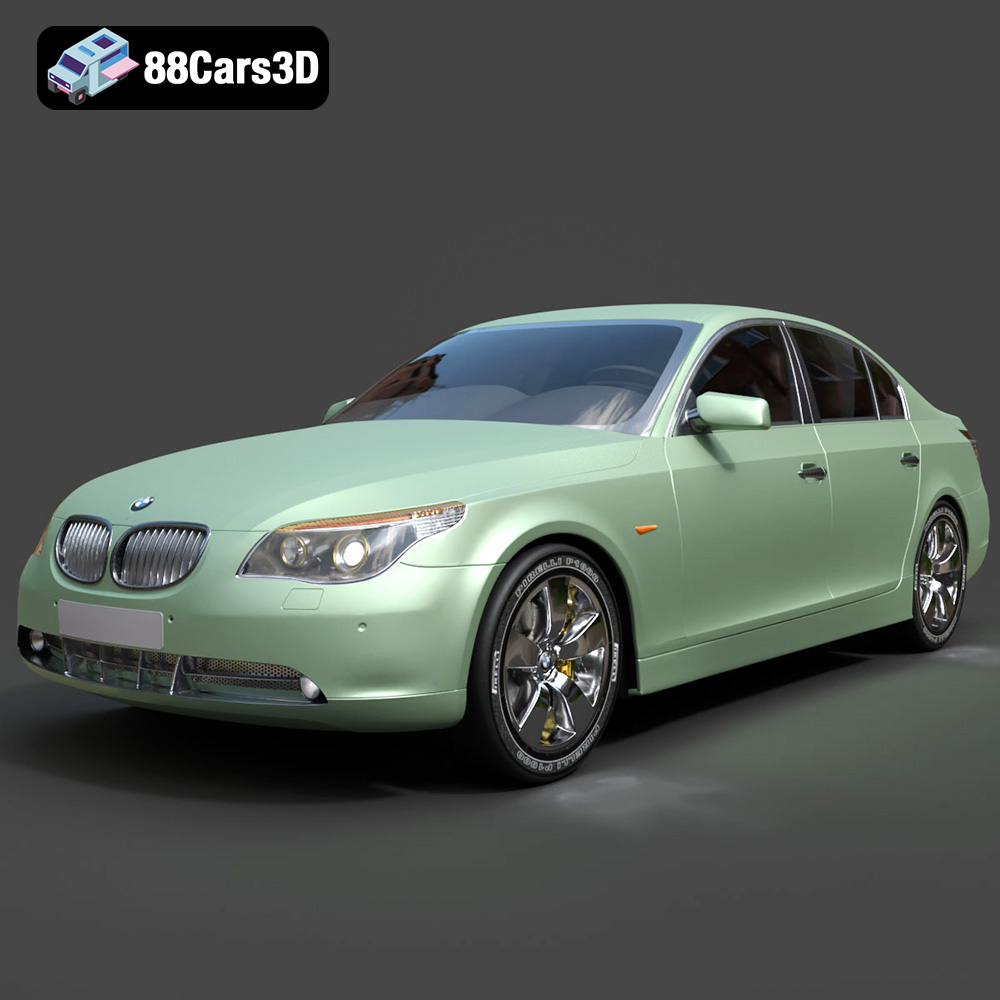
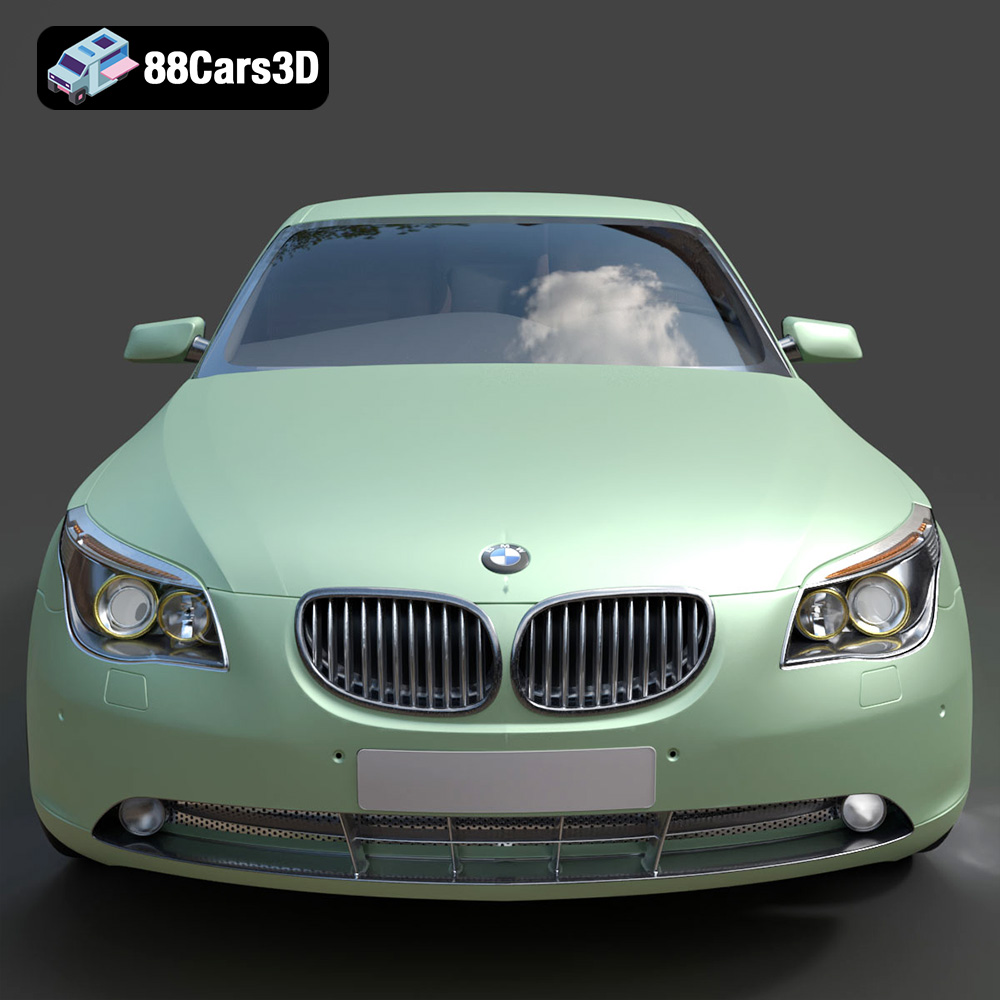
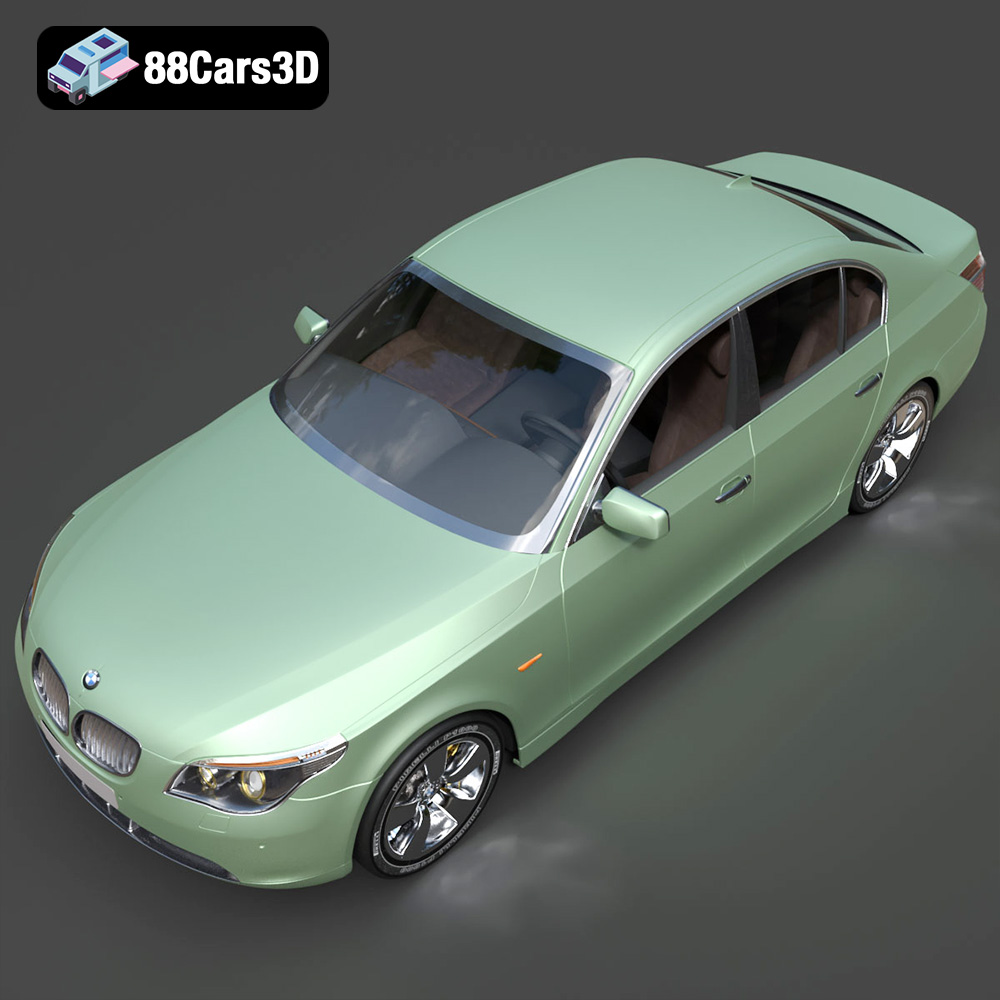
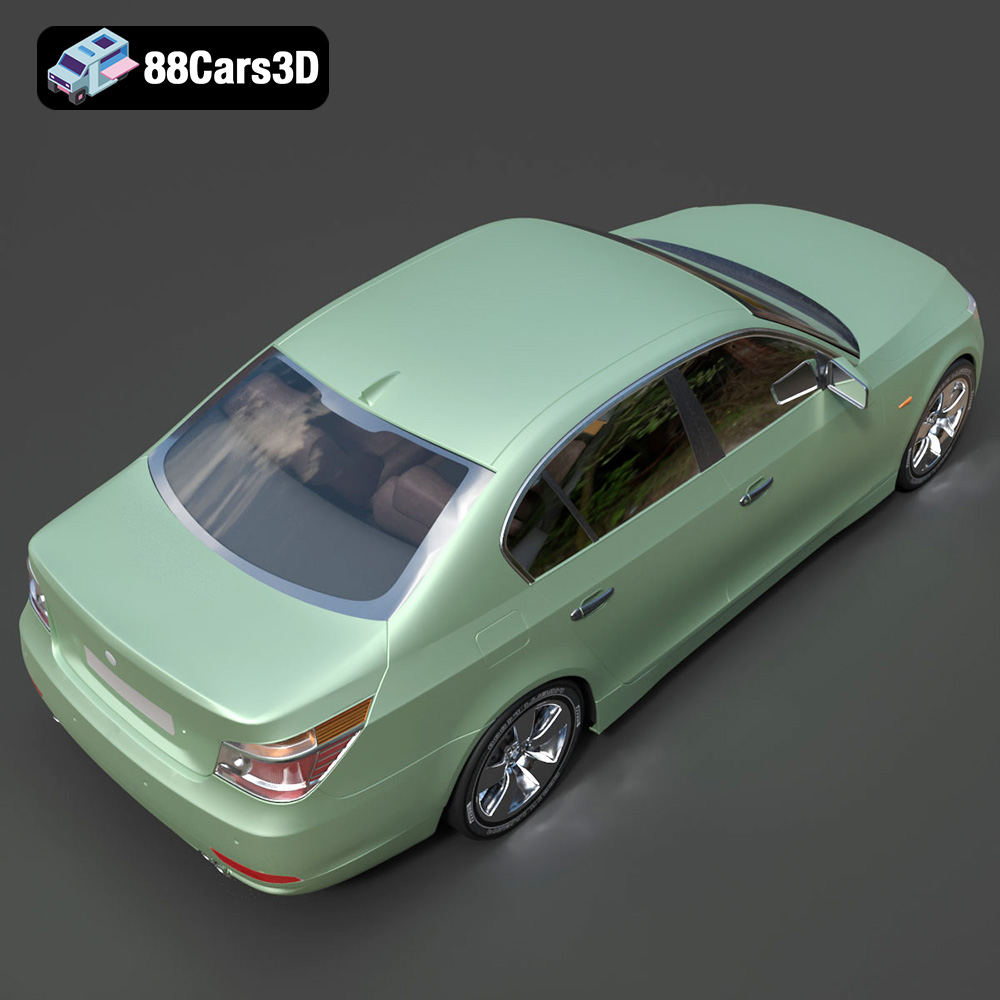
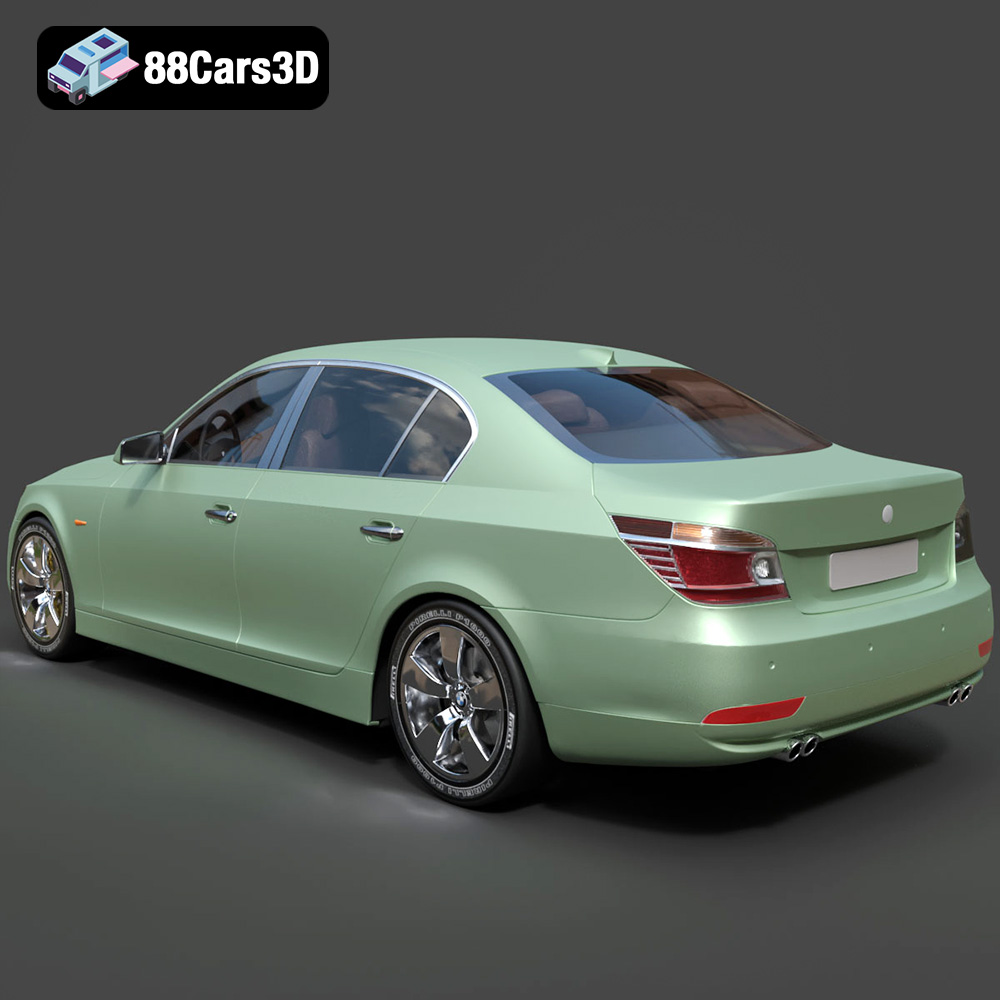
This pursuit of digital perfection is perfectly encapsulated by assets such as the BMW 5 Series E60 3D Model. This exquisite digital replica offers a window into the advanced techniques and considerations that go into creating a truly professional-grade asset. It’s not merely a visual representation but a comprehensive digital package engineered for diverse applications, from breathtaking automotive rendering to interactive game environments and even precise 3D printing. Understanding the nuances of such a model, from its topology to its supported file formats, is crucial for anyone looking to leverage the full potential of 3D technology in their projects.
The automotive industry has been a pioneer in adopting 3D visualization, from initial concept sketches to final marketing campaigns. A premium 3D car model is the linchpin in this process, offering unparalleled flexibility and efficiency. These assets allow designers to iterate rapidly, marketers to create compelling visuals without physical prototypes, and game developers to populate virtual worlds with stunning realism.
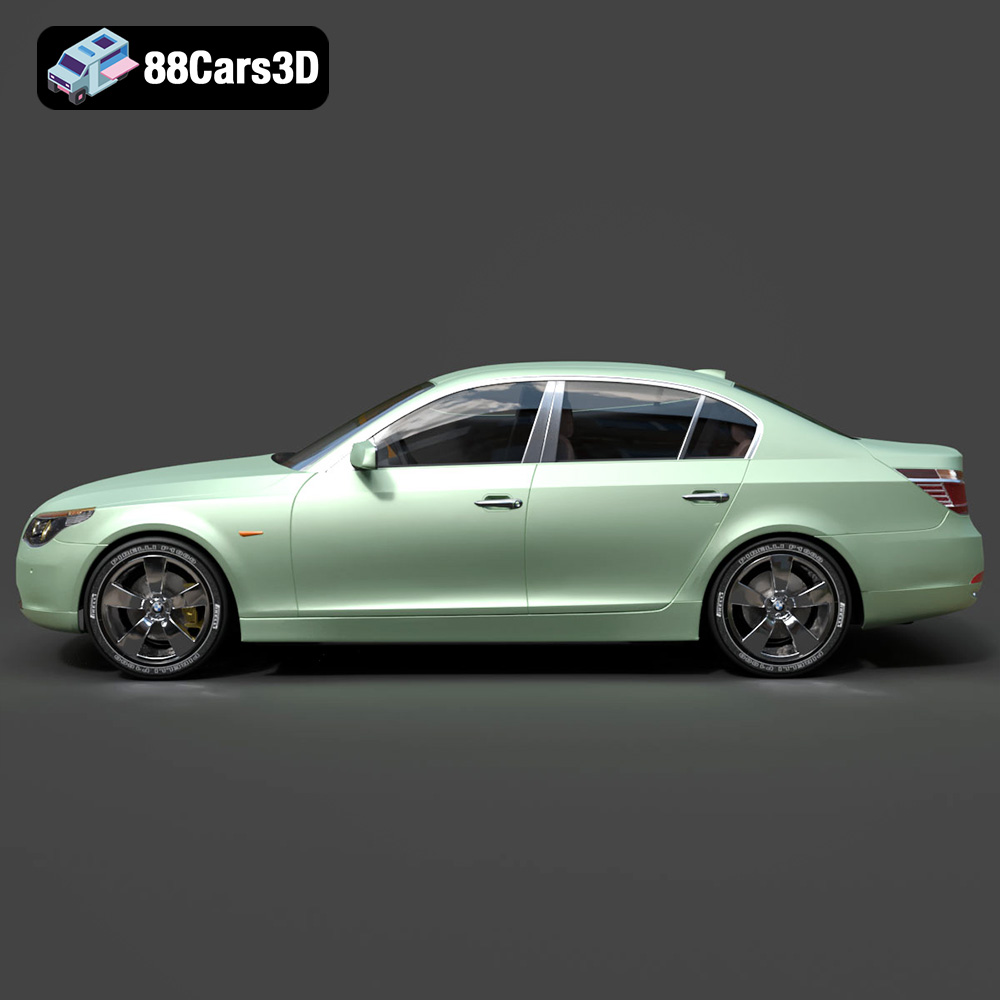
For automotive rendering, precision is non-negotiable. Every curve, every reflection, and every material surface must faithfully reproduce its real-world counterpart. The BMW 5 Series E60 3D Model exemplifies this dedication, featuring accurately modeled body panels that capture the E60’s unique contours and aggressive stance. Highly detailed headlights, taillights, and indicator lights with realistic transparent materials ensure that even close-up shots hold up to scrutiny. This level of detail isn’t just for aesthetics; it’s fundamental for design reviews, aerodynamics simulations, and generating marketing collateral that resonates with an audience’s desire for authenticity.
High-quality 3D car models serve as a critical bridge. Before a physical prototype is ever built, a 3D model allows engineers to test theories, designers to refine aesthetics, and marketing teams to begin pre-visualization. For example, the separated components of the BMW E60 model—doors, hood, and trunk—facilitate ease of animation and interactive functionality, making it invaluable for virtual showrooms or assembly line simulations. Furthermore, its real-world scale ensures accurate integration into diverse scenes and projects, eliminating guesswork and scaling issues that can plague less professional assets.
The utility of any 3D model is often defined by its compatibility and the specific features supported by its file format. Navigating the landscape of 3D file formats can be complex, but choosing the right one for your project is critical for efficient workflows and optimal results. The BMW 5 Series E60 3D Model from 88cars3d.com offers a comprehensive suite of formats, each tailored for distinct professional applications.
The .blend file format is native to Blender, a leading open-source 3D creation suite. A .blend file typically includes the full Blender scene: geometry, materials, textures, lighting setups, cameras, animations, and even physics simulations. For artists and studios heavily invested in Blender, this format provides the most flexibility for editing, customization, and rendering with Cycles or Eevee. The BMW E60 .blend file would allow immediate access to its organized hierarchy, clean topology, and pre-configured materials, serving as an excellent starting point for any Blender-based project.
.fbx (Filmbox) is a proprietary file format owned by Autodesk, widely regarded as the industry standard for exchanging 3D data between various software applications and game engines. It supports geometry, materials (with some limitations on complex node-based setups), textures, animations, and rigs. Its robust nature makes it ideal for pipelines involving Unreal Engine, Unity, 3ds Max, Maya, and other major 3D software. For game development, the .fbx version of the BMW E60 is often the go-to for its efficient handling of animation data and scene organization.
The .obj (Wavefront OBJ) format is one of the oldest and most universally supported 3D file formats. It primarily stores geometry (vertices, normals, texture coordinates, and faces) and can reference external material (.mtl) files for basic color and texture information. While it doesn’t support animation or rigging, its simplicity and widespread compatibility make it an excellent choice for cross-software transfers where only static mesh data is required. The .obj version of the BMW E60 3D Model guarantees that nearly any 3D software can open and manipulate the core geometry.
.glb (GL Transmission Format Binary) is the binary version of the glTF format, specifically designed for efficient transmission and loading of 3D scenes and models in web, augmented reality (AR), and virtual reality (VR) applications. It packs all assets (geometry, materials, textures, animations) into a single file, making it highly portable and performant. Its compact size and PBR (Physically Based Rendering) material support make the .glb version of the BMW E60 perfect for interactive web viewers, virtual showrooms, or AR experiences on mobile devices.
.stl (Stereolithography) is the most common file format for 3D printing. It represents a 3D model as a series of connected triangles, defining only the surface geometry without color, texture, or material information. The accuracy of an .stl file for 3D printing depends on the mesh density and manifold integrity. The BMW E60 3D Model, when converted to .stl, allows for the creation of physical scale models, opening up applications in rapid prototyping, collectibles, or educational aids.
.ply (Polygon File Format or Stanford Triangle Format) is another format used to store 3D data, particularly from 3D scanners or for CAD (Computer-Aided Design) and scientific analysis. It supports a wider range of properties than .obj, including color, transparency, normals, texture coordinates, and confidence values per vertex or face. The .ply format for the BMW E60 would be beneficial in workflows requiring precise mesh analysis, reverse engineering, or integration into specialized engineering software.
The .unreal format, or more accurately, assets packaged within an Unreal Engine project, signifies an asset specifically prepared and optimized for this powerful real-time engine. This typically means that the 3D model (often imported as .fbx) has been integrated into an Unreal project with proper materials (using Unreal’s material editor), textures, collision meshes, LODs (Levels of Detail), and potentially Blueprints for interactive functionality. The inclusion of an .unreal project setup for the BMW E60 3D Model dramatically accelerates development time for game designers and simulation engineers, providing a ready-to-use asset within the engine environment.
Similar to .blend for Blender, .max is the native file format for Autodesk 3ds Max, a leading 3D modeling, animation, and rendering software. A .max file contains the complete 3ds Max scene, including geometry, materials, lights, cameras, modifiers, animations, and scene settings. For professionals working with 3ds Max, the .max version of the BMW E60 offers maximum control for further customization, high-end rendering with V-Ray or Corona, and complex animation sequences. The organized hierarchy and proper pivot points of the E60 model would be immediately accessible and editable within 3ds Max.
Achieving photorealistic automotive rendering is an art form that blends technical proficiency with an keen eye for detail. The BMW 5 Series E60 3D Model provides an excellent canvas for this, offering the fidelity needed to create stunning visuals that are indistinguishable from reality.
For many professionals, 3ds Max combined with renderers like V-Ray or Corona Renderer is the go-to pipeline for achieving cinematic photorealism. The .max file included with the BMW E60 3D Model is invaluable here. Its clean, quad-dominant topology ensures smooth subdivision, which is crucial for capturing the subtle reflections and highlights on automotive surfaces. Artists can leverage the model’s detailed material definitions for paintwork, chrome accents, glass, and rubber components to fine-tune reflections, refractions, and surface imperfections, bringing the E60 to life under various studio and environmental lighting setups.
Blender, with its powerful Cycles and Eevee renderers, offers an equally compelling solution for automotive visualization. The .blend file for the BMW E60 allows artists to dive straight into lighting and camera work. Cycles, a physically based path tracer, excels at producing unbiased, photorealistic images, perfect for high-resolution stills or animation. Eevee, Blender’s real-time renderer, provides immediate visual feedback, ideal for rapid iteration and pre-visualization of cinematic camera moves around the E60. From subtle atmospheric effects to dynamic camera tracking, the BMW E60 3D Model is ready to be the star of any digital narrative.
The applications extend beyond cinematic sequences. Marketing agencies often require high-quality product shots for brochures, websites, and advertising campaigns. With the BMW E60 3D Model, artists can create virtual studio environments, manipulating lighting and camera angles with complete freedom, something impossible with a physical car. Customization options, such as easily modifying paint finishes or applying custom graphics, allow for endless variations of the vehicle to match specific branding or campaign requirements without incurring the cost and logistical challenges of physical photography. This versatility makes assets from 88cars3d.com an indispensable tool for automotive marketing.
The rise of real-time rendering has transformed game development, architectural visualization, and interactive experiences. High-quality game assets are fundamental, and the BMW 5 Series E60 3D Model is expertly engineered to meet these demanding requirements.
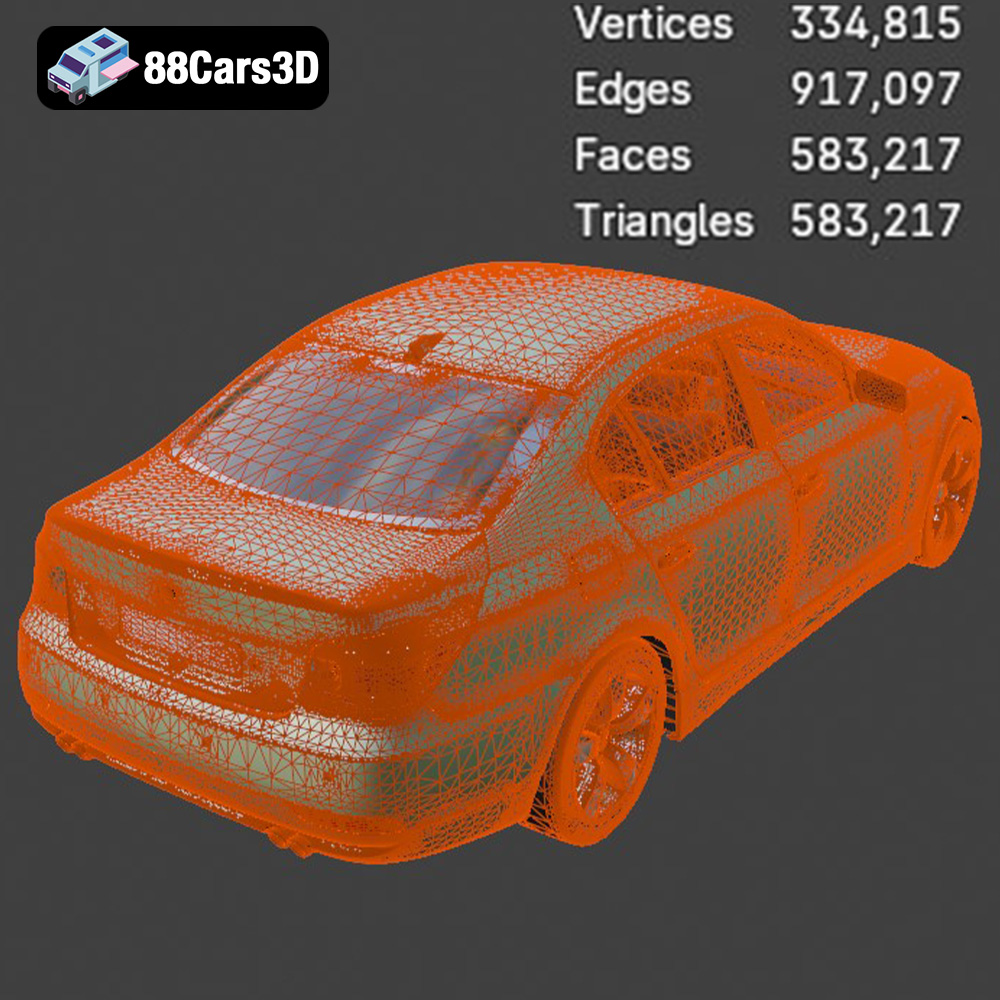
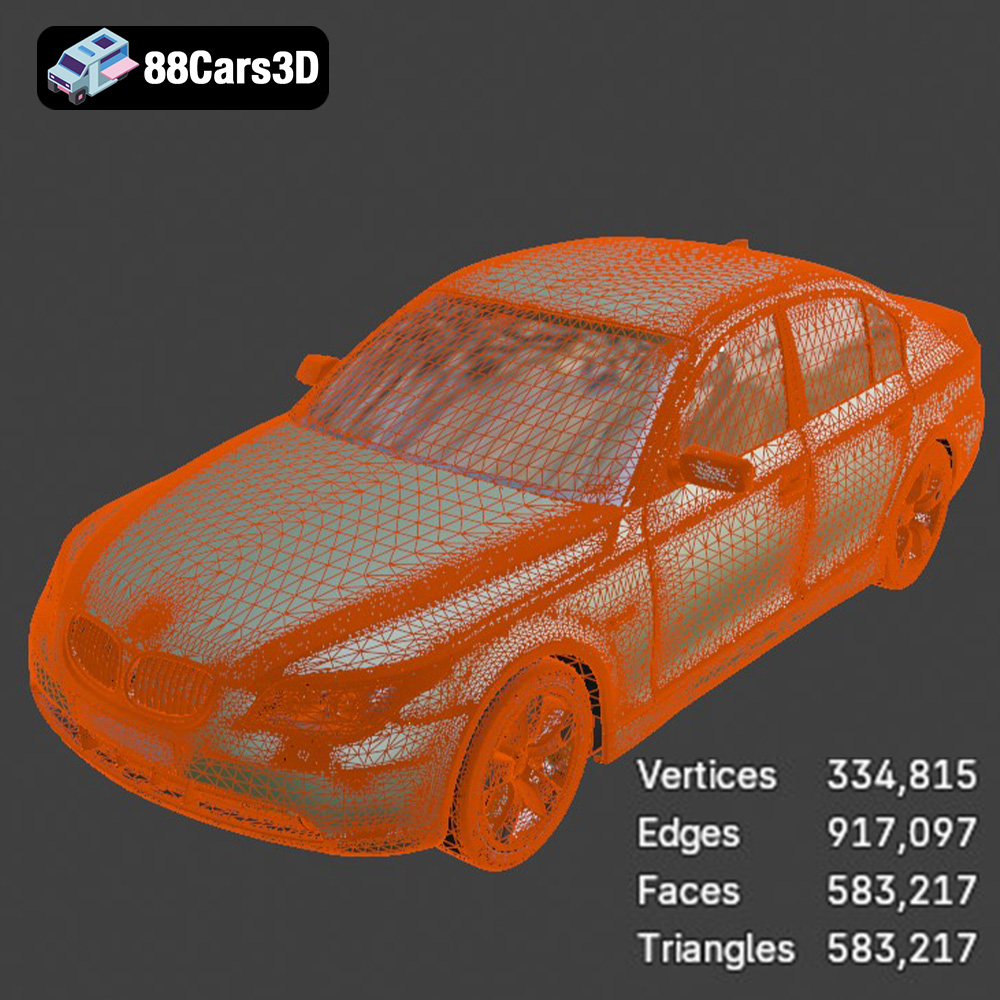
For game developers, performance is key. The BMW E60 3D Model is optimized as a high-quality asset for racing simulators, open-world games, and other interactive experiences. The inclusion of .fbx and .unreal formats specifically caters to popular engines like Unreal Engine and Unity. When importing into these engines, the “optimized mesh quality” and “clean, quad-dominant topology” of the E60 translate into efficient rendering, minimizing poly count while maintaining visual integrity. Developers can further optimize the model by generating LODs (Levels of Detail) to ensure smooth performance across different distances, and by baking normal maps from high-poly versions for even greater detail without performance overhead.
While the BMW E60 3D Model offers impressive detail, real-time environments often require further optimization strategies. Implementing Levels of Detail (LODs) is crucial; these are progressively simplified versions of the model that swap in as the camera moves further away, drastically reducing the rendered polygon count without a noticeable loss in quality. Similarly, consolidating textures into atlases can reduce draw calls and improve rendering efficiency. The structured mesh of the E60 provides a solid foundation for these optimizations, allowing game artists to easily generate LODs and manage UVs for texture atlas creation, ensuring the car performs optimally in any real-time scenario.
Beyond traditional games, the BMW E60 3D Model is perfectly suited for immersive AR/VR applications and advanced simulations. Its .glb format is ideal for web-based AR experiences, enabling virtual showrooms or interactive product showcases directly in a browser or on mobile devices. For more complex simulations, such as driver training or virtual test drives, the model’s essential mechanical components (basic engine block, visible suspension) combined with its organized hierarchy and proper pivot points for movable parts, streamline the setup of physics-based interactions and animations, offering a realistic and engaging user experience.
The versatility of a professional 3D car model extends far beyond aesthetic rendering and interactive entertainment. Assets like the BMW 5 Series E60 3D Model are invaluable tools in various technical and manufacturing disciplines, demonstrating the true interdisciplinary power of 3D data.
In the initial stages of automotive design, engineers and designers frequently use 3D models for validation. While the BMW E60 is a pre-existing design, a highly accurate model of it can be used for benchmarking, educational purposes, or even to test new components in a virtual environment. The model’s real-world scale and accurate geometry make it suitable for overlaying new designs, analyzing fit and finish, or performing rudimentary collision detection in a virtual space. The ability to modify paint finishes, apply custom graphics, or adjust material properties provides a dynamic sandbox for exploring aesthetic and functional variations.
For driver training, automotive diagnostics, or even vehicle maintenance simulations, highly realistic 3D car models are indispensable. The detailed interior of the BMW E60, including the dashboard, steering wheel, and center console, optimized for visual fidelity, forms a compelling cockpit for simulation environments. By integrating this model into advanced simulation projects, educators and trainers can create immersive and interactive scenarios that mimic real-world driving conditions or mechanical operations. The essential mechanical components, though basic, provide enough visual context for various simulation needs, making it a valuable asset for virtual training programs.
The .stl file format included with the BMW 5 Series E60 3D Model directly enables 3D printing, transforming the digital asset into a tangible object. This capability is used by hobbyists for creating detailed scale models, by design studios for rapid prototyping physical components, or by educators for creating tactile learning aids. While additional steps like preparing the mesh for print (e.g., ensuring manifold geometry, checking wall thickness) are often required, the clean topology of the E60 model provides an excellent starting point for generating a high-quality physical replica, showcasing the journey from digital design to physical manifestation.
The true value of a premium 3D asset lies in its underlying technical craftsmanship. The BMW 5 Series E60 3D Model is a testament to professional digital craftsmanship, offering exceptional detail and versatility due to its core technical advantages.
One of the most critical aspects of any high-quality 3D model is its topology – the arrangement of polygons that make up its surface. The E60 model boasts “clean, quad-dominant topology,” meaning its mesh is primarily composed of four-sided polygons. This is the gold standard for 3D modeling because it ensures smooth subdivision, artifact-free deformations during animation, and ease of editing for future modifications. Coupled with effective UV mapping, which lays out the 3D surface onto a 2D plane for texture application, the model provides an optimal base for high-fidelity texturing and material work, making it a joy to work with for artists aiming for photorealism.
Accuracy extends to scale and articulation. The BMW E60 3D Model is “modeled to real-world scale,” a fundamental requirement for seamless integration into architectural visualizations, automotive scenes, or game environments where consistent scale is vital. Furthermore, the “organized hierarchy with proper pivot points set for all movable parts” is a game-changer for animators. Correct pivot points for doors, hood, trunk, and wheels mean that these parts can be animated authentically with minimal setup, streamlining animation workflows and allowing for quick setup of interactive elements in real-time applications.
The model’s “realistic material definitions for paintwork, chrome accents, glass, and rubber components” are the final layer of polish, bringing the model to life. These well-defined materials provide a strong foundation, but the true power lies in their customizability. Artists can easily modify paint finishes, apply custom graphics, or integrate branding elements. Adjusting material properties for metals, chrome, glass, rubber, and plastics to match specific aesthetic requirements allows for infinite variations, from pristine showroom finishes to weathered, road-worn looks. This flexibility ensures the BMW 5 Series E60 3D Model can adapt to virtually any creative vision or technical specification.
The digital landscape of 3D modeling is constantly evolving, with ever-increasing demands for realism, efficiency, and versatility. Premium 3D car models are at the forefront of this evolution, serving as indispensable assets across a multitude of industries. From the meticulous detail required for high-end automotive rendering to the optimized performance essential for immersive game development and the structural integrity necessary for 3D printing, a truly professional 3D model must excel on many fronts.
The BMW 5 Series E60 3D Model stands as a prime example of such an asset, showcasing the pinnacle of digital craftsmanship. Its clean topology, real-world scale, detailed components, and extensive file format support make it an ideal choice for a wide array of professional applications. Whether you’re enhancing your automotive visualizations, populating your next game world, or exploring new frontiers in AR/VR and simulation, this model provides a robust and flexible foundation.
By investing in high-quality 3D assets like those found on 88cars3d.com, creators empower themselves to deliver outstanding results, streamline their workflows, and bring their most ambitious projects to life with unparalleled realism and efficiency. Elevate your projects and discover the transformative power of expertly crafted 3D models.
Discover the meticulously crafted BMW 5 Series E60 3D Model, an exquisite digital replica of the iconic luxury sedan. This model captures the distinctive styling and robust presence of the E60 generation, known for its blend of elegance and performance. Built with clean, optimized geometry and balanced detailing, it is engineered for professional applications, making it ideal for high-fidelity rendering, realistic animation sequences, advanced simulation projects, and immersive game development.
Exterior Features:
Interior / Mechanical Features:
Technical Advantages:
Applications:
Customization Options:
The BMW 5 Series E60 3D Model is a testament to professional digital craftsmanship, offering exceptional detail and versatility for a wide range of creative and technical applications. Elevate your projects with this premium 3D asset.
Included File Formats:
Tags:
.bmw,.5series,.e60,.sedan,.luxurycar,.car,.rendering,.simulation,.gameasset,.arvr,.blend,.fbx,.obj,.glb,.stl,.ply,.unreal,.maxMercedes Benz CLS 500 3D Model
$10.79
.5series
.arvr
.blend
.bmw
.car
.e60
.fbx
.gameasset
.glb
.luxurycar
.max
.obj
.ply
.rendering
.sedan
.simulation
.stl
.unreal