

Mastering the Digital Road: The Indispensable Role of High-Fidelity 3D Car Models
In the rapidly evolving landscape of digital media, the demand for photorealistic and highly functional 3D assets has never been greater. From cinematic blockbusters to immersive game worlds and cutting-edge architectural visualizations, a meticulously crafted 3D model can be the cornerstone of a project’s success. Nowhere is this more apparent than in the automotive sector, where precision and aesthetic accuracy are paramount. Today, we delve into the intricate world of 3D car models, exploring their technical underpinnings, diverse applications, and the sheer value they bring to creative and technical endeavors.
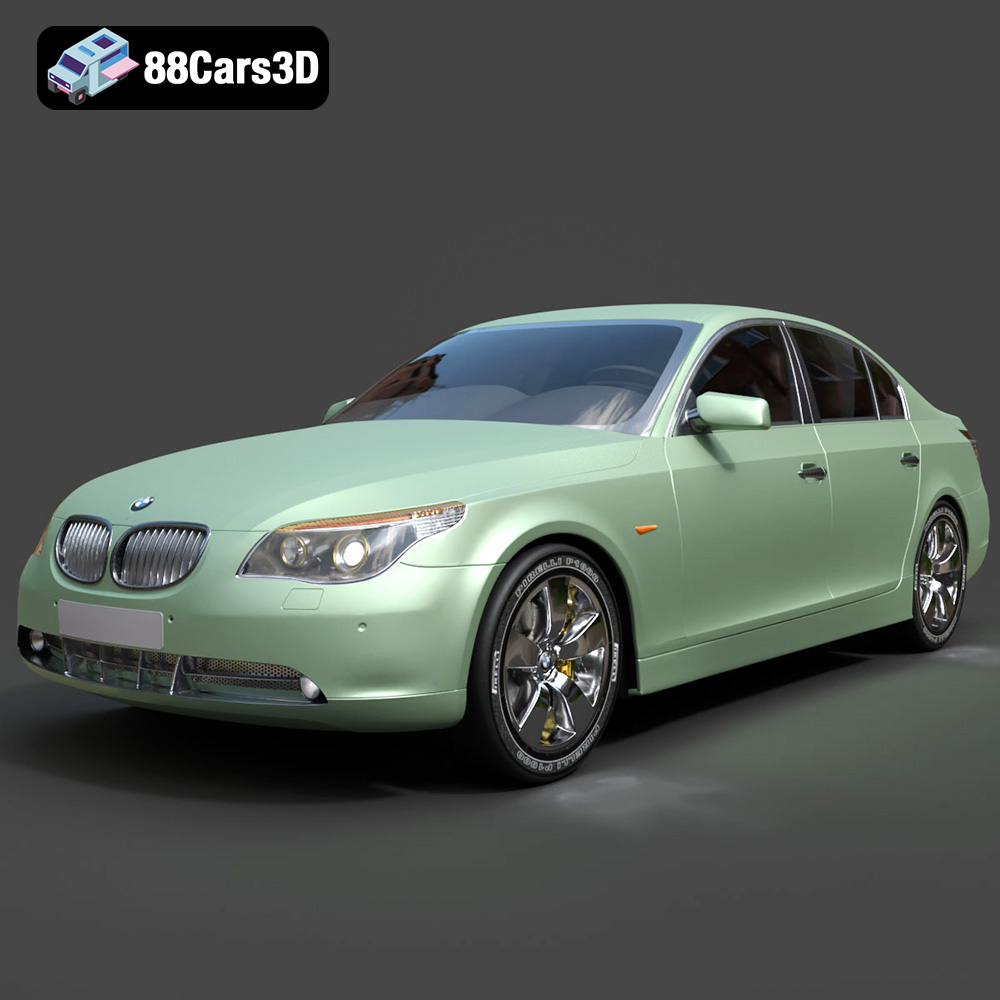
At the heart of many professional pipelines lies the need for assets that are not just visually appealing but also technically robust. This is precisely where models like the BMW 5 Series E60 3D Model shine. This exquisite digital replica captures the distinctive styling and robust presence of the E60 generation, known for its blend of elegance and performance. Built with clean, optimized geometry and balanced detailing, it is engineered for professional applications, making it an exemplary case study for high-fidelity rendering, realistic animation sequences, advanced simulation projects, and immersive game development. Understanding the journey from concept to a fully realized digital vehicle reveals the artistry and engineering involved, and highlights why sourcing premium assets from platforms like 88cars3d.com is crucial for professionals.
Understanding 3D Model File Formats
The versatility of a 3D model often hinges on its accessibility across various software platforms and applications. This is primarily dictated by the file formats it supports. Each format is designed with specific use cases and technical considerations in mind, making the choice of format critical for efficient workflows. A truly professional 3D asset, such as the BMW 5 Series E60 3D Model, provides a comprehensive suite of formats to ensure maximum compatibility and utility across different pipelines.
.blend – The Blender Native Environment
The .blend format represents a fully editable Blender scene. For users of Blender, this is often the most desirable format as it preserves all aspects of the original project, including intricate material setups (Cycles, Eevee), modifiers, cameras, lighting, animation data, and even custom scripts. This allows for deep customization, scene adjustments, and leveraging Blender’s powerful toolset for further refinement or integration into complex scenes without any data loss from export/import processes. It’s ideal for artists who want to delve into the model’s construction or adapt it extensively within the Blender ecosystem.
.fbx – The Industry Standard for Interchange
.fbx (Filmbox) is arguably the most widely used proprietary 3D file format for interchanging 3D data between different software applications. Developed by Autodesk, it’s particularly strong for transferring models with complex hierarchies, skeletal animation, blend shapes, and PBR (Physically Based Rendering) materials. It’s the go-to format for game engines like Unreal Engine and Unity, as well as for animation software, due to its robust support for mesh data, textures, and animation curves. When moving a car model from a modeling package to a game engine, .fbx ensures that components like wheels, doors, and the body maintain their relative positions and pivot points, critical for animation and interaction.
.obj – The Universal Geometry Carrier
The .obj (Wavefront Object) format is a universal standard, widely supported by virtually every 3D software application. Its strength lies in its simplicity and reliability for transferring geometric data, including vertices, faces, normals, and UV coordinates. While it can reference external material (.mtl) files, its material support is basic compared to .fbx. For straightforward mesh transfer where animation or complex material nodes aren’t a primary concern, .obj is an excellent, highly compatible choice. It’s often used as a fallback or for models intended for static renders or initial sculpting phases.
.glb – Optimized for AR, VR, and Web
.glb (GL Transmission Format Binary) is the binary version of .gltf, designed for efficient transmission and loading of 3D scenes and models. It encapsulates geometry, textures, animations, and PBR materials into a single, compact file. This format is increasingly becoming the standard for augmented reality (AR), virtual reality (VR), and browser-based 3D applications due to its small file size, fast loading times, and native support in many web and mobile platforms. For interactive product showcases or virtual car configurators on the web, .glb is an indispensable format.
.stl – The Gateway to 3D Printing
.stl (STereoLithography) is the de facto standard file format for 3D printing. It represents a 3D model as a series of connected triangles, defining only the surface geometry of an object without color, texture, or other CAD attributes. While simple, its ubiquity in the 3D printing world means that any model intended for physical reproduction, such as creating a scale replica of the BMW 5 Series E60, must be convertible to .stl. Careful consideration of mesh integrity and manifold geometry is essential for successful .stl export and printing.
.ply – Precision Mesh for CAD or Analysis
The .ply (Polygon File Format or Stanford Triangle Format) is a versatile format capable of storing a wide range of properties, including color, transparency, texture coordinates, and even reliability information for each vertex and face. It’s particularly useful in applications requiring precision mesh data, such as 3D scanning, CAD software, and scientific visualization or analysis. For engineers performing detailed structural analysis or reverse engineering on automotive components, .ply offers a robust data exchange option.
.unreal – Engine-Ready for Real-Time
A dedicated .unreal file, or an Unreal Engine project setup, indicates a model that has been specifically prepared and integrated into the Unreal Engine environment. This means the model often comes with correctly configured materials (using Unreal’s PBR shader system), collision meshes, LODs (Levels of Detail), and potentially even basic Blueprints for interactive elements. This format saves significant development time for game developers and real-time visualization artists, allowing for immediate drag-and-drop integration and optimal performance within the engine.
.max – The 3ds Max Project File
Similar to .blend for Blender, the .max format is the native scene file for Autodesk 3ds Max. It preserves the entire 3ds Max project, including all modeling data, materials (V-Ray, Corona, Standard), lighting setups, camera views, animation paths, and any modifiers or plugins used. For professionals working within the 3ds Max ecosystem, this provides maximum flexibility for animation, complex rendering, and detailed scene composition. It ensures full access to the original artist’s workflow and assets within the project.
The Art and Science of Crafting High-Fidelity 3D Car Models
Creating a 3D car model that truly stands out requires a delicate balance of artistic vision and technical precision. It’s not just about replicating shapes, but about capturing the essence of the vehicle, ensuring it functions flawlessly across diverse digital applications. The BMW 5 Series E60 3D Model exemplifies this synthesis, offering both visual fidelity and practical usability.
Precision Modeling and Topology
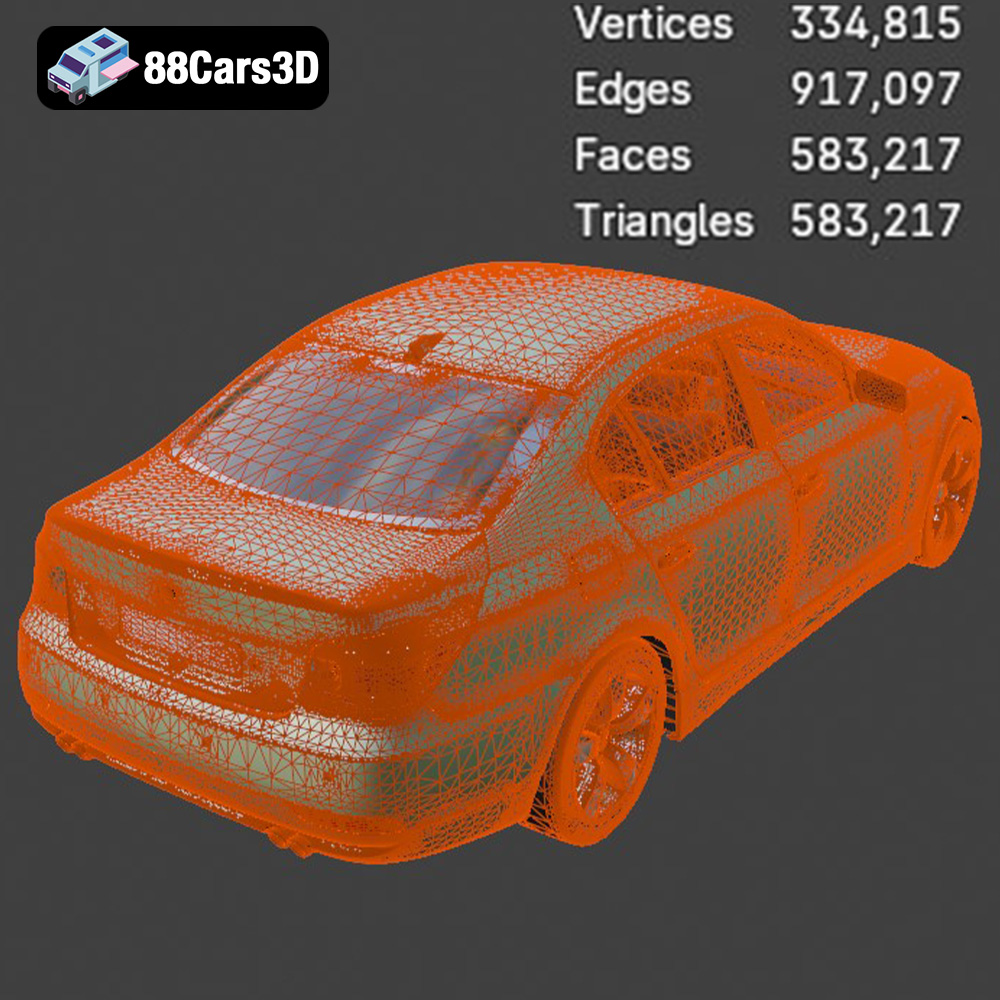
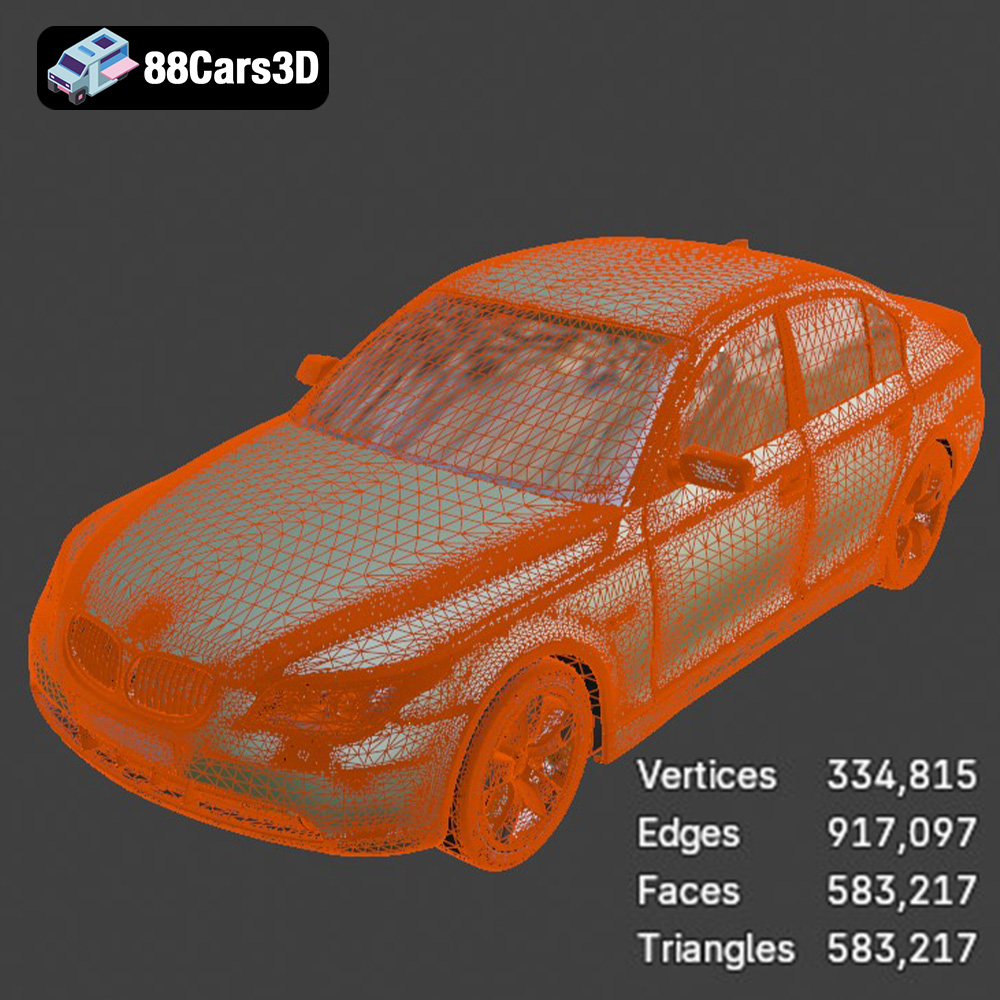
At the core of any high-quality 3D model is its geometry. For a car, this means accurately translating complex curves and sharp edges into a digital mesh. The BMW E60 model boasts clean, quad-dominant topology, which is a gold standard in professional 3D modeling. Quads (four-sided polygons) allow for smooth subdivision, making the model easily scalable for different detail levels – from a distant background prop to a hero shot. This also facilitates seamless deformation during animation and simplifies UV mapping. Furthermore, modeling to real-world scale ensures accurate integration into diverse scenes, whether for architectural visualization or realistic driving simulations.
Material Definition and Texturing
Beyond the mesh, materials and textures breathe life into a 3D model. For an automotive asset, this includes highly realistic paintwork, the subtle reflectivity of chrome accents, the transparency and distortion of glass, and the unique textures of rubber and plastic components. Professional models utilize Physically Based Rendering (PBR) workflows, where materials are defined by properties like albedo (base color), roughness, metallic, normal maps, and ambient occlusion. These PBR textures react realistically to light, delivering stunning photorealism in various lighting conditions. The BMW 5 Series E60 3D Model specifically details “realistic material definitions for paintwork, chrome accents, glass, and rubber components,” indicating a strong PBR setup that will perform well in any modern rendering engine.
Component Separation and Animation Readiness
A static model is only half the story. For many applications, a 3D car model needs to be interactive and animatable. This requires meticulous component separation. The BMW E60 model features “separated components such as doors, hood, and trunk for ease of animation and interactive functionality.” This means each movable part is a distinct object within the scene hierarchy, allowing animators to open doors, raise the hood, or rotate wheels independently. Crucially, “proper pivot points set for all movable parts” streamlines animation workflows, ensuring that rotations and translations occur around logical centers, simulating real-world mechanics perfectly.
Driving Immersive Experiences: Applications in Automotive Rendering and Visualization
The visual quality of 3D car models has reached a point where distinguishing them from real photographs can be challenging. This photorealism makes them invaluable tools across a spectrum of rendering and visualization applications, enabling creators to showcase vehicles in ways previously impossible or prohibitively expensive.
Photorealistic Studio Renders
For marketing, advertising, and product showcasing, photorealistic studio renders are essential. Using advanced rendering software like V-Ray, Corona Renderer, or Arnold within applications like 3ds Max or Blender, artists can place the BMW 5 Series E60 3D Model into virtual studio environments. Here, precise lighting setups, custom backdrops, and careful camera angles can highlight the vehicle’s design features, paint finish, and interior details. These renders are perfect for creating stunning marketing materials, online configurators, and press kits without the cost and logistical challenges of physical photography.
Cinematic Animation and Product Showcases
Beyond static images, 3D car models are central to cinematic animations. Imagine a sleek camera fly-through revealing every curve of the BMW E60, or a dynamic sequence demonstrating its features. Professionals use these models to create high-impact video content for commercials, product launches, or even virtual car shows. The organized hierarchy and correctly set pivot points of the BMW 5 Series E60 3D Model significantly simplify the animation process, allowing animators to focus on storytelling and visual impact rather than tedious setup.
Virtual Showrooms and AR/VR Experiences
The rise of augmented and virtual reality has opened new frontiers for automotive visualization. High-quality 3D car models are the bedrock of these immersive experiences. Imagine a virtual showroom where customers can explore the BMW E60 in 360 degrees, change paint colors, or even sit inside the meticulously detailed interior. For AR, the model can be projected onto a real-world environment via a smartphone, allowing users to “place” the car in their driveway. The availability of formats like .glb, optimized for AR/VR and web-based visualization, ensures that models from 88cars3d.com are ready for these cutting-edge applications, providing interactive product showcases and virtual experiences.
Powering the Digital Road: 3D Car Models in Game Development and Simulation
The interactive nature of video games and sophisticated simulations demands 3D assets that are not only visually compelling but also optimized for real-time performance. High-quality 3D car models are critical components in creating believable and engaging virtual worlds, from high-octane racing games to complex driver training simulators.
Optimizing for Real-Time Performance
Game development operates under strict performance budgets. While models for rendering can be incredibly dense in polygons, game assets require careful optimization. This involves balancing visual fidelity with polygon count, efficient UV layouts, and streamlined material setups. Professional game assets often utilize LODs (Levels of Detail), where simpler versions of the model are swapped in when the car is further from the camera, saving valuable processing power. The BMW 5 Series E60 3D Model’s “optimized mesh quality ensures efficient performance in real-time applications while maintaining visual integrity,” making it a superb candidate for integration into modern game engines like Unreal Engine and Unity.
Integration into Game Engines (Unreal Engine & Unity)
Integrating a 3D car model into a game engine is a specialized workflow. Using formats like .fbx or a pre-configured .unreal project file significantly simplifies this process. In Unreal Engine, for example, the imported model would be set up with collision meshes, physics assets, and materials using the engine’s PBR workflow. Developers can then attach interactive elements via Blueprints, allowing players to open doors, customize the vehicle, or drive it. The detailed interior and essential mechanical components of the BMW E60 model provide a rich foundation for creating immersive player experiences, whether it’s a casual driving game or a hardcore racing simulator.
Simulation and Training Scenarios
Beyond entertainment, 3D car models are vital for serious simulation and training applications. Automotive design evaluations can use these models in virtual environments to test aerodynamics, visibility, and ergonomic factors before physical prototypes are built. Driver training simulators leverage highly realistic car models to mimic real-world driving physics and scenarios, providing safe and repeatable practice environments. Even in technical demonstrations or accident reconstruction, the accurate scale and component separation of models like the BMW 5 Series E60 are invaluable for visualizing and analyzing complex situations. The inclusion of “essential mechanical components, such as a basic engine block and visible suspension elements,” further enhances its utility for various simulation needs.
Beyond the Screen: 3D Printing and Advanced Manufacturing
The utility of high-quality 3D car models extends beyond purely digital realms, bridging into physical production and engineering analysis. These digital assets serve as blueprints for physical replicas and as precise data for advanced technical workflows.
From Digital Asset to Physical Replica
One of the most exciting applications for 3D car models is 3D printing. With the ability to convert the model to an .stl format, creators can transform the digital BMW 5 Series E60 into a tangible, physical scale model. This opens up possibilities for collectors, model enthusiasts, or even designers needing a physical reference for their work. The precision and clean geometry of professional models are crucial here, as any imperfections in the digital mesh can lead to flaws in the printed object. From rapid prototyping to creating bespoke display pieces, 3D printing offers a unique way to interact with these digital creations.
CAD Integration and Analysis with .ply
For more technical applications, models capable of being exported as .ply files offer significant advantages. The .ply format is widely used in 3D scanning and various CAD (Computer-Aided Design) software, making it suitable for detailed mesh analysis. Engineers might use this to analyze surface properties, perform reverse engineering, or integrate the visual model into a more complex CAD assembly for further development or simulation. While the primary use case for models like the BMW E60 from 88cars3d.com might be visual, its compatibility with precision formats like .ply broadens its appeal to a wider technical audience.
Conclusion
The journey through the world of 3D car models reveals them to be far more than just pretty pictures. They are complex digital creations, meticulously engineered and highly versatile, serving as indispensable assets across a multitude of industries. From captivating marketing campaigns and cinematic animations to immersive game worlds, cutting-edge AR/VR experiences, and even physical 3D prints, the demand for excellence in 3D automotive assets continues to grow.
The BMW 5 Series E60 3D Model stands as a prime example of such professional craftsmanship. Its clean, quad-dominant topology, realistic material definitions, component separation, and comprehensive file format support ensure it is ready for virtually any professional application. For artists, developers, and designers seeking to elevate their projects with unparalleled detail and technical robustness, investing in high-quality 3D car models is a strategic decision. Explore this exceptional model and a vast array of other premium 3D assets at 88cars3d.com, where precision meets performance in the digital automotive realm.
Featured 3D Model
BMW 5 Series E60 3D Model
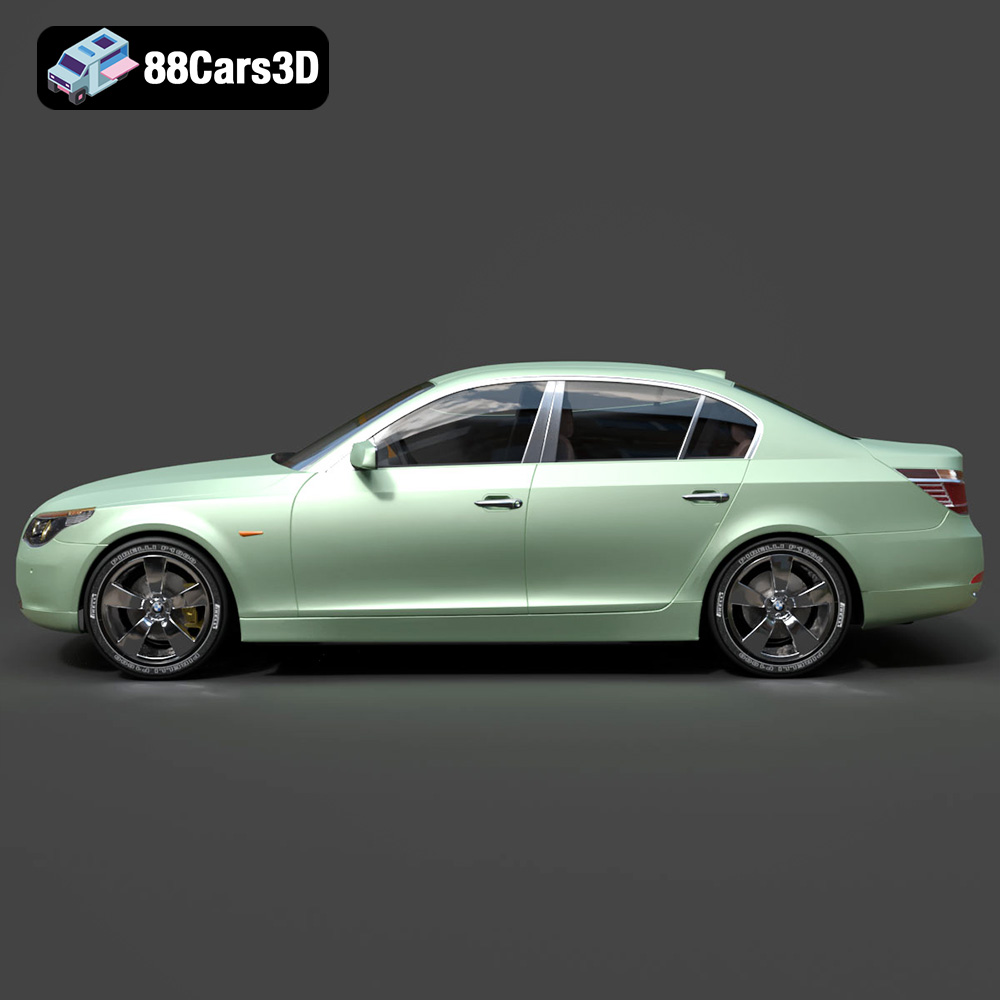
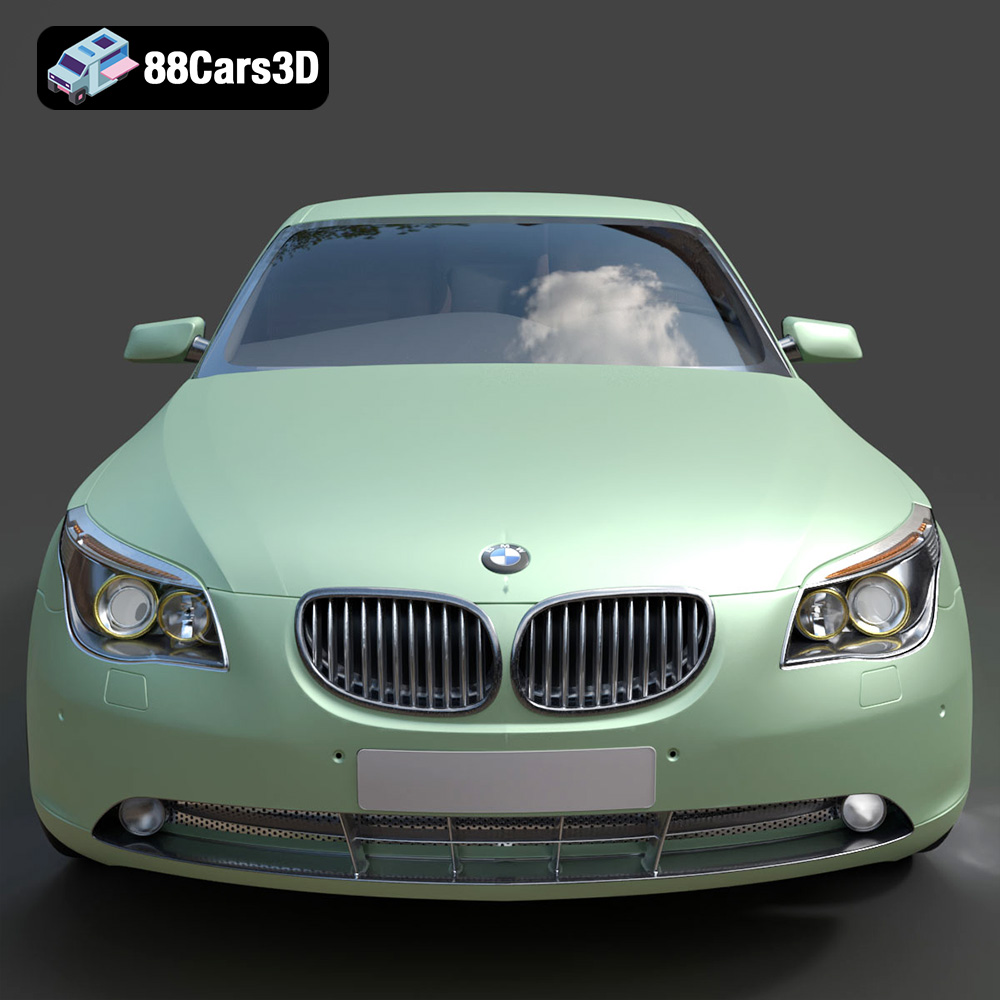
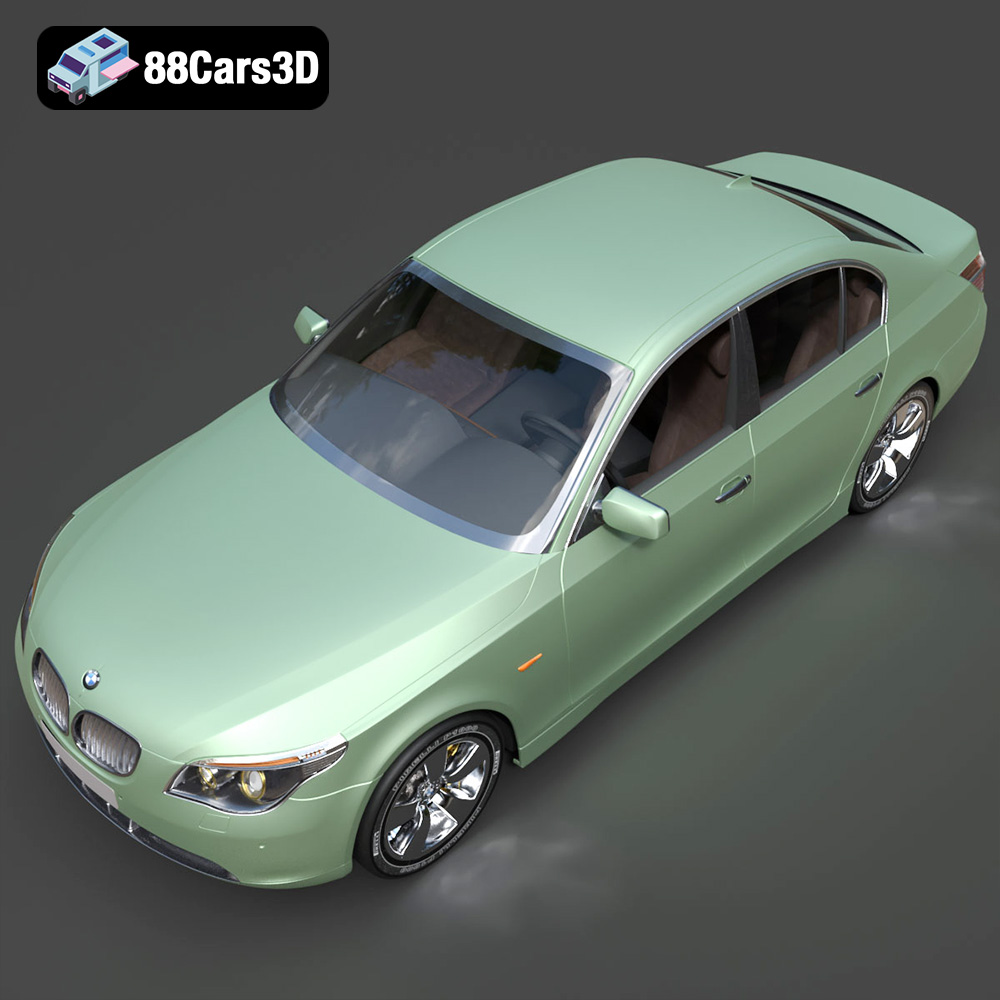
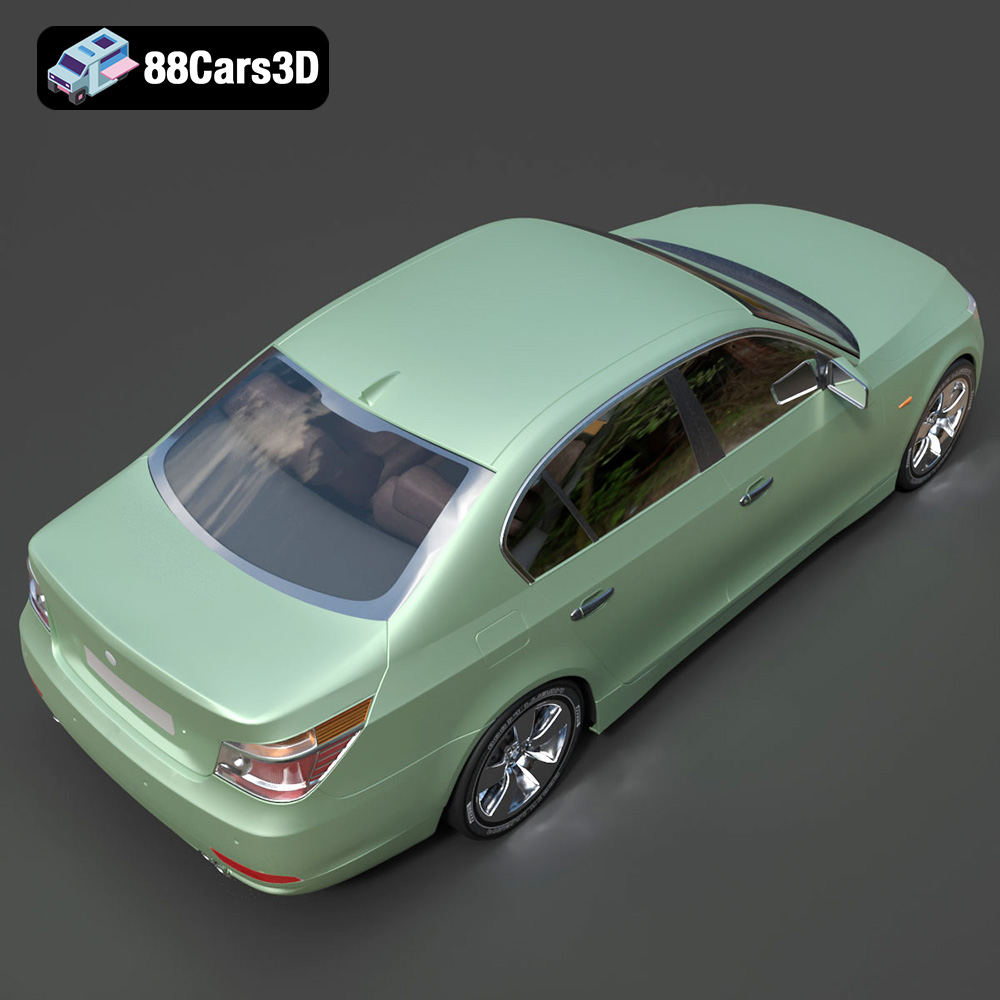
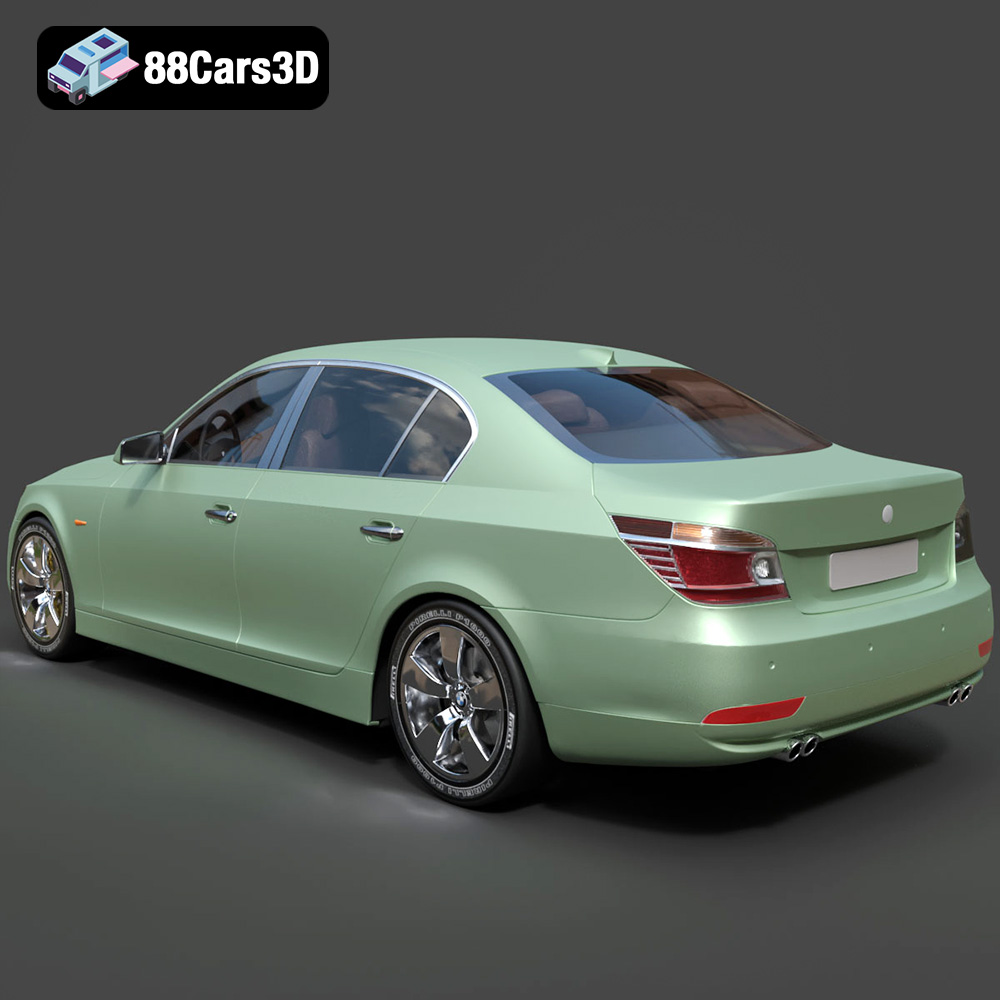
Discover the meticulously crafted BMW 5 Series E60 3D Model, an exquisite digital replica of the iconic luxury sedan. This model captures the distinctive styling and robust presence of the E60 generation, known for its blend of elegance and performance. Built with clean, optimized geometry and balanced detailing, it is engineered for professional applications, making it ideal for high-fidelity rendering, realistic animation sequences, advanced simulation projects, and immersive game development.
Exterior Features:
- Accurately modeled body panels reflecting the E60’s unique contours and aggressive stance.
- Highly detailed headlights, taillights, and indicator lights with realistic transparent materials.
- Precisely replicated wheels and tires, including intricate rim designs.
- Realistic material definitions for paintwork, chrome accents, glass, and rubber components.
- Separated components such as doors, hood, and trunk for ease of animation and interactive functionality.
Interior / Mechanical Features:
- Detailed interior including dashboard, steering wheel, center console, and seating, optimized for visual fidelity.
- Essential mechanical components, such as a basic engine block and visible suspension elements, suitable for various simulation needs.
- Optimized mesh quality ensures efficient performance in real-time applications while maintaining visual integrity.
Technical Advantages:
- Clean, quad-dominant topology ensures smooth subdivision and ease of editing.
- Modeled to real-world scale for accurate integration into diverse scenes and projects.
- Organized hierarchy with proper pivot points set for all movable parts, streamlining animation workflows.
Applications:
- Rendering & Visualization: Perfect for creating stunning studio renders, photorealistic marketing materials, and cinematic scenes.
- Game Development: Optimized as a high-quality asset for racing simulators, open-world games, and other interactive experiences.
- AR/VR: Ready for immersive augmented and virtual reality experiences, such as virtual showrooms or interactive product showcases.
- Simulation & Training: Suitable for automotive design evaluations, driver training simulators, and technical demonstrations.
- 3D Printing: Can be converted to .stl format for creating physical scale models.
Customization Options:
- Easily modify paint finishes, apply custom graphics, or integrate branding elements.
- Adjust material properties for metals, chrome, glass, rubber, and plastics to match specific aesthetic requirements.
- Flexible lighting setup modifications to achieve various moods and scene environments.
The BMW 5 Series E60 3D Model is a testament to professional digital craftsmanship, offering exceptional detail and versatility for a wide range of creative and technical applications. Elevate your projects with this premium 3D asset.
Included File Formats:
- .blend – Blender project with materials
- .fbx – Compatible with Unreal, Unity, and major 3D engines
- .obj – Universal format for nearly all 3D software
- .glb – Optimized for AR, VR, and web-based visualization
- .stl – Ready for 3D printing
- .ply – Mesh format for analysis and CAD workflows
- .unreal – Unreal Engine project setup
- .max – Editable 3ds Max scene for rendering and animation
$10.79
Product Image Gallery
Related Tags
.5series
.arvr
.blend
.bmw
.car
.e60
.fbx
.gameasset
.glb
.luxurycar
.max
.obj
.ply
.rendering
.sedan
.simulation
.stl
.unreal
