

Elevating Digital Realism: The Art and Science of Professional 3D Car Models
In the dynamic world of digital content creation, the demand for hyper-realistic and functionally robust 3D assets has never been higher. From breathtaking automotive advertisements and immersive video games to cutting-edge AR/VR experiences and detailed architectural visualizations, the quality of 3D models forms the bedrock of any successful project. For automotive enthusiasts and digital artists alike, the representation of a vehicle isn’t just about aesthetics; it’s about capturing the engineering, the design philosophy, and the very soul of the car.
This pursuit of digital perfection is particularly evident when working with iconic vehicles like the BMW 5 Series Touring F11-007. A truly professional 3D model of such a car goes beyond basic shapes, delving into the intricate details of its body lines, interior ergonomics, and material properties. It must be a versatile asset, ready to integrate seamlessly into diverse workflows and deliver consistent, high-quality results across various platforms. The BMW 5 Series Touring F11-007 3D Model, available on 88cars3d.com, exemplifies this commitment to precision, offering a meticulously crafted digital representation that meets the rigorous demands of modern production pipelines. It’s an invaluable resource for anyone looking to infuse their projects with unparalleled realism and professional polish.
Understanding 3D Model File Formats
The versatility of a professional 3D car model, such as the BMW 5 Series Touring F11-007, hinges significantly on the file formats it supports. Each format is designed with specific use cases and software ecosystems in mind, offering distinct advantages for different stages of a project or different target platforms. Understanding these formats is crucial for optimizing workflows, ensuring compatibility, and maximizing the utility of your digital assets.
.blend – The Native Blender Powerhouse
The `.blend` file is Blender’s native format, preserving an entire scene with all its components: meshes, materials, textures, lighting, cameras, animation data, and even physics simulations. For artists working primarily in Blender, this is the most comprehensive and editable format. It allows for full artistic control, enabling adjustments to topology, UVs, material nodes (like those defining the BMW F11-007’s paintwork or interior fabrics), and rigging for animation. Having the `.blend` file ensures that the model can be fully customized and integrated into existing Blender projects without any loss of data fidelity.
.max – The 3ds Max Studio Standard
Similar to `.blend` for Blender, the `.max` file is the proprietary format for Autodesk 3ds Max. It encapsulates all scene data, including geometry, modifiers, intricate material setups (e.g., V-Ray or Corona materials often used for automotive rendering), lighting rigs, and animation timelines. For professionals in visualization studios that rely on 3ds Max for high-end rendering and animation, the `.max` file of the BMW 5 Series Touring F11-007 is indispensable. It provides the ultimate flexibility for scene assembly, complex character rigging, and advanced rendering techniques, leveraging 3ds Max’s robust toolset.
.fbx – The Industry-Standard Interoperability
Developed by Autodesk, `.fbx` (Filmbox) is arguably the most widely adopted interchange format in the 3D industry, particularly for game development. It efficiently stores not only model geometry but also crucial data like materials, textures, animations, and skeletal deformation. Its strength lies in its ability to transfer complex 3D scenes between different software packages – from 3ds Max to Maya, Blender, Unity, and Unreal Engine – with minimal data loss. For incorporating the BMW 5 Series Touring F11-007 into game engines or complex animation pipelines, `.fbx` is the go-to choice due to its excellent compatibility and preservation of critical asset properties like pivot points and scene hierarchy.
.obj – The Universal Geometry Exchange
The `.obj` (Wavefront OBJ) format is a venerable and highly compatible format primarily used for exchanging 3D geometry data. It stores vertices, faces, normals, and UV coordinates, often accompanied by a `.mtl` (material) file for basic material definitions. While `.obj` doesn’t support animation or complex material nodes, its strength lies in its universal acceptance across virtually all 3D software. When you need to ensure a model like the BMW F11-007 can be opened and edited in any 3D application, even older ones, `.obj` provides a reliable foundation for geometry transfer.
.glb – Optimized for AR, VR, and Web
`.glb` (GL Transmission Format Binary) is a relatively newer format, rapidly gaining traction for its efficiency and optimization for web-based 3D, augmented reality (AR), and virtual reality (VR) applications. It bundles the 3D model, textures, and animations into a single, compact binary file, making it incredibly fast to load and display in browsers or mobile AR/VR viewers. For immersive experiences featuring the BMW 5 Series Touring F11-007, such as showcasing it in an AR app or a web configurator, `.glb` offers superior performance and ease of deployment.
.stl – The 3D Printing Standard
`.stl` (Standard Tessellation Language) is the de facto standard for 3D printing. This format represents 3D surfaces as a series of connected triangles (a tessellation). It contains only geometric information and no color, texture, or material data. When the goal is to produce a physical prototype or scale model of the BMW 5 Series Touring F11-007, converting the 3D model to `.stl` is the essential step for preparing it for a 3D printer. It’s crucial that the source model has clean, watertight geometry for successful `.stl` export and printing.
.ply – Precision Mesh for CAD and Analysis
The `.ply` (Polygon File Format) is often used in scientific and engineering applications, especially for data from 3D scanners, CAD software, and medical imaging. It can store a wider range of properties than `.obj`, including color, transparency, and normal vectors for each vertex, as well as complex topological information like multiple objects and faces. For highly precise technical analysis or integration into specific CAD workflows for the BMW F11-007, `.ply` offers a robust and accurate representation of the mesh.
.unreal – Engine-Ready for Real-Time Environments
While not a universal file extension in the same vein as `.fbx`, the `.unreal` package signifies an asset specifically pre-configured for the Unreal Engine. This often means the asset has been imported, optimized, and set up within an Unreal project, complete with materials, collision meshes, LODs (Levels of Detail), and potentially Blueprints for interactive elements. An `.unreal` version of the BMW 5 Series Touring F11-007 streamlines the integration process, saving significant time in a game development pipeline by providing an “out-of-the-box” ready asset for real-time environments.
Precision in Production: Crafting High-Fidelity 3D Car Models
The creation of a high-fidelity 3D car model, such as the BMW 5 Series Touring F11-007, is a meticulous process that combines artistic skill with technical precision. It’s about more than just replicating a vehicle’s form; it’s about understanding its underlying structure, material science, and how it will behave in a digital environment. Professional 3D car models stand apart due to their clean geometry, accurate scale, and thoughtful optimization.
The Art of Topology and Mesh Quality
At the heart of any excellent 3D model is its topology – the arrangement of vertices, edges, and faces that form the mesh. The BMW 5 Series Touring F11-007 3D Model boasts “clean, quad-dominant topology.” This means the vast majority of its faces are four-sided polygons (quads), which are ideal for subdivision smoothing (e.g., using a TurboSmooth modifier in 3ds Max or a Subdivision Surface modifier in Blender) and ensure predictable deformation during animation. This attention to topology prevents unsightly pinching, tearing, or artifacting, especially on curved surfaces like the BMW’s body panels or sleek headlights. The “optimized mesh density” also ensures that the model is detailed where it needs to be (e.g., around the kidney grille or wheel arches) but efficient in less critical areas, balancing visual quality with performance.
Material Definitions and UV Mapping Excellence
Realism in rendering hinges heavily on materials. A professional 3D car model defines materials for every component: the reflective paintwork, the transparent glass, the subtle sheen of chrome accents, and the matte texture of rubber. These materials often leverage Physically Based Rendering (PBR) principles, mimicking how light interacts with surfaces in the real world. For instance, the BMW F11-007’s “detailed headlights and taillights with transparent materials” require precise material setups to achieve realistic illumination and reflections. Complementing this is immaculate UV mapping – the process of flattening a 3D surface into a 2D texture space. Clean, non-overlapping UVs are crucial for applying high-resolution textures (like distinct tire tread patterns or interior upholstery details) without distortion, ensuring that the visual fidelity is consistent from every angle.
Real-World Scale and Logical Hierarchy
For seamless integration into existing scenes, simulations, or game worlds, a 3D model must adhere to real-world scale. The BMW 5 Series Touring F11-007 3D Model is built to “accurate real-world scale,” which is essential for architectural visualization, driving simulators, and ensuring proper proportions when placed next to other assets. Furthermore, a “logically organized hierarchy with proper pivot points” is a hallmark of a professional asset. This means components like doors, the hood, and the trunk are separated and parented correctly, with their pivot points accurately placed for easy animation. This foresight makes animating opening doors or operating the trunk a straightforward task, greatly enhancing the model’s utility in animation sequences or interactive applications.
Bringing Automotive Assets to Life: Rendering and Visualization Workflows
Once a high-quality 3D car model like the BMW 5 Series Touring F11-007 is acquired, the next critical step is to bring it to life through stunning renders and visualizations. This involves leveraging powerful 3D software and render engines to create compelling imagery and animations that captivate audiences. Whether it’s for advertising, cinematic sequences, or product showcases, a well-executed rendering workflow is paramount.
Rendering in 3ds Max: Precision and Power
For many automotive visualization studios, Autodesk 3ds Max, combined with renderers like V-Ray or Corona Renderer, is the go-to choice.
- Import and Scene Setup: Utilizing the `.max` file of the BMW F11-007, artists can directly open the scene with pre-configured materials. If using `.fbx`, careful import settings are crucial to maintain scale and hierarchy.
- Material Adjustment: Professional models often come with basic PBR materials. These can be further refined in 3ds Max, adjusting glossiness, reflections, and paint metallic flakes using V-Ray or Corona shaders. The BMW F11-007’s “realistic material definitions for paintwork, glass, chrome accents, and rubber components” provide an excellent starting point.
- Lighting and Environment: Key to realistic renders is lighting. Studios often employ HDRI (High Dynamic Range Image) maps for realistic environment lighting, supplemented by targeted area lights or photometric lights to highlight specific features of the BMW, such as its iconic kidney grille or detailed wheels.
- Camera and Composition: Setting up cinematic camera angles, depth of field, and motion blur (for animations) transforms a static model into a dynamic visual.
- Rendering and Post-Production: After rendering, the output is taken into software like Adobe Photoshop or After Effects for color grading, adding lens effects, and overall image enhancement, mimicking techniques used in real-world automotive photography.
Blender for Automotive Visualization: Flexibility and Open Source Power
Blender, with its powerful Cycles and Eevee renderers, offers a robust and cost-effective alternative for automotive rendering.
- Loading the .blend File: The BMW 5 Series Touring F11-007’s `.blend` file offers a direct gateway into a ready-to-render scene. All materials and textures are typically pre-assigned.
- Material Nodes: Blender’s node-based material system allows for intricate control over surfaces. Artists can easily modify the BMW’s paint finish, add custom graphics, or adjust metal properties using a PBR workflow.
- Lighting with HDRIs and Area Lights: Cycles, a physically accurate renderer, excels with HDRI environments for realistic reflections and global illumination. Eevee, Blender’s real-time renderer, provides instant feedback, perfect for previewing dynamic lighting setups on the BMW F11-007.
- Animation and Dynamics: With “separated doors, hood, and trunk for easy animation workflows,” Blender users can quickly rig these components and create opening animations or dynamic camera movements, showcasing the model’s detailed interior.
- Output and Compositing: Blender’s built-in compositor is powerful for post-processing renders, adding effects like bloom, glare, and color correction directly within the software.
Case Study: Architectural Visualization and Product Showcase
Imagine a real estate developer needing to showcase a luxury home with a car parked in the driveway. A model like the BMW 5 Series Touring F11-007 is perfect. Its “accurate real-world scale” ensures it fits naturally into the architectural scene. High-fidelity renders highlight the car’s elegance, adding a touch of realism and aspiration to the visualization. Similarly, an automotive parts manufacturer might use this model to demonstrate new wheel designs or accessory installations, leveraging its clean topology for precise fitment and photorealistic rendering in product catalogs or online configurators. These examples underscore the versatility and indispensable nature of professional 3D car models from resources like 88cars3d.com.
Driving Immersion: 3D Car Models in Game Development and Real-Time Engines
The role of 3D car models in game development and other real-time interactive experiences is foundational. From racing simulators to expansive open-world games and innovative AR/VR applications, vehicles must not only look convincing but also perform efficiently. The BMW 5 Series Touring F11-007 3D Model is specifically designed with these demanding environments in mind, providing a robust asset for developers.
Unreal Engine and Unity: Real-Time Performance
Game engines like Unreal Engine and Unity are engineered to render complex scenes at high frame rates, making optimization a critical factor. The “optimized mesh density” and “clean, quad-dominant topology” of the BMW F11-007 are key advantages here.
- Importing with .fbx or .unreal: For Unreal Engine, the included `.unreal` asset provides an immediate, engine-ready setup, often with pre-configured materials, collision meshes, and potentially LODs. Alternatively, the `.fbx` format is universally compatible for import into both Unreal and Unity, preserving hierarchy and material slots.
- PBR Material Setup: In game engines, PBR workflows are standard. Materials for the BMW F11-007’s paint, glass, and tires are set up using base color, normal, roughness, metallic, and ambient occlusion maps to achieve realistic surface responses to real-time lighting.
- Collision and Physics: For interactive driving experiences, accurate collision meshes are essential. These are typically simplified versions of the visual mesh. The logically organized parts of the BMW model facilitate creating these collision boxes.
- Levels of Detail (LODs): To maintain performance, especially in open-world games, LODs are crucial. These are progressively simpler versions of the model that swap in as the car moves further from the camera. A clean base mesh like the BMW F11-007 simplifies the generation of these LODs.
Optimizing for Interactivity and Simulation
Beyond visual fidelity, interactivity is a core component of real-time applications.
- Animation and Control: With “separated doors, hood, and trunk,” the BMW F11-007 is ready for interactive elements. In game engines, these can be controlled via scripting (e.g., C# in Unity, Blueprints in Unreal) to allow players to open and close them. Proper pivot points are essential for smooth rotation.
- Vehicle Dynamics: For realistic driving simulators, the underlying physics engine relies on accurate vehicle geometry and mass distribution. The “accurate real-world scale” and clean mesh of the BMW model provide a solid foundation for robust physics simulation.
- Environmental Integration: In large game worlds, the ability to modify paint finishes, apply custom graphics or liveries, and adjust material properties means the BMW 5 Series Touring F11-007 can be easily adapted to fit diverse game themes and player customization options, enhancing immersion.
AR/VR and Browser-Based Experiences
The `.glb` format included with the BMW 5 Series Touring F11-007 3D Model is a game-changer for AR/VR and web-based applications.
- Lightweight Deployment: `.glb` files are optimized for fast loading and rendering in mobile AR apps (e.g., using ARCore or ARKit) or web viewers (e.g., Three.js, Babylon.js). Imagine a user seeing the BMW F11-007 parked realistically in their driveway via their phone, or exploring its interior in a VR showroom.
- Immersive Interactions: In VR, the model’s detailed interior, dashboard, and seating provide an immersive experience, allowing users to “sit” inside the car. The “optimized mesh quality” ensures smooth performance even on less powerful VR hardware.
These applications demonstrate the forward-thinking design of assets provided by 88cars3d.com, ensuring they are ready for the evolving landscape of digital interaction.
Beyond the Screen: AR/VR, Simulation, and 3D Printing
The utility of a high-quality 3D car model extends far beyond traditional rendering and game development. The BMW 5 Series Touring F11-007 3D Model, with its diverse file format support and meticulous craftsmanship, is poised to excel in emerging and specialized fields such as augmented reality (AR), virtual reality (VR), advanced simulations, and even physical production through 3D printing.
Immersive Experiences with AR/VR
Augmented Reality (AR) and Virtual Reality (VR) represent the next frontier in interactive visualization. For these platforms, performance and visual fidelity are paramount. The BMW F11-007 3D model, specifically optimized for AR/VR, ensures seamless integration.
- Performance and Optimization: The model’s “optimized mesh density” is crucial for maintaining high frame rates in AR/VR, preventing motion sickness and ensuring a smooth user experience. The included `.glb` format is particularly beneficial here, offering a highly compressed and efficient package for real-time display on various devices, from standalone VR headsets to smartphones.
- Interactive Showcases: Imagine a virtual car showroom where potential buyers can walk around, open the “separated doors, hood, and trunk” of the BMW F11-007 in VR, or customize its paint finish in AR. The model’s “logically organized hierarchy with proper pivot points” directly supports these interactive capabilities. Its “detailed dashboard, steering wheel, and center console elements” provide the depth of realism necessary for a truly immersive experience.
- Training and Education: In a professional setting, AR/VR experiences can be used for training automotive technicians, allowing them to visualize complex engine components or practice maintenance procedures on a virtual BMW 5 Series Touring F11-007 without needing a physical vehicle.
Advanced Simulation and Training Modules
Simulation environments demand extreme accuracy and reliability. Whether for driving simulators, urban planning, or vehicle dynamics research, a professional 3D car model provides the necessary foundation.
- Driving Simulators: For professional driving simulators, the “accurate real-world scale” and precise geometry of the BMW F11-007 are fundamental. The simulator’s physics engine relies on this accurate representation to calculate realistic vehicle behavior, handling, and collisions.
- Environmental Integration: In broader simulation contexts, such as smart city planning or autonomous vehicle development, cars need to be placed realistically within digital environments. The BMW model’s fidelity ensures it looks convincing and behaves appropriately within these complex simulated worlds.
- Educational Modules: For educational purposes, a detailed 3D model allows for virtual dissections or explorations of vehicle design principles, making complex engineering concepts tangible and understandable. The “basic engine bay and chassis components for exterior realism in open states” further enhance this educational value.
Tangible Creations: 3D Printing and Prototyping
The digital realm can also bridge into the physical. With the inclusion of the `.stl` file format, the BMW 5 Series Touring F11-007 3D Model is ready for 3D printing, opening up possibilities for physical prototypes and scale models.
- Prototyping and Scale Models: Designers can print physical scale models for concept evaluation, wind tunnel testing, or simply as display pieces. The underlying clean geometry of the source model is critical for a successful `.stl` export, ensuring the printed object is free from errors and accurately represents the digital design.
- Manufacturing Aids: In some cases, 3D printed parts based on the model can be used as jigs, fixtures, or molds for rapid manufacturing processes, leveraging the model’s precision for real-world applications.
This broad spectrum of applications underscores the value of investing in high-quality, versatile 3D car models from trusted sources like 88cars3d.com, ensuring they are prepared for current demands and future innovations.
The Strategic Advantage of Professional 3D Assets
In a competitive digital landscape, the choice of 3D assets can significantly impact project timelines, quality, and ultimately, success. Opting for professional-grade 3D car models offers a strategic advantage that permeates every stage of content creation. The BMW 5 Series Touring F11-007 3D Model embodies these advantages, demonstrating why investing in high-quality assets is a smart move for any serious creator or studio.
Time and Cost Efficiency
One of the most immediate benefits of purchasing a professional 3D model is the dramatic reduction in development time. Creating a vehicle like the BMW 5 Series Touring F11-007 from scratch—from concept modeling to detailed sculpting, texturing, rigging, and optimization—can take hundreds of hours of a skilled artist’s time. By acquiring a pre-made, high-quality asset from 88cars3d.com, artists and studios can bypass this intensive initial phase, allowing them to focus on unique project-specific elements, creative direction, and refinement. This translates directly into significant cost savings and faster project delivery, giving businesses a critical edge in meeting tight deadlines.
Guaranteed Quality and Consistency
Professional 3D models come with a promise of quality. The BMW 5 Series Touring F11-007 3D Model, for instance, is described as “meticulously crafted to capture the iconic design and functional aesthetics” with “clean geometry and balanced detailing.” This level of detail and precision ensures that the asset will perform reliably in various applications, from high-fidelity rendering to real-time game engines. The “clean, quad-dominant topology,” “accurate real-world scale,” and “logically organized hierarchy” are not just technical specifications; they are guarantees of a model that is easy to work with, predictable in its behavior, and capable of producing consistently stunning results. This eliminates the uncertainty and potential issues associated with lower-quality or unverified assets.
Versatility Across Diverse Platforms and Workflows
The value of a professional 3D asset is amplified by its versatility. A model that is designed for multiple applications—rendering, game development, AR/VR, simulation, and 3D printing—provides maximum return on investment. The BMW 5 Series Touring F11-007 3D Model exemplifies this with its comprehensive list of included file formats (.blend, .fbx, .obj, .glb, .stl, .ply, .unreal, .max). This extensive format support means the same core asset can be used across different departments or for various deliverables without extensive rework or compatibility issues. Whether you’re a single artist using Blender for a personal project or a large studio with a 3ds Max and Unreal Engine pipeline, this model provides immediate utility and flexibility.
Focus on Creativity, Not Rework
By offloading the foundational asset creation to experts, creative teams are freed to focus on what they do best: innovating and enhancing their projects. Instead of troubleshooting mesh errors or struggling with material setups, artists can dedicate their energy to customizing the BMW F11-007 with unique liveries, dynamic lighting scenarios, complex animation sequences, or optimizing its integration into an interactive game environment. This shift from technical problem-solving to creative refinement not only improves the final product but also fosters a more engaging and productive workflow.
Conclusion
The digital landscape demands realism, precision, and efficiency, especially when it comes to capturing the intricate beauty of automotive design. A professional-grade 3D car model is more than just a collection of polygons; it’s a meticulously engineered asset built to elevate projects across various industries. From the initial modeling stages focusing on clean topology and accurate scale to the critical choices of file formats for diverse applications, every technical detail contributes to the overall success of a digital endeavor.
We’ve explored how a comprehensive suite of file formats – from `.blend` and `.max` for native software flexibility, to `.fbx` for broad interchange, `.glb` for AR/VR, and `.unreal` for game engines – empowers artists and developers to integrate high-quality assets seamlessly into their preferred workflows. We delved into the specifics of rendering in platforms like 3ds Max and Blender, and the crucial optimization techniques required for real-time environments in Unreal Engine. Beyond traditional screen-based content, the readiness for AR/VR, simulation, and 3D printing further underscores the indispensable value of such assets.
The BMW 5 Series Touring F11-007 3D Model stands as a testament to this commitment to excellence. Its detailed exterior and interior features, clean quad-dominant topology, and comprehensive file format support make it an outstanding choice for anyone seeking to enhance their projects with unparalleled realism and functional versatility. For professionals and enthusiasts alike, sourcing high-quality 3D car models from trusted marketplaces like 88cars3d.com ensures that your digital creations are built on a foundation of precision and performance, allowing you to focus on innovation and delivering truly immersive experiences.
Featured 3D Model
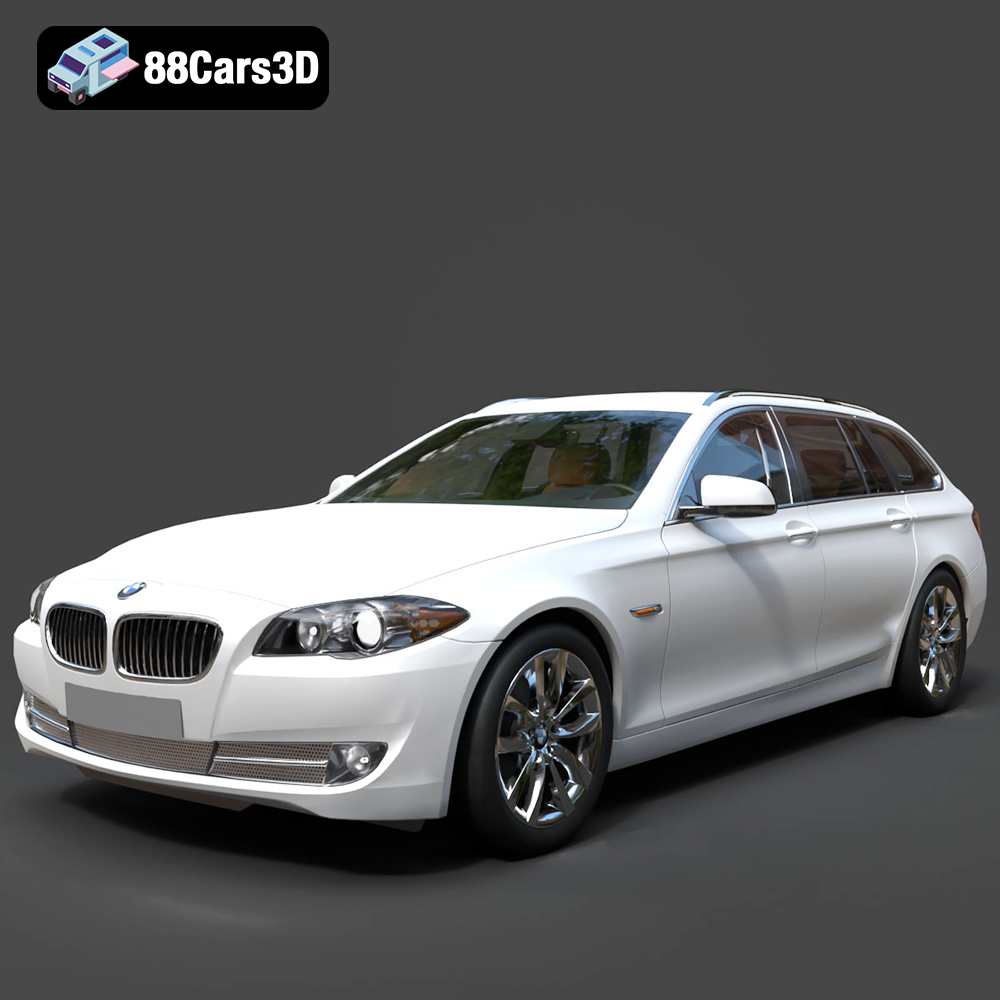
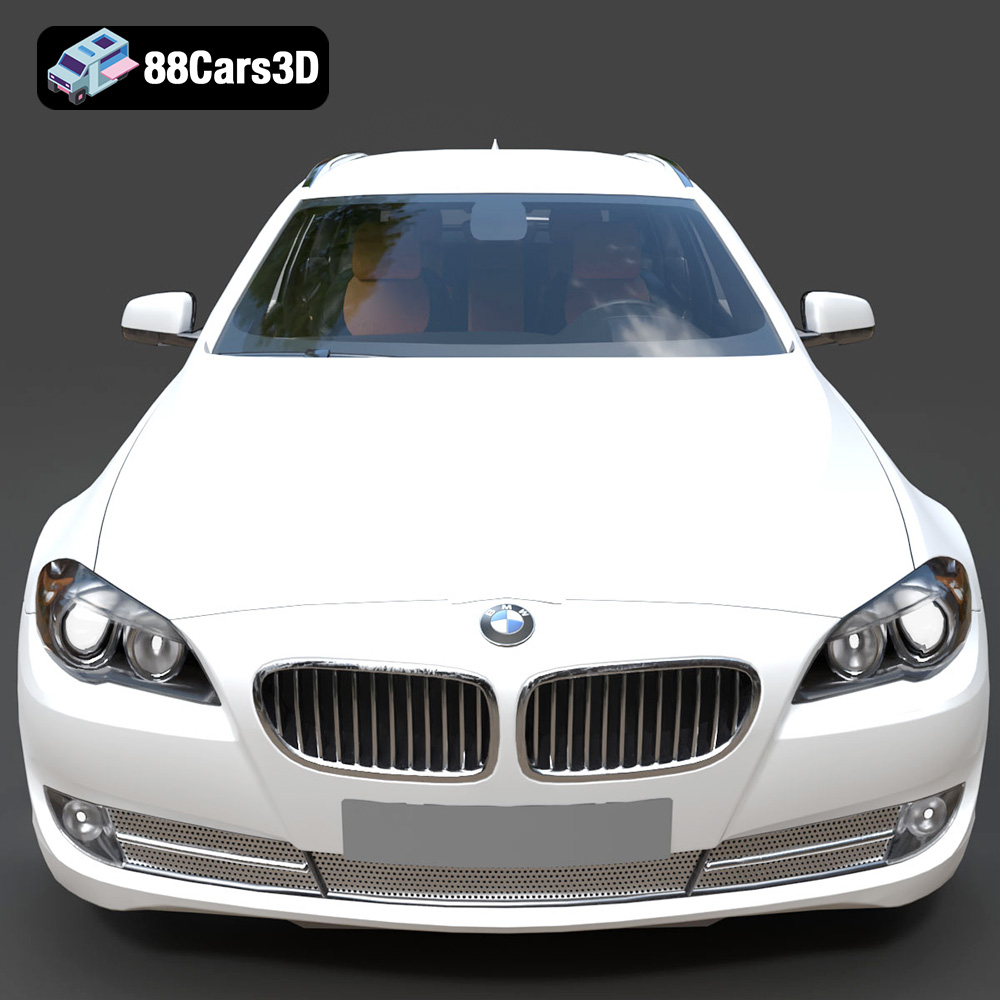
BMW 5 Series Touring F11-007 3D Model
Experience the precision and elegance of the BMW 5 Series Touring F11-007 with this professional 3D model. Meticulously crafted to capture the iconic design and functional aesthetics of the luxury station wagon, this model boasts clean geometry and balanced detailing. It is optimized for a wide range of applications, including high-fidelity rendering, realistic animation sequences, immersive simulation environments, and robust game development.
$10.79
Product Image Gallery




Related Tags
.bmw.5series.touring.f11007.car.wagon.stationwagon.familycar.rendering.simulation.gameasset.arvr.blend.fbx.obj.glb.stl.ply.unreal.max
