

Mastering Automotive Visualization: The Indispensable Role of High-Quality 3D Car Models
In the dynamic world of 3D design, automotive visualization stands as a pinnacle of technical artistry, demanding precision, realism, and efficiency. Whether you’re crafting a cinematic commercial, developing the next-generation racing simulator, or engineering a sophisticated AR/VR experience, the quality of your 3D assets is paramount. A truly exceptional 3D car model doesn’t just look good; it’s a meticulously engineered digital twin, built for seamless integration across diverse professional pipelines.
Today, we delve into the intricate details that define a premium automotive 3D asset, exploring its impact on various industries and how a well-constructed model can accelerate your projects. We’ll examine the technical intricacies, workflow advantages, and real-world applications that elevate a mere mesh into a powerful creative tool. To illustrate these concepts, we’ll feature an exemplary asset: the BMW 6 Coupe E63 3D Model, available from leading marketplaces like 88cars3d.com. This model encapsulates the blend of elegance and dynamic performance, providing a perfect case study for understanding professional-grade 3D car models.
Understanding 3D Model File Formats: The Foundation of Versatility
The choice of file format is more than a mere technicality; it dictates a 3D model’s compatibility, ease of use, and suitability for specific project types. Professional 3D car models are often provided in multiple formats to ensure maximum versatility. Understanding these formats is crucial for any designer, developer, or artist. The BMW 6 Coupe E63 3D Model, for instance, offers a comprehensive suite of formats, each serving a distinct purpose.
.blend – The Native Blender Powerhouse
The .blend format is native to Blender, one of the most popular open-source 3D creation suites. When you receive a .blend file, you’re getting a fully editable Blender scene, complete with materials, textures, lighting, and often animation rigs. This format is ideal for artists who primarily work in Blender, offering the greatest flexibility for modifications, custom shaders, and scene setup. Its technical advantage lies in preserving all Blender-specific data, ensuring a smooth and uncompromised workflow within the software.
.fbx – The Industry Standard for Interoperability
The .fbx (Filmbox) format is a proprietary file format owned by Autodesk, renowned for its excellent support across major 3D applications and game engines. It’s the go-to format for transferring models, animations, cameras, and lights between software like 3ds Max, Maya, Cinema 4D, and critically, game engines like Unreal Engine and Unity. For automotive rendering and game assets, .fbx is invaluable due to its robust handling of mesh data, material assignments, and animation curves. Its binary nature makes it efficient for real-time pipelines.
.obj – The Universal Workhorse
The .obj (Wavefront OBJ) format is one of the oldest and most universally supported 3D formats. It stores geometry (vertices, normals, texture coordinates, and faces) and references external material files (.mtl). While it doesn’t support animation or complex scene data, its simplicity and widespread compatibility make it an excellent choice for basic mesh transfer across virtually all 3D software. For simple static renders or as a fallback for compatibility issues, .obj remains a reliable option.
.glb – Optimized for Web, AR, and VR
The .glb (GL Transmission Format Binary) format is a compact, binary version of glTF, specifically designed for efficient transmission and loading of 3D scenes and models by engines and APIs. It’s an emerging standard for web-based 3D, augmented reality (AR), and virtual reality (VR) applications. .glb files embed textures and other assets directly, making them self-contained and highly optimized for browser-based display and real-time interactive experiences without extensive parsing or external dependencies.
.stl – Precision for 3D Printing
The .stl (Stereolithography) format is the standard file type used for 3D printing. It represents a 3D model as a series of connected triangles, defining only the surface geometry without color, texture, or other attributes. For transforming a digital automotive design into a physical model, the .stl format is essential. While not suitable for rendering or animation, its role in rapid prototyping and physical model production is undisputed.
.ply – The Versatile Mesh Format
The .ply (Polygon File Format) is another popular format for storing 3D data, particularly from 3D scanners and point cloud data. It can store a variety of properties including color, transparency, surface normals, and texture coordinates, in addition to geometry. It’s often favored in academic and research settings for its flexibility and ability to represent complex datasets, making it suitable for precision mesh analysis, scientific visualization, or CAD (Computer-Aided Design) workflows.
.unreal – Engine-Ready for Real-Time Environments
The .unreal format signifies an asset specifically prepared or packaged for direct integration into Unreal Engine projects. This often means the asset has been imported, optimized, and set up within the engine, complete with PBR (Physically Based Rendering) materials, collision meshes, LODs (Levels of Detail), and sometimes even basic blueprints. Receiving a .unreal file or an Unreal Engine project setup significantly reduces the integration time for game developers and real-time visualization artists.
.max – The 3ds Max Professional’s Choice
The .max format is the native file type for Autodesk 3ds Max, a long-standing powerhouse in architectural visualization, animation, and high-end rendering. A .max file contains the complete 3ds Max scene, including geometry, materials (often V-Ray, Corona, or Arnold specific), lighting, cameras, and animation data. It offers full editability for artists working in 3ds Max, allowing for deep customization, complex rigging, and advanced rendering setups, making it indispensable for professional studio environments.
The Art and Engineering of the BMW 6 Coupe E63 3D Model
Beyond file formats, the true value of a 3D car model lies in its meticulous construction and faithfulness to the original design. The BMW 6 Coupe E63 3D Model exemplifies this dedication, capturing the essence of the iconic luxury grand tourer with remarkable precision.
Exterior Fidelity: Capturing the BMW Persona
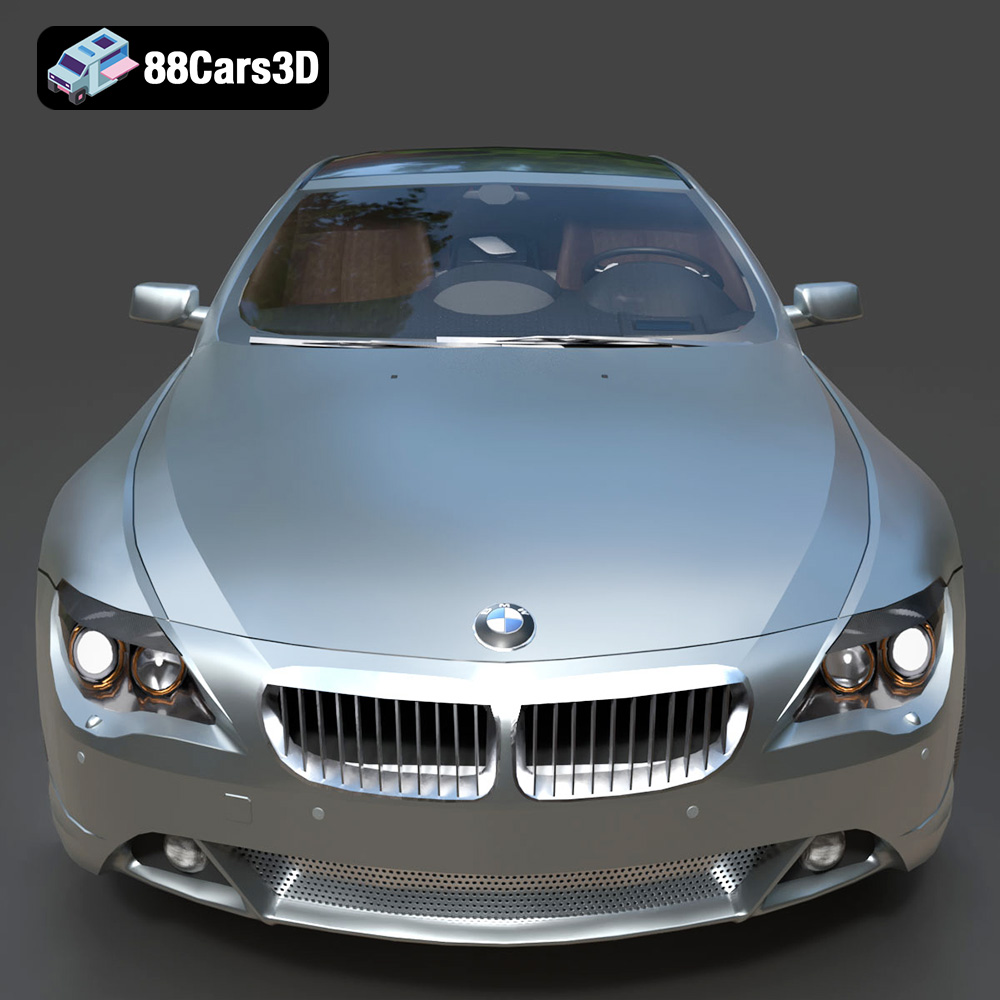
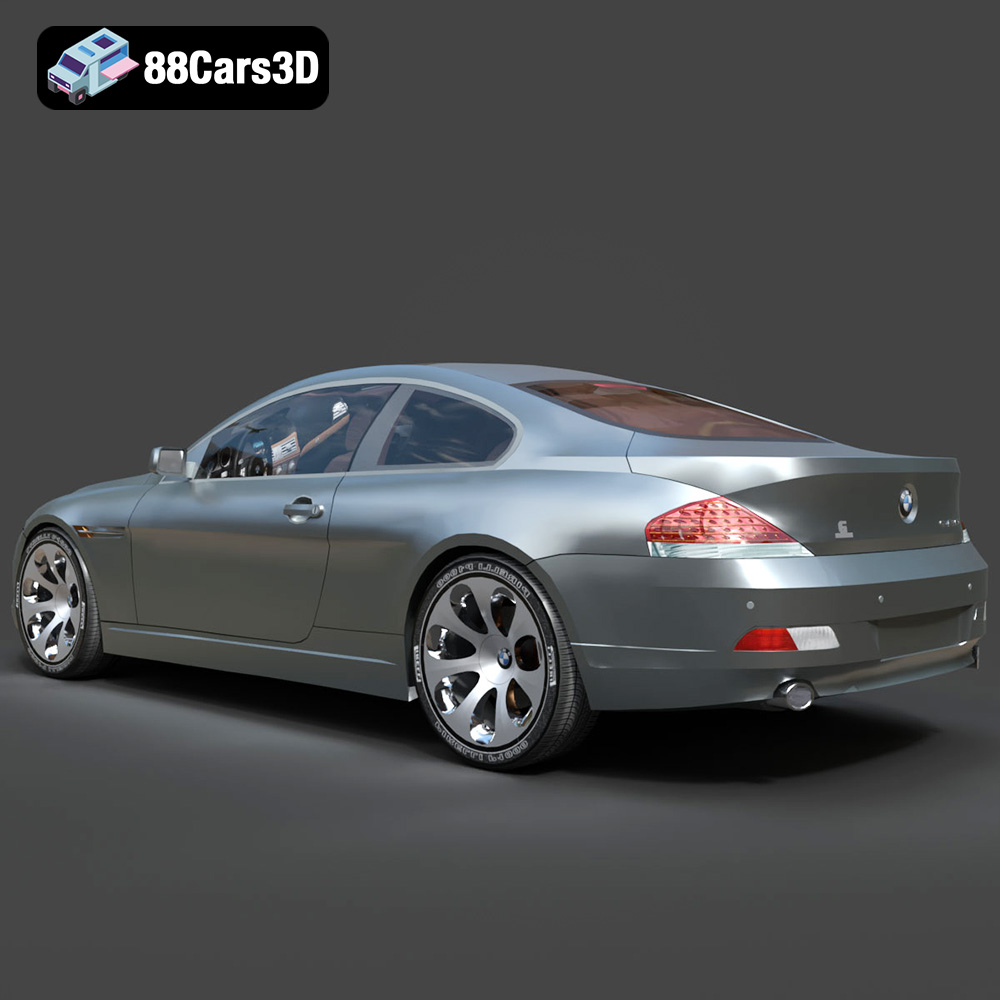
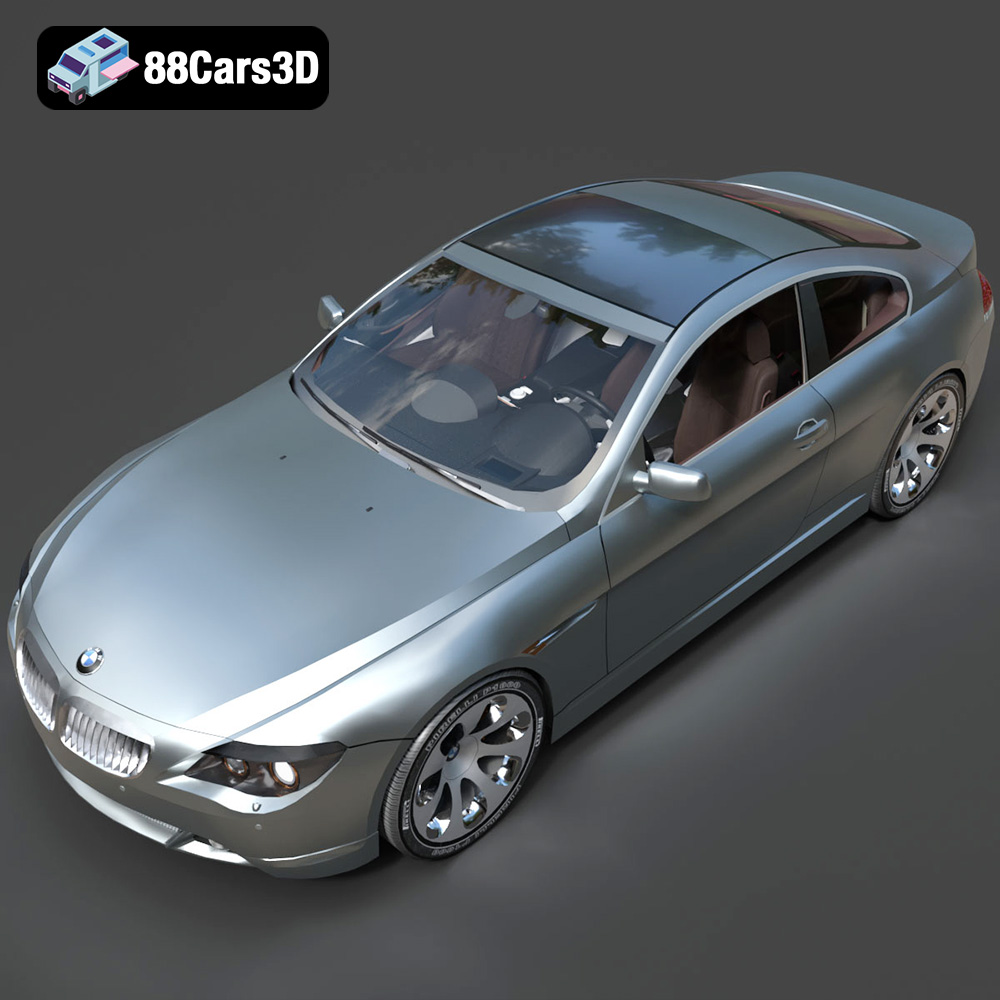
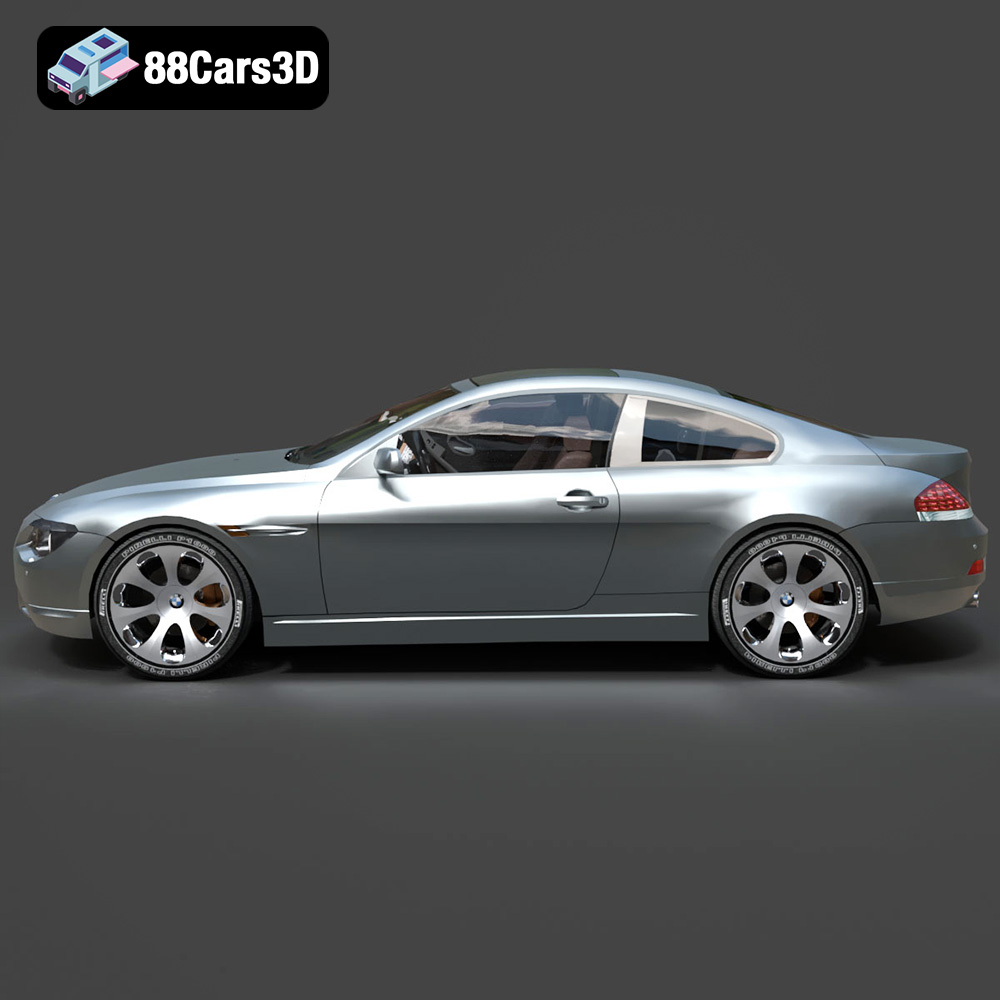
The exterior of any automotive 3D model is its most visible and often most challenging aspect. For the BMW 6 Coupe E63, this means replicating its distinctive silhouette and aggressive yet elegant styling. This particular model boasts accurately modeled body panels and aerodynamics, ensuring the vehicle’s characteristic lines and curves are perfectly translated into the digital realm. Crucially, details like the authentic BMW kidney grille and badging are not overlooked, providing that touch of realism that sets professional models apart. Furthermore, the detailed headlights, tail lights, and fog lamps come with transparent materials, crucial for realistic lighting setups and rendering. The inclusion of realistic wheels and tires with proper tread patterns further enhances visual authenticity, making the model suitable for close-up renders and dynamic driving simulations.
- Precision Geometry: Clean, quad-dominant topology ensures smooth subdivision for high-resolution renders and easy modification.
- Component Separation: Doors, hood, trunk, and wheels are separated, enabling sophisticated animation workflows for opening parts, wheel turns, and suspension dynamics.
- Material Accuracy: Chrome accents and window trims are carefully applied, reflecting light realistically to achieve enhanced realism.
Interior and Mechanical Detail: Beyond the Surface
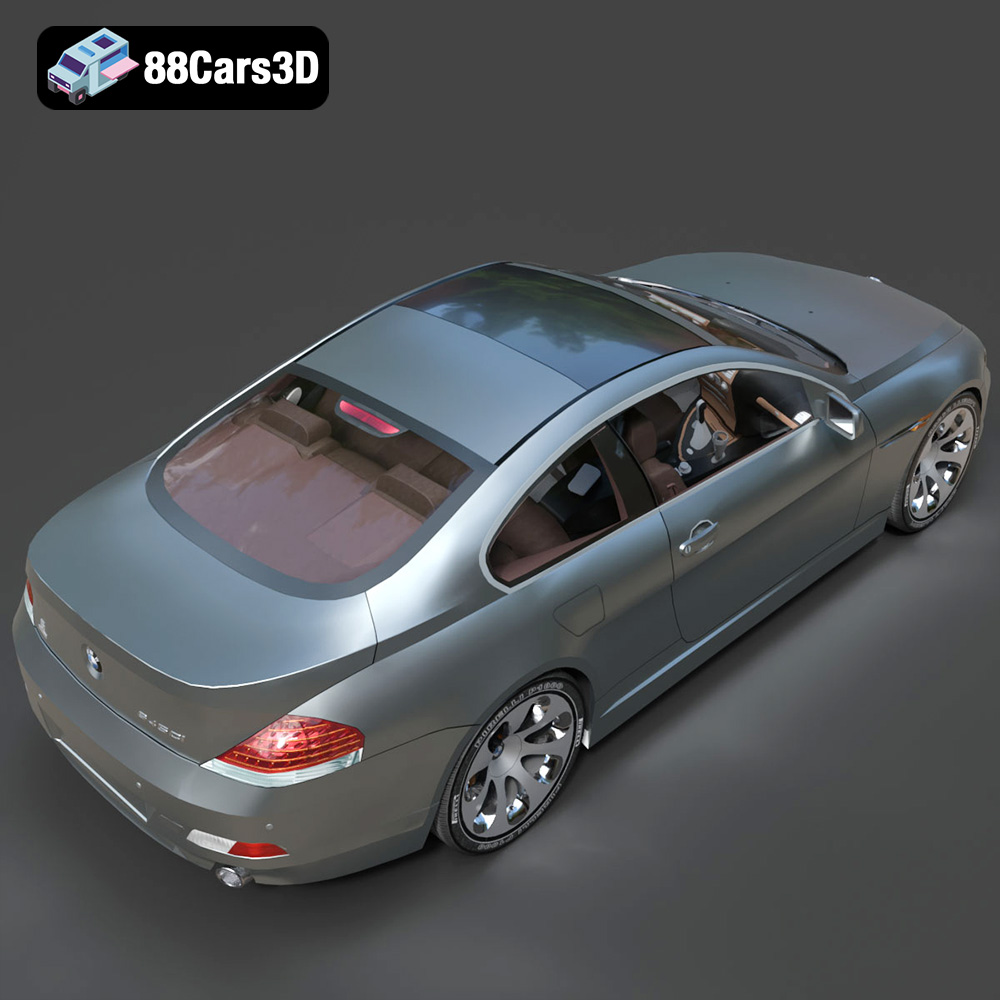
While the exterior grabs immediate attention, a truly comprehensive 3D car model also provides a detailed interior, essential for immersive experiences and detailed product showcases. The BMW 6 Coupe E63 3D Model features a fully detailed interior, including the dashboard, steering wheel, seats, and center console. This level of detail allows for virtual tours, driver’s perspective simulations, and engaging animations where the interior is visible. Precisely modeled door panels and interior trim further contribute to the high-fidelity representation.
- Optimized Mesh Quality: The interior mesh is optimized for efficient rendering, balancing visual quality with performance, especially important for real-time applications.
- Functional Realism: Accurate real-world scale dimensions ensure the model integrates precisely into any scene, maintaining correct proportions relative to environments and other assets.
- Organized Hierarchy: A properly organized hierarchy with correctly set pivots allows for intuitive animation and manipulation, saving artists valuable time.
Integrating Automotive 3D Models into Professional Workflows
The true utility of a high-quality 3D car model like the BMW 6 Coupe E63 lies in its seamless integration into diverse professional workflows, from high-end rendering to real-time interactive experiences.
High-End Rendering and Visualization
For rendering and visualization studios, the BMW 6 Coupe E63 3D Model is an invaluable asset. Its clean topology and accurate materials make it perfect for creating stunning studio renders, cinematic sequences, and photorealistic product showcases. Artists using software like 3ds Max or Blender, coupled with renderers such as V-Ray, Corona, or Cycles, can leverage the model’s detailed geometry and PBR-ready materials to achieve breathtaking visual fidelity. The ability to easily modify paint finishes, apply custom graphics, or create unique livery designs provides creative freedom, while adjustable material properties for metals, chrome, rubber, glass, and interior fabrics allow for nuanced artistic control to suit specific artistic visions.
- Lighting Integration: The model is designed to integrate seamlessly into diverse lighting setups, enabling artists to achieve varied moods and environments, from sun-drenched exteriors to dramatic studio lighting.
- Animation Readiness: Separated components and properly set pivots facilitate complex animations, such as opening doors, dynamic camera movements around the vehicle, or full driving sequences.
Game Development and Real-Time Applications
In game development, demand for realistic 3D car models is consistently high. The BMW 6 Coupe E63 3D Model, with its optimized mesh quality and game engine-compatible formats like .fbx and .unreal, is ideal for integration as a high-fidelity asset in racing games, open-world simulations, or interactive experiences. Game developers benefit from the clean geometry and manageable poly counts, which are crucial for maintaining frame rates while delivering visual quality. The inclusion of a .unreal file specifically streamlines the process for Unreal Engine users, providing an asset that’s often already set up with materials and basic physics properties.
- LOD Optimization: While not explicitly stated, professional game assets often come with multiple Levels of Detail (LODs) to optimize performance across different distances, a common practice for models of this caliber.
- Collision Setup: For real-time physics and interaction, accurate collision meshes are essential, which can be easily generated or refined from the model’s clean topology.
AR/VR and Simulation & Training
The immersive nature of augmented and virtual reality applications requires 3D assets that are both visually compelling and highly performant. The BMW 6 Coupe E63 3D Model, particularly in its .glb format, is perfectly suited for developing AR/VR experiences with realistic vehicle presence. Imagine a virtual showroom where customers can explore the car in full 3D, or an augmented reality app that places the E63 directly in your driveway. Similarly, for simulation and training purposes – such as automotive design studies, driver training simulators, or forensic reconstructions – the model’s accuracy and fidelity provide a robust foundation for realistic scenarios.
- Web & Mobile Integration: The .glb format’s optimization makes it excellent for delivering interactive 3D content on websites and mobile applications, extending reach and engagement.
- Interactive Experiences: The model’s detailed interior allows for highly interactive experiences, where users can virtually sit inside the car and explore its features.
Technical Optimizations for Performance and Quality
The creation of a high-quality 3D car model involves more than just modeling; it demands a deep understanding of technical optimizations that ensure both visual fidelity and optimal performance across various platforms. The BMW 6 Coupe E63 3D Model embodies these principles.
Topology and Mesh Efficiency
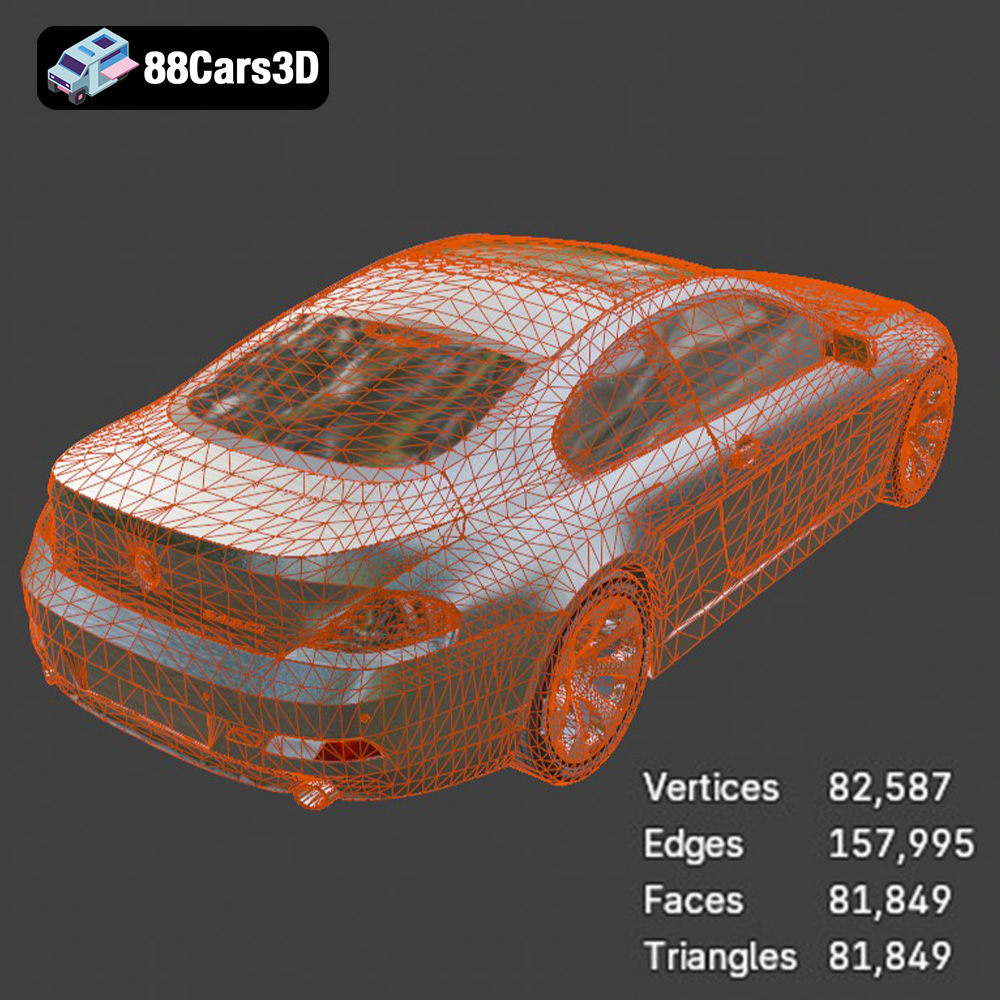
One of the cornerstone technical advantages of this BMW model is its clean, quad-dominant topology. This refers to the underlying mesh structure being predominantly composed of four-sided polygons (quads) rather than three-sided triangles (tris). Why is this important? Quads offer superior control over edge flow, facilitating smooth subdivision when adding detail (e.g., using turbosmooth or subdivision surface modifiers) and making modifications easier without introducing unwanted pinching or artifacts. For artists, this means predictable deformation for animation and a cleaner base for sculpting or detailing. Balanced detailing ensures that polygon count is allocated efficiently, providing high visual quality where it matters most, like around headlights or the grille, while optimizing less critical areas to maintain performance.
UV Mapping and Material Integrity
While not explicitly detailed in the product description, professional 3D car models inherently rely on expert UV mapping and material setup. Clean UVs are essential for applying textures without stretching or distortion. For the BMW E63 model, this implies careful unwrapping of all components – body panels, interior elements, wheels, and lights – to ensure textures like paint, leather, chrome, and glass render perfectly. The inclusion of transparent materials for lights and adjustable material properties for various surfaces (metals, chrome, rubber, glass, interior fabrics) signifies a robust PBR (Physically Based Rendering) workflow, allowing the model to look consistent and realistic under different lighting conditions and renderers.
Real-World Scale and Asset Organization
Accurate real-world scale dimensions are a seemingly simple but critical technical advantage. Integrating a model that matches real-world measurements prevents scaling issues, ensures correct physical interactions in simulations, and maintains visual consistency when placed in scenes with other real-world assets. Coupled with an organized hierarchy and properly set pivots, this makes the BMW 6 Coupe E63 3D Model exceptionally intuitive to manipulate and animate. A well-structured hierarchy (e.g., body parented to chassis, wheels parented to axles) means artists can select and move components logically, greatly streamlining animation and scene assembly processes.
Real-World Applications and Case Studies
High-fidelity 3D car models like the BMW 6 Coupe E63 are not just aesthetic pieces; they are foundational tools in numerous industries, driving innovation and efficiency.
Automotive Marketing and Advertising
Modern automotive marketing heavily relies on 3D visualization. Car manufacturers frequently use 3D models to create stunning promotional images and videos long before a physical prototype exists. The BMW 6 Coupe E63 3D Model could be utilized by a marketing agency to generate breathtaking studio shots for a fictional campaign, showcasing different paint finishes or accessory packages. The ability to render the car in various environments—from a bustling city street to a serene mountain pass—without the logistical challenges of real-world photography is a massive advantage.
Game Development Success Stories
Consider the myriad racing games available today, from sim-racers like Assetto Corsa to arcade titles like Forza Horizon. Each vehicle in these games begins as a detailed 3D model. A model like the E63, optimized for game engines, would form the backbone of a playable car, complete with accurate physics, damage models, and customizable options. The emphasis on clean topology and efficient asset delivery ensures that players experience smooth gameplay without sacrificing visual quality.
Architectural Visualization (ArchViz)
In architectural visualization, adding realistic vehicles can significantly enhance the believability and dynamism of a scene. Imagine an architectural rendering of a luxury home or a modern office complex, with the BMW 6 Coupe E63 elegantly parked in the driveway or a garage. Its presence adds scale, realism, and a touch of aspirational lifestyle, making the visualization more engaging for clients. The model’s real-world scale and detailed exterior make it a perfect fit for these high-stakes presentations.
Customization and Future-Proofing Your Automotive Assets
The longevity and value of a 3D asset are often determined by its adaptability. A high-quality model is not a static object but a flexible foundation for endless creative possibilities.
Unleashing Creative Freedom
The BMW 6 Coupe E63 3D Model is designed with customization in mind. Its clean geometry and well-structured materials mean that artists can easily modify paint finishes, apply custom graphics, or even create unique livery designs. This is crucial for projects requiring brand consistency, artistic expression, or diverse product offerings. Want to change the car from a metallic blue to a matte black? It’s a few clicks away. Need to add a racing stripe or a company logo? The model’s UVs and material setup facilitate this with ease. This level of flexibility elevates the model from a simple visual aid to a powerful creative tool, ensuring it meets the specific artistic vision of any project.
Adapting to Evolving Technologies
As 3D technology continues to advance, so do the demands on assets. A professionally built model, characterized by clean topology and a logical hierarchy, is inherently more future-proof. Should new rendering techniques or game engine features emerge, a well-structured model can be more easily updated or re-exported to take advantage of these innovations. For example, if a new physically based material standard becomes prevalent, the E63’s PBR-ready material structure will make the transition smoother. The array of included file formats also ensures compatibility with a broad spectrum of current and future software, safeguarding your investment in the asset.
- Material System Flexibility: The ability to adjust material properties for various surfaces allows the model to be adapted to different rendering engines and their specific material systems, maintaining visual integrity across platforms.
- Scalability: The clean quad topology means the model can be easily subdivided for ultra-high-resolution renders or decimated for low-poly mobile applications, providing scalability for diverse project requirements.
Conclusion
In the highly competitive world of 3D modeling and visualization, the difference between good and great often comes down to the quality of your core assets. A meticulously crafted 3D car model is more than just a pretty picture; it’s a foundation for innovation, a catalyst for creativity, and a benchmark for professional standards. From the granular detail of its exterior and interior to its versatile file format support and optimized technical structure, a premium asset streamlines workflows, enhances realism, and empowers artists and developers to push the boundaries of their projects.
The BMW 6 Coupe E63 3D Model stands as a shining example of such an asset. Its blend of visual fidelity, technical efficiency, and broad compatibility makes it an invaluable tool for anyone in automotive rendering, game development, AR/VR, or detailed simulations. By choosing professional 3D car models from reputable sources like 88cars3d.com, you invest not just in a digital object, but in efficiency, quality, and the boundless potential of your creative endeavors. Elevate your next project with assets that truly perform.
Featured 3D Model
BMW 6 Coupe E63 3D Model
Experience the elegance and dynamic performance of the BMW 6 Coupe E63 with this meticulously crafted 3D model. Representing the iconic luxury grand tourer, this model captures the sleek lines, assertive stance, and refined details of the E63 generation. Built with clean geometry and balanced detailing, it offers both visual fidelity and optimal performance. Ideal for professional rendering, immersive animation, realistic simulations, and high-quality game development projects.
Exterior Features:
- Accurately modeled body panels and aerodynamics
- Detailed headlights, tail lights, and fog lamps with transparent materials
- Authentic BMW kidney grille and badging
- Realistic wheels and tires with proper tread patterns
- Separated components like doors, hood, trunk, and wheels for easy animation workflows
- Chrome accents and window trims for enhanced realism
Interior / Mechanical Features:
- Fully detailed interior including dashboard, steering wheel, seats, and center console
- Precisely modeled door panels and interior trim
- Optimized mesh quality for efficient rendering of interior scenes
Technical Advantages:
- Clean, quad-dominant topology for smooth subdivision and easy modifications
- Accurate real-world scale dimensions for precise integration into any scene
- Organized hierarchy with properly set pivots for intuitive animation and manipulation
Applications:
- Rendering & Visualization: Create stunning studio renders, cinematic sequences, and product showcases
- Game Development: Integrate as a high-fidelity asset in racing games, open-world simulations, or interactive experiences
- AR/VR: Develop immersive augmented and virtual reality applications with realistic vehicle presence
- Simulation & Training: Utilize for automotive design studies, driver training simulators, or forensic reconstructions
- 3D Printing: Convert to .stl for producing detailed physical models of the vehicle
Customization Options:
- Easily modify paint finishes, apply custom graphics, or create unique livery designs
- Adjust material properties for metals, chrome, rubber, glass, and interior fabrics to suit specific artistic visions
- Integrate into diverse lighting setups to achieve varied moods and environments
Elevate your creative projects with the BMW 6 Coupe E63 3D model. Its professional quality, versatile design, and comprehensive feature set make it an invaluable asset for any demanding visualization or interactive application.
Included File Formats:
- .blend – Blender project with materials
- .fbx – Compatible with Unreal, Unity, and major 3D engines
- .obj – Universal format for nearly all 3D software
- .glb – Optimized for AR, VR, and web-based visualization
- .stl – Ready for 3D printing
- .ply – Mesh format for analysis and CAD workflows
- .unreal – Unreal Engine project setup
- .max – Editable 3ds Max scene for rendering and animation
$10.79
Product Image Gallery


Related Tags
.6coupee63
.arvr
.blend
.bmw
.coupe
.fbx
.gameasset
.glb
.luxurycar
.max
.obj
.ply
.rendering
.simulation
.sportsCar
.stl
.unreal
