Mastering Automotive Visualization: A Deep Dive into High-Fidelity 3D Car Models with the Classic BMW 6 Series 1986
In the dynamic world of 3D visualization, the demand for exceptionally detailed and accurate assets is paramount, especially when it comes to automotive subjects. From hyper-realistic renders that blur the line between digital and reality to immersive game environments and precise architectural visualizations, a high-quality 3D car model is often the linchpin of a successful project. Few vehicles embody timeless design and engineering prowess quite like the BMW 6 Series E24, and its digital counterpart, the BMW 6 Series 1986 3D Model, stands as a testament to the art of digital preservation and versatility.
This article will explore the intricate world of professional 3D car models, dissecting the technical nuances, workflow integrations, and diverse applications that make assets like the BMW 6 Series 1986 so invaluable. We will delve into the critical role of file formats, the pursuit of geometric and material fidelity, and how such a meticulously crafted asset empowers creators across various industries, providing a solid foundation for everything from cinematic animation to real-time interactive experiences.
The Enduring Appeal of Classic Cars in Digital Form
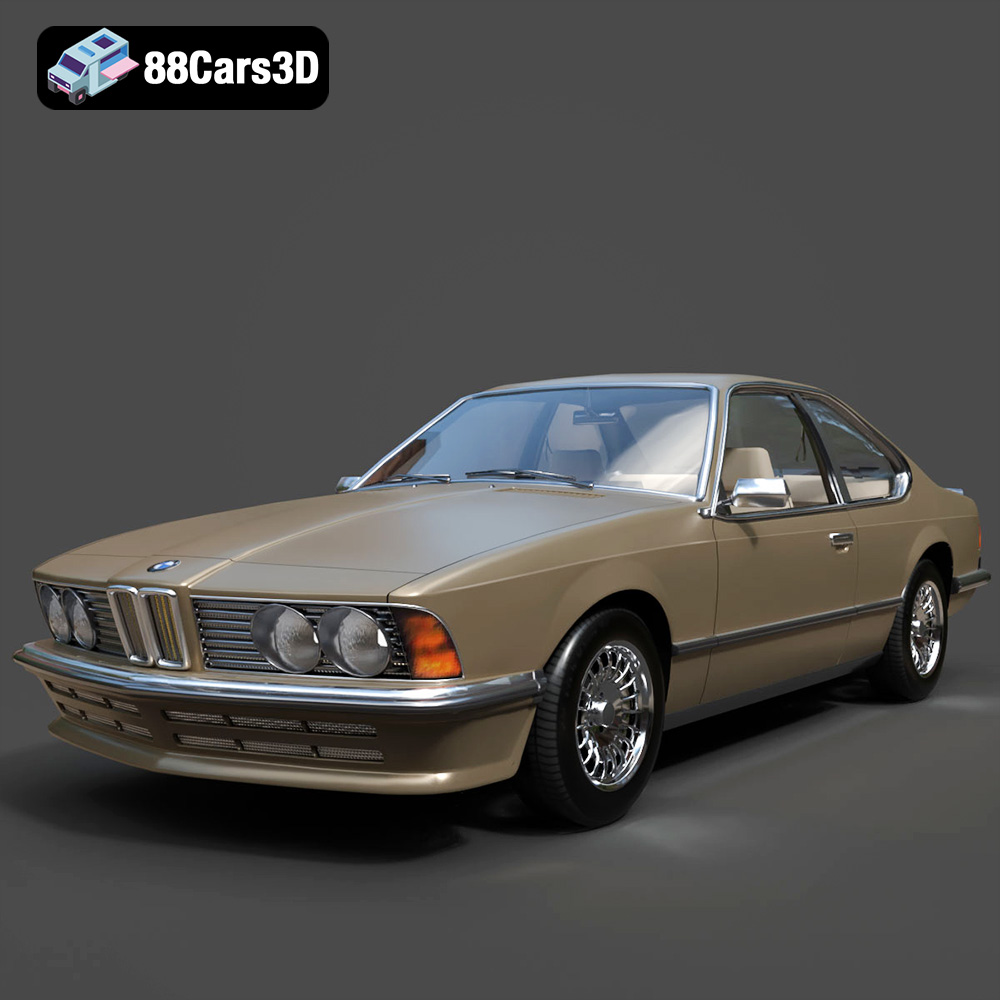
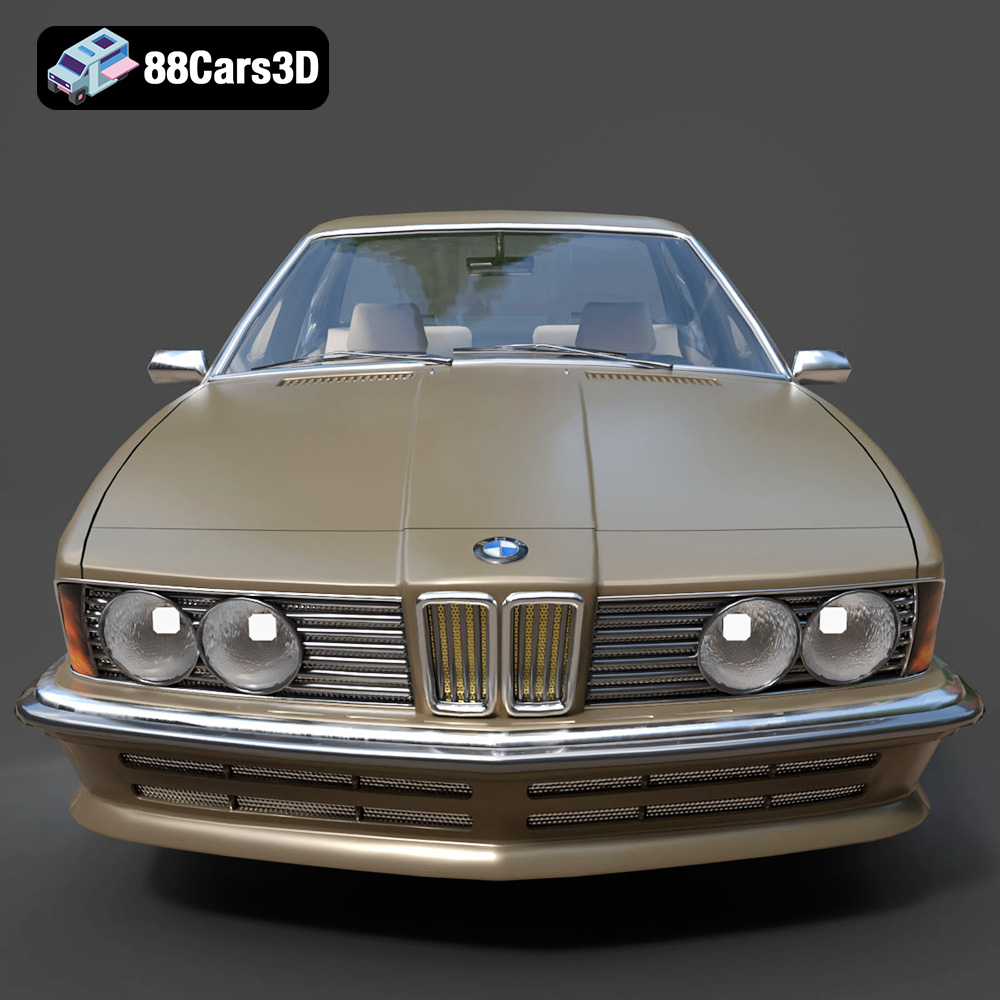
Classic cars hold a unique place in our collective imagination, representing eras of design innovation, engineering milestones, and cultural significance. Recreating these iconic vehicles in 3D is not merely about replicating their form; it’s about capturing their soul and making them accessible for modern digital applications. The BMW 6 Series 1986, with its distinctive shark nose and elegant coupe lines, offers a rich subject for such digital craftsmanship.
Recreating Automotive Heritage for Modern Audiences
The process of transforming a physical classic car into a high-fidelity 3D model involves a deep appreciation for automotive history and meticulous attention to detail. Every curve, every panel gap, and every unique design element must be accurately translated into the digital realm. This careful preservation allows enthusiasts, designers, and historians alike to interact with these vehicles in new ways, studying their aesthetics and engineering without the constraints of physical ownership or wear. A quality 3D car model of a classic like the 1986 BMW 6 Series provides a digital time capsule, ready for integration into virtual museums, educational platforms, or documentary projects.
Beyond Nostalgia: Practical Applications for Vintage 3D Assets
While the nostalgic appeal is undeniable, the utility of a classic 3D car model extends far beyond historical appreciation. For automotive designers, vintage models can serve as reference points for future designs, allowing them to analyze classic proportions and styling cues in a digital environment. For marketing and advertising agencies, a classic vehicle can evoke specific emotions and target demographics, providing a powerful visual anchor for campaigns. Game developers can integrate these iconic vehicles into racing simulations or open-world adventures, offering players a taste of automotive history. The BMW 6 Series 1986 3D Model, with its blend of aesthetic appeal and technical precision, exemplifies how classic assets deliver significant practical value in contemporary digital production.
Understanding 3D Model File Formats
The choice of file format is a critical decision in any 3D workflow, dictating compatibility, feature support, and optimization for specific applications. A professional 3D asset provider, such as 88cars3d.com, understands this necessity and typically offers models in a variety of formats to ensure maximum utility. The BMW 6 Series 1986 3D Model package is an excellent example, providing a comprehensive suite of file types tailored for diverse professional pipelines.
.blend – The Blender Powerhouse
The .blend format is the native file type for Blender, a powerful open-source 3D creation suite. When you receive a .blend file, it’s typically a complete scene, encompassing not just the mesh geometry but also materials, textures, lighting setups, cameras, and even animations. This makes it incredibly versatile for artists working within the Blender ecosystem, allowing for immediate rendering, easy modifications, and seamless integration into existing Blender projects. For the BMW 6 Series 1986 3D Model, the .blend file provides a fully editable scene with pre-configured materials and lighting, making it an ideal starting point for automotive rendering and animation within Blender.
.fbx – The Industry’s Interoperability Backbone
Autodesk’s .fbx format is arguably the most widely adopted interchange format in the 3D industry. It excels at transferring geometry, hierarchies, animation, and basic material data between different software applications. Its robust support for skeletal animation and complex scene data makes it ideal for real-time pipelines, particularly for game engines like Unreal Engine and Unity. When working with game assets, an optimized .fbx file ensures that the model can be imported with its rigging, animations (if applicable), and UV mapping intact, ready for material assignment and LOD setup within the engine. The .fbx version of the BMW 6 Series 1986 is specifically designed to be game-engine ready, facilitating smooth integration for developers.
.obj – The Universal Standard
The .obj (Wavefront Object) format is a venerable and highly compatible 3D file type, known for its simplicity and universality. It primarily stores mesh geometry (vertices, normals, UVs, and faces) and can reference external material (.mtl) files for basic color and texture information. While it doesn’t support advanced features like animation or hierarchies as comprehensively as .fbx, its widespread compatibility means virtually every 3D software can import and export .obj files. This makes it a dependable choice for cross-software compatibility, ensuring that the BMW 6 Series 1986 3D Model can be accessed by users of any major 3D application, regardless of their primary workflow.
.glb – Optimized for AR, VR, and Web
The .glb (GL Transmission Format Binary) is an increasingly important format, particularly for modern interactive experiences. It’s a binary version of glTF, designed for efficient transmission and loading of 3D scenes and models in web browsers, augmented reality (AR), and virtual reality (VR) applications. A .glb file packages geometry, materials, textures, and animations into a single, compact file, making it perfect for rapid deployment on web platforms or mobile AR apps. The inclusion of a .glb file for the BMW 6 Series 1986 caters directly to the growing demand for interactive visualization and immersive experiences.
.stl – The 3D Printing Workhorse
For those looking to bring digital models into the physical world, the .stl (Stereolithography) format is the standard. It represents a 3D model as a series of connected triangles, defining only the surface geometry without color, texture, or material information. This simplicity makes it universally supported by 3D printing software (slicers) and machines. An .stl file of the BMW 6 Series 1986 3D Model would be suitable for rapid prototyping, creating physical scale models, or even fabricating custom parts, offering tangible benefits for designers and hobbyists.
.ply – Precision Mesh for Analysis
The .ply (Polygon File Format) is often used for storing 3D data from 3D scanners, CAD systems, and other sources that require high precision. It can store a wide range of properties, including color, transparency, texture coordinates, and even properties per vertex or face, making it excellent for detailed analysis and visualization of complex meshes. While less common for general-purpose model exchange, its presence indicates a model’s suitability for applications requiring highly accurate geometric data, such as reverse engineering or scientific visualization.
.unreal – Engine-Ready Native Asset
Specifically for Unreal Engine users, a native .unreal asset signifies a model that has been pre-configured and optimized directly within the engine. This means materials are often set up with PBR (Physically Based Rendering) shaders, collision meshes may be generated, and LODs are typically implemented, saving significant time for developers. The provision of a .unreal file for the BMW 6 Series 1986 means it’s practically a plug-and-play solution for anyone building environments or experiences within Unreal Engine, maximizing efficiency for real-time projects.
.max – The 3ds Max Standard
Autodesk .max is the native file format for 3ds Max, a leading software for 3D modeling, animation, and rendering. Like .blend, a .max file typically contains the entire scene, including geometry, materials (with support for advanced renderers like V-Ray or Corona), lighting, cameras, and animation data. It offers full editability and control for users accustomed to 3ds Max’s robust toolset, making it ideal for high-end automotive rendering, detailed animations, and complex scene assembly. The .max version of the BMW 6 Series 1986 3D Model ensures full creative freedom for professional artists working in 3ds Max.
Engineering Precision: The Technical Aspects of a Professional 3D Car Model
Beyond simply providing a visually recognizable shape, a truly professional 3D car model, such as the BMW 6 Series 1986 from 88cars3d.com, is defined by its underlying technical quality. This encompasses meticulous geometry, optimized topology, and accurate material representation, all crucial for achieving photorealistic results and efficient performance.
Geometry Optimization: Poly Counts, Topology, and LODs
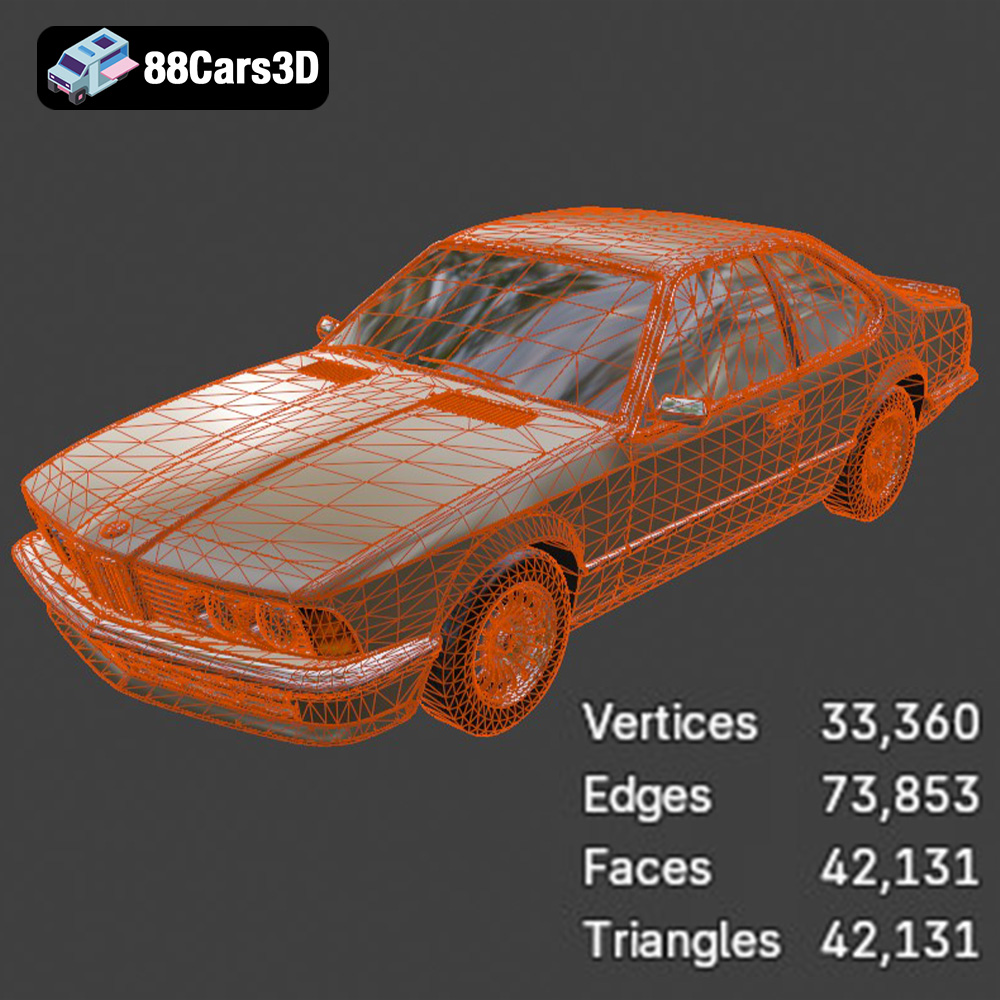
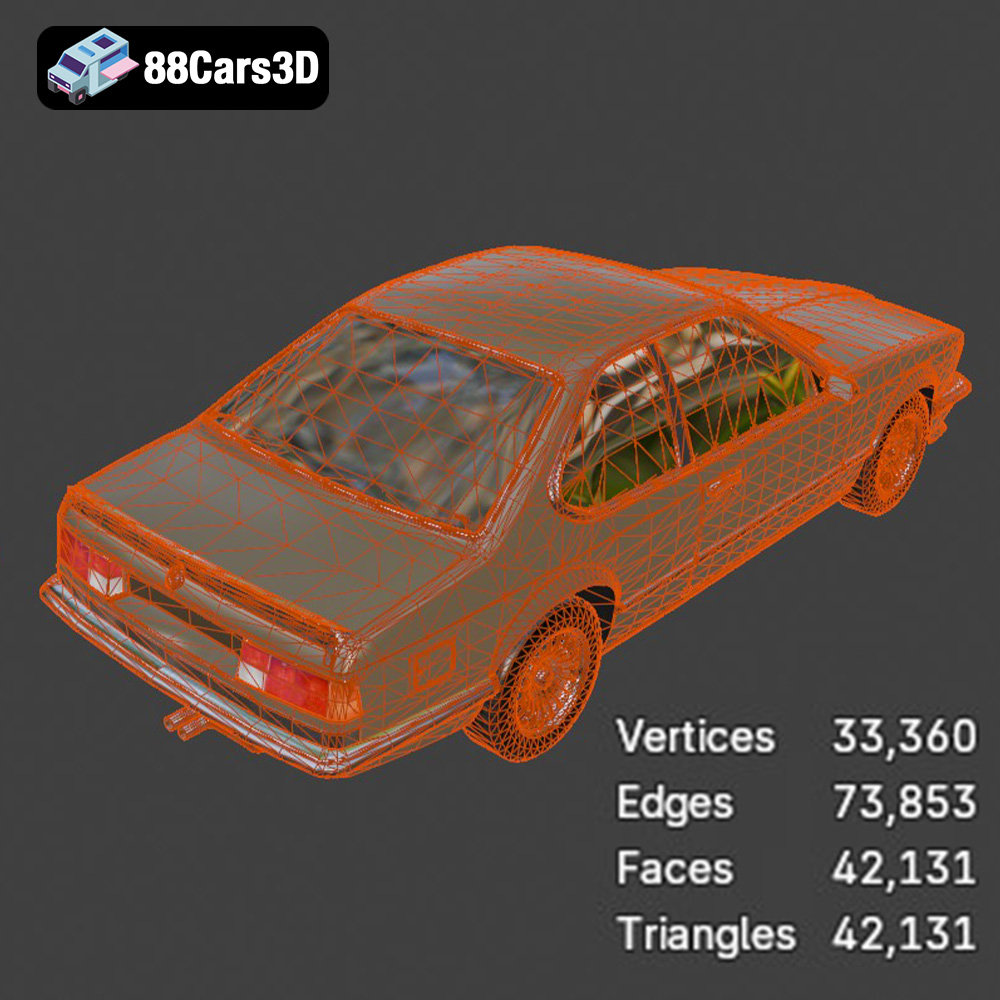
At the core of any high-quality 3D model is its geometry. For production environments, clean, optimized geometry is non-negotiable. This means using quad-based topology wherever possible, ensuring smooth subdivision for close-up renders, and maintaining efficient poly counts that balance detail with performance. For a complex subject like a car, careful attention must be paid to areas like panel gaps, wheel arches, and intricate interior details to ensure they are accurately represented without excessive polygon density. Different Levels of Detail (LODs) are also crucial, especially for game development and real-time applications. Lower poly versions of the model are used when the car is far from the camera, significantly improving rendering performance without a noticeable loss of detail. The BMW 6 Series 1986 3D Model is engineered with this optimization in mind, featuring clean geometry suitable for everything from cinematic close-ups to efficient real-time simulations.
Material and Texture Fidelity: Bringing Realism to the Surface
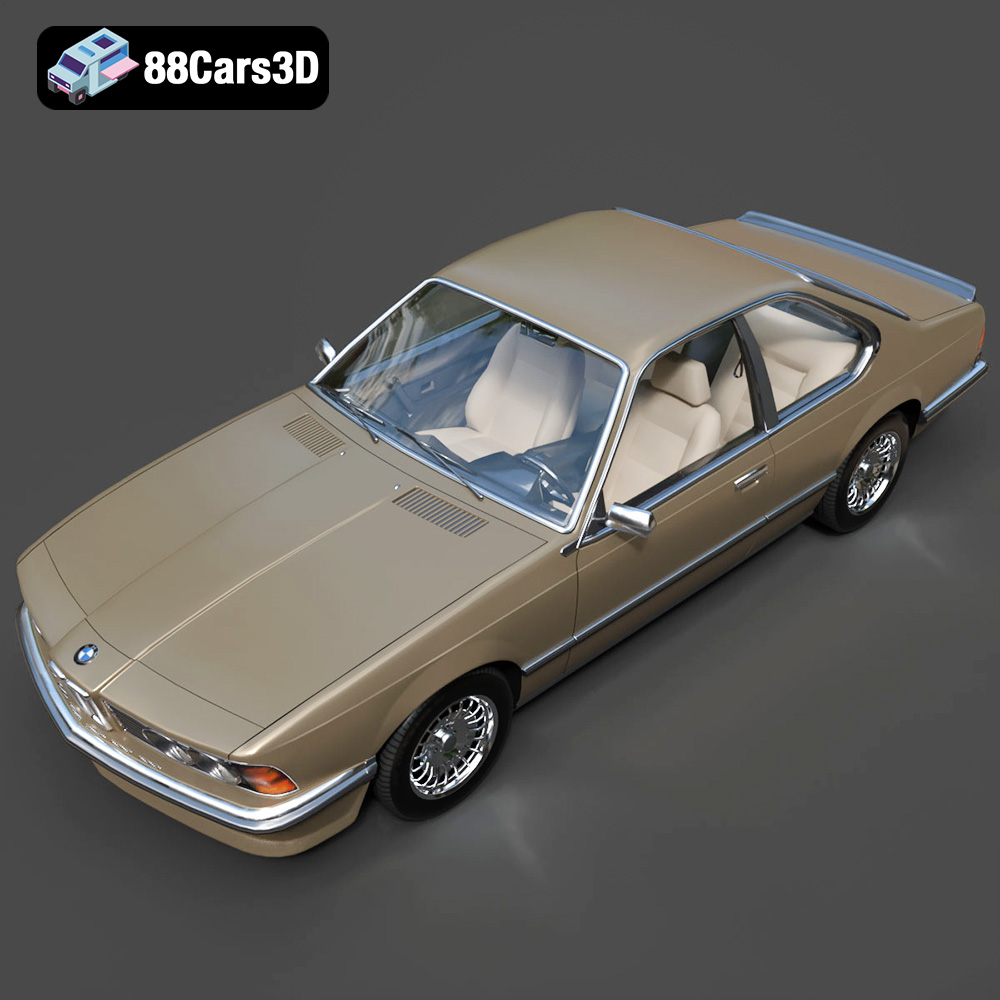
No matter how perfect the geometry, a 3D model won’t look realistic without accurate materials and textures. Modern workflows rely heavily on Physically Based Rendering (PBR) materials, which simulate how light interacts with surfaces in a physically accurate manner. This involves carefully crafted texture maps for diffuse color (albedo), roughness, metallicness, normal maps, and displacement maps. For the BMW 6 Series 1986, this translates to accurately capturing the subtle sheen of vintage paint, the distinct reflectivity of chrome trim, the texture of leather upholstery, and the clarity of glass. Precision UV mapping ensures that these textures are applied without stretching or distortion. When materials are configured for rendering accuracy, as they are in the BMW 6 Series 1986 asset, the paint, chrome, and interior components respond correctly under various lighting conditions, resulting in breathtaking photorealism.
Integrating the BMW 6 Series 1986 into Professional Workflows
The true value of a versatile 3D asset lies in its ability to seamlessly integrate into diverse professional workflows. The BMW 6 Series 1986 3D Model provides precisely this flexibility, with tailored file formats and optimized structures for various industry applications.
Automotive Rendering and Visualization in 3ds Max and Blender
For high-end automotive rendering and architectural visualization, software like 3ds Max and Blender are industry staples. The provided .max and .blend files for the BMW 6 Series 1986 are fully editable and often come with pre-configured materials and lighting setups, allowing artists to hit the ground running. In 3ds Max, artists can leverage powerful renderers like V-Ray or Corona to create stunning photorealistic images, adjusting reflections, refractions, and global illumination to perfection. Similarly, Blender users can utilize Cycles or Eevee for equally impressive results, easily integrating the model into elaborate scenes. From showcasing a classic car within a luxurious garage to animating it driving through a stylized environment, the editable nature of these files provides unparalleled creative control for detailed visualizations and marketing collateral.
Game Development and Real-Time Applications with Unreal Engine
The demand for high-quality game assets is constantly growing, and classic cars are highly sought after for racing simulators, open-world games, and interactive experiences. The .fbx and dedicated .unreal files of the BMW 6 Series 1986 3D Model are engineered for optimal performance in game engines like Unreal Engine. Developers can easily import the model, and the pre-configured .unreal asset significantly streamlines the setup process by providing ready-to-use materials, collision meshes, and often optimized LODs. This allows for rapid prototyping and deployment, ensuring that the classic BMW maintains its visual fidelity even within performance-critical real-time environments. Whether it’s a feature car in a racing title or a background element in a virtual reality experience, the model is built for efficiency and visual impact.
Expanding Horizons: AR/VR and 3D Printing
Beyond traditional rendering and game development, the BMW 6 Series 1986 3D Model also serves emerging technologies. The .glb format is perfect for developers creating Augmented Reality (AR) experiences, allowing users to place a virtual classic BMW in their real-world environment via a smartphone or tablet. For Virtual Reality (VR), the optimized geometry ensures smooth frame rates for immersive exploration. Furthermore, the inclusion of an .stl file opens up possibilities for physical creation through 3D printing. Designers can rapidly prototype scale models, create custom accessories, or even study the car’s physical form in a tangible way. This versatility underscores the comprehensive nature of the assets available at 88cars3d.com, catering to a broad spectrum of digital and physical applications.
Case Studies: Unleashing the Potential of the BMW 6 Series 1986 3D Model
The theoretical benefits of a high-quality 3D asset truly come to life through practical application. Let’s explore some real-world scenarios where the BMW 6 Series 1986 3D Model could be a game-changer.
Cinematic Production & Commercials
Imagine a period film or a luxury car commercial aiming to evoke a sense of nostalgia. Instead of sourcing and maintaining a physical vintage BMW 6 Series, a production company could leverage the 3D model. Digital artists could place the car in historically accurate CGI environments, animate it with precise camera movements, and render it with impeccable realism. This not only saves significant production costs and logistical complexities but also offers unparalleled creative control over lighting, camera angles, and damage effects that would be impossible or impractical with a real vehicle. The model’s clean geometry and accurate materials make it ideal for high-resolution cinematic sequences.
Virtual Showrooms & Interactive Experiences
Luxury car dealerships or classic car museums could create interactive virtual showrooms where prospective buyers or enthusiasts can explore the BMW 6 Series 1986 in exquisite detail. Using a web-based .glb viewer, users could rotate the car, open doors, inspect the interior, and even change paint colors, all from their web browser. For a more immersive experience, VR applications built with the .unreal or .fbx versions could allow users to “sit inside” the car, experience its scale, and appreciate its design nuances in a truly engaging way. This offers a scalable and accessible alternative to physical viewings.
Customization and Modding for Enthusiasts
Beyond professional studios, the modding community and individual enthusiasts thrive on high-quality base assets. The editable .blend and .max files of the BMW 6 Series 1986 provide an excellent foundation for customization. A hobbyist could use these files to design custom body kits, experiment with unique paint schemes, or even create personalized racing liveries for their favorite classic car simulation. The logical grouping of components within the model makes it easy to isolate and modify specific parts, fostering creativity and extending the life and utility of the digital asset for a passionate community.
Conclusion
The journey from a physical object to a versatile, high-fidelity 3D model is one of meticulous craft and technical precision. Assets like the BMW 6 Series 1986 3D Model exemplify the pinnacle of this digital artistry, providing an indispensable resource for professionals across various industries. From the comprehensive suite of file formats catering to every conceivable workflow – be it automotive rendering, game development, AR/VR, or 3D printing – to the underlying geometric and material integrity, every aspect is designed for production-level performance.
For anyone seeking to integrate iconic vehicles into their digital projects, investing in meticulously crafted 3D car models is a strategic decision that saves time, ensures quality, and expands creative possibilities. The BMW 6 Series 1986 stands as a prime example of the exceptional assets available, ready to elevate your projects to new heights of realism and engagement. Explore this model and many others at 88cars3d.com, where quality and versatility drive innovation.
Featured 3D Model
BMW 6 Series 1986 3D Model
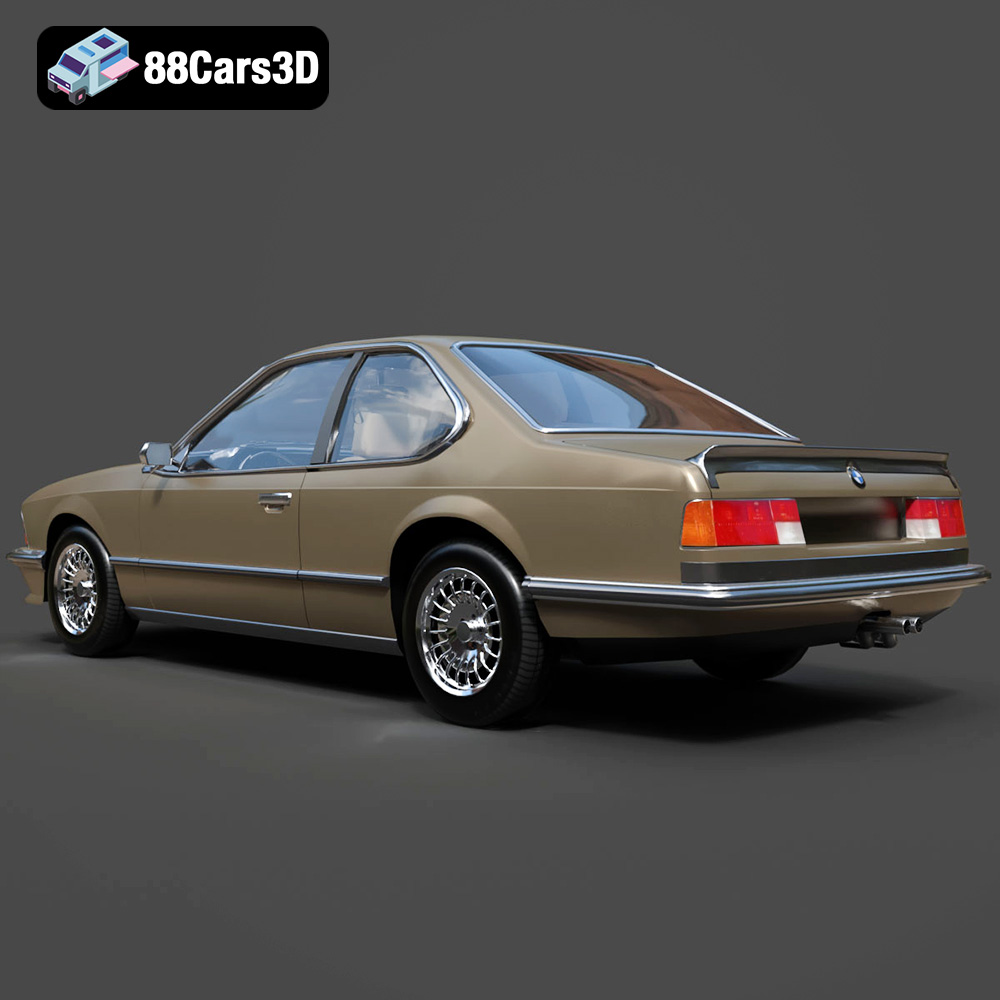
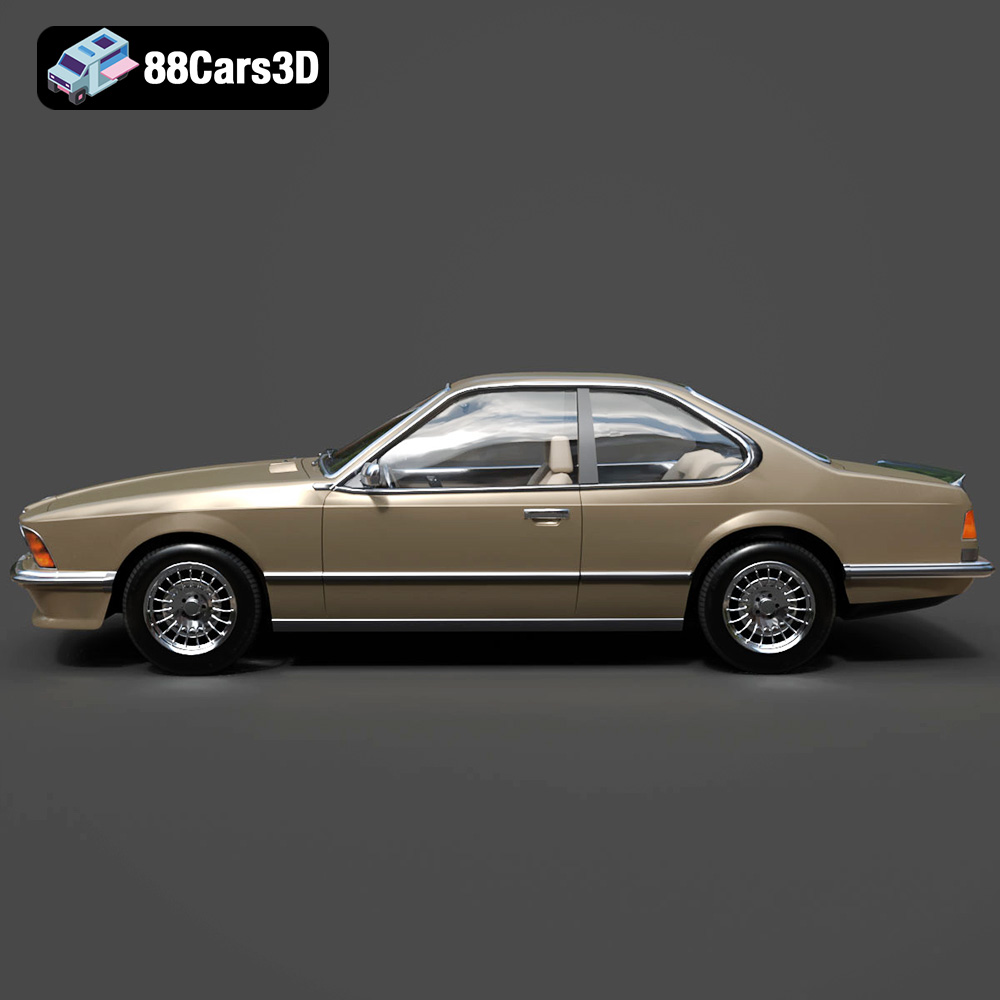
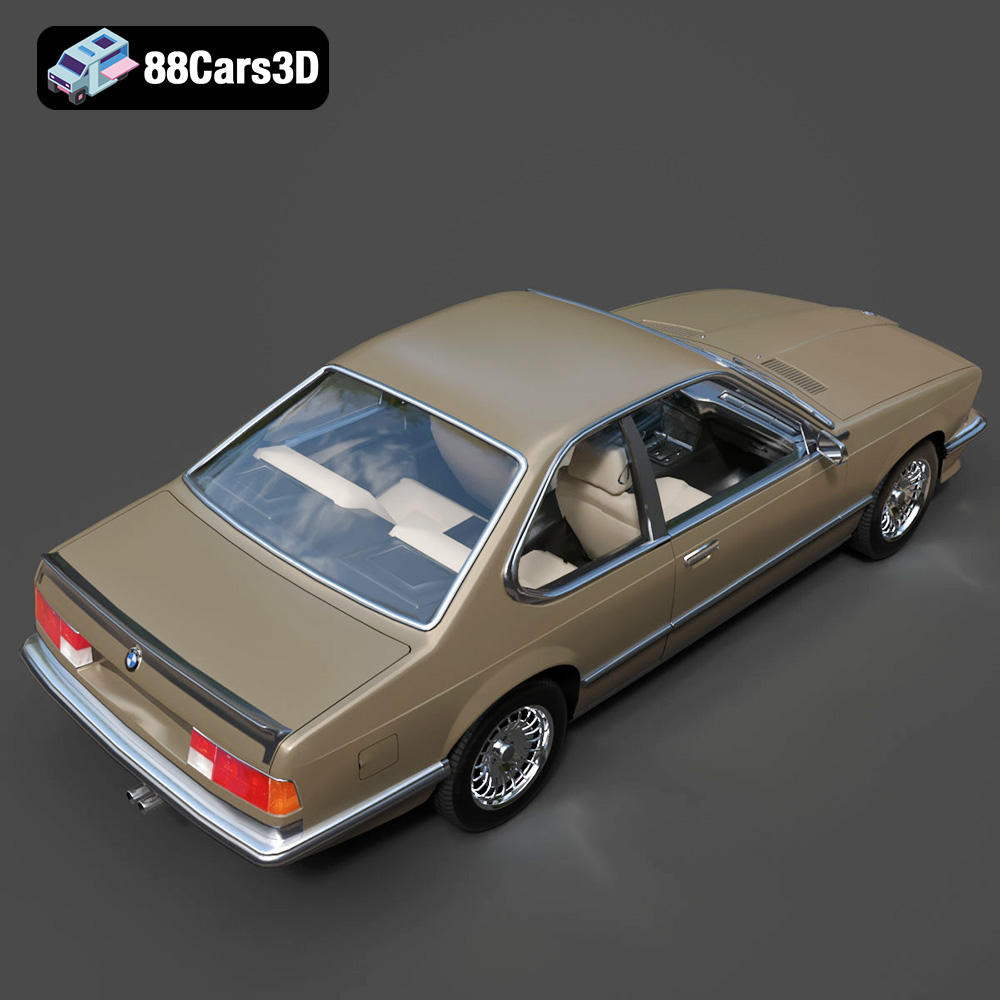
Introducing the BMW 6 Series 1986 (E24) 3D model, engineered for production environments requiring accuracy and performance. This asset captures the definitive lines of the classic German luxury coupe, ideal for preserving the authenticity of the vintage vehicle in digital projects. This professional-grade asset features clean, optimized geometry suitable for close-up renders and simulations. Materials are configured for rendering accuracy, ensuring the paint, chrome, and interior components respond correctly under various lighting conditions. All components are logically grouped for ease of adjustment and animation. Optimized for integration into various digital pipelines, this model serves as an essential resource for automotive visualization, architecture presentation, cinematic animation, and high-fidelity real-time applications such as game development and virtual reality environments.
$16.99
Product Image Gallery