Preserving Automotive Icons in the Digital Age
In the world of design, visualization, and interactive media, the demand for highly accurate and aesthetically pleasing 3D assets is constant. For automotive enthusiasts, designers, game developers, and filmmakers alike, the allure of classic vehicles transcends mere transportation; it’s about history, engineering, and timeless aesthetics. Capturing the essence of these machines in the digital realm requires more than just a passing resemblance – it demands technical precision, authentic detailing, and a deep understanding of how these models will be utilized across various platforms.
The journey from a physical masterpiece to a digital twin is intricate, blending artistic vision with rigorous technical execution. This transformation is crucial for applications ranging from photorealistic marketing renders and immersive virtual reality experiences to high-performance game environments and detailed architectural visualizations. A truly professional 3D car model acts as a versatile foundation, ready to be integrated into diverse production pipelines without compromise.
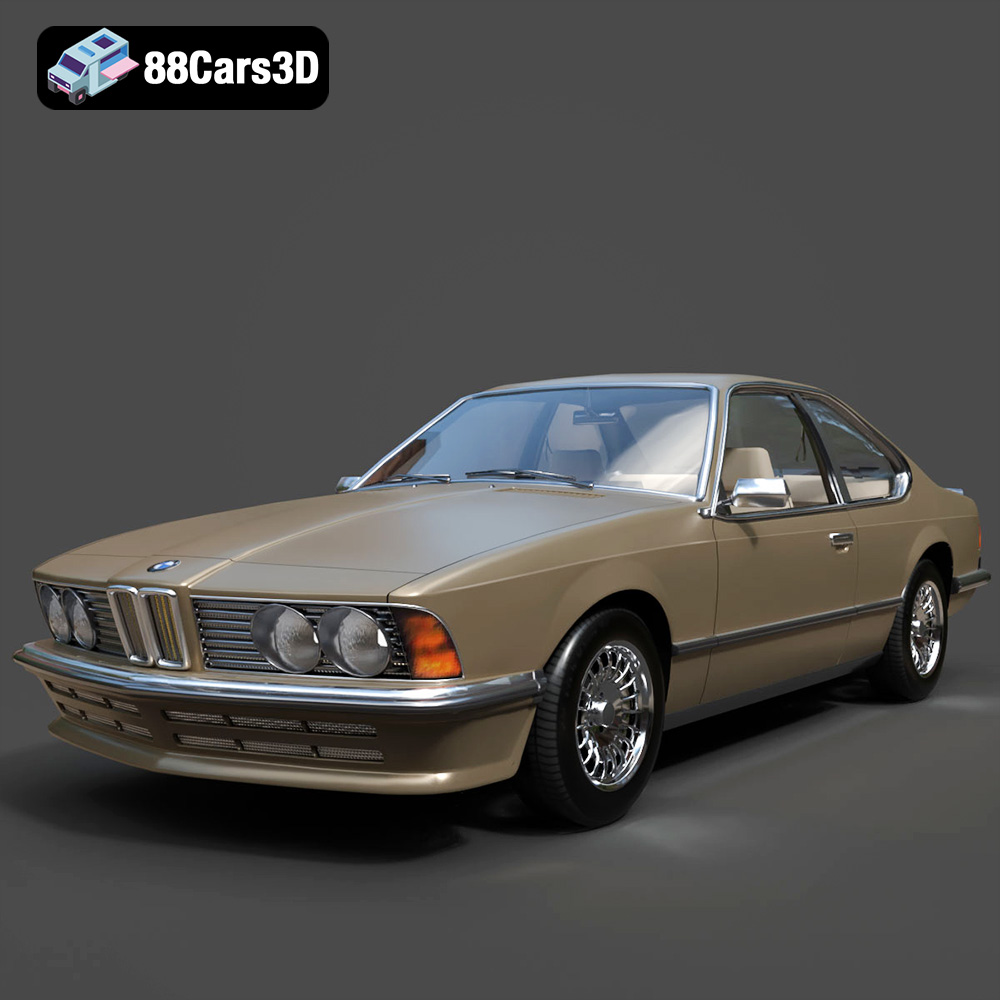
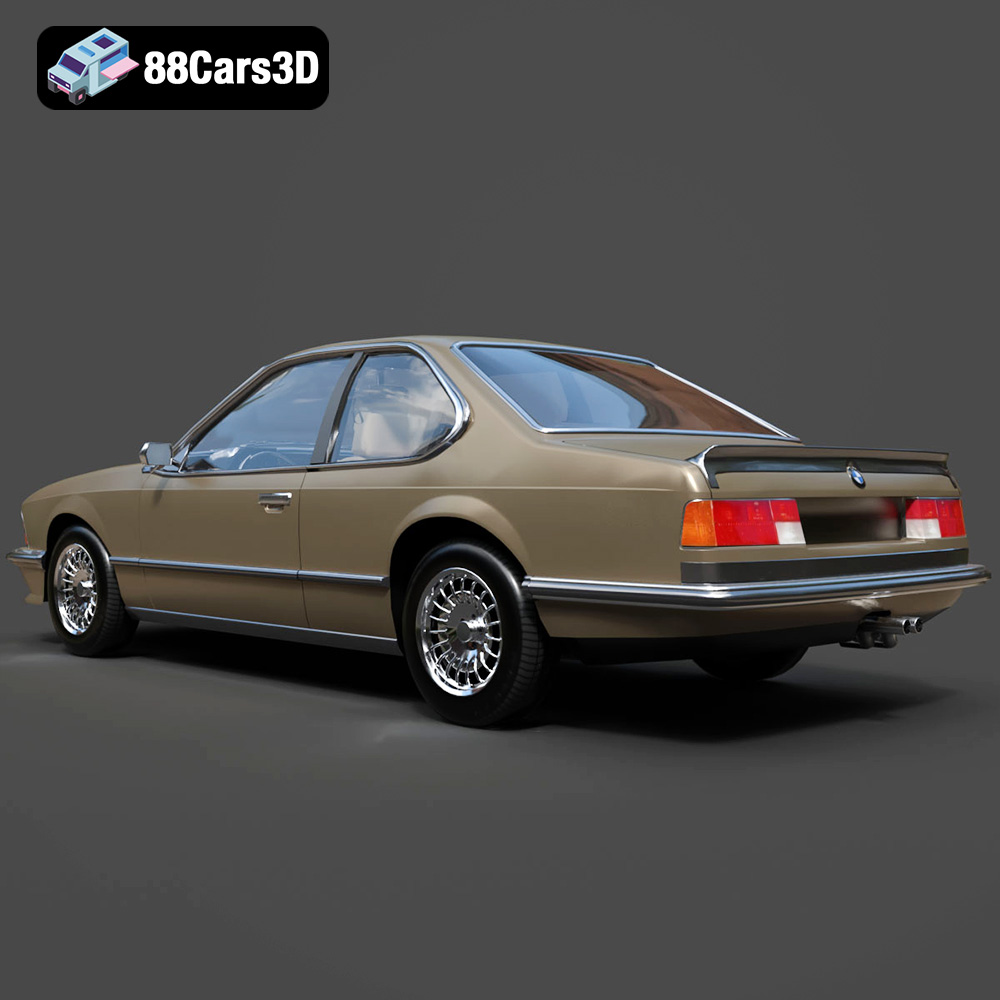
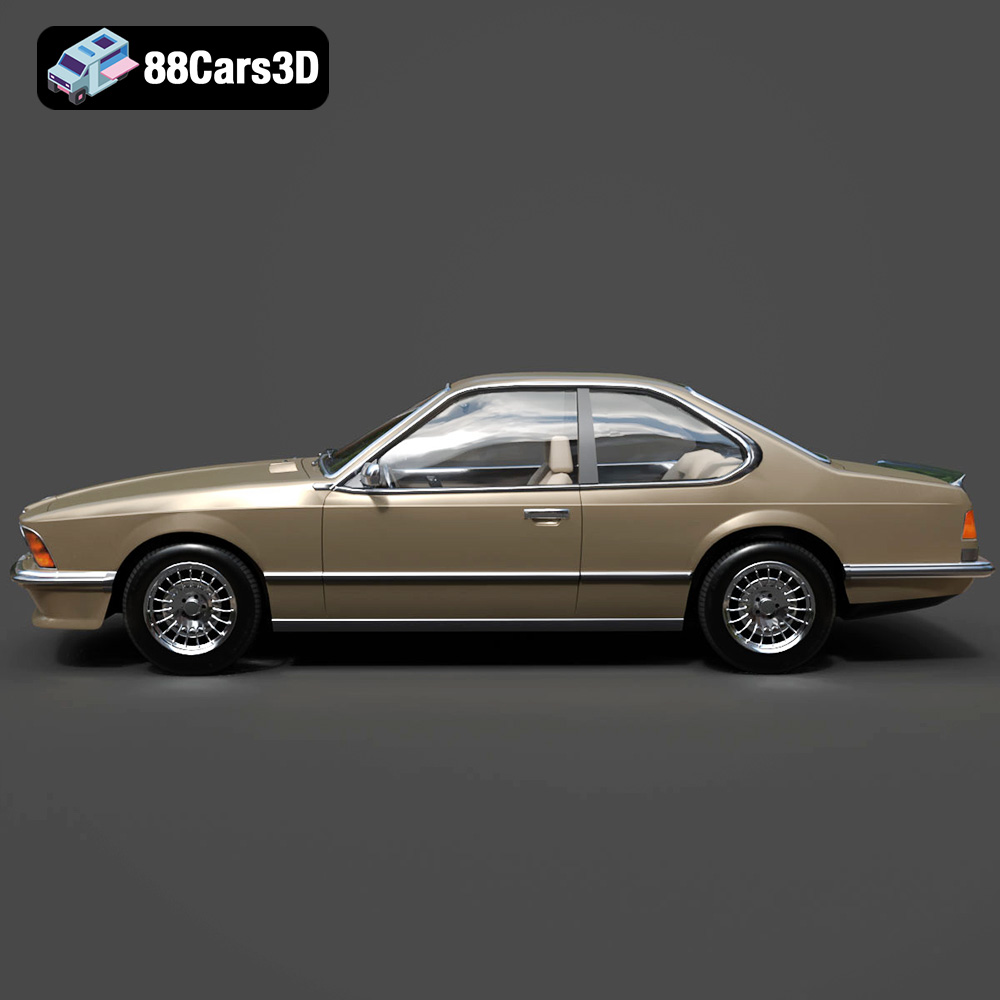
Today, we delve into the technical prowess and multifaceted utility of one such exceptional asset: the BMW 6 Series 1986 (E24) 3D model. This digital rendition of a German luxury coupe is not merely a visual representation; it is a meticulously engineered asset designed to meet the exacting standards of modern digital production environments. Its optimized geometry, accurate material configurations, and logical component grouping make it an indispensable resource for anyone looking to infuse their projects with authentic vintage automotive charm.
The Enduring Appeal of Classic Cars
Classic cars hold a unique place in our collective consciousness. They are symbols of their era, reflecting design philosophies, technological advancements, and cultural trends. The BMW E24, in particular, is celebrated for its shark-nose design, elegant lines, and luxurious appeal, making it a favorite among collectors and designers. Translating this enduring appeal into a 3D model means capturing every curve, every reflection, and every subtle detail that defines its character.
The Power of High-Fidelity 3D Models
For professionals, a high-fidelity 3D car model like the BMW 6 Series 1986 is a powerful tool. It allows for creative exploration without the constraints of physical limitations, offering unparalleled flexibility in lighting, environment, and animation. From detailed product showcases to dynamic cinematic sequences, the ability to manipulate and render an accurate digital twin opens up a world of possibilities, ensuring that the legacy of these iconic vehicles continues to thrive in new, innovative ways.
Understanding 3D Model File Formats: The Digital Toolkit for Automotive Assets
The success of any 3D project hinges not just on the quality of the model itself, but also on its compatibility and adaptability across various software and platforms. This is where understanding different 3D file formats becomes paramount. Each format is designed with specific strengths and use cases, offering optimized solutions for rendering, real-time applications, manufacturing, and more. The BMW 6 Series 1986 3D model, available on 88cars3d.com, exemplifies this versatility by providing a comprehensive suite of file formats, ensuring seamless integration into virtually any professional pipeline.
The Versatility of .blend (Blender)
The .blend format is native to Blender, the powerful open-source 3D creation suite. When you receive a .blend file, you’re not just getting the model; you’re often getting a complete scene. This includes the fully editable mesh, carefully configured materials with PBR (Physically Based Rendering) setups, textures, lighting, and even camera positions or animation data. For the BMW 6 Series 1986, the .blend file provides a ready-to-render scene, making it ideal for artists and studios who primarily use Blender for their visualization and animation tasks. Its comprehensive nature allows for direct modification, material tweaks, or integration into larger Blender projects without any loss of data or quality.
The Interoperability of .fbx (Filmbox)
Developed by Autodesk, .fbx is a widely adopted proprietary file format used to exchange 3D data between various software applications. It’s particularly favored in game development and real-time visualization due to its robust support for mesh, materials, textures, animations, and skeletal data. For the BMW E24 model, the .fbx is game-engine ready, making it the go-to choice for integration into Unreal Engine, Unity, and similar platforms. Its efficiency in handling complex scene data while maintaining a relatively small file size makes it excellent for real-time pipelines where performance is critical. Technical details often include embedded texture maps, triangulated meshes for GPU efficiency, and often pre-exported collision geometry.
The Universal Standard: .obj (Wavefront Object)
The .obj format is perhaps the most universal and oldest standard for 3D model exchange. While it primarily stores geometric data (vertices, normals, texture coordinates, and faces), it’s highly compatible with almost all 3D software packages. It typically comes accompanied by a .mtl (material library) file that defines basic material properties and links to external texture maps. The .obj version of the BMW 6 Series 1986 ensures maximum cross-software compatibility, serving as a reliable fallback or a base for users working in niche applications or those who prefer to set up materials from scratch in their preferred renderer. Its simplicity makes it very robust and less prone to interpretation errors between different applications.
Optimizing for Modern Experiences: .glb (glTF Binary)
.glb is the binary version of glTF (Graphics Language Transmission Format), an open standard designed for the efficient transmission and loading of 3D scenes and models by engines and applications. It bundles the 3D model, textures, and animation data into a single, self-contained file. This makes .glb incredibly efficient for web-based 3D viewing, augmented reality (AR), and virtual reality (VR) applications, where quick loading times and small file sizes are paramount. The BMW 6 Series 1986 in .glb format is pre-optimized for these modern interactive experiences, ensuring smooth performance on mobile devices and within browser environments, offering a direct path to showcasing the model in a lightweight, interactive manner.
Bridging to the Physical: .stl (Stereolithography)
The .stl format is almost exclusively used for 3D printing and rapid prototyping. It describes only the surface geometry of a 3D object using a collection of interconnected triangles. It contains no color, texture, or material information. For designers or engineers looking to create a physical replica or scale model of the BMW E24, the .stl file provides the necessary geometry for additive manufacturing. While the primary 3D model is high-fidelity, the .stl version would be optimized for manifold geometry and often watertightness, crucial for printability, ensuring a clean output for prototyping or display models.
Precision and Analysis: .ply (Polygon File Format)
The .ply format (Polygon File Format or Stanford Triangle Format) is another common format for storing 3D data, particularly from 3D scanners. It can store a variety of properties including color, transparency, texture coordinates, normals, and even confidence values. While similar to .obj in its ability to store mesh data, .ply is often favored in scientific and CAD applications for its precise representation of complex polygon meshes and its extensibility for additional data per vertex or face. For the BMW 6 Series 1986, the .ply file could be valuable for detailed analysis, measurement, or specific rendering pipelines that benefit from its robust data storage capabilities.
Engine-Ready Excellence: .unreal (Unreal Engine Asset)
The .unreal format signifies a dedicated asset file pre-configured for direct use within Unreal Engine. This isn’t a generic exchange format but an engine-specific package. It implies that the model has likely undergone significant optimization, material setup (using Unreal’s PBR shaders), collision mesh generation, and possibly LOD (Levels of Detail) creation, all within the Unreal ecosystem. For the BMW E24, the .unreal file dramatically streamlines the workflow for Unreal Engine developers, saving hours of import, setup, and optimization time, allowing for immediate integration into interactive scenes, games, or architectural walkthroughs with full confidence in its performance and visual fidelity.
The Industry Workhorse: .max (3ds Max)
Finally, the .max format is the native file type for Autodesk 3ds Max, one of the leading 3D modeling, animation, and rendering software packages in the industry. Similar to .blend, a .max file provides a complete scene, including the editable mesh, advanced materials (often set up for renderers like V-Ray or Corona), lighting, cameras, and animation data. For professionals using 3ds Max, the .max file of the BMW 6 Series 1986 offers maximum flexibility for further development, customization, and rendering with high-end production renderers, ensuring that all original data and scene settings are preserved for optimal results in cinematic and visualization projects.
Together, these diverse formats provide an unparalleled level of adaptability for the BMW 6 Series 1986 3D model, making it a truly professional and versatile asset for any digital production workflow.
Crafting Authenticity: The BMW 6 Series 1986 Model’s Technical Excellence
The true measure of a professional 3D car model lies in its ability to deliver both visual fidelity and technical efficiency. The BMW 6 Series 1986 (E24) 3D model from 88cars3d.com is a testament to this principle, meticulously engineered to perform flawlessly across a spectrum of demanding applications. Its creation involved a careful balance of artistic interpretation and technical precision, ensuring that every aspect contributes to an authentic and high-performance digital asset.
Geometry Optimization for Detail and Performance
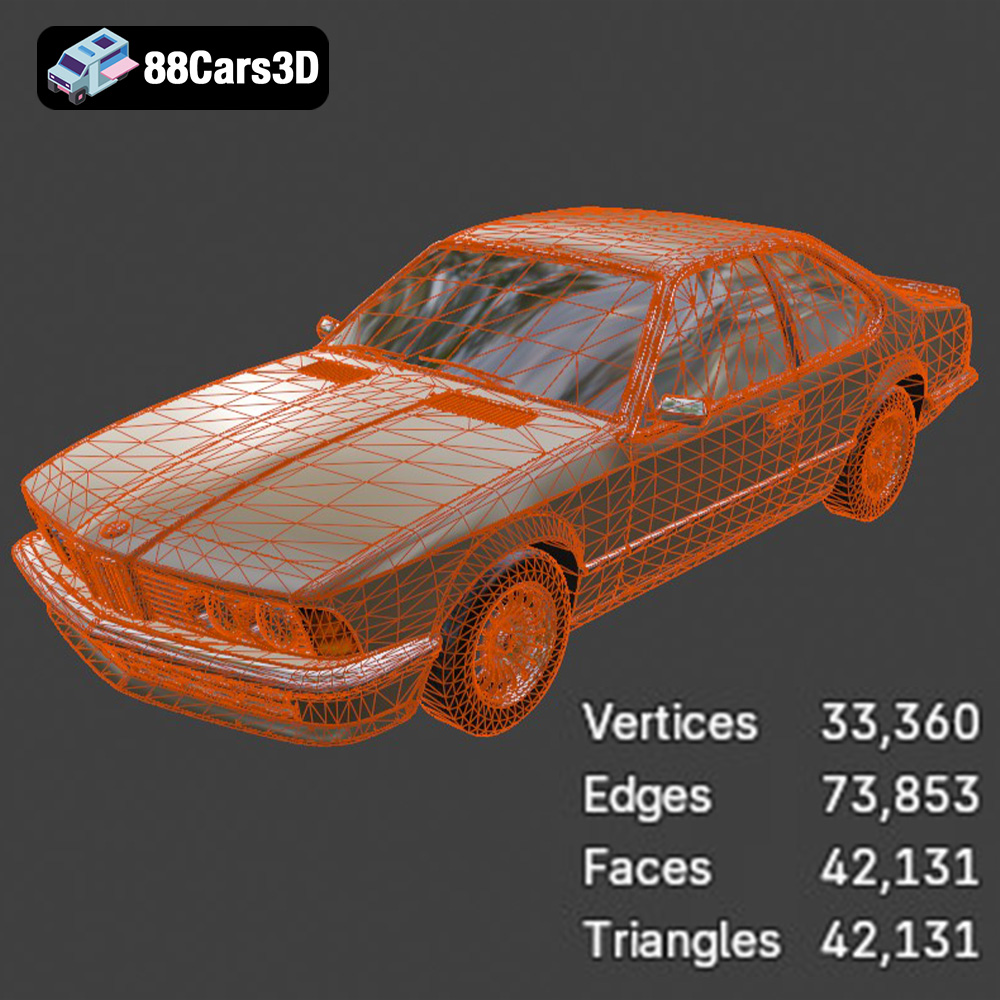
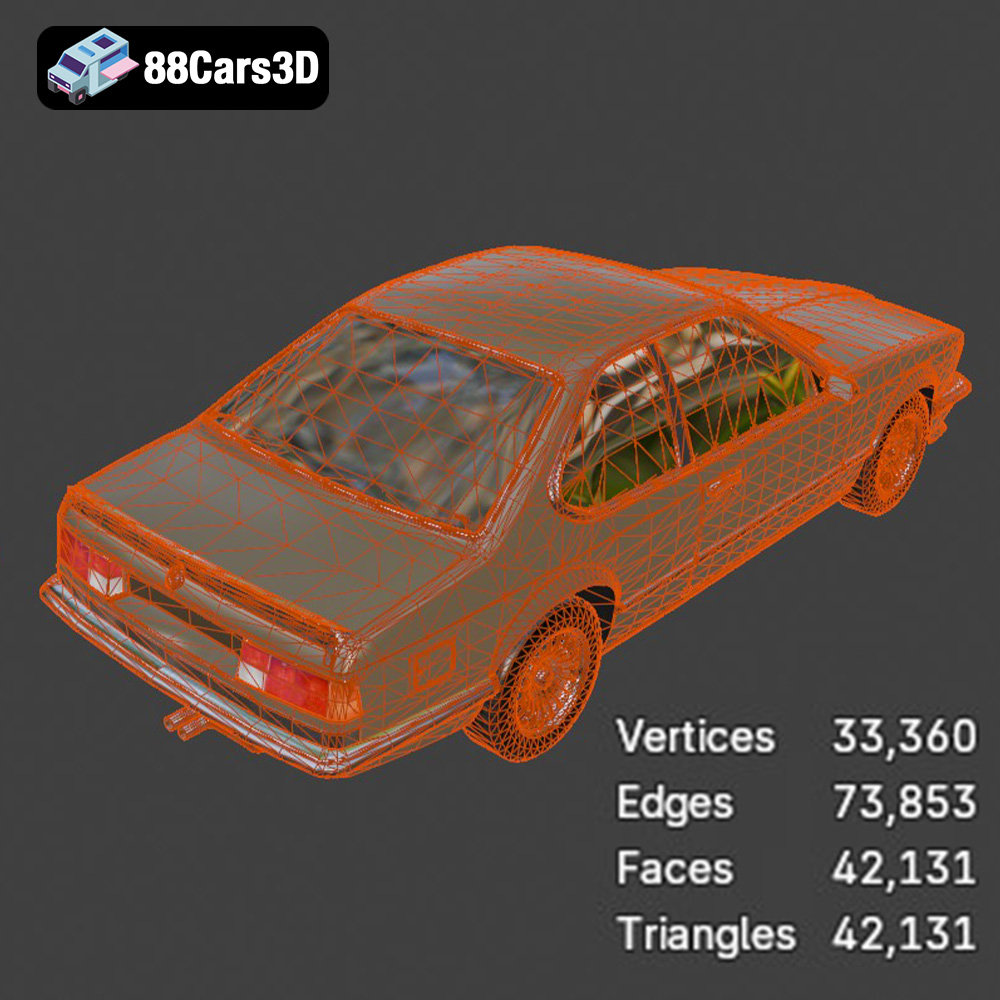
One of the most critical aspects of any 3D model is its geometry. The BMW E24 model boasts “clean, optimized geometry,” which is vital for achieving both stunning close-up renders and efficient real-time performance. This means the mesh is structured logically, primarily using quads where appropriate, which facilitates smooth subdivision and deformation. Excessive polygons are avoided where not necessary, yet sufficient detail is present in areas like body panels, grilles, and emblems to capture the nuanced forms of the classic coupe.
- Polygon Efficiency: While specific poly counts can vary slightly between formats due to triangulation for game engines, the core mesh is designed for efficiency. This ensures that the model can be used in demanding scenes without excessively burdening rendering engines or GPU resources.
- Subdivision Readiness: The clean topology allows for seamless subdivision, meaning artists can easily add more detail for extreme close-ups or high-resolution cinematic renders without introducing artifacts or pinching.
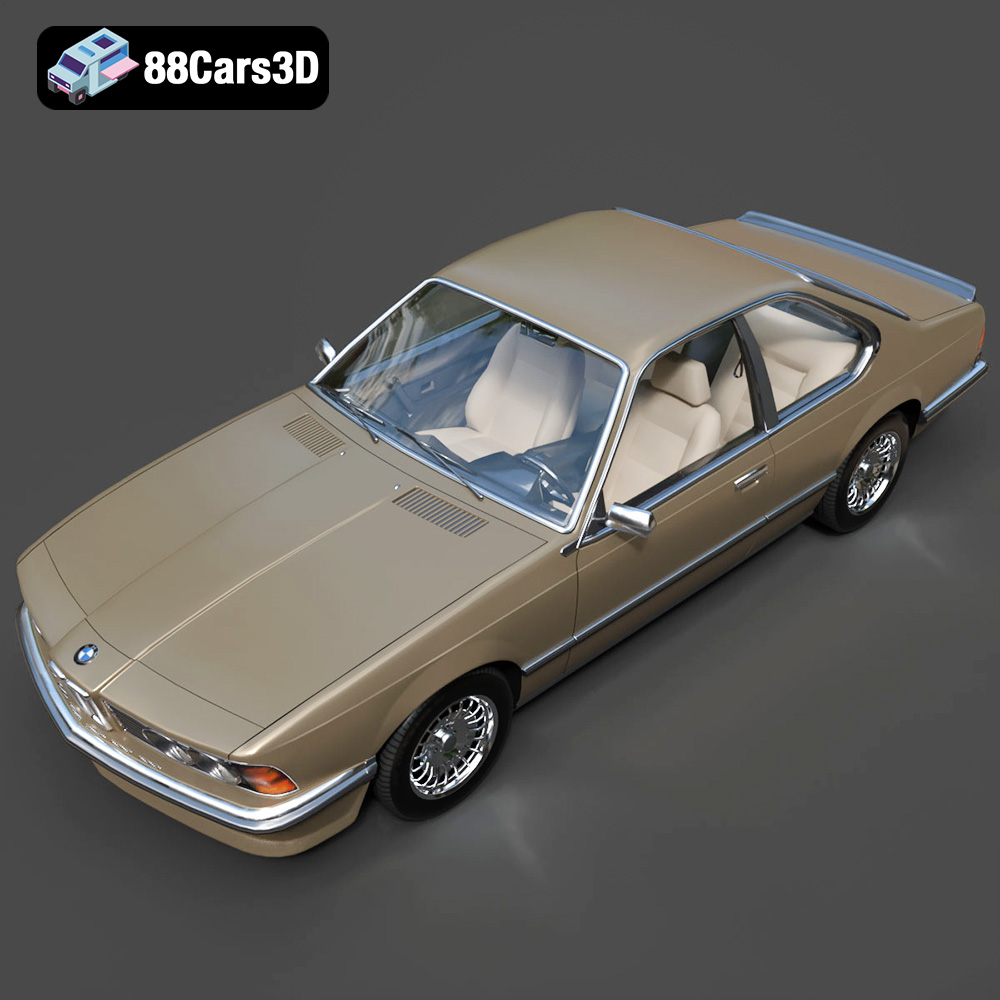
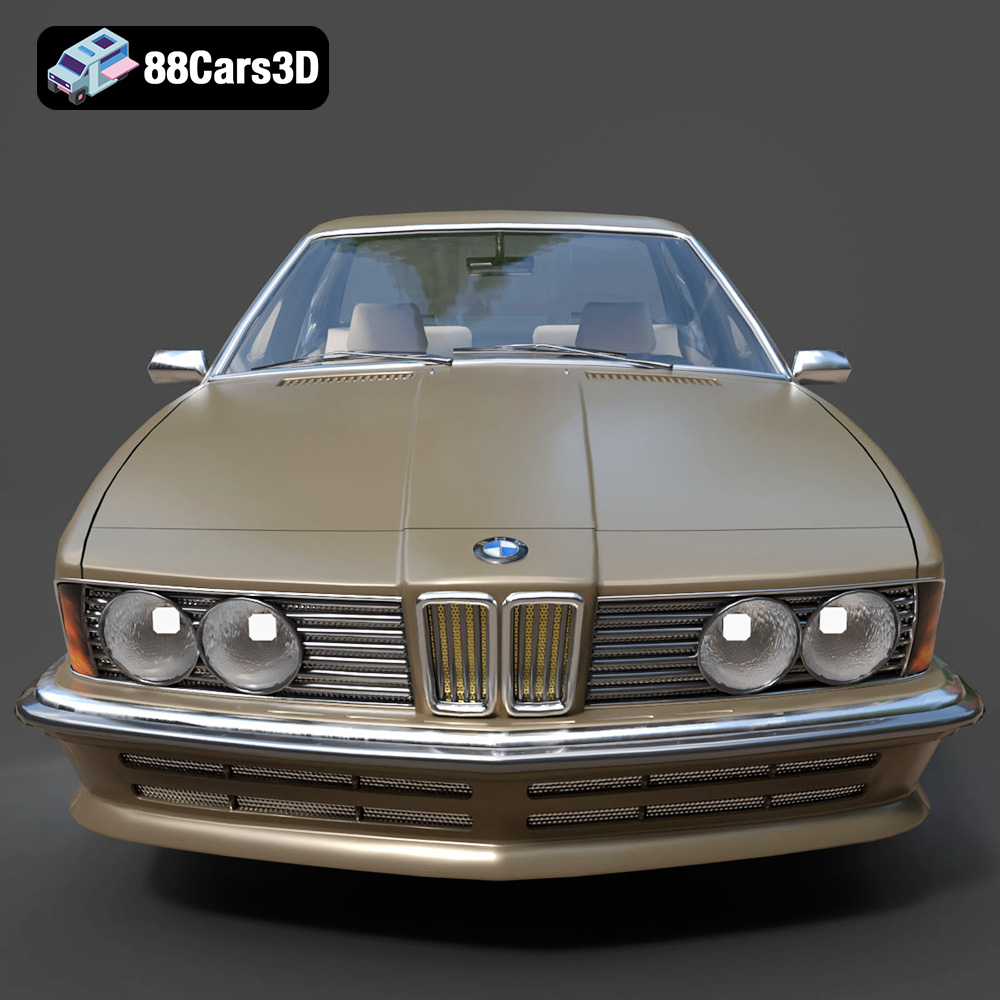
- Accuracy of Form: Every panel gap, body line, and curvature of the original BMW 6 Series 1986 has been carefully translated into 3D, ensuring the silhouette and proportions are faithful to the iconic E24 design.
Material PBR Setup and Realistic Texturing
Visual realism in 3D is heavily dependent on the quality of materials and textures. The BMW 6 Series 1986 model features materials “configured for rendering accuracy,” employing Physically Based Rendering (PBR) principles. PBR materials simulate how light interacts with surfaces in the real world, leading to highly convincing results under various lighting conditions.
- PBR Workflow: Materials typically include albedo (base color), roughness, metallic, normal, and ambient occlusion maps. These maps precisely define how light bounces off the car’s paint, how reflections appear on chrome trim, and the subtle variations in the interior upholstery.
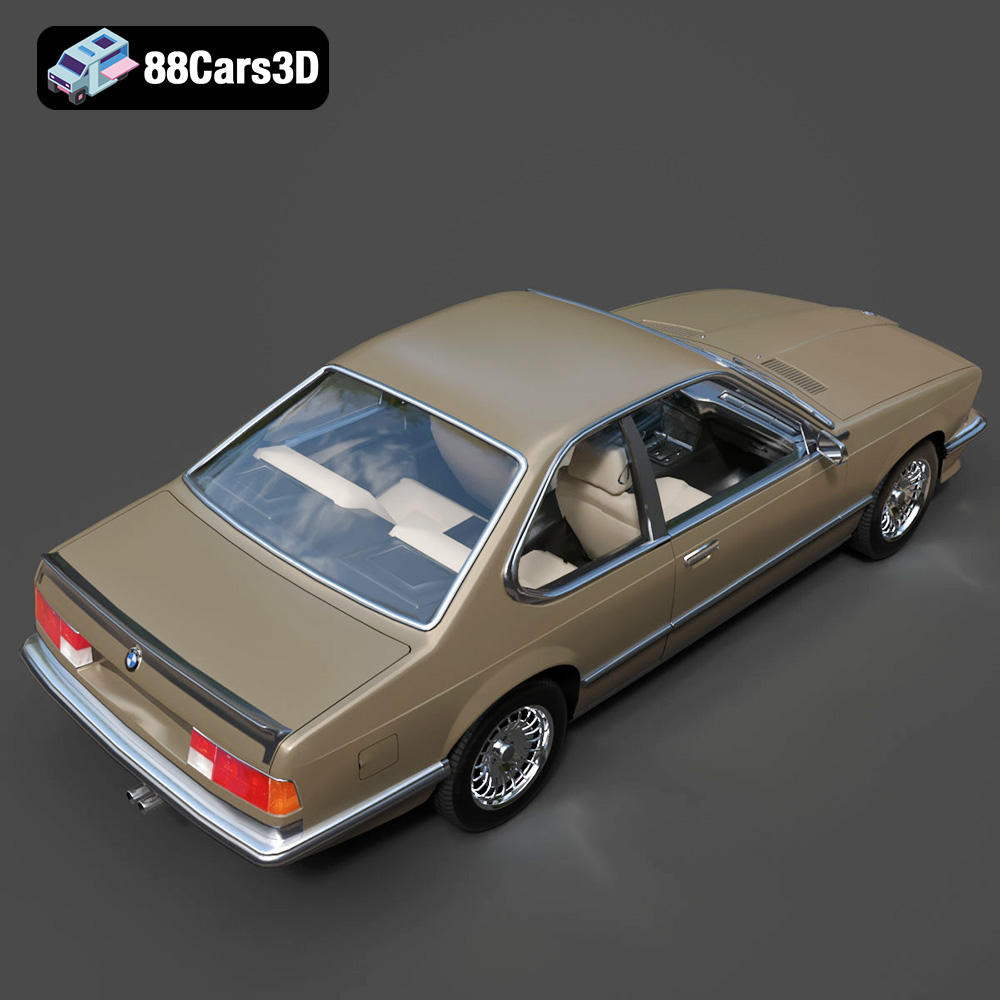
- Surface Specificity: Different parts of the car – the glossy paint, the reflective chrome, the textured tires, the interior fabrics, and the transparent glass – each have their own custom PBR material setups. This ensures that each surface responds authentically to environmental lighting, contributing to overall photorealism.
- Texture Resolution: High-resolution textures are applied to key components, allowing for detailed visuals even in extreme close-up shots. Attention is paid to details like tire tread, headlight lenses, and dashboard elements.
Organized Hierarchy and Animation Readiness
A professional 3D model isn’t just a static object; it’s an asset designed for interaction and modification. The BMW 6 Series 1986 model’s components are “logically grouped for ease of adjustment and animation.” This structured approach is fundamental for complex scenes and dynamic productions.
- Hierarchical Grouping: The model is organized into intuitive parent-child relationships. For example, wheels are typically parented to axles, which are parented to the chassis. This allows for easy manipulation: rotating a wheel assembly or opening a door.
- Pivot Point Accuracy: All pivot points for movable parts (e.g., doors, hood, trunk, wheels) are correctly positioned, ensuring realistic rotation and movement when animated. This saves significant time for animators who would otherwise have to manually adjust pivots.
- Modularity: The modular nature of the model means that individual components can be easily selected, hidden, replaced, or animated independently. This is invaluable for customization, damage modeling, or creating interactive experiences where parts of the vehicle need to react.
By focusing on these technical pillars, the BMW 6 Series 1986 3D model stands out as a robust and reliable asset, ready to elevate any digital project with its authentic detail and operational efficiency. It’s a prime example of the quality one expects from high-end 3D car models available at marketplaces like 88cars3d.com.
Professional Workflows: Integrating the BMW E24 into Your Pipeline
The true utility of a high-quality 3D asset like the BMW 6 Series 1986 model is realized through its seamless integration into diverse professional workflows. Whether you’re a cinematic artist, an architectural visualizer, or a game developer, the provided file formats and inherent quality of this model streamline production and elevate final output. Let’s explore some typical scenarios.
Cinematic Rendering with 3ds Max and V-Ray/Corona
For high-fidelity cinematic animations and photorealistic stills, 3ds Max remains a dominant force, often paired with industry-standard renderers like V-Ray or Corona Renderer. The BMW 6 Series 1986 3D model, supplied with a native .max file, is perfectly poised for this environment.
- Direct Import and Scene Setup: With the .max file, artists can directly open the model, complete with its expertly configured materials and textures. This eliminates the tedious process of importing generic formats and re-assigning materials, saving critical production time.
- Advanced Lighting and Shading: Leveraging V-Ray or Corona, artists can then enhance the model’s appearance with complex lighting setups – HDRI (High Dynamic Range Image) environments, physically accurate studio lights, or dynamic sunlight systems. The PBR materials of the E24 respond beautifully to these advanced lighting scenarios, producing stunning reflections on the paint, realistic refractions through the glass, and intricate shadows that define its classic form.
- Animation Potential: For cinematic sequences, the logically grouped components and accurate pivot points make animating elements like opening doors, rotating wheels, or adjusting steering effortless. Imagine a sweeping camera shot revealing the sleek lines of the BMW 6 Series 1986 as it glides through a beautifully rendered scene.
Real-Time Visualization in Unreal Engine
Unreal Engine has revolutionized real-time visualization, from architectural walkthroughs to product configurators and high-fidelity games. The inclusion of a dedicated .unreal file and an optimized .fbx for the BMW E24 drastically simplifies integration into this powerful engine.
- Drag-and-Drop Efficiency: The .unreal asset can often be directly imported or simply added to an Unreal project, complete with pre-configured materials, LODs (Levels of Detail), and collision meshes. This means less time spent on technical setup and more time on creative scene design.
- Dynamic Environments: Within Unreal, the BMW 6 Series 1986 can be placed into interactive environments, subjected to real-time global illumination, dynamic weather systems, and interactive elements. Its optimized geometry ensures smooth frame rates even in complex scenes, making it suitable for VR experiences or interactive product showcases.
- Material Customization: While the materials are pre-configured, Unreal’s powerful material editor allows for easy instance creation, enabling artists to quickly change paint colors, metallic finishes, or interior trims without affecting the base material, ideal for customization options.
Architectural Visualization and Contextual Placement
Architectural visualization (ArchViz) often requires realistic vehicle models to provide scale, context, and a sense of life to proposed structures. The BMW E24 3D model excels in this role.
- Enhancing Scene Realism: Placing the BMW 6 Series 1986 in the driveway of a modern residence or cruising down a digitally rendered street instantly adds a layer of realism and sophistication to an ArchViz project. Its classic aesthetic can even be used to evoke a particular mood or era.
- Compatibility Across Software: With .obj, .fbx, and .max formats, the model can be easily imported into popular ArchViz software like Revit, SketchUp, Lumion, or Twinmotion, in addition to the detailed rendering workflows of 3ds Max or Blender.
- Detail for Close-Ups: Unlike generic placeholder vehicles, the high fidelity of this BMW 3D model allows for close-up shots within architectural presentations, showcasing how the car interacts with its environment and adding a premium feel to the visualization.
The thoughtful preparation and diverse file formats provided with the BMW 6 Series 1986 3D model make it an invaluable asset across these, and many other, professional applications. It’s an investment in efficiency and quality that pays dividends in any digital production pipeline, particularly for studios relying on high-quality 3D car models from trusted sources like 88cars3d.com.
Beyond Rendering: Game Development, AR/VR, and Simulation
While photorealistic rendering is a primary application, the capabilities of a finely crafted 3D car model extend far beyond static images or pre-rendered animations. The BMW 6 Series 1986 3D model is built with the versatility required for interactive and immersive experiences, making it a powerful asset for game developers, AR/VR content creators, and simulation engineers.
Creating Immersive Game Experiences
Game development demands a unique blend of visual fidelity and performance optimization. The BMW E24 model is tailored for this demanding environment, particularly with its included .fbx and .unreal formats.
- Optimized for Real-Time Engines: The clean, optimized geometry ensures that the model can be rendered efficiently at high frame rates within game engines like Unreal Engine or Unity. This is critical for open-world games, racing simulators, or even detailed garage environments where players might interact closely with the vehicle.
- Collision and Physics Integration: For interactive driving experiences, accurate collision meshes are paramount. The model is prepared for such integration, allowing developers to define precise physics interactions with the game world, from driving dynamics to crash simulations.
- Material Instancing for Customization: In games, players often desire customization. The PBR materials can be easily converted to material instances within engines, allowing for dynamic color changes, decal applications, or even material swaps (e.g., matte vs. glossy paint) without duplicating texture assets, thus improving performance and flexibility.
- Dynamic Damage Systems: The logical grouping of components can also facilitate the implementation of dynamic damage systems, allowing individual panels, lights, or wheels to be affected and deformed in real-time, adding a layer of realism to vehicular combat or accident scenarios.
Interactive AR/VR Applications
Augmented Reality (AR) and Virtual Reality (VR) represent the cutting edge of immersive digital experiences. These platforms are particularly sensitive to performance and asset size, making the optimized .glb format of the BMW 6 Series 1986 incredibly valuable.
- Lightweight and Efficient for Mobile/Headsets: The .glb format bundles all necessary data (geometry, textures, materials) into a single, compact file, ideal for quick loading and smooth rendering on performance-constrained AR/VR devices like mobile phones or standalone VR headsets.
- Web-Based Experiences: With .glb, the BMW E24 can be embedded directly into web pages, allowing users to interact with a 3D model in their browser or view it in AR through their phone’s camera, projecting the classic car into their real-world environment.
- Virtual Showrooms and Configurators: Imagine a virtual showroom where customers can walk around the BMW 6 Series 1986, open its doors, explore the interior, and even change its color in real-time. This level of interaction enhances engagement and offers a powerful sales tool.
Automotive Simulation and Prototyping
Beyond entertainment, high-fidelity 3D models play a critical role in engineering, simulation, and prototyping. The detailed geometry and accurate scaling of the BMW E24 model make it suitable for these applications.
- Driving Simulators: The model can be integrated into professional driving simulators for training, testing, or entertainment, providing a realistic visual representation of the vehicle’s form and allowing for accurate physics interactions.
- Prototyping and Ergonomics: While not a CAD model for manufacturing, the .stl and .ply formats, alongside the high-detail meshes, can be used for conceptual prototyping or even ergonomic studies in virtual environments, assessing spatial relationships or visual clearances.
- Visualizing Aerodynamics (Conceptually): While dedicated CFD (Computational Fluid Dynamics) models would be separate, the visually accurate mesh can be used to display conceptual aerodynamic flows or visual simulations of vehicle dynamics in a compelling manner.
The versatility of the BMW 6 Series 1986 3D model positions it as an essential tool for pioneering creators in the realms of interactive media and scientific visualization. Its readiness for various platforms underscores the commitment to quality and adaptability that defines premium 3D car models, such as those found at 88cars3d.com.
Optimizing for Performance and Realism in Modern Engines
Developing 3D assets for contemporary real-time engines and high-end renderers requires a strategic approach to optimization and realism. The BMW 6 Series 1986 3D model is a prime example of an asset engineered not only for visual fidelity but also for peak performance across diverse digital environments. This balance is achieved through several key technical considerations.
LODs (Levels of Detail) and Performance Scaling
One of the most crucial optimization techniques for real-time applications is the implementation of Levels of Detail (LODs). This involves creating multiple versions of a 3D model, each with a progressively lower polygon count. The engine then dynamically switches between these LODs based on the model’s distance from the camera.
- Resource Management: For the BMW E24, this means a high-polygon version is rendered when the car is close to the camera, showcasing all its intricate details. As it moves further away, lower-polygon versions are swapped in, significantly reducing the computational load on the GPU without a perceptible loss of detail to the viewer.
- Smooth Performance: Proper LODs are indispensable in game development and large-scale VR/AR experiences where many objects are present. They ensure smooth frame rates, preventing performance bottlenecks that could otherwise hinder user immersion. The game-ready .fbx and .unreal files are typically prepared with these optimization levels in mind.
Collision Meshes and Physics Integration
For any interactive automotive experience, accurate physics and collision detection are paramount. A visually appealing mesh isn’t enough; the underlying collision geometry must be precise.
- Accurate Interaction: The BMW 6 Series 1986 model is prepared for collision integration, typically through a simplified, convex hull mesh that accurately represents the car’s physical bounds. This allows for realistic interaction with environmental objects, terrain, and other vehicles without the overhead of calculating collisions against the high-detail visual mesh.
- Driving Dynamics: In racing games or driving simulators, the collision mesh is vital for the physics engine to correctly calculate impacts, friction, and vehicle suspension, providing a believable driving experience. The wheels, chassis, and body are all defined for robust physics calculations.
Material Instances and Customization
Modern game engines and real-time visualization platforms heavily leverage material instances to provide both flexibility and efficiency. The PBR materials of the BMW E24 are designed to work seamlessly with this system.
- Runtime Modification: Instead of creating entirely new materials for every variation (e.g., different paint colors, interior trims), material instances allow artists to create variations from a single master material. This means developers can modify parameters like color, metallic values, or roughness on the fly, either in the editor or during runtime.
- Reduced Draw Calls: Using material instances significantly reduces the number of unique materials an engine needs to process, leading to fewer draw calls and better overall performance, especially when several customized versions of the car might be present in a scene.
- User-Facing Customization: For interactive configurators or character customization in games, material instances are key to offering users a wide range of choices for their BMW 6 Series 1986, from classic factory colors to bespoke paint jobs, all with minimal impact on performance.
By implementing these advanced optimization and realism techniques, the BMW 6 Series 1986 3D model ensures that it’s not just a beautiful asset, but also a performant and highly adaptable one, ready for the most demanding production environments. This commitment to technical excellence is a hallmark of the premium 3D car models available through platforms like 88cars3d.com.
The Unmatched Value of High-Quality 3D Car Models from 88cars3d.com
In the competitive landscape of digital content creation, time is money, and quality is paramount. Sourcing high-quality 3D car models like the BMW 6 Series 1986 (E24) from a reputable marketplace like 88cars3d.com offers tangible benefits that directly impact project timelines, output quality, and overall cost-effectiveness. It’s an investment that pays dividends by providing a foundation of excellence for any automotive-centric project.
Accelerating Production Timelines
The alternative to purchasing a ready-made, professional 3D model is to create it from scratch. This involves extensive research, detailed modeling, intricate UV unwrapping, material creation, and optimization – a process that can take weeks, if not months, for a single high-fidelity vehicle. Even for seasoned 3D artists, the sheer complexity of a car like the BMW E24 is immense.
- Instant Asset Deployment: By acquiring a pre-made asset, studios and individual artists can instantly deploy a production-ready model into their scenes. This dramatically shortens the asset creation phase, allowing teams to focus on lighting, animation, scene composition, and other creative aspects.
- Reduced Iteration Cycles: With a model that already meets technical specifications and visual quality standards, fewer iterations are needed during the review process, leading to a smoother and faster path to final delivery.
Ensuring Brand Consistency and Accuracy
For projects that involve real-world vehicles, accuracy is not just a preference; it’s a requirement. Brands, historical societies, and discerning audiences demand precise representations. The BMW 6 Series 1986 3D model is engineered to preserve the “authenticity of the vintage vehicle in digital projects.”
- Faithful Representation: The meticulous attention to detail in geometry, proportions, and material finishes ensures that the digital BMW E24 is a faithful recreation of its real-world counterpart. This is critical for marketing, archival, or historically accurate visualizations.
- Professional Standard: Models from 88cars3d.com adhere to professional industry standards for topology, UVs, and PBR material setup. This consistency means the asset will perform predictably and correctly across different rendering engines and real-time platforms.
Cost-Effectiveness in the Long Run
While an initial purchase might seem like an expense, comparing it to the cost of in-house creation reveals significant long-term savings.
- Artist Hours Saved: The salary or freelance rates for skilled 3D artists, modelers, and texture artists for hundreds of hours of work would far exceed the cost of a pre-made asset.
- Software and Hardware: While most studios have these, the computational resources (render farm time, workstation hours) dedicated to custom model creation also add up.
- Future-Proofing: A well-made asset, especially one provided in multiple versatile formats, can be reused across numerous projects and adapted for future technologies (e.g., new game engines, higher resolution displays), extending its value over time.
Ultimately, investing in a high-quality 3D car model from 88cars3d.com means acquiring a meticulously crafted, technically sound, and highly versatile asset that accelerates workflows, guarantees authenticity, and provides significant cost savings compared to developing assets from scratch. It allows creative professionals to focus on their core competencies, delivering stunning results with efficiency and confidence.
Conclusion: Drive Your Digital Projects Forward with Precision
The journey from concept to compelling visual output in the 3D world is paved with challenges, but the right assets can transform obstacles into opportunities. We’ve explored the intricate technical demands of modern 3D production and seen how a meticulously crafted model like the BMW 6 Series 1986 (E24) 3D model rises to meet them. From its optimized geometry and PBR materials to its comprehensive array of file formats, this asset is a powerhouse designed for versatility and performance across rendering, game development, AR/VR, and simulation.
Understanding the nuances of file formats such as .blend, .fbx, .obj, .glb, .stl, .ply, .unreal, and .max is no longer optional; it is fundamental to selecting and deploying 3D assets effectively. The BMW E24 model’s availability in these diverse formats underscores its adaptability, ensuring that whether you’re working in 3ds Max for cinematic renders or Unreal Engine for real-time experiences, you have the right tool for the job.
By investing in professional-grade 3D car models, artists and studios can significantly accelerate their workflows, maintain the highest standards of visual authenticity, and unlock new creative possibilities without the monumental effort of building assets from the ground up. The value proposition is clear: efficiency, quality, and adaptability are paramount.
For those seeking to infuse their projects with the definitive lines and authentic character of classic vehicles, the BMW 6 Series 1986 3D model represents an unparalleled resource. It is a prime example of the high-quality 3D car models available at 88cars3d.com, a marketplace dedicated to providing assets that are engineered for production environments and designed to exceed expectations. Let this iconic coupe be the foundation upon which you build your next immersive visualization, game experience, or stunning render.
Featured 3D Model
BMW 6 Series 1986 3D Model
Introducing the BMW 6 Series 1986 (E24) 3D model, engineered for production environments requiring accuracy and performance. This asset captures the definitive lines of the classic German luxury coupe, ideal for preserving the authenticity of the vintage vehicle in digital projects.
This professional-grade asset features clean, optimized geometry suitable for close-up renders and simulations. Materials are configured for rendering accuracy, ensuring the paint, chrome, and interior components respond correctly under various lighting conditions. All components are logically grouped for ease of adjustment and animation.
Optimized for integration into various digital pipelines, this model serves as an essential resource for automotive visualization, architecture presentation, cinematic animation, and high-fidelity real-time applications such as game development and virtual reality environments.
$16.99
Product Image Gallery