

Mastering Automotive 3D: Elevate Your Projects with the BMW 6 Series 3D Model
In the demanding world of 3D visualization, automotive design, and game development, the difference between a good project and an exceptional one often hinges on the quality of its foundational assets. Few vehicles command attention quite like the BMW 6 Series – a grand tourer celebrated for its exquisite blend of luxury, performance, and instantly recognizable aesthetics. Recreating such an iconic vehicle in three dimensions is a testament to skilled craftsmanship, requiring meticulous attention to detail, impeccable topology, and robust optimization.
For artists, designers, and developers aiming for unparalleled realism and efficiency, a pre-built, professional-grade 3D model is not just a convenience; it’s a strategic advantage. This is where assets like the BMW 6 Series 3D Model from 88cars3d.com shine. It’s not merely a static representation but a versatile digital blueprint engineered for demanding applications, from stunning automotive rendering and cinematic sequences to immersive game environments and interactive AR/VR experiences. This comprehensive guide will delve into the technical intricacies, workflow benefits, and diverse applications of high-quality 3D car models, using the BMW 6 Series as our prime example of excellence.
Understanding 3D Model File Formats: The Backbone of Digital Asset Exchange
The selection and management of 3D model file formats are critical aspects of any professional 3D workflow. Each format serves a specific purpose, offering unique advantages in terms of compatibility, data integrity, and optimization for particular applications. Understanding these nuances is key to maximizing efficiency and ensuring seamless integration of assets like the BMW 6 Series 3D model across different software and platforms. The BMW 6 Series 3D Model, for instance, is offered in a comprehensive suite of formats, ensuring its utility across virtually any project pipeline.
.blend – The Native Blender Scene
The .blend format is Blender’s native file type, encompassing a complete scene with all objects, materials, textures, lighting, cameras, and animation data. It’s highly advantageous for users committed to the Blender ecosystem, offering full editability and preserving all native Blender features. This means the BMW 6 Series 3D model, when opened in Blender, provides direct access to its meticulously organized hierarchy, shader networks, and any pre-configured scene settings, making it perfect for custom modifications, rendering, or integration into existing Blender projects. Its compact nature also makes it efficient for storage and distribution within Blender-centric pipelines.
.fbx – The Industry Standard for Interoperability
.fbx (Filmbox) is arguably the most widely adopted proprietary file format for 3D data exchange, especially prevalent in game development (Unreal Engine, Unity), animation, and visual effects. Developed by Autodesk, FBX excels at storing complex scene information, including meshes, materials, textures (often linked, not embedded), bones, skinning, and animations. Its strength lies in its ability to maintain crucial data across different software packages, ensuring that the BMW 6 Series 3D model, with its separated doors, hood, and trunk, retains its animation-ready pivot points when imported into tools like Maya, 3ds Max, or game engines. While robust, careful attention to export/import settings is often required to avoid common pitfalls.
.obj – The Universal Geometry Carrier
The .obj (Wavefront Object) format is a universal standard, prized for its simplicity and broad compatibility. It primarily stores geometric data – vertices, faces, UV coordinates, and normals – and can reference external .mtl (material) files for basic material properties and texture maps. While it doesn’t support advanced features like animation or rigging, its widespread support across virtually all 3D software makes it an indispensable fallback. For the BMW 6 Series, an .obj file ensures that the core mesh and UVs can be opened and worked on in almost any 3D application, providing a clean foundation before building out complex shaders in a target renderer.
.glb – Optimized for AR, VR, and Web
.glb (GL Transmission Format Binary) is the binary version of glTF, a royalty-free specification for the efficient transmission and loading of 3D scenes and models by applications. It’s rapidly becoming the “JPEG of 3D” due to its optimization for web-based, AR, and VR applications. A .glb file embeds all necessary assets – geometry, materials, textures, and animation – into a single, self-contained file, making the BMW 6 Series 3D model instantly viewable and interactive in web browsers, augmented reality apps, and virtual reality environments without complex setup or external dependencies. Its compact size and runtime efficiency are key advantages for real-time and online experiences.
.stl – The Standard for 3D Printing
.stl (STereoLithography) is the de facto standard file format for 3D printing. It represents 3D surfaces as a series of connected triangles (a tessellation) without color or texture information. While simple, it’s universally accepted by 3D printers and slicing software. Converting the BMW 6 Series 3D model to .stl allows for the creation of physical prototypes or miniature replicas, making it valuable for product design, concept validation, or even personalized collectibles. Due to its tessellated nature, it’s primarily used for manufacturing, not for high-fidelity rendering or animation.
.ply – Precision Mesh Format for Analysis
The .ply (Polygon File Format or Stanford Triangle Format) is a versatile format for storing 3D data, particularly useful for scanned data, point clouds, and mesh data with additional attributes like color per vertex, transparency, and normal vectors. It can handle both ASCII and binary representations. While less common for general 3D asset exchange compared to FBX or OBJ, .ply is valued in scientific, engineering, and CAD workflows where precise mesh data and supplementary vertex attributes are crucial. For the BMW 6 Series, a .ply export could be used for advanced mesh analysis or integration into specific engineering simulation software.
.unreal – Engine-Ready Asset for Real-Time Environments
The inclusion of an .unreal project setup signifies a pre-optimized and configured asset specifically for the Unreal Engine. This is a massive time-saver for game developers and real-time visualization artists. It implies that the BMW 6 Series 3D model has likely been imported, scaled, had its materials set up, and possibly even collision meshes generated within an Unreal Engine project. This level of preparation drastically reduces the integration time, allowing artists to focus immediately on scene composition, lighting, and interactive elements without wrestling with initial import challenges.
.max – The Editable 3ds Max Project
.max is Autodesk 3ds Max’s native file format, similar to .blend for Blender. It contains the complete 3ds Max scene, including all geometric data, modifiers, materials, textures, cameras, lighting, and animation curves. For users of 3ds Max, this provides the most comprehensive and editable version of the BMW 6 Series 3D model. It allows for advanced customization, integration into complex studio rendering pipelines, or leveraging 3ds Max’s robust animation tools for cinematic sequences. The presence of a .max file ensures full access to the original scene’s organization and potential setup.
By offering the BMW 6 Series 3D Model in such a wide array of formats, 88cars3d.com demonstrates a deep understanding of diverse professional needs, providing unparalleled flexibility for artists and developers.
Crafting Realism: The BMW 6 Series 3D Model in Detail
Achieving photorealistic results in 3D automotive rendering demands more than just a passing resemblance; it requires a deep dive into the vehicle’s design philosophy and meticulous execution of every curve and contour. The BMW 6 Series 3D model exemplifies this dedication, offering a highly accurate representation that forms a strong foundation for any project.
Exterior Features: Capturing BMW’s Distinctive Design
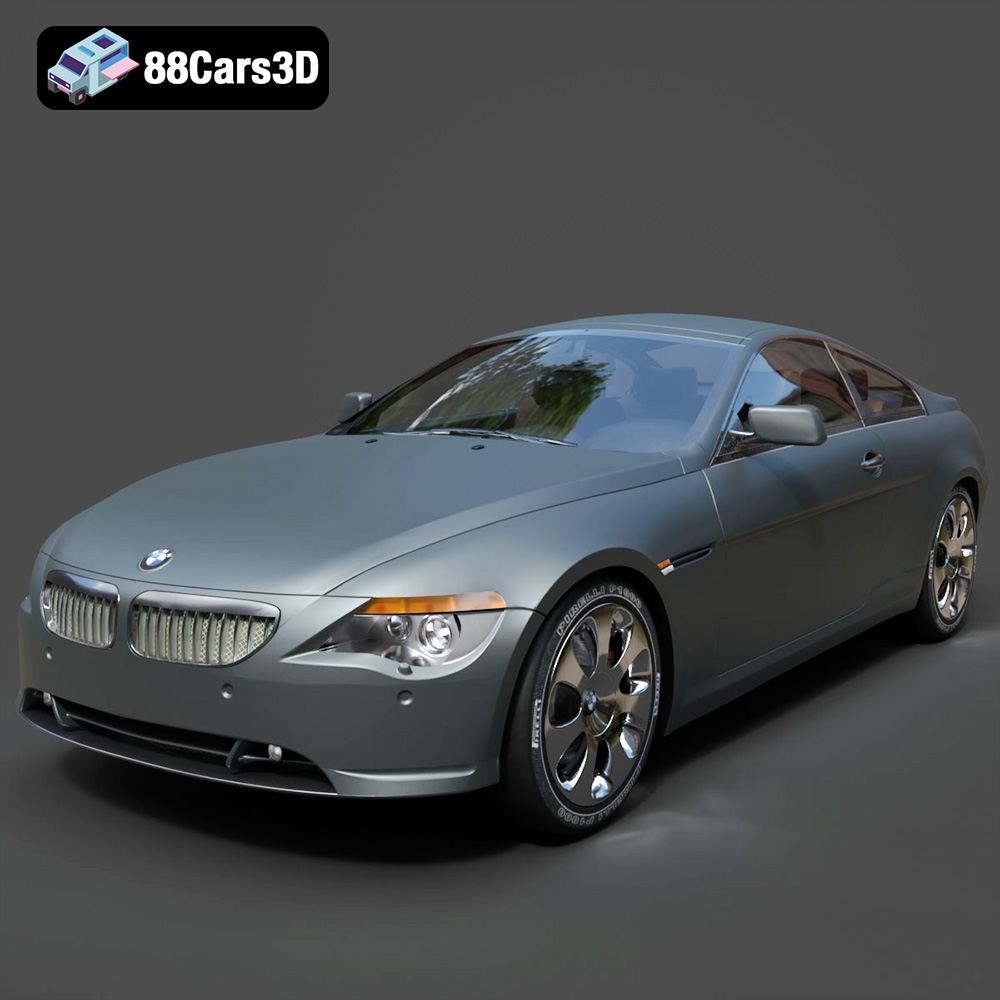
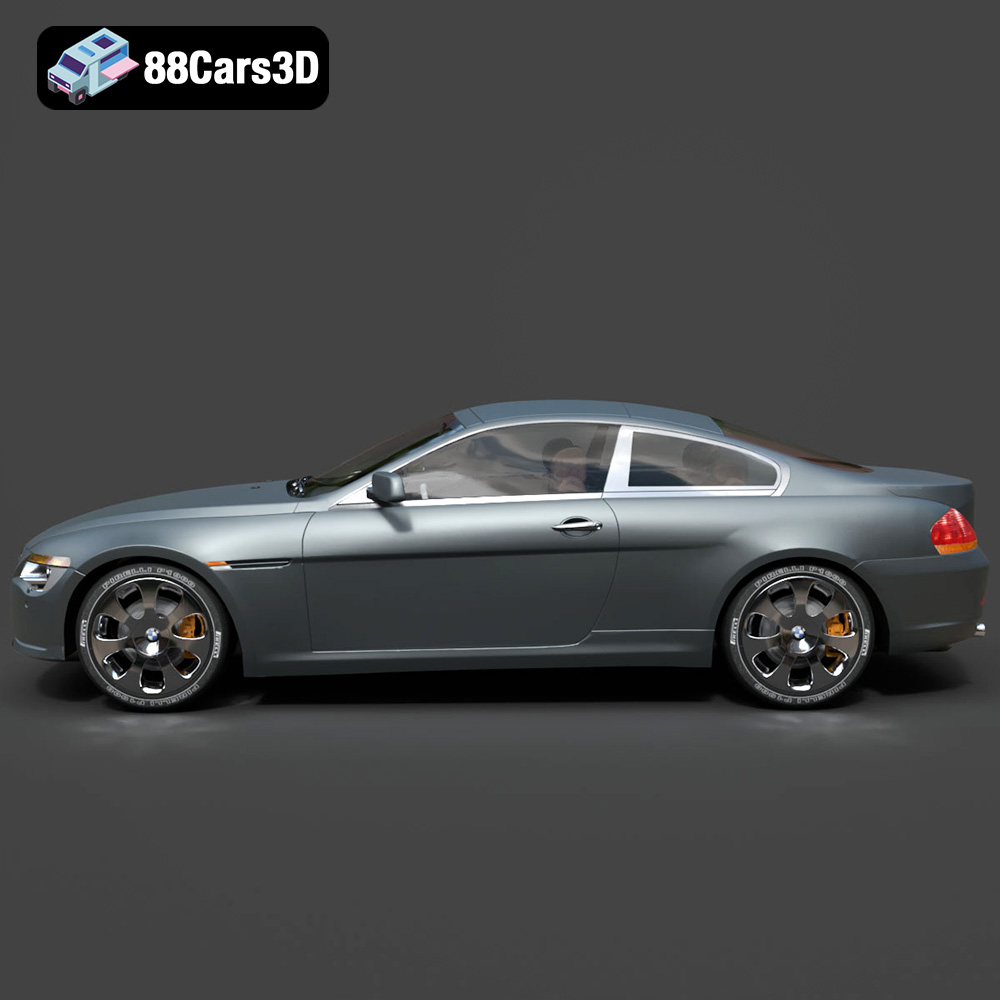
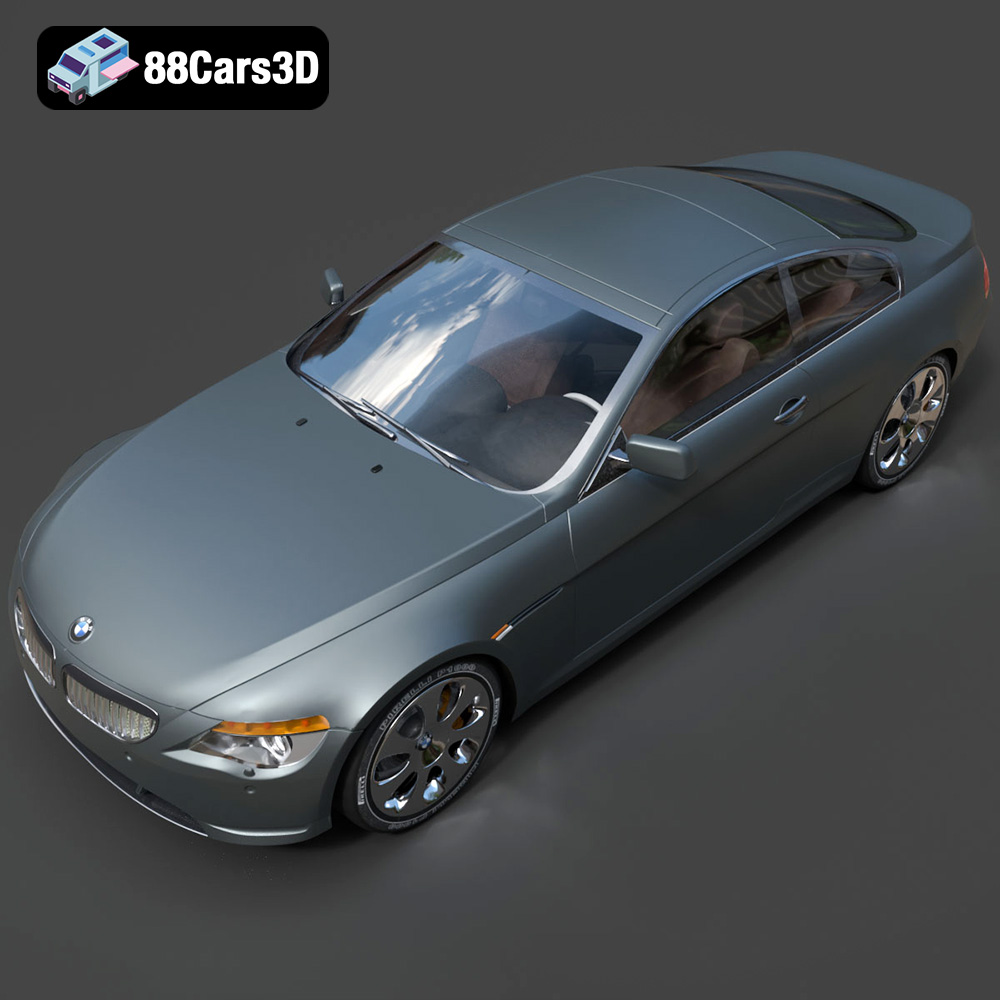
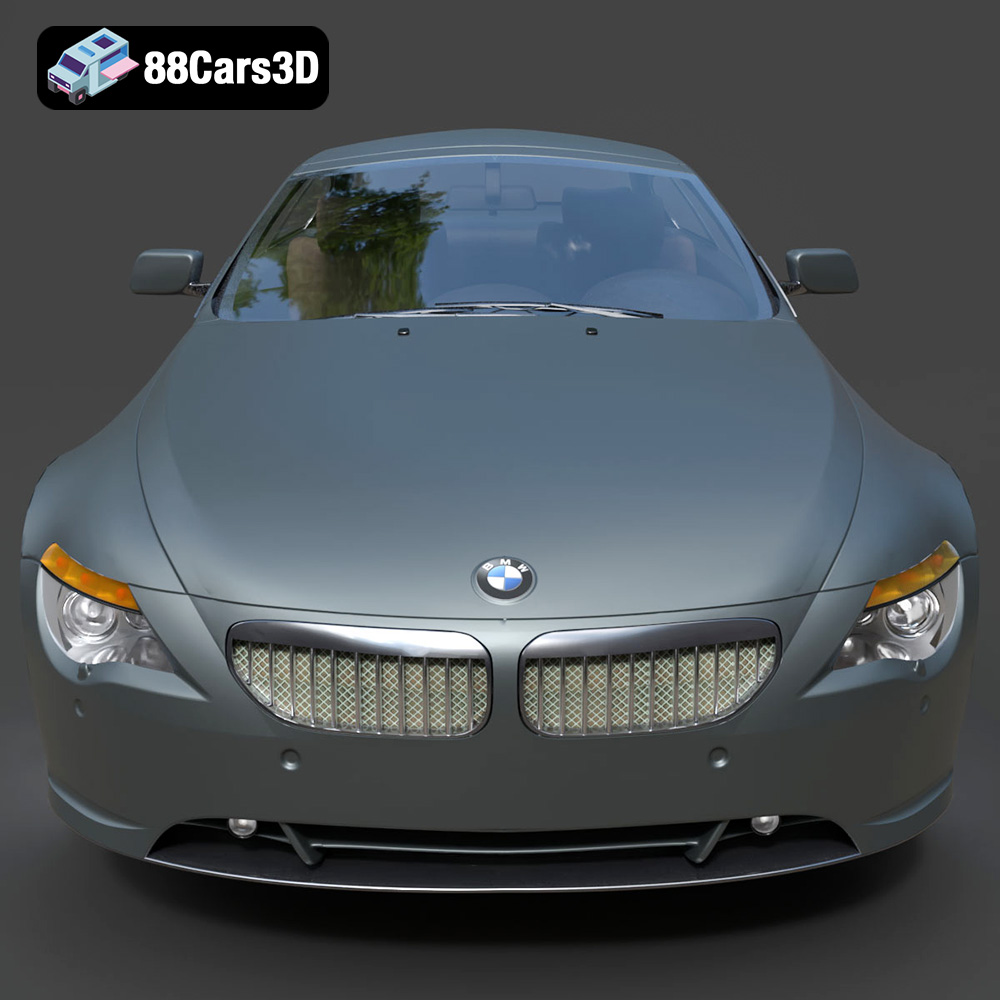
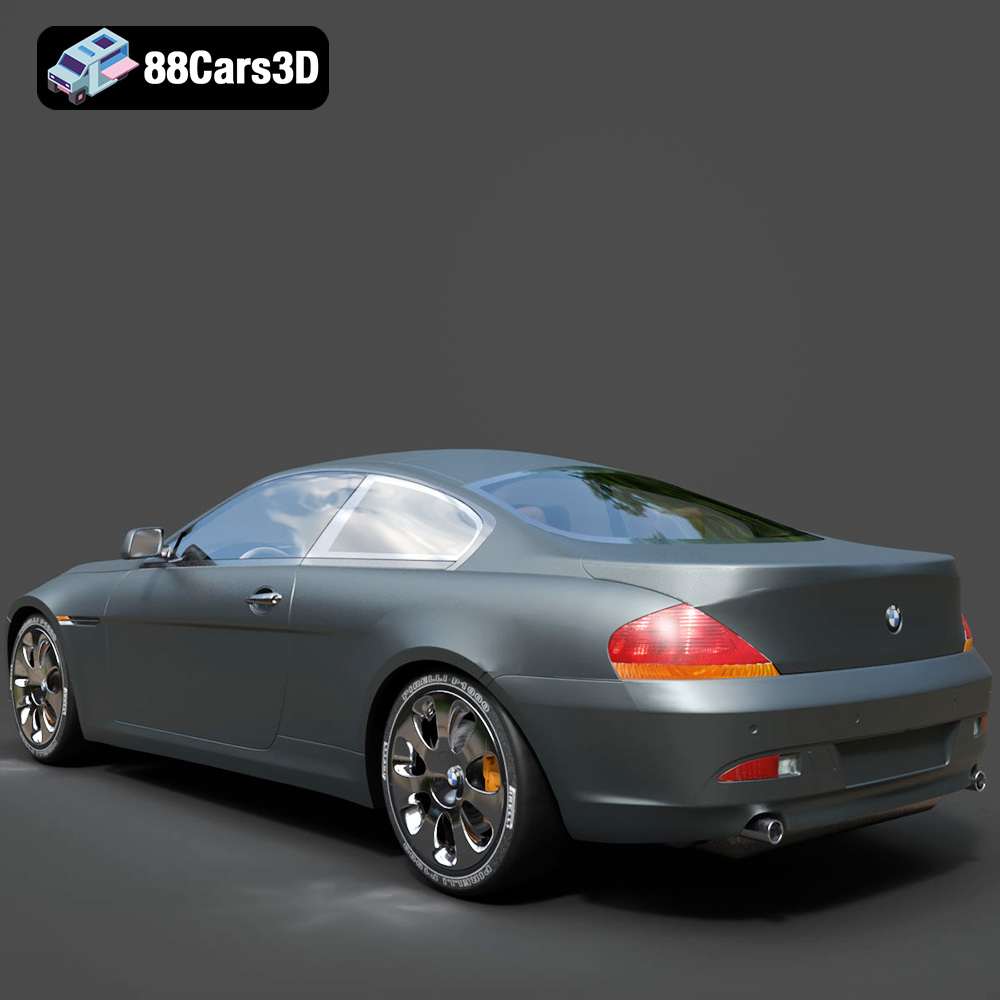
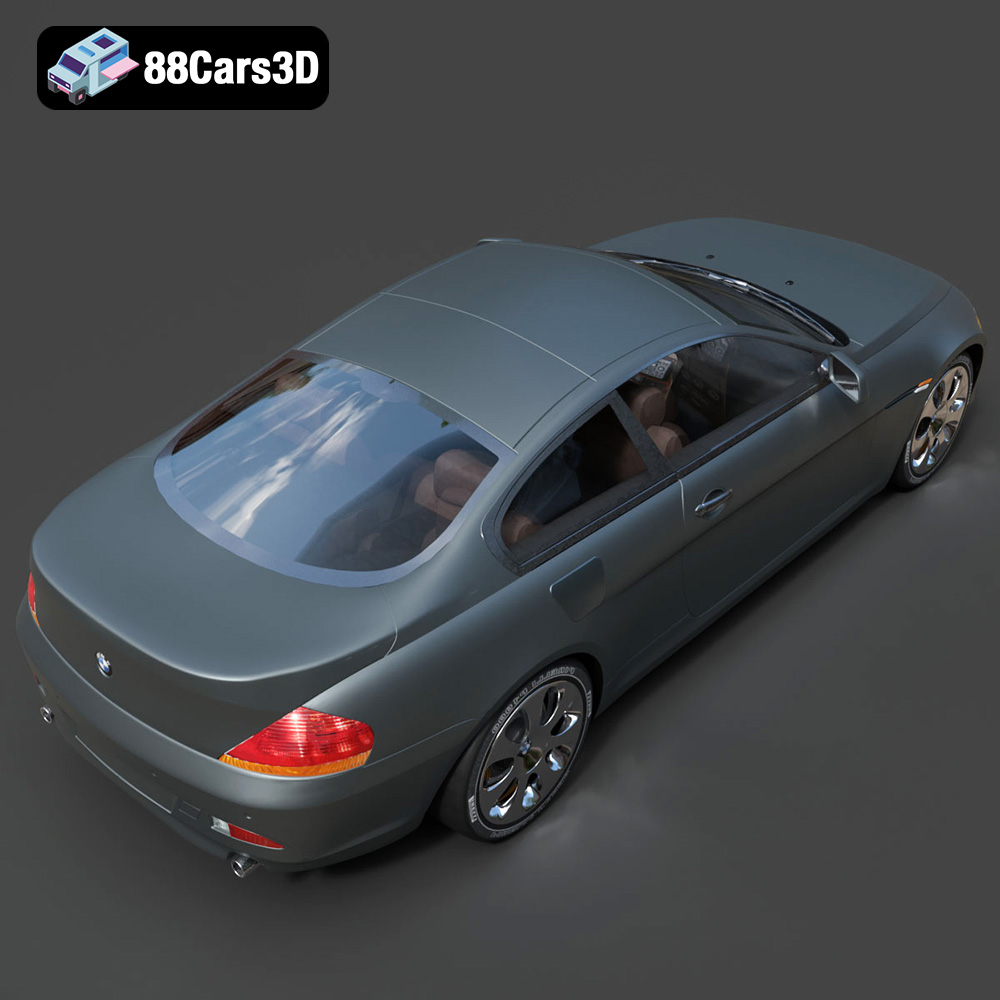
The exterior of the BMW 6 Series is defined by its sporty elegance and powerful stance. The 3D model accurately reflects these characteristics through precisely modeled body panels that capture the signature BMW design language. This includes the iconic kidney grille, intricately detailed, along with chrome accents that catch the light realistically. A critical aspect for visual fidelity is the treatment of lighting elements; the model features detailed headlights and taillights with transparent materials, allowing for sophisticated lighting effects and accurate reflections that mimic real-world glass and plastic. Furthermore, authentic BMW alloy wheels with detailed tire treads provide essential visual grounding and contribute significantly to overall realism, especially in close-up shots or dynamic renders.
Interior and Mechanical Features: Detail Where It Matters
While often hidden, a detailed interior is paramount for realistic animated sequences, VR experiences, or any shot that peers into the cockpit. The BMW 6 Series 3D model delivers with a detailed interior, including the dashboard, steering wheel, seats, and center console. Authentic button and control layouts provide that crucial “cockpit feel,” making the model suitable for immersive applications. Importantly, the mesh is optimized for efficient rendering without sacrificing these key interior elements, striking a balance between detail and performance. Beyond the cabin, a basic representation of undercarriage components adds realism to dynamic shots or when the vehicle is viewed from lower angles, preventing a “hollow” appearance.
Beyond Aesthetics: Technical Excellence for Professional Workflows
A beautiful model is only truly valuable if it’s built with professional-grade technical integrity. The BMW 6 Series 3D model isn’t just visually appealing; it adheres to industry best practices, making it a joy to work with for animators, texture artists, and pipeline managers alike.
Clean Topology and Real-World Scale
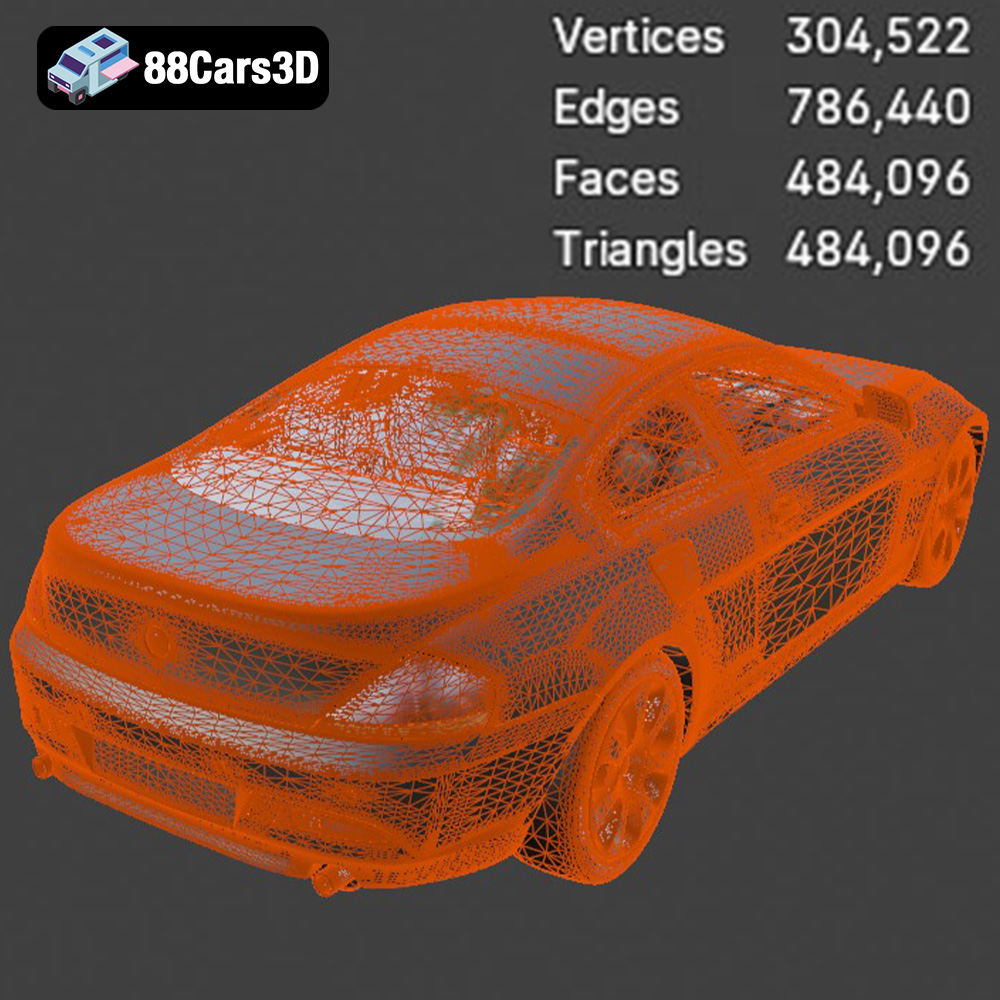
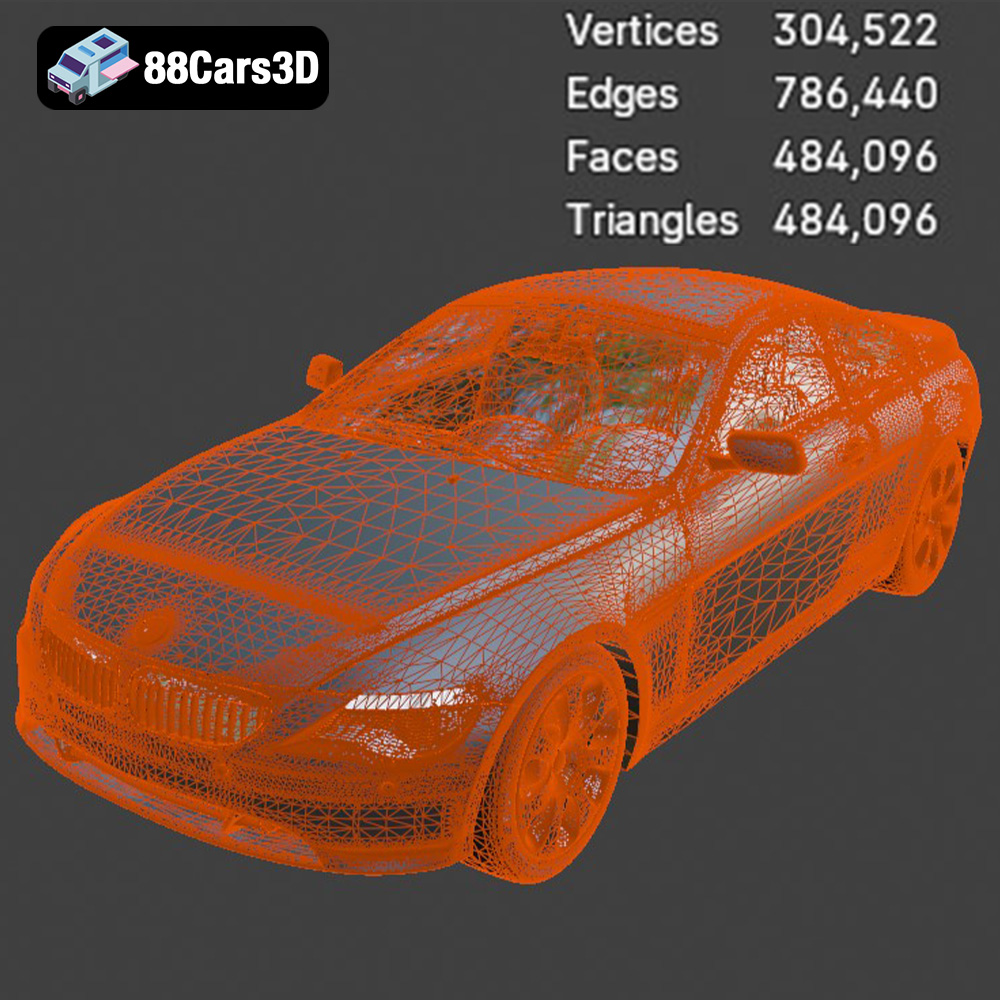
One of the most significant technical advantages of this model is its clean, quad-dominant topology. This ensures several critical benefits:
- Smooth Subdivision: Quad-based meshes subdivide cleanly, allowing for the addition of detail and smoothing without introducing unsightly pinches or artifacts, crucial for close-up renders.
- Efficient Deformation: For animation, clean quads deform predictably, making it easier to rig and animate elements like suspension or interior components without tearing or undesired stretching.
Furthermore, the model is built to real-world scale. This seemingly simple detail is vital for accurate integration into scenes, ensuring correct proportions when placed alongside architectural elements, characters, or other vehicles. It also simplifies physics simulations and lighting setups, as real-world light units behave as expected.
Organized Hierarchy and Animation Readiness
A well-structured 3D model saves countless hours in production. The BMW 6 Series 3D model features a logically organized hierarchy with proper pivot points. This means that elements like doors, the hood, trunk, and wheels are separate objects grouped intelligently, and their pivot points are correctly placed for natural rotation. This design choice is fundamental for ease of animation, allowing artists to quickly open doors, turn wheels, or steer the vehicle with minimal setup time. It’s a mark of a professional asset designed for production readiness.
Bringing Automotive Dreams to Life: Applications & Case Studies
The versatility of a high-quality 3D car model like the BMW 6 Series extends across numerous industries, each leveraging its detailed design and technical robustness for different purposes. This section explores some key applications.
High-Definition Rendering & Visualization
For studios specializing in architectural visualization, advertising, or cinematic production, the BMW 6 Series 3D model is an ideal asset. Imagine a sprawling luxury villa visualization; placing a meticulously rendered BMW 6 Series in the driveway immediately elevates the scene’s realism and perceived value. Its high-resolution textures and accurate reflections make it perfect for creating stunning studio renders, showcasing the car’s sleek lines under controlled lighting, or integrating it into photorealistic environments for captivating advertising campaigns. Artists using 3ds Max or Blender can quickly set up complex material shaders and lighting environments to produce breathtaking automotive rendering masterpieces.
Game Development and Interactive Experiences
In the realm of game development, balancing visual fidelity with performance is a constant challenge. The BMW 6 Series 3D model is optimized for use as a game asset, making it suitable for racing simulations, open-world environments, or interactive car configurators. The clean mesh and balanced poly count ensure it runs efficiently in real-time engines like Unreal Engine or Unity, while still providing enough detail for an immersive experience. The provided .fbx and .unreal formats are specifically tailored to streamline this integration, allowing developers to focus on gameplay mechanics rather than asset optimization.
Immersive AR/VR Applications
Augmented and Virtual Reality are transforming how we interact with digital content, especially for product showcases. The BMW 6 Series 3D model’s compatibility with .glb makes it a prime candidate for AR/VR applications. Picture a potential buyer using an AR app on their phone to place a life-sized BMW 6 Series in their driveway, examining its exterior from every angle, or virtually stepping inside via a VR headset to explore the detailed interior. These immersive product showcases offer unparalleled engagement and a futuristic approach to marketing and sales.
Simulation and Training Modules
Beyond entertainment, 3D models play a crucial role in simulation and training. The accurate representation and real-world scale of the BMW 6 Series 3D model make it suitable for driving simulators, educational modules, or technical training scenarios. Engineers could use it to visualize aerodynamic flows, or mechanics could train on virtual representations of components. Its robust geometry (potentially convertable to .ply for analysis) supports various simulation requirements, providing a safe and cost-effective training environment.
Optimizing for Performance: Game Development & Real-Time Engines
While photorealistic rendering focuses on visual quality above all, real-time applications prioritize efficiency and responsiveness. The BMW 6 Series 3D model is designed with both in mind, ensuring it can perform optimally in demanding interactive environments.
Efficient Mesh and UV Mapping
A key aspect of real-time optimization is an efficient mesh. The BMW 6 Series 3D model’s clean topology translates directly to a manageable poly count without sacrificing essential details. This allows game engines to render the model quickly, contributing to higher frame rates and a smoother user experience. Furthermore, high-quality 3D car models come with clean UV mapping, which is essential for applying textures without distortion and for creating efficient texture atlases. Properly laid out UVs enable developers to utilize texture compression techniques effectively, further boosting performance in game engines like Unreal and Unity.
Seamless Engine Integration
The inclusion of specific file formats like .fbx and a dedicated .unreal project setup for the BMW 6 Series 3D model is a significant advantage for real-time developers.
- .fbx for Broad Compatibility: The .fbx format ensures that the model, complete with its material slots and proper scaling, can be imported into virtually any modern game engine with minimal fuss. This saves precious development time that would otherwise be spent on fixing import errors or re-scaling assets.
- .unreal for Instant Deployment: The pre-configured .unreal asset takes integration a step further. It means the model has already passed through Unreal Engine’s import pipeline, potentially having its materials assigned, collisions generated, and LODs (Levels of Detail) considered. This allows developers to drop the BMW 6 Series 3D model directly into their scene and begin working on lighting, physics, and gameplay interactions immediately.
These optimizations are crucial for creating high-fidelity racing games, open-world adventures, or interactive showrooms where performance and visual quality must coexist.
The Power of Customization and Asset Management
Even with a professional-grade asset, the ability to customize it to fit unique project requirements is paramount. The BMW 6 Series 3D model provides ample opportunities for personalization and integration into diverse asset libraries.
Tailoring to Your Vision
The model’s clean structure and material separation allow for extensive customization:
- Paint Finishes: Easily modify paint finishes to match specific branding, create unique liveries for a racing game, or simulate different automotive colors. Artists can experiment with metallic flakes, pearlescent effects, or matte finishes with precise control over material properties.
- Material Properties: Adjusting material properties for metal, glass, rubber, and plastic components is straightforward. This allows artists to fine-tune reflections, refractions, glossiness, and roughness to match specific rendering styles or achieve different atmospheric effects, from brand-new showroom shine to a weathered look.
- Lighting Setups: Implementing diverse lighting setups can dramatically change the mood and perception of the vehicle. Whether it’s a dramatic studio render, a sunny outdoor scene, or a moody nighttime shot, the model responds realistically to various lighting conditions, highlighting its precise geometry and material definitions.
This level of flexibility ensures that the BMW 6 Series 3D model isn’t a one-trick pony but a versatile tool adaptable to any creative brief.
Integrating into Asset Libraries and Pipelines
For large studios and individual freelancers, efficient asset management is critical. Sourcing high-quality 3D car models like this from platforms such as 88cars3d.com directly contributes to a robust asset library. Having production-ready models at hand reduces development cycles, ensures consistent quality across projects, and allows artists to focus on creative problem-solving rather than starting from scratch. The multiple file formats included with the BMW 6 Series model make it easy to integrate into existing pipelines, regardless of the primary 3D software or game engine being used.
Conclusion
The journey from concept to a compelling 3D visualization or interactive experience is complex and demanding. High-quality assets are not merely conveniences; they are cornerstones of success, providing a foundation of technical excellence and visual fidelity upon which entire projects can be built. The BMW 6 Series 3D Model stands out as a prime example of such an asset – meticulously crafted, technically robust, and incredibly versatile.
Whether your goal is to produce breathtaking automotive rendering, develop an immersive game, create an engaging AR/VR experience, or facilitate advanced simulations, this model provides the accuracy, optimization, and flexibility required by discerning professionals. Its clean topology, real-world scale, organized hierarchy, and broad file format support make it an invaluable addition to any 3D artist’s toolkit. By investing in professional-grade 3D car models from trusted sources like 88cars3d.com, you empower your creative vision and elevate the quality of your projects, ensuring that your digital creations are as impressive and impactful as the real-world vehicles they represent.
Featured 3D Model
BMW 6 Series 3D Model
This professional 3D model accurately represents the iconic BMW 6 Series, a luxurious grand tourer known for its sleek lines, sporty elegance, and powerful performance. Crafted with clean geometry and a balanced level of detail, this model is optimized for high-quality rendering, realistic animations, detailed simulations, and robust integration into game development projects.
Exterior Features:
- Precisely modeled body panels reflecting the distinctive BMW design language.
- Detailed headlights and taillights with transparent materials for realistic lighting effects.
- Authentic BMW alloy wheels with detailed tire treads.
- Chrome accents and intricate grille details.
- Separated doors, hood, and trunk for ease of animation and customization.
- High-resolution textures for badges and emblems.
Interior / Mechanical Features:
- Detailed interior including dashboard, steering wheel, seats, and center console.
- Authentic button and control layouts for a realistic cockpit feel.
- Optimized mesh for efficient rendering without sacrificing key interior elements.
- Basic representation of undercarriage components for realism in dynamic shots.
Technical Advantages:
- Clean, quad-dominant topology ensures smooth subdivision and deformation.
- Modeled to real-world scale for accurate integration into scenes.
- Logically organized hierarchy with proper pivot points for easy animation of doors, wheels, and steering.
Applications:
- Rendering & Visualization: Perfect for high-definition studio renders, cinematic sequences, and architectural visualizations requiring a premium vehicle.
- Game Development: Optimized for use as a game asset in racing simulations, open-world environments, and interactive experiences.
- AR/VR: Seamless integration into augmented and virtual reality applications for immersive product showcases or interactive experiences.
- Simulation & Training: Suitable for driving simulators, educational modules, and technical training scenarios.
- 3D Printing: Can be easily converted to .stl format for creating physical models and prototypes.
Customization Options:
- Easily modify paint finishes, apply custom graphics, or create unique liveries.
- Adjust material properties for metal, glass, rubber, and plastic components to match specific rendering styles.
- Implement diverse lighting setups to achieve varied atmospheric effects and scene moods.
Elevate your projects with this meticulously crafted BMW 6 Series 3D model. Its professional quality, extensive features, and broad compatibility make it an invaluable asset for any serious 3D artist or developer seeking unparalleled realism and versatility.
Included File Formats:
- .blend – Blender project with materials
- .fbx – Compatible with Unreal, Unity, and major 3D engines
- .obj – Universal format for nearly all 3D software
- .glb – Optimized for AR, VR, and web-based visualization
- .stl – Ready for 3D printing
- .ply – Mesh format for analysis and CAD workflows
- .unreal – Unreal Engine project setup
- .max – Editable 3ds Max scene for rendering and animation
Tags:
.bmw, .6series, .coupe, .luxurycar, .grandtourer, .rendering, .simulation, .gameasset, .arvr, .blend, .fbx, .obj, .glb, .stl, .ply, .unreal, .maxMercedes Benz CLS 500 3D Model
$10.79
Product Image Gallery
Related Tags
.6series
.arvr
.blend
.bmw
.coupe
.fbx
.gameasset
.glb
.grandtourer
.luxurycar
.max
.obj
.ply
.rendering
.simulation
.stl
.unreal
