Get 20% OFF All Premium 3D & STL Models!

In the rapidly evolving landscape of digital visualization, automotive design, and interactive media, the quality of 3D assets stands as the bedrock of success. From the sleek lines of a cinematic car chase to the precise reflections in an architectural rendering, a meticulously crafted vehicle model can elevate a project from good to truly exceptional. Professionals across industries, from game developers and advertising agencies to architects and product designers, constantly seek assets that not only look stunning but also integrate seamlessly into complex workflows.
It is within this demanding environment that specialized platforms like 88cars3d.com truly shine, offering a curated selection of high-quality 3D car models designed to meet the rigorous demands of modern production. Today, we delve into one such exemplary asset: the BMW 6 Series Gran Coupe 2013 3D Model. This model isn’t just a digital representation; it’s a meticulously engineered toolkit, ready to inject sophistication and dynamic realism into your next project.
Creating a truly premium 3D car model is an intricate process that blends artistic vision with rigorous technical execution. It’s about more than just replicating a vehicle’s silhouette; it’s about capturing its soul, its engineering, and its presence in the real world.
The essence of a vehicle lies in its proportions, its surface curvature, and the interplay of light and shadow across its form. A skilled 3D artist meticulously studies reference materials, from blueprints to high-resolution photographs, to translate these real-world nuances into a digital mesh. This involves careful polygon modeling to ensure smooth surfaces and accurate panel gaps, followed by detailed UV mapping to prepare the model for realistic texturing. The goal is always photorealism, whether the model is destined for a static render or a dynamic real-time environment.
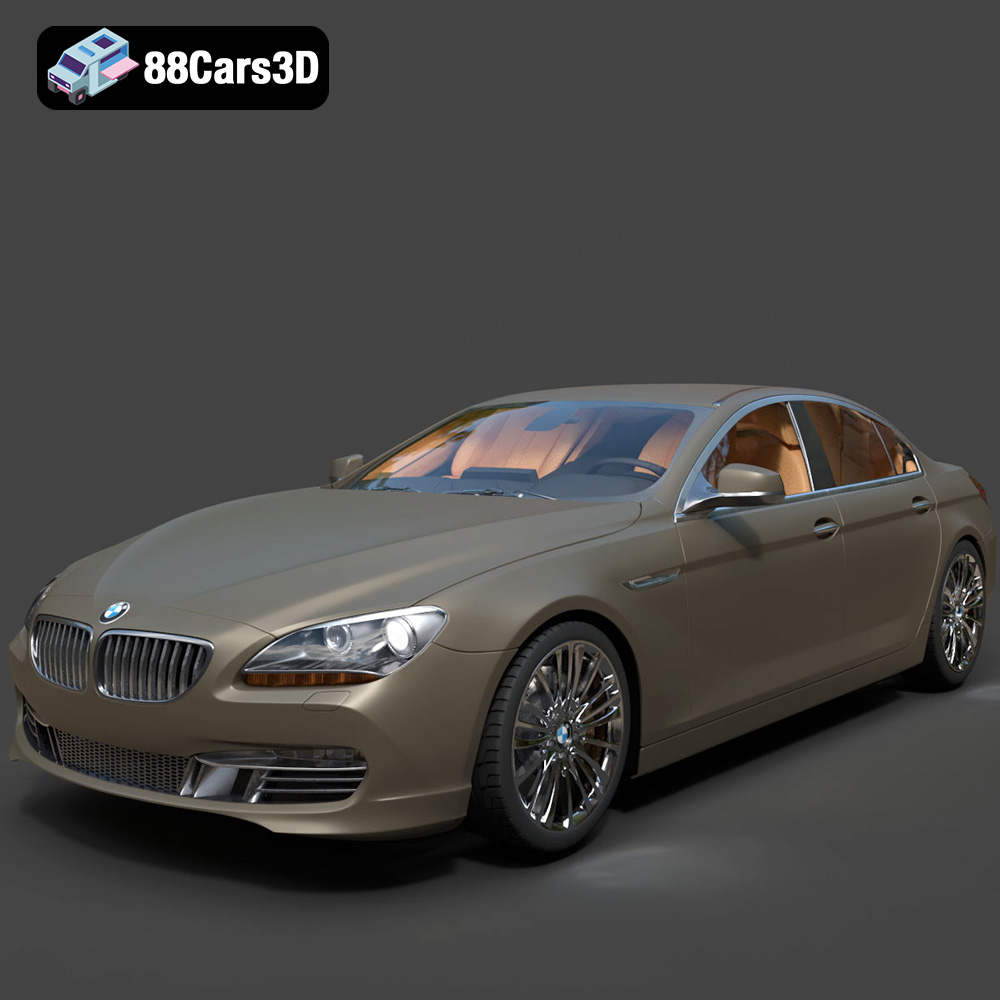
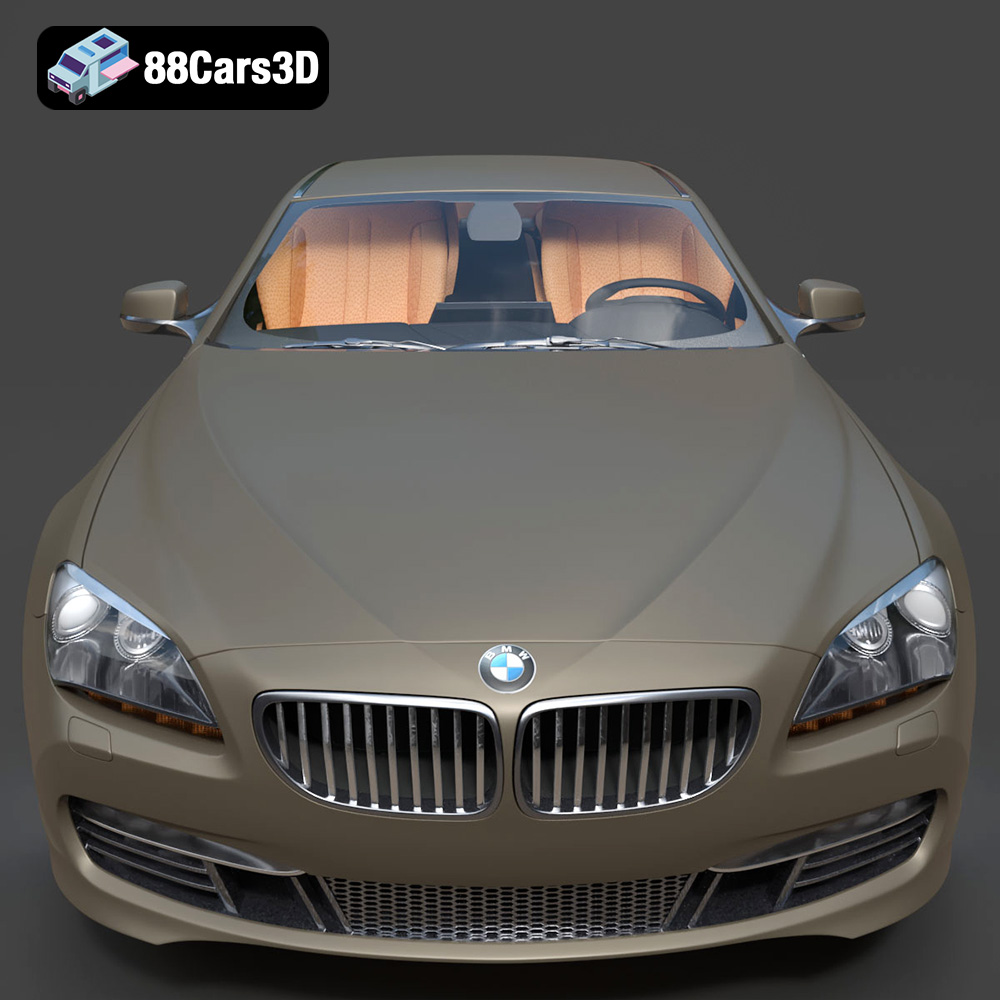
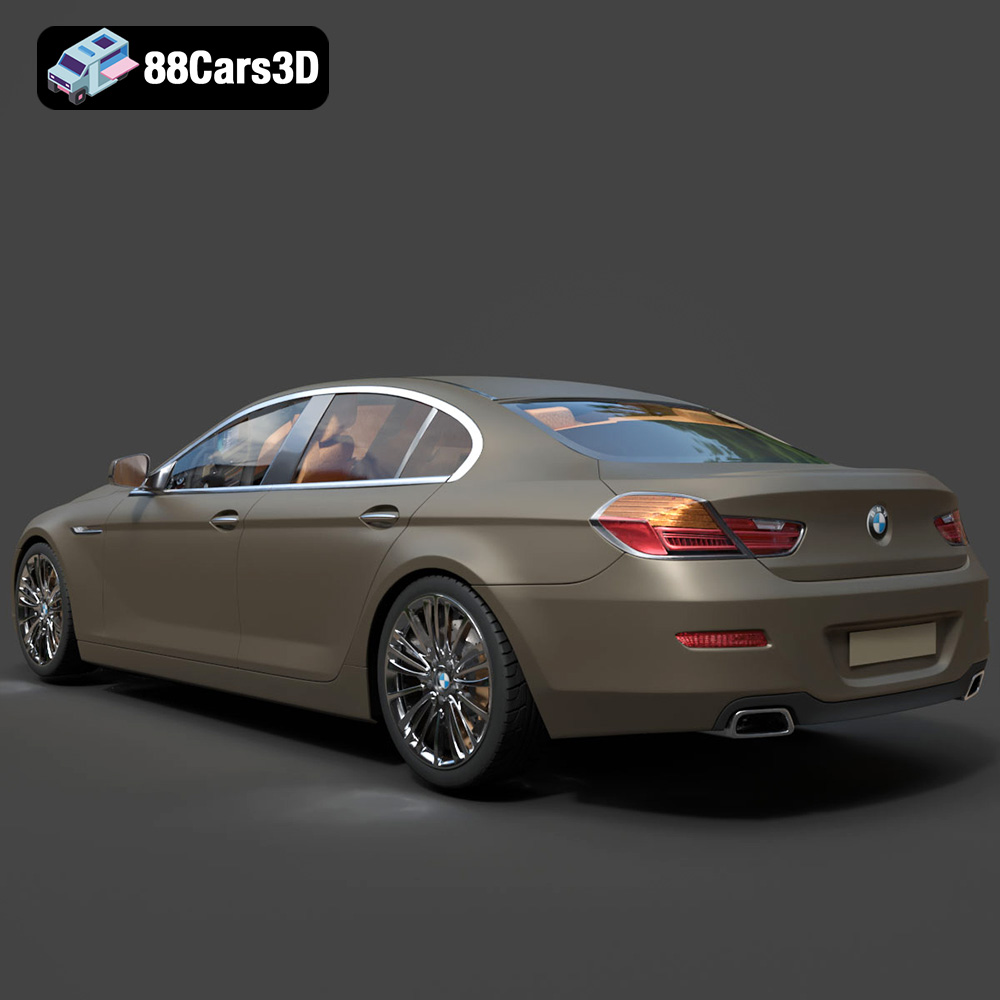
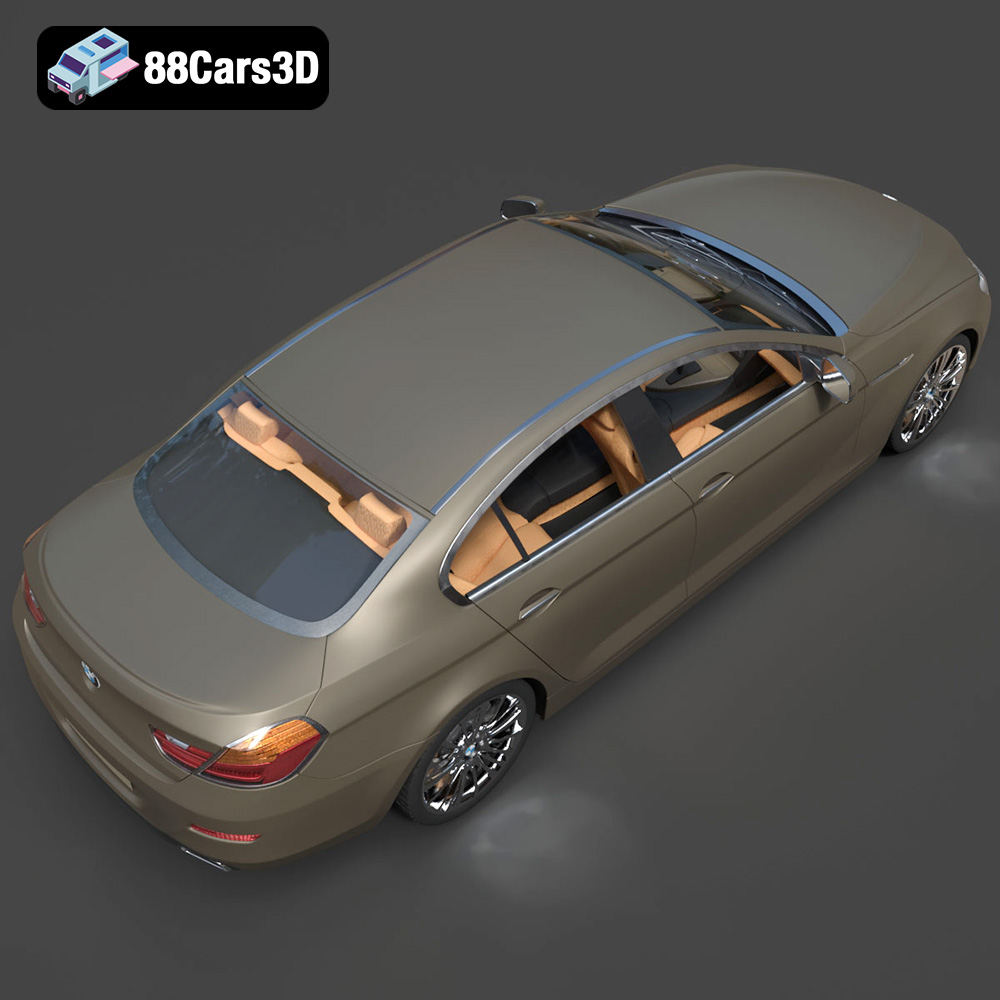
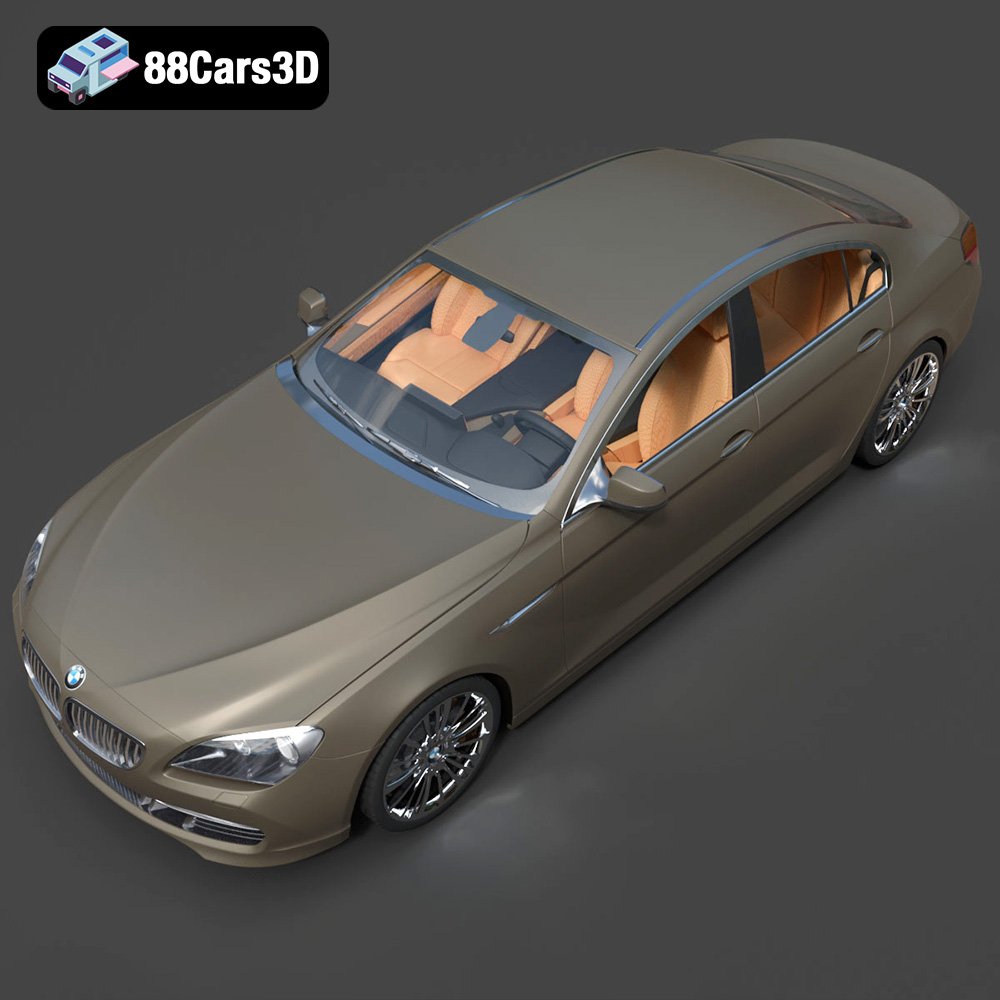
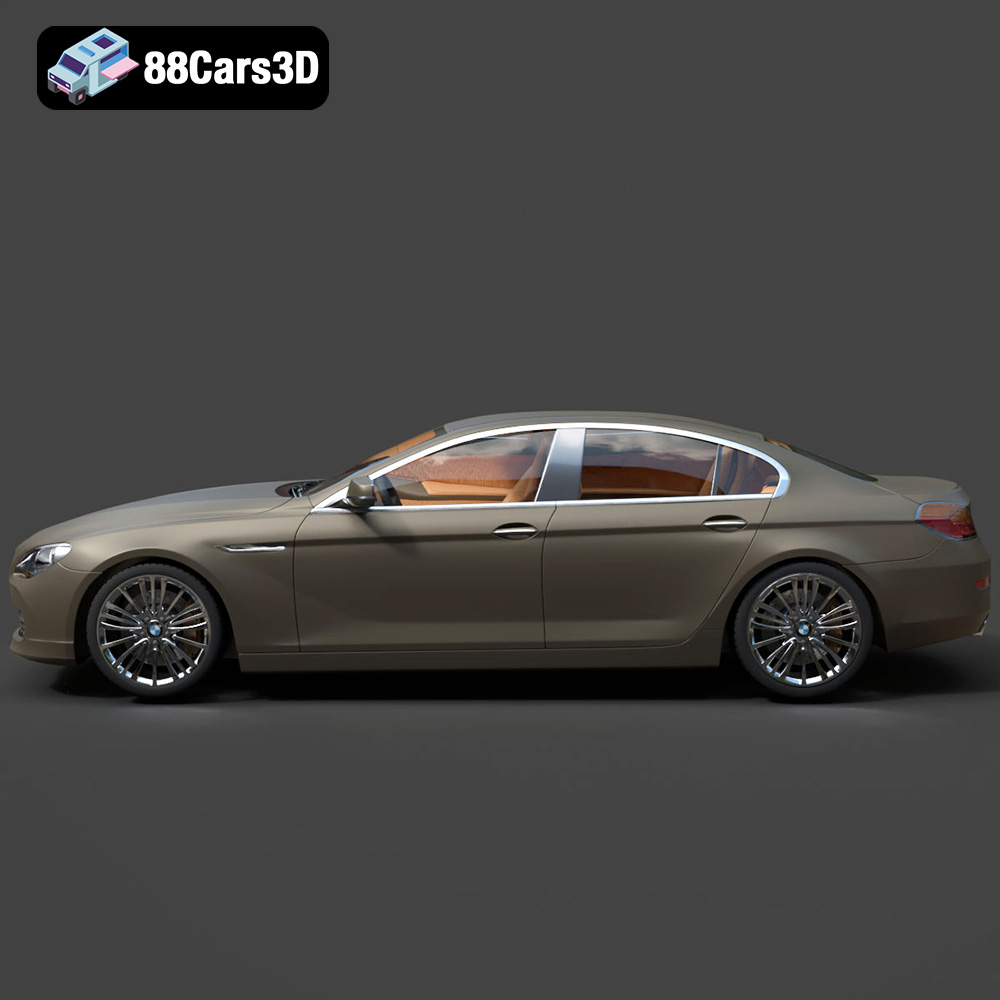
The BMW 6 Series Gran Coupe 2013 3D Model exemplifies this dedication to digital craftsmanship. It accurately models the vehicle’s body panels, reflecting its sleek aesthetics and powerful stance. Key exterior features like the authentic BMW kidney grille, intricate lower air intake designs, and detailed headlights and taillights with realistic lens textures are faithfully reproduced. The model also boasts high-resolution wheels and tires, precisely replicating the original’s design, which are crucial for close-up renders and animations. Even the badging and emblems are detailed for brand authenticity, a small but significant detail often overlooked in lesser models.
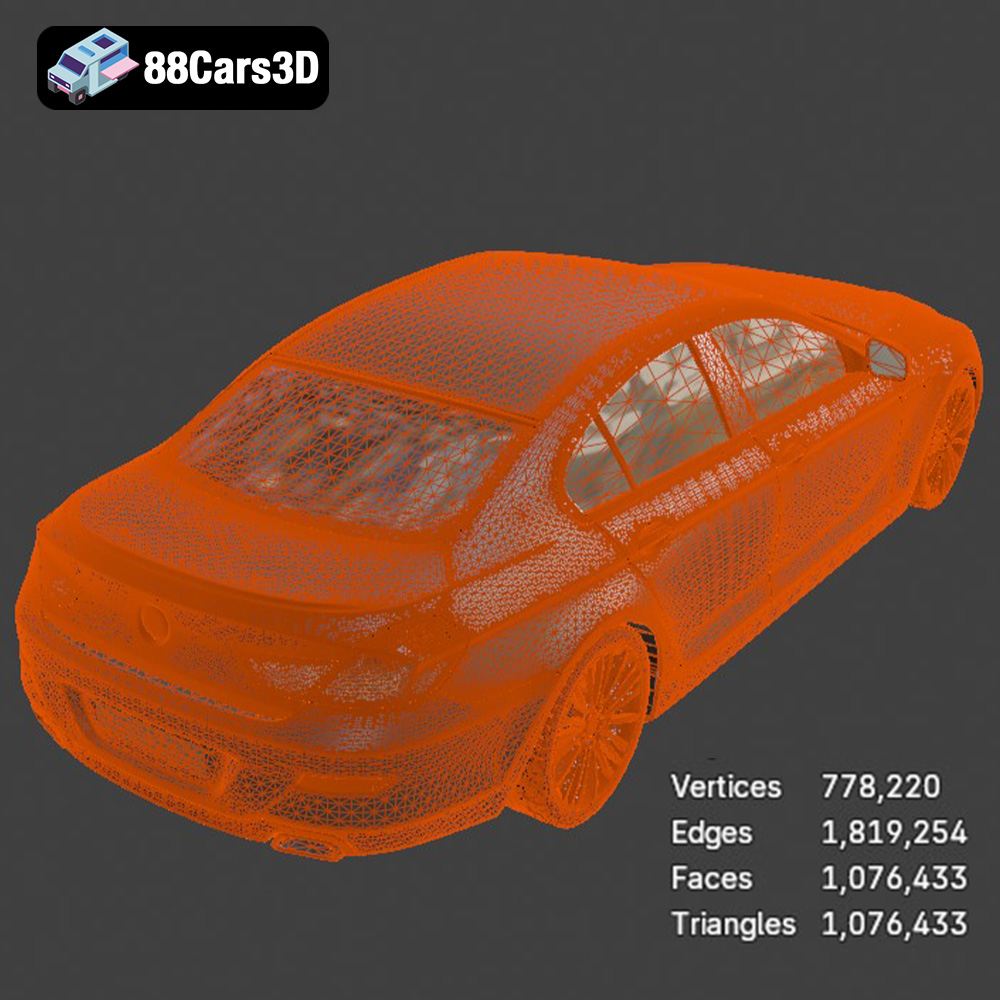
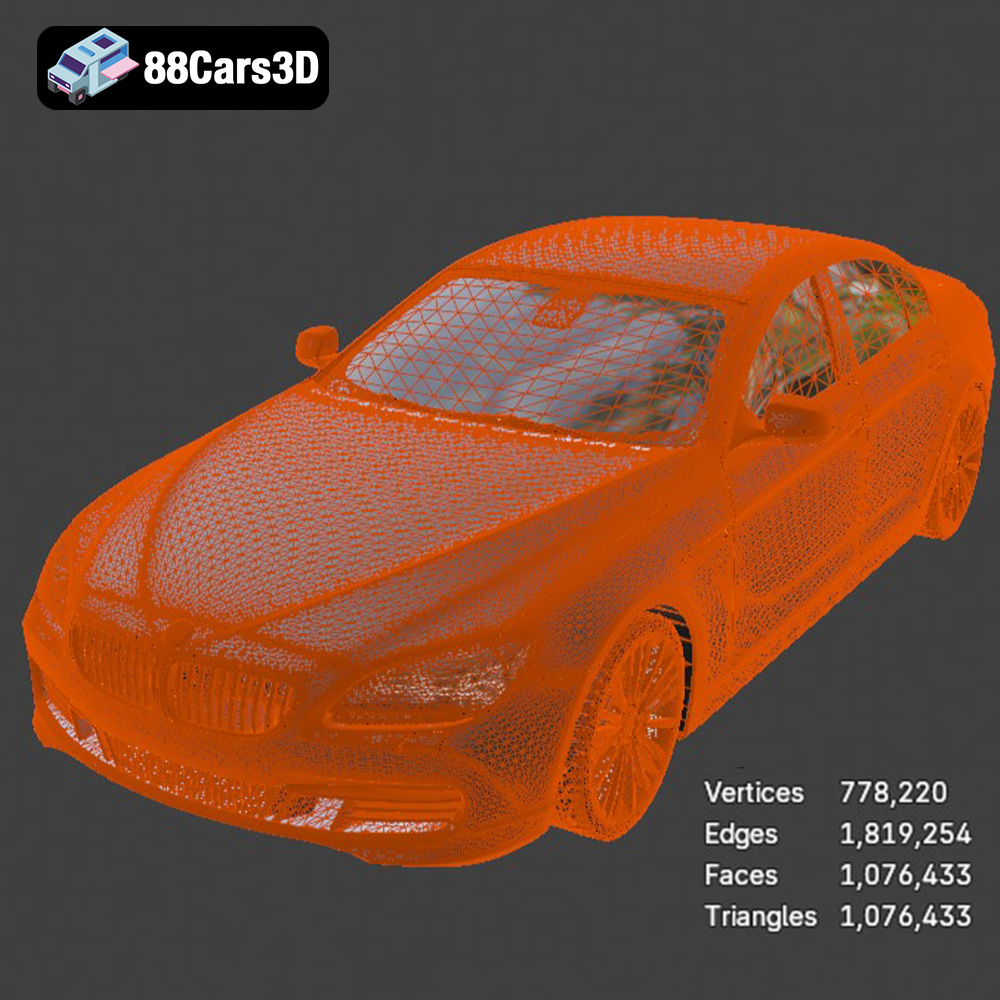
Beyond the exterior, the model includes a detailed dashboard, instrument cluster, and center console, complete with functional-looking controls. The seating, steering wheel, and door panels feature realistic material definitions, providing depth for interior shots or immersive virtual experiences. Technically, the model adheres to best practices: clean, quad-dominant topology allows for easy subdivision and deformation, while real-world scale accuracy ensures seamless integration into existing scenes. Its logically organized hierarchy with proper pivot points is a godsend for animators, making complex rigging and movement setups far more manageable.
One of the most crucial aspects of working with 3D models, especially when sourcing them from marketplaces like 88cars3d.com, is understanding the various file formats. Each format is designed for specific purposes, offering unique advantages in terms of compatibility, data retention, and optimization for particular workflows. The BMW 6 Series Gran Coupe 2013 3D model, for instance, comes with an impressive array of formats, ensuring maximum versatility for any professional endeavor.
The .blend file is Blender’s native format and is ideal for users deeply integrated into the Blender ecosystem. When you acquire a .blend file, you’re getting a fully editable Blender scene, complete with materials, textures, lighting setups, and sometimes even basic animation rigs. This format is perfect for artists who wish to dive into the model’s construction, make extensive modifications, or leverage Blender’s powerful rendering engines (Cycles and Eevee) directly. It encapsulates all project data, making it a self-contained and highly flexible asset for Blender users.
.fbx (Filmbox) is arguably the most widely adopted interchange format in the 3D industry, particularly for game development and real-time applications. It supports geometry, materials, textures, animation, and even skeletal data, making it incredibly versatile. For models like the BMW 6 Series Gran Coupe 2013, the .fbx format is ideal for import into game engines like Unreal Engine and Unity, or other 3D software such as Autodesk Maya and 3ds Max. Its strength lies in its ability to transfer complex scene data reliably across different platforms, though users should be mindful of potential material translation discrepancies between software.
The .obj (Wavefront OBJ) format is a universal standard known for its widespread compatibility. It’s a simpler format compared to .fbx, primarily storing geometry (vertices, normals, texture coordinates, and faces) and referencing external .mtl (material) files for basic material properties. While it doesn’t typically store animation or rigging data, its simplicity makes it incredibly robust for cross-software compatibility. If you need a clean mesh that can be imported into virtually any 3D application, .obj is an excellent choice. It’s often used as a fallback or for models where only the mesh data is required.
.glb (GL Transmission Format Binary) is gaining significant traction, especially for web-based 3D, Augmented Reality (AR), and Virtual Reality (VR) applications. It’s a binary version of the glTF format, designed to be a compact, efficient, and single-file container for 3D scenes. A .glb file includes geometry, materials, textures, animations, and skeletal data, all optimized for fast loading and rendering in browser environments and mobile devices. For integrating the BMW 6 Series Gran Coupe into an AR visualization or a web configurator, .glb provides the necessary optimization and streamlined delivery.
.stl (Stereolithography) is the de facto standard for 3D printing. It represents a 3D model as a collection of triangular facets, defining the surface geometry without color or texture information. If your goal is to physically manifest the BMW 6 Series Gran Coupe 2013 3D model as a prototype or a collectible, the .stl format is your direct pathway.
The .ply (Polygon File Format) is another precision mesh format, often used in scientific and engineering applications, especially for storing data from 3D scanners. It can store a wider range of properties than .stl, including color, transparency, and often normal vectors, making it suitable for more detailed analysis or CAD workflows where mesh integrity and additional data attributes are critical.
The .unreal format, often referring to a pre-packaged Unreal Engine project or asset, signifies a model that has been specifically prepared and optimized for Unreal Engine’s unique environment. This typically means textures are correctly mapped, materials are set up using Unreal’s physically based rendering (PBR) system, and the asset is ready to be dragged and dropped into a scene, potentially with LODs (Levels of Detail) already configured. This saves countless hours of setup time for game developers.
Similarly, .max is the native file format for Autodesk 3ds Max. Like .blend, it provides a fully editable scene including geometry, materials, textures, lighting, cameras, and animation data specific to 3ds Max. This is invaluable for professionals who use 3ds Max as their primary rendering and animation package, allowing full control over every aspect of the BMW 6 Series Gran Coupe model within their familiar environment.
For professionals in advertising, film, and architectural visualization, photorealistic rendering is paramount. A high-quality 3D car model, such as the BMW 6 Series Gran Coupe 2013 from 88cars3d.com, is the cornerstone for achieving stunning visual fidelity.
Working with the .max file format in 3ds Max, artists gain unparalleled control over the rendering pipeline. When paired with industry-leading renderers like V-Ray or Corona Renderer, the potential for photorealism is immense. The model’s clean, quad-dominant topology is crucial here, as it allows for smooth subdivision surfacing, eliminating visible facets and ensuring perfectly curved reflections. Artists can load the model, apply studio-grade HDRIs (High Dynamic Range Images) for realistic lighting and reflections, and fine-tune materials like car paint, chrome, and glass. The pre-defined material setup in the .max file acts as an excellent starting point, often requiring only minor adjustments to match specific scene lighting or stylistic preferences. Detailed headlights and taillights with realistic lens textures and light emitters, for instance, come alive with V-Ray’s advanced lighting capabilities, mimicking complex refractions and light dispersal.
Blender users, leveraging the .blend file, can harness the power of Cycles for unbiased, physically accurate renders or Eevee for real-time responsiveness. The BMW 6 Series Gran Coupe’s optimized material and texture setup translates beautifully into Blender. Artists can quickly set up a virtual studio, experiment with different camera angles, and animate the separated doors, hood, and trunk for dynamic sequences. Cycles’ robust ray tracing produces stunningly accurate reflections on the car’s paintwork, while Eevee’s instant feedback is perfect for rapid iteration and pre-visualization of cinematic scenes or virtual showrooms. The “transparent materials for windows and light covers” feature ensures realistic light refraction, a critical detail for authenticity that often requires careful shader work.
The technical advantages of this model extend to its material and texture setup. Optimized materials mean that glossiness, metallic properties, and surface irregularities are accurately defined, translating into convincing visual results across various rendering engines. High-resolution textures for elements like tires, brake calipers, and interior surfaces ensure that even in close-up shots, details hold up. This attention to detail significantly reduces post-production work, allowing artists to focus on creative direction rather than fixing fundamental asset issues. Furthermore, the ability to effortlessly adjust paint finishes and apply custom graphics or liveries means artists aren’t limited to a single look, offering immense creative freedom for client projects or personal showcases.
In the world of interactive experiences, game assets demand a unique balance: stunning visual quality with uncompromising performance. The BMW 6 Series Gran Coupe 2013 3D model is designed to excel in this challenging environment, making it an invaluable asset for game developers and AR/VR creators.
For game developers, the inclusion of .fbx and .unreal formats is a game-changer. The .fbx file is the go-to for importing into both Unreal Engine and Unity. Its ability to carry mesh data, UVs, and animation information ensures a smooth transfer. Once in the engine, artists can leverage the model’s clean topology to generate Levels of Detail (LODs), crucial for maintaining frame rates across varying distances without sacrificing visual quality up close. The .unreal format, specifically, often means the model comes pre-configured with PBR materials, collision meshes, and potentially even blueprint setups, drastically accelerating the integration process. Developers can drop the BMW 6 Series Gran Coupe into a racing simulator, an open-world environment, or a driving simulation with minimal fuss, confident in its optimized mesh quality for a balance between detail and performance.
Augmented Reality (AR) and Virtual Reality (VR) platforms impose stringent performance requirements. The .glb format is specifically optimized for these applications, offering a compact and efficient single-file container that loads quickly and renders smoothly on mobile and standalone VR devices. With its realistic and performant characteristics, the BMW 6 Series Gran Coupe becomes a powerful tool for enhancing immersive experiences. Imagine a virtual showroom where prospective buyers can walk around and even “sit inside” the car, exploring the detailed dashboard and comfortable seating in full 3D, all rendered in real-time. The optimized mesh and material setup ensure that the model looks excellent even within the demanding constraints of AR/VR. Furthermore, the real-world scale accuracy is critical for a convincing sense of presence in these immersive environments.
A constant challenge in real-time environments is balancing visual fidelity with performance. The BMW 6 Series Gran Coupe 2013 3D model addresses this by providing “optimized mesh quality for a balance between detail and performance.” This implies a judicious use of polygons, ensuring that complex curves and intricate details are present without unnecessary polygon overhead that would drag down frame rates. Features like separated doors, hood, and trunk are also beneficial for game development, allowing for interactive elements or damage models without requiring complex cutting and re-modeling. Developers can focus on gameplay mechanics and environmental design, knowing the vehicle asset is robust and ready for action.
The utility of a high-quality 3D car model extends far beyond just pretty pictures or interactive games. Its robust design and versatile file formats open doors to engineering, prototyping, and even educational applications.
For automotive design reviews, educational modules, or technical training scenarios, accurate 3D models are indispensable. The BMW 6 Series Gran Coupe 2013 can be integrated into high-fidelity simulations for driver training, virtual maintenance tutorials, or even accident reconstruction. The .ply format, known for its precision, could be invaluable for engineering teams needing to analyze mesh data or integrate it into CAD systems for iterative design improvements. Furthermore, the inclusion of the .stl format means the model is easily convertible for 3D printing, allowing for physical model creation and rapid prototyping. Engineers and designers can quickly produce scale models to evaluate ergonomics, aesthetics, or fit and finish in the tangible world, bridging the gap between digital design and physical manifestation.
The true power of a flexible 3D asset lies in its customizability. The BMW 6 Series Gran Coupe 2013 3D model is built with this in mind, allowing professionals to tailor it to specific project requirements. Artists can effortlessly adjust paint finishes, experimenting with a spectrum of colors, metallic flakes, and clear coat effects to match desired brand aesthetics or create bespoke looks. Applying custom graphics or liveries is straightforward due to clean UVs and organized material IDs, making it ideal for racing game development or advertising campaigns requiring unique branding. Moreover, material properties for metal, chrome, glass, and rubber components can be modified to suit specific visual styles, from hyper-realistic to stylized. Adaptable lighting setups are also key, enabling artists to achieve diverse moods and atmospheric conditions, whether it’s a dramatic twilight render or a bright, showroom presentation.
The modern digital production pipeline demands not just assets, but solutions – highly detailed, technically sound, and incredibly versatile solutions. The BMW 6 Series Gran Coupe 2013 3D model stands as a testament to this philosophy. Its meticulous craftsmanship, from the accurately modeled exterior to the detailed interior, coupled with a comprehensive suite of file formats, positions it as an indispensable tool for a wide array of professional applications.
Whether you’re a rendering artist aiming for photorealism in 3ds Max, a game developer building an immersive world in Unreal Engine, an AR/VR creator crafting interactive experiences, or an engineer requiring precise models for prototyping, this asset delivers. It streamlines workflows, minimizes technical hurdles, and empowers creatives to focus on bringing their visions to life with unparalleled quality. For those seeking premium 3D car models that truly elevate their projects, 88cars3d.com remains a reliable destination, offering assets like the BMW 6 Series Gran Coupe 2013 that are built for excellence in the digital age.
Experience the sophistication and dynamic design of the BMW 6 Series Gran Coupe 2013 with this meticulously crafted 3D model. Representing the pinnacle of luxury sports sedans, this model captures the elegant lines, powerful stance, and distinctive character of the renowned vehicle. Built with clean geometry and balanced detailing, it is optimized for a wide range of applications, from high-fidelity rendering and cinematic animations to real-time simulations and robust game development environments.
$20.79
.6seriesgrancoupe
.arvr
.blend
.bmw
.fbx
.gameasset
.glb
.grancoupe
.luxurycar
.max
.obj
.ply
.rendering
.sedan
.simulation
.stl
.unreal