Get 20% OFF All Premium 3D & STL Models!

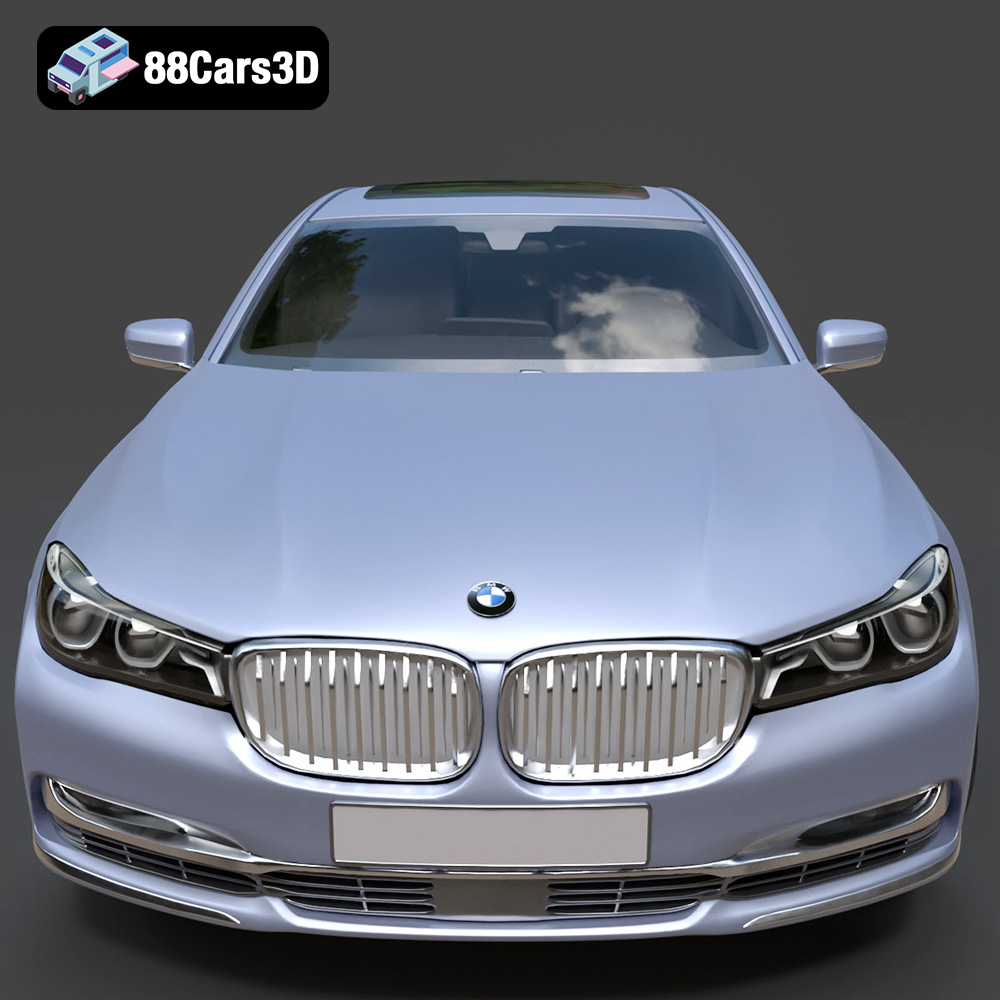
In the fast-evolving landscape of 3D visualization, automotive design, and immersive digital experiences, the demand for high-fidelity, production-ready 3D car models is paramount. Artists, developers, and engineers constantly seek assets that not only look stunning but also integrate seamlessly into complex pipelines, offering robust technical foundations and flexibility. This is where premium 3D car models truly shine, transforming abstract concepts into tangible, digital realities. Imagine bringing the sleek lines and luxurious presence of a top-tier executive sedan to life, whether for a cinematic commercial, an interactive game, or a detailed architectural visualization. Today, we delve into precisely such an asset: the BMW 7 Series 2016 3D Model, a meticulous creation designed to meet the rigorous standards of professional 3D projects.
The BMW 7 Series, a beacon of automotive luxury and engineering, presents a unique challenge and opportunity for 3D artists. Capturing its sophisticated design, from the iconic kidney grille to the intricate interior details, requires a blend of artistic skill and technical precision. This particular 3D model of the 2016 BMW 7 Series stands out as a professional-grade solution, offering clean geometry, balanced detailing, and extensive compatibility. It’s more than just a visual replica; it’s a versatile toolkit for anyone aiming to produce exceptional digital content. Throughout this article, we’ll explore the technical advantages, diverse applications, and workflow benefits that make high-quality 3D car models, like this BMW 7 Series, indispensable in modern digital production.
The success of any 3D project, especially those involving complex subjects like vehicles, hinges on the quality of its core assets. A poorly constructed 3D model can lead to endless headaches: rendering artifacts, animation glitches, performance bottlenecks, and ultimately, a compromised final product. Conversely, a professionally crafted 3D car model provides a stable, efficient, and visually superior starting point, empowering creators to focus on their artistic vision rather than wrestling with technical deficiencies. The BMW 7 Series 2016 3D Model exemplifies this principle, offering a level of detail and structural integrity that streamlines the entire production process.
When working with real-world objects, accuracy is non-negotiable. For a luxury car like the BMW 7 Series, every curve, every panel gap, and every chrome accent contributes to its distinctive identity. A high-quality 3D model faithfully replicates these nuances. This BMW 7 Series model boasts accurately modeled body panels, a detailed grille, authentic badging, and precision-engineered headlights and taillights with realistic transparent materials. Such meticulous attention to detail ensures that the digital representation is immediately recognizable and aesthetically pleasing. Furthermore, high-resolution wheels and tires, specific to the 2016 model year, add another layer of authenticity, crucial for close-up renders and animations. This level of precision is invaluable for automotive marketing, product visualization, and even forensic animation where absolute accuracy is paramount.
Time is a critical resource in any professional production. Starting with a “clean” asset, characterized by quad-dominant topology, real-world scale, and an organized hierarchy with properly named components, drastically reduces setup and debugging time. The BMW 7 Series 2016 3D Model is designed with these technical advantages in mind. Its clean topology ensures smooth subdivisions and deformation, making it ideal for high-fidelity rendering and complex animations. Components like doors, hood, and trunk are separated, facilitating ease of animation and customization without needing extensive remodeling. Pivot points are correctly set, allowing for intuitive manipulation. This “production-ready” status means artists and developers can spend less time fixing mesh issues or organizing scenes and more time innovating and creating compelling content. For studios and freelancers alike, investing in such optimized 3D car models from marketplaces like 88cars3d.com translates directly into increased efficiency and higher quality output.
The world of 3D modeling is incredibly diverse, not just in terms of artistic styles and software, but also in the myriad of file formats used to store and transfer 3D data. Each format serves specific purposes, excelling in certain workflows or software environments while potentially falling short in others. Understanding these distinctions is crucial for seamless collaboration, efficient asset management, and ensuring your 3D car models perform as expected across various applications. The BMW 7 Series 2016 3D Model, recognizing this necessity, comes with an extensive suite of included formats, making it exceptionally versatile.
The `.blend` file format is native to Blender, the popular open-source 3D creation suite. When you receive a `.blend` file, you’re not just getting the mesh data; you’re getting a fully editable Blender scene. This includes all materials, textures (if packed within the file or linked externally), lighting setups, cameras, animation data, modifiers, and even custom scripts. This format is ideal for users who primarily work in Blender, as it allows for immediate, deep dives into the model’s construction, enabling extensive customization and integration into existing Blender projects. It preserves the complete creative context, which is invaluable for iteration and complex scene assembly within the Blender environment.
`.fbx` (Filmbox) is a proprietary format owned by Autodesk, designed for interoperability between 3D software applications and game engines. It’s incredibly robust, capable of storing not just mesh data, but also animation, cameras, lights, materials, and even skinning information. For the BMW 7 Series 2016 3D Model, the `.fbx` format is explicitly compatible with Unreal, Unity, and major 3D engines, making it the go-to choice for real-time pipelines. Its ability to preserve a wide array of scene data across different platforms makes it a standard for game development, cinematic animation, and virtual production.
`.obj` (Wavefront OBJ) is perhaps the most universal and widely supported 3D file format. It’s a simpler format compared to `.fbx`, primarily storing geometry (vertices, normals, UVs) and basic material references (via an accompanying .mtl file). While it doesn’t typically carry animation or complex rigging, its widespread compatibility means that virtually any 3D software can open and work with an `.obj` file. This makes it an excellent choice for cross-software collaboration, archival purposes, or when you need a clean mesh for a fresh start in a different program. For artists needing to import the BMW 7 Series model into less common software or simply requiring the raw mesh data, `.obj` is the reliable fallback.
`.glb` (GL Transmission Format Binary) is an increasingly important format optimized for AR, VR, and web-based display. It’s a self-contained, binary version of the glTF format, packing models, textures, animations, and materials into a single file. This efficiency makes it perfect for loading 3D assets quickly and interactively in browsers, mobile applications, and immersive experiences. For virtual car configurators or interactive showrooms featuring the BMW 7 Series, `.glb` offers unparalleled performance and ease of deployment.
`.stl` (Stereolithography) is the standard format for 3D printing. It represents a 3D model as a collection of unconnected triangles, defining only the surface geometry. While it lacks color or texture information, its simplicity and widespread adoption make it ideal for physical prototyping or creating display models. The BMW 7 Series 2016 3D Model, easily convertible to `.stl`, is ready for physical manifestation.
`.ply` (Polygon File Format) is another format for storing 3D data, particularly useful for high-precision mesh data, often originating from 3D scanners or for scientific and engineering applications. It can store various properties like color, transparency, and even texture coordinates, along with vertices, faces, and normals. For CAD or detailed analysis of the BMW 7 Series’ geometry, the `.ply` format provides a robust, accurate representation.
The `.unreal` format here refers to an Unreal Engine project setup, indicating that the BMW 7 Series model comes as an engine-ready asset, potentially with pre-configured materials, Blueprints, and LODs within an Unreal project. This is a massive time-saver for game developers, allowing immediate integration into real-time environments without extensive setup. It underscores the model’s “game-ready” claim.
`.max` is the native file format for Autodesk 3ds Max. Similar to `.blend` for Blender, a `.max` file contains the complete 3ds Max scene, including geometry, lights, cameras, materials, modifiers, animation, and rendering settings. For professionals working in architectural visualization, cinematic rendering, or product animation with 3ds Max, this provides full access to the original project, allowing for deep customization and leveraging Max’s powerful rendering capabilities with engines like V-Ray or Corona. The inclusion of this format for the BMW 7 Series 2016 3D Model caters directly to a large segment of the professional visualization industry.
The comprehensive range of file formats available for this BMW 7 Series 2016 3D Model highlights its versatility and the foresight in its creation. Whether your project demands real-time interaction, cinematic quality, or physical output, this model is equipped to deliver.
Automotive rendering is a specialized field that demands photorealism, attention to detail, and a deep understanding of lighting and materials. A premium 3D car model is the canvas upon which these digital masterpieces are painted. The BMW 7 Series 2016 3D Model, with its clean geometry and high-resolution details, provides an ideal starting point for creating breathtaking visual content, from static studio shots to dynamic cinematic sequences.
For many professional studios, Autodesk 3ds Max combined with rendering engines like V-Ray or Corona Renderer forms the backbone of their visualization pipeline. The `.max` file included with the BMW 7 Series 2016 3D Model allows artists to dive directly into a familiar environment. Artists can leverage 3ds Max’s robust modeling and animation tools to set up complex camera paths, articulate the car’s separated components (doors, hood, trunk), and create intricate lighting scenarios. With V-Ray or Corona, the model’s meticulously crafted materials—reflective chrome, realistic window glass, and accurately textured body panels—can be pushed to photorealistic extremes. Tweaking reflection values, adding subtle subsurface scattering to paint, or adjusting the specularity of interior leather becomes a process of refinement, not remediation, thanks to the model’s clean underlying mesh and organized structure. This workflow is critical for high-end commercials, product launches, and promotional materials where visual fidelity is paramount.
Beyond standalone car renders, 3D car models play a vital role in architectural visualization. Placing a lifelike vehicle like the BMW 7 Series 2016 3D Model within an architectural scene instantly adds scale, realism, and a sense of luxury to the environment. Whether it’s parked elegantly in front of a modern mansion, cruising down a beautifully rendered street, or showcased in a virtual showroom, the car enhances the overall narrative. Artists can seamlessly integrate this model into their architectural projects due to its real-world scale and optimized geometry. The model’s various file formats, particularly `.max` and `.obj`, ensure compatibility with most architectural visualization software packages, allowing for efficient placement and rendering within vast, detailed scenes. This capability makes premium 3D car models from resources like 88cars3d.com an indispensable asset for arch-viz professionals aiming for compelling and believable presentations.
A 3D model is only as good as its materials and textures. The description of the BMW 7 Series 2016 3D Model highlights “realistic transparent materials” for headlights and taillights, “reflective chrome accents,” and detailed interior textures. These elements are crucial for conveying the sense of luxury and precision inherent in the vehicle. Artists can further customize paint finishes, apply custom graphics, and adjust material properties for various surfaces (metal, plastic, leather) to match specific branding requirements or aesthetic visions. For instance, simulating different lighting environments—from a bright sunny day to an overcast evening—will dynamically alter how these materials react, showcasing the model’s versatility. The ability to easily configure lighting setups further enhances the artistic control, allowing for dynamic visual effects and moods to be achieved in renders.
The transition from pre-rendered visuals to interactive, real-time experiences demands a unique set of technical considerations. Game assets, AR/VR models, and simulation components must not only look good but also perform efficiently. The BMW 7 Series 2016 3D Model is engineered to excel in these demanding environments, proving its worth as a “game-ready asset.”
Modern game engines like Unreal Engine and Unity are at the forefront of real-time rendering. For a complex asset like a car, optimization is key. This BMW 7 Series model comes with an `.unreal` engine project setup and an `.fbx` file, explicitly designed for compatibility with these engines. This means the model likely includes features such as:
These features are critical for maintaining high frame rates in open-world games, racing titles, or virtual showrooms. The “optimized mesh quality” and “clean, quad-dominant topology” ensure that the base mesh is robust enough to generate these optimized versions efficiently, making the BMW 7 Series 2016 3D Model a valuable asset for game developers seeking premium 3D car models for their projects.
Augmented Reality (AR) and Virtual Reality (VR) are transforming how we interact with digital content, particularly in fields like automotive sales and marketing. Imagine a potential buyer exploring the BMW 7 Series in full 3D from their living room, or a virtual showroom where they can walk around the car, open doors, and even customize its features. The `.glb` format included with this model is specifically optimized for these applications, offering a lightweight yet visually rich asset. Its single-file structure and efficient data compression ensure quick loading times and smooth performance on mobile devices and VR headsets. This enables developers to create highly immersive car configurators or virtual tours that showcase the vehicle’s intricate details, both interior and exterior, in an interactive and engaging manner.
Beyond entertainment, 3D car models are integral to simulation and training. Driving simulators, for instance, demand highly accurate vehicle models that not only look realistic but also behave physically correctly. The BMW 7 Series 2016 3D Model’s real-world scale and organized hierarchy make it an excellent candidate for integration into such systems. Researchers and engineers can use the model for vehicle dynamics simulations, studying aerodynamics, or even in educational modules for training future mechanics. The “basic undercarriage and visible mechanical components where appropriate” further enhance its utility for these specialized applications, allowing for a more complete and accurate representation of the vehicle’s mechanics.
The true value of a premium 3D asset lies not just in its individual quality but in how it enhances an entire professional workflow. From initial conceptualization to final delivery, the technical advantages of the BMW 7 Series 2016 3D Model translate into tangible benefits across diverse industries.
At the heart of any high-quality 3D model is its topology—the arrangement of its polygons. The BMW 7 Series 2016 3D Model boasts “clean, quad-dominant topology.” This is crucial for several reasons:
These technical underpinnings ensure that whether you’re rendering, animating, or integrating into an engine, the model performs optimally and looks its best. This kind of foundational quality is a hallmark of the 3D car models available on 88cars3d.com.
The separated components (doors, hood, trunk) and properly set pivot points are not merely convenient; they are essential for dynamic storytelling. Animators can effortlessly open doors for a virtual showroom tour, raise the hood to reveal an engine (if detailed), or create stunning cinematic shots of the car in motion. Furthermore, the model’s design for customization is a powerful feature. Beyond paint finishes and graphics, the ability to adjust material properties (metal, plastic, leather, chrome) means the car can be visually adapted to any scene, brand guideline, or creative vision. Imagine showcasing the same BMW 7 Series in different luxury configurations, or applying a custom livery for a racing game—all made possible by the asset’s inherent flexibility.
Consistency is key in 3D production. A model built to “real-world scale” integrates seamlessly into existing scenes without requiring manual scaling and adjustment, which can introduce errors or misalignments. This precision is invaluable for architectural visualization, product placement, and accurate simulation environments. When combining the BMW 7 Series with other assets, whether it’s a character, a building, or an entire city environment, knowing that the car is dimensionally accurate removes a significant headache from the workflow. This attention to detail demonstrates a clear understanding of professional production demands, solidifying the model’s status as a high-caliber asset.
In the dynamic world of 3D modeling and visualization, the difference between a good project and a truly exceptional one often lies in the quality of its foundational assets. The BMW 7 Series 2016 3D Model embodies this principle, offering an unparalleled combination of visual fidelity, technical robustness, and workflow versatility. From its meticulously crafted exterior and comprehensively detailed interior to its optimized mesh and broad file format compatibility, every aspect of this model is designed to empower professionals across various industries.
Whether your goal is to produce stunning automotive renders for a marketing campaign, integrate a realistic vehicle into a cutting-edge game, develop an immersive AR/VR experience, or conduct precise simulations, this 3D model provides the ideal starting point. Its clean geometry, real-world scale, and organized structure streamline complex workflows in software like 3ds Max and Blender, while its game-ready optimizations make it perfect for Unreal Engine and Unity. The inclusion of diverse formats like .blend, .fbx, .obj, .glb, .stl, .ply, .unreal, and .max ensures that this premium asset is ready for any pipeline, showcasing true professionalism and adaptability.
Investing in such high-quality 3D car models from trusted sources like 88cars3d.com is not just about purchasing a file; it’s about acquiring a powerful tool that accelerates production, enhances visual quality, and frees up creative energy. The BMW 7 Series 2016 3D Model is more than just a digital car; it’s a testament to excellence in 3D asset creation, ready to drive your next project to new heights.
Experience the epitome of automotive luxury with this professional 3D model of the BMW 7 Series 2016. Meticulously crafted to capture the essence of this executive sedan, the model boasts clean geometry and balanced detailing, making it ideal for a wide range of applications. Whether you’re working on high-fidelity renders, intricate animations, realistic simulations, or immersive game development, this 3D model provides a robust and accurate foundation for your projects.
Exterior Features:
Interior / Mechanical Features:
Technical Advantages:
Applications:
Customization Options:
This BMW 7 Series 2016 3D model offers unparalleled quality and versatility, making it an indispensable asset for any professional 3D project. Its detailed design, optimized structure, and broad compatibility ensure a smooth workflow and exceptional results.
Included File Formats:
Tags:
.bmw,.7series,.luxurycar,.sedan,.car,.rendering,.simulation,.gameasset,.arvr,.blend,.fbx,.obj,.glb,.stl,.ply,.unreal,.maxMercedes Benz CLS 500 3D Model
$10.79
.7series
.arvr
.blend
.bmw
.car
.fbx
.gameasset
.glb
.luxurycar
.max
.obj
.ply
.rendering
.sedan
.simulation
.stl
.unreal