

The Art and Engineering of Premium 3D Car Models: Elevating Automotive Visualization and Game Development
In the dynamic world of 3D content creation, where realism and efficiency are paramount, the quality of your foundational assets can make or break a project. Whether you’re crafting a high-octane racing game, developing a breathtaking automotive advertisement, or building an immersive virtual reality experience, the demand for meticulously detailed and technically sound 3D car models is ever-present. These aren’t just pretty pictures; they are complex digital blueprints, engineered for seamless integration into diverse pipelines and optimized for peak performance. This dedication to precision is what elevates a good project to an exceptional one, saving countless hours in development and ensuring a stunning final output.
Today, we delve into the intricate details of what makes a truly outstanding automotive asset, using a prime example from the extensive collection at 88cars3d.com: the BMW 7 Series 750 F01 3D Model. This executive sedan is not merely a static representation but a versatile, production-ready asset designed to meet the rigorous demands of professional 3D artists, game developers, and visualization specialists.
The Unseen Engineering: Why High-Quality 3D Car Models Matter
The superficial appeal of a 3D model often masks the complex technical foundation beneath. For professional applications, a model’s aesthetic quality must be matched by its underlying structure and optimization. This is particularly true for 3D car models, which are among the most challenging assets to create due due to their organic curves, intricate mechanical parts, and highly reflective surfaces.
Beyond Aesthetics: Precision in Design and Functionality
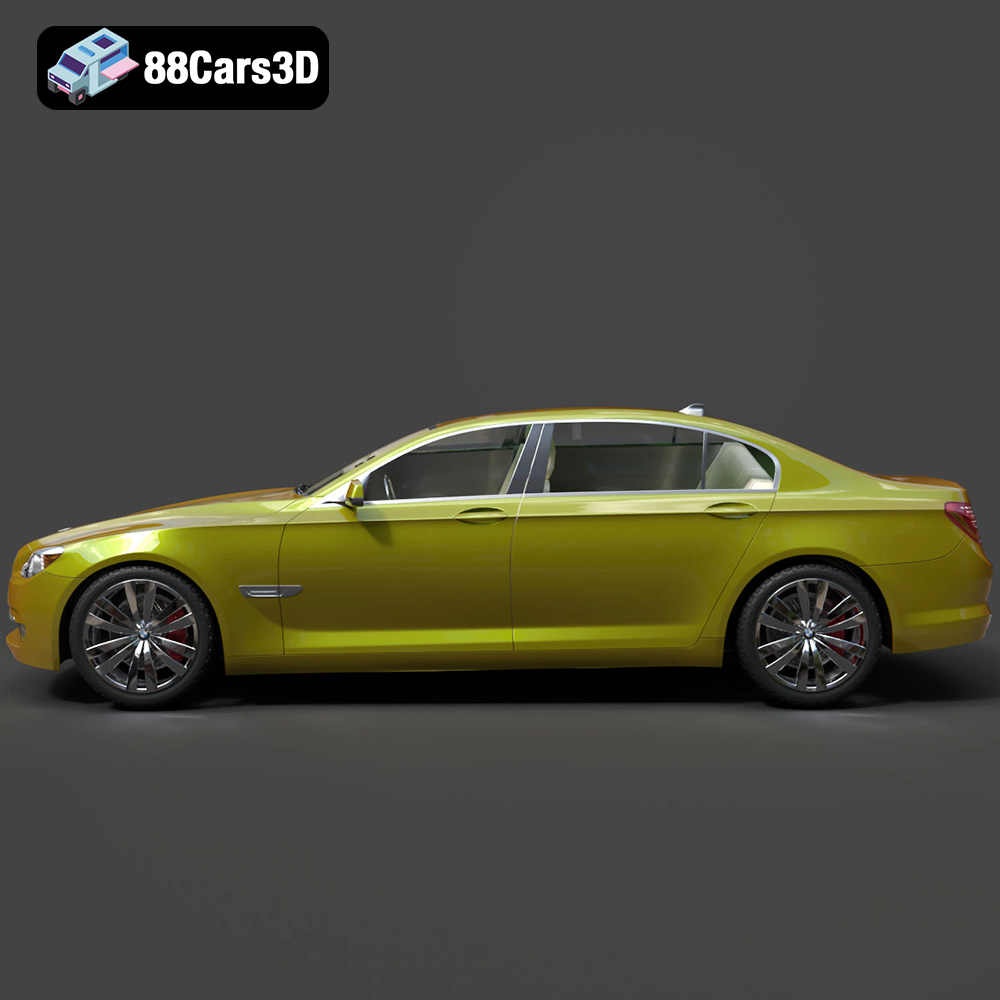
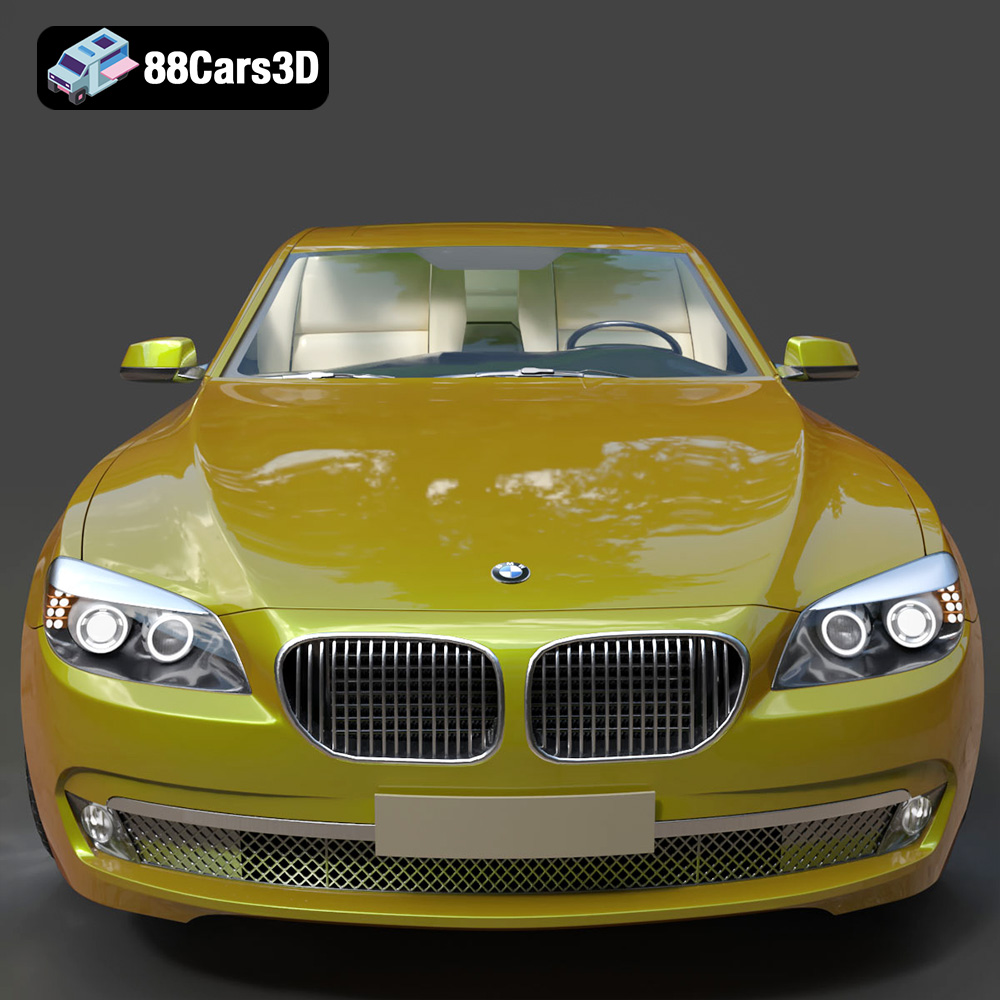
A truly high-quality 3D car model begins with accuracy. This means modeling to real-world scale, adhering to original design blueprints, and capturing the subtle nuances that define a vehicle’s character. For instance, the BMW 7 Series 750 F01 3D Model goes beyond a simple exterior shell. It accurately represents the F01 chassis design, from the curvature of its body panels to the precise dimensions of its iconic kidney grille and headlight assemblies. This level of precision is critical for simulations, design reviews, and any application where realism is non-negotiable. An incorrectly scaled or distorted model can instantly break immersion or lead to inaccurate results in engineering analyses.
Furthermore, functionality extends to the model’s structural integrity for animation. Components like doors, the hood, and the trunk must be separated and correctly pivoted. This “animation-ready” state is not an afterthought; it’s a fundamental aspect of professional asset creation, allowing for dynamic shots, interactive elements in games, or detailed presentations of a vehicle’s features.
Performance and Optimization for Diverse Platforms
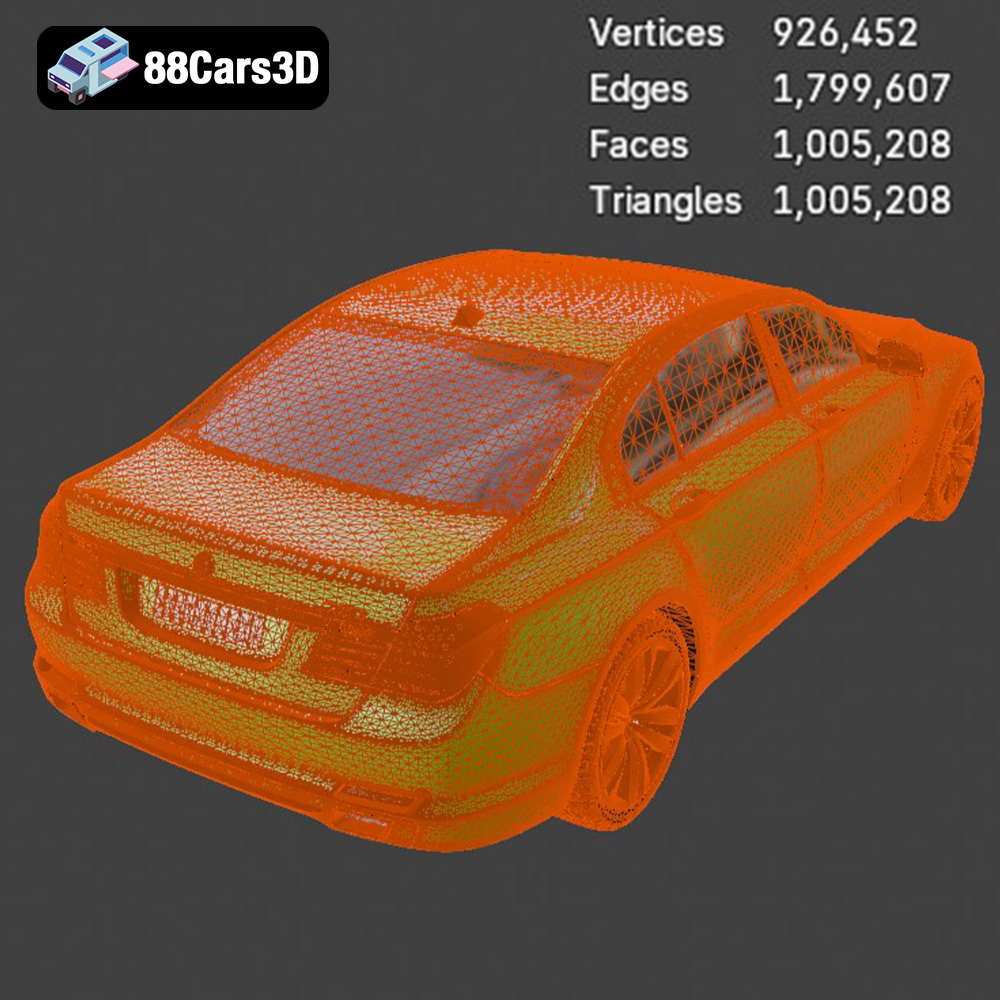
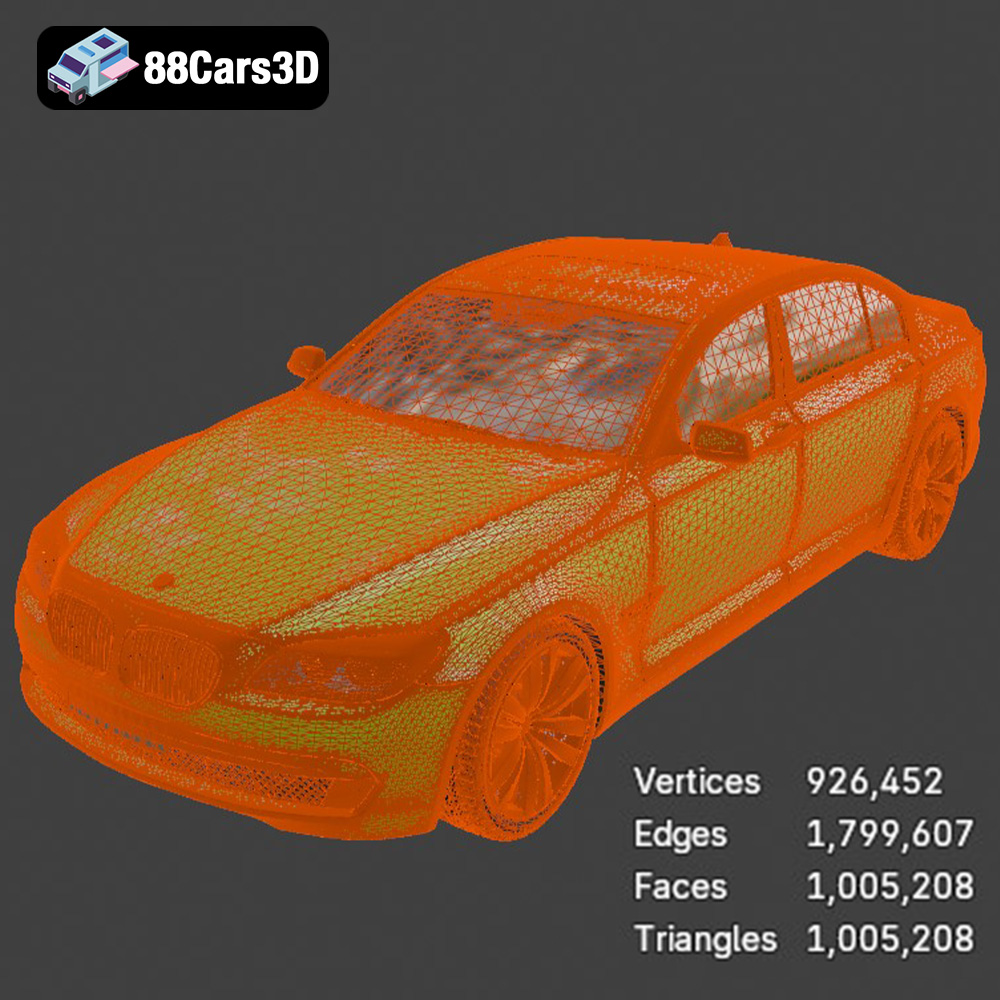
While detail is crucial, it must be balanced with performance. A model with an excessive polygon count can bog down real-time engines, increase render times exponentially, and make interaction cumbersome. High-quality models are characterized by clean, production-ready topology, primarily quad-dominant, which ensures smooth subdivision and deformation while maintaining a manageable poly count. This ‘balanced detailing’ ensures that the model looks excellent up close for cinematic renders, yet remains efficient enough for use in a game engine or AR/VR environment.
Efficient UV mapping is another cornerstone of optimization. It allows for straightforward texture application without stretching or distortion, facilitating easy material adjustments and ensuring consistent visual quality across different rendering engines. Whether you’re applying a custom livery, adjusting paint reflections, or fine-tuning the look of rubber and chrome, well-laid-out UVs are indispensable.
Understanding 3D Model File Formats
The versatility of a 3D model is often defined by the range and quality of its included file formats. Each format serves a specific purpose, catering to different software, pipelines, and end-use applications. Understanding these distinctions is crucial for anyone working with 3D assets, ensuring smooth integration and optimal performance. The BMW 7 Series 750 F01 3D Model from 88cars3d.com exemplifies this flexibility by offering a comprehensive suite of formats, each tailored for specific professional needs.
Native and Universal Formats for Workflow Flexibility
- .blend – Blender project with materials: This is the native file format for Blender, a powerful open-source 3D creation suite. A `.blend` file provides a complete, editable scene including meshes, materials, textures, lighting, and animation data. For Blender users, this format offers the highest degree of flexibility for customization, rigging, animation, and rendering within their preferred environment. Artists can easily modify geometry, adjust shaders, or integrate the model into existing Blender projects without any loss of data. It’s ideal for those who want full control over every aspect of the asset.
- .max – Editable 3ds Max scene for rendering and animation: As the native format for Autodesk 3ds Max, one of the industry-standard software for architectural visualization, animation, and game development, a `.max` file offers unparalleled compatibility for 3ds Max users. It contains the complete scene information, including complex material setups (like V-Ray or Corona), lighting, cameras, and animation tracks. For professionals deeply embedded in the Autodesk ecosystem, this format provides the most direct and efficient pathway for advanced rendering, intricate rigging, and complex animation sequences without the need for extensive re-setup.
- .obj – Universal format for nearly all 3D software: The Wavefront OBJ format is a widely adopted, universal 3D geometry definition file. It’s a text-based format that stores vertices, normals, UVs, and polygon faces, making it incredibly compatible across virtually all 3D software applications, from Maya and Cinema 4D to ZBrush and SketchUp. While `.obj` files typically handle geometry and UV data excellently, they are less robust with material definitions, often requiring materials to be re-applied or adjusted in the target software. Despite this, its universal nature makes it an essential fallback for cross-software compatibility and ensures accessibility regardless of your primary DCC tool.
Real-Time and Web-Optimized Assets
- .fbx – Compatible with Unreal, Unity, and major 3D engines: Autodesk’s Filmbox format is the de facto standard for exchanging 3D data, particularly for game development and real-time applications. `.fbx` can store not only geometry and UVs but also animations, skinning, cameras, and lighting, making it an incredibly powerful and efficient format for transferring complex scenes between different 3D packages (e.g., from 3ds Max to Unreal Engine or Unity). It’s optimized for performance and is the go-to choice for integrating 3D car models as game assets or for real-time architectural visualization.
- .glb – Optimized for AR, VR, and web-based visualization: The GL Transmission Format (glTF) and its binary counterpart `.glb` are rapidly becoming the “JPEG of 3D.” Designed for efficient transmission and loading of 3D scenes and models by applications, it’s particularly optimized for augmented reality (AR), virtual reality (VR), and web-based interactive experiences. `.glb` files package geometry, materials, textures, and animation into a single, compact file, making them ideal for lightweight, interactive viewing in browsers or mobile AR apps. For the BMW 7 Series F01 model, the `.glb` format allows for seamless integration into online configurators or immersive virtual showrooms.
- .unreal – Unreal Engine project setup: This isn’t a single file format in the traditional sense, but rather an indicator that the asset comes as part of an Unreal Engine project, often pre-configured. It signifies that the 3D car model, such as the BMW 7 Series F01, has been specifically prepared and optimized for Unreal Engine. This typically includes proper material setup using Unreal’s physically-based rendering (PBR) system, collision meshes, LODs (Levels of Detail), and potentially even basic blueprints or interactivity, saving developers significant setup time and ensuring the model performs optimally within the engine.
Specialized Formats for Manufacturing and Analysis
- .stl – Ready for 3D printing: The Stereolithography (STL) format is the most common file type for 3D printing and rapid prototyping. It describes only the surface geometry of a 3D object using a mesh of triangular facets, without any color, texture, or material information. While the BMW 7 Series F01 model is primarily for digital visualization, providing an `.stl` option allows users to convert and potentially simplify the model for physical production, creating miniature replicas or parts.
- .ply – Precision mesh format for CAD or analysis: The Polygon File Format (PLY) is another format for storing 3D data, particularly scan data from 3D scanners. It can store a wider range of properties than `.stl`, including color, transparency, and sometimes even normal vectors, making it suitable for more precise mesh analysis, scientific visualization, or integration into CAD (Computer-Aided Design) workflows where detailed geometric properties are important.
Crafting Realism: A Deep Dive into the BMW 7 Series 750 F01 3D Model
The true value of a premium 3D car model lies in its ability to faithfully recreate its real-world counterpart while providing the technical foundation for diverse creative applications. The BMW 7 Series 750 F01 3D Model embodies this philosophy, delivering an unparalleled blend of visual accuracy and technical prowess.
Exterior Fidelity: Capturing the Iconic Presence
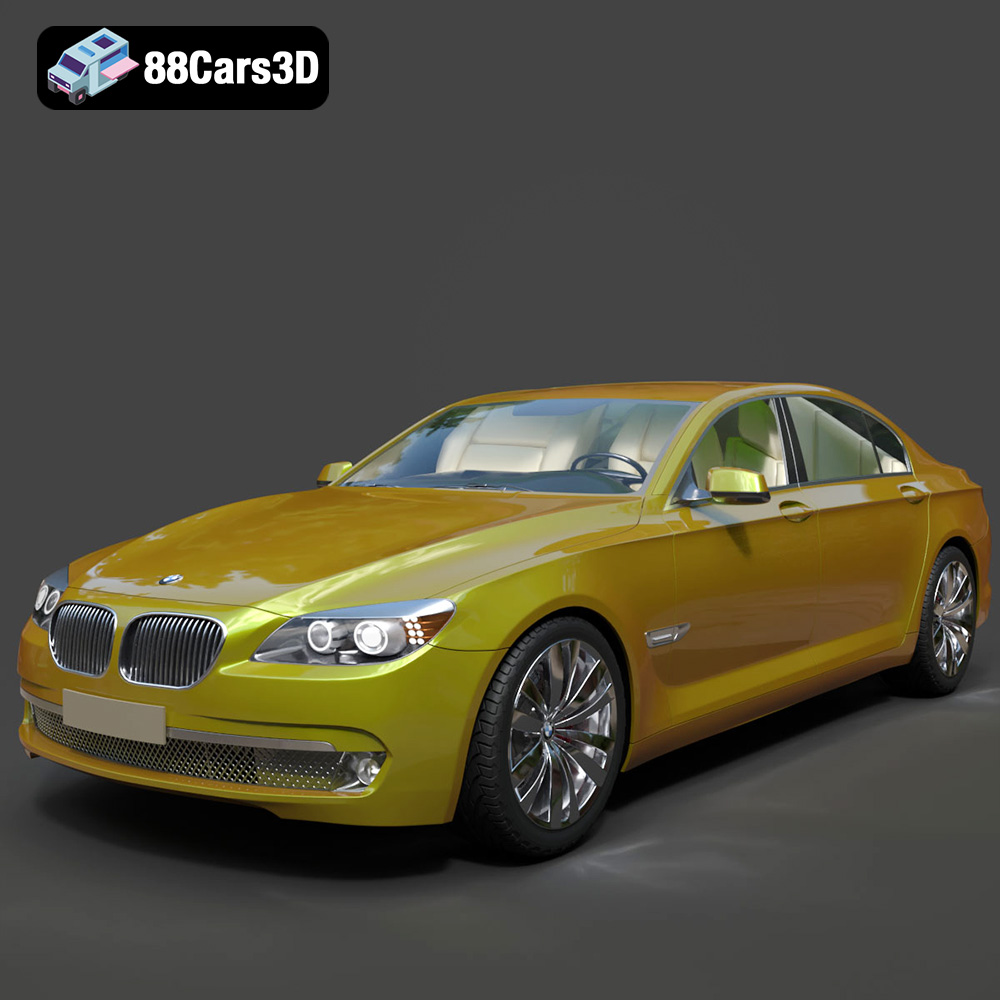
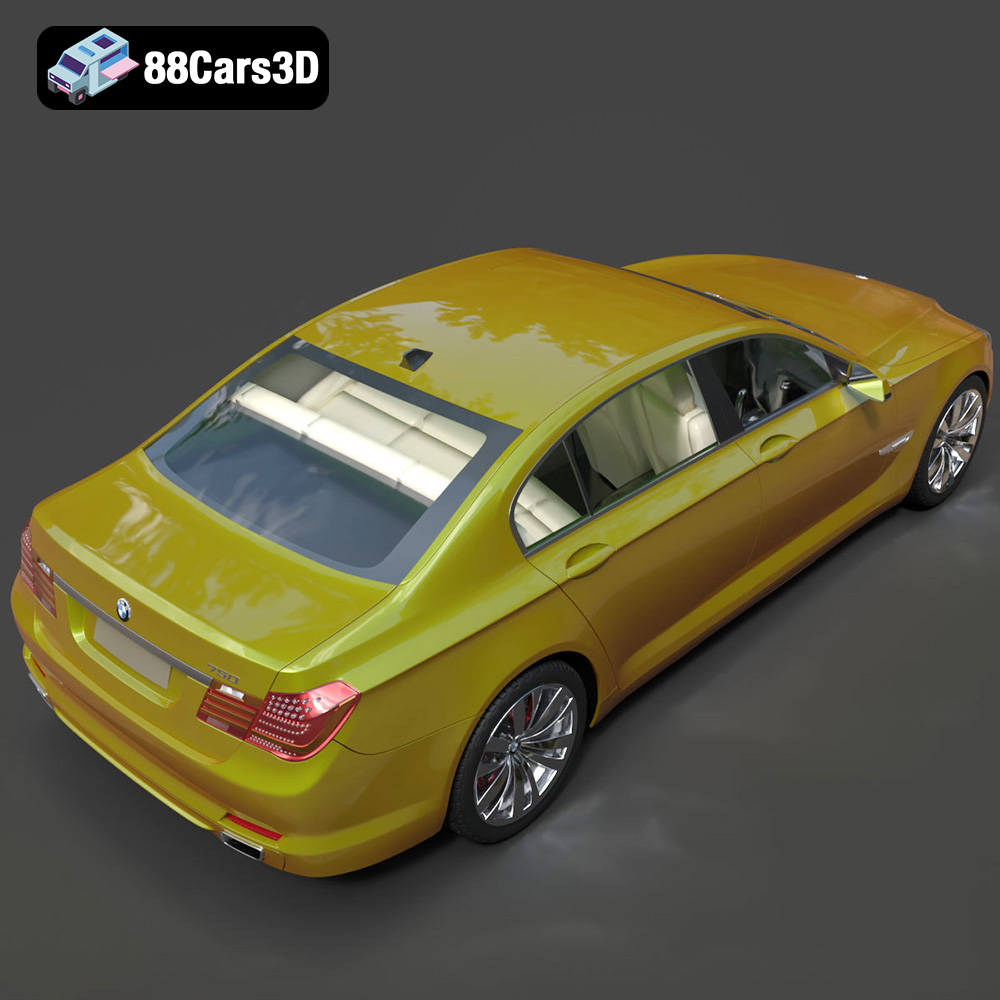
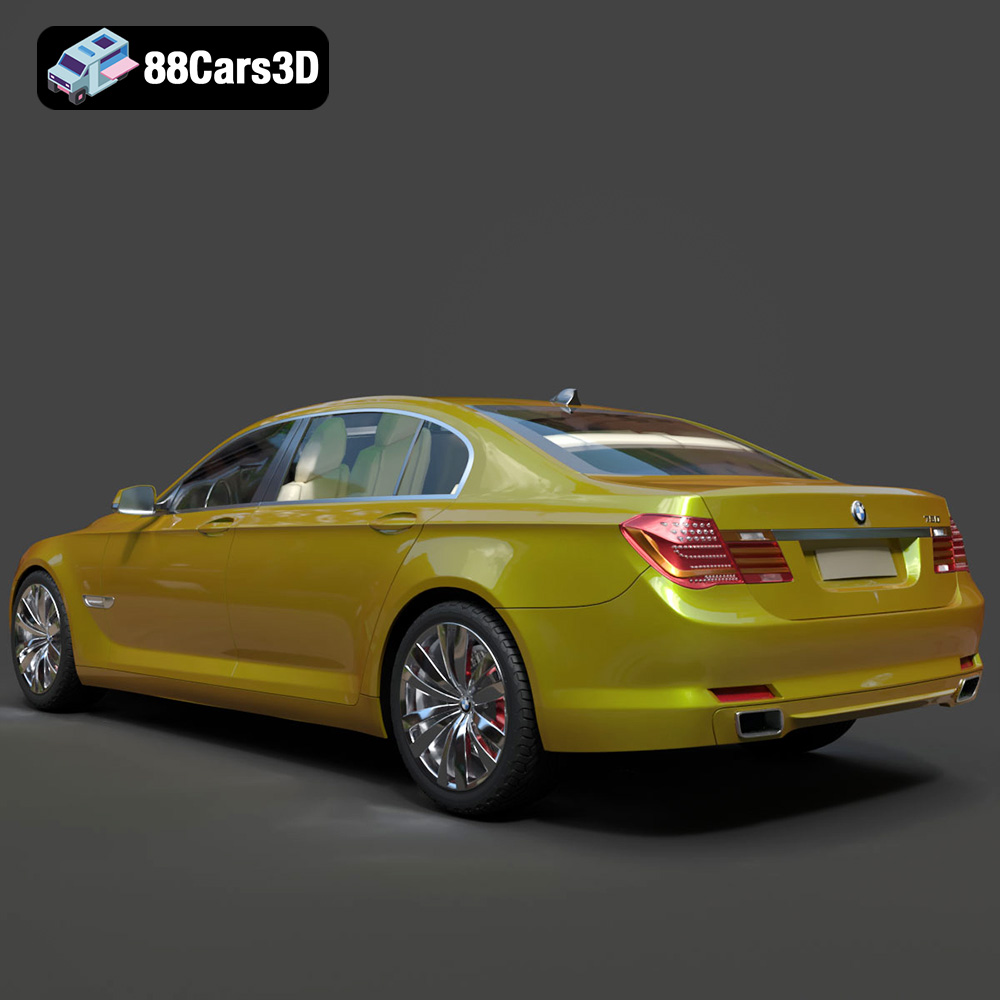
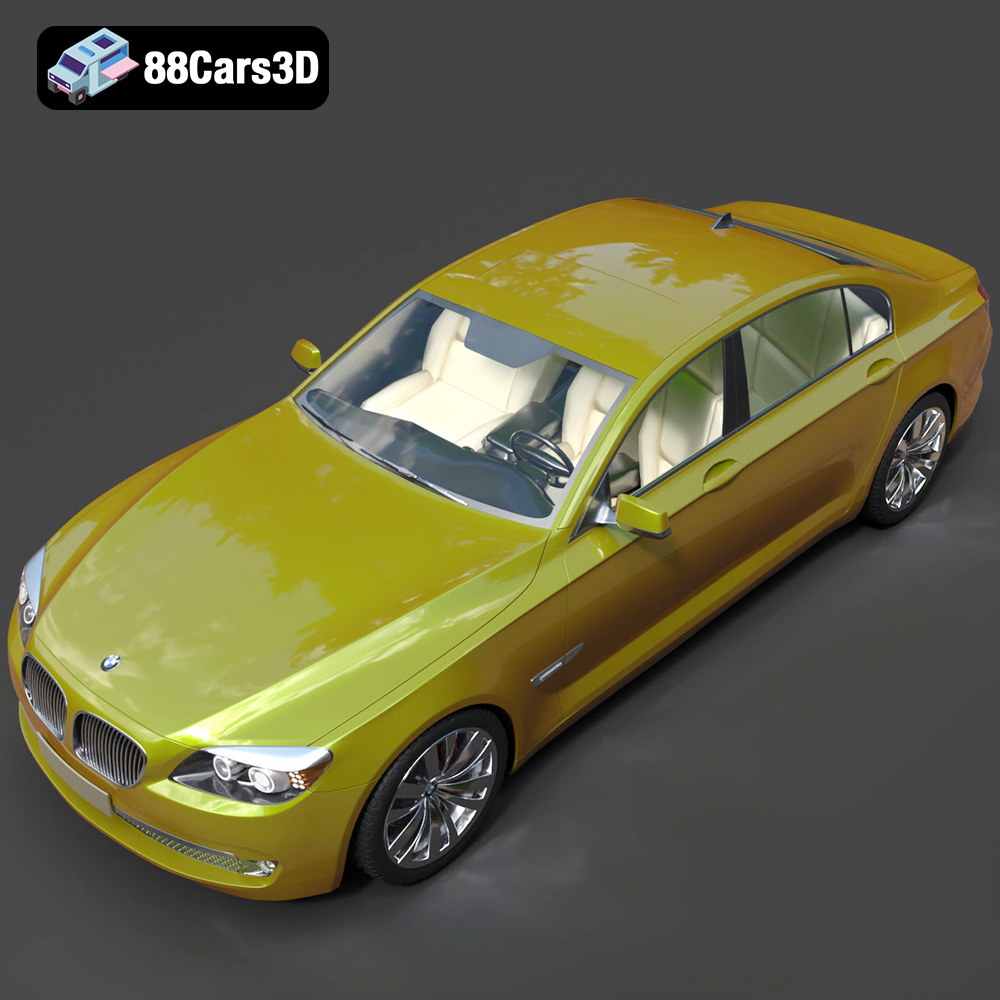
The exterior of the F01 model is where its commanding presence truly shines. Every curve, panel gap, and design element has been meticulously recreated to reflect the elegant lines and sophisticated aesthetic of the real vehicle. This includes accurately modeled body panels that capture the distinctive contours of the F01 chassis. The front grille, a signature BMW element, features intricate detailing, as do the BMW emblems, ensuring authenticity. Headlight and taillight assemblies are not merely flat textures but complex geometric structures with transparent materials, ready for custom lighting setups that can bring the car to life in any scene.
Attention to detail extends to the wheels and tires. The realistic alloy wheels are precisely modeled, complemented by performance tires featuring accurate tread patterns. These elements, often overlooked, contribute significantly to the overall realism, especially in close-up renders or dynamic animations. Crucially, major components like doors, the hood, and the trunk are separated and properly pivoted, a fundamental requirement for any professional animation workflow. This thoughtful preparation allows artists to easily rig and animate these parts, opening up possibilities for cinematic sequences, interactive showcases, or complex simulations.
Interior Luxury and Functional Details
Beyond the gleaming exterior, the BMW 7 Series F01 model offers a rich and detailed interior, a testament to its comprehensive design. The luxurious cabin is faithfully recreated, featuring a highly detailed dashboard, steering wheel, and central console. These aren’t just blocky approximations; the instruments, controls, and infotainment screen are recreated for an authentic feel, providing ample detail for interior shots or virtual cockpit experiences. Comfortable seating, door panels, and floor textures further enhance the sense of realism.
While the primary focus is often on the visible components, the model also includes basic engine bay elements. This thoughtful addition provides visual realism for scenarios where the hood might be open, adding another layer of authenticity without unnecessarily increasing complexity for applications that don’t require a fully detailed engine. The mesh quality for interior elements is optimized to strike a balance between high detail and performance, ensuring that even interior-focused renders remain efficient without sacrificing visual fidelity.
Technical Foundations: Topology, Scale, and UVs
Underpinning this visual fidelity are the robust technical foundations of the model. Its clean, production-ready topology, primarily quad-dominant, is crucial for smooth subdivision and deformation, making it highly versatile for various rendering techniques and animation needs. This ensures that the model can be easily sculpted further or integrated into complex scenes without introducing rendering artifacts or topological issues.
Modeled to real-world scale, the BMW 7 Series F01 model guarantees accurate integration into any scene or environment, eliminating the need for tedious scaling adjustments and ensuring proper physical interactions in simulations. The organized hierarchy with properly pivoted objects is a major time-saver, simplifying the rigging and animation process. Furthermore, efficient UV mapping ensures straightforward texture application and material adjustments, allowing artists to effortlessly customize paint finishes, reflections, and apply custom graphics or liveries, making this an incredibly flexible asset for any project.
Professional Workflows: Integrating Premium 3D Car Models
A superior 3D car model is more than just an object; it’s a catalyst for creativity and efficiency across diverse professional workflows. The BMW 7 Series 750 F01 3D Model, available at 88cars3d.com, is engineered to slot seamlessly into various production pipelines, from high-end visualization to real-time interactive experiences.
Automotive Rendering and Cinematic Visualization with 3ds Max & V-Ray/Corona
For artists and studios focused on producing stunning photorealistic imagery and cinematic animations, the included `.max` file, pre-configured for 3ds Max, is an invaluable asset. This workflow typically involves:
- Scene Setup: Importing the BMW 7 Series F01 into a 3ds Max scene, alongside environment models or backplates.
- Lighting: Setting up advanced lighting using HDRI maps for realistic reflections and global illumination, coupled with targeted lights (e.g., V-Ray Lights, Corona Lights) to highlight specific features or simulate studio lighting. The transparent materials for windows and light covers are crucial here, allowing light to realistically interact with the car’s interior and illuminate the headlights/taillights.
- Material Refinement: Utilizing the efficient UV mapping to fine-tune material properties for paint, glass, chrome, and rubber. This often involves adjusting reflectivity, glossiness, and normal maps to achieve a hyper-realistic appearance under various lighting conditions. Customization options allow for easy adjustment of paint finishes or the application of custom graphics.
- Animation: Leveraging the organized hierarchy and pivoted components (doors, hood, trunk) to create dynamic animation sequences, such as opening doors, rolling wheels, or a sweeping camera path around the vehicle. The clean topology ensures smooth deformations during any animated sequences.
- Rendering: Employing powerful render engines like V-Ray or Corona to produce high-resolution still images or complex animation frames, perfect for advertising campaigns, product showcases, or architectural visualizations.
Game Development and Real-Time Experiences with Unreal Engine & Unity
Game developers and creators of interactive experiences will find the `.fbx` and dedicated `.unreal` formats particularly beneficial. The journey of the BMW 7 Series F01 into a real-time engine looks like this:
- Import and Optimization: Importing the `.fbx` file into Unreal Engine or Unity. The model’s optimized mesh quality, balanced detailing, and clean topology make it performant even at high framerates. For the `.unreal` package, much of this setup is already done.
- Material Conversion: Converting or setting up PBR (Physically Based Rendering) materials within the engine, utilizing the efficient UVs for seamless texture application. This includes creating realistic car paint shaders, glass, and metal materials that respond correctly to real-time lighting.
- LODs and Collision: Implementing Levels of Detail (LODs) to ensure the model maintains performance at varying distances, automatically swapping lower-polygon versions when the car is far from the camera. Generating accurate collision meshes is also crucial for physics-based interactions in games.
- Interactive Elements: Wiring up the separated car parts (doors, hood) for interactive functionalities, allowing players to open and close them, or for the vehicle to respond dynamically to damage. The organized hierarchy simplifies this process significantly.
- Integration: Placing the BMW 7 Series F01 as a drivable vehicle, an AI-controlled car, or a static background asset in open-world simulations, racing games, or virtual car showrooms, ensuring it looks stunning while maintaining high frame rates.
AR/VR and Interactive Showrooms
For immersive augmented and virtual reality experiences, the `.glb` format is specifically tailored for lightweight, web-optimized delivery. This allows for:
- Web-Based Configurator: Deploying the BMW 7 Series F01 model on a website, allowing potential customers to interact with it, change paint colors, view the interior, and explore features in a 3D environment directly in their browser.
- AR Viewers: Placing a virtual BMW F01 into a real-world setting using a smartphone or tablet, ideal for product showcases or engaging marketing campaigns.
- VR Showrooms: Creating a fully immersive virtual showroom where users can walk around, inspect the car up close, and even step inside, all rendered in real-time. The model’s balanced detail ensures a smooth VR experience without motion sickness-inducing lag.
Customization and Versatility: Unlocking Creative Potential
A professional 3D asset should serve as a versatile foundation, not a rigid constraint. The BMW 7 Series 750 F01 3D Model offers extensive customization options, empowering artists to adapt it to any creative vision or project requirement. This flexibility is a hallmark of high-quality 3D car models and a key benefit of sourcing assets from reputable marketplaces like 88cars3d.com.
Material and Texture Customization
The model’s efficient UV mapping and clean material separation make customizing its appearance incredibly straightforward. Artists can easily adjust a multitude of material properties to match specific scene requirements or brand aesthetics:
- Paint Finishes: Effortlessly change the car’s body paint, from glossy metallics and deep pearlescent effects to matte or satin finishes. Reflections and highlights can be precisely controlled to mimic real-world automotive paint characteristics, responding dynamically to environmental lighting.
- Glass and Transparency: Modify the tint, reflectivity, and refraction of the window glass and light covers. This allows for achieving various moods, from darkly tinted executive glass to crystal-clear visibility for interior shots.
- Metal and Chrome: Fine-tune the look of metallic accents, grilles, and badging. Artists can render these elements as highly polished chrome, brushed aluminum, or a more subdued satin finish, depending on the desired level of luxury or wear.
- Rubber and Plastics: Adjust the texture and sheen of tires, seals, and interior plastic components to ensure they feel tactile and realistic, contrasting effectively with the car’s more reflective surfaces.
- Custom Graphics and Liveries: The clean UVs make applying custom graphics, decals, or full liveries a simple process. This is invaluable for branding, advertising, or creating unique variations of the vehicle for a game or simulation.
Animation-Ready Components and Rigging
Beyond static renders, the BMW 7 Series F01 is designed for dynamic storytelling. Its thoughtful structure facilitates complex animation and rigging:
- Separated Components: The doors, hood, and trunk are already separated and properly pivoted. This means artists don’t need to spend time disassembling the model or calculating pivot points, saving valuable production time.
- Wheel Animation: The wheels are also separated and correctly pivoted, allowing for realistic rolling animations. Combined with suspension system rigging (which can be added by the artist), this enables lifelike driving simulations.
- Interior Interaction: With the detailed interior, specific elements like the steering wheel or gear shifter can be rigged for interaction, crucial for first-person driving experiences or virtual cockpit training modules.
- Simplified Rigging: The organized hierarchy and clean geometry provide a solid foundation for advanced rigging, whether it’s for a simple turntable animation or a complex physics-based vehicle rig for a racing simulator. The consistent topology ensures that deformations during animation are smooth and predictable, without unwanted stretching or tearing.
This level of customization and readiness for animation truly unlocks the creative potential of the BMW 7 Series 750 F01 3D Model, making it a powerful tool for professionals across the 3D industry.
Conclusion
The world of 3D modeling demands a blend of artistic vision and technical precision. For automotive visualization, game development, and interactive experiences, the underlying quality of a 3D car model is paramount. As we’ve explored, a truly professional asset, such as the BMW 7 Series 750 F01 3D Model, is not just about visual fidelity; it’s about clean, optimized topology, real-world accuracy, animation readiness, and versatile file format support.
From the intricate details of its exterior and luxurious interior to its robust technical advantages like quad-dominant topology and efficient UV mapping, this model is designed to excel in any professional pipeline. Whether you’re aiming for photorealistic renders in 3ds Max, building an immersive game environment in Unreal Engine, or creating an interactive AR/VR experience, the BMW 7 Series F01 provides the solid foundation you need. Its comprehensive suite of file formats ensures seamless integration, while its customization options empower artists to bring their unique creative visions to life.
Investing in high-quality 3D car models saves invaluable time and resources, allowing creators to focus on innovation and storytelling rather than grappling with technical issues. For professionals seeking top-tier 3D car models that deliver on both aesthetics and technical performance, 88cars3d.com offers a curated selection of assets engineered for excellence. Elevate your projects and achieve unparalleled realism with meticulously crafted 3D models designed for the demands of modern production.
Featured 3D Model
BMW 7 Series 750 F01 3D Model
Experience automotive luxury with this professional 3D model of the BMW 7 Series 750 F01. Representing the iconic executive sedan, this model captures the elegant lines, sophisticated design, and commanding presence of one of BMW’s flagship vehicles. Built with clean geometry and balanced detailing, it ensures exceptional visual fidelity and performance across various applications. Ideal for high-quality rendering, realistic animation sequences, detailed simulations, and as a premium asset for game development.
$10.79
Product Image Gallery
Related Tags
.bmw.7series.750.f01.luxurycar.sedan.rendering.simulation.gameasset.arvr.blend.fbx.obj.glb.stl.ply.unreal.max
