

Capturing Automotive Heritage: The Indispensable Role of Premium 3D Car Models in Modern Workflows
In the dynamic world of 3D visualization, game development, and immersive experiences, the quality of your foundational assets can make or break a project. Automotive design, in particular, demands an exceptional level of detail and accuracy to truly convey the passion and engineering behind iconic vehicles. From classic luxury sedans to cutting-edge supercars, bringing these machines to life in a digital realm requires more than just polygons; it demands precision, optimized geometry, and a deep understanding of varied technical applications. This is where professionally crafted 3D car models become not just useful, but indispensable.
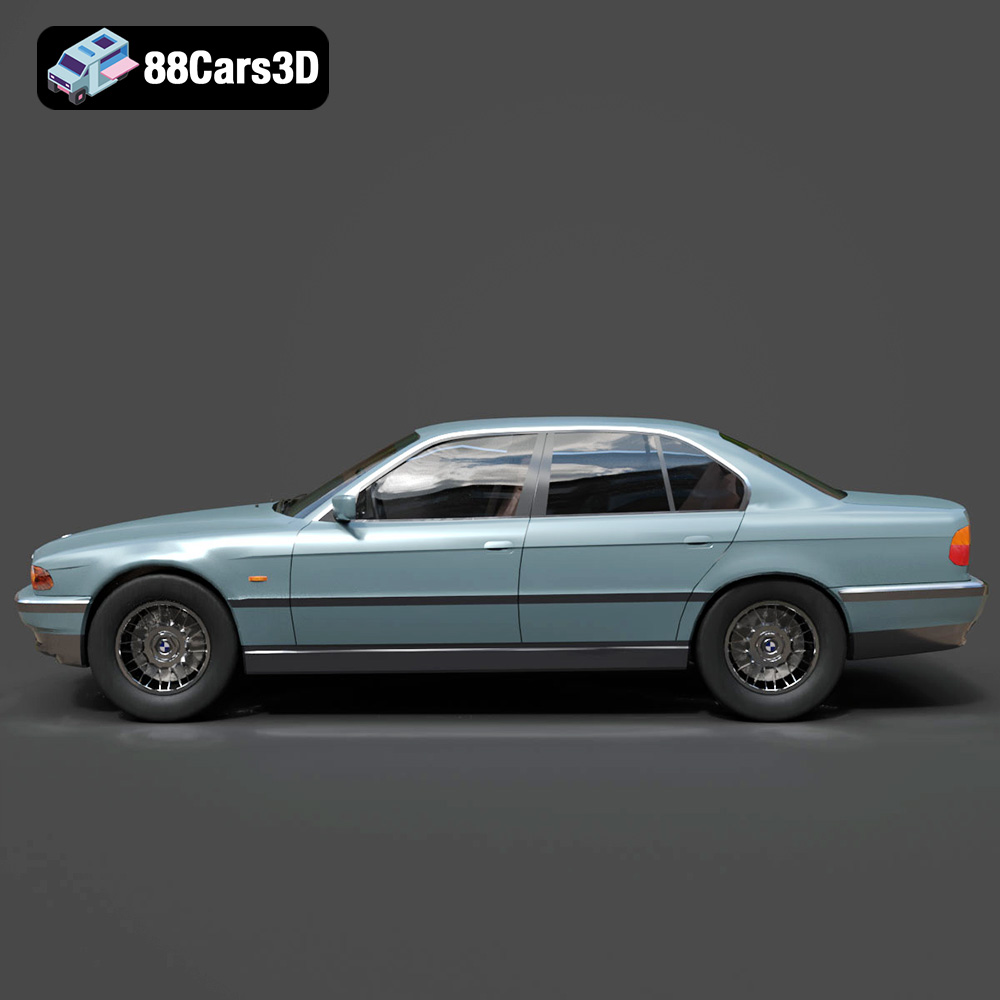
Imagine needing to place a symbol of automotive elegance and sophisticated engineering into your next architectural visualization, a high-fidelity driving simulator, or an engaging marketing campaign. The BMW 7 Series E38, produced from 1994 to 2001, stands as a testament to timeless luxury and design. Its distinctive lines and refined presence have left an indelible mark on automotive enthusiasts worldwide. To recreate this classic in a digital format that honors its legacy and meets modern technical demands is no small feat. That’s precisely what a high-quality asset like the BMW 7 Series E38 3D Model offers – a meticulously crafted representation that captures every nuance, ready for a myriad of professional applications.
This model, available on marketplaces like 88cars3d.com, exemplifies what a premium 3D asset should be: versatile, technically sound, and visually striking. It’s designed not just to look good, but to perform flawlessly across different software environments and for diverse project requirements, from photorealistic rendering to real-time game engines.
Understanding 3D Model File Formats
The versatility of a professional 3D model hinges significantly on the file formats it supports. Each format is engineered for specific purposes, offering unique advantages in terms of compatibility, data preservation, and optimization for particular workflows. Understanding these nuances is crucial for any 3D artist, developer, or designer looking to integrate a premium asset like the BMW 7 Series E38 3D Model into their projects. The following breakdown details the most common and powerful formats, highlighting their technical characteristics and ideal use cases.
.blend – Fully Editable Blender Scene with Materials
The `.blend` format is native to Blender, the popular open-source 3D creation suite. When you acquire a model in `.blend` format, you’re not just getting the mesh; you’re receiving a complete Blender project file. This includes the entire scene setup, all materials, textures, lighting, cameras, and any associated modifiers or animation data. For the BMW 7 Series E38 3D Model, this means artists using Blender can dive straight into a fully configured scene. The advantage here is unparalleled editability. Users can easily adjust PBR (Physically Based Rendering) materials, modify geometry, experiment with different render engines like Cycles or Eevee, or even extend the model with additional details using Blender’s robust toolset. It offers a level of creative freedom and direct access to the original artist’s setup that other formats might strip away.
.fbx – Ideal for Unreal, Unity, and Real-time Pipelines
Autodesk’s Filmbox (`.fbx`) format has become an industry-standard interchange format, particularly for animation and game development. It’s renowned for its ability to store comprehensive scene data, including meshes, materials, textures, animations, skinning, and camera information, while maintaining hierarchical relationships. For a 3D car model, `.fbx` is the go-to for exporting into game engines like Unreal Engine or Unity. The BMW E38 model in `.fbx` is optimized for these real-time environments, ensuring proper scaling, correct pivot points for interactive elements (like doors and wheels), and efficient polygon counts. It balances visual fidelity with performance, making it highly suitable for interactive simulations and games where frame rates are critical.
.obj – Universal Format for Cross-Software Compatibility
The Wavefront Object (`.obj`) format is one of the oldest and most universally supported 3D file formats. It’s a simple, text-based format primarily used for storing 3D geometry (vertices, normals, texture coordinates, and faces) and referencing external material files (`.mtl`). While it doesn’t support animation or rigging, its widespread compatibility makes it an invaluable format for transferring static meshes between virtually any 3D software. If you’re working across different platforms or collaborating with artists using diverse tools, the `.obj` version of the BMW 7 Series E38 3D Model ensures you have a foundational mesh that can be imported and re-materialized in almost any application, from ZBrush for sculpting to AutoCAD for engineering visualization.
.glb – Optimized for AR, VR, and Browser-based Display
GL Transmission Format (`.glb`) is the binary version of glTF, a royalty-free specification for 3D scenes and models. Designed to be compact and efficient, `.glb` packs all necessary data (geometry, materials, textures, animations) into a single file, making it ideal for web-based 3D, augmented reality (AR), and virtual reality (VR) applications. Its efficiency means faster loading times and smoother performance in browser-based viewers and mobile AR/VR experiences. For showcasing the BMW E38 in an interactive web configurator or an AR app, the `.glb` format provides an optimized, ready-to-deploy asset, ensuring a seamless user experience.
.stl – Suitable for 3D Printing Output
Stereolithography (`.stl`) is the standard file format for 3D printing. It represents a 3D model as a series of connected triangles, describing only the surface geometry without color, texture, or other properties. While lacking visual flair, its simplicity is perfect for physical manufacturing. If the project requires a physical miniature of the BMW 7 Series E38, converting the 3D model to `.stl` format makes it immediately compatible with most 3D printers and slicing software. Precision is key here, as the accuracy of the model’s dimensions directly translates to the physical output.
.ply – Precision Mesh Format for CAD or Analysis
The Polygon File Format (`.ply`), often referred to as the Stanford Triangle Format, is another format for storing 3D data, particularly useful for scanned data, engineering, and scientific visualization. It can store a wide range of properties beyond just geometry, including color, transparency, surface normals, and texture coordinates, often per vertex or per face. `.ply` is known for its ability to handle very dense meshes and its precision, making it a valuable format for technical analysis, CAD applications, or when working with high-resolution laser scans where exact measurements and robust data are required. The E38 model in `.ply` can be invaluable for detailed structural analysis or reverse engineering tasks.
.unreal – Engine-ready Asset for Real-time Environments
While not a universal file extension in the same vein as `.fbx` or `.obj`, an `.unreal` file typically refers to a pre-packaged Unreal Engine project or an asset specifically configured for direct import and optimal performance within Unreal Engine. This often means the asset has already undergone specific optimization steps, material setup using Unreal’s physically-based material system, collision meshes, LODs (Levels of Detail), and possibly even blueprint integrations. For the BMW 7 Series E38 3D Model, an Unreal-ready asset saves countless hours of setup time, ensuring the model’s textures and materials are correctly interpreted and rendered within the engine’s lighting environment, making it truly plug-and-play for game developers and real-time visualization artists.
.max – Editable 3ds Max Project for Animation and Rendering
Similar to `.blend`, the `.max` format is native to Autodesk 3ds Max, a powerful 3D modeling, animation, and rendering software widely used in architectural visualization, product design, and cinematic production. A `.max` file of the BMW 7 Series E38 provides a fully editable scene within 3ds Max, including all geometry, materials (V-Ray, Corona, Arnold), lighting setups, and potentially animation rigs. This format is ideal for professionals who use 3ds Max as their primary creative hub, allowing for deep customization, advanced rendering with high-end renderers, and complex animation sequences without any loss of data or fidelity during import/export.
The availability of the BMW 7 Series E38 3D Model in such a comprehensive array of formats underscores its professional-grade nature and its readiness for virtually any creative or technical pipeline. This flexibility ensures that regardless of your preferred software or end-use application, you have the right version of this exceptional asset at your fingertips.
The Art of Crafting a Premium Automotive 3D Model
Creating a 3D car model that truly stands out requires a meticulous approach, blending artistic vision with technical precision. It’s about more than just recreating shapes; it’s about capturing the essence of the vehicle, ensuring it performs optimally in diverse digital environments. The BMW 7 Series E38 3D Model available at 88cars3d.com is a prime example of this dedication, engineered for visual fidelity and robust technical performance.
Precision in Exterior Design
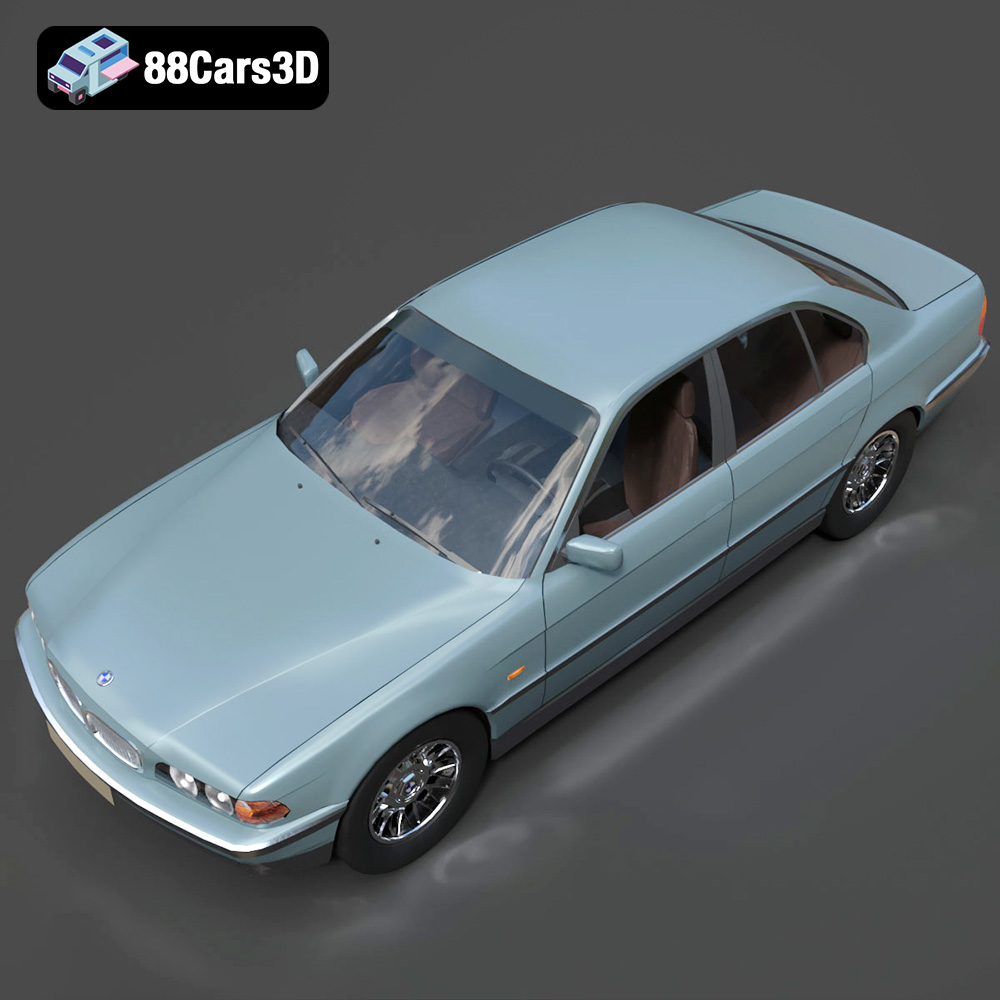
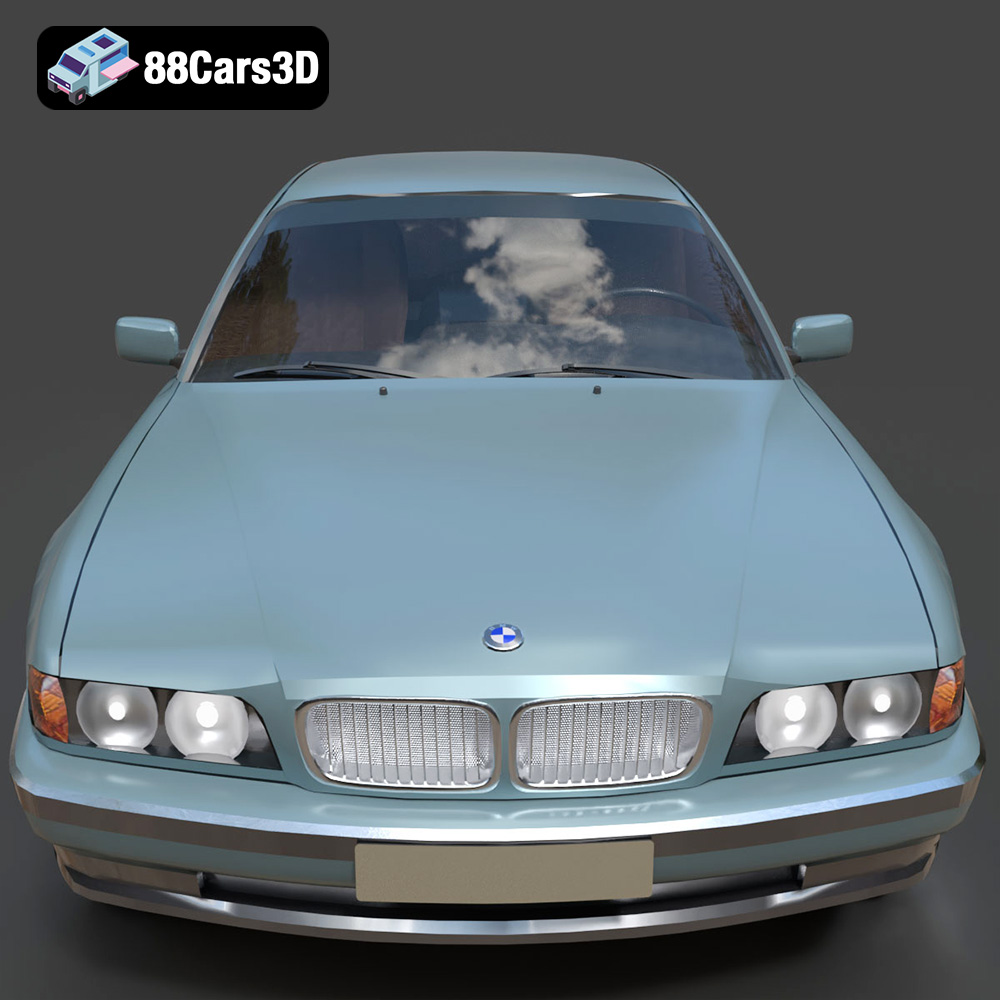
The E38’s signature design elements – from its elegant kidney grille to its distinctive headlight and taillight arrangements – are accurately modeled, reflecting the vehicle’s real-world proportions and styling. Every curve and panel line is meticulously recreated, ensuring that the essence of the classic luxury sedan is preserved. Transparent materials are correctly applied to headlights and taillights, allowing for realistic lighting effects in renders and real-time environments. Furthermore, authentic wheel designs and realistic tire profiles contribute significantly to the model’s visual integrity, adding crucial details that often define realism. Separated components like doors, the hood, and the trunk are not just visually accurate but also functionally prepared for animation, allowing for interactive experiences or cinematic sequences where these parts might need to open and close.
Interior Fidelity and Optimization
While exterior realism is often the first impression, a detailed interior elevates a model from good to exceptional. The BMW E38 3D Model features a detailed dashboard with instrumentation, a steering wheel, and accurate center console controls. Comfortable seating and door panel textures reflect the luxurious feel of the original vehicle’s interior. A crucial aspect here is the balance between detail and performance. The mesh quality is optimized to provide sufficient visual fidelity for close-up interior renders while remaining efficient enough for integration into game engines or AR/VR applications where polygon counts directly impact performance. Basic undercarriage and engine bay details are also included, providing enough information for compelling exterior renders, even from lower angles.
Technical Foundations for Flawless Performance
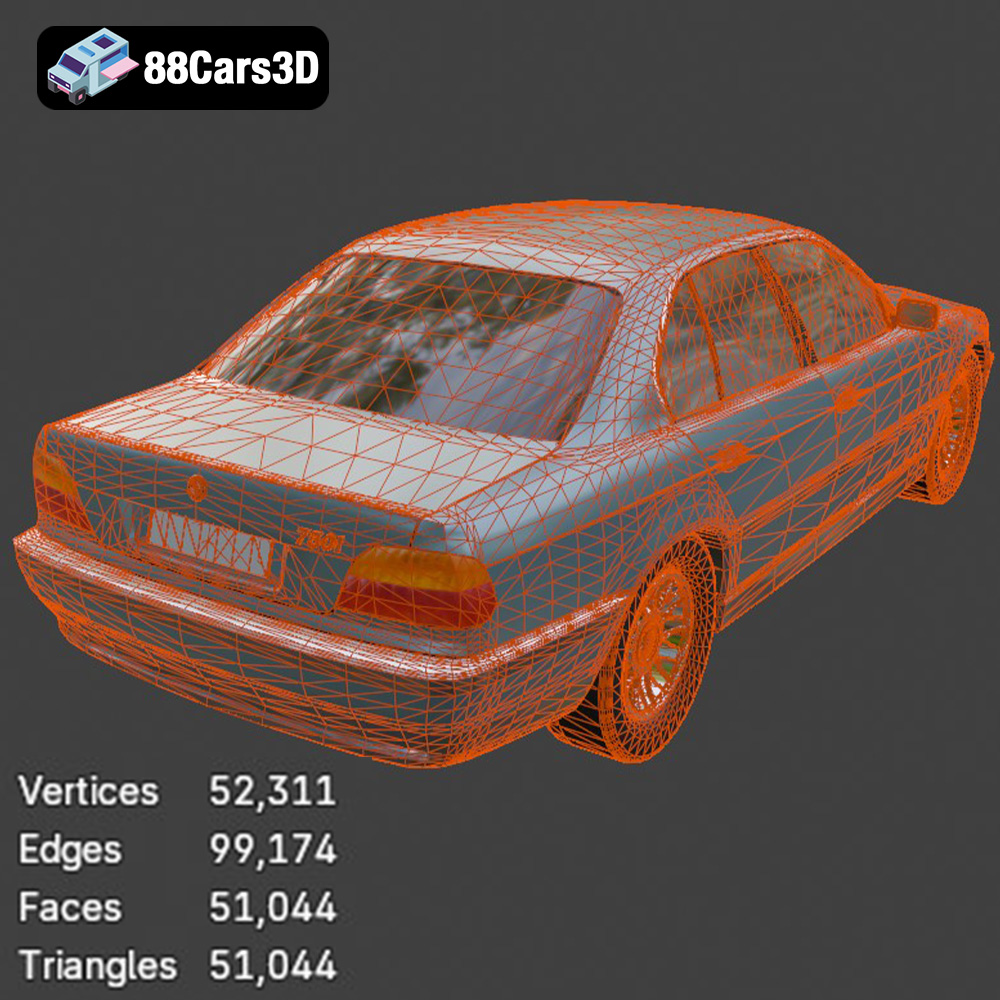
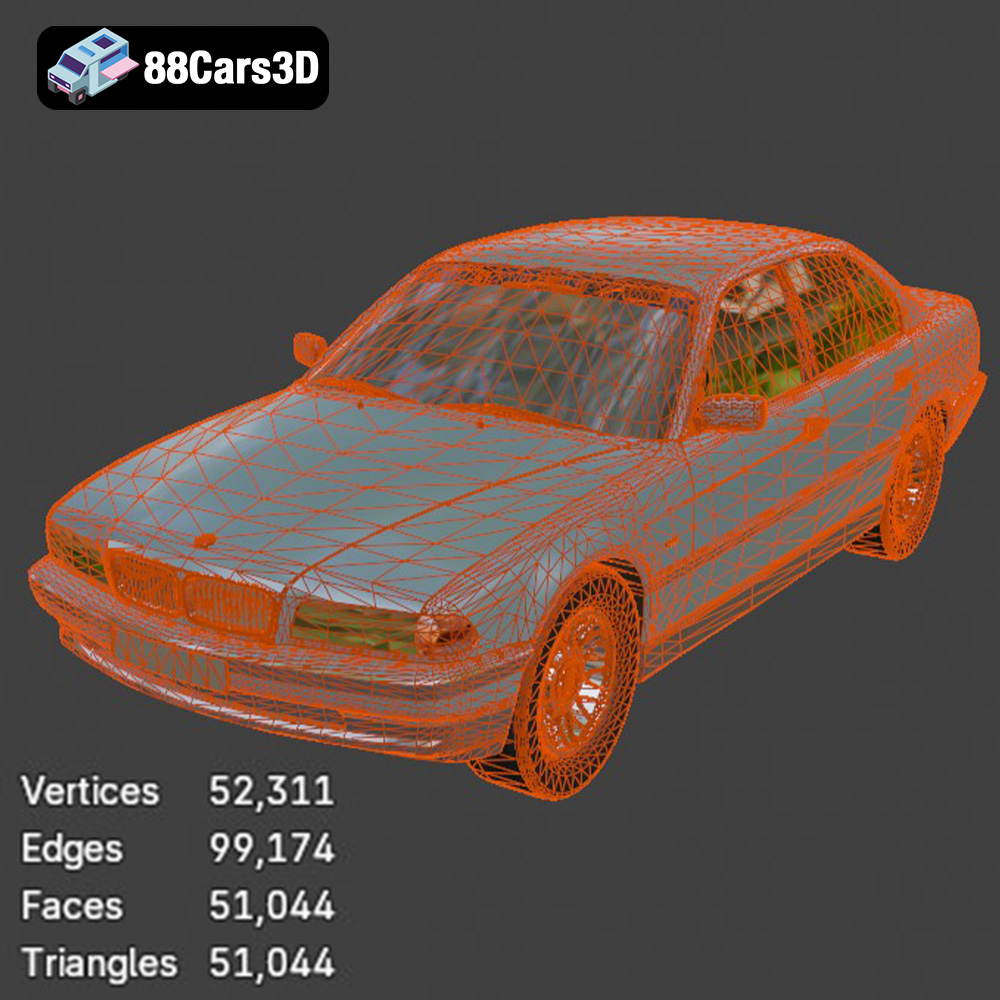
Underpinning the visual quality are critical technical advantages. The model boasts clean, quad-dominant topology, which is paramount for smooth subdivision and deformation. This ensures that when smoothing modifiers are applied, the surfaces remain pristine, free from pinching or artifacts. Modeled to real-world scale, the BMW E38 integrates seamlessly into existing scenes, whether for architectural visualization or automotive configurators, without requiring scale adjustments. An organized hierarchy with proper pivot points for all movable parts (like wheels, doors, and steering) simplifies manipulation and animation, saving countless hours for animators and developers. Lastly, it is UV unwrapped with appropriate texture mapping, allowing for high-fidelity renders and easy application of custom paint finishes, graphics, or liveries. This technical foresight makes the model a versatile and reliable asset for any professional pipeline.
Unlocking Creative Potential: Applications of the BMW E38 3D Model
The utility of a high-quality 3D car model extends far beyond simple aesthetics. It’s a versatile tool that can power a vast array of creative and technical projects. The BMW 7 Series E38 3D Model’s robust construction and multi-format availability make it an invaluable asset across numerous industries, from entertainment to engineering.
Photorealistic Rendering and Architectural Visualization
For architects, interior designers, and product visualization specialists, realistic automotive elements add a layer of authenticity and scale to their presentations. The E38 model is perfect for high-resolution studio renders, where its meticulously crafted details and realistic materials can truly shine. Placing this iconic luxury sedan within an architectural visualization of a modern home or a classic showroom elevates the scene, providing a sense of lifestyle and context. Its clean geometry and UV unwrapped textures allow for effortless integration with advanced rendering engines like V-Ray, Corona Renderer, or Arnold, enabling stunning cinematic scenes and marketing visuals that capture attention and evoke emotion.
Powering Immersive Game Worlds and Simulations
Game developers constantly seek high-performance, visually appealing assets. The BMW 7 Series E38 3D Model is optimized as a game asset, offering a balance of detail and efficiency crucial for real-time environments. It can be integrated into racing simulations, providing players with an authentic driving experience, or populate open-world environments, adding realism and depth to virtual cities. Its organized hierarchy and proper pivot points are vital for interactive experiences, allowing for dynamic elements like opening doors or animated suspensions. For serious simulation and training applications, such as driving simulators or automotive training modules, the model provides an accurate and reliable representation of the vehicle’s form and function.
The Future of Interaction: AR/VR Experiences
Augmented Reality (AR) and Virtual Reality (VR) are transforming how we interact with digital content, offering immersive experiences that blur the line between the real and virtual. The E38 model is ideal for creating compelling AR and VR automotive showcases, allowing users to explore the vehicle from any angle, customize its features, or even “place” it in their own driveway using a smartphone. Its optimized `.glb` format ensures smooth performance in these demanding environments, making it a perfect tool for interactive product demonstrations, virtual showrooms, or educational modules. Imagine walking around a virtual E38, inspecting its interior, or watching it drive through a projected urban landscape – all powered by a single, versatile 3D asset.
Streamlining Workflow with Professional 3D Assets
Integrating a high-quality 3D car model like the BMW 7 Series E38 into a professional workflow requires understanding how different software packages leverage its attributes. The multi-format support of this model ensures seamless integration, but knowing the specifics of each popular platform can significantly enhance efficiency and output quality.
Mastering 3ds Max for Animation and Advanced Rendering
Autodesk 3ds Max remains a cornerstone for many professionals in architectural visualization, product design, and broadcast animation. The `.max` file format for the BMW 7 Series E38 3D Model offers a distinct advantage here, providing a native, fully editable scene. Within 3ds Max, artists can easily assign advanced V-Ray or Corona Renderer materials, leveraging the model’s clean UVs for intricate texture application and shading. The organized hierarchy simplifies the process of rigging components for animation – imagine a cinematic sequence where the car’s doors smoothly open, revealing the detailed interior, or a camera tracking around the vehicle as it drives. The proper pivot points on wheels and steering make it straightforward to set up path constraints and dynamic simulations, essential for convincing automotive animations and high-fidelity product renders. The flexibility of 3ds Max, combined with a well-structured asset, allows for complex lighting scenarios, environmental integration, and the creation of stunning visual narratives.
Blender’s Versatility for Customization and Scene Assembly
Blender’s rise as a powerful, open-source 3D creation suite has made it a favorite among indie developers and large studios alike. The inclusion of a `.blend` file for the BMW E38 model is invaluable for Blender users. It means the model comes with pre-configured materials, ready for rendering in Cycles or real-time display in Eevee. Blender’s robust modeling tools allow for easy customization: perhaps you need to add specific aftermarket parts, simulate damage, or integrate the car into a complex environment using Blender’s powerful scene assembly tools and geometry nodes. The model’s quad-dominant topology is perfect for subdivision surface modifiers, enabling even higher levels of detail for close-up shots without altering the base mesh. This versatility makes the E38 model a highly adaptable asset for a wide range of creative challenges within the Blender ecosystem, from conceptual design to final render.
Unreal Engine: Real-Time Prowess and Interactive Experiences
Unreal Engine stands at the forefront of real-time rendering, driving everything from blockbuster games to virtual production and architectural walkthroughs. The BMW 7 Series E38 3D Model is specifically optimized for this environment, often provided as an `.fbx` or even an `.unreal` project file. Importing the `.fbx` into Unreal Engine is a streamlined process, preserving material assignments, basic collision shapes, and proper scaling. For the `.unreal` package, the asset is often pre-configured with Unreal’s Physically Based Materials, LODs (Levels of Detail) for performance optimization, and even basic Blueprints for interactive elements. This means less time spent on setup and more time on developing immersive experiences. Imagine a driving simulator built entirely in Unreal, featuring the E38 with real-time ray tracing for unparalleled visual fidelity, or an interactive VR experience where users can open doors, inspect the engine bay, and change paint colors on the fly. Unreal Engine’s capabilities, combined with a game-ready asset, unlock true next-generation automotive visualization.
Customization and Future-Proofing Your Automotive Projects
Investing in a premium 3D car model like the BMW 7 Series E38 is not just about acquiring a static asset; it’s about gaining a flexible foundation for endless creative possibilities. The foresight in its design allows for extensive customization, ensuring the model remains relevant and adaptable for future projects and evolving artistic visions.
Material Tweakability and Visual Styles
The core of customization often lies in materials and textures. With the BMW E38 3D Model being UV unwrapped and featuring logically organized material IDs, modifying its appearance is straightforward. Artists can easily adjust paint finishes, experimenting with metallic flakes, pearlescent effects, or a classic solid color to match a specific era or mood. Chrome elements, rubber, glass, and plastics can all have their material properties fine-tuned to achieve photorealistic reflections, accurate refractions, or a stylized, non-photorealistic look. This flexibility extends to adding custom graphics or liveries for unique branding, racing applications, or personalized showcases. The ability to swap out textures and tweak shader parameters means the same base model can convincingly portray a pristine showroom vehicle, a well-worn classic, or a futuristic concept car with stylistic modifications.
Animation Readiness and Scene Integration
Beyond visual aesthetics, the E38 model is built for motion. Its separated components – doors, hood, trunk, and wheels – are designed with proper pivot points, making them animation-ready. This is critical for creating dynamic presentations, interactive configurators, or even full-blown cinematic sequences. An animator can quickly set up keyframes for doors opening and closing, the trunk revealing cargo, or the wheels spinning as the car drives. The model’s real-world scale and organized hierarchy further streamline its integration into complex scenes, whether it’s an urban environment, a desert landscape, or a bespoke virtual garage. This inherent readiness for animation and seamless scene integration ensures that the BMW 7 Series E38 3D Model is not just a static prop, but a dynamic, functional element that can bring any digital scene to life.
Conclusion
In the realm of 3D content creation, the difference between a good project and an exceptional one often lies in the quality and versatility of its assets. The BMW 7 Series E38 3D Model stands as a testament to this principle, offering a meticulously crafted digital representation of an automotive icon. Its clean geometry, detailed features, and comprehensive multi-format support ensure it’s not just a visually stunning asset, but a robust, technically sound foundation for any professional endeavor.
Whether you’re crafting photorealistic renders for architectural visualization, developing immersive game worlds, creating engaging AR/VR experiences, or building sophisticated driving simulators, this model provides the precision and flexibility you need. Its readiness for popular platforms like 3ds Max, Blender, and Unreal Engine, coupled with its extensive customization options, makes it an indispensable tool for artists and developers alike.
For those seeking to elevate their 3D projects with premium 3D car models that blend historical significance with cutting-edge technical quality, 88cars3d.com offers a curated selection of assets. The BMW 7 Series E38 3D Model is more than just a purchase; it’s an investment in efficiency, quality, and creative freedom. Incorporating such a professional-grade asset into your workflow means you can focus on creativity and innovation, confident that your foundational elements are of the highest standard.
Featured 3D Model
BMW 7 Series E38 3D Model
Experience the timeless elegance and sophisticated engineering of the BMW 7 Series E38 with this meticulously crafted 3D model. Representing the iconic luxury full-size sedan produced from 1994 to 2001, this model captures the distinctive lines and refined presence of a true automotive classic. Built with clean geometry and balanced detailing, it is optimized for high-quality rendering, realistic animation, immersive simulation, and efficient integration into game development projects.
Exterior Features:
- Accurately modeled body panels reflecting the E38’s signature design
- Detailed front grille, headlights, and taillights with transparent materials for realistic lighting
- Authentic wheel designs and realistic tire profiles
- Separated components like doors, hood, and trunk for ease of animation and customization
- Clear window glass and functional mirrors
Interior / Mechanical Features:
- Detailed dashboard with instrumentation, steering wheel, and center console controls
- Comfortable seating and door panel textures reflecting the luxury interior
- Optimized mesh quality to balance detail with performance, suitable for various applications
- Basic undercarriage and engine bay details for exterior renders
Technical Advantages:
- Clean quad-dominant topology ensures smooth subdivision and deformation
- Modeled to real-world scale for accurate integration into scenes
- Organized hierarchy with proper pivot points for easy manipulation and animation of parts
- UV unwrapped with appropriate texture mapping for high-fidelity renders
Applications:
- Rendering & Visualization: Perfect for high-resolution studio renders, cinematic scenes, and architectural visualizations
- Game Development: Optimized as a game asset for racing simulations, open-world environments, and interactive experiences
- AR/VR: Ideal for creating immersive augmented and virtual reality automotive showcases
- Simulation & Training: Suitable for driving simulators, automotive training modules, and engineering visualizations
- 3D Printing: Can be easily converted to .stl format for physical model production
Customization Options:
- Easily modify paint finishes, colors, and add custom graphics or liveries
- Adjust material properties for metals, chrome, rubber, glass, and plastics to match specific rendering styles
- Adapt lighting setups to achieve diverse scene moods and visual effects
This BMW 7 Series E38 3D model offers a professional-grade asset for any project requiring a blend of luxury, detail, and historical automotive significance. Its versatility across multiple platforms and applications makes it an indispensable addition to your 3D asset library.
Included File Formats:
- .blend – Blender project with materials
- .fbx – Compatible with Unreal, Unity, and major 3D engines
- .obj – Universal format for nearly all 3D software
- .glb – Optimized for AR, VR, and web-based visualization
- .stl – Ready for 3D printing
- .ply – Mesh format for analysis and CAD workflows
- .unreal – Unreal Engine project setup
- .max – Editable 3ds Max scene for rendering and animation
Tags:
.bmw,.7seriese38,.luxurycar,.sedan,.classiccar,.rendering,.simulation,.gameasset,.arvr,.blend,.fbx,.obj,.glb,.stl,.ply,.unreal,.maxLamborghini Diablo SV 1995 3D Model
$10.79
Product Image Gallery



Related Tags
.7seriese38
.arvr
.blend
.bmw
.classiccar
.fbx
.gameasset
.glb
.luxurycar
.max
.obj
.ply
.rendering
.sedan
.simulation
.stl
.unreal
