

The Art and Engineering of Premium 3D Car Models: A Deep Dive with the BMW 7 Series E38
In the expansive world of 3D visualization, the demand for high-quality automotive assets is consistently growing. From blockbuster cinematic productions to immersive game environments and precise architectural renders, a meticulously crafted 3D car model can elevate a project from good to exceptional. It’s not just about aesthetics; it’s about technical precision, optimized performance, and seamless integration into diverse workflows. Today, we’re taking a closer look at what makes a truly outstanding 3D car model, using the iconic BMW 7 Series E38 as our prime example.
Capturing Automotive Heritage in Digital Form
The BMW 7 Series E38, produced from 1994 to 2001, represents a pinnacle of luxury and German engineering. Its timeless design, elegant lines, and commanding presence have solidified its status as a true automotive classic. Recreating such a vehicle in 3D is an intricate process, requiring a keen eye for detail and a deep understanding of 3D modeling principles. A premium 3D model of the E38 isn’t just a digital replica; it’s a piece of art that allows creators to bring this legendary car into new digital realities, whether for historical preservation, marketing, or entertainment.
The Versatility of a High-Quality 3D Car Model
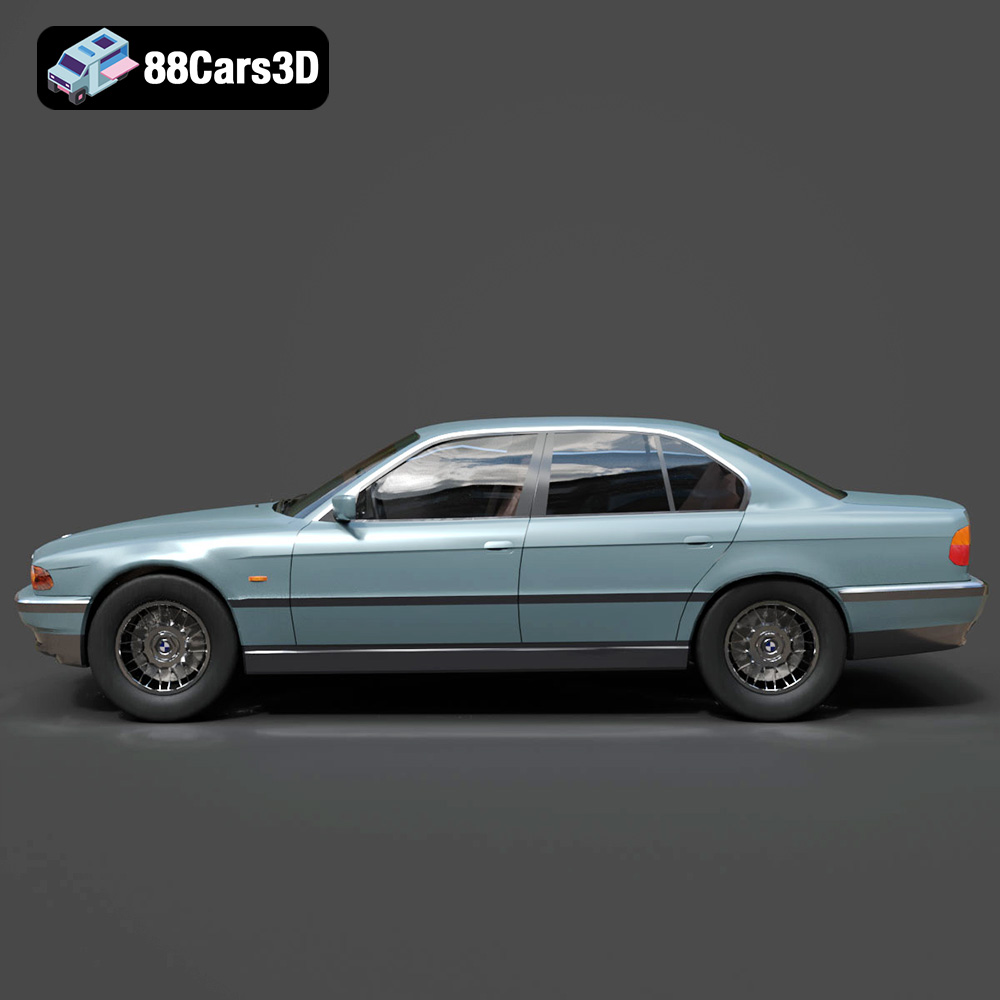
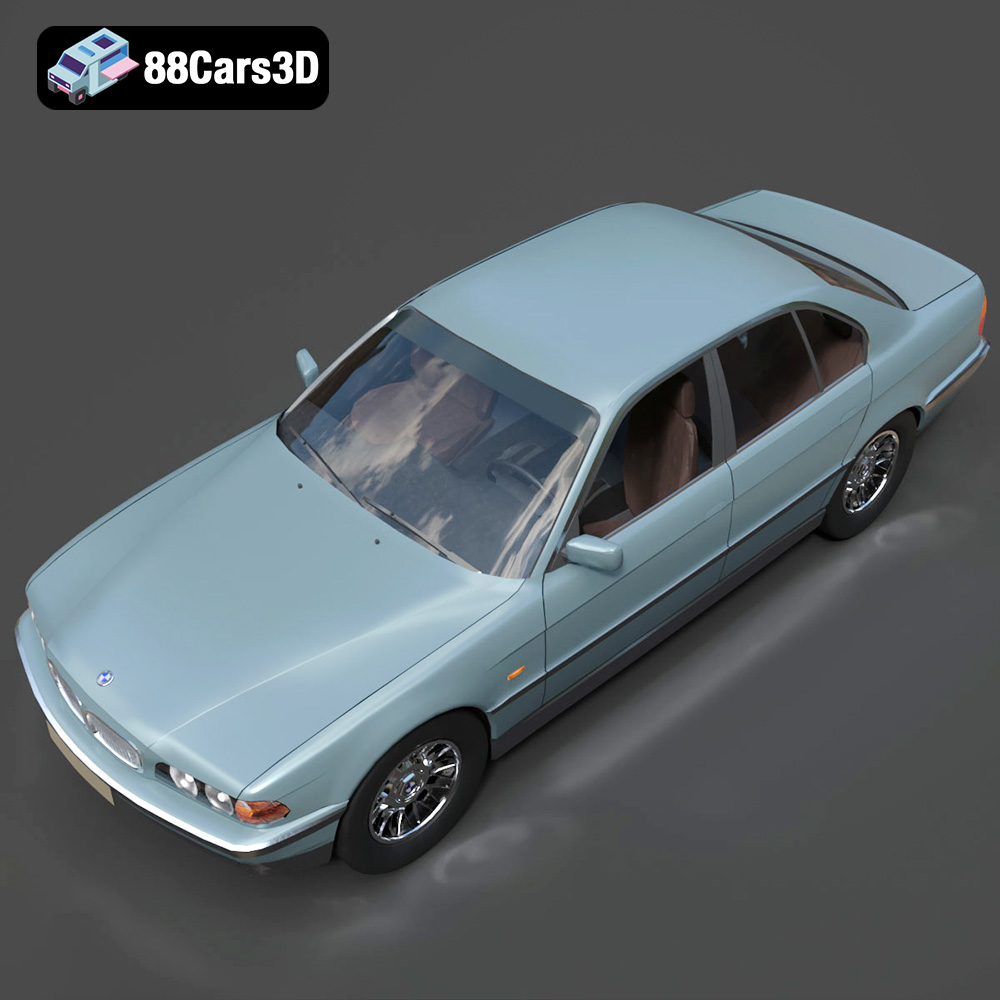
A well-made 3D car model, such as the BMW 7 Series E38 3D Model available on 88cars3d.com, offers incredible versatility. It serves as a foundational asset for a myriad of applications: from photorealistic still renders that grace advertisements and showrooms, to complex animations for films and virtual experiences, and even as a driveable vehicle in cutting-edge video games. The key to this versatility lies in its underlying technical quality – clean geometry, accurate scale, thoughtful UV unwrapping, and a range of export formats tailored for different platforms. This particular model, with its accurate body panels, detailed interior, and separated components, provides a robust base for extensive customization and use across virtually any 3D pipeline.
Understanding 3D Model File Formats: Choosing the Right Tool for the Job
One of the most critical aspects of working with 3D car models is understanding the various file formats available and when to use each one. A truly professional asset collection will offer a range of formats to ensure maximum compatibility and flexibility across different software and applications. The BMW 7 Series E38 3D Model exemplifies this, offering a comprehensive suite of formats.
Blender’s .blend and 3ds Max’s .max: Native Powerhouses
When you’re deeply entrenched in a specific 3D application, its native file format often provides the most complete and editable experience.
- .blend: This is Blender’s native file format, offering a fully editable scene with all materials, textures, lighting, and animation data preserved. For Blender artists, this is the ideal starting point, allowing direct access to the model’s clean quad-dominant topology, organized hierarchy, and UV unwrapping for immediate modification, rendering with Cycles or Eevee, or further development. Its lightweight yet comprehensive nature makes it perfect for iterative design and detailed scene construction within Blender.
- .max: Similarly, .max is the native file format for Autodesk 3ds Max. It provides an editable 3ds Max project, making it the preferred choice for professionals working within this ecosystem. A .max file retains all the intricacies of the model, including modifiers, scene lights, camera setups, and complex material networks, which is crucial for advanced rendering with V-Ray or Corona and sophisticated animation workflows. For users needing to integrate the BMW E38 into existing 3ds Max scenes or perform extensive custom rigging, the .max format is indispensable.
Universal Interoperability with .fbx and .obj
For cross-software compatibility, two formats stand out as industry workhorses:
- .fbx: Developed by Autodesk, FBX (Filmbox) is widely considered the industry standard for exchanging 3D data between various applications, especially for game development. It efficiently stores not only geometry and UVs but also materials, textures, animations, and even basic rigging information. This makes the .fbx format ideal for integrating the BMW 7 Series E38 into game engines like Unreal Engine and Unity, or importing it into other 3D software for general rendering and animation. Its robust nature ensures that most of the model’s properties are transferred accurately, making it a cornerstone for real-time pipelines.
- .obj: OBJ (Object) is a universal format known for its simplicity and wide compatibility. It primarily stores geometric data (vertices, normals, texture coordinates) and references to external material files (.mtl) and texture images. While it doesn’t carry animation or advanced material definitions, its ubiquity makes it an excellent choice for straightforward mesh import into almost any 3D software package. For basic rendering or when you need a clean mesh to start from, .obj serves as a reliable fallback, offering cross-software compatibility for nearly all 3D software.
Specialized Formats for Modern Applications: .glb, .stl, .ply, and .unreal
Beyond the common formats, specialized options cater to niche but increasingly important applications:
- .glb: GLB (GL Transmission Format Binary) is optimized for AR, VR, and browser-based display. It’s a single-file asset that bundles geometry, materials, textures, and animations into an efficient, web-friendly package. For immersive augmented and virtual reality automotive showcases or interactive web experiences featuring the BMW E38, .glb is the format of choice, ensuring fast loading and broad platform support.
- .stl: STL (Stereolithography) is the de facto standard for 3D printing. It represents a 3D model as a series of connected triangles, describing only the surface geometry without color, texture, or material information. The BMW 7 Series E38 can be easily converted to .stl, making it suitable for physical model production, from small-scale collectibles to larger prototypes. The clean, watertight mesh is crucial for successful 3D printing.
- .ply: PLY (Polygon File Format) is another precision mesh format, often used for storing 3D data from 3D scanners, CAD, or scientific analysis. It can store various properties like color per vertex, normal information, and material properties, making it useful for engineering visualizations or when a higher level of precision is required than what .obj typically offers.
- .unreal: This signifies an Unreal Engine project setup, often an asset package or a fully configured scene file ready for immediate integration into an Unreal Engine environment. This format goes beyond a simple mesh import; it includes optimized materials, collision meshes, LODs (Levels of Detail), and potentially even Blueprint scripting, making the BMW 7 Series E38 immediately usable for real-time environments and game development within Unreal.
The provision of such a diverse array of file formats for the BMW 7 Series E38 3D Model highlights the thoughtful approach taken to ensure its utility across the professional spectrum. Whether you’re a renderer, game developer, AR/VR creator, or simply need a high-quality model for visualization, there’s a format tailored to your specific needs.
Crafting Realism: The Science Behind Automotive Rendering
Achieving photorealistic automotive renders is a blend of art and science. It requires an understanding of light physics, material properties, and the underlying geometry of the 3D model. A premium asset like the BMW 7 Series E38 3D Model provides an excellent foundation for achieving stunning visual results.
The Importance of Clean Topology and UV Mapping
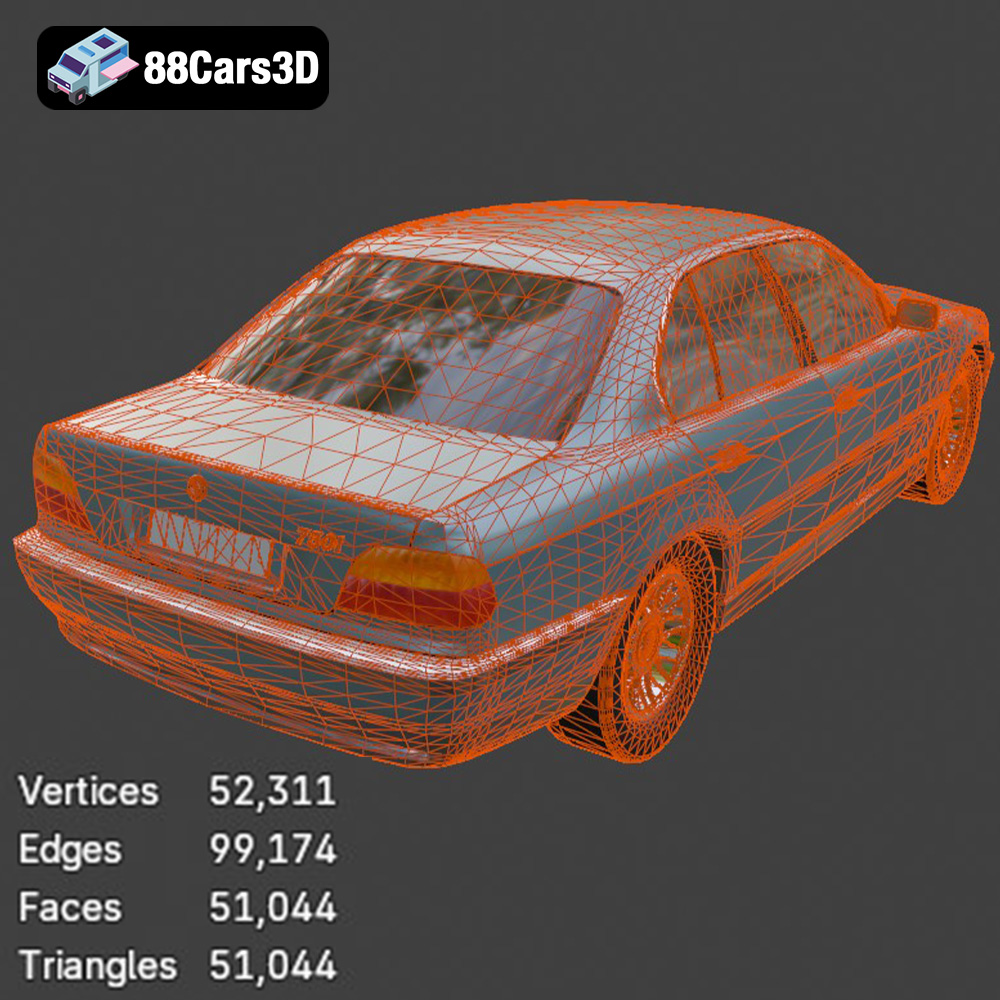
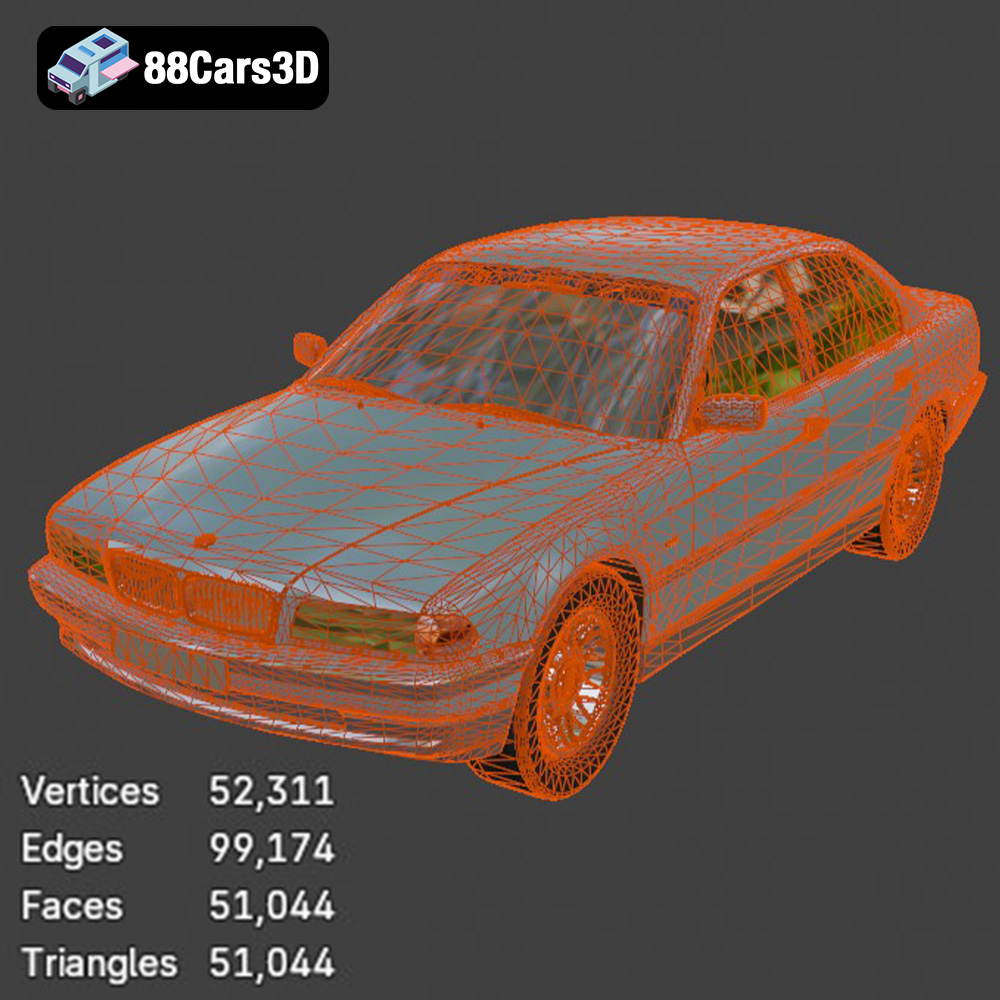
At the heart of any high-quality 3D model is its topology – the arrangement of vertices, edges, and faces. The BMW 7 Series E38 model boasts clean quad-dominant topology, which is paramount for smooth subdivision, deformation, and accurate light interaction. Quads (four-sided polygons) ensure that the model behaves predictably, especially when applying smoothing modifiers or when animated. This prevents undesirable pinching or artifacts that can plague models built with poor geometry. Equally important is UV unwrapping. This process involves flattening the 3D surface into a 2D map, allowing textures to be applied accurately without stretching or distortion. The E38 model is UV unwrapped with appropriate texture mapping, ensuring that details like paint reflections, panel gaps, and interior upholstery appear precisely as intended in high-fidelity renders.
Material Shading and Lighting Techniques
Once the geometry and UVs are solid, the next step towards realism involves material shading and lighting. Physically Based Rendering (PBR) workflows are standard today, accurately simulating how light interacts with different surfaces. For the BMW E38 model, this means defining precise properties for its metallic paint (specular, roughness, metallic values), the reflective glass of its windows, the intricate textures of the leather interior, and the subtle sheen of its chrome accents. Expert lighting setup, ranging from studio HDRIs (High Dynamic Range Images) to complex multi-point lighting, plays a crucial role in highlighting the car’s distinctive lines and luxurious finish. Dynamic shadows, realistic reflections, and subtle light bounces all contribute to the final image, turning a digital model into a photorealistic marvel.
Workflow Example: High-Fidelity Rendering in 3ds Max or Blender
Consider a workflow using the BMW 7 Series E38 3D Model for a marketing campaign. In 3ds Max, an artist would import the .max file, which comes with an organized hierarchy and proper pivot points, allowing for easy manipulation. They might use a renderer like V-Ray or Corona, setting up an environment with studio lighting (e.g., large softboxes or a spherical HDRI). Materials would be refined using PBR shaders, adjusting parameters for metallic flake, clear coat thickness, and realistic glass refractions. The separated components like doors and hood could be opened for dynamic shots. Similarly, in Blender, importing the .blend file would provide a ready-to-render setup with Cycles or Eevee. Artists can then fine-tune materials, experiment with various HDRI lighting environments, and use Blender’s robust animation tools to create cinematic sequences, showcasing the car’s elegance from every angle. The model’s real-world scale ensures accurate integration into any scene, be it an architectural visualization or a product showcase.
Driving Innovation: 3D Car Models in Game Development and Real-time Environments
The capabilities of 3D car models extend far beyond static renders. In the fast-paced world of game development, AR/VR, and simulation, these assets become interactive elements, requiring specific considerations for performance and integration.
Optimization Strategies for Game Assets
For game development, performance is paramount. While a high-resolution model is excellent for cinematic quality, real-time environments often require optimization. The BMW 7 Series E38 3D Model is designed with this balance in mind. Its optimized mesh quality strikes a superb balance between detail and performance, making it an ideal game asset. This often involves creating Levels of Detail (LODs) – progressively lower-polygon versions of the model that swap in as the camera moves further away, significantly reducing rendering overhead without a noticeable loss of detail. Additionally, efficient texture atlasing and simplified PBR materials are crucial for maintaining high frame rates in complex game scenes. The separated components like doors, hood, and trunk are also invaluable, enabling in-game animation for opening/closing, damage systems, and interactive elements.
Integrating into Unreal Engine and Unity
The included .fbx and .unreal formats make the BMW 7 Series E38 3D Model exceptionally ready for popular game engines. In Unreal Engine, the .unreal file or a well-prepared .fbx can be imported, often automatically generating collision meshes and setting up basic materials. Game developers can then enhance these with custom shaders, integrate physics assets for realistic driving behavior, and implement interactive elements via Blueprints. For instance, the separated doors can be programmed to open upon interaction, or the headlights can be toggled. In Unity, the .fbx file is equally straightforward to import. Developers can configure materials, add rigidbodies for physics simulation, and script custom behaviors for the vehicle. The organized hierarchy of the model means that applying a car controller or animation system is streamlined, allowing developers to quickly get the E38 driving around an open-world environment or racing track.
Beyond Games: AR/VR and Simulation Applications
The versatility of professional 3D car models shines in other real-time applications as well. For AR/VR experiences, the .glb format is particularly beneficial. Imagine showcasing the BMW 7 Series E38 in an augmented reality app, allowing potential buyers to view the car in their driveway before it’s even built, or exploring its luxurious interior in a virtual reality showroom. The optimized nature of the model ensures smooth performance in these demanding, interactive environments. In driving simulators and training modules, the accurate real-world scale and detailed modeling provide a realistic foundation for training pilots, engineers, or emergency responders. Basic undercarriage and engine bay details, while perhaps not fully explorable, still add to the overall realism for exterior renders and specific simulation scenarios, making the E38 a valuable tool for automotive engineering visualizations and educational platforms.
The Versatility of the BMW 7 Series E38 3D Model Across Industries
The true mark of a superior 3D asset is its applicability across diverse industries and use cases. The BMW 7 Series E38 3D Model from 88cars3d.com demonstrates this adaptability, proving valuable in fields ranging from marketing to heritage preservation.
Automotive Visualization and Marketing
For automotive brands, advertising agencies, and designers, high-fidelity 3D car models are indispensable. The E38 model can be used to create stunning promotional imagery and animations that captivate audiences. Whether it’s showcasing different paint finishes (which are easily modifiable), adding custom graphics or liveries, or adjusting material properties for metals and glass to match specific rendering styles, the model provides a powerful marketing tool. Imagine a digital advertisement where the classic E38 glides through a cityscape, its reflections dynamically changing with the environment – all rendered with this precise 3D model. Such visualizations offer unparalleled control and cost-efficiency compared to traditional photography or videography with physical vehicles.
Arch-Viz Integration and Scene Embellishment
Architectural Visualization (Arch-Viz) projects frequently benefit from high-quality 3D vehicles. A premium car model can add life, scale, and context to an architectural scene. Placing the BMW 7 Series E38 in front of a meticulously rendered modern villa or a classic office building instantly elevates the realism and visual appeal of the environment. Its timeless design can complement various architectural styles, adding a touch of sophistication and luxury to any scene. The accurate scale of the model ensures it fits naturally within an architectural blueprint, making it a professional choice for scene embellishment.
The Niche of Classic Car Restoration and Digital Preservation
Beyond commercial applications, high-detail 3D models play a significant role in preserving automotive history. For enthusiasts and restorers of classic vehicles like the BMW 7 Series E38, a comprehensive 3D model can serve as a valuable reference. It allows for detailed study of its geometry, potentially aiding in custom part fabrication, virtual restoration planning, or simply creating digital archives of these magnificent machines. The ability to modify paint, interior textures, and even add custom elements virtually opens up possibilities for concepting restorations before any physical work begins, making it a unique asset for those passionate about classic cars.
Beyond the Screen: 3D Printing and Physical Prototyping
The digital realm often intertwines with the physical, and 3D car models are no exception. With the rise of additive manufacturing, these digital assets can be transformed into tangible objects.
Preparing a Model for Additive Manufacturing
For the BMW 7 Series E38 3D Model, its clean mesh and real-world scale make it highly suitable for 3D printing. The process typically involves converting the model to an .stl format, which is universally recognized by 3D printers. While the original model might have intricate details, for 3D printing, some simplification or optimization might be necessary depending on the desired print size and printer capabilities. Crucially, a watertight mesh (a mesh without holes or gaps in its surface) is essential for a successful print, and the well-constructed geometry of this model minimizes issues in this regard. This allows designers, collectors, and hobbyists to create physical replicas, scale models, or even custom parts of the iconic E38.
The Value of Accurate Scale and Detail for Physical Outputs
When creating a physical object from a 3D model, accuracy is paramount. The BMW 7 Series E38 3D Model is built to real-world scale, ensuring that any 3D print will correspond accurately to its real-life counterpart at a given ratio. This is vital for prototyping, creating detailed collectibles, or integrating the model into physical dioramas. The meticulous exterior features, authentic wheel designs, and realistic tire profiles translate well to physical form, offering a tangible representation of this automotive classic that began as a digital vision.
Conclusion: Elevate Your Projects with Professional 3D Assets from 88cars3d.com
In the dynamic landscape of 3D content creation, the quality of your assets directly impacts the quality and impact of your final output. A professionally crafted 3D car model, such as the BMW 7 Series E38 3D Model, offers an unparalleled foundation for a vast array of projects. Its detailed exterior and interior, clean quad-dominant topology, real-world scale, and comprehensive file format support make it a truly versatile and indispensable asset.
The Return on Investment in Quality
Investing in high-quality 3D car models saves significant time and resources. Instead of building a vehicle from scratch, which can take hundreds of hours, artists and developers can leverage pre-made, optimized assets that are ready for immediate integration. This efficiency allows creative teams to focus on storytelling, scene composition, and innovative applications, rather than getting bogged down in the intricacies of modeling every bolt and curve. The technical advantages and robust feature set of models found on 88cars3d.com ensure that your project starts on a strong footing, minimizing potential issues down the line and maximizing creative output.
Your Next Project’s Foundation: The BMW 7 Series E38 3D Model
Whether you’re developing a cutting-edge racing game, rendering a cinematic advertisement, designing an architectural visualization, or creating an immersive AR experience, the BMW 7 Series E38 3D Model offers the blend of luxury, detail, and technical readiness that professionals demand. Its adaptability across rendering, game development, AR/VR, simulation, and even 3D printing applications makes it an essential addition to any serious 3D asset library. Explore this meticulously crafted classic and elevate your next project to new heights of realism and engagement.
Featured 3D Model
BMW 7 Series E38 3D Model
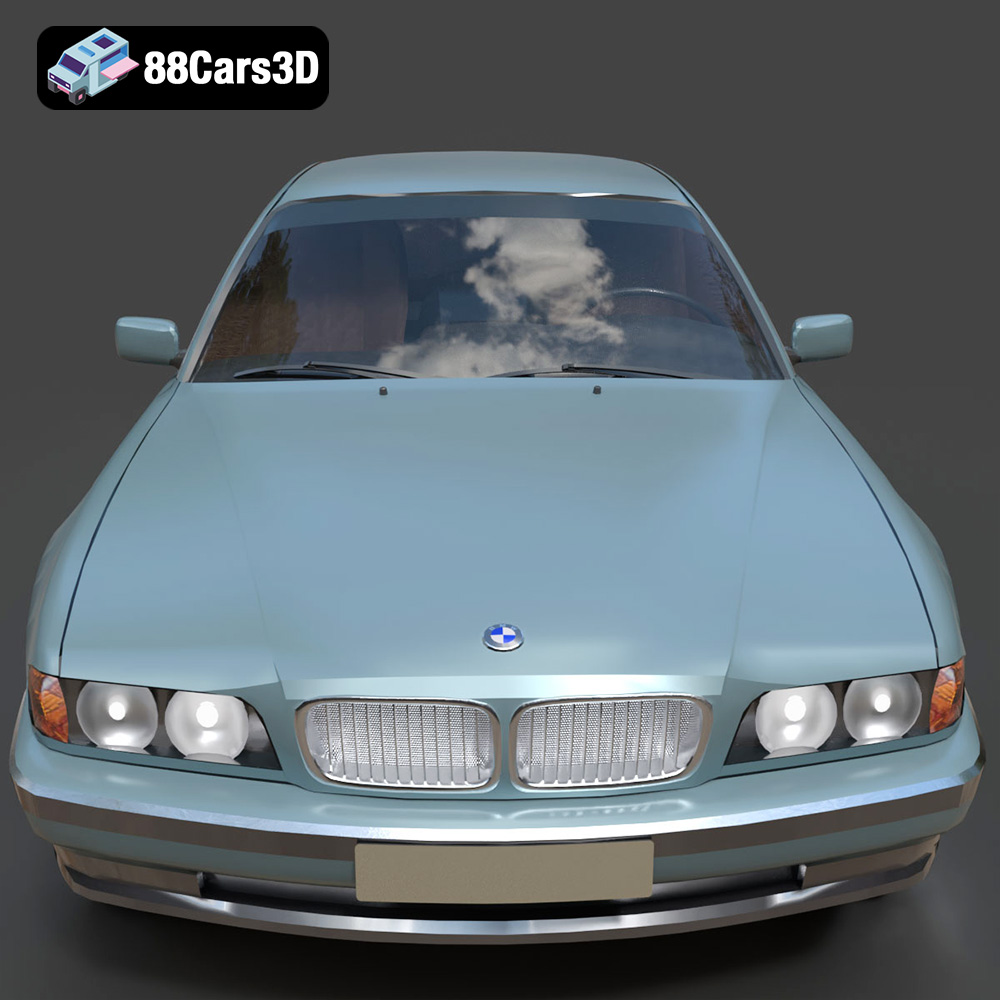
Experience the timeless elegance and sophisticated engineering of the BMW 7 Series E38 with this meticulously crafted 3D model. Representing the iconic luxury full-size sedan produced from 1994 to 2001, this model captures the distinctive lines and refined presence of a true automotive classic. Built with clean geometry and balanced detailing, it is optimized for high-quality rendering, realistic animation, immersive simulation, and efficient integration into game development projects.
$10.79
Product Image Gallery



Related Tags
.7seriese38
.arvr
.blend
.bmw
.classiccar
.fbx
.gameasset
.glb
.luxurycar
.max
.obj
.ply
.rendering
.sedan
.simulation
.stl
.unreal
