

In the vibrant realm of 3D visualization, where imagination takes tangible form, the creation of compelling digital assets is paramount. From breathtaking cinematic sequences to hyper-realistic game environments and cutting-edge architectural renderings, the quality of a 3D model directly dictates the impact and authenticity of the final output. Among the most challenging yet rewarding assets to craft are automobiles – complex machines demanding an exquisite balance of aesthetic fidelity and technical precision. Professional-grade 3D car models are not merely decorative elements; they are foundational components that breathe life into digital worlds, enabling designers, developers, and artists to push the boundaries of visual storytelling and interactive experiences.
Today, we’ll delve into the intricacies of what makes a premium 3D vehicle model indispensable in various industries, exploring technical specifications, workflow integrations, and the boundless applications it unlocks. We’ll specifically examine an exemplary asset, the BMW 7-Series F02 3D Model, available on 88cars3d.com, a testament to meticulous craftsmanship and versatility, designed to elevate any project it graces. This model embodies the luxury and precision of its real-world counterpart, translated into a digital format ready for high-end rendering, game development, and immersive simulations.
The Foundation of Digital Automotive Excellence: Why High-Quality 3D Car Models Matter
The demand for realistic and technically sound 3D car models has never been higher. Industries from automotive design and advertising to film production, video games, and even virtual training simulations rely heavily on these assets. A low-quality model can break immersion, compromise visual integrity, and significantly hinder a project’s overall success. Conversely, a meticulously crafted model like the BMW 7-Series F02 offers a robust foundation, saving countless hours of labor and enabling superior results.
Bridging Design and Reality
For automotive manufacturers, 3D models are critical in the design and prototyping phase. Before a single physical component is manufactured, every curve, panel gap, and interior detail is refined in a virtual environment. High-fidelity models allow designers to visualize concepts, conduct aerodynamic simulations, and test various material finishes without the prohibitive costs of physical prototypes. Beyond the design studio, these models are the bedrock for captivating marketing campaigns. Stunning automotive rendering showcases vehicles in their best light, highlighting luxury, performance, and intricate details that captivate potential buyers. The BMW 7-Series F02 3D Model, with its authentic body panels, detailed grille, and realistic material shaders, is perfectly suited for these high-stakes visualization tasks, delivering the visual punch required for premium branding.
Efficiency in Professional Workflows
Time is a precious commodity in any professional production pipeline. Starting with a pre-built, high-quality 3D model significantly streamlines the workflow. Artists and developers can bypass the arduous process of modeling from scratch, allowing them to focus on lighting, texturing, animation, and scene composition. The technical advantages of models like those found on 88cars3d.com, such as clean, quad-dominant topology, accurate real-world scale, and logically organized hierarchies, mean less time spent on remediation and more on creative iteration. This efficiency is invaluable, especially in fast-paced environments like game development, where optimizing performance for real-time engines is crucial, or in architectural visualization, where integration into large scenes needs to be seamless.
Understanding 3D Model File Formats
Navigating the world of 3D assets requires a solid understanding of various file formats, each optimized for specific purposes, software, and workflows. The BMW 7-Series F02 3D Model, recognizing the diverse needs of professionals, comes with an impressive array of included formats, ensuring maximum compatibility and utility across the board. Choosing the right format is crucial for maintaining data integrity, optimizing performance, and achieving desired project outcomes. Let’s break down the key formats provided with this model:
.blend – The Blender Powerhouse
The .blend file format is native to Blender, a powerful open-source 3D creation suite. When you receive a .blend file, it’s not just the mesh; it’s a complete Blender scene, often including materials, textures, lighting setups, cameras, and even animation data. For users deeply integrated into the Blender ecosystem, this is the most advantageous format. It provides full editability of the mesh, access to all node-based materials for customization, and the ability to leverage Blender’s comprehensive modeling, sculpting, animation, and rendering tools (Cycles and Eevee). The .blend format offers the highest level of flexibility for artists who wish to dissect, modify, or extend the BMW 7-Series F02 model’s properties without any loss of data or needing to reconstruct materials.
.fbx – The Industry Standard for Interoperability
Autodesk’s .fbx (Filmbox) format is arguably the most widely adopted interchange format in the 3D industry. It’s designed to facilitate data exchange between different 3D software applications and, critically, between DCC (Digital Content Creation) tools and game engines like Unreal Engine and Unity. An .fbx file can encapsulate a vast amount of data, including geometry, materials, textures, rigging, skinning, animation, and even camera and light data. Its robust support for animation and skeletal data makes it ideal for game assets where character and vehicle movement are paramount. The .fbx version of the BMW 7-Series F02 ensures that developers can import a production-ready asset directly into their real-time pipelines with minimal setup, maintaining hierarchical relationships and basic material assignments.
.obj – The Universal Translator
The .obj (Wavefront OBJ) format is a venerable and universally supported 3D file format. It’s a simple, text-based format that primarily stores geometry data (vertices, normals, texture coordinates, and faces) and can reference external material (.mtl) files for basic material properties and texture maps. While it doesn’t support animation or advanced scene data, its widespread compatibility makes it an excellent choice for cross-software integration. Almost every 3D application can open and export .obj files, making it a reliable “fallback” format for ensuring your BMW 7-Series F02 model can be used in virtually any 3D environment, regardless of the user’s specific software suite.
.glb – Gateway to AR/VR and Web
.glb (GL Transmission Format Binary) is a modern, optimized format specifically designed for efficient transmission and loading of 3D scenes and models in web and AR/VR applications. It’s a binary container format that bundles geometry, materials, textures, animation, and scene graph information into a single, self-contained file. This makes .glb files incredibly efficient for real-time display in browsers, mobile devices, and immersive experiences, as it eliminates the need for external asset loading. For developers creating AR/VR applications or interactive web content featuring the BMW 7-Series F02, the .glb format provides an optimized, ready-to-deploy solution.
.stl – The Path to Physical Creation
The .stl (Stereolithography) format is the industry standard for 3D printing. Unlike other formats that focus on visual representation, .stl primarily describes the surface geometry of a 3D object using a collection of triangular facets. It doesn’t store color, texture, or material information. The .stl version of the BMW 7-Series F02 3D Model is specifically prepared for physical fabrication, allowing users to 3D print scaled replicas, prototypes, or collectible models. This opens up entirely new avenues for using the digital asset in tangible, real-world applications.
.ply – Precision for Technical Applications
.ply (Polygon File Format or Stanford Triangle Format) is another common format for storing 3D data from 3D scanners, CAD applications, or other precise measurement tools. It can store a wide range of properties, including color, transparency, normals, texture coordinates, and even confidence values for each vertex or face. While not as universally used for general asset exchange as .fbx or .obj, .ply is excellent for applications requiring high precision and detailed mesh information, such as scientific visualization, engineering analysis, or intricate prototyping where the exact geometric properties of the BMW 7-Series F02 are critical.
.unreal – Native Integration for Real-Time Immersion
The .unreal format signifies an Unreal Engine project setup. This isn’t a single file format in the traditional sense, but rather a collection of assets (often .fbx files, textures, materials, and Blueprints) pre-configured within an Unreal Engine project. For game developers and real-time visualization artists using Unreal Engine, this is an incredibly valuable offering. It means the BMW 7-Series F02 comes with engine-ready materials, collision meshes, LODs (Levels of Detail), and possibly even basic interactivity already set up, saving immense development time and ensuring optimal performance within the engine’s ecosystem.
.max – 3ds Max: Comprehensive Animation and Rendering
The .max file format is native to Autodesk 3ds Max, one of the most widely used 3D software packages for architectural visualization, animation, and game asset creation. Similar to .blend, a .max file is a complete 3ds Max scene, containing geometry, materials (often V-Ray, Corona, or standard Max materials), lights, cameras, and animation data. For professionals using 3ds Max, this format offers the highest degree of control and flexibility, allowing for direct manipulation of the model, its shaders, and integration into complex rendering and animation pipelines without any conversion artifacts or loss of specific 3ds Max features. The .max version of the BMW 7-Series F02 ensures a smooth workflow for high-end cinematic rendering and detailed animations.
A Deep Dive into the BMW 7-Series F02 3D Model: Precision and Versatility
The BMW 7-Series F02 3D Model exemplifies what makes a premium 3D vehicle asset stand out. It’s not just a mesh; it’s a meticulously engineered digital representation that balances aesthetic appeal with technical robustness. Every aspect has been considered to ensure it meets the demanding standards of professional applications.
Exterior Fidelity: Capturing Signature Design
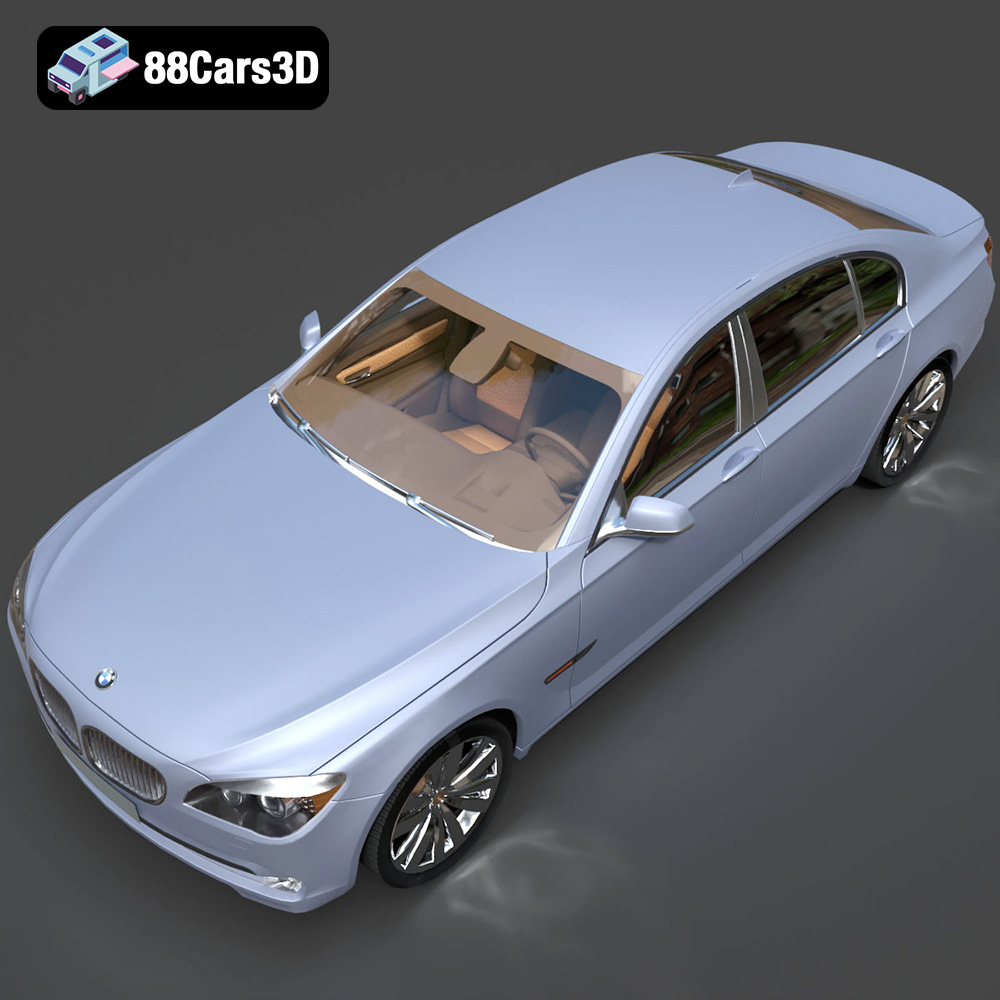
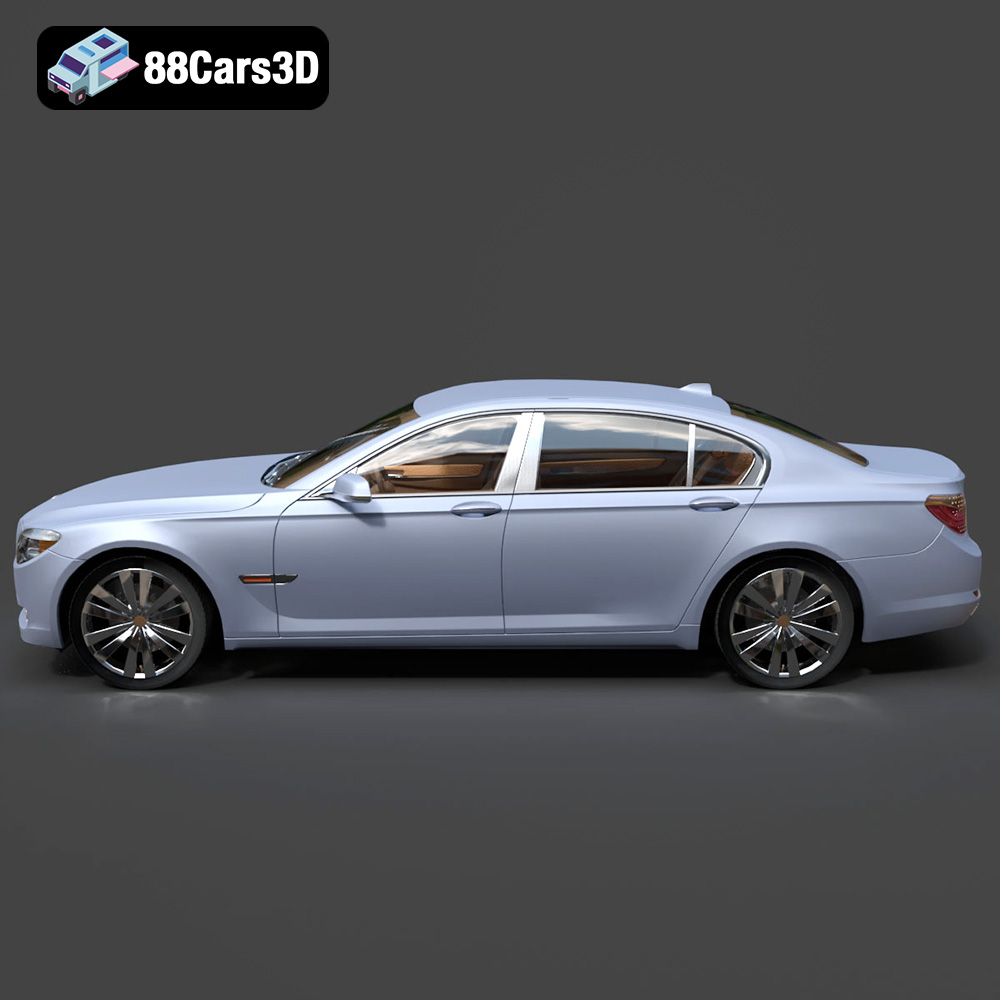
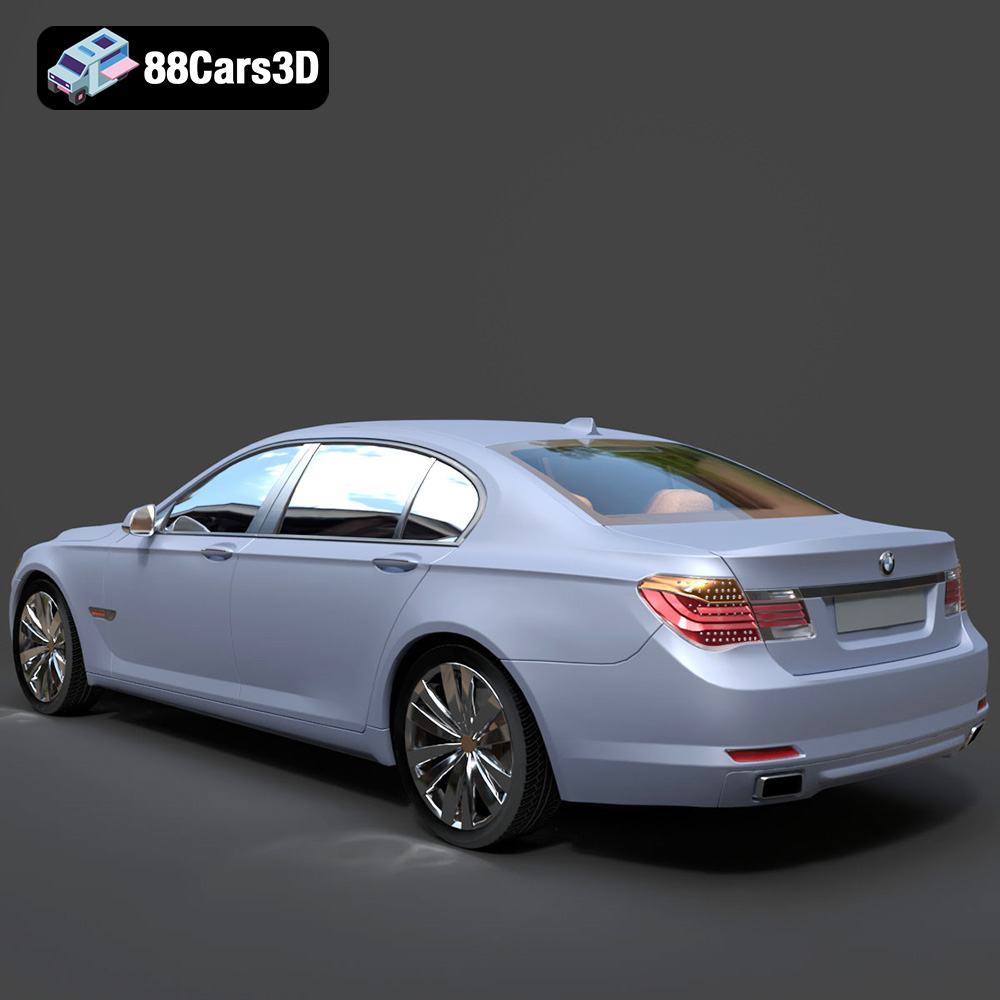
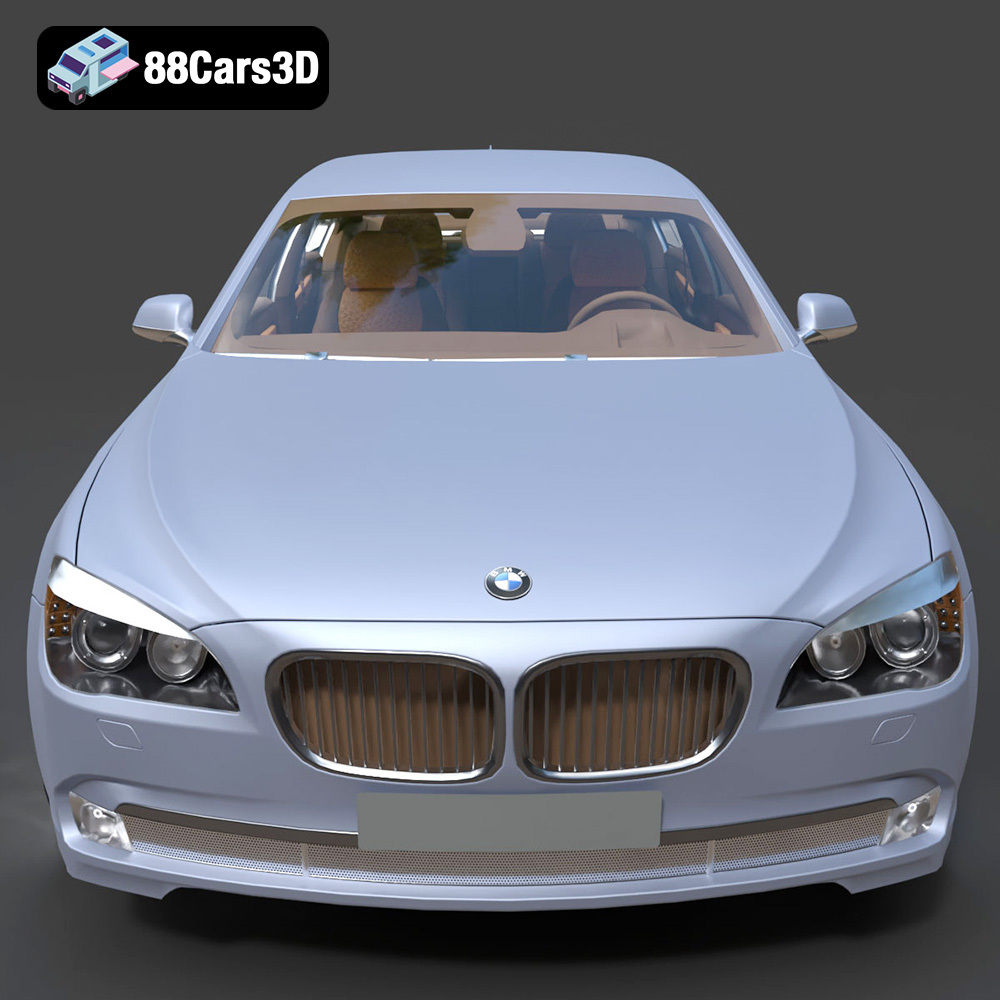
The essence of the BMW 7-Series F02’s sophisticated styling is meticulously preserved in this 3D model. From the signature kidney grille to the elegant lines that define its executive sedan profile, the exterior features are rendered with exceptional accuracy. This includes authentic body panels, detailed headlights and taillights featuring realistic material shaders for transparent and emissive parts, and high-resolution wheels and tires that are accurately modeled to scale. Even subtle chrome accents and trim elements are replicated, adding to the overall realism. Furthermore, for advanced animation workflows, elements like doors, the hood, trunk, and wheels are separated, allowing for realistic opening and closing animations, crucial for interactive showcases or detailed cinematic sequences. The realistic glass materials for windows and windshields contribute to the model’s photographic quality, essential for high-impact automotive rendering.
Interior and Mechanical Nuances
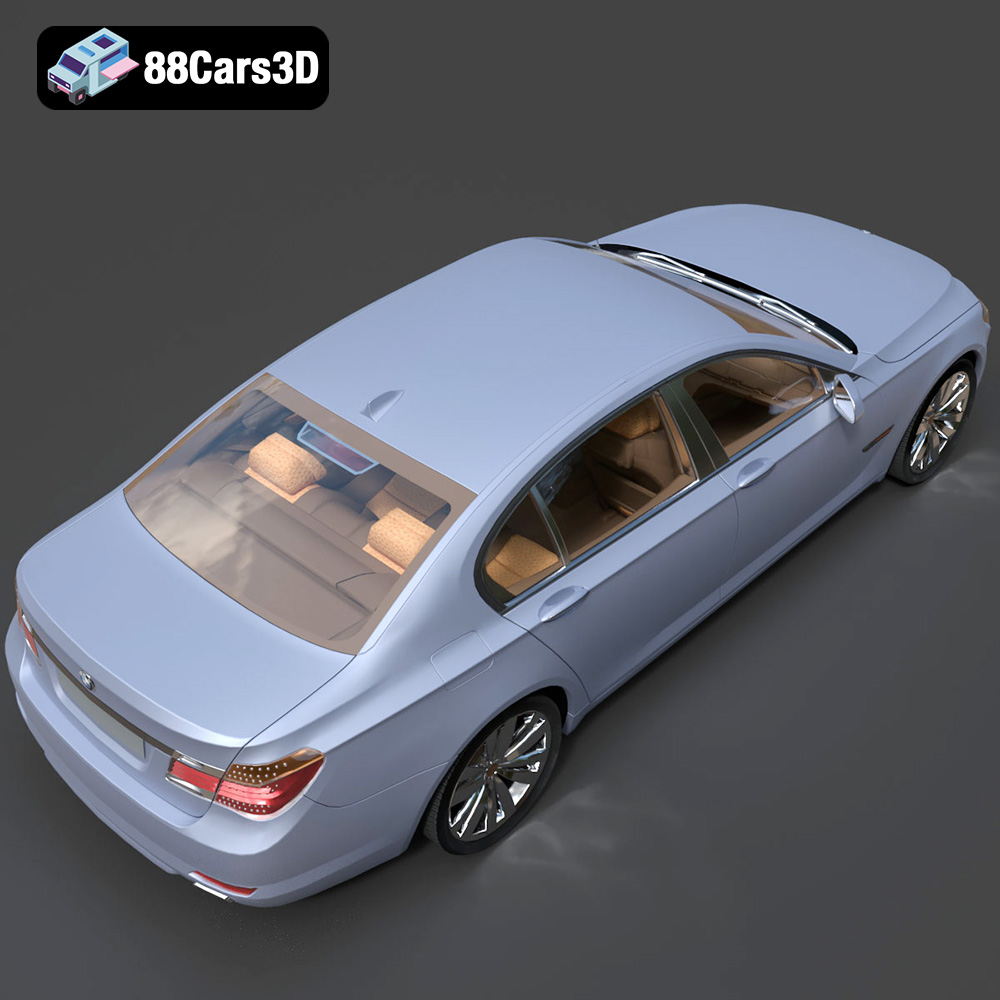
Beyond the impressive exterior, the BMW 7-Series F02 3D Model also provides a faithfully recreated interior. The dashboard, instrument cluster, and infotainment screen details are present, alongside comfortable seating, a detailed steering wheel, and central console elements. While optimized for efficiency, the mesh quality is designed to hold up for both distant establishing shots and close-up interior views, providing flexibility in camera work. Even basic representation of undercarriage elements adds an extra layer of realism, particularly valuable for simulations or shots where the vehicle might be elevated or viewed from below.
Technical Advantages: Topology, Scale, and Organization
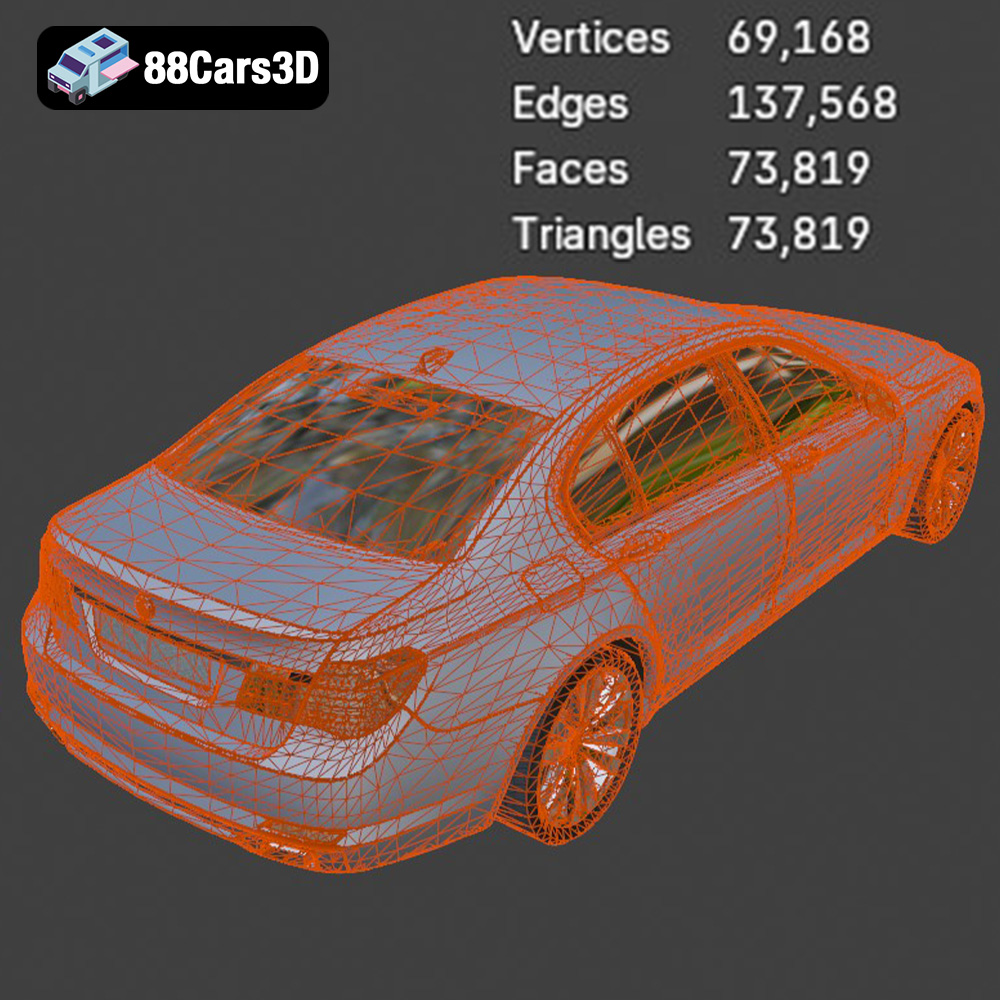
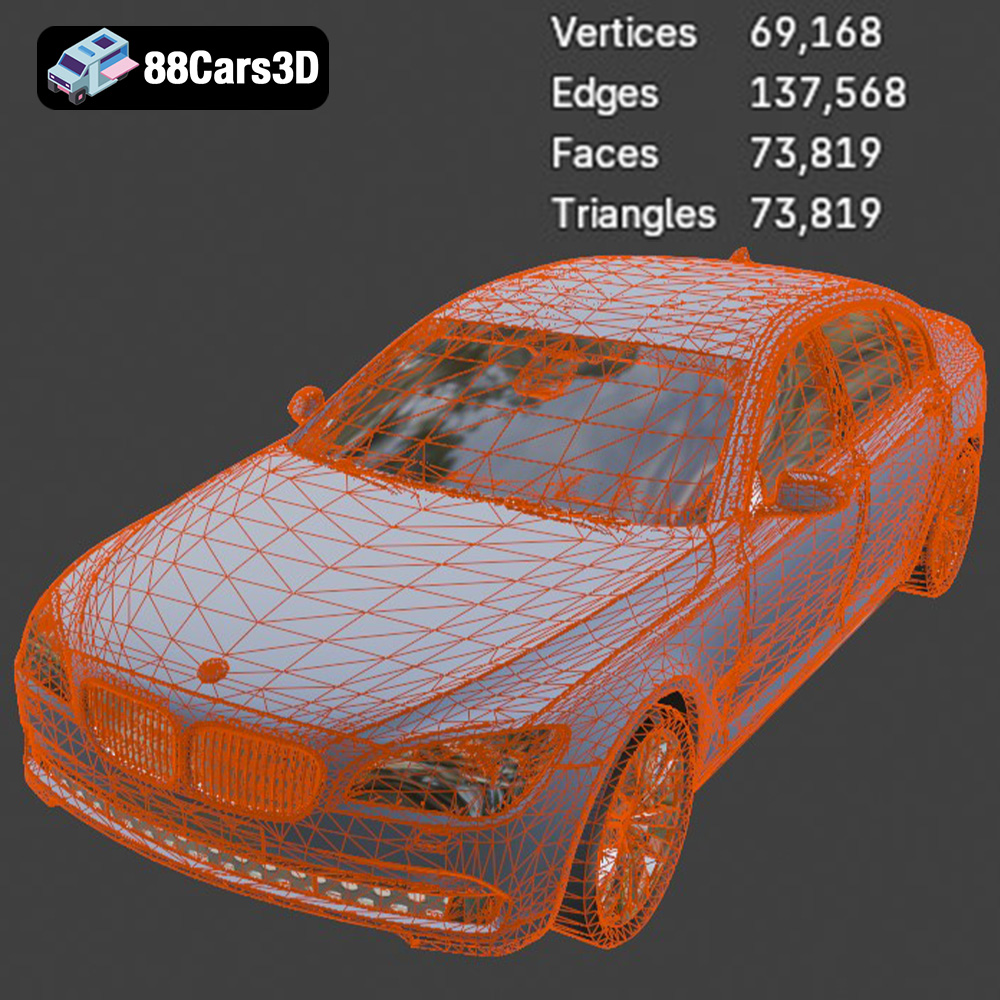
The true power of this model lies in its technical foundation. It boasts clean, quad-dominant topology, which is critical for smooth subdivision and deformation. This ensures that when higher levels of detail are required (e.g., for extreme close-ups or highly reflective surfaces), the model can be subdivided without introducing artifacts or pinching. Its accurate real-world scale dimensions guarantee seamless integration into existing scenes, eliminating the need for tedious manual scaling and ensuring realistic interactions with environments and other assets. Lastly, the logically organized hierarchy with proper pivot points for each component streamlines manipulation and animation, making it user-friendly for even the most complex rigging or interactive setups. This level of technical consideration makes the BMW 7-Series F02 3D Model an incredibly efficient and powerful game asset or rendering component.
Professional Workflows: Integrating the BMW 7-Series F02 into Your Projects
The versatility of the BMW 7-Series F02 3D Model allows it to seamlessly integrate into diverse professional pipelines, offering significant value across various industries.
High-End Rendering and Visualization
For artists focused on producing stunning visuals, the BMW 7-Series F02 is a dream asset. In workflows involving renderers like V-Ray, Corona Renderer (3ds Max), or Cycles and Eevee (Blender), the model’s clean geometry and pre-configured materials provide an excellent starting point. Imagine using this model to create photorealistic studio renders with dramatic lighting, showcasing every curve and reflection. Or integrating it into an architectural visualization of a luxury home, parked elegantly in a driveway to add context and aspirational appeal. Its high fidelity means it can withstand extreme close-ups, making it perfect for advertising campaigns or detailed product showcases. The ability to easily adjust paint finishes, material properties for chrome, rubber, and glass, and adapt lighting setups offers endless creative possibilities for achieving diverse moods and environmental conditions.
Game Development and Real-Time Applications
In the fast-paced world of game development, high-quality, optimized assets are paramount. The BMW 7-Series F02, provided with .fbx and .unreal formats, is engineered to excel as a game asset. Developers can import it into game engines like Unreal Engine or Unity, leveraging its optimized mesh quality for real-time performance. Its logically organized hierarchy with proper pivot points makes it straightforward to rig for suspension, steering, and door animations. Whether for racing games, open-world simulations, or virtual garages where players can customize their vehicles, this model provides the visual fidelity necessary for immersive gameplay without compromising frame rates. The inclusion of an .unreal project setup signifies that much of the groundwork for engine integration, such as materials and collision settings, may already be handled, saving precious development time.
AR/VR Experiences and Immersive Simulations
The burgeoning fields of Augmented Reality (AR) and Virtual Reality (VR) demand highly optimized yet realistic 3D content. The .glb format included with the BMW 7-Series F02 is specifically optimized for these applications, allowing for seamless integration into interactive AR experiences where a virtual car can be placed in a real-world environment, or into fully immersive VR simulations. Imagine a virtual showroom where potential buyers can explore the BMW 7-Series F02 in 360 degrees, open its doors, and even sit inside. For driving simulators or automotive design validation tools, the accurate scale and detailed interior facilitate realistic training and review sessions. The model’s clean topology ensures it performs efficiently on AR/VR platforms, delivering a smooth and convincing immersive experience.
Beyond the Screen: 3D Printing and Physical Prototyping
The utility of a high-quality 3D model extends far beyond digital rendering. With the advancements in 3D printing technology, a digital asset can effortlessly cross the barrier into the physical world, creating tangible objects that serve various purposes.
Preparing for Production
The inclusion of the .stl format for the BMW 7-Series F02 3D Model is a game-changer for physical prototyping and collectible creation. The .stl format is the standard for almost all 3D printers, translating the digital mesh into a series of triangles that the printer can understand and build layer by layer. Designers can use this model to create physical prototypes of custom accessories, architectural scale models that feature the car, or even a detailed desktop collectible version of the luxury sedan. The clean topology of the original model translates well into a printable mesh, reducing common issues like non-manifold geometry or open edges that can complicate the printing process. This capability broadens the model’s application from purely virtual visualization to hands-on, physical engagement.
Collectibles and Customization
For enthusiasts and collectors, the ability to 3D print a high-fidelity model like the BMW 7-Series F02 offers a unique opportunity for personalized collectibles. Artists can scale the model to their desired size, add custom bases, or even modify certain features before printing. This opens up a niche market for custom car models, where digital designs from 88cars3d.com can be transformed into bespoke physical artifacts, celebrating automotive design in a tangible form.
Customization and Adaptability: Tailoring the F02 to Your Vision
A truly professional 3D model offers more than just fidelity; it provides the flexibility for artists and designers to adapt it to their specific creative vision. The BMW 7-Series F02 3D Model is built with customization in mind, ensuring it can be tailored to virtually any aesthetic requirement.
Material Mastery: Paint, Chrome, and Glass
The model’s materials are designed for easy modification. Users can effortlessly adjust paint finishes to any color, from classic metallic hues to bold matte options, matching specific brand palettes or artistic preferences. The material properties for chrome, rubber, glass, and interior fabrics can be tweaked to achieve varying levels of reflectivity, roughness, transparency, and texture. This allows for unparalleled control over the visual presentation, whether aiming for showroom sparkle, a gritty urban look, or a weathered appearance for a post-apocalyptic scene. This level of material customization is crucial for achieving unique and compelling automotive rendering outcomes, ensuring the car perfectly fits into its digital environment.
Lighting and Environment: Setting the Scene
Beyond material customization, the model’s robust structure allows it to react realistically to diverse lighting setups and environmental conditions. Artists can place the BMW 7-Series F02 under a dramatic studio spotlight, bathed in the golden hour glow, or under the harsh glare of a rainy street. The realistic glass and reflective surfaces will interact authentically with these lighting scenarios, enhancing the overall immersion and visual impact. This adaptability makes the model an incredibly versatile asset for visualizers who need to create a wide range of moods and storytelling contexts, without the need for extensive post-production work to make the car fit the scene.
Conclusion
The modern landscape of 3D visualization is defined by an insatiable hunger for realism, efficiency, and flexibility. High-quality 3D car models are no longer just supplementary assets; they are central components that empower artists, designers, and developers to create truly immersive and impactful experiences. The BMW 7-Series F02 3D Model stands as a prime example of this professional-grade excellence, offering unparalleled detail, versatile file formats, and robust technical advantages that cater to a broad spectrum of applications, from high-end automotive rendering to dynamic game assets and innovative AR/VR simulations.
Its meticulous exterior and interior detailing, combined with clean topology, real-world scale, and organized hierarchy, make it a powerful tool for anyone seeking to elevate their digital projects. The extensive array of included file formats—from .blend and .max for comprehensive editing to .fbx for game engines, .glb for web and AR/VR, and even .stl for 3D printing—ensures that this model is not just a beautiful representation but a functional cornerstone for any professional workflow. Explore the possibilities and enhance your next project with this exceptional model, available at 88cars3d.com, where quality meets versatility.
Featured 3D Model
BMW 7-Series F02 3D Model
Experience automotive luxury and precision with this professional 3D model of the BMW 7-Series F02. Representing a pinnacle of executive sedan design, this model captures the sophisticated styling and elegant proportions of the renowned vehicle. Built with clean geometry and balanced detailing, it ensures visual fidelity and efficient performance across various platforms. Ideal for high-end rendering, cinematic animation, detailed simulations, and as a premium asset for game development.
Exterior Features:
- Authentic body panels reflecting the signature BMW design language
- Detailed front grille, headlights, and rear taillights with realistic material shaders for transparent and emissive parts
- High-resolution wheels and tires, accurately modeled to scale
- Chrome accents and trim elements meticulously replicated
- Separated doors, hood, trunk, and wheels for advanced animation workflows
- Realistic glass materials for windows and windshields
Interior / Mechanical Features:
- Faithfully recreated dashboard with instrument cluster and infotainment screen details
- Comfortable seating, steering wheel, and center console elements
- Optimized mesh quality for both distant shots and close-up views of interior components
- Basic representation of undercarriage elements for added realism
Technical Advantages:
- Clean, quad-dominant topology for easy subdivision and deformation
- Accurate real-world scale dimensions for seamless integration into existing scenes
- Logically organized hierarchy with proper pivot points for easy manipulation and animation
- Optimized for various rendering engines and real-time applications
Applications:
- Rendering & Visualization: Create stunning studio renders, architectural visualizations, and cinematic scenes
- Game Development: Utilize as a high-fidelity asset for racing games, open-world simulations, or virtual garages
- AR/VR: Develop immersive augmented and virtual reality experiences with a realistic vehicle model
- Simulation & Training: Integrate into driving simulators or automotive design validation tools
- 3D Printing: Convert to .stl format for physical prototyping and collectible models
Customization Options:
- Easily adjust paint finishes to any color, including metallic and matte options
- Modify material properties for chrome, rubber, glass, and interior fabrics to suit specific aesthetic requirements
- Adapt lighting setups to achieve diverse moods and environmental conditions
Elevate your projects with this meticulously crafted BMW 7-Series F02 3D model, offering unparalleled quality, versatility, and ease of use for professionals across multiple industries.
Included File Formats:
- .blend – Blender project with materials
- .fbx – Compatible with Unreal, Unity, and major 3D engines
- .obj – Universal format for nearly all 3D software
- .glb – Optimized for AR, VR, and web-based visualization
- .stl – Ready for 3D printing
- .ply – Mesh format for analysis and CAD workflows
- .unreal – Unreal Engine project setup
- .max – Editable 3ds Max scene for rendering and animation
Tags:
.bmw,.7seriesf02,.f02,.sedan,.luxurycar,.executivecar,.rendering,.simulation,.gameasset,.arvr,.blend,.fbx,.obj,.glb,.stl,.ply,.unreal,.maxMercedes Benz CLS 500 3D Model
$10.79
Product Image Gallery

Related Tags
.7seriesf02
.arvr
.blend
.bmw
.executivecar
.f02
.fbx
.gameasset
.glb
.luxurycar
.max
.obj
.ply
.rendering
.sedan
.simulation
.stl
.unreal
