Get 20% OFF All Premium 3D & STL Models!

In the dynamic world of 3D visualization, automotive design, and game development, the demand for incredibly detailed and technically sound 3D car models is ever-present. From the subtle glint on a chrome accent to the precise curve of a fender, every element contributes to a sense of realism and immersion. Capturing the essence of an iconic vehicle requires not just artistic skill, but a deep understanding of geometry, materials, and optimization. This is particularly true for luxury cars, where every detail speaks volumes about craftsmanship and engineering.
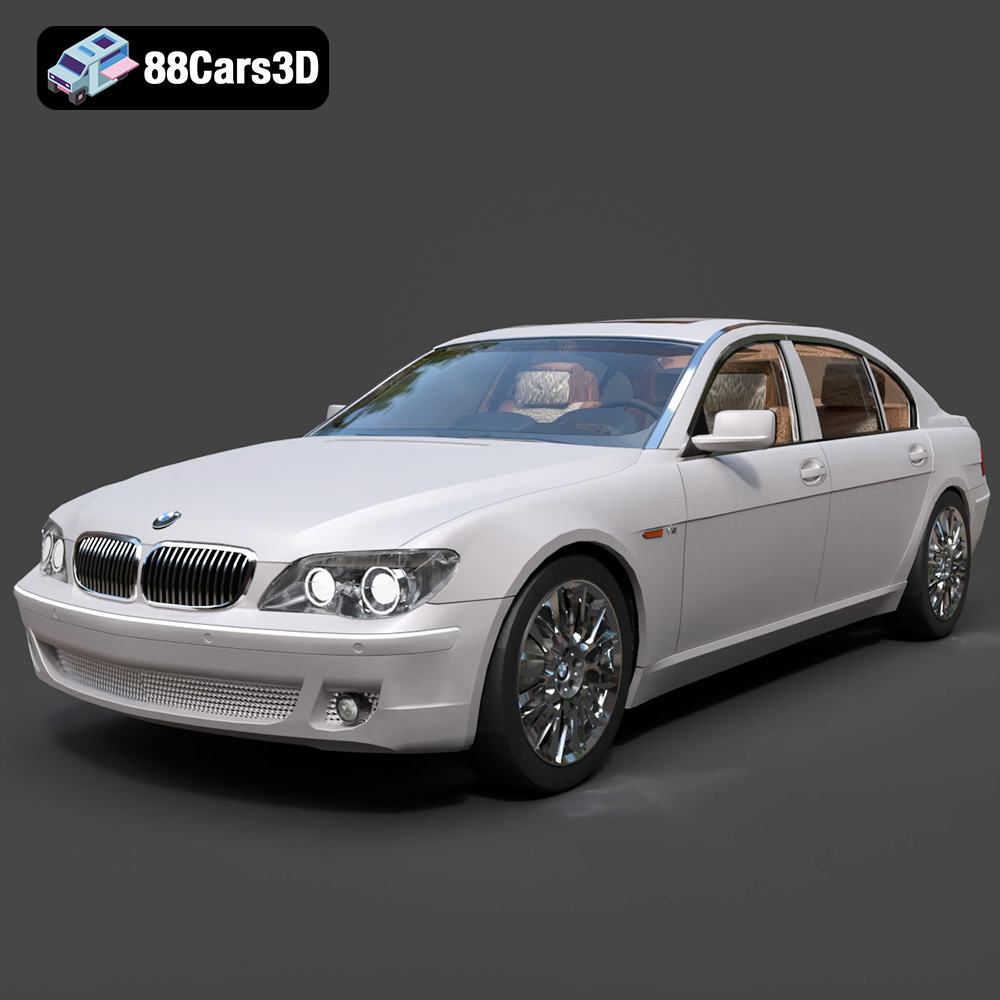
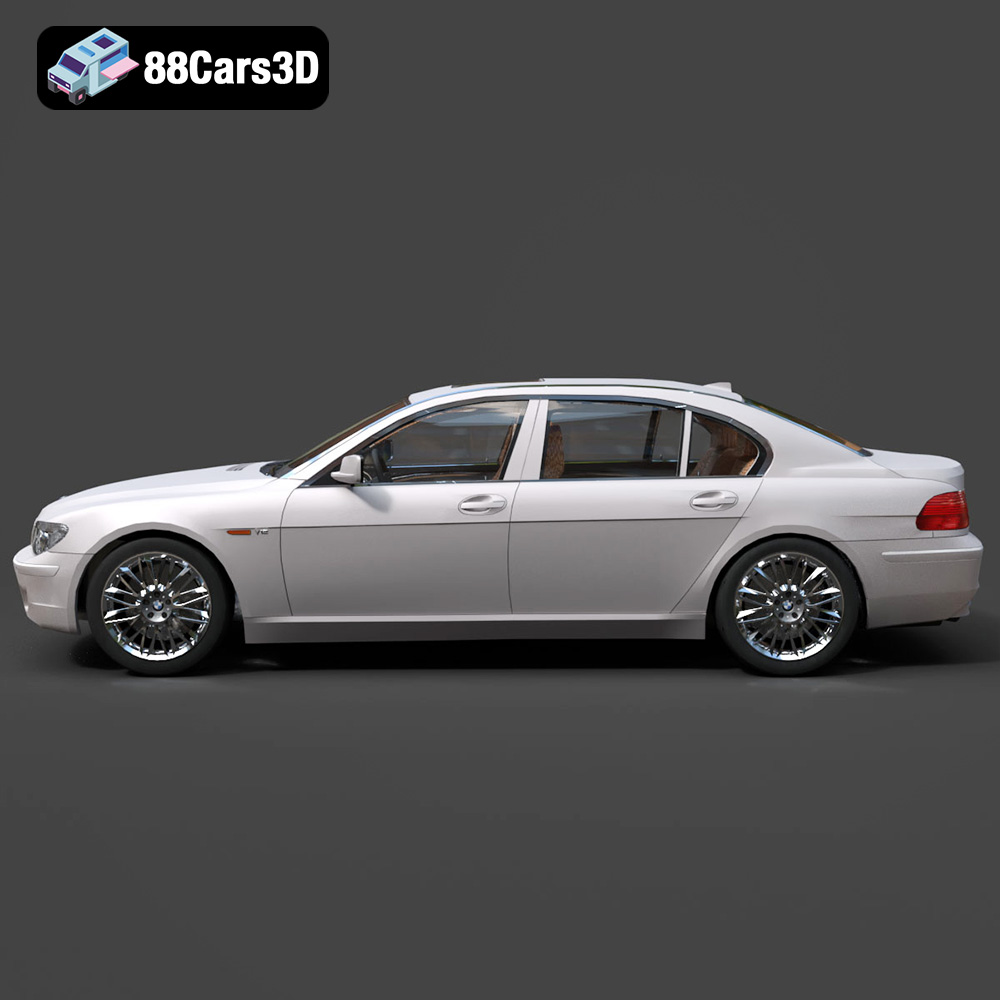
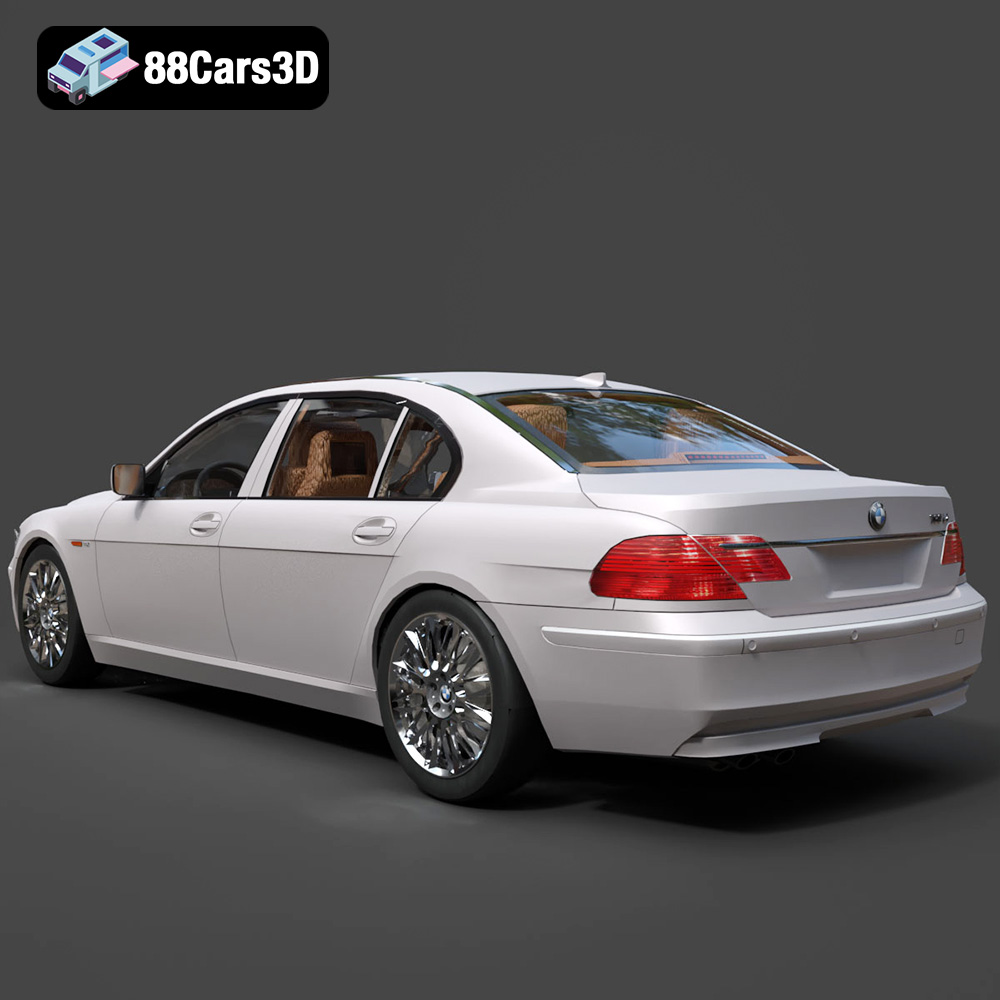
One such exemplary asset, now available at 88cars3d.com, is the meticulously crafted BMW 760Li E66 2005 3D Model. This digital rendition doesn’t just replicate a car; it encapsulates the distinctive styling and executive presence of BMW’s flagship sedan from the early 2000s, offering unparalleled versatility for a multitude of professional applications. Whether for high-fidelity rendering, realistic animations, comprehensive simulations, or robust integration into demanding game development projects, this model stands as a testament to precision and professional quality, providing a solid foundation for any digital endeavor.
The world of 3D modeling is vast, and knowing which file format to use for a particular project is paramount to a streamlined workflow and successful outcome. The BMW 760Li E66 3D Model from 88cars3d.com comes equipped with a comprehensive suite of formats, each serving distinct purposes and catering to various software environments and production pipelines. Understanding these formats is crucial for maximizing the model’s utility.
The `.blend` format is the native file type for Blender, the popular open-source 3D creation suite. When you download the BMW 760Li E66 3D Model in this format, you receive a complete Blender project, including the 3D mesh, meticulously set up materials, textures, lighting (if applicable), and potentially even basic animation rigs. This format is ideal for users who primarily work in Blender, offering full editability. Artists can tweak materials, adjust the mesh, modify lighting, or even extend the model with custom components directly within their familiar environment. The `.blend` file ensures all dependencies are encapsulated, making it highly portable within the Blender ecosystem.
The Filmbox, or `.fbx`, format is an industry-standard proprietary file format developed by Autodesk for 3D content exchange. Its strength lies in its ability to store not just mesh data, but also animation, cameras, lights, and materials, making it incredibly versatile. For the BMW 760Li E66 3D Model, the `.fbx` format is optimized for seamless import into game engines like Unreal Engine and Unity. It preserves hierarchical structures, pivot points, and UV mapping, which are essential for game development and other real-time applications. Its widespread adoption ensures excellent compatibility across most professional 3D software packages.
The Wavefront OBJ, or `.obj`, format is one of the most widely supported and truly universal formats for exchanging 3D geometry data. It stores the mesh (vertices, faces, normals, UVs) as well as material references (though the materials themselves are often defined in an accompanying `.mtl` file). While it doesn’t typically support animation or rigging, its simplicity and ubiquitous compatibility make it an excellent choice for transferring raw mesh data between different 3D applications. If you’re working with software that might not support `.fbx` or native formats, `.obj` ensures you can still access the core geometry of the BMW 760Li E66.
The GL Transmission Format, or `.glb`, is a compact and efficient format for 3D scenes and models, specifically designed for web-based applications, augmented reality (AR), and virtual reality (VR). It’s essentially a binary version of `.gltf` and bundles all necessary assets (geometry, materials, textures, animations) into a single, self-contained file. This makes the BMW 760Li E66 3D Model incredibly easy to load and display directly in web browsers or AR/VR viewers without external dependencies, ensuring fast load times and streamlined deployment for interactive experiences.
The Stereolithography, or `.stl`, format is the de facto standard for 3D printing. It represents 3D models as a series of connected triangles, describing only the surface geometry of an object without color, texture, or other CAD attributes. While it’s primarily used for additive manufacturing, its simplicity makes it easy for most CAD software to generate. The inclusion of an `.stl` file for the BMW 760Li E66 means the model can be directly prepared for 3D printing, allowing users to create high-quality physical replicas, prototypes, or miniature models of the luxury sedan.
The Polygon File Format, or `.ply`, is a file format for storing three-dimensional data from 3D scanners. It can store a wide range of properties, including color, transparency, normals, texture coordinates, and scalar values. It’s often used for precision mesh data, especially in CAD applications, scientific visualization, and 3D scanning workflows. For the BMW 760Li E66, the `.ply` format might be beneficial for engineers or designers who need a robust mesh representation for analysis, measurement, or integration into CAD-centric pipelines where mesh integrity is paramount.
This specialized format indicates an Unreal Engine project setup. It means the BMW 760Li E66 3D Model has been specifically configured and prepared within Unreal Engine itself, often with optimized materials, collision meshes, LODs (Levels of Detail), and blueprint setups. This dramatically reduces the setup time for developers, allowing for immediate integration and utilization within Unreal Engine projects, making it a true game-ready asset.
The `.max` format is the native file type for Autodesk 3ds Max, a powerful 3D modeling, animation, rendering, and compositing software. Similar to the `.blend` file, the `.max` file for the BMW 760Li E66 3D Model provides a complete scene, including all geometry, materials, lighting, and animation setups within 3ds Max. This offers artists full control to refine renders, create complex animations, or integrate the vehicle into architectural visualization scenes with all the robust features of 3ds Max at their disposal.
By offering this comprehensive range of file formats, the BMW 760Li E66 3D Model ensures maximum compatibility and flexibility, empowering professionals across various industries to leverage this high-quality asset effectively.
Creating 3D car models of exceptional quality goes far beyond simply mimicking real-world shapes. It involves a meticulous blend of artistic vision and technical discipline to ensure the digital asset is not only visually stunning but also performant and versatile across different applications. The BMW 760Li E66 2005 3D Model exemplifies this approach, built with the rigorous standards demanded by automotive rendering and game asset development.
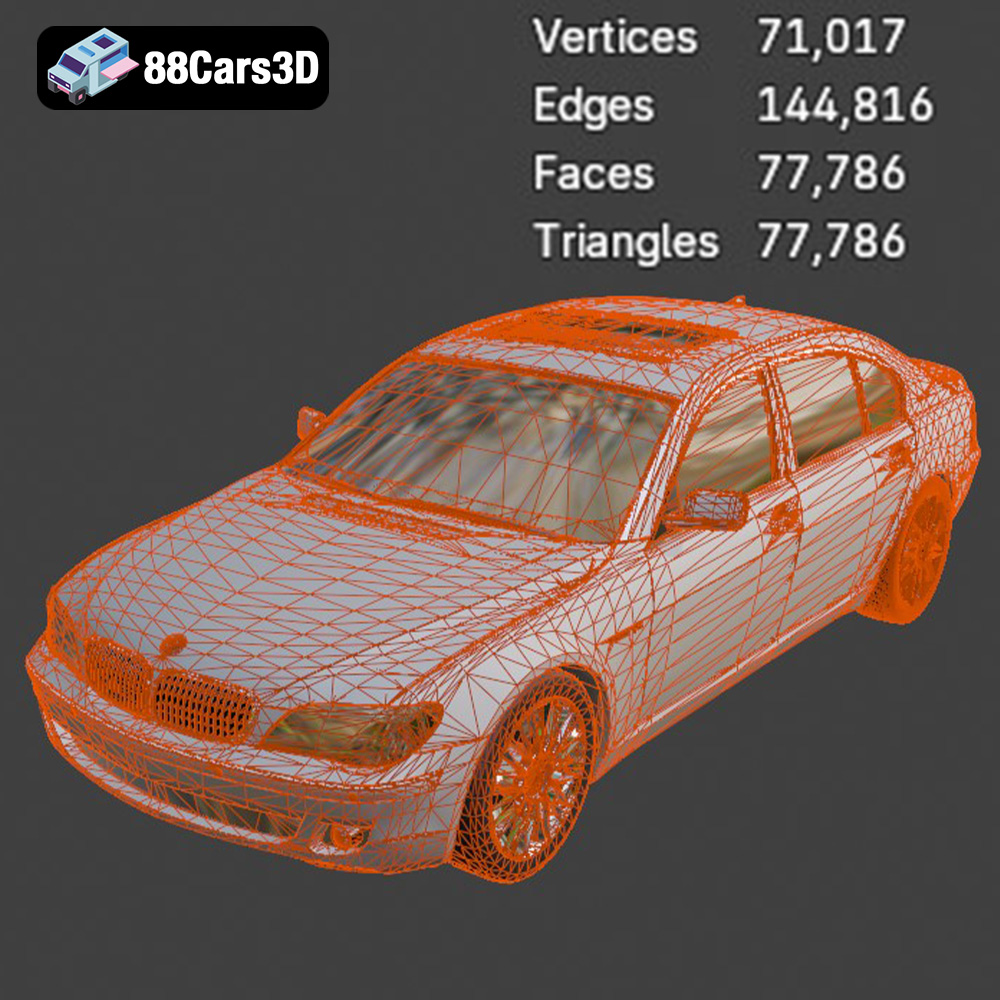
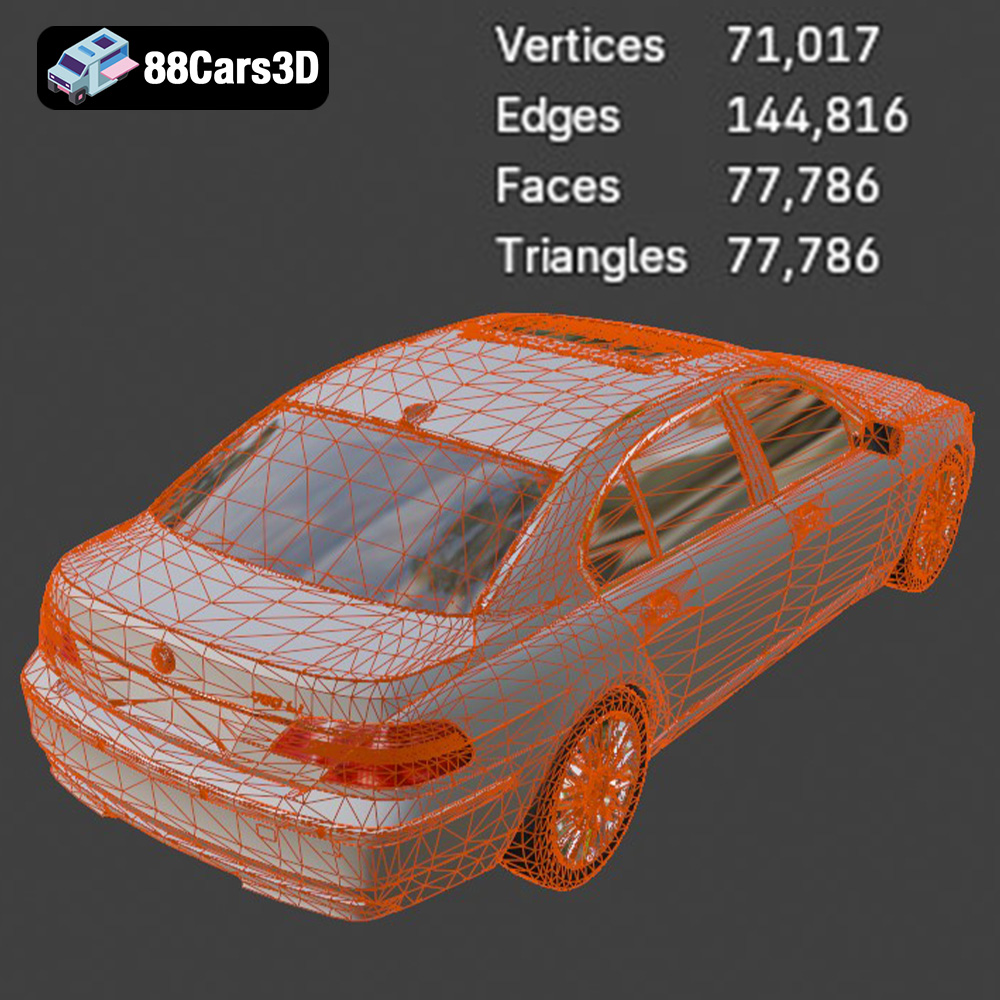
At the core of any great 3D model is its topology – the arrangement of polygons that form its surface. For automotive rendering, especially with sleek, reflective surfaces like those of a luxury sedan, clean geometry is paramount. The BMW 760Li E66 model boasts “clean, quad-dominant topology for smooth subdivision and easy mesh manipulation.” This means the mesh primarily consists of four-sided polygons (quads), which are ideal for producing smooth, artifact-free surfaces when subdivision modifiers are applied. This also facilitates clean deformations for animation and makes UV mapping more straightforward.
Furthermore, “optimized mesh quality” ensures that while visual fidelity is high, the polygon count remains manageable, preventing unnecessary overhead in real-time engines or excessively long render times. The separation of components like “doors, hood, and trunk” with proper pivot points is another critical optimization, preparing the model for animation without complex re-rigging.
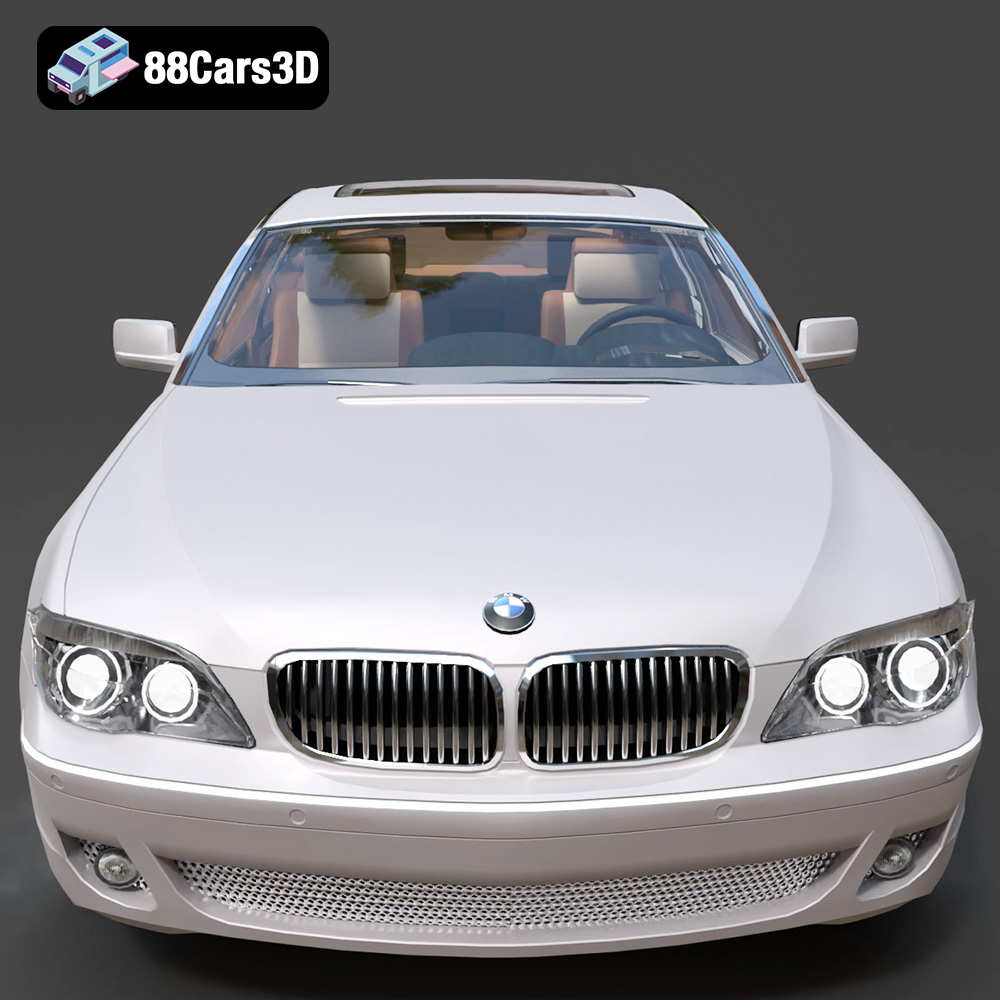
Beyond geometry, a model’s realism is heavily influenced by its materials and textures. The BMW 760Li E66 3D Model features “detailed headlamps, tail lights, and fog lights with realistic transparent materials,” along with “signature BMW kidney grille and chrome accents accurately reproduced.” This attention to material detail, including physically based rendering (PBR) textures for elements like paint, glass, rubber, and various metals, is crucial for automotive rendering.
In professional workflows, artists spend considerable time crafting shaders that accurately simulate how light interacts with different surfaces. The “flexible material setups for metals, chrome, glass, and rubber components” in this model provide a solid starting point, allowing artists to customize reflectivity, roughness, and color to achieve specific looks, from showroom polish to road-worn realism. Accurate UV mapping, though not explicitly detailed in the product description, is an implied necessity for applying high-resolution textures and decal placements without stretching or distortion.
The true value of a high-quality 3D asset lies in its seamless integration into various professional pipelines. The BMW 760Li E66 2005 3D Model is engineered precisely for this, offering a robust foundation for artists, designers, and developers working across diverse industries.
For advertising agencies, architectural visualization studios, or automotive design firms, photorealistic rendering is often the end goal. The “real-world scale accuracy” of the BMW 760Li E66 ensures it drops perfectly into existing scenes without requiring manual scaling adjustments, a common frustration with lesser models.
Using the provided `.max` (3ds Max) or `.blend` (Blender) files, artists can leverage powerful renderers like V-Ray, Corona Renderer, Cycles, or Eevee to produce stunning visuals. Imagine the BMW 760Li E66 elegantly parked in a luxurious virtual driveway in an architectural visualization, or gliding through a cinematic sequence for a digital advertisement. The “configurable lighting setups” mentioned in the product description empower artists to sculpt light and shadow, highlighting the vehicle’s “authentic body panels mirroring the elegant lines of the E66 generation” and its “high-resolution wheels and tires.” This makes it perfect for studio renders or any scenario requiring a premium vehicle.
The demands of game development are unique, requiring not only visual quality but also extreme optimization for real-time performance. The BMW 760Li E66 is explicitly “optimized as a game-ready asset for racing simulations, open-world environments, and interactive experiences.” The inclusion of an `.fbx` file ensures compatibility with industry-leading engines like Unreal Engine and Unity, while the dedicated `.unreal` project setup streamlines the import process for Unreal Engine users.
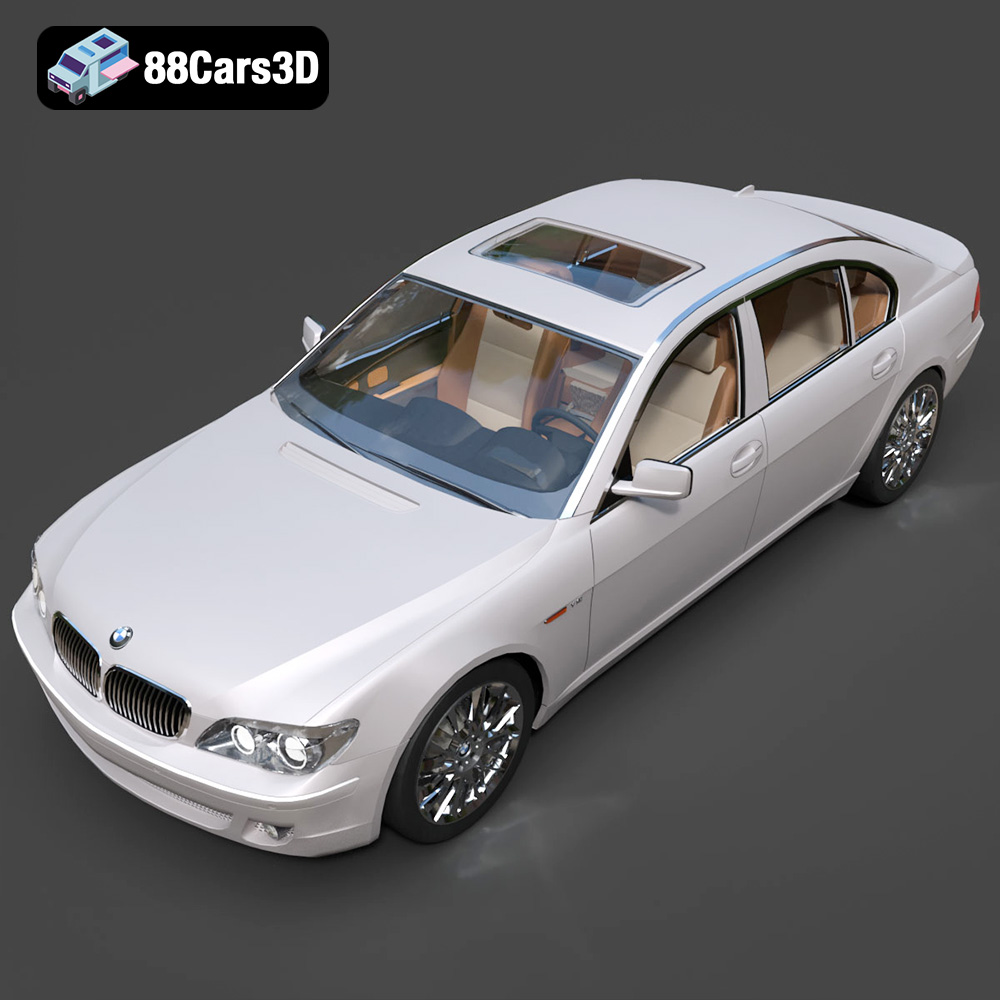
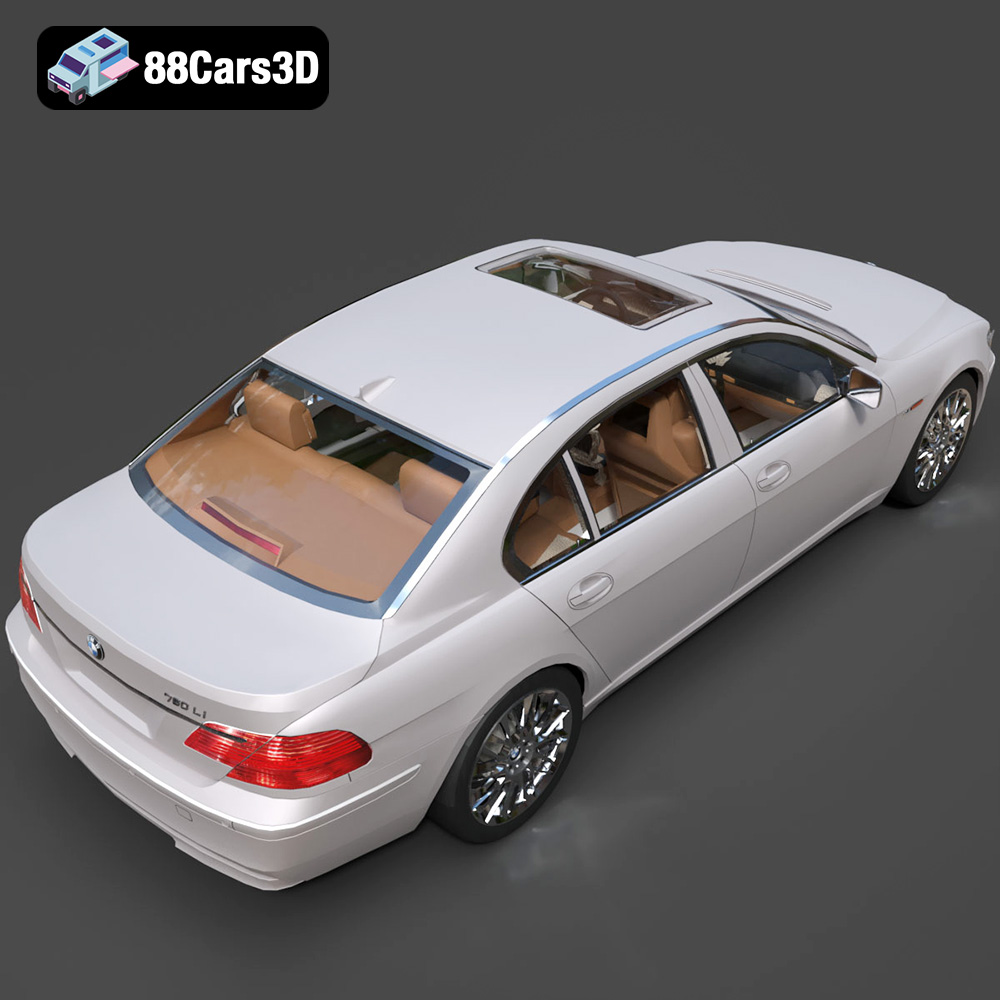
In game development, assets need to be performant. This means a balanced polygon count (which the “optimized mesh quality” ensures), efficient UV layouts for texture atlasing, and proper material configurations for PBR workflows common in modern game engines. The “organized hierarchy with proper pivot points for animation-ready components” is particularly vital for game designers who need to animate car doors, bonnets, or wheels dynamically in response to player interaction or physics simulations. For a racing title, the interior detail, including “dashboard, steering wheel, seats, and center console,” provides an immersive first-person cockpit view.
As AR and VR technologies mature, so does the need for optimized 3D content that can be displayed interactively on various devices. The `.glb` format included with the BMW 760Li E66 is a game-changer for these applications, as well as for web-based 3D viewers. This format encapsulates all model data into a single file, making it incredibly efficient for streaming and display on platforms like Google’s ARCore, Apple’s ARKit, or directly embedded into product pages for interactive viewing.
Imagine potential buyers exploring the “meticulously crafted 3D model of the iconic BMW 760Li E66” in their driveway via AR, or experiencing a virtual showroom in VR, stepping inside the “faithful recreation of the luxurious interior.” The model’s balanced detailing ensures it looks excellent without bogging down mobile or headset performance, making it ideal for immersive virtual and augmented reality applications.
While rendering and game development are primary applications, the technical robustness of the BMW 760Li E66 2005 3D Model extends its utility into more specialized, data-driven fields.
For automotive engineers, driving schools, or military training, highly accurate vehicle models are indispensable for creating realistic simulation environments. The “real-world scale accuracy” and “organized hierarchy” of the BMW 760Li E66 make it a prime candidate for such applications. Driving simulators demand precise physical representations to accurately calculate vehicle dynamics, collisions, and sensor inputs.
The detailed interior, with its “intricate control details and instrument clusters,” can be used for training purposes, allowing users to familiarize themselves with the vehicle’s cockpit layout and controls in a safe, virtual environment. Furthermore, the clean topology and accurate representation are valuable for technical training scenarios where engineers might study component interaction or maintenance procedures. The `.ply` format, known for its precision, could be particularly useful for integrating the model into engineering analysis software for performance simulations.
The advent of 3D printing has revolutionized prototyping and physical model creation. The BMW 760Li E66 3D Model can be easily converted to an `.stl` format, directly enabling the creation of high-quality physical replicas. While the digital model shines in virtual spaces, having a tangible representation can be invaluable for designers, hobbyists, or even for creating bespoke gifts.
Designers might use a 3D-printed version to evaluate proportions and physical presence, or to create scaled models for display. The robust mesh ensures a clean translation to a printable format, avoiding issues common with poorly constructed models. This adds another layer of versatility, bridging the gap between the digital and physical realms.
A professional 3D asset should not be a static object but a flexible canvas for creative expression. The BMW 760Li E66 3D Model provides ample opportunities for customization, allowing artists to adapt it to specific project needs and artistic visions.
One of the most immediate customization options involves altering the vehicle’s aesthetics. The model offers “easily adjustable paint finishes and custom graphic applications.” This means an artist can quickly change the car’s color from a classic metallic black to a vibrant racing green, or apply custom decals and liveries. Leveraging the “flexible material setups for metals, chrome, glass, and rubber components,” the artist can also adjust the glossiness of the paint, the reflectivity of the chrome, or the wear on the tires to match specific environmental conditions or a desired artistic style. For instance, a game developer might create multiple texture sets to represent different states of vehicle damage or various trim levels.
Effective lighting is crucial for evocative automotive rendering. The “configurable lighting setups” for the BMW 760Li E66 3D Model allow artists to experiment with different illumination scenarios. This could range from a dramatic studio lighting setup that emphasizes the car’s curves and reflections, to an outdoor scene bathed in golden hour sunlight, or even a gritty, rain-slicked street at night. By adjusting light sources, intensity, color, and reflections, artists can dramatically alter the mood and visual impact of their renders. Coupled with dynamic camera angles and engaging backdrops, the BMW 760Li E66 can become the star of any visual narrative. This level of creative control ensures that the model can serve diverse projects, from photorealistic advertising to stylized cinematics.
The journey through the intricate world of 3D car models reveals a profound blend of art and engineering, culminating in assets that power everything from blockbuster games to hyper-realistic architectural visualizations. The BMW 760Li E66 2005 3D Model is a stellar example of this synergy, offering a meticulously crafted digital representation of an iconic luxury sedan. Its clean, optimized geometry, rich detailing, and comprehensive range of file formats make it an indispensable tool for professionals.
Whether your project demands cinematic rendering, real-time game integration, immersive AR/VR experiences, detailed simulations, or even physical 3D prints, this model provides the technical foundation and creative flexibility required. The versatility afforded by its various formats – from the editable `.blend` and `.max` files to the game-ready `.fbx` and `.unreal`, and the web-optimized `.glb` – ensures seamless integration into virtually any professional workflow. For designers, developers, and artists seeking a premium, high-fidelity vehicle asset, the BMW 760Li E66 3D Model from 88cars3d.com stands as a beacon of quality and an investment in efficiency and creative potential. Explore this model and many other exceptional 3D car models to elevate your next project to new heights of realism and engagement.
Presenting a meticulously crafted 3D model of the iconic BMW 760Li E66, representing the pinnacle of luxury and German engineering from the early 2000s. This model captures the distinctive styling and executive presence of BMW’s flagship sedan. Built with clean, optimized geometry and balanced detailing, it is engineered for high-fidelity rendering, realistic animations, comprehensive simulations, and robust integration into game development projects.
$10.79
.760li
.arvr
.blend
.bmw
.e66
.executivecar
.fbx
.gameasset
.glb
.luxurycar
.max
.obj
.ply
.rendering
.sedan
.simulation
.stl
.unreal