

Mastering Automotive Visuals: A Deep Dive into the BMW 850i Coupe 1990 3D Model
In the vibrant world of 3D visualization, few subjects captivate enthusiasts and professionals quite like classic automotive design. The sleek lines, powerful stance, and timeless appeal of a vintage car offer an irresistible challenge and reward for any digital artist. Capturing the essence of these mechanical marvels in a virtual space requires not only artistic vision but also a profound understanding of technical precision and specialized workflows.
Among the pantheon of iconic vehicles, the BMW 850i Coupe (E31 chassis) stands out as a symbol of 90s luxury and engineering prowess. Its distinctive long hood, pillarless hardtop design, and signature pop-up headlights make it an instantly recognizable classic. For anyone seeking to integrate such a legend into their projects – be it for stunning renders, immersive game environments, or detailed simulations – a high-quality 3D model is indispensable.
This article delves into the intricacies of professional 3D car models, using the expertly crafted BMW 850i Coupe 1990 3D Model as a prime example. We’ll explore the technical considerations, professional applications, and diverse file formats that empower creators to bring automotive history to life. From photorealistic rendering in 3ds Max and Blender to real-time deployment in Unreal Engine, understanding the foundational elements of such an asset is crucial for success in any visualization endeavor. The availability of such premium 3D car models on platforms like 88cars3d.com streamlines complex production pipelines, allowing artists and developers to focus on creative execution.
The Art of Capturing Automotive Heritage in 3D
Recreating a classic vehicle in 3D is far more than simply modeling its exterior shell. It’s a meticulous process of digital archaeology, requiring an understanding of the vehicle’s design philosophy, its mechanical details, and its overall presence. The goal is to produce a digital twin that evokes the same emotion and recognition as the physical car.
Recreating the BMW 850i’s Iconic Design
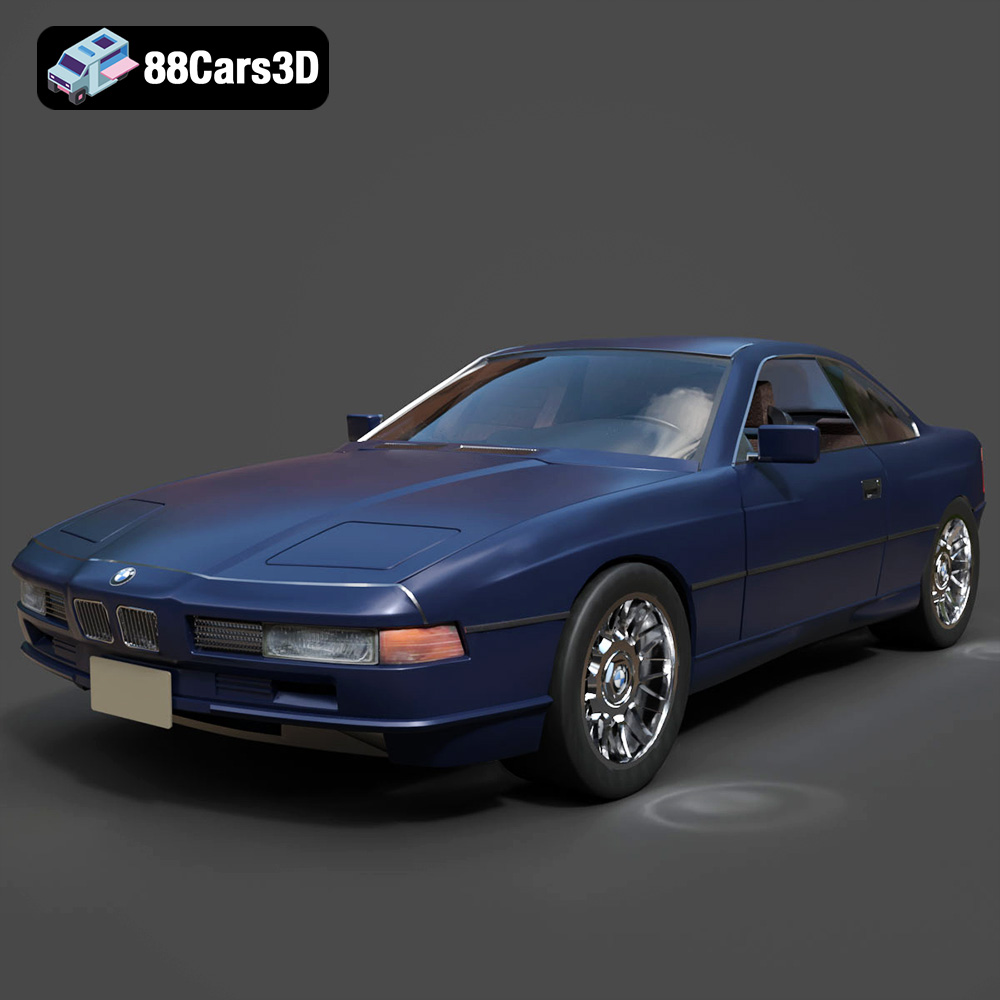
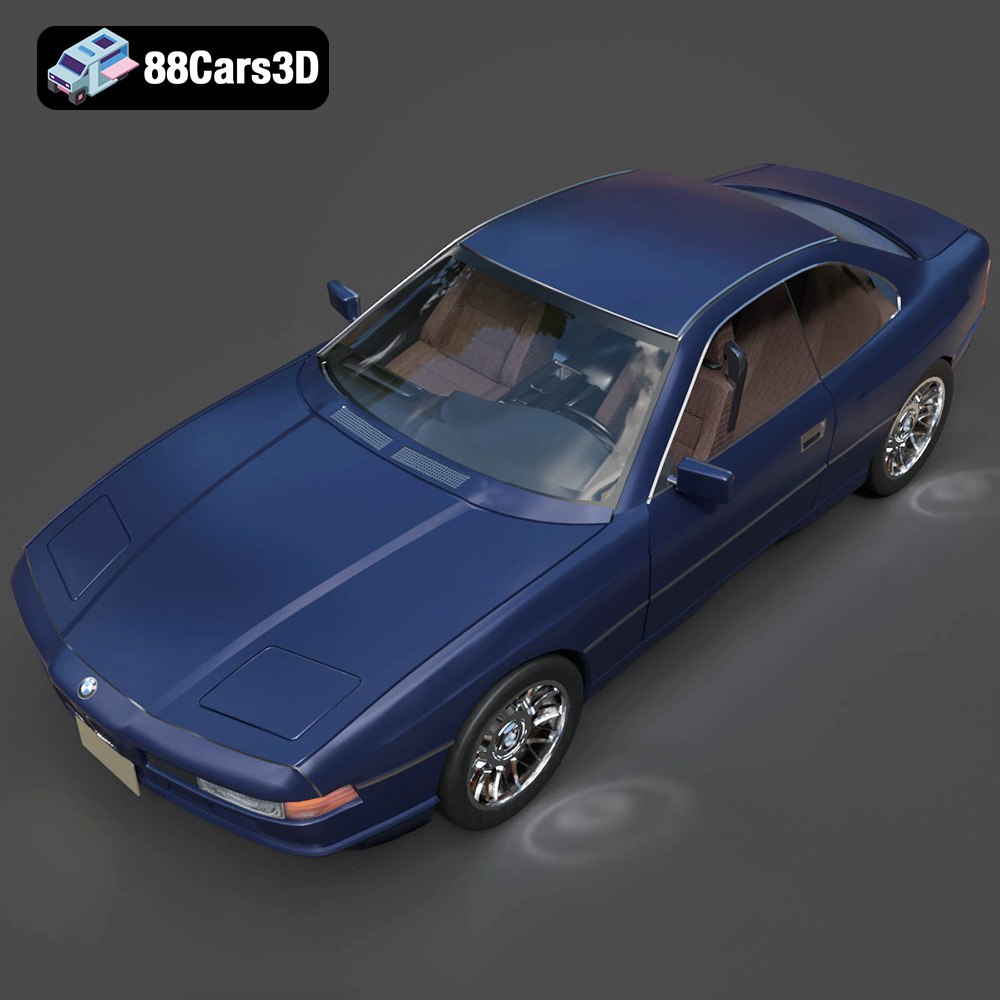
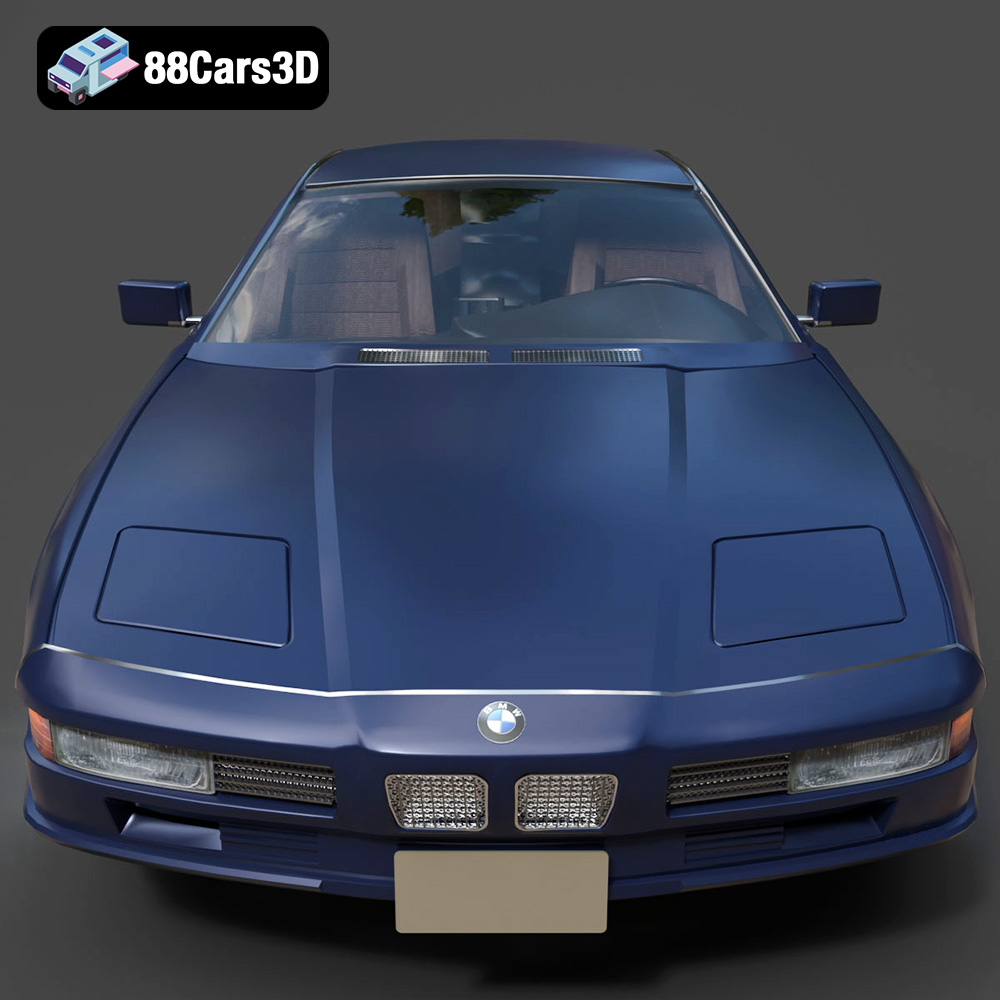
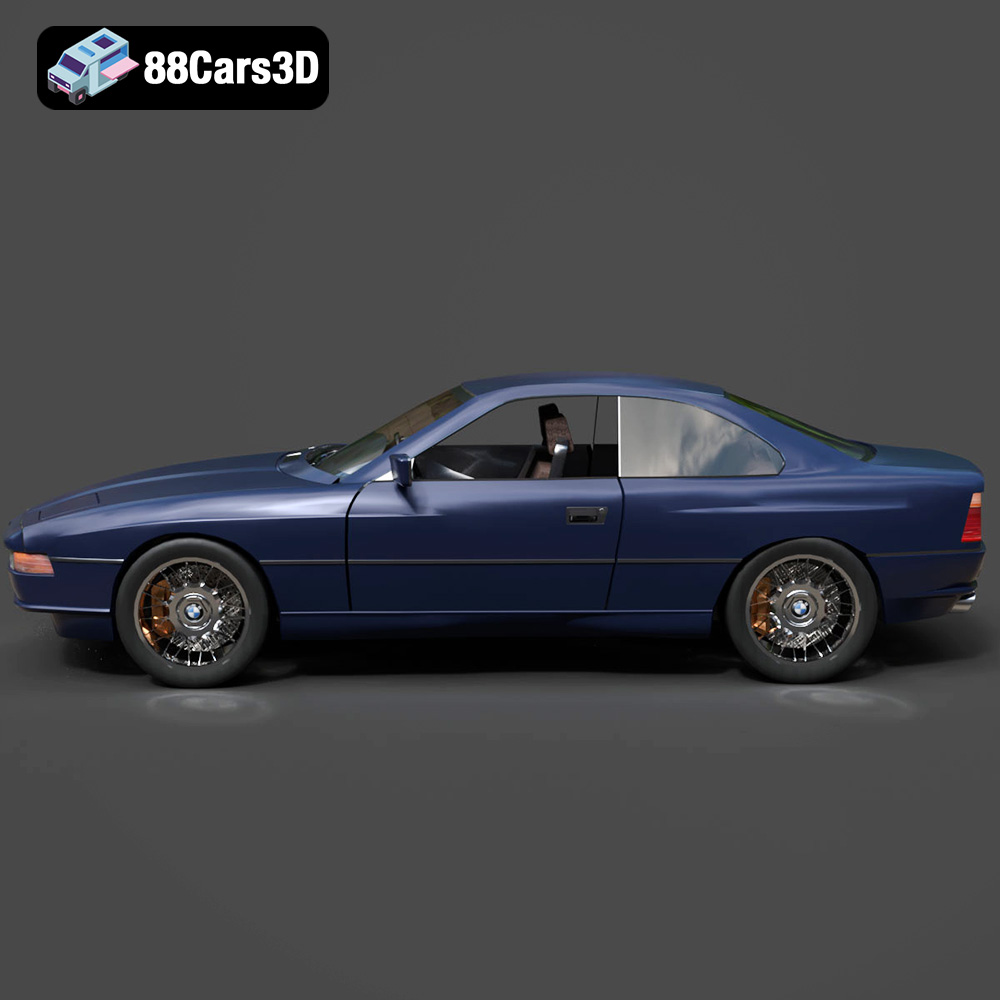
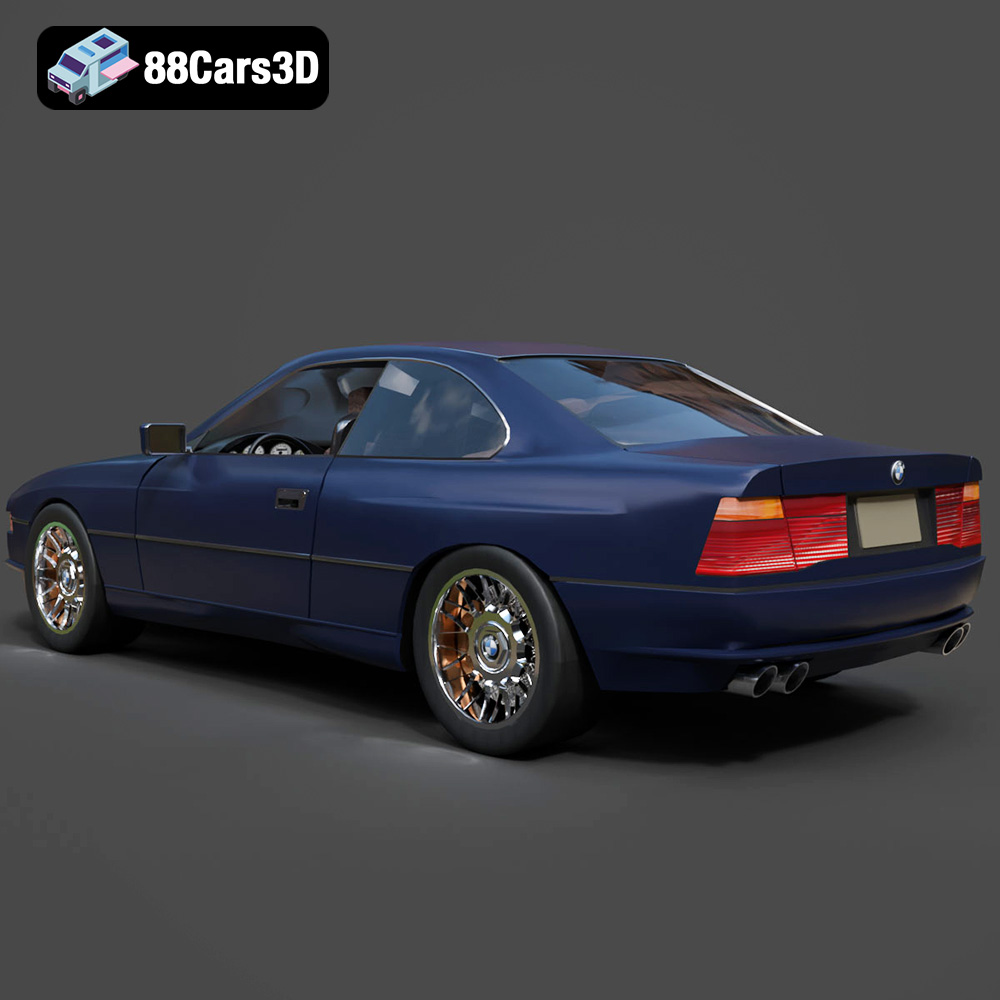
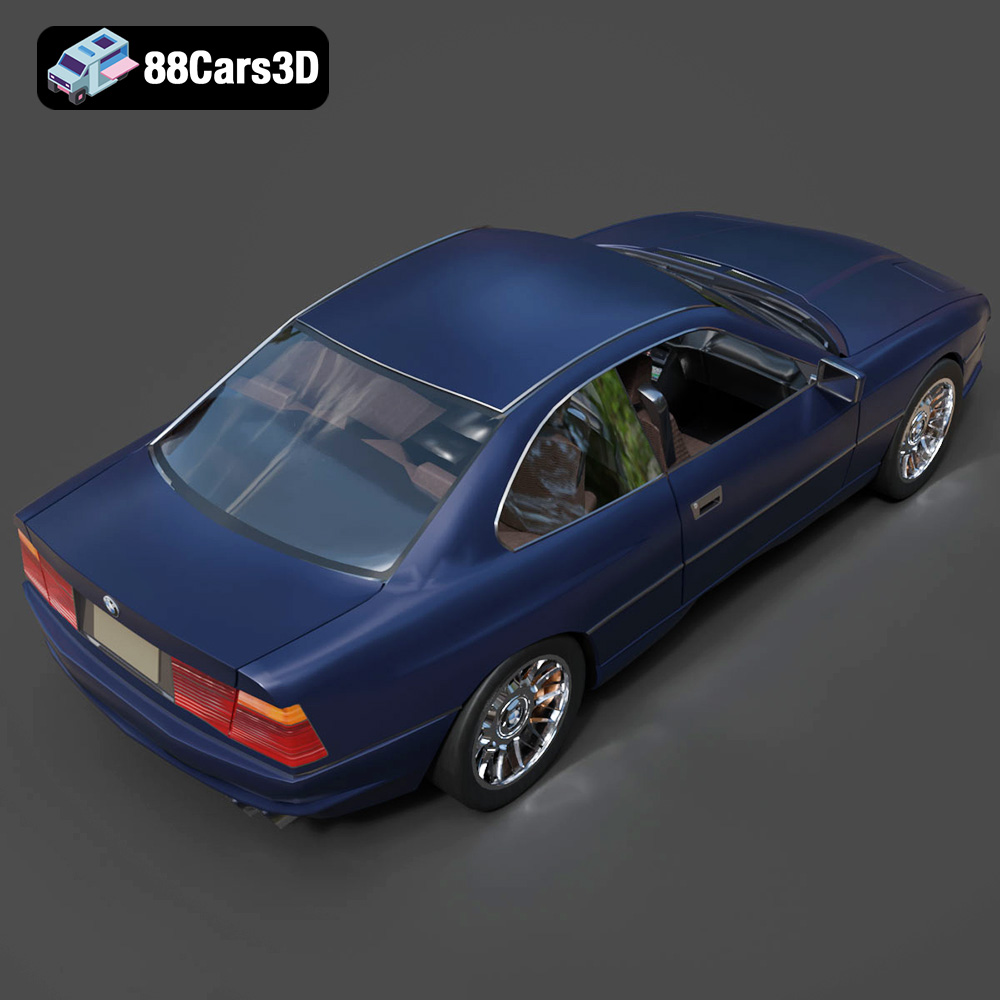
The BMW 850i Coupe, an engineering marvel from the early 90s, presents a unique set of design challenges and opportunities for 3D artists. Its distinctive E31 chassis is characterized by a sleek, wedge-shaped profile, a remarkably low drag coefficient for its era, and perhaps its most charming feature: retractable pop-up headlights. Capturing these elements with absolute fidelity is paramount. A high-quality 3D car model, such as the BMW 850i Coupe 1990 3D Model, goes beyond mere approximation. It meticulously replicates the subtle curves of the body panels, the precise alignment of the shut lines, the intricate details of the wheel design, and the complex mechanics of the lighting system. This level of detail extends to the interior, dashboard, and seating, ensuring that every angle and perspective maintains authenticity. Precision in recreating these features ensures that whether the model is used for a close-up render or a distant game asset, its identity as the legendary BMW 850i is unmistakable.
Beyond Aesthetics: The Technical Foundation
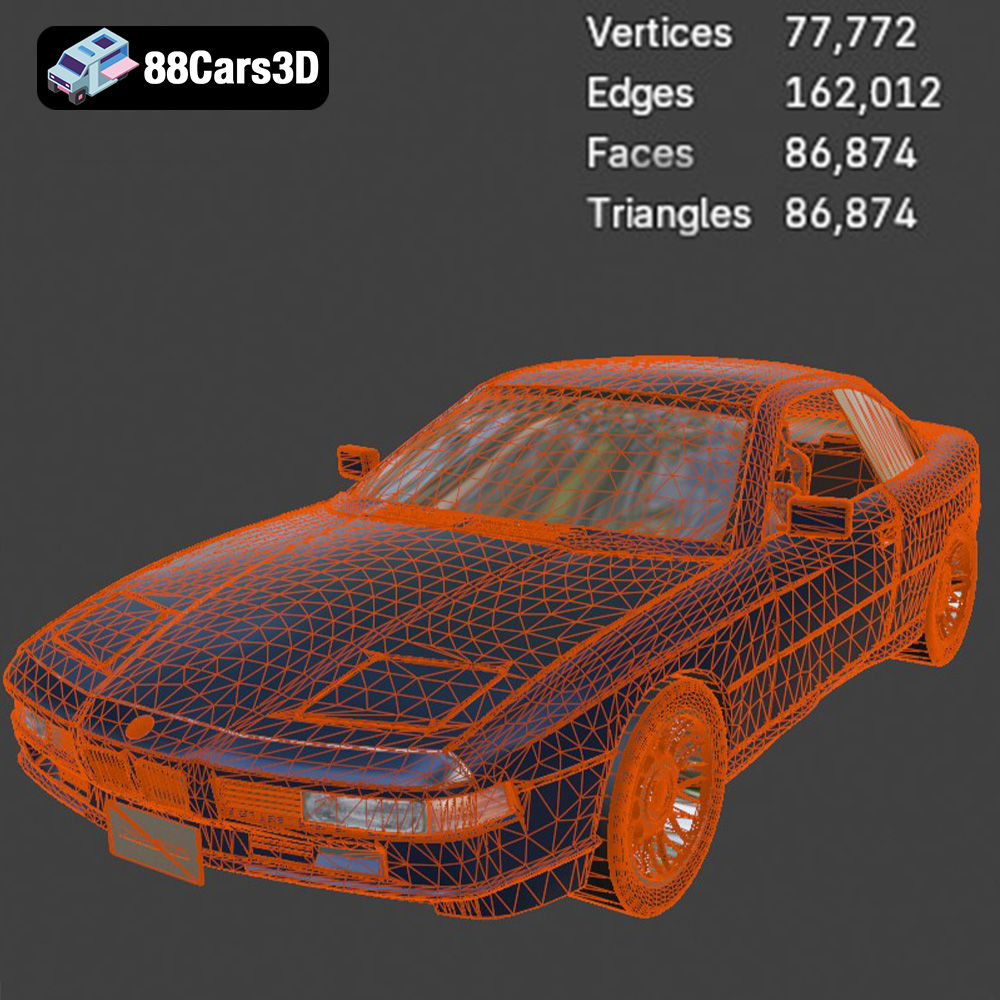
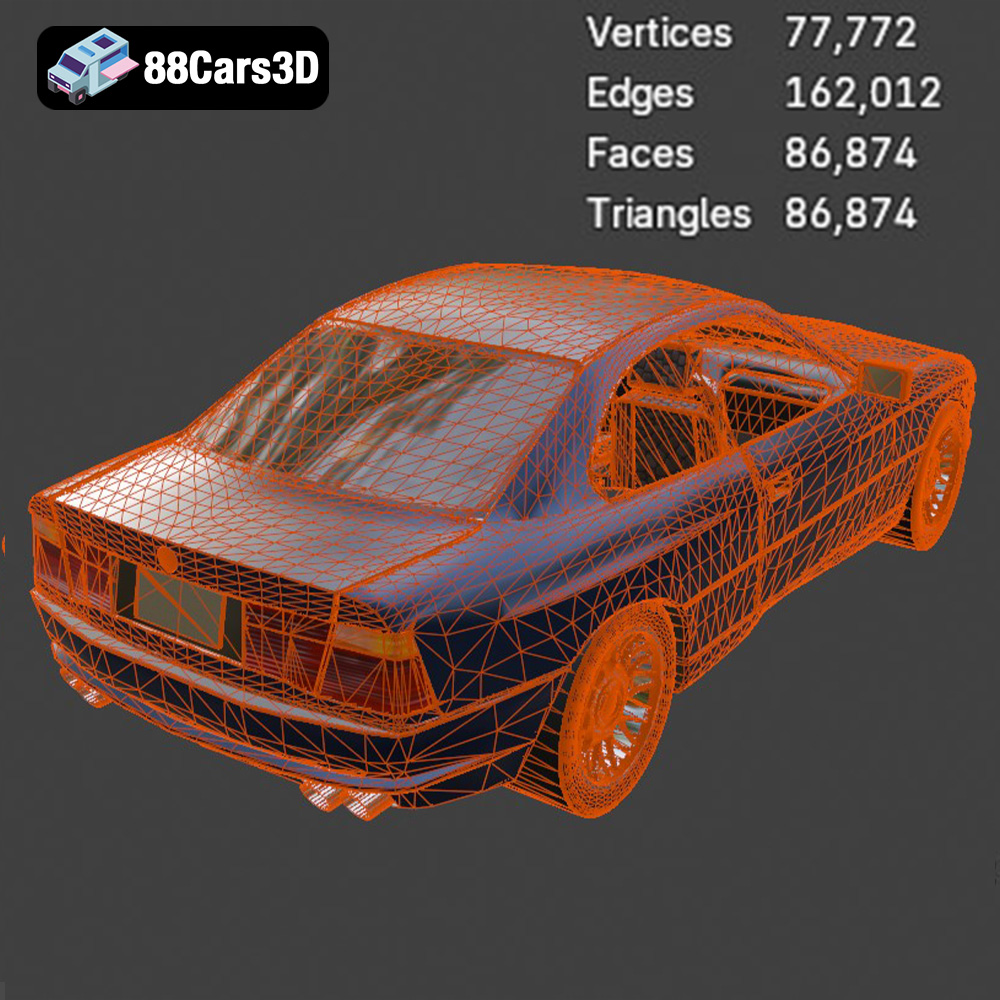
While visual accuracy is critical, the true mark of a professional-grade 3D car model lies in its technical foundation. Clean topology is the bedrock of any versatile 3D asset. This means the mesh is constructed primarily with quadrilaterals (quads), ensuring smooth subdivision, predictable deformation, and compatibility across various software packages. Messy geometry, characterized by triangles and N-gons, can lead to rendering artifacts, animation difficulties, and challenges when applying modifiers or sculpting. The BMW 850i Coupe 1990 3D Model exemplifies this technical excellence, featuring optimized geometry that allows for seamless integration into diverse pipelines, from high-fidelity cinematic rendering to real-time interactive experiences. This attention to underlying structure not only guarantees visual integrity but also significantly enhances the model’s usability and longevity in a production environment.
Understanding 3D Model File Formats
One of the most crucial aspects of working with 3D assets, especially complex ones like 3D car models, is understanding the various file formats available. Each format serves a specific purpose, offering different levels of compatibility, data retention, and optimization for particular workflows. The BMW 850i Coupe 1990 3D Model is provided in a comprehensive suite of formats, ensuring maximum flexibility for any project requirement.
.blend – Fully Editable Blender Scene with Materials
The .blend format is native to Blender, the popular open-source 3D creation suite. When you receive a model in this format, you’re not just getting the geometry; you’re getting a complete Blender scene. This typically includes the model’s geometry, materials with their node setups, textures, lighting, and often even camera setups or animation rigs if applicable. For the BMW 850i 3D Model, having the .blend file means you can immediately open it in Blender and have a render-ready scene. This offers unparalleled flexibility for artists who use Blender, allowing them to dissect, modify, or re-purpose any aspect of the model or scene without conversion issues. It’s ideal for deep customization, animation, and utilizing Blender’s powerful rendering engines like Cycles or Eevee.
.fbx – Ideal for Unreal, Unity, and Real-time Pipelines
.fbx (Filmbox) is an industry-standard proprietary file format developed by Autodesk, designed for interoperability between 3D software applications. It’s renowned for its ability to store not just geometry, but also animation, rigging, skinning, camera, and lighting data. This makes it the go-to format for game development, especially for engines like Unreal Engine and Unity. When the BMW 850i 3D Model is provided as .fbx, it means it’s optimized for efficient import into these engines, often retaining hierarchical structures, material assignments, and potentially even LODs (Levels of Detail). It’s a robust choice for real-time applications where performance and data integrity across platforms are critical.
.obj – Universal Format for Cross-Software Compatibility
The .obj (Wavefront OBJ) format is one of the oldest and most widely supported 3D file formats. It’s a simple, text-based format primarily used to store 3D geometry data, including vertices, normals, UV coordinates, and faces. It can also reference external material (.mtl) files that define basic material properties and texture maps. While .obj doesn’t typically store complex animation or rigging data, its universal compatibility makes it an excellent choice for transferring static 3D models between virtually any 3D software package. For the BMW 850i 3D Model, the .obj file serves as a reliable fallback or primary choice for users of less common software or those who prefer to handle material setup manually in their application of choice.
.glb – Optimized for AR, VR, and Browser-based Display
.glb (GL Transmission Format Binary) is the binary version of glTF (GL Transmission Format), an open-standard, royalty-free file format for 3D scenes and models. Designed for efficient transmission and loading, .glb packs geometry, textures, and animation data into a single file, making it incredibly popular for web-based 3D, augmented reality (AR), and virtual reality (VR) applications. Its PBR (Physically Based Rendering) material support ensures consistent visual fidelity across different viewers and platforms. The BMW 850i 3D Model in .glb format is perfectly suited for interactive web experiences, virtual showrooms, or integrating into AR/VR apps where file size and loading speed are paramount.
.stl – Suitable for 3D Printing Output
.stl (STereoLithography) is a standard file format widely used for 3D printing and computer-aided manufacturing. Unlike other formats that store surface geometry, .stl represents a 3D object as a collection of unconnected triangular facets. It doesn’t typically store color, texture, or material information. While less suitable for rendering, the .stl version of the BMW 850i 3D Model is invaluable for those looking to bring the classic car into the physical world through 3D printing, creating scale models, or prototyping physical designs. The model’s clean topology ensures a watertight mesh, which is crucial for successful 3D printing.
.ply – Precision Mesh Format for CAD or Analysis
The .ply (Polygon File Format, or Stanford Triangle Format) is a file format for storing 3D data from 3D scanners. It can store a variety of data, including color, transparency, surface normals, and texture coordinates, in addition to XYZ coordinates of points and the connectivity of faces. While not as universally adopted as .obj or .fbx for general 3D work, it’s particularly useful in scientific, engineering, and CAD applications where precise mesh data and attributes are important. For the BMW 850i 3D Model, the .ply format offers a detailed polygon mesh suitable for specific analysis or integration into niche engineering visualization tools.
.unreal – Engine-ready Asset for Real-time Environments
While often used interchangeably with .fbx, an explicit .unreal format or a pre-configured Unreal Engine project file provides an even more streamlined workflow for Unreal Engine users. This might involve a fully imported asset with correctly set up materials, collision meshes, LODs, and possibly even Blueprints or other engine-specific configurations. The BMW 850i 3D Model delivered in this manner means significant time savings for developers, as the asset is virtually plug-and-play within their Unreal project, ready for immediate use in interactive simulations, driving games, or virtual production.
.max – Editable 3ds Max Project for Animation and Rendering
The .max format is the native file format for Autodesk 3ds Max, a powerful 3D modeling, animation, rendering, and compositing software. Similar to the .blend file for Blender users, a .max file typically contains the entire 3ds Max scene, including geometry, complex material setups (e.g., V-Ray, Corona Renderer), lighting rigs, cameras, and animation data. For professionals utilizing 3ds Max for high-end automotive rendering or detailed animation sequences, the .max file of the BMW 850i 3D Model provides full access to the original scene, allowing for advanced customization, integration into complex environments, and leveraging 3ds Max’s robust toolset.
Professional Workflows: Integrating the BMW 850i 3D Model
The true value of a versatile 3D asset like the BMW 850i Coupe 1990 3D Model lies in its seamless integration into diverse professional workflows. Whether your goal is a static glamour shot or a fully interactive experience, the right model can dramatically accelerate your production.
High-Fidelity Rendering and Animation (3ds Max, Blender)
For cinematic quality visuals, 3ds Max and Blender are industry powerhouses. Utilizing the provided .max or .blend files for the BMW 850i 3D Model gives artists full control over the scene. In 3ds Max, users can leverage advanced rendering engines like V-Ray or Corona Renderer. The clean topology of the model ensures smooth subdivision, allowing for incredibly detailed surfaces. Realistic materials and textures, often pre-configured in the .max file, translate beautifully, replicating the car’s paint sheen, tire rubber, and glass reflections with photorealistic accuracy. Artists can set up sophisticated lighting rigs, create dynamic camera paths for animation, and composite the car into complex environments. Similarly, Blender users can harness Cycles or Eevee, utilizing the provided .blend file which includes optimized materials and lighting setups. This enables rapid iteration and stunning results, whether for advertising campaigns, automotive configurators, or high-end visualization.
Game Development and Real-time Experiences (Unreal Engine, Unity)
The demand for high-quality game assets is ever-growing, and classic cars are highly sought after for racing games, simulators, and open-world environments. The BMW 850i Coupe 1990 3D Model is game-engine ready, specifically optimized for integration into Unreal Engine and Unity via its .fbx and .unreal files. These formats ensure that the model retains its essential data – geometry, UVs, and material assignments – while being structured for performance. Developers can import the .fbx, apply PBR (Physically Based Rendering) materials using texture maps (albedo, normal, roughness, metallic, AO), and set up appropriate collision meshes. For Unreal Engine, the .unreal file or pre-configured asset simplifies the process further, often including optimized LODs (Levels of Detail) to maintain performance at varying distances without sacrificing visual fidelity up close. This allows the iconic 850i to drive smoothly through virtual worlds, participate in immersive simulations, or serve as a centerpiece in interactive product showcases.
AR/VR and Web Visualization
The emergence of Augmented Reality (AR) and Virtual Reality (VR) has opened new frontiers for 3D content. For these applications, as well as engaging web-based 3D viewers, optimization is key. The .glb format, specifically provided for the BMW 850i 3D Model, is a game-changer. It combines geometry, materials, and textures into a single, highly compressed file, enabling quick loading and efficient streaming on various devices and browsers. Imagine a virtual showroom where prospective buyers can interact with a photorealistic 850i, change its paint color, and inspect its interior using AR on their phone, or a VR experience that transports enthusiasts back to the 90s, cruising in this classic coupe. The streamlined nature of .glb ensures a smooth, high-quality experience without performance bottlenecks, making the BMW 850i 3D Model an ideal asset for cutting-edge interactive visualizations.
Technical Specifications and Quality Assurance
The true mark of a premium 3D car model, such as those found on 88cars3d.com, lies in its underlying technical quality. Beyond looking good in a single render, it must be robust, versatile, and adhere to industry best practices. This ensures the asset performs reliably across diverse applications and pipelines.
Geometry and Topology
The foundation of any high-quality 3D model is its geometry and topology. For the BMW 850i Coupe 1990 3D Model, this translates to a meticulously constructed mesh primarily composed of quadrilaterals (quads). Quad-based topology is crucial for several reasons: it allows for smooth subdivision (e.g., using subdivision surface modifiers) without pinching or artifacts, facilitates clean deformation during animation, and ensures compatibility with various sculpting and texturing workflows. Avoidance of N-gons (polygons with more than four sides) and excessive triangles in non-critical areas is a hallmark of professional work, preventing rendering glitches and simplifying UV mapping. This model’s clean geometry guarantees that it will not only render beautifully but also perform optimally in game engines or animation sequences, maintaining its intricate details like the car’s body lines and panel gaps with precision.
Materials and Textures: Achieving Photorealism
Photorealism in automotive rendering hinges significantly on the quality of materials and textures. The BMW 850i Coupe 1990 3D Model comes equipped with realistic materials and textures designed for Physically Based Rendering (PBR) workflows. This means the materials correctly simulate how light interacts with surfaces in the real world, using a set of standardized texture maps:
- Albedo/Base Color: Defines the base color of the surface.
- Normal Map: Adds fine surface detail without increasing poly count, simulating bumps and scratches.
- Roughness Map: Controls how diffuse or specular a surface is, from matte to highly reflective.
- Metallic Map: Differentiates between metallic and non-metallic surfaces.
- Ambient Occlusion (AO) Map: Simulates soft shadows where surfaces are close together.
These maps are crucial for accurately depicting the car’s glossy paintwork, the subtle texture of its tires, the reflectivity of its chrome accents, and the intricate details of its interior fabrics. The application of these textures is done at real-world scale and resolution, ensuring that details hold up even in extreme close-ups, providing immediate photorealistic results in any scene.
UV Mapping and Texture Resolution
Efficient and precise UV mapping is as critical as clean geometry for a professional 3D model. UV maps are 2D representations of a 3D object’s surface, telling the software how to apply textures. A well-unwrapped model, like the BMW 850i 3D Model, features:
- No Overlapping UVs: Ensures textures are applied uniquely and correctly across the surface, crucial for baking operations like ambient occlusion or normal maps.
- Consistent Texel Density: Maintains uniform texture resolution across different parts of the model, preventing blurry or pixelated areas.
- Optimized UV Layout: Maximizes the use of texture space, leading to more efficient rendering and better visual quality.
Coupled with high-resolution textures, this meticulous UV mapping ensures that every detail, from the BMW emblem to the tire tread, appears sharp and realistic. This level of detail in UVs and textures makes the model highly versatile, allowing it to be scaled, retextured, or integrated into complex scenes with consistent high quality, regardless of the target application.
Case Studies and Applications of 3D Car Models
The versatility of a high-quality 3D car model, particularly one as detailed as the BMW 850i Coupe 1990 3D Model, extends across a multitude of industries. Its technical precision and photorealistic materials make it a valuable asset for various professional applications, streamlining workflows and enhancing visual output.
Automotive Advertising and Visualization
In the highly competitive automotive industry, compelling visuals are paramount. The BMW 850i Coupe 1990 3D Model is an ideal asset for creating stunning advertising campaigns, product configurators, or historical showcases. Imagine a digital advertisement where the classic 850i cruises through a stylized urban landscape, or a virtual showroom allowing potential buyers to customize the vehicle in real-time, changing paint colors, wheel designs, and interior trims. Such models are also invaluable for pre-visualization in film and television production, allowing directors and cinematographers to plan shots and sequences involving the car long before physical production begins. The realistic materials and professional rendering setups provided with the model dramatically reduce the time and cost associated with achieving broadcast-quality imagery.
Interactive Simulations and Training
Beyond passive viewing, the BMW 850i 3D Model lends itself perfectly to interactive applications. In the realm of serious game development, it can be integrated into driving simulators for entertainment or professional training, offering a faithful representation of the vehicle’s aesthetics and proportions. Imagine a historical driving simulation game where players can experience the thrill of navigating the 850i through iconic routes of the 90s, or a virtual maintenance trainer where technicians can interact with a precise digital replica of the car’s engine bay. Its game-engine readiness (via .fbx or .unreal formats) ensures smooth performance, while detailed geometry allows for accurate interactions, making it suitable for educational, training, and experiential marketing applications.
Architectural Visualization and Contextual Scenes
Architectural Visualization (ArchViz) often requires more than just buildings; it demands a sense of context and realism. Placing a meticulously detailed 3D car model, such as the BMW 850i, in front of a modern architectural masterpiece or within an urban street scene instantly adds life, scale, and a narrative element. The car acts as a focal point, drawing the viewer’s eye and grounding the building in a believable environment. Whether illustrating a luxury garage, a street-level perspective of a new development, or a vintage car show setting, the photorealistic rendering capabilities of the BMW 850i Coupe 1990 3D Model elevate the overall quality and believability of any ArchViz project, helping clients visualize their designs with greater immersion.
3D Printing and Prototyping
While often associated with screen-based visualization, 3D models also bridge the gap into the physical world. The .stl file format provided for the BMW 850i 3D Model is specifically designed for 3D printing and rapid prototyping. This allows designers, hobbyists, or even automotive historians to create physical scale models of the iconic coupe. Whether for desktop display, educational purposes, or as a component in a larger physical diorama, the clean, watertight mesh ensures a successful print outcome. This capability offers a tangible connection to the digital asset, extending its utility beyond virtual realms and providing unique opportunities for product development, design iterations, or custom manufacturing.
Conclusion
The journey from concept to a fully realized 3D automotive masterpiece is paved with technical challenges and artistic decisions. However, with access to professional-grade 3D car models, such as the exquisite BMW 850i Coupe 1990 3D Model, artists and developers can significantly elevate their projects. We’ve explored how meticulous attention to the original vehicle’s design, combined with clean topology, realistic PBR materials, and versatile file formats, transforms a digital asset into an invaluable tool for diverse applications.
From producing breathtaking automotive rendering for advertising and film to crafting immersive game assets for real-time engines like Unreal and Unity, and even extending to AR/VR experiences and physical 3D prints, the technical excellence of this BMW 850i 3D Model empowers creators across the spectrum. Understanding the nuances of each file format – from .blend and .max for comprehensive creative control, to .fbx and .unreal for game optimization, and .glb for web-based interactivity – ensures that every project can leverage the model to its fullest potential.
Investing in high-quality 3D car models like the BMW 850i Coupe 1990 3D Model from trusted marketplaces such as 88cars3d.com not only saves precious production time but also guarantees a level of fidelity and professionalism that sets your work apart. Whether you’re a seasoned professional or an aspiring artist, integrating such a meticulously crafted asset into your workflow is a definitive step towards achieving unparalleled automotive visualization and making a lasting impact in the dynamic world of 3D.
Featured 3D Model
BMW 850i Coupe 1990 3D Model
Capture the timeless design of the iconic BMW 850i Coupe (E31 chassis) with this expertly crafted 3D model. Designed for precision and accuracy, this digital asset replicates the vehicle’s distinct long hood, sleek profile, and pop-up headlights with meticulous attention to detail. This model provides an authentic visualization solution, perfect for projects requiring a faithful representation of this classic luxury vehicle.
This product features professional-grade topology optimized for seamless rendering and animation. The geometry is clean, ensuring smooth subdivision and distortion-free deformation in all major 3D software packages. Realistic materials and textures are applied across the chassis, interior components, and lighting fixtures, providing immediate photorealistic results in any scene.
The BMW 850i 3D Model is versatile for multiple professional applications. It is game-engine ready for integration into interactive simulations, driving simulators, and serious game development (Unreal Engine and Unity). It is equally suited for architectural visualization, cinematic production, advertising media, and augmented/virtual reality (AR/VR) experiences.
$13.99
Product Image Gallery
Related Tags
.850i
.8series
.arvr
.blend
.bmw
.car3dmodel
.classiccar
.coupe
.e31
.fbx
.gameasset
.glb
.luxurycar
.max
.obj
.ply
.rendering
.simulation
.sportsCar
.stl
.unreal
