In the expansive and highly competitive world of 3D visualization, the demand for exquisitely detailed and technically sound assets is paramount. Whether you’re an automotive designer striving for photorealistic renders, a game developer crafting immersive open worlds, or an architect integrating vehicle models into virtual environments, the quality of your 3D car models can make or break a project. Achieving true realism and workflow efficiency starts with a foundation of expertly crafted digital assets. It’s not merely about having a car model; it’s about possessing a meticulously engineered digital twin that mirrors its real-world counterpart in every curve, contour, and mechanical detail. This is where premium assets, like the BMW E39 M5-540i 3D Model available on 88cars3d.com, prove invaluable, offering a robust solution for a myriad of professional applications.
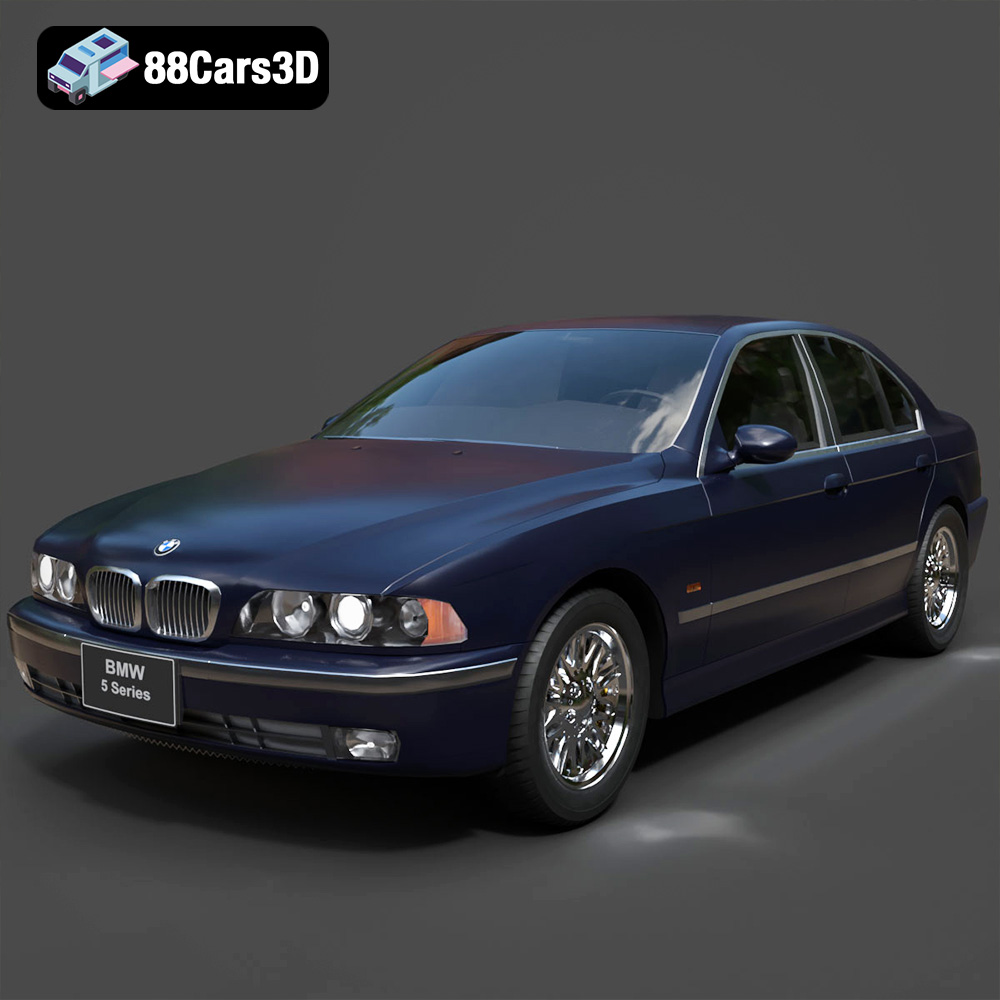
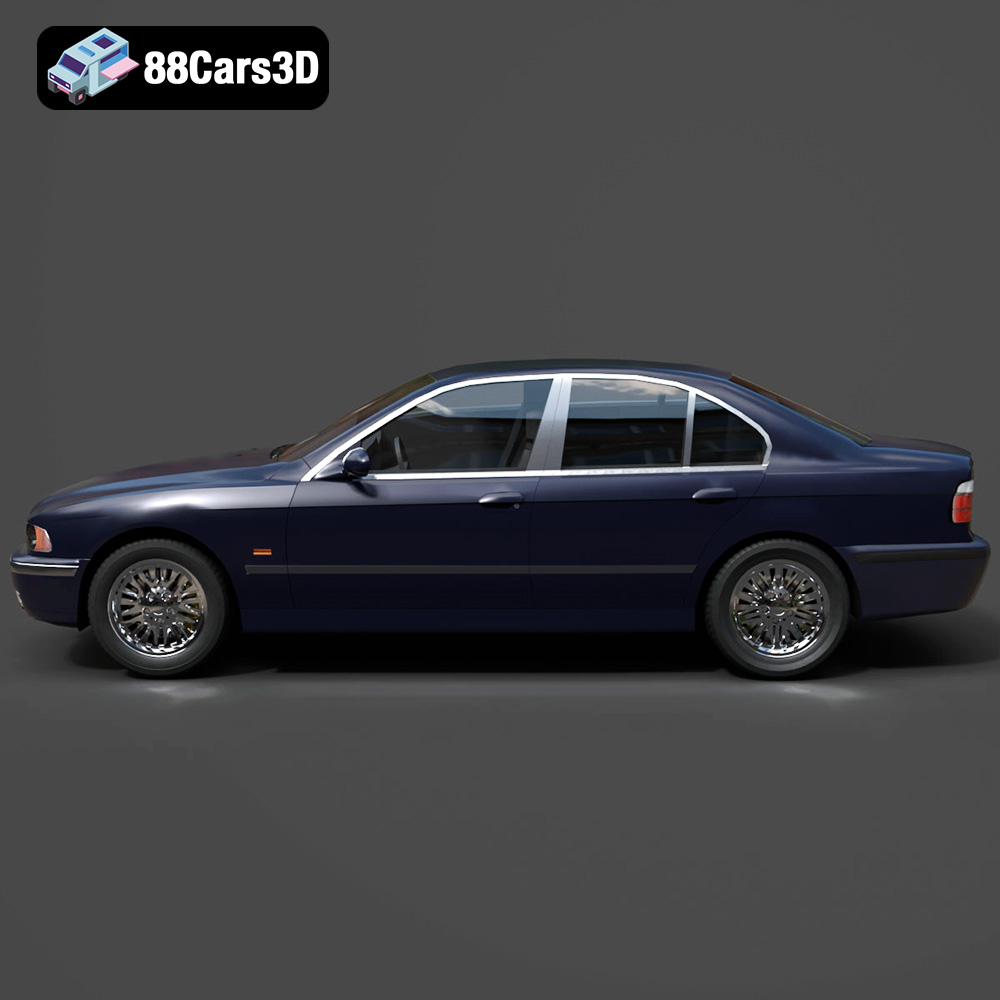
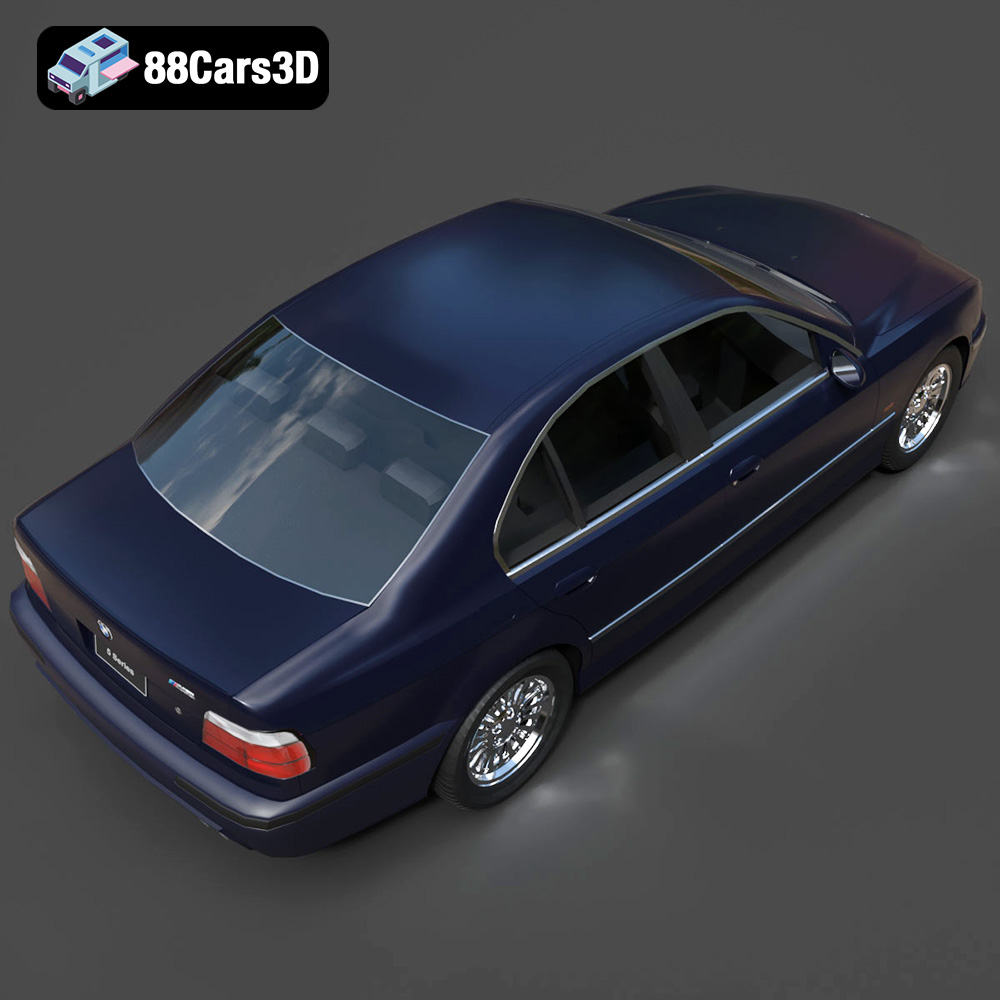
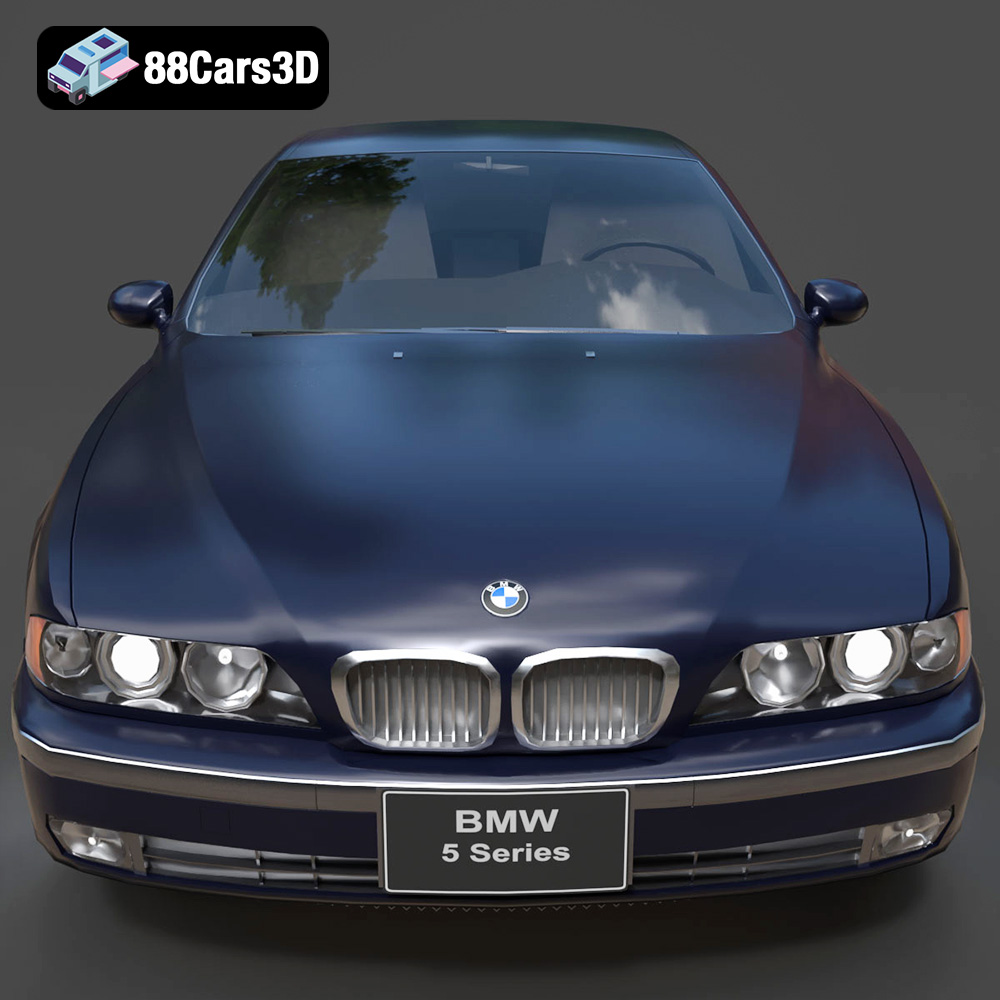
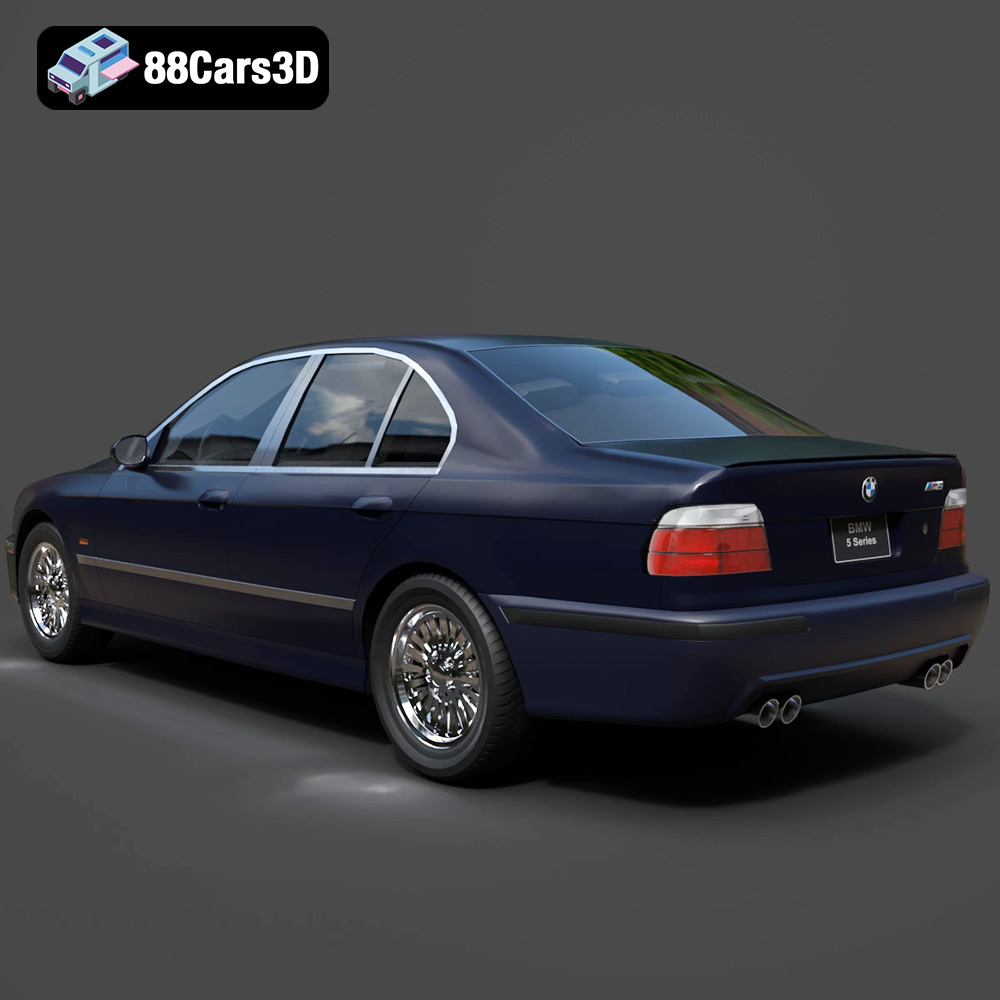
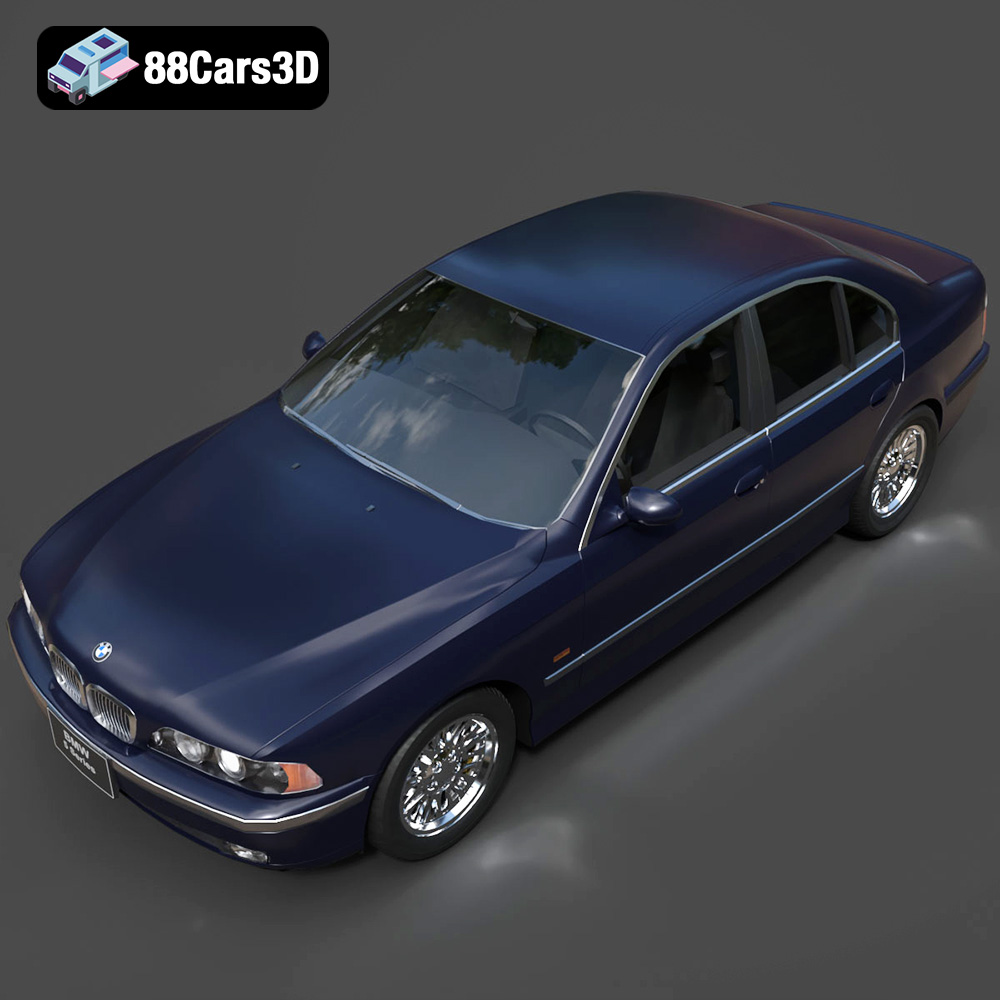
The BMW E39 M5-540i represents an iconic era of performance luxury, a true enthusiast’s car known for its understated power and timeless design. Translating such a legend into a high-fidelity 3D model requires an intricate blend of artistic skill and technical precision. This particular model captures the essence of this legendary sedan, from its authentic body panels and detailed lighting systems to its accurately modeled wheels and performance tires. Its clean geometry, balanced detailing, and organized structure make it an ideal candidate for anyone looking to elevate their projects, from stunning studio renders to realistic animations and robust game development environments.
Understanding 3D Model File Formats
One of the most crucial aspects of working with professional 3D assets is understanding the various file formats and their specific advantages. The BMW E39 M5-540i 3D Model comes with a comprehensive suite of formats, ensuring maximum compatibility and utility across different software and pipelines. Choosing the right format is key to optimizing your workflow, preserving data integrity, and achieving your desired output.
.blend – The Native Blender Scene
The .blend file is Blender’s native project format, offering a complete and editable scene. When you acquire a .blend file for the BMW E39 M5-540i, you’re not just getting the mesh; you’re getting a fully configured Blender scene with materials, textures, lighting setups, and sometimes even basic rigging. This format is ideal for Blender users who want full control over the asset. You can easily modify geometry, adjust materials using Blender’s node-based shader editor, tweak lighting, or integrate it seamlessly into existing Blender projects. It preserves all native Blender features, making it the go-to for deep customization and iterative design within the Blender ecosystem.
.fbx – The Industry Standard for Interoperability
.fbx (Filmbox) is arguably the most widely used proprietary 3D file format for transferring assets between different 3D software applications and game engines. It excels at preserving complex scene data, including meshes, materials (often as basic shaders or texture assignments), animations, cameras, and lights. For the BMW E39 M5-540i, an .fbx file is perfect for importing into Unreal Engine, Unity, 3ds Max, Maya, or Cinema 4D, among others. It acts as a robust bridge, ensuring that your vehicle asset, with its separated components for animation and organized hierarchy, maintains its structural integrity and animation readiness as it moves across your pipeline.
.obj – The Universal Exchange Format
.obj (Wavefront OBJ) is a universal geometry definition file format that is highly compatible with nearly all 3D software. While it doesn’t typically store advanced scene data like animation or complex material setups (materials are usually linked via an accompanying .mtl file), it’s excellent for transferring static mesh data. The .obj format for the E39 M5-540i provides a clean, raw mesh with UV coordinates, making it a reliable choice when you need to import the model into a less common application or start fresh with material assignments in a new environment. Its simplicity ensures broad compatibility and minimal data corruption during transfer.
.glb – Optimized for AR, VR, and Web
.glb (GL Transmission Format Binary) is an increasingly popular format, especially for real-time applications, augmented reality (AR), virtual reality (VR), and web-based 3D viewers. It’s a self-contained format that bundles 3D models, textures, animations, and materials into a single file, making it highly efficient for delivery and display. For the BMW E39 M5-540i, the .glb version is specifically optimized for these performance-critical environments, ensuring quick loading times and seamless integration into interactive experiences without external dependencies. This is crucial for developers building immersive web experiences or mobile AR applications.
.stl – The Standard for 3D Printing
.stl (Stereolithography) is the de facto standard file format for 3D printing. It represents a 3D model as a series of connected triangles, defining only the surface geometry of an object without color, texture, or other CAD attributes. When considering the BMW E39 M5-540i for physical replication, the .stl file is what you’d feed into your slicing software. While it loses much of the visual fidelity present in other formats, it provides the essential geometric data required for manufacturing a tangible replica, allowing you to bring this iconic car from the digital realm into the physical one.
.ply – Precision Mesh for CAD or Analysis
.ply (Polygon File Format) is another format for storing 3D data, often used for scanned data, CAD, and scientific analysis. Like .obj, it primarily stores geometric information, but it can also include properties like color, transparency, and surface normals per vertex or face. For the E39 M5-540i, the .ply format offers a precise mesh representation, making it suitable for engineering applications, detailed measurement, or workflows where a robust, unadorned mesh is required for further analysis or integration into CAD systems.
.unreal – Engine-Ready Asset for Real-Time Environments
The inclusion of an .unreal file signifies a project setup specifically tailored for Unreal Engine. This isn’t just a generic .fbx; it’s often a pre-configured asset or scene within an Unreal project structure, potentially including optimized materials, LODs (Levels of Detail), collision meshes, and blueprint setups. This saves game developers countless hours of setup time, allowing them to drag and drop the BMW E39 M5-540i directly into their scenes and immediately begin working with an engine-optimized version that leverages Unreal’s advanced rendering capabilities and real-time performance.
.max – The 3ds Max Editable Project
.max is the native file format for Autodesk 3ds Max, a leading software for 3D modeling, animation, and rendering. Similar to the .blend file, the .max file provides an entirely editable project of the BMW E39 M5-540i within its native environment. This means all modifiers, rigging, complex material setups (e.g., V-Ray, Corona), lighting, and animation data are preserved. For 3ds Max artists, this offers the ultimate flexibility for detailed modifications, complex animation sequences, or integration into high-end cinematic renders.
Crafting Realism: The Anatomy of a Premium 3D Car Model
What truly sets a high-quality 3D car model apart from a mediocre one is its underlying technical craftsmanship. The BMW E39 M5-540i 3D Model exemplifies this, boasting features crucial for professional-grade output across various industries.
Topology and Mesh Optimization
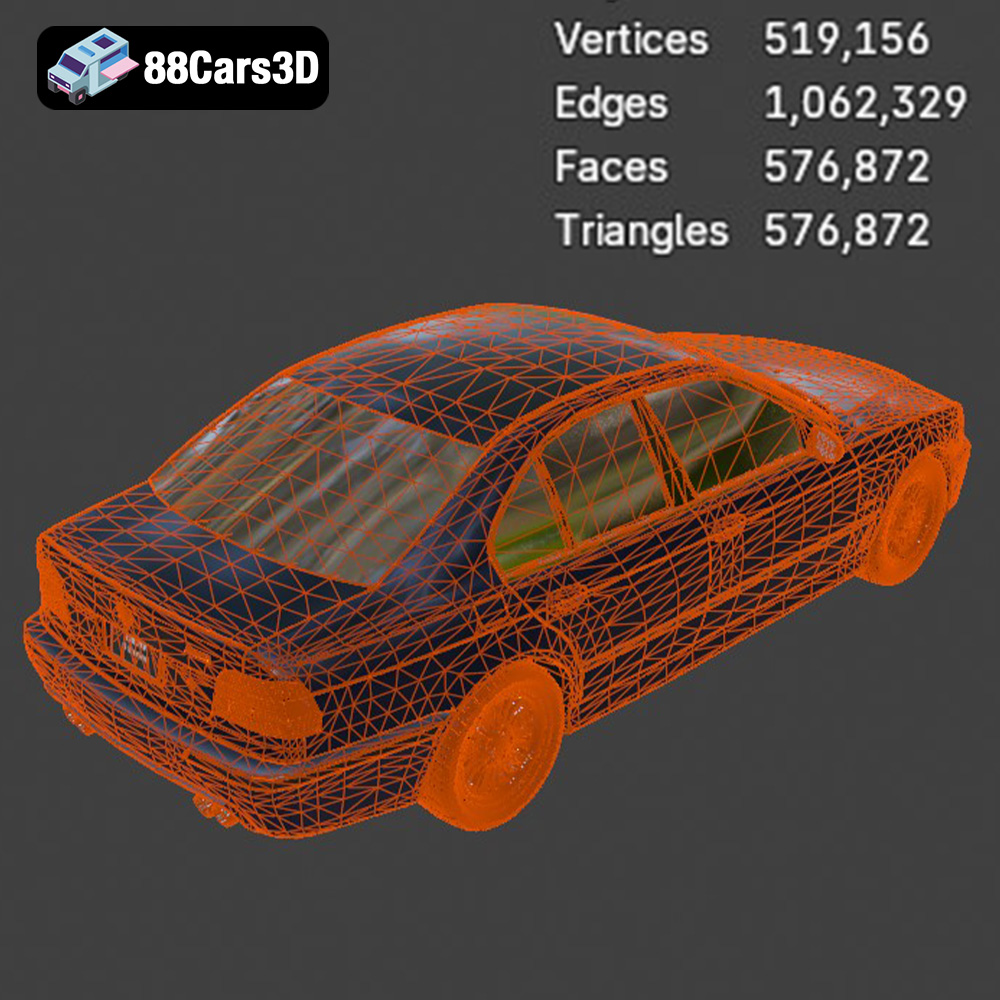
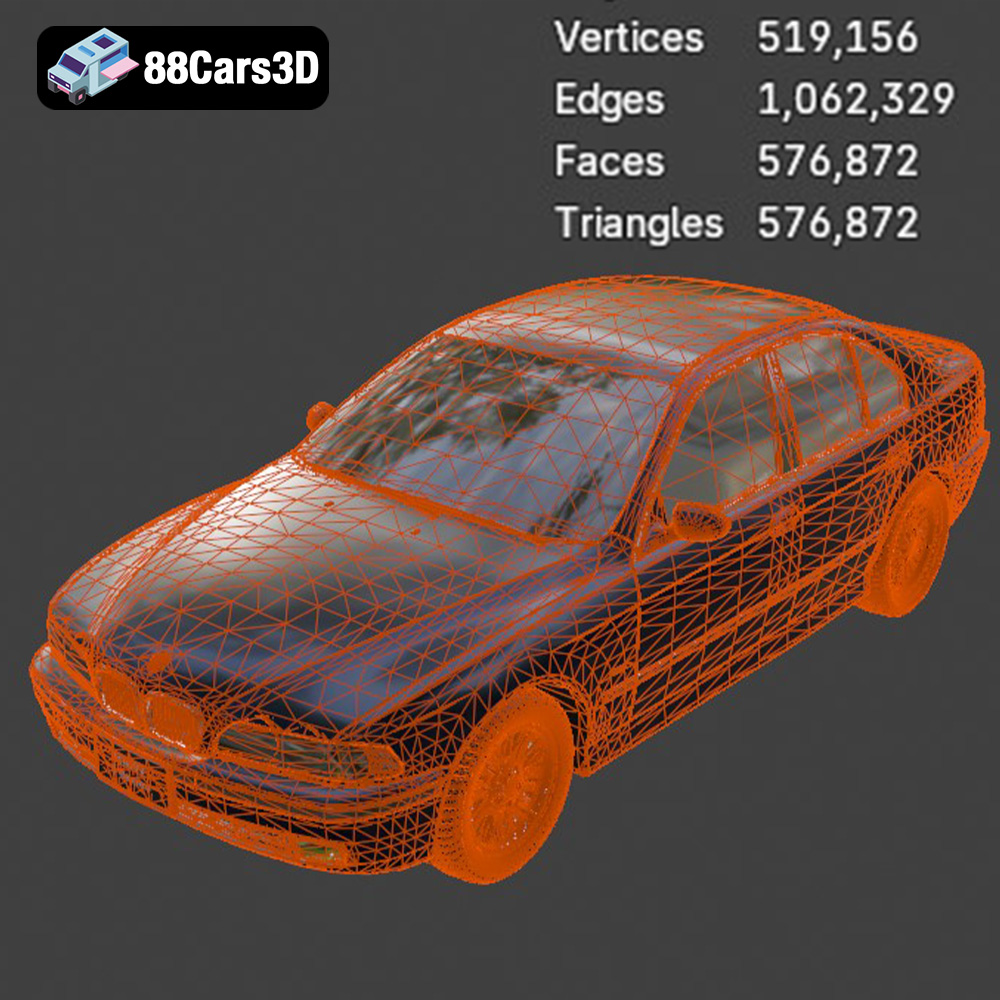
The foundation of any good 3D model is its topology. This model features clean, quad-dominant topology, which is essential for several reasons. Quads (four-sided polygons) deform more predictably during animation and subdivision, resulting in smoother surfaces without unsightly pinching or artifacts. This also makes the model incredibly easy to modify, allowing artists to adjust details, add custom elements, or even integrate body kits without wrestling with messy geometry. “Optimized mesh quality” implies a balance – enough detail to look realistic up close, but not so dense that it cripples performance in real-time applications. This usually involves strategic poly distribution, with denser meshes in high-curvature areas and sparser ones on flat surfaces, often combined with clean edge flow for seamless PBR texture application.
Material Fidelity and UV Mapping
Beyond the mesh, materials and textures breathe life into a 3D model. The product description mentions “realistic transparent materials” for headlights and taillights, “performance tires,” and “comfort sport seats with realistic material textures.” This indicates a strong focus on Physically Based Rendering (PBR) workflows. For PBR, clean and efficient UV mapping is critical. Each part of the model would have carefully laid out UVs, allowing artists to apply high-resolution textures (Albedo, Normal, Roughness, Metallic, etc.) without stretching or distortion. This ensures that the metallic sheen of the paint, the subtle wear on the leather seats, or the intricate tread of the tires appear authentic under any lighting condition, making the BMW E39 M5-540i truly shine in renders and real-time environments alike.
Precision in Scale and Detail
“Real-world scale accuracy” is non-negotiable for integration into professional scenes. An accurately scaled model fits seamlessly into architectural visualizations, simulations, or game environments, eliminating the need for tedious resizing and ensuring correct perspective and physics. Furthermore, details like “accurate badging and trim elements,” “visible engine bay details,” and a “detailed dashboard, steering wheel, and console controls” demonstrate a commitment to authenticity. These are the elements that elevate a generic car model to a specific, recognizable vehicle, making it highly valuable for branding, marketing, and historical preservation projects.
Unleashing Creative Potential: Workflows in 3ds Max and Blender
The flexibility offered by a well-structured 3D model is best appreciated within leading Digital Content Creation (DCC) tools like 3ds Max and Blender. The BMW E39 M5-540i 3D Model provides dedicated files for both, streamlining professional workflows.
Mastering Animation and Rendering in 3ds Max
For 3ds Max users, the inclusion of a .max file offers a complete project. This means the model is likely already set up with suitable materials for common rendering engines like V-Ray or Corona, which are staples in automotive rendering. Artists can quickly set up studio lighting, experiment with different backplates, and create stunning photorealistic renders. The “separated components like doors, hood, and trunk for animation workflows” are particularly valuable here. With proper pivot points and an organized hierarchy, animators can easily rig the vehicle for complex sequences—think opening doors, lifting the hood to reveal the engine, or realistic wheel rotation for driving animations. This level of preparation drastically cuts down on production time for automotive commercials, product showcases, or cinematic sequences.
Advanced Scene Setup in Blender
Blender artists benefit immensely from the .blend file. With Blender’s powerful Cycles and Eevee renderers, coupled with its robust animation tools, the BMW E39 M5-540i 3D Model can be integrated into dynamic scenes with ease. Users can leverage Blender’s comprehensive shader nodes to customize every aspect of the materials, from the metallic flake in the paint to the subtle reflectivity of the interior trim. Imagine placing this M5 in a realistic urban environment, lit by HDRIs, and rendered with Cycles for ultimate fidelity, or animating it gracefully through a scene using Blender’s NLA editor. The clean topology also means that subdivision surface modifiers can be applied flawlessly for extreme close-ups without compromising mesh integrity.
Customization and Iteration
One of the significant advantages of a well-made model like this is the scope for customization. As stated, users can “easily adjust paint finishes, metallic effects, and custom graphics,” “modify material properties for various components,” and “change interior upholstery and trim colors.” This is crucial for clients who need specific color schemes, custom liveries, or variations for different markets. The organized material IDs and clean UVs facilitate rapid iteration, allowing artists to present multiple design options quickly, saving time and resources in the project lifecycle.
Driving Immersion: Integrating into Game Engines and Real-Time Applications
The shift towards real-time graphics for games, AR/VR, and interactive experiences demands highly optimized 3D assets. The BMW E39 M5-540i 3D Model is engineered precisely for these performance-critical environments.
High-Fidelity Game Assets with Unreal Engine
The inclusion of an .unreal file format is a game-changer for developers. This means the model is likely already configured within an Unreal Engine project, often including optimized meshes, materials set up for Unreal’s physically based shading model, and potentially LODs (Levels of Detail) to manage performance across different distances. For game developers, dropping the BMW E39 M5-540i into a racing game, an open-world environment, or a simulation is streamlined. The “organized hierarchy with proper pivot points” is essential for rigging the vehicle to a physics system, allowing for realistic suspension, steering, and damage models. This significantly reduces the time from asset acquisition to in-engine implementation, letting developers focus on gameplay and interaction.
Optimizing for Performance in AR/VR
Augmented Reality (AR) and Virtual Reality (VR) applications have stringent performance requirements. Models need to be highly optimized to run smoothly on diverse hardware, from high-end VR headsets to mobile AR devices. The .glb format, optimized for AR/VR, ensures that the BMW E39 M5-540i is ready for these experiences. Developers can integrate this detailed model into immersive showrooms, interactive training modules, or virtual driving experiences. The balance of “optimized mesh quality for performance without sacrificing detail” is key here, allowing for rich visual fidelity within strict polygon budgets and rendering constraints. Imagine a customer exploring the M5 in their driveway via AR or test-driving it in a fully immersive VR environment.
Physics-Based Simulation and Interaction
For simulation and training applications, accuracy is paramount. The “real-world scale accuracy” and “accurate representation of the vehicle’s interior layout” of the BMW E39 M5-540i 3D Model provide a solid foundation for robust physics simulations. In a driving simulator, the precisely modeled wheels, chassis, and weight distribution can be used to derive realistic handling characteristics. Separated components further allow for interactive elements, such as opening doors, adjusting mirrors, or even performing virtual maintenance tasks. This level of detail makes the model invaluable for training purposes, engineering simulations, or product testing in a virtual environment.
Beyond Visualization: 3D Printing and Engineering Applications
While often associated with rendering and real-time graphics, high-quality 3D car models extend their utility into tangible and analytical domains, opening up new possibilities for professionals.
From Digital to Physical: Preparing for 3D Printing
The ability to convert a digital asset into a physical object is a fascinating application, and the BMW E39 M5-540i 3D Model is ready for this transformation with its .stl file format. Hobbyists and professionals alike can leverage this to create highly detailed physical models of the iconic sedan. While the .stl format strips away colors and textures, it retains the intricate geometric details, making it suitable for FDM, SLA, or even professional-grade industrial 3D printing. Architects might use smaller scale prints for physical model landscapes, while automotive enthusiasts could create display pieces. Careful consideration of mesh density and print resolution allows for stunning physical replicas, bringing the digital design into the real world.
Analytical and Archival Use Cases
Beyond visual appeal, the underlying mesh data of a high-fidelity 3D model holds significant value. The .ply format, for instance, offers a precision mesh that can be valuable for engineering analysis or CAD workflows. Engineers might use such a model for virtual fitment studies, aerodynamic simulations, or to analyze component clearances without the need for physical prototypes. For historical preservation or documentation projects, a highly accurate 3D model like the BMW E39 M5-540i serves as an invaluable digital archive, allowing researchers and enthusiasts to study the vehicle’s design and structure in intricate detail, long after its physical counterparts might have faded.
Case Studies: Real-World Applications
To illustrate the practical value of an asset like the BMW E39 M5-540i 3D Model, consider a few hypothetical but realistic professional scenarios where its technical advantages truly shine.
Automotive Commercial Production
Imagine a marketing agency tasked with creating a nostalgic commercial celebrating iconic BMW models. Instead of sourcing and transporting a physical E39 M5, which can be logistically challenging and expensive, they can utilize the 3D model. Using the .max or .blend file, animators can place the car in photorealistic environments, apply dynamic camera movements, and even simulate driving sequences with dramatic lighting. The separated components allow for close-up shots of opening doors or a spinning wheel, enhancing the visual storytelling. This approach offers unparalleled creative control, saves budget, and enables rapid iteration on visual concepts, all while maintaining absolute photorealism.
Racing Game Development
A small independent game studio is developing a retro racing title featuring legendary sports sedans. Acquiring the BMW E39 M5-540i 3D Model from 88cars3d.com with its .unreal or .fbx formats immediately provides a game-ready asset. The developers save hundreds of hours on modeling and texturing. Its optimized mesh and organized hierarchy allow for quick integration into their game engine, where they can apply their custom physics, damage models, and multiplayer networking. The detailed interior and exterior mean players will enjoy a highly immersive experience, whether they’re in a first-person cockpit view or admiring the car from the outside in a replay.
Interactive Showroom Experience
An automotive dealer wants to create an interactive virtual showroom accessible via web browsers or VR headsets. The .glb version of the BMW E39 M5-540i 3D Model is perfectly suited for this. Its optimized nature ensures fast loading and smooth interaction, allowing potential customers to explore the car’s exterior from every angle, open the doors, examine the detailed interior, and even change the paint color in real-time. This immersive experience offers a powerful sales tool, engaging customers long before they set foot in a physical dealership, providing a modern touch to car sales and marketing.
Conclusion
In the dynamic landscape of 3D production, the quality of your assets directly impacts the quality of your final output and the efficiency of your workflow. The BMW E39 M5-540i 3D Model is more than just a digital representation of a car; it’s a testament to meticulous craftsmanship, technical excellence, and versatility. From its clean quad topology and real-world scale to its comprehensive array of file formats and detailed features, it serves as a robust foundation for any professional endeavor, be it high-end automotive rendering, immersive game development, precise simulation, or even physical 3D printing.
Professionals in diverse fields can leverage this model to save valuable time, achieve stunning visual fidelity, and push the boundaries of their creative visions. When seeking premium 3D car models that combine aesthetic beauty with technical precision, 88cars3d.com stands out as a reliable source. The BMW E39 M5-540i 3D Model is an investment in quality, ensuring your projects not only meet but exceed contemporary industry standards.
Featured 3D Model
BMW E39 M5-540i 3D Model
A high-fidelity 3D model of the iconic BMW E39 M5-540i, capturing the essence of this legendary performance sedan. This meticulously crafted model features clean geometry and balanced detailing, making it ideal for a wide range of professional applications, including high-quality rendering, realistic animation, detailed simulation, and robust game development.
Exterior Features:
- Authentic body panels reflecting the E39 M5-540i’s distinctive styling
- Detailed headlights and taillights with realistic transparent materials
- Precisely modeled wheels and performance tires
- Separated components like doors, hood, and trunk for animation workflows
- Accurate badging and trim elements
Interior / Mechanical Features:
- Detailed dashboard, steering wheel, and console controls
- Comfortable sport seats with realistic material textures
- Visible engine bay details for close-up shots
- Optimized mesh quality for performance without sacrificing detail
- Accurate representation of the vehicle’s interior layout
Technical Advantages:
- Clean, quad-dominant topology for easy modification and smooth subdivision
- Real-world scale accuracy for seamless integration into existing scenes
- Organized hierarchy with proper pivot points for animation and rigging
- Optimized for various rendering engines and real-time applications
Applications:
- Rendering & Visualization: Create stunning studio renders, cinematic scenes, and product showcases
- Game Development: Utilize as a high-quality asset for racing games, open-world environments, and interactive experiences
- AR/VR: Develop immersive augmented and virtual reality experiences with a detailed and optimized model
- Simulation & Training: Integrate into driving simulators, technical demonstrations, and educational modules
- 3D Printing: Convert to .stl for creating highly detailed physical models
Customization Options:
- Easily adjust paint finishes, metallic effects, and custom graphics
- Modify material properties for various components (e.g., chrome, rubber, glass)
- Adapt lighting setups to achieve different moods and environmental conditions
- Change interior upholstery and trim colors to match specific preferences
This BMW E39 M5-540i 3D model offers unparalleled realism and versatility for any professional project. With its exceptional detail, clean geometry, and extensive customization options, it serves as a robust foundation for bringing your creative vision to life.
Included File Formats:
- .blend – Blender project with materials
- .fbx – Compatible with Unreal, Unity, and major 3D engines
- .obj – Universal format for nearly all 3D software
- .glb – Optimized for AR, VR, and web-based visualization
- .stl – Ready for 3D printing
- .ply – Mesh format for analysis and CAD workflows
- .unreal – Unreal Engine project setup
- .max – Editable 3ds Max scene for rendering and animation
Tags:
.bmw, .e39m5540i, .e39, .m5, .540i, .sedan, .sportscar, .luxurycar, .rendering, .simulation, .gameasset, .arvr, .blend, .fbx, .obj, .glb, .stl, .ply, .unreal, .max
$10.79
Product Image Gallery