Get 20% OFF All Premium 3D & STL Models!

In the dynamic world of 3D visualization, where the lines between digital and reality continue to blur, the demand for exceptionally crafted 3D car models has never been higher. From the adrenaline-pumping realism of next-generation game assets to the photorealistic precision required for automotive rendering in high-stakes marketing campaigns, the quality of your digital vehicles can make or break a project. Professionals in film, animation, architectural visualization, and interactive experiences constantly seek assets that embody both technical excellence and artistic integrity.
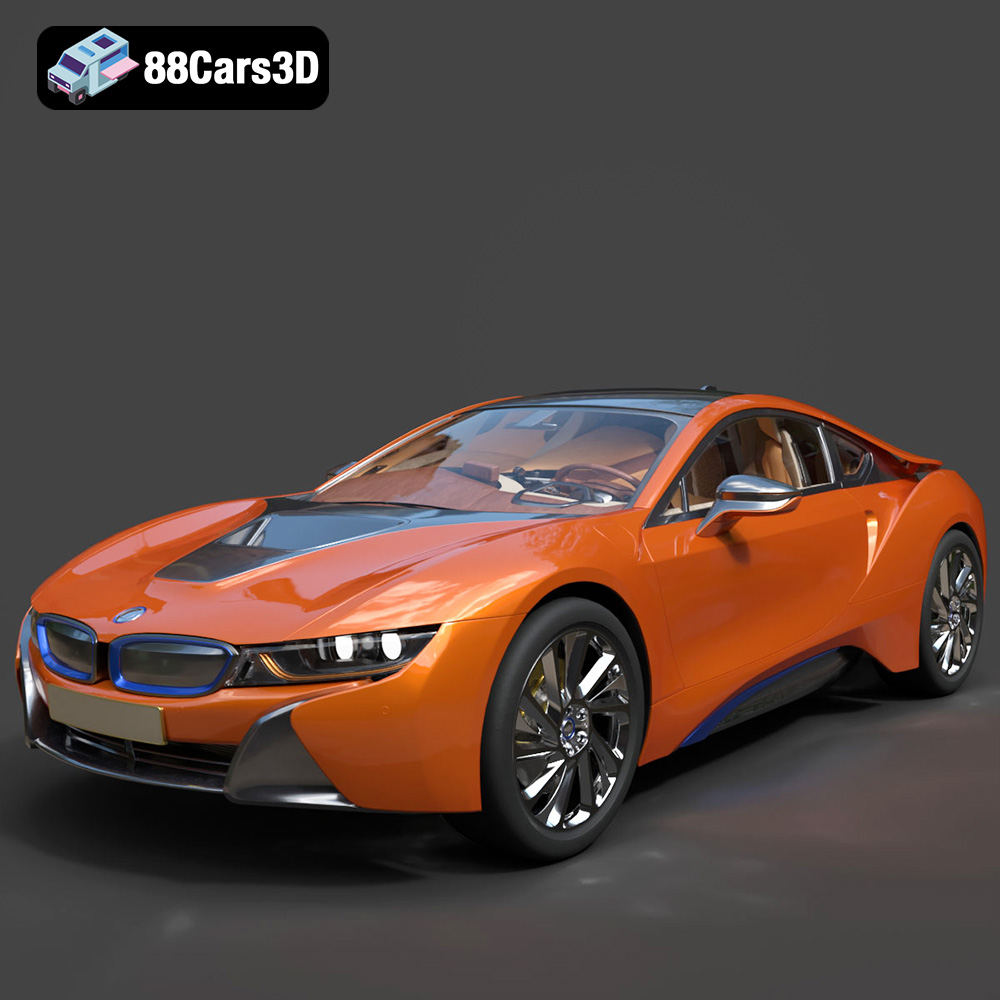
It’s in this demanding landscape that models like the BMW i8 2015 3D Model stand out. This isn’t just a digital representation of a car; it’s a meticulously engineered asset designed to deliver unparalleled fidelity and versatility across a spectrum of professional applications. Its striking design, a hallmark of BMW’s innovative spirit, translates beautifully into the digital realm, providing artists and developers with a powerful tool to elevate their projects. This article will delve into the technical intricacies that define premium 3D car models and explore how a high-quality asset like the BMW i8 2015 fits seamlessly into diverse, professional workflows.
What truly differentiates a professional-grade 3D car model from a basic asset? It boils down to a blend of meticulous craftsmanship, adherence to industry best practices, and foresight into diverse use cases. Every curve, every reflection, and every interior detail must be considered, not just for visual appeal, but for technical integrity.
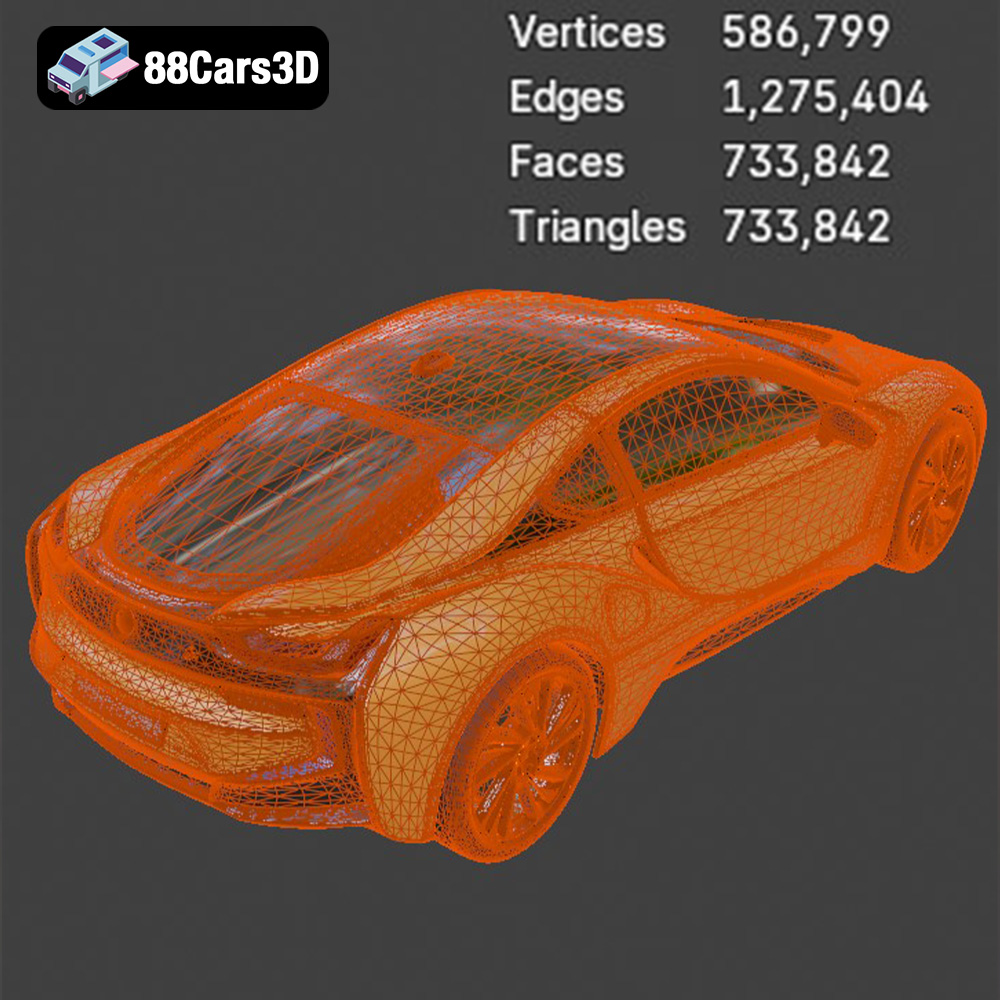
At the heart of any high-quality 3D model lies its geometry and topology. For something as complex as a car, especially a modern vehicle like the BMW i8 2015, this means clean, optimized geometry. Professional models typically feature a quad-based mesh, ensuring predictable subdivision behavior and seamless deformations for animation. Excessive triangulation or n-gons can lead to shading artifacts and difficulty in manipulation. The poly count is also a critical consideration; while high-resolution models are essential for cinematic rendering, game assets require optimized polygon budgets and often multiple Levels of Detail (LODs) to maintain performance in real-time engines. A well-constructed model, like the BMW i8 2015 3D Model, balances visual fidelity with computational efficiency, built upon geometry suitable for demanding production environments.
Modern rendering relies heavily on Physically Based Rendering (PBR) workflows, which accurately simulate how light interacts with surfaces in the real world. A premium 3D car model incorporates a full suite of PBR textures – Albedo (Base Color), Normal, Roughness, Metallic, and Ambient Occlusion maps – to create realistic finishes from metallic paints to intricate carbon fiber textures. These textures must be high-resolution, efficiently packed into UV maps without overlapping islands, and exhibit consistent texel density across the model to prevent stretching or blurriness. The BMW i8 2015 3D Model, for instance, features fully detailed, realistic materials and textures applied across all components, ensuring that its futuristic aesthetic is perfectly captured, whether viewed up close or from a distance.
Accuracy is paramount when replicating an iconic vehicle. This involves painstaking attention to the distinctive silhouette, the precise curvature of body panels, the intricate design of specialized wheels, and the advanced lighting systems that define a car’s character. For a model like the BMW i8 2015, capturing its groundbreaking hybrid sports car features, including its unique aerodynamic lines and comprehensive interior environment, requires a deep understanding of automotive design. This level of detail ensures that the digital asset is immediately recognizable and holds up under the scrutiny of close-up renders and detailed walkthroughs, making it invaluable for projects where authenticity is key.
The choice of file format is as critical as the model’s construction itself, dictating compatibility, feature retention, and optimization for specific pipelines. A versatile asset, such as those found on 88cars3d.com, provides a range of formats to suit various professional needs. The BMW i8 2015 3D Model exemplifies this versatility by offering a comprehensive array of widely used formats, each serving a unique purpose in the digital production ecosystem.
The .blend format is native to Blender, a powerful open-source 3D creation suite. When you receive a .blend file, you’re not just getting the model; you’re often getting a fully editable Blender scene complete with materials, lighting setups, camera positions, and sometimes even animations or physics simulations. This format is ideal for users who are deeply integrated into the Blender ecosystem, offering maximum creative control. Artists can easily modify geometry, adjust nodal shaders, or re-rig components with all native Blender tools at their disposal. It’s perfect for complex projects where the model might undergo significant iterative changes or be part of an ongoing Blender-centric production pipeline.
Autodesk’s .fbx (Filmbox) format has become an industry standard for interoperability, especially between different 3D software packages and game engines. It’s incredibly versatile, capable of storing not just geometry and UVs, but also hierarchies, animation data (skeletons, skinning, keyframes), cameras, lights, and even some PBR material properties. For real-time applications like game development in Unreal Engine or Unity, .fbx is often the go-to format due to its robust support for skeletal animations and efficient data transfer. It ensures that complex rigged models, like a car with opening doors or rotating wheels, can be imported with their structural integrity and animation capabilities intact, making it truly “game-engine ready.”
The .obj (Wavefront Object) format is one of the oldest and most universally supported 3D file formats. It’s a simple, text-based format primarily used for transferring geometry (vertices, normals, texture coordinates) and UVs between different 3D applications. While it doesn’t typically store advanced scene data like animation, cameras, or complex materials (though it can reference a separate .mtl file for basic material properties), its widespread compatibility makes it invaluable for cross-software collaboration or as a robust archival format. When you need a clean mesh that almost any 3D software can open and manipulate, .obj is a reliable choice.
.glb (GL Transmission Format Binary) is a relatively newer format, specifically designed for efficient transmission and loading of 3D scenes and models in web and immersive applications. It’s a self-contained binary file that includes geometry, materials, textures, and even animations, making it highly optimized for AR (Augmented Reality), VR (Virtual Reality), and browser-based display. Its compact size and single-file nature are crucial for fast loading times and smooth performance on mobile devices and web platforms, which is why the BMW i8 2015 3D Model’s .glb version is “optimized for AR/VR and web-based visualization.”
.stl (Stereolithography) is almost exclusively used for 3D printing and rapid prototyping. Unlike other formats that focus on visual fidelity, .stl describes only the surface geometry of a 3D object using a collection of connected triangles. It lacks color, texture, or material information, focusing solely on the shape for manufacturing. When a digital model needs to become a physical object, the .stl format is the bridge. Therefore, a model like the BMW i8 2015 in .stl format is “suitable for 3D printing and prototyping,” allowing designers to create physical scale models or parts.
The .ply (Polygon File Format) is often used for storing 3D scanner data and CAD models. It’s more flexible than .obj, capable of storing not only geometry but also additional properties like color, normal vectors, transparency, and confidence values per vertex or face. This makes it a preferred format for applications requiring precise mesh data, scientific visualization, or detailed analysis of scanned objects. For the BMW i8 2015, its .ply offering provides a “detailed polygon mesh for analysis and visualization,” catering to more technical or engineering-focused workflows.
The .unreal designation, when provided directly by a marketplace like 88cars3d.com, signifies a model that has been specifically packaged and configured for optimal use within Unreal Engine. This often means the asset includes pre-applied PBR materials configured for Unreal’s rendering pipeline, optimized collision meshes, LODs, and potentially even blueprint setups. It drastically reduces setup time for developers, allowing for “drag-and-drop” integration into an Unreal project, maximizing efficiency and leveraging the engine’s capabilities immediately. This format truly embodies a “pre-configured for Unreal Engine use” asset.
Similar to .blend for Blender, the .max format is native to Autodesk 3ds Max. It contains a complete 3ds Max scene, including all geometry, materials, textures, lighting, cameras, animation data, and modifiers. 3ds Max is a powerhouse for high-end rendering, architectural visualization, and complex animation. Providing a .max file offers users who rely on 3ds Max for their primary production pipeline the highest level of control and flexibility, allowing them to fully leverage the software’s advanced rendering engines like V-Ray or Corona. The “editable 3ds Max file” for the BMW i8 2015 ensures professional artists can use it for demanding rendering and animation tasks.
A high-quality 3D asset’s true value is realized through its seamless integration into diverse professional pipelines. The BMW i8 2015 3D Model, with its robust construction and multiple file formats, is engineered for maximum utility across various industries.
For cinematic productions, automotive marketing, or high-end architectural visualization (ArchViz), photorealism is paramount. Professionals leveraging 3ds Max, often with renderers like V-Ray or Corona, or Blender with Cycles, can take full advantage of the model’s “editable 3ds Max file” or “Blender file with materials and lighting setup.” The process involves importing the model, setting up complex studio lighting, defining realistic camera angles and depth of field, and integrating the car into a detailed environment. The model’s clean topology ensures smooth reflections on its body panels, while its PBR materials react accurately to light, producing stunning, lifelike renders that can be indistinguishable from real photography. This capability makes it an ideal choice for creating compelling visual narratives for luxury brands or futuristic concepts.
The interactive nature of game development demands assets that are both visually impressive and highly optimized for performance. The BMW i8 2015 3D Model is ready for this challenge, specifically offering “game-engine ready format for Unreal Engine and Unity” via .fbx, and a “Pre-configured for Unreal Engine use” .unreal file. Game developers can import these formats, quickly set up collision meshes, configure Levels of Detail (LODs) to ensure smooth performance across various hardware specifications, and integrate the vehicle into driving simulations, open-world environments, or racing games. The optimized geometry and PBR textures ensure that the car looks fantastic without sacrificing critical frame rates, allowing players to fully experience the iconic design and futuristic engineering of the BMW i8 in a dynamic, real-time setting.
Augmented Reality (AR) and Virtual Reality (VR) are at the forefront of immersive experiences, requiring 3D models that are exceptionally lightweight and performant. The BMW i8 2015 3D Model provides a “.glb – Optimized for AR/VR and web-based visualization” file, which is crucial for these applications. The .glb format packages geometry, textures, and materials into a single, compact file, enabling fast loading and smooth interaction on mobile devices, web browsers, and dedicated VR headsets. Developers can use this model to create interactive virtual showrooms, integrate it into AR applications for product visualization, or use it within VR training simulations, offering users a truly immersive way to explore and interact with the car’s distinctive silhouette and detailed features.
The practical applications of high-quality 3D car models extend far beyond the theoretical. They are indispensable tools across numerous professional fields, driving innovation and efficiency.
In the fiercely competitive automotive industry, visual presentation is everything. High-fidelity 3D car models, such as the BMW i8 2015, allow manufacturers and marketing agencies to create stunning product visualizations long before physical prototypes are available. They can generate endless variations of colors, materials, and environments without the cost and logistical challenges of traditional photography. Virtual showrooms, interactive configurators, and cinematic commercials are all powered by these digital assets, enabling brands to showcase vehicles like the iconic BMW i8 2015 with unprecedented flexibility and impact, saving significant time and resources while delivering breathtaking visuals.
Architectural Visualization (ArchViz) benefits immensely from realistic contextual elements. Placing a high-quality 3D car model, like the BMW i8 2015, into an architectural render or an urban planning simulation instantly adds a layer of realism and scale. It helps viewers visualize how a building will look in its intended environment, providing a sense of activity and life. The distinctive design and modern aesthetic of the BMW i8 2015 make it an ideal choice for populating contemporary architectural scenes, enhancing the overall presentation and believability of urban or residential projects, and allowing designers to present a holistic vision.
For advanced simulations, particularly in automotive engineering, autonomous vehicle development, or specialized driver training, accuracy and visual fidelity are non-negotiable. 3D car models form the core of these environments, providing the visual data for virtual testing and interactive training scenarios. The meticulous construction of a model like the BMW i8 2015 ensures that it can be integrated into complex physics engines, providing realistic responses to environmental stimuli and accurate visual feedback for trainees. This application leverages the model’s professional-grade construction for reliable performance in demanding, safety-critical applications.
In a rapidly evolving digital landscape, investing in high-quality 3D assets is not just about current project needs; it’s about future-proofing your creative endeavors and maximizing your return on investment.
A poorly constructed 3D model quickly becomes obsolete or difficult to adapt as software and rendering technologies advance. In contrast, well-structured 3D car models with clean geometry, proper UVs, and PBR materials offer exceptional longevity. They can be easily updated, re-textured, or re-purposed for new projects, higher fidelity engines, or even entirely new mediums like future AR/VR platforms. The BMW i8 2015 3D Model, developed with attention to accuracy and built for easy modification, exemplifies an asset that will remain valuable for years to come, adapting to new creative demands.
Modeling a complex vehicle from scratch, to the professional standards discussed, requires hundreds of hours of expert labor. By investing in pre-made, high-quality 3D car models from reputable sources like 88cars3d.com, artists and studios can drastically reduce development time and costs. This allows teams to focus their resources on creative direction, scene assembly, animation, and post-production, rather than getting bogged down in the intricacies of base model creation. The immediate availability of professional-grade assets means quicker turnaround times and more efficient project delivery.
The visual quality of your project directly reflects on your professional credibility. Using sub-par 3D assets can undermine even the most creative concepts. High-fidelity 3D car models elevate the entire production, ensuring that your renders, game environments, or AR/VR experiences stand out. The decision to use a meticulously crafted asset like the BMW i8 2015 3D Model signals a commitment to excellence, ultimately enhancing your portfolio and the perception of your work within the industry.
The pursuit of visual excellence in 3D production hinges on the quality of the assets at your disposal. High-fidelity 3D car models are not merely decorative elements; they are foundational components that enable compelling automotive rendering, immersive game development, and impactful architectural visualizations. From their meticulously optimized geometry and PBR materials to their versatile file format support, these assets are designed to meet the rigorous demands of professional workflows.
The BMW i8 2015 3D Model stands as a prime example of such an asset, meticulously crafted to bring the iconic design and futuristic engineering of this groundbreaking hybrid sports car into any digital project. Its comprehensive range of formats, including .blend, .fbx, .obj, .glb, .stl, .ply, .unreal, and .max, ensures seamless integration into virtually any professional pipeline, from cinematic renders to real-time interactive experiences. Investing in such quality models, readily available at marketplaces like 88cars3d.com, is a strategic decision that saves time, reduces costs, and significantly elevates the aesthetic and technical prowess of your projects. Embrace the future of digital content creation with assets that truly deliver on their promise of performance and visual fidelity.
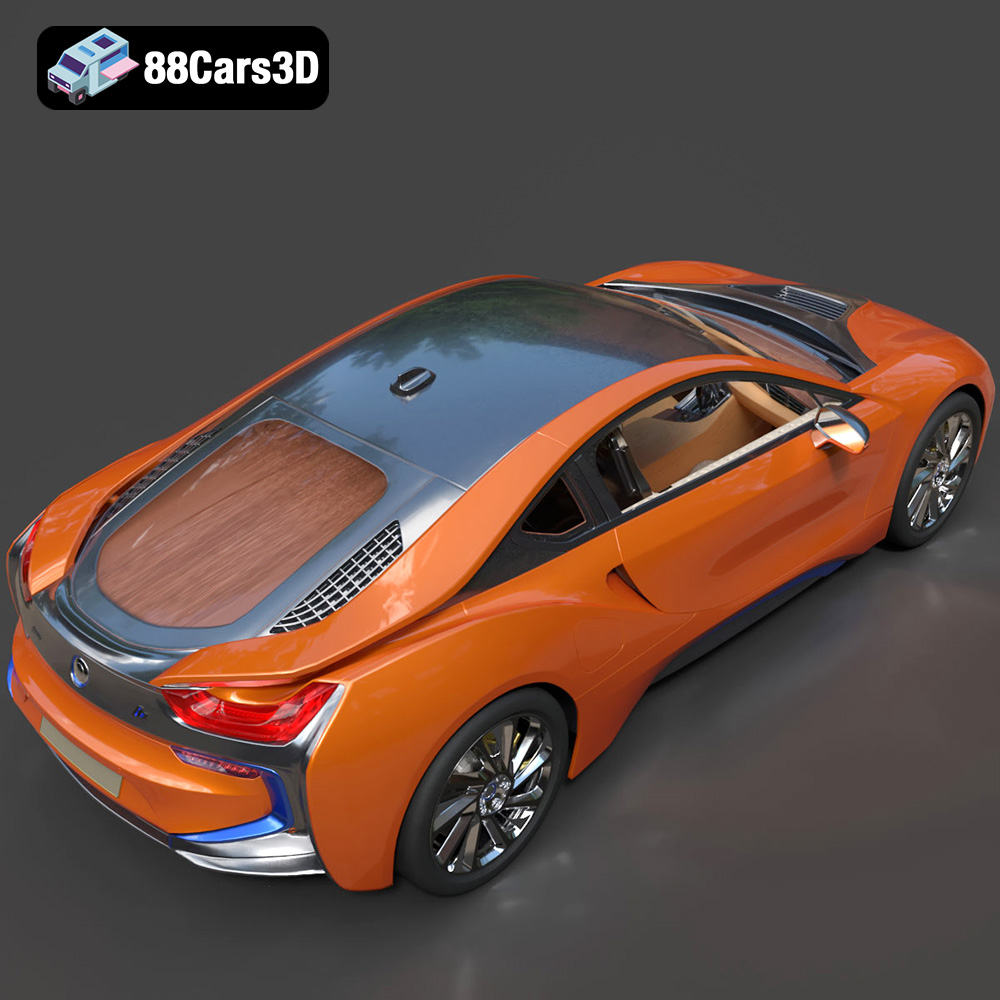
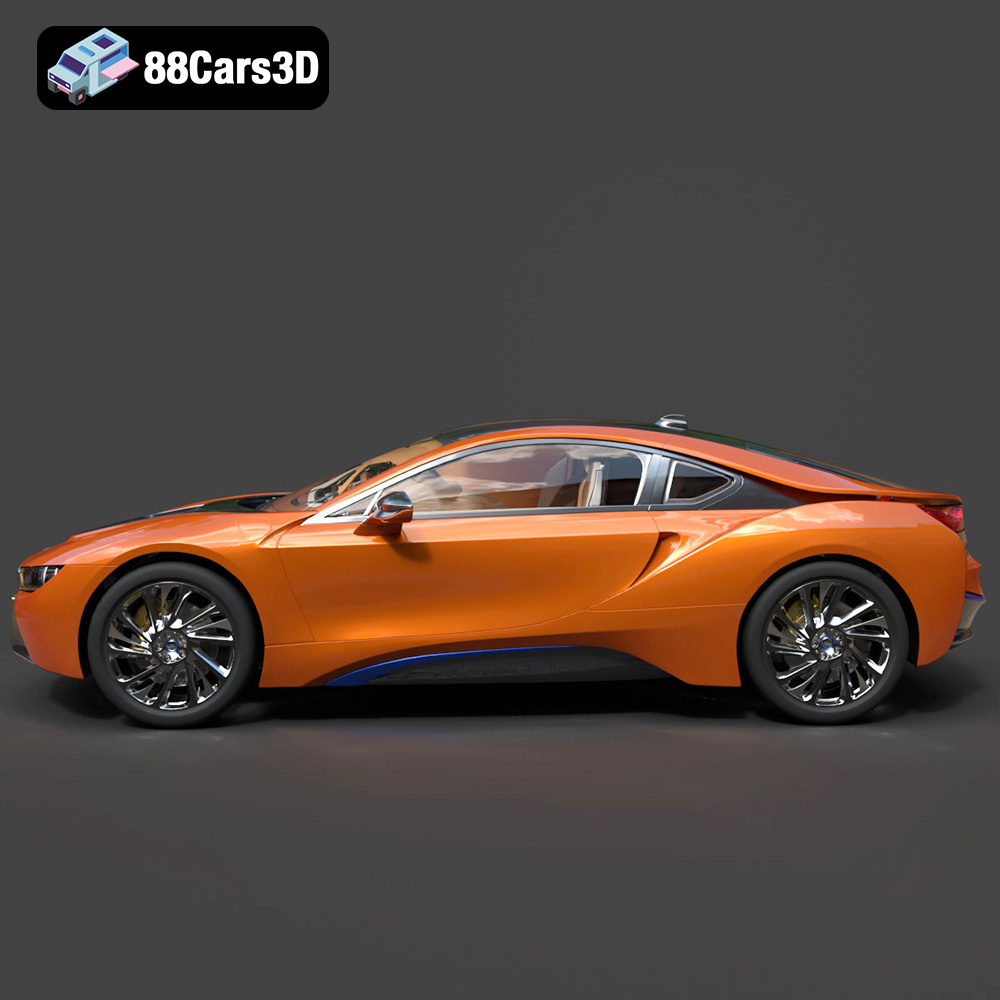
Bring the iconic design and futuristic engineering of the BMW i8 2015 into your digital projects. This meticulously crafted 3D model captures the distinctive silhouette, advanced lighting systems, and aerodynamic lines of BMW’s groundbreaking hybrid sports car. Developed with attention to accuracy, the model is built upon clean, optimized geometry suitable for demanding production environments.
The model features fully detailed, realistic materials and textures applied across all components, including the exterior body panels, specialized wheels, and a comprehensive interior environment. Its professional-grade construction ensures reliable performance in real-time applications and flawless results in high-resolution rendering workflows. The structure is built for easy modification and integration into existing scenes.
This versatile asset is ideal for a range of professional applications, including cinematic rendering, architectural visualization (ArchViz), simulation training, automotive marketing, and interactive real-time environments such as game development (using Unreal Engine or Unity) and advanced AR/VR experiences.
Included File Formats
.blend – Editable Blender file with materials and lighting setup
.fbx – Game-engine ready format for Unreal Engine and Unity
.obj – Standard 3D model format compatible with all major software
.glb – Optimized for AR/VR and web-based visualization
.stl – Suitable for 3D printing and prototyping
.ply – Detailed polygon mesh for analysis and visualization
.unreal – Pre-configured for Unreal Engine use
.max – Editable 3ds Max file for rendering and animation
Tags: .bmw, .i8, .bmwi8, .sportscar, .hybridcar, .conceptcar, .coupe, .car3dmodel, .rendering, .simulation, .gameasset, .arvr, .blend, .fbx, .obj, .glb, .stl, .ply, .unreal, .max
Tags:
.bmw, .i8, .bmwi8, .sportscar, .hybridcar, .conceptcar, .coupe, .car3dmodel, .rendering, .simulation, .gameasset, .arvr, .blend, .fbx, .obj, .glb, .stl, .ply, .unreal, .max
$12.99