

Driving Digital Excellence: Unlocking the Potential of High-Quality 3D Car Models
In the rapidly evolving landscape of digital visualization, the demand for exceptionally detailed and technically robust 3D assets has never been higher. From breathtaking cinematic sequences and immersive game environments to precision engineering simulations and augmented reality experiences, a high-quality 3D model forms the bedrock of success. Nowhere is this more apparent than in the automotive industry, where fidelity and accuracy are paramount to capturing the essence of a vehicle.
Today, we delve into the intricate world of professional 3D car models, exploring the technical considerations, diverse applications, and workflow advantages they offer. We’ll specifically highlight the exceptional capabilities of the BMW M3 Coupe E92-002 3D Model, an outstanding example available at 88cars3d.com, showcasing how such meticulously crafted assets empower artists, designers, and developers to push the boundaries of realism and creativity.
The Anatomy of Automotive Realism: Dissecting the BMW M3 Coupe E92-002 3D Model
Achieving true photorealism in 3D automotive rendering and simulation requires more than just a good eye; it demands a technically sound foundation. The BMW M3 Coupe E92-002 3D Model exemplifies this principle, offering a blend of artistic precision and engineering foresight designed for professional workflows.
Exterior Precision: Capturing Iconic Design
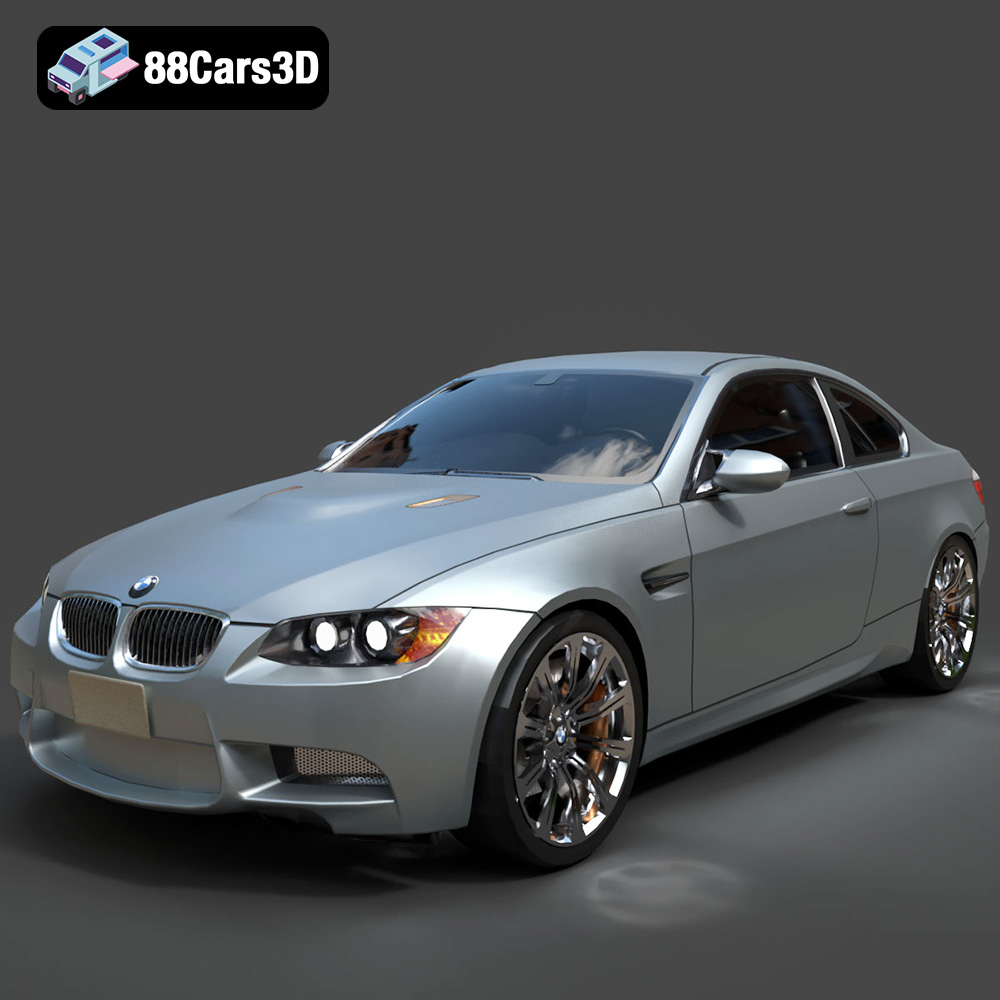
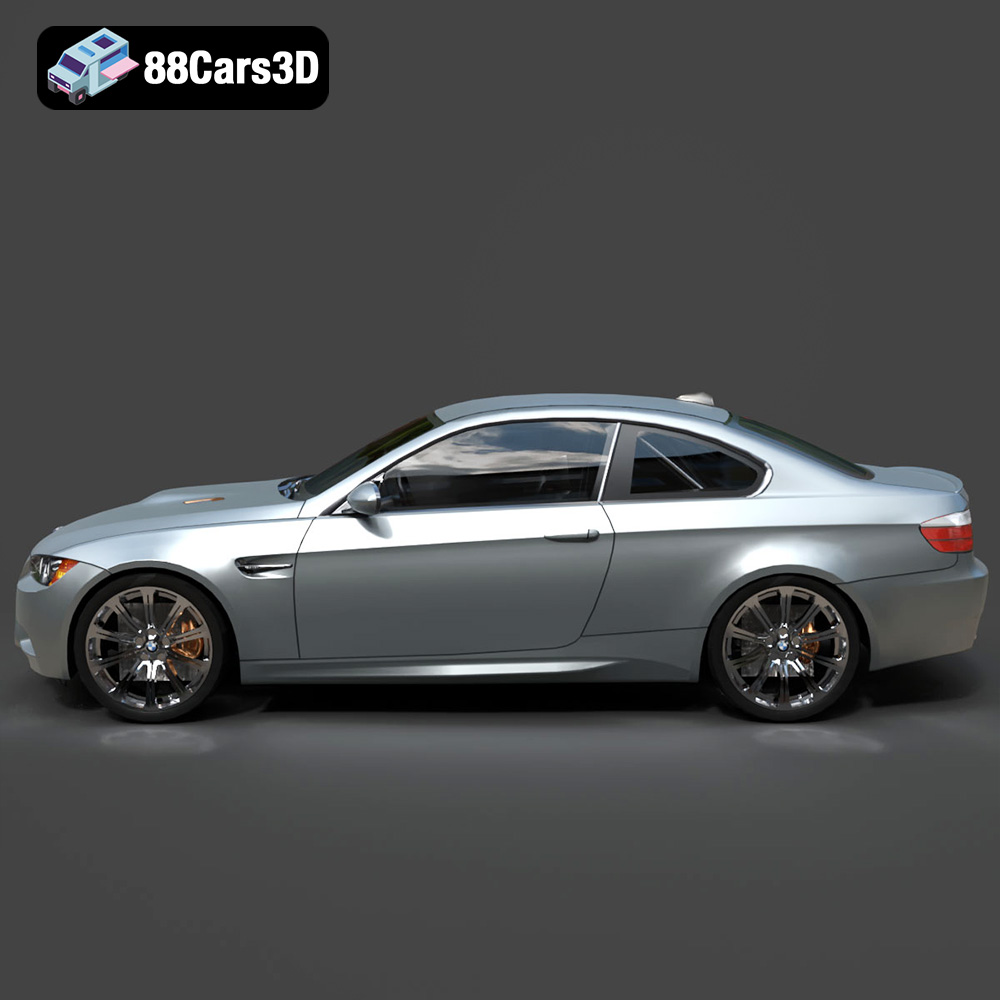
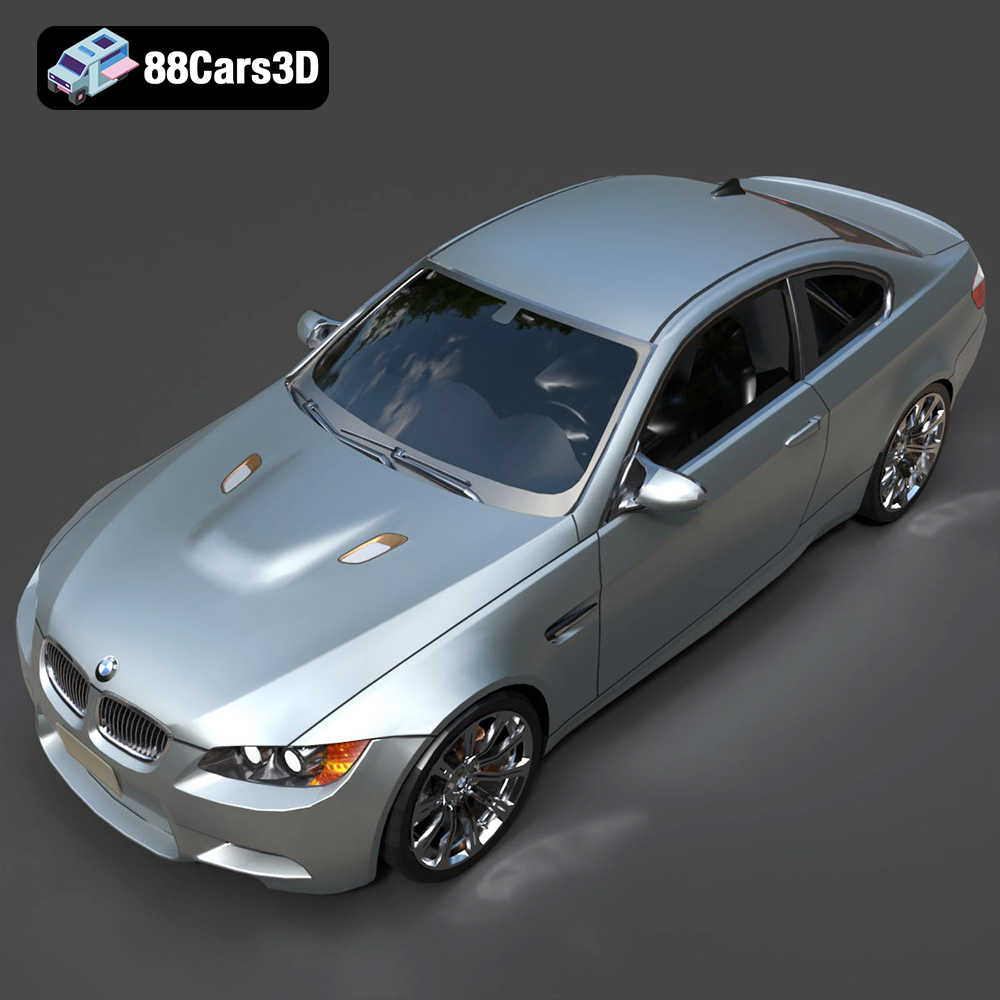
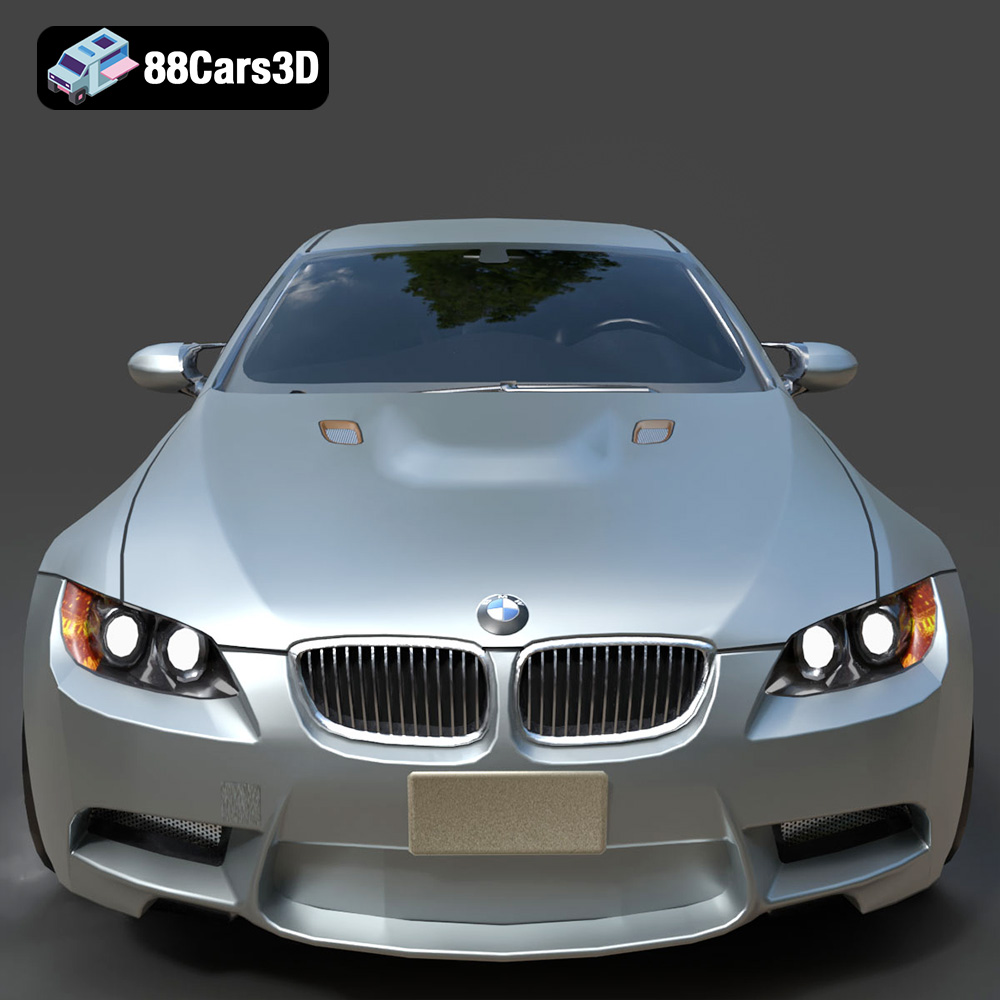
The first impression of any vehicle comes from its exterior, and the E92 M3 is no exception with its aggressive yet elegant lines. A professional 3D model must replicate these nuances flawlessly. This model boasts authentic body styling, meticulously capturing the E92 M3’s distinctive contours, from the power dome on the hood to the flared wheel arches. Details such as the kidney grille, air intakes, and side vents are precisely modeled to reflect their real-world counterparts, ensuring accurate light reflection and shadow play. The headlights and taillights are not merely static meshes; they feature realistic material shaders, designed for optimal illumination and intricate refractions, crucial for both studio renders and dynamic animation sequences. Furthermore, the wheels and tires are precisely modeled, including accurate tread patterns and detailed brake calipers, which often catch the eye in close-up shots or during high-speed action sequences. Transparent window materials are implemented to allow for realistic reflections, dynamic light scattering, and visibility into the detailed interior, enhancing overall realism.
Interior Immersion and Mechanical Depth
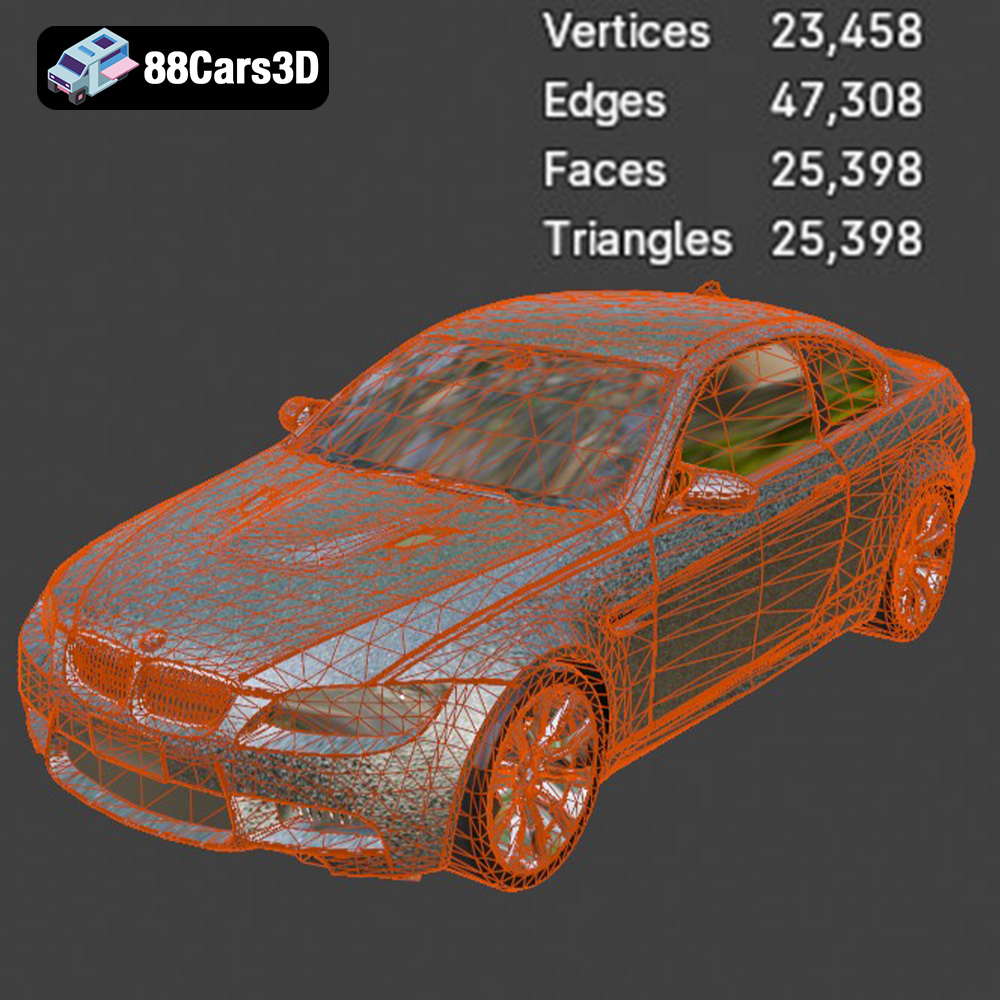
Beyond the polished exterior, the interior of a vehicle is where a significant portion of its character lies, especially in interactive applications like games or VR showrooms. The BMW M3 Coupe E92-002 3D Model doesn’t compromise here, offering faithful interior detailing. This includes the dashboard, sport seats, steering wheel, and central console elements, all modeled to a high degree of fidelity suitable for close-up views. The optimized mesh quality ensures that this visual richness is achieved without an excessive poly count, striking a crucial balance between visual fidelity and rendering efficiency – a key technical advantage for large-scale projects or real-time environments. Moreover, the model extends its attention to underbody details and suspension elements. While not always visible in every scene, these components are invaluable for enhancing realism in simulations, engineering visualizations, or extreme close-up views often demanded by cinematic automotive showcases. This comprehensive approach ensures the model holds up under scrutiny from any angle or application.
Understanding 3D Model File Formats: A Technical Deep Dive
The versatility of a 3D model is often defined by the range and quality of its supported file formats. Each format caters to specific needs and workflows, offering distinct advantages for different stages of a project, from initial design to final deployment. The BMW M3 Coupe E92-002 3D Model available at 88cars3d.com is provided with a comprehensive suite of formats, ensuring seamless integration into virtually any professional pipeline.
.blend – The Native Blender Environment
The .blend format is native to Blender, a powerful open-source 3D creation suite. When a model is provided in .blend, it typically means a fully editable Blender scene is included, complete with materials, textures, lighting setups, and even any pre-configured animations or camera views. This format is ideal for artists who primarily work in Blender, allowing direct access to all scene elements for extensive customization, rigging, and rendering using Blender’s Cycles or Eevee render engines. Technical advantages include direct access to modifier stacks, node-based materials, and a lightweight, self-contained project file.
.fbx – The Industry Standard for Interoperability
FBX (Filmbox) is a proprietary file format owned by Autodesk and is widely considered the de facto standard for exchanging 3D data between different software applications, particularly in game development. It’s ideal for Unreal Engine, Unity, and real-time pipelines due to its robust support for mesh data, skeletal animations, blend shapes, lights, and cameras. FBX files often maintain hierarchical structures, pivot points, and UV information critical for game assets. While it can store materials, it typically relies on the target software to recreate PBR (Physically Based Rendering) materials using texture maps (albedo, normal, roughness, metallic, etc.) exported alongside the FBX.
.obj – The Universal Exchange Format
OBJ (Object) is one of the oldest and most widely supported 3D file formats, making it a truly universal format for cross-software compatibility. It’s a simple, text-based format that primarily stores geometric data: vertices, UV coordinates, vertex normals, and faces. While it can reference external material files (.mtl), it doesn’t embed materials, animation, or scene information like FBX. Its strength lies in its simplicity and ubiquitous support, making it an excellent choice for transferring raw mesh data between almost any 3D application, or for basic import into CAD software that might not support more complex formats. For the BMW M3 Coupe E92-002, this ensures the core mesh can be utilized by virtually any artist.
.glb – Optimized for Web, AR, and VR
GLB (GL Transmission Format Binary) is the binary version of glTF (GL Transmission Format), an open standard for 3D scenes and models. GLB is designed for efficient transmission and loading of 3D models in web applications, augmented reality (AR), and virtual reality (VR) environments. It packages all model data – geometry, materials, textures, and even animations – into a single, self-contained binary file, optimizing it for fast loading and rendering on devices with limited resources. This makes it perfect for interactive web viewers, immersive AR/VR experiences, and quick deployment of the E92 M3 into browser-based configurators.
.stl – The Gateway to 3D Printing
STL (STereoLithography) is the most common file format for 3D printing. It represents a 3D model as a series of connected triangles, describing only the surface geometry of an object without color, texture, or other model attributes. While simplified, this format is precisely what 3D printers need to understand an object’s shape for fabrication. For the BMW M3 Coupe E92-002, conversion to .stl enables the creation of high-quality physical models and prototypes, ideal for automotive enthusiasts, designers, or even for rapid prototyping in an engineering context.
.ply – Precision Mesh for CAD or Analysis
PLY (Polygon File Format or Stanford Triangle Format) is another mesh file format used for storing 3D data, particularly from 3D scanners. It’s known for its ability to store various properties beyond just geometry, such as color, transparency, surface normals, and texture coordinates, often per vertex or per face. While less common for general 3D model exchange than OBJ or FBX, it is a precision mesh format often favored in CAD, scientific visualization, and analysis applications where detailed geometric and attributive data is crucial. It can represent complex data acquired from real-world scans, making it valuable for engineering or detailed analysis of the BMW M3’s form.
.unreal – Engine-Ready for Real-Time Environments
The .unreal format implies a pre-configured Unreal Engine project or asset ready for direct import and use within the engine. This is a significant advantage for game developers and real-time visualization specialists, as it bypasses many of the manual setup steps. It usually includes optimized meshes, PBR materials properly set up in Unreal’s material editor, static mesh actors, and potentially even blueprint configurations or level setups. This direct integration streamlines the workflow, allowing developers to immediately drop the BMW M3 Coupe E92-002 into their scenes and begin working on lighting, physics, and gameplay mechanics without extensive preparation.
.max – The Native 3ds Max Project
Similar to .blend for Blender, the .max format is native to Autodesk 3ds Max, a leading software for 3D modeling, animation, and rendering in architectural visualization, product design, and cinematic production. A .max file contains the complete scene, including geometry, materials (often V-Ray, Corona, or Arnold specific), textures, lighting, cameras, and animation data. This format provides the most flexibility for 3ds Max users, allowing full control over all aspects of the model for advanced rendering, complex animations, and integration into existing 3ds Max projects, making the BMW M3 Coupe E92-002 an easily adaptable asset for this robust ecosystem.
Mastering Automotive Rendering Workflows with the E92 M3
High-quality 3D car models like the BMW M3 Coupe E92-002 are designed to be the centerpiece of compelling visual narratives. Their meticulously structured geometry and organized assets simplify complex rendering and animation tasks, leading to stunning results.
Photorealistic Renders in 3ds Max and Blender
For artists focused on producing marketing materials, architectural visualizations, or high-end product showcases, photorealistic rendering is key. With the E92 M3 model, its clean, quad-dominant topology is a significant technical advantage. This ensures smooth subdivision, preventing unsightly pinching or artifacts, and is critical for professional rendering engines like V-Ray, Corona Renderer in 3ds Max, or Cycles in Blender. The model’s accurate real-world scale means it seamlessly integrates into existing scenes without scale adjustments, which can often lead to lighting inconsistencies. Setting up materials is streamlined due to the logical UV mapping; artists can easily apply PBR texture sets for paint finishes, metal, chrome, rubber, and glass, adjusting properties like roughness, metallic, and normal maps to achieve desired visual effects under various lighting conditions. Utilizing HDR environment maps combined with targeted area lights can quickly bring out the intricate reflections and subtle surface variations of the M3, creating studio-quality renders with remarkable efficiency.
Dynamic Cinematic Sequences: Animation Readiness
Beyond static images, the true power of a well-engineered 3D model shines in animation. The BMW M3 Coupe E92-002 is specifically prepared for animation workflows, with logically organized hierarchy and properly set pivots for key components. Doors, hood, trunk, and wheels are separated, allowing for independent movement and rigging. This means animators can effortlessly create dynamic sequences: opening doors to reveal the detailed interior, popping the trunk, or animating the car driving with realistic wheel rotation. The established pivot points ensure that rotations occur naturally, mirroring real-world mechanics. For cinematic projects, this level of preparation drastically reduces setup time, allowing artists to focus on choreography, camera movements, and storytelling rather than wrestling with mesh integrity or pivot corrections. From a simple turntable animation to a complex chase sequence, the model provides the foundational stability needed for professional motion graphics and automotive advertisements.
Integrating the BMW M3 E92-002 into Real-Time Environments
The rise of interactive experiences in gaming, AR, and VR demands 3D assets that are not only visually impressive but also highly optimized for real-time performance. The BMW M3 Coupe E92-002 3D Model is engineered with these demanding applications in mind, offering significant advantages for real-time developers.
Game-Ready Assets in Unreal Engine and Unity
For game developers, performance is paramount. The E92 M3 model is optimized for real-time game engines like Unreal Engine and Unity. Its “optimized mesh quality” refers to a balance of poly count and detail, often implying efficient polygon distribution and, potentially, support for Level of Detail (LOD) systems. LODs allow the engine to automatically swap to lower-polygon versions of the model when it’s further from the camera, dramatically improving frame rates without noticeable visual degradation. The clean topology also facilitates the creation of accurate collision meshes, crucial for realistic physics and player interaction within the game world. With provided .fbx and .unreal formats, integrating the model into a game project is straightforward. PBR textures (albedo, normal, roughness, metallic, ambient occlusion) are typically provided or easily generated, ensuring the car’s surfaces react realistically to dynamic lighting within the engine. Developers can then focus on implementing custom shaders for damage effects, dirt, or specific lighting conditions, knowing they have a solid, performant base asset.
Interactive AR/VR Experiences: Immersive Virtual Showrooms
Augmented Reality (AR) and Virtual Reality (VR) offer unparalleled opportunities for immersive experiences, from virtual showrooms to interactive driving simulations. The BMW M3 Coupe E92-002 is an ideal asset for these platforms. Its detailed interior and exterior, combined with real-world scale, create a truly convincing presence. The availability of the .glb format is particularly beneficial here, as GLB is highly optimized for web-based AR/VR frameworks and mobile devices, allowing for quick loading and smooth interaction. Imagine an AR application where potential customers can place the E92 M3 in their driveway, viewing it from every angle, opening doors, and even changing paint colors in real-time. In VR, the model can form the centerpiece of a virtual garage or a detailed driving simulation, offering users an unparalleled sense of presence and interactivity. The optimized mesh ensures that these experiences run smoothly even on less powerful hardware, expanding the reach of immersive marketing and training applications.
Beyond Visualization: Simulation and 3D Printing
The utility of a professional 3D car model extends far beyond aesthetic rendering and real-time interaction. It serves as a foundational asset for scientific analysis, engineering validation, and even tangible physical replication.
Engineering Simulations and Training
In fields like automotive engineering, accident reconstruction, or professional driver training, precise 3D models are indispensable. The BMW M3 Coupe E92-002, with its accurate real-world scale and consideration for underbody and suspension elements, is perfectly suited for various simulation scenarios. Using formats like .ply, engineers can import the mesh data into CAD software or simulation environments to perform aerodynamic analyses, structural integrity tests, or vehicle dynamics simulations. This can range from testing new suspension setups virtually to recreating crash scenarios for forensic analysis. For training, the model can be integrated into high-fidelity driving simulators, providing a realistic visual counterpart to the haptic feedback, allowing trainees to practice maneuvers in a safe, controlled digital environment. The ability to manipulate individual components like wheels and suspension elements further enhances its value for detailed technical studies and interactive learning modules.
Bringing Digital to Physical: 3D Printing the M3
The digital realm often inspires physical creations, and 3D printing provides a direct bridge. The BMW M3 Coupe E92-002 3D Model is suitable for conversion to the .stl format, making it ready for 3D printing. This capability opens up a world of possibilities for creating high-quality physical models and prototypes. Automotive designers can rapidly prototype design iterations, creating miniature physical models to assess proportions and aesthetics in a tangible form. Hobbyists and collectors can print highly detailed replicas of their favorite E92 M3, customizing scale and materials. For educators, a 3D printed model can serve as a valuable teaching aid, allowing students to physically examine the vehicle’s form and discuss its design principles. While the digital model handles complex PBR materials, the physical print translates the geometric fidelity into a tangible object, offering a unique blend of digital precision and physical presence.
Customization and Creative Freedom for the BMW M3 Coupe E92-002
A truly professional 3D asset provides not just a perfect starting point but also ample room for creative modification and personalization. The BMW M3 Coupe E92-002 3D Model is designed with extensive customization options, allowing artists and designers to tailor it precisely to their vision.
Unleashing Design Potential: Paint, Decals, and Materials
The foundation of any high-quality 3D model is its clean geometry and organized structure, which directly translates into ease of customization. With the BMW M3 Coupe E92-002, artists can easily modify paint finishes, experimenting with everything from classic BMW M colors to custom metallic flakes, matte surfaces, or pearlescent effects. Applying body graphics and decal applications is straightforward due to the model’s clean UV mapping, enabling designers to implement racing liveries, branding, or artistic patterns without distortion. Beyond paint, material properties for elements like metal, chrome, plastic, rubber, and glass can be finely adjusted. This includes tweaking reflection values, subsurface scattering for plastics, or the refractive index for glass to achieve specific visual effects, from brand-new showroom shine to weathered, track-worn grit. This flexibility ensures that the model can be adapted for diverse artistic styles and client requirements, making it an invaluable tool for varied projects.
Scene Integration and Environment Building
A compelling automotive visualization rarely features just a car in isolation. The E92 M3 model’s accurate real-world scale and logically organized hierarchy ensure seamless integration into existing scenes and environments. Whether it’s placing the car into a bustling city street for an architectural visualization, positioning it on a desolate race track for a game sequence, or showcasing it in a minimalist studio setting for an advertising campaign, the model fits naturally within any digital space. Artists can adapt lighting setups within their chosen 3D software to create diverse moods and realistic scene environments, knowing the car’s materials will react authentically. This might involve setting up a dramatic sunset, a moody rainy night, or a crisp, daylight scene. The model’s preparation allows artists to focus on environmental storytelling and overall composition, rather than battling with scale discrepancies or problematic mesh interactions. This versatility makes the BMW M3 Coupe E92-002 a truly adaptable asset, empowering creators to build entire digital worlds around it.
Conclusion: The Indispensable Value of Premium 3D Car Models
In the demanding world of 3D visualization, the difference between good and great often lies in the quality of the foundational assets. The BMW M3 Coupe E92-002 3D Model stands as a testament to this principle, offering a meticulously crafted, technically robust, and highly versatile asset that caters to a wide spectrum of professional applications. From high-fidelity automotive rendering and dynamic game development to precise engineering simulations and immersive AR/VR experiences, its clean geometry, detailed components, and extensive file format support make it an indispensable tool for creators across various industries.
Investing in a premium 3D model like the E92 M3 is an investment in efficiency, quality, and creative freedom. It empowers artists and developers to bypass countless hours of modeling and optimization, allowing them to focus on bringing their creative visions to life with stunning realism and unparalleled efficiency. Explore this exceptional model and many others at 88cars3d.com, where quality meets versatility to drive your digital projects forward.
Featured 3D Model
BMW M3 Coupe E92-002 3D Model
Immerse yourself in the world of high-performance automotive design with this professional 3D model of the BMW M3 Coupe E92-002. This model meticulously captures the aggressive stance and iconic styling of BMW’s renowned sports coupe, offering an authentic digital representation. Engineered with clean geometry and balanced detailing, it is optimized for a wide range of applications, including high-fidelity rendering, dynamic animation sequences, realistic simulations, and integration into modern game development pipelines.
$10.79
Product Image Gallery



Related Tags
.arvr
.blend
.bmw
.car
.coupe
.fbx
.gameasset
.glb
.m3coupee92002
.max
.obj
.ply
.rendering
.simulation
.sportsCar
.stl
.unreal
