

Mastering Automotive 3D Assets: Elevating Projects with Professional Car Models
In the dynamic world of 3D visualization, the quality of your assets dictates the fidelity and impact of your final output. From cinematic automotive rendering to immersive game environments and precise engineering simulations, the demand for exceptionally detailed and technically sound 3D car models is higher than ever. Professionals across various industries consistently seek assets that not only look stunning but are also engineered for seamless integration and performance. This pursuit of excellence often leads to a careful selection of models that exemplify clean topology, accurate scaling, and comprehensive material definitions. Such an asset stands as a cornerstone for any project aiming to achieve photorealism and functional versatility.
A prime example of such an indispensable asset is the BMW M5 F10 3D Model available on 88cars3d.com. This meticulously crafted model of the iconic high-performance luxury sports sedan encapsulates aggressive styling and formidable power, translated into a digital form with exquisite detail. Its clean geometry and balanced detailing ensure professional quality across a multitude of applications, setting a benchmark for what high-fidelity 3D car models should offer to artists and developers alike. Throughout this article, we’ll delve into the technical intricacies of working with premium automotive 3D assets, highlighting how models like the BMW M5 F10 empower creators to achieve unparalleled results.
The Anatomy of a High-Quality 3D Car Model
Before diving into specific applications, it’s crucial to understand what constitutes a truly professional-grade 3D car model. It’s more than just a pretty exterior; it’s a foundation built on robust technical principles.
Precision in Geometry and Topology
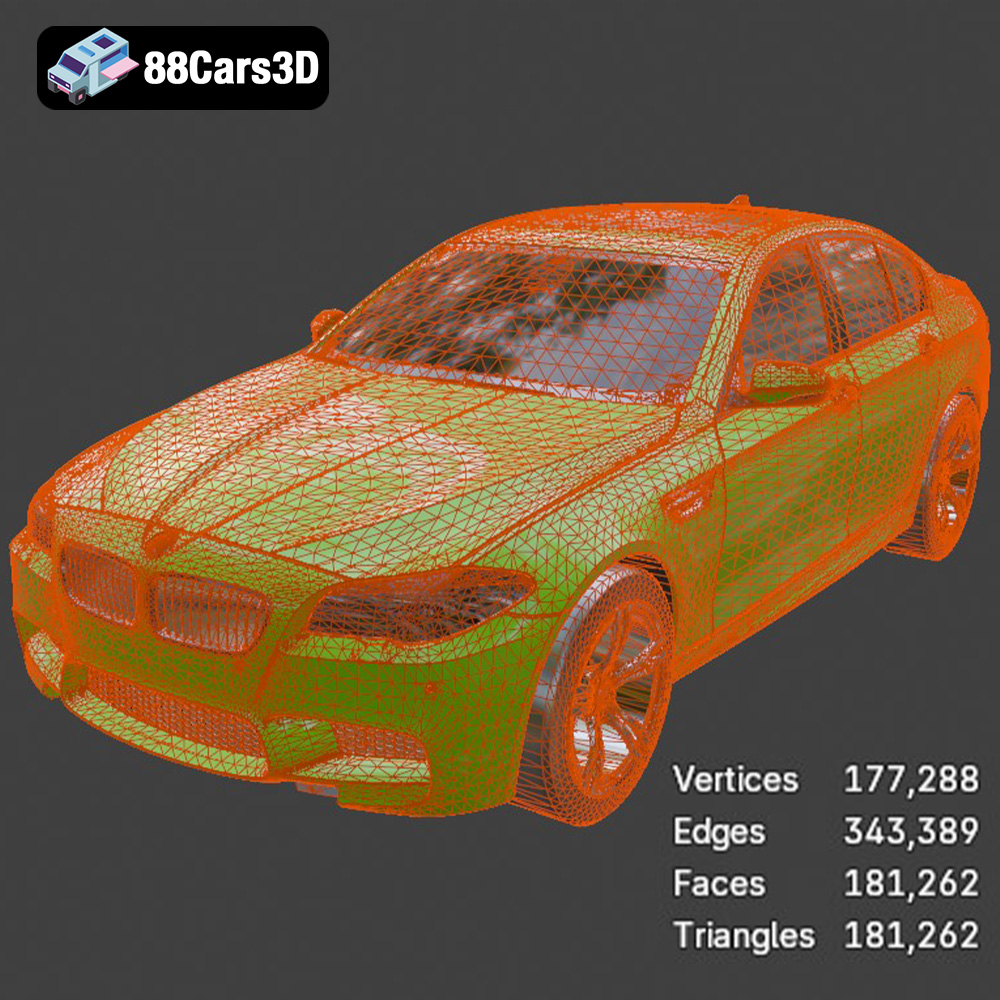
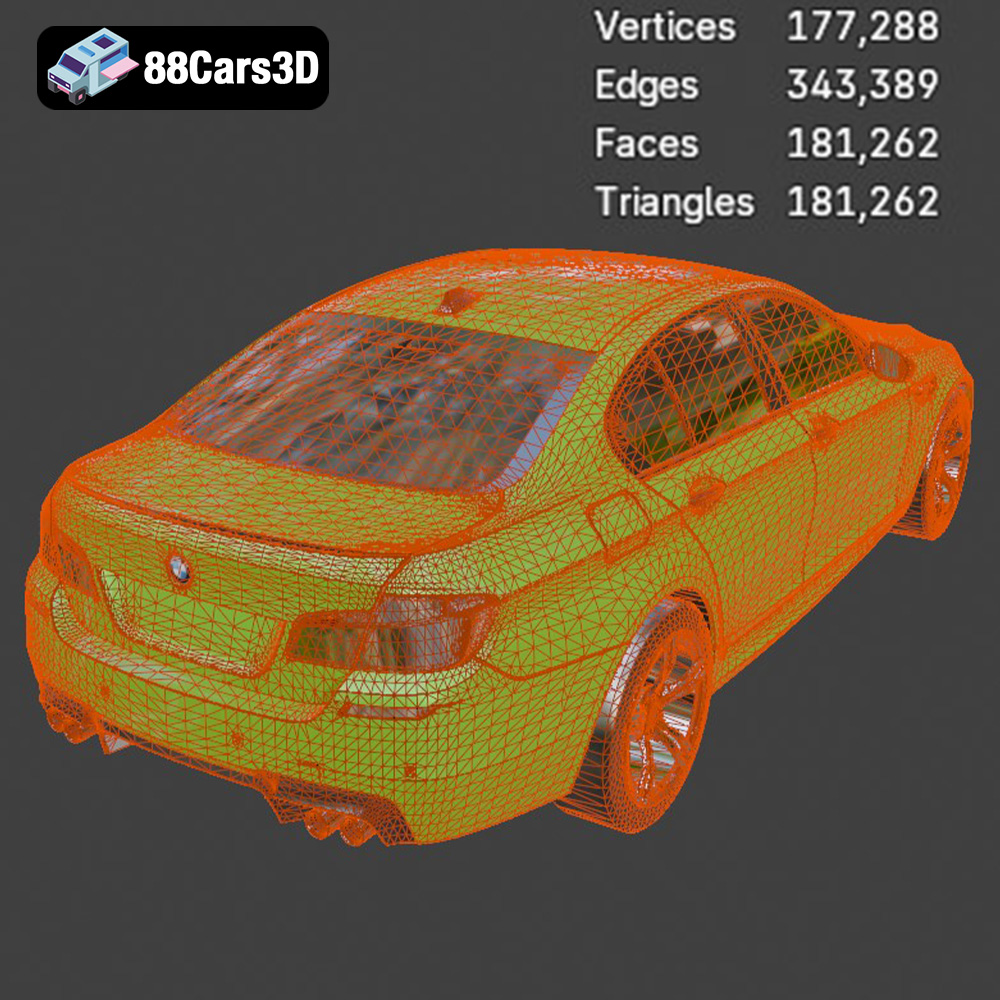
The backbone of any excellent 3D model is its geometry. For a vehicle like the BMW M5 F10, this means accurately sculpted body panels that reflect the car’s signature design and muscular lines. A high-quality model will feature clean, quad-dominant topology, which is essential for several reasons:
- Smooth Subdivision: Quad topology allows for predictable and smooth subdivision surfaces, crucial for high-fidelity renders without introducing unsightly artifacts.
- Efficient Deformation: For animation, clean topology facilitates natural deformation, ensuring that the body panels and other elements move realistically without pinching or tearing.
- Optimized Performance: While detailed, the mesh should be optimized to provide sufficient visual fidelity without being overly polygon-heavy, especially important for real-time applications. The BMW M5 F10 3D model, for instance, is built with this balance in mind, ensuring it looks fantastic without bogging down your scene.
Material Definition and Texturing Excellence
Beyond the mesh, realistic materials breathe life into a 3D car. This involves a comprehensive approach to defining surfaces:
- Photorealistic Shaders: Detailed material definitions for paint, glass, rubber, and chrome elements are paramount. This includes physically based rendering (PBR) materials that accurately simulate how light interacts with different surfaces. For the BMW M5 F10, this translates to a lustrous car paint, reflective chrome accents, transparent glass with appropriate refractions, and textured rubber tires.
- High-Resolution Textures: Intricate details like tire tread, dashboard textures, or even subtle paint imperfections require high-resolution texture maps (diffuse, normal, roughness, metallic, etc.) to achieve photorealism. These details are often what separates a good model from an exceptional one, providing the depth and realism necessary for close-up renders.
- UV Unwrapping: Proper UV unwrapping is critical for applying textures without stretching or distortion. A well-prepared model will have clean UV layouts, allowing artists to easily modify paint finishes, apply custom decals, or change livery designs with precision.
Understanding 3D Model File Formats
Choosing the correct file format is a critical decision that impacts workflow efficiency, software compatibility, and the intended application of your 3D assets. A versatile asset, like the BMW M5 F10 3D model from 88cars3d.com, provides a wide array of formats to cater to diverse professional needs. Understanding each format’s strengths and typical use cases is key to optimizing your production pipeline.
.blend – The Blender Powerhouse
The **.blend** file format is native to Blender, a leading open-source 3D creation suite. A .blend file typically includes the entire scene: mesh data, materials, textures, lighting, cameras, animation data, and even physics simulations. This format is ideal for users deeply integrated into the Blender ecosystem, offering full editability and preserving all original scene configurations. When you download a .blend version of a model like the BMW M5 F10, you get a fully pre-configured scene, ready for immediate rendering or further customization within Blender, complete with its materials and modifiers.
.fbx – The Industry Workhorse for Interoperability
Developed by Autodesk, the **.fbx** (Filmbox) format has become a ubiquitous standard for 3D asset exchange, particularly in game development and real-time pipelines. It supports geometry, animation, skinning, blend shapes, cameras, lights, and materials (though material translation can sometimes be imperfect between different software). .fbx is the go-to format for exporting models to game engines like Unreal Engine and Unity, or for transferring assets between 3ds Max, Maya, and other DCC (Digital Content Creation) tools. Its robust support for hierarchies and animations makes it invaluable for integrating complex assets like animated car doors or spinning wheels.
.obj – The Universal Geometry Carrier
The **.obj** (Wavefront Object) format is one of the oldest and most widely supported 3D file formats. It’s a universal solution for transferring purely geometric data (vertices, normals, texture coordinates, and faces) between virtually any 3D software. While it handles geometry and UVs exceptionally well, .obj files typically reference external material files (.mtl) for surface properties, and they do not inherently support animation or rigging data. For raw mesh transfer and cross-software compatibility, especially for static models or base meshes, .obj remains an incredibly reliable choice, ensuring the BMW M5 F10’s clean geometry is preserved across platforms.
.glb – Optimized for AR, VR, and Web
The **.glb** (GL Transmission Format Binary) is the binary version of glTF, a royalty-free specification for the efficient transmission and loading of 3D scenes and models by engines and applications. .glb files contain 3D model data (geometry, materials, textures, animations) in a single binary file, making them highly optimized for web-based 3D, augmented reality (AR), and virtual reality (VR) applications. Their compact size and ease of integration make them perfect for interactive product viewers, online showrooms, and immersive experiences where bandwidth and load times are crucial. The BMW M5 F10 3D model in .glb format is ready for immediate deployment in such lightweight, interactive environments.
.stl – The Standard for 3D Printing
The **.stl** (Stereolithography) format is the de facto standard for 3D printing. It represents a 3D model as a series of connected triangles (a triangulated surface), defining only the surface geometry of a 3D object without any color, texture, or material information. While not suitable for rendering or animation, .stl is essential for manufacturing processes. If your project involves prototyping the BMW M5 F10 or creating a physical miniature, converting the detailed 3D model to .stl is the necessary step to prepare it for a 3D printer.
.ply – Precision Mesh for CAD and Analysis
The **.ply** (Polygon File Format) is another popular format for storing 3D data, particularly from 3D scanners, CAD software, and scientific applications. It supports both triangle meshes and point clouds, and can store a wider range of properties than .obj, including color per vertex, normal information, and material properties. .ply is often used in reverse engineering, precise measurement, and analysis workflows where geometric accuracy and additional attribute data are paramount. For highly precise CAD or analytical tasks involving the BMW M5 F10, the .ply format offers a robust solution.
.unreal – Engine-Ready for Real-Time Environments
The **.unreal** format refers to a project setup or asset package specifically optimized for direct integration into Unreal Engine. This often means the model has been exported with correct scale, material instances, collision meshes, LODs (Levels of Detail), and potentially even Blueprint functionality. An .unreal asset, such as the BMW M5 F10 3D model’s included Unreal Engine project, signifies a high level of preparation, minimizing the setup time for developers and ensuring optimal performance within the engine’s real-time rendering pipeline. It represents a truly “game-ready” asset.
.max – The 3ds Max Native Scene
Similar to .blend for Blender, **.max** is the native file format for Autodesk 3ds Max. It stores a complete 3ds Max scene, including geometry, materials, textures, lighting, cameras, animation, and scene setup. For users working within 3ds Max for architectural visualization, advanced rendering, or complex animation, the .max file provides full access to the original project, allowing for intricate adjustments and leveraging 3ds Max’s powerful rendering engines like V-Ray or Corona. The BMW M5 F10 .max file provides an editable scene, ready for sophisticated rendering and animation.
Automotive Rendering and Visualization: Crafting Photorealism
For artists focused on creating stunning visuals, the BMW M5 F10 3D model provides an exceptional foundation for photorealistic automotive rendering and visualization. The goal here is to indistinguishably blend the digital car with real-world environments.
Studio Renders and Cinematic Sequences
When producing studio renders or cinematic sequences, every detail counts. The BMW M5 F10 3D model, with its accurately modeled body panels, detailed headlights, taillights, and realistic transparent materials, shines in this arena. Professional artists utilize software like 3ds Max (with V-Ray or Corona Renderer) or Blender (with Cycles or Eevee) to:
- Develop Sophisticated Lighting: Employing HDRIs (High Dynamic Range Images) for environment lighting combined with targeted studio lights to highlight the car’s curves and reflections.
- Refine Materials: Adjusting paint metallic flakes, clear coat reflectivity, tire rubber displacement, and brake caliper textures to achieve maximum realism. The included material definitions for the BMW M5 F10 serve as an excellent starting point, often requiring only minor tweaks to match specific artistic visions or rendering engines.
- Integrate into Environments: Placing the vehicle within a custom 3D environment or compositing it into a backplate image, ensuring consistent lighting and perspective.
The organized hierarchy of the BMW M5 F10 3D model, with separated components like doors, hood, trunk, wheels, and steering wheel, significantly streamlines animation workflows for cinematic shots, allowing for realistic opening and closing sequences or wheel rotations.
Architectural and Marketing Visualization
Beyond standalone automotive visuals, 3D car models are vital for architectural visualization (ArchViz) and marketing materials. Placing a premium vehicle like the BMW M5 F10 into a rendered architectural scene adds a sense of scale, luxury, and realism. For marketing, the model can be used to generate high-quality product shots, configurator images, or even interactive web experiences.
- Scene Integration: Ensuring the car model’s scale is accurate to real-world measurements, a feature proudly present in the BMW M5 F10 3D model, facilitates seamless integration into existing scenes.
- Variant Creation: The model’s flexibility allows for easy modification of paint finishes and application of custom decals or livery designs, enabling the creation of multiple variants for diverse marketing campaigns without needing to model different versions from scratch. This versatility makes assets from 88cars3d.com particularly valuable.
Game Development and Real-Time Applications: Performance Meets Fidelity
In game development, AR/VR experiences, and other real-time applications, the challenge is to deliver stunning visuals while maintaining optimal performance. The BMW M5 F10 3D model is designed to excel in this demanding environment.
Optimizing for Game Engines (Unreal Engine & Unity)
A “game-ready” asset is specifically optimized for efficient performance within real-time rendering pipelines. For the BMW M5 F10 3D model, this means:
- Optimized Mesh Quality: The model’s polygon count is balanced to provide high visual fidelity for close-ups without excessively burdening the game engine. Modern techniques like normal mapping allow for the illusion of high detail with a lower poly count.
- Levels of Detail (LODs): While not explicitly listed, professional game assets often include multiple LODs, which are lower-polygon versions of the model that swap in as the camera moves further away. This dramatically improves performance without a noticeable drop in visual quality.
- Collision Meshes: Crucial for physics interactions in games, dedicated collision meshes are often simplified representations of the main model, allowing for accurate collision detection without processing complex visual geometry. The inclusion of an .unreal file format for the BMW M5 F10 3D model suggests this level of optimization and preparation.
Integrating the BMW M5 F10 into Unreal Engine or Unity is made straightforward by the .fbx and .unreal file formats, ensuring that materials, textures, and mesh data translate correctly, saving developers countless hours of setup time.
Interactive AR/VR Experiences
Augmented Reality (AR) and Virtual Reality (VR) demand highly optimized assets for smooth, immersive experiences. The .glb format, included with the BMW M5 F10 3D model, is specifically tailored for these applications. Its compact size and single-file nature make it ideal for quick loading and efficient rendering on mobile devices or VR headsets.
- Reduced Latency: Optimized assets contribute to lower latency, a critical factor for preventing motion sickness in VR and ensuring responsive interactions in AR.
- Immersive Detail: Despite optimization, the model retains sufficient detail to make the BMW M5 F10 feel tangible and realistic within a virtual or augmented space, whether for interactive product showcases or virtual driving experiences.
Beyond Visualization: Simulation, Training, and 3D Printing
The utility of a high-quality 3D car model extends far beyond rendering and games, reaching into technical fields like simulation, training, and even physical production.
Automotive Simulation and Training
For driving simulators, automotive design reviews, and educational modules, precise and accurate models are non-negotiable. The BMW M5 F10 3D model, built to real-world scale and featuring a detailed interior (dashboard, sport seats, steering wheel, center console, instrument cluster), provides an excellent base for these applications:
- Driving Simulators: Coupled with advanced physics engines, the accurate geometry and scale of the model provide a realistic driving experience for training or entertainment.
- Design Reviews: Engineers and designers can use the model in VR environments to conduct virtual walk-arounds and interior inspections, identifying potential issues or refining aesthetics before physical prototypes are built.
- Technical Training: The model can be dissected or animated to demonstrate mechanical components or operational procedures in an educational context, offering a safe and cost-effective alternative to physical demonstrations.
Prototyping and 3D Printing
The ability to convert a digital model into a physical object opens up new avenues for product development and creative expression. The BMW M5 F10 3D model’s compatibility with .stl conversion makes it suitable for 3D printing, allowing users to:
- Create Physical Prototypes: Designers can quickly print scaled models for tactile feedback or presentation purposes.
- Produce Collectible Models: Enthusiasts can create high-quality physical replicas of their favorite car.
- Architectural Models: The car can be printed and placed into physical architectural models, much like its digital counterpart in ArchViz.
While the .stl format sacrifices material and color information for geometry, the underlying clean topology of the BMW M5 F10 ensures a solid mesh for reliable 3D printing output, preventing common issues like non-manifold geometry.
Advanced Workflows and Customization with the BMW M5 F10
The true power of a versatile 3D asset lies in its adaptability and how it empowers artists to push creative boundaries. The BMW M5 F10 3D model facilitates numerous advanced workflows and customization options.
Rigging for Dynamic Animation
For sophisticated animation, a model needs to be rig-ready. The BMW M5 F10 3D model is designed with separate components (doors, hood, trunk, wheels, steering wheel) and logically organized hierarchy with proper pivot points. This significantly simplifies the rigging process:
- Vehicle Rigging: Artists can easily set up controllers to animate door openings, trunk lifts, hood reveals, and realistic wheel rotations for driving sequences.
- Interior Interaction: The detailed interior allows for animating elements like the steering wheel, gear shifter, or dashboard buttons for interactive experiences or close-up shots.
This pre-organization saves invaluable time in production, allowing animators to focus on performance rather than asset preparation.
Applying Custom Liveries and Decals
The automotive world is rife with custom paint jobs, racing liveries, and brand decals. A high-quality 3D model should make applying these customizations straightforward. With clean UV unwrapping and well-defined material zones, the BMW M5 F10 3D model allows artists to:
- Paint Finishes: Easily modify paint finishes using procedural shaders or by swapping texture maps to achieve unique looks, from matte stealth finishes to vibrant metallics.
- Decal Application: Apply custom decals, logos, or racing stripes with precision, ensuring they wrap correctly around the car’s contours without distortion. This is particularly valuable for racing games or automotive advertising where branding is key.
The flexibility to adjust material properties for metals, chrome accents, rubber, and glass further enhances customization, allowing artists to match specific branding guidelines or creative visions.
Conclusion
The journey through the world of professional 3D car models reveals a complex interplay of geometric precision, material science, and technical optimization. From the foundational understanding of diverse file formats to specialized applications in rendering, game development, simulation, and 3D printing, the demands on modern 3D assets are immense. Yet, with a meticulously crafted model, these challenges transform into opportunities for unparalleled creative output.
The BMW M5 F10 3D Model stands as a testament to this commitment to quality. Its clean, quad-dominant topology, accurate real-world scale, detailed interior and exterior features, and comprehensive range of included file formats (.blend, .fbx, .obj, .glb, .stl, .ply, .unreal, .max) make it an exceptionally versatile and indispensable asset. Whether you are an automotive rendering specialist striving for cinematic realism, a game developer optimizing for real-time performance, or an AR/VR innovator building immersive experiences, this model provides the robust foundation you need.
Elevating your projects starts with choosing the right tools and assets. The exceptional quality, versatility, and ease of use found in models like the BMW M5 F10 available on 88cars3d.com make it a smart investment for any demanding 3D production. Explore the possibilities and drive your creative visions forward with professional-grade 3D car models.
Featured 3D Model
BMW M5 F10 3D Model
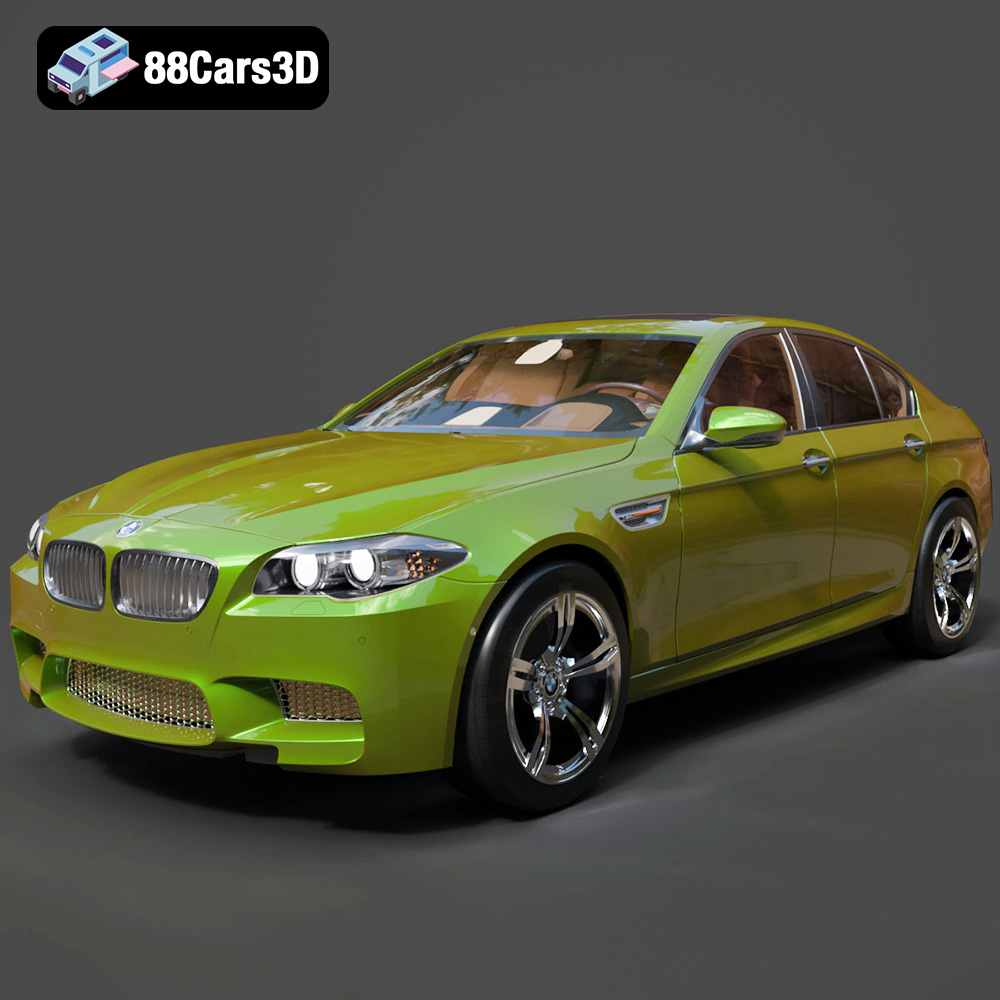
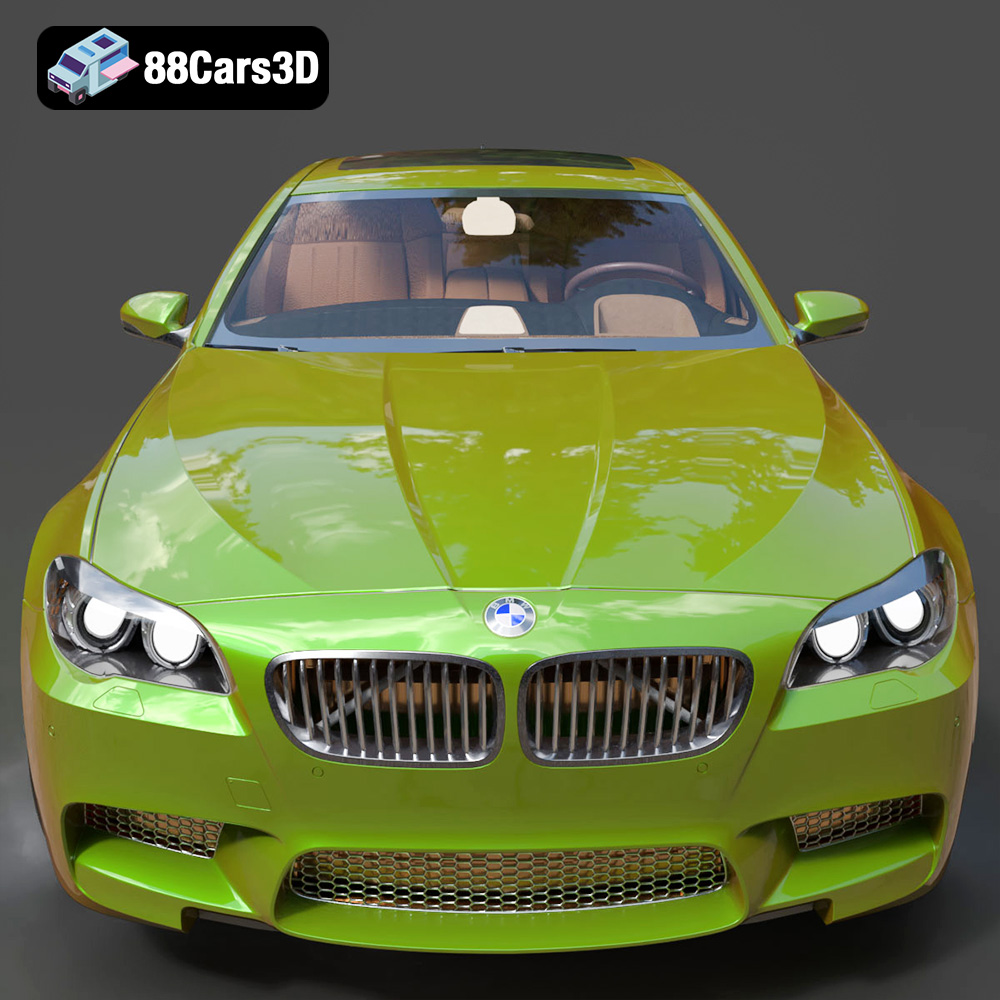
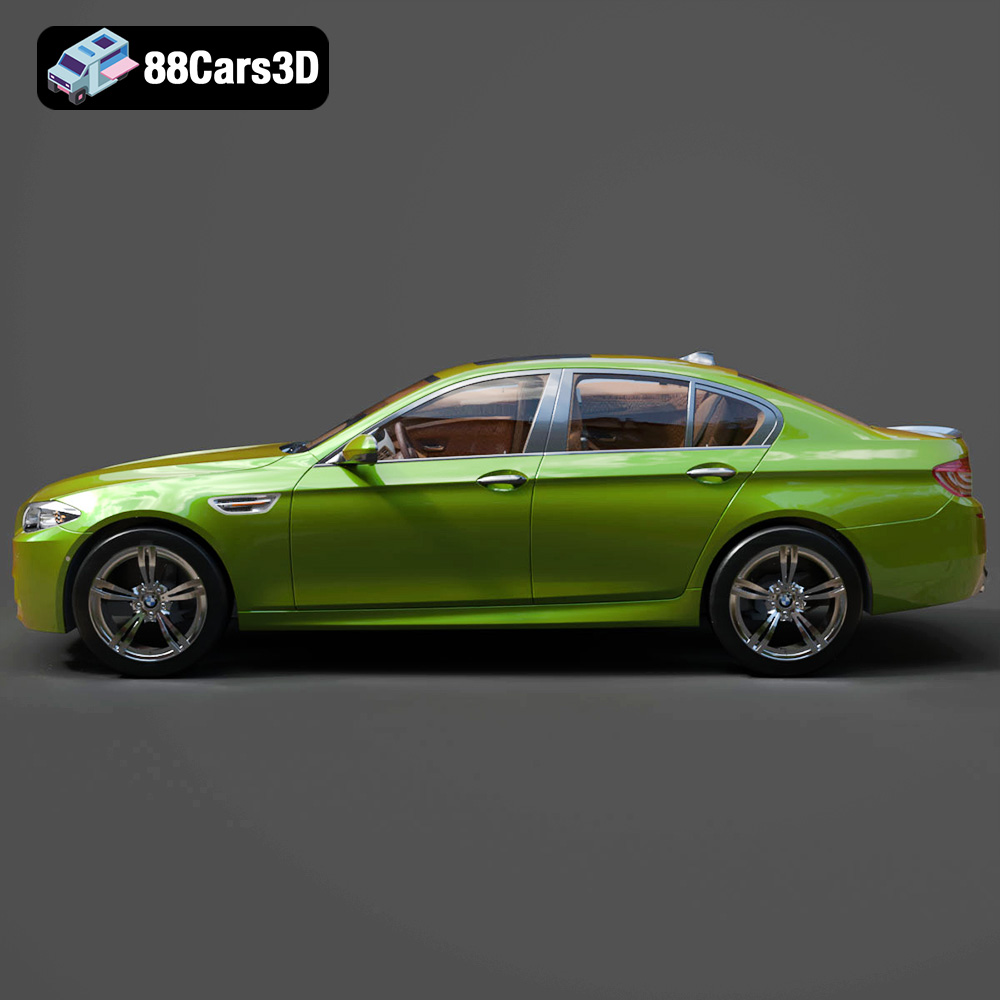
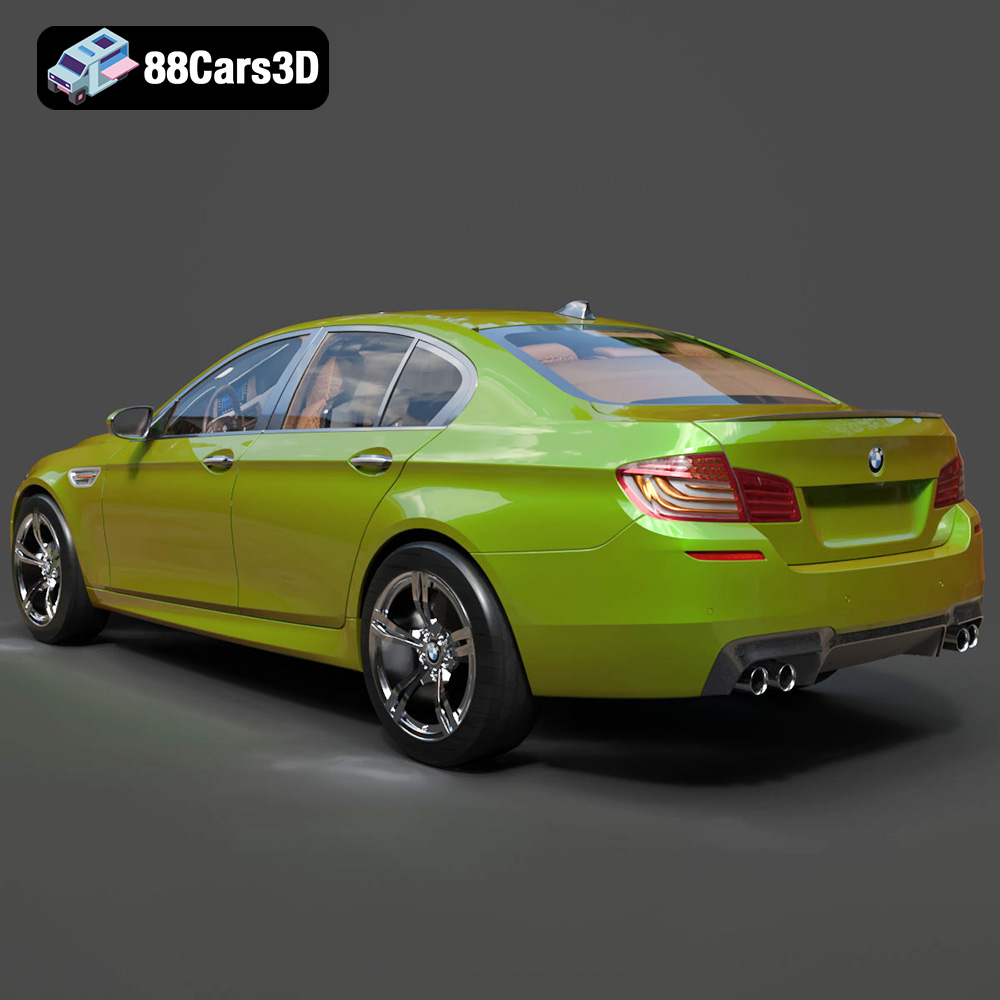
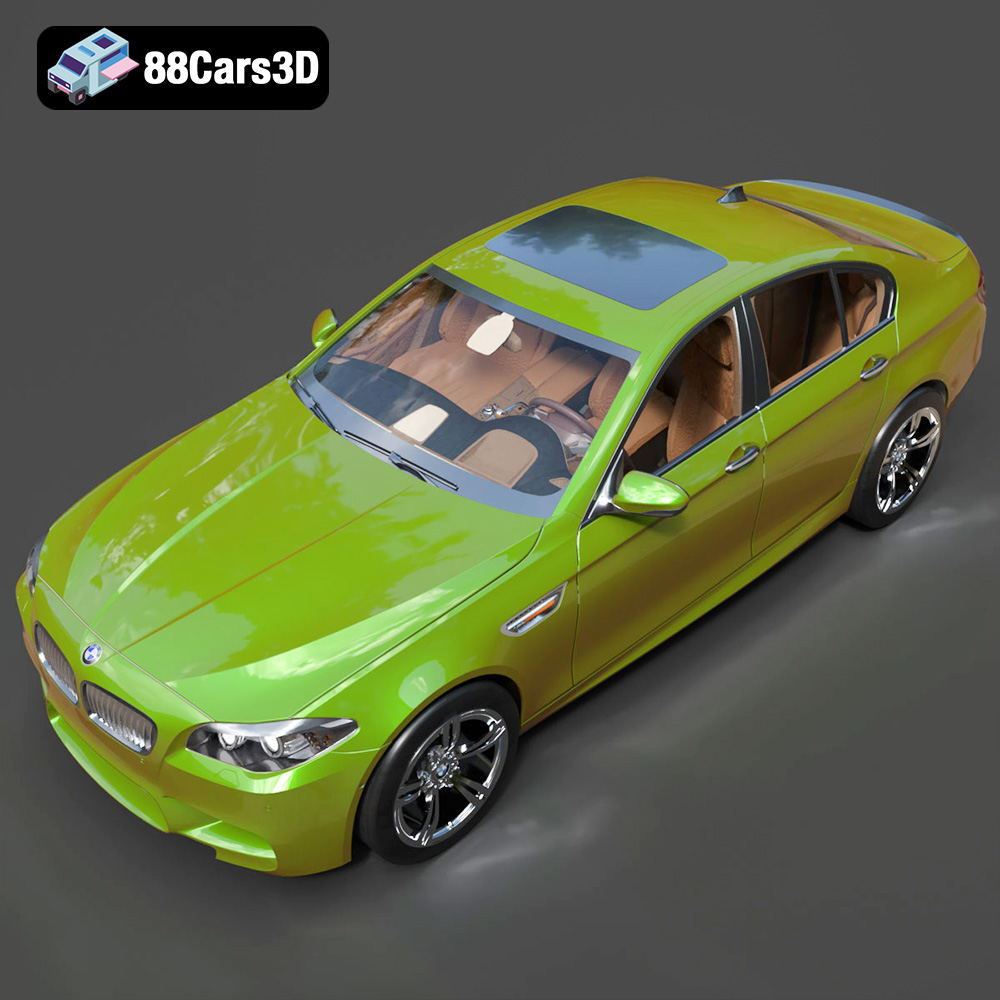
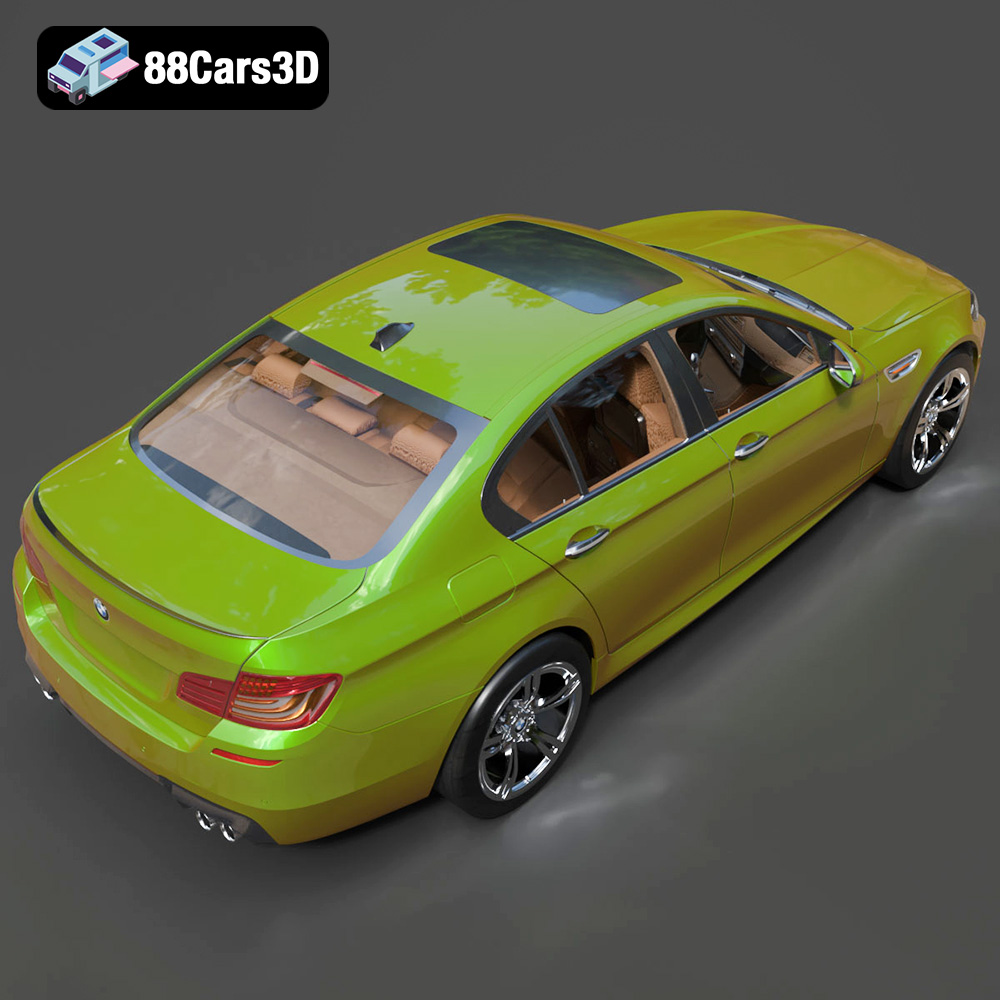
Presenting a meticulously crafted 3D model of the iconic BMW M5 F10, a definitive high-performance luxury sports sedan known for its blend of aggressive styling and formidable power. This model captures the essence of the F10 generation, from its distinctive kidney grille to its muscular lines and sporty silhouette. Built with clean geometry and balanced detailing, it ensures professional quality for various applications, making it ideal for high-fidelity rendering, realistic animation sequences, immersive simulations, and robust game development.
Exterior Features:
- Accurately modeled body panels reflecting the M5 F10’s signature design.
- Detailed headlights, taillights, and indicator lights with realistic transparent materials.
- High-resolution wheels, performance tires, and visible brake calipers.
- Signature BMW kidney grille, M-specific air intakes, and aerodynamic elements.
- Separated components (doors, hood, trunk, wheels, steering wheel) are organized for easy animation workflows.
- Realistic material definitions for paint, glass, rubber, and chrome elements.
Interior / Mechanical Features:
- Detailed interior including dashboard, sport seats, steering wheel, center console, and door panels.
- Clear and legible instrument cluster and infotainment screen details.
- Optimized mesh quality ensures efficient performance in real-time applications without sacrificing visual fidelity.
- Visible mechanical components (where applicable) are modeled with attention to detail.
Technical Advantages:
- Clean, quad-dominant topology for easy subdivision and deformation.
- Modeled to real-world scale for accurate integration into scenes.
- Logically organized hierarchy with proper pivot points for smooth animation.
Applications:
- Rendering & Visualization: Perfect for studio renders, cinematic scenes, architectural visualizations, and marketing materials.
- Game Development: Optimized as a game-ready asset for racing simulators, open-world games, and interactive experiences.
- AR/VR: Ready for integration into immersive augmented and virtual reality environments.
- Simulation & Training: Suitable for automotive design reviews, driving simulators, and educational modules.
- 3D Printing: Compatible with .stl conversion for creating physical models.
Customization Options:
- Easily modify paint finishes, apply custom decals, or change livery designs.
- Adjust material properties for metals, chrome accents, rubber, and glass to suit specific rendering styles.
- Flexible lighting setup modifications to achieve various atmospheric effects for different scenes.
Elevate your projects with the professional-grade 3D model of the BMW M5 F10. Its exceptional quality, versatility, and ease of use make it an indispensable asset for any demanding 3D production.
Included File Formats:
- .blend – Blender project with materials
- .fbx – Compatible with Unreal, Unity, and major 3D engines
- .obj – Universal format for nearly all 3D software
- .glb – Optimized for AR, VR, and web-based visualization
- .stl – Ready for 3D printing
- .ply – Mesh format for analysis and CAD workflows
- .unreal – Unreal Engine project setup
- .max – Editable 3ds Max scene for rendering and animation
$10.79
Product Image Gallery
Related Tags
.arvr
.blend
.bmw
.carmodel
.fbx
.gameasset
.glb
.luxurysedan
.m5f10
.max
.obj
.ply
.rendering
.sedan
.simulation
.sportsCar
.stl
.unreal
.vehicle
.visualization
