Get 20% OFF All Premium 3D & STL Models!

In the fast-paced world of digital content creation, the demand for unparalleled realism in automotive visualization continues to accelerate. From breathtaking marketing renders and cinematic animations to immersive game environments and precise engineering simulations, the quality of a 3D car model is the bedrock upon which an entire project is built. Achieving photorealistic results or fluid real-time experiences demands assets that are not only visually stunning but also technically robust and versatile.
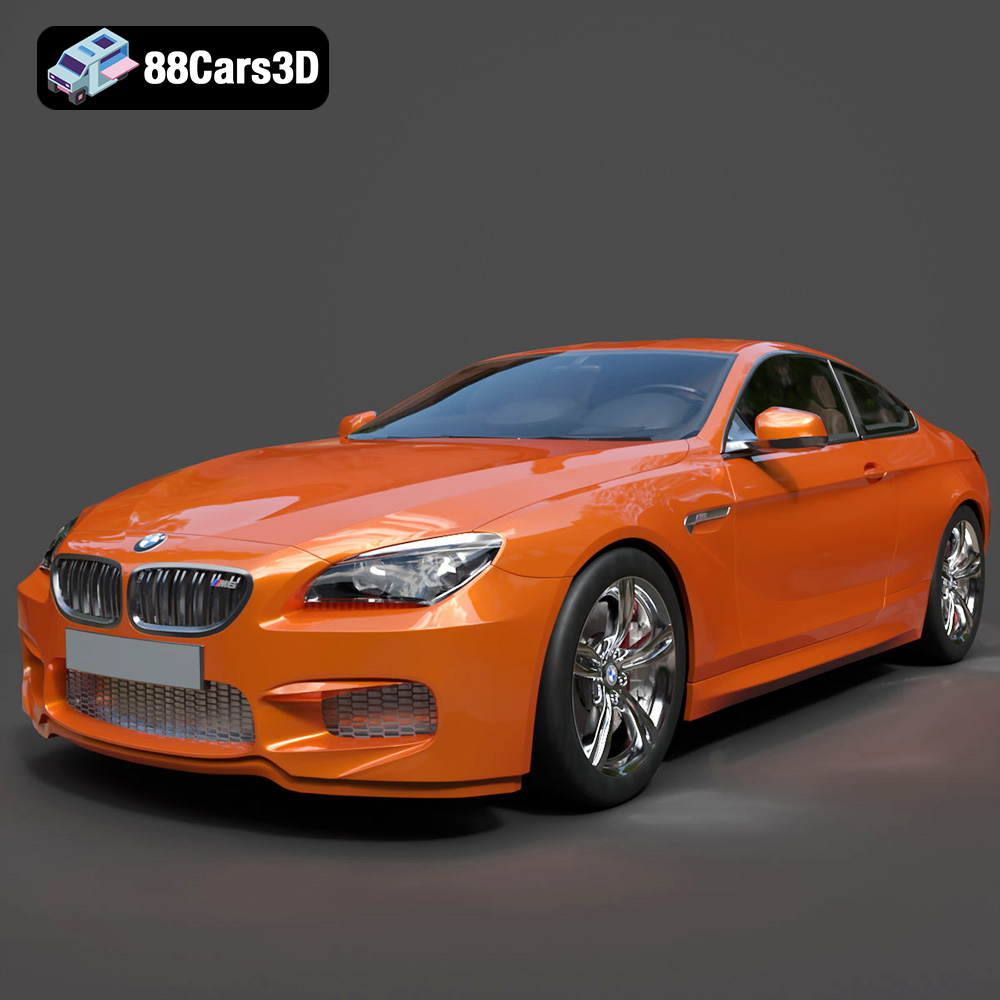
At the heart of this pursuit lies the artistry and technical prowess behind expertly crafted 3D models. They are the digital twins that allow designers, engineers, and developers to explore, present, and interact with vehicles long before they exist physically, or to bring iconic machines to life in virtual worlds. A prime example of such a meticulously engineered asset is the BMW M6 Coupe (F12) 3D Model available on 88cars3d.com. This model encapsulates the pinnacle of digital automotive design, offering a foundation for countless creative and technical applications, reflecting the powerful engine and sophisticated design of its real-world counterpart.
A superior 3D car model is far more than just a visual representation; it’s a complex data structure built with precision and foresight. Its quality directly impacts every subsequent stage of a project, from the initial setup of materials and lighting to the final render or real-time performance. Professionals understand that investing in a high-fidelity model upfront saves immense time and resources down the line, avoiding costly rework and enabling truly professional outcomes.
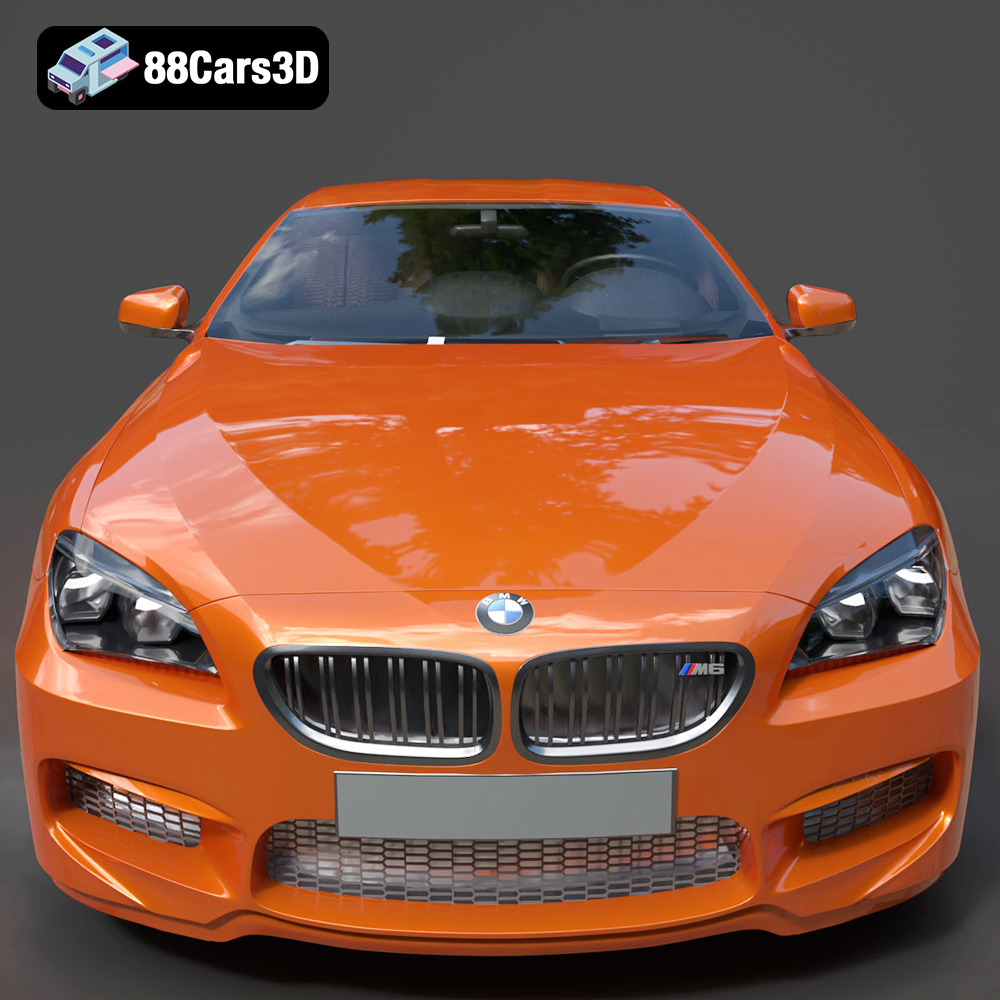
For any automotive rendering project, the nuances of a vehicle’s design are paramount. This isn’t just about recognizable shapes; it’s about the subtle curvatures, the precision of panel gaps, the reflection properties of different materials, and the accurate representation of intricate components. A model like the BMW M6 Coupe (F12) 3D Model stands out because it features accurately modeled body panels reflecting the M6’s sleek and aggressive styling, detailed front grilles, and precisely replicated headlights and taillights. These elements are crucial for catching and refracting light authentically, creating the depth and realism that viewers expect.
Clean, quad-dominant topology is a non-negotiable aspect of professional 3D car models. This ensures smooth subdivisions for close-up renders without unsightly distortions and allows for optimal deformations if the model is to be animated or used in a simulation where parts move. Furthermore, real-world scale is essential for accurate integration into any scene, whether it’s an architectural visualization or a virtual studio setup, guaranteeing proportions that feel natural and correct.
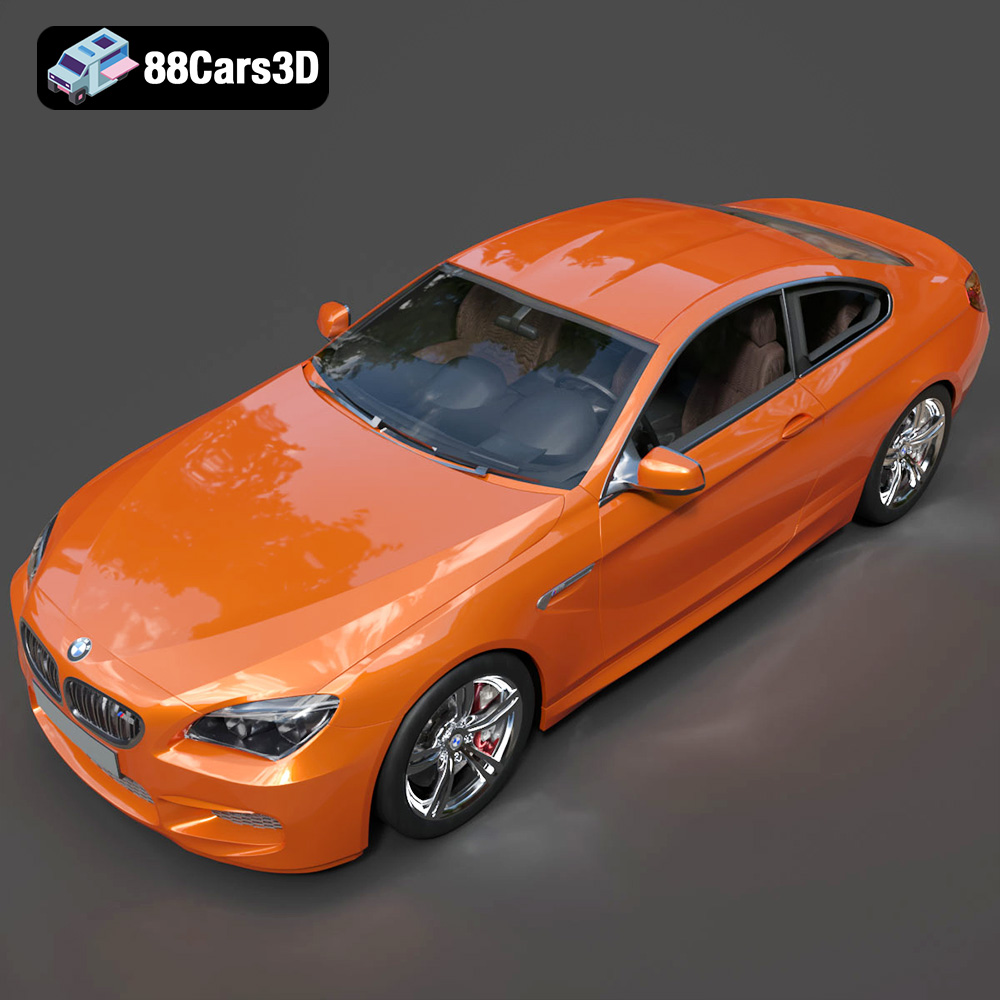
High-quality 3D car models serve as a critical bridge between design concepts and their digital realization. For automotive designers, these models are tools for iteration and presentation. For advertisers, they are the stars of campaigns. For game developers, they are the vehicles players interact with. The comprehensive interior details of the BMW M6 Coupe (F12) 3D Model, including the dashboard, steering wheel, instrument cluster, and sport seats, are vital for projects requiring interior shots or first-person perspectives. Separated components for doors, hood, trunk, and wheels are not merely details; they are functional necessities, allowing for dynamic animation workflows that bring the vehicle to life.
Navigating the landscape of 3D modeling requires a clear understanding of file formats, each tailored for specific workflows, software, and applications. The versatility of a premium 3D asset, such as those found on 88cars3d.com, is often defined by the range of formats it provides. The BMW M6 Coupe (F12) 3D Model is exemplary in this regard, offering a comprehensive suite of formats to ensure maximum compatibility and ease of integration into any professional pipeline. Choosing the right format is crucial for maintaining data integrity, optimizing performance, and achieving desired results.
Achieving photorealistic results with 3D car models requires a refined workflow that goes beyond simply having a detailed asset. It involves a sophisticated interplay of lighting, materials, and camera work to emulate real-world photography and videography. The BMW M6 Coupe (F12) 3D Model, with its high-quality materials and clean geometry, provides an excellent starting point for such endeavors.
Professional automotive renders often simulate studio environments or dynamic outdoor scenes. In 3ds Max or Blender, artists typically employ High Dynamic Range Images (HDRIs) for realistic global illumination, combined with targeted area lights or photometric lights to accentuate curves and reflections. The signature kidney grilles and sleek lines of the BMW M6 model truly come alive under carefully positioned key lights, fill lights, and rim lights. Leveraging a virtual studio setup allows for control over reflections and highlights, ensuring the paint finishes and chrome accents of the M6 gleam perfectly. The model’s real-world scale is invaluable here, ensuring light falloff and reflections behave as they would on a physical vehicle.
Materials are the soul of realism. The BMW M6 Coupe (F12) 3D Model comes with high-quality materials representing paint finishes, glass, chrome accents, and rubber seals. However, professional artists often take this further, customizing material properties to an exquisite degree. For the car paint, this means layering clear coats, metallic flakes, and base colors to achieve the nuanced depth and reflectivity of a real automotive finish. Glass materials require accurate transmission, refraction, and absorption values, often with a subtle green tint for realism. Chrome and metallic parts demand highly reflective, anisotropic shaders that capture environmental reflections with precision. Users can effortlessly adjust paint finishes, material properties, and metallic, chrome, glass, and rubber material settings to match specific aesthetic requirements, making this model exceptionally versatile for various client briefs.
Static renders are powerful, but animations tell a story. With its logically organized hierarchy and proper pivot points for easy manipulation, the BMW M6 Coupe (F12) 3D Model is ideally suited for dynamic animation workflows. Imagine a cinematic sequence where the M6 glides into view, doors slowly open to reveal the detailed interior, or the camera gracefully orbits to showcase its sporty alloy wheels and realistic tire textures. Utilizing 3ds Max or Blender’s animation tools, artists can rig the wheels for realistic rotation and steering, animate doors and trunk openings, and even simulate suspension compression. These capabilities are critical for creating engaging commercials, product showcases, or interactive configurators where movement conveys luxury and performance.
The role of high-quality 3D car models extends significantly into game development, AR/VR, and other real-time interactive applications. Here, the challenge shifts from pure visual fidelity to a delicate balance of aesthetics, performance, and optimization. A game-ready asset like the BMW M6 Coupe (F12) 3D Model can dramatically accelerate development cycles.
For game development, an asset must be optimized to perform smoothly within real-time rendering budgets. While the BMW M6 Coupe (F12) 3D Model offers exceptional detail for high-end rendering, integrating it into Unreal Engine or Unity requires thoughtful optimization. This often involves creating Levels of Detail (LODs), where simpler versions of the mesh are automatically swapped in when the car is further from the camera, reducing polygon count and draw calls. Effective UV mapping is crucial for efficient texture packing and avoiding seams. The included .fbx and .unreal formats are specifically designed for these engines, often coming with pre-configured materials that leverage the engine’s physical-based rendering (PBR) systems, allowing developers to focus on gameplay and interactivity rather than asset preparation.
Augmented Reality (AR) and Virtual Reality (VR) platforms offer unparalleled immersion for showcasing vehicles. Whether it’s a virtual showroom where users can walk around the BMW M6 model in 1:1 scale or an AR app allowing them to place it in their driveway, the demand for optimized, high-fidelity models is immense. The .glb format, included with the BMW M6 Coupe (F12) 3D Model, is particularly valuable here, being optimized for web and mobile AR/VR experiences due to its compact size and efficient loading. This allows for creating interactive experiences where users can customize paint colors, open doors, or even “drive” the M6 in a simulated environment, offering a deeper engagement than traditional media.
Beyond static optimization, scalability is key for diverse platforms. A high-poly base mesh, like that of the BMW M6 Coupe (F12) 3D Model, is excellent for hero shots, but game developers need efficient low-poly versions for performance on consoles or mobile devices. A professional asset often facilitates the creation of these LODs by starting with clean, quad-dominant topology, which simplifies the decimation process. Furthermore, logical organization with proper pivot points ensures that components like wheels and doors can be easily detached and animated within game engines using engine-specific tools and physics. This foundational quality is what truly defines a versatile game asset.
The utility of a highly accurate 3D car model extends well beyond purely visual applications. Its precise geometry and real-world scale make it an invaluable tool for engineering, detailed simulations, and even physical manufacturing through 3D printing.
The ability to transform a digital model into a tangible object is a powerful application. For enthusiasts, collectors, or even automotive design students, creating a physical prototype or scale model of the BMW M6 Coupe (F12) is entirely feasible. The provided .stl format in the BMW M6 Coupe (F12) 3D Model package is specifically designed for this purpose. This format streamlines the process of preparing the model for a 3D printer, allowing users to produce highly detailed physical models with confidence. The clean mesh quality ensures that the intricate details of the M6’s body panels and sporty wheels translate accurately into a physical print, capturing the essence of the vehicle’s design.
Automotive simulations require models that are not only visually accurate but also structurally sound for physics calculations. For professional driving simulators, engineering analysis, or educational training modules, the precise geometry and real-world scale of the BMW M6 Coupe (F12) 3D Model are critical. While specific physics properties would need to be assigned within the simulation software, the clean mesh provides an ideal foundation for accurate collision detection, aerodynamic analysis (if simplified), and realistic visual feedback for drivers. This application highlights the model’s suitability for high-stakes environments where accuracy is paramount.
In certain engineering and design workflows, the raw mesh data of a 3D model can be used for various analytical purposes. The .ply format, for instance, offers precision mesh data that can be imported into CAD software or specialized analysis tools. This allows designers to validate surface continuity, measure clearances, or even perform basic structural assessments on a digital representation of the vehicle. While the BMW M6 Coupe (F12) 3D Model is primarily designed for visual fidelity, its underlying clean topology and accurate dimensions make it a robust asset for these more technical, data-driven applications.
In a saturated digital marketplace, distinguishing between average and exceptional 3D assets is crucial for professionals. 88cars3d.com prides itself on offering only high-quality 3D car models, ensuring that creators have access to assets that meet industry standards for detail, accuracy, and versatility.
Developing a high-fidelity 3D car model from scratch is an incredibly time-consuming and resource-intensive endeavor, often requiring hundreds of hours of expert modeling, texturing, and optimization. For many projects, particularly those with tight deadlines or limited budgets, purchasing a pre-made, professional-grade asset like the BMW M6 Coupe (F12) 3D Model is an intelligent strategic decision. These models have already undergone rigorous quality control, ensuring clean topology, accurate dimensions, and ready-to-use materials and textures. This eliminates the need for extensive post-purchase cleanup or modification, allowing artists to immediately integrate the model into their projects.
The true value of a premium 3D asset lies in its ability to streamline the entire production pipeline. By providing a product that is “ready for rendering, game development, AR/VR, 3D printing, and visualization,” 88cars3d.com empowers studios and individual artists to accelerate their workflows significantly. The included file formats—ranging from .blend and .max for native software use to .fbx and .unreal for game engines, and even .glb for web/AR—ensure that the BMW M6 Coupe (F12) 3D Model is immediately functional across a multitude of platforms. This versatility translates directly into reduced development time, lower production costs, and the ability to allocate creative resources to other critical aspects of a project.
The demand for high-quality 3D car models continues to grow across diverse industries, from automotive design and advertising to game development and immersive technologies. As digital environments become indistinguishable from reality, the foundational assets used in these projects must meet ever-higher standards of detail, accuracy, and technical robustness. A meticulously crafted model, like the BMW M6 Coupe (F12) 3D Model from 88cars3d.com, is not just a digital object; it’s a powerful tool that enables unparalleled creative expression and efficiency.
Its comprehensive detailing, from the accurately modeled exterior panels and realistic tire textures to the fully rendered interior and logically organized components, ensures exceptional visual fidelity. Coupled with its extensive range of included file formats—catering to everything from native 3ds Max and Blender projects to game-engine-ready .fbx and .unreal files, and even specialized formats like .stl for 3D printing and .glb for AR/VR—this model is a versatile cornerstone for any demanding 3D production pipeline. By investing in such a professional asset, artists and developers can elevate their projects, achieve stunning results, and navigate the complexities of modern 3D workflows with confidence.
This professional 3D model accurately represents the iconic BMW M6 Coupe (F12), a high-performance luxury sports car known for its powerful engine and sophisticated design. Crafted with clean geometry and balanced detailing, this model offers exceptional visual fidelity. It is ideally suited for a wide range of applications, including high-end rendering projects, realistic animations, detailed simulations, and immersive game development.
Exterior Features:
Interior / Mechanical Features:
Technical Advantages:
Applications:
Customization Options:
Elevate your projects with this meticulously crafted BMW M6 Coupe (F12) 3D model. Its exceptional detail, professional quality, and versatile file formats make it an indispensable asset for any demanding 3D production pipeline.
Included File Formats:
Tags:
.bmw, .m6coupe, .f12, .sportscar, .coupe, .luxurycar, .rendering, .simulation, .gameasset, .arvr, .blend, .fbx, .obj, .glb, .stl, .ply, .unreal, .maxMercedes Benz CLS 500 3D Model
$10.79
.arvr
.blend
.bmw
.coupe
.f12
.fbx
.gameasset
.glb
.luxurycar
.m6coupe
.max
.obj
.ply
.rendering
.simulation
.sportsCar
.stl
.unreal