Get 20% OFF All Premium 3D & STL Models!

In the dynamic worlds of game development, architectural visualization, cinematic rendering, and interactive simulations, the fidelity of every asset can make or break a project. From the subtle glint of chrome on a luxury sedan to the utilitarian ruggedness of a commercial vehicle, realistic 3D car models are not just props; they are critical elements that breathe life into virtual environments. The pursuit of photorealism and functional accuracy drives artists and developers to seek out assets that not only look the part but are also technically robust and optimized for diverse pipelines.
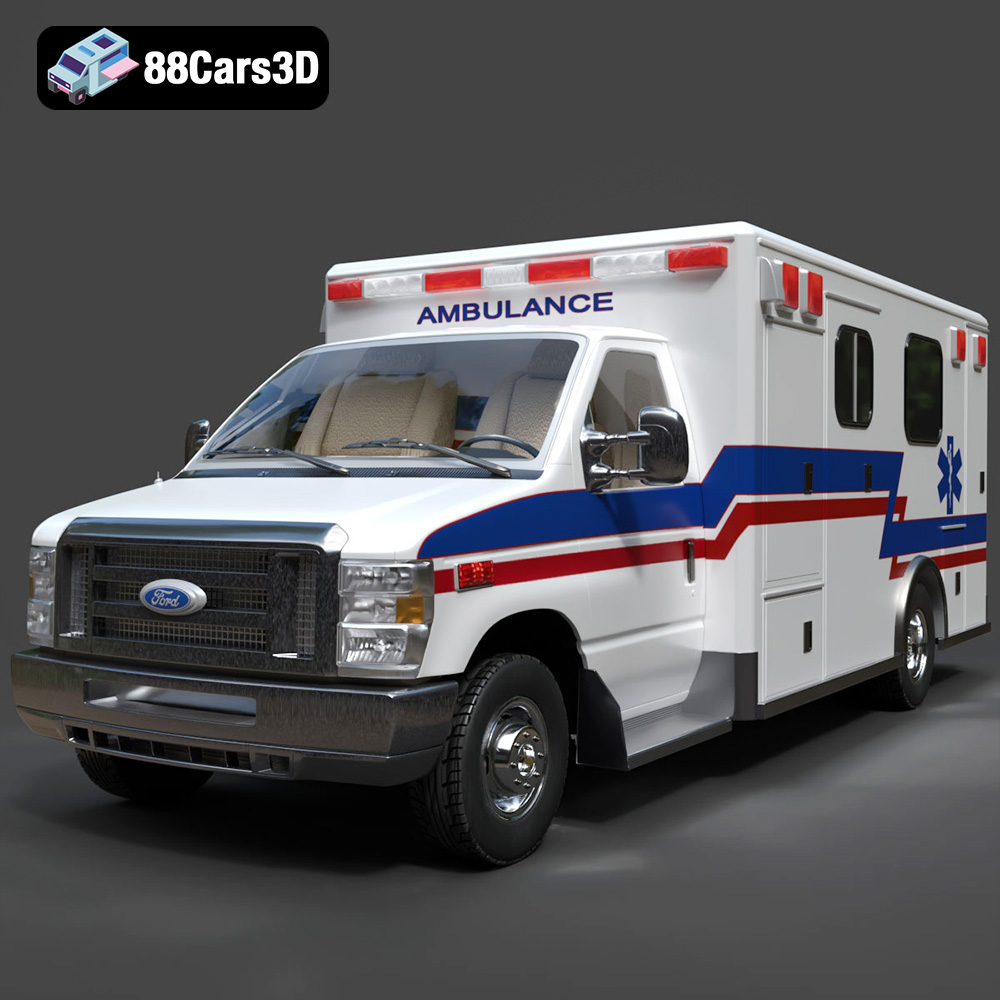
Whether you’re crafting an intense urban car chase, designing a public safety training module, or visualizing a complex logistical operation, the authenticity of your vehicles is paramount. This deep dive explores the technical intricacies, practical applications, and workflow advantages of incorporating premium automotive rendering assets into your projects. We’ll specifically highlight how a product like the Ford E-450 Ambulance 3D Model exemplifies the benchmark for professional-grade assets, offering unparalleled realism and versatility for demanding digital environments.
The visual quality of a 3D model is often the first impression a user or client receives. For complex subjects like vehicles, achieving realism goes far beyond surface aesthetics; it involves intricate modeling, precise texturing, and intelligent optimization. Low-quality models can introduce numerous issues, from unsightly visual artifacts to performance bottlenecks in real-time applications, ultimately undermining the entire project’s credibility.
Modern rendering engines and game platforms push the boundaries of visual fidelity. This demands 3D models that can stand up to close-up shots, dynamic lighting conditions, and diverse environmental interactions. A high-quality car model ensures that reflections are accurate, shadows are crisp, and materials react physically correctly to light. For applications like virtual reality, where immersion is key, even minor inaccuracies can break the sense of presence. A meticulously crafted asset like the Ford E-450 Ambulance 3D Model provides the foundational accuracy needed for these high-stakes visualization projects.
Professional-grade 3D car models serve as a vital link between conceptual design and tangible reality. In fields such as automotive design, urban planning, or even forensic reconstruction, detailed vehicle models allow stakeholders to visualize scenarios with precision. They facilitate iterative design processes, enable accurate spatial analysis, and provide powerful tools for communicating complex ideas. The ability to integrate a true-to-life representation of an emergency vehicle, for instance, into a simulated city plan or an emergency response drill adds layers of practical utility that generic assets simply cannot provide.
Choosing the right file format is crucial for seamless integration into various software and workflows. Each format is designed with specific use cases and technical considerations in mind, making them suitable for different stages of a production pipeline or final delivery. The Ford E-450 Ambulance 3D Model, for example, comes equipped with a comprehensive suite of formats, ensuring maximum compatibility and utility across diverse professional needs. Let’s delve into the specifics of these essential formats.
The .blend format is the native file type for Blender, a powerful open-source 3D creation suite. When you receive a .blend file, you’re not just getting the model; you’re often getting a fully editable scene complete with materials, textures, lighting setups, and sometimes even animations or rigging. This format is ideal for artists who want to delve into the model’s construction, make custom modifications, or leverage Blender’s extensive toolset for rendering with Cycles or Eevee. It provides the highest level of flexibility for customization and integrates perfectly into Blender-centric workflows, ensuring all scene data, modifiers, and node setups are preserved.
.fbx stands for Filmbox and is a proprietary file format owned by Autodesk, widely regarded as the industry standard for exchanging 3D data between various applications, especially in game development. It can store a vast array of 3D data, including geometry, materials, textures, animations, rigging, and even camera and light information. For game engines like Unreal Engine and Unity, .fbx is often the go-to format due to its robust support for animations and its ability to efficiently transfer complex hierarchies. The “game-engine ready” designation often implies that the FBX has been optimized for real-time performance, with appropriate poly counts and PBR (Physically Based Rendering) material setups.
The .obj format, or Wavefront OBJ, is one of the oldest and most universally supported 3D file formats. It’s a simple, text-based format that primarily stores geometry (vertices, normals, texture coordinates, and faces) and can reference external material files (.mtl). While it doesn’t support advanced features like animation, rigging, or scene information, its widespread compatibility makes it an excellent choice for basic mesh exchange between almost any 3D software. It’s perfect when you need a clean mesh that can be imported into virtually any program for further processing or rendering, making it a true standard 3D car models format.
.glb is the binary version of glTF (GL Transmission Format), an open-standard format designed for efficient transmission and loading of 3D scenes and models by engines and applications. It’s quickly becoming the standard for 3D assets on the web, augmented reality (AR), and virtual reality (VR) platforms. A single .glb file packages all necessary data—geometry, materials, textures, and even animations—into one compact file, making it incredibly easy to share and integrate into web viewers or AR applications. Its optimization for real-time rendering on various devices makes it invaluable for modern interactive experiences.
The .stl format (STereoLithography) is the most common file type used for 3D printing. It represents a 3D model as a series of connected triangles, describing only the surface geometry of an object without color, texture, or other CAD attributes. While simple, its ubiquity in the 3D printing world makes it essential for anyone looking to bring their digital models into the physical realm. For a vehicle like the Ford E-450 Ambulance 3D Model, an .stl file would allow for the creation of scale models or prototypes, crucial for physical mock-ups or educational tools.
The .ply format (Polygon File Format or Stanford Triangle Format) is often used for storing 3D data from 3D scanners, CAD software, and other industrial applications. It can store a variety of properties including color, transparency, normals, texture coordinates, and even reliability information. While less common for general artistic exchange than FBX or OBJ, its ability to store detailed mesh data makes it valuable for applications requiring high precision and additional data attributes, such as reverse engineering, scientific visualization, or detailed analysis.
While not a standalone file extension in the traditional sense, “.unreal” often refers to assets that have been specifically pre-configured and optimized for direct import into Unreal Engine projects. This might involve optimized FBX files, ready-to-use material instances, collision meshes, LODs (Levels of Detail), and blueprint setups. Receiving a “game-ready” or “Unreal-configured” asset like the Ford E-450 Ambulance 3D Model significantly reduces development time, as many of the tedious conversion and optimization steps have already been performed by the asset creator, ensuring it drops in and performs flawlessly within the engine’s ecosystem.
The .max format is the native file type for Autodesk 3ds Max, a leading software for 3D modeling, animation, rendering, and visualization, particularly prevalent in architectural visualization and product design. A .max file provides access to the full 3ds Max scene, including all geometry, modifiers, materials (V-Ray, Corona, Arnold), lighting, cameras, and animation data. It offers the most comprehensive control for artists working within the 3ds Max environment, allowing for deep customization, advanced rendering setups, and complex animation sequences. This format is ideal for professionals who rely on 3ds Max for their primary rendering and animation workflows.
The true value of a versatile asset like the Ford E-450 Ambulance 3D Model lies in its adaptability across a multitude of professional applications. Its realistic detailing and optimized geometry make it suitable for scenarios demanding both visual accuracy and technical performance.
For first responders, training exercises are critical but often costly and complex to stage physically. High-fidelity simulations offer a safe, repeatable, and cost-effective alternative. The Ford E-450 Ambulance 3D Model can be integrated into virtual training environments to simulate realistic emergency response scenarios. Trainees can practice navigation, patient transport protocols, and communication procedures within a highly immersive digital world. The fully modeled interior, as described, allows for detailed interaction within the patient compartment, making it invaluable for medical emergency training, equipment familiarization, and procedural drills. This level of detail is paramount for enhancing preparedness and improving outcomes in real-world situations.
In the realm of AAA game development, realism contributes significantly to player immersion. The Ford E-450 Ambulance serves as an excellent game asset for open-world urban environments, simulation games, or even narrative-driven experiences. Its optimized geometry and game-engine-ready formats (.fbx, .unreal) ensure smooth performance without sacrificing visual quality. Developers can populate virtual cities with authentic traffic, create dynamic emergency events, or even build interactive gameplay around the vehicle, such as driving simulations or rescue missions. Beyond traditional games, this model can power AR/VR experiences, allowing users to interact with a virtual ambulance in their physical space or explore its interior in a fully immersive VR setting, critical for educational and training tools.
Architects and urban planners frequently use 3D models to present proposed developments and assess their impact. Integrating realistic vehicles into these visualizations provides essential context, scale, and a sense of activity. The Ford E-450 Ambulance 3D Model can be used to populate street scenes in architectural renders, demonstrate traffic flow in urban planning simulations, or visualize the response capabilities of emergency services within a new development. Its presence adds a layer of believability to static renders and dynamic animations, helping stakeholders understand how people and services will interact with the designed environment. For high-resolution automotive rendering, its clean mesh and detailed materials ensure it looks impressive even in hero shots.
A high-quality 3D asset should seamlessly integrate into various professional pipelines. The provision of multiple file formats with the Ford E-450 Ambulance 3D Model ensures flexibility, whether your primary tool is Blender, Unreal Engine, or 3ds Max.
For Blender artists, the provided .blend file is a goldmine. Upon opening, you’ll likely find the model already set up with materials and possibly a basic lighting rig. This allows for immediate rendering using Blender’s Cycles or Eevee engines. Artists can easily inspect the topology, modify materials using the node editor, or even add custom animations. If you’re building a scene for an architectural visualization or a short animation, you can simply append the ambulance model, adjust its scale, position, and lighting to match your scene’s aesthetic, and then proceed with high-quality automotive rendering. The clean geometry ensures smooth deformations if rigging is desired, and the well-organized scene structure simplifies material adjustments.
Integrating the Ford E-450 Ambulance 3D Model into Unreal Engine is straightforward, especially with the provided .fbx and .unreal formats. For the .fbx, simply import the file, ensuring correct settings for normals, UVs, and materials. Unreal’s PBR workflow will then correctly interpret the texture maps (albedo, normal, roughness, metallic, ambient occlusion). For the pre-configured .unreal asset, the process is even simpler: drag-and-drop. You can then add collision meshes, set up LODs for performance optimization across different distances, and even integrate it into vehicle blueprints for interactive driving or simulated emergency responses. This makes it an ideal game asset, ready for deployment in any real-time scenario.
Users of 3ds Max will benefit from the dedicated .max file. This native file provides full access to the model’s construction within the 3ds Max environment. Artists can leverage industry-standard renderers like V-Ray or Corona to achieve photorealistic results, adjusting materials, lighting, and camera angles with precise control. The ambulance can be animated for cinematic sequences, integrated into complex urban scenes with other 3D car models, or used as a central element for product visualization. The comprehensive nature of the .max file means that all layers, groups, and potential modifiers are intact, offering maximum flexibility for advanced rendering and animation tasks.
What differentiates a professional 3D car model from a generic one? It’s the meticulous attention to technical details that ensure both visual fidelity and optimal performance. The Ford E-450 Ambulance 3D Model embodies these principles, reflecting the high standards expected from assets on 88cars3d.com.
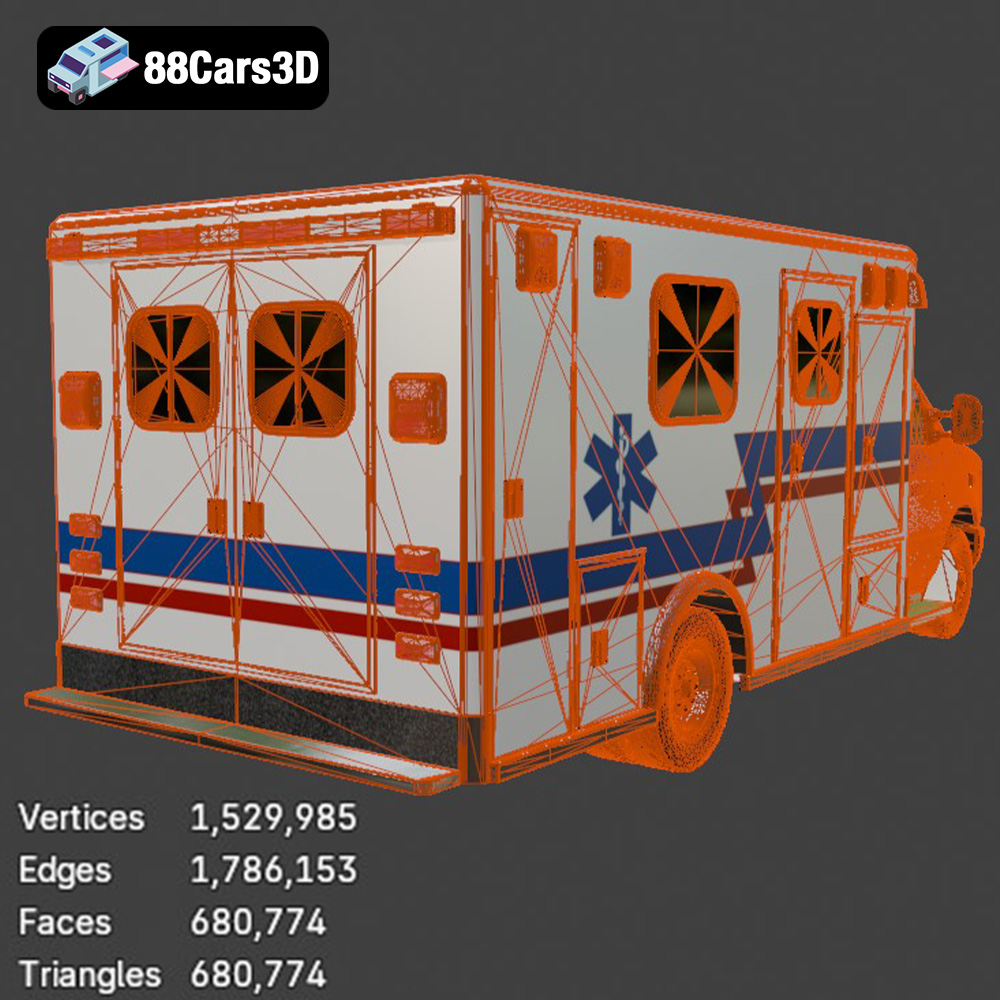
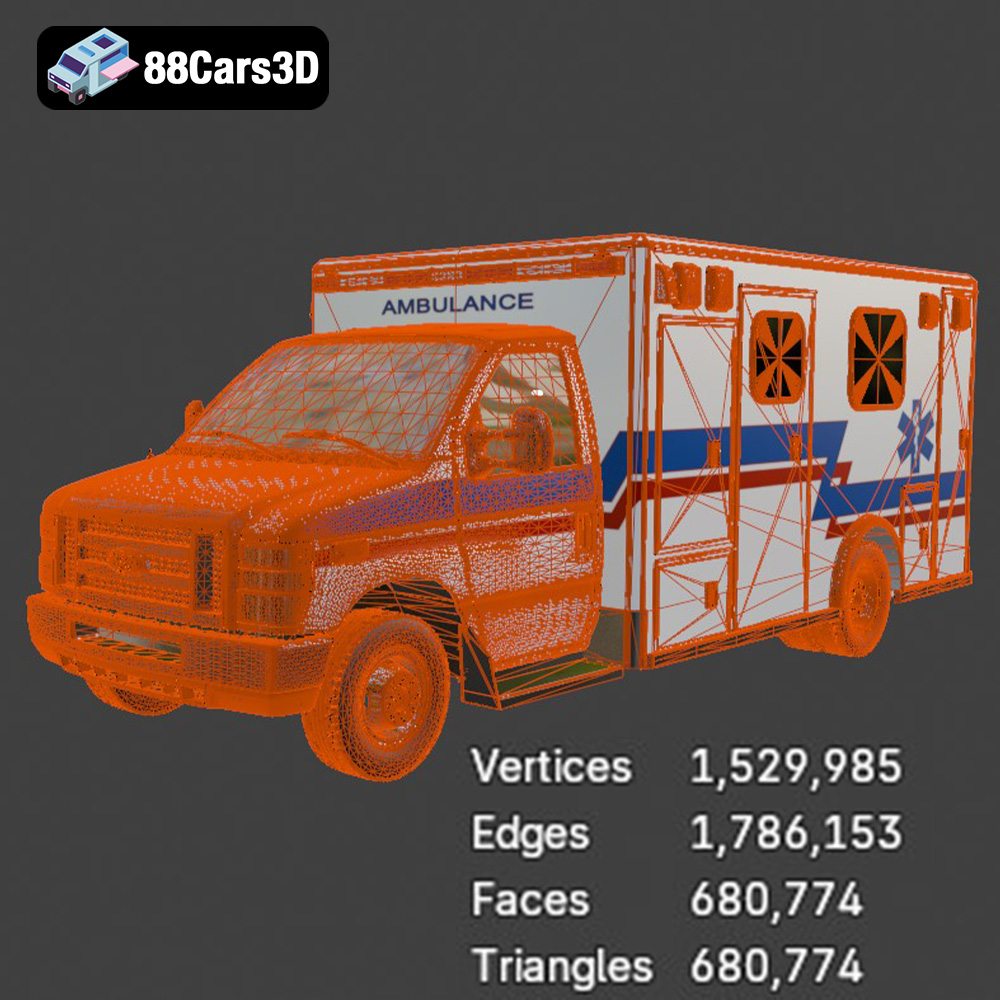
A truly professional 3D model strikes a balance between detail and efficiency. While capturing the intricate curves and hard surfaces of a vehicle like the Ford E-450 Ambulance requires a certain polygon count, excessive geometry can lead to performance issues, especially in real-time applications. High-quality assets feature optimized topology, meaning polygons are distributed efficiently, focusing detail where it’s needed most without unnecessary density. This results in a clean, subd-ready mesh that renders smoothly, deforms correctly if animated, and maintains excellent performance whether it’s for automotive rendering or serving as a game asset.
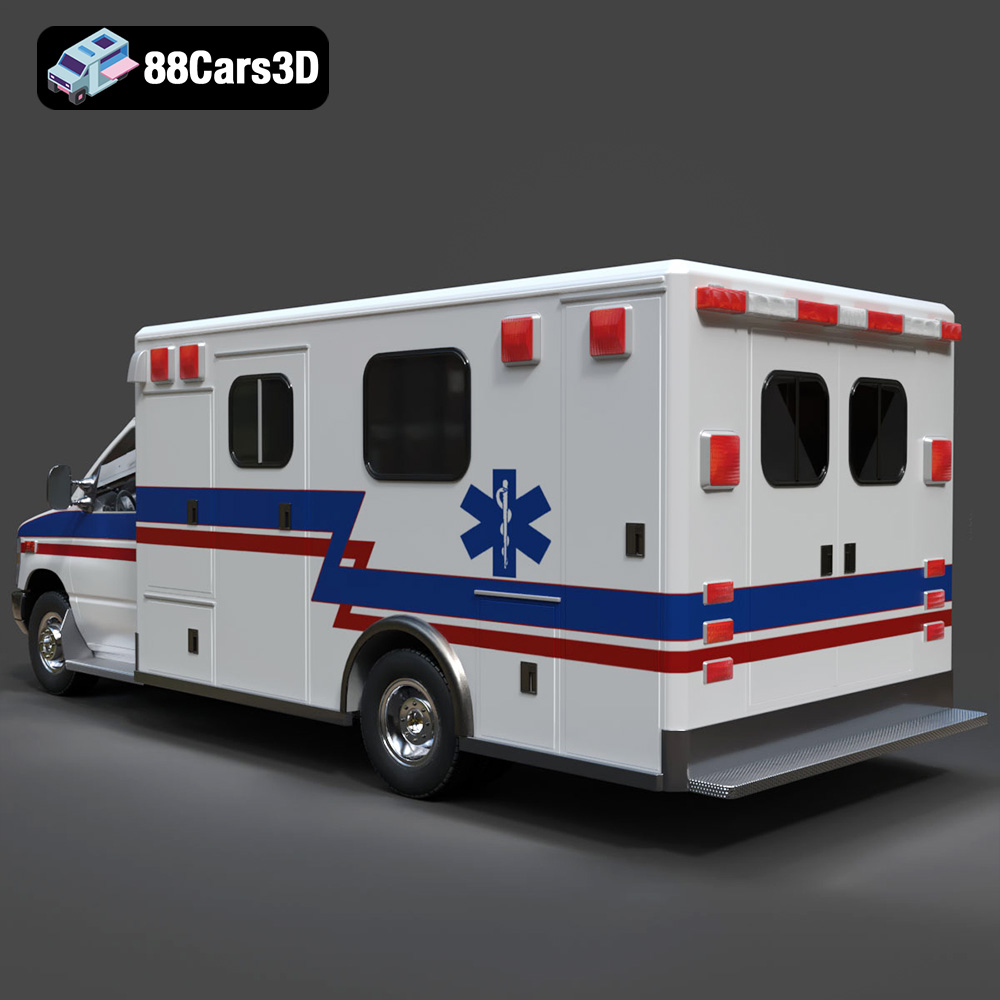
Texture quality is paramount for realism. Premium models come with high-resolution, carefully painted or procedurally generated textures that accurately mimic real-world materials like painted metal, rubber, glass, and emergency lighting. Crucially, these textures are applied via clean and organized UV maps. Effective UV mapping ensures that textures are stretched and distorted minimally, providing consistent detail across the model’s surface. This is particularly important for decals, lettering, and intricate details on emergency vehicles, ensuring they remain legible and crisp even at close range. The Ford E-450 Ambulance 3D Model boasts realistically replicated markings and material definitions, indicating a robust texturing pipeline.
Physically Based Rendering (PBR) has become the gold standard for achieving photorealistic materials. High-quality 3D car models are typically set up with PBR materials, using maps for albedo (color), roughness, metallic, normal, and ambient occlusion. These maps accurately describe how light interacts with the surface, resulting in believable reflections, refractions, and diffuse light responses. When integrated into a rendering engine or game environment, these materials react realistically to different lighting conditions, from bright daylight to moody nighttime scenes, ensuring the Ford E-450 Ambulance 3D Model maintains its visual integrity and provides consistent, professional-grade results.
Finding high-quality, technically sound 3D assets can be a challenge. Marketplaces like 88cars3d.com specialize in providing artists and developers with reliable resources that meet professional standards. The Ford E-450 Ambulance 3D Model is a prime example of the caliber of products available.
When you purchase assets from a reputable source like 88cars3d.com, you’re investing in quality assurance. Models undergo rigorous checks for clean topology, efficient poly counts, accurate UV mapping, and correct material setups. This saves countless hours of cleanup and optimization that would otherwise be spent fixing problematic models. This commitment to technical excellence means that assets like the Ford E-450 Ambulance 3D Model are ready for immediate use, allowing professionals to focus on their creative work rather than technical troubleshooting.
Beyond individual models, a comprehensive marketplace offers a diverse range of 3D car models suitable for various industries and project types. Whether you need vintage classics, modern sports cars, heavy-duty commercial vehicles, or specialized emergency vehicles like the Ford E-450 Ambulance, a broad selection ensures you can find the perfect asset to fit your scene’s specific requirements. This curated collection streamlines the asset acquisition process, providing reliable, production-ready assets for any automotive rendering or simulation task.
The pursuit of realism in 3D visualization and interactive experiences demands a foundation of technically superior assets. As we’ve explored, the quality of your 3D car models directly impacts visual fidelity, project performance, and overall project success. The Ford E-450 Ambulance 3D Model stands as a testament to the meticulous craftsmanship and technical optimization required for professional use across diverse industries, from emergency training simulations to cutting-edge game development and detailed architectural visualizations.
Its comprehensive file format support ensures seamless integration into major workflows, including Blender, Unreal Engine, and 3ds Max, while its inherent detail and optimization underscore its versatility as a prime game asset and a robust tool for any high-fidelity automotive rendering project. For those seeking to elevate their digital projects with unparalleled realism and efficiency, investing in assets like the Ford E-450 Ambulance from trusted sources such as 88cars3d.com is not just a choice, but a strategic necessity. Discover the difference that professional-grade 3D models can make in bringing your visions to life.
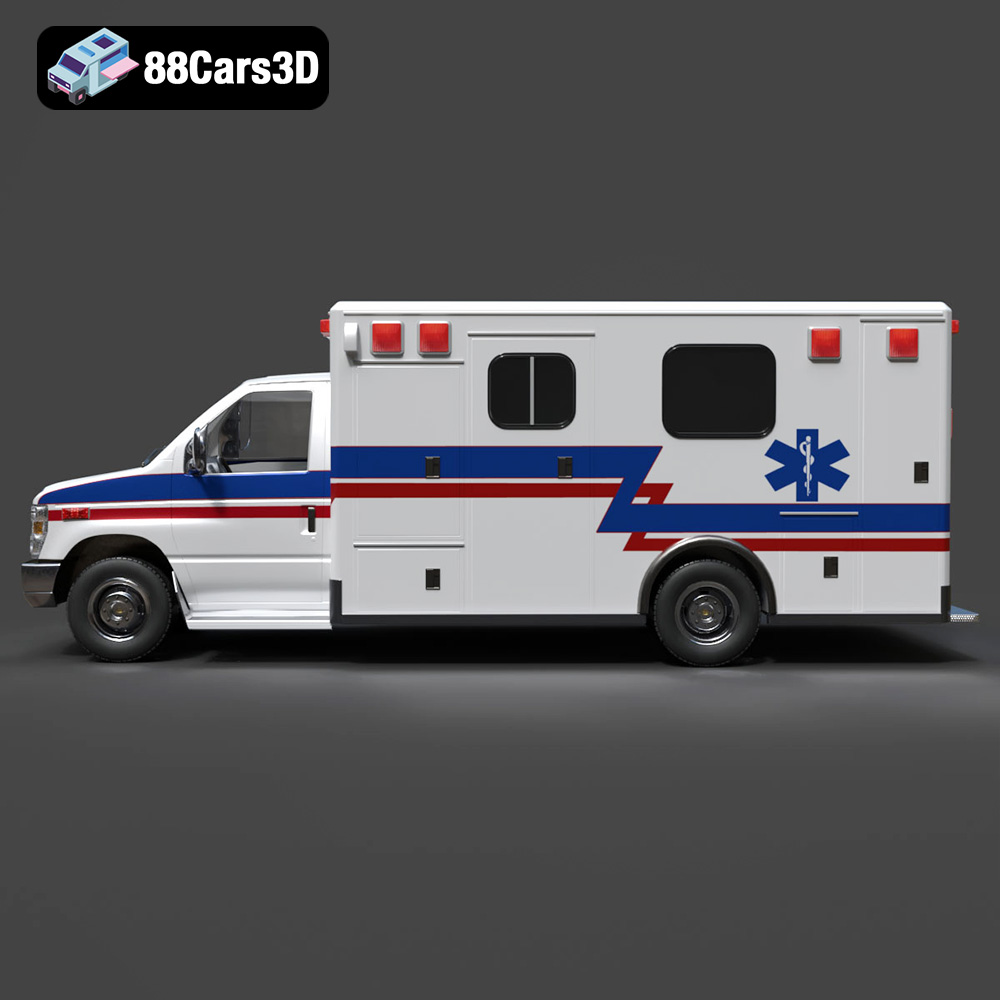
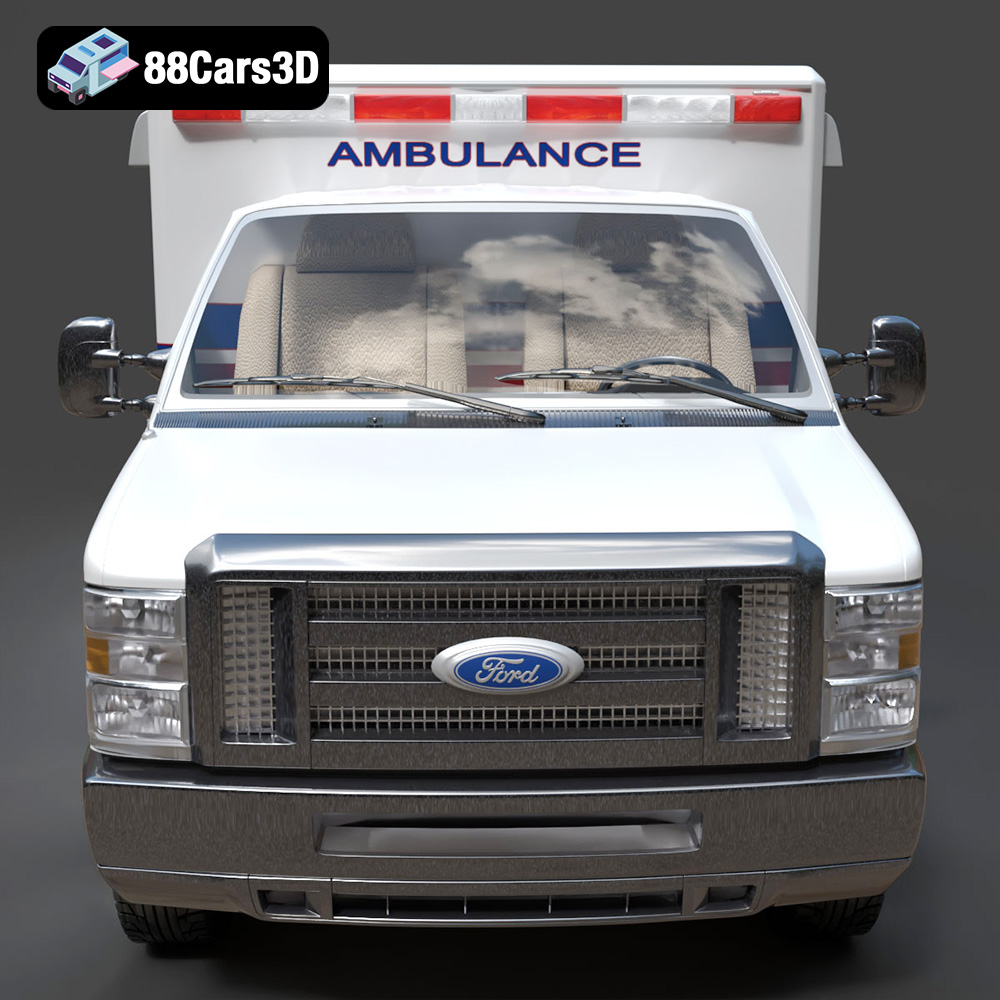
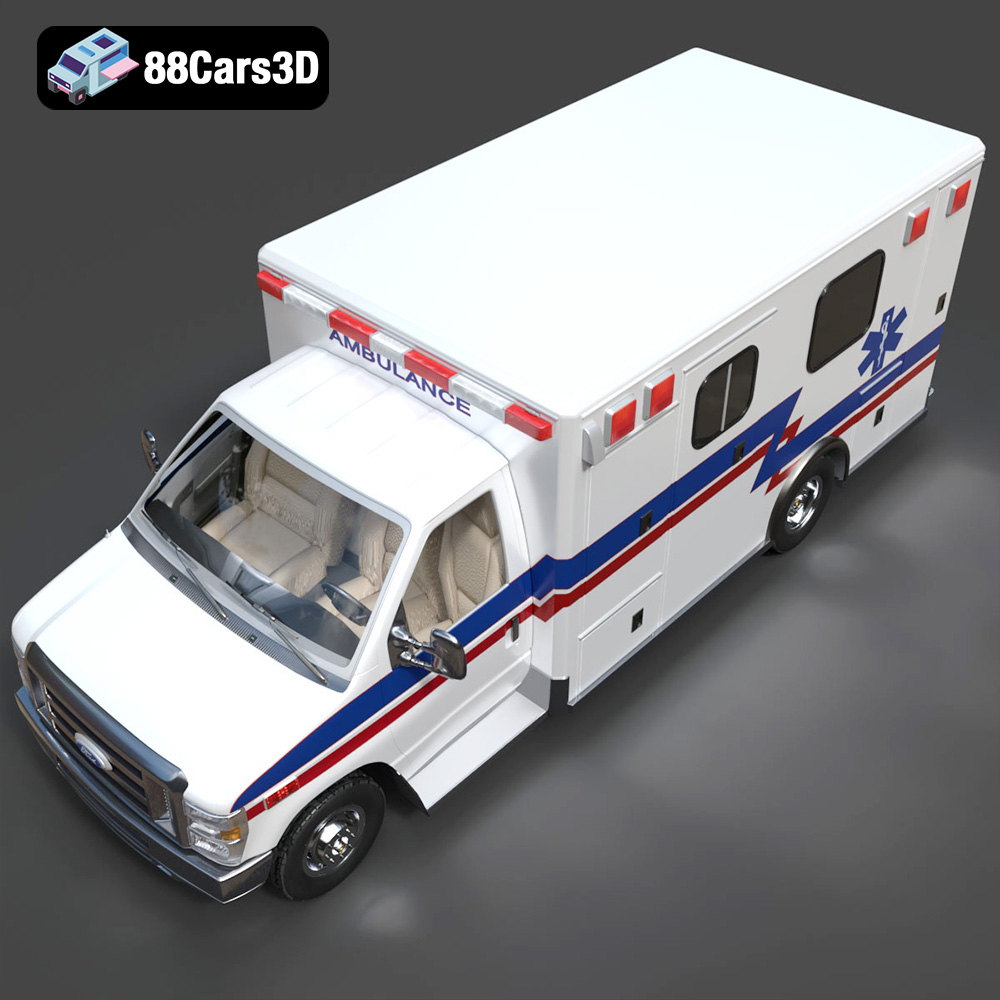
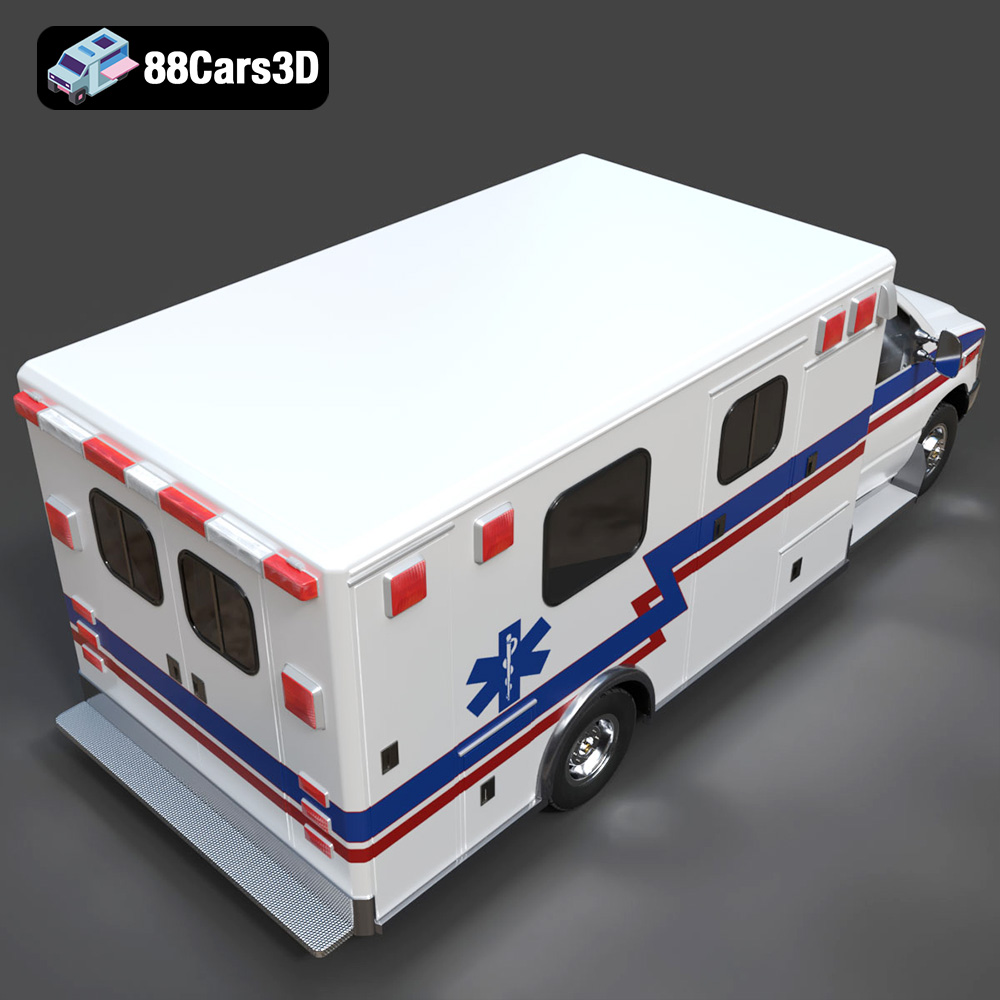
Bring unparalleled realism to your projects with the Ford E-450 Ambulance 3D Model. This meticulously crafted asset captures the essential details of a modern emergency response vehicle, making it ideal for high-fidelity simulations, emergency services training modules, and detailed visualization scenarios. This model is built to professional standards, featuring clean, optimized geometry suitable for real-time applications and demanding ray-traced rendering. All external markings, lighting configurations, and material definitions are realistically replicated to ensure immediate utility in any production pipeline. The cabin and patient compartment are fully modeled, providing comprehensive detail for interior shots or interactive environments. The Ford E-450 Ambulance asset is ready for deployment across various media, including AAA game development (using Unreal Engine or Unity), architectural and urban planning visualization, augmented reality (AR) experiences, and large-scale public safety simulations.
$19.99