Mastering 3D Automotive Design: From High-Fidelity Renders to Real-Time Simulations with Professional 3D Car Models
In the dynamic world of 3D visualization, automotive design, and game development, the foundation of any outstanding project lies in the quality of its assets. Whether you’re an architect aiming for photorealistic visualizations, a game developer crafting immersive open worlds, or an AR/VR specialist building interactive experiences, the demand for high-fidelity 3D car models is constant. These aren’t just decorative elements; they are complex digital blueprints that define the visual integrity and performance of your final output. Achieving unparalleled realism and efficiency requires not only artistic skill but also a deep understanding of technical specifications, file formats, and optimized workflows.
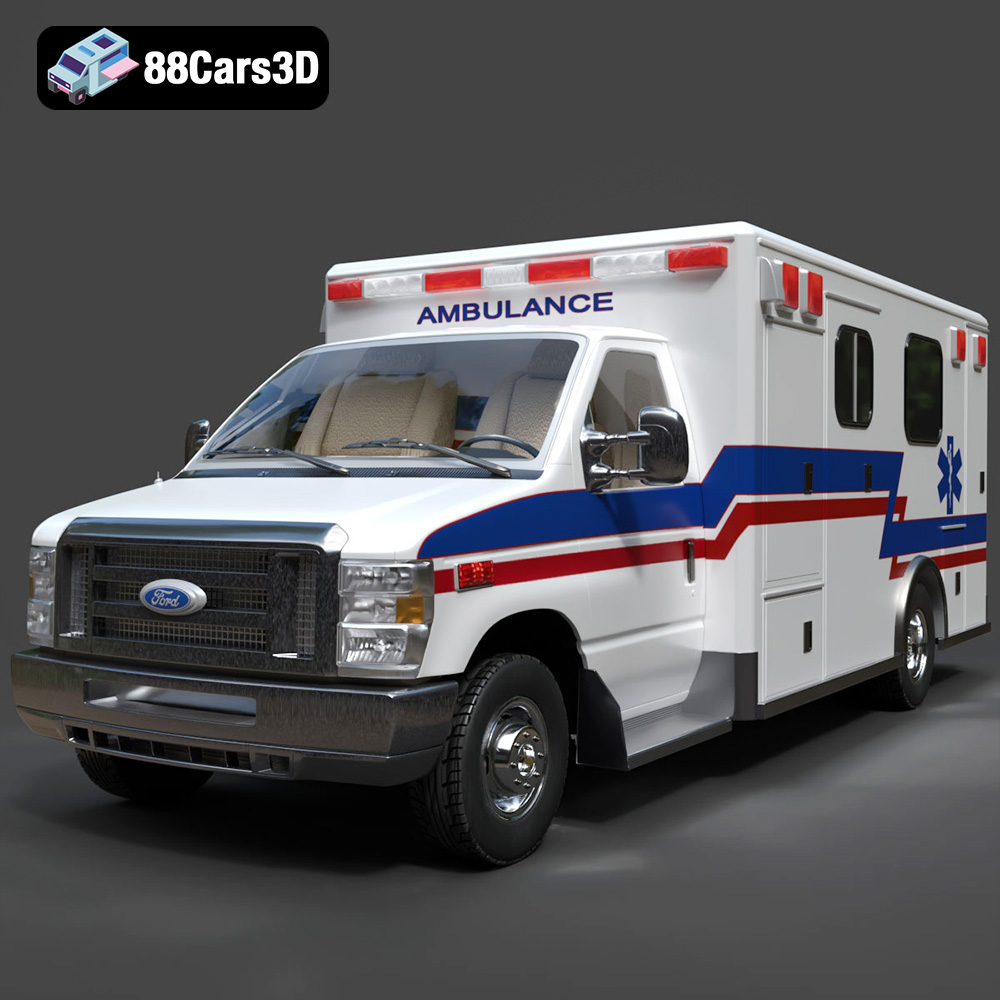
Today, we’ll delve into the intricacies of professional 3D car models, exploring how they empower creators across various industries. We’ll examine the critical role of different file formats, dissect the elements that contribute to a production-ready asset, and trace the journey of a 3D model from concept to deployment. As a prime example of the quality and versatility demanded by professionals, we’ll frequently reference the meticulously crafted Ford E-450 Ambulance 3D Model, a standout asset available at 88cars3d.com, which exemplifies the standards required for demanding projects in simulation, rendering, and real-time environments.
Understanding 3D Model File Formats: Choosing the Right Tool for the Job
The world of 3D modeling is rich with various file formats, each designed with specific purposes, advantages, and compatibility considerations. Selecting the correct format is paramount for ensuring seamless integration into your workflow, preserving data integrity, and optimizing performance across different applications. When you acquire a professional asset like the Ford E-450 Ambulance 3D Model, you’ll find it often comes with a suite of formats, each serving a distinct professional need.
.blend – The Native Blender Ecosystem
The `.blend` file format is native to Blender, the popular open-source 3D creation suite. A `.blend` file is more than just a model; it’s a complete scene package. It contains not only the mesh geometry, UV maps, and materials but also lighting setups, camera positions, animations, physics simulations, and even custom scripts. For artists working primarily in Blender, this format offers the most flexibility, allowing full editing, retargeting, and integration into existing Blender projects with all original scene data intact. It’s ideal for those who wish to modify the asset extensively, render directly within Blender using Cycles or Eevee, or leverage Blender’s comprehensive toolset for animation and VFX.
.fbx – The Industry Standard for Interchange
`.fbx` (Filmbox) is arguably the most widely adopted 3D interchange format in the industry, especially prevalent in game development and animation pipelines. Developed by Autodesk, it’s designed to carry a comprehensive array of data, including geometry (meshes, vertices, polygons, normals), UV maps, materials, textures, bone rigs, skinning data, and animations. Its robust support for complex data makes it the go-to format for transferring assets between different 3D software (e.g., 3ds Max to Maya, Blender to Unreal Engine or Unity). For real-time applications, `.fbx` is essential due to its efficient handling of animated and rigged models, ensuring that game engines can interpret and render complex characters and vehicles like the Ford E-450 Ambulance with all their dynamic properties.
.obj – The Universal Geometry Carrier
`.obj` (Wavefront OBJ) is a foundational and widely compatible 3D model format. It’s excellent for static mesh geometry, storing vertex positions, UV coordinates, vertex normals, and polygon faces. While it can reference external material definition files (`.mtl`), it does not inherently support advanced features like animation, rigging, or complex scene data. Its strength lies in its simplicity and universal acceptance, making it a reliable choice for basic model exchange across virtually all 3D software applications. If you need a clean mesh to start with, unburdened by extraneous scene data, `.obj` is a perfect choice.
.glb – Optimized for AR, VR, and Web
`.glb` (GL Transmission Format Binary) is an increasingly vital format, particularly for augmented reality (AR), virtual reality (VR), and web-based 3D applications. It’s a binary version of `glTF` (GL Transmission Format), designed for efficient transmission and loading of 3D scenes and models. A `.glb` file packages all necessary data—geometry, materials, textures, and even animations—into a single, self-contained file. This optimization reduces load times and simplifies deployment, making it ideal for interactive web experiences, social media filters, and lightweight AR/VR applications where performance and ease of use are critical.
.stl – The Backbone of 3D Printing
`.stl` (Stereolithography) is synonymous with 3D printing. This format represents a 3D model as a series of connected triangles, forming the surface geometry of the object. It does not store color, texture, or material information, focusing solely on the object’s shape. For users looking to physically prototype or print the Ford E-450 Ambulance 3D Model, the `.stl` format provides the necessary triangulated mesh data for slicing software to prepare the model for additive manufacturing. Its simplicity ensures broad compatibility with 3D printers and related software.
.ply – Precision Mesh for CAD and Analysis
`.ply` (Polygon File Format) is a versatile format often used for storing 3D data from 3D scanners, CAD systems, and scientific applications. Unlike `.stl`, `.ply` can store a wider range of properties, including color, transparency, surface normals, and even texture coordinates, per vertex or per face. It supports both ASCII and binary encodings. This makes it suitable for applications requiring more detailed mesh information or for models derived from real-world scans where preserving color or precise surface properties is important for analysis or complex visualization.
.unreal – Engine-Ready Asset for Real-Time Environments
While not a singular file format in the traditional sense, `.unreal` signifies a 3D asset that has been specifically configured and optimized for direct integration into Unreal Engine. This often means the asset, such as the Ford E-450 Ambulance, has been provided as a `.uasset` file or within a `.zip` archive containing a ready-to-import folder structure with associated materials, textures, skeletal meshes, and static meshes already set up to Unreal Engine’s specifications. This minimizes import errors, ensures correct material setup (PBR), and often includes pre-configured collision meshes and LODs (Levels of Detail), drastically accelerating workflow for game developers and real-time visualization specialists.
.max – The Power of 3ds Max Projects
The `.max` file format is the native project file for Autodesk 3ds Max. Similar to `.blend` for Blender, a `.max` file encapsulates the entire 3ds Max scene, including all 3D models, materials (with complex shader networks), lighting setups, camera definitions, animation data, render settings, and plugins. For professionals working within the 3ds Max ecosystem, the `.max` file provides the most comprehensive and editable version of the model, allowing full control over every aspect of the scene for advanced rendering, complex animation sequences, and architectural visualizations.
The Art of Automotive Rendering: Bringing Vehicles to Life
Automotive rendering is a specialized field within 3D visualization, demanding meticulous attention to detail to achieve photorealism. It’s where raw 3D car models transform into stunning visual masterpieces, often indistinguishable from real-world photography. The quality of the input 3D model, such as the Ford E-450 Ambulance 3D Model, directly impacts the potential for stunning output.
High-Fidelity Models: The Cornerstone of Realism
For a render to truly shine, the underlying 3D model must be built to exacting standards. This means clean topology, accurate scale, precise surface details, and robust UV unwrapping. A model like the Ford E-450 Ambulance is crafted with professional-grade geometry, ensuring that reflections behave correctly on its surfaces and that intricate details like panel gaps, emergency lights, and decals are accurately represented. Poorly optimized or inaccurate geometry can lead to artifacts, jagged edges, and unrealistic lighting interactions, no matter how powerful the rendering engine.
PBR Materials and Advanced Shading
Modern automotive rendering heavily relies on Physically Based Rendering (PBR) materials. PBR pipelines simulate how light interacts with surfaces in the real world, using parameters like Albedo (base color), Roughness, Metallic, Normal, and Ambient Occlusion maps. For a vehicle like an ambulance, this means accurately replicating the subtle sheen of its paint, the reflectivity of its chrome, the transparency of its glass, and the texture of its tires. Professional 3D car models, including those from 88cars3d.com, come with pre-configured PBR materials, ready for integration into renderers like V-Ray, Corona Renderer, Octane, or even real-time engines. These material setups are crucial for conveying the realism of different surfaces and ensuring consistent visual quality across various lighting conditions.
Lighting, Environments, and Post-Production
Beyond the model and materials, skilled lighting and environment setup are key. High Dynamic Range Images (HDRIs) are commonly used to provide realistic global illumination and reflections, mimicking real-world lighting conditions. Studio lighting setups, often seen in car advertising, involve precise placement of virtual lights to highlight specific features and create dramatic effects. Finally, post-production in software like Adobe Photoshop or After Effects adds the finishing touches – color grading, lens flares, depth of field, and atmospheric effects – to elevate the rendered image or animation to a professional standard. This entire pipeline, from the initial 3D car model to the final polished output, benefits immensely from a high-quality starting asset.
Game Development and Real-Time Applications: Optimizing 3D Car Models
In game development, AR/VR experiences, and interactive simulations, the goal is not just visual fidelity but also real-time performance. This necessitates a strategic approach to 3D car models, balancing visual quality with optimization for fluid framerates.
Optimized Geometry and Levels of Detail (LODs)
Game engines like Unreal Engine and Unity demand highly optimized 3D assets. The Ford E-450 Ambulance 3D Model, for instance, is built with “clean, optimized geometry,” which implies careful polygon reduction without sacrificing crucial visual detail. For vehicles, this often means creating multiple Levels of Detail (LODs). An LOD system replaces a high-polygon model with progressively simpler versions as the camera moves further away from it. This dramatically reduces the computational load on the GPU, allowing complex scenes with many vehicles and assets to run smoothly. Professionals ensure that LOD transitions are seamless, preventing noticeable pop-in or sudden changes in visual quality.
Efficient UVs and Texture Atlases
Optimized UV mapping is crucial for real-time performance. Clean, non-overlapping UVs ensure that textures are displayed correctly and efficiently. For game assets, texture atlases – where multiple smaller textures are packed into a single larger texture – are common. This reduces draw calls, which are instructions sent from the CPU to the GPU, thereby improving rendering performance. A well-prepared 3D car model will have carefully laid out UVs that maximize texture space efficiency while minimizing visual degradation. The Ford E-450 Ambulance is designed with such considerations, providing an asset that performs well in demanding real-time environments.
Collision Meshes and Interactive Elements
Beyond visual representation, game assets need functional components. Collision meshes, often simplified versions of the visual mesh, define the physical boundaries for player interaction, vehicle dynamics, and environmental collisions. For an ambulance, this includes defining how it interacts with roads, other vehicles, and environmental obstacles. Furthermore, interactive elements such as opening doors, working lights, and rotating wheels require proper rigging and animation setups. The `.fbx` and `.unreal` formats of the Ford E-450 Ambulance are specifically tailored to facilitate these interactive elements, making it an excellent game asset ready for dynamic gameplay.
Beyond Visualization: AR/VR and 3D Printing with Professional 3D Models
The utility of a high-quality 3D car model extends far beyond traditional rendering and game development, finding critical applications in emerging technologies like Augmented Reality (AR), Virtual Reality (VR), and 3D printing. These fields leverage 3D models to create immersive experiences and tangible objects.
Immersive Experiences with AR/VR
AR and VR rely heavily on optimized 3D assets to create convincing virtual environments and augment real-world scenes. For an AR application, visualizing a Ford E-450 Ambulance in a real-world setting for emergency services training or public awareness requires a model that is lightweight, performant, and correctly scaled. The `.glb` format, with its single-file, optimized structure, is ideally suited for these applications, ensuring quick loading times and smooth interaction on mobile devices or VR headsets. High-quality 3D car models are essential for conveying a sense of presence and immersion, making the virtual experience feel real.
Prototyping and Production with 3D Printing
The ability to transform a digital model into a physical object opens up a world of possibilities for prototyping, educational aids, and even collectibles. The `.stl` and `.ply` formats provided with the Ford E-450 Ambulance 3D Model cater directly to 3D printing workflows. Designers can use these formats to create physical scale models for architectural layouts, vehicle design reviews, or emergency planning simulations. While `.stl` is the standard for basic geometry, `.ply` offers the advantage of higher precision and potentially color information, useful for more advanced printing techniques. The transition from virtual to physical requires a clean, manifold mesh (a mesh without holes or self-intersecting geometry), a characteristic inherent in professionally prepared 3D car models.
Technical Deep Dive: The Ford E-450 Ambulance 3D Model in Detail
The Ford E-450 Ambulance 3D Model is an exemplary case of a professional-grade asset designed for versatile application. Its detailed description highlights key technical attributes that are paramount for any serious 3D project.
Meticulous Craftsmanship and Optimized Geometry
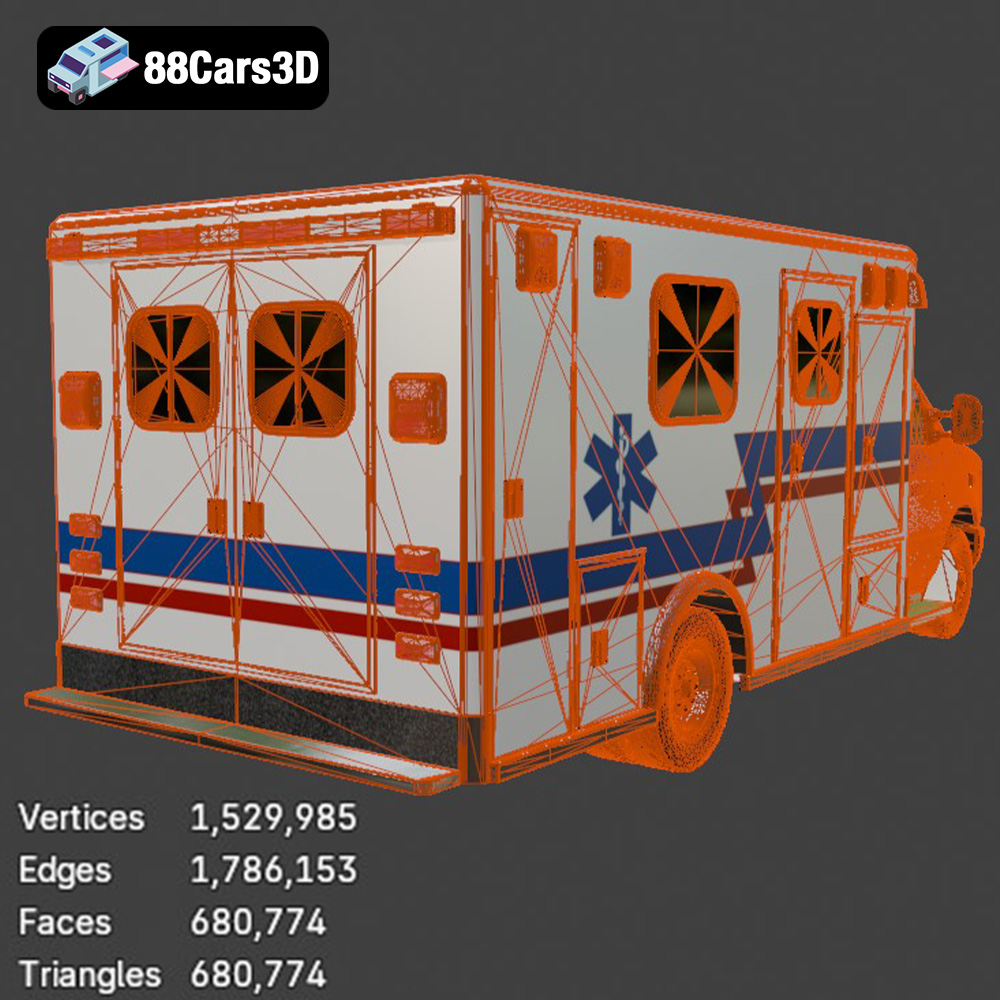
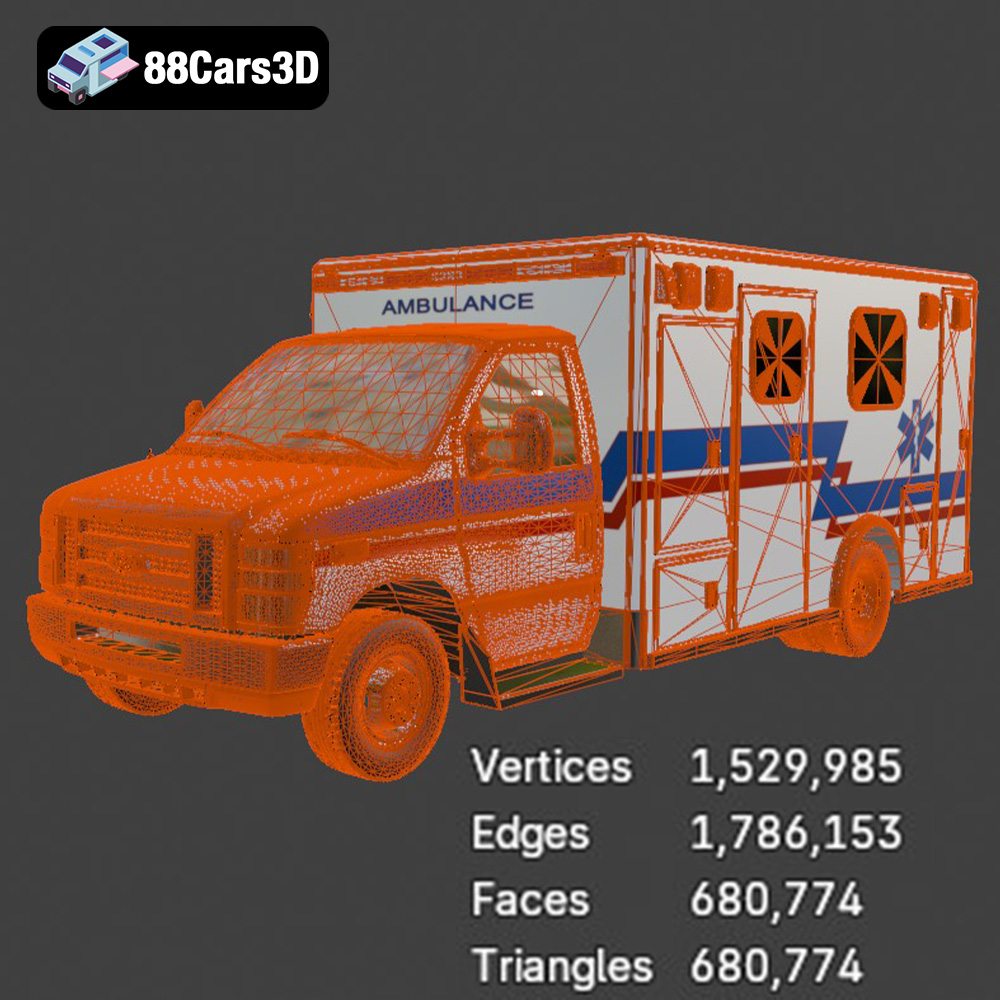
The core strength of this model lies in its “meticulously crafted asset” status. This means that every curve, panel line, and component of the Ford E-450 Ambulance has been carefully modeled to reflect its real-world counterpart. The “clean, optimized geometry” ensures that the mesh is efficient, with minimal unnecessary polygons, allowing for both high-fidelity renders and robust real-time performance. This balance is critical: a model that’s too heavy will cripple real-time applications, while one that’s too simple will lack realism in close-up renders. The professional approach taken with this model ensures it hits the sweet spot. Clean edge flow and quad-based topology (where appropriate) are typically characteristics of such models, ensuring smooth subdivision and distortion-free deformation if animation were required.
Realistic Material Definitions and External Markings
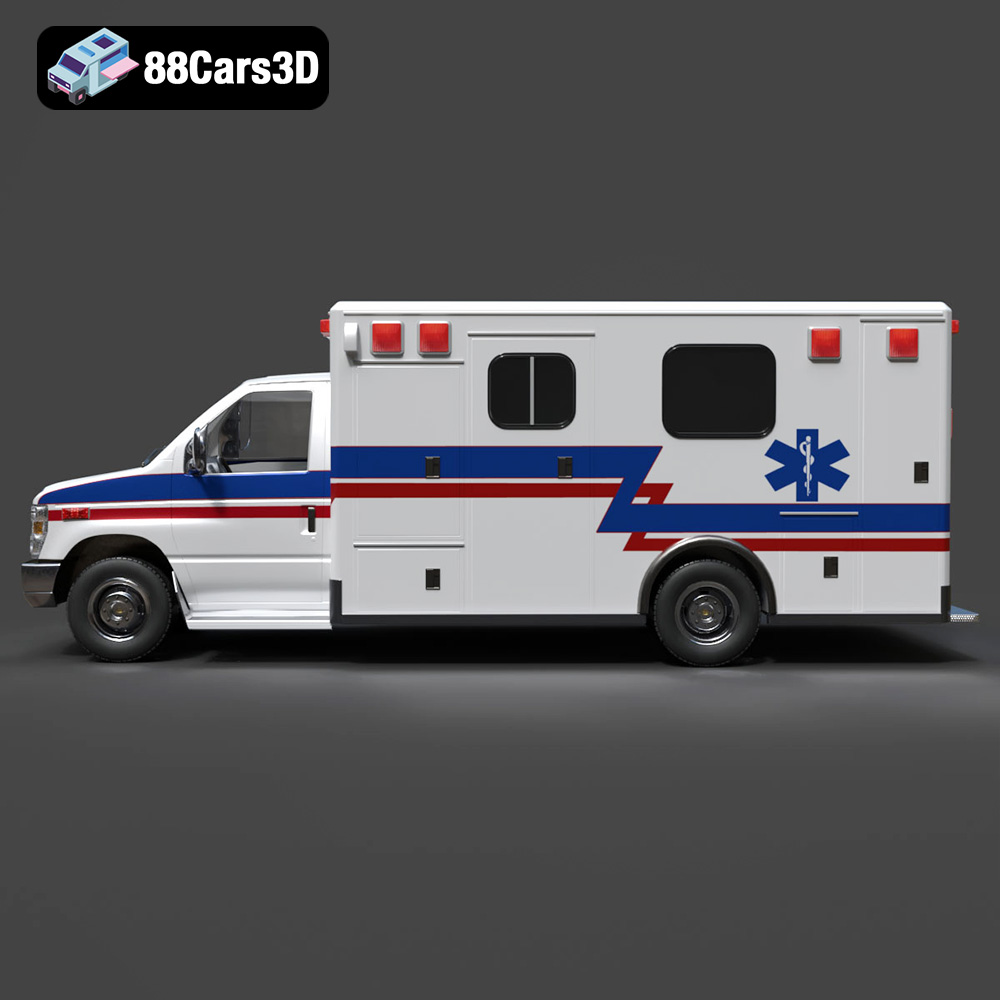
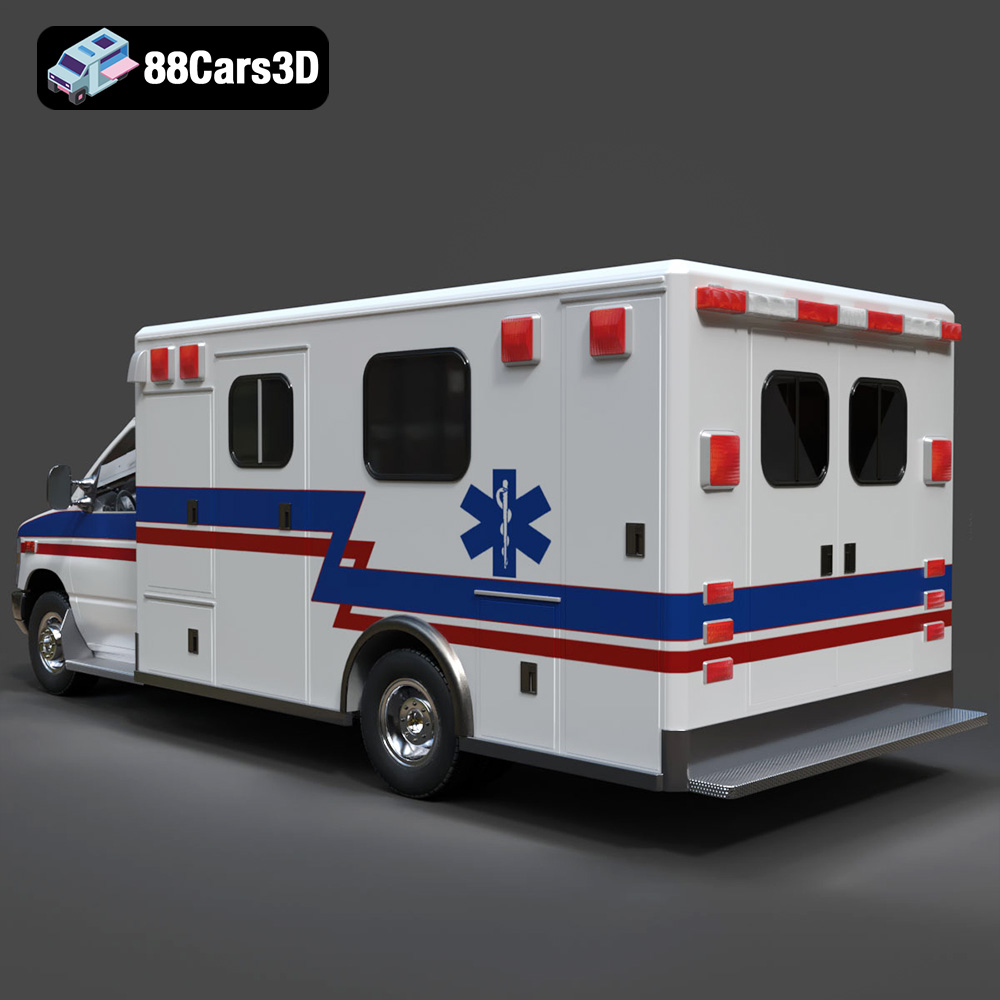
A significant contributor to the model’s “unparalleled realism” is the accurate replication of “all external markings, lighting configurations, and material definitions.” This implies a comprehensive set of PBR textures and shaders covering the vehicle’s paint, decals (such as emergency service logos, text, and stripes), glass, tires, and various plastic and metal components. The “lighting configurations” suggest that the emergency lights (beacons, strobes) are not just modeled but also likely have their materials set up to glow or emit light, ready for dynamic animation or rendering effects. This level of detail saves immense time for the end-user, as they don’t need to create these complex material networks from scratch.
Comprehensive Interior Detailing and Versatility
A truly professional 3D car model often includes interior details, and the Ford E-450 Ambulance excels here with its “fully modeled cabin and patient compartment.” This expands its utility dramatically. For simulations, architectural visualizations, or even game development with interactive interiors, having a detailed cockpit and an accessible patient area is invaluable. This attention to internal structure allows for interior shots, first-person perspectives in games, or detailed scenarios for emergency services training, providing a complete and immersive experience. The versatility of this model, provided in multiple formats including `.blend`, `.fbx`, `.obj`, `.glb`, `.stl`, `.ply`, `.unreal`, and `.max`, underscores its readiness for diverse production pipelines, from AAA game development to AR/VR experiences, found at 88cars3d.com.
Integrating into Professional Workflows: From Concept to Deployment
The true value of a professional 3D car model, such as the Ford E-450 Ambulance, is realized when it seamlessly integrates into various industry workflows. From initial concept visualization to final deployment, these assets streamline production.
Architectural and Urban Planning Visualization
In architectural visualization (ArchViz) and urban planning, accurate 3D car models are essential for grounding renders in reality. Placing vehicles like the Ford E-450 Ambulance within a proposed city layout or around a new hospital building adds scale, context, and a sense of realism. Using the `.max` or `.blend` files, architects can easily import the ambulance into their scenes, set up V-Ray or Corona renders, and illustrate how public services interact with the built environment. The detailed interior even allows for close-up shots demonstrating accessibility or emergency protocols within a proposed design.
Emergency Services Training and High-Fidelity Simulations
The Ford E-450 Ambulance 3D Model is explicitly tailored for “emergency services training modules” and “high-fidelity simulations.” In these scenarios, accuracy is paramount. Using the `.unreal` or optimized `.fbx` formats, developers can build interactive training environments where paramedics can practice procedures, learn vehicle layouts, or simulate crisis response. The detailed interior modeling is particularly valuable here, allowing for realistic interactions within the patient compartment. Such simulations offer a cost-effective and safe way to train personnel, enhancing preparedness and response capabilities.
Marketing and Advertising: Showcasing Realism
For automotive marketing and advertising agencies, premium 3D car models are game-changers. Instead of costly photoshoots or physical prototypes, companies can use models like the Ford E-450 Ambulance to create stunning visuals for product launches, brochures, or commercials. The ability to render the vehicle in any environment, with perfect lighting and camera angles, without physical constraints, provides unparalleled creative freedom and significant cost savings. The `.max` or `.blend` files offer the highest level of control for animators and render artists to craft cinematic sequences.
Conclusion
The journey through the world of 3D car models reveals a landscape rich with technical complexity and creative potential. From the nuanced choice of file formats to the intricate balance between visual fidelity and real-time performance, every aspect contributes to the success of a 3D project. Professional 3D car models are more than just digital sculptures; they are precision-engineered assets designed to meet the rigorous demands of various industries, from game development and automotive rendering to AR/VR and 3D printing.
The Ford E-450 Ambulance 3D Model exemplifies this commitment to quality and versatility. Its meticulously crafted geometry, realistic material definitions, and comprehensive interior detailing make it an invaluable asset for anyone aiming for unparalleled realism in simulations, captivating renders, or immersive interactive experiences. By understanding the technical underpinnings of such assets and knowing when to leverage specific file formats, professionals can significantly accelerate their workflows and elevate the quality of their final output.
For those seeking to equip their projects with high-quality, production-ready 3D car models, exploring reputable marketplaces is key. The Ford E-450 Ambulance 3D Model, along with a vast array of other premium 3D assets, is available at 88cars3d.com, ready to bring your creative visions to life.
Featured 3D Model
Ford E-450 Ambulance 3D Model
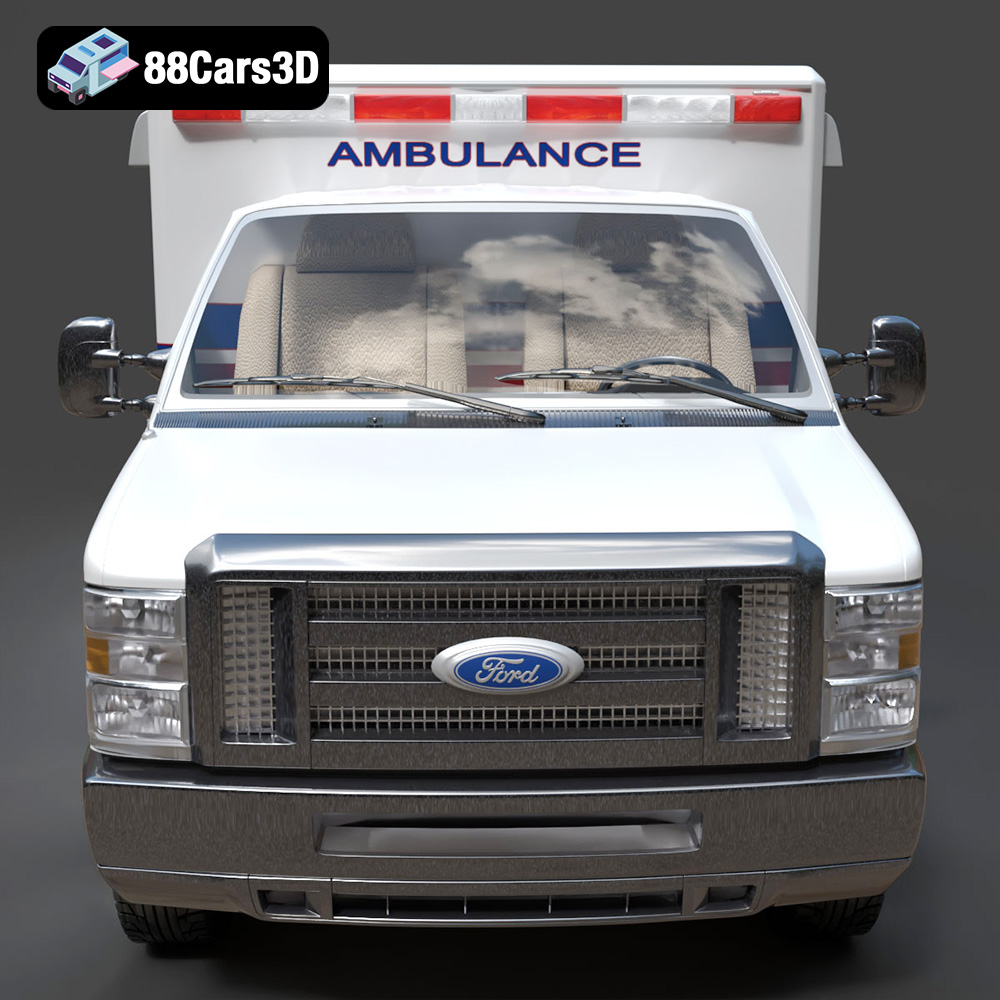
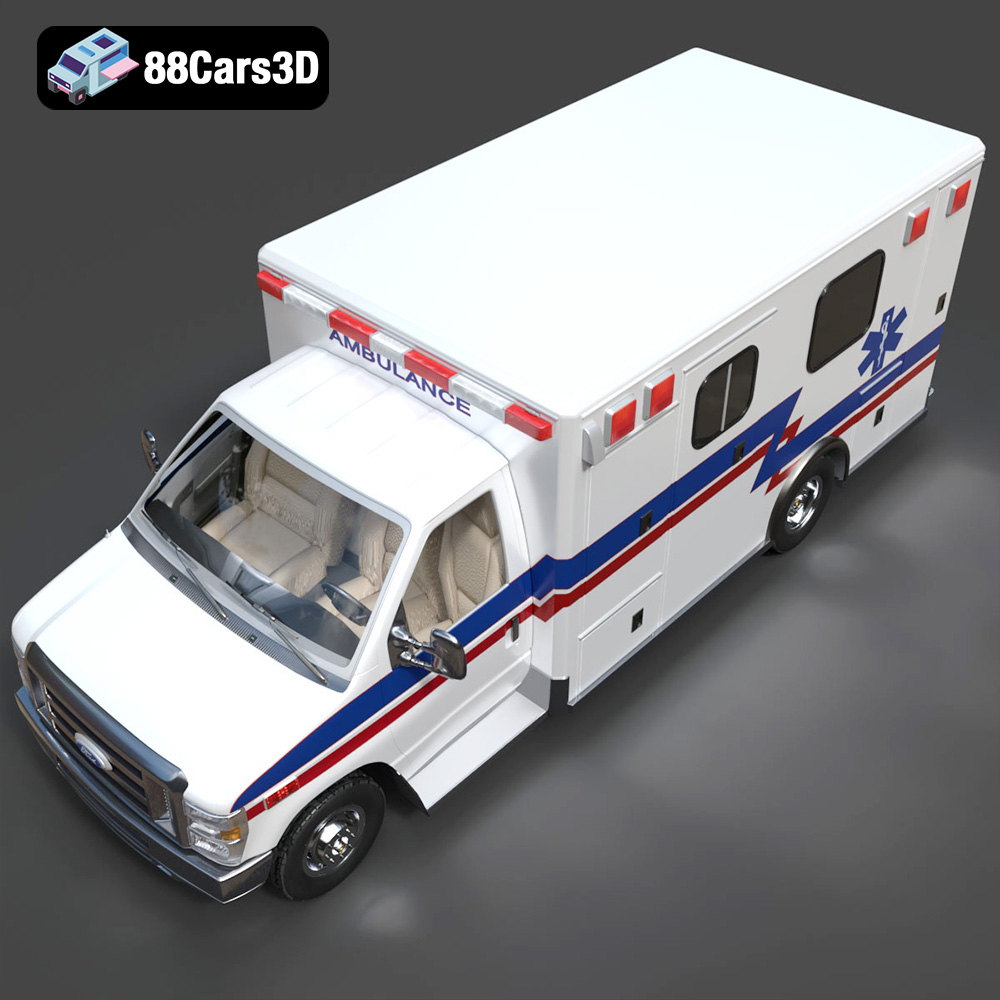
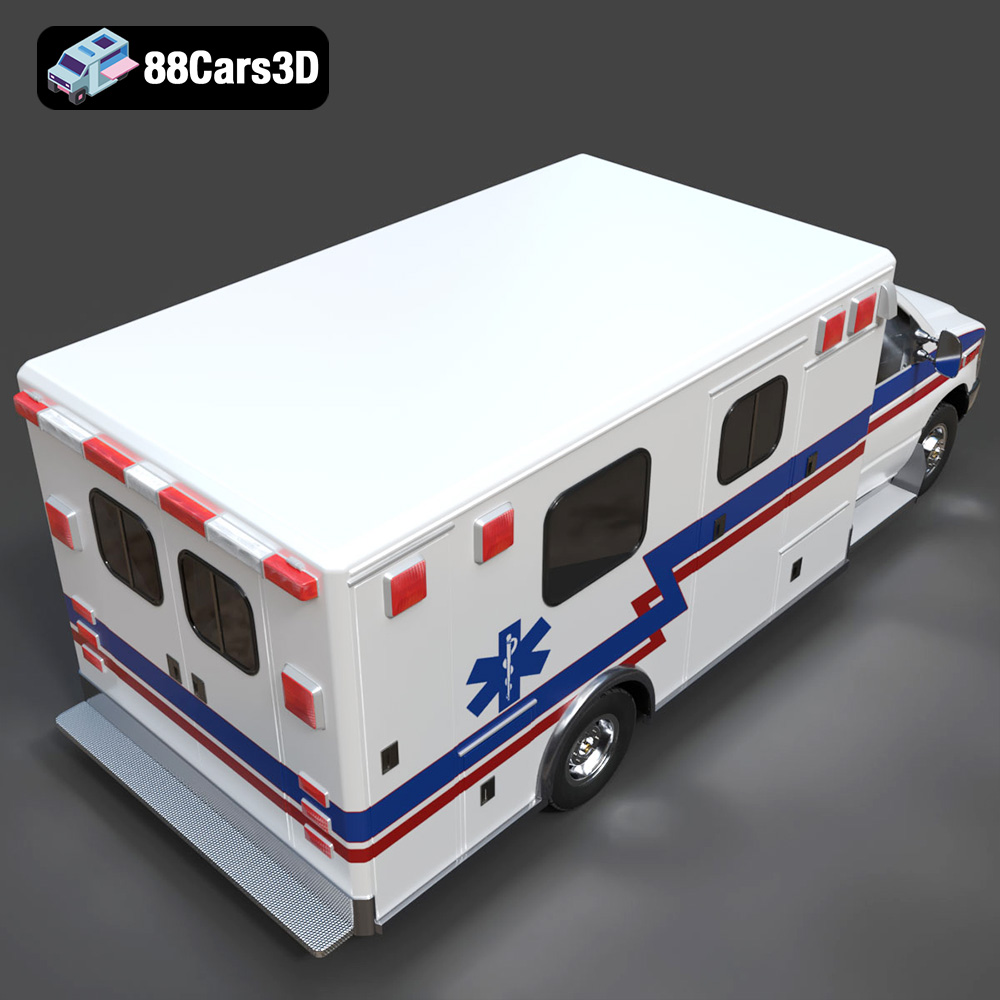
Bring unparalleled realism to your projects with the Ford E-450 Ambulance 3D Model. This meticulously crafted asset captures the essential details of a modern emergency response vehicle, making it ideal for high-fidelity simulations, emergency services training modules, and detailed visualization scenarios.
This model is built to professional standards, featuring clean, optimized geometry suitable for real-time applications and demanding ray-traced rendering. All external markings, lighting configurations, and material definitions are realistically replicated to ensure immediate utility in any production pipeline. The cabin and patient compartment are fully modeled, providing comprehensive detail for interior shots or interactive environments.
The Ford E-450 Ambulance asset is ready for deployment across various media, including AAA game development (using Unreal Engine or Unity), architectural and urban planning visualization, augmented reality (AR) experiences, and large-scale public safety simulations.
$19.99
Product Image Gallery