

Elevating Your Projects with High-Fidelity 3D Vehicle Models
In the dynamic world of 3D visualization, from cinematic renders to immersive game environments and groundbreaking AR/VR experiences, the quality of your 3D assets can make or break a project. Achieving photorealism and seamless integration demands models that are not only visually stunning but also technically robust. This is especially true for vehicles, which often serve as focal points in many digital scenes. While the focus of many resources might lean towards 3D car models, the broader category of vehicles, including bikes, offers immense potential for enriching environments and narratives.
At 88cars3d.com, we understand this critical need for excellence. Our marketplace is dedicated to providing meticulously crafted 3D models that meet the rigorous demands of professional artists and developers. Today, we’ll delve into the specifics of what makes a truly outstanding asset, using our Generic Bicycle 3D Model as a prime example. This versatile model embodies the principles of optimized geometry, detailed textures, and thoughtful structure, making it an indispensable tool for a vast array of applications, from intricate automotive rendering scenes to vibrant game asset development.
Understanding 3D Model File Formats
The choice of file format for a 3D model is paramount, directly influencing its compatibility, workflow efficiency, and ultimate utility across different software and platforms. Each format serves a specific purpose, designed to optimize for particular use cases such as real-time rendering, animation, or 3D printing. Understanding these distinctions is crucial for anyone working with 3D assets, especially when integrating a model like the Generic Bicycle 3D Model into diverse projects.
.blend – Fully Editable Blender Scene with Materials
The .blend format is Blender’s native file type. It encapsulates an entire Blender project, including all mesh data, materials, textures, lighting, camera setups, animations, and even physics simulations. For artists primarily working within Blender, this is the most flexible and comprehensive format. It allows for complete editability of the Generic Bicycle 3D Model, enabling users to tweak topology, modify materials, adjust rigging, or add custom animations directly within their familiar environment. The inclusion of materials means the model is ready to render out of the box, reflecting the creator’s intended look.
.fbx – Ideal for Unreal, Unity, and Real-Time Pipelines
Autodesk’s .fbx (Filmbox) format is an industry standard for interoperability, particularly strong in game development and animation pipelines. It excels at transferring geometry, materials, textures, bones, and animation data between different 3D applications like Maya, 3ds Max, Blender, and game engines such as Unreal Engine and Unity. Its robust support for animation and skeletal data makes it perfect for importing game assets. When using the Generic Bicycle 3D Model, an .fbx file ensures that the meticulously set up pivot points and potential animation readiness are preserved when moving into a game engine for real-time applications.
.obj – Universal Format for Cross-Software Compatibility
The .obj (Wavefront OBJ) format is one of the most widely supported 3D file types, earning its reputation as a “universal” format. It primarily stores geometric data – vertices, faces, UV coordinates, and normals – making it highly compatible across virtually all 3D software. While it can reference external material (.mtl) files for basic color and texture information, it doesn’t typically store complex PBR (Physically Based Rendering) materials or animation data. For the Generic Bicycle 3D Model, the .obj format is an excellent choice for general import into any 3D package where you might want to apply your own materials or simply use the clean geometry as a base.
.glb – Optimized for AR, VR, and Browser-Based Display
.glb (GLB, or binary glTF) is a relatively modern format that has quickly gained traction, especially in web-based 3D, augmented reality (AR), and virtual reality (VR) applications. It’s a binary container format that embeds models, textures, animations, and PBR materials into a single, self-contained file. This makes it incredibly efficient for streaming and display on platforms that require rapid loading and minimal external dependencies. For showcasing the Generic Bicycle 3D Model in a web viewer, an AR app on a smartphone, or a VR experience, the .glb format provides an optimized and streamlined solution.
.stl – Suitable for 3D Printing Output
The .stl (Stereolithography) format is the standard for 3D printing. It represents a 3D model as a series of connected triangles, describing only the surface geometry without color, texture, or other advanced properties. The “watertight” nature of a well-prepared .stl file is crucial for successful 3D printing, ensuring there are no gaps or holes in the mesh. The Generic Bicycle 3D Model, with its clean, quad-dominant topology, is ideally suited for conversion to .stl, allowing creators to produce physical prototypes or scale models of the bicycle.
.ply – Precision Mesh Format for CAD or Analysis
.ply (Polygon File Format) is often used for storing 3D data from 3D scanners, CAD systems, and other sources that require high precision. It can store not only geometry but also color, transparency, surface normals, and other properties associated with vertices and faces. While less common for general asset exchange than .fbx or .obj, it’s valuable in scientific, engineering, and digital preservation contexts where precise mesh data and vertex attributes are critical. For detailed analysis or specialized CAD integration of the bicycle, .ply offers a robust data structure.
.unreal – Engine-Ready Asset for Real-Time Environments
The .unreal format typically refers to a pre-packaged asset or project file specifically designed for Unreal Engine. This could mean a .uasset file or a small Unreal project containing the model, its materials, textures, collision meshes, and even blueprints for interactivity, all configured and ready to be dragged and dropped into an Unreal project. This format provides the most direct and efficient integration for game developers using the Generic Bicycle 3D Model, minimizing setup time and ensuring optimal performance within the engine.
.max – Editable 3ds Max Project for Animation and Rendering
Similar to .blend for Blender, .max is the native file format for Autodesk 3ds Max. It stores a complete 3ds Max scene, including geometry, materials, lights, cameras, modifiers, and animation data. For professionals entrenched in 3ds Max, this format provides full editability and preserves all the fine-tuned details and complex setups within the software. The Generic Bicycle 3D Model as a .max file means users can fully leverage 3ds Max’s powerful rendering capabilities and animation tools without any loss of fidelity or functionality.
Crafting Realism: The Generic Bicycle 3D Model’s Design Philosophy
The foundation of any superior 3D asset lies in its design philosophy, balancing aesthetic appeal with technical integrity. The Generic Bicycle 3D Model exemplifies this approach, built from the ground up to offer both stunning visual fidelity and practical utility across diverse applications.
Precision Geometry and Topology
The model’s core strength lies in its clean, quad-dominant topology. This isn’t just a technical detail; it’s a fundamental aspect that ensures smooth subdivision for high-resolution renders and easy modification for customization. Quads (four-sided polygons) are preferred in professional modeling because they deform predictably, preventing unsightly pinching or artifacts when the mesh is smoothed or animated. Every component, from the detailed frame structure to the intricate chain and gear system, benefits from this meticulous attention to mesh quality. This optimized mesh ensures efficient performance, particularly in real-time applications like game development, where polygon count can significantly impact frame rates, all without sacrificing visual fidelity.
Furthermore, the model is accurately scaled to real-world dimensions. This seemingly small detail is crucial for seamless integration into existing scenes, whether it’s an architectural visualization project needing accurate scale for street furniture or a game environment where character animations need to interact realistically with the bicycle. The inclusion of high-quality material definitions for metal, rubber, and plastic components further enhances realism, ensuring that surfaces react appropriately to light in any rendering engine.
Articulation and Animation Readiness
A static model, no matter how beautiful, has limited utility. The Generic Bicycle 3D Model addresses this by being designed with animation in mind. All major components are separated for ease of animation and customization. This means the wheels, handlebars, pedals, and even the chain can be manipulated independently. Crucially, the model features a logically organized hierarchy with properly set pivot points for all movable parts. Correct pivot points are essential for realistic rotation and movement, allowing animators to quickly set up keyframes for riding sequences, steering, or pedal strokes without tedious manual adjustments. This “animation-ready” state significantly reduces setup time for animators, making it a highly efficient game asset and a boon for cinematic projects.
Integrating the Bicycle into Professional Rendering Workflows
High-quality 3D models like the Generic Bicycle are designed to shine in rendering environments, bringing scenes to life with unparalleled realism. We’ll explore how this model fits into industry-standard rendering workflows using 3ds Max and Blender.
Studio Renders in 3ds Max: Lighting and Materials
For artists leveraging 3ds Max for studio renders, the Generic Bicycle 3D Model, available as a .max file, offers immediate integration. The model’s professionally defined material IDs allow for quick assignment of advanced PBR materials within V-Ray, Corona Renderer, or Arnold. Imagine a pristine bicycle showcased under controlled studio lighting, highlighting its polished chrome, matte black rubber, and vibrant frame paint. Using 3ds Max’s powerful lighting tools, artists can set up key, fill, and rim lights to accentuate the model’s form and material properties. The clean topology ensures that subdivision modifiers (like TurboSmooth) can be applied without artifacts, producing incredibly smooth surfaces for close-up shots. Furthermore, the separated components and accurate pivot points simplify the creation of dynamic poses or even subtle animations, like a wheel slowly spinning, adding a touch of life to product visualizations.
This workflow is invaluable for product designers creating promotional materials, or for automotive render specialists who need to populate a scene with high-detail props that complement their primary vehicle models. The realism achievable with this bicycle model enhances the overall production value, making it a valuable asset for any 3D car models enthusiast aiming for comprehensive scene dressing.
Architectural Visualization with Blender: Scene Integration
Blender, with its robust Cycles and Eevee render engines, is a favorite among architectural visualization artists. The Generic Bicycle 3D Model, provided as a .blend file, drops directly into any Blender scene with all its materials pre-configured. Consider an exterior architectural render of a modern apartment building with a bike rack. Populating this scene with our bicycle model instantly adds a layer of realism and human scale. Artists can easily adjust paint finishes or add custom graphics to the frame to match the aesthetic of their project. For instance, changing the frame color to a muted tone for a minimalist design, or a bright accent color for a lively urban setting. The model’s real-world scale ensures it fits perfectly within the architectural context, avoiding disproportionate elements that break immersion. Its optimized mesh means it won’t bog down complex arch-viz scenes, allowing for faster renders and smoother viewport navigation, even alongside other detailed 3D car models or environmental elements. This versatility underscores its utility beyond just vehicles, extending to a critical prop for environmental storytelling.
Unleashing the Bicycle in Real-Time: Game Development & AR/VR
The demand for high-quality, optimized assets in real-time environments like games and immersive experiences is ever-growing. The Generic Bicycle 3D Model is specifically engineered to meet these challenges.
Game-Ready Asset Optimization and Implementation in Unreal Engine
For game developers, the Generic Bicycle 3D Model, with its .fbx and dedicated .unreal formats, is truly game-ready. Its optimized mesh quality, ensuring efficient performance without sacrificing visual fidelity, is paramount. In Unreal Engine, developers can import the .fbx file, complete with its logically organized hierarchy and correct pivot points. This allows for straightforward rigging and animation, whether for a player character riding the bike, NPCs interacting with it, or simply as a dynamic prop in an open-world environment. Collision meshes can be easily generated or custom-created around the simplified geometry for efficient physics interactions. Imagine integrating this model into an urban open-world game – a player could stumble upon it, pick it up, and ride it, benefiting from its pre-configured animation readiness. This level of optimization and preparation saves countless development hours, allowing teams to focus on gameplay rather than asset preparation.
Immersive Experiences: AR/VR Applications
Augmented Reality (AR) and Virtual Reality (VR) demand exceptionally performant and high-fidelity models for a truly immersive experience. The .glb format of the Generic Bicycle 3D Model is specifically optimized for these applications, offering a single, self-contained file that loads quickly and displays beautifully. Consider an AR app designed to help users visualize different bicycles in their real-world environment before purchase. The bicycle model can be seamlessly placed, scaled, and viewed from all angles, providing a realistic preview. In VR training simulations for urban cycling safety, the detailed but optimized geometry of the bicycle ensures smooth frame rates while offering a believable object for interaction. The model’s accurate representation and high-quality materials contribute significantly to the feeling of presence and realism in these cutting-edge digital spaces.
Beyond Visualization: Simulation and 3D Printing
The utility of a robust 3D model extends far beyond rendering and real-time graphics. The Generic Bicycle 3D Model’s technical foundations make it suitable for highly specialized applications.
Bicycle Safety Simulations and Urban Planning
The accurately scaled and detailed geometry of the Generic Bicycle 3D Model makes it an ideal candidate for simulation and training applications. In bicycle safety simulations, accurate physical representation is crucial. Engineers or urban planners can use this model in virtual environments to analyze traffic flow, assess cycling infrastructure designs, or even train cyclists in hazard perception. For example, a virtual city planning scenario could involve placing numerous instances of this bicycle model, perhaps alongside various 3D car models, to visualize pedestrian and cyclist interactions, evaluating the effectiveness of bike lanes or pedestrian zones. The .ply format could be used for advanced mesh analysis in such simulation contexts, where precise surface data is required for physics computations or environmental impact studies. Its clean structure supports complex physics calculations without excessive computational overhead.
Prototyping and Collectibles through 3D Printing
The model’s watertight geometry and clean topology mean it can be easily converted to .stl for physical model production via 3D printing. This opens up avenues for rapid prototyping, creating physical mock-ups, or even producing highly detailed collectibles. Imagine an enthusiast wanting a desk model of a modern bicycle, or a product designer needing a tangible prototype of a new frame design to evaluate ergonomics. The ability to export to .stl allows for direct fabrication, transforming the digital asset into a physical object. This bridging of the digital and physical realms highlights the comprehensive value proposition of meticulously engineered 3D models.
Conclusion
In the vast landscape of 3D asset creation, the pursuit of realism and efficiency is constant. The Generic Bicycle 3D Model stands as a testament to what professional-grade 3D assets can achieve. From its meticulously crafted quad-dominant topology and real-world scaling to its animation-ready hierarchy and broad file format support, every aspect is designed to empower artists and developers. Whether you’re enhancing an architectural visualization, populating an immersive game world, or designing a physical prototype, this model offers unparalleled quality and versatility. It exemplifies the kind of high-quality assets you can expect from 88cars3d.com, ensuring your projects consistently reach new heights of visual fidelity and technical performance. Explore our collection of 3D car models and other vehicles to find the perfect assets for your next masterpiece.
Featured 3D Model
Generic Bicycle 3D Model
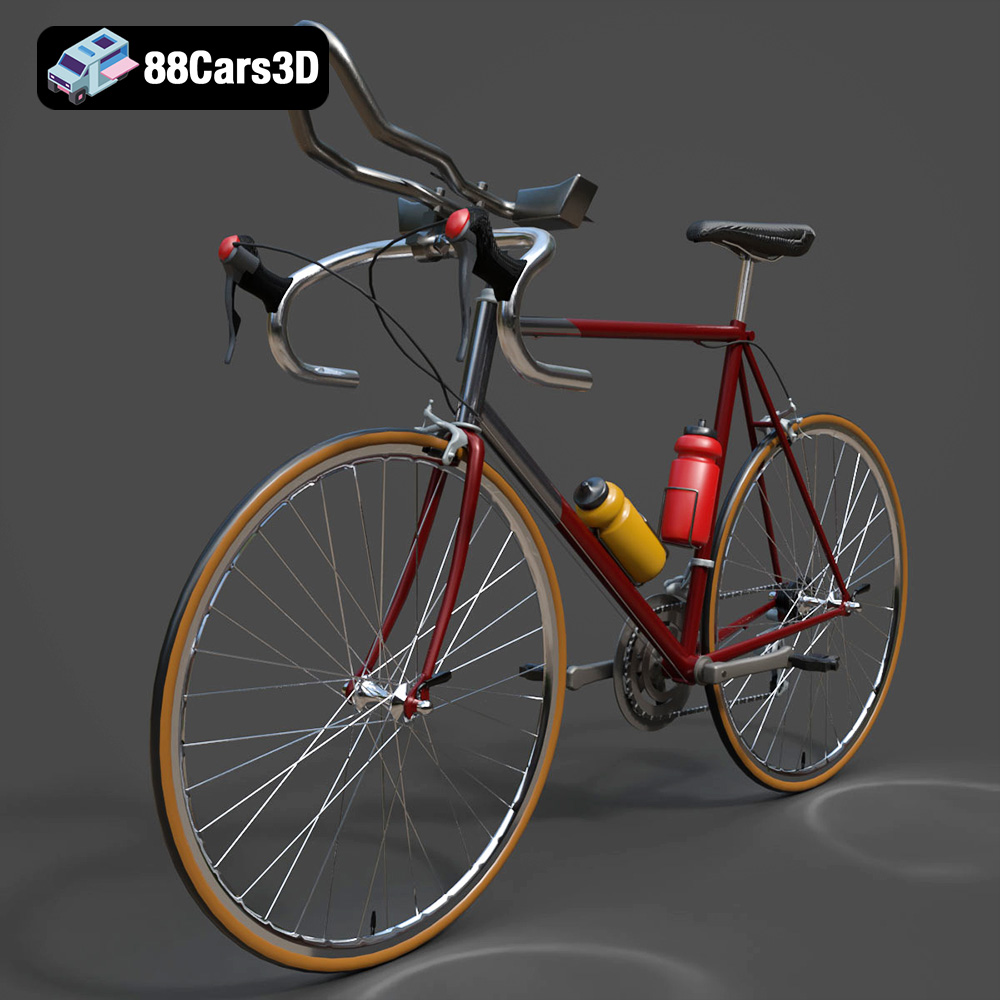
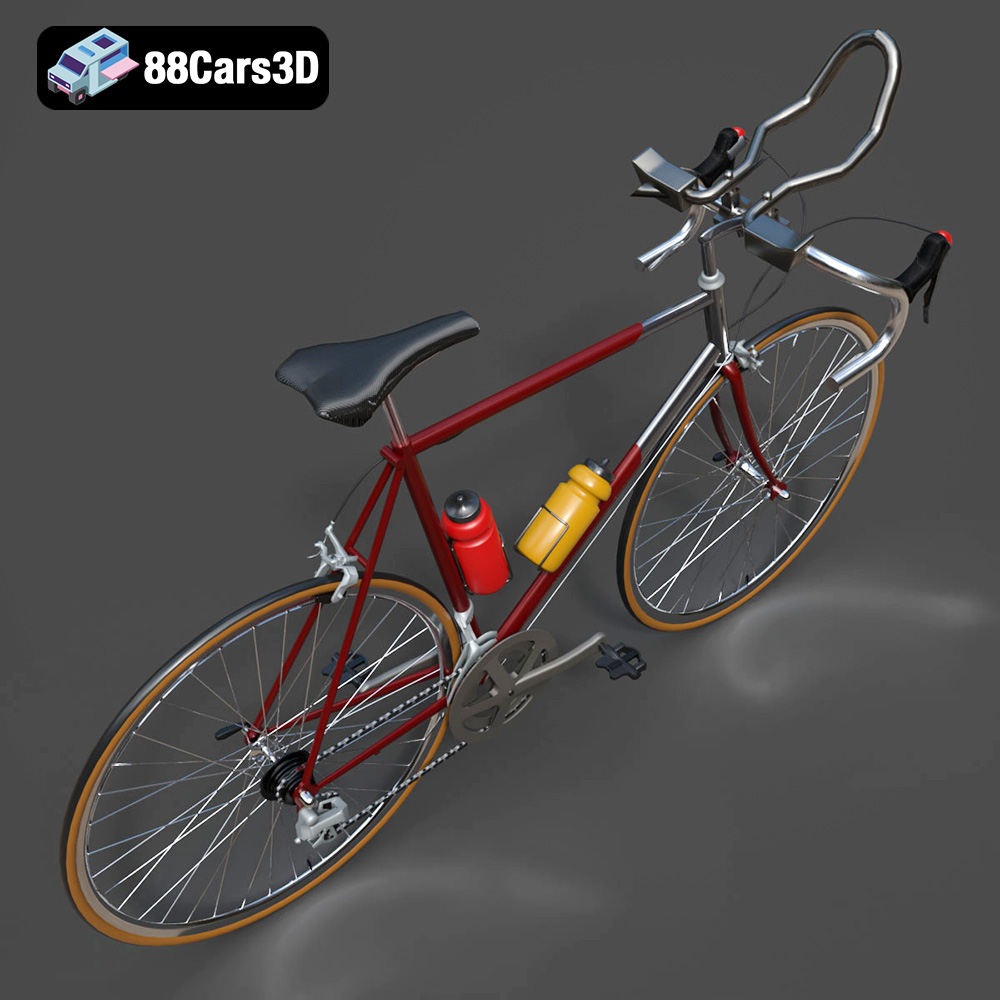
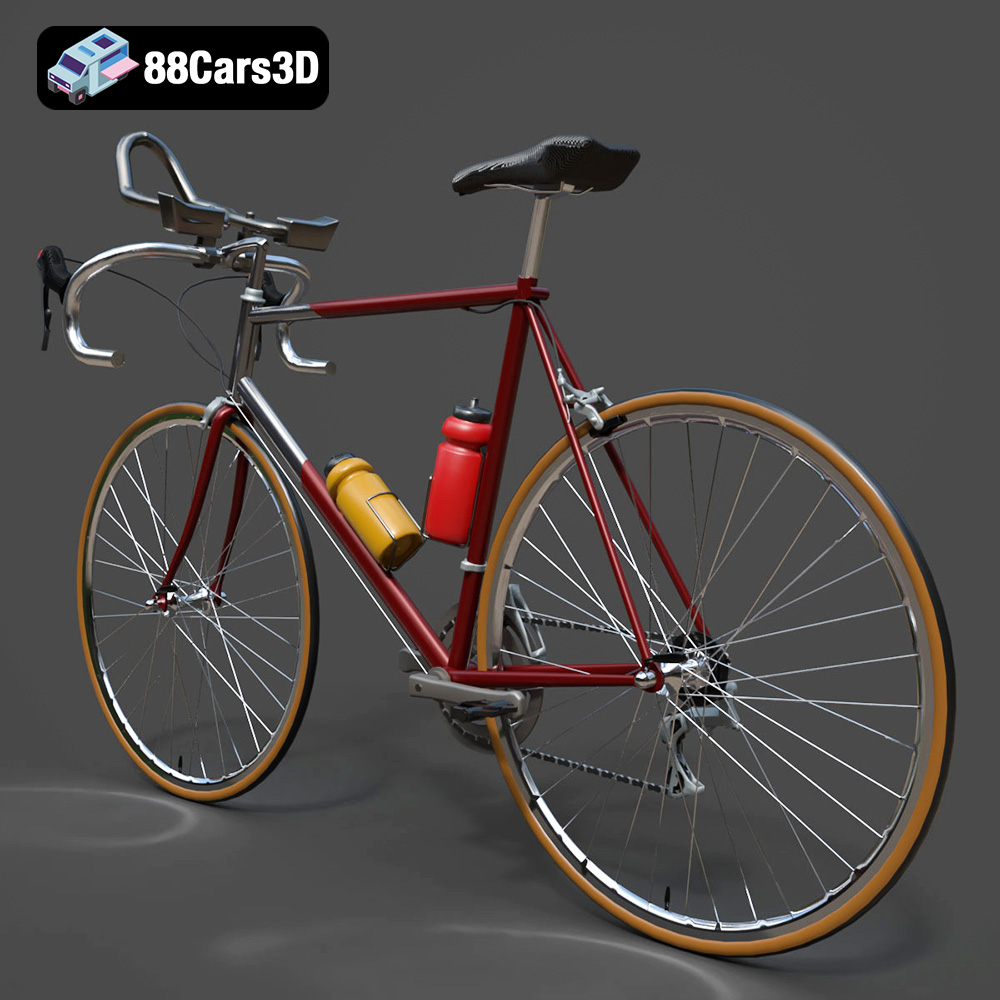
Presenting the high-quality Generic Bicycle 3D Model, a meticulously crafted digital asset designed for exceptional realism and performance. This model accurately represents a modern bicycle, featuring a clean, optimized geometry and balanced detailing across all components. Ideal for a wide range of applications, including high-fidelity rendering, detailed animations, realistic simulations, and robust game development.
Exterior Features:
- Detailed frame structure
- Fully modeled wheels with spokes, tires, and hubs
- Handlebars with grips and brake levers
- Pedals with treads
- Functional chain and gear system
- Comfortable seat design
- Accurate brake calipers and cables
- High-quality material definitions for metal, rubber, and plastic components
- All major components are separated for ease of animation and customization
Interior / Mechanical Features:
- Intricately modeled drivetrain, including chain, front and rear sprockets, and pedal cranks
- Detailed brake mechanisms
- Optimized mesh quality ensures efficient performance in real-time applications without sacrificing visual fidelity
- No interior elements as this is an exterior vehicle model
Technical Advantages:
- Clean, quad-dominant topology for smooth subdivision and easy modifications
- Accurately scaled to real-world dimensions for seamless integration into existing scenes
- Logically organized hierarchy with properly set pivot points for all movable parts (wheels, handlebars, pedals)
- Ready for advanced rigging and animation workflows
Applications:
- Rendering & Visualization: Perfect for studio renders, architectural visualizations, urban scene dressing, and cinematic sequences.
- Game Development: Optimized as a game-ready asset for open-world games, racing simulations, and interactive experiences.
- AR/VR: Excellent for immersive augmented and virtual reality applications, providing realistic virtual objects.
- Simulation & Training: Suitable for bicycle safety simulations, urban planning, and educational tools.
- 3D Printing: Geometry is watertight and can be easily converted to .stl for physical model production.
Customization Options:
- Easily modify paint finishes and add custom graphics or decals to the frame.
- Adjust material properties for different components (e.g., polished chrome, matte black rubber, various seat textures).
- Integrate into diverse lighting setups to achieve desired visual moods and realism.
The Generic Bicycle 3D Model offers unparalleled quality and versatility for any project requiring a realistic and highly detailed bicycle. Its professional construction and extensive file format support make it an indispensable asset for artists, developers, and designers.
Included File Formats:
- .blend – Blender project with materials
- .fbx – Compatible with Unreal, Unity, and major 3D engines
- .obj – Universal format for nearly all 3D software
- .glb – Optimized for AR, VR, and web-based visualization
- .stl – Ready for 3D printing
- .ply – Mesh format for analysis and CAD workflows
- .unreal – Unreal Engine project setup
- .max – Editable 3ds Max scene for rendering and animation
$19.99
Product Image Gallery



Related Tags
.generic.bicycle.bike.vehicle.transport.twowheeler.rendering.simulation.gameasset.arvr.blend.fbx.obj.glb.stl.ply.unreal.max
