

Unlocking Creative Potential: The Versatility of High-Quality 3D Models in Modern Pipelines
In the dynamic world of 3D visualization, game development, and immersive experiences, the quality and adaptability of digital assets are paramount. Whether you’re crafting a breathtaking architectural render, populating a bustling open-world game, or designing an interactive AR/VR training simulation, the right 3D model can significantly elevate your project’s realism and efficiency. While the focus often falls on complex machinery or intricate character designs, even seemingly simple objects, like a bicycle, demand meticulous attention to detail and robust technical construction to truly shine.
Today, we’ll delve deep into the technical intricacies of acquiring and utilizing premium 3D assets, showcasing how a well-crafted model like the Generic Bicycle_02-007 3D Model can become an indispensable tool in your digital arsenal. This particular model, available on 88cars3d.com, exemplifies the kind of clean geometry, real-world scale, and broad compatibility that professionals seek, making it a perfect candidate to explore the evolving landscape of 3D asset creation and integration.
Understanding 3D Model File Formats: The Backbone of Digital Assets
Choosing the right file format for your 3D model is not merely a technicality; it’s a strategic decision that impacts compatibility, performance, and workflow efficiency. Each format carries distinct advantages tailored to specific applications, from real-time game engines to high-fidelity rendering and even physical fabrication. Understanding these nuances is crucial for any professional working with 3D assets, especially when sourcing models like the Generic Bicycle_02-007, which offers a comprehensive suite of formats.
.blend – The Native Blender Ecosystem
The .blend format is Blender’s native file type, encapsulating an entire scene with all its objects, materials, textures, animations, lighting, and camera setups. It’s ideal for artists deeply embedded in the Blender ecosystem, providing full editability and access to Blender’s powerful modifiers, node-based materials, and physics simulations. When you download a .blend file, you’re getting the complete working environment as envisioned by the creator, allowing for granular adjustments to the bicycle’s frame, spokes, or drivetrain components using Blender’s robust toolset. This makes it perfect for heavy customization or integrating the bicycle into complex Blender-based animations or architectural visualization projects.
.fbx – The Industry Standard for Interoperability
.fbx (Filmbox) stands as one of the most widely adopted proprietary file formats for 3D data exchange between various software applications. Developed by Autodesk, it excels at transferring models, skeletal animations, and scene information across different 3D packages like Maya, 3ds Max, Cinema 4D, and most critically, game engines such as Unreal Engine and Unity. For a model like the Generic Bicycle_02-007, the .fbx version ensures that its organized hierarchy, pivot points, and basic material assignments translate seamlessly, making it an excellent choice for immediate integration into real-time environments or complex animation pipelines. Its robust support for embedded textures and animation curves streamlines professional workflows.
.obj – The Universal Cross-Software Format
The .obj (Wavefront OBJ) format is a universally recognized, open-standard file type that is highly compatible with nearly every 3D software application. While it doesn’t support advanced features like animation or complex rigging, it’s exceptional for transferring mesh data, UV mapping information, and basic material references (via an accompanying .mtl file). Its simplicity makes it incredibly stable and reliable for basic model exchange. If you need to import the Generic Bicycle_02-007 into an obscure or specialized 3D application, or simply want a clean mesh to start with, .obj is often the safest bet due to its broad support and straightforward structure.
.glb – Optimized for AR, VR, and Web
.glb (GL Transmission Format Binary) is the binary version of glTF, a royalty-free specification for the efficient transmission and loading of 3D scenes and models by applications. It’s specifically optimized for web-based 3D, augmented reality (AR), and virtual reality (VR) experiences due to its compact file size and ability to encapsulate an entire scene in a single file, including geometry, materials, textures, and animations. For deploying the Generic Bicycle_02-007 into a web configurator, a mobile AR app, or a lightweight VR scene, the .glb format offers unparalleled performance and ease of integration, ensuring quick load times and smooth interactions.
.stl – The Gateway to 3D Printing
.stl (Stereolithography) is the de facto standard file format for 3D printing and rapid prototyping. It represents a 3D model as a collection of triangles, defining only the surface geometry of the object. While it lacks color or texture information, its simplicity makes it ideal for additive manufacturing. If your project involves creating a physical prototype of the Generic Bicycle_02-007, perhaps for product design review or a miniature diorama, the .stl version provides a ready-to-print mesh. Proper triangulation and manifold geometry are crucial here, ensuring a successful print without errors.
.ply – Precision Mesh for Analysis and CAD
The .ply (Polygon File Format) is often used in scientific applications, 3D scanning, and CAD/CAM workflows where precise mesh data, including vertex colors, normals, and texture coordinates, is important. It can store a wider range of properties than .obj and is known for its ability to handle complex point clouds and polygonal models. For analytical purposes, reverse engineering, or integrating the bicycle model into a CAD environment for further engineering design, the .ply format offers a robust and detailed representation of the mesh.
.unreal – Engine-Ready for Real-Time Environments
The .unreal format signifies an asset specifically packaged and optimized for direct import into Unreal Engine projects. This often means the asset has already undergone a conversion process to ensure proper material setup, collision geometry, and LOD (Level of Detail) settings suitable for Unreal’s rendering pipeline. Having the Generic Bicycle_02-007 directly in .unreal format saves significant time and effort in setup, allowing developers to drop the asset into their game world or visualization without extensive tweaking, which is a major advantage for fast-paced game development or interactive architectural visualizations.
.max – The Power of 3ds Max for Animation and Rendering
Autodesk 3ds Max is a powerhouse for modeling, animation, and rendering, particularly dominant in architectural visualization and game asset creation. The .max file format is its native project file, containing all scene data—models, materials, textures, lights, cameras, modifiers, and animation curves. For users deeply integrated into a 3ds Max workflow, the .max version of the Generic Bicycle_02-007 offers the highest degree of editability and flexibility. It allows artists to leverage 3ds Max’s extensive toolset for advanced rendering with V-Ray or Corona, complex rigging, and sophisticated animation sequences, providing full control over every aspect of the bicycle’s presentation.
Anatomy of a High-Quality 3D Model: Dissecting the Generic Bicycle_02-007
A truly professional 3D model goes far beyond mere visual appeal. It encompasses robust technical construction, thoughtful design, and an understanding of diverse application needs. The Generic Bicycle_02-007 3D Model exemplifies these principles, showcasing features that make it a standout asset for various creative and technical projects.
Exterior Aesthetics and Functional Design
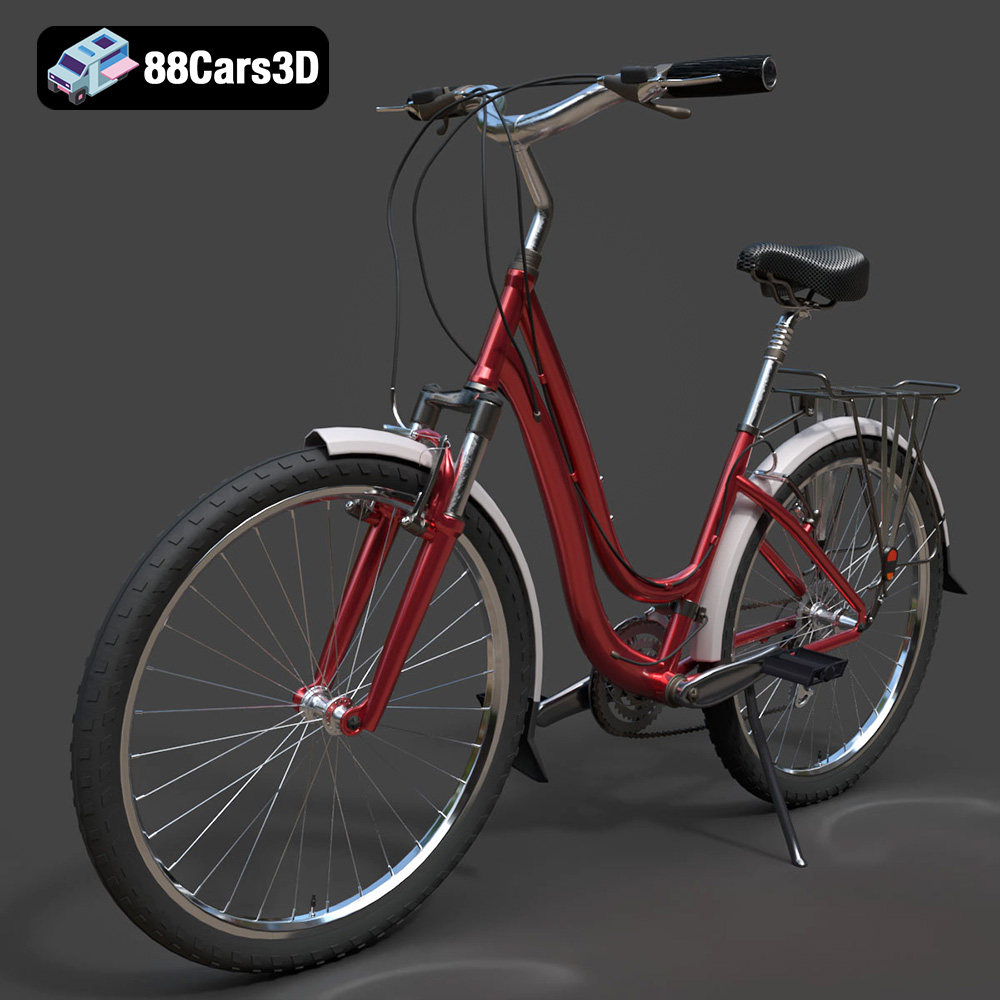
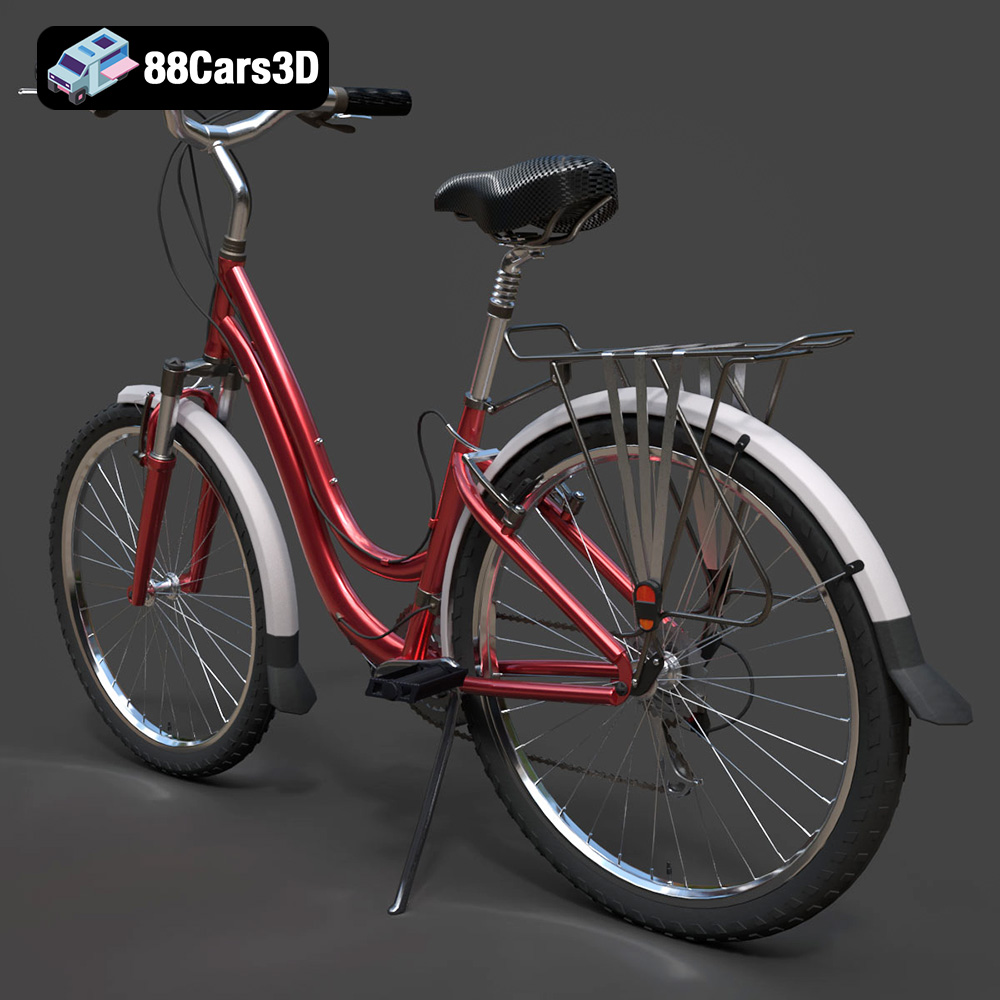
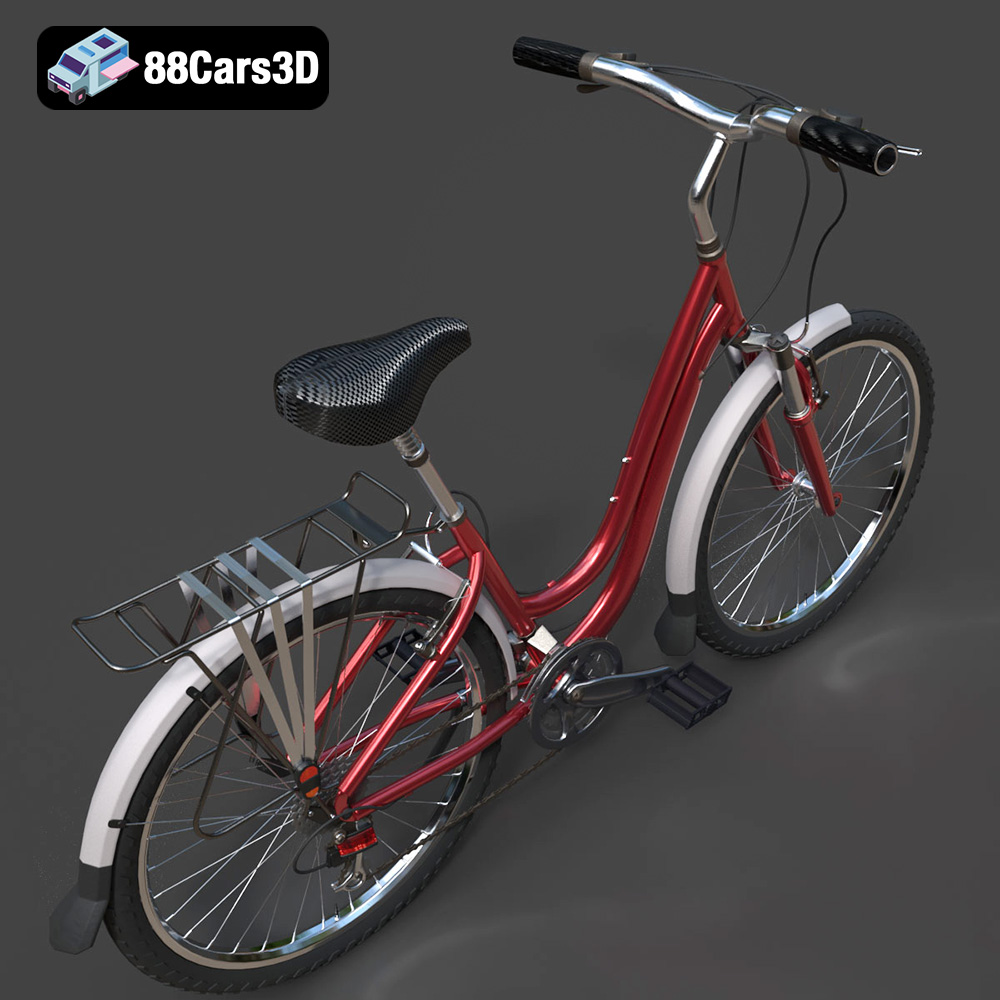
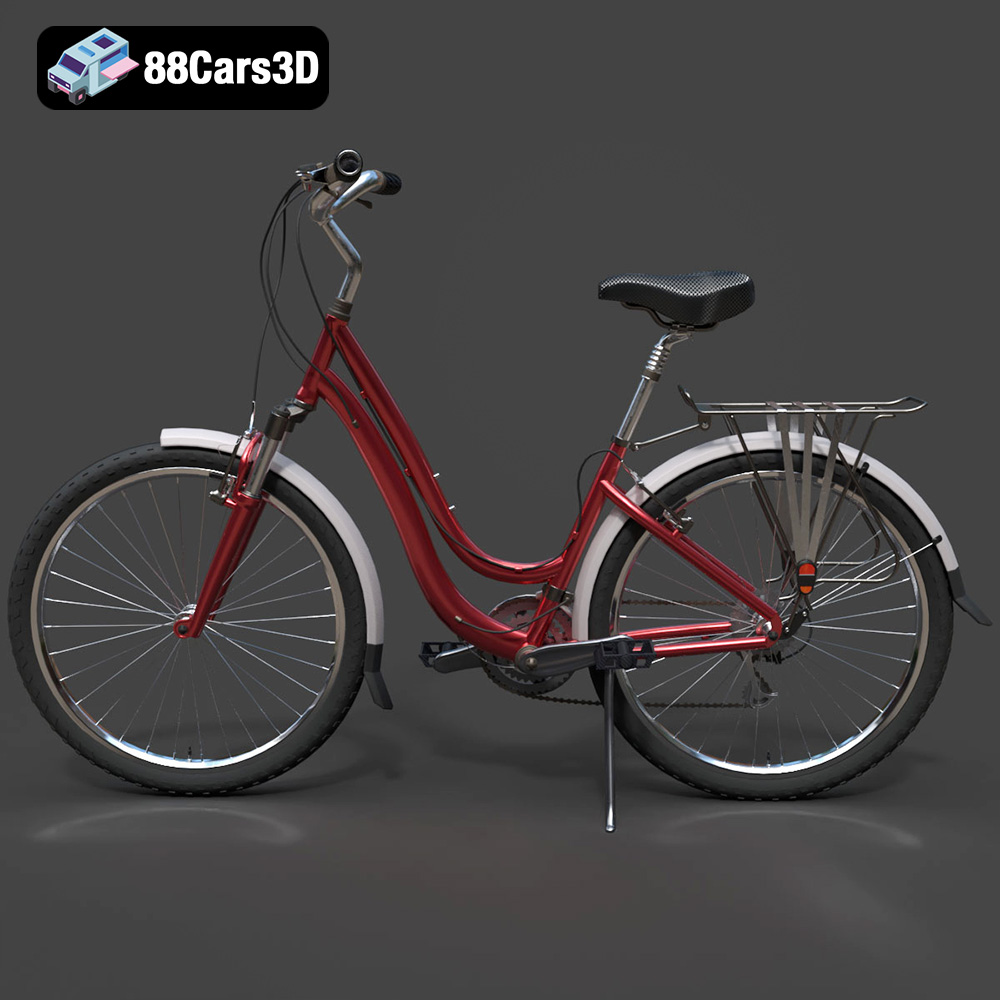
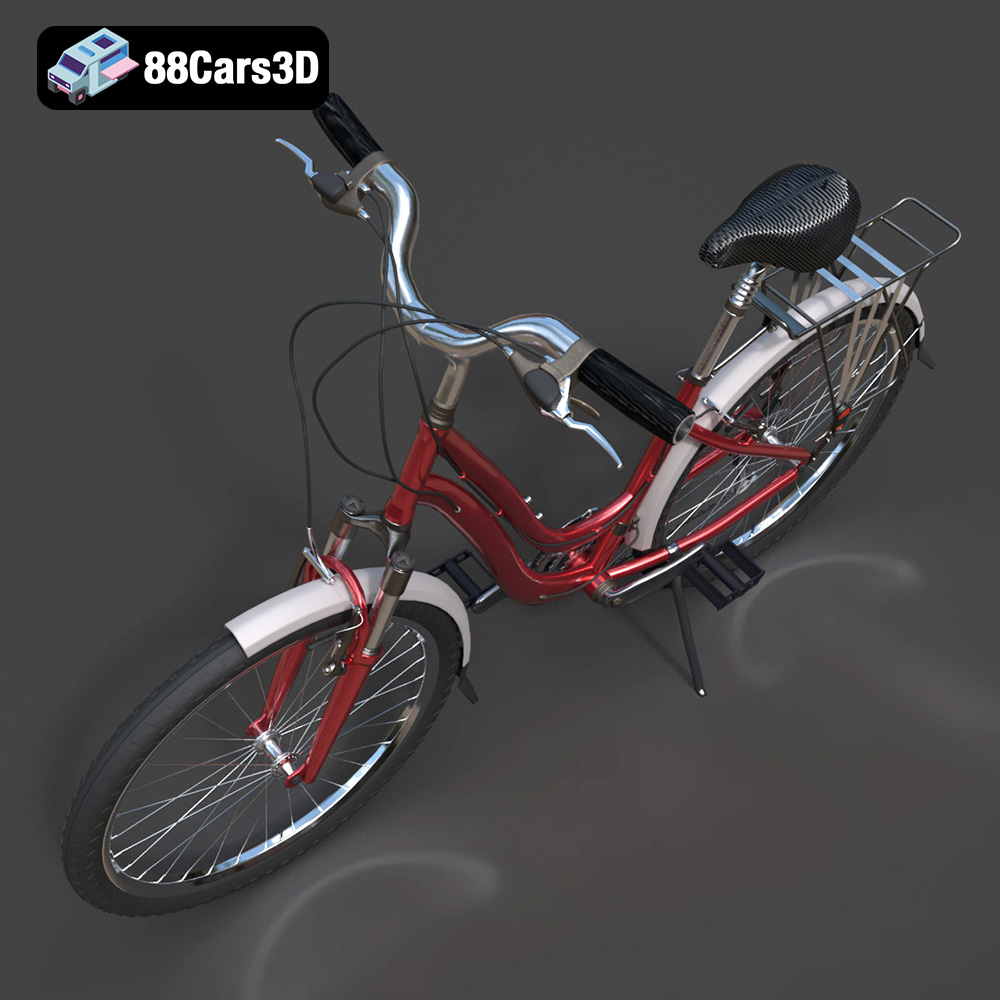
The first impression of any 3D model is its visual fidelity. The Generic Bicycle_02-007 captures the essential form of a modern bicycle with precision. Its frame, handlebars, and seat are accurately modeled, reflecting real-world proportions and contours. The wheels are particularly impressive, featuring detailed spokes, realistic tires, and hubs that hold up even in close-up renders. Beyond static representation, the model incorporates functional elements like pedals and a chainring system, which are crucial for animation. A key advantage here is the separated components – wheels, handlebars, and pedals – which are built with independent pivot points. This foresight dramatically simplifies the animation process, allowing animators to quickly rig and articulate the bicycle for dynamic scenes, whether it’s a character riding it or a standalone animation sequence. The inclusion of realistic material definitions for the frame (e.g., metallic or painted surfaces), rubber tires, and other metallic components ensures that the model reacts accurately to lighting, enhancing photorealism in renders.
Interior Mechanics and Optimization
While the exterior provides the aesthetic appeal, the underlying mechanical features and optimization define a model’s utility. The Generic Bicycle_02-007 includes a simplified yet accurate representation of its drivetrain, complete with a chain and gears. This level of detail, without being overly complex, strikes a perfect balance for visual fidelity and performance. Furthermore, modeled brake calipers and cables add subtle but important layers of realism, making the bicycle feel genuinely functional. Crucially, the model boasts optimized mesh quality. In 3D, optimization isn’t just about low poly counts; it’s about efficient poly distribution. This bicycle model is designed to perform smoothly in real-time environments, such as game engines or AR/VR applications, where every millisecond of rendering time counts. This optimization ensures that frame rates remain high, providing a fluid and immersive user experience.
Technical Superiority: Topology, Scale, and Hierarchy
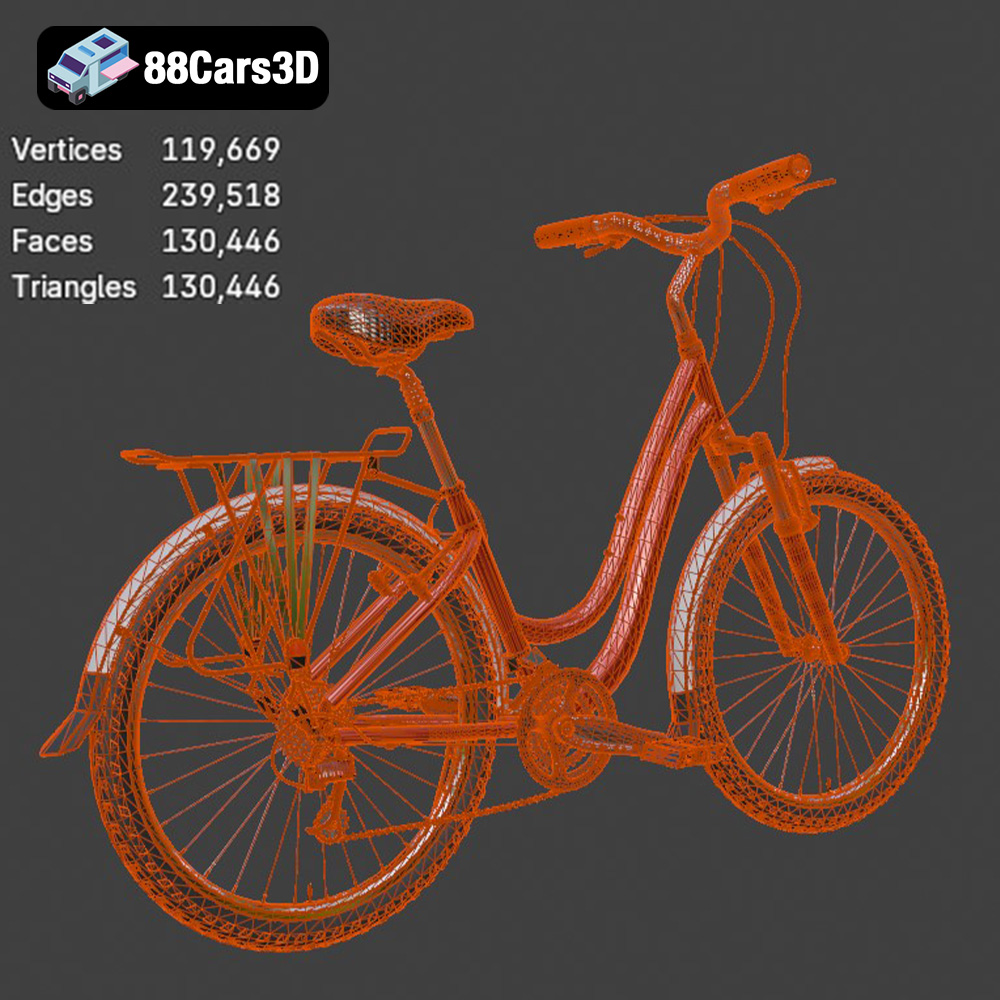
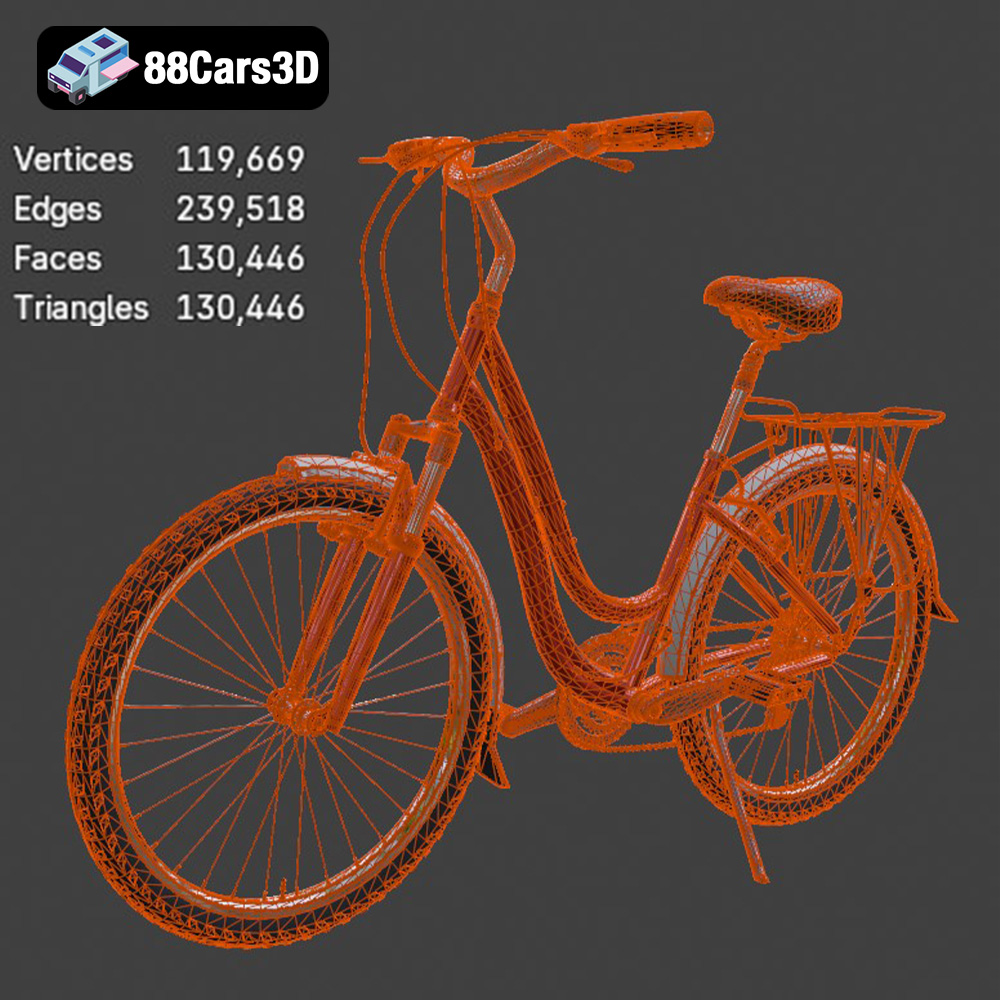
Beneath the surface, the technical construction of a 3D model determines its flexibility and professional utility. The Generic Bicycle_02-007 excels with its clean, quad-dominant topology. Quad polygons (four-sided faces) are the gold standard in 3D modeling because they subdivide smoothly, deform predictably during animation, and are easier to edit than triangles. This clean topology means the bicycle model can be effortlessly smoothed or subdivided for high-resolution renders without introducing artifacts, or decimated for distant LODs (Levels of Detail) without breaking the mesh. Being modeled to real-world scale ensures accurate integration into scenes, eliminating scaling headaches that can plague projects when mixing assets from different sources. Finally, an organized hierarchy with proper pivot points for wheels, steering, and pedals is a hallmark of a professional asset. This thoughtful setup is invaluable for animators and scene assemblers, allowing for intuitive manipulation and animation without needing to rework the model’s fundamental structure.
Integrating the Bicycle into Diverse Professional Workflows
The true value of a versatile 3D asset like the Generic Bicycle_02-007 lies in its ability to seamlessly integrate into a multitude of professional pipelines. Its carefully crafted design and multi-format availability ensure it’s not just a pretty picture, but a functional tool for creators across industries.
From Concept to Cinematic: Visualization & Rendering
High-quality 3D car models and architectural visualizations demand meticulous attention to detail, and often, secondary assets like bicycles are essential for populating scenes and adding a touch of realism. The Generic Bicycle_02-007 is perfect for studio renders, architectural visualizations, and cinematic scenes. In architectural visualization, placing this bicycle next to a building entrance or on a street scene instantly adds a sense of life and scale. Using software like 3ds Max with renderers like V-Ray or Corona, or Blender with Cycles, artists can leverage the bicycle’s realistic material definitions to create stunning, photorealistic images. The clean topology allows for easy setup of advanced lighting scenarios, capturing reflections on the metallic frame or subtle subsurface scattering on the rubber tires, transforming a static image into a compelling narrative.
Driving Immersion: Game Development with Unreal Engine and Unity
For game developers, performance and visual fidelity are a constant balancing act. The Generic Bicycle_02-007, with its optimized mesh quality and game-ready formats like .fbx and .unreal, is an ideal game asset. In open-world games, urban environments, or even racing games, having well-optimized vehicles and props is critical. Developers can drop the .unreal file directly into an Unreal Engine project, or import the .fbx into Unity, saving valuable development time. The pre-defined pivot points facilitate quick rigging for character interactions, physics simulations, or simple ambient animations, like a bicycle leaning against a wall gently swaying. Its real-world scale ensures it fits naturally alongside other transport elements, including 3D car models, populating virtual cities with authentic detail.
Beyond the Screen: AR/VR and 3D Printing
The applications of 3D models extend far beyond traditional screens. Augmented Reality (AR) and Virtual Reality (VR) experiences, along with 3D printing, represent rapidly growing sectors where quality assets are crucial. The .glb format of the Generic Bicycle_02-007 is specifically optimized for AR/VR, enabling smooth performance in immersive environments, whether it’s an interactive product showcase or a virtual urban simulation. Its compact size ensures quick loading times on mobile AR devices or VR headsets. For physical applications, the .stl format is ready for 3D printing, allowing designers to create tangible prototypes or scale models. Imagine presenting a new urban development concept with physically printed components, including miniature versions of the bicycle, to prospective clients. This versatility ensures the asset remains relevant across a broad spectrum of emerging technologies.
Mastering Asset Customization and Optimization
While ready-made assets like the Generic Bicycle_02-007 offer immense value out of the box, the ability to customize and further optimize them is key to truly integrating them into unique projects and maintaining peak performance.
Material Manipulation and Texturing
One of the most powerful aspects of professional 3D models is their inherent flexibility in terms of appearance. The Generic Bicycle_02-007 allows for extensive material manipulation. Artists can easily modify paint finishes on the frame, applying custom colors, metallic flakes, or matte coatings to match specific branding or artistic styles. Adding custom graphics or decals, such as logos or racing stripes, is straightforward due to the clean UV mapping. Furthermore, material properties for metallic components (chrome, brushed aluminum), rubber tires, and seat textures can be finely tuned. This means you can transform the bicycle from a sleek urban commuter to a rugged mountain bike or a vintage cruiser, purely through material and texture adjustments, without altering the underlying geometry. This level of customization ensures the asset can be adapted to any scene, from high-stakes automotive rendering to a serene park setting.
Scaling and Scene Integration Best Practices
Even with models built to real-world scale, proper scene integration requires a mindful approach. When incorporating the Generic Bicycle_02-007 into a larger scene, especially one featuring other 3D car models or architectural elements, ensuring consistent scaling across all assets is vital. It prevents visual discrepancies and maintains photographic realism. Always verify the unit setup in your 3D software (meters, centimeters, inches) matches the model’s intended scale. Utilizing parent-child hierarchies can also streamline scene management; for instance, making the bicycle a child of a character model for animation, or grouping it with other static props for easier manipulation within a complex environment. Proper placement and rotation, guided by real-world physics and visual common sense, are crucial for believable scene composition.
Performance Considerations for Real-Time Applications
For game development and real-time AR/VR experiences, optimization is an ongoing process. While the Generic Bicycle_02-007 is already optimized for performance, further considerations can enhance its efficiency within specific real-time environments. Implementing Level of Detail (LODs) is crucial for objects that will appear at varying distances from the camera. At a distance, a lower polygon version of the bicycle can be rendered, significantly reducing the computational load without noticeable visual degradation. Occlusion culling, where objects not visible to the camera are not rendered, also plays a critical role. Furthermore, efficient texture packing, instancing multiple copies of the same bicycle model (where appropriate), and careful use of real-time lighting can squeeze maximum performance from the asset. These techniques ensure the bicycle contributes to a visually rich environment without compromising frame rates, upholding the integrity of the game or experience.
Case Studies and the Value of Ready-Made Assets
The ability to source high-quality, ready-to-use 3D models like the Generic Bicycle_02-007 isn’t just a convenience; it’s a strategic advantage that can significantly impact project timelines and budget.
Architectural Visualization with Bicycles
Consider an architectural studio tasked with visualizing a new pedestrian-friendly urban development. Beyond showcasing the buildings, they need to convey a sense of vibrant community life. Populating the scene with individuals, and crucially, elements of urban transport, becomes essential. Instead of investing countless hours modeling a bicycle from scratch, which diverts resources from the core architectural design, the studio can acquire the Generic Bicycle_02-007. Its accurate scale and realistic materials instantly enhance the scene’s credibility. Multiple instances, perhaps with varied material customizations (a red one, a blue one, a vintage-looking one), can be placed at bike racks, beside benches, or even animated with characters, breathing life into the static architectural renders. This approach demonstrates how supplementary assets can profoundly impact the narrative and professionalism of architectural visualization.
Populating Virtual Worlds and Simulations
In the realm of game development or high-fidelity simulations, the demand for diverse assets is insatiable. A game studio creating an open-world city environment needs not only a vast collection of 3D car models and infrastructure but also everyday objects that fill out the world. A bicycle is a ubiquitous urban sight. The Generic Bicycle_02-007, as a versatile game asset, can be used for ambient scene detail, interactive props for player characters, or even as part of a mission objective. For training simulations, such as learning urban planning or traffic management, accurately modeled non-motorized vehicles are vital for realism. The bicycle’s optimized mesh and clean hierarchy make it an excellent candidate for such dynamic environments, ensuring performance while contributing to a rich, believable virtual world.
The Efficiency of Sourcing from 88cars3d.com
The common thread in these case studies is efficiency and quality. Developing a high-quality 3D model, even one that seems relatively simple like a bicycle, requires expertise in modeling, texturing, UV mapping, and optimization. For individual artists or studios, recreating every single asset from scratch is simply not feasible within typical project deadlines and budgets. This is where marketplaces like 88cars3d.com prove invaluable. They offer a curated selection of professional-grade 3D models, allowing creators to quickly source production-ready assets. The Generic Bicycle_02-007, with its broad format support and technical advantages, is a prime example of the kind of asset that streamlines workflows, reduces development costs, and allows creative professionals to focus on their core competencies, ultimately delivering higher quality projects faster. Whether you need sophisticated 3D car models or nuanced everyday objects, leveraging pre-built assets is a smart strategy for modern content creation.
Conclusion: The Enduring Value of Well-Crafted 3D Assets
In the fast-paced world of digital content creation, the difference between a good project and a great one often lies in the details – the realism of a texture, the efficiency of a mesh, or the seamless integration of a diverse set of assets. High-quality 3D models are more than just digital sculptures; they are the fundamental building blocks that empower artists, developers, and designers to bring their visions to life with unparalleled realism and efficiency.
The Generic Bicycle_02-007 3D Model stands as a testament to the value of meticulously crafted assets. From its clean, quad-dominant topology and real-world scale to its comprehensive file format support (.blend, .fbx, .obj, .glb, .stl, .ply, .unreal, .max), it embodies the versatility and technical excellence required in professional pipelines. Whether you are aiming for photorealistic architectural renderings, developing immersive game environments, or exploring cutting-edge AR/VR applications, this model provides a robust and flexible foundation. Its ability to be easily customized, integrated into various software environments, and optimized for performance makes it an invaluable addition to any asset library.
By leveraging assets from trusted sources like 88cars3d.com, professionals can significantly enhance their creative output, reduce development time, and maintain a competitive edge. Investing in a well-made 3D model like the Generic Bicycle_02-007 means investing in quality, flexibility, and the freedom to innovate without getting bogged down by foundational asset creation. Elevate your next project with assets that truly perform.
Featured 3D Model
Generic Bicycle_02-007 3D Model
Presenting the Generic Bicycle_02-007 3D Model, a meticulously crafted digital asset designed for a wide range of creative and technical applications. This model captures the essential form and function of a modern bicycle with clean geometry and a balanced level of detail. Built for efficiency and realism, it is ideal for professionals in rendering, animation, simulation, and game development seeking a high-quality bicycle asset.
Exterior Features:
- Accurately modeled frame, handlebars, and seat
- Detailed wheels with spokes, tires, and hubs
- Functional pedals and chainring system
- Separated components for easy animation of wheels, handlebars, and pedals
- Realistic material definitions for frame, rubber tires, and metallic components
Interior / Mechanical Features:
- Simplified yet accurate representation of the drivetrain, including chain and gears
- Modeled brake calipers and cables for added realism
- Optimized mesh quality ensures smooth performance in real-time environments
Technical Advantages:
- Clean, quad-dominant topology ensures smooth subdivisions and deformations
- Modeled to real-world scale for accurate integration into scenes
- Organized hierarchy with proper pivot points for animation of wheels, steering, and pedals
Applications:
- Rendering & Visualization: Perfect for studio renders, architectural visualizations, and cinematic scenes.
- Game Development: An optimized asset suitable for various game genres, from open-world simulations to racing games.
- AR/VR: Integrate into immersive augmented and virtual reality experiences.
- Simulation & Training: Utilize in physics simulations, educational modules, or technical training scenarios.
- 3D Printing: Convert to .stl for creating physical models and prototypes.
Customization Options:
- Easily modify paint finishes and add custom graphics or decals to the frame.
- Adjust material properties for metallic components, rubber tires, and seat textures.
- Adapt lighting setups to achieve different atmospheric effects and visual styles.
Elevate your projects with the Generic Bicycle_02-007 3D Model. Its professional quality, optimized structure, and broad compatibility make it an invaluable asset for any digital content creator looking for a versatile and reliable bicycle model.
Included File Formats:
- .blend – Blender project with materials
- .fbx – Compatible with Unreal, Unity, and major 3D engines
- .obj – Universal format for nearly all 3D software
- .glb – Optimized for AR, VR, and web-based visualization
- .stl – Ready for 3D printing
- .ply – Mesh format for analysis and CAD workflows
- .unreal – Unreal Engine project setup
- .max – Editable 3ds Max scene for rendering and animation
Tags:
.generic, .bicycle_02-007, .bicycle, .bike, .transport, .vehicle, .urban, .rendering, .simulation, .gameasset, .arvr, .blend, .fbx, .obj, .glb, .stl, .ply, .unreal, .maxJaguar XK 3D Model
$19.99
Product Image Gallery
Related Tags
.arvr
.bicycle
.bicycle_02-007
.bike
.blend
.fbx
.gameasset
.generic
.glb
.max
.obj
.ply
.rendering
.simulation
.stl
.transport
.unreal
.urban
.vehicle
