In the expansive and ever-evolving landscape of 3D visualization and digital content creation, the demand for high-quality, production-ready assets is ceaseless. From the intricate details of a supercar in a cinematic sequence to the bustling street scenes of an open-world game, realistic vehicles are paramount. Among these, the unassuming yet critical city bus plays a vital role, often serving as a foundational element in urban environments, simulations, and architectural visualizations. A truly professional 3D car model, particularly one as versatile as a city bus, must strike a balance between visual fidelity, technical efficiency, and adaptability across diverse platforms.
Today, we’ll delve into the technical intricacies and manifold applications of such an asset, spotlighting the Generic City Bus 3D Model available at 88cars3d.com. This model represents a modern urban transport vehicle, meticulously crafted to serve a wide spectrum of professional needs, from high-fidelity renders to game development and immersive AR/VR experiences. Understanding the design philosophy and technical specifications behind such a model is crucial for artists and developers looking to elevate their projects.
Understanding 3D Model File Formats
The flexibility of a 3D model often hinges on the range of file formats it supports. Different formats are optimized for distinct workflows, software compatibility, and end-use applications. The Generic City Bus 3D Model comes packed with a comprehensive suite of formats, ensuring maximum utility for any pipeline. Let’s break down each one and its ideal application.
.blend – The Blender Powerhouse
The `.blend` file format is native to Blender, the powerful open-source 3D creation suite. When you receive a `.blend` file, you’re not just getting a mesh; you’re getting a complete Blender scene, often including materials, lighting setups, cameras, and even animations. This format is ideal for users deeply integrated into the Blender ecosystem, offering full editability. Artists can easily modify the bus’s topology, materials, or rig, leverage Blender’s Cycles or Eevee renderers for stunning visuals, or prepare it for export to other platforms with all optimizations already in place. The clean geometry of the Generic City Bus 3D Model, with its quad-dominant topology, is perfectly suited for further subdivision and deformation within Blender.
.fbx – The Industry Workhorse for Interoperability
FBX (Filmbox) is arguably one of the most widely adopted proprietary file formats for 3D data exchange, developed by Autodesk. It’s a binary file format that can store 3D models, animation, cameras, lights, and even blend shapes. The `.fbx` format is the go-to choice for transferring assets between different 3D software packages like 3ds Max, Maya, and Blender, and crucially, for importing into game engines such as Unreal Engine and Unity. Its ability to maintain hierarchical structures, animation data, and basic material assignments makes it indispensable for real-time pipelines. For the Generic City Bus, the `.fbx` variant ensures its separated components and properly set pivots are preserved, making it animation-ready upon import.
.obj – The Universal Standard
The `.obj` (or Wavefront OBJ) format is a simple, text-based format that has become a universal standard for storing 3D geometry. While it doesn’t typically store animation or advanced material properties, it excels at preserving mesh data, including vertices, normals, UV coordinates, and even basic material references (via an accompanying `.mtl` file). Its universality means virtually any 3D software can open and import an `.obj` file. This makes the Generic City Bus 3D Model’s `.obj` version an excellent fallback or starting point for cross-software compatibility, ensuring that regardless of your preferred tool, you can access and work with the core model.
.glb – Optimized for AR, VR, and Web
GLB (GL Transmission Format Binary) is the binary version of glTF, a royalty-free specification for the efficient transmission and loading of 3D scenes and models by applications. GLB embeds all assets (geometry, materials, textures, animations) into a single file, making it incredibly convenient for web-based 3D viewers, augmented reality (AR), and virtual reality (VR) applications. Its optimization for rapid loading and runtime efficiency is key for immersive experiences. The Generic City Bus 3D Model’s `.glb` variant is specifically tailored for these real-time, lightweight applications, enabling seamless integration into web browsers or mobile AR apps without complex setups.
.stl – The Gateway to 3D Printing
STL (STereoLithography) is the standard file format for 3D printing. It represents a 3D model as a series of connected triangles, describing only the surface geometry of an object without color, texture, or other CAD attributes. While simple, its ubiquity in the 3D printing world is unmatched. The `.stl` version of the Generic City Bus 3D Model is provided for users who wish to bring the digital asset into the physical realm. This format ensures that the model is manifold and ready to be sliced and printed, whether for miniature scale models, educational aids, or design prototypes.
.ply – Precision Mesh for CAD and Analysis
The PLY (Polygon File Format) is a file format for storing graphical objects that has gained traction for its ability to store various properties like color, transparency, normals, texture coordinates, and data confidence values, typically generated by 3D scanners. It’s often used in scientific, engineering, and CAD applications where precise mesh data and additional attributes are critical. The `.ply` option for the Generic City Bus 3D Model provides a robust and precise mesh representation, valuable for specific CAD workflows, structural analysis, or integration into simulation platforms requiring highly accurate geometric data.
.unreal – Engine-Ready for Real-time Environments
While often used informally, a `.unreal` or similar package typically refers to an asset or project file specifically configured for direct import or use within Unreal Engine. This could be an `.fbx` specifically pre-processed, or a full Unreal project with materials, textures, and blueprints already set up. For the Generic City Bus 3D Model, this means the asset is delivered with an optimized setup for Unreal Engine, potentially including PBR materials, collision meshes, and LODs (Levels of Detail), accelerating its integration into game development or advanced architectural visualization projects without extensive re-configuration.
.max – The 3ds Max Professional’s Choice
The `.max` format is the native file format for Autodesk 3ds Max, a leading software for 3D modeling, animation, and rendering in architectural visualization and design. Similar to `.blend`, a `.max` file contains the complete scene data, including geometry, materials, lighting, cameras, and animation keyframes. This format is crucial for professionals who require full editability within 3ds Max, especially for complex rendering setups using engines like V-Ray or Corona. The Generic City Bus 3D Model’s `.max` version allows for deep customization, complex rigging, and high-fidelity rendering within a proven professional environment.
The Anatomy of a Professional 3D City Bus Model
Creating a 3D model that excels across various applications requires a meticulous approach to its construction. The Generic City Bus 3D Model from 88cars3d.com exemplifies this, boasting features designed for both visual appeal and technical performance.
Exterior Fidelity and Realism
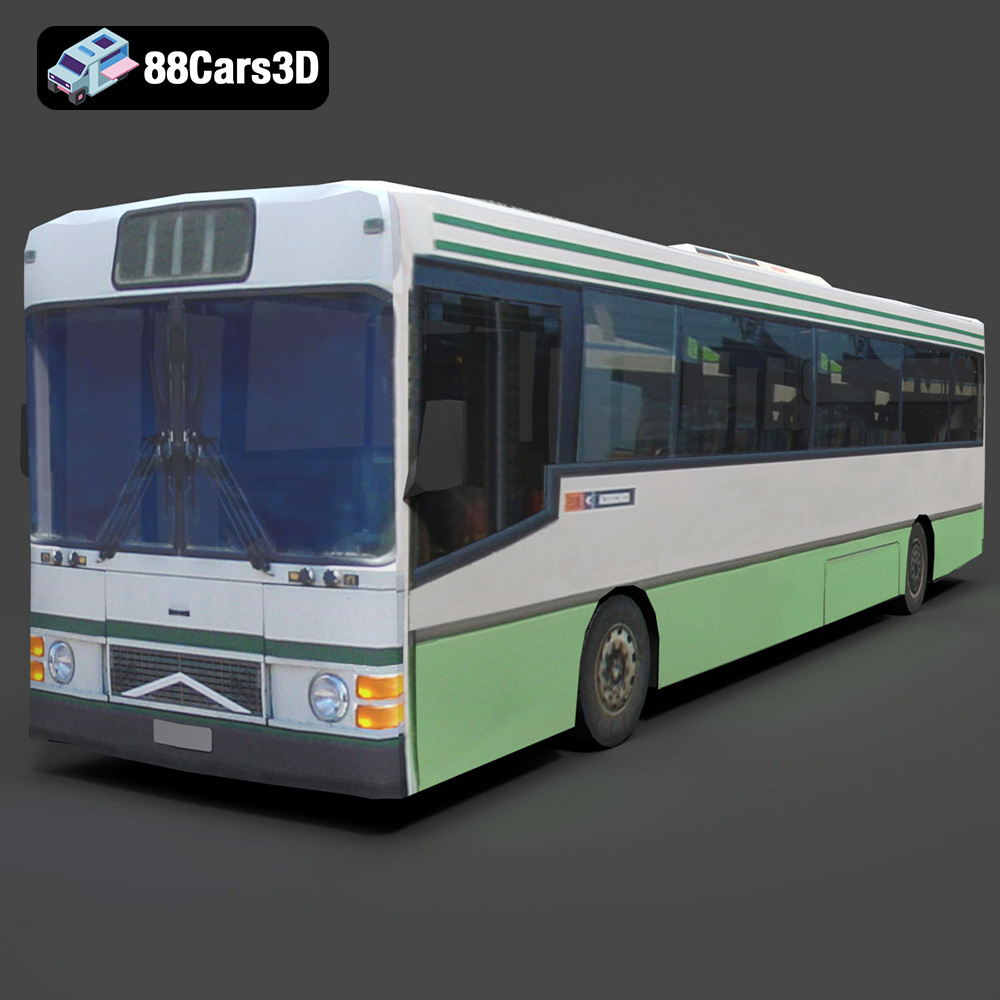
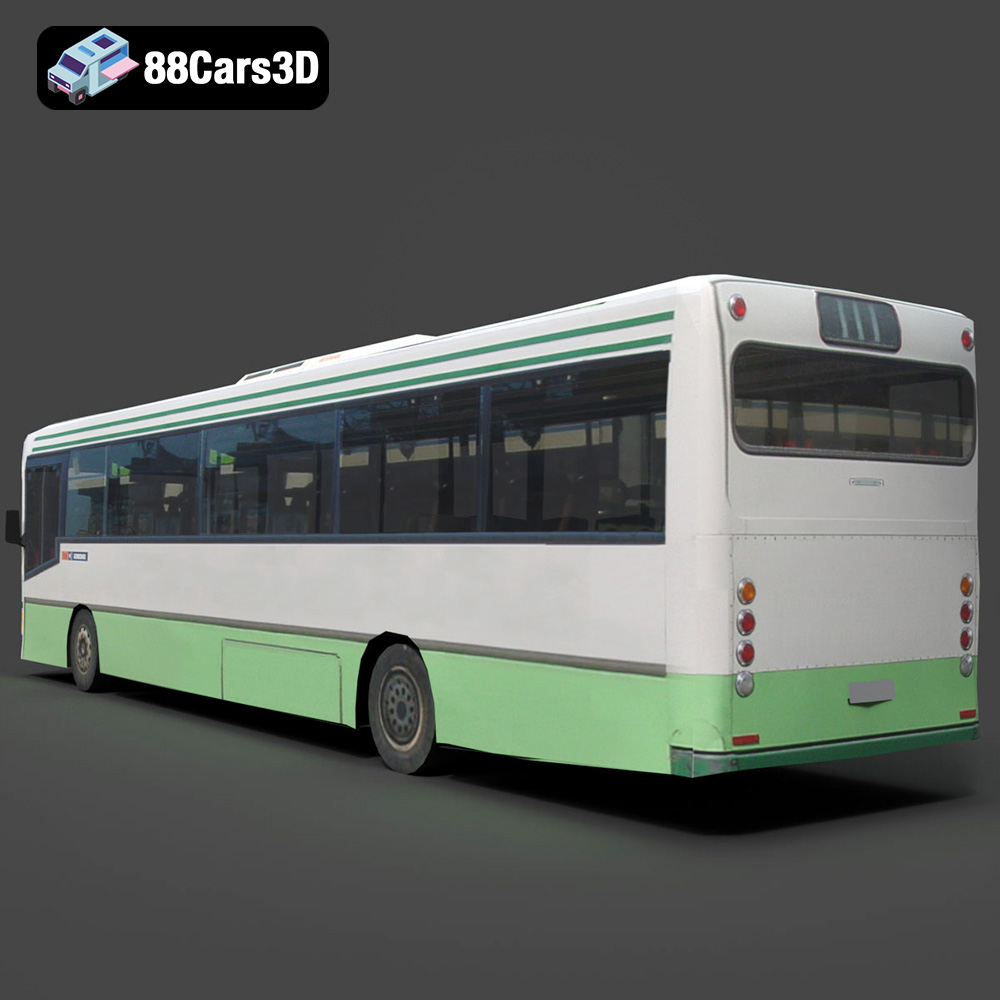
A city bus, though a common sight, is a complex machine with many distinct components. This model accurately captures the essence of a modern urban transport vehicle with detailed body panels, chassis, and roof components. Key elements like wheels, tires, and hubcaps are not just placeholders but are modeled with sufficient detail to hold up in close-up renders. Realistic transparent windows and windshields are essential for any vehicle, ensuring that light interacts correctly and reflections contribute to the realism. Furthermore, functional-looking doors and integrated mirrors, wipers, headlights, and tail lights are included, all with optimized materials. This level of exterior detail ensures the bus looks authentic whether it’s a static background element or the central focus of a scene.
Interior Design for Immersive Experiences
Beyond the exterior, a city bus often needs a functional and believable interior, especially for simulations, AR/VR, or detailed architectural visualizations. The Generic City Bus 3D Model features a detailed driver’s cockpit with a dashboard, steering wheel, and controls, vital for first-person views. The passenger seating layout includes grab handles and standing areas, accessible for walk-through animations or in-game camera views. Even basic representations of key mechanical components are included to enhance overall realism when viewed from certain angles. This attention to interior detail is critical for creating truly immersive and credible digital environments.
Under the Hood: Technical Foundations for Performance
Visual fidelity means little without robust technical construction. The Generic City Bus 3D Model shines here with several key advantages:
- Clean, Quad-Dominant Topology: This ensures smooth subdivisions, crucial for high-resolution renders, and predictable deformation during animation. It prevents unsightly artifacts and makes the model easy to modify.
- Real-World Scale: Modeled to accurate real-world dimensions, the bus integrates seamlessly into existing scenes and architectural layouts, maintaining proper proportions and physical realism.
- Organized Hierarchy and Pivots: A well-structured hierarchy with properly set pivot points is fundamental for rigging and animation. This means doors can swing open correctly, wheels can rotate on their axes, and the entire bus can be easily manipulated within any 3D software.
- Optimized Mesh Quality: Ensuring efficient rendering and performance across various platforms and engines is paramount. The model is built with a balanced poly count, high enough for detail but optimized to prevent performance bottlenecks in real-time applications.
- Clean UV Mapping: Proper UV mapping is essential for texture application and modification. This model features clean UVs, allowing artists to easily apply custom liveries, dirt maps, or branding without complex re-mapping, a significant time-saver.
Seamless Integration: Workflows for Rendering and Visualization
The Generic City Bus 3D Model is engineered to fit effortlessly into professional rendering and visualization workflows, offering a solid foundation for creating stunning visuals.
Mastering Photorealistic Renders with 3ds Max and V-Ray/Corona
For architectural visualization, product rendering, or cinematic sequences, 3ds Max paired with render engines like V-Ray or Corona is a common choice. The included `.max` file of the Generic City Bus 3D Model is a massive advantage. Artists can open the scene, which often comes with pre-configured basic materials, and immediately begin integrating it into their environment. They can then assign advanced V-Ray or Corona materials, adjusting properties for metal, glass, plastic, and rubber to achieve hyper-realistic reflections, refractions, and surface imperfections. Setting up appropriate lighting environments, whether an HDRI or a custom studio lighting rig, will bring out the bus’s detailed geometry and material nuances. The clean quad topology allows for easy subdivision (e.g., using a TurboSmooth modifier in 3ds Max) to achieve incredibly smooth surfaces for close-up shots without needing to modify the base mesh. This makes it perfect for generating high-resolution marketing imagery or inclusion in detailed urban landscape renders.
Blender’s Power for Artistic and Efficient Bus Visualizations
Blender, with its Cycles and Eevee renderers, offers a powerful and cost-effective alternative for high-quality visualizations. The `.blend` file provides a ready-to-use scene. Blender artists can leverage its advanced node-based material system to create intricate PBR (Physically Based Rendering) materials that respond realistically to light. Cycles, Blender’s path tracer, is perfect for unbiased, photorealistic results, while Eevee, its real-time renderer, offers incredibly fast previews and renders, ideal for quick iterations or stylized animations. The organized hierarchy and clean UVs of the Generic City Bus 3D Model simplify the process of applying custom textures, logos, and wear and tear effects directly within Blender, making it a versatile asset for artists ranging from freelancers to large studios.
Driving Digital Worlds: Integrating into Game Development & Real-time Engines
Game developers and simulation engineers require assets that are not only visually appealing but also highly optimized for performance. The Generic City Bus 3D Model is designed with these considerations at its core.
From Model to Gameplay: Unreal Engine Integration
Unreal Engine is a dominant force in game development and real-time visualization. The `.unreal` package and `.fbx` formats provided with the Generic City Bus 3D Model streamline the import process. Developers can import the `.fbx` directly, which will preserve the model’s skeletal hierarchy (for animation), UVs, and material slots. For the `.unreal` package, it’s even simpler, as the model may come with pre-set materials, collision meshes, and even basic LODs (Levels of Detail) already configured. This means the bus can be dropped into an urban environment, given a basic physics setup, and immediately integrated into gameplay or cinematic sequences. Its optimized mesh quality ensures that even with multiple instances of the bus on screen, performance remains smooth, a critical factor for open-world games and simulators.
Optimizing for Performance in High-Fidelity Simulations
Simulations, particularly for public transport or driving schools, demand highly accurate yet performance-efficient assets. The Generic City Bus 3D Model’s real-world scale and organized hierarchy are invaluable here. The separation of components (doors, wheels) with correctly set pivots allows for realistic animation of entry/exit, steering, and suspension. For high-fidelity simulations, additional technical steps might involve creating multiple LODs manually or automatically within the engine to ensure the bus renders efficiently at varying distances. Developers might also implement custom shader graphs to simulate dirt, rain, or damage effects, leveraging the model’s clean UV mapping. The model’s robust construction makes it an excellent candidate for complex vehicle physics setups, enabling realistic driving experiences.
Beyond the Screen: AR/VR, Simulation, and 3D Printing Applications
The versatility of a well-crafted 3D asset extends far beyond traditional rendering and game development, touching emerging technologies and manufacturing.
Immersive Experiences: Leveraging the Bus in AR/VR
Augmented Reality (AR) and Virtual Reality (VR) environments demand highly optimized models that load quickly and maintain high frame rates. The `.glb` format is specifically tailored for this. For AR applications, the Generic City Bus 3D Model can be easily overlaid onto real-world scenes, allowing users to visualize a virtual bus in their physical environment, perhaps for urban planning or interactive marketing. In VR, the bus can become a fully explorable environment, offering immersive training scenarios for drivers, public safety drills, or educational tours of vehicle mechanics. The model’s accessible interior with detailed cockpit and passenger seating is crucial for these walk-through experiences, providing a sense of scale and presence vital for immersion.
Precision for Training and Simulation
Beyond entertainment, the Generic City Bus 3D Model is an exceptional tool for professional training and simulation. Imagine a public transport authority using this model in a virtual reality simulator to train new drivers in navigating complex city routes or handling emergency situations. The accurate modeling of the driver’s cockpit, controls, and exterior elements contributes to a highly realistic training environment. The model’s real-world scale ensures that trainees develop an accurate sense of spatial awareness. For urban planning simulations, the bus can be integrated into large-scale traffic flow analyses or city development proposals, providing visual context and enabling stakeholders to visualize the impact of new transport routes.
Bringing Digital to Physical: 3D Printing the Bus
The provided `.stl` file opens up a fascinating avenue: 3D printing. This allows users to transform the digital Generic City Bus 3D Model into a tangible physical object. Whether it’s for creating architectural scale models, promotional items, educational tools, or custom dioramas, the `.stl` format ensures a manifold mesh suitable for printing. Users can scale the model to any desired size, print it on desktop FDM printers or high-resolution SLA/DLP machines, and even paint and finish it manually. This bridges the gap between digital design and physical prototyping, offering a unique way to interact with the asset.
Customization and Longevity: Adapting Your 3D Bus Model
A truly professional 3D asset is not just ready-to-use but also highly customizable, ensuring its value over countless projects and evolving requirements.
Branding and Livery: Personalizing Your Fleet
One of the most powerful customization options for the Generic City Bus 3D Model is the ability to easily modify its paint finishes, liveries, and graphics. Thanks to clean UV mapping, applying custom textures, decals, and branding is a straightforward process. A user could replicate the exact livery of a specific city’s public transport system, create fictional company branding for a game, or design unique advertising wraps for a marketing campaign. This level of personalization makes the single model infinitely adaptable, allowing it to represent diverse fleets and scenarios without requiring new model purchases.
Material Adjustments for Diverse Scenarios
The flexibility extends to material properties. Artists can easily adjust the material attributes for metal, glass, rubber, and plastic components to match specific environmental conditions or artistic styles. Want a pristine, factory-fresh look? Tweak the metallic values and glossiness. Need a weather-beaten, grimy bus for a post-apocalyptic scene? Add grunge maps, reduce reflectivity, and introduce dust effects. The underlying geometry and clean UVs support these changes effortlessly. Furthermore, adapting lighting setups can achieve various moods and environments, from bright sunny days to moody, rain-soaked nights, all interacting realistically with the bus’s carefully crafted materials.
In the fast-paced world of 3D production, having a reliable, versatile, and technically sound asset like the Generic City Bus 3D Model is invaluable. It serves as a robust foundation, enabling artists and developers to focus on their creative vision rather than spending precious time on modeling from scratch. The comprehensive file format support, meticulous detailing, and optimization across various platforms truly make it a standout product on 88cars3d.com.
Conclusion
The demand for high-quality 3D car models continues to grow across industries, from automotive rendering and architectural visualization to immersive game assets and advanced simulations. The Generic City Bus 3D Model stands out as an exemplary asset that addresses this demand with its precision engineering, comprehensive feature set, and unparalleled versatility. Its meticulous detailing, both interior and exterior, coupled with robust technical advantages like clean topology, real-world scale, and optimized performance, makes it suitable for virtually any professional application.
Whether you are a seasoned 3ds Max user crafting photorealistic renders, a Blender enthusiast designing urban environments, a game developer building an expansive open world with Unreal Engine, or an innovator exploring AR/VR experiences and 3D printing, this model provides the reliable foundation you need. Its extensive file format support ensures seamless integration into diverse pipelines, while its customization options guarantee longevity and adaptability for countless projects. Investing in a high-quality asset like the Generic City Bus 3D Model from 88cars3d.com is not just acquiring a digital object; it’s investing in efficiency, quality, and the boundless potential of your creative endeavors.
Featured 3D Model
Generic City Bus 3D Model
Experience the precision and versatility of our Generic City Bus 3D model, meticulously crafted to represent a modern urban transport vehicle. This model boasts clean geometry and balanced detailing, making it an ideal asset for a wide range of applications. Whether you’re working on high-fidelity renders, intricate animations, realistic simulations, or optimizing for game development, this bus model provides a robust and scalable foundation.
Exterior Features:
- Accurately modeled body panels, chassis, and roof components
- Detailed wheels, tires, and hubcaps
- Realistic transparent windows and windshield
- Functional-looking doors (driver and passenger entry/exit) designed for animation
- Headlights, tail lights, and signal indicators with optimized materials
- Integrated mirrors, wipers, and other essential exterior fixtures
- Separated components for ease of animation and customization
Interior / Mechanical Features:
- Detailed driver’s cockpit with dashboard, steering wheel, and controls
- Passenger seating layout with grab handles and standing areas
- Accessible interior optimized for walk-through animations or in-game camera views
- Basic representation of key mechanical components for overall realism
- Optimized mesh quality to ensure efficient rendering and performance
Technical Advantages:
- Clean, quad-dominant topology ensures smooth subdivisions and deformation
- Modeled to real-world scale for accurate integration into projects
- Organized hierarchy with properly set pivots for easy rigging and animation
- Optimized for performance across various platforms and engines
- Clean UV mapping for easy texture application and modification
Applications:
- Rendering & Visualization: Perfect for studio renders, cinematic scenes, architectural visualizations, and marketing materials
- Game Development: Low-poly ready versions suitable for open-world games, racing simulators, and urban environment assets
- AR/VR: Ideal for creating immersive virtual reality experiences and augmented reality applications
- Simulation & Training: Excellent for public transport simulators, driving schools, and educational platforms
- 3D Printing: Can be easily converted to .stl for physical model production
Customization Options:
- Easily modify paint finishes, liveries, and graphics to match specific branding or scenarios
- Adjust material properties for metal, glass, rubber, and plastic components
- Adapt lighting setups to achieve various moods and environments
Elevate your projects with this versatile and high-quality Generic City Bus 3D model, designed for professional results across all media. Its robust construction and detailed design ensure it will be a valuable asset in your digital library.
Included File Formats:
- .blend – Blender project with materials
- .fbx – Compatible with Unreal, Unity, and major 3D engines
- .obj – Universal format for nearly all 3D software
- .glb – Optimized for AR, VR, and web-based visualization
- .stl – Ready for 3D printing
- .ply – Mesh format for analysis and CAD workflows
- .unreal – Unreal Engine project setup
- .max – Editable 3ds Max scene for rendering and animation
$19.99
Product Image Gallery