Driving Digital Realities: The Essential Role of Professional 3D Car Models
In the vibrant world of digital creation, the demand for high-quality 3D assets is ever-growing. From the breathtaking realism of cinematic sequences to the immersive environments of cutting-edge video games and the practical applications of architectural visualization, 3D models form the backbone of these experiences. Automotive models, in particular, hold a unique place, serving as crucial elements in diverse industries. They’re not just static objects; they are dynamic tools that bring narratives to life, facilitate complex simulations, and enhance interactive user experiences.
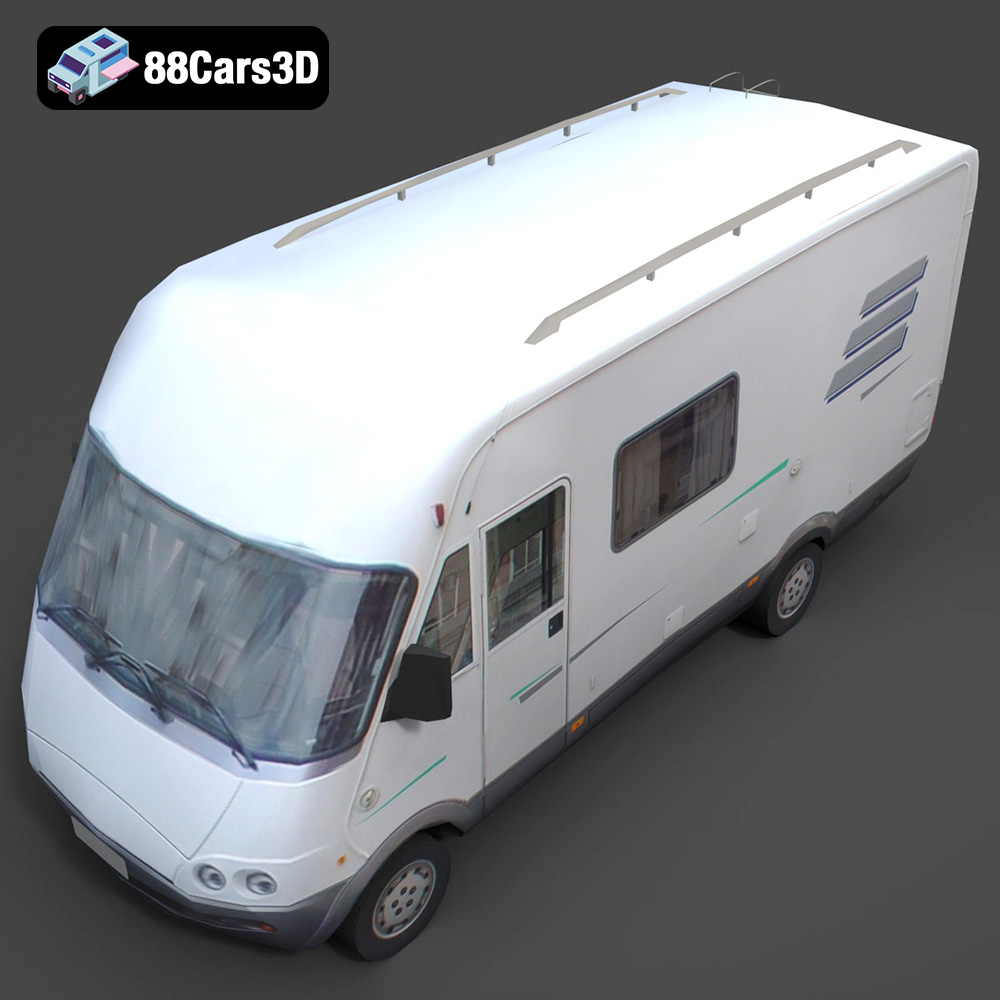
Today, we’re taking a deep dive into the versatility and technical prowess required for such assets, exemplified perfectly by a high-quality model like the Generic Mini-Bus 3D Model available on 88cars3d.com. This asset is more than just a virtual vehicle; it’s a professional-grade solution designed to integrate seamlessly into a multitude of workflows, offering balanced detailing and optimized geometry for everything from urban transport simulations to detailed game development.
Understanding 3D Model File Formats
Choosing the right file format for your 3D model is as crucial as the model’s quality itself. Different formats are optimized for different stages of the production pipeline, software compatibility, and end-use applications. Understanding their nuances is key to an efficient workflow, especially when dealing with professional assets like the Generic Mini-Bus 3D Model, which comes equipped with a comprehensive suite of formats.
.blend – The Blender Native Experience
The .blend format is Blender’s native file type, offering a complete and editable scene including not just the mesh data, but also materials, textures, lighting, cameras, animation data, and even physics simulations. For Blender users, receiving a model in .blend format means instant integration and full access to every aspect of the model’s setup without any translation issues. This is ideal for artists who want to tweak materials, adjust UVs, or even re-rig the model within Blender’s powerful environment. The Generic Mini-Bus in .blend format allows for unparalleled customization within this popular open-source software, making it a powerful starting point for any project.
.fbx – The Industry Standard for Interchange
.fbx (Filmbox) is arguably the most widely adopted format for exchanging 3D data between various applications, especially for game development pipelines. Developed by Autodesk, it supports geometry, materials, textures, animations, and rigs. Its strength lies in its ability to maintain a high degree of fidelity when transferring complex scenes between different 3D software packages like 3ds Max, Maya, Blender, and game engines such as Unreal Engine and Unity. When working with the Generic Mini-Bus, .fbx ensures that the model’s hierarchy, pivots, and basic material assignments are preserved, making it ideal for importing into an engine for immediate setup or further refinement.
.obj – The Universal Workhorse
.obj (Wavefront OBJ) is a fundamental, widely supported 3D file format that stores only geometry (vertices, normals, texture coordinates, and faces) and references to external material files (.mtl). While it doesn’t support animation or rigging, its universality makes it an excellent choice for straightforward mesh transfer between virtually any 3D software. For simple scene assembly, static renders, or as a fallback option when other formats present issues, .obj is incredibly reliable. The Mini-Bus as an .obj provides a clean mesh that can be easily imported into any 3D application for modeling, texturing, or sculpting.
.glb – Optimized for AR, VR, and Web
.glb (GL Transmission Format Binary) is the binary version of .gltf, designed for efficient transmission and loading of 3D scenes and models. It packages all necessary data—geometry, materials, textures, animations—into a single file, making it perfect for web-based 3D viewers, augmented reality (AR), and virtual reality (VR) applications. Its compact size and ease of integration into web platforms mean that the Generic Mini-Bus 3D model can be quickly displayed in a browser or deployed in a mobile AR experience, offering dynamic visualization without heavy resource demands.
.stl – The Gateway to 3D Printing
.stl (Stereolithography) is the de facto standard for 3D printing. It represents a 3D model as a series of connected triangles, defining only the surface geometry of a 3D object. While it lacks color, material, or texture information, its simplicity makes it universally compatible with 3D printing software (slicers). The Generic Mini-Bus, when converted to .stl, can be precisely manufactured into a physical model, whether for prototyping, educational purposes, or creating physical representations of digital designs. This highlights the model’s robust, watertight topology, crucial for successful 3D prints.
.ply – Precision Mesh for CAD and Analysis
.ply (Polygon File Format) is often used for storing 3D data from 3D scanners, CAD systems, or for scientific and engineering visualization. It can store a wide range of properties, including color, transparency, normals, and even data from simulations, making it more versatile than .obj in some contexts. For scenarios requiring high-precision mesh data of the Mini-Bus, perhaps for structural analysis or integration into specific engineering software, the .ply format offers a robust solution.
.unreal – Engine-Ready for Real-Time Environments
An .unreal asset typically refers to a specifically packaged and optimized asset for direct integration into Unreal Engine projects. This isn’t a generic file extension but rather implies that the model has been processed, set up with Unreal-specific materials, collision meshes, LODs (Levels of Detail), and possibly even basic blueprints or animation sequences, directly within an Unreal project structure. For developers, this means significantly reduced setup time, as the Generic Mini-Bus is ready to be dropped into a scene and configured, saving precious development cycles in game or simulation environments.
.max – The 3ds Max Master File
.max is the native file format for Autodesk 3ds Max, one of the leading 3D modeling, animation, and rendering software packages in the industry. Similar to .blend, a .max file contains the complete scene data, including geometry, lights, cameras, materials, textures, animation, and scene settings. For users of 3ds Max, this format offers the highest level of editability and direct access to all of the model’s components, making the Generic Mini-Bus immediately usable for high-fidelity rendering projects, complex rigging, or advanced animation sequences within a professional studio environment.
The Anatomy of a Professional 3D Car Model: A Deep Dive into the Generic Mini-Bus
Creating a truly professional 3D car model involves far more than just accurate visual representation. It demands a meticulous approach to geometry, structure, and optimization. The Generic Mini-Bus 3D Model exemplifies these principles, offering a benchmark for quality and usability.
Optimized Geometry and Topology for Performance and Fidelity
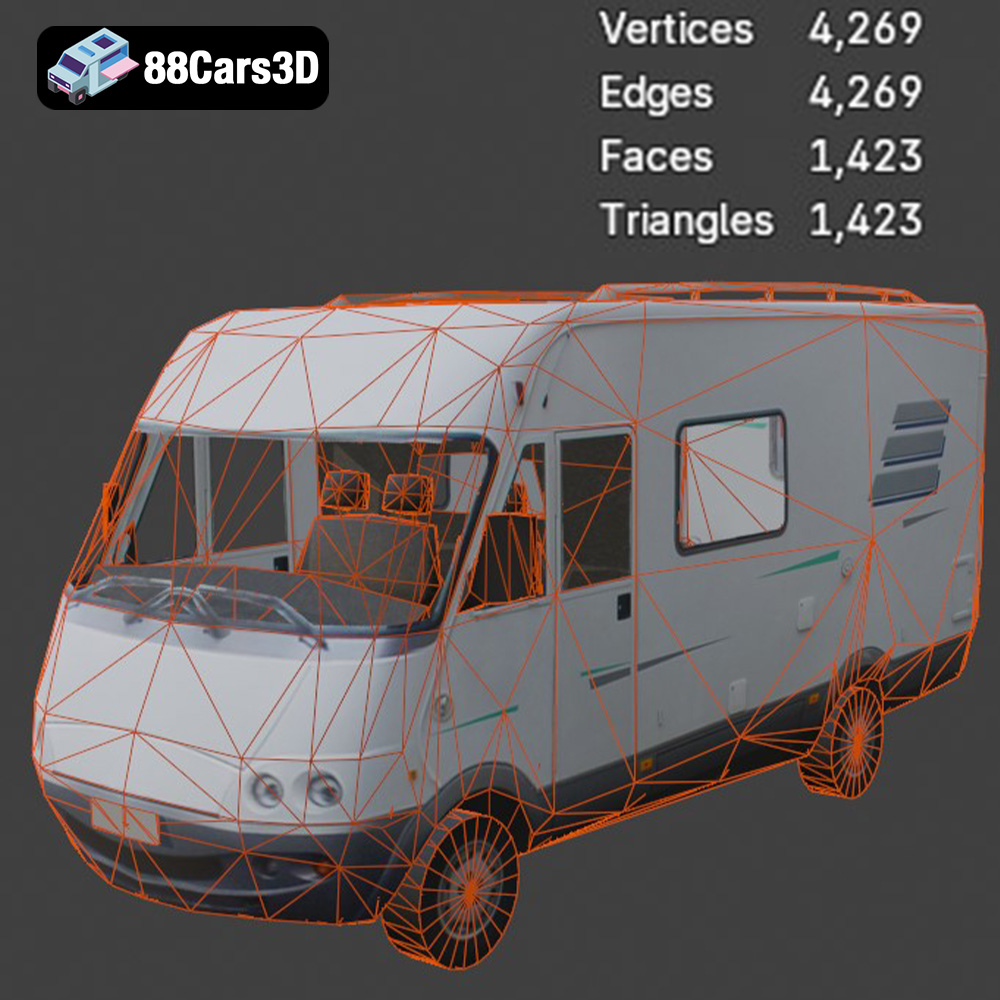
The core of any high-quality 3D model lies in its geometry. The Mini-Bus boasts “clean, quad-dominant topology,” a critical feature for professional workflows. Quads (four-sided polygons) are preferred over tris (three-sided polygons) because they deform more predictably and smoothly during animation, facilitate easier subdivision for higher detail, and simplify mesh editing. This ensures that when the model is used in animations, simulations, or subdivided for close-up renders, it maintains its structural integrity without unsightly pinches or distortions. This attention to topology makes the Mini-Bus a robust asset for both real-time applications where performance is key, and high-end rendering where visual fidelity is paramount.
Furthermore, the model’s “balanced detailing” means that important visual elements are present without unnecessary polygon density in less visible areas. This smart optimization keeps poly counts manageable, improving load times and rendering efficiency, especially crucial for game development and AR/VR applications where every polygon counts towards performance budgets.
Real-World Scale and Detailed Feature Set
Accuracy in scale is non-negotiable for seamless integration. The Generic Mini-Bus is built to “accurate real-world scale,” meaning it will fit perfectly into architectural visualization scenes, urban planning simulations, or virtual environments without requiring tedious scaling adjustments. This precision saves significant setup time and ensures consistency across diverse projects.
The model’s detailed feature set is comprehensive, covering both exterior and interior elements:
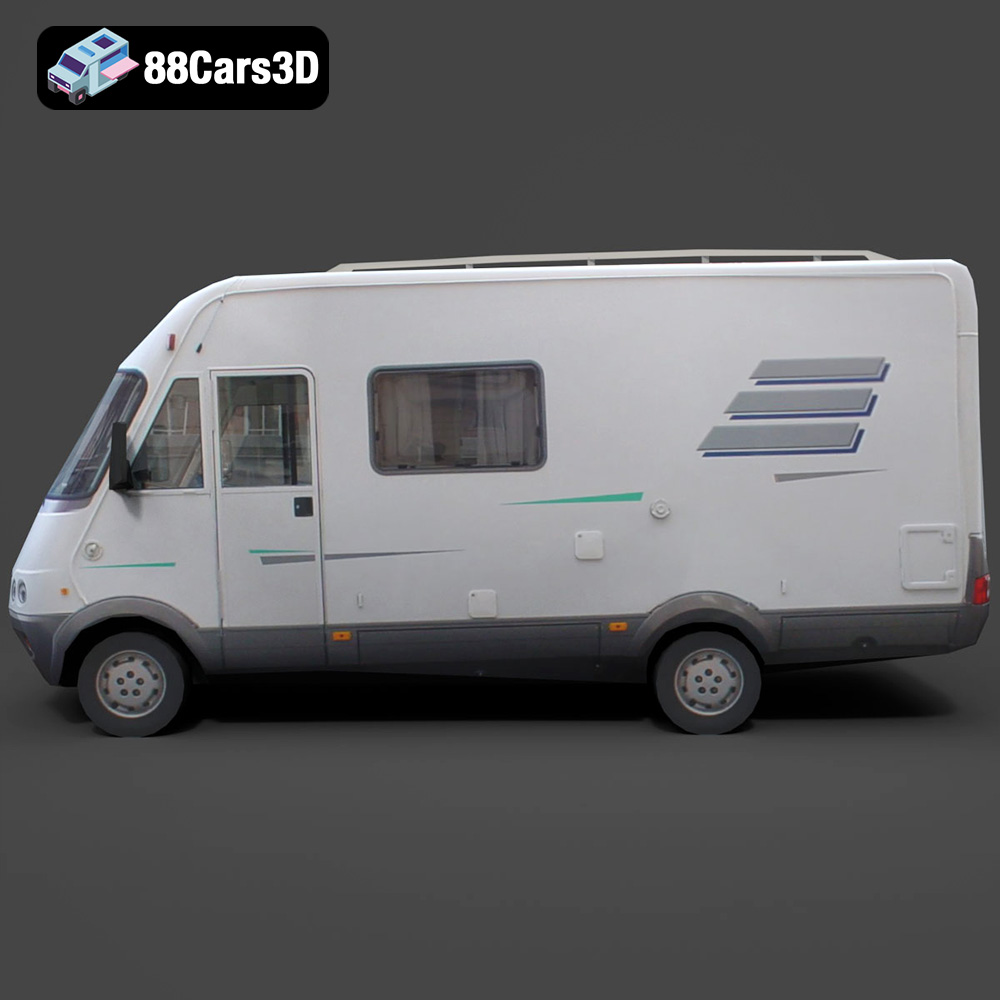
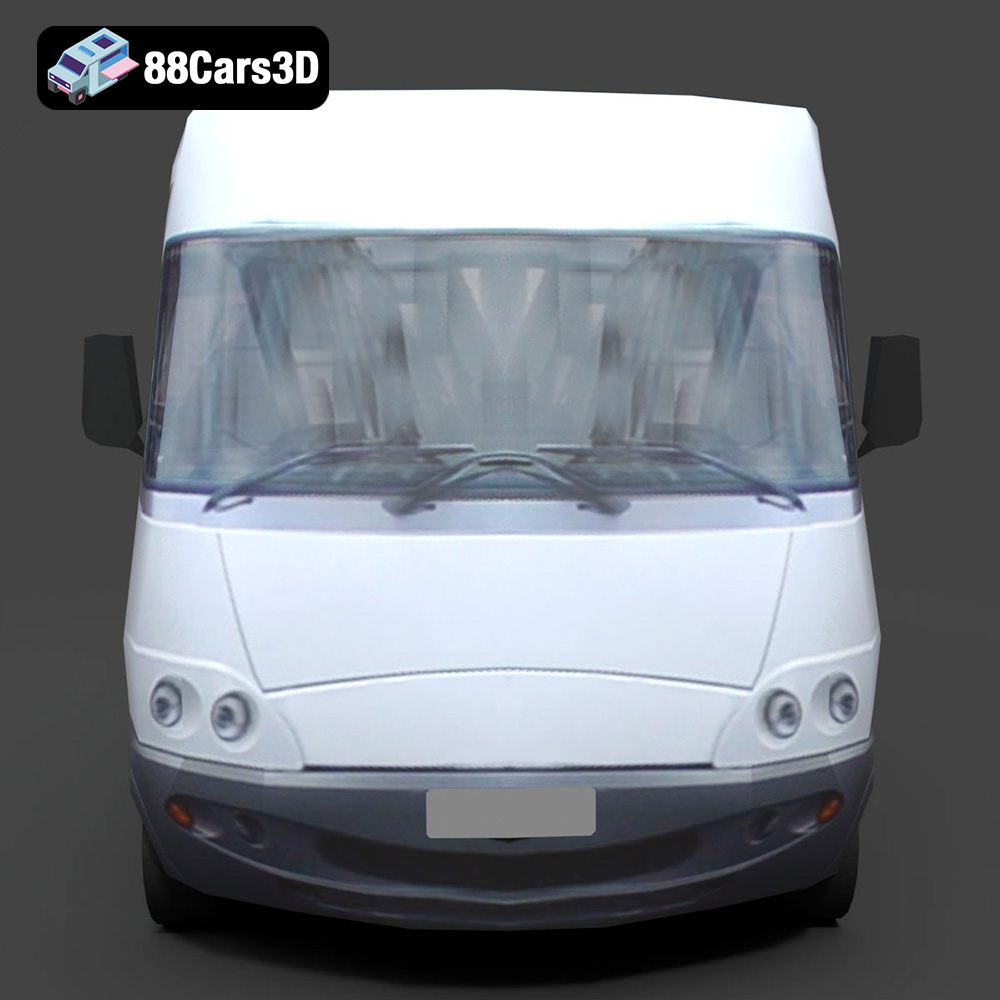
- Exterior Features: Authentic body panels, detailed headlights/taillights with transparent materials, realistic windows (ready for tinting), functional-looking doors separated for animation, robust wheels with detailed rims and tires, and even roof-mounted AC units and luggage rack elements. This level of detail allows for convincing close-ups and dynamic scene compositions.
- Interior / Mechanical Features: An optimized interior includes a driver cockpit and passenger seating, a detailed dashboard, steering wheel, and essential controls. While the engine bay is optimized for external views, basic mechanical components are present, along with underbody elements like suspension and exhaust. This ensures realism even for shots that glimpse beneath or within the vehicle, catering to simulations and interactive experiences.
Logical Hierarchy, Pivots, and UV Mapping
Usability in 3D is heavily influenced by how a model is organized. The Mini-Bus features a “logically organized hierarchy with properly set pivots for easy rigging and animation.” This means individual components like doors, wheels, and steering wheel are separate objects, parented correctly, and have their pivot points positioned accurately (e.g., door hinges, wheel axles). This crucial setup allows animators to quickly rig and animate the vehicle without needing to spend hours cleaning up the model’s structure. For game developers, this means the vehicle is practically ready for physics and animation systems straight out of the box.
“Efficient UV mapping” is another technical advantage. UV maps are 2D representations of a 3D model’s surface, dictating how textures are applied. Well-laid-out UVs minimize texture stretching, improve texture resolution, and make the texturing process straightforward and efficient. This ensures that custom liveries, decals, or high-resolution material maps can be applied to the Mini-Bus with ease and visual accuracy, allowing for extensive customization.
Integrating the Generic Mini-Bus into Professional Workflows
The true value of a versatile 3D asset like the Generic Mini-Bus lies in its adaptability across various professional pipelines. Its design caters to the specific demands of rendering, animation, and game development, streamlining production for artists and developers alike.
Automotive Rendering and Cinematic Sequences
For artists working in automotive rendering, the Generic Mini-Bus 3D Model provides a high-fidelity starting point. In software like 3ds Max or Blender, artists can import the respective .max or .blend files to access the full scene setup. The “detailed headlights, taillights, and signal lights with transparent materials” allow for realistic lighting setups, crucial for studio renders or atmospheric shots. The ability to “easily modify paint finishes, liveries, and graphics” means the Mini-Bus can be branded for specific clients or scenarios, whether for a commercial advertisement, an architectural visualization of a new urban development, or a cinematic sequence depicting a busy city street. Its clean topology ensures smooth reflections and accurate light bounces when rendered with advanced engines like V-Ray, Corona, Arnold, or Cycles.
- Material Customization: Adjusting material properties for metals, glass, rubber, and plastics allows artists to achieve specific visual effects, from brand new showroom finishes to weathered, city-worn looks.
- Lighting Scenarios: The model’s inherent detail supports diverse lighting setups, enabling creators to craft day, night, dusk, or interior scenes with dynamic light interaction.
- Scene Integration: Its real-world scale and detailed exterior make it a perfect backdrop or foreground element in large-scale arch-viz projects, adding realism and context to urban environments.
Game Development and Real-Time Applications
In the demanding world of game development, performance and visual quality must coexist. The Generic Mini-Bus is an ideal “game asset” due to its optimized geometry and efficient UV mapping. The included .fbx and .unreal formats are game-engine ready, significantly reducing the work required for integration into Unreal Engine or Unity.
- Unreal Engine Workflow: With the provided .unreal project setup, developers can import the Mini-Bus directly, often with pre-configured materials, collision meshes, and a proper hierarchy. This drastically cuts down on the asset preparation phase. Its “separated for animation workflows” doors and robust wheels make it suitable for vehicle physics systems and interactive animations, such as opening doors for passenger boarding.
- Unity Integration: The .fbx format ensures smooth import into Unity. Developers can then quickly set up materials using Unity’s PBR workflow, assign collision meshes, and integrate it with vehicle controllers. Its balanced detailing means it performs well in open-world environments or as part of a vehicle fleet without being overly taxing on system resources.
- Interactive Simulations: Beyond traditional games, the Mini-Bus serves as an excellent vehicle for training simulations, logistical planning tools, or interactive educational experiences where real-time performance and visual authenticity are key.
Beyond the Screen: AR/VR, Simulation, and 3D Printing with the Mini-Bus
The utility of a robust 3D model extends far beyond traditional rendering and game engines. The Generic Mini-Bus 3D Model from 88cars3d.com demonstrates remarkable versatility, making it suitable for emerging technologies and practical applications like augmented reality, virtual reality, detailed simulations, and even physical 3D printing.
Immersive AR/VR Experiences
Augmented Reality (AR) and Virtual Reality (VR) demand optimized assets that can perform smoothly on various hardware, from powerful VR headsets to mobile devices. The Generic Mini-Bus is perfectly suited for these immersive platforms. Its “optimized geometry” and “efficient UV mapping” ensure that it can be rendered in real-time without significant performance bottlenecks. The inclusion of the .glb format is particularly beneficial here.
- Web-Based AR/VR: The .glb format is specifically designed for quick loading and rendering in web browsers and AR/VR applications. This means the Mini-Bus can be seamlessly integrated into AR apps that allow users to place a virtual bus in their real-world environment via their smartphone camera, or into VR training modules where users can interact with the vehicle in a simulated environment.
- Interactive Walkthroughs: In architectural visualization or urban planning, AR/VR experiences can showcase how the Mini-Bus might operate within a proposed design. Users could “walk around” or “inside” the bus in a VR environment, evaluating its scale, design, and interior layout from a first-person perspective.
- Mobile Optimization: The judicious use of detail, as described in the model’s specifications, helps keep the polygon count in check, which is paramount for smooth performance on mobile AR platforms, preventing lag and ensuring a fluid user experience.
Detailed Simulations and Training Modules
Simulations are at the heart of many industries, from urban planning and logistics to driver training and research. The Generic Mini-Bus provides a realistic and functional asset for these complex systems.
- Urban Transport Simulations: Planners can integrate the Mini-Bus into traffic flow simulations to model public transport routes, assess congestion, or analyze passenger movement. Its accurate real-world scale and distinct appearance make it identifiable and relevant within a larger simulated city landscape.
- Driver Training: For driver training modules, the detailed interior, including the dashboard and steering wheel, combined with a properly rigged vehicle, can create a highly realistic virtual driving experience. Trainees can learn vehicle operation, route navigation, and emergency procedures in a safe, controlled digital environment.
- Logistical Planning: Logistics companies can use the Mini-Bus model in simulations to optimize delivery routes, test vehicle load capacities (virtually), and visualize fleet movements, leading to more efficient operations and cost savings.
Tangible Results: 3D Printing
The bridge between digital and physical is 3D printing, and the Generic Mini-Bus is designed to cross it with ease. The “clean, quad-dominant topology” and “accurate real-world scale” ensure that the model is structurally sound and ready for conversion to a physical object. The inclusion of the .stl format is key for this application.
- Prototyping and Physical Models: Artists and engineers can convert the Mini-Bus to .stl for high-fidelity physical models. This could be for design review, creating miniature representations for dioramas, or producing tangible assets for educational purposes. The robust, watertight mesh inherent in a professional 3D model is crucial for successful 3D prints, preventing errors and ensuring a smooth printing process.
- Scale Models: For hobbyists or professionals who require a physical representation of an urban transport vehicle, printing the Generic Mini-Bus provides an excellent foundation. The clarity of its design elements, even in miniature, makes it suitable for detailed painting and assembly after printing.
Optimizing Your Projects with High-Quality 3D Assets from 88cars3d.com
In today’s fast-paced digital production environment, time is a precious commodity. Creating complex 3D models from scratch is a labor-intensive process, often requiring specialized skills and significant resources. This is where marketplaces like 88cars3d.com become indispensable, providing ready-to-use, professional-grade 3D car models that empower creators to focus on innovation and project execution rather than asset creation.
The Advantage of Ready-Made Excellence
Purchasing pre-made assets like the Generic Mini-Bus 3D Model offers several compelling advantages:
- Time Savings: Instantly integrate a fully detailed and optimized model into your scene, bypassing weeks or even months of modeling, texturing, and optimization work. This accelerates project timelines significantly.
- Cost-Effectiveness: The cost of licensing a high-quality model is often a fraction of what it would take to commission or create an equivalent asset in-house, especially for smaller studios or independent creators.
- Guaranteed Quality: Reputable marketplaces like 88cars3d.com curate their collections, ensuring that models meet industry standards for topology, scale, UVs, and material setup. This minimizes the risk of receiving problematic assets that require extensive cleanup.
- Versatility Across Platforms: As demonstrated by the extensive list of file formats for the Generic Mini-Bus, professional assets are designed for cross-software compatibility, ensuring they can be used in your preferred tools and engines.
The Generic Mini-Bus, with its detailed exterior, optimized interior, and technical advantages such as clean quad-dominant topology and efficient UV mapping, embodies the standard of excellence offered. It’s a prime example of how a single asset can serve multiple facets of a production pipeline, from high-fidelity rendering to real-time game development and even 3D printing.
Streamlining Your Workflow
Imagine a scenario in an urban planning visualization where you need a fleet of diverse vehicles to populate a city scene. Manually creating each one would be prohibitive. By leveraging assets like the Mini-Bus from 88cars3d.com, you can quickly populate your scene with realistic, correctly scaled vehicles, allowing your team to focus on the overall architectural design, environmental storytelling, or interactive elements of the visualization. This principle applies equally to game development, where filling a virtual world with believable traffic or public transport requires a library of well-optimized vehicle models.
The customization options mentioned for the Mini-Bus—modifying paint finishes, liveries, and material properties—further enhance its value. A single base model can be transformed into numerous unique instances, representing different brands, service providers, or conditions, adding variety and realism to any digital environment without needing additional geometry creation.
Conclusion
The world of 3D modeling is constantly evolving, driven by the insatiable demand for immersive content and realistic simulations. At the heart of this evolution are high-quality 3D assets that serve as the building blocks for digital universes. The Generic Mini-Bus 3D Model stands as a testament to the power of a well-crafted digital asset—versatile, technically robust, and ready for deployment across a spectrum of professional applications.
From architectural renders and cinematic animations to demanding game development pipelines, AR/VR experiences, and even physical 3D prints, this model provides an essential component for creators. Its meticulous design, encompassing clean topology, accurate scale, efficient UVs, and a logical hierarchy, ensures seamless integration and superior performance in diverse workflows. By offering a comprehensive range of file formats, it removes compatibility barriers, empowering artists and developers using Blender, 3ds Max, Unreal Engine, or any other major software.
Investing in professional 3D car models like the Generic Mini-Bus 3D Model from 88cars3d.com is not just about acquiring a digital object; it’s about acquiring efficiency, quality, and the freedom to innovate. It’s about leveraging expert craftsmanship to elevate your projects, shorten production cycles, and bring your creative visions to life with unparalleled realism and performance.
Featured 3D Model
Generic Mini-Bus 3D Model
Experience the versatility and efficiency of our professional 3D model of a Mini-Bus. Designed with urban transport and passenger services in mind, this model features a clean, optimized geometry suitable for a wide range of applications. With balanced detailing and a realistic representation, it’s perfect for high-quality rendering, intricate animations, detailed simulations, and robust game development.
Exterior Features: Authentic body panels and chassis design; Detailed headlights, taillights, and signal lights with transparent materials; Realistic windows and windshield, ready for tinting; Functional-looking passenger and driver doors, separated for animation workflows; Robust wheels with detailed rims and tires; Roof-mounted AC unit and accessible luggage rack elements.
Interior / Mechanical Features: Optimized interior layout featuring driver cockpit and passenger seating rows; Detailed dashboard, steering wheel, and essential controls; Engine bay area with basic mechanical components (optimized for external views); Underbody elements including suspension and exhaust system (where visible).
Technical Advantages: Clean, quad-dominant topology ensuring smooth subdivisions and deformations; Accurate real-world scale for seamless integration into existing scenes; Logically organized hierarchy with properly set pivots for easy rigging and animation; Efficient UV mapping for straightforward texture application.
Applications: Rendering & Visualization; Game Development; AR/VR; Simulation & Training; 3D Printing.
Customization Options: Easily modify paint finishes, liveries, and graphics; Adjust material properties for metals, glass, rubber, and plastics; Customize lighting setups. This Mini-Bus 3D model offers unparalleled professional quality and versatility, making it an essential asset for any digital project requiring a detailed and functional urban transport vehicle.
Included File Formats: .blend, .fbx, .obj, .glb, .stl, .ply, .unreal, .max.
$21.99
Product Image Gallery