The Pulse of Digital Transportation: Why High-Quality 3D Vehicle Assets Drive Success
In the expansive and ever-evolving landscape of 3D content creation, the demand for high-quality, versatile vehicle models remains perpetually high. From the intricate realism required for cinematic rendering to the optimized efficiency essential for real-time game engines, a well-crafted 3D car model is more than just an asset – it’s a foundational element that can define the success of a project. Whether you’re an architect visualizing a bustling urban scene, a game developer populating a vibrant open-world, or a simulation engineer building a training module, the authenticity and technical integrity of your 3D vehicles are paramount.
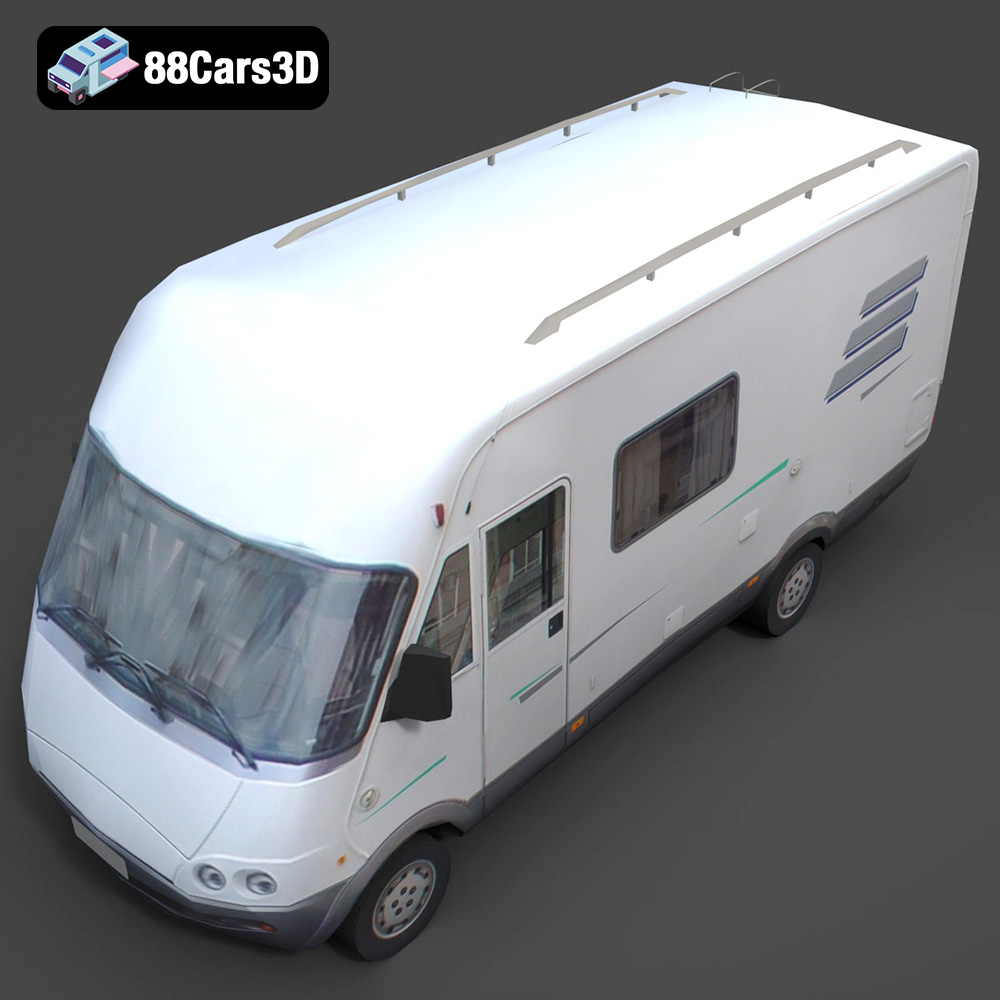
Today, we’ll delve into the multifaceted world of 3D vehicle assets, exploring the technical considerations, diverse applications, and professional workflows that leverage such models. We’ll specifically examine how a meticulously designed asset, like the Generic Mini-Bus 3D Model available on 88cars3d.com, serves as a prime example of a robust solution for a myriad of digital needs. This model, with its balanced detailing and optimized geometry, stands out as a versatile choice for anyone requiring a dependable urban transport vehicle in their digital arsenal.
The Foundation of Digital Worlds: Why High-Quality 3D Car Models Matter
The visual impact and functional performance of any digital environment hinge significantly on the quality of its individual components. For scenes involving transportation, whether static or dynamic, the vehicles present must meet stringent technical and aesthetic criteria. Subpar 3D car models can break immersion, introduce performance bottlenecks, or simply fail to convey the intended message.
Visual Fidelity in Automotive Rendering
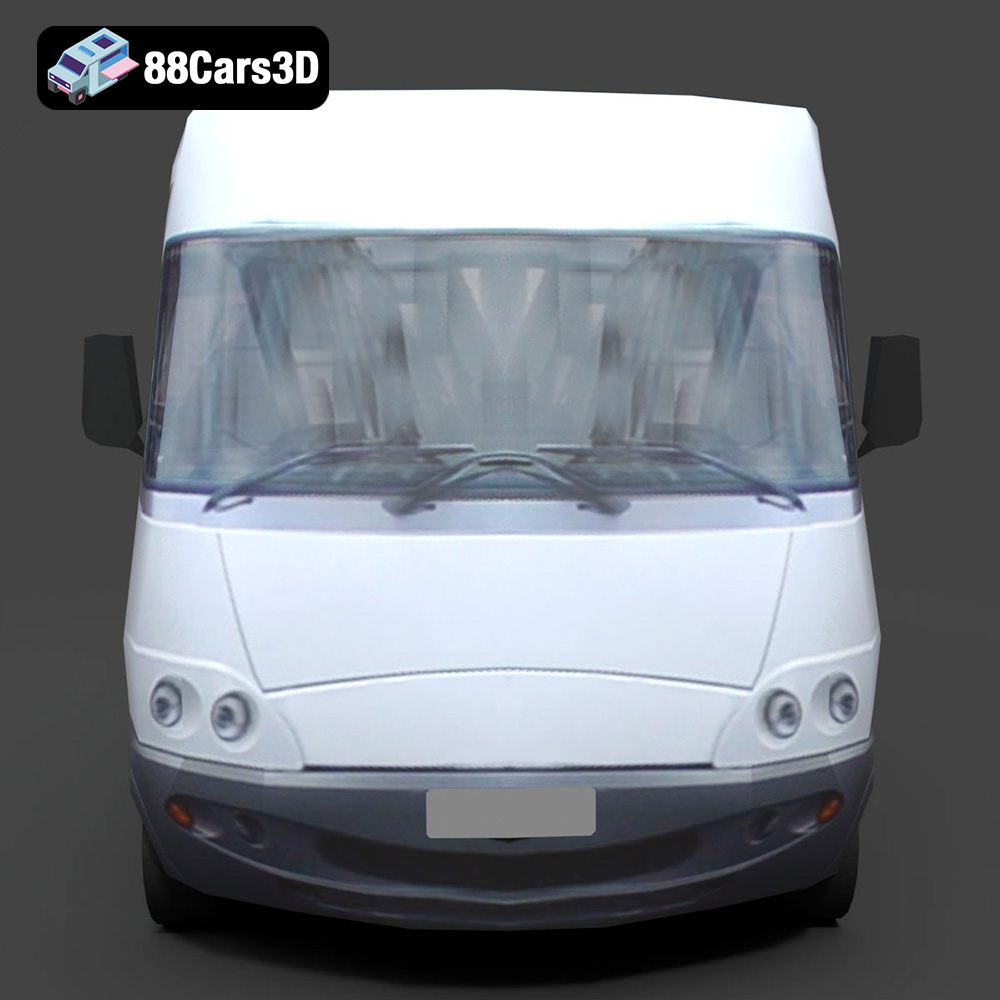
In the realm of automotive rendering, realism is king. High-quality 3D car models are the bedrock for producing stunning studio renders, breathtaking cinematic sequences, and convincing architectural visualizations. This demands not just accurate form but also meticulous attention to surface details, material properties, and lighting interaction. A model like the Generic Mini-Bus, with its detailed headlights, taillights, realistic windows, and robust wheels, provides the perfect canvas for artists to craft photorealistic images. The clean, quad-dominant topology ensures smooth subdivisions, crucial for close-up shots and high-resolution outputs, preventing unsightly faceting or pinching that can plague lower-quality assets.
Performance and Realism in Game Development
Game development presents a unique set of challenges where realism must be balanced with performance. A successful game asset needs to look great while maintaining low polygon counts and efficient draw calls to ensure smooth frame rates. The best 3D car models, like those found on 88cars3d.com, are optimized for this dual requirement. They often feature multiple levels of detail (LODs) and efficient UV mapping to allow for texture baking and quick material application. The Generic Mini-Bus, designed for robust game development, ensures that players experience immersive environments without performance compromises, integrating seamlessly into popular engines like Unreal and Unity as a reliable vehicle asset for racing games, open-world environments, or simulation titles.
Precision in Simulation and Visualization
Beyond entertainment, high-fidelity 3D car models are indispensable tools for simulation and training. Industries ranging from urban planning to driver training modules rely on accurate digital representations to create effective and engaging simulations. For these applications, real-world scale, accurate mechanical representations (even if optimized for external views), and logically organized hierarchies are vital. The Generic Mini-Bus’s accurate real-world scale and properly set pivots for easy rigging make it ideal for transport simulations, logistical planning, and even AR/VR experiences, where precise interaction and believable scale are paramount.
Understanding 3D Model File Formats
The choice of file format is a critical decision in any 3D workflow, directly impacting compatibility, functionality, and the overall efficiency of your project. Different formats are optimized for distinct purposes, offering varying degrees of interoperability and feature support. When acquiring a professional asset like the Generic Mini-Bus 3D Model, understanding the included formats is key to maximizing its utility across diverse applications.
The Blender Ecosystem: .blend
The .blend format is Blender’s native file type, offering a complete snapshot of a Blender project. This includes not just the mesh data but also materials, textures, lighting setups, animation data, scene hierarchy, and even custom scripts. It’s the ideal format for users who primarily work within Blender, providing full editability and access to all of the original creator’s scene configurations. For the Generic Mini-Bus 3D Model, the .blend file means you get a fully editable Blender scene with materials, allowing for easy customization of paint finishes, liveries, and material properties directly within the software.
Universal Interoperability: .fbx and .obj
The .fbx (Filmbox) format, originally developed by Kaydara and now owned by Autodesk, has become one of the most widely used interchange formats in the 3D industry. It supports not only mesh data but also animations, cameras, lights, and skeleton information, making it excellent for transferring complex scenes between different 3D software packages and game engines. It is particularly ideal for Unreal, Unity, and real-time pipelines due to its comprehensive data support and optimization features. For the Generic Mini-Bus, the .fbx ensures seamless integration into major game engines and most professional DCC (Digital Content Creation) tools.
The .obj (Wavefront OBJ) format is a much simpler, universal format. While it primarily stores geometric data (vertices, normals, UVs) and group information, it lacks support for animation, rigging, and complex material definitions (though it can reference an accompanying .mtl file for basic material properties). Its strength lies in its widespread compatibility; nearly every 3D software can import and export .obj files, making it a reliable choice for basic mesh transfer when cross-software compatibility is the highest priority. The Generic Mini-Bus’s .obj variant provides a robust base mesh accessible to virtually all 3D software.
Specialized Formats: .glb, .stl, .ply
The .glb (GL Transmission Format Binary) is a relatively newer format optimized for AR, VR, and web-based display. It packages 3D models, textures, and animations into a single, self-contained binary file, making it incredibly efficient for streaming and quick loading in browser-based viewers or immersive applications. Its compact size and ease of use make it perfect for showcasing the Generic Mini-Bus in augmented reality apps or on interactive web platforms.
The .stl (Stereolithography) format is the de facto standard for 3D printing. It represents a 3D model as a series of connected triangles, describing only the surface geometry without color, texture, or other properties. While not suitable for rendering or animation, its simplicity makes it universally compatible with 3D printers and slicing software. If you ever wanted a physical model of the Generic Mini-Bus, the .stl file makes it easily convertible for high-fidelity physical output.
The .ply (Polygon File Format or Stanford Triangle Format) is another precision mesh format often used for storing 3D data from 3D scanners, CAD software, or for scientific analysis. It can store various properties like color, normals, and transparency for each vertex or face. While less common for general DCC workflows, it provides a robust and often more precise representation of mesh data than .obj, making it suitable for certain CAD or analysis pipelines.
Engine-Specific Solutions: .unreal and .max
The .unreal designation typically refers to a project package or asset optimized and ready for direct import or use within Unreal Engine. This often implies proper scaling, collision setups, material instances, and possibly blueprints already configured. For the Generic Mini-Bus, having an .unreal file means an engine-ready asset for real-time environments, saving significant setup time for game developers.
Finally, the .max format is the native file type for Autodesk 3ds Max. Similar to .blend for Blender, it encapsulates the entire 3ds Max scene, including geometry, materials, textures, lighting, cameras, animation, and any modifiers or plugins used. It provides full editability within 3ds Max, making it the preferred format for professionals whose primary workflow revolves around this powerful software for animation and rendering.
Crafting Excellence: The Technical Anatomy of the Generic Mini-Bus 3D Model
The true value of a professional 3D asset lies in its underlying technical craftsmanship. It’s not just about how it looks, but how it’s built. The Generic Mini-Bus 3D Model exemplifies this principle, offering a robust foundation for diverse digital projects.
Optimized Topology and UV Mapping
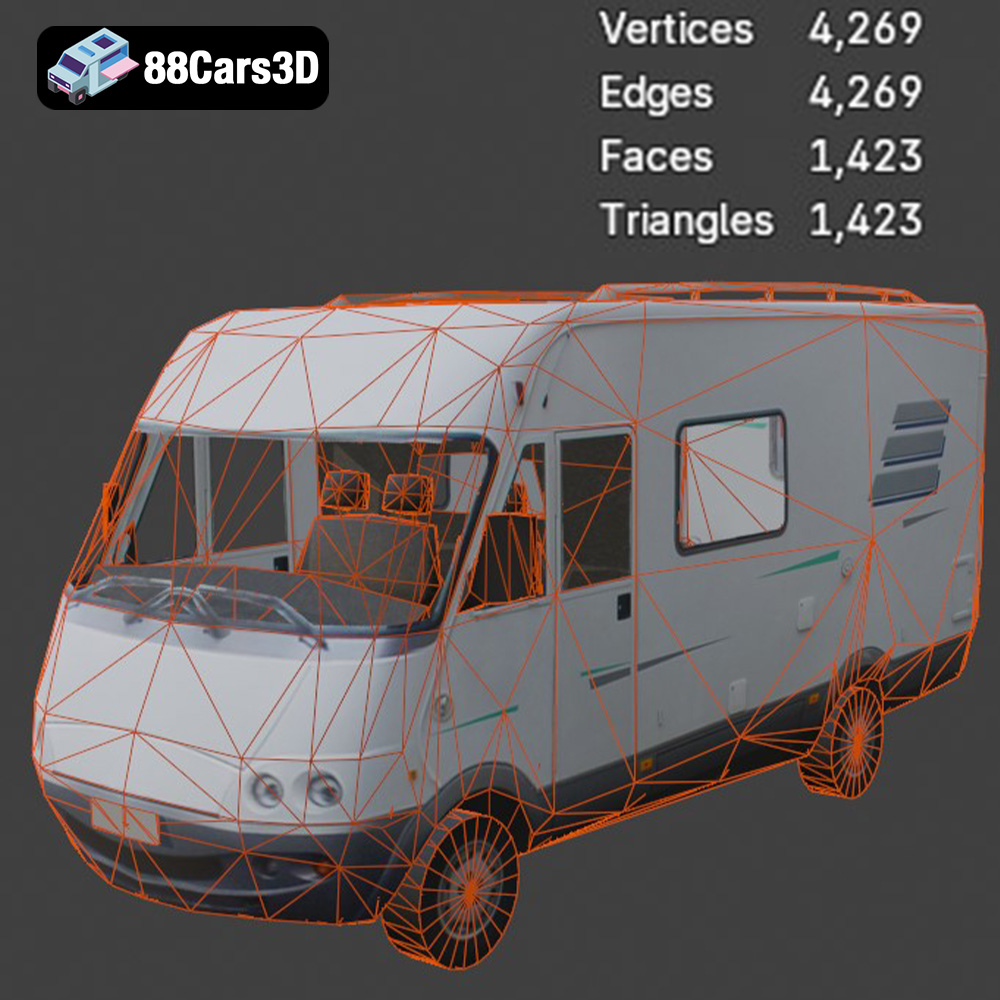
At the core of any high-quality 3D model is its topology. The Generic Mini-Bus boasts a clean, quad-dominant topology. This is crucial for several reasons: it ensures smooth subdivisions, which are vital for rendering crisp, detailed surfaces without artifacts; it facilitates clean deformations during animation and rigging; and it makes the model easier to edit and modify. Efficient UV mapping accompanies this, providing a straightforward canvas for texture application. This means artists can easily apply custom paint finishes, liveries, and graphics, or adjust material properties for metals, glass, and plastics without encountering stretching or distortion.
Detailed Exterior and Interior Features
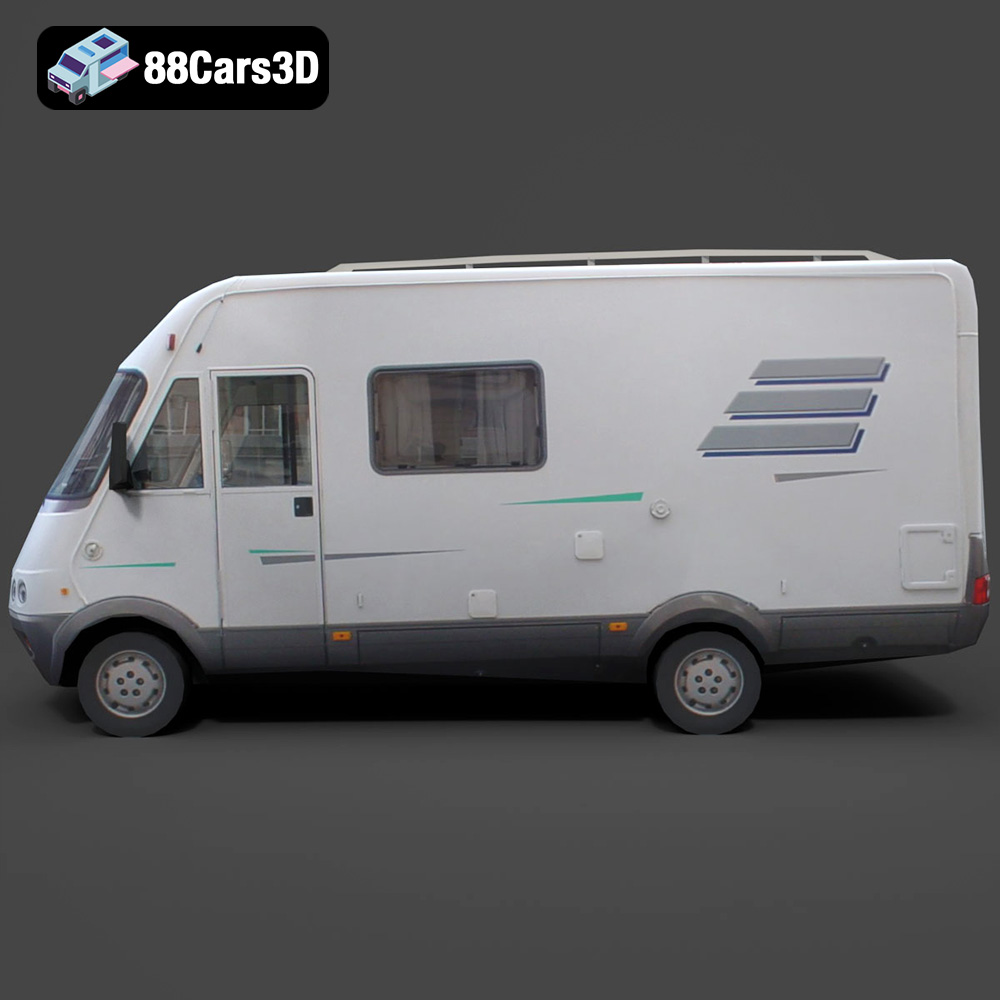
The model’s balanced detailing ensures it meets the needs of both close-up renders and wide-shot compositions. The exterior features include authentic body panels, a chassis design, detailed headlights and taillights with transparent materials, and realistic windows ready for tinting. Crucially, functional-looking passenger and driver doors are separated, anticipating animation workflows. Robust wheels with detailed rims and tires complete the look, along with roof-mounted AC units and accessible luggage rack elements. Inside, the optimized interior layout features a driver cockpit and passenger seating rows, a detailed dashboard, steering wheel, and essential controls. Even the engine bay area includes basic mechanical components (optimized for external views) and underbody elements where visible, demonstrating a comprehensive approach to model construction without over-complicating geometry where it’s not needed for primary use cases.
Real-World Scale and Scene Integration
One of the often-overlooked yet critical aspects of 3D modeling is adherence to real-world scale. The Generic Mini-Bus 3D Model is built to an accurate real-world scale, which is essential for seamless integration into existing scenes, be it an architectural visualization project or a game level. Proper scaling ensures that the vehicle interacts realistically with its environment, preventing issues with lighting, physics simulations, or human-scale comparisons. Furthermore, a logically organized hierarchy with properly set pivots for easy rigging and animation is a testament to its professional design, allowing animators to quickly set up and animate doors, wheels, and other moving parts without extensive preparation.
Unleashing Creativity: Workflows with the Generic Mini-Bus in Professional Software
The versatility of a 3D model is truly realized when it can be integrated effortlessly into various professional software environments. The Generic Mini-Bus 3D Model is engineered for this exact purpose, providing a flexible foundation for diverse creative workflows across industry-standard applications.
Rendering Stunning Visuals in 3ds Max and Blender
For artists focused on high-quality rendering, the Generic Mini-Bus offers seamless integration into powerful rendering pipelines. In 3ds Max, utilizing the .max file, artists can leverage its robust material editors (e.g., Physical Material, V-Ray, Corona Renderer) to fine-tune every aspect of the mini-bus’s appearance. Imagine customizing the paint finish with a metallic flake, adjusting the reflectivity of chrome accents, or applying subtle grunge textures to the tires. The logically organized hierarchy and clean topology make it easy to select specific parts for material assignment or to set up complex lighting scenarios – from a dramatic studio render to a bustling city street at dusk. Animators can also quickly set up trajectories and keyframes for the separated doors or rotating wheels.
Similarly, Blender users benefit from the native .blend file, which includes pre-configured materials. This provides an excellent starting point for rendering with Cycles or Eevee. Artists can easily modify shaders, introduce procedural textures for added realism, or apply decals for branding and liveries. The quad-dominant mesh facilitates the use of subdivision surface modifiers for ultra-smooth renders, essential for close-up shots where every detail counts. Blender’s comprehensive animation tools allow for complex sequences, making the mini-bus a dynamic element in any scene.
Integrating into Real-time Environments with Unreal Engine
Game developers and real-time visualization specialists will find the Generic Mini-Bus 3D Model particularly valuable for its optimization for interactive experiences. The included .fbx and dedicated .unreal formats are tailored for direct integration into Unreal Engine. The .fbx file, when imported, often brings in not just the mesh but also the proper hierarchy, smoothing groups, and UVs, ready for material setup. For Unreal Engine, this means a clean import into the Content Browser. Developers can then assign physically based rendering (PBR) materials, set up collision meshes, and even implement vehicle physics blueprints. The “unreal” specific format typically implies even further optimization, potentially including pre-built material instances or basic blueprint setups, drastically reducing setup time. This makes the mini-bus an ideal candidate for populating open-world games, creating interactive architectural walkthroughs, or developing engaging AR/VR applications where performance is critical.
Animation and Rigging Considerations
The design of the Generic Mini-Bus anticipates animation needs from the ground up. With properly set pivots and separated elements like doors and wheels, the rigging process becomes significantly streamlined. Animators can quickly link or constrain these elements to a simple control rig, allowing for realistic door opening/closing sequences, wheel rotations, and suspension compression. This is essential for cinematic renders, game cutscenes, or even functional simulations where vehicle movement and interaction with the environment are key. For instance, in a driver training simulator, the ability to accurately animate the steering wheel and pedals, alongside the mini-bus’s external movements, provides a more immersive and effective learning experience.
Beyond Visualization: Practical Applications and Case Studies
The utility of a meticulously crafted 3D model extends far beyond simple rendering. The Generic Mini-Bus 3D Model, with its robust technical advantages and comprehensive feature set, is a versatile asset capable of driving success in various professional fields.
Urban Planning and Architectural Visualization
Imagine an urban planning project where new infrastructure is being proposed. Architects and city planners need to visualize how new roads, buildings, and public spaces will function together. High-quality 3D car models are indispensable here. The Generic Mini-Bus can be placed in architectural renderings to realistically depict traffic flow, pedestrian interaction, and the overall ambiance of a proposed development. Its real-world scale ensures that street widths, parking areas, and public transport hubs are accurately represented. For instance, an urban designer might use the mini-bus to illustrate the impact of a new bus lane, demonstrating how public transport can efficiently navigate the urban environment, thus making design proposals more convincing and relatable for stakeholders.
Game Development Scenarios: From Racing to Open-World
In the expansive world of game development, the Generic Mini-Bus offers numerous opportunities. For an open-world game, it can serve as a non-player character (NPC) vehicle, populating city streets and contributing to the game’s bustling atmosphere. Its optimized geometry ensures it won’t impact game performance, even when many are present. In a more specialized context, it could be a crucial vehicle in a public transport simulation game, where players manage routes, passenger pickup, and vehicle maintenance. With its detailed interior and functional-looking doors, players could even experience first-person driving or passenger views, enhancing immersion. The flexibility to easily modify liveries and graphics allows game designers to create different bus companies or regional variations, adding depth to their game worlds.
Training Simulators and AR/VR Experiences
The demand for realistic training simulations is growing across industries. For driver training, particularly for commercial vehicles, simulators offer a safe and controlled environment to practice critical skills. The Generic Mini-Bus 3D Model is ideal for this. Its accurate scale, detailed cockpit, and separated, animatable components allow for a highly realistic simulation of driving a mini-bus, including aspects like door operation, steering, and indicator usage. Similarly, in AR/VR applications, the .glb format optimizes the model for performance and ease of deployment. An AR app could allow users to “place” the mini-bus in their real-world environment to visualize its size or customize its appearance. A VR experience could immerse trainees in a fully interactive mini-bus, exploring its features or practicing maintenance procedures, all powered by the high-quality asset from 88cars3d.com.
Conclusion
The digital world thrives on visual fidelity and technical precision, and nowhere is this more evident than in the realm of 3D vehicle assets. A high-quality 3D car model is a critical investment, providing the foundation for everything from breathtaking cinematic renders to engaging real-time simulations. We’ve explored the crucial role of optimized topology, diverse file formats, and application-specific workflows that collectively contribute to a truly versatile asset.
The Generic Mini-Bus 3D Model stands as an excellent example of such an asset, meticulously designed with urban transport and passenger services in mind. Its clean, quad-dominant geometry, detailed exterior and interior, real-world scale, and broad file format compatibility (including .blend, .fbx, .obj, .glb, .stl, .ply, .unreal, and .max) make it an indispensable tool for professionals in rendering, game development, AR/VR, simulation, and 3D printing. This model streamlines complex workflows, accelerates production, and ultimately enhances the quality of any digital project it graces.
For those seeking professional-grade 3D car models that deliver on both aesthetics and technical performance, exploring the curated selection at 88cars3d.com is a logical next step. Invest in assets that are built for success, and watch your digital visions come to life with unparalleled realism and efficiency.
Featured 3D Model
Generic Mini-Bus 3D Model
Experience the versatility and efficiency of our professional 3D model of a Mini-Bus. Designed with urban transport and passenger services in mind, this model features a clean, optimized geometry suitable for a wide range of applications. With balanced detailing and a realistic representation, it’s perfect for high-quality rendering, intricate animations, detailed simulations, and robust game development.
Exterior Features:
Authentic body panels and chassis design
Detailed headlights, taillights, and signal lights with transparent materials
Realistic windows and windshield, ready for tinting
Functional-looking passenger and driver doors, separated for animation workflows
Robust wheels with detailed rims and tires
Roof-mounted AC unit and accessible luggage rack elements
Interior / Mechanical Features:
Optimized interior layout featuring driver cockpit and passenger seating rows
Detailed dashboard, steering wheel, and essential controls
Engine bay area with basic mechanical components (optimized for external views)
Underbody elements including suspension and exhaust system (where visible)
Technical Advantages:
Clean, quad-dominant topology ensuring smooth subdivisions and deformations
Accurate real-world scale for seamless integration into existing scenes
Logically organized hierarchy with properly set pivots for easy rigging and animation
Efficient UV mapping for straightforward texture application
Applications:
Rendering & Visualization: Create stunning studio renders, cinematic sequences, and architectural visualizations.
Game Development: Integrate as a reliable vehicle asset for racing games, open-world environments, or simulation titles.
AR/VR: Develop immersive augmented and virtual reality experiences with optimized performance.
Simulation & Training: Ideal for transport simulations, driver training modules, and logistical planning.
3D Printing: Easily convert to .stl for high-fidelity physical models.
Customization Options:
Easily modify paint finishes, liveries, and graphics to match specific brands or scenarios.
Adjust material properties for metals, glass, rubber, and plastics to achieve desired visual effects.
Customize lighting setups to create different atmospheric renders, from day scenes to night driving.
This Mini-Bus 3D model offers unparalleled professional quality and versatility, making it an essential asset for any digital project requiring a detailed and functional urban transport vehicle.
Included File Formats:
.blend – Blender project with materials
.fbx – Compatible with Unreal, Unity, and major 3D engines
.obj – Universal format for nearly all 3D software
.glb – Optimized for AR, VR, and web-based visualization
.stl – Ready for 3D printing
.ply – Mesh format for analysis and CAD workflows
.unreal – Unreal Engine project setup
.max – Editable 3ds Max scene for rendering and animation.
$21.99
Product Image Gallery