Get 20% OFF All Premium 3D & STL Models!

There’s a certain undeniable charm that emanates from classic utility vehicles. They evoke an era of rugged practicality, road trips, and endless possibilities, often intertwined with pop culture and personal memories. From the bustling streets of 1980s urban landscapes to the adventurous spirit of cross-country journeys, vans like the GMC Vandura G-1500 have carved out a unique place in automotive history. For 3D artists, game developers, architectural visualization specialists, and filmmakers, capturing this essence with authenticity and precision is paramount. This is where high-quality 3D car models become indispensable assets.
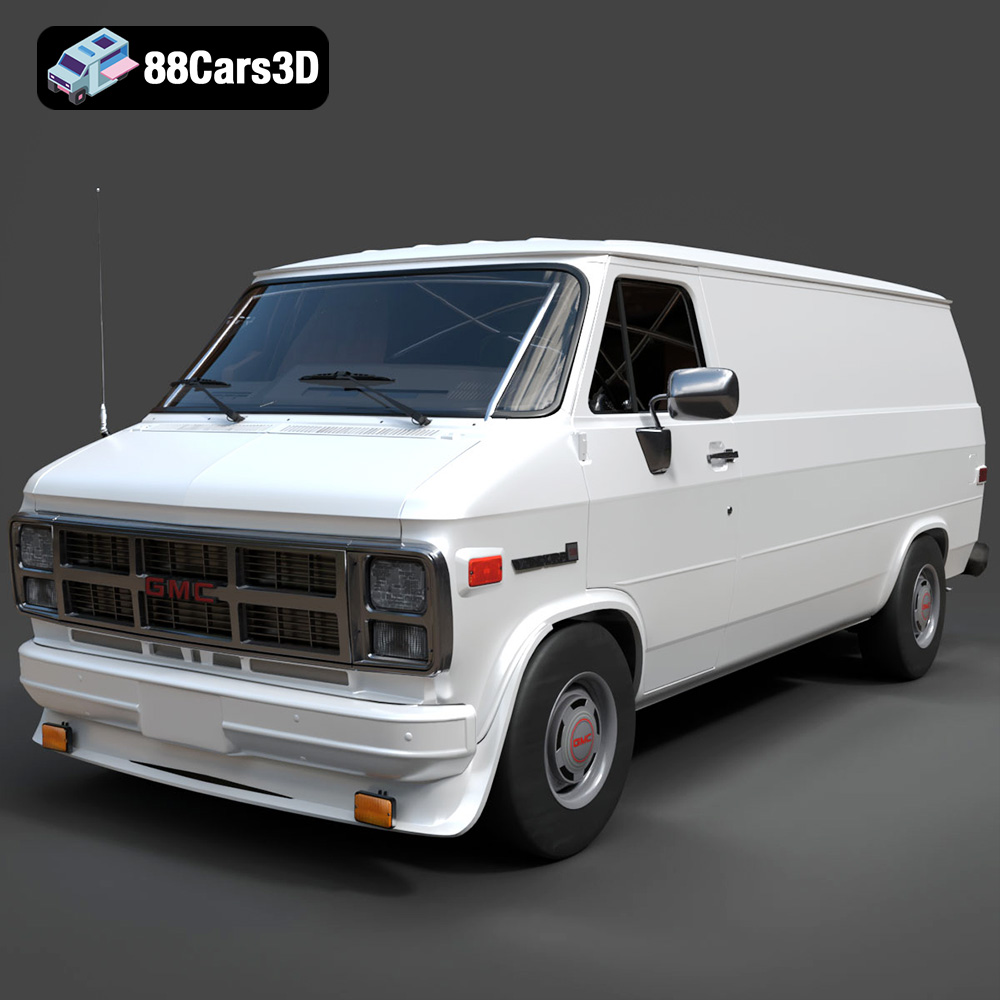
The GMC Vandura G-1500 1983 3D Model stands as a prime example of how meticulous digital craftsmanship can breathe new life into an iconic design. It’s more than just a static object; it’s a gateway to recreating historical contexts, developing engaging game environments, or adding a touch of nostalgic realism to any visual project. This model, available through 88cars3d.com, offers an unparalleled blend of accuracy, optimization, and versatility, making it a professional-grade asset ready for the most demanding applications. Join us as we delve into the technical intricacies and creative applications that make such detailed 3D assets a cornerstone of modern digital production.
Classic vehicles, especially those with a distinctive utility design like the GMC Vandura, hold a special place in the hearts of many. Their robust forms and practical functions lend themselves perfectly to a wide array of digital projects, transcending simple automotive rendering into storytelling and world-building.
The allure of a classic van lies not just in its aesthetics but in the stories it can tell. A 1983 GMC Vandura G-1500 instantly transports viewers to a specific time, conjuring images of specific movies, TV shows, or even personal anecdotes. For artists and designers, this cultural resonance is a powerful tool. When developing a 3D car model of such a vehicle, the emphasis is placed on capturing every detail that contributes to this authenticity – from the characteristic boxy silhouette and panel lines to the subtle imperfections that tell a story of use. This attention to detail ensures that the model doesn’t just look like a van, but specifically *the* 1983 GMC Vandura G-1500, making it invaluable for period-accurate visualizations.
While aesthetics are important, the functional versatility of a utility van translates directly into its usefulness as a 3D asset. Unlike sleek sports cars, a van like the Vandura can serve a multitude of roles within a scene. It can be a simple background prop in an urban environment, a crucial vehicle for a character in a narrative-driven game, or even a customizable base for an interactive simulation. Its robust and recognizable form makes it an ideal placeholder for a wide range of tasks, from transport and delivery to mobile workspaces or even recreational setups, allowing designers to imbue their digital worlds with relatable, everyday elements.
For period-specific projects, whether it’s a historical documentary animation or a retro-themed video game, accuracy is paramount. An anachronistic vehicle can instantly break immersion. A meticulously recreated model like the GMC Vandura G-1500 1983 3D Model provides the exact visual cues needed to ground a scene in its intended era. This includes precise scaling, authentic badging, correct headlight and taillight designs, and even the subtle curves and angles that define its specific model year. These details, often overlooked by the casual observer, are critical for professionals striving for historical precision and visual integrity.
The flexibility and utility of any 3D model are heavily influenced by the file formats in which it is provided. For professionals working across diverse software ecosystems and project types, understanding these formats is crucial for efficient workflow and optimal results. The GMC Vandura G-1500 1983 3D Model from 88cars3d.com is provided in a comprehensive array of formats, ensuring maximum compatibility and utility for virtually any application.
The .blend format is the native file type for Blender, a powerful open-source 3D creation suite. When a model is provided in .blend format, it means you’re getting the complete working file. This includes the mesh geometry, materials (often PBR setups with nodes), textures, lighting, camera setups, and even any modifiers, rigging, or animation that might be present. This format is ideal for users who primarily work in Blender and require full editability, allowing them to dissect the model, learn from its construction, or integrate it seamlessly into a larger Blender project. It offers the most flexibility for customization and advanced rendering within Blender’s ecosystem.
.fbx (Filmbox) is an industry-standard 3D file format developed by Autodesk, widely adopted for its excellent compatibility across various 3D applications and game engines. It’s particularly favored for real-time pipelines like Unreal Engine and Unity because it efficiently supports geometry, PBR materials, textures, cameras, and critically, animations, rigs, and blend shapes. An .fbx file can encapsulate a complex animated character or a static vehicle with its materials, making it a robust choice for transferring assets between programs. Its efficiency and comprehensive data support make it a go-to for game development and virtual production.
The .obj (Wavefront OBJ) format is one of the oldest and most universally compatible 3D file formats. It is a simple, text-based format primarily used to store geometric data such as vertices, faces, vertex normals, and UV coordinates. It can also reference external material files (.mtl) for basic color and texture mapping. While it doesn’t support advanced features like animation, rigging, or complex material networks, its widespread support makes it an excellent choice for basic mesh exchange between virtually any 3D software. If you need a clean mesh that can be imported and worked on in almost any program, .obj is a reliable foundation.
.glb (GL Transmission Format Binary) is the binary version of the glTF format, specifically designed for efficient transmission and loading of 3D scenes and models by applications, particularly web-based, AR, and VR platforms. It packages all necessary data—geometry, PBR materials, textures, animations—into a single, self-contained file. This makes .glb extremely lightweight and ideal for environments where performance and quick loading times are critical, such as interactive web experiences, augmented reality apps on mobile devices, or virtual reality environments.
The .stl (Stereolithography) format is the de facto standard for 3D printing. It represents a 3D model as a collection of triangular facets, defining only the surface geometry without color, texture, or other properties. While not suitable for rendering or animation due to its lack of visual data, it’s perfect for manufacturing, prototyping, and creating physical models. If your project involves translating the digital GMC Vandura into a tangible object, the .stl file is what you’ll use.
.ply (Polygon File Format) is another format that stores 3D data, often originating from 3D scanners. It can store not only geometry (vertices, faces) but also additional properties for each vertex or face, such as color, normal vectors, transparency, and confidence values. This makes it a more versatile format than .stl for certain applications, particularly in scientific visualization, CAD, and situations where per-vertex data is crucial for analysis or high-fidelity reconstruction. It’s useful for precision modeling and data visualization.
The .unreal format, while not a standalone file extension in the traditional sense, indicates an asset that is pre-configured and optimized specifically for Unreal Engine. This typically means the model has been imported, materials have been set up with Unreal’s PBR system, LODs (Levels of Detail) have been generated, collision meshes have been added, and potentially even blueprint functionality or basic physics setups are in place. This format significantly streamlines the workflow for Unreal Engine developers, saving considerable time on asset preparation and ensuring optimal performance and visual fidelity within the engine.
Similar to .blend for Blender, the .max format is the native file type for Autodesk 3ds Max. Providing the model in .max format means you receive the full 3ds Max scene file. This includes all geometry, modifiers, materials (V-Ray, Corona, Arnold, etc.), textures, lighting setups, cameras, and any animation data. For professionals primarily using 3ds Max for high-end automotive rendering, architectural visualization, or cinematic animation, this format offers complete editability and access to all of 3ds Max’s powerful features, enabling deep customization and integration into existing projects.
The availability of the GMC Vandura G-1500 1983 3D Model in such a comprehensive suite of formats underscores its professional readiness and the commitment to versatility offered by 88cars3d.com. This allows artists and developers to pick the exact format best suited for their specific software and project requirements.
Achieving a truly realistic 3D model goes far beyond basic shape creation. It demands a deep understanding of geometry, material science, and accurate physical representation. The GMC Vandura G-1500 1983 3D Model excels in these technical aspects, built to professional standards.
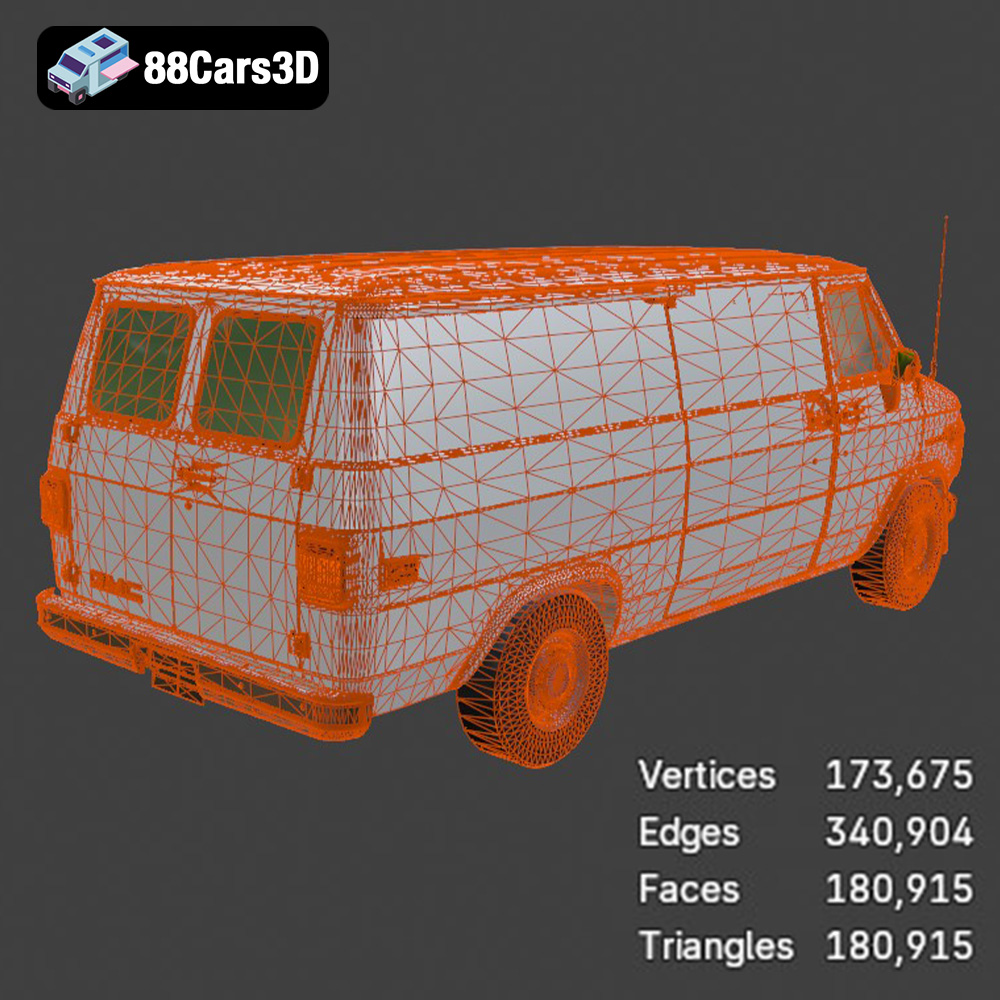
The foundation of any high-quality 3D asset is its geometry. The GMC Vandura G-1500 3D Model boasts a highly optimized mesh topology, meaning the arrangement of its vertices, edges, and faces is clean and efficient. For rendering, this translates to smooth surfaces without artifacts, even in close-up shots. For real-time applications like game development, optimized geometry means fewer polygons to process, leading to better frame rates. The model is carefully constructed with an appropriate polygon count, balancing visual fidelity with performance requirements. This often involves using quads (four-sided polygons) where possible for cleaner deformation, especially in areas that might be animated, and ensuring an even distribution of polygons to prevent pinching or stretching during subdivision or rendering.
Geometry defines the form, but materials and textures bring it to life. The model features realistic material definitions and texturing, crucial for achieving authentic visual results. This typically involves a physically based rendering (PBR) workflow, where materials are defined by properties that simulate how light interacts with surfaces in the real world. This includes detailed texture maps such as Albedo (base color), Normal (for surface detail without increasing poly count), Roughness (how shiny or matte a surface is), Metallic (whether a surface is metallic or dielectric), and Ambient Occlusion (simulating soft shadows where surfaces are close together). The UV mapping—how 2D textures are wrapped onto the 3D mesh—is meticulously crafted to ensure textures appear without stretching or distortion, contributing significantly to the model’s visual realism, from the subtle sheen of the paint to the texture of the tires and interior fabrics.
One of the most critical, yet often overlooked, aspects of a professional 3D model is accurate scaling. The GMC Vandura G-1500 3D Model is accurately scaled to the dimensions of the real-world vehicle. This precision is vital for seamless integration into various projects. In architectural visualization, an incorrectly scaled vehicle can ruin the sense of space and perspective. In AR/VR, precise scaling ensures that the virtual object feels like it belongs in the real world, preventing a jarring experience. For game development, correct proportions are essential for gameplay mechanics, collision detection, and character interaction. This attention to real-world measurements ensures the model is not just visually appealing, but functionally correct within any digital environment.
The versatility of the GMC Vandura G-1500 1983 3D Model makes it a valuable asset across a spectrum of professional digital production pipelines. Its design caters to the specific demands of game development, cinematic rendering, and interactive media.
In game development, the Vandura model shines as a production-ready asset. Its optimized mesh topology is crucial for maintaining high frame rates in engines like Unreal and Unity. Developers can import the .fbx or .unreal formats directly, which often come with pre-configured materials, LODs (Levels of Detail), and collision meshes. LODs are multiple versions of the model with decreasing polygon counts that swap out based on distance from the camera, dramatically improving performance for vehicles that might appear far away. Collision meshes ensure that the player character or other game objects interact realistically with the van’s boundaries. The fully detailed interior further enhances immersion for first-person perspectives or cinematic cutscenes within games, allowing for truly engaging interactive experiences.
For high-end cinematic rendering or architectural visualization, the .max or .blend formats provide maximum flexibility. These native project files allow artists to fine-tune materials, lighting, and rendering settings within their preferred software. In 3ds Max with V-Ray or Corona Renderer, or in Blender with Cycles or Eevee, the model’s high-quality textures and optimized geometry ensure stunning, photorealistic results. The detailed interior becomes a significant advantage here, enabling compelling close-up shots through windows or even fully rendered interior scenes, adding depth and narrative potential to static visualizations or animated sequences. Imagine a vintage office building rendered with a period-correct Vandura parked outside, enhancing the historical accuracy and visual richness of the scene.
The demand for immersive AR/VR experiences and interactive web content is rapidly growing. The GMC Vandura G-1500 3D Model is perfectly suited for these applications, particularly when utilizing the .glb format. The .glb format is highly optimized for real-time display in web browsers and mobile AR/VR environments, offering a compact and efficient package that loads quickly without sacrificing visual quality. For AR apps, the accurately scaled model ensures the virtual van appears true-to-life when overlaid onto the real world. In VR, it contributes to building believable virtual environments where users can explore or interact with a historically accurate vehicle, fostering a strong sense of presence and immersion.
To truly appreciate the value of a high-quality 3D asset, it helps to envision its practical applications. The GMC Vandura G-1500 1983 3D Model offers immense potential across various creative and technical projects.
Imagine a short animated film or an architectural visualization project set in a bustling 1980s cityscape. The GMC Vandura G-1500 3D Model would serve as a central anchor, instantly establishing the time period. Parked alongside a vintage diner or driving down a neon-lit street, its iconic silhouette provides crucial visual context. Artists could use the .max or .blend files to integrate the van into their scene, adjusting its materials to show subtle wear and tear or adding custom decals for a specific narrative. The fully detailed interior would allow for shots where a character might open the door or where the camera pans through the window, adding layers of realism and storytelling to the environment.
Consider a retro-themed open-world driving game or a crime drama set in the 80s. The Vandura G-1500 would be an indispensable game asset. Utilizing the .fbx or .unreal formats, developers could rapidly import the model, set up its physics, and integrate it into the game world. With its optimized mesh and pre-configured LODs, it would perform efficiently even in crowded scenes. Players could drive it, explore its detailed interior, or customize its exterior with various paint jobs or modifications, directly leveraging the robust foundation of the 3D model. The authentic design would contribute significantly to the game’s overall atmosphere and immersion, making the player feel truly transported back to the era.
Beyond digital visualization, the .stl format of the GMC Vandura G-1500 3D Model opens doors for physical prototyping. An industrial design firm working on a project involving a new accessory for classic vans, or perhaps an automotive enthusiast looking to create a detailed scale model, could utilize this file for 3D printing. The .stl provides a clean, watertight mesh suitable for additive manufacturing processes, allowing for the creation of a tangible, accurate representation of the vehicle. This bridges the gap between digital design and physical realization, proving the model’s utility extends beyond the screen into the realm of manufacturing and tangible creation.
In the fast-paced world of digital content creation, time and quality are precious commodities. Investing in professional-grade 3D car models like the GMC Vandura G-1500 1983 3D Model from 88cars3d.com is a strategic decision that pays dividends in both areas.
Creating a highly detailed, accurately scaled, and optimized 3D vehicle from scratch is an incredibly time-consuming and labor-intensive process. It requires expert modeling, texturing, and often rigging skills. By acquiring a pre-made, production-ready asset, artists and developers can drastically cut down on development time, allowing them to focus their efforts on more unique or critical aspects of their projects. This efficiency directly translates to reduced production costs and faster turnaround times, making it a wise allocation of resources for individuals and studios alike.
A mediocre 3D model can detract from even the most compelling concept. Conversely, a high-quality asset significantly elevates the overall realism and professional polish of a project. The meticulous attention to detail in the GMC Vandura G-1500 3D Model – from its optimized geometry and PBR textures to its accurate scaling and fully detailed interior – ensures that any project it’s integrated into will benefit from its visual integrity. Whether for a client presentation, a game release, or a cinematic sequence, the impact of a photorealistic vehicle is undeniable, enhancing immersion and credibility.
Platforms like 88cars3d.com specialize in providing exactly these types of high-caliber 3D car models. They curate a selection of assets that meet professional industry standards, saving artists and developers the arduous task of vetting models from various sources. The inclusion of multiple file formats, clear technical specifications, and a commitment to authenticity means that when you purchase a model from 88cars3d.com, you’re investing in a reliable, versatile, and high-performance asset that is ready to be deployed in almost any professional pipeline, delivering immediate value and enhancing project outcomes.
The GMC Vandura G-1500 1983 3D Model is far more than just a digital representation of a classic van; it is a meticulously crafted, technically superior asset poised to transform a wide array of digital projects. From its authentic design and optimized geometry to its comprehensive suite of file formats, every aspect of this model speaks to its professional readiness and versatility.
Whether you’re aiming to infuse a game with nostalgic charm, ground a cinematic sequence in historical accuracy, render a photorealistic urban visualization, or even prototype a physical model through 3D printing, the Vandura offers the precision and detail required for outstanding results. It embodies the essence of a bygone era with the technical excellence demanded by modern production workflows. By choosing such a high-quality 3D car model, artists and developers can save invaluable time, elevate the realism of their creations, and bring their visions to life with unparalleled authenticity. Explore the possibilities and discover the difference a premium asset from 88cars3d.com can make in your next project.
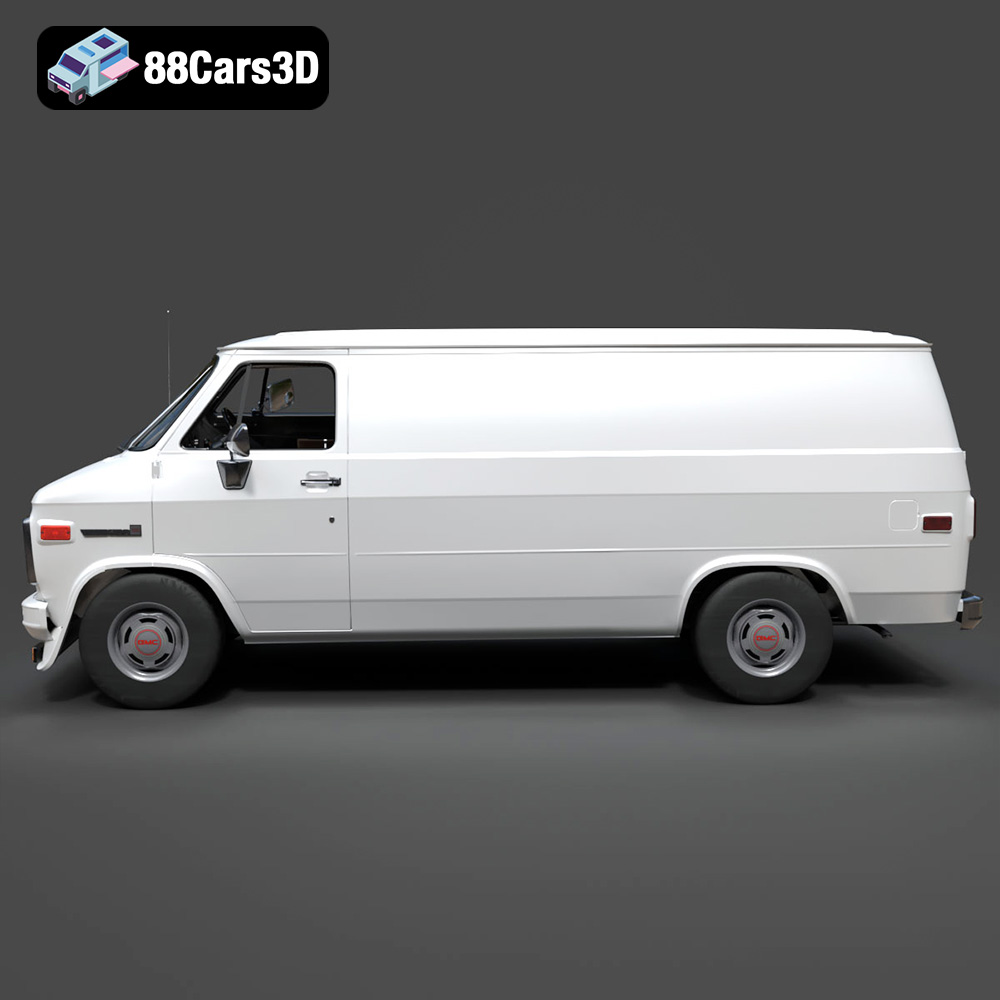
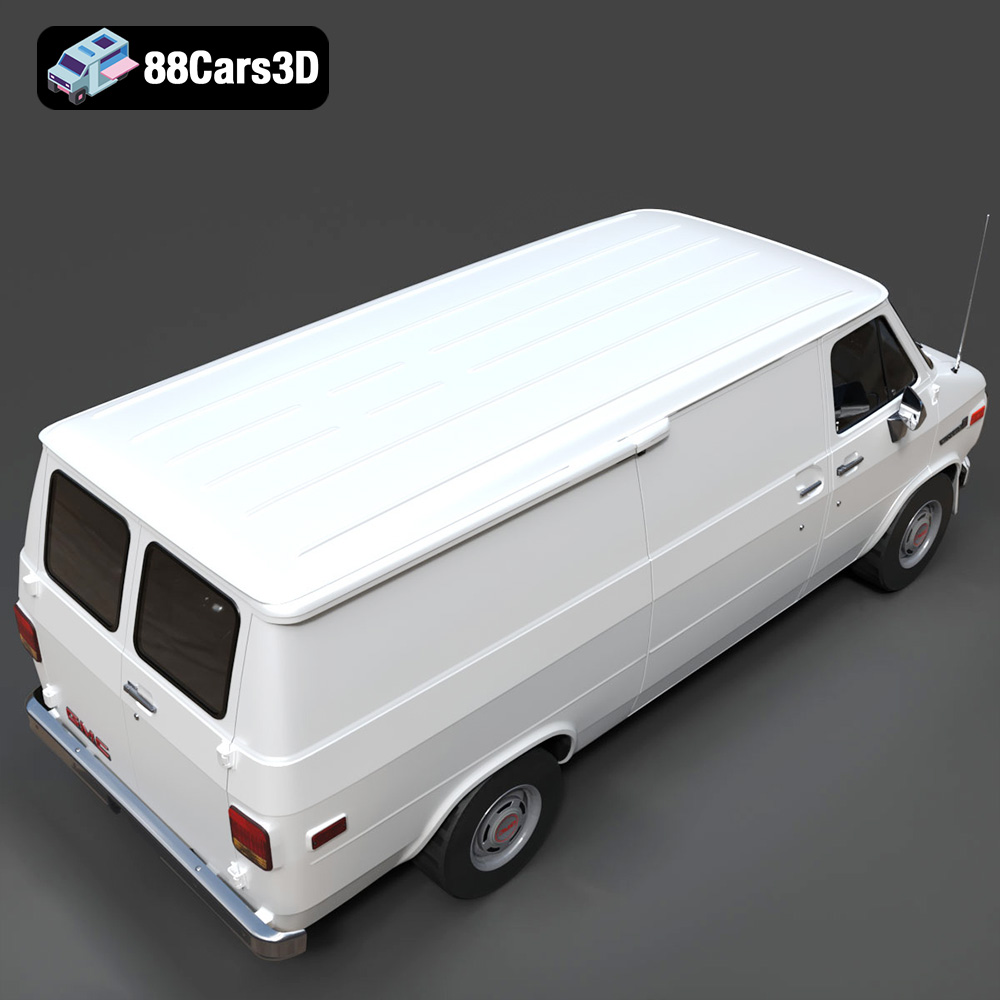
Bring authentic 1980s utility and nostalgia to your projects with the GMC Vandura G-1500 1983 3D Model. This meticulously recreated classic American van captures the robust design and iconic silhouette of the original vehicle, perfect for period pieces, urban simulations, and retro-themed visualizations. The model is built with professional standards in mind, ensuring clean, optimized geometry and accurate scaling. Every exterior detail, from the signature boxy bodywork to the vehicle badging and lighting elements, has been carefully modeled. The interior is also fully detailed, providing complete realism for close-up shots and simulation environments.
$19.99
.1983
.arvr
.blend
.car3dmodel
.classicvan
.fbx
.g1500
.gameasset
.glb
.gmc
.max
.obj
.ply
.rendering
.simulation
.stl
.unreal
.utilityvehicle
.van
.vandura