Driving Digital Excellence: The Indispensable Role of High-Quality 3D Car Models
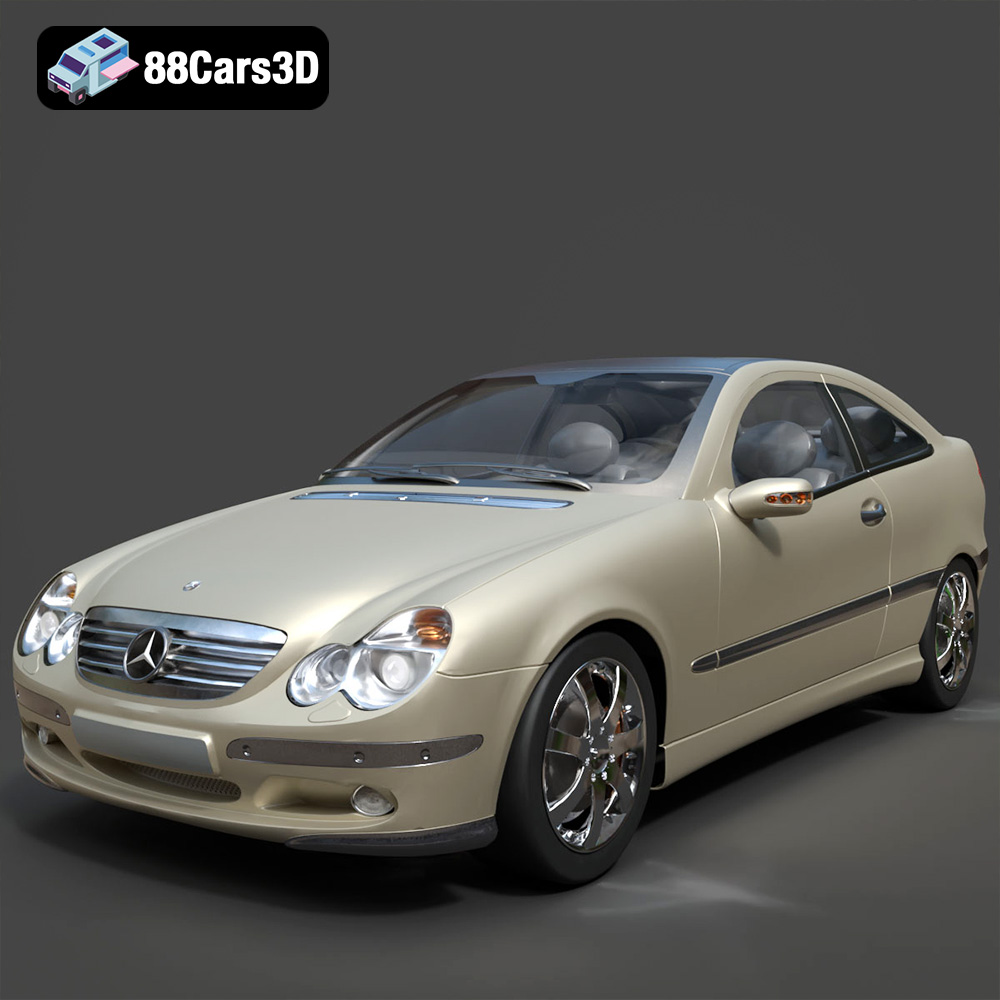
In the rapidly evolving landscape of digital visualization, the demand for high-fidelity 3D assets continues to escalate. From cinematic productions and immersive game worlds to advanced architectural visualizations and sophisticated product marketing, photorealistic models are the bedrock of compelling visual experiences. Automotive design, in particular, thrives on precision and detail, requiring 3D car models that accurately reflect real-world engineering and aesthetic nuance. A prime example of such a meticulously crafted asset is the Mercedes Benz C230 3D Model, a digital representation that offers designers and developers an immediate advantage.
Whether you’re an automotive designer evaluating a new concept, a game developer populating a virtual city, or a marketing professional creating breathtaking visuals, the quality of your 3D assets directly impacts the final output. This comprehensive guide will delve into the technical intricacies of professional 3D car models, explore their diverse applications, and highlight how top-tier assets, like those found on 88cars3d.com, streamline production workflows and elevate visual standards. We will examine essential file formats, advanced rendering techniques, game development optimization, and the critical features that make a 3D model truly production-ready, using the Mercedes Benz C230 as our illustrative benchmark.Understanding 3D Model File Formats
The choice of a 3D model file format is far from trivial; it dictates compatibility, optimizes performance, and preserves crucial data across different stages of a project. Professional 3D artists and developers must understand the strengths and weaknesses of each format to ensure seamless integration and maximum utility. The Mercedes Benz C230 3D Model, for instance, comes in a comprehensive suite of formats, each serving distinct purposes.
.blend – The Blender Powerhouse
The .blend format is the native file type for Blender, an increasingly popular open-source 3D creation suite. A .blend file typically encapsulates an entire scene, including not just the mesh data but also materials, textures, lighting setups, camera positions, animations, modifiers, and even intricate rigging. This makes it an incredibly powerful format for artists working primarily within Blender, offering full editability and preserving all scene-specific parameters. For the Mercedes Benz C230 3D Model, the .blend file provides a fully editable scene with pre-configured materials and lighting, allowing artists to immediately begin customizing or rendering within Blender’s robust environment, leveraging its Cycles or Eevee render engines.
.fbx – The Industry Standard for Interoperability
.fbx (Filmbox) is arguably the most widely adopted proprietary file format for 3D data exchange between different software applications. Developed by Autodesk, it’s favored for its ability to store a wide range of data, including geometry, materials, textures, animation, and even skeletal deformation. Its robust support for animation curves and hierarchical data makes it ideal for game development pipelines, particularly with engines like Unreal and Unity. When exporting the Mercedes Benz C230 for a game, .fbx is often the go-to choice, as it efficiently packages the model, its PBR materials, and any potential LODs (Levels of Detail) into a single, engine-ready asset, ensuring optimal real-time performance and visual fidelity.
.obj – The Universal Exchange Format
The .obj (Wavefront Object) format is a venerable and widely supported open standard for 3D geometry. It primarily stores vertex positions, UV coordinates, normals, and face information, defining the shape of the model. While it can reference external .mtl (material) files for basic material properties, it doesn’t support advanced PBR shaders, rigging, or animation. Its strength lies in its universality; almost every 3D software can import and export .obj files. For the Mercedes Benz C230, the .obj format serves as a reliable fallback for cross-software compatibility, ensuring that the core geometry is accessible to virtually any 3D artist, regardless of their preferred platform.
.glb – Optimized for AR, VR, and Web
.glb (GLB format for GL Transmission Format) is a modern, compact, and efficient format designed for transmitting 3D scenes and models over the web. It is a binary version of glTF (GL Transmission Format), which bundles geometry, materials, textures, and animation into a single file. Its optimization for real-time applications makes it perfect for AR/VR experiences, web-based 3D viewers, and mobile platforms. The Mercedes Benz C230 3D Model in .glb format is specifically tailored for these emerging technologies, providing a lightweight yet visually rich asset that loads quickly and performs smoothly in interactive, browser-based, or augmented reality environments.
.stl – The Prototyper’s Choice for 3D Printing
.stl (STereoLithography) is the de facto standard for 3D printing and CAD/CAM software. It represents a 3D model as a series of connected triangles (a triangular mesh), defining only the surface geometry without color, texture, or other advanced attributes. Its simplicity ensures broad compatibility with 3D printers and slicing software. While the Mercedes Benz C230 is primarily a visual asset, its availability in .stl format opens doors for physical prototyping, allowing designers to create scaled-down physical models for conceptual review or educational purposes. The clean geometry of the digital model ensures a high-quality print output.
.ply – Precision Mesh for Analysis
.ply (Polygon File Format or Stanford Triangle Format) is a file format for storing graphical objects that are described as a collection of polygons. It supports properties like color, transparency, normals, texture coordinates, and scalar data. While less common for general 3D asset exchange than .fbx or .obj, .ply is frequently used in scientific applications, 3D scanning, and CAD for its ability to store detailed mesh data, including point clouds. For projects requiring high precision or analysis of the Mercedes Benz C230’s intricate surfaces, the .ply format offers a robust representation.
.unreal – Engine-Ready for Real-Time Environments
The .unreal designation often refers to assets that are specifically pre-configured and optimized for direct import and use within Unreal Engine. This typically means the model has been processed, textured, and sometimes even had its collision meshes and LODs set up within the Unreal editor or a similar pipeline. An .unreal asset for the Mercedes Benz C230 3D Model signifies that it’s ready for immediate drag-and-drop implementation into an Unreal project, minimizing setup time and ensuring it adheres to the engine’s best practices for real-time rendering. This is invaluable for game developers and real-time visualization specialists.
.max – The 3ds Max Project File
Similar to .blend for Blender, the .max format is the native project file for Autodesk 3ds Max, a leading software for 3D modeling, animation, and rendering in the architecture, engineering, construction, and media industries. A .max file contains the entire scene, including geometry, modifiers, materials, textures, lighting, cameras, animation, and plugins. It offers full editability within 3ds Max, making it the preferred format for users who rely on this software for their primary workflow. The Mercedes Benz C230 3D Model’s .max file provides all the intricate details and setup for high-end rendering and animation within 3ds Max, perfect for studio-level automotive rendering projects.
The Art and Science of High-Fidelity Automotive Rendering
Achieving photorealistic automotive rendering is a nuanced blend of artistic vision and technical mastery. It involves meticulously crafting materials, designing dynamic lighting, and refining every pixel to simulate the look and feel of a real vehicle. The Mercedes Benz C230 3D Model, with its production-ready geometry and realistic PBR materials, provides an exceptional foundation for such endeavors.
Mastering PBR Materials for Photorealism
Physically Based Rendering (PBR) has become the gold standard for creating realistic materials in 3D. PBR materials accurately simulate how light interacts with surfaces in the real world, accounting for properties like albedo (base color), roughness (microsurface detail), metallicness (how reflective a surface is), and normal maps (fine surface detail). For the Mercedes Benz C230 3D Model, realistic PBR materials are crucial. The model includes accurately simulated paint, glass, rubber, and chrome surfaces. This means the car’s paint will reflect light with appropriate falloff, glass will transmit and refract light realistically, and chrome elements will display sharp, metallic reflections. Understanding and leveraging these PBR properties in renderers like V-Ray, Corona, Arnold, or Blender’s Cycles is key to achieving breathtaking visuals.
Lighting Techniques for Dynamic Automotive Scenes
Lighting is paramount in automotive rendering, as it defines the form, highlights design elements, and sets the mood. Professional workflows often combine various lighting types:
- HDRI (High Dynamic Range Imaging): Used for realistic environment lighting and reflections, often replicating real-world locations or studio setups.
- Area Lights: Simulating softboxes or large light sources to create smooth reflections and diffuse shadows.
- Spotlights: For focused illumination on specific details or to create dramatic effects.
Experimenting with light placement, intensity, and color temperature around the Mercedes Benz C230 can dramatically alter its perceived elegance and power. A well-lit scene can transform a static 3D model into a captivating piece of art, showcasing every curve and detail of the luxury sedan.
Post-Production Enhancements for Visual Impact
Even the most stunning raw render can be elevated through thoughtful post-production. Software like Adobe Photoshop, Affinity Photo, or Nuke are used to refine images, adding effects such as color grading, depth of field, motion blur, lens flares, and subtle atmospherics. For automotive renders, this often means adjusting contrast to make chrome pop, enhancing the reflectivity of the paint, or adding environmental elements that ground the vehicle in its scene. By leveraging the clean renders produced from the Mercedes Benz C230 3D Model, artists can apply these post-processing techniques to achieve magazine-quality automotive marketing imagery or cinematic frames.
Optimizing 3D Car Models for Real-Time Game Development
The transition from high-fidelity rendering to real-time game engines introduces a new set of challenges and considerations. Game developers require assets that are not only visually appealing but also highly optimized for performance, ensuring smooth frame rates and responsive gameplay. The Mercedes Benz C230 3D Model is described as “game-engine ready,” a testament to its suitability for demanding real-time environments like Unreal Engine and Unity.
Efficient Geometry and Level of Detail (LOD)
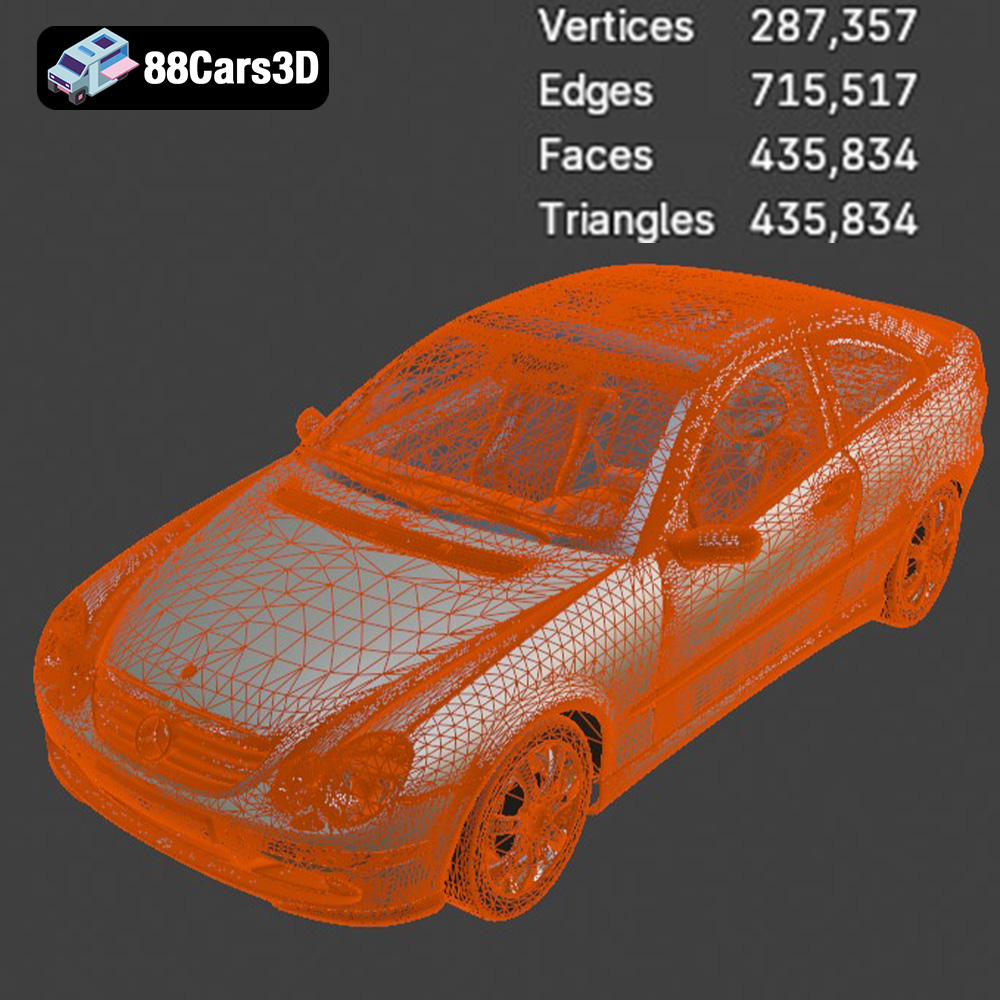
One of the primary concerns in game development is polygon count. While a model for cinematic rendering might have millions of polygons, a game asset needs to be significantly leaner to run efficiently across various hardware. High-quality 3D car models like the Mercedes Benz C230 typically come with optimized geometry, meaning polygons are used efficiently without compromising visual fidelity. Furthermore, implementing Levels of Detail (LODs) is crucial. LODs are simplified versions of the model that automatically swap in at greater distances from the camera. A well-prepared asset will include multiple LODs, ensuring that the car looks detailed up close but uses fewer polygons when viewed from afar, saving precious computational resources. Clean, production-ready geometry, as boasted by the Mercedes Benz C230, provides an excellent basis for generating these LODs.
Seamless Integration into Unreal Engine and Unity
For game developers, the ease of integrating assets into their chosen engine is paramount. The Mercedes Benz C230 3D Model is optimized for both Unreal Engine and Unity, a significant advantage. This optimization typically includes:
- Proper Scaling: The model is correctly scaled to match real-world specifications, ensuring it fits naturally within the engine’s world units.
- PBR Material Setup: Materials are configured to work correctly with the engine’s rendering pipeline (e.g., Unreal’s physically based shading model or Unity’s standard metallic/smoothness workflow).
- Collision Meshes: Simple collision geometry is often included or easily generated, allowing the car to interact realistically with the game world.
- Prefabs/Blueprints: For Unreal, a .unreal file might imply a ready-to-use blueprint, while for Unity, an FBX could be directly converted into a prefab, complete with materials and potentially simple physics.
These features dramatically reduce the time and effort required to get the luxury sedan functioning within a virtual environment, making it a highly valuable game asset.
Crafting Immersive AR/VR Experiences
Augmented Reality (AR) and Virtual Reality (VR) applications demand highly optimized and efficient 3D models due to their strict performance requirements. Low latency and high frame rates are critical to prevent motion sickness and ensure immersion. The .glb file format, specifically optimized for AR/VR and web-based visualization, makes the Mercedes Benz C230 an excellent candidate for these emerging platforms. Its compact size and efficient data structure allow for quick loading and smooth performance in mobile AR experiences or tethered VR simulations. Imagine interacting with a virtual C230 in your driveway through an AR app, or driving it in a fully immersive VR simulator – this is where such a highly optimized model truly shines, enabling developers to push the boundaries of interactive digital content.
Beyond Rendering: Diverse Applications of 3D Automotive Assets
The utility of high-quality 3D car models extends far beyond traditional rendering and game development. These versatile assets serve as fundamental tools across a multitude of industries, enhancing visualization, accelerating design processes, and even revolutionizing marketing strategies. The Mercedes Benz C230 3D Model exemplifies this versatility.
Architectural Visualization and Environmental Integration
In Architectural Visualization (ArchViz), realism is key to selling concepts. Placing a high-fidelity 3D car model like the Mercedes Benz C230 into a rendered architectural scene instantly adds scale, life, and a sense of luxury. It helps potential clients envision how their future home or commercial building will look and feel when integrated into a realistic urban or suburban environment. The C230’s accurate scaling and detailed modeling ensure that it integrates seamlessly, providing a touch of realism that elevates the entire presentation. From showcasing parking garages and street scenes to adding depth to exterior renders of luxury estates, a quality 3D car model is an indispensable element for any professional ArchViz studio.
Simulation and Training Scenarios
Simulation training is an increasingly vital application for 3D models. From driving simulators for new drivers or emergency services to virtual environments for autonomous vehicle development, accurate digital representations are crucial. The fully modeled interior of the Mercedes Benz C230 3D Model is a significant feature for these applications. It allows for detailed cabin views, interactive dashboards, and realistic driver’s perspective simulations. Trainees can practice maneuvers, familiarize themselves with vehicle controls, or experience different driving conditions in a safe, controlled virtual environment. The precision and detail of such a model ensure a high level of fidelity, enhancing the effectiveness of the training.
Rapid Prototyping with 3D Printing
While often associated with screen-based visualization, 3D car models also play a role in physical product development through 3D printing. The availability of the Mercedes Benz C230 in .stl format is a clear indication of its potential for rapid prototyping. Designers can use this file to print scaled-down physical models of the car, allowing for tactile evaluation of forms, proportions, and design elements. This bridge between the digital and physical realms can be invaluable for design reviews, client presentations, or even creating custom accessories. The clean geometry of the digital model translates directly into a high-quality physical print, demonstrating the versatility of a well-prepared asset.
A Deep Dive into the Mercedes Benz C230 3D Model: Technical Excellence
The true value of a premium 3D asset lies in its technical specifications and the care taken during its creation. The Mercedes Benz C230 3D Model from 88cars3d.com stands out due to several key features that make it a production-ready asset for demanding professional workflows.
Precision Geometry and UV Mapping
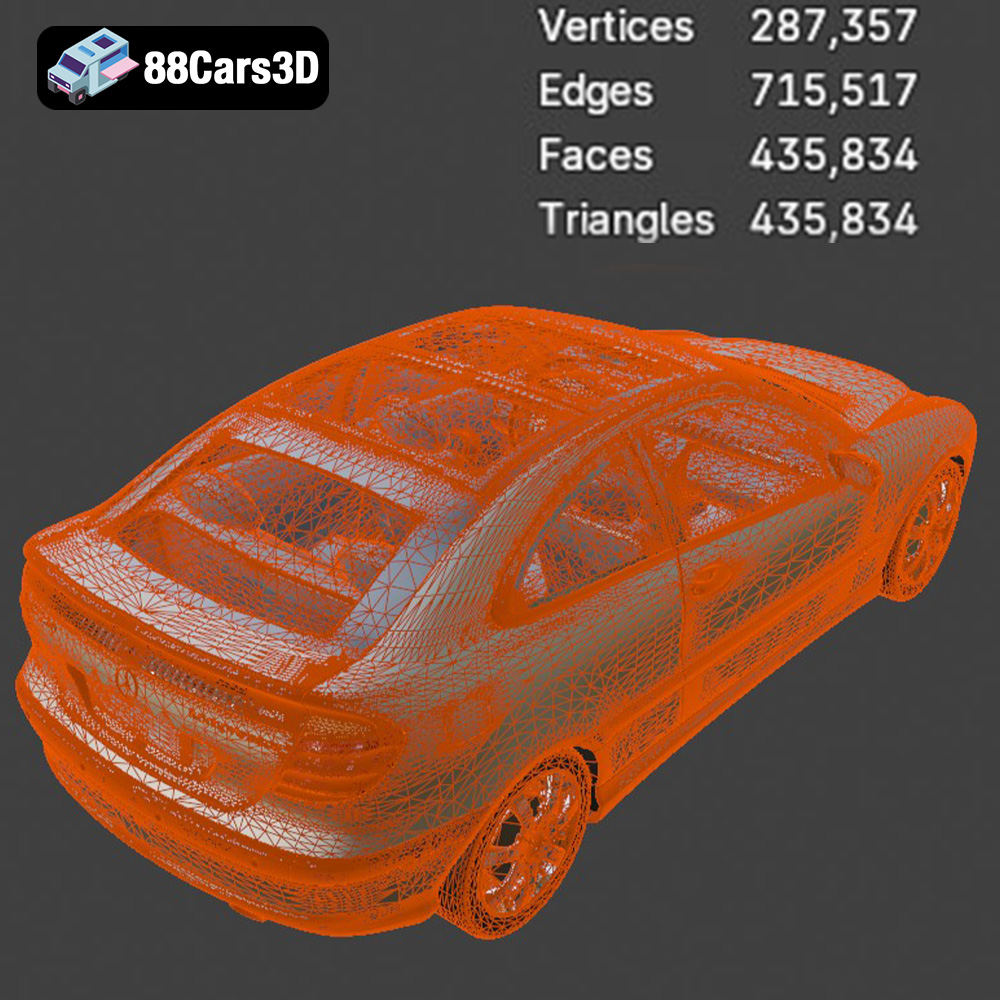
The product description highlights “clean, production-ready geometry optimized for subdivision and real-time performance.” This signifies that the model’s mesh is meticulously built, free of errors, overlapping polygons, or inefficient edge loops. Such geometry is crucial for two main reasons:
- Subdivision Surfaces: Clean geometry allows for smooth subdivision (e.g., using a Turbosmooth modifier in 3ds Max or a Subdivision Surface modifier in Blender) to achieve ultra-high detail for close-up renders without introducing artifacts.
- Real-Time Performance: Well-optimized geometry ensures that the poly count is manageable for game engines while maintaining visual fidelity.
Equally important is the mention of “UV mapped and correctly scaled to match real-world specifications.” Proper UV mapping is essential for applying textures accurately and without distortion. Clean UVs mean that PBR texture maps (like albedo, roughness, normal maps) will appear seamless and realistic on the model’s surfaces, from the intricate grille to the smooth body panels. Correct scaling ensures that the car fits naturally into any scene, whether it’s an architectural visualization or a virtual world.
The Advantage of a Fully Modeled Interior
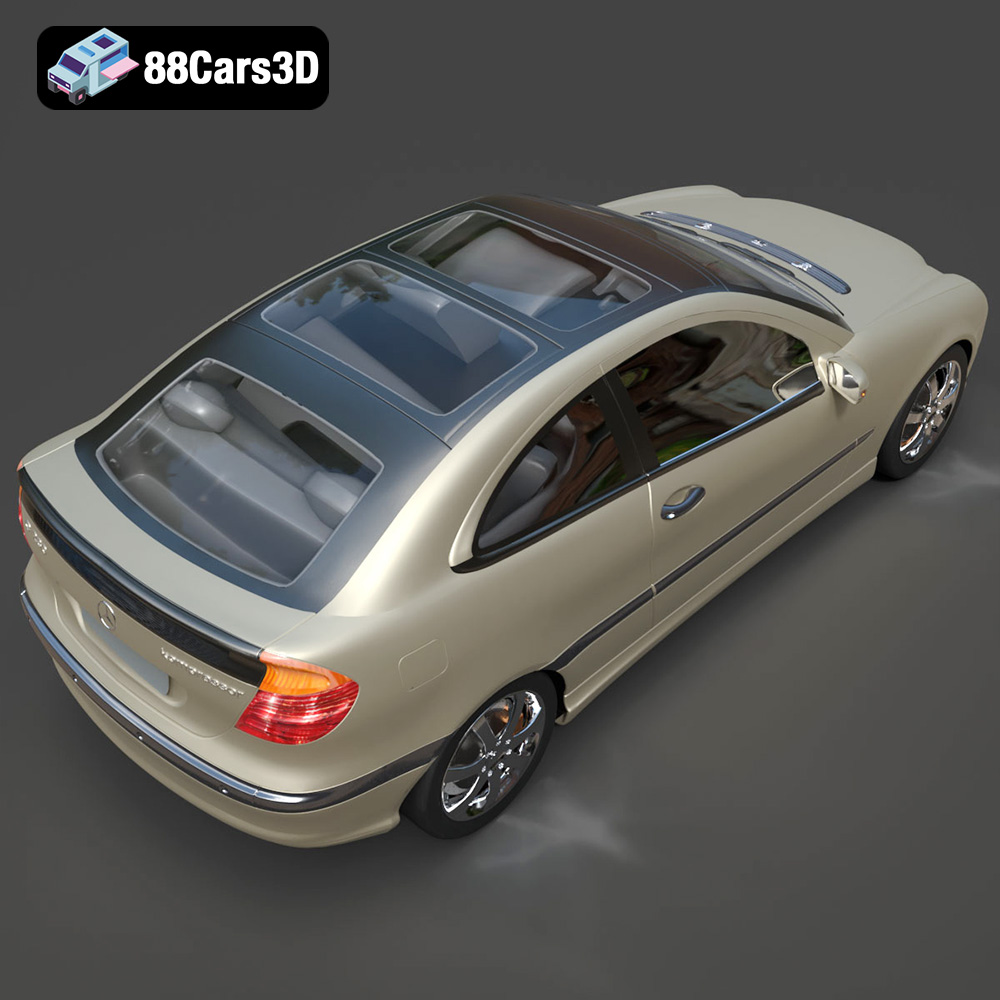
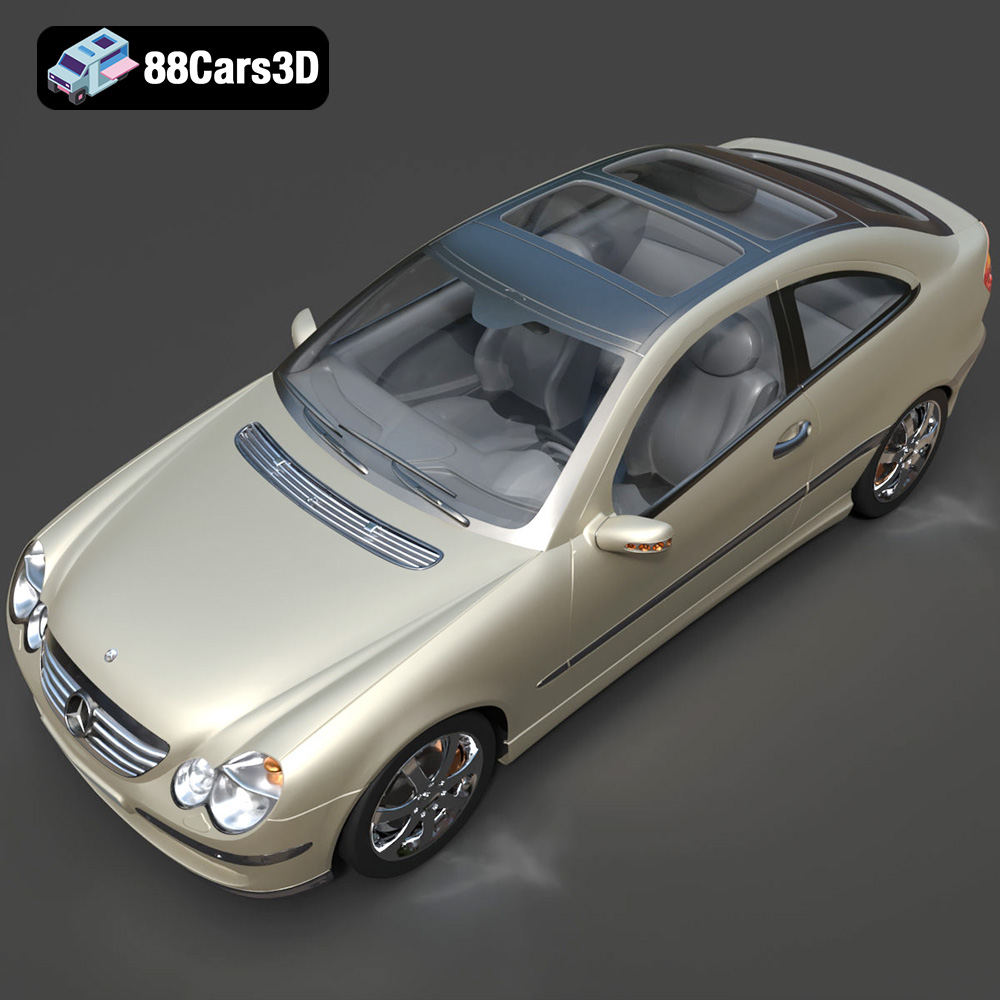
Many 3D car models focus solely on the exterior, leaving the interior as a simplified shell. However, the Mercedes Benz C230 3D Model boasts a “fully modeled interior suitable for detailed visualization and simulation projects.” This is a significant advantage, as it broadens the model’s application considerably.
- Cinematic Sequences: Enables camera shots that peer into the cabin, showcasing luxurious details like dashboard instruments, steering wheel, and seating upholstery.
- Interactive Experiences: Critical for AR/VR applications and driving simulators where users might sit inside the vehicle or interact with internal components.
- Realistic Reflections: A detailed interior contributes to more realistic reflections on the car’s glass surfaces, even if the interior isn’t the primary focus.
This attention to internal detail truly elevates the model from a simple prop to a comprehensive digital vehicle.
Realistic PBR Materials and Cross-Software Compatibility
The inclusion of “Realistic PBR materials accurately simulating paint, glass, rubber, and chrome surfaces” is a cornerstone of photorealism. These materials are built to behave scientifically correctly under various lighting conditions, making the C230 appear genuinely convincing. Furthermore, the extensive list of provided file formats (from .blend and .max for native editing, to .fbx and .unreal for game engines, and .glb for web/AR/VR) ensures that this high level of detail and material fidelity is accessible across virtually any professional 3D pipeline. This flexibility minimizes conversion issues and allows artists to integrate the Mercedes Benz C230 seamlessly into their preferred software environment, whether it’s 3ds Max, Blender, Unreal Engine, or Unity, making it a truly versatile and indispensable asset.
Conclusion: Empowering Your Creative Vision with Premium 3D Car Models
In the dynamic world of 3D visualization, the quality of your assets directly dictates the impact and realism of your projects. Investing in high-quality 3D car models like the Mercedes Benz C230 3D Model is not merely about acquiring a digital object; it’s about gaining access to a meticulously crafted foundation that empowers your creative vision and streamlines your production workflow. From the intricate geometry and realistic PBR materials to its comprehensive array of file formats optimized for various applications, this model exemplifies technical excellence and versatility.
Whether you are striving for breathtaking cinematic renders, developing immersive game environments, enhancing architectural visualizations, or exploring the frontiers of AR/VR, the Mercedes Benz C230 offers an immediate, production-ready solution. It eliminates the need for time-consuming modeling from scratch, allowing artists and developers to focus on scene creation, lighting, and interactivity. For professionals seeking top-tier 3D assets that meet the highest industry standards, platforms like 88cars3d.com provide an invaluable resource. Explore their collection of premium 3D car models to unlock new possibilities for your next project and drive digital excellence with confidence.
Featured 3D Model
Mercedes Benz C230 3D Model
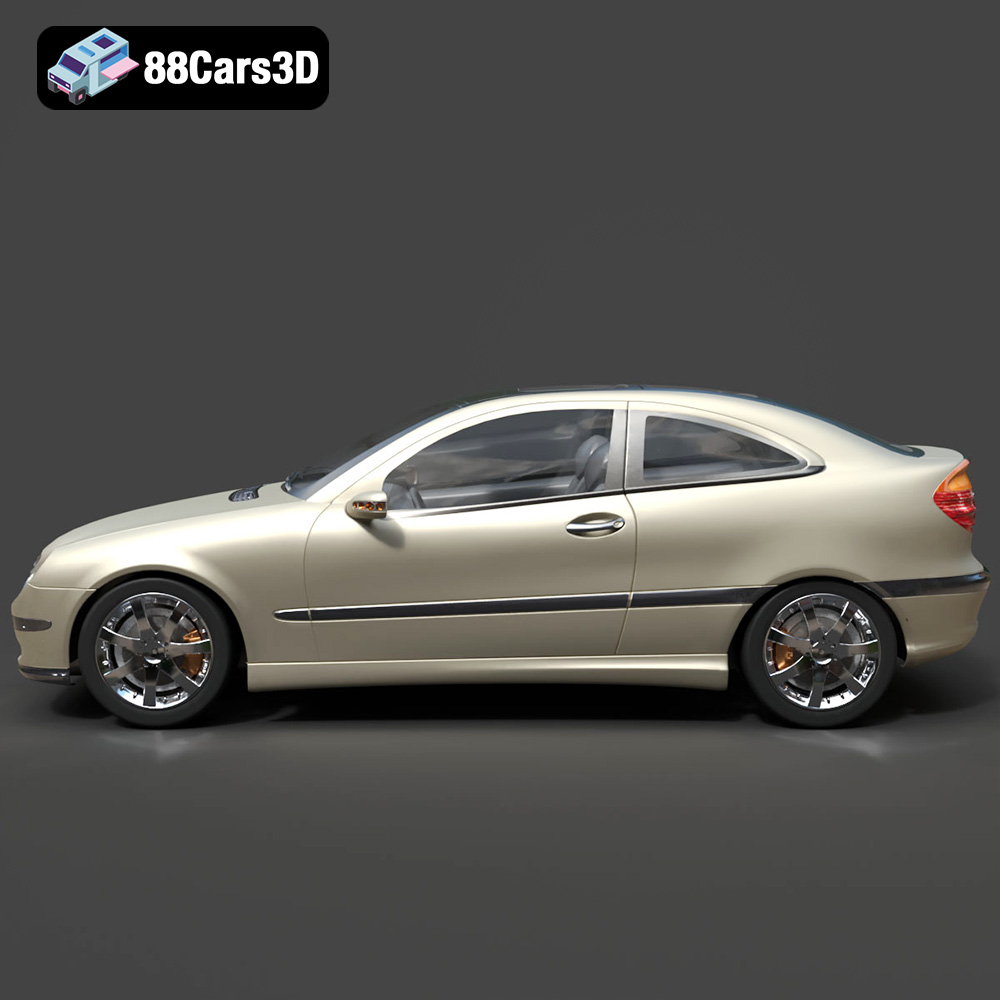
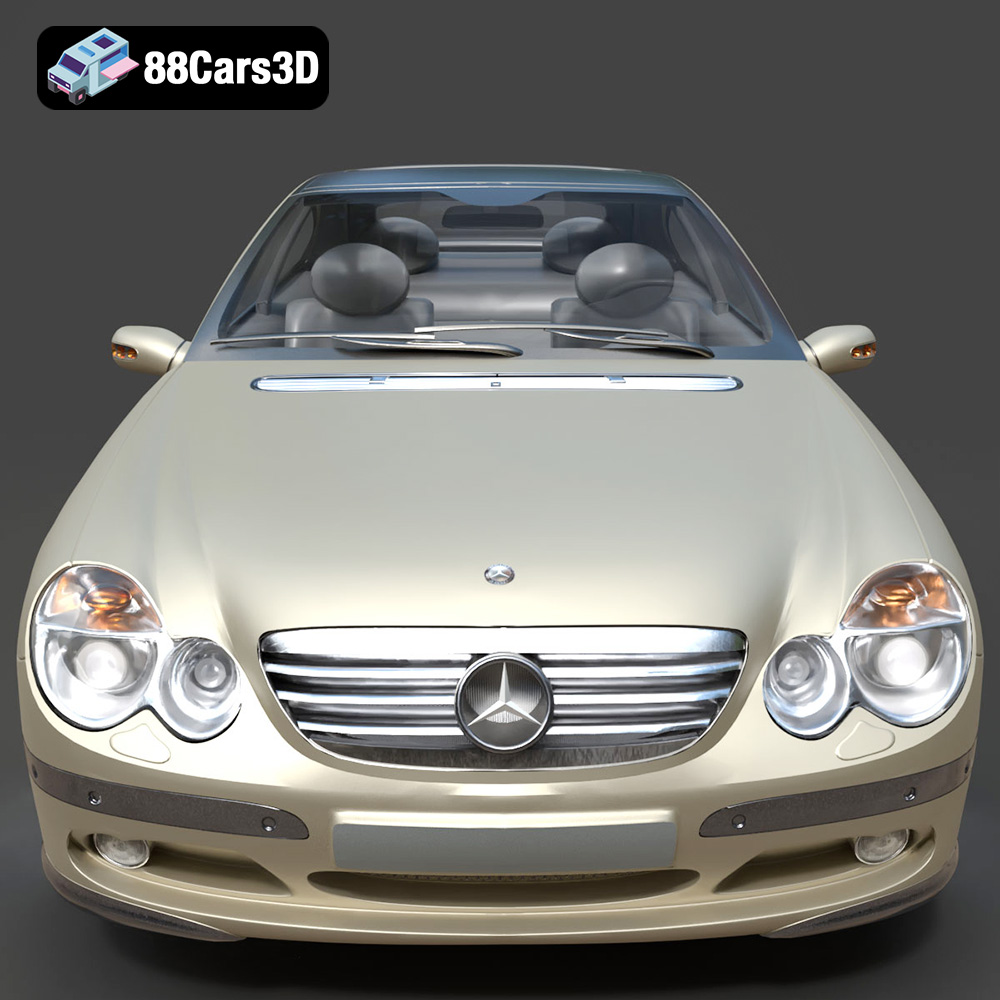
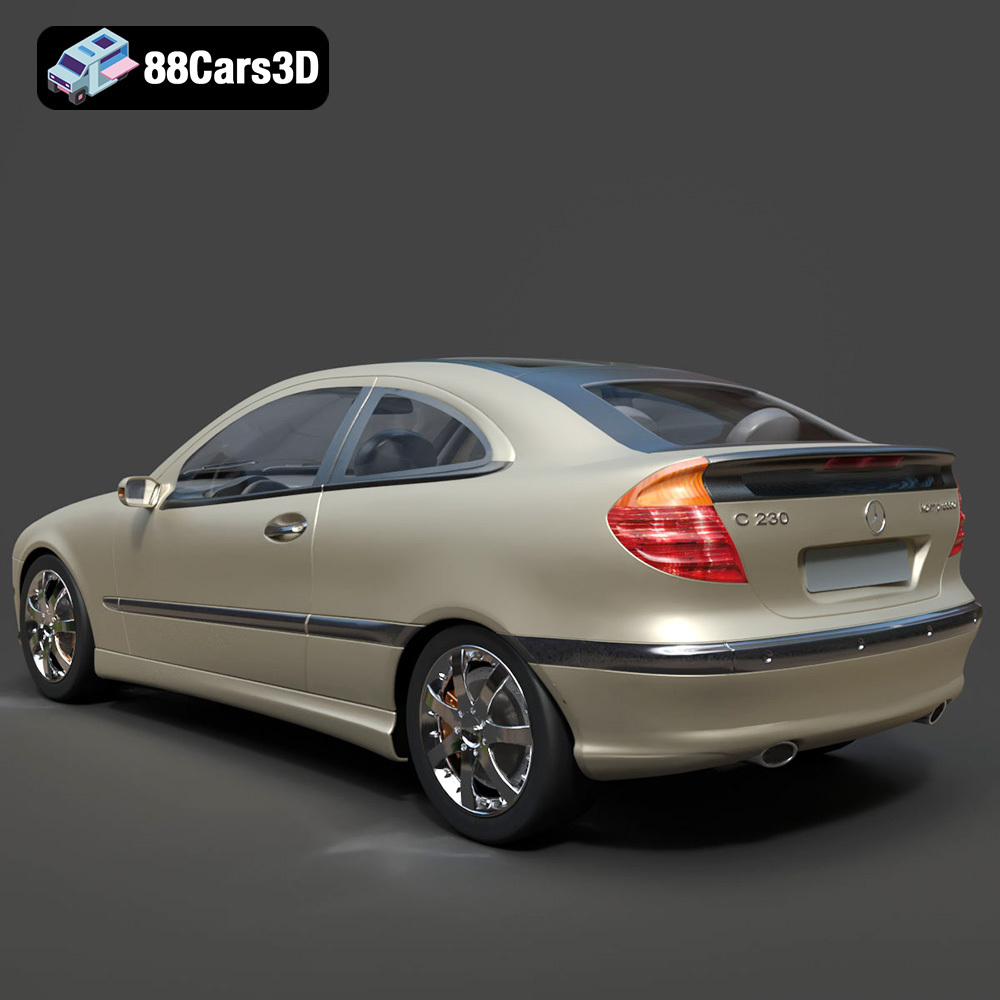
The Mercedes Benz C230 3D Model provides an accurate digital representation of the renowned luxury sedan. Crafted with attention to precision, this asset is optimized for close-up renders, cinematic sequences, and detailed virtual environments. It captures the engineering and design essence of the C230, offering immediate integration into professional pipelines.
$14.99
Product Image Gallery