

Mastering Digital Automotive Design: Why High-Quality 3D Car Models Drive Success
In the ever-evolving landscape of digital content creation, the demand for high-fidelity 3D assets is paramount. From breathtaking cinematic renders to immersive real-time experiences, the quality of your foundational models directly dictates the realism and impact of your projects. This is especially true in the automotive sector, where precision and authenticity are not just desired but expected.
Automotive rendering, game development, architectural visualization, and even product prototyping rely heavily on expertly crafted 3D car models. These aren’t merely visual placeholders; they are intricate digital twins, meticulously built to reflect every curve, every material, and every functional aspect of their real-world counterparts. The challenge lies in finding models that not only look good but are also technically robust, optimized for diverse applications, and ready to integrate seamlessly into professional pipelines. Today, we’ll delve into the critical role of these assets and spotlight an exemplary model that meets these stringent requirements: the Mercedes-Benz Vito Passenger Van 3D Model, a versatile asset available on 88cars3d.com.
Whether you’re an ArchViz artist populating a street scene, a game developer crafting an open-world environment, or an AR/VR designer building interactive experiences, understanding the nuances of 3D models and their file formats is crucial. Join us as we explore the technical considerations and creative opportunities unlocked by superior 3D automotive assets.
Understanding 3D Model File Formats
The journey of a 3D model from conception to final output often involves multiple software packages and diverse platforms. This necessitates a thorough understanding of various file formats, each with its unique strengths, limitations, and specific use cases. Choosing the correct format is paramount for efficient workflows, preserving data integrity, and ensuring compatibility across your chosen tools and engines. The Mercedes-Benz Vito Passenger Van 3D Model exemplifies this versatility by being offered in a comprehensive suite of formats.
.blend – The Native Blender Ecosystem
The .blend file format is Blender’s native project file. It encapsulates an entire Blender scene, including mesh data, materials, textures, lighting, cameras, animations, physics simulations, and even custom scripts. This format is ideal for artists working primarily within Blender, offering full editability and preserving all scene-specific settings. For the Mercedes-Benz Vito, the .blend file provides a complete, render-ready setup, allowing users to dive in and immediately start customizing or integrating the van into their Blender projects without any loss of data or material fidelity. It’s the go-to for those who need complete creative control and flexibility within the Blender environment.
.fbx – The Industry Workhorse for Interoperability
.fbx (Filmbox) is arguably the most widely adopted 3D file format for interchange between different software applications. Developed by Autodesk, it’s a proprietary format that has become a de facto standard, particularly for game development. An .fbx file can store model geometry (vertices, faces, normals), UV maps, skinning information, animations, cameras, and lights. It is highly optimized for real-time engines like Unreal Engine and Unity, making it an excellent choice for exporting assets like the Mercedes-Benz Vito 3D model for game development. Its robust support for animations and hierarchical structures makes it indispensable for character rigs and complex scene exports, ensuring that the van’s components and potential animation setups transfer smoothly.
.obj – The Universal Geometry Carrier
The .obj (Wavefront OBJ) format is a simple, universal 3D data format that is supported by nearly every 3D application. It stores geometry (vertices, faces, normals, UVs) and can reference external .mtl (material) files for basic material properties. While it doesn’t support animation or rigging, its widespread compatibility makes it an excellent choice for basic model exchange when you need just the mesh data. For the Mercedes-Benz Vito, the .obj version ensures that regardless of your primary 3D software—be it Maya, Cinema 4D, or even specialized CAD applications—you can import and work with the model’s core geometry.
.glb – Optimized for AR, VR, and Web
.glb (GL Transmission Format Binary) is the binary version of glTF, an open standard for 3D scenes and models. Designed for efficient transmission and loading of 3D content, especially on the web and in AR/VR applications, .glb packages all assets (geometry, materials, textures, animations) into a single, self-contained file. This makes it incredibly efficient for web-based viewers, augmented reality experiences on mobile devices, and virtual reality platforms. The .glb version of the Mercedes-Benz Vito is perfect for embedding the van directly into a website for interactive viewing, deploying it into an AR app for virtual placement, or integrating it into a VR architectural walkthrough.
.stl – The Standard for 3D Printing
.stl (Stereolithography) is the most common file format for 3D printing and rapid prototyping. It describes only the surface geometry of a 3D object using a collection of interconnected triangles, without any color, texture, or material information. While not suitable for rendering or animation, its simplicity and widespread acceptance in the additive manufacturing world make it essential for physical prototyping. If you need to 3D print a scaled model of the Mercedes-Benz Vito Passenger Van for a physical presentation or a design review, the .stl file is the format you would use.
.ply – Precision Mesh for CAD or Analysis
The .ply (Polygon File Format, or Stanford Triangle Format) is another format for storing 3D data, particularly known for its ability to store a wide range of data including color, transparency, texture coordinates, and even properties like normals and confidence values for each vertex or face. It’s often used for scanned data, scientific visualization, and applications requiring precise mesh information beyond simple geometry, such as CAD and engineering analysis. The .ply version of the Vito model could be beneficial for detailed structural analysis or specific visualization tasks where a richer dataset per polygon is required.
.unreal – Engine-Ready for Real-Time Environments
The .unreal designation often refers to assets that are pre-configured or directly imported into Unreal Engine, sometimes packaged as a .uasset file or a project file containing the asset. This means the model comes with materials, collision meshes, LODs (Levels of Detail), and other settings specifically tailored for optimal performance and integration within Unreal Engine. For the Mercedes-Benz Vito, having an “.unreal” optimized version means less setup time for game developers, ensuring the van looks and performs as intended right out of the box in a dynamic game environment.
.max – The Power of 3ds Max
Similar to .blend for Blender, .max is the native scene file format for Autodesk 3ds Max. It stores all scene data, including geometry, materials (with complex procedural textures), lighting setups, cameras, animation keyframes, and plugins. For artists and studios heavily invested in 3ds Max, the .max file for the Mercedes-Benz Vito provides the ultimate level of control, allowing for advanced rendering with V-Ray or Corona, complex animation sequences, and integration into existing 3ds Max projects without any fidelity loss. It’s perfect for high-end automotive rendering and detailed animation production.
The Mercedes-Benz Vito Passenger Van 3D Model: A Closer Look at Precision Engineering
The Mercedes-Benz Vito Passenger Van 3D Model available on 88cars3d.com isn’t just another vehicle asset; it’s a testament to meticulous digital craftsmanship. This model is engineered to meet the demanding standards of professional digital environments, making it an indispensable asset for a wide range of applications. Its design focuses on both visual fidelity and technical efficiency, ensuring it performs exceptionally whether rendered in a cinematic sequence or deployed in a real-time game engine.
Optimized Topology and Geometry for Performance and Detail
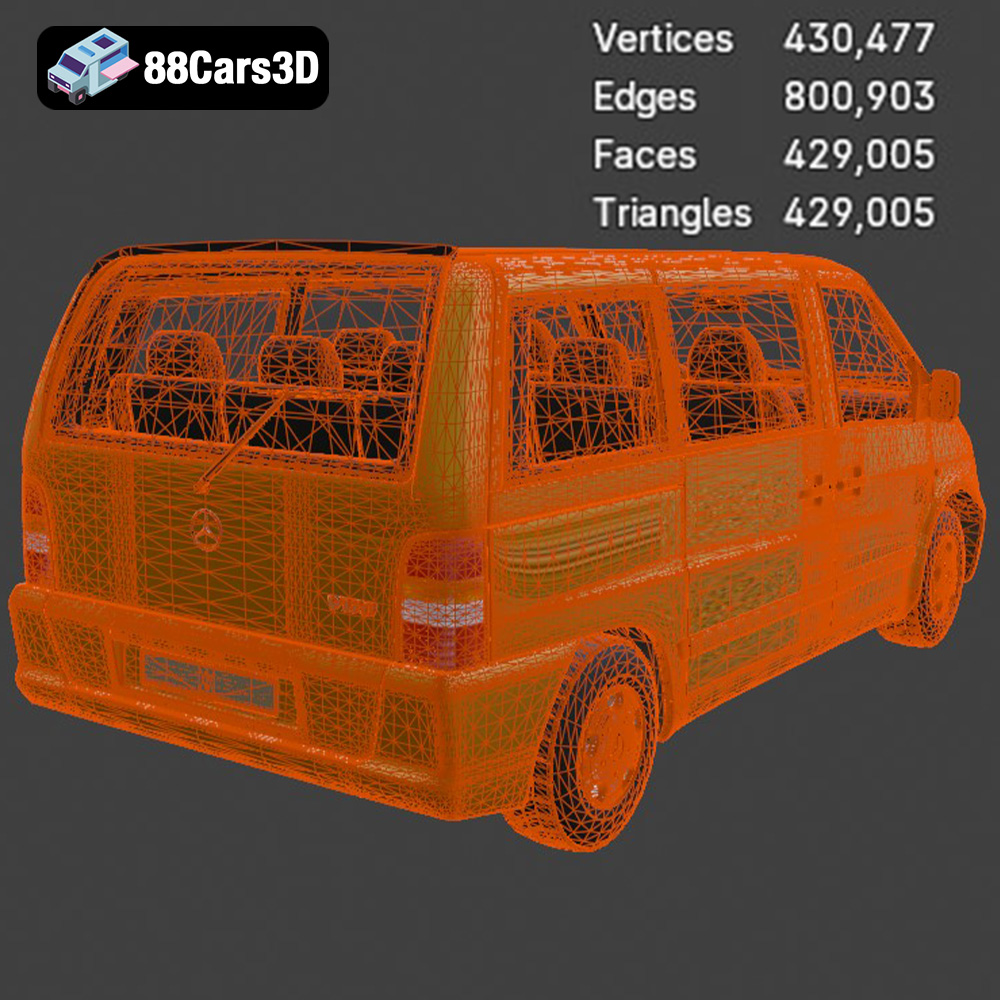
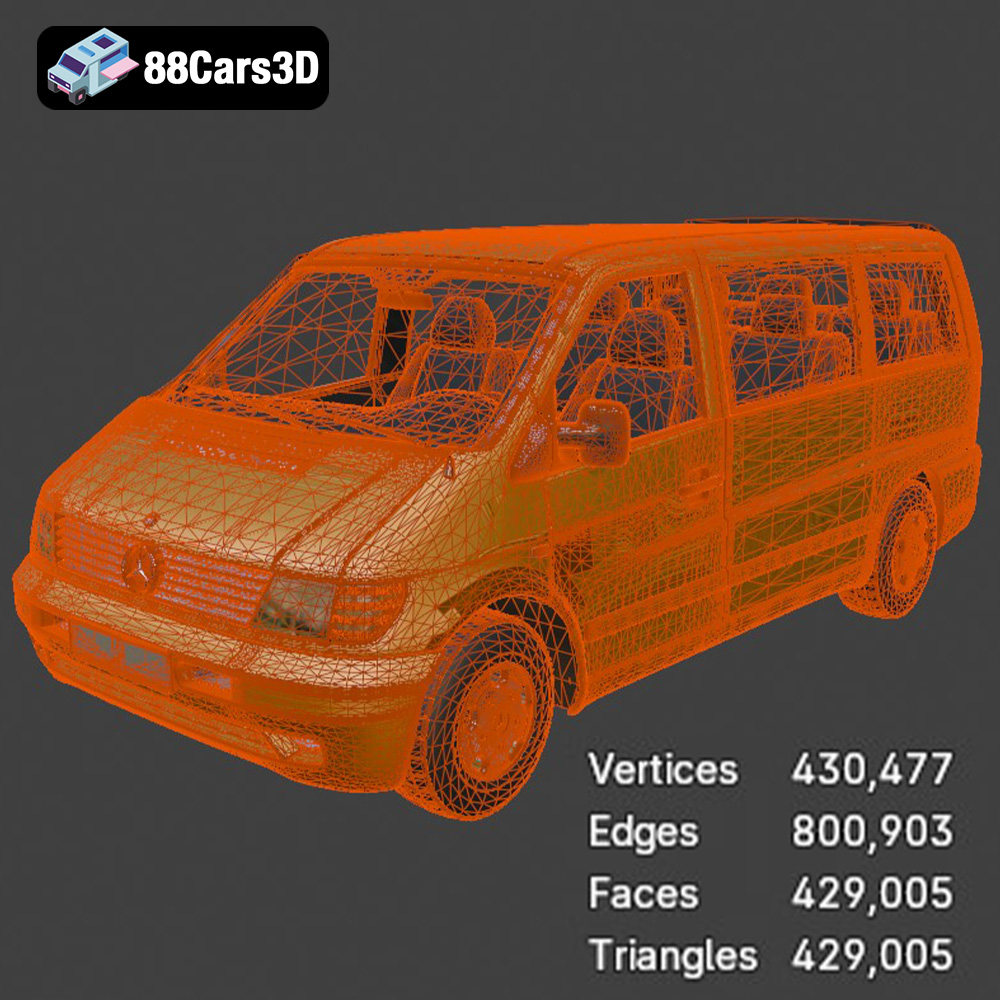
One of the core strengths of this model lies in its optimized, clean topology and geometry. What does this mean in practical terms? Clean topology refers to a mesh structure that uses well-distributed quad polygons, minimizing triangles (unless necessary for specific areas) and avoiding ngons (polygons with more than four sides). This results in several key advantages:
- Efficient Resource Use: A clean mesh with an appropriate poly count ensures the model is lightweight enough for real-time applications without sacrificing visual detail. This is crucial for maintaining high frame rates in games and interactive experiences.
- Smooth Subdivision: For cinematic rendering, the model is designed to respond exceptionally well to subdivision surface modifiers (like TurboSmooth in 3ds Max or Subdivision Surface in Blender). This allows artists to easily increase the visual detail for close-up shots, producing flawlessly smooth curves and surfaces without introducing artifacts.
- Ease of Editing and UV Unwrapping: Logical edge flow makes it simpler for artists to modify the mesh, perform retopology if needed, or adjust UV maps. This flexibility extends the model’s lifespan and utility across various project requirements.
The Mercedes-Benz Vito model’s geometry is a balance of detail where it matters and efficiency where it’s not critical, reflecting the characteristic features of the van accurately while remaining performance-friendly.
Realistic Materials and Seamless Integration
Beyond its geometry, the model shines with its realistic materials and thoughtful scene integration. Applying realistic materials is crucial for achieving photorealistic renders, especially for automotive subjects where reflections, refractions, and surface properties are key identifiers.
- Physically Based Rendering (PBR) Ready: While not explicitly stated, “realistic materials” and “instant render-ready results in native file formats” strongly suggest the use of PBR workflows. This means the materials are set up with Albedo/Base Color, Metallic, Roughness, Normal, and potentially Ambient Occlusion maps, ensuring consistent and physically accurate lighting responses across different rendering engines (e.g., V-Ray, Corona, Cycles, Marmoset Toolbag, Unreal, Unity).
- Correct UV Mapping: “Mapped correctly” implies that the UV coordinates are properly unwrapped and scaled, preventing texture stretching or distortion. This ensures that custom decals, liveries, or paint jobs can be easily applied and displayed accurately on the van’s surfaces.
- Logically Named and Grouped Components: A well-organized 3D model is a joy to work with. The Vito model’s components are logically named (e.g., “Body_Panel_Front,” “Wheel_FR,” “Headlight_L”) and grouped, making scene management, selection, and customization incredibly straightforward. This is invaluable for quickly adjusting materials, animating specific parts (like doors or wheels), or replacing components.
These features ensure that when you download the Mercedes-Benz Vito Passenger Van 3D Model from 88cars3d.com, you’re not just getting a mesh; you’re getting a fully realized, production-ready asset.
Integrating the Vito Van into Professional Workflows: From ArchViz to Game Development
The true value of a high-quality 3D asset lies in its practical application across various professional domains. The Mercedes-Benz Vito Passenger Van 3D Model is designed with this versatility in mind, serving as a robust foundation for diverse creative and technical projects. Its optimized nature and comprehensive file format support make it an ideal candidate for seamless integration into industry-standard workflows.
Architectural Visualization (ArchViz) Enhancements
In architectural visualization, the presence of vehicles is often critical for adding scale, context, and a sense of realism to urban scenes or property renders. A street without cars can feel sterile and lifeless. The Mercedes-Benz Vito, a common sight in many urban landscapes, is an excellent choice for populating architectural renders.
- Scene Realism: Placing the Vito van in front of a new office building, parking lot, or residential street immediately grounds the architectural design in reality. Its recognizable form provides a visual cue that helps viewers imagine the space in a lived-in context.
- Contextual Storytelling: Depending on the project, the van can convey subtle narrative elements—a delivery vehicle, a shuttle for a hotel, or a family’s primary mode of transport. This adds depth beyond just visual aesthetics.
- Effortless Integration: With render-ready materials and clean topology, ArchViz artists using software like 3ds Max (with V-Ray or Corona) or Blender (with Cycles) can simply import the .max or .blend file, position the van, and achieve photorealistic results with minimal setup. The correct UV mapping also allows for easy application of custom company logos or branding.
Game Development and Real-Time Applications
For game developers and those building real-time interactive experiences, performance is paramount. The Mercedes-Benz Vito Passenger Van 3D Model is specifically optimized for these environments, making it a valuable game asset.
- Unreal Engine & Unity Optimization: The availability of .fbx and .unreal formats underscores its readiness for major game engines. This implies that the model’s poly count is managed for real-time budgets, materials are set up for PBR shaders, and it might even include basic collision meshes or LODs (Levels of Detail) to ensure optimal performance at varying distances. Developers can quickly import, configure, and deploy the van into their virtual worlds, whether it’s an open-world driving simulator or a dynamic urban environment.
- Vehicle Simulation Training: Beyond traditional games, the model is perfectly suited for vehicle simulation training. For professional driver training, logistics planning, or emergency response simulations, highly accurate vehicle models are essential for a realistic and effective learning environment. The Vito’s detailed yet optimized nature allows for accurate physics interaction and visual representation within simulation platforms.
Virtual Reality (VR) and Augmented Reality (AR) Experiences
The immersive nature of VR and AR demands models that are both visually rich and incredibly efficient. The Mercedes-Benz Vito model is well-prepared for these cutting-edge applications.
- Optimized for Performance: VR and AR typically require high frame rates (e.g., 90 FPS for VR) to prevent motion sickness and ensure a smooth experience. The model’s optimized topology contributes directly to meeting these performance targets.
- .glb Format for Web & Mobile AR: The inclusion of the .glb format is critical here. It allows developers to easily integrate the van into web-based AR experiences (e.g., placing a virtual Vito in a real-world driveway via a smartphone camera) or deploy it into mobile VR applications with minimal loading times and efficient rendering. This makes it an excellent asset for interactive product showcases or virtual tours.
From static renders to fully interactive digital worlds, the Mercedes-Benz Vito Passenger Van 3D Model from 88cars3d.com provides the necessary technical foundation for professionals across the digital spectrum.
Optimizing for Real-Time and Cinematic Rendering
Achieving stunning visuals, whether for a high-performance game or a photorealistic marketing animation, involves a delicate balance of artistic vision and technical optimization. The Mercedes-Benz Vito Passenger Van 3D Model provides an excellent starting point, but understanding how to leverage its features for different rendering pipelines is key to maximizing its potential.
Poly Count Management and Level of Detail (LOD)
The product description mentions “optimized, clean topology and geometry,” which is crucial for both real-time and cinematic contexts. For real-time applications like games or interactive VR experiences, strict poly count budgets are essential. The base model of the Vito is designed to be efficient, but for large-scale environments, further optimization might be necessary:
- Real-Time LODs: Developers often create multiple versions of an asset, known as Levels of Detail (LODs). As the camera moves further from the object, lower-polygon versions are swapped in to save rendering resources. While not explicitly stated as included, a well-built base mesh like the Vito’s makes generating LODs a straightforward process, ensuring performance even when hundreds of vehicles are on screen.
- Cinematic Subdivision: Conversely, for high-resolution cinematic renders or close-up product shots, the “smooth subdivision for cinematic rendering” feature allows artists to increase the mesh density without manually editing vertices. Applying a subdivision modifier in 3ds Max or Blender transforms the relatively low-poly base into a super-smooth, high-fidelity model, perfect for capturing intricate reflections and surface details.
This flexibility ensures the Mercedes-Benz Vito 3D model can scale from background dressing in a game to a hero asset in an automotive commercial.
PBR Materials and Texture Workflow
Realistic materials are non-negotiable for modern rendering. The Mercedes-Benz Vito model’s “realistic materials… mapped correctly” suggests a PBR (Physically Based Rendering) workflow, which is the industry standard for achieving consistent and accurate material responses under various lighting conditions.
- Texture Set Components: PBR materials typically consist of several texture maps: Base Color (or Albedo), Metallic, Roughness, Normal, and sometimes Ambient Occlusion, Height, or Emissive maps. These maps define how light interacts with the surface, from the reflectivity of painted metal to the subtle bumps of a plastic bumper.
- Customization and Iteration: The clean UV mapping and organized component structure of the Vito model empower artists to easily customize these textures. Want a different paint color? Modify the Base Color map or adjust the material’s color properties. Need to add a scratch? Overlay a wear map. This allows for endless variations, from a pristine showroom model to a weathered delivery van, all while maintaining physical accuracy.
- Engine Integration: The PBR setup translates directly into game engines like Unreal Engine and Unity. The material systems in these engines are built around PBR principles, meaning the materials from the .fbx or .unreal versions of the Vito model will look consistent with minimal tweaking, significantly speeding up asset integration time for game assets.
Lighting and Rendering Techniques
Even the best 3D model needs expert lighting and rendering to truly shine. For the Mercedes-Benz Vito, leveraging its strengths can lead to stunning results:
- HDRI for Environments: Using High Dynamic Range Images (HDRIs) is a common technique for realistic automotive rendering. An HDRI provides both lighting and reflections, creating believable environments that interact naturally with the van’s surfaces, especially its glossy paintwork and chrome details.
- Global Illumination: Rendering engines with robust Global Illumination (GI) algorithms (like V-Ray, Corona Renderer, Blender Cycles, or Unreal Engine’s Lumen/Baked GI) will accurately calculate how light bounces off and interacts with the Vito model and its environment, creating soft shadows and realistic color bleeding.
- Post-Production: While the model provides a strong foundation, post-production in software like Photoshop or Fusion can elevate renders further with color grading, depth of field adjustments, lens flares, and other cinematic effects, making the Mercedes-Benz Vito appear truly integrated into its scene.
By understanding and applying these optimization and rendering techniques, professionals can unlock the full visual fidelity and performance potential of the Mercedes-Benz Vito Passenger Van 3D Model.
Beyond Visualization: AR, VR, and 3D Printing Applications
The utility of a robust 3D model extends far beyond traditional screen-based rendering. As technology advances, capabilities like Augmented Reality, Virtual Reality, and 3D printing are becoming integral tools in design, marketing, and prototyping. The Mercedes-Benz Vito Passenger Van 3D Model is meticulously prepared to excel in these emerging applications, demonstrating its forward-thinking design and comprehensive file format support.
Immersive Experiences with AR and VR
Augmented Reality (AR) and Virtual Reality (VR) offer unparalleled opportunities for immersive interaction and visualization. For automotive models, this translates into powerful marketing tools, design reviews, and interactive simulations.
- AR for Product Showcases: Imagine a prospective buyer using their smartphone to place a virtual Mercedes-Benz Vito in their driveway or garage. The .glb format, specifically optimized for web and mobile AR, makes this possible. This allows for real-time scale, environment integration, and even interactive features like changing paint colors or opening doors—all powered by the model’s clean geometry and efficient materials. This interactive visualization capability is a game-changer for online sales and configurators.
- VR for Design Review and Training: In a VR environment, designers can walk around, sit inside, and inspect the Vito model in a truly immersive, 1:1 scale. This is invaluable for design reviews, ergonomics studies, or even planning logistics routes where understanding vehicle dimensions in a virtual space is critical. The optimized nature of the model ensures smooth performance in VR headsets, preventing motion sickness and enhancing the sense of presence.
- Interactive Simulations: Beyond purely visual experiences, the Vito model can be integrated into VR-based simulation training for professional drivers, delivery services, or emergency personnel. Trainees can practice maneuvers, assess spatial awareness, and learn vehicle dynamics in a safe, controlled virtual environment, benefiting from the model’s accurate representation.
The strategic inclusion of the .glb format directly addresses the needs of these rapidly growing AR/VR sectors, showcasing the model’s adaptability.
Prototyping and Physical Models via 3D Printing
While digital models are crucial for visualization, sometimes a physical representation is required for design reviews, client presentations, or scale models. This is where 3D printing comes into play, and the Mercedes-Benz Vito 3D Model is equipped for this purpose.
- .stl for Additive Manufacturing: The inclusion of the .stl file format is specifically tailored for 3D printing. This format strips away all color, texture, and material information, leaving only the raw polygonal surface data that 3D printers understand. This ensures that the van’s geometry can be accurately translated into a physical object.
- Design Prototyping: Automotive designers can 3D print scaled versions of the Vito model to evaluate physical forms, proportions, and design aesthetics in tangible form, complementing their digital workflows. This allows for hands-on feedback before committing to expensive full-scale prototypes.
- Educational Models and Memorabilia: The .stl file also enables the creation of physical models for educational purposes, dioramas, or even custom merchandise for enthusiasts. The ability to quickly produce a physical representation from a digital asset highlights the comprehensive nature of this 3D model package.
By offering formats for both cutting-edge immersive experiences and traditional physical prototyping, the Mercedes-Benz Vito Passenger Van 3D Model from 88cars3d.com truly covers the entire spectrum of digital and physical applications, making it a valuable investment for any professional.
Choosing the Right Assets for Your Project: The 88cars3d.com Advantage
In the competitive world of digital content creation, time is money, and quality is king. Sourcing high-quality 3D car models that are technically robust, visually stunning, and versatile across multiple platforms can be a significant challenge. This is where specialized marketplaces like 88cars3d.com provide an invaluable service, offering a curated selection of premium assets designed to meet professional standards.
The Value of Pre-Optimized, Production-Ready Models
The alternative to purchasing a pre-made model like the Mercedes-Benz Vito Passenger Van 3D Model is to create it from scratch. While this offers ultimate control, it is an incredibly time-consuming and expensive endeavor, especially for complex automotive subjects. A professional-grade vehicle can take hundreds of hours to model, texture, and optimize.
- Time and Cost Savings: By acquiring a production-ready model, studios and individual artists can drastically cut down development time and costs. Instead of spending weeks on modeling, texturing, and rigging, you can integrate the asset within hours, freeing up resources for other critical aspects of your project, such as scene composition, animation, or interactive logic.
- Guaranteed Quality: Reputable marketplaces like 88cars3d.com curate their offerings to ensure a baseline of quality. This includes clean topology, accurate geometry, realistic materials, and proper UV mapping—all critical features exemplified by the Mercedes-Benz Vito model. This eliminates the uncertainty of starting with a model that may require significant rework.
- Versatility and Compatibility: As demonstrated by the comprehensive list of included file formats (.blend, .fbx, .obj, .glb, .stl, .ply, .unreal, .max), these models are designed for maximum compatibility. This means you can use the same asset across different software packages and engines, maintaining consistency across your pipeline and reducing the need for format conversions or re-exports.
Seamless Integration and Support for Diverse Workflows
The focus on integration is a hallmark of high-quality assets. The Mercedes-Benz Vito model, with its logical naming conventions and organized component grouping, exemplifies this. It means that:
- Ease of Customization: Artists can quickly select individual parts (doors, wheels, interior elements) to apply custom textures, materials, or even animate specific components without digging through an unorganized mesh. This is particularly useful for client revisions or creating variations.
- Multi-Platform Readiness: Whether you’re targeting high-end automotive rendering with 3ds Max, building a game world in Unreal Engine, or creating an interactive AR experience with .glb, the model is prepared. This eliminates the headache of converting, re-texturing, or re-optimizing assets for different destinations.
In essence, investing in premium 3D models from a trusted source like 88cars3d.com is an investment in efficiency, quality, and versatility. It allows creators to focus on their unique vision, confident that their foundational assets are expertly crafted and ready to perform.
Conclusion
The journey through the intricate world of 3D car models reveals a critical truth: the quality and versatility of your digital assets are fundamental to the success of any professional project. From the foundational aspects of clean topology and realistic materials to the strategic choice of file formats, every detail contributes to the final outcome, whether it’s a breathtaking automotive rendering, an immersive game environment, or an innovative AR/VR experience.
The Mercedes-Benz Vito Passenger Van 3D Model stands as an exemplary representation of what a high-quality, production-ready asset should be. Its meticulous engineering for optimized topology, PBR-ready materials, logical organization, and support for an extensive range of file formats—including .blend, .fbx, .obj, .glb, .stl, .ply, .unreal, and .max—ensures it fits seamlessly into virtually any professional workflow. This model isn’t just a digital recreation of a popular commercial vehicle; it’s a versatile tool designed to save time, enhance realism, and unlock creative potential across architectural visualization, game development, simulation, and emerging immersive technologies.
For designers, developers, and artists seeking to elevate their projects with accurate and efficient 3D car models, exploring resources like 88cars3d.com offers a significant advantage. By choosing carefully crafted assets such as the Mercedes-Benz Vito Passenger Van, you’re not just buying a model; you’re investing in a foundation for digital excellence.
Featured 3D Model
Mercedes-Benz Vito Passenger Van 3D Model
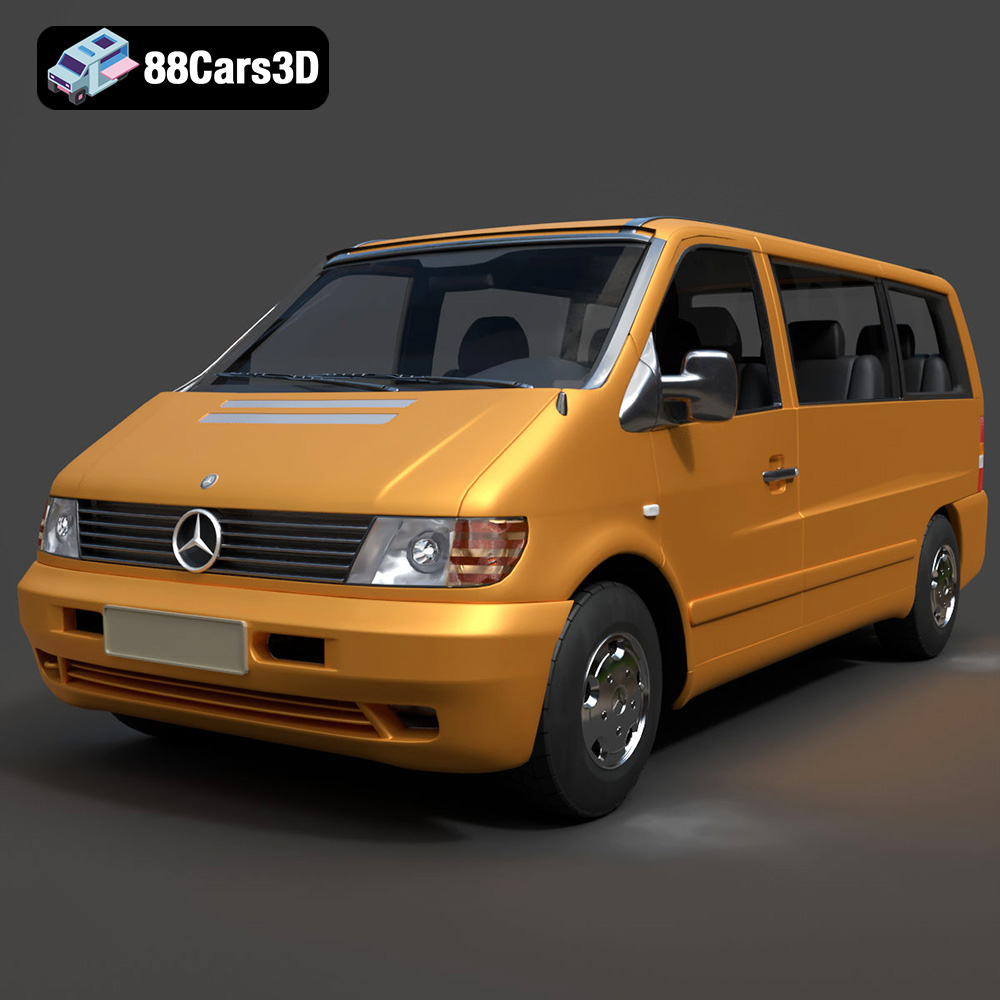
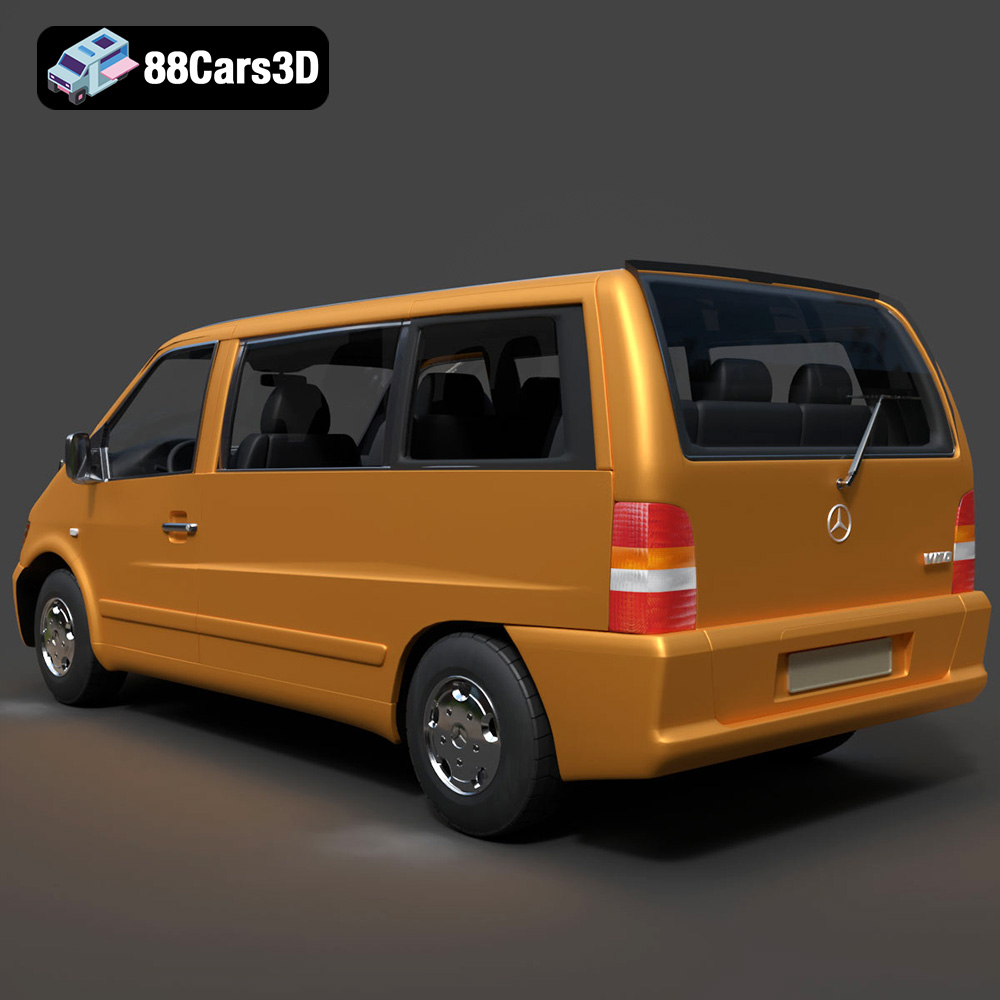
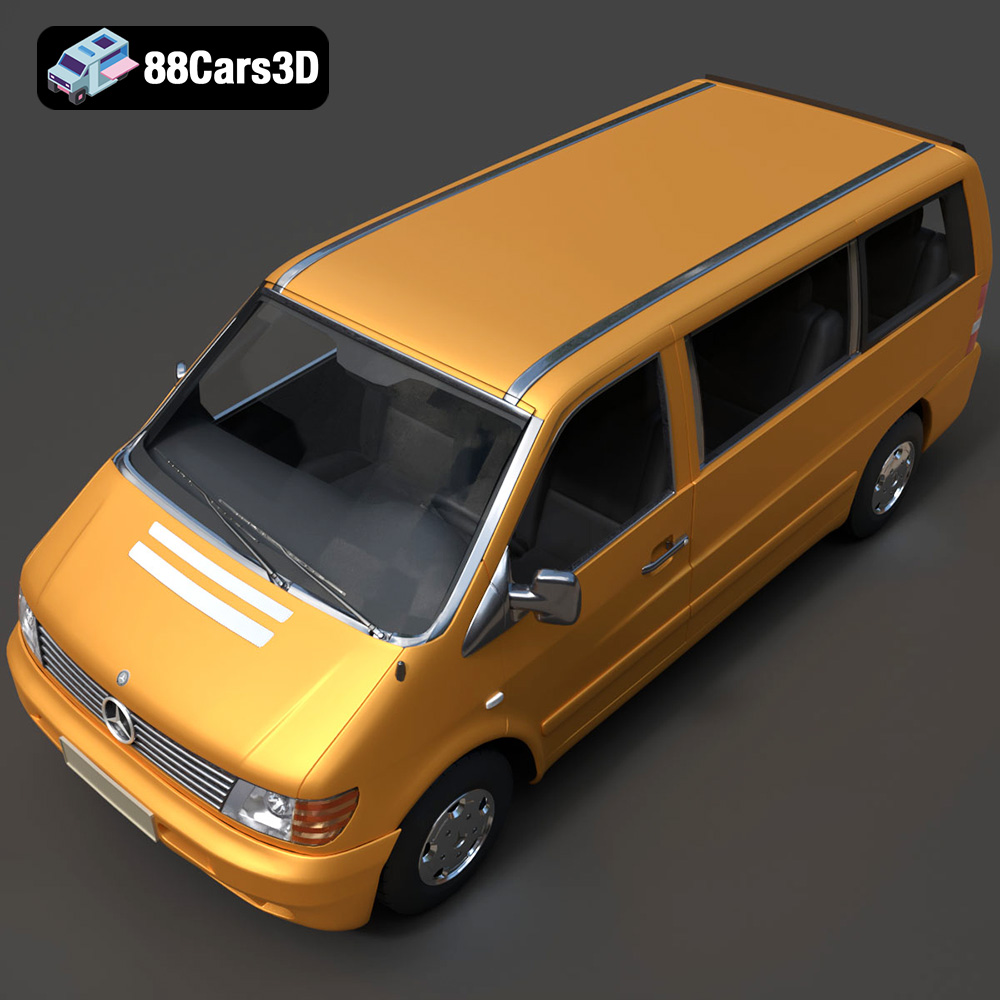
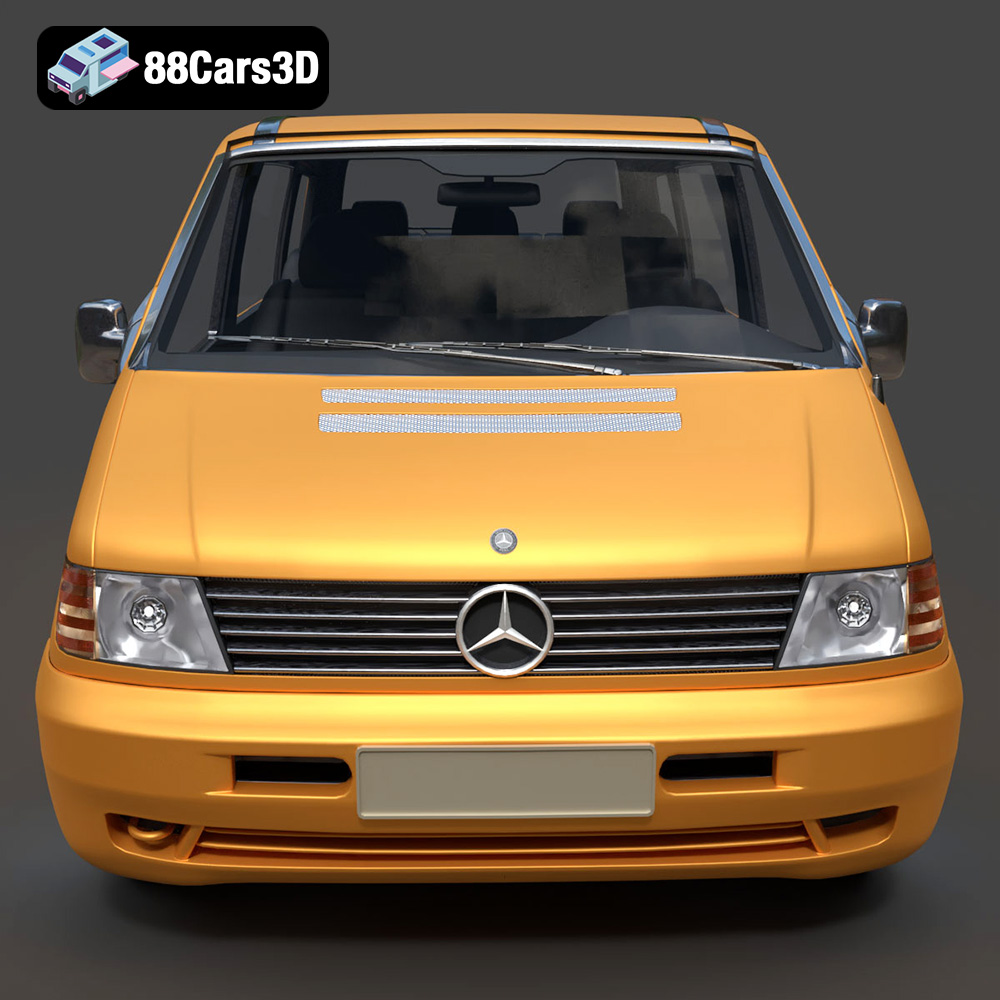
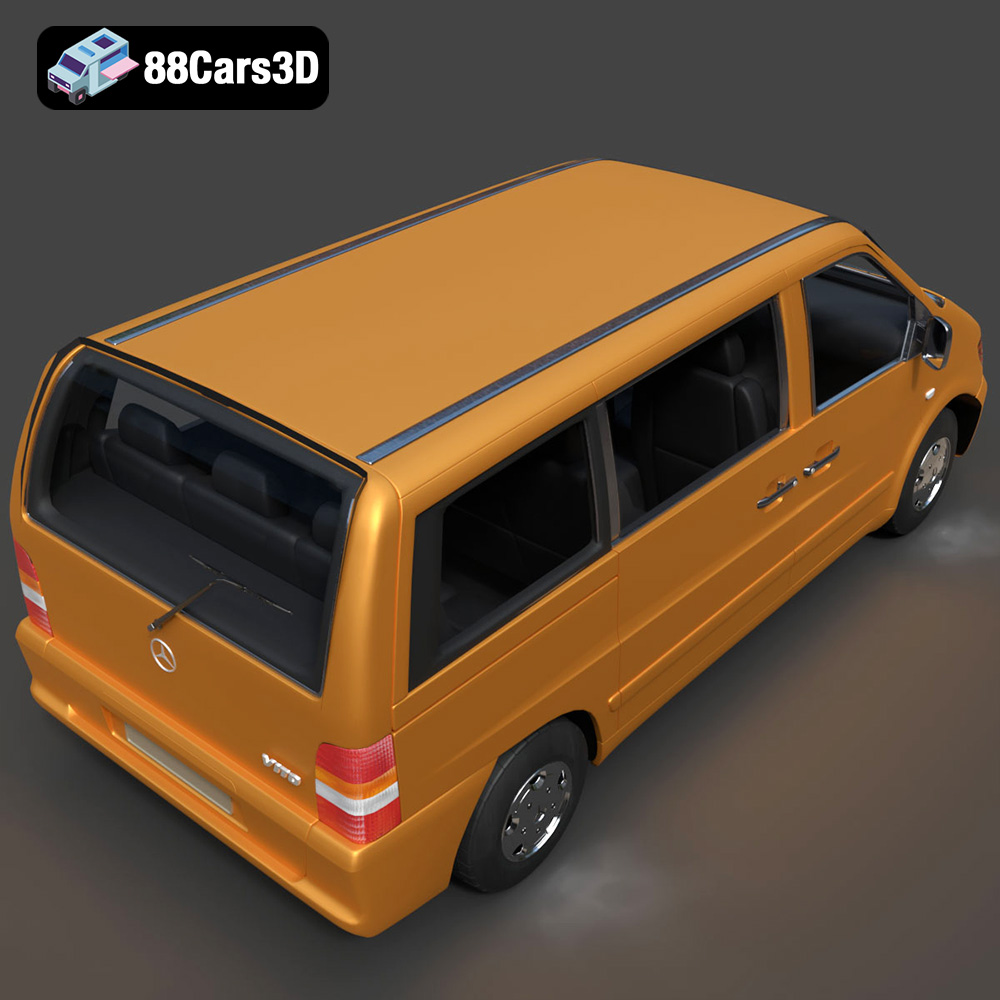
This is a detailed 3D model of the Mercedes-Benz Vito Passenger Van, engineered for versatility and accuracy across professional digital environments. The model captures the functional design and characteristic features of this popular commercial vehicle, making it an essential asset for projects requiring realistic urban or transport scene elements. The asset features optimized, clean topology and geometry, ensuring efficient resource use in real-time applications and smooth subdivision for cinematic rendering. All components are logically named and grouped, facilitating easy customization, material adjustments, and scene integration. Realistic materials are applied and mapped correctly, providing instant render-ready results in native file formats. The Mercedes-Benz Vito 3D model is perfect for architectural visualization (ArchViz) projects, adding realism to street scenes, vehicle simulation training, virtual reality (VR) tours, augmented reality (AR) applications, and integration into video game development (optimized for both Unreal Engine and Unity).
$19.99
Product Image Gallery

Related Tags
.arvr
.blend
.car3dmodel
.commercialvehicle
.fbx
.gameasset
.glb
.max
.mercedes
.mercedesbenz
.minivan
.obj
.passenger
.ply
.rendering
.simulation
.stl
.unreal
.van
.vito
