

Mastering 3D Assets: The Foundation of Professional Visualization and Game Development
In the dynamic world of 3D visualization, game development, virtual reality, and cinematic rendering, the quality of your foundational assets dictates the success of your final output. Whether you’re crafting an immersive open-world game, producing a photorealistic automotive advertisement, or designing cutting-edge architectural walkthroughs, the need for meticulously modeled, expertly textured, and properly optimized 3D assets is paramount. Professional artists and studios understand that starting with high-quality components saves invaluable time and elevates the entire project.
Today, we’re diving deep into the technical aspects of what makes a 3D model truly professional, using the outstanding Mototsikly Downhill Bike-002 3D Model from 88cars3d.com as our prime example. This model is not just a visual replica; it’s a testament to precision engineering in the digital realm, built to meet the rigorous demands of various professional pipelines, from detailed product renderings to real-time game environments. We’ll explore the technical intricacies, practical applications, and the crucial role that versatile file formats play in today’s demanding creative industries.
Understanding 3D Model File Formats: The Language of Digital Assets
The journey of a 3D model from its creation to its final application often involves multiple software packages and diverse platforms. This necessitates a deep understanding of the various file formats available, each optimized for specific purposes. The Mototsikly Downhill Bike-002 3D Model exemplifies versatility by offering a comprehensive suite of formats, ensuring its immediate utility across virtually any professional workflow. Let’s break down these critical formats:
.blend – The Native Blender Powerhouse
The .blend file format is Blender’s native project file. It encapsulates an entire scene, including mesh data, materials, textures, lighting setups, camera positions, animations, and even physics simulations. For artists working in Blender, having the native .blend file provides maximum flexibility. You can easily modify geometry, adjust materials, re-rig, animate, or re-render the scene directly. It’s the go-to for deep customization and leveraging Blender’s powerful suite of tools for rendering (Cycles, Eevee) and production.
.fbx – The Industry-Standard Interchange Format
.fbx (Filmbox) is arguably the most widely adopted interchange format in the 3D industry, particularly popular for game development with engines like Unreal and Unity. Developed by Autodesk, it’s designed to carry a vast amount of data, including geometry, UVs, PBR materials (often baked or referenced), skeletons, animations, and camera information, all while maintaining relative consistency across different software. Its robustness and widespread support make it ideal for transporting complex animated assets and integrated scenes between applications like Maya, 3ds Max, Blender, and directly into game engines. The Mototsikly Downhill Bike-002’s .fbx version is optimized for real-time performance, ensuring smooth integration.
.obj – The Universal Geometry Carrier
The .obj (Wavefront OBJ) format is a venerable and highly compatible format, primarily known for storing 3D geometry (vertices, faces, normals, UVs). It’s a text-based format, making it very transparent and easy to parse, though it doesn’t typically store advanced scene data like animations or complex material nodes. It’s an excellent choice for static mesh data, offering near-universal compatibility across almost all 3D software. When you need to export a clean mesh for sculpting, retopology, or simply as a foundational piece, .obj is a reliable option.
.glb – Optimized for AR, VR, and Web-based Display
.glb (GL Transmission Format Binary) is quickly becoming the standard for 3D web, AR (Augmented Reality), and VR (Virtual Reality) applications. It’s a compact, self-contained binary format that includes models, materials (PBR ready), textures, and animation data, all bundled into a single file. This optimization makes .glb files incredibly efficient for streaming and display on platforms with limited resources, such as mobile devices or web browsers. For presenting the Mototsikly Downhill Bike-002 in an interactive web viewer or an AR experience, the .glb format is indispensable.
.stl – The Backbone of 3D Printing
.stl (Stereolithography) is the de facto standard for 3D printing. It represents 3D surfaces as a collection of unconnected triangular facets, defining the geometry without color, texture, or other model attributes. While basic, its simplicity makes it universally readable by 3D printers and slicing software. When the goal is to physically manifest a digital design, such as prototyping a component of the downhill bike, the .stl format is the essential bridge to the physical world.
.ply – Precision Mesh for CAD or Analysis
.ply (Polygon File Format) is another format for storing 3D data, particularly useful for scanned data, CAD, and scientific applications where precision and a wider range of properties per vertex or face are needed. Unlike .stl, .ply can store color, transparency, normals, texture coordinates, and other attributes directly per vertex or face. This makes it suitable for detailed analysis, reverse engineering, or when a more robust mesh representation is required than .obj, especially for complex geometries or point clouds.
.unreal – Engine-Ready for Real-Time Environments
The designation .unreal (or sometimes a specific asset package) signifies a model that has been meticulously prepared and often pre-configured for direct use within Unreal Engine. This typically means the asset has been imported, materials set up with PBR shaders, collision meshes generated, LODs (Levels of Detail) created, and potentially blueprints or basic interactive elements integrated. For assets like the Mototsikly Downhill Bike-002, an .unreal file dramatically reduces setup time, allowing developers to drop the model directly into their scenes and begin working immediately with a game-engine optimized asset.
.max – The 3ds Max Professional’s Choice
Lastly, the .max file format is the native scene file for Autodesk 3ds Max. Similar to Blender’s .blend, it contains all scene data, including geometry, modifiers, complex material setups (VRay, Corona, Arnold), lighting, animation, and rigging. For professionals entrenched in the 3ds Max ecosystem for architectural visualization, high-end rendering, or automotive rendering, the .max file provides complete editing capabilities and access to powerful renderers. This ensures the Mototsikly Downhill Bike-002 can be seamlessly integrated into any 3ds Max project for stunning visual output.
The availability of these diverse formats for the Mototsikly Downhill Bike-002 highlights its value as a truly professional and versatile 3D asset, ready for any challenge across the creative spectrum.
The Anatomy of a Professional 3D Asset: The Mototsikly Downhill Bike-002 Case Study
What differentiates a professional 3D model from a casual creation? It’s a combination of meticulous craftsmanship, technical optimization, and an understanding of real-world rendering and performance needs. The Mototsikly Downhill Bike-002 3D Model stands as a prime example of these principles in action.
Meticulous Geometry and Topology
At the core of any high-quality 3D asset is its geometry and topology. For the Mototsikly Downhill Bike-002, this means every curve, every joint, and every component – from the intricate frame to the suspension linkages and chainring – is modeled with precision. The description emphasizes “meticulous attention to scale and mechanical integrity,” which is critical.
- Clean Mesh Topology: A professional model features clean, quad-based topology. This allows for smooth subdivision for high-resolution renders, easy modification, and predictable deformation during animation. Avoidance of ngons (polygons with more than four sides) and excessive triangulation (unless specifically optimized for real-time) is a hallmark of quality.
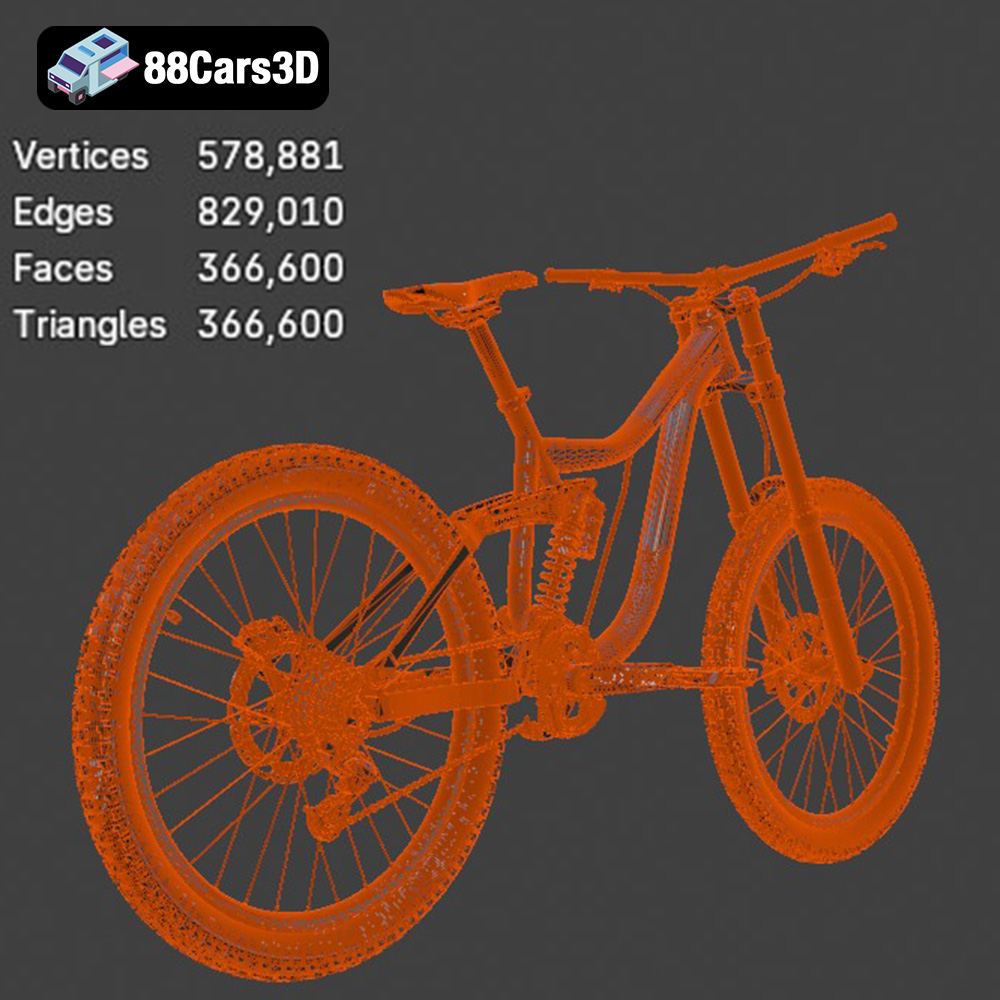
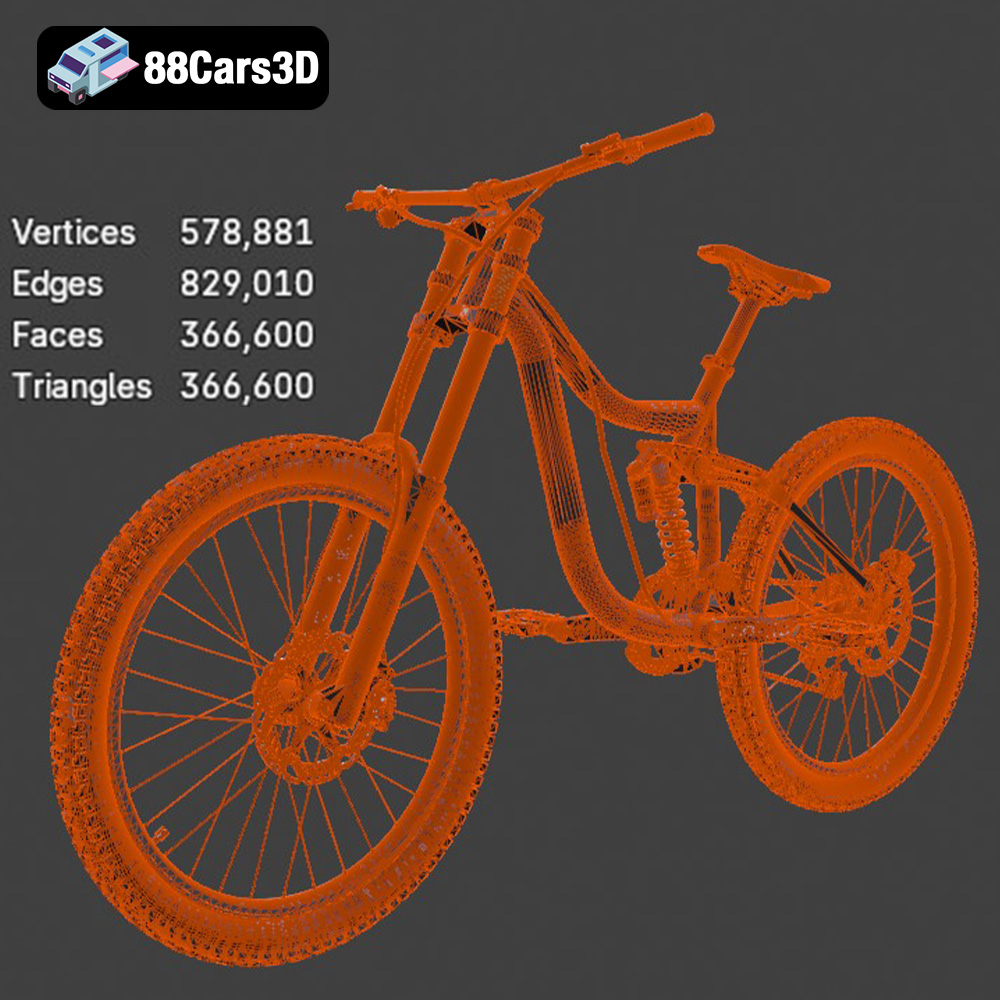
- Optimized Poly Counts: While exact poly counts aren’t specified, “clean, optimized geometry suitable for performance-intensive applications” suggests a balance. For high-end cinematic renders, a model might have millions of polygons, leveraging subdivision surfaces. For game engines, it would be carefully poly-reduced with normal maps to maintain detail while keeping the real-time budget in check. The Mototsikly Downhill Bike-002 is engineered for both, implying smart optimization strategies.
- Accurate UV Mapping: Every face of the model must have well-organized UV coordinates. These define how textures are applied to the surface. Clean UVs prevent stretching, allow for efficient texture packing, and facilitate the use of intricate PBR texture sets without visual artifacts. For a complex object like a downhill bike, this is an extensive and crucial task.
Advanced PBR Texturing and Materials
Beyond the raw geometry, the realism of a 3D model hinges on its materials and texturing. PBR (Physically Based Rendering) has revolutionized this aspect, ensuring assets react correctly to light in a physically plausible manner, regardless of the rendering environment.
- Physically Based Rendering (PBR) Materials: The Mototsikly Downhill Bike-002 utilizes PBR materials, meaning it comes with a suite of texture maps (e.g., Albedo/Base Color, Metallic, Roughness, Normal, Ambient Occlusion). These maps mimic real-world material properties like reflectivity, shininess, and surface detail. This ensures the bike’s matte frame, metallic components, rubber tires, and plastic accents all look authentic under diverse lighting conditions, from a bright outdoor scene to a dimly lit studio setup.
- High-Resolution Textures: To complement the detailed geometry, high-resolution texture maps are essential. These capture subtle scratches, wear, grime, and manufacturing details that bring the model to life. The phrase “stunning visual results in film, advertising, and architectural visualization projects” points to the high fidelity of these textures.
- Consistent Shading and Detail: The careful application of PBR materials ensures consistent shading and intricate details across all parts of the bike, preventing visual inconsistencies and enhancing overall realism.
Integrating the Mototsikly Downhill Bike-002 into Diverse Workflows
The true value of a versatile 3D asset lies in its adaptability across various professional pipelines. The Mototsikly Downhill Bike-002 is designed for this very purpose, providing ready-to-use solutions for multiple industries.
Game Development (Unreal Engine & Unity)
Modern game development demands assets that are not only visually impressive but also highly optimized for real-time performance. The Mototsikly Downhill Bike-002, with its “clean, optimized geometry” and game-engine ready formats like .fbx and .unreal, is perfectly suited for this.
- Performance Optimization: Developers can integrate the bike without extensive re-optimization. This includes appropriate poly counts for different Levels of Detail (LODs), allowing the engine to swap simpler versions of the model when it’s further from the camera, saving valuable processing power.
- Collision Geometry: For interactive gameplay, accurate collision meshes are crucial. While not explicitly stated, professional game assets often include simplified collision models to prevent players or other objects from passing through the bike, ensuring realistic physics interactions.
- Blueprint Integration (Unreal Engine): The .unreal file suggests a model that may come with pre-configured materials, basic physics settings, or even simple blueprint scripts for interactive elements, accelerating the development process in Unreal Engine.
Cinematic Rendering and Visualization (3ds Max & Blender)
For advertising, film, or high-end product visualization, photorealism is the ultimate goal. The Mototsikly Downhill Bike-002 excels here with its detailed modeling and PBR materials, ready for powerful renderers.
- High-Fidelity Rendering: Using the .max or .blend files, artists can leverage advanced rendering engines like V-Ray, Corona Renderer (3ds Max), or Cycles, Eevee (Blender) to create breathtakingly realistic images and animations. The clean mesh topology allows for further subdivision to capture every subtle curve.
- Lighting and Environment Integration: The PBR materials ensure the bike reacts correctly to complex lighting setups, from studio softboxes to realistic HDR environments. This makes it ideal for showcasing the bike in marketing materials or integrating it into virtual scenes.
- Animation Potential: With clean topology and often pre-separated parts (though not explicitly stated, it’s common for complex models), the bike is primed for animation, whether it’s simulating suspension movement, rotating wheels, or complex camera fly-throughs for a product launch video.
AR/VR and WebGL Applications
The rising demand for interactive 3D experiences in Augmented Reality, Virtual Reality, and web browsers requires highly efficient and streamlined assets.
- Optimized for Real-Time Interaction: The .glb format, specifically designed for these platforms, ensures the Mototsikly Downhill Bike-002 can be loaded quickly and rendered smoothly on mobile devices or within web browsers, offering engaging interactive experiences.
- Immersive Experiences: Imagine placing this detailed downhill bike in your living room via AR, or exploring its mechanics in a VR showroom. The model’s quality and optimized format facilitate such immersive applications, making it a valuable tool for product showcasing and interactive training.
Beyond Aesthetics: Engineering Visualization and 3D Printing
A truly accurate 3D model transcends purely visual applications, finding utility in more technical and practical fields like engineering and manufacturing.
Precision for Prototyping and Analysis
The “meticulous attention to scale and mechanical integrity” of the Mototsikly Downhill Bike-002 means it’s not just a pretty face; it holds accurate dimensional data.
- 3D Printing and Prototyping: The .stl file format is specifically provided for 3D printing. This means engineers or designers can generate physical prototypes of bike components for fitment tests, scale models, or even functional parts (depending on the printer and materials). This is invaluable for iterating on designs or creating custom accessories.
- CAD Integration and Analysis: While not a traditional CAD file, a highly accurate mesh model like this, especially in .ply format, can be imported into CAD software for reference, measurement, or even as a starting point for reverse engineering components. This is particularly useful for studying mechanical assemblies or material analysis in a digital environment.
Simulation and Training
Realistic 3D models are increasingly used in simulation and training environments, where visual accuracy enhances learning and engagement.
- Virtual Training Modules: Imagine a mechanic learning to assemble or repair a downhill bike in a virtual environment. The detailed Mototsikly Downhill Bike-002 provides the visual fidelity needed for such applications, allowing for interactive disassembly and reassembly simulations.
- Physics Simulations: For advanced engineering simulations or even realistic vehicle physics in games, a mechanically accurate model provides a solid foundation. While a game engine’s physics model might be simplified, the visual fidelity reinforces the immersion.
Why Quality 3D Assets are a Game-Changer for Professionals
In a competitive industry where efficiency and visual excellence are key, leveraging pre-made, high-quality 3D assets is a strategic advantage. Time is a precious commodity in production, and creating complex models like the Mototsikly Downhill Bike-002 from scratch is a significant undertaking.
Purchasing professional-grade 3D car models and other vehicle assets from reputable marketplaces like 88cars3d.com offers immediate benefits:
- Save Development Time and Costs: Instead of dedicating hundreds of hours to modeling, texturing, and optimizing, artists can acquire a production-ready asset, freeing up resources for other critical tasks like scene composition, animation, or interactive logic.
- Ensure Consistent Quality: Professional models are built to specific standards, ensuring clean geometry, correct UVs, and PBR-ready materials. This consistency helps maintain a high visual bar across projects and minimizes integration headaches.
- Access Expert Craftsmanship: Not every studio has an in-house expert for every type of modeling. Marketplaces provide access to specialists who have meticulously crafted assets like the Mototsikly Downhill Bike-002, bringing specialized detail to your projects.
- Rapid Prototyping and Iteration: Quickly drop a detailed model into a scene to visualize concepts, test layouts, or present ideas to clients without waiting for custom asset creation.
Whether you’re working on a new game title, producing a high-stakes advertising campaign for a new automotive model, or developing an innovative AR experience, the investment in premium 3D assets like this downhill bike significantly enhances your capabilities and streamlines your workflow. It’s about building on a solid foundation of excellence.
Conclusion
The world of 3D content creation is constantly evolving, with ever-increasing demands for realism, efficiency, and versatility. From cinematic rendering to real-time game assets and augmented reality, the quality of your 3D models directly impacts the success of your project. The Mototsikly Downhill Bike-002 3D Model stands as a testament to what a professional-grade asset can offer: meticulous detail, optimized performance, and unparalleled flexibility across diverse pipelines.
By understanding the importance of clean geometry, advanced PBR materials, and the strategic use of multiple file formats, artists and developers can make informed decisions that drastically improve their workflow and final output. Products like the Mototsikly Downhill Bike-002, available on 88cars3d.com, are not just models; they are powerful tools designed to empower creativity and elevate professional projects, ensuring stunning visual results and seamless integration into any 3D environment.
Featured 3D Model
Mototsikly Downhill Bike-002 3D Model
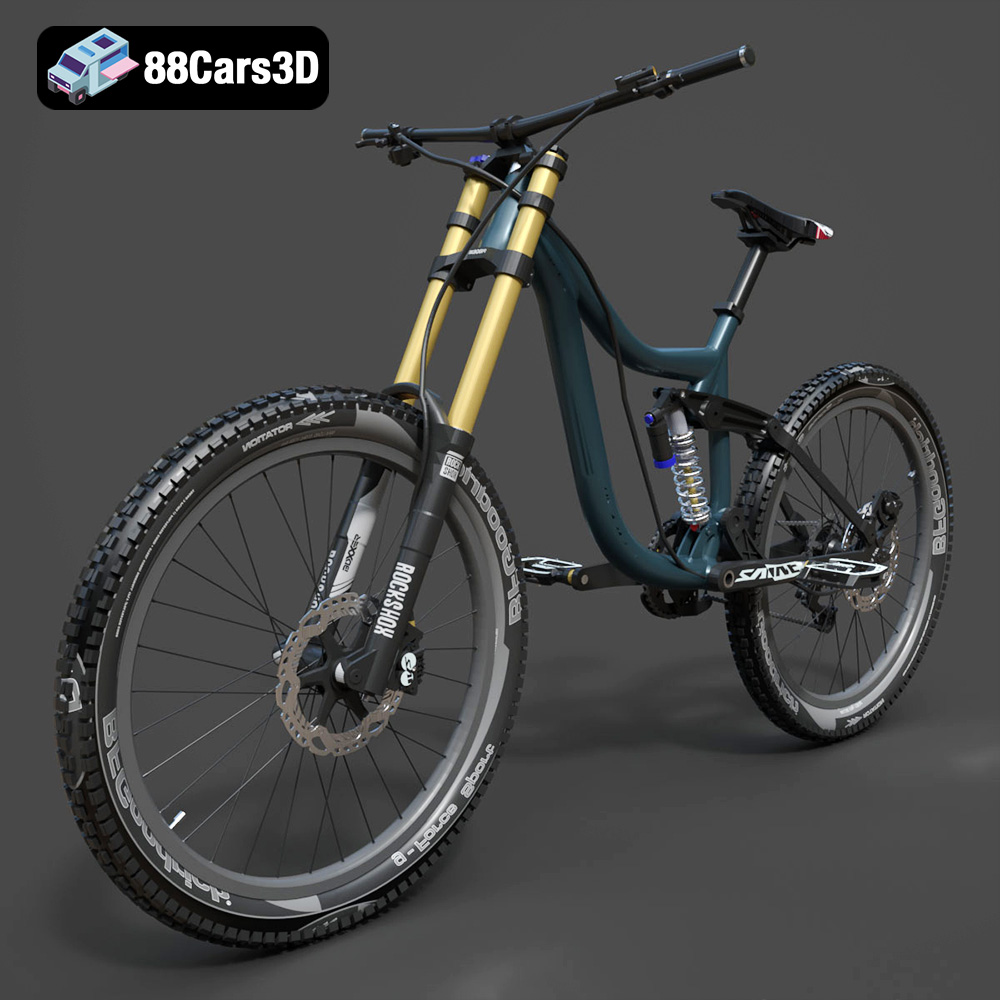
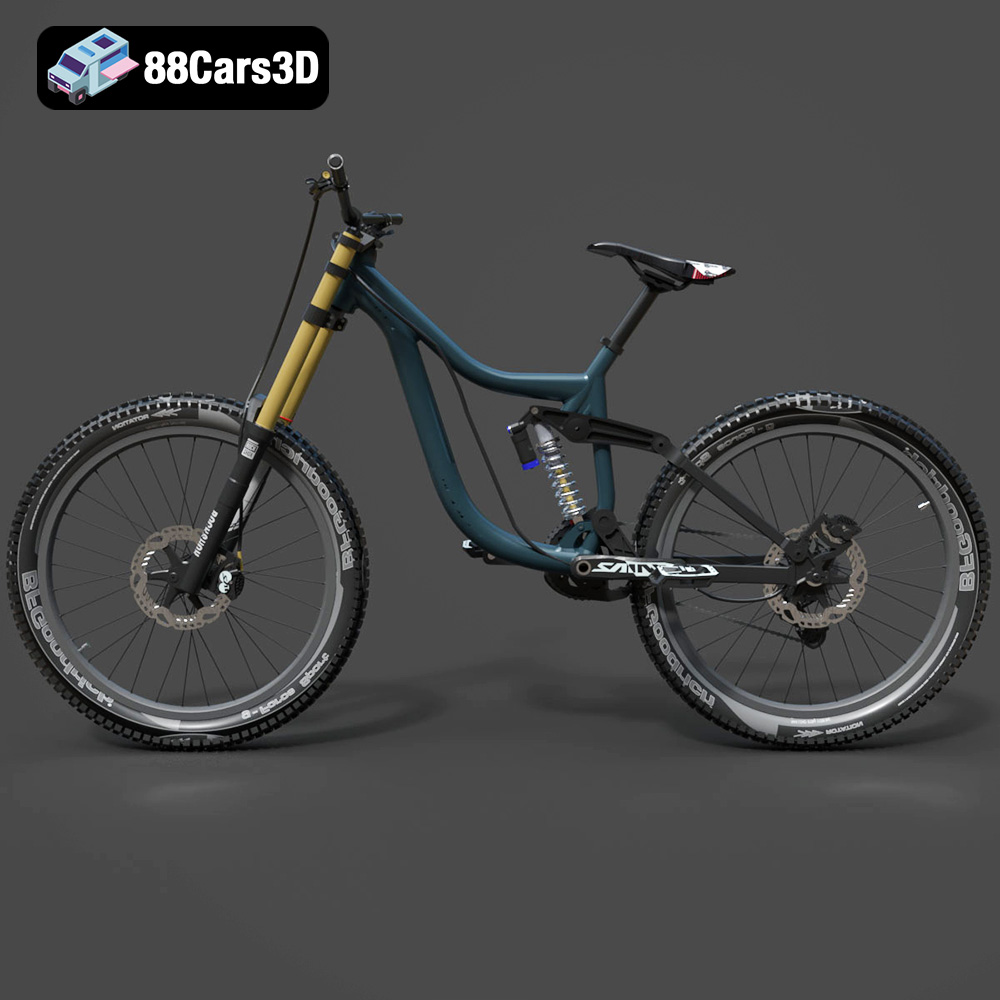
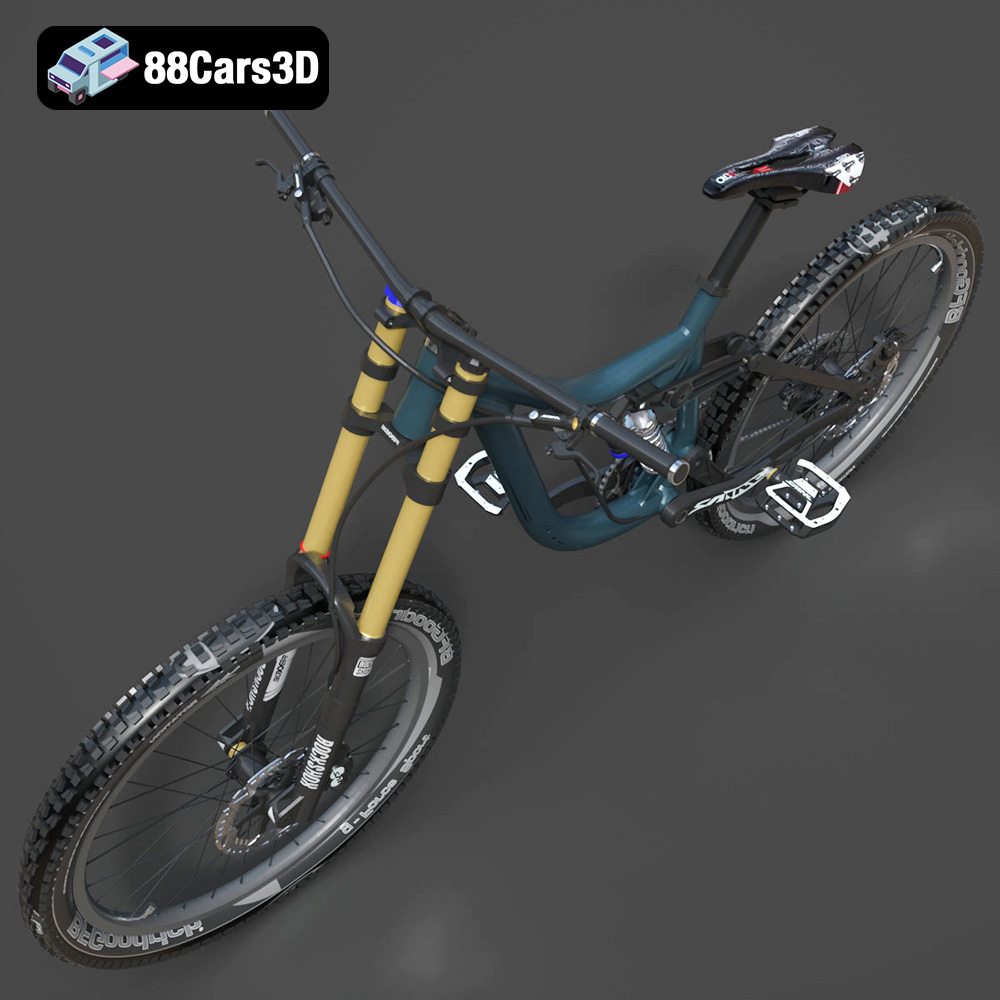
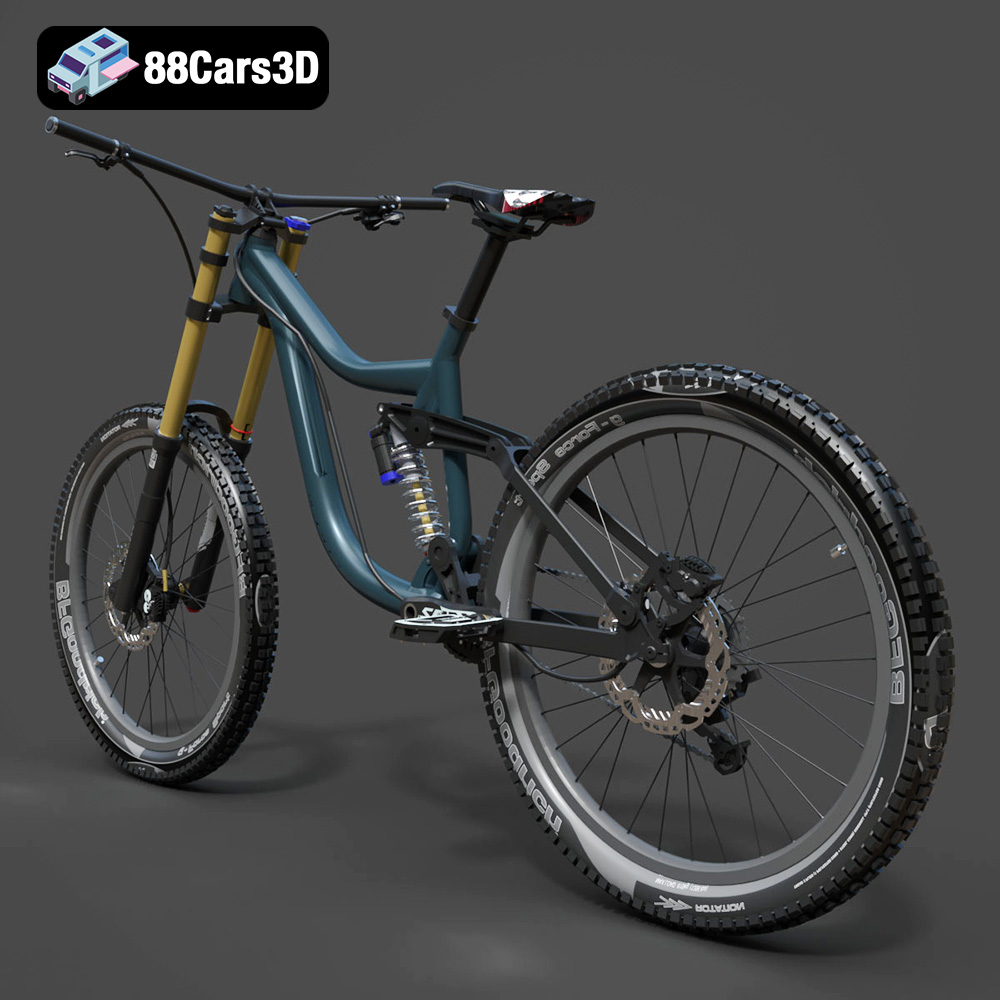
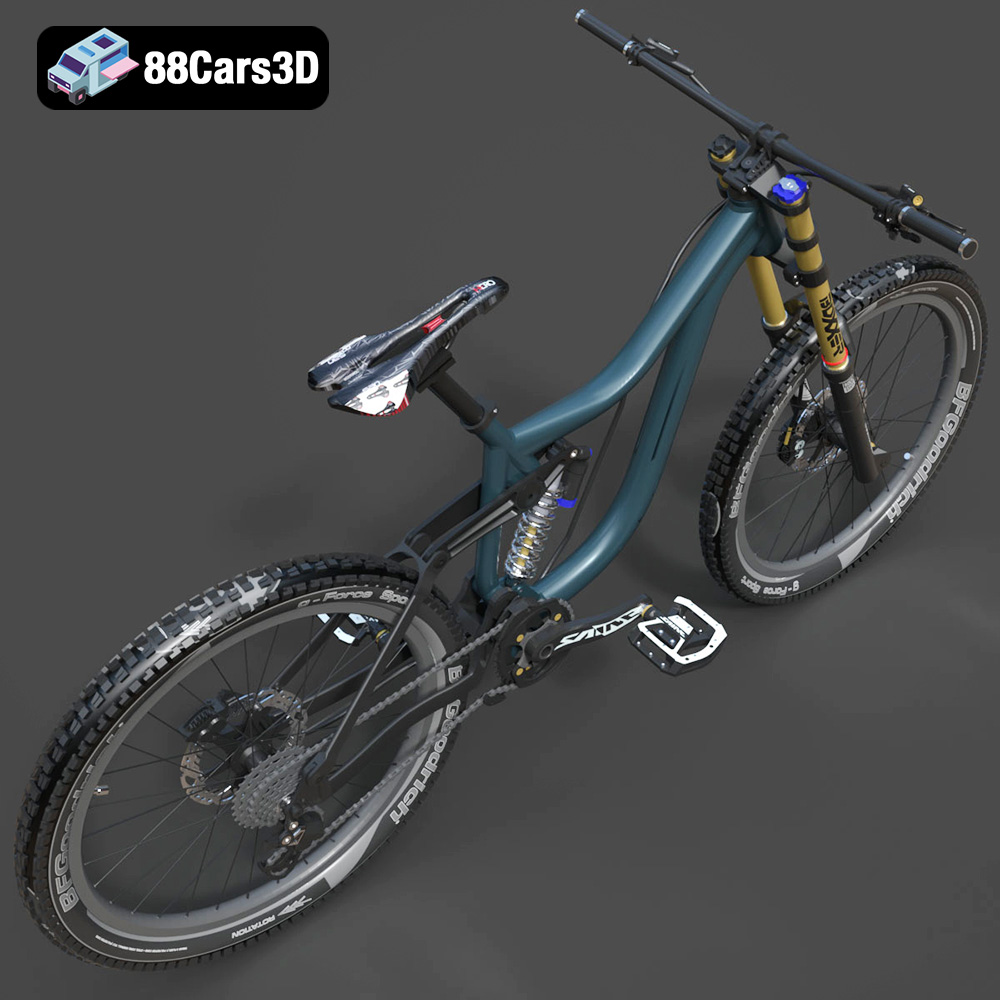
The Mototsikly Downhill Bike-002 3D Model offers an extremely accurate and photorealistic digital replica of a modern downhill racing bicycle. Every component, from the high-travel suspension system to the complex drivetrain and specialized tires, has been modeled with meticulous attention to scale and mechanical integrity. This model is engineered for immediate use in professional environments where detail and performance are critical.
Key Features & Professional Quality:
This asset features clean, optimized geometry suitable for performance-intensive applications like real-time game engines. Realistic PBR (Physically Based Rendering) materials ensure that the bike renders accurately under various lighting conditions, providing stunning visual results in film, advertising, and architectural visualization projects. The clean mesh topology allows for easy subdivision and modification if required.
Applications:
This versatile 3D asset is ready for deployment across numerous creative industries. It is perfectly suited for realistic game development (Unreal Engine, Unity), virtual reality (VR) and augmented reality (AR) experiences, engineering visualization, detailed product rendering, and dynamic simulation environments.
Provided File Formats:
- .blend – Editable Blender file with materials and lighting setup
- .fbx – Game-engine ready format for Unreal Engine and Unity
- .obj – Standard 3D model format compatible with all major software
- .glb – Optimized for AR/VR and web-based visualization
- .stl – Suitable for 3D printing and prototyping
- .ply – Detailed polygon mesh for analysis and visualization
- .unreal – Pre-configured for Unreal Engine use
- .max – Editable 3ds Max file for rendering and animation
Tags: .mototsikly, .downhillbike, .bike, .bicycle, .downhill, .vehicle, .transport, .car3dmodel, .rendering, .simulation, .gameasset, .arvr, .blend, .fbx, .obj, .glb, .stl, .ply, .unreal, .max
Tags:
.mototsikly, .downhillbike, .bike, .bicycle, .downhill, .vehicle, .transport, .car3dmodel, .rendering, .simulation, .gameasset, .arvr, .blend, .fbx, .obj, .glb, .stl, .ply, .unreal, .maxMercedes Benz CLS 500 3D Model
$19.99
Product Image Gallery
Related Tags
.arvr
.bicycle
.bike
.blend
.car3dmodel
.downhill
.downhillbike
.fbx
.gameasset
.glb
.max
.mototsikly
.obj
.ply
.rendering
.simulation
.stl
.transport
.unreal
.vehicle
