Get 20% OFF All Premium 3D & STL Models!

In the dynamic landscape of 3D visualization, game development, and immersive experiences, the quality of your digital assets can make or break a project. From breathtaking cinematic renders to hyper-realistic gaming environments, the demand for meticulously crafted models is constant. Automotive subjects, in particular, present a unique challenge due to their complex curves, reflective surfaces, and intricate mechanical details. This is precisely where investing in high-fidelity 3D car models becomes not just a luxury, but a fundamental necessity for professionals.
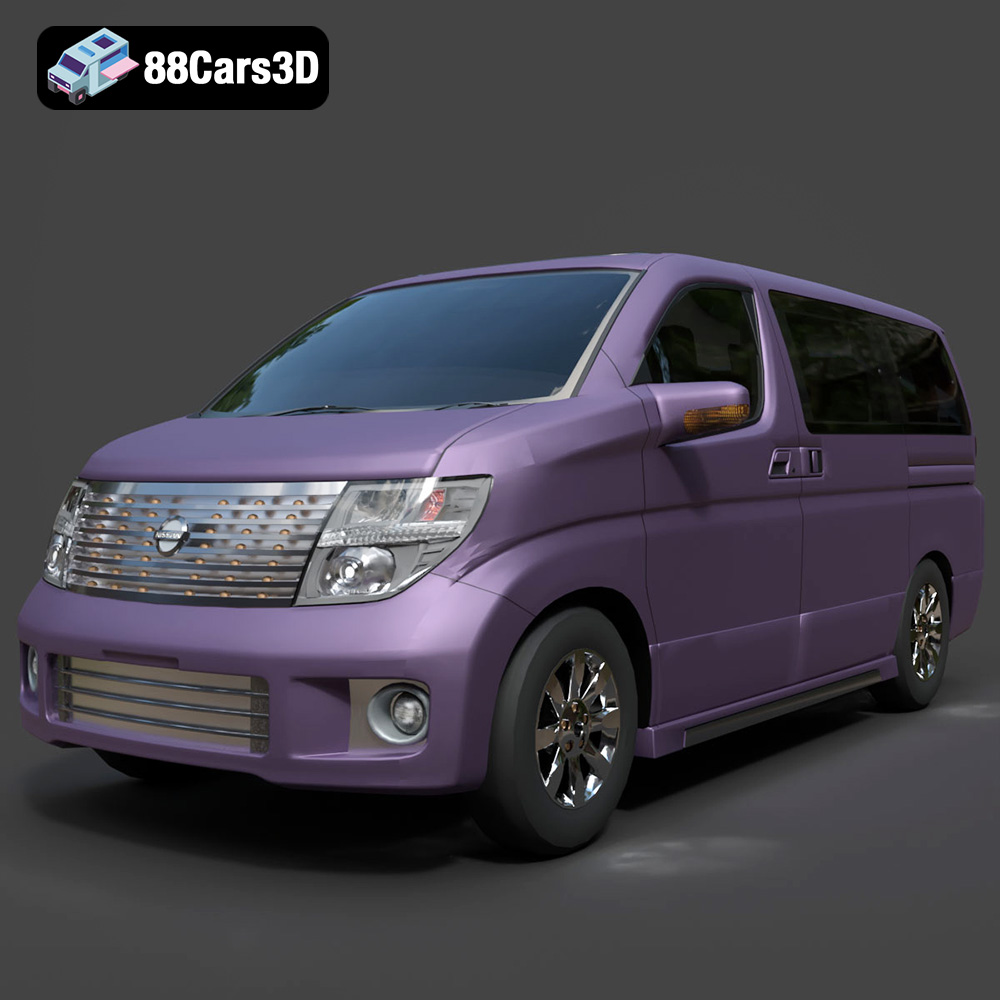
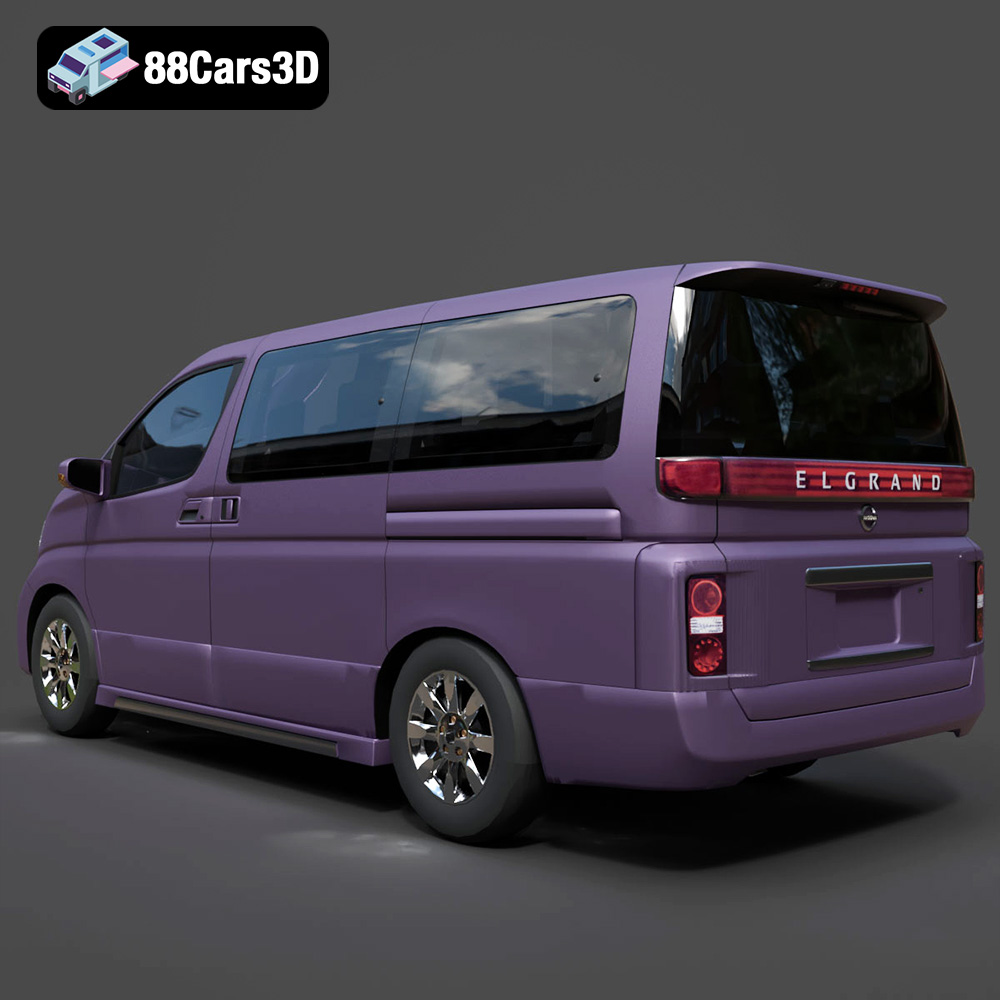
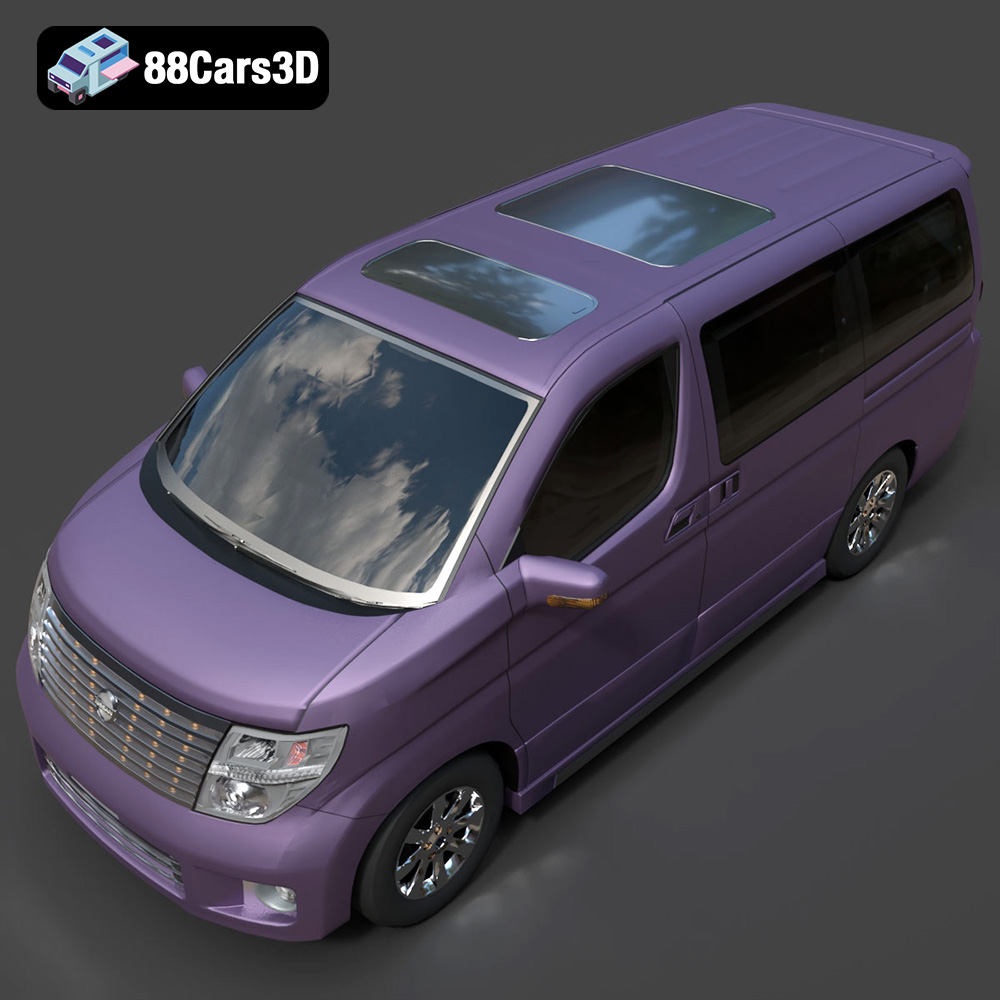
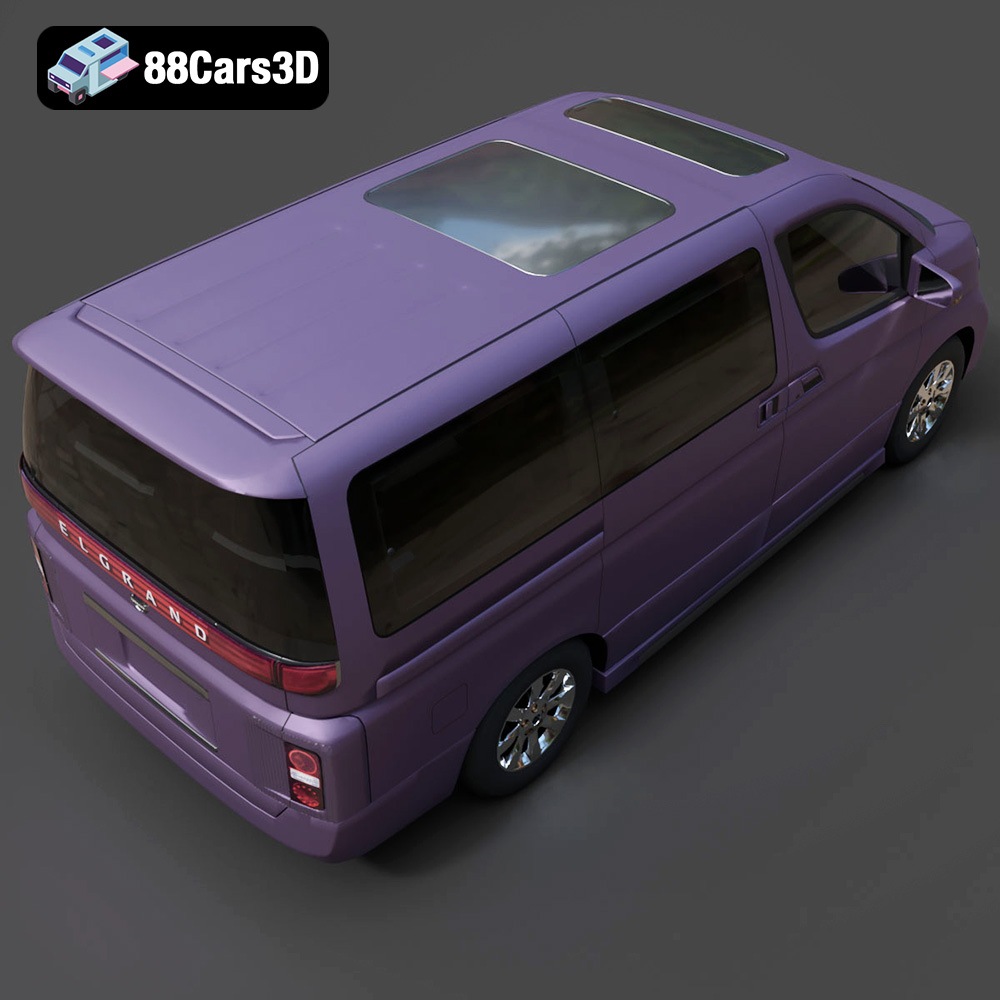
Imagine needing to populate a vibrant urban scene for an architectural visualization or integrate a reliable, visually stunning vehicle into an open-world game. Creating such an asset from scratch requires hundreds of hours of expert modeling, texturing, and optimization. This is time and resource often better spent on project-specific innovation. This brings us to a prime example of a professional-grade asset that streamlines these demanding workflows: the Nissan Elgrand 3D Model. This premium full-size minivan, renowned for its elegant design and spacious appeal, exemplifies the meticulous craftsmanship and technical advantages offered by specialized marketplaces like 88cars3d.com. Its clean geometry, balanced detailing, and comprehensive feature set make it an invaluable addition to any professional library, ready for immediate deployment across diverse applications.
The pursuit of realism in 3D art and development relies heavily on the underlying quality of the models. For automotive assets, this means going beyond mere visual accuracy to encompass technical robustness that facilitates efficient integration and superior performance.
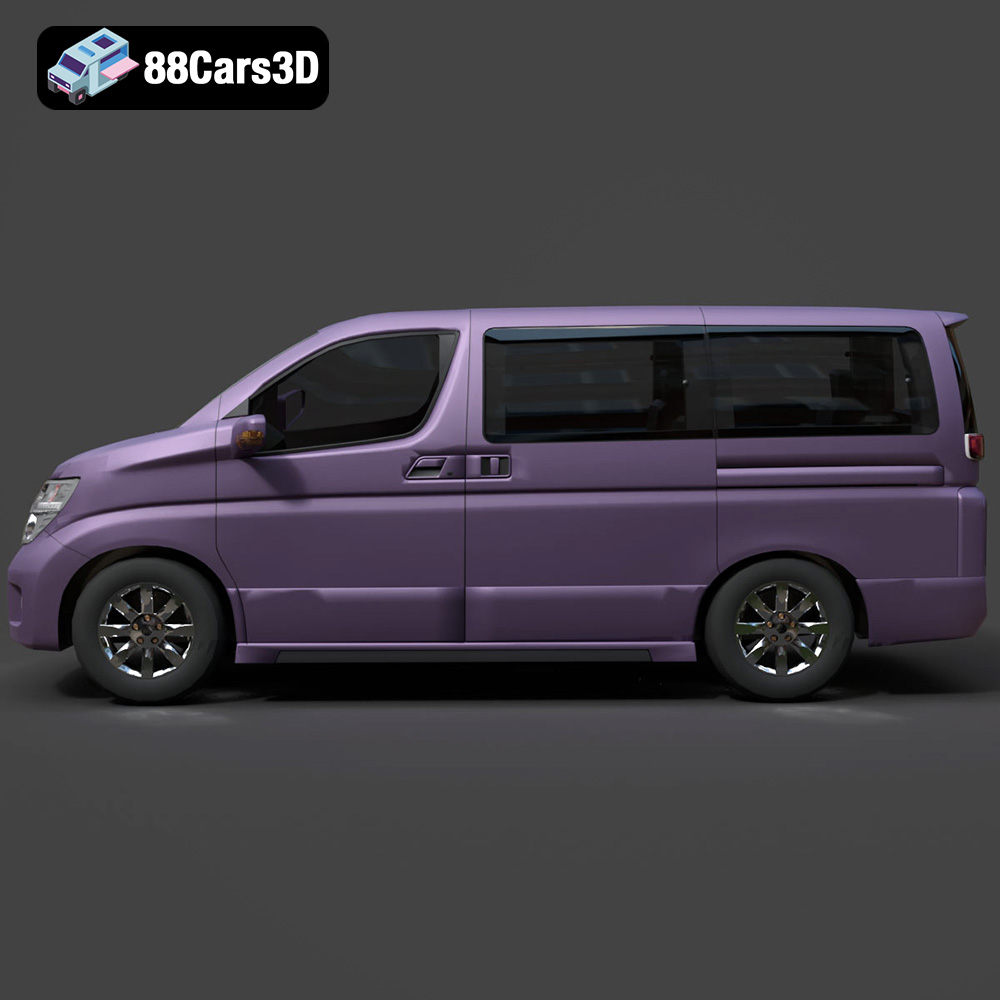
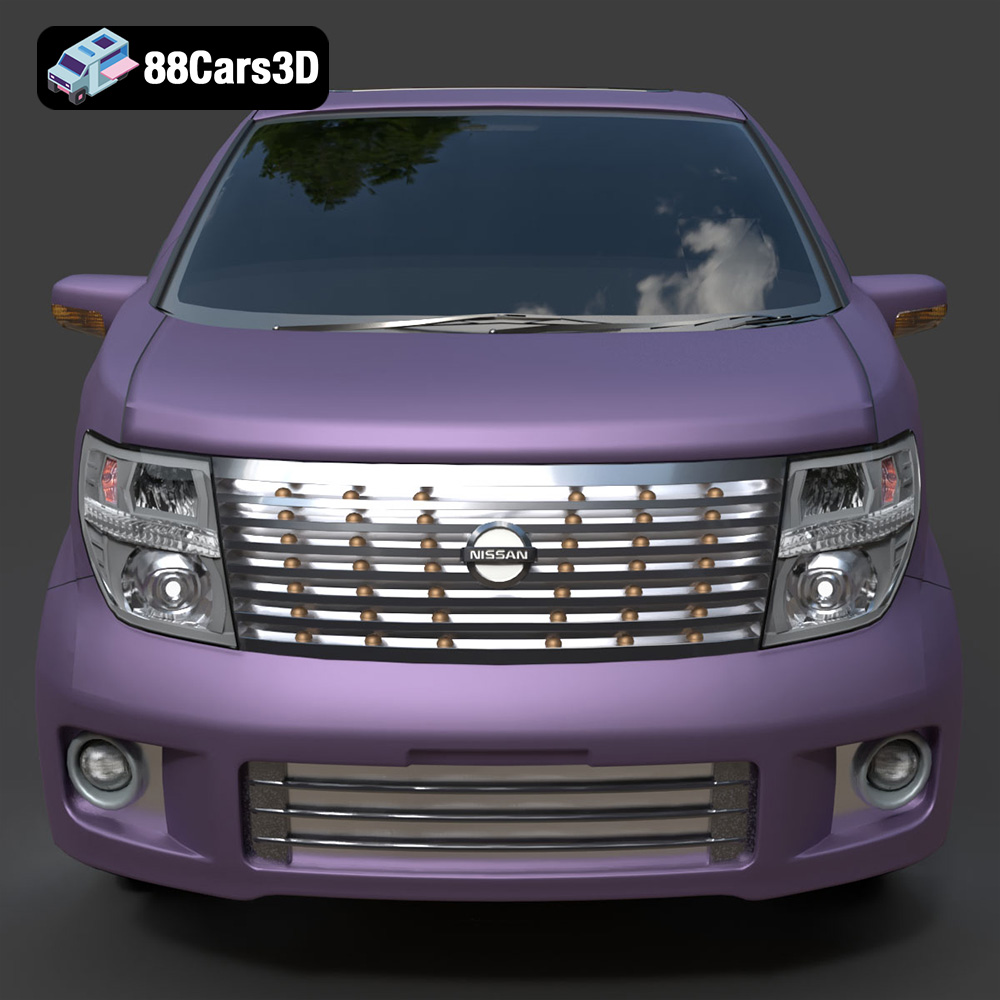
For industries like automotive design, engineering, and architecture, 3D models serve as critical tools for visualization and presentation. A high-quality car model allows designers to integrate vehicles seamlessly into concept art, pre-visualization, and marketing materials. The Nissan Elgrand 3D Model, for instance, boasts accurate body panels, precisely modeled wheels, and detailed chrome accents. This level of detail ensures that when rendered in a studio setup or placed within an architectural scene, it maintains true-to-life proportions and visual fidelity, providing an authentic representation of how the vehicle would appear in a real-world context. Engineers can use such models to simulate urban traffic flows or evaluate ergonomic layouts within a virtual environment, making precise scale and robust geometry paramount.
In the entertainment sector, including film, animation, and video games, authenticity is key to player and viewer immersion. A poorly modeled car with inconsistent topology or low-resolution textures immediately breaks immersion. High-quality game assets, especially vehicles, need to look convincing up close and perform efficiently at a distance. The detailed exterior and faithfully reproduced interior components of the Nissan Elgrand 3D Model – from the dashboard and steering wheel to the comfortable seating arrangements – ensure that it can withstand close-up camera angles and provide a rich visual experience, whether it’s a static background prop or a driveable vehicle. Its optimized mesh quality is a crucial factor, preventing performance bottlenecks in real-time environments.
Time is a critical commodity in any creative or development project. Building a complex 3D car model from scratch can consume weeks, if not months, of dedicated effort. Sourcing pre-built, high-quality assets like those available on 88cars3d.com significantly accelerates project timelines. When a model arrives with clean quad-dominant topology, real-world scale accuracy, and an organized hierarchy with proper pivot points, it’s ready to be integrated and animated almost immediately. This allows artists and developers to focus their efforts on refining scene composition, lighting, and interactive elements, rather than the painstaking process of initial model creation, ultimately leading to faster delivery and higher overall project quality.
Navigating the diverse world of 3D modeling often requires a deep understanding of file formats. Each format has been developed with specific purposes in mind, offering unique advantages for different stages of the production pipeline, from initial modeling and animation to real-time rendering and physical fabrication. The Nissan Elgrand 3D Model provides a comprehensive suite of these formats, ensuring maximum versatility for any professional workflow.
The .blend format is the native file type for Blender, the popular open-source 3D creation suite. When you receive a .blend file, you’re getting a complete Blender project, including the 3D model, materials, textures, lighting setups, cameras, animations, and even physics simulations. This format is ideal for users who wish to leverage Blender’s extensive toolset for customization. With the Nissan Elgrand .blend file, artists can easily modify paint finishes, adjust material reflectivity, add custom graphics, or dive into the model’s clean quad-dominant topology for intricate mesh editing. It offers the most flexibility for artistic and technical refinement within the Blender ecosystem.
.fbx (Filmbox) is a proprietary file format developed by Autodesk, serving as a widely accepted standard for interoperability between 3D software applications, particularly in the game development and animation industries. It excels at preserving complex scene data, including geometry, materials, textures, animations, and rigging information, making it perfect for transferring assets to game engines like Unreal Engine and Unity. The Nissan Elgrand 3D Model’s .fbx version is optimized for this very purpose, ensuring smooth import and robust performance as a game asset. Its ability to maintain hierarchy and pivot points is crucial for animating components like doors, hoods, and wheels efficiently in a game environment.
The .obj (Wavefront OBJ) format is one of the most widely supported and universal formats for exchanging 3D geometry data. While it’s excellent at storing mesh information (vertices, normals, texture coordinates), it typically stores material and texture references in an accompanying .mtl (material template library) file, rather than embedding them directly. This makes it an incredibly robust choice for cross-software compatibility, allowing the Nissan Elgrand 3D Model to be imported into virtually any 3D application, regardless of its native format support. It’s often preferred for clean geometry transfers and serves as a reliable fallback when other formats encounter compatibility issues.
.glb (GL Transmission Format Binary) is the binary version of the glTF (GL Transmission Format), designed for efficient transmission and loading of 3D scenes and models by applications. It’s quickly becoming the standard for 3D on the web, as well as for Augmented Reality (AR) and Virtual Reality (VR) experiences. A .glb file packages geometry, materials, textures, and animations into a single, compact file, making it incredibly easy to share and integrate into web-based viewers, mobile AR apps, and immersive VR environments. The Nissan Elgrand .glb model is perfectly optimized to enhance immersive experiences with a high-fidelity virtual vehicle that loads quickly and performs smoothly on various devices.
.stl (STereoLithography) is the de-facto standard file format for 3D printing and computer-aided manufacturing (CAM). It represents a 3D model as a series of connected triangles, describing the surface geometry of an object without color, texture, or other CAD attributes. While simple, its ubiquity makes it essential for physical prototyping. The Nissan Elgrand 3D Model, being easily convertible to .stl, allows users to create physical scale models, prototypes, or collectibles. This bridges the gap between the digital asset and a tangible object, expanding its utility beyond purely screen-based applications.
The .ply (Polygon File Format, also known as Stanford Triangle Format) is a versatile file format for storing 3D data, particularly useful for capturing and storing scanned 3D data from laser scanners or other digital acquisition tools. It can store a wider range of properties than .stl, including color, transparency, surface normals, and even confidence values for each vertex. This makes the Nissan Elgrand .ply format valuable for detailed mesh analysis, reverse engineering, and integration into CAD or scientific visualization workflows where precise geometric data and attribute information are critical for simulation or analysis.
The .unreal format, or more accurately, assets packaged within an Unreal Engine project structure, signifies a pre-configured, engine-ready asset. This isn’t a single file format in the traditional sense, but rather a set of files and configurations tailored for direct import and use within Unreal Engine. For the Nissan Elgrand 3D Model, this means the asset has likely been processed, optimized, and potentially even assigned basic materials or collision meshes within an Unreal project. It provides a significant head-start for developers, minimizing the setup time and ensuring the model performs optimally in a real-time environment without extensive manual tweaking.
.max is the native file format for Autodesk 3ds Max, a powerful software widely used in architectural visualization, broadcast animation, and game cinematic creation. A .max file contains a complete 3ds Max scene, including geometry, lights, cameras, materials, textures, animations, and scene settings. The Nissan Elgrand .max file offers full editability within 3ds Max, allowing advanced users to leverage its robust rendering engines (like V-Ray or Corona), create complex animations, or integrate the model into large-scale environments with ease. This format is the go-to for professionals requiring maximum control over their rendering and animation pipelines.
Achieving photorealistic automotive rendering is an intricate art form that combines technical skill with an artistic eye. The Nissan Elgrand 3D Model provides an excellent foundation for these endeavors, especially when paired with industry-standard software like 3ds Max and Blender.
The key to a stunning render lies in mastering lighting and shading. In 3ds Max, artists often utilize sophisticated rendering engines like V-Ray or Corona, employing advanced Global Illumination (GI) techniques and physically based lighting setups. High Dynamic Range Images (HDRIs) are indispensable for realistic reflections and environmental lighting, especially for the Elgrand’s metallic surfaces and windows. Similarly, Blender users benefit from its Cycles and Eevee renderers, using HDRI environments and area lights to sculpt light and shadow. The Nissan Elgrand model’s accurately detailed headlights and taillights with transparent materials are crucial here, allowing for realistic light emission and refraction effects, adding significant depth to any render.
Physically Based Rendering (PBR) workflows are standard for achieving photorealistic materials. This involves creating textures for parameters like Albedo (color), Roughness, Metallic, Normal, and Ambient Occlusion. The Nissan Elgrand’s design, with its chrome accents, window trims, and detailed upholstery, demands precise PBR material definition. Ensuring clean UV maps is paramount for applying these textures without distortion. The model’s clean quad-dominant topology not only makes it easy to subdivide for extreme close-ups but also simplifies the unwrapping process, allowing artists to easily adjust paint finishes, material reflectivity, and add custom graphics or liveries, truly making the model their own.
For high-impact marketing visuals or product showcases, the Nissan Elgrand 3D Model can be integrated into a virtual studio environment. This typically involves setting up a seamless backdrop, floor, and a series of softbox or strip lights to highlight the vehicle’s form and reflections. Using 3ds Max or Blender, artists can position the Elgrand, animate doors or the hood (facilitated by its separate components and proper pivot points), and create dynamic camera movements to showcase its features. The model’s real-world scale accuracy ensures it fits seamlessly into any established scene, making it a reliable asset for commercial-grade automotive rendering projects.
For game developers, 3D car models are not just visual elements; they are interactive components that must perform flawlessly within real-time constraints. The Nissan Elgrand 3D Model is built with these demands in mind, offering technical advantages for game asset integration.
Game engines require highly optimized assets to maintain high frame rates. While the Nissan Elgrand 3D Model is detailed, its “optimized mesh quality” means it’s designed with performance in mind. For larger open-world games or scenarios with many vehicles, further optimization might be necessary through Level of Detail (LOD) models. This involves creating simplified versions of the model that automatically swap in at greater distances from the camera, significantly reducing polygon count and rendering overhead. The clean topology of the Elgrand model makes it easier for artists to generate these LODs without introducing visual artifacts.
The inclusion of .fbx and .unreal formats for the Nissan Elgrand 3D Model directly addresses the needs of game developers. In Unreal Engine, the .unreal file provides a ready-to-go setup, often including material assignments, basic collision meshes, and proper scale, greatly reducing import time. For both Unreal and Unity, the .fbx file offers robust support for importing geometry, materials, and crucial animation data. The model’s organized hierarchy with proper pivot points for doors, hood, and trunk allows for straightforward rigging and animation within the engine, whether for simple opening/closing actions or complex vehicle physics simulations. Its “visible interior components” are also a huge plus for first-person views or interactive sequences.
Beyond static appearances, game assets often require interactivity. The Nissan Elgrand’s separate components for doors, hood, and trunk are perfectly suited for animation workflows, allowing players to interact with the vehicle. For driving simulations, the model’s precise wheel and tire modeling, complete with tread patterns, adds to the visual realism and can even influence physical interactions with the environment. Setting up vehicle physics systems, from suspension to tire friction, is made easier when the underlying 3D model is built to real-world scale and has clearly defined, animatable parts, making it an excellent asset for racing games or open-world environments.
The versatility of high-quality 3D car models extends far beyond traditional rendering and game development, tapping into emerging technologies that demand robust and adaptable digital assets. The Nissan Elgrand 3D Model showcases this adaptability across several innovative fields.
Augmented Reality (AR) and Virtual Reality (VR) are transforming how we interact with digital content. For automotive applications, this can mean virtual showrooms, interactive training modules, or even real-time configurators. The Nissan Elgrand’s inclusion of a .glb file format is specifically tailored for these immersive experiences. The .glb format is optimized for web and mobile performance, allowing the high-fidelity Elgrand model to be displayed seamlessly in AR apps on smartphones or within VR environments. Users can virtually “walk around” the vehicle, explore its detailed interior, or even place it in their real-world driveway using AR, providing a rich, interactive preview of the car’s distinctive styling and spacious appeal.
In fields requiring rigorous analysis and training, 3D models serve as fundamental components for simulations. The Nissan Elgrand 3D Model, available in .ply format, offers a precision mesh suitable for CAD or analysis workflows. This makes it invaluable for creating sophisticated automotive training modules, where mechanics can virtually practice repairs, or for traffic simulations where city planners can test infrastructure changes. The .ply format’s ability to store additional data like color and normals ensures that these simulations are not only geometrically accurate but also visually informative, contributing to more effective educational content and data-driven decision-making.
The ability to transition from digital to physical is a powerful capability of 3D modeling. With the Nissan Elgrand 3D Model, this is made possible through its .stl format compatibility. Designers can easily convert the model to .stl for 3D printing, allowing for the creation of physical scale models, rapid prototypes, or custom collectibles. This is particularly useful for design studios wanting to review physical forms, hobbyists looking to add unique pieces to their collection, or marketing teams desiring tangible representations of their product. The model’s clean geometry ensures a smooth transition to a printable format, resulting in high-quality physical output.
Creating a 3D car model that is both visually stunning and technically efficient requires a delicate balance of artistic skill and technical foresight. The Nissan Elgrand 3D Model exemplifies this balance through several key optimization principles.
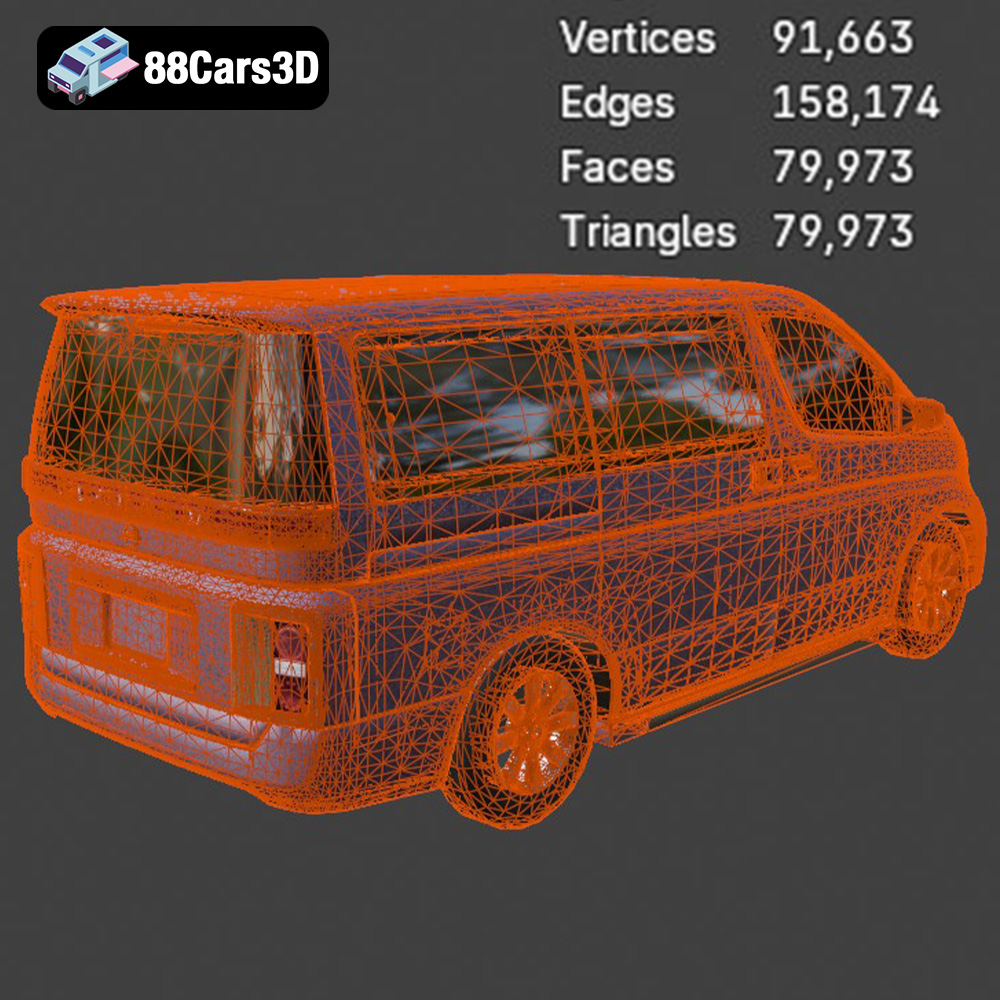
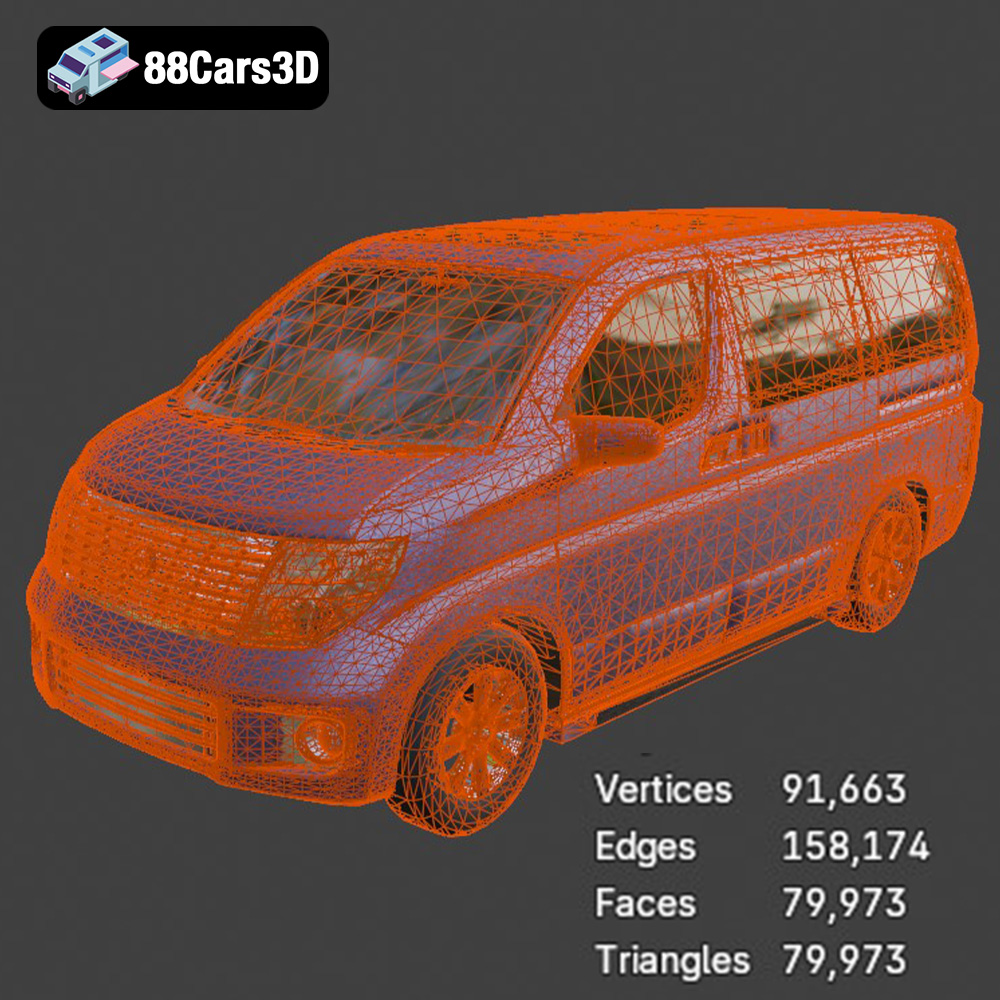
A hallmark of a professional 3D model is its topology. The Nissan Elgrand features “clean quad-dominant topology,” meaning its mesh is primarily composed of four-sided polygons. This is crucial for several reasons: it ensures smooth deformations during animation, prevents rendering artifacts, and allows for efficient use of subdivision surface modifiers. Subdivision, common in both 3ds Max and Blender, can smoothly increase the mesh density for close-up shots without bogging down the base mesh, giving artists the flexibility to render the model at varying levels of detail while maintaining visual integrity.
Accuracy in 3D modeling goes beyond aesthetics; it’s about real-world scale. The Nissan Elgrand 3D Model is built to exact real-world dimensions, ensuring seamless integration into existing scenes, whether architectural visualizations or game environments, without needing tedious adjustments. Furthermore, the model comes with an “organized hierarchy with proper pivot points for easy manipulation and animation.” This means that components like doors, wheels, and the steering wheel are correctly grouped and have their rotation centers precisely where they should be, making animation and rigging tasks significantly more efficient and intuitive for the artist.
One of the challenges in 3D modeling is balancing intricate detail with performance. The Nissan Elgrand 3D Model achieves this with “balanced detailing,” meaning critical visual elements like body panels, headlights, and interior features are meticulously modeled, while less critical areas are optimized to conserve polygon count. This optimization strategy ensures that the model provides high fidelity where it matters most, making it “suitable for optimal performance across various applications.” From high-resolution cinematic renders to real-time interactive experiences, the model is designed to deliver visual impact without compromising project efficiency.
To truly appreciate the value of a professional 3D car model, it’s helpful to consider specific scenarios where an asset like the Nissan Elgrand 3D Model would be indispensable.
Imagine an architectural firm tasked with creating a photorealistic render of a contemporary family home. To bring the scene to life, they need a vehicle parked in the driveway, conveying a sense of domesticity and luxury. Instead of modeling a car from scratch, the team can quickly procure the Nissan Elgrand 3D Model from 88cars3d.com. Its “real-world scale accuracy” allows it to be dropped directly into the 3ds Max or Blender scene. The “chrome accents and window trims” beautifully reflect the environment, adding realism. They can easily “adjust paint finishes” to match the client’s preferred color, creating a compelling visual that helps sell the property and showcases the home’s compatibility with a stylish family vehicle.
A game studio is developing a new open-world city driving simulator, and they require a variety of vehicles, including a spacious minivan that players can drive or encounter in traffic. The Nissan Elgrand 3D Model is an ideal candidate. Using the provided .fbx or .unreal formats, developers can quickly integrate the model into their game engine. The “separate components for doors, hood, and trunk” facilitate immediate rigging for player interaction or damage systems. The “faithfully reproduced dashboard, steering wheel, and central console” enhance the first-person driving experience, while the “optimized mesh quality” ensures the Elgrand performs smoothly, even amidst heavy traffic, contributing to an engaging and believable gameplay environment.
An automotive marketing agency needs to create a series of compelling digital advertisements for a client selling premium family vehicles. They decide to showcase the Nissan Elgrand in various lifestyle settings – perhaps pulling up to a scenic beach or parked outside a luxury hotel. The Nissan Elgrand 3D Model offers the “unparalleled quality and versatility” needed for such high-stakes campaigns. Artists can leverage its detailed interior and exterior features for cinematic renders, “adapting lighting setups to achieve various atmospheric effects” from sunny mornings to twilight scenes. The ability to “add custom graphics or liveries” allows them to brand the vehicle specifically for the client, creating stunning visuals that resonate with target audiences and highlight the Elgrand’s luxurious appeal.
The journey through 3D modeling, from concept to final render or interactive experience, is paved with both challenges and opportunities. The demand for realism, efficiency, and versatility has never been higher, particularly when it comes to intricate assets like 3D car models. As we’ve explored, a premium model offers far more than just visual appeal; it provides a robust technical foundation that streamlines workflows, accelerates project timelines, and empowers creators across diverse industries.
The Nissan Elgrand 3D Model stands as a testament to this philosophy. With its meticulously crafted details, clean quad-dominant topology, real-world scale accuracy, and comprehensive suite of optimized file formats, it addresses the critical needs of professionals in automotive rendering, game development, AR/VR, simulations, and 3D printing. It embodies the technical prowess and adaptability required to excel in today’s demanding digital landscape, ensuring that your projects not only look exceptional but also perform flawlessly. For those seeking to elevate their projects with top-tier assets, 88cars3d.com offers a curated selection of premium 3D car models designed to meet and exceed professional expectations.
Discover the Nissan Elgrand 3D Model, a meticulously crafted digital representation of the premium full-size minivan. This model captures the distinctive styling and spacious appeal of the Elgrand, known for its elegant design and comfortable interior. Built with clean geometry and balanced detailing, it ensures optimal performance across various applications. Ideal for high-quality rendering, realistic animations, detailed simulations, and robust game development projects.
Exterior Features:
Interior / Mechanical Features:
Technical Advantages:
Applications:
Customization Options:
The Nissan Elgrand 3D Model offers unparalleled quality and versatility for professionals seeking a realistic and highly adaptable digital asset. Its detailed design and robust technical foundation make it an essential addition to any 3D project library.
Included File Formats:
$21.99