Unlocking Creative Potential: The Enduring Value of High-Quality 3D Car Models
In the dynamic world of 3D visualization, having access to high-fidelity assets is paramount for delivering professional results. Whether you’re an automotive designer, a game developer, an architect, or an AR/VR enthusiast, the quality of your 3D car models directly impacts the realism and impact of your projects. A well-crafted 3D vehicle isn’t just a static object; it’s a versatile tool that can bring narratives to life, enhance immersive experiences, and provide critical data for simulations.
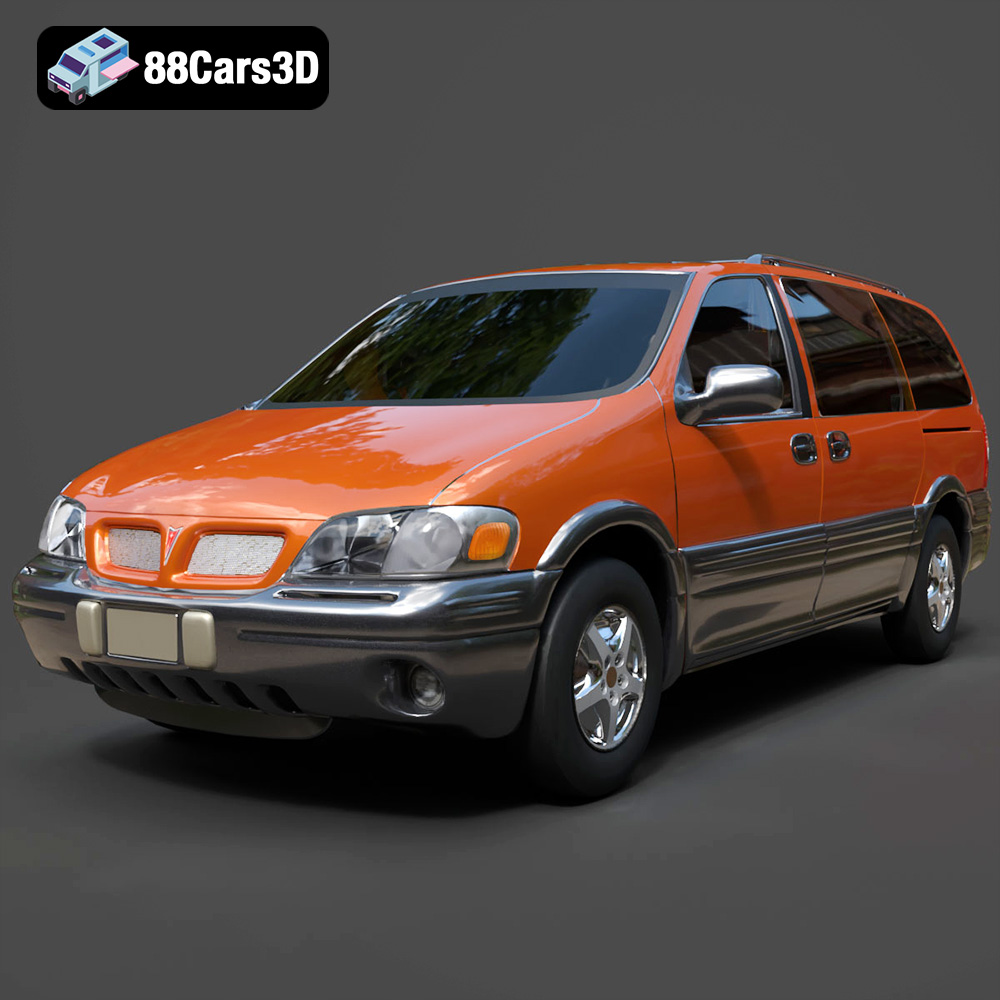
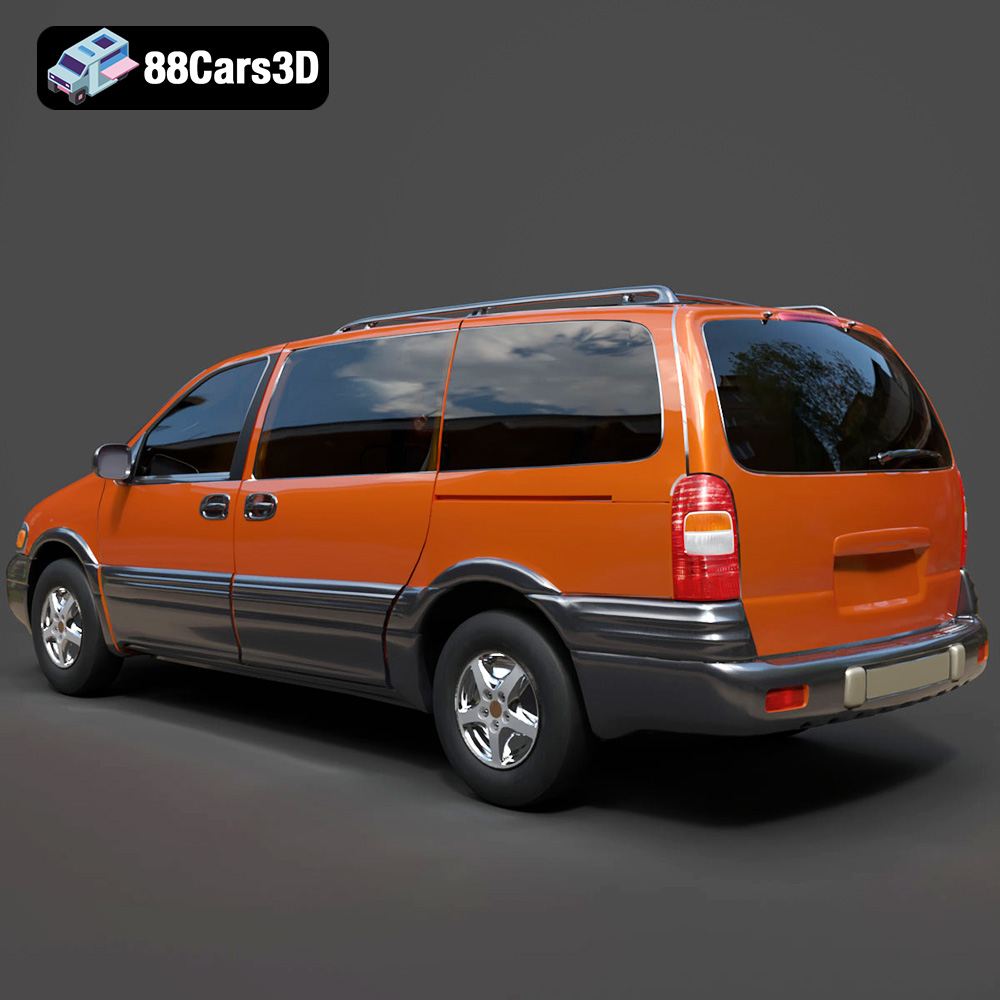
Today, we’re diving deep into the technical craftsmanship behind such assets, using a stellar example from 88cars3d.com: the Pontiac Montana 1998 3D Model. This particular model isn’t merely a nostalgic representation of a classic American minivan; it’s a testament to how meticulous modeling and thoughtful optimization can create an indispensable resource for a multitude of professional applications. From its clean geometry to its carefully separated components, this model is designed to integrate seamlessly into diverse workflows, empowering artists and developers to achieve stunning outcomes.
Understanding 3D Model File Formats: The Foundation of Digital Asset Management
When working with 3D car models, understanding the nuances of various file formats is critical. Each format serves a specific purpose, offering different levels of compatibility, data retention, and optimization for particular pipelines. The Pontiac Montana 1998 3D Model comes equipped with a comprehensive suite of these formats, ensuring maximum flexibility for any project. Let’s explore them in detail:
.blend – Blender’s Native Powerhouse
The .blend format is the native file type for Blender, an incredibly powerful and popular open-source 3D creation suite. When you receive a .blend file for the Pontiac Montana 1998 3D Model, you’re gaining access to a fully editable Blender scene. This includes not just the raw mesh data, but also all materials, textures, lighting setups, cameras, and even animation rigs if they were part of the original creation. This format is ideal for artists who primarily work in Blender, offering the most control and flexibility for further customization, modification, or integration into existing Blender projects. Its efficiency in storing a complete scene makes it a go-to for many professional and independent creators.
.fbx – The Industry Standard for Interoperability
.fbx (Filmbox) is arguably the most widely adopted proprietary 3D file format for exchanging 3D data between various software applications. Developed by Autodesk, it excels at storing not only mesh data but also animations, skinning, camera, and lighting information, making it incredibly robust for complex scenes. For assets like the Pontiac Montana 1998 3D Model, the .fbx format is the ideal choice for integration into game engines like Unreal Engine and Unity, or for transferring between different DCC (Digital Content Creation) software such as 3ds Max, Maya, or Cinema 4D. Its ability to preserve hierarchies and animation data reliably makes it a cornerstone of real-time pipelines.
.obj – The Universal Exchange Format
The .obj (Wavefront Object) format is a simple, universally compatible format that has been around for decades. It’s excellent for geometry exchange, storing vertex positions, UV coordinates, normals, and material group information. While it doesn’t typically store animation or rigging data, its widespread support across virtually all 3D software makes it an indispensable fallback format. For the Pontiac Montana 1998 3D Model, the .obj version ensures that even if you’re using niche or legacy software, you can still import and work with the clean mesh data, applying your own materials and textures.
.glb – Optimizing for Web and Immersive Experiences
.glb (GL Transmission Format Binary) is a relatively newer format gaining significant traction, especially for web-based 3D, augmented reality (AR), and virtual reality (VR) applications. It’s a binary version of the glTF format, designed for efficient transmission and loading of 3D scenes and models. A .glb file contains all necessary assets (geometry, materials, textures, animations) in a single compact file, making it perfect for rapid deployment on websites, social media, and AR/VR platforms where performance and file size are critical. The .glb version of the Pontiac Montana 1998 3D Model is optimized for these real-time, lightweight environments, ensuring smooth interactive experiences.
.stl – From Digital Mesh to Physical Object
.stl (Stereolithography) is the standard file format for 3D printing. It represents a 3D model as a series of connected triangles, defining only the surface geometry of a 3D object without any color or texture information. If your goal is to physically produce a miniature replica of the Pontiac Montana 1998, the .stl file is what you’ll feed into your 3D printer’s slicing software. It’s crucial for the base mesh to be “manifold” (watertight, without gaps or self-intersections) to ensure successful print jobs, a quality usually inherent in professionally crafted models.
.ply – Precision for Engineering and Analysis
The .ply (Polygon File Format) is often used for storing 3D data from 3D scanners, CAD software, and scientific applications. It supports both polygon and point cloud data, and can include properties like color, transparency, and surface normals for each vertex or face. While less common for general rendering than .fbx or .obj, it’s a precision mesh format valuable for engineering, reverse engineering, and detailed analysis where exact geometric data is paramount. The inclusion of a .ply version for the Pontiac Montana 1998 3D Model caters to specialized workflows requiring this level of geometric fidelity.
.unreal – Seamless Integration into Real-Time Worlds
The .unreal file, or more accurately, an asset specifically structured and optimized for Unreal Engine, provides an engine-ready asset. This implies that the model has likely undergone specific preparation for Unreal’s pipeline, potentially including proper scaling, material setups using Unreal’s PBR (Physically Based Rendering) system, LODs (Levels of Detail), and possibly even collision meshes. This format streamlines the import process, allowing game developers and real-time visualization artists to quickly drop the Pontiac Montana 1998 3D Model into their Unreal projects with minimal setup, maximizing efficiency and performance.
.max – Harnessing the Power of 3ds Max
The .max format is the native scene file type for Autodesk 3ds Max, a leading software in architectural visualization, automotive rendering, and animation. A .max file contains the complete 3ds Max scene, including geometry, materials, textures, lighting, cameras, animation, and any modifiers or rigging applied to the model. For users of 3ds Max, the .max version of the Pontiac Montana 1998 3D Model offers the most comprehensive access to the original creation, allowing for detailed customization, re-lighting, and complex animation setups with all the native features of the software available.
The Craft of Automotive 3D Modeling: A Deep Dive into the Pontiac Montana 1998
Creating a high-quality 3D car model, particularly for a specific vehicle like the Pontiac Montana 1998, involves a blend of artistic skill and technical precision. The goal is always to achieve a balance between visual fidelity and practical performance, ensuring the model is usable across various applications without compromise. The Montana model exemplifies this balance.
Exterior Fidelity and Design Replication
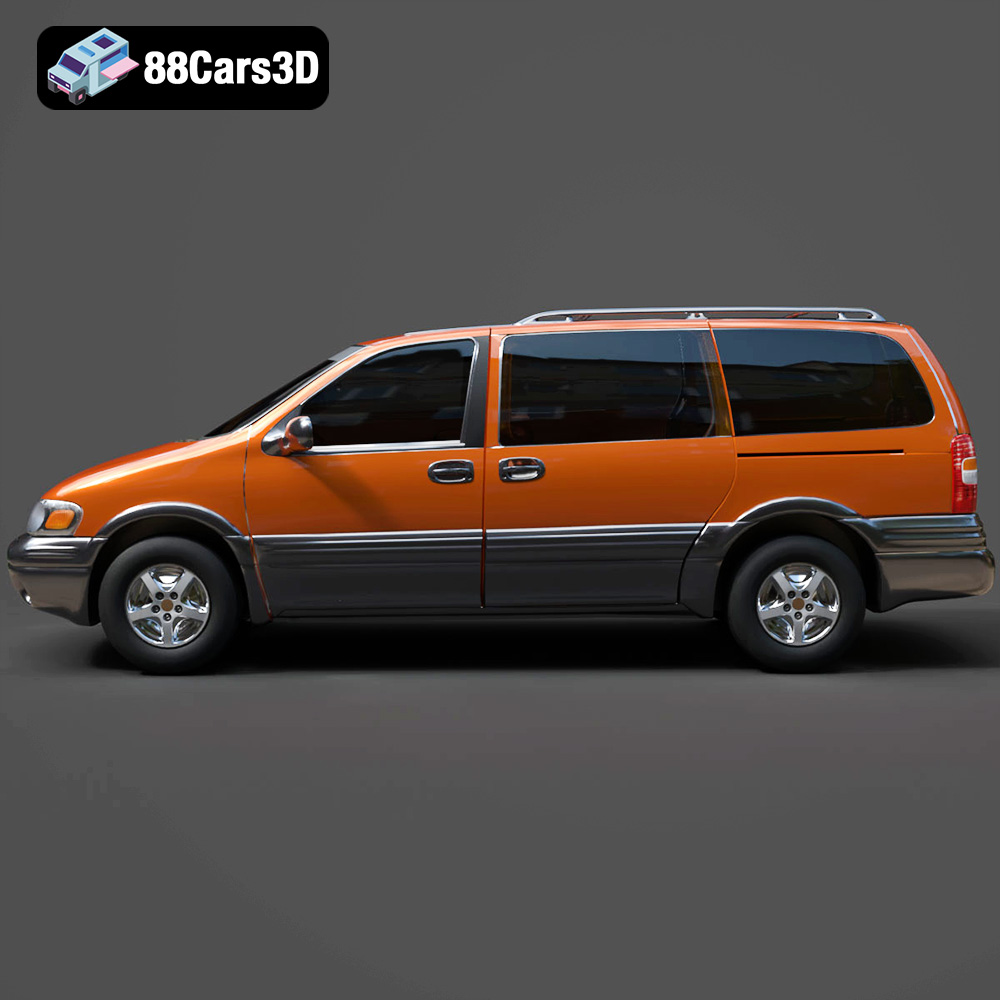
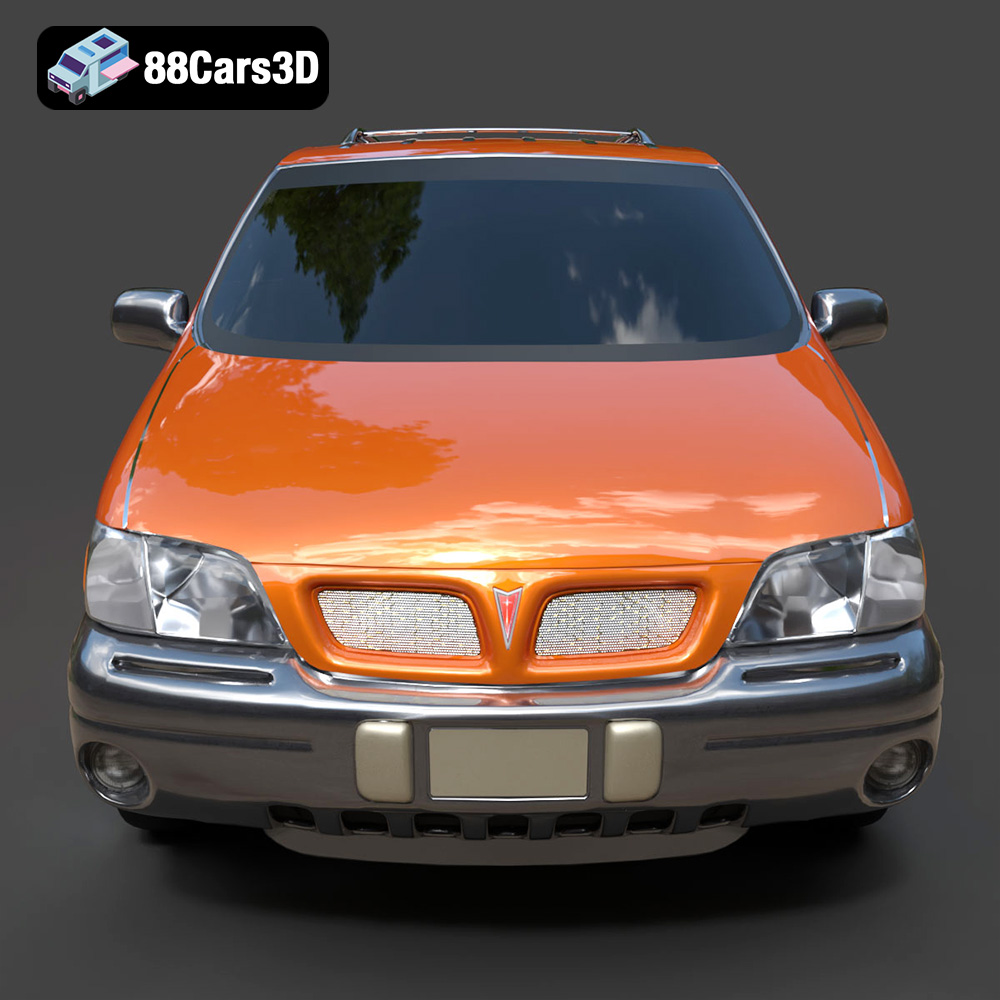
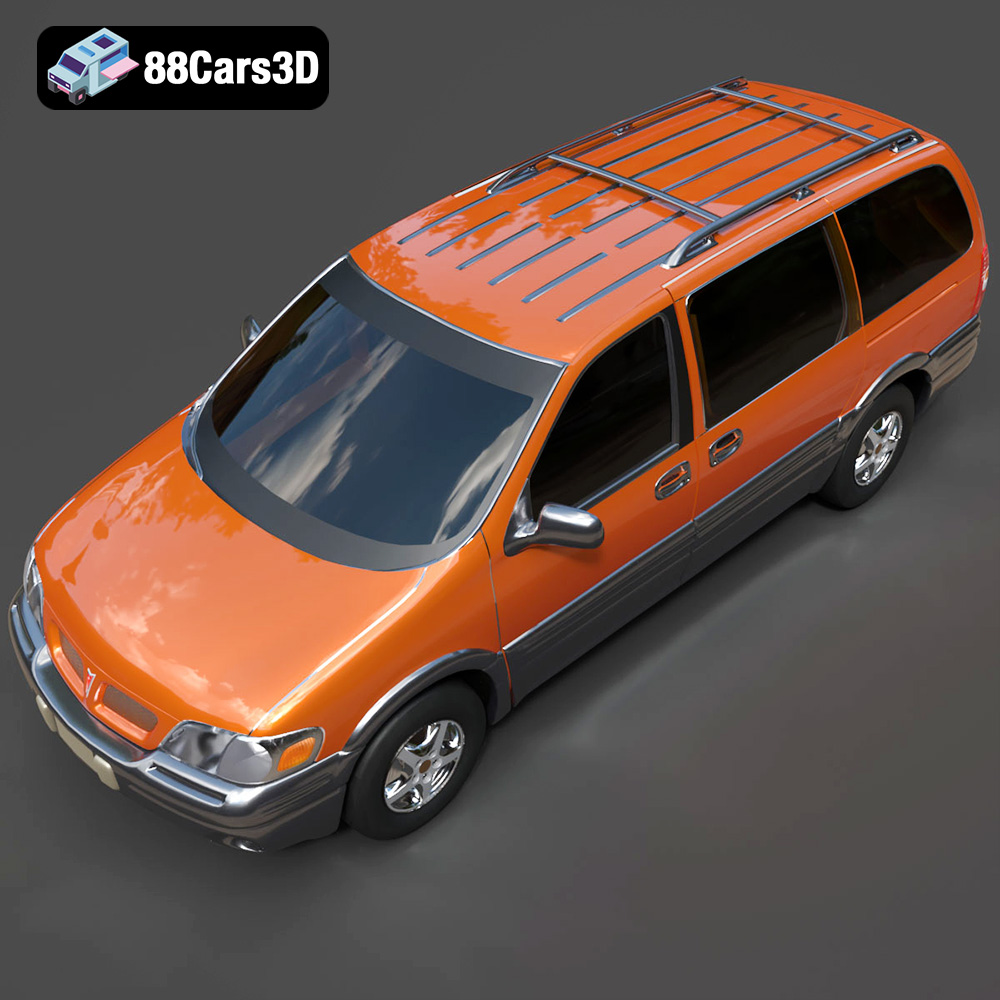
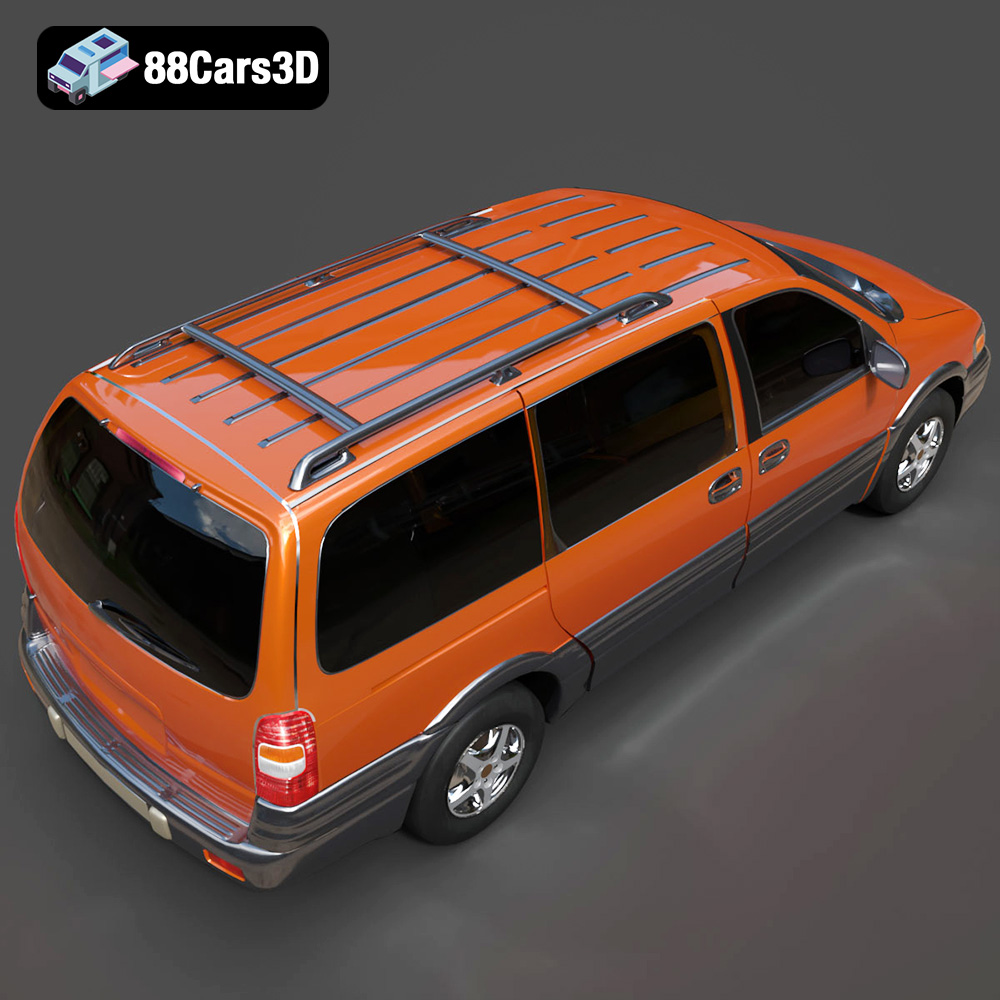
The immediate impact of any 3D car model comes from its exterior. For the Pontiac Montana 1998, this means accurately capturing the distinctive design language of this classic minivan. The model features accurate body panels that reflect its original contours, a critical detail for authenticity. Beyond the primary surfaces, elements like detailed headlights, taillights, and turn signals are not merely textured planes but include transparent materials, allowing light to realistically interact with them. This level of detail extends to the precisely modeled wheels and tires, which are true to the vehicle’s era, and the authentic window glass and trim, designed to accommodate versatile lighting setups. Crucially, components like doors and wheels are separated for easy animation, a fundamental requirement for dynamic scenes or interactive experiences.
Interior and Mechanical Detailing for Immersive Experiences
While often hidden, a detailed interior significantly elevates the realism of a 3D car model, especially for close-up shots, AR/VR experiences, or simulations. The Pontiac Montana 1998 3D Model includes a faithfully replicated dashboard, steering wheel, and seating arrangement. This level of detail extends to visible interior components like door panels and console elements. What’s impressive here is the optimized mesh quality; it provides sufficient detail for convincing visuals without overburdening real-time engines. Furthermore, the inclusion of basic undercarriage and visible suspension components allows for comprehensive visualizations, whether for a detailed render showcasing the vehicle from below or for educational purposes in a simulation.
Technical Foundations: Topology, Scale, and Hierarchy
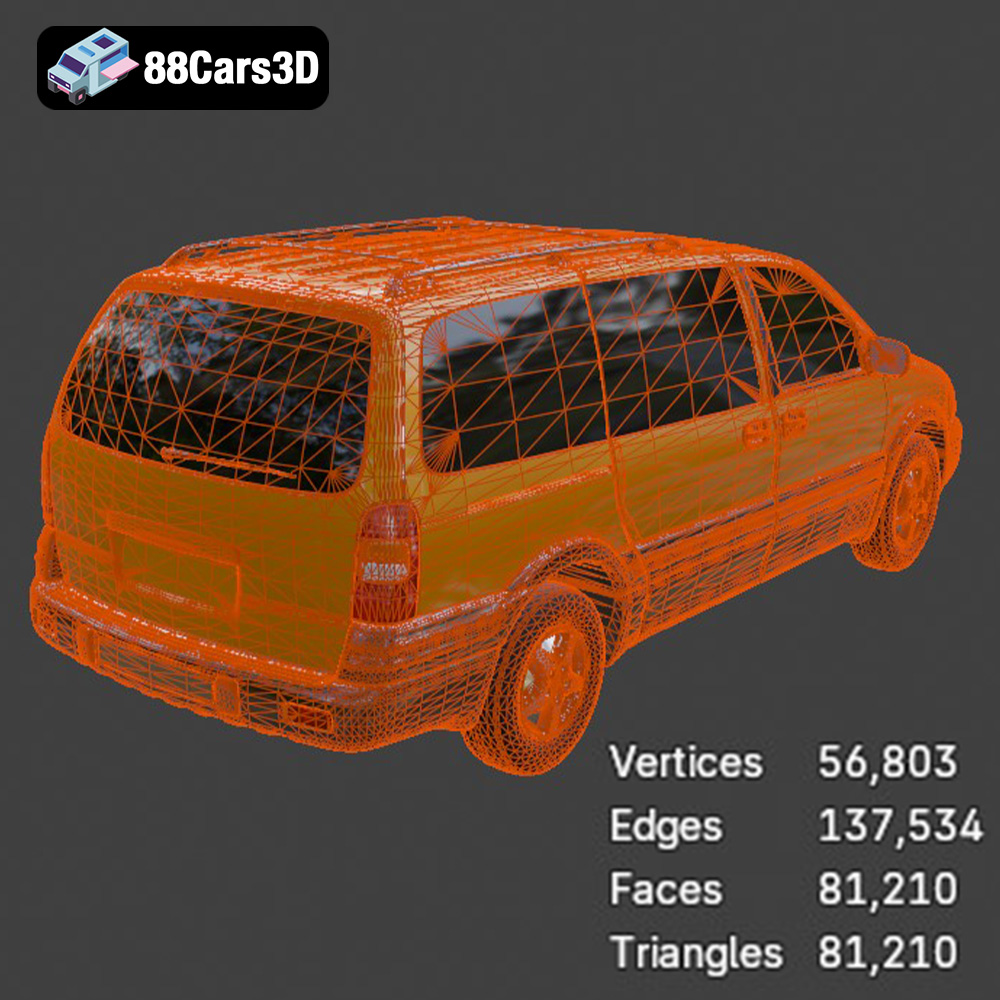
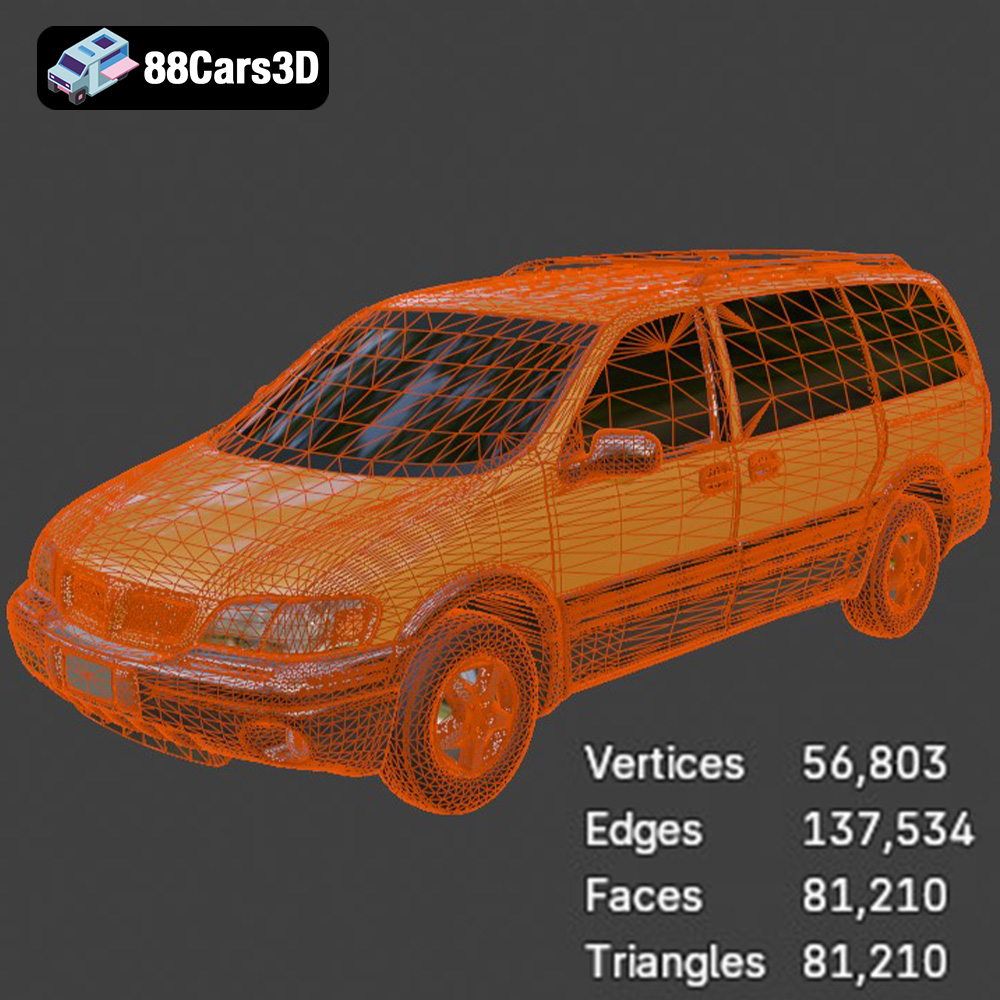
Beneath the surface aesthetics, the true value of a professional 3D car model lies in its technical foundation. The Pontiac Montana 1998 3D Model boasts clean, quad-dominant topology. This is paramount for several reasons: it ensures smooth subdivision when higher levels of detail are required, it facilitates clean deformation during animation, and it generally makes the model easier to work with for artists who might need to modify it. Another critical aspect is real-world scale accuracy. This ensures that the model seamlessly integrates into existing scenes, whether architectural visualizations or game environments, without requiring manual scaling adjustments that can introduce errors. Finally, an organized hierarchy with proper pivot points for animation and rigging workflows is a hallmark of a professional asset, saving countless hours for animators and riggers.
Professional Workflows: Integrating the Montana 3D Model into Your Projects
The versatility of a well-designed 3D car model like the Pontiac Montana 1998 3D Model truly shines when integrated into professional workflows across different industries. From cinematic rendering to interactive game environments, this model is built to perform.
High-Fidelity Automotive Rendering in 3ds Max and Blender
For artists focused on photorealistic automotive rendering, the .max and .blend files are invaluable. In 3ds Max, artists can leverage advanced rendering engines like V-Ray or Corona Renderer. The clean topology allows for smooth subdivision for close-up shots, and the accurately modeled components and separate parts make setting up materials and lighting a breeze. Imagine using the Pontiac Montana 1998 in a retro-themed architectural visualization, parked elegantly in a suburban driveway. Similarly, Blender users can harness Cycles or Eevee, utilizing the provided materials as a starting point, then customizing them with PBR textures to achieve stunning realism. The authentic window glass and trim, along with the detailed lights, are perfect for creating dramatic studio renders or realistic advertising visuals, capturing the essence of the vehicle with meticulous lighting setups.
Game Development and Real-Time Environments with Unreal Engine
Game developers demand optimized assets that perform well in real-time. The .fbx and .unreal formats of the Pontiac Montana 1998 3D Model are specifically tailored for this. For integration into Unreal Engine, the model’s optimized mesh quality means lower poly counts where appropriate, ensuring smooth frame rates even in complex scenes. Developers can easily import the model, apply Unreal’s powerful PBR materials, set up collisions, and even integrate it into vehicle physics systems. This model is ideal for populating open-world simulations, developing driving simulators, or adding an authentic period vehicle to a narrative-driven game. Its organized hierarchy simplifies the process of rigging for in-game animation, such as opening doors or rotating wheels based on player interaction.
Expanding Horizons: AR/VR and Simulation Applications
The immersive nature of AR/VR experiences and the precision required for simulations make specific demands on 3D assets. The .glb and .fbx formats for the Pontiac Montana 1998 3D Model cater directly to these needs. For AR/VR, the .glb format is perfect for quick deployment on web platforms or mobile applications, allowing users to view the minivan in augmented reality in their own environment. The real-world scale accuracy ensures that the virtual car appears correctly sized. In simulation and training scenarios, the meticulously detailed yet optimized model is valuable for vehicle dynamics studies or advanced driving simulators. Its accurate representation allows for realistic interaction and visual feedback, making it a critical component for educational programs or research projects.
Customization and Versatility: Adapting Your 3D Car Model
A truly professional 3D car model isn’t just about initial quality; it’s about the flexibility it offers for customization. The Pontiac Montana 1998 3D Model from 88cars3d.com excels in this regard, providing artists and designers with ample room for creative expression.
Material and Texture Customization
One of the most impactful ways to customize a 3D model is through its materials and textures. The Pontiac Montana 1998 3D Model allows you to easily adjust paint finishes to explore various color schemes and material properties. Whether you envision a classic metallic sheen, a matte utility finish, or a vibrant custom color, the underlying clean geometry and organized material IDs make these changes straightforward. You can modify properties for metal, glass, rubber, and plastics to achieve desired realism, fine-tuning roughness, reflectivity, and transparency values to match specific artistic visions or environmental conditions. This level of control is crucial for automotive advertising, where showcasing different configurations of a vehicle is a common requirement.
Lighting and Atmospheric Control
Lighting is the soul of any render, and a versatile 3D model allows for extensive experimentation. With the Pontiac Montana 1998 3D Model, you can adapt lighting setups to create different atmospheric renders. From the crisp highlights of a sunny exterior shot to the dramatic shadows and reflections of a night scene, the model’s detailed surfaces and transparent materials respond beautifully to varied lighting conditions. Experiment with HDR environments, studio softboxes, or dramatic point lights to evoke different moods and highlight specific design features. This flexibility ensures that the model can be used effectively in any visual context, from a bright showroom to a moody street scene.
Animation and Rigging Potential
Beyond static renders, the Pontiac Montana 1998 3D Model is built for motion. Its separated components—doors, wheels, steering wheel—coupled with an organized hierarchy and proper pivot points, make it highly amenable to animation and rigging workflows. Animators can easily set up controllers for opening and closing doors, rotating wheels, or articulating suspension. This makes the model perfect for cinematic sequences, interactive product presentations, or dynamic in-game events. Imagine a scene where the minivan pulls up, its sliding door opening smoothly, revealing the detailed interior—all made possible by the thoughtful construction of the 3D asset.
Beyond the Screen: 3D Printing and Physical Prototyping
While digital visualization is a primary use case, the utility of high-quality 3D car models extends into the physical realm, particularly through 3D printing.
Preparing for Production with .STL
The inclusion of the .stl format for the Pontiac Montana 1998 3D Model means it is ready for physical model production. Whether you’re creating a desktop collectible, a scale model for a diorama, or a prototype for a design study, the .stl file provides the necessary geometry. A well-constructed .stl will be “manifold,” meaning it has a watertight surface without holes or overlapping geometry, which is essential for successful 3D printing. This capability opens up opportunities for hobbyists, collectors, and design firms to bring the digital asset into the tangible world.
Architectural Visualization and Product Placement
Though not its primary function, the Pontiac Montana 1998 3D Model can serve as an excellent contextual element in architectural visualizations. Placing a realistic car model in an arch-viz scene can add a sense of scale, realism, and liveliness. The Montana, with its distinctive “family car” aesthetic, can perfectly ground a suburban house render, depicting a lived-in environment. Similarly, for product placement, this model can be integrated into scenes featuring other products, lending authenticity to the overall composition. Its clean geometry and accurate proportions ensure it looks natural in any setting, enhancing the narrative of the visualization.
Conclusion
The world of 3D modeling thrives on precision, versatility, and efficiency. The Pontiac Montana 1998 3D Model stands as a prime example of a meticulously crafted asset that meets these demands. From its faithful exterior and interior detailing to its robust technical foundation of clean, quad-dominant topology and organized hierarchy, this model is built for professional performance.
Its comprehensive file format support—including .blend, .fbx, .obj, .glb, .stl, .ply, .unreal, and .max—ensures seamless integration into any workflow, whether you’re tackling high-fidelity automotive rendering, developing immersive game assets for Unreal Engine, creating compelling AR/VR experiences, or even preparing for 3D printing. The customization options for materials, lighting, and animation further enhance its value, making it an indispensable tool for artists, designers, and developers across various industries. When you require a reliable, accurate, and highly flexible 3D car model, exploring offerings like the Pontiac Montana 1998 3D Model from 88cars3d.com is a step towards achieving truly outstanding results in your projects.
Featured 3D Model
Pontiac Montana 1998 3D Model
Presenting the Pontiac Montana 1998 3D Model, a meticulously crafted representation of the classic American minivan, renowned for its spaciousness and family utility. This model captures the distinctive design and practical aesthetic of the Montana, built with clean geometry and a balanced level of detail. It is an ideal asset for a wide range of applications, from high-quality rendering and cinematic animation to detailed simulations and immersive game development projects.
$21.99
Product Image Gallery