The Art of Automotive Realism: Crafting Immersive 3D Car Models for Modern Projects
In the rapidly evolving landscape of 3D visualization, the demand for highly realistic and versatile automotive models has never been greater. From captivating cinematic renders and immersive game worlds to precise architectural visualizations and advanced simulations, a meticulously crafted 3D car model is often the linchpin of a successful project. Professionals in these fields understand that quality isn’t just about aesthetics; it’s about technical precision, optimized performance, and seamless integration into diverse workflows.
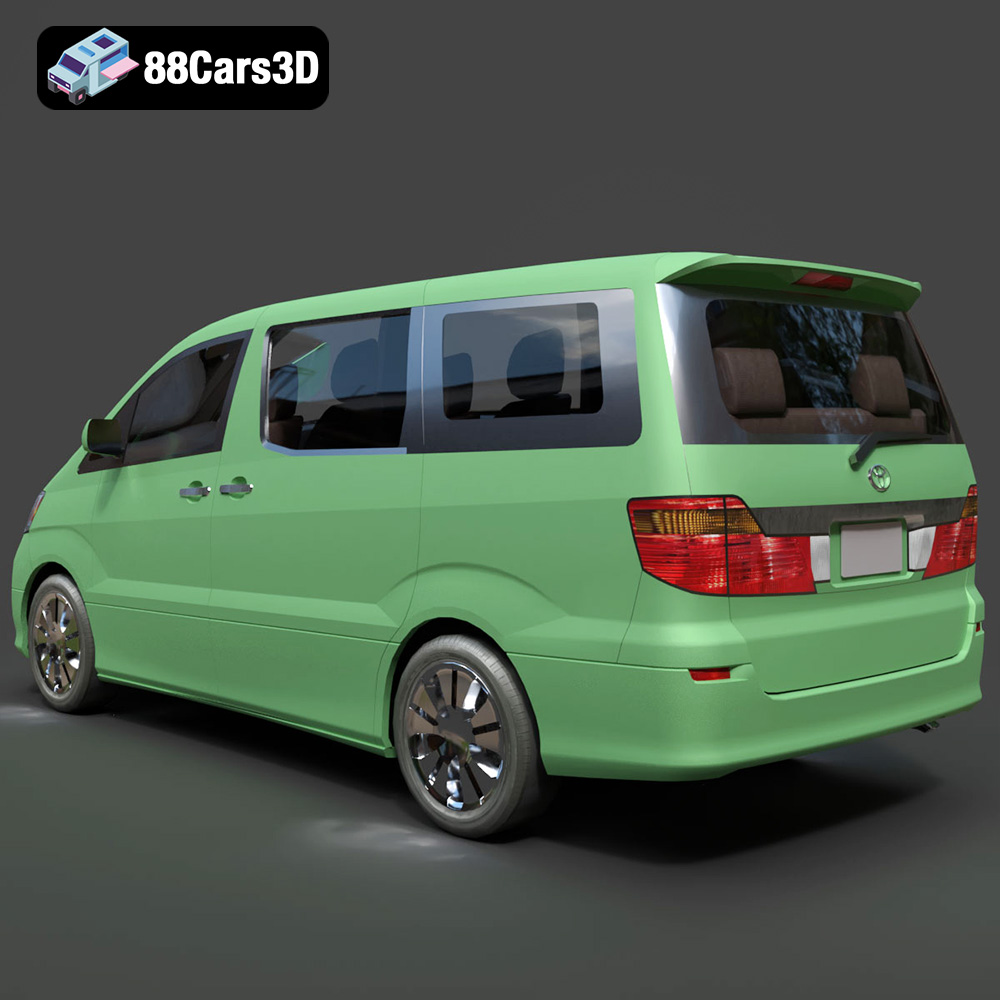
Today, we delve into the intricate world of premium 3D vehicle assets, exploring what makes them indispensable for leading-edge projects. We’ll examine the technical underpinnings, practical applications, and the strategic advantages of choosing high-fidelity models. As a prime example of this professional-grade quality, we’ll frequently reference the Toyota Alphard 3D Model available on 88cars3d.com – a digital recreation of the iconic luxury minivan, engineered for optimal performance across a spectrum of demanding 3D applications.
Understanding 3D Model File Formats
The choice of file format is a critical decision in any 3D workflow, dictating compatibility, feature support, and overall project efficiency. A truly versatile 3D asset, like the Toyota Alphard 3D Model, provides a comprehensive suite of formats to cater to various professional needs. Understanding when and why to use each format is paramount for smooth project execution and maximum utility.
.blend – The Blender Powerhouse
The .blend file is Blender’s native format, encapsulating an entire scene with all its components: meshes, materials (including node setups for PBR), textures, lighting, cameras, animations, physics simulations, and modifiers. For users entrenched in the Blender ecosystem, a .blend file offers maximum editability and full access to the original scene’s construction. This format is ideal for artists who wish to dissect the model, apply custom modifiers, re-rig, or deeply integrate it into existing Blender projects without losing any data fidelity. When working with the Toyota Alphard 3D Model in .blend format, artists benefit from immediate access to its clean geometry and logically organized hierarchy, ready for further customization in Blender.
.fbx – The Industry Standard for Interchange
Autodesk’s .fbx (Filmbox) format is arguably the most widely adopted interchange format in the 3D industry, especially for animation and game development. It excels at preserving complex scene data, including meshes, materials (with PBR maps often linked), textures, bone animations, skinning, and camera information. It’s the go-to format for transferring assets between different DCC (Digital Content Creation) software like 3ds Max, Maya, Blender, and directly into game engines such as Unreal Engine and Unity. For a model like the Toyota Alphard, an .fbx version ensures that its separated components (doors, hood, trunk) and set pivots are perfectly preserved, making it ideal for immediate integration into real-time pipelines or complex animated sequences.
.obj – The Universal Geometry Carrier
The .obj (Wavefront OBJ) format is a universal standard primarily for transmitting geometry data. While it supports basic material definitions via an accompanying .mtl file, it doesn’t carry animation, rigging, or complex scene data. Its strength lies in its simplicity and unparalleled compatibility across virtually all 3D software. When you need to import just the mesh data into an application that might struggle with more complex formats, .obj is a reliable choice. The Toyota Alphard 3D Model’s .obj version provides a robust, clean mesh foundation that can be easily imported into any 3D package for rendering or further modeling, serving as a dependable fallback or primary format for static visualizations.
.glb – Optimized for AR, VR, and Web
.glb (GL Transmission Format Binary) is a modern, compact, and efficient format designed specifically for the transmission of 3D scenes and models over the web. It’s a single-file format that bundles geometry, materials (PBR ready), textures, and animation into a highly optimized package. This makes it perfect for AR/VR applications, interactive web experiences, and any scenario where small file size and quick loading are crucial. The Toyota Alphard 3D Model in .glb format is ideal for showcasing the vehicle in a web-based configurator or deploying it into an augmented reality app, offering rich visuals with minimal overhead.
.stl – Precision for 3D Printing
.stl (Stereolithography) is the de facto standard for 3D printing. It represents a 3D model as a series of connected triangles, describing only the surface geometry without color, texture, or material information. While simpler, its ubiquitous support in CAD software and 3D printers makes it essential for physical prototyping or creating scale models. The Toyota Alphard 3D Model’s .stl version allows for the creation of high-quality physical replicas, perfect for designers, engineers, or enthusiasts who want to hold a tangible representation of this luxury minivan.
.ply – Precision Mesh for CAD or Analysis
The .ply (Polygon File Format) is a versatile format capable of storing a wide range of information, including vertex coordinates, normals, color data (per vertex or face), and various other properties. It’s commonly used in scientific applications, 3D scanning, CAD, and point cloud data processing, where precise geometry and detailed attribute storage are important. While less common for general rendering, its inclusion for the Toyota Alphard 3D Model highlights its suitability for technical analysis or integration into specialized engineering or architectural software.
.unreal – Engine-Ready Asset for Real-Time
When the product description mentions .unreal, it signifies more than just a raw mesh file. It typically indicates an Unreal Engine project package, asset bundle, or a pre-configured scene file specifically optimized and ready for immediate deployment within the Unreal Engine environment. This means materials are often set up with PBR (Physically Based Rendering) principles, textures are correctly applied, and potentially even LODs (Levels of Detail) or blueprint functionalities are integrated. For the Toyota Alphard 3D Model, this means a drag-and-drop solution for game developers and real-time visualization artists, minimizing setup time and maximizing efficiency within one of the industry’s leading game engines.
.max – The 3ds Max Native Project
The .max file is the native format for Autodesk 3ds Max, a powerhouse for 3D modeling, animation, and rendering. Like .blend, it contains the full scene, including all modeling data, modifiers, materials, lights, cameras, animations, and render settings. For professionals using 3ds Max, the .max file provides complete creative control, allowing for detailed modifications, complex animation sequences, and high-fidelity rendering with engines like V-Ray or Corona. The Toyota Alphard 3D Model’s .max version offers an uncompromised starting point for sophisticated architectural visualizations or cinematic sequences, leveraging 3ds Max’s robust toolset.
Crafting Automotive Realism: The Art of Detail and Topology
Achieving photorealistic automotive rendering is a complex endeavor that goes far beyond simply modeling the shape of a vehicle. It involves a meticulous blend of artistic skill and technical precision, ensuring that every curve, reflection, and shadow contributes to an authentic representation. A premium 3D car model, such as the Toyota Alphard 3D Model from 88cars3d.com, exemplifies these principles through its carefully engineered structure and material definitions.
Clean Geometry and Quad-Dominant Topology
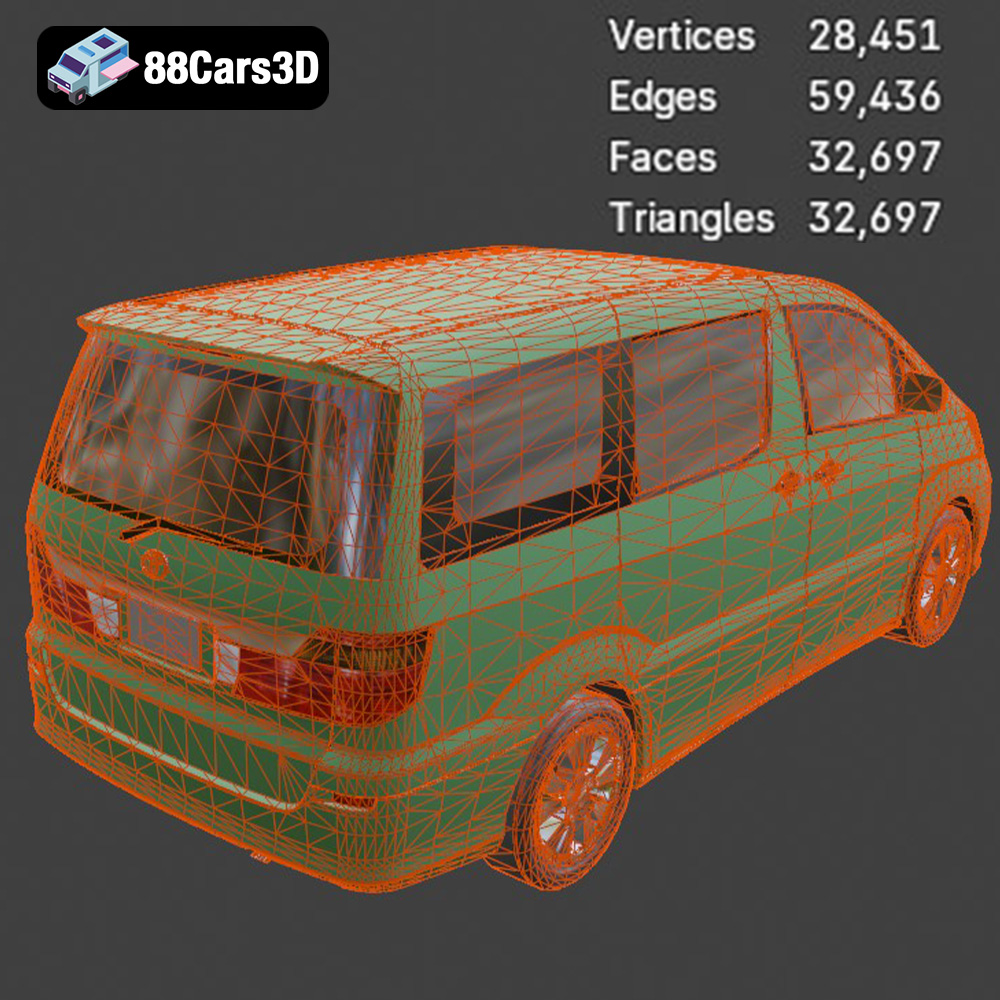
The foundation of any high-quality 3D model is its geometry. Clean geometry means that the mesh is free from artifacts like non-manifold edges, inverted normals, or overlapping faces, which can lead to rendering errors or problems during subdivision. Crucially, professional 3D car models utilize a “quad-dominant topology.” This means the vast majority of faces are quads (four-sided polygons), which are superior to triangles for several reasons:
- Smooth Subdivision: Quads deform predictably when subdivision surface modifiers (like TurboSmooth in 3ds Max or Subdivision Surface in Blender) are applied, resulting in smooth, organic curves without pinching or unwanted artifacts. This is vital for the sleek body panels of a luxury vehicle like the Alphard.
- Distortion-Free Deformation: For animation, quad-dominant meshes provide more stable deformation, preventing unsightly stretching or tearing when parts like doors or wheels move.
- Ease of Editing: Quads are easier for artists to select, manipulate, and modify, facilitating tasks like edge loops and UV unwrapping.
The Toyota Alphard 3D Model’s emphasis on clean, quad-dominant topology directly translates into a more robust and flexible asset for any project.
Detailed Exterior and Interior Features
Realism is built on detail. For automotive models, this means going beyond the basic silhouette. The Alphard model’s exterior features include accurately modeled body panels, detailed headlights and taillights with transparent materials, and precisely crafted wheels and tires. These elements are not merely aesthetic; they are designed with practical application in mind. Transparent materials for lighting elements allow for realistic illumination effects, while the accurate modeling ensures correct reflections and refractions. For the interior, comprehensive detailing of the dashboard, steering wheel, seats, and central console is critical for close-up renders or immersive first-person views in games or AR/VR. This level of detail ensures the model holds up under intense scrutiny, whether in a static render or a dynamic animation.
Material PBR and UV Mapping Excellence
Photorealism is heavily reliant on physically based rendering (PBR) materials, which accurately simulate how light interacts with surfaces in the real world. A high-quality 3D car model comes with PBR-ready materials that include maps for albedo (base color), roughness, metallic, normal, and displacement. These maps define everything from the subtle texture of the paint to the reflectivity of chrome accents and the matte finish of plastics. Proper UV mapping is essential for PBR; it’s the process of unfolding the 3D mesh into a 2D space to apply textures without stretching or distortion. The Alphard model’s material properties are easily adjustable, allowing artists to fine-tune paint finishes, apply custom graphics, and adapt material properties for various components, ensuring maximum visual fidelity and creative control.
From Studio Render to Real-Time Engine: Integration Workflows
The true measure of a versatile 3D asset is its ability to seamlessly integrate into various professional pipelines, from high-fidelity offline rendering to optimized real-time environments. The Toyota Alphard 3D Model, with its diverse file formats and technical advantages, is designed for just this purpose. Let’s explore common integration workflows across leading software.
Workflow in 3ds Max for Cinematic Rendering
Autodesk 3ds Max remains a cornerstone for architectural visualization, product rendering, and cinematic animation. Using the provided .max file for the Toyota Alphard 3D Model offers an immediate advantage.
- Import and Scene Setup: Open the
.maxfile directly. The model is already at real-world scale and has a logically organized hierarchy with properly set pivots, making scene management straightforward. - Material Refinement (V-Ray/Corona): Leverage the included materials or easily convert them to popular render engines like V-Ray or Corona. Adjust PBR parameters – for example, dialing in the perfect car paint shader with multiple clear coat layers, reflective chrome for trim, and realistic rubber for tires.
- Lighting and Environment: Set up an HDRI (High Dynamic Range Image) environment for realistic global illumination and reflections. Add targeted area lights or photometric lights to accentuate specific features, such as the detailed headlights.
- Animation: The separated doors, hood, and trunk, coupled with properly set pivots, simplify animation. Keyframe opening doors, spinning wheels, or even a basic steering animation for a full cinematic sequence.
- Rendering: Configure render settings for high-resolution output, anti-aliasing, and global illumination, aiming for photorealistic results that showcase the Alphard’s opulent design.
This workflow demonstrates how the Alphard model can be utilized for stunning visualizations in product showcases or architectural walkthroughs.
Blender for Indie Development and ArchViz
Blender’s open-source nature and powerful capabilities make it a favorite for many, from indie game developers to architectural visualization artists. The .blend file for the Toyota Alphard 3D Model offers native integration.
- Opening and Inspection: Load the
.blendfile. Inspect the clean quad-dominant topology and organized collections. - Material Setup (Cycles/Eevee): The included materials are typically set up with Blender’s Principled BSDF shader, making them PBR-ready for both Cycles (for photorealistic renders) and Eevee (for real-time previews). Fine-tune the material properties for custom paint jobs or unique interior fabrics.
- Lighting: Utilize Blender’s robust lighting system. Add an HDRI for environmental lighting, spot lights for accents, and area lights to simulate studio lighting.
- Animation & Rigging: If more complex animations are desired beyond simple object transforms, the clean topology and logical hierarchy make it easier to add an armature for advanced rigging, allowing for fully articulated doors, suspensions, or even interior components.
- Rendering/Export: Render high-quality images or animations using Cycles, or export the model (e.g., as FBX or GLB) for game engine integration, maintaining its optimized mesh quality.
The Alphard model’s flexibility within Blender supports a wide array of creative pursuits.
Unreal Engine for Real-Time Immersion
For game development, AR/VR experiences, and interactive simulations, Unreal Engine is a dominant force. The dedicated .unreal asset for the Toyota Alphard 3D Model simplifies this process significantly.
- Import and Asset Integration: Import the
.unrealasset into your Unreal Engine project. This typically means the model, textures, and basic materials are already set up within the engine’s content browser. - Material Instances: Create material instances from the base materials. This allows artists to quickly modify colors (like paint finishes), roughness, or metallic properties without recompiling shaders, making customization highly efficient.
- Blueprint Interaction: Utilize Unreal Engine’s Blueprint visual scripting system to add interactivity. Connect the separated door meshes to open/close animations, implement wheel rotation based on speed, or even create a basic drivable vehicle blueprint.
- Lighting and Level Integration: Place the Alphard model within an existing game level or virtual environment. Use Unreal’s powerful lighting tools (directional lights, sky lights, volumetric fog) to achieve realistic real-time illumination.
- Optimization: For game development, consider generating LODs (Levels of Detail) if not already included, to ensure optimal performance across different viewing distances without sacrificing visual fidelity up close.
This streamlined workflow makes the Alphard model a valuable game asset for racing games, open-world simulations, or virtual training modules.
Beyond Visualization: Diverse Applications for High-Quality 3D Car Models
The utility of a high-quality 3D car model extends far beyond static renders or simple animations. Modern 3D assets are engineered for versatility, finding their place in a multitude of industries and applications. The Toyota Alphard 3D Model, with its detailed features and robust technical advantages, is a prime example of such a multifaceted asset, capable of driving innovation across various sectors.
Game Development: Creating Immersive Virtual Worlds
In the realm of video games, realism and performance are often at odds. Developers need models that look stunning but are also optimized to run smoothly within real-time engines. The Toyota Alphard 3D Model is designed with these constraints in mind. Its optimized mesh quality, balanced detailing, and logically organized hierarchy make it an ideal game asset. Whether it’s a background vehicle populating an open-world city, a player-drivable car in a racing simulator, or an asset for an architectural walkthrough in a game engine, the model provides the necessary foundation. The inclusion of formats like .fbx and the dedicated .unreal project setup specifically caters to this demanding application, allowing developers to integrate the model with minimal effort and maximum visual impact.
AR/VR: Bridging the Digital and Physical Divide
Augmented Reality (AR) and Virtual Reality (VR) are transforming how we interact with digital content, offering immersive experiences that blend virtual objects with the real world or transport users to entirely new environments. For automotive applications in AR/VR, models need to be highly detailed for close inspection but also optimized for mobile or standalone headsets. The Toyota Alphard 3D Model’s .glb format is specifically tailored for AR/VR and web-based display, ensuring efficient loading and high visual fidelity in these demanding real-time contexts. Imagine using an AR app to place a virtual Alphard in your driveway, or experiencing its luxurious interior in a VR showroom – the quality of the 3D model directly impacts the believability of these experiences.
Simulation & Training: Real-World Scenarios
Accurate 3D models are indispensable for simulation and training platforms across various industries. For automotive simulations, this could range from professional driving simulators used for driver training and vehicle dynamics research to educational modules explaining car mechanics or technical training for service technicians. The Toyota Alphard 3D Model, modeled to real-world scale and featuring comprehensive interior and basic undercarriage components, provides an authentic representation necessary for these applications. Its precise geometry and realistic material properties ensure that visual feedback in a simulator is as close to reality as possible, enhancing the effectiveness of the training.
3D Printing: Bringing Digital Designs to Life
While often associated with screen-based visualization, 3D models also serve as the blueprint for physical creations through 3D printing. The .stl format included with the Toyota Alphard 3D Model makes it ready for this process. Engineers, designers, or hobbyists can convert the digital model into a tangible object, creating scale models for display, prototypes for design review, or even custom parts. The clean geometry of the original model is crucial here, as any non-manifold geometry or errors can lead to printing failures. This versatility demonstrates the comprehensive thought put into preparing this asset for a wide range of creative and practical uses.
Optimizing for Performance: Technical Considerations
In the world of 3D, especially for real-time applications and large-scale projects, pure visual quality must be balanced with performance. An excellent 3D car model, such as those found on 88cars3d.com, achieves this equilibrium through smart technical design and optimization. The Toyota Alphard 3D Model exemplifies this approach by incorporating several key technical advantages that ensure both visual fidelity and operational efficiency.
Balanced Detailing and Polycount Management
One of the most critical aspects of 3D model optimization is polycount management. While high polycounts can deliver stunning detail, they can also cripple performance, particularly in game engines or AR/VR environments. The Toyota Alphard 3D Model is built with “optimized mesh quality to balance visual fidelity with efficient polycount.” This means that polygons are judiciously distributed: high-detail areas like headlights, grilles, and intricate interior elements receive more polygons, while flatter, less visible surfaces are kept leaner. This intelligent distribution ensures that the model looks excellent up close without overburdening the rendering pipeline, a common challenge in developing high-quality 3D car models.
Real-World Scale and Logical Hierarchy
Accuracy in 3D modeling goes beyond just aesthetics; it includes adherence to real-world dimensions. The Alphard model is “modeled to real-world scale,” which is crucial for seamless integration into architectural visualization scenes, accurate physics simulations, or consistent scaling within game environments. Importing a model that’s correctly scaled saves significant time and prevents scaling errors that can lead to incorrect lighting, physics interactions, or visual inconsistencies. Coupled with this is a “logically organized hierarchy with properly set pivots.” This means that components like doors, wheels, and the hood are grouped and parented correctly, and their pivot points (the axis around which they rotate or scale) are set in the right physical location. This greatly facilitates animation, manipulation, and overall scene management, particularly important when animating a vehicle’s moving parts or integrating it into a vehicle control system in a game engine.
Separated Components for Animation and Customization
The ability to easily animate and customize a 3D car model is a hallmark of a professional asset. The Toyota Alphard 3D Model features “separated components such as doors, hood, and trunk for easy animation workflows.” This is not a trivial detail; it means that these parts are distinct mesh elements, making it simple to select, rotate, or translate them independently. For instance, in a rendering scenario, you can easily open a door to reveal the interior. In a game, these separated components are essential for implementing interactive elements or damage models. Furthermore, “easily modify paint finishes and apply custom graphics” and “adjust material properties for metals, chrome accents, rubber, and plastics” speaks to the model’s adaptability. Artists can quickly rebrand the vehicle, create different versions (e.g., taxi, police car), or fine-tune its appearance to match specific project requirements without extensive re-modeling, making it a highly versatile asset.
The Professional Edge: Leveraging 88cars3d.com for Success
For creative professionals, time is a precious commodity. Building a high-fidelity 3D car model from scratch is an incredibly time-consuming and resource-intensive process, often requiring hundreds of hours of dedicated work from skilled artists. This is where specialized marketplaces like 88cars3d.com become invaluable. By providing access to production-ready, high-quality 3D car models, they empower artists and studios to deliver exceptional results efficiently.
Accelerating Production Workflows
The primary benefit of acquiring a premium asset like the Toyota Alphard 3D Model from 88cars3d.com is the dramatic acceleration of production timelines. Instead of spending weeks or months on modeling, texturing, and rigging a vehicle, artists can instantly integrate a fully prepared asset into their projects. This allows them to focus their expertise on more creative aspects—lighting, scene composition, animation, or interactive logic—rather than repetitive foundational modeling. For studios working on tight deadlines for automotive rendering, game releases, or architectural flythroughs, this efficiency is not just a convenience, it’s a competitive advantage. The ready-to-use formats, from .blend to .unreal, minimize setup time across various software and engines.
Ensuring Quality and Consistency
Sourcing 3D assets from a reputable marketplace ensures a baseline of quality and consistency that might be difficult to achieve when relying on disparate free resources or less professional avenues. The commitment to “clean geometry, quad-dominant topology, and real-world scale” in models like the Toyota Alphard guarantees that the asset will perform reliably and integrate smoothly into professional pipelines. This consistency is vital for projects that require multiple vehicles or for studios that need to maintain a high standard across all their digital assets. It minimizes the risk of encountering corrupted files, poorly optimized meshes, or incomplete material setups that can derail a project.
Diverse Applications, Maximum Value
The true value of a versatile asset lies in its ability to serve multiple purposes. The Toyota Alphard 3D Model is not just a car; it’s a foundation for a range of applications. It can be the centerpiece of a stunning marketing render, a background prop in a bustling virtual city, a component in a driving simulator, or even a physical model printed in 3D. This multi-application potential maximizes the return on investment for the asset, allowing it to be repurposed across different projects and client needs. Whether you’re a freelance artist seeking to expand your library or a studio aiming to enhance your project’s visual fidelity, 88cars3d.com offers a curated selection of 3D car models that stand up to the most rigorous professional demands.
Conclusion
The landscape of 3D visualization is defined by an ever-increasing pursuit of realism and efficiency. High-quality 3D car models are not just digital objects; they are sophisticated technical assets engineered to meet the stringent demands of modern production pipelines. From their meticulously crafted geometry and PBR-ready materials to their optimized performance and multi-format compatibility, these models empower artists and developers to create truly immersive and visually stunning experiences across a spectrum of applications.
The Toyota Alphard 3D Model stands as an exemplary representation of what a premium 3D vehicle asset should offer. Its clean topology, detailed exterior and interior, real-world scale, and inclusion of diverse file formats like .blend, .fbx, .obj, .glb, .stl, .ply, .unreal, and .max ensure its adaptability for rendering, game development, AR/VR, simulation, and 3D printing. By leveraging such expertly crafted models from platforms like 88cars3d.com, professionals can significantly accelerate their workflows, maintain consistent quality, and focus their creative energy on bringing their visions to life.
Investing in a well-engineered 3D car model is an investment in your project’s success and your creative freedom. It’s about having the right tools to transform complex ideas into compelling realities, pushing the boundaries of what’s possible in the world of 3D.
Featured 3D Model
Toyota Alphard 3D Model
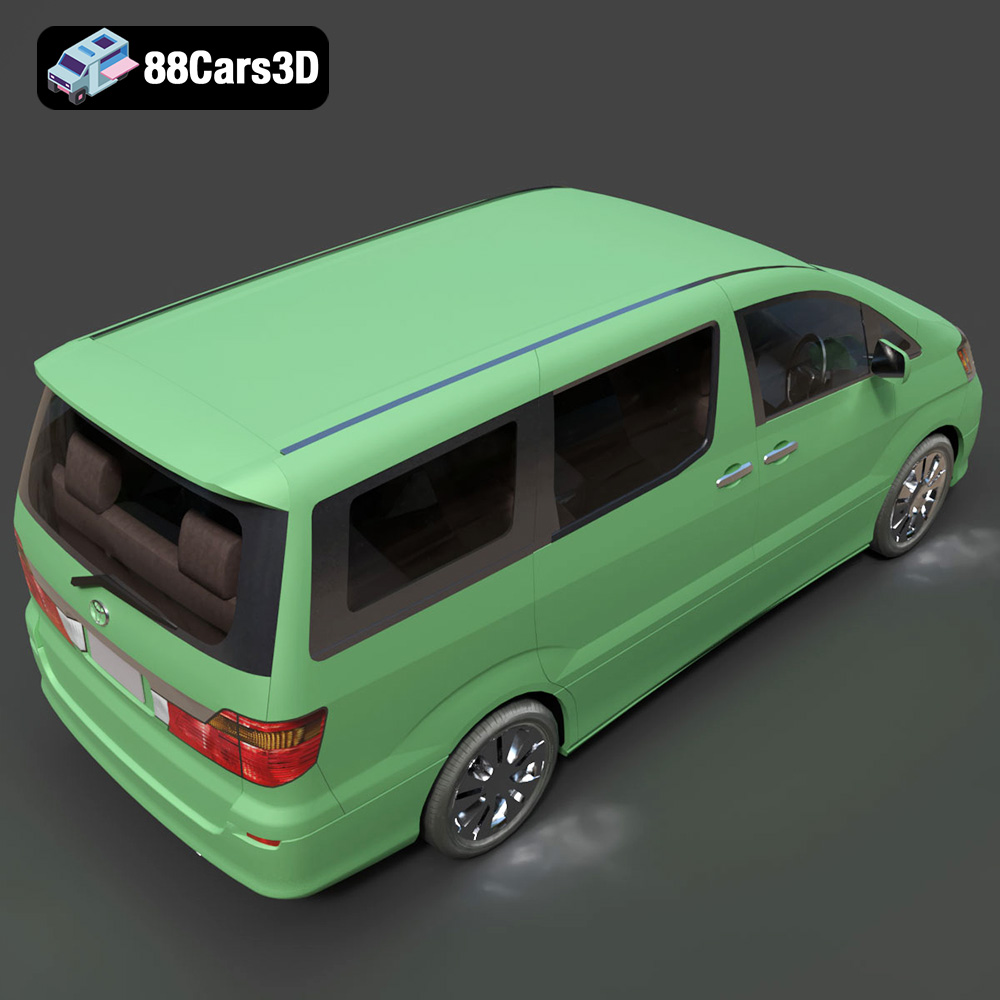
Presenting the highly detailed Toyota Alphard 3D Model, a faithful digital recreation of the iconic luxury minivan. This model captures the Alphard’s distinctive aesthetic, known for its opulent design, spacious interior, and commanding road presence. Built with clean geometry and balanced detailing, it ensures optimal performance across various applications. Ideal for high-quality rendering, realistic animations, immersive simulations, and robust game development projects.
Exterior Features:
- Accurately modeled body panels reflecting the Alphard’s signature styling.
- Detailed headlights and taillights with transparent materials for realistic illumination effects.
- Precisely crafted wheels and tires, enhancing the vehicle’s authentic appearance.
- Separated components such as doors, hood, and trunk for easy animation workflows.
- Realistic window glass with appropriate transparency for clear views of the interior.
Interior / Mechanical Features:
- Comprehensive interior detailing, including dashboard, steering wheel, seats, and central console.
- Optimized mesh quality to balance visual fidelity with efficient polycount.
- Basic undercarriage components for added realism in complex scenes.
Technical Advantages:
- Clean, quad-dominant topology for smooth subdivision and distortion-free deformation.
- Modeled to real-world scale, ensuring accurate integration into any scene or project.
- Logically organized hierarchy with properly set pivots, facilitating effortless animation and manipulation.
Applications:
- Rendering & Visualization: Perfect for studio renders, architectural visualizations, and cinematic scenes.
- Game Development: Optimized as a game asset for racing games, open-world simulations, and virtual environments.
- AR/VR: Ready for immersive augmented and virtual reality experiences.
- Simulation & Training: Suitable for driving simulators, educational modules, and technical training.
- 3D Printing: Convertible to .stl format for creating high-quality physical models.
Customization Options:
- Easily modify paint finishes and apply custom graphics to match branding or personal preferences.
- Adjust material properties for metals, chrome accents, rubber, and plastics to achieve desired visual effects.
- Adapt lighting setups to complement various scene environments and moods.
The Toyota Alphard 3D Model stands as a testament to precision and versatility. It’s an essential asset for professionals seeking a high-quality, production-ready luxury minivan model for any demanding 3D project.
Included File Formats:
- .blend – Blender project with materials
- .fbx – Compatible with Unreal, Unity, and major 3D engines
- .obj – Universal format for nearly all 3D software
- .glb – Optimized for AR, VR, and web-based visualization
- .stl – Ready for 3D printing
- .ply – Mesh format for analysis and CAD workflows
- .unreal – Unreal Engine project setup
- .max – Editable 3ds Max scene for rendering and animation
Tags:
.toyota, .alphard, .minivan, .luxuryvan, .van, .rendering, .simulation, .gameasset, .arvr, .blend, .fbx, .obj, .glb, .stl, .ply, .unreal, .max
$21.99
Product Image Gallery