Driving Digital Dreams: The Indispensable Role of High-Quality 3D Car Models
In the fast-paced world of digital content creation, the demand for realism and fidelity continues to soar. From cinematic visualizations to immersive game environments and compelling architectural renderings, the presence of accurately modeled vehicles can elevate a project from ordinary to extraordinary. High-quality 3D car models are not merely decorative elements; they are complex technical assets that underpin the authenticity and interactivity of virtual worlds. They serve as crucial components for designers, animators, and game developers striving to achieve unparalleled visual standards.
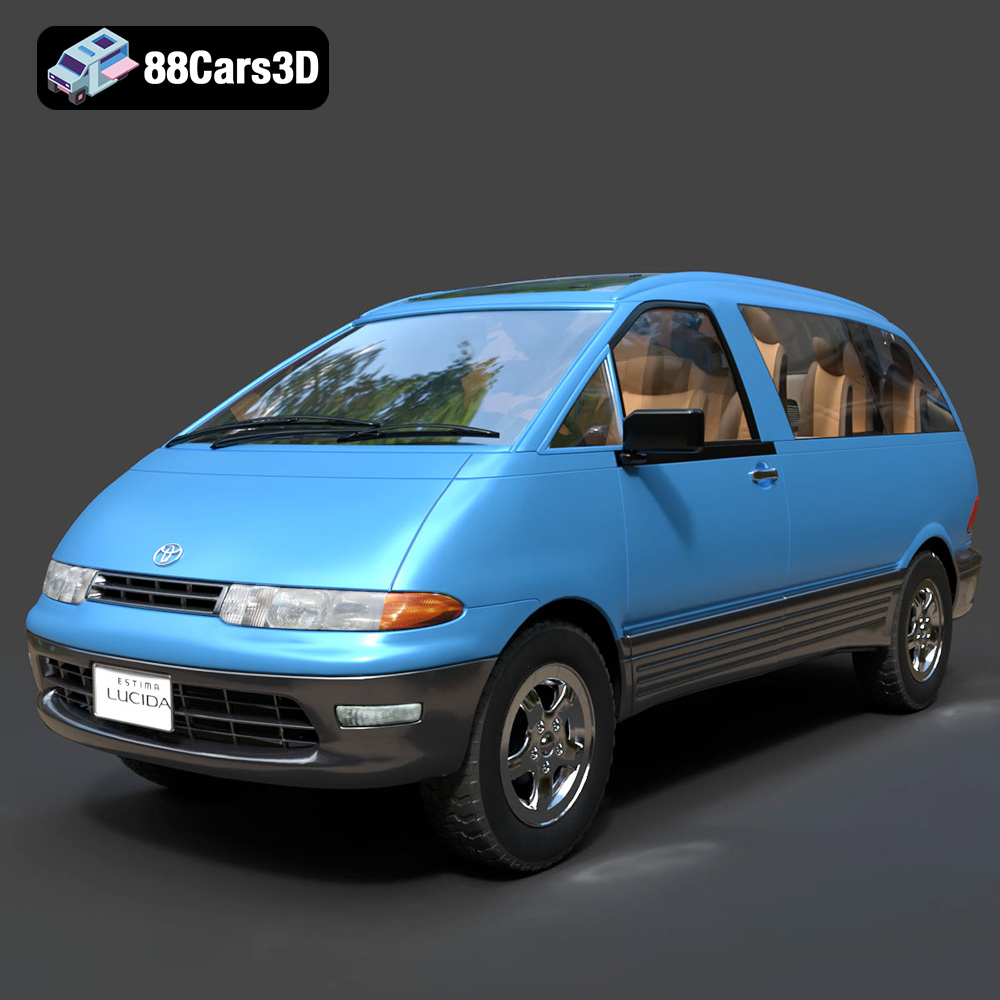
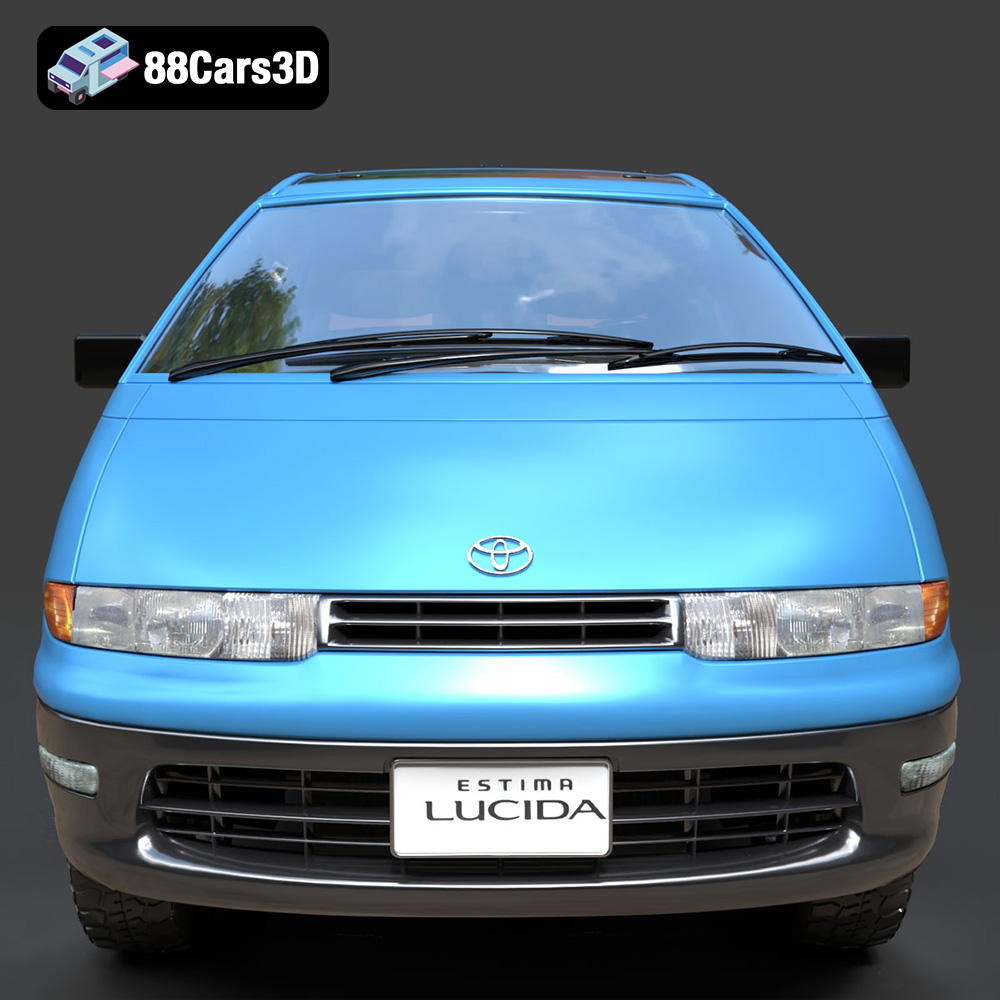
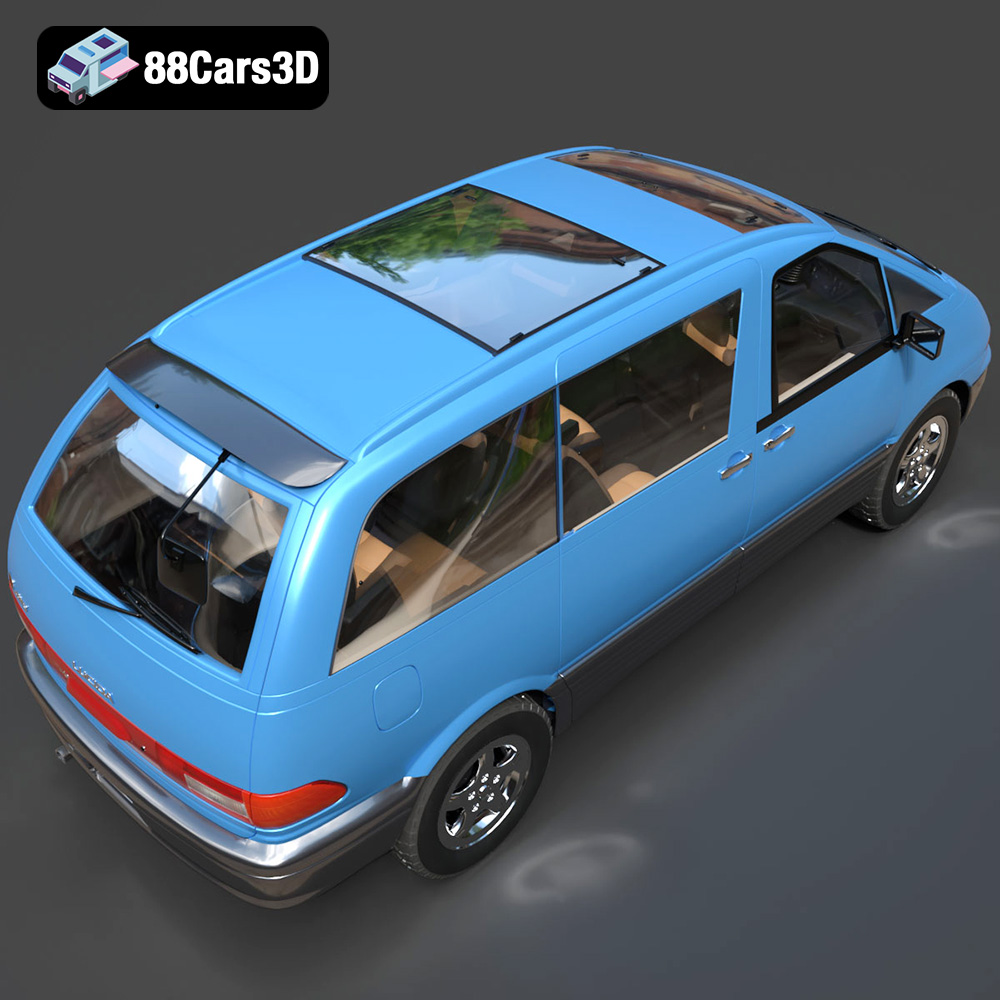
Whether you’re crafting a nostalgic scene from the 90s, designing a contemporary urban streetscape, or simulating precise vehicle dynamics, the right 3D car model can significantly streamline your workflow and enhance your final output. It’s about more than just aesthetics; it’s about engineering precision, material accuracy, and seamless integration into diverse software pipelines. A prime example of such a meticulously crafted asset is the Toyota Estima Lucida 3D Model, which perfectly embodies the blend of iconic design and technical readiness that professionals seek. This model, available on 88cars3d.com, captures the quintessential compact MPV with a level of detail and optimization that makes it an invaluable addition to any digital asset library.
Understanding 3D Model File Formats: The Backbone of Versatility
The utility of a 3D model isn’t just in its visual quality, but also in its compatibility and adaptability across different software and platforms. This is where understanding file formats becomes paramount. Each format is engineered for specific purposes, offering unique advantages for various stages of a project, from initial modeling to final rendering, game integration, or even physical manufacturing. The Toyota Estima Lucida 3D Model from 88cars3d.com exemplifies versatility by providing a comprehensive suite of file formats, ensuring it meets the diverse needs of professionals.
.blend – Blender’s Native Powerhouse
The .blend format is the native file type for Blender, a powerful and increasingly popular open-source 3D creation suite. When you acquire a .blend file, you’re getting a fully editable Blender scene, complete with materials, textures, lighting, and sometimes even animation rigs. For the Toyota Estima Lucida 3D Model, this means artists working in Blender can dive straight into customization, modifying geometry, adjusting PBR materials, or setting up complex animation sequences with ease. It’s ideal for those who want maximum flexibility within the Blender ecosystem.
.fbx – The Industry Standard for Interchange
Autodesk’s .fbx (Filmbox) format is arguably the most widely adopted interchange format in the 3D industry. It supports not only mesh data but also materials, textures, animations, cameras, and lights, making it incredibly robust for transferring complex scenes between different software packages. The .fbx format included with the Toyota Estima Lucida 3D Model is ideal for game engines like Unreal Engine and Unity, real-time visualization applications, and seamless import into 3ds Max, Maya, Cinema 4D, and more. Its widespread support makes it a go-to for collaborative workflows and cross-platform development.
.obj – Universal Compatibility and Simplicity
The .obj (Wavefront Object) format is a universal standard known for its simplicity and broad compatibility. While it primarily stores geometric data (vertices, normals, UVs, and faces), it often links to an accompanying .mtl (material) file for basic material definitions and texture references. For the Toyota Estima Lucida, the .obj format ensures that nearly any 3D software can import the model’s geometry. It’s an excellent choice when you need a clean mesh for sculpting, retopology, or when your target application has limited support for more complex formats. Its straightforward nature makes it a reliable fallback.
.glb – Streamlined for Web and Immersive Experiences
.glb (GL Transmission Format Binary) is an increasingly vital format, especially for modern applications like AR, VR, and web-based 3D displays. It’s a binary version of the glTF format, which bundles all necessary data (geometry, materials, textures, animations) into a single, optimized file. This compact, self-contained nature makes .glb files incredibly efficient for rapid loading and smooth performance in browsers or on mobile devices. Integrating the Toyota Estima Lucida 3D Model as a .glb allows for quick deployment in virtual showrooms, augmented reality apps, or interactive web experiences without complex setup.
.stl – The Gateway to Physical Fabrication
The .stl (STereoLithography) format is the standard for 3D printing. Unlike other formats that prioritize rendering or animation, .stl defines only the surface geometry of a 3D object using a collection of triangular facets. It doesn’t store color, texture, or material information. The inclusion of an .stl file for the Toyota Estima Lucida 3D Model means its geometry is structured appropriately for conversion and preparation for physical output. This is invaluable for creating physical scale models, rapid prototyping, or even educational displays, translating the digital asset into a tangible object.
.ply – Precision for Engineering and Analysis
.ply (Polygon File Format, or Stanford Triangle Format) is another common format for storing 3D data, particularly from 3D scanners or for applications requiring precise mesh data. It can store various properties beyond just geometry, such as color, transparency, normals, texture coordinates, and even scalar fields. While less common for general 3D asset delivery, its inclusion with the Toyota Estima Lucida 3D Model caters to specific engineering, reverse engineering, or analytical workflows where a precise, robust mesh representation is crucial for CAD or simulation-based analysis.
.unreal – Direct Integration for Real-Time Environments
The .unreal format signifies an Unreal Engine project setup. This goes beyond a simple .fbx import; it often means the asset has been specifically prepared and configured within an Unreal Engine project. This could include pre-set materials, collision meshes, LODs (Levels of Detail), and potentially even basic blueprints or interactivity. For game developers or real-time artists using Unreal, the Toyota Estima Lucida’s .unreal file represents a significant time-saver, offering an engine-ready asset that can be dropped directly into a scene with minimal configuration, accelerating development and ensuring optimal performance.
.max – 3ds Max’s Comprehensive Project File
Similar to .blend for Blender, the .max format is the native file type for Autodesk 3ds Max, a leading software for 3D modeling, animation, and rendering in professional visualization. An editable .max project file provides access to the complete scene setup, including the original modeling data, modifiers, sophisticated V-Ray or Corona materials, lighting rigs, and animation timelines. For users primarily working in 3ds Max, the Toyota Estima Lucida .max file offers the highest degree of control and flexibility for customization, high-fidelity rendering, and complex animation scenarios within their preferred environment.
Unleashing the Toyota Estima Lucida 3D Model Across Professional Workflows
The versatility of the Toyota Estima Lucida 3D Model extends far beyond its file format options. Its meticulous construction makes it a highly adaptable asset, ready to be integrated into diverse professional pipelines. This model is more than just a static object; it’s a dynamic tool that can empower various creative and technical endeavors.
Automotive Rendering and Cinematic Visualization
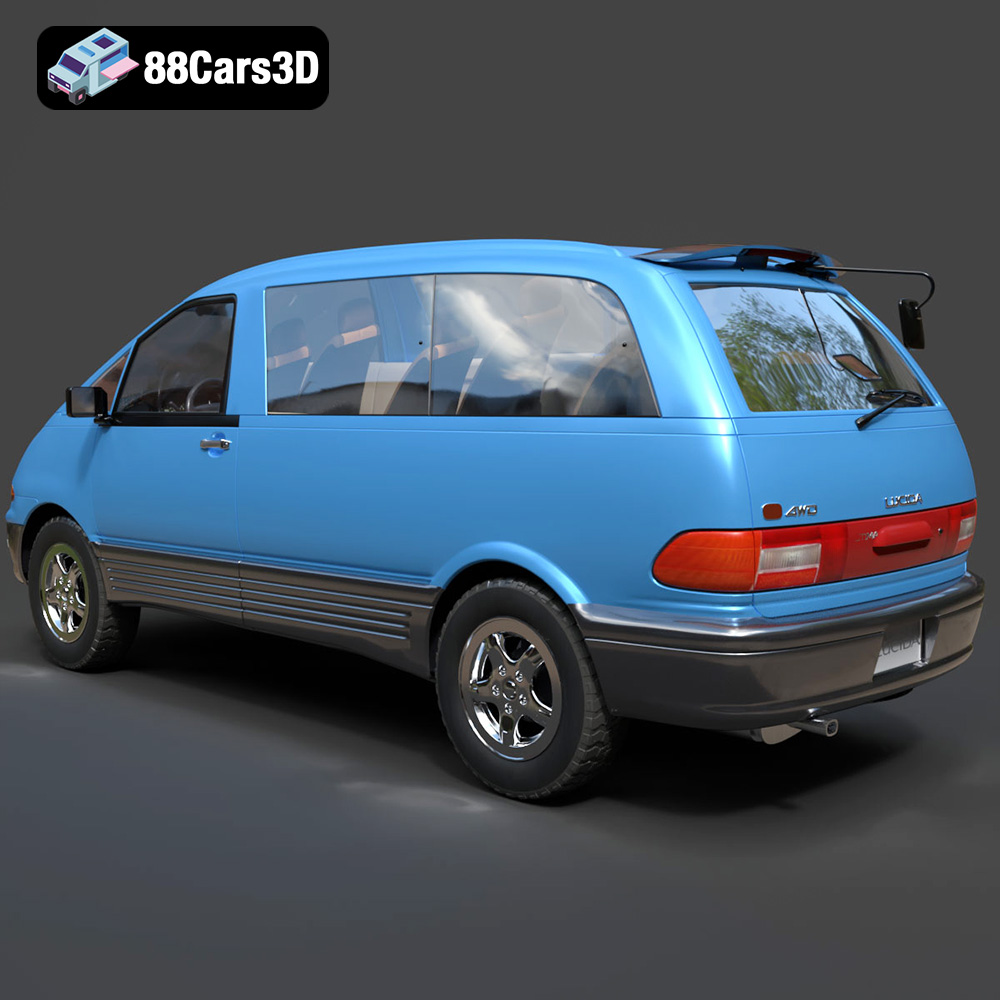
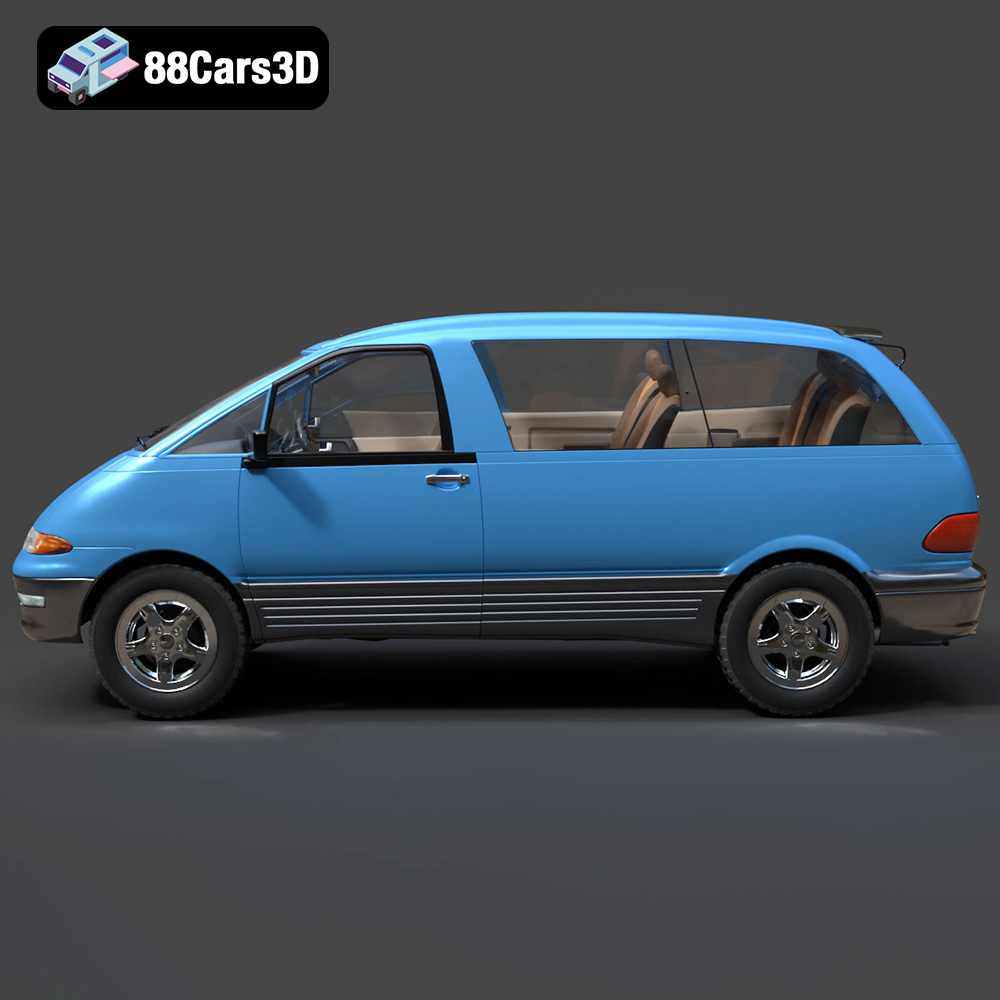
For artists focused on high-fidelity visual production, the Toyota Estima Lucida 3D Model is a dream. Its accurately modeled body panels, detailed headlights, taillights, and realistic glass materials provide the perfect foundation for stunning renders. Imagine it placed within an architectural visualization scene, adding a touch of period-correct realism to a 90s-era building design, or starring in a vintage-inspired commercial animation.
- Crafting Photorealism: Using rendering engines like V-Ray, Corona Renderer, or Redshift in 3ds Max or Cycles in Blender, artists can leverage the model’s clean geometry and pre-configured materials to achieve unparalleled photorealism. Adjusting the paint finish, metallic properties of rims, or the refraction of glass becomes an intuitive process, allowing for nuanced visual storytelling.
- Cinematic Storytelling: With separate components for doors, hood, and trunk, along with properly set pivots, animators can easily rig the vehicle for complex movements. This facilitates dynamic scene compositions, from subtle door openings to more elaborate driving sequences, bringing static images to life for commercials, film pre-visualizations, or documentary reconstructions. The Estima Lucida, with its distinctive shape, can evoke nostalgia or represent a specific era in a visual narrative.
Game Development and Real-Time Interaction
The optimization inherent in the Toyota Estima Lucida 3D Model makes it an excellent candidate for game development and real-time interactive experiences. Its balanced detailing ensures visual fidelity without compromising performance, a critical factor in interactive applications where every frame matters.
- Seamless Engine Integration: The included .fbx and .unreal formats are specifically tailored for game engines like Unreal Engine and Unity. This means developers can import the model with minimal setup, benefiting from pre-optimized meshes and potentially configured materials. Its clean topology allows for easy generation of Levels of Detail (LODs) to manage performance across different distances, and the geometry is suitable for generating accurate collision meshes for realistic physics interactions.
- Diverse Gaming Scenarios: Whether it’s populating an open-world environment, serving as a player vehicle in a racing game set in a specific era, or being used as a prop in a driving simulator, the Estima Lucida brings a layer of authentic detail. Its iconic shape can instantly define a historical setting or provide a unique aesthetic to a game’s vehicular roster. Developers can easily adapt its paint finishes and add custom graphics to match game lore or team aesthetics.
AR/VR and Immersive Experiences
Augmented Reality (AR) and Virtual Reality (VR) platforms demand efficient, high-quality assets for truly immersive experiences. The Toyota Estima Lucida 3D Model, particularly in its .glb format, is perfectly suited for these cutting-edge applications.
- Virtual Showrooms and Interactive Demos: Imagine a virtual showroom where users can walk around the Estima Lucida, open its doors, and explore its detailed interior, all rendered smoothly in real-time on a web browser or a VR headset. The optimized mesh quality ensures a fluid experience, preventing motion sickness and maintaining visual clarity.
- Historical and Educational VR Tours: For projects recreating historical street scenes or providing educational modules on automotive design, the Estima Lucida can serve as a vital component. Its accurate representation allows users to interact with a piece of automotive history in a fully immersive digital space, providing a unique learning opportunity. The ease of deployment with .glb files simplifies the process of getting these experiences into users’ hands.
Technical Precision: The Backbone of the Estima Lucida Model’s Versatility
What truly sets a professional-grade 3D model apart is the underlying technical craftsmanship. The Toyota Estima Lucida 3D Model is a testament to this, built with an understanding of production pipelines and the demands of various digital environments.
Optimized Geometry and Topology
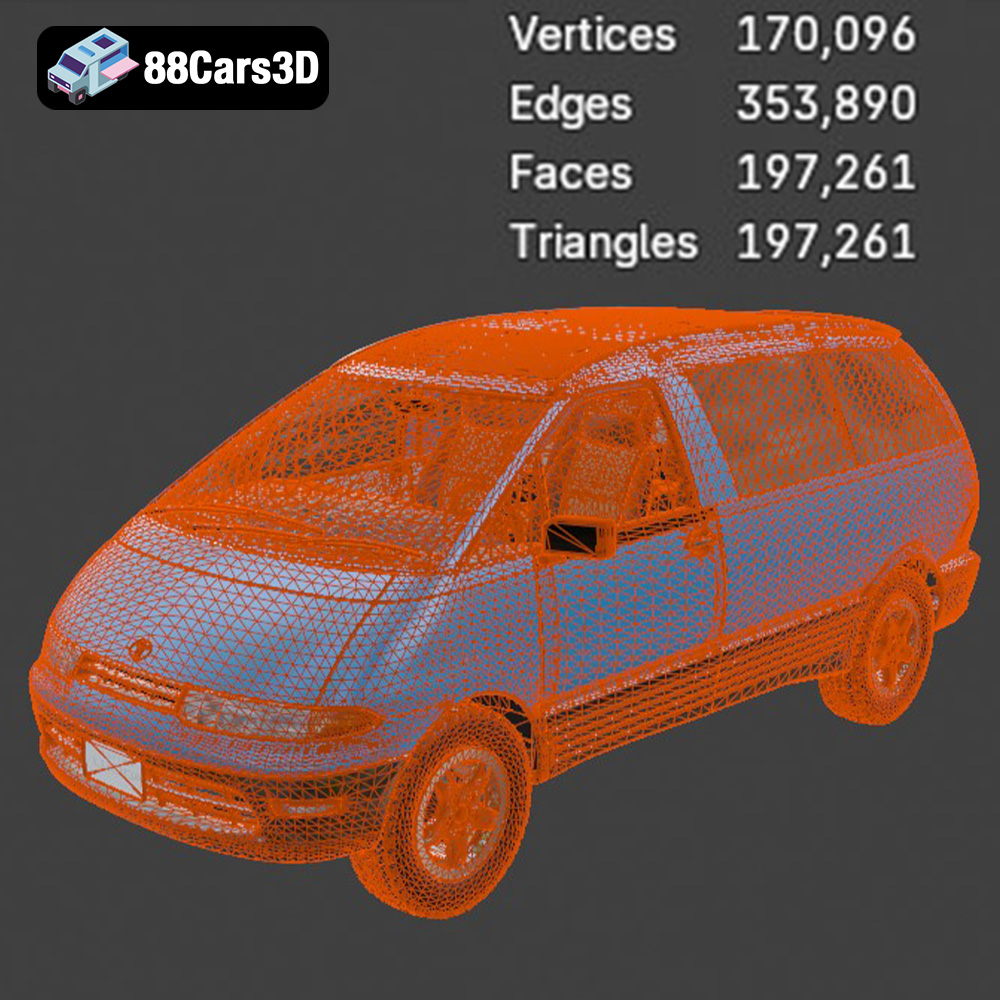
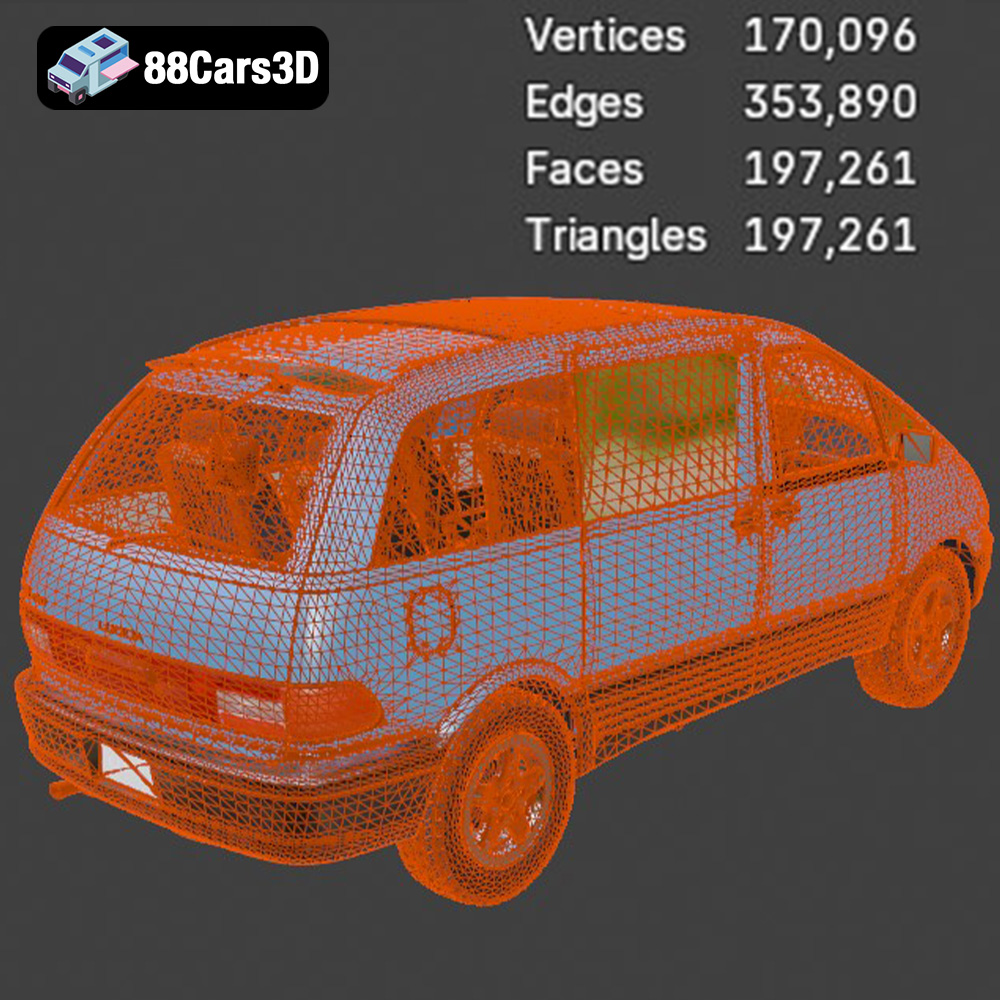
The product description highlights “clean, quad-dominant topology for smooth subdivision and distortion-free deformation.” This isn’t just jargon; it’s a fundamental aspect of a usable 3D asset. Quad-dominant meshes are easier to work with, predictable during deformation (e.g., when animating doors or suspension), and essential for applying subdivision surfaces to achieve high-resolution, smooth renders without jagged edges. Modeled to real-world scale, it ensures accurate integration into existing scenes and environments, eliminating the need for tedious scaling adjustments that can introduce errors.
- Performance vs. Fidelity: The “optimized mesh quality” ensures that while the model maintains high visual fidelity, its polygon count is managed to deliver efficient performance in real-time applications. This balance is critical for game assets and AR/VR experiences where resource management is key. For high-fidelity rendering, subdivision can be applied to further smooth surfaces, leveraging the clean topology.
- Seamless Integration: Correct real-world scale is often overlooked but crucial. It means the model will sit naturally alongside other assets in a scene, whether it’s a building, a character, or another vehicle, without needing constant adjustments that can break the illusion of reality.
Materials, Textures, and Animation Readiness
The detail doesn’t stop at the mesh. The Estima Lucida 3D Model boasts “detailed headlights, taillights, and indicator lights with realistic glass materials,” “precisely replicated wheels and tires, featuring tread patterns and rim details,” and “clear and tinted window glass materials for realistic reflections and transparency.” These elements are vital for achieving photorealistic results.
- PBR Workflow: The model is designed with modern Physically Based Rendering (PBR) workflows in mind. This means its materials behave realistically under various lighting conditions, making it easier for artists to achieve consistent, believable results across different rendering engines. The accurate representation of materials like metals, plastics, rubber, and glass ensures that reflections, refractions, and light interactions are true to life.
- Animation-Friendly Hierarchy: The “organized hierarchy with properly set pivots for doors, wheels, and other moving parts” is a massive time-saver for animators. Instead of manually adjusting pivot points or struggling with complex rigging, artists can immediately begin animating the vehicle’s components, greatly accelerating the production pipeline for interactive or cinematic content. This thoughtful preparation reflects a deep understanding of practical production needs.
- Interior and Mechanical Details: The inclusion of a “detailed dashboard, steering wheel, and instrument cluster” for the interior, along with “basic under-the-hood engine and drivetrain components,” elevates the model’s realism. This level of detail is crucial for close-up shots, virtual tours, or interactive vehicle inspections, providing a comprehensive visual experience even for elements that might not always be in plain sight.
Customization and Future-Proofing Your Projects
Investing in a high-quality 3D asset like the Toyota Estima Lucida 3D Model from 88cars3d.com is not just about fulfilling immediate project needs; it’s about future-proofing your creative endeavors. Its inherent adaptability and flexibility ensure long-term value in your asset library.
Adapting to Unique Project Demands
The model’s design allows for extensive customization. “Easily adaptable paint finishes and graphic designs” mean you can quickly re-texture the vehicle to match specific brand guidelines, period aesthetics, or fictional liveries for a game. Want a rusted, abandoned look for a post-apocalyptic scene? Or a pristine, showroom finish for a product configurator? The clean topology and material setup facilitate these transformations with minimal effort. Similarly, “adjustable material properties for metals, plastics, rubber, and glass” provide granular control over the visual characteristics, allowing artists to fine-tune reflections, roughness, and translucency to perfectly match their scene’s mood and lighting.
Long-Term Value in Your Asset Library
A well-built 3D model is a reusable asset. The Toyota Estima Lucida, with its broad compatibility and optimized structure, can serve multiple projects over time. It can be a background prop in one visualization, a featured animated vehicle in another, and an interactive element in a future AR application. Its robust foundation means it can be updated with new texture sets, integrated into different rendering engines as technology evolves, and continually adapted to new creative challenges. This represents a significant return on investment compared to modeling from scratch for every project, freeing up valuable time and resources for other critical tasks.
Conclusion
In the expansive and ever-evolving landscape of 3D content creation, the bedrock of any successful project is the quality of its foundational assets. High-quality 3D car models are indispensable tools for achieving digital realism, accelerating workflows, and delivering visually compelling results across rendering, game development, and immersive experiences. The Toyota Estima Lucida 3D Model stands out as an exemplary asset, meticulously crafted with an understanding of professional demands, from its clean, quad-dominant topology to its comprehensive suite of file formats and animation-ready features.
By investing in such a precisely engineered asset, available through 88cars3d.com, artists and developers gain not only a visually stunning representation of an iconic vehicle but also a versatile, optimized, and customizable foundation for their creative endeavors. Whether you’re aiming for cinematic photorealism, seamless real-time performance, or tangible 3D prints, this model offers a robust and adaptable solution, proving that the right 3D asset can truly drive your digital dreams forward.
Featured 3D Model
Toyota Estima Lucida 3D Model
Experience the iconic functionality and distinctive design of the Toyota Estima Lucida with this meticulously crafted 3D model. Representing a quintessential compact MPV, this model captures the vehicle’s unique proportions and practical aesthetics. Built with clean, optimized geometry and balanced detailing, it is engineered for exceptional performance across various applications, making it ideal for high-fidelity rendering, realistic animation sequences, detailed simulations, and seamless integration into game development projects.
$24.99
Product Image Gallery