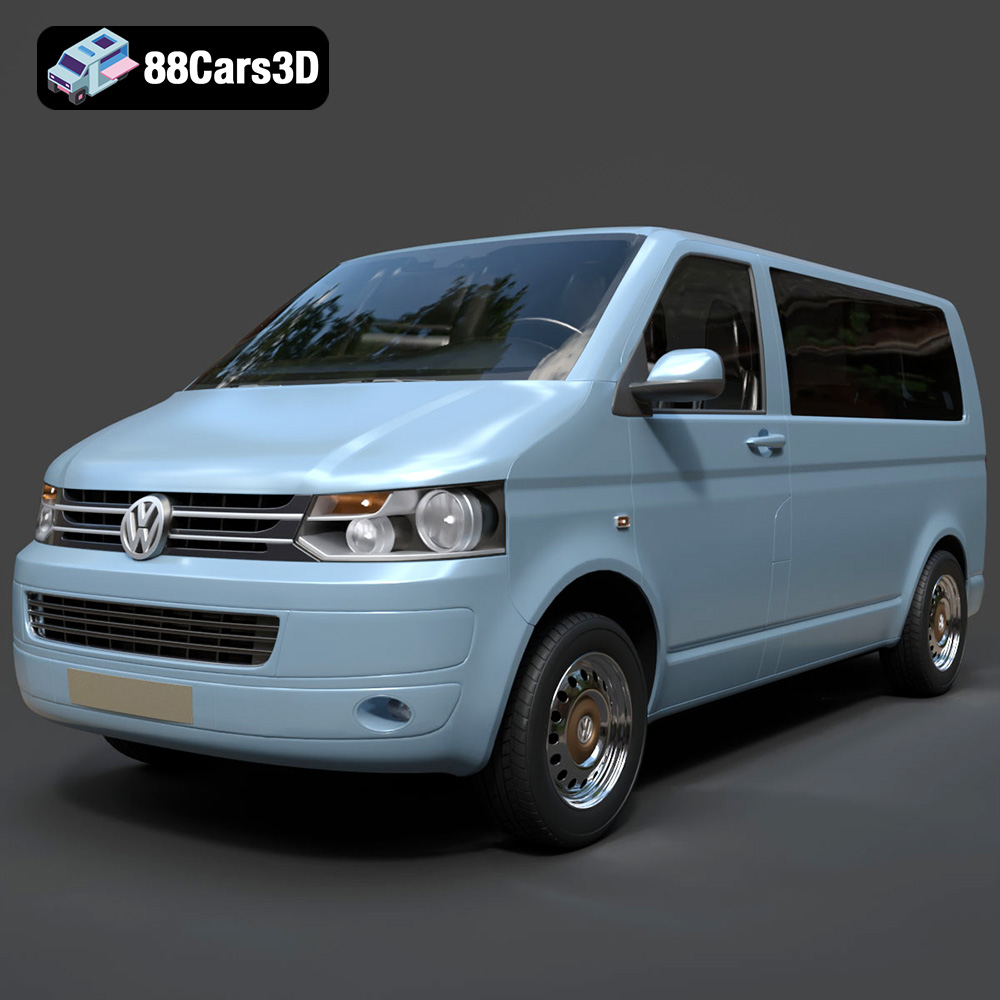
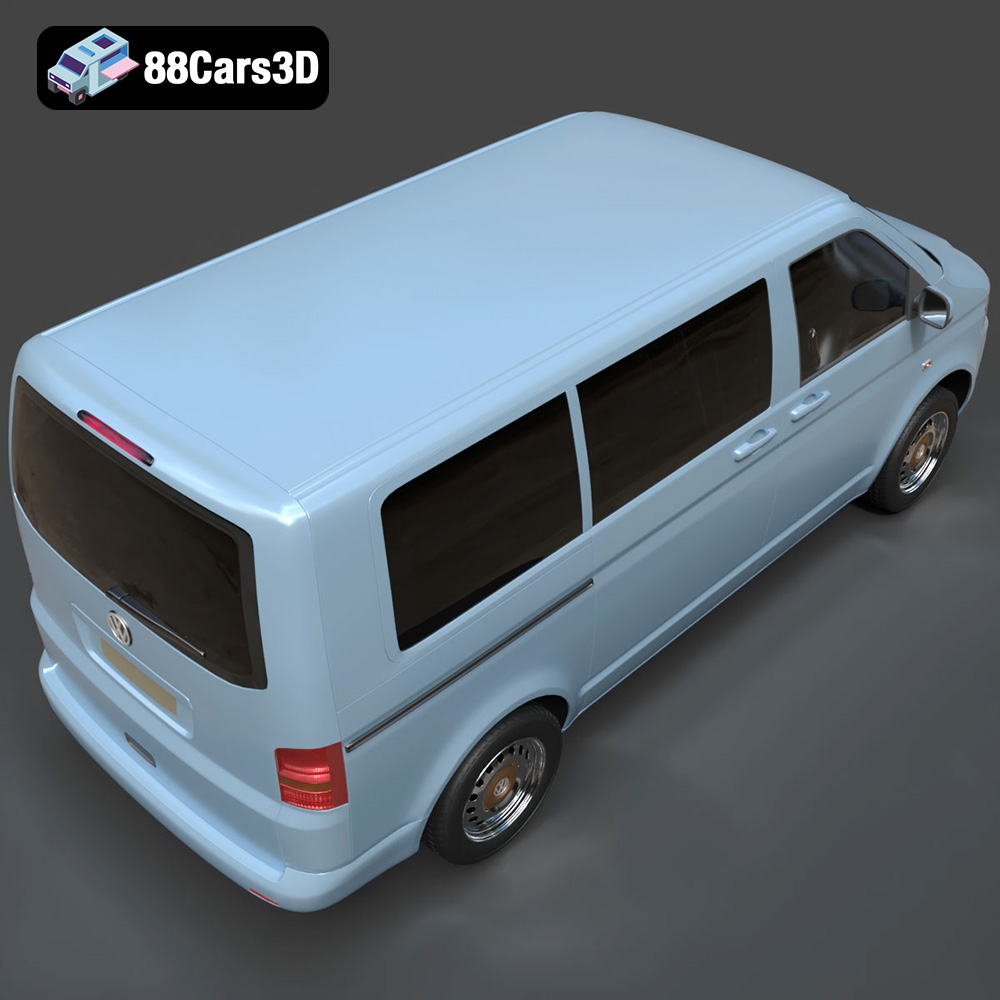
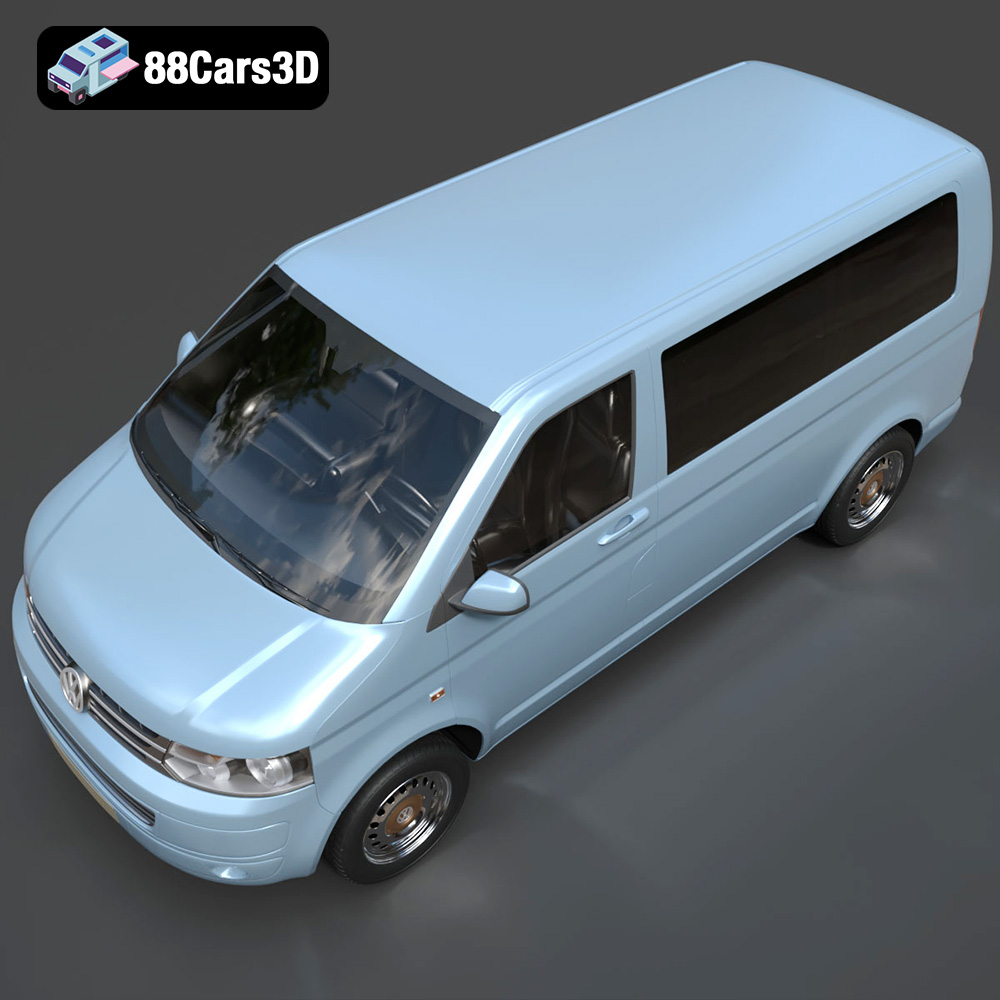
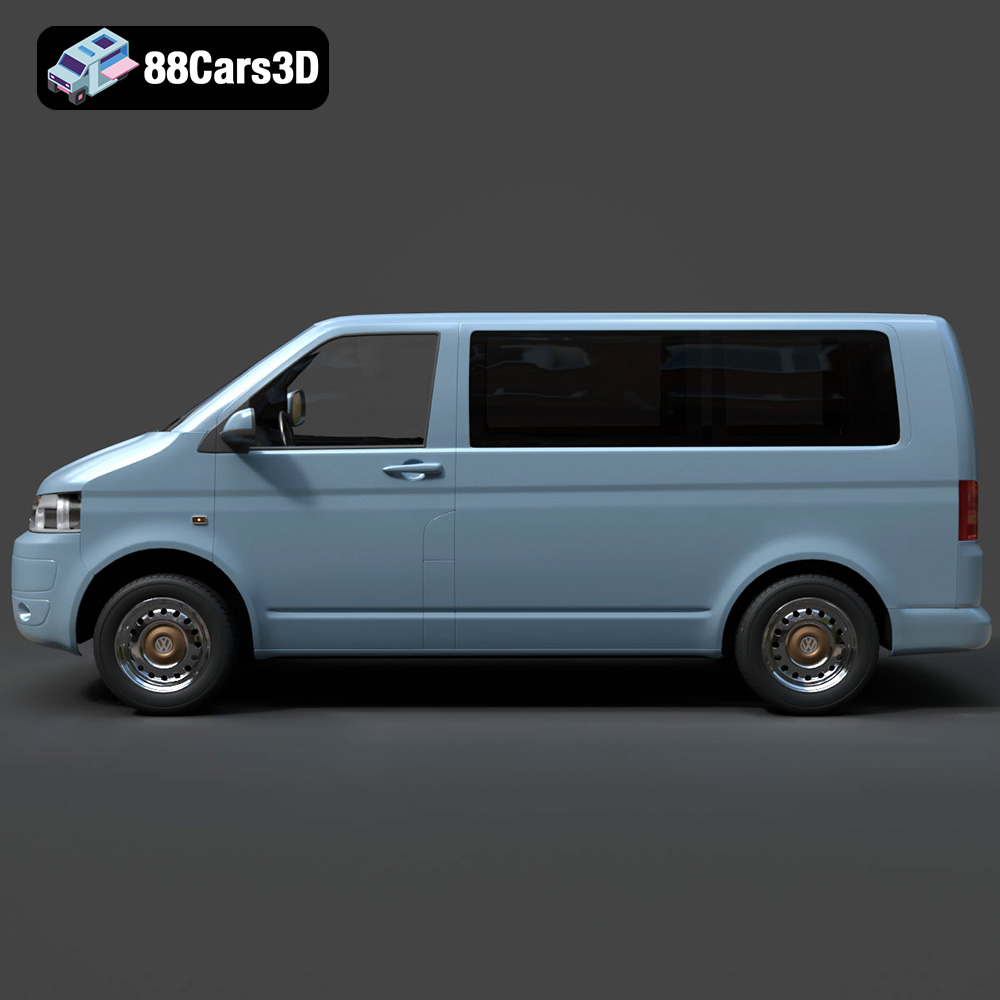
Elevating Digital Automotive Excellence: The Volkswagen Transporter T5 FL 2010 in 3D
In the expansive and dynamic world of 3D visualization, the quality of your foundational assets dictates the ultimate success of your project. Whether you’re a seasoned automotive designer, a game developer crafting immersive open worlds, an architect creating realistic scene visualizations, or a simulation engineer building accurate virtual environments, the need for precision-engineered 3D models is paramount. From concept ideation to final render, a meticulously crafted vehicle model can transform a good project into an exceptional one.
Today, we delve into the specifics of what makes a 3D car model truly stand out, using a prime example from the market: the Volkswagen Transporter T5 FL 2010 3D Model. This particular asset represents a pinnacle of digital craftsmanship, offering an accurate and versatile representation of a highly functional and recognizable commercial vehicle. Its design and utility have made it a ubiquitous presence in various industries, and its digital counterpart on 88cars3d.com aims to bring that same level of reliability and detail to your virtual projects. We’ll explore the technical nuances, workflow integrations, and creative possibilities that such a high-fidelity model unlocks across diverse professional applications.
Understanding 3D Model File Formats: The Foundation of Versatility
The choice of file format for a 3D model is not merely a technicality; it’s a critical decision that impacts workflow, compatibility, performance, and the ultimate usability of the asset across different software and platforms. The Volkswagen Transporter T5 FL 2010 3D Model exemplifies versatility by providing a comprehensive suite of file formats, ensuring that it can be seamlessly integrated into virtually any professional pipeline. Understanding the strengths and specific use cases for each format is crucial for maximizing efficiency and achieving desired results.
.blend – The Native Blender Powerhouse
The .blend format is the native file type for Blender, an incredibly powerful and increasingly popular open-source 3D creation suite. When you acquire a .blend file for the Volkswagen Transporter T5 FL 2010, you’re not just getting the raw mesh; you’re gaining access to a fully editable Blender scene. This typically includes pre-configured materials, lighting setups, and sometimes even basic animation rigs. For artists working primarily in Blender, this format offers the highest degree of flexibility for customization, material tweaks, scene composition, and rendering directly within the software. It’s ideal for deep dives into asset modification or for building a scene entirely within Blender’s ecosystem.
.fbx – The Industry Standard for Interchange
Autodesk’s .fbx (Filmbox) format is arguably the most widely adopted proprietary 3D exchange format in the industry. Its strength lies in its ability to store not just geometry, but also materials, textures, animations, and camera data in a single file. This makes it an indispensable format for game development, particularly for engines like Unreal Engine and Unity, where efficiency and comprehensive data transfer are key. When importing the T5 FL as an .fbx, you can expect a robust transfer of all its visual data, minimizing setup time in real-time environments. It’s designed for robust, game-engine-ready integration, making it a cornerstone for interactive experiences.
.obj – The Universal Workhorse
The .obj (Wavefront Object) format is a venerable and highly compatible format, often considered the “lowest common denominator” for 3D model exchange. While it primarily stores geometric data (vertices, normals, texture coordinates) and references to material libraries (.mtl files), its ubiquity ensures it can be opened and utilized by virtually any 3D software package, from 3ds Max to Maya, Cinema 4D, and ZBrush. For the Volkswagen Transporter T5 FL 2010, the .obj provides a clean, raw mesh that serves as an excellent starting point for complex modeling tasks, sculpting, or when maximum cross-software compatibility is needed without concern for advanced features like animation or rigging data.
.glb – Optimized for AR, VR, and Web
The .glb (GLB format, Binary glTF) is a relatively newer, but rapidly gaining traction, format built upon the glTF (GL Transmission Format) standard. It’s specifically designed for efficient transmission and loading of 3D scenes and models in web applications, augmented reality (AR), and virtual reality (VR) experiences. The .glb file packages all necessary data (geometry, textures, animations) into a single, self-contained binary file, optimizing for small file sizes and fast loading times. For showcasing the T5 FL in a web-based configurator, an AR app on a mobile device, or a VR training simulation, .glb is the format of choice due to its performance and widespread support in these emerging fields.
.stl – Precision for 3D Printing
The .stl (STereoLithography) format is the standard for 3D printing and rapid prototyping. It represents 3D surfaces as a collection of triangular facets, making it perfectly suited for additive manufacturing processes. While the Volkswagen Transporter T5 FL 2010 is a complex vehicle, an .stl output allows for physical models to be printed, useful for design reviews, scale models, or even custom parts prototyping. It’s purely focused on geometry, ensuring a solid, manifold mesh ready for physical production.
.ply – Detailed Polygon Mesh for Analysis
The .ply (Polygon File Format) is a versatile format for storing 3D data, particularly useful for scanned data, point clouds, and general polygonal meshes. It can store a wide range of properties for each vertex (color, normals, transparency) and face (color, texture coordinates). For the T5 FL, the .ply format offers a robust representation of the mesh, often used in applications requiring high precision, detailed mesh analysis, or when working with CAD software that benefits from its comprehensive data storage capabilities beyond basic geometry, making it valuable for engineering or scientific visualization contexts.
.unreal – Engine-Ready for Real-Time Environments
The inclusion of an .unreal file (or specific Unreal Engine project assets) indicates a model that has been pre-configured and optimized for direct integration into Unreal Engine. This often means proper material setup, collision meshes, LODs (Levels of Detail), and potentially even skeletal meshes or blueprints. For game developers or real-time visualization specialists, having an “Unreal-ready” Volkswagen Transporter T5 FL 2010 asset significantly reduces import and setup time, allowing for immediate deployment into interactive scenes, virtual productions, or architectural walkthroughs within the powerful Unreal ecosystem.
.max – The 3ds Max Editable Project
Similar to .blend for Blender, the .max format is the native file type for Autodesk 3ds Max, a long-standing industry leader in 3D modeling, animation, and rendering. The .max file for the T5 FL provides a fully editable project, including all scene data, modifiers, materials, lighting, and camera setups as configured in 3ds Max. This is invaluable for professionals whose primary DCC (Digital Content Creation) tool is 3ds Max, offering complete control over the model’s properties, enabling complex animation sequences, advanced rendering techniques, and seamless integration into existing 3ds Max projects.
The comprehensive file format support for the Volkswagen Transporter T5 FL 2010 3D Model truly underscores its value as a professional-grade asset, offering unprecedented flexibility for diverse applications from architectural visualization to game development and beyond.
The Art of Automotive Rendering: Bringing the T5 FL to Life
Automotive rendering is a specialized field within 3D visualization, demanding exceptional attention to detail in materials, lighting, and composition. A premium 3D car model, such as the Volkswagen Transporter T5 FL 2010, provides the perfect foundation for creating stunning, photorealistic images and animations. It’s not just about the model itself, but how it interacts with its virtual environment.
Mastering Materials and Textures for Photorealism
Achieving photorealism in automotive rendering hinges significantly on the quality of materials and textures. The Volkswagen Transporter T5 FL 2010 3D Model features meticulously crafted materials across its body, lighting units, wheels, and interior components. This means diffuse maps for color, normal maps for surface imperfections and intricate details like panel gaps or tire treads, and specular/roughness maps to control how light reflects off different surfaces. For example, the metallic paint on the T5 FL requires a complex shader setup to accurately capture its flake and clear coat properties, while rubber tires need distinct roughness and subtle displacement for a realistic tactile feel. High-quality UV mapping is critical here, ensuring textures are applied without stretching or distortion, preserving fidelity across every curve and surface. Artists can then fine-tune these parameters in their rendering software (e.g., V-Ray or Corona for 3ds Max, Cycles or Eevee for Blender) to match specific visual styles or real-world references.
Lighting Techniques for Dynamic Automotive Scenes
Effective lighting is the soul of any render. For automotive scenes, it’s about showcasing the vehicle’s form, contours, and material properties. Using a high-dynamic-range image (HDRI) for environmental lighting is a common and highly effective technique, providing realistic global illumination and reflections. Complementing HDRIs with carefully placed virtual lights (e.g., area lights to simulate softboxes, spot lights for accentuation) allows artists to sculpt the vehicle’s appearance. Consider a studio setup for a sleek commercial shot of the T5 FL, using large, soft area lights to highlight its robust silhouette, or an exterior scene leveraging a sunny HDRI with subtle fill lights to bring out details in shadows. The clean geometry of the Transporter T5 FL 2010 model ensures that light interacts correctly with its surfaces, preventing artifacts and enabling crisp, professional results.
Post-Production and Compositing for Impact
Even the best raw render can be elevated through skilled post-production. This stage involves using software like Adobe Photoshop or Affinity Photo to enhance colors, adjust contrast, add atmospheric effects (like subtle haze or dust), and apply lens effects such as chromatic aberration or depth of field. For automotive renders of the T5 FL, compositing elements like driver figures, background plates, or special effects can further immerse the vehicle in its intended context. A well-composited image can dramatically increase the perceived realism and emotional impact, making the difference between a good render and a captivating visual story.
Optimizing 3D Car Models for Real-Time Environments
The demands of real-time applications like game development, AR/VR experiences, and interactive configurators differ significantly from offline rendering. Here, performance is king, requiring meticulously optimized 3D car models. The Volkswagen Transporter T5 FL 2010 3D Model, with its game-engine-ready formats, is designed to meet these stringent requirements.
Strategies for Efficient Game Asset Integration
Integrating 3D car models into game engines like Unreal Engine or Unity requires more than just importing a file. Assets must be optimized for polygon count, draw calls, and memory usage. While the core Volkswagen Transporter T5 FL 2010 model boasts clean geometry, game developers often implement techniques like Levels of Detail (LODs) – creating multiple versions of the model with decreasing polygon counts for distant views. This ensures that performance remains smooth without sacrificing visual quality up close. Properly set up collision meshes are also vital for realistic physics interactions. The provided .fbx and .unreal formats are invaluable here, often pre-configured to facilitate this integration, saving countless hours of manual optimization within the engine. This makes the T5 FL an ideal asset for populating virtual cities or dynamic racing environments.
Tailoring Models for AR/VR Immersion
Augmented Reality (AR) and Virtual Reality (VR) demand even stricter performance budgets due to the need for high frame rates and low latency to prevent motion sickness. Models used in these environments must be extremely lightweight while maintaining visual fidelity. The .glb format, optimized for web and real-time display, is perfect for the Volkswagen Transporter T5 FL 2010 in AR/VR contexts. Developers might further simplify materials, bake complex lighting into textures (lightmapping), and utilize efficient shader models specifically designed for mobile AR platforms or standalone VR headsets. The clean topology of the T5 FL model simplifies these optimization steps, allowing developers to focus on interactive elements and user experience rather than wrestling with complex geometry.
Interactive Configurators and Web-Based Visualizations
Automotive configurators are powerful marketing tools, allowing customers to customize vehicles in real-time. For this, a highly optimized 3D car model is essential. The Volkswagen Transporter T5 FL 2010 model could be the centerpiece of such a configurator, allowing users to change paint colors, wheel designs, or even interior trims interactively. Web-based visualizations leverage formats like .glb to display detailed 3D models directly in a browser, offering an engaging experience without requiring downloads. The focus here is on efficient asset streaming and rendering, providing a smooth interactive experience even on lower-spec devices. The versatility of a model like the T5 FL from 88cars3d.com ensures it can adapt to these varied and demanding real-time applications.
Beyond Visualization: The Volkswagen Transporter T5 FL in Simulation and Prototyping
The utility of a high-quality 3D car model extends far beyond rendering marketing images or populating game worlds. In professional contexts, assets like the Volkswagen Transporter T5 FL 2010 3D Model play a critical role in engineering, simulation, and even physical prototyping, offering tangible benefits across the product lifecycle.
Integrating into Driving Simulators and Virtual Training
For industries ranging from logistics to emergency services, driving simulators are indispensable tools for training, research, and planning. An accurate 3D model of a common commercial vehicle like the Volkswagen Transporter T5 FL 2010 is crucial for creating realistic simulation environments. The model’s precise dimensions and characteristic design enable developers to integrate it into virtual driving platforms, allowing trainees to practice maneuvers, emergency procedures, or route planning in a safe, controlled digital space. The detailed geometry supports accurate collision detection and physics calculations, enhancing the fidelity of the simulation. This application benefits immensely from the .fbx or .unreal formats, designed for performance and compatibility within these interactive simulation platforms.
Architectural Visualization and Contextual Placement
Architects and urban planners frequently use 3D models to contextualize their designs, showcasing how new buildings or developments will appear in real-world settings. Placing a recognizable vehicle like the Volkswagen Transporter T5 FL 2010 into an architectural rendering instantly adds a layer of realism and scale, making the visualization more relatable and believable. Whether it’s parked outside a proposed residential complex, navigating a virtual street, or part of a commercial loading bay scene, the T5 FL model serves as an excellent prop to populate and bring life to static architectural scenes. Its clean geometry and realistic materials make it suitable for high-end arch-viz renders, enhancing the overall presentation of any project.
From Digital Asset to Physical Prototype: 3D Printing Applications
The inclusion of the .stl format for the Volkswagen Transporter T5 FL 2010 3D Model highlights its potential for physical output. While printing a full-scale T5 FL might be impractical, designers and engineers can use the .stl file to create scale models for design reviews, wind tunnel tests, or even as collectible figurines. For specific custom modifications or parts, the model can serve as a base for designing and 3D printing components that need to integrate seamlessly with the vehicle’s form. This bridge between the digital and physical realms demonstrates the versatility and engineering-grade precision embedded within such a professional 3D car model.
Mastering Professional 3D Workflows with Premium Assets
The efficiency and quality of a professional 3D workflow are significantly boosted by starting with high-quality assets. The Volkswagen Transporter T5 FL 2010 3D Model from 88cars3d.com is designed to be a cornerstone asset, streamlining various aspects of production across different software environments.
Streamlining Production with Pre-optimized Models
Time is a valuable commodity in any production pipeline. Starting with a pre-optimized 3D car model like the Volkswagen Transporter T5 FL 2010 significantly reduces the initial setup time. Artists don’t need to spend hours modeling the vehicle from scratch, cleaning up topology, or setting up basic materials. The “production-ready geometry” and “realistic materials and textures” of this model mean it can be dropped directly into a scene and immediately begin its role. This is particularly advantageous for tight deadlines in advertising, film, or game development where rapid iteration and deployment are key. By minimizing repetitive tasks, artists can dedicate more resources to creative problem-solving and refining the unique aspects of their projects.
Seamless Integration with Industry-Leading Software
The comprehensive range of file formats accompanying the Volkswagen Transporter T5 FL 2010 3D Model ensures unparalleled compatibility with industry-standard software. Whether your primary digital content creation (DCC) tool is 3ds Max (.max), Blender (.blend), or you’re exporting to real-time engines like Unreal Engine (.fbx, .unreal), the model is designed for smooth integration. This eliminates compatibility headaches and the need for extensive conversion processes that can often lead to data loss or corruption. For example, a visualization studio might use the .max file for high-end V-Ray renders, while simultaneously using the .fbx for real-time client walkthroughs in Unity, all from the same core asset. This flexibility is a hallmark of truly professional 3D car models.
Leveraging Digital Assets for Marketing and Sales
In today’s visually driven market, 3D assets are indispensable for compelling marketing and sales collateral. The Volkswagen Transporter T5 FL 2010 3D Model can be utilized to create stunning visual content for brochures, websites, interactive presentations, and social media campaigns. Imagine a virtual showroom where potential buyers can explore the T5 FL from every angle, or an animated commercial showcasing its utility in various scenarios. The ability to generate high-quality renders and interactive experiences from a single, versatile model provides a consistent visual brand identity and a powerful tool for engaging customers. This strategic use of 3D models can significantly enhance a product’s appeal and market reach, demonstrating the tangible ROI of investing in premium assets.
Conclusion: The Enduring Value of Precision 3D Automotive Models
The journey through the intricate world of 3D automotive modeling reveals that a truly professional asset is more than just a collection of polygons; it’s a meticulously engineered digital component designed for precision, versatility, and performance across a spectrum of applications. The Volkswagen Transporter T5 FL 2010 3D Model stands as an exemplary representation of these qualities.
From its robust, production-ready geometry and realistic materials to its extensive file format compatibility, this model is poised to empower professionals in automotive rendering, game development, AR/VR, simulation, and architectural visualization. It streamlines workflows, facilitates seamless integration into diverse software environments, and ultimately enables the creation of breathtaking visuals and immersive experiences. By choosing a high-fidelity asset like the T5 FL, available on 88cars3d.com, you invest not just in a model, but in efficiency, quality, and the boundless creative potential it unlocks for your projects. Elevate your digital automotive endeavors with assets that truly deliver on their promise of excellence.
Featured 3D Model
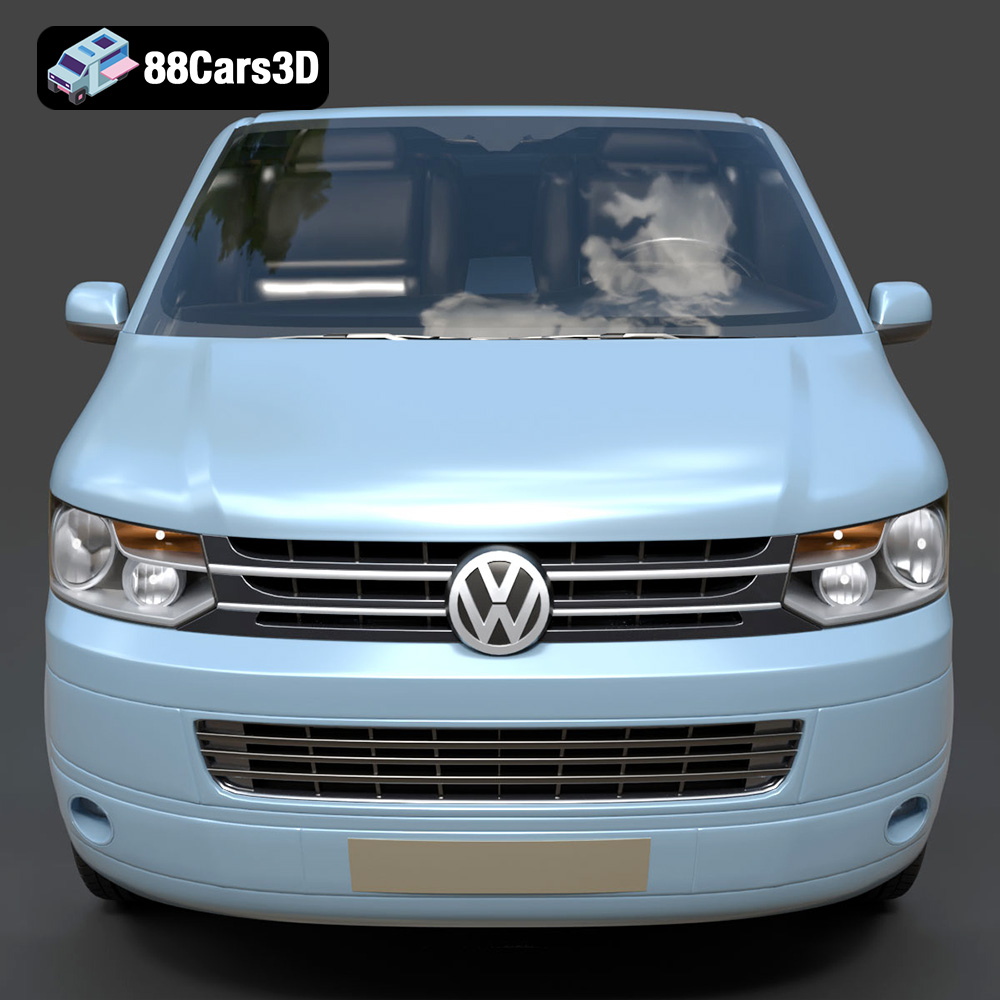
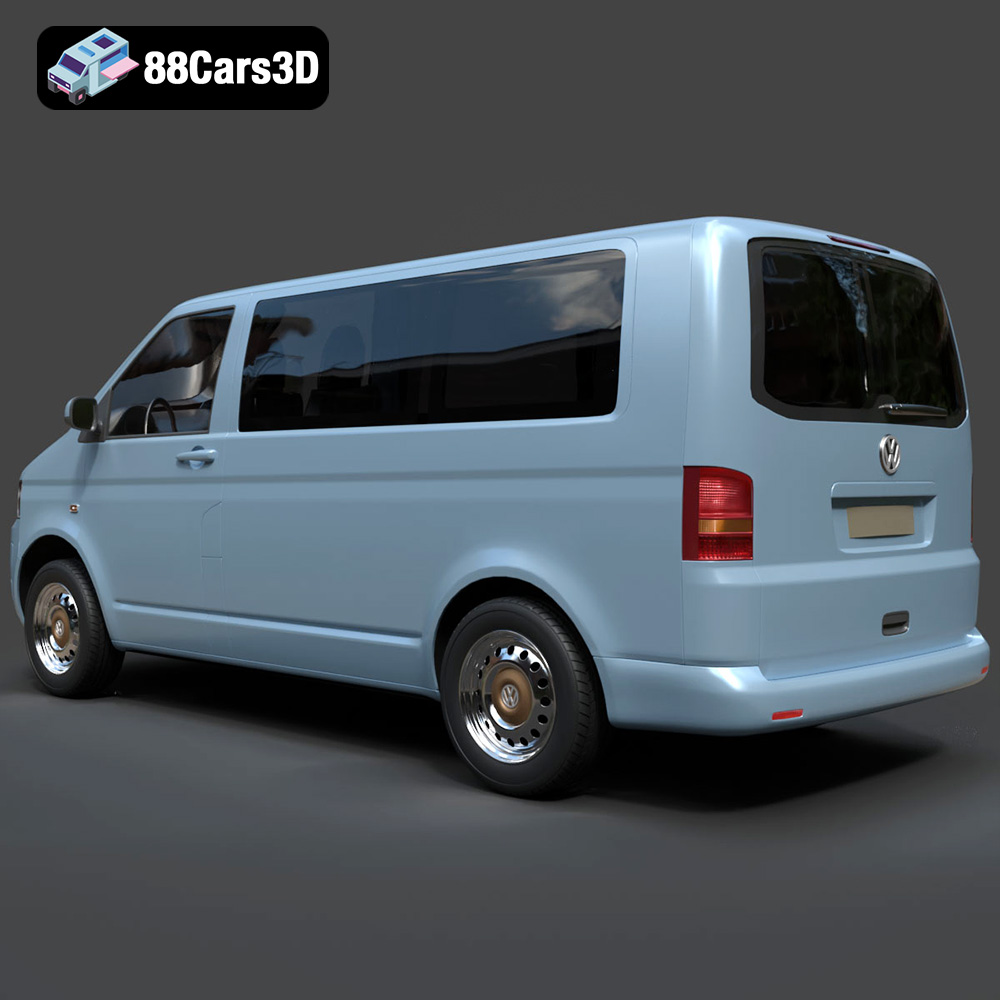
Volkswagen Transporter T5 FL 2010 3D Model
Explore the precision of the Volkswagen Transporter T5 FL 2010 3D Model. This asset provides an accurate digital representation of the versatile commercial vehicle, meticulously crafted to ensure visual fidelity for professional production pipelines. It captures the characteristic design and functional aesthetic of the T5 generation facelift.
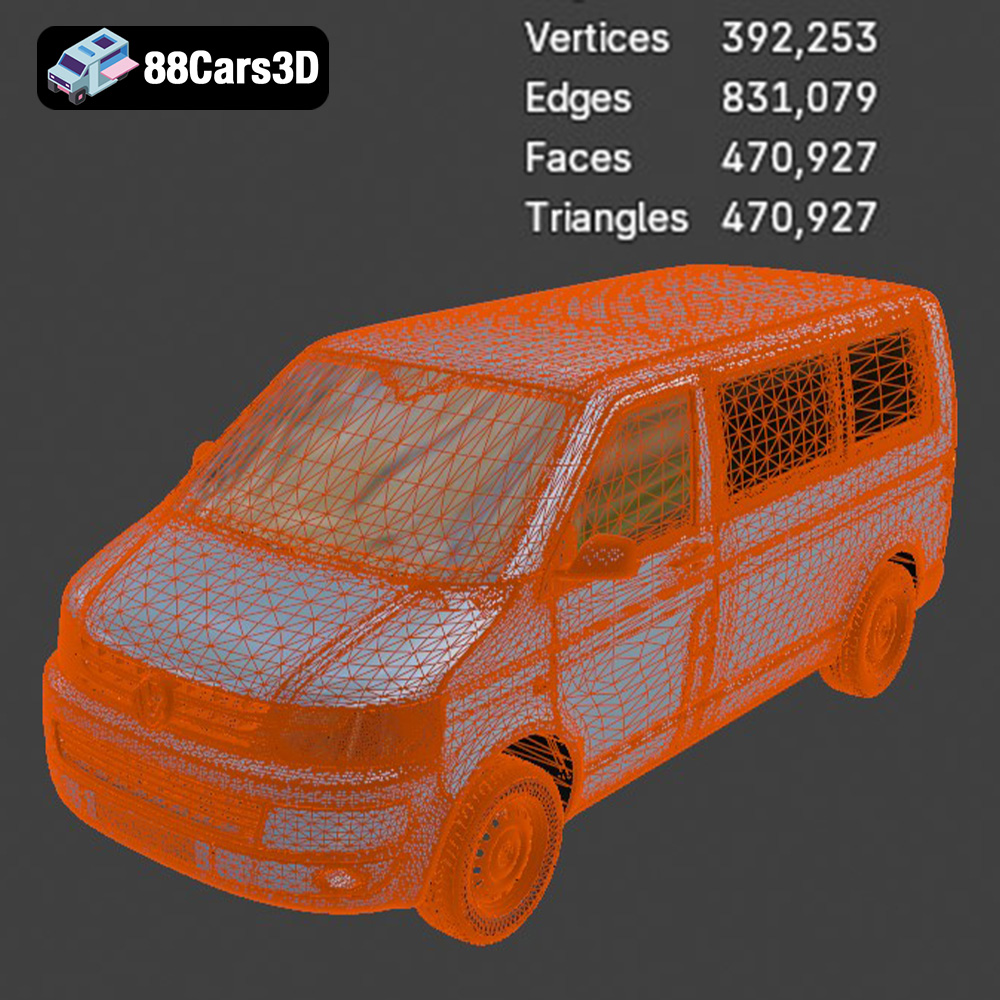
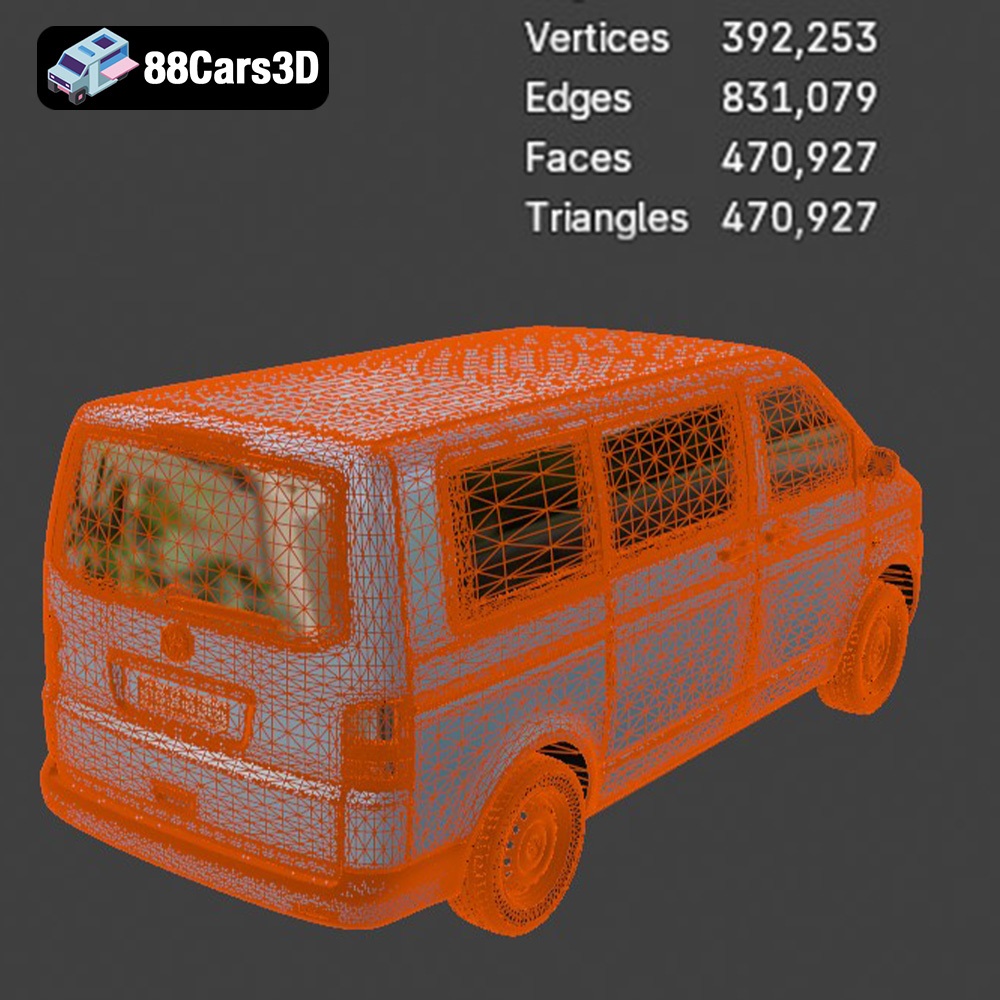
The model boasts exceptionally clean, production-ready geometry optimized for performance across different platforms. It features realistic materials and textures applied across the body, lighting units, wheels, and interior components, guaranteeing a detailed and authentic appearance in every scene.
Perfect for integration into simulations, architectural visualizations, automotive configurators, and immersive game environments. The included file set offers comprehensive compatibility, allowing immediate deployment into both real-time engines and advanced rendering software.
$22.99
Product Image Gallery