The Versatility of the Volkswagen Transporter T5 FL 2010: A Deep Dive into Professional 3D Asset Utilization
In the dynamic world of 3D visualization and content creation, the demand for high-quality, production-ready assets is ceaseless. Whether for breathtaking automotive rendering, immersive game development, sophisticated architectural visualization, or cutting-edge AR/VR experiences, the foundational element remains a meticulously crafted 3D model. These digital representations are the building blocks that empower creators to bring their visions to life with unparalleled realism and efficiency.
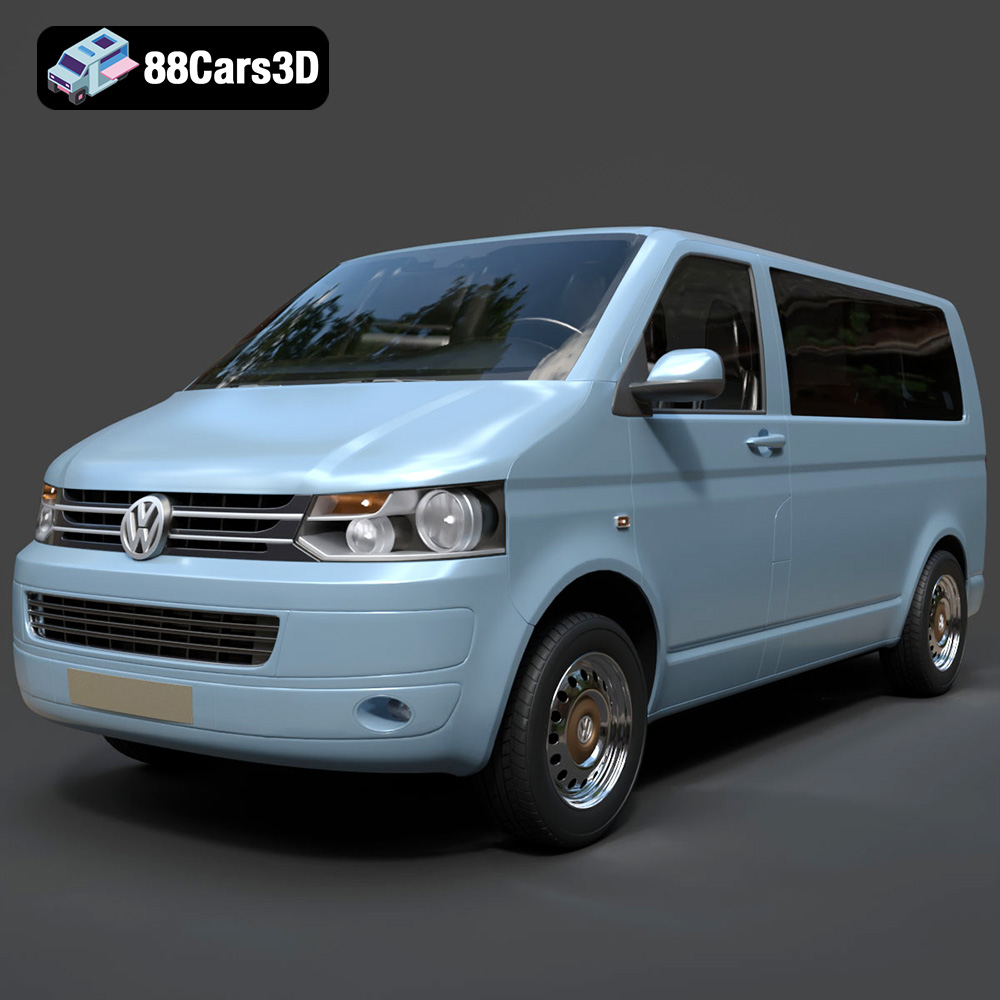
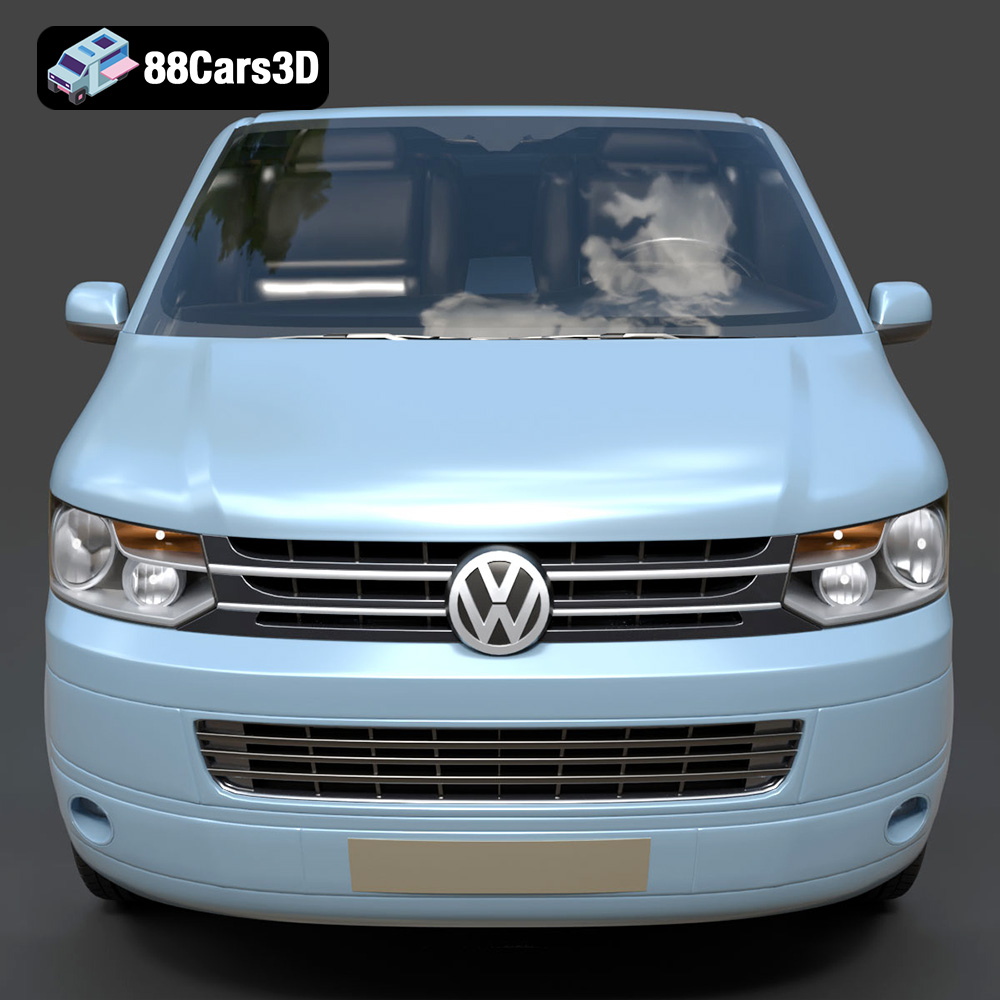
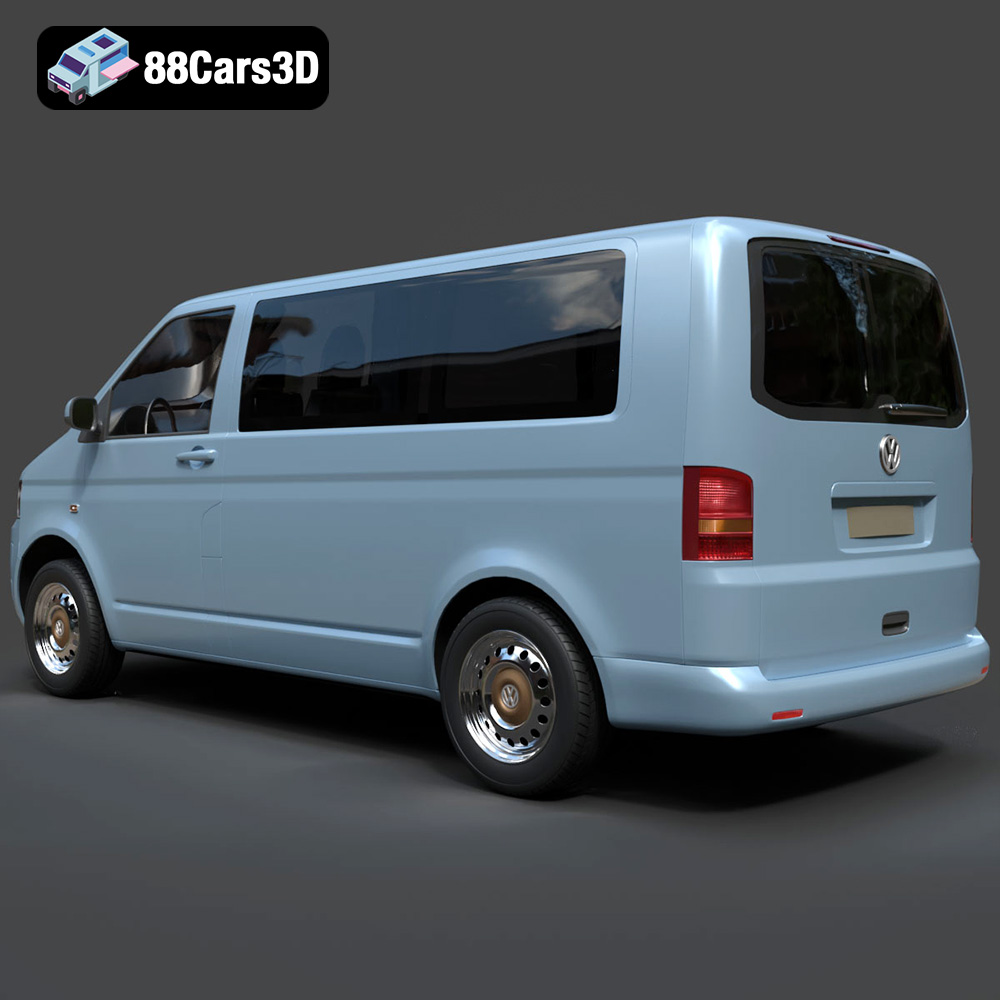
Today, we’re focusing on a prime example of such an asset: the Volkswagen Transporter T5 FL 2010 3D Model. This particular model stands out not just for its accurate depiction of a widely recognized commercial vehicle, but for its inherent versatility and technical readiness. It’s more than just a model; it’s a foundational component engineered to streamline diverse professional workflows, from the subtle nuances of a high-fidelity render to the rigorous demands of a real-time game engine. Its clean geometry, realistic materials, and comprehensive file format support make it an indispensable tool for any professional aiming for excellence in their digital projects.
Understanding 3D Model File Formats: The Backbone of Digital Asset Management
The success of any 3D project hinges not only on the quality of the model itself but also on its compatibility and ease of integration into various software and platforms. This is where understanding different 3D model file formats becomes paramount. Each format is designed with specific use cases in mind, offering unique advantages for particular workflows. The Volkswagen Transporter T5 FL 2010 3D Model exemplifies this versatility by offering a comprehensive suite of file formats, ensuring maximum utility for creators.
Interchange Formats for Broad Compatibility
- .fbx (Filmbox): Widely recognized as the industry standard for 3D asset exchange, .fbx is a proprietary file format owned by Autodesk. It’s renowned for its ability to store a wide range of data, including models, animations, cameras, lights, and materials. This makes it ideal for transferring assets between different 3D software packages and, crucially, for integration into game engines like Unreal Engine and Unity. Its robust nature makes it a go-to for complex scenes and animated assets, ensuring that the Volkswagen Transporter T5 FL 2010 can be seamlessly brought into virtually any real-time pipeline.
- .obj (Wavefront OBJ): The .obj format is one of the oldest and most universally supported 3D file formats. It’s a simple, text-based format primarily used to store geometric data (vertices, UVs, normals) and references to external material files (.mtl). While it doesn’t support animations or advanced scene data like .fbx, its widespread compatibility across almost all 3D software makes it an excellent choice for basic mesh transfer. For the Transporter model, .obj guarantees that the core geometry is accessible in any 3D application, serving as a reliable fallback or primary export for static renders.
- .ply (Polygon File Format/Stanford Triangle Format): The .ply format is specifically designed to store three-dimensional data from 3D scanners. It supports properties such as color, transparency, texture coordinates, and normals, making it particularly useful for models derived from real-world scans or for applications requiring precise mesh data. For the Volkswagen Transporter T5 FL 2010, .ply can be valuable for detailed analysis, reverse engineering workflows, or when integrating into environments that prioritize geometric precision over complex scene data.
Engine-Specific and Specialized Formats
- .blend (Blender Native Format): For users of the popular open-source 3D creation suite, Blender, the .blend file provides a fully editable scene. This means not just the mesh, but also materials, lighting setups, camera positions, and even animations (if present) are preserved within a single file. For the Volkswagen Transporter T5 FL 2010, the .blend file offers a ready-to-render scene, allowing immediate customization and integration into Blender-based projects with minimal setup, making it incredibly efficient for Blender artists.
- .max (3ds Max Native Format): Similar to .blend for Blender, the .max format is the native project file for Autodesk 3ds Max. This format retains all scene information, including complex material networks, rigging, animation, and rendering settings. Professionals relying on 3ds Max for high-end architectural visualization, automotive rendering, or character animation will find the .max file for the Transporter model invaluable, as it provides a complete, editable project straight out of the box, ensuring consistency and ease of modification within their preferred software environment.
- .unreal (Unreal Engine Asset): This isn’t a standalone file format in the traditional sense, but rather a representation of a model pre-configured and optimized for direct import and use within Unreal Engine. Often, this means the asset has been properly scaled, collision meshes are set up, materials are converted to Unreal’s physically based rendering (PBR) system, and lightmap UVs are generated. For the Volkswagen Transporter T5 FL 2010, having an “.unreal” option signifies that the asset is truly game-engine ready, saving developers countless hours of optimization and setup time.
- .glb (GL Transmission Format Binary): .glb is the binary version of glTF (GL Transmission Format), an open standard for 3D scenes and models. It’s particularly optimized for web-based applications, augmented reality (AR), virtual reality (VR), and efficient transmission of 3D assets. A single .glb file can contain models, textures, animations, and more, making it incredibly self-contained and performant. For presenting the Volkswagen Transporter T5 FL 2010 in a web viewer, an AR app on a smartphone, or a lightweight VR experience, .glb offers superior performance and integration.
- .stl (Stereolithography): The .stl format is almost exclusively used for 3D printing and rapid prototyping. It describes only the surface geometry of a 3D object using a collection of triangular facets. While it doesn’t store color, texture, or other advanced attributes, its simplicity makes it the universal standard for sending models to 3D printers. The inclusion of an .stl file for the Volkswagen Transporter T5 FL 2010 opens up possibilities for creating physical prototypes, scale models, or even custom parts, demonstrating the model’s utility beyond purely digital domains.
The comprehensive range of formats offered with the Volkswagen Transporter T5 FL 2010 3D Model ensures that regardless of your project’s specific requirements or your preferred software ecosystem, you have the right tool for the job. This foresight in asset packaging is a hallmark of high-quality 3D car models found on marketplaces like 88cars3d.com.
The Foundation of Digital Realism: Why High-Quality 3D Car Models Matter
The pursuit of photorealism in digital content has never been more intense. From cinematic visual effects to hyper-realistic video games, the quality of individual assets dictates the overall immersive experience. For automotive rendering and visualization, a high-quality 3D car model is not just desirable; it’s absolutely essential. The Volkswagen Transporter T5 FL 2010 3D Model exemplifies the standards required for professional-grade output.
The Anatomy of a Professional-Grade Model: Geometry, UVs, Materials
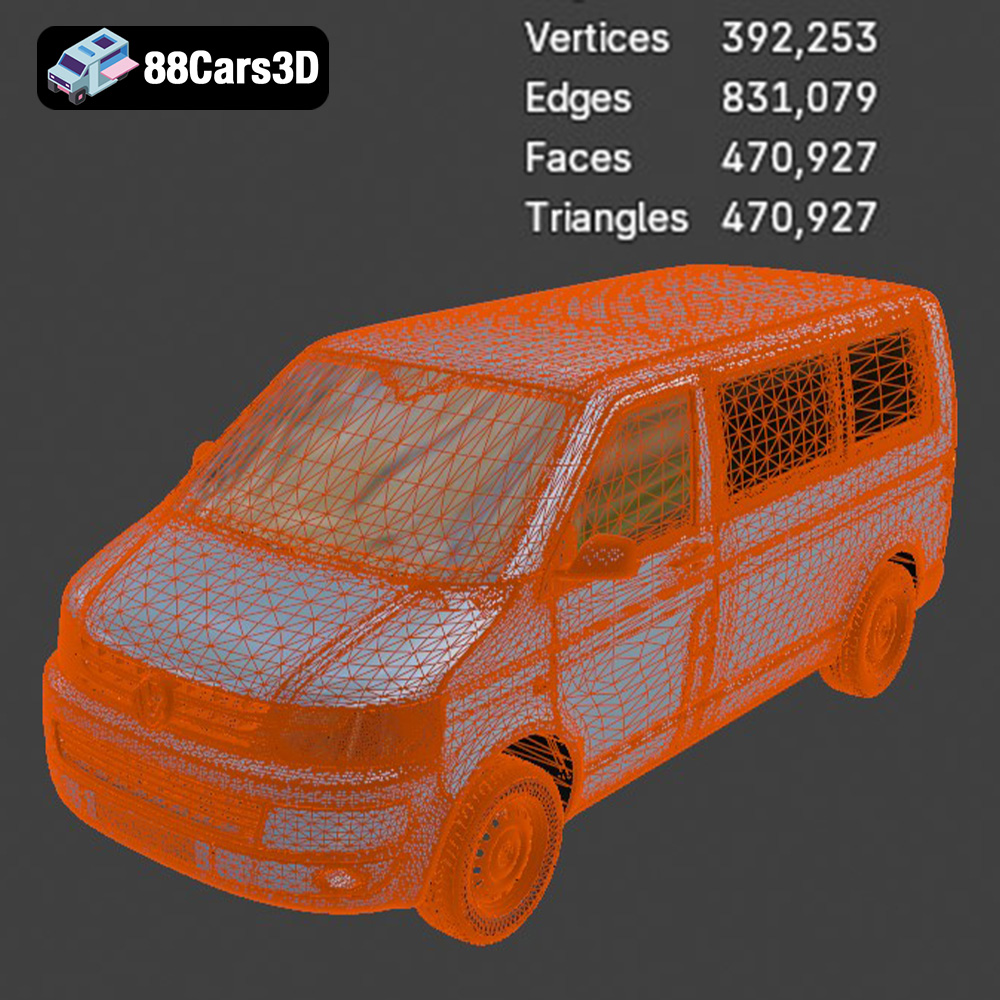
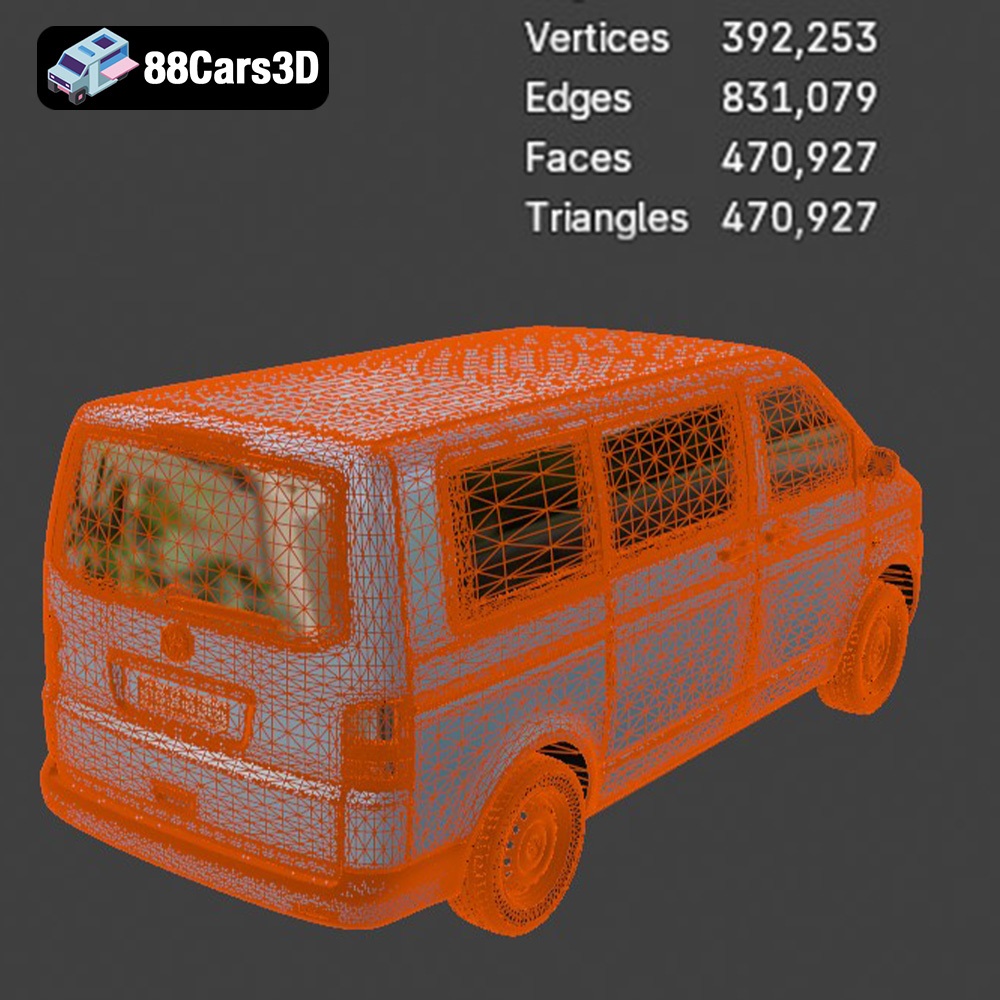
A truly professional 3D model goes far beyond a recognizable shape. It’s built on a foundation of clean, optimized geometry. This means a low polygon count where possible, without sacrificing detail, and efficient topology that allows for smooth deformations and subdivision if needed. For the Transporter T5 FL 2010, “exceptionally clean, production-ready geometry” implies careful hand-modeling or meticulous optimization, ensuring minimal errors, no overlapping vertices, and a consistent polygon flow. This directly impacts performance in real-time engines and rendering efficiency in offline renderers.
Coupled with strong geometry are well-executed UV maps. UV mapping is the process of flattening the 3D surface into a 2D space, allowing textures to be painted or applied without distortion. Clean, non-overlapping UVs are crucial for realistic texture application, proper lightmap generation in game engines, and avoiding visual artifacts. Finally, realistic materials and textures, often following a Physically Based Rendering (PBR) workflow, are what truly bring a model to life. These materials simulate how light interacts with surfaces in the real world, accounting for properties like albedo (color), roughness, metallicness, and normal maps for fine surface detail. The T5 FL 2010 model’s promise of “realistic materials and textures applied across the body, lighting units, wheels, and interior components” indicates a comprehensive PBR setup.
Bridging the Gap: From Concept to Consumer
High-quality 3D car models bridge the gap between abstract concepts and tangible consumer experiences. In automotive design, they allow engineers and designers to iterate rapidly, visualize changes in real-time, and present new vehicles with stunning realism long before physical prototypes exist. For advertising and marketing, photorealistic renders of vehicles eliminate the need for costly photoshoots, offering unparalleled flexibility in staging and environments. For the consumer, interactive configurators built with these models allow for personalized vehicle customization, enhancing the buying experience. The Volkswagen Transporter T5 FL 2010 3D Model, with its accuracy and detail, provides precisely this capability across various applications.
Integrating the Volkswagen Transporter T5 FL 2010 into Professional Workflows
The true value of a versatile 3D asset like the Volkswagen Transporter T5 FL 2010 3D Model lies in its adaptability across a spectrum of professional applications. Its availability in multiple formats ensures it can slot seamlessly into diverse production pipelines.
Automotive Visualization and Advertising
For high-end automotive rendering, precision and aesthetic appeal are paramount. Artists often leverage software like 3ds Max, Blender, or Maya coupled with powerful renderers such as V-Ray, Corona, Arnold, or Cycles. The .max and .blend files provided for the Volkswagen Transporter T5 FL 2010 are ideal here. They come with pre-configured materials and potentially lighting setups, allowing artists to dive straight into scene composition, camera angles, and advanced rendering techniques without spending hours on initial asset prep. Imagine creating a stunning advertisement for a logistics company, showcasing a fleet of T5s in various urban and rural settings – the model’s fidelity ensures every reflection and surface detail contributes to a persuasive visual narrative.
The “clean, production-ready geometry” is crucial for subdivision and displacement mapping, enabling even higher levels of detail for close-up shots, while realistic materials ensure accurate light interaction, from the gloss of the paint to the texture of the tires. This streamlines the creation of marketing collateral, product showcases, and configurators, drastically reducing production timelines and costs compared to traditional photography.
Game Development and Real-Time Environments
The demands of game development are unique, balancing visual fidelity with strict performance budgets. The .fbx and .unreal formats for the Volkswagen Transporter T5 FL 2010 3D Model are specifically tailored for this domain. An .fbx file is perfect for importing into Unity, Unreal Engine, or other custom engines, typically requiring minimal adjustments to materials and scaling. The dedicated .unreal asset takes this a step further, providing a truly “engine-ready” asset, pre-optimized with appropriate collision meshes, LODs (Levels of Detail), and PBR material setup for instant drag-and-drop implementation. This dramatically accelerates prototyping and production cycles for open-world games, racing simulations, or even mobile applications where performance is critical.
A vehicle like the Transporter T5 FL 2010 is perfect for populating virtual cities, serving as a player vehicle, or being an integral part of environmental storytelling in a game world. Its accurate representation enhances immersion, allowing players to connect with the virtual environment on a more believable level. The clean geometry also makes it suitable for applying game-specific optimizations such as baked ambient occlusion and lightmaps, further boosting real-time performance.
AR/VR Experiences and Digital Prototyping
Augmented Reality (AR) and Virtual Reality (VR) represent the frontier of immersive experiences, and the need for optimized 3D assets is paramount. The .glb format shines here. Its compact, self-contained nature and optimization for web and mobile platforms make it perfect for AR apps that project the Transporter onto a real-world surface via a smartphone, or for interactive VR experiences where users can explore the vehicle’s interior and exterior in a fully immersive digital space. For companies developing virtual showrooms or interactive training modules, the .glb version of the Volkswagen Transporter T5 FL 2010 provides an efficient means of deployment.
Furthermore, for digital prototyping, especially in automotive or logistics sectors, highly accurate models like this can be used for spatial planning, simulating vehicle fit within architectural designs, or evaluating ergonomic considerations. This applies not only to the exterior but also to the interior components, allowing for comprehensive virtual walkthroughs and functional assessments. The detail ensures that design evaluations are conducted with precision, catching potential issues early in the design phase.
Technical Deep Dive: Optimizing for Performance and Fidelity
Creating a high-quality 3D asset isn’t just about making it look good; it’s about making it perform well and be usable across a wide range of platforms and applications. The technical underpinnings of models like the Volkswagen Transporter T5 FL 2010 are what elevate them to professional status.
Mesh Topology and Polygon Efficiency
The phrase “exceptionally clean, production-ready geometry” isn’t merely marketing jargon. It signifies a model built with careful attention to mesh topology. This means the polygon faces (typically quads for easier subdivision and deformation) flow logically across the surface, without unnecessary complexity in flat areas or insufficient detail in curved regions. For a vehicle, this translates to smooth body panels, crisp edges around doors and windows, and efficient representation of components like wheels and suspension. While the exact poly count varies depending on the intended use (a high-poly model for cinematic rendering versus a low-poly version for mobile games), a well-structured base mesh allows for easy creation of LODs.
For rendering, a clean mesh reduces rendering artifacts and facilitates the application of subdivision surfaces for extreme close-ups. In game engines, efficient poly counts are critical for maintaining high frame rates. A model like the Transporter T5 FL 2010 would likely have multiple LODs if intended for games – a high-poly version for close distances, and progressively lower-poly versions for mid and far distances, swapping automatically to optimize performance.
Texture Resolution and PBR Materials
Realistic materials are the soul of a photorealistic 3D model. The Volkswagen Transporter T5 FL 2010 3D Model boasts “realistic materials and textures,” implying a adherence to PBR (Physically Based Rendering) principles. PBR materials simulate how light interacts with surfaces in the real world, providing consistent results across different lighting environments and renderers. This typically involves several texture maps:
- Albedo/Base Color: The inherent color of the surface.
- Normal/Bump Map: Adds surface detail without increasing polygon count.
- Roughness Map: Controls how diffuse or specular a surface is.
- Metallic Map: Defines whether a surface is metallic or dielectric.
- Ambient Occlusion Map: Simulates soft self-shadowing in crevices.
High-resolution textures (e.g., 2K, 4K, or even 8K for critical components) are applied to ensure crisp detail, from the subtle imperfections in the paintwork to the intricate patterns on tire treads. The quality of these textures, combined with accurate material properties, is what ultimately sells the realism of the vehicle.
UV Mapping and Material ID Organization
Beyond the textures themselves, the way they are mapped onto the model is crucial. Meticulous UV mapping ensures that textures are applied without stretching, pinching, or noticeable seams. For complex objects like cars, different parts (body, interior, wheels, lights) often have their own UV sets or are organized into distinct material IDs, allowing for easier material assignment and customization. The promise of “realistic materials and textures applied across the body, lighting units, wheels, and interior components” suggests a well-organized UV and material structure within the Transporter model, facilitating easy modification or customization by the end-user.
Real-World Applications: Beyond the Render Farm
While automotive rendering and game development are obvious uses for a high-quality 3D car model, assets like the Volkswagen Transporter T5 FL 2010 extend their utility into a fascinating array of other real-world applications.
Simulation and Training
The accurate digital representation of the Transporter T5 FL 2010 makes it an excellent candidate for various simulation and training scenarios. Imagine driver training simulators where new drivers can experience driving this specific van in a safe, virtual environment, practicing maneuvers, parking, and navigating different road conditions. For logistics companies, the model could be integrated into fleet management simulations, helping to optimize routes, visualize cargo loading, or train personnel on vehicle specifications and maintenance procedures. The fidelity ensures that the simulation provides a realistic and transferable learning experience.
3D Printing and Physical Prototyping
The inclusion of the .stl format opens up direct pathways to physical creation. While a full-scale 3D print of a vehicle is still largely impractical, the model can be scaled down for creating detailed physical prototypes, scale models for presentations, or even custom parts. Designers could use the model to 3D print components for a diorama, a physical mockup of a proposed modification, or even study the vehicle’s form factor in a tactile way. This bridges the gap between digital design and physical manifestation, offering new avenues for product development and creative expression.
Digital Archiving and Historical Preservation
As vehicles age and become rarer, their digital preservation becomes increasingly valuable. A highly accurate 3D model like the Volkswagen Transporter T5 FL 2010 serves as a comprehensive digital archive. It can be used for historical documentation, educational purposes, or future reference for restoration projects. Future generations could interact with a perfectly preserved digital twin of the vehicle, long after physical models have succumbed to time. This aspect underscores the long-term cultural and educational value of meticulously crafted 3D car models.
Maximizing Your Investment with 88cars3d.com
Acquiring high-quality 3D assets is a critical decision for any professional. A reliable source ensures not only the visual fidelity but also the technical readiness and comprehensive support for diverse workflows. This is where marketplaces like 88cars3d.com excel, offering a curated selection of premium 3D models designed for professional production pipelines.
The Value of Production-Ready Assets
The Volkswagen Transporter T5 FL 2010 3D Model is a testament to the value proposition of production-ready assets. Instead of artists spending countless hours modeling from scratch, gathering reference images, and optimizing geometry, a professional model provides a complete, polished starting point. This dramatically accelerates project timelines, reduces labor costs, and allows creative teams to focus on the artistic direction and specific customizations rather than foundational asset creation. The comprehensive file formats, from the editable .max and .blend files to the game-ready .fbx and .unreal, mean less time spent on conversion and more time on creation.
A Seamless Acquisition Experience
88cars3d.com is dedicated to providing artists and studios with immediate access to such high-quality resources. The ease of navigating the marketplace, combined with clear product descriptions and detailed technical specifications, empowers users to make informed decisions. When you purchase the Volkswagen Transporter T5 FL 2010 3D Model from 88cars3d.com, you’re not just buying a file; you’re investing in a meticulously crafted, technically robust asset designed to integrate seamlessly into your most demanding projects, whether for automotive rendering, game assets, or cutting-edge simulations.
Conclusion
The journey from concept to compelling digital reality is paved with high-quality assets. The Volkswagen Transporter T5 FL 2010 3D Model embodies the pinnacle of professional 3D asset creation, offering an accurate, versatile, and technically sound foundation for a myriad of applications. Its meticulous design, comprehensive material setup, and broad file format support cater to the diverse needs of automotive rendering, game development, AR/VR experiences, simulations, and even 3D printing.
Understanding the nuances of file formats and appreciating the technical craftsmanship behind clean geometry, optimized UVs, and PBR materials is key to unlocking the full potential of such models. By integrating assets like the Volkswagen Transporter T5 FL 2010 into professional workflows, creators can achieve unparalleled realism, efficiency, and flexibility in their projects. For studios and individual artists seeking to elevate their digital creations, exploring the curated selection of 3D car models on 88cars3d.com offers a clear path to success, providing the tools necessary to bring any vision to life with exceptional fidelity.
Featured 3D Model
Volkswagen Transporter T5 FL 2010 3D Model
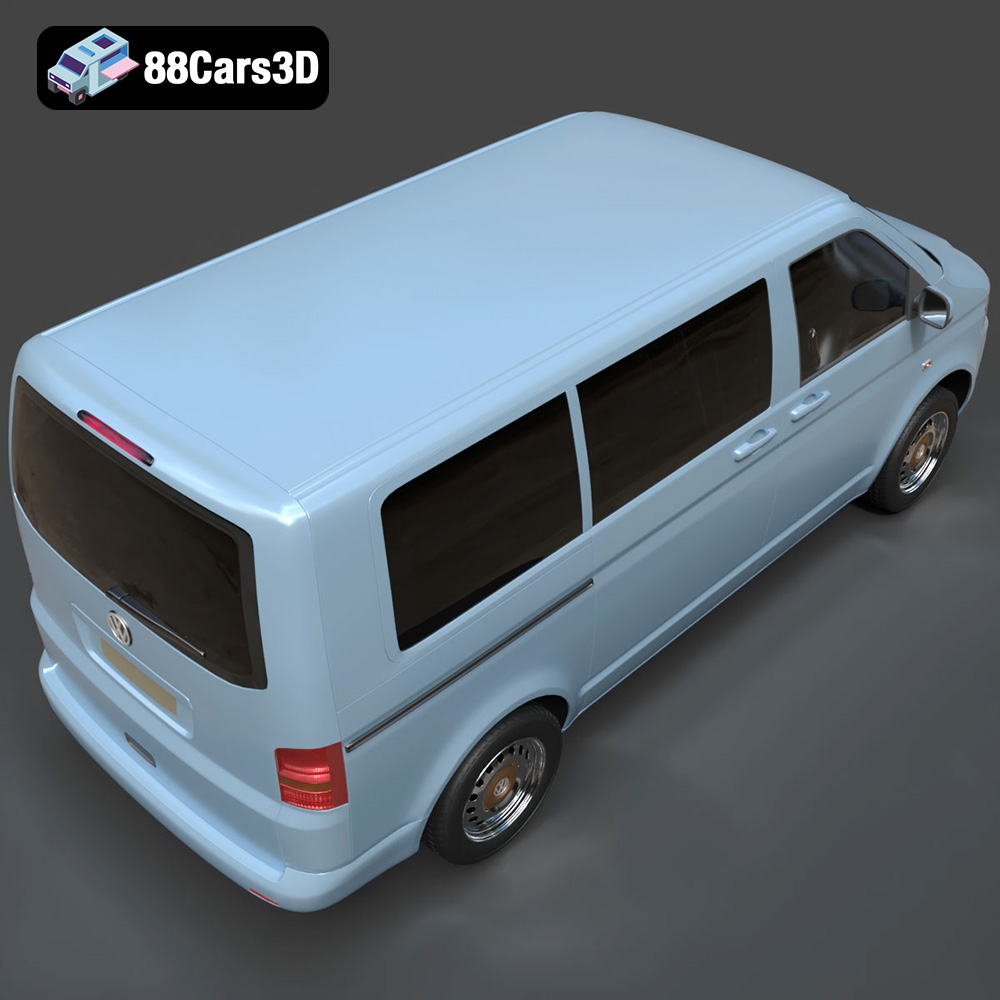
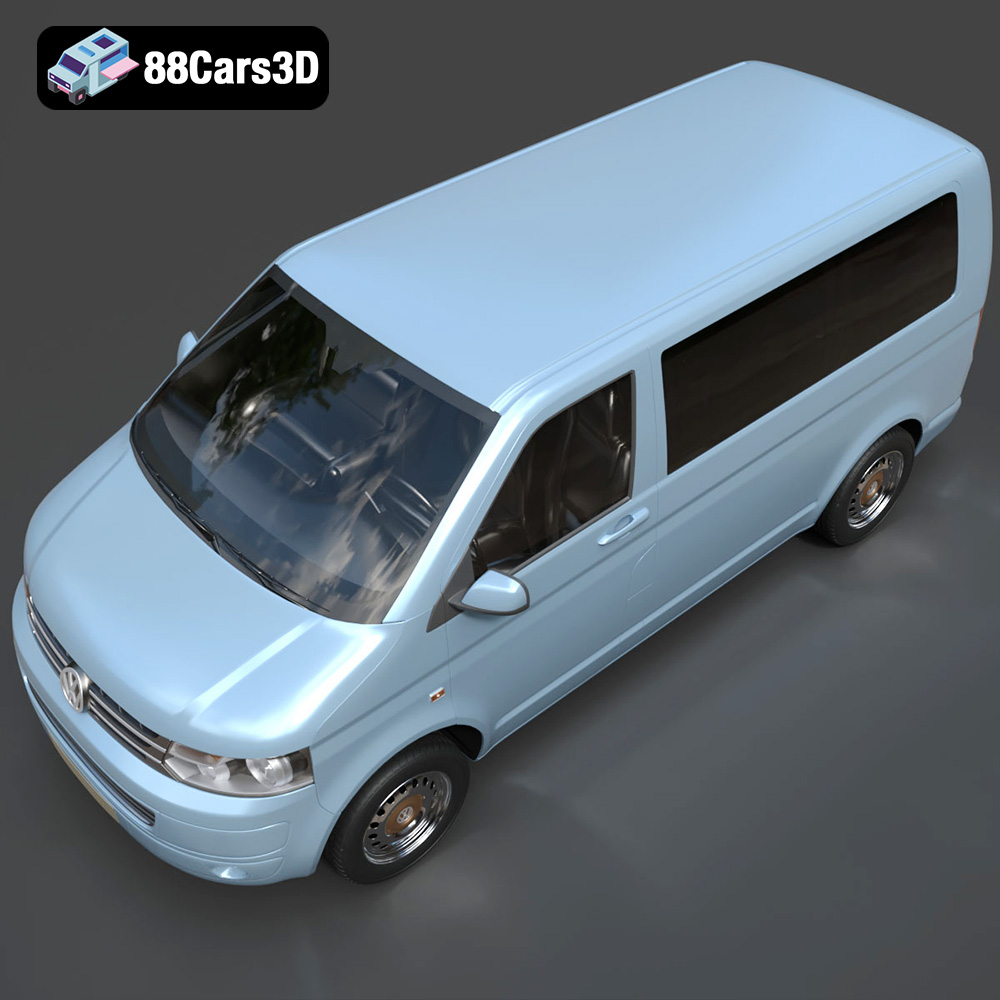
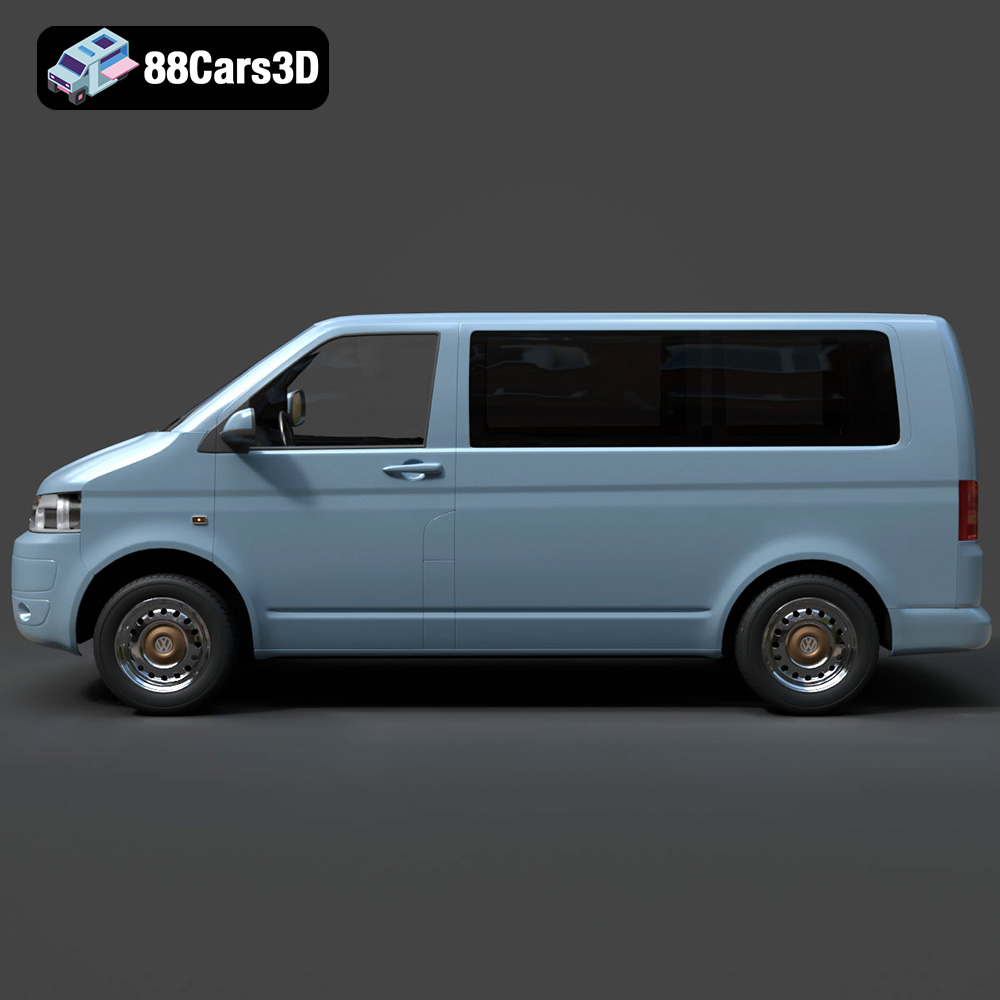
Explore the precision of the Volkswagen Transporter T5 FL 2010 3D Model. This asset provides an accurate digital representation of the versatile commercial vehicle, meticulously crafted to ensure visual fidelity for professional production pipelines. It captures the characteristic design and functional aesthetic of the T5 generation facelift.
The model boasts exceptionally clean, production-ready geometry optimized for performance across different platforms. It features realistic materials and textures applied across the body, lighting units, wheels, and interior components, guaranteeing a detailed and authentic appearance in every scene.
Perfect for integration into simulations, architectural visualizations, automotive configurators, and immersive game environments. The included file set offers comprehensive compatibility, allowing immediate deployment into both real-time engines and advanced rendering software.
Included File Formats:
- .blend – Editable Blender file with materials and lighting setup
- .fbx – Game-engine ready format for Unreal Engine and Unity
- .obj – Standard 3D model format compatible with all major software
- .glb – Optimized for AR/VR and web-based visualization
- .stl – Suitable for 3D printing and prototyping
- .ply – Detailed polygon mesh for analysis and visualization
- .unreal – Pre-configured for Unreal Engine use
- .max – Editable 3ds Max file for rendering and animation
Tags:
.volkswagen, .transporter, .t5, .t5fl, .van, .utilityvehicle, .minivan, .commercialvehicle, .minibus, .car3dmodel, .rendering, .simulation, .gameasset, .arvr, .blend, .fbx, .obj, .glb, .stl, .ply, .unreal, .max
Tags:
.volkswagen, .transporter, .t5, .t5fl, .van, .utilityvehicle, .minivan, .commercialvehicle, .minibus, .car3dmodel, .rendering, .simulation, .gameasset, .arvr, .blend, .fbx, .obj, .glb, .stl, .ply, .unreal, .max
$22.99
Product Image Gallery