

Elevating Digital Realism: The Power of Premium 3D Models in Modern Pipelines
In the rapidly evolving landscape of digital content creation, the demand for high-fidelity 3D assets continues to escalate. From blockbuster game titles and cinematic sequences to immersive AR/VR experiences and detailed product visualizations, the underlying quality of 3D models dictates the success and realism of the final output. Artists, developers, and designers are constantly seeking meticulously crafted assets that not only look stunning but also perform flawlessly across diverse platforms and software.
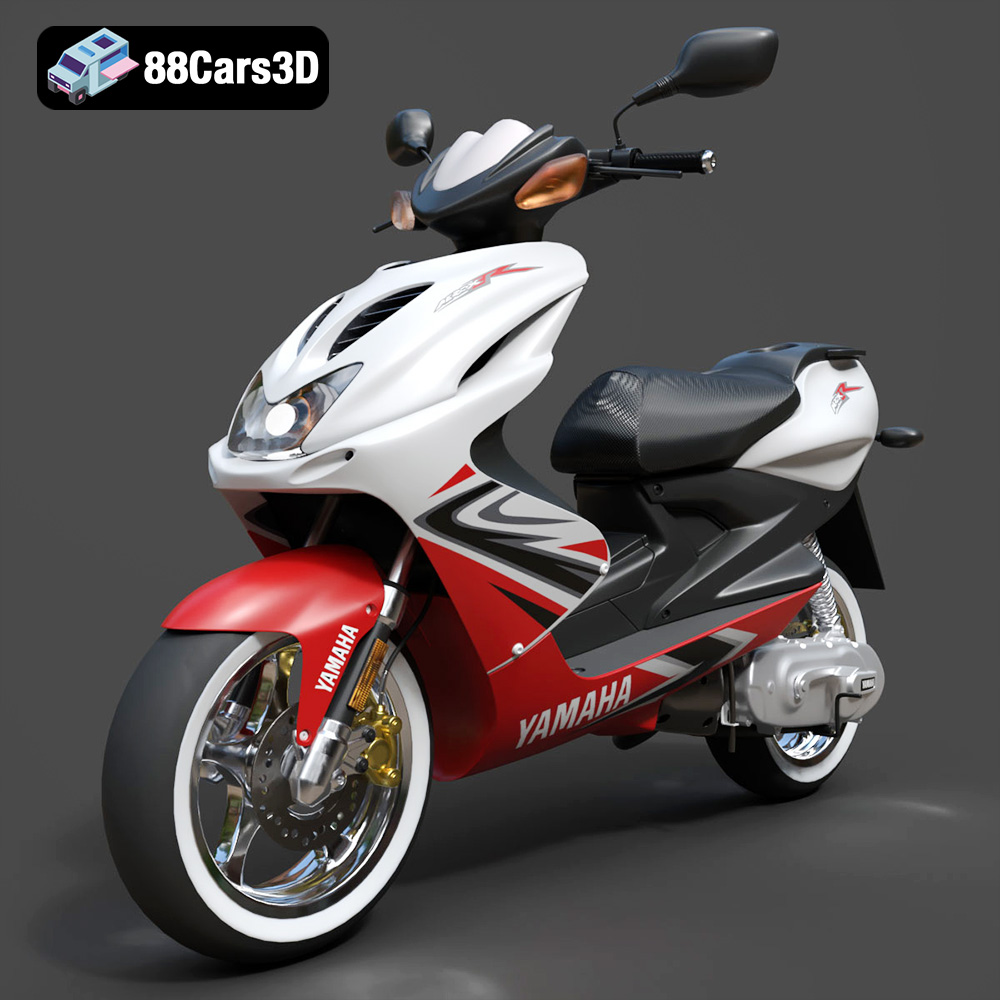
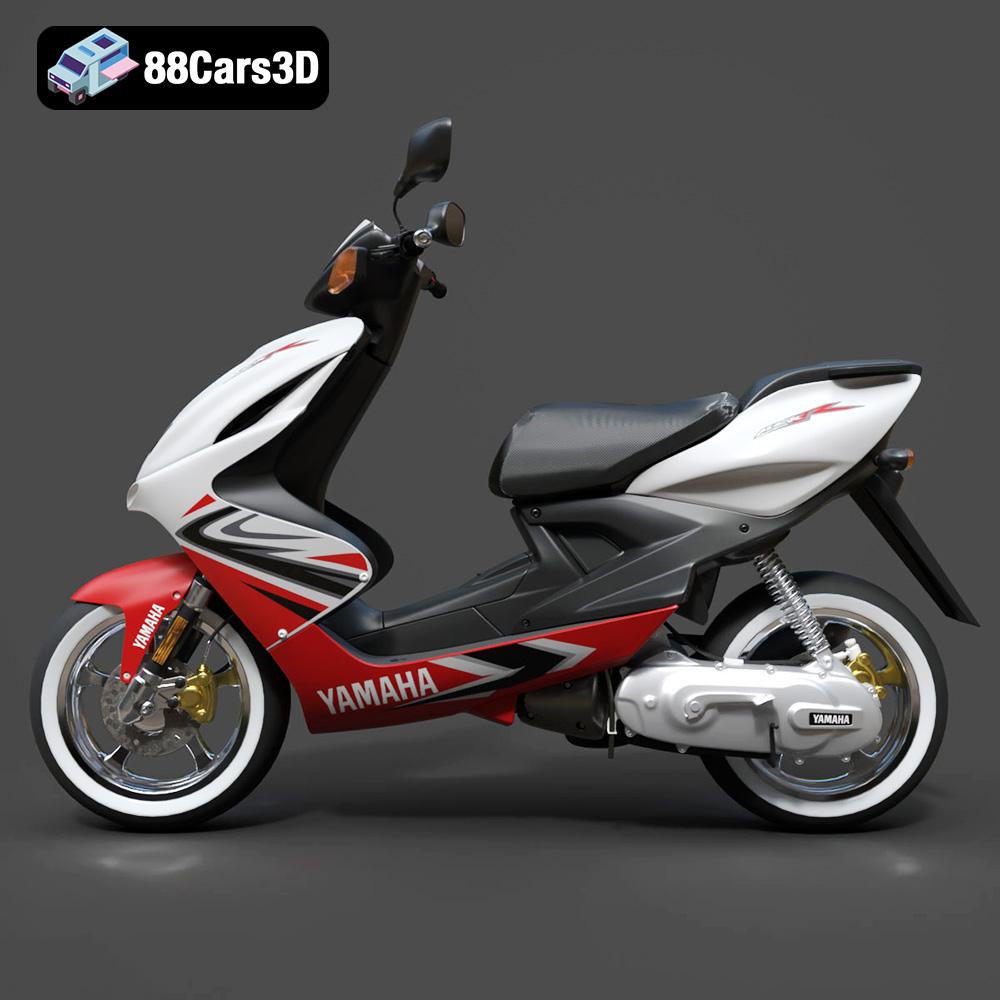
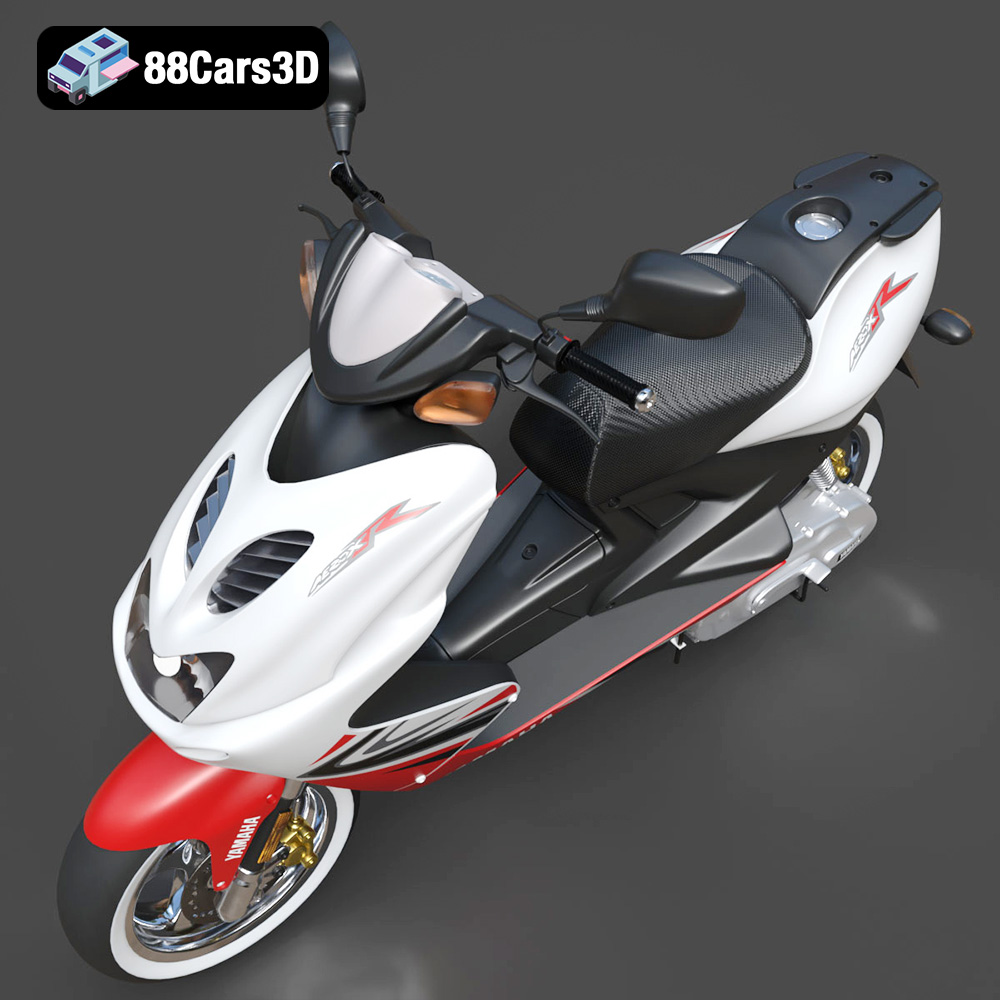
It’s within this context of precision and versatility that specialized assets truly shine. Consider, for example, the Yamaha Aerox R-002 2024 3D Model. This is not just another digital object; it’s a testament to expert craftsmanship, designed to meet the rigorous demands of professional workflows. Capturing the distinct urban styling and ergonomic details of its real-world counterpart, this model exemplifies the kind of quality that can instantly elevate any project. Whether you’re a game developer needing a modern, urban vehicle for an open-world environment, an architect populating a scene, or a product visualizer showcasing cutting-edge design, such a detailed and optimized 3D car model, or in this case, a high-fidelity scooter model, becomes an indispensable tool. It offers a shortcut to photorealism and performance, allowing creators to focus on innovation rather than intricate model building from scratch.
The Foundation of Digital Realism: Why High-Quality 3D Models Matter
The pursuit of digital realism is a never-ending journey in industries like game development, automotive rendering, and architectural visualization. At its core, achieving this realism hinges on the quality of the 3D assets used. A poorly constructed model, no matter how skilled the renderer, will always betray its flaws, breaking the illusion of reality. Conversely, a high-quality 3D model forms a robust foundation, enabling breathtaking results.
Optimized Geometry and Clean Topology
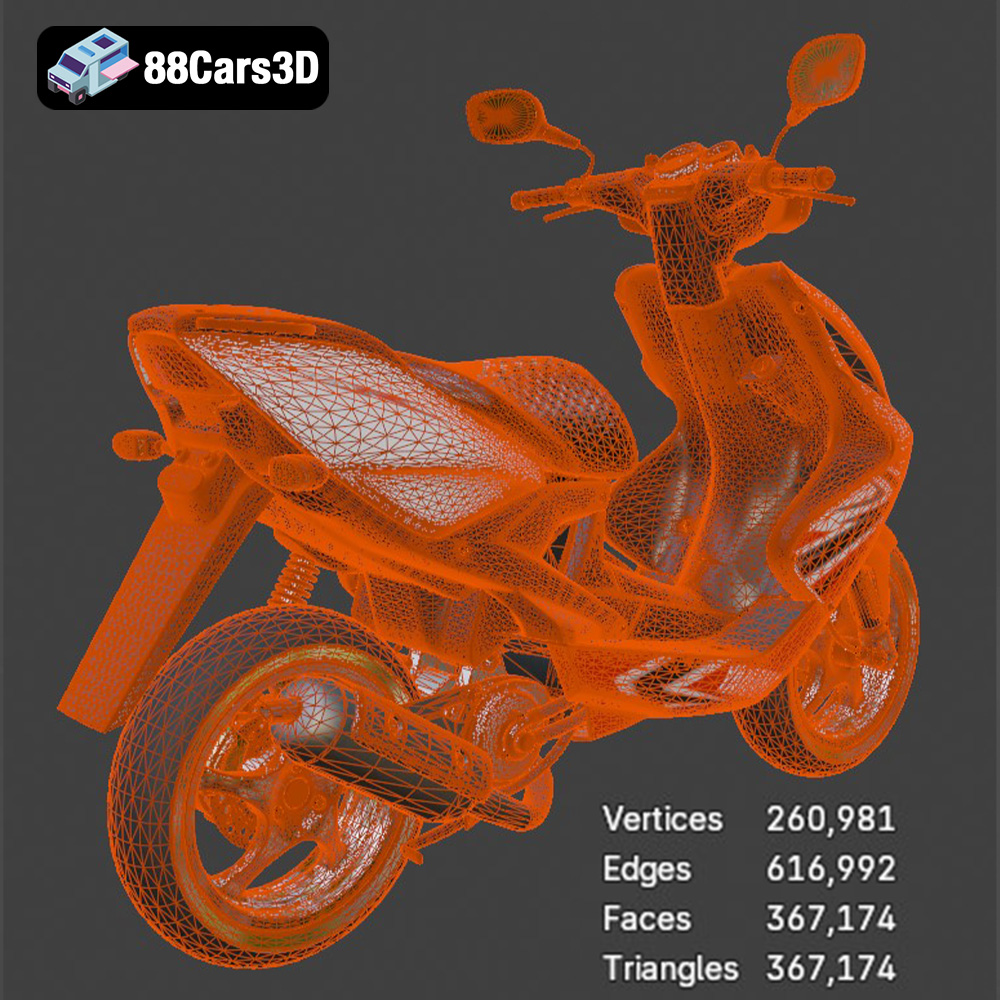
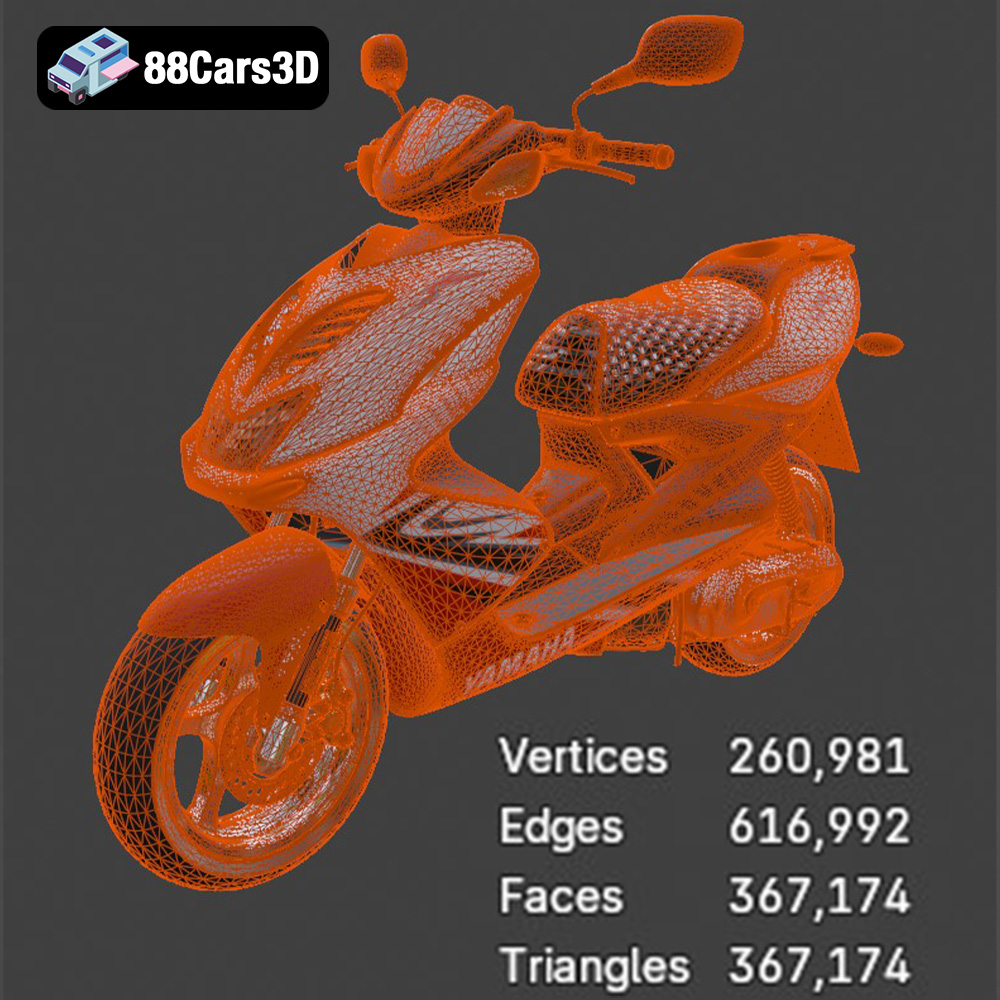
The true mark of a professional 3D model lies in its geometry and topology. This refers to how the vertices, edges, and faces are arranged to form the mesh. Clean topology typically means quad-dominant polygons, which facilitate smooth subdivision, deformation, and UV unwrapping. For real-time applications, optimized geometry ensures efficient rendering by keeping polygon counts manageable without sacrificing visual fidelity. The Yamaha Aerox R-002 2024 3D Model, for instance, boasts optimized, clean geometry that is suitable for both demanding cinematic renders and performance-critical real-time applications. This attention to detail means faster load times in game engines and smoother animations in cinematics.
PBR Materials for Consistent Realism
Physically Based Rendering (PBR) has revolutionized the way digital materials are created and interact with light. PBR materials simulate real-world physical properties of surfaces, ensuring that a material looks consistent and correct under any lighting condition. This approach requires accurate texture maps (like Albedo, Normal, Roughness, Metallic, Ambient Occlusion, etc.) and a deep understanding of material properties. A high-quality model, such as those found on 88cars3d.com, comes PBR-ready, meaning its materials are set up to deliver physical accuracy and a consistent appearance under various complex lighting setups. This dramatically reduces the time and effort required for artists to achieve photorealistic results in their automotive rendering or product visualization projects.
Understanding 3D Model File Formats
Navigating the world of 3D asset creation and integration often means understanding a multitude of file formats, each with its own strengths, weaknesses, and intended applications. Choosing the right format is critical for ensuring compatibility, maintaining data integrity, and optimizing workflow efficiency. When you acquire a versatile asset like the Yamaha Aerox R-002 2024 3D Model, you’ll find it includes a range of formats tailored for specific uses. Let’s delve into the most common and crucial ones.
.blend – Fully Editable Blender Scene with Materials
The .blend file format is native to Blender, the powerful open-source 3D creation suite. It encapsulates an entire Blender project, including the 3D model geometry, materials, textures, lighting setups, cameras, animations, physics simulations, and even custom scripts. This makes it an incredibly comprehensive format for Blender users. When a model like the Aerox is provided as a .blend file, it means you get a fully editable scene, allowing for deep customization. Artists can easily modify the mesh, adjust materials, re-rig components, or tweak lighting directly within Blender, making it ideal for those who prefer to work within this versatile environment or need full control over the asset’s various components for automotive rendering or game asset development.
.fbx – Ideal for Unreal, Unity, and Real-Time Pipelines
The Filmbox (.fbx) format is an industry-standard proprietary file format developed by Autodesk, widely used for exchanging 3D data between different software applications. Its strength lies in its ability to store not just geometry, but also animation, rigging, PBR materials, cameras, and lights. This makes .fbx incredibly popular for game engine integration, particularly with Unreal Engine and Unity. When exporting assets like 3D car models or the Aerox scooter for real-time applications, .fbx ensures that all relevant data, including smoothed normals, UVs, and animation takes, are transferred reliably. It’s the go-to choice for ensuring assets are game-engine ready, facilitating smooth import and minimizing post-import cleanup.
.obj – Universal Format for Cross-Software Compatibility
The Wavefront OBJ (.obj) format is one of the oldest and most universally supported 3D file formats. It primarily stores geometry data (vertices, normals, UV coordinates, and faces) and can reference external material files (.mtl). While it doesn’t support animation or rigging, its widespread compatibility makes it a safe bet for basic model exchange between virtually any 3D software. If you need to import the Aerox model into a less common application or simply require the raw geometric data for sculpting or re-topology, .obj is often the most reliable choice for ensuring broad cross-software compatibility.
.glb – Optimized for AR, VR, and Browser-Based Display
The GL Transmission Format (.glb) is the binary version of glTF (GL Transmission Format), an open-standard 3D file format developed by the Khronos Group. .glb files are highly optimized for web-based applications, augmented reality (AR), and virtual reality (VR) experiences. They bundle all necessary data—geometry, textures, materials, and animations—into a single, self-contained file, minimizing load times and simplifying distribution. For interactive product showcases, AR/VR experiences featuring the Aerox scooter, or browser-based configurators, the .glb format offers unparalleled efficiency and performance, making it the modern standard for web-optimized 3D assets.
.stl – Suitable for 3D Printing Output
The Stereolithography (.stl) format is synonymous with 3D printing. It represents a 3D model as a series of connected triangles, describing only the surface geometry without color, texture, or material information. While simplistic, its robust nature and universal acceptance by 3D printers and slicer software make it the standard for additive manufacturing. If the goal is to prototype a physical model of the Yamaha Aerox R-002 or create custom accessories for it through 3D printing, the .stl file is the essential format for preparing the model for fabrication.
.ply – Precision Mesh Format for CAD or Analysis
The Polygon File Format (.ply) is another format that stores 3D data, including polygons, colors, and other attributes. It’s particularly useful for storing data from 3D scanners and is often employed in scientific, engineering, and CAD applications where precise mesh data, including vertex color and normal information, is critical for analysis and detailed visualization. While less common for general artistic workflows than .fbx or .obj, the .ply format for the Aerox model could be invaluable for reverse engineering, detailed measurement, or integration into specialized simulation software.
.unreal – Engine-Ready Asset for Real-Time Environments
Specific to the Unreal Engine ecosystem, the .unreal designation often refers to assets that have been pre-configured, optimized, and packaged within an Unreal Engine project structure. This means the asset isn’t just a raw model; it’s a fully set up actor, blueprint, or static mesh with correctly applied materials, collision meshes, LODs (Levels of Detail), and sometimes even basic interactions. Providing the Aerox model in this format signifies that it’s truly engine-ready, requiring minimal setup by the developer and allowing for immediate integration into an Unreal Engine project. This dramatically streamlines the workflow for game assets and real-time simulations.
.max – Editable 3ds Max Project for Animation and Rendering
The .max file format is native to Autodesk 3ds Max, a leading software for 3D modeling, animation, and rendering in the architecture, engineering, construction, and media and entertainment industries. Similar to .blend, a .max file contains the entire scene data, including geometry, materials, textures, lighting, cameras, animation, and scene settings. For artists and studios heavily invested in the 3ds Max pipeline, receiving the Yamaha Aerox R-002 in this format provides the highest level of control and flexibility for advanced rendering, complex animations, or integrating it seamlessly into existing 3ds Max projects for architectural fly-throughs or high-fidelity automotive rendering.
Integrating the Yamaha Aerox R-002 2024 into Professional Workflows
The true value of a premium 3D asset like the Yamaha Aerox R-002 2024 3D Model is its seamless integration into diverse professional pipelines. Its careful construction and multi-format availability ensure it can serve a wide array of purposes, from interactive experiences to photorealistic marketing materials.
Real-Time Game Development (Unreal Engine & Unity)
For game developers, performance is paramount without compromising visual fidelity. The Aerox model, with its optimized geometry and PBR-ready materials, is ideally suited for modern game engines. The provided .fbx and .unreal formats are direct pathways into engines like Unreal and Unity. Developers can import the .fbx to create modular game assets, applying advanced shading techniques and setting up collision meshes. The .unreal format goes a step further, offering a pre-configured asset ready for immediate use, saving valuable development time. Imagine populating a bustling urban environment in a racing game or an adventure title with these visually rich yet performance-friendly 3D car models, adding instant depth and immersion to the game world.
Cinematic Rendering & Product Visualization (3ds Max & Blender)
When the goal is absolute photorealism, as in automotive rendering or high-fidelity product visualization, the raw quality of the model is critical. The Yamaha Aerox R-002 2024 3D Model provides a solid foundation for stunning renders. Using the .max or .blend files, artists can leverage the full power of renderers like V-Ray, Corona Renderer, Octane, or Cycles. They can manipulate the ergonomic details, showcase the distinct urban styling with advanced lighting setups, and even animate the scooter for dynamic product walkthroughs. These formats allow for precise control over every aspect of the scene, from the reflections on the paintwork to the subtle textures of the tires, ensuring marketing materials and visualizations are indistinguishable from reality.
AR/VR Experiences: Bringing the Scooter to Life
Augmented Reality (AR) and Virtual Reality (VR) demand efficient, high-quality assets that can run smoothly on a variety of devices. The .glb format, specifically optimized for AR/VR and web-based applications, makes the Aerox model an excellent candidate for these immersive experiences. Imagine a customer viewing the 2024 Aerox scooter in their driveway via an AR app, or a VR showroom where users can interact with the model in a virtual space. The optimized nature of the .glb ensures fast loading and smooth interaction, crucial for delivering compelling AR/VR experiences without performance bottlenecks.
The Technical Craftsmanship Behind a Premium 3D Model
The term “high-quality” in 3D modeling isn’t just about aesthetics; it encompasses a rigorous set of technical standards that ensure the model performs as flawlessly as it looks. The Yamaha Aerox R-002 2024 3D Model exemplifies this commitment to technical excellence, designed by industry experts.
Geometry and Topology: The Backbone of Performance
As mentioned earlier, geometry and topology are paramount. For the Aerox model, this means a clean, quad-dominant mesh, free from ngons (polygons with more than four sides) or overlapping faces that can cause rendering artifacts. The “optimized, clean geometry” indicates a careful balance between polygon count and visual fidelity. While a detailed vehicle might have tens or hundreds of thousands of polygons, a well-optimized model manages this complexity efficiently, often utilizing techniques like instancing for repeating parts or baking high-detail normals onto lower-poly meshes for real-time performance. This meticulous structuring ensures the model is lightweight enough for games yet detailed enough for close-up renders.
PBR Materials and Texturing: Achieving Photorealism
PBR materials are not just a trend; they are a fundamental shift towards physically accurate lighting and shading. For a model like the Aerox, this means that every material – from the glossy paint of the bodywork to the matte finish of the handlebars and the rubber of the tires – has been calibrated with precise PBR texture maps (Albedo, Normal, Roughness, Metallic, Ambient Occlusion, etc.). This attention to detail ensures that the scooter reacts realistically to light, whether it’s a bright sunny day in a game engine or a studio lighting setup in a cinematic render. The consistency of PBR across different renderers drastically streamlines the material setup process and guarantees believable results, a hallmark of professional automotive rendering.
UV Unwrapping and Texture Manipulation: Seamless Surfacing
Well-executed UV unwrapping is critical for applying textures without distortion and for efficient texture manipulation. The “carefully structured mesh topology, facilitating easy UV unwrapping and texture manipulation” for the Aerox model means that the UV islands are organized, non-overlapping, and ideally laid out to minimize stretching. This allows artists to easily apply new textures, customize existing ones, or even paint directly onto the model in applications like Substance Painter without encountering unsightly seams or pixelation. Proper UVs are often an overlooked but absolutely essential component of a truly high-quality 3D asset, directly impacting the final visual fidelity and ease of use.
Case Studies: Beyond the Render – Applications of the Aerox R-002
The versatility of a high-quality 3D model extends far beyond simple rendering tasks. Assets like the Yamaha Aerox R-002 2024 3D Model find practical applications across numerous industries, providing tangible value and creative solutions.
Urban Planning & Simulation
In the realm of urban planning and traffic simulation, accurate 3D vehicle models are indispensable. Imagine city planners visualizing new infrastructure projects, simulating traffic flow, or assessing pedestrian safety. Populating these simulations with realistic urban vehicles, such as the Aerox scooter, adds a layer of authenticity and detail that makes the data more relatable and understandable. These 3D car models, even if they’re scooters, help in creating dynamic, living environments for complex analyses and presentations, providing crucial visual context for decision-makers.
Marketing & E-commerce Visualization
For product manufacturers and retailers, the ability to showcase products virtually is a game-changer. High-fidelity models like the Aerox allow for stunning product visualization long before physical prototypes exist. Companies can create interactive 360-degree views, customized configurators, or even virtual showrooms where potential customers can explore the product in detail. This not only saves costs associated with photography and physical displays but also offers a more engaging and personalized shopping experience, significantly impacting sales and marketing efforts.
Educational and Training Tools
Immersive 3D models can revolutionize education and training. For instance, in a virtual reality environment, mechanics could practice maintenance procedures on a highly accurate digital replica of the Yamaha Aerox R-002 without risking damage to a real machine. Driving schools could use sophisticated simulators featuring realistic vehicles to train new riders in various scenarios. These types of 3D car models, or specifically motorcycle models, provide safe, repeatable, and cost-effective training opportunities that enhance learning outcomes and prepare individuals for real-world challenges.
The Advantage of Sourcing from Expert Marketplaces like 88cars3d.com
For professionals operating under tight deadlines and demanding quality standards, creating every 3D asset from scratch is simply not feasible. This is where specialized marketplaces like 88cars3d.com become invaluable. Sourcing pre-made, high-quality 3D models offers distinct advantages.
Firstly, it’s a massive time-saver. Developing a complex model like the Yamaha Aerox R-002 2024 3D Model from the ground up requires hundreds of hours of expert modeling, texturing, and optimization. Purchasing a ready-made asset allows artists and developers to bypass this intensive initial phase and jump directly into integration and creative iteration.
Secondly, it’s cost-effective. The expense of hiring a dedicated 3D artist for a bespoke model can be substantial. Marketplaces like 88cars3d.com offer access to a vast library of professionally crafted 3D car models and other vehicle assets at a fraction of the cost, making high-end digital content accessible to a broader range of studios and individual creators.
Finally, there’s the assurance of quality. Models available on reputable platforms are typically created by industry experts, adhering to professional standards for geometry, PBR materials, and file organization. This means less time spent on cleaning up topology, fixing UVs, or rebuilding materials, allowing for seamless integration into even the most demanding automotive rendering, game development, or AR/VR pipelines. By providing assets in multiple formats, including the .unreal and .blend files for specific software, 88cars3d.com ensures maximum compatibility and utility for diverse projects.
Conclusion
In the competitive world of digital content creation, the difference between a good project and a great one often comes down to the quality of its foundational assets. High-fidelity 3D models are not merely decorative elements; they are critical components that define realism, enhance performance, and unlock creative possibilities across industries. The Yamaha Aerox R-002 2024 3D Model stands as a prime example of such an asset, meticulously crafted with optimized geometry, PBR-ready materials, and comprehensive file format support, making it an indispensable tool for a wide range of applications from game development to product visualization and immersive AR/VR experiences.
Whether you’re building the next generation of game assets, striving for photorealistic automotive rendering, or creating engaging simulations, investing in premium 3D car models and other vehicles from trusted sources like 88cars3d.com accelerates your workflow and elevates your final output. It allows you to leverage expert craftsmanship, saving time and resources, while ensuring your projects stand out with unparalleled digital realism and technical robustness.
Featured 3D Model
Yamaha Aerox R-002 2024 3D Model
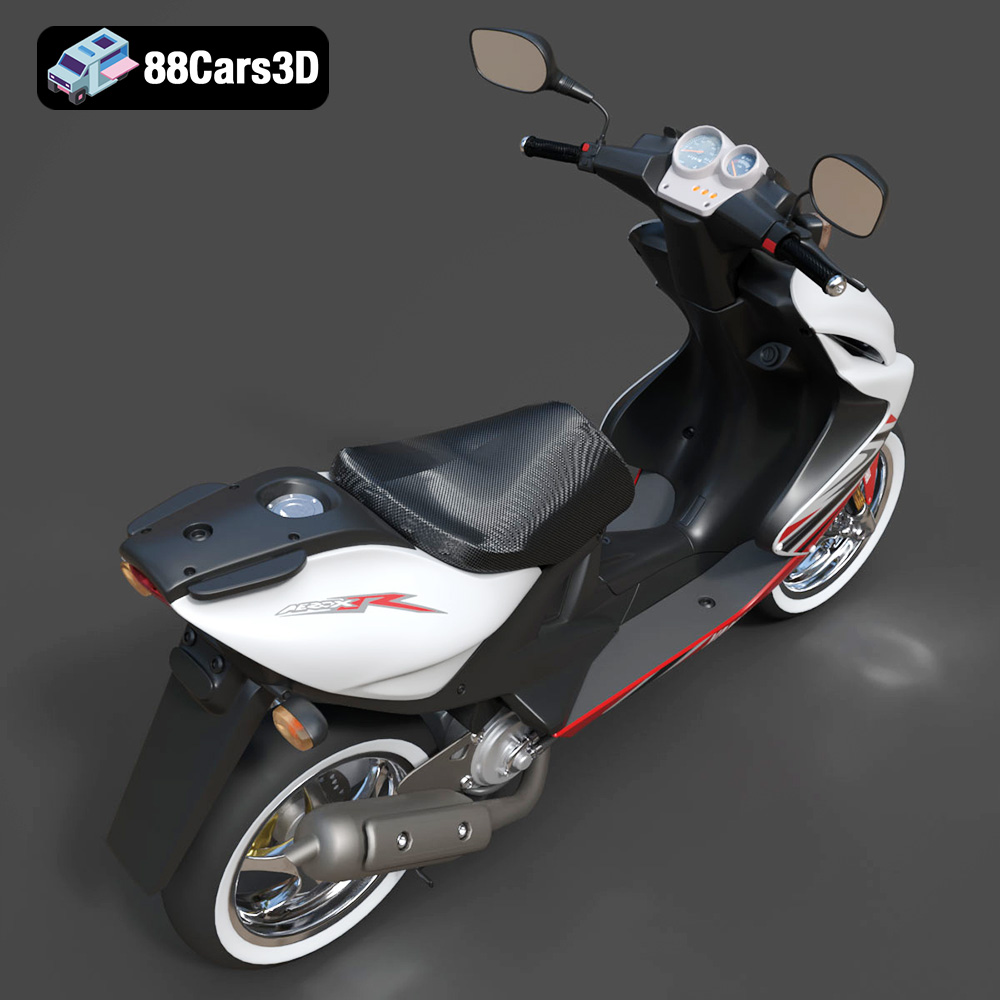
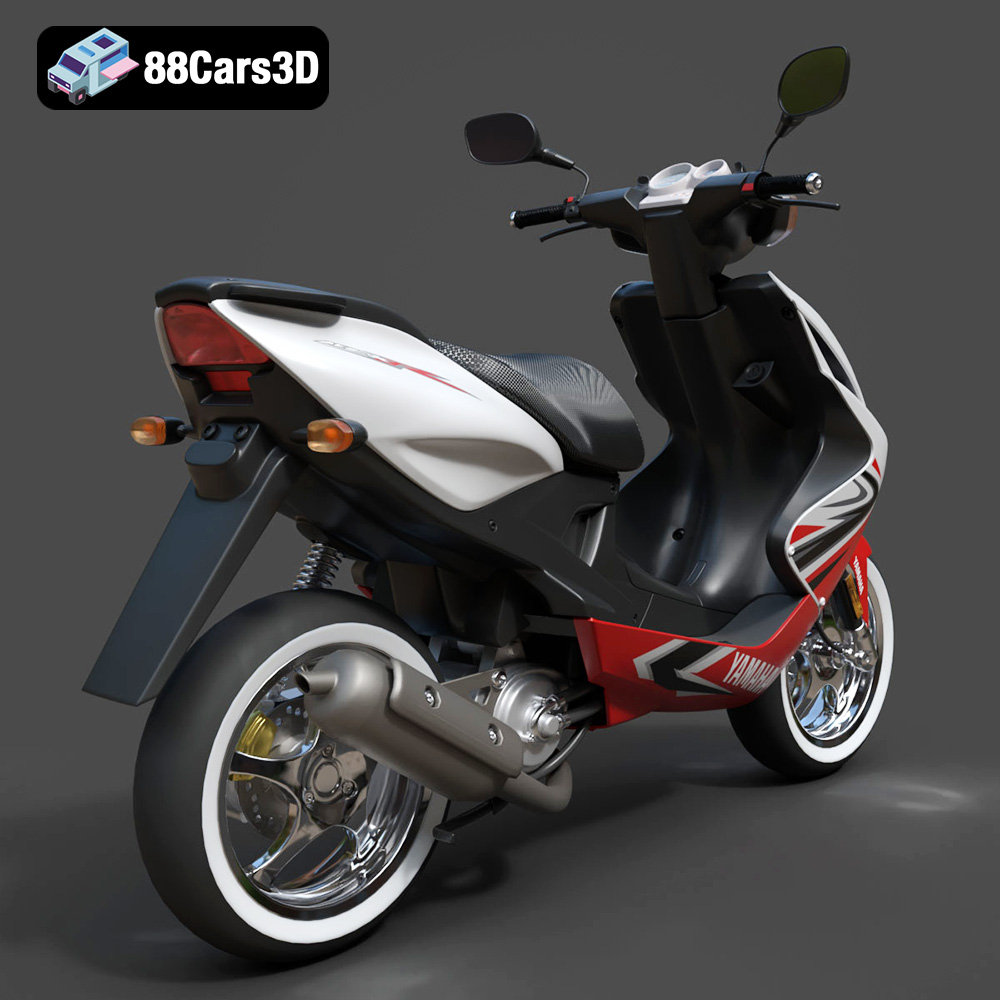
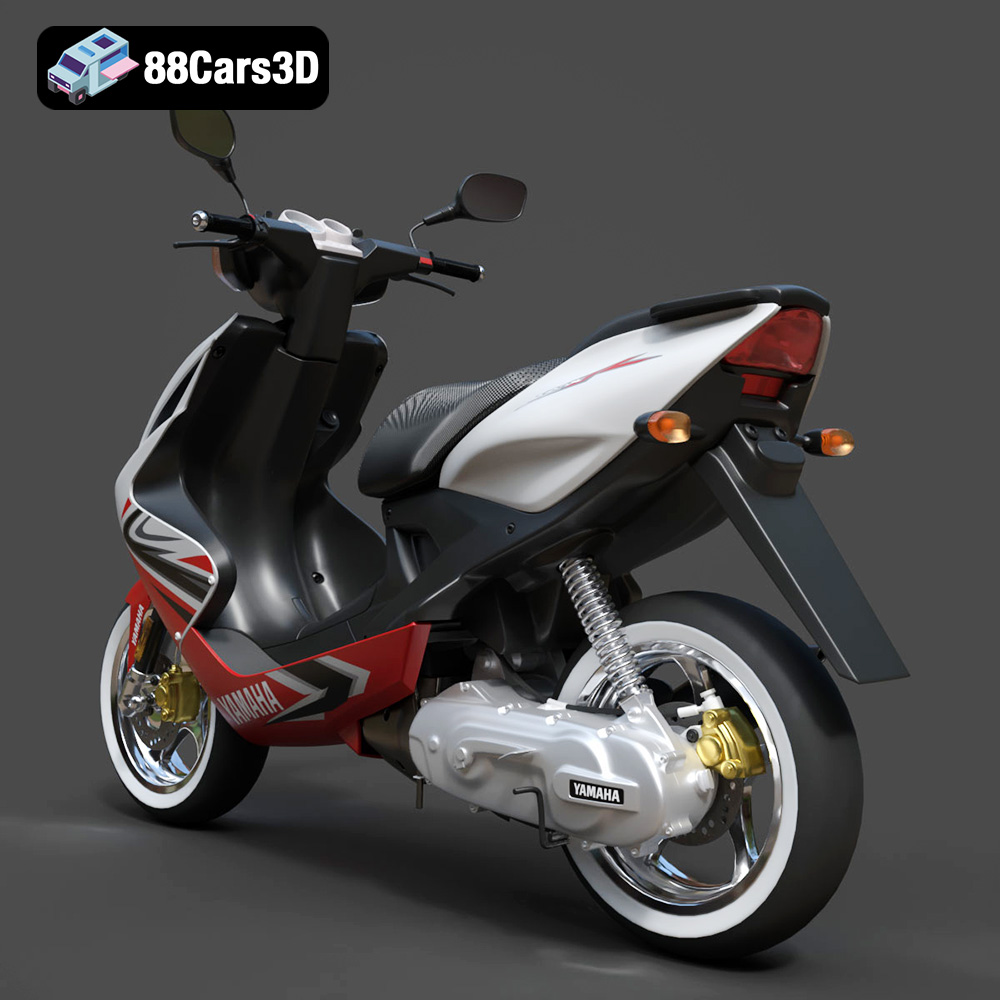
This is an immersive and accurate digital recreation of the Yamaha Aerox R-002 2024 scooter. This vehicle model is built to meticulous standards, capturing the distinct urban styling, ergonomic details, and component complexity of the real-world machine. It is ideal for projects requiring a modern, high-fidelity motorcycle asset. The model features optimized, clean geometry suitable for both real-time applications and demanding cinematic renders. The mesh topology is carefully structured, facilitating easy UV unwrapping and texture manipulation. Materials are fully PBR-ready (Physically Based Rendering), ensuring physical accuracy and consistent appearance under various complex lighting setups. This asset is prepared by industry experts for immediate integration into professional digital pipelines. This versatile asset is perfect for a wide range of digital projects including virtual reality (VR) simulations, augmented reality (AR) experiences, high-fidelity product visualization, architectural fly-throughs, and seamless integration into major game engines like Unreal Engine and Unity.
$19.99
Product Image Gallery
Related Tags
.aerox
.arvr
.blend
.car3dmodel
.fbx
.gameasset
.glb
.max
.moped
.motorcycle
.obj
.ply
.r002
.rendering
.scooter
.simulation
.stl
.unreal
.urbanvehicle
.yamaha
