Driving Digital Excellence: The Indispensable Role of High-Quality 3D Car Models
In the dynamic worlds of automotive design, film production, game development, and architectural visualization, the quality of 3D assets is paramount. A meticulously crafted 3D model isn’t just a digital representation; it’s a foundation for breathtaking renders, immersive experiences, and efficient workflows. The demand for realism, versatility, and technical precision has never been higher, pushing artists and developers to seek out assets that meet the most stringent professional standards.
From showcasing a vehicle in a photorealistic advertisement to integrating it into a sprawling virtual environment, a superior 3D car model saves invaluable time and elevates the final output. These assets must not only capture the aesthetic essence of a vehicle but also be technically robust, offering clean geometry, optimized textures, and broad compatibility across various software platforms. It’s about empowering creators to focus on their vision, knowing the underlying assets are flawlessly engineered.
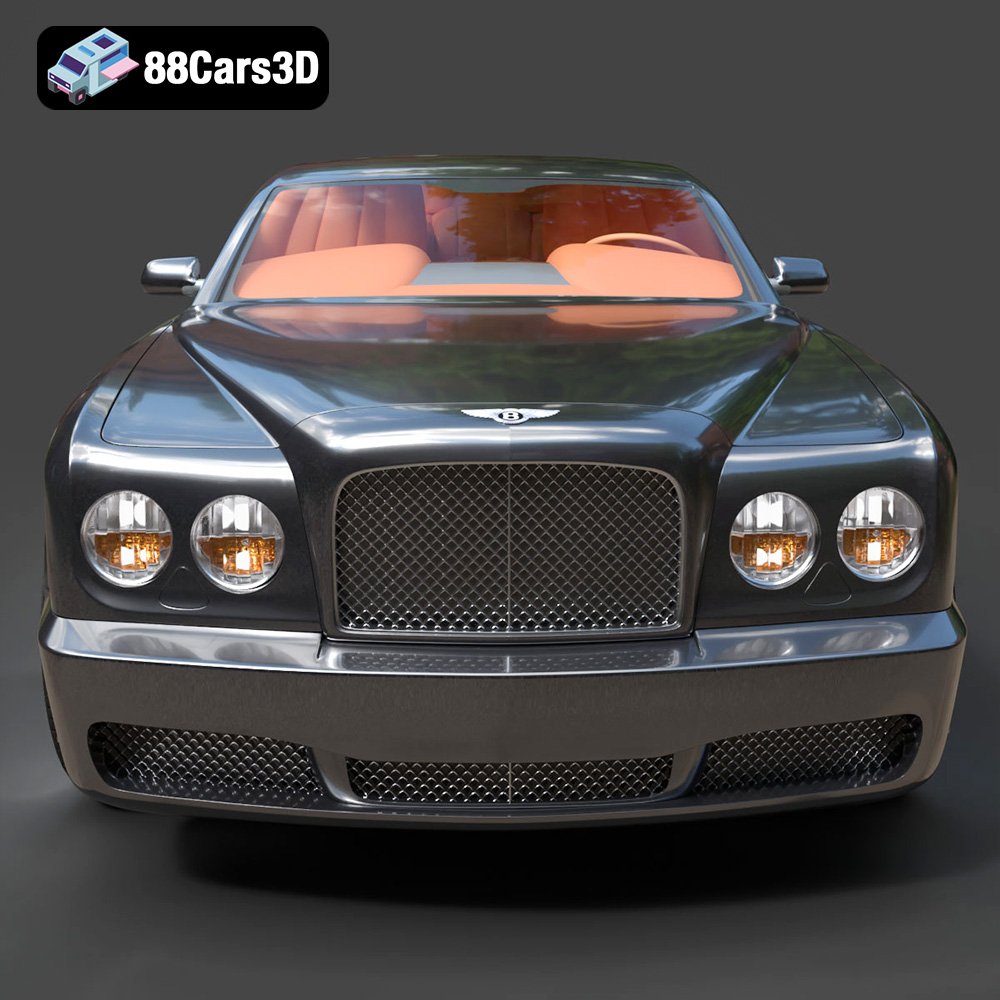
Consider a model like the Bentley Brooklands 2008 3D Model, available at 88cars3d.com. This asset exemplifies the fusion of artistic fidelity and technical excellence required in today’s digital landscape. It’s a prime example of how a high-quality 3D car model can serve diverse professional applications, offering a blend of luxury and distinctive engineering that translates seamlessly into any digital medium. Such models are not merely tools; they are catalysts for innovation, enabling designers and developers to bring their most ambitious projects to life with unparalleled realism and efficiency.
Understanding 3D Model File Formats: Choosing the Right Tool for the Job
The journey of a 3D car model, from concept to final render or real-time application, often involves multiple software packages and diverse pipelines. This necessitates a deep understanding of various 3D file formats, each with its strengths, limitations, and specific use cases. Selecting the correct format is crucial for maintaining data integrity, optimizing performance, and ensuring seamless interoperability within your workflow. For a comprehensive asset like the Bentley Brooklands 2008 3D Model, a wide array of formats are provided to cater to virtually any professional need.
The Blender Ecosystem: .blend – Fully Editable Blender Scene with Materials
The .blend format is native to Blender, the popular open-source 3D creation suite. When you receive a .blend file, you’re getting a complete Blender project, which often includes the model itself, materials, textures, lighting setups, cameras, and even animation data. This makes it an incredibly powerful format for artists working primarily in Blender, offering full editability. You can dissect the mesh, modify materials, tweak shaders, adjust UV maps, and even re-rig or animate the model from scratch. For a Bentley Brooklands 3D model, the .blend file would provide a ready-to-render scene, allowing immediate experimentation and customization within Blender’s versatile environment.
Universal Interoperability: .fbx and .obj
.fbx (Filmbox) is a proprietary file format owned by Autodesk, widely regarded as the industry standard for interchange between 3D applications, especially in game development. It supports not only geometry and UVs but also materials, textures, animations, skinning, and camera data. Its robust support for animation makes it ideal for exporting animated car models into game engines like Unreal Engine and Unity, or for transferring complex scene data between programs such as 3ds Max, Maya, and Blender. For real-time pipelines, .fbx is often the go-to choice due to its efficient handling of complex scene data. The Bentley Brooklands 2008 3D Model, offered in .fbx, is perfectly suited for game-engine integration, ensuring proper scaling, pivots, and material assignments.
.obj (Wavefront OBJ) is one of the oldest and most widely supported 3D file formats. It’s a universal format known for its simplicity and excellent compatibility across virtually all 3D software. An .obj file primarily stores geometric data (vertices, normals, texture coordinates, and faces) and references to external material files (.mtl). While it doesn’t typically store animation or rigging data, its widespread acceptance makes it a reliable choice for transferring static meshes between different platforms without loss of core geometric detail. For archival purposes or when broad compatibility is prioritized, the .obj version of the Bentley Brooklands model ensures it can be opened and worked on in almost any 3D application.
Specialized Formats for Specific Needs: .glb, .stl, .ply, .unreal, .max
.glb (GL Transmission Format Binary) is an increasingly popular format, especially for web-based 3D, AR (Augmented Reality), and VR (Virtual Reality) applications. It’s a binary version of glTF (GL Transmission Format) that packages 3D model data (geometry, materials, textures, animations) into a single, self-contained file. This makes it incredibly efficient for streaming and displaying 3D content on the web or in mobile AR/VR experiences, as it minimizes loading times and simplifies asset management. The .glb format for the Bentley Brooklands is optimized for these cutting-edge interactive applications.
.stl (Stereolithography) is the de facto standard file format for 3D printing. It represents a 3D model as a collection of unconnected triangular facets, defining the surface geometry without color, texture, or other CAD attributes. While simple, its ubiquity in the 3D printing world makes it essential for anyone looking to prototype or physically produce a model. If you ever wanted to 3D print a miniature version of the Bentley Brooklands 2008, the .stl file would be your starting point.
.ply (Polygon File Format or Stanford Triangle Format) is a versatile format for storing 3D data, particularly from 3D scanners. It can store various properties beyond just geometry, such as color, transparency, surface normals, and even confidence values for each vertex or face. While not as universally used as .obj, it’s favored in academic and research fields, as well as for applications requiring precise mesh data for analysis or direct visualization of scan data. The .ply version of the Bentley Brooklands could be valuable for engineers or researchers needing a detailed polygon mesh.
.unreal is not a standard file format in the same way .fbx or .obj are, but rather indicates that the asset is provided as an Unreal Engine project file or package, pre-configured and optimized for direct import or use within the engine. This typically means materials are set up with Unreal’s PBR (Physically Based Rendering) shader system, textures are correctly applied, and LODs (Levels of Detail) might be configured. It represents an engine-ready asset, saving significant setup time for Unreal Engine developers. The Bentley Brooklands 2008 3D Model’s .unreal offering ensures seamless integration for game developers and real-time visualization artists.
Finally, .max is the native file format for Autodesk 3ds Max. Similar to .blend, it contains a complete 3ds Max scene, including geometry, materials, textures, lighting, cameras, and animation. For professionals heavily reliant on 3ds Max for architectural visualization, product rendering, or film VFX, the .max file provides the highest level of control and editability within their preferred software ecosystem. The .max file for the Bentley Brooklands allows 3ds Max users to dive directly into advanced rendering and animation setups.
The inclusion of such a comprehensive range of formats for assets like the Bentley Brooklands 2008 3D Model ensures maximum flexibility and utility across diverse professional pipelines, truly empowering artists and developers.
The Art and Science of Automotive Rendering
Automotive rendering stands at the intersection of technical precision and artistic vision. It’s about more than just creating a digital image; it’s about evoking emotion, highlighting design intricacies, and presenting a vehicle in its most aspirational form. For a luxury car like the Bentley Brooklands 2008, professional rendering is crucial to convey its inherent elegance and engineering prowess.
Achieving Photo-Realism: Materials, Textures, and Lighting
The pursuit of photo-realism in automotive rendering hinges on several critical elements. First, materials must accurately simulate real-world surfaces. This involves complex shader networks that replicate paint metallic flakes, leather grain, chrome reflections, glass refraction, and tire rubber textures. Physically Based Rendering (PBR) workflows are standard, ensuring materials react correctly to light regardless of the lighting environment. For the Bentley Brooklands, this means meticulously crafted shaders that capture the deep luster of its paint, the intricate details of its grille, and the luxurious feel of its interior upholstery.
Textures provide the fine surface detail that brings a model to life. High-resolution maps for diffuse, normal, roughness, metallic, and displacement are essential. Professional assets ensure UV mapping is clean and non-overlapping, allowing textures to be applied without distortion. The Bentley model’s exceptional fidelity means its textures accurately reproduce the finishes of the original vehicle, down to the stitching in the seats and the intricate patterns on the dashboard.
Lighting is the final brushstroke. Mastering HDRI (High Dynamic Range Image) lighting for realistic environmental reflections, coupled with strategic area lights and spotlights, defines the car’s contours, highlights its design features, and sets the mood. A well-lit scene can transform a good model into an outstanding render, making the Bentley Brooklands appear as if it’s sitting in a professional studio or bathed in natural sunlight.
Applications in Design and Marketing
High-quality automotive renders are indispensable across numerous industries. In automotive design, they facilitate rapid prototyping and iteration, allowing designers to visualize and refine concepts long before a physical prototype is built. They are critical for design reviews and stakeholder presentations.
For marketing and advertising, stunning renders replace costly photoshoots, offering unparalleled flexibility in staging, lighting, and camera angles. Automotive configurators, powered by advanced 3D models, allow potential buyers to customize their dream car in real-time, visualizing every option from paint color to interior trim. The Bentley Brooklands 2008 3D Model, with its professional-grade features and photo-realistic materials, is ideally suited for these high-stakes applications, providing a reliable and visually striking foundation for campaigns and interactive experiences.
3D Car Models in Game Development and Real-Time Environments
The world of interactive media, from AAA video games to corporate training simulations, increasingly relies on high-fidelity 3D car models. Unlike static renders, real-time environments impose strict technical constraints, demanding assets that are both visually impressive and highly optimized for performance. Game assets require a delicate balance to run smoothly while maintaining visual quality.
Optimization for Performance: Poly Counts and LODs
One of the primary considerations for game assets is polygon count. While film and visualization models can sometimes feature millions of polygons for extreme detail, game engines require a much leaner mesh to maintain high frame rates. Professional 3D car models for games are often optimized with clean, efficient geometry, ensuring that complex shapes are represented with the minimum necessary polygons without sacrificing visual integrity.
Levels of Detail (LODs) are crucial for managing performance. A single 3D car model, such as the Bentley Brooklands, might have several versions, each with a progressively lower polygon count. When the car is close to the camera, the highest detail LOD is used. As it moves further away, the engine automatically switches to lower LODs, drastically reducing the computational load without noticeable visual degradation to the player. Properly configured LODs are a hallmark of a professional game-ready asset.
Beyond poly count, efficient UV mapping and texture atlasing are vital for reducing draw calls and optimizing memory usage. The Bentley Brooklands 2008 3D Model, boasting optimized geometry and materials set up for photo-realism, is inherently designed for efficient integration into real-time applications.
Seamless Integration into Game Engines (Unity, Unreal)
Game engines like Unity and Unreal Engine provide powerful environments for building interactive experiences. For a 3D car model to be truly “game-ready,” it needs to integrate seamlessly. This involves more than just importing an FBX file; it means materials are configured using PBR shaders, collision meshes are often included, and sometimes even basic rigging for wheels or doors is pre-set.
The Bentley Brooklands 2008 3D Model, with its .fbx and .unreal formats, is specifically tailored for these engines. The .fbx format is widely compatible, allowing easy import into both Unity and Unreal, where its clean geometry and UVs facilitate rapid material setup and texture application. The .unreal package goes a step further, providing a pre-configured asset that often includes PBR materials, collision data, and possibly even Blueprints for basic vehicle physics, drastically reducing development time. This makes the Bentley an ideal asset for racing games, open-world simulations, or interactive showrooms, enabling developers to drop a high-quality, fully realized vehicle into their projects with minimal effort.
Beyond Visualization: AR/VR, 3D Printing, and Simulation
The utility of high-quality 3D car models extends far beyond traditional rendering and game development. As technology evolves, these assets are becoming foundational for a new generation of immersive and practical applications, transforming how we interact with digital content.
Immersive Experiences with AR/VR
Augmented Reality (AR) and Virtual Reality (VR) are revolutionizing fields from education and training to retail and entertainment. In AR, a 3D car model can be overlaid onto the real world via a smartphone or headset, allowing users to “place” a virtual car in their driveway or walk around it as if it were physically present. VR takes this further, immersing users entirely in a virtual environment where they can experience driving or exploring a car from any angle.
For AR/VR, optimized models are crucial for smooth performance and low latency. The Bentley Brooklands 2008 3D Model’s inclusion of the .glb format is particularly significant here. .glb files are highly optimized for web and mobile performance, making them ideal for quick loading and display in AR viewers or VR experiences. Imagine a customer browsing cars being able to instantly view the Bentley Brooklands in full 3D, interacting with its interior or seeing it scaled accurately in their environment – this is the power of a well-prepared 3D model for AR/VR.
From Digital Model to Physical Prototype (3D Printing)
While often used for digital display, 3D models also serve as the blueprint for physical objects through 3D printing. Designers can prototype parts, create scale models for presentations, or even produce custom accessories. The requirements for 3D printing are different: the model must be “watertight” (a completely enclosed volume without gaps or intersecting geometry) and have sufficient wall thickness.
The .stl format provided with the Bentley Brooklands 2008 3D Model is specifically designed for 3D printing. While some cleanup or preparation might be needed for very complex models, a well-structured .stl file provides the necessary geometry for additive manufacturing. This capability opens doors for product designers, engineers, and hobbyists to bring a tangible piece of automotive luxury into the physical world, whether it’s a desktop model or a component for a larger project.
Engineering Simulation and Analysis
Beyond aesthetics, 3D car models are invaluable tools for engineers conducting simulations and analyses. From aerodynamic studies to crash testing simulations, these models provide the geometric data necessary for predicting performance, identifying potential flaws, and optimizing designs. These applications often require highly precise mesh data, where every vertex and face accurately represents the physical object.
The .ply format, included with the Bentley Brooklands 2008 3D Model, is particularly useful in this context. It allows for the storage of detailed polygon mesh information, often enriched with additional data like color or normal vectors, making it suitable for more advanced computational analysis. While the Bentley Brooklands model is primarily designed for visualization, its clean and detailed geometry, combined with formats like .ply, could serve as a foundational element for further engineering analysis, demonstrating the multi-faceted utility of high-quality 3D assets.
Integrating High-Quality Assets into Your Workflow
Acquiring a high-quality 3D car model is just the first step; effectively integrating it into your professional workflow is where its true value is realized. Whether you’re a seasoned artist or a burgeoning developer, understanding how to leverage these assets within industry-standard software like 3ds Max, Blender, and Unreal Engine is paramount. The Bentley Brooklands 2008 3D Model is specifically designed with this seamless integration in mind, offering files tailored for each platform.
Mastering 3ds Max for Advanced Rendering and Animation
Autodesk 3ds Max remains a powerhouse in architectural visualization, product rendering, and cinematic animation. When working with the .max file for the Bentley Brooklands 2008 3D Model, users gain full control over every aspect of the scene. Upon opening, the model should load with all materials pre-assigned, ready for fine-tuning.
- Material Setup: Leverage V-Ray, Corona Renderer, or Arnold within 3ds Max to enhance the photo-realism. Adjust the metallic flakes on the paint, refine the reflectivity of chrome accents, and dial in the subtle texture of the leather interior. The included professional materials serve as an excellent starting point, allowing artists to focus on artistic direction rather than basic setup.
- Lighting and Staging: Utilize 3ds Max’s robust lighting tools to create compelling renders. Combine HDRI environments with targeted photometric lights to highlight the Bentley’s elegant lines. Set up cameras with real-world lens parameters to achieve cinematic depth of field.
- Animation: For animated sequences, the clean topology of the Bentley model makes it easier to rig for wheel rotations, door openings, or camera paths. Its optimized geometry ensures smooth deformations and fast viewport performance, even in complex animated scenes.
Leveraging Blender for Versatile 3D Production
Blender’s open-source nature and comprehensive feature set have made it a favorite among a growing community of 3D artists. The .blend file for the Bentley Brooklands 2008 3D Model offers a native Blender experience, usually with Eevee and Cycles materials already configured.
- Material Refinement: Dive into Blender’s shader editor to customize the PBR materials. Tweak the principled BSDF shader nodes to achieve desired metallic sheens, glass refractions, or fabric textures. The pre-setup materials provide a solid foundation, allowing for quick adjustments to match specific project requirements or rendering styles.
- Scene Composition: Use Blender’s robust modeling and sculpting tools to integrate the Bentley into custom environments. Add additional props, characters, or architectural elements around the car.
- Rendering: Utilize Cycles for high-quality, unbiased path tracing for stunning photo-realistic renders, or leverage Eevee for real-time viewport rendering and animation previews. The optimized geometry ensures efficient rendering times.
Streamlining with Unreal Engine for Interactive Projects
Unreal Engine is the industry leader for real-time visualization, game development, and interactive experiences. The .unreal and .fbx files for the Bentley Brooklands 2008 3D Model are specifically geared for this environment.
- Import and Setup: For .fbx, simply import the file into Unreal, and the engine will often automatically create materials and static meshes. For the .unreal package, the asset is often already pre-configured, possibly with PBR materials, collision meshes, and even basic Blueprints for vehicle interaction.
- Material Adaptation: Unreal Engine’s powerful material editor allows for extensive customization of the Bentley’s PBR materials. Optimize shaders for performance, add detail maps, or create dynamic material instances for in-game customization.
- Real-Time Performance: The model’s optimized geometry and potential LODs (Levels of Detail) ensure smooth frame rates. Integrate it into virtual showrooms, driving simulators, or cinematic cutscenes within the engine. Its clean UVs mean textures will display correctly without artifacts, crucial for a high-quality real-time asset.
By providing such a diverse range of formats and catering to these professional pipelines, assets like the Bentley Brooklands 2008 3D Model from 88cars3d.com significantly streamline the workflow, allowing creators to spend less time on asset preparation and more time on creative execution.
Why Quality Matters: The 88cars3d.com Advantage
In the vast ocean of digital assets, distinguishing between good and truly professional-grade 3D car models is crucial for serious creators. The decision to invest in high-quality assets, such as those found on 88cars3d.com, is not just about aesthetics; it’s a strategic choice that impacts project timelines, performance, and overall output quality. The Bentley Brooklands 2008 3D Model perfectly illustrates the tangible benefits of choosing excellence.
The Value of Clean Geometry and Professional UVs
At the core of any high-quality 3D model is its geometry. “Clean geometry” refers to a mesh that is well-structured, primarily composed of quads (four-sided polygons), with efficient polygon density, and free from errors like non-manifold geometry, overlapping faces, or isolated vertices. For the Bentley Brooklands, this means a smooth, accurate representation of its luxurious curves and intricate details, without rendering artifacts or performance bottlenecks.
Professional UVs (Universal Vectors) are equally vital. UV maps are essentially 2D representations of a 3D model’s surface, dictating how textures are wrapped around it. High-quality UVs are organized, non-overlapping, and efficiently packed, ensuring textures appear crisp, without stretching or seams, and can be easily modified or re-textured. This attention to detail in the Bentley Brooklands model guarantees that its photo-realistic materials, from paint to leather, are rendered flawlessly across all applications, saving artists countless hours of cleanup and re-working.
Saving Time and Resources with Pre-Optimized Assets
Time is a precious commodity in any creative or development project. Starting with a pre-optimized, professional-grade 3D car model significantly reduces the initial setup and iteration phases. Instead of spending hours or days fixing topology, cleaning up messy UVs, or rebuilding materials, artists can immediately dive into rendering, animation, or engine integration.
The Bentley Brooklands 2008 3D Model is explicitly developed for professional visualization needs, meaning it’s delivered with optimized, clean geometry and materials already set up for photo-realism. This “ready-to-use” nature translates directly into cost savings and accelerated project completion. Whether for automotive configurators, detailed product rendering, architectural visualization, film production, or game development, having an asset that performs out-of-the-box allows teams to focus on their unique creative contributions rather than foundational technical corrections.
88cars3d.com’s commitment to providing such high-quality 3D car models ensures that professionals receive reliable, versatile, and technically sound assets that truly empower their projects, making it a go-to source for automotive 3D excellence.
Conclusion
The landscape of 3D visualization and interactive media is constantly evolving, driven by an insatiable demand for realism and immersion. At the heart of this evolution lies the indispensable role of high-quality 3D assets. From capturing the intricate details of a luxury vehicle for a cinematic render to optimizing its geometry for a seamless real-time experience in a game engine, the technical precision and artistic fidelity of a 3D model dictate the success of a project.
Understanding the nuances of various file formats – from the comprehensive .blend and .max scenes to the versatile .fbx and .obj, and the specialized .glb, .stl, .ply, and .unreal packages – empowers professionals to navigate complex workflows with confidence. These formats ensure that a single, expertly crafted asset can serve a multitude of purposes, from photo-realistic automotive rendering and cutting-edge game development to immersive AR/VR experiences and tangible 3D prints.
The Bentley Brooklands 2008 3D Model exemplifies the pinnacle of professional 3D car modeling. Its meticulously crafted geometry, photo-realistic materials, and comprehensive file format support make it a versatile foundation for any serious project. By choosing such high-caliber assets from reputable sources like 88cars3d.com, creators not only save invaluable time and resources but also elevate the quality and impact of their final output. Investing in quality 3D car models is an investment in digital excellence, ensuring that your visions are brought to life with unparalleled realism and efficiency.
Featured 3D Model
Bentley Brooklands 2008 3D Model
Experience the luxury and distinctive engineering of the Bentley Brooklands 2008 with this expertly crafted 3D model. Developed for professional visualization needs, this asset captures the classic coupe design with exceptional fidelity, ensuring accurate representation in any digital environment. This model boasts professional-grade features, including optimized, clean geometry for fast rendering and efficient integration. All materials are set up for photo-realism, accurately reproducing the textures and finishes of the original vehicle, from the signature grille to the detailed wheel rims. The interior is fully modeled and ready for close-up shots and virtual walk-throughs. Perfect for a wide range of creative and commercial applications, this Bentley asset is ready for use in automotive configurators, detailed product rendering, architectural visualization, and film production. Its optimized structure also makes it suitable for real-time applications such as game development (Unity/Unreal Engine) and interactive AR/VR experiences.
$14.99
Product Image Gallery