Mastering Professional Automotive Visualization with High-Fidelity 3D Car Models
The pursuit of realism in digital automotive design, visualization, and game development demands assets that are not merely aesthetically pleasing but are built upon a foundation of meticulous technical fidelity. In high-stakes professional environments, relying on production-ready 3D car models saves countless hours of cleanup, retopology, and material correction.
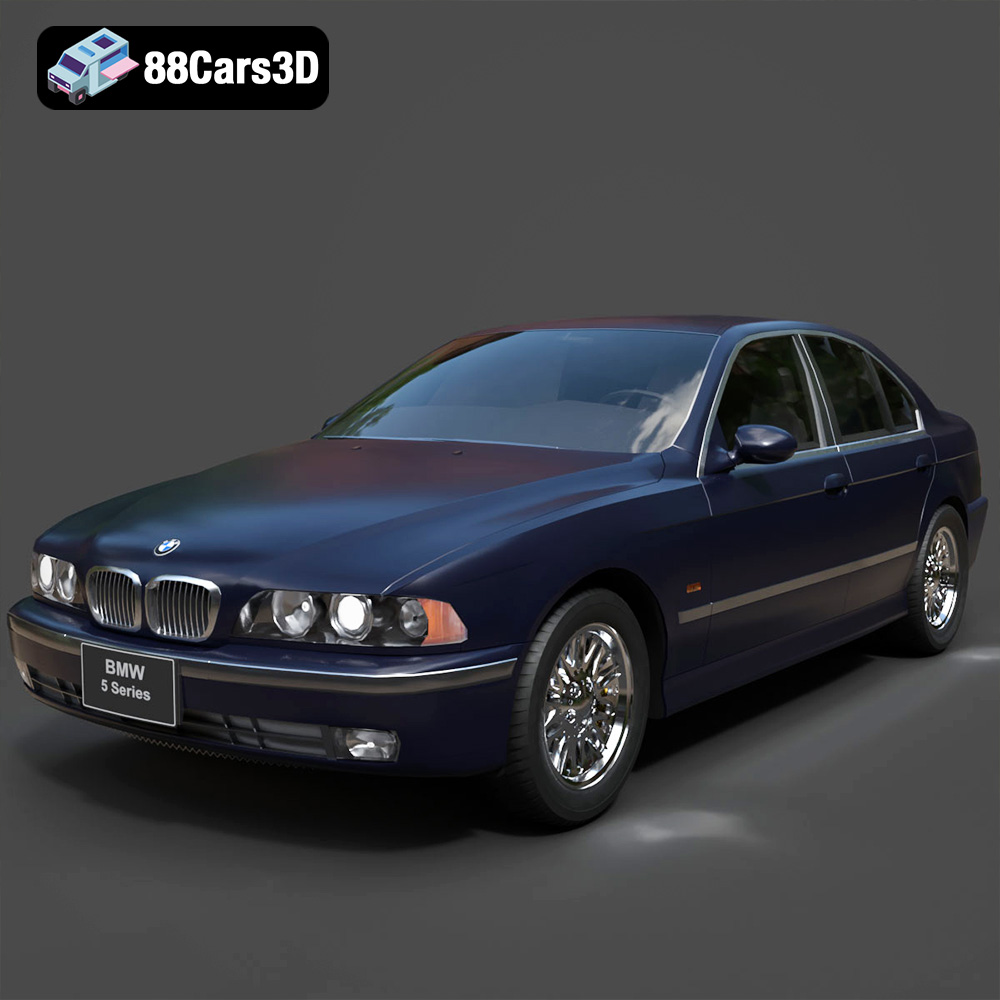
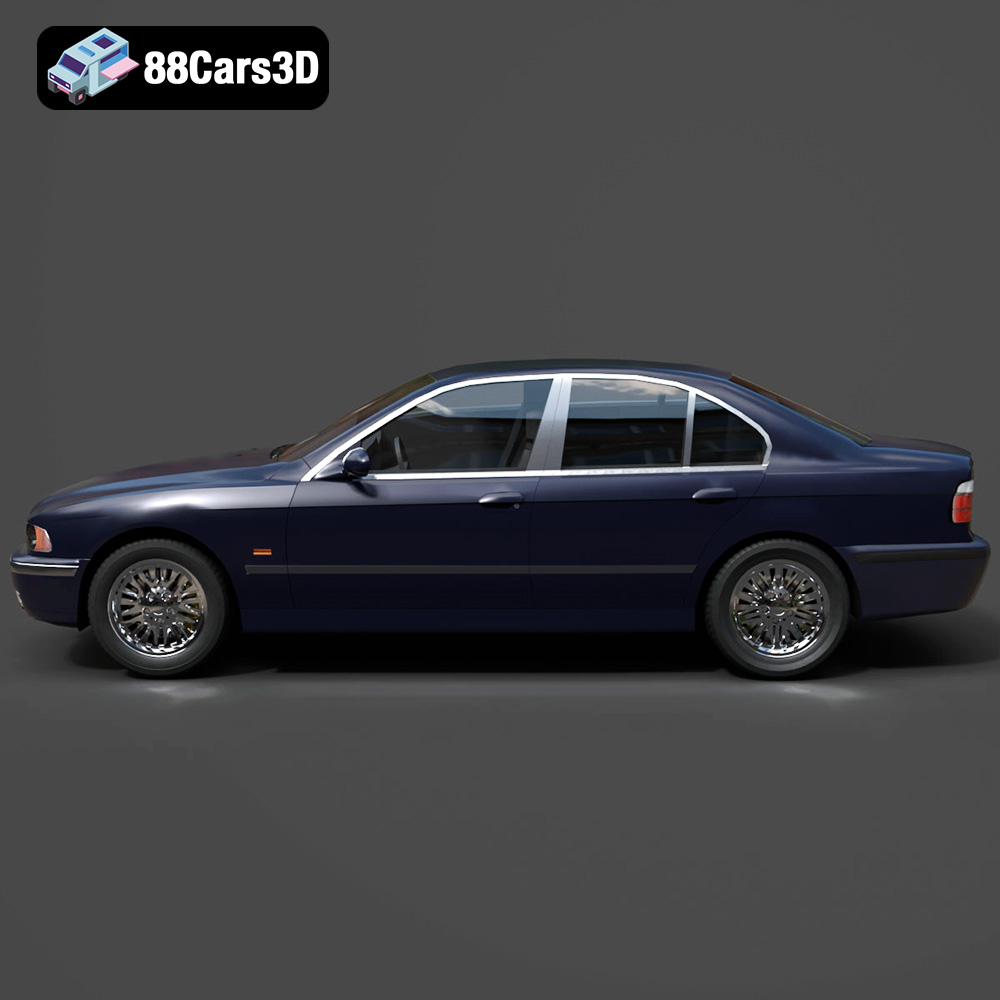
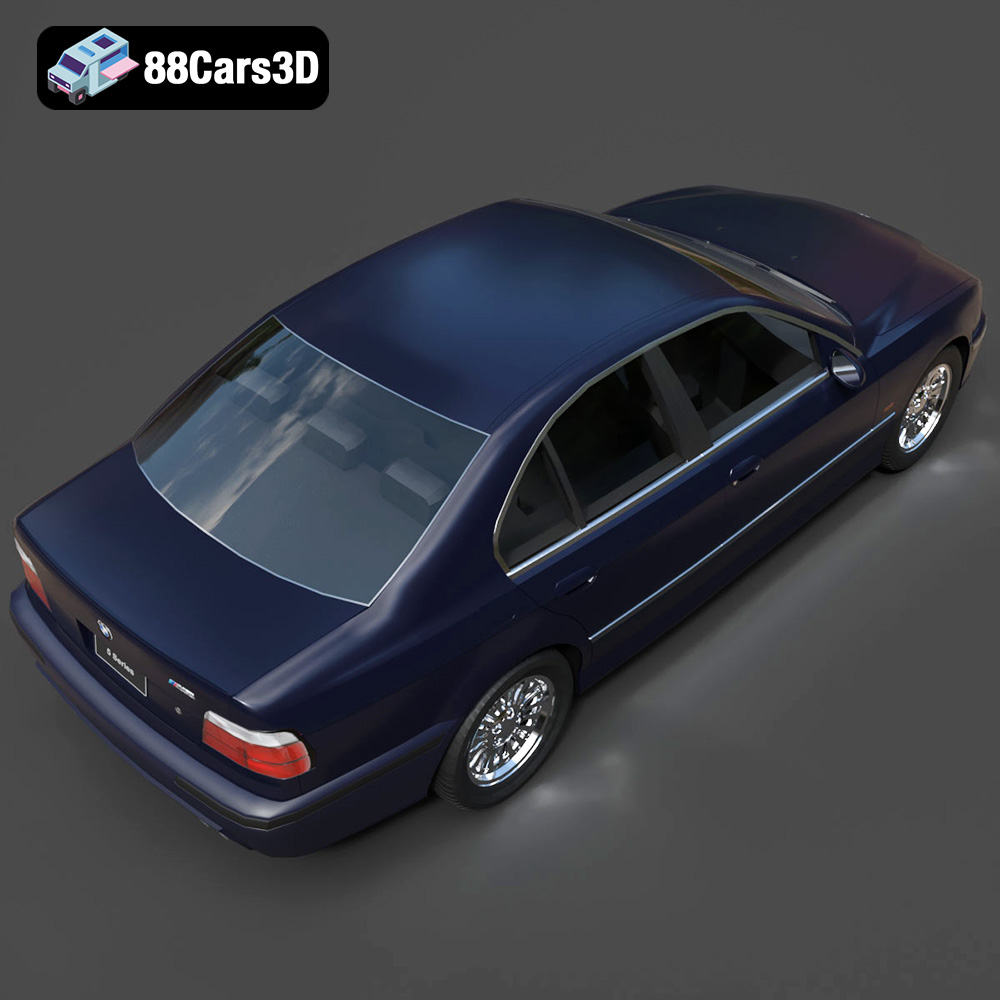
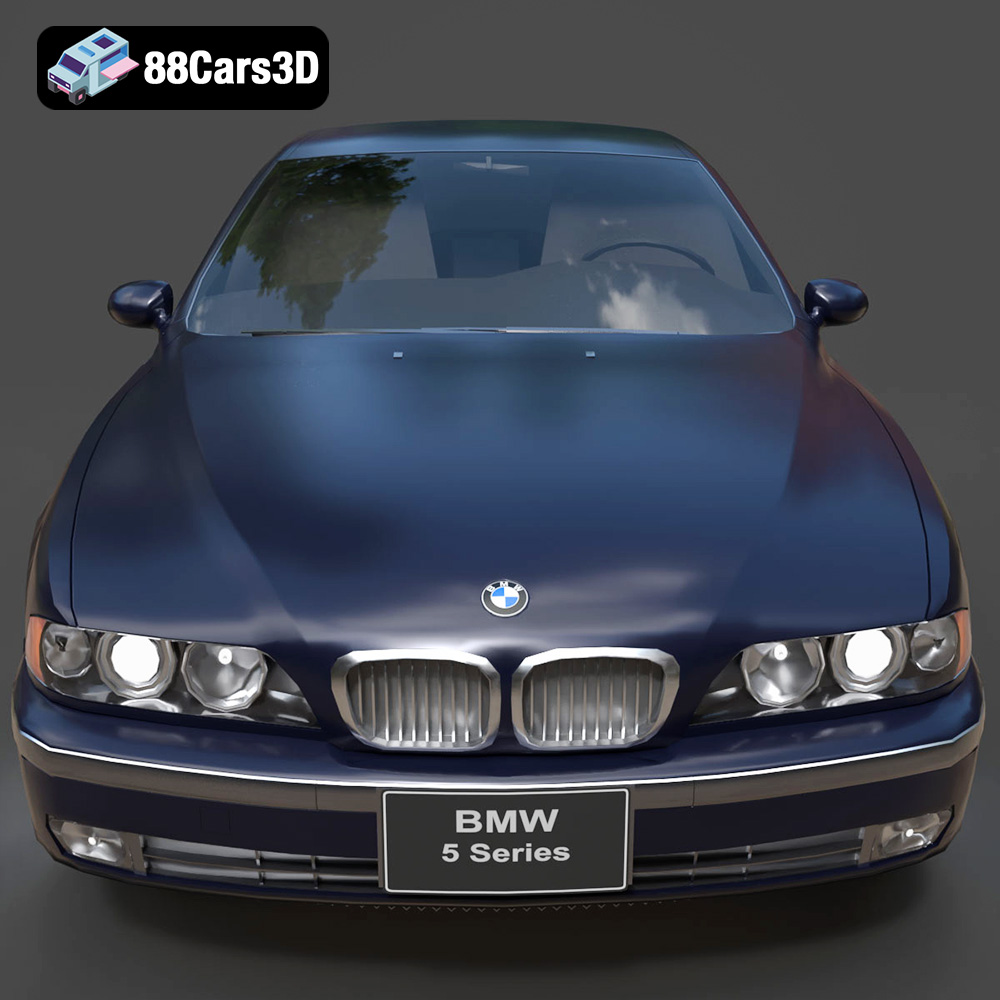
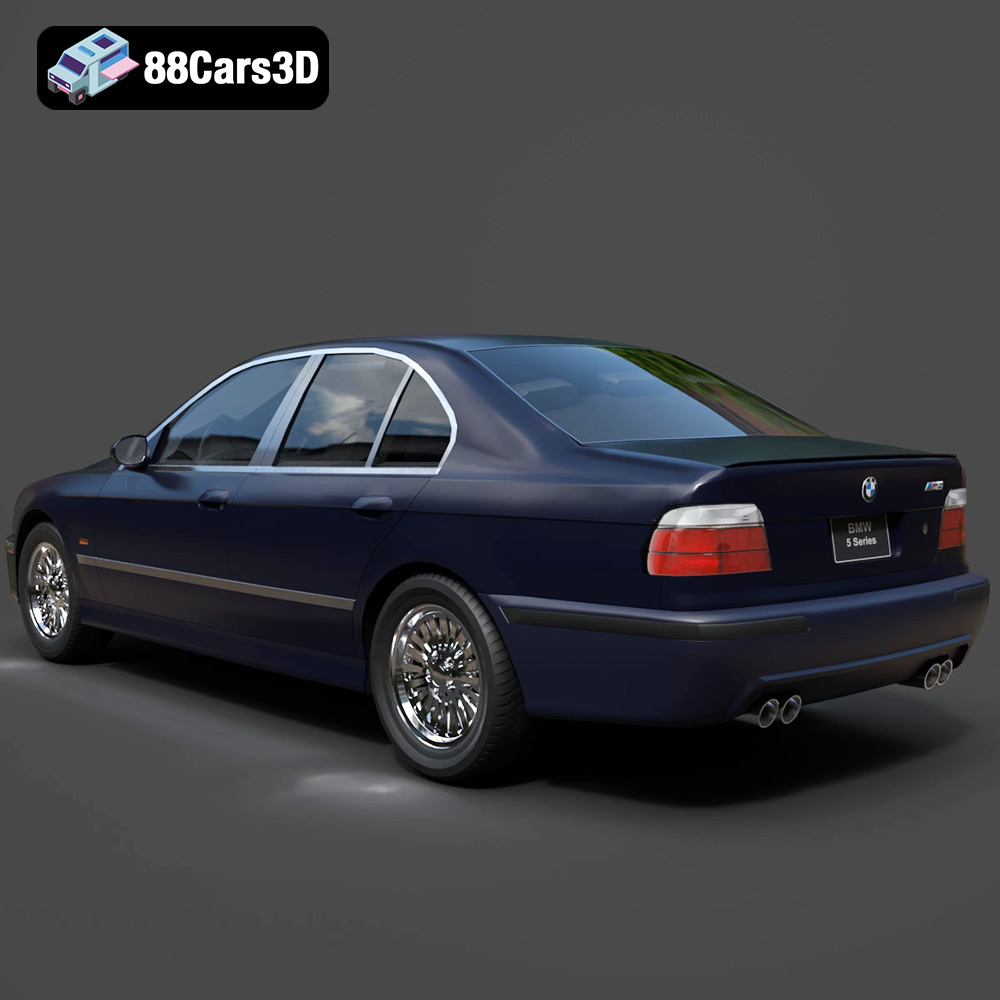
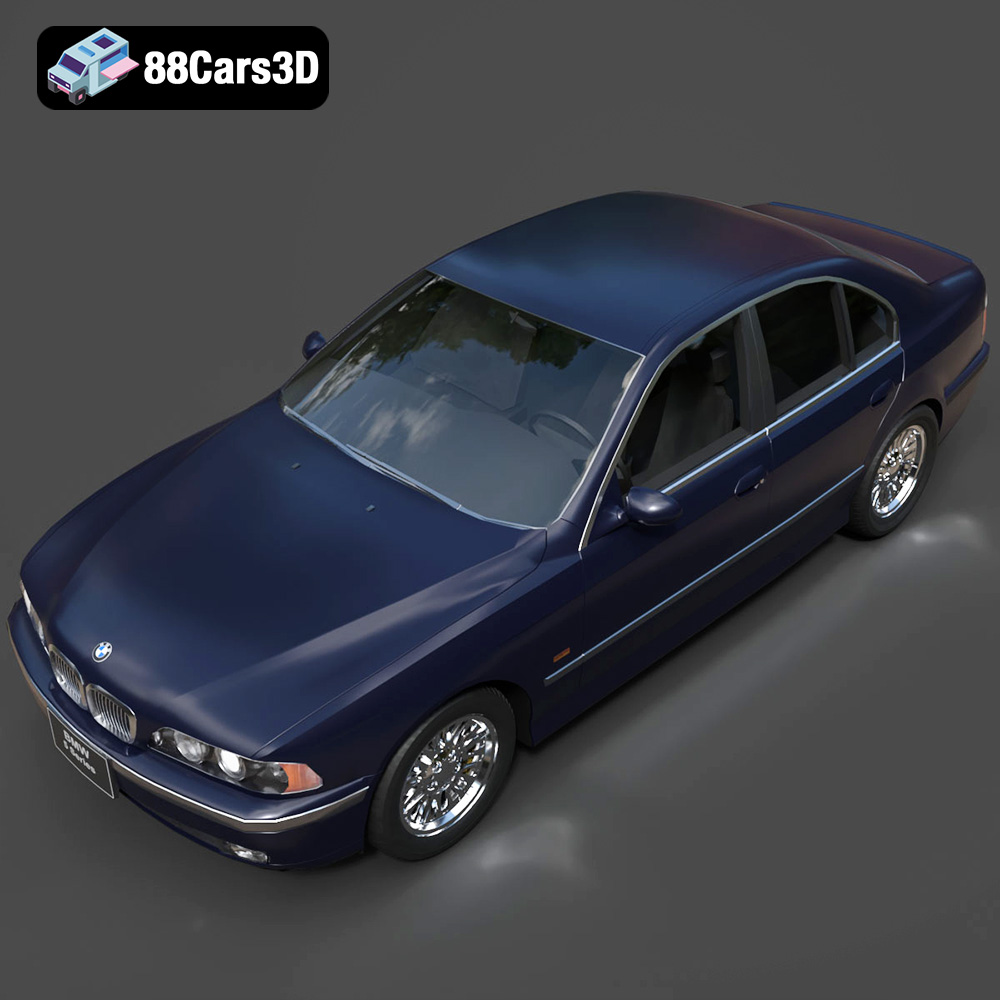
This commitment to quality is exemplified by assets like the BMW E39 M5-540i 3D Model, a high-fidelity representation of one of the most celebrated performance sedans ever built. Capturing the precise geometry and aggressive styling of the E39 era, this model provides a versatile starting point for everything from cinematic automotive rendering projects to integration into demanding real-time environments.
At 88cars3d.com, the focus is always on providing assets that translate seamlessly across diverse pipelines—whether you are creating a photo-realistic advertisement in 3ds Max, building interactive content in Unreal Engine, or developing complex driving simulations. We delve deep into the technical specifications and multi-format compatibility that elevate professional 3D car models beyond simple visual assets, transforming them into foundational engineering data.
Understanding 3D Model File Formats
For a high-quality 3D asset like the BMW E39 M5-540i, versatility is paramount. Professionals rarely work within a single software ecosystem, necessitating robust format support that preserves critical data—such as UV coordinates, material assignments, and object hierarchy—upon export. The following breakdown explains the vital role of the included file formats, ensuring maximum compatibility across visualization and real-time platforms.
.blend – Fully Editable Blender Scene with Materials
The native Blender (.blend) file offers the complete project environment. This is invaluable for users who rely on Blender’s robust toolset for modeling adjustments, rigging, or leveraging the Cycles or Eevee rendering engines. The .blend file typically includes pre-configured shader networks for realistic materials like car paint, glass, and rubber, allowing for immediate customization of paint finishes and interior upholstery.
.max – Editable 3ds Max Project for Animation and Rendering
For many veteran visualization artists and animation studios, 3ds Max remains the industry standard. The inclusion of the native .max file ensures that the geometry, material slots, and object hierarchy—including crucial pivot points for wheels, doors, and steering—are preserved in their original state. This simplifies advanced animation rigging and integration with powerful renderers like V-Ray and Corona, optimizing high-resolution automotive rendering pipelines.
.fbx – Ideal for Unreal, Unity, and Real-Time Pipelines
The Filmbox (.fbx) format is the undisputed exchange format standard, particularly critical when working with game engines. FBX efficiently packages mesh data, UVs, skeleton data (if rigged), and basic material definitions. When deploying the E39 M5-540i into a pipeline focused on creating high-performance game assets, the .fbx file ensures that the separated components (doors, hood, trunk) maintain their proper local orientation and hierarchy, ready for import and engine-side rigging.
.obj – Universal Format for Cross-Software Compatibility
The Wavefront Object (.obj) format serves as the universal fallback. While it is highly stable and compatible with virtually all 3D software (Maya, Cinema 4D, ZBrush), it is primarily a mesh format. It reliably transfers vertex, normal, and UV data but often strips out advanced material definitions or complex rigging. It is best used when the core geometric structure is needed quickly for retopology, sculpting, or simple mesh analysis.
.unreal – Engine-Ready Asset for Real-Time Environments
This specialized format or project setup provides a ready-to-use asset optimized specifically for Unreal Engine. Unlike a general .fbx export, the .unreal package often includes optimized LODs (Level of Detail meshes), validated material instances using PBR (Physically Based Rendering) standards, and pre-configured collision meshes. This massively accelerates the integration of the E39 into driving simulators or interactive game assets, eliminating time-consuming engine setup.
.glb – Optimized for AR, VR, and Browser-Based Display
The GL Transmission Format (.glb) is increasingly important for modern visualization, especially in web-based viewers and immersive AR/VR applications. .glb packages the geometry, scene, and textures into a single, highly compressed binary file using PBR standards (often metallic/roughness workflow). Its efficiency is critical for delivering high-quality visual experiences on less powerful mobile or browser hardware.
.stl – Suitable for 3D Printing Output
Stereolithography (.stl) is the standard format for additive manufacturing (3D printing). This format represents the surface geometry using a series of connected triangles. For users planning to create a physical model of the BMW E39 M5-540i, the .stl file provides a watertight, manifold mesh required for slicer software. Care must be taken to ensure the model’s wall thickness meets the requirements of the specific printing technology used.
.ply – Precision Mesh Format for CAD or Analysis
The Polygon File Format (.ply) is often utilized in scientific, CAD, or reverse engineering workflows. It can store data beyond simple geometry, including color, transparency, and range data from 3D scanners. It offers a high degree of precision and is often preferred when the model needs to undergo technical simulation or structural analysis rather than purely visual rendering.
The Technical Blueprint: Geometry, Topology, and Scale
The difference between a consumer-grade model and a professional, studio-ready asset lies in its core technical construction. High-fidelity 3D car models must adhere to strict standards regarding geometry, scale, and hierarchy to ensure seamless deployment across diverse applications.
Quad-Dominant Topology for Subdivision
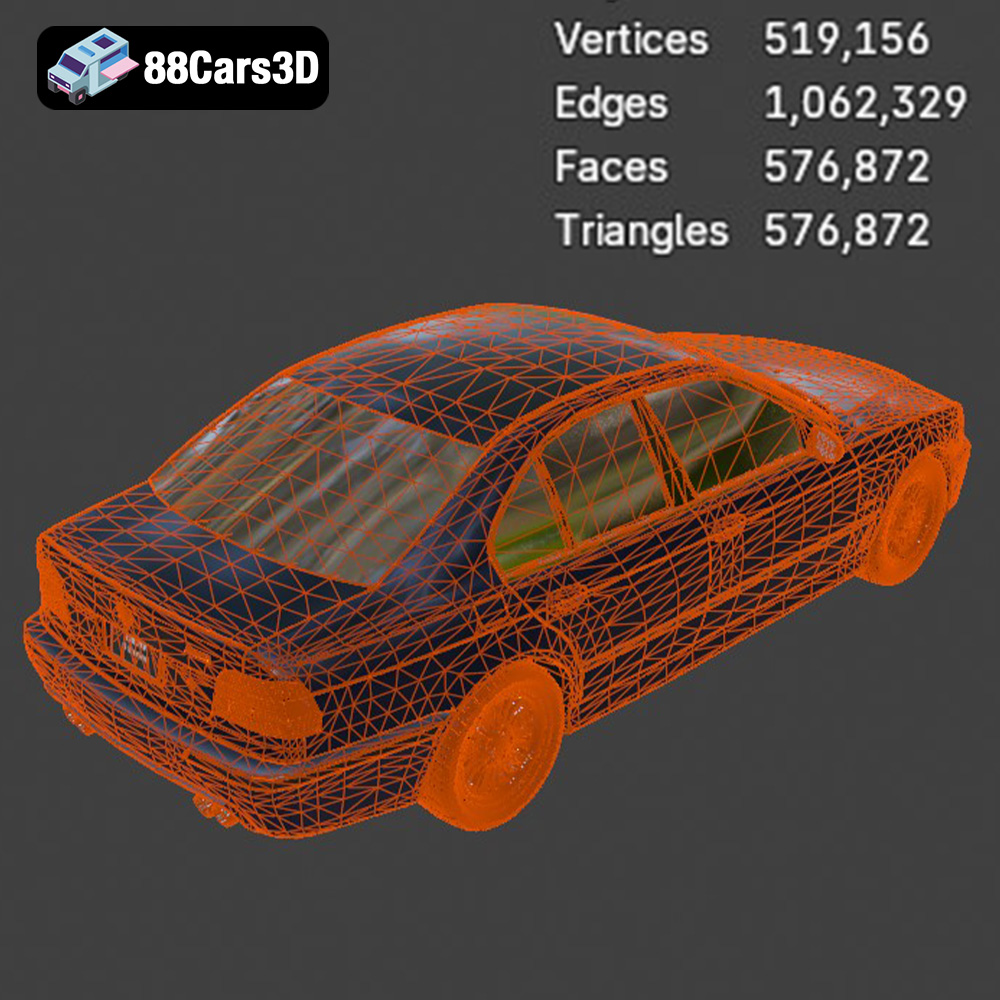
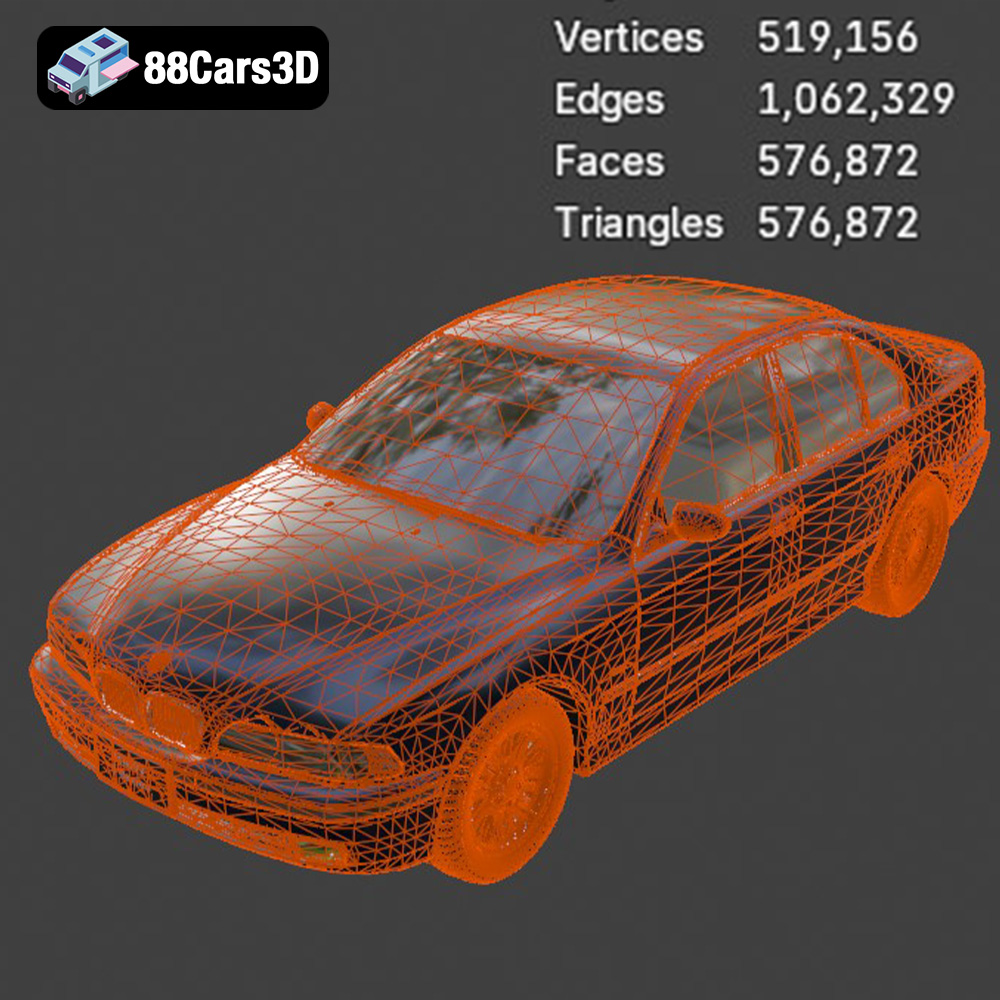
The BMW E39 M5-540i 3D Model features clean, quad-dominant topology. This is non-negotiable for professional modeling. Quads (four-sided polygons) ensure predictable deformation during rigging and, crucially, allow for perfect application of subdivision surface modifiers (like TurboSmooth or Subdivision Surface). This means the asset can scale its detail level dynamically—appearing low-poly and performant in a distance shot, or incredibly smooth and sharp for extreme close-ups in automotive rendering showcases, without introducing pinch points or undesirable artifacting.
Real-World Scale Accuracy and Integrity
For simulation, visualization, and integrating assets into existing architectural or environmental scenes, real-world scale is essential. The E39 model is accurately built to its real-life dimensions. This integrity is critical for correctly calculating physics (gravity, collision), achieving accurate camera perspective, and ensuring realistic lighting interactions within the scene. Furthermore, correct scaling is vital for generating the accurate bounding box required by game engines and AR environments.
Organized Hierarchy and Pivot Points
A professionally prepared model must have an organized scene hierarchy. All components—from body panels, doors, wheels, calipers, and suspension elements—are separated and logically grouped. Crucially, pivot points are placed correctly. For example, the wheel pivots are centered on the axle, and door pivots are accurately placed at the hinges. This preparation dramatically simplifies the workflow for animators and riggers, eliminating the need to manually adjust transformation origins before scripting.
Integrating the E39 into Real-Time Engines
The demands of real-time environments, such as those powered by Unreal Engine or Unity, require specialized asset preparation focused heavily on performance and dynamic interaction. The BMW E39 M5-540i 3D Model is pre-optimized to function effectively as a high-quality game asset.
LOD Creation and Performance Budget
In game development, resource management is key. Even the most detailed model cannot run at its full poly count across an entire open world. Professional assets include Level of Detail (LOD) meshes. These are lower-polygon versions that automatically swap in when the vehicle is further from the camera. The high-fidelity model serves as LOD0, while successive LODs (LOD1, LOD2, LOD3) are generated to drastically reduce draw calls and polygon counts, ensuring smooth frame rates even with dozens of cars on screen.
Rigging, Physics, and Interactive Components
Utilizing the provided .fbx or .unreal formats, the E39 M5-540i is ready for vehicle rigging. Because the doors, hood, trunk, and steering wheel are separated, artists can easily assign controls for interactive elements. This is crucial for virtual showrooms, vehicle configurators, or driving simulation training modules where opening the doors or raising the hood to view the visible engine bay details is necessary. Furthermore, clean geometry is essential for the creation of precise collision meshes, ensuring realistic handling and damage modeling within the physics engine.
Achieving Cinematic Quality: Advanced Automotive Rendering Workflows
When the goal is photorealism—whether for advertising, film, or portfolio showcases—the focus shifts from performance optimization to material accuracy and nuanced lighting. Leveraging the native .max and .blend files allows for maximum control over the visual output in high-end automotive rendering pipelines.
PBR Material Setup for Car Paint and Trim
High-quality car paint requires a sophisticated shader setup built around Physically Based Rendering (PBR) principles. The E39 model’s materials are structured to simulate real-world physics: a base color layer (diffuse), metallic flake layer (specular), and a clear coat layer (transmission and roughness). Achieving realistic reflections on the E39’s iconic body curves requires careful management of glossiness and Fresnel reflections, typically fine-tuned within the native V-Ray, Corona, or Cycles shader networks.
Studio Lighting and HDRI Environments
To produce truly stunning renders, the environment must accurately simulate real-world studio or outdoor conditions. Professional automotive rendering relies heavily on High Dynamic Range Imagery (HDRI). By wrapping an HDRI environment map around the scene, the E39’s reflective surfaces pick up realistic environmental reflections, defining the contours of the bodywork. Artists then supplement this with targeted area lights (softboxes) to accentuate specific details like the sharp lines of the spoiler or the detailed internal components of the headlight housings.
Optimizing Mesh Density for Extreme Close-Ups
In cinematic sequences, the camera often focuses intensely on small details—the reflection on the chrome trim, the texture of the tire sidewall, or the leather stitching on the interior sport seats. Since the E39 model features quad-dominant geometry, users can apply high levels of subdivision only to components entering the extreme foreground, ensuring that intricate details like badging and trim remain perfectly smooth and detailed under close scrutiny without overburdening the system globally.
Beyond Visualization: AR/VR and 3D Printing Applications
The versatility of a robust 3D car model extends far beyond traditional screen rendering. Modern professional applications increasingly demand assets compatible with augmented reality (AR), virtual reality (VR), and even physical fabrication.
Preparing for AR/VR Deployment with .glb
Augmented and Virtual Reality experiences require lightning-fast loading and extreme optimization. The BMW E39 M5-540i, packaged as a .glb file, is ideally suited for this. Since .glb combines geometry, textures, and shading into a single, compact file, it minimizes loading times for mobile AR apps (like those using Apple ARKit or Google ARCore). In VR driving simulators, the optimized mesh quality of this model ensures a high frame rate (crucial for preventing motion sickness) while maintaining visual fidelity within the headset.
Precision Modeling for 3D Printing (.stl)
Converting a visualization asset for physical output via 3D printing requires addressing several key technical factors. The provided .stl format confirms the model’s readiness, but users must still consider factors like scale reduction, tolerance, and wall thickness. For instance, creating a 1:18 scale model requires the detail in the fine grille mesh or the thin door handles to be geometrically thick enough to survive the printing process. Having a clean base mesh, as provided by 88cars3d.com, makes the necessary boolean and thickening operations far more manageable.
Conclusion: The Value of Production-Ready Assets
For professionals in automotive design, game development, and high-end visualization, the choice of assets dictates the efficiency and quality of the final product. The BMW E39 M5-540i 3D Model is not just a digital representation of a classic vehicle; it is a technically engineered asset designed to integrate flawlessly into any demanding workflow. Its comprehensive file format support, from native .max and .blend files for deep customization, to optimized .fbx and .unreal files for real-time performance, ensures that artists and developers can focus on creativity rather than cleanup.
By investing in production-ready 3D car models built with clean quad topology, accurate scaling, and pre-separated components, studios gain a significant advantage in delivering complex projects on deadline. This model is a prime example of the quality assurance and technical depth available to elevate your next project.
Featured 3D Model
BMW E39 M5-540i 3D Model
A high-fidelity 3D model of the iconic BMW E39 M5-540i, capturing the essence of this legendary performance sedan. This meticulously crafted model features clean geometry and balanced detailing, making it ideal for a wide range of professional applications, including high-quality rendering, realistic animation, detailed simulation, and robust game development. Includes native files for 3ds Max, Blender, and Unreal Engine.
$10.79
Product Image Gallery