The digital transformation of the automotive industry has placed unprecedented demands on 3D artists, visualization specialists, and game developers. High-fidelity vehicle models are no longer mere placeholders; they are critical technical assets that must adhere to stringent standards for accuracy, optimization, and pipeline compatibility. Achieving photorealism in automotive rendering or ensuring flawless performance in real-time environments hinges entirely on the quality of the base 3D model.
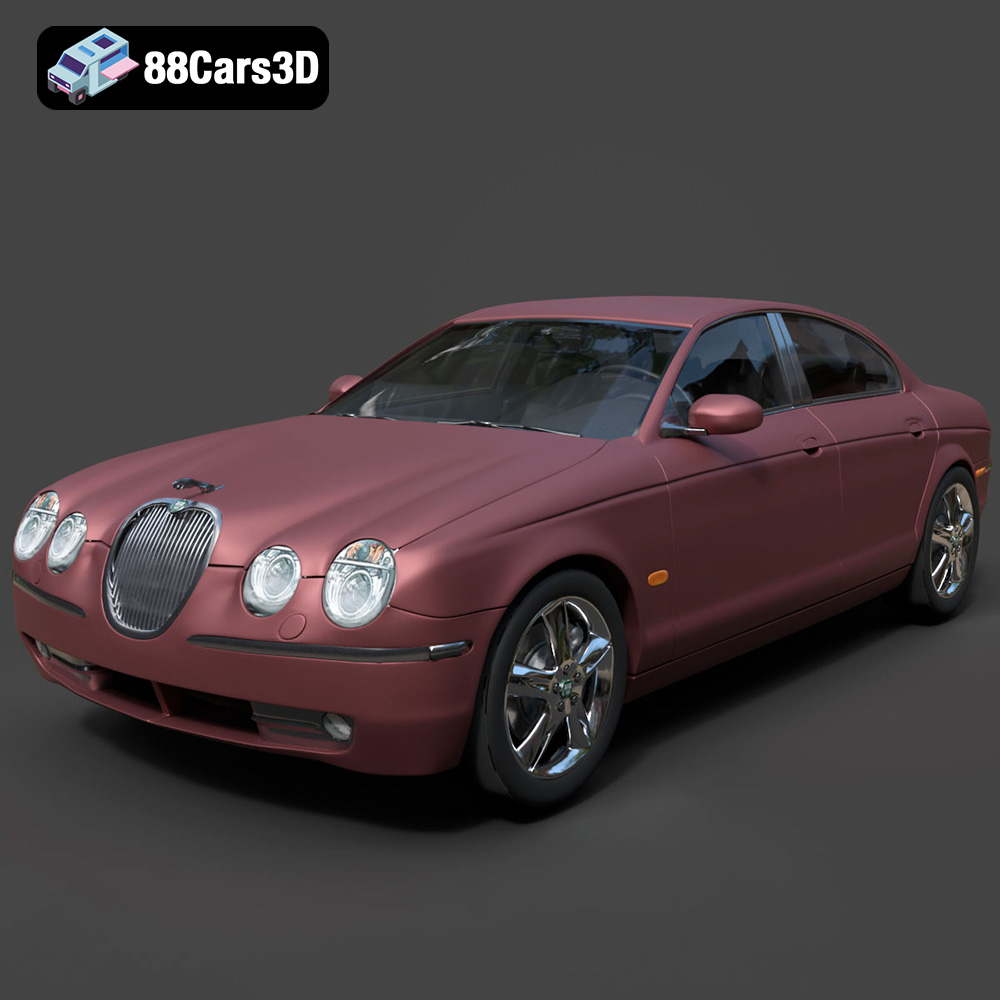
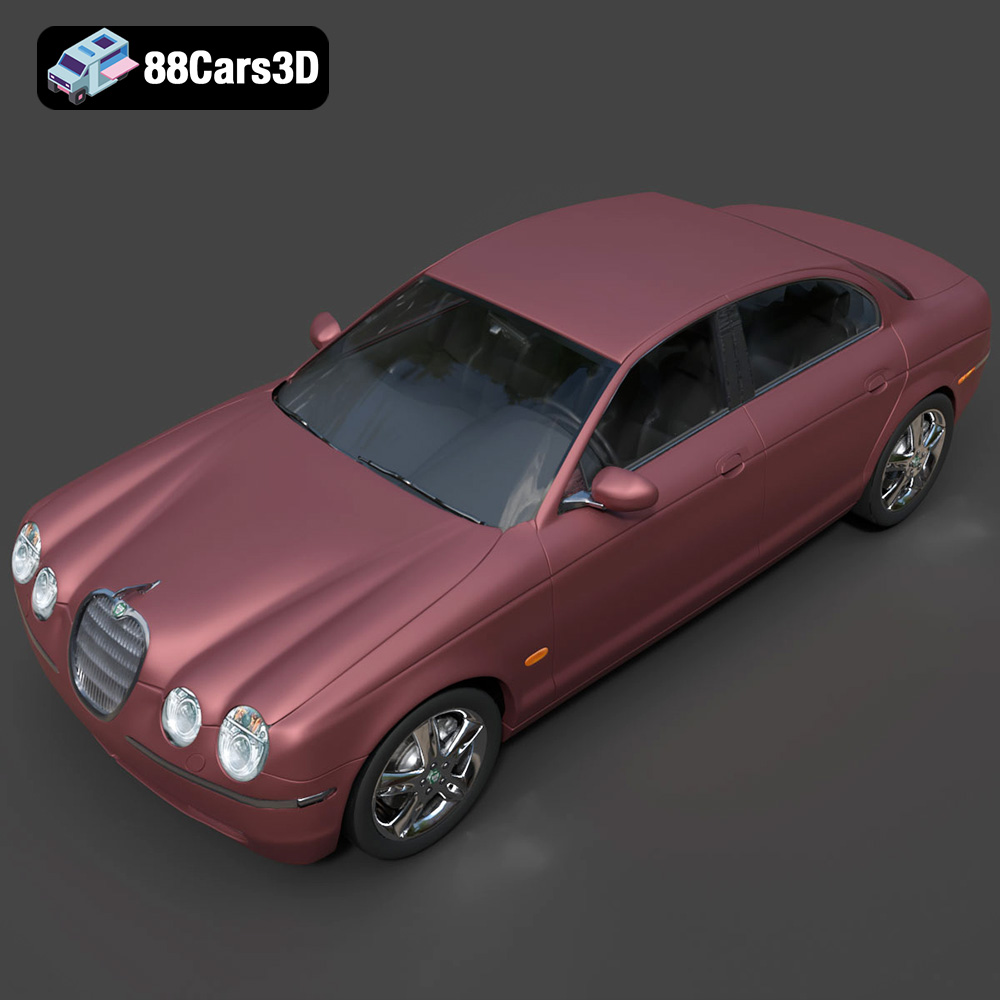
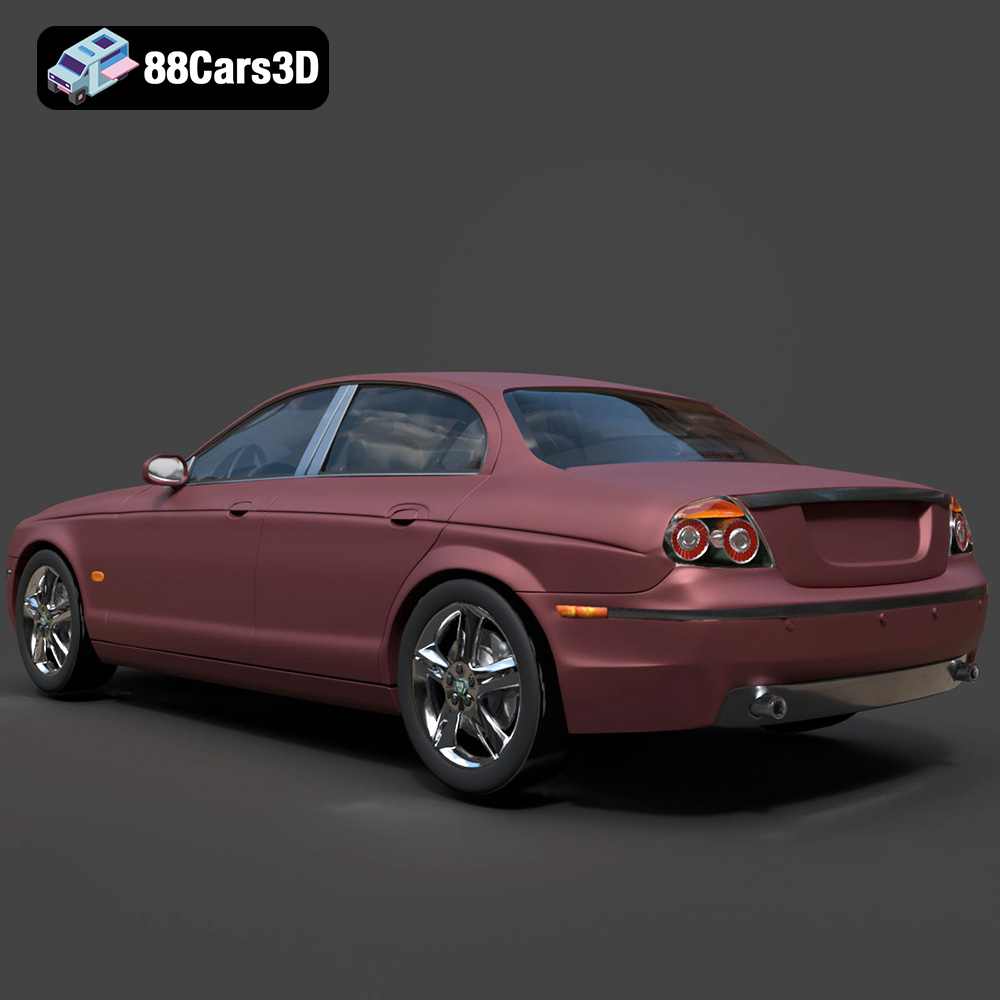
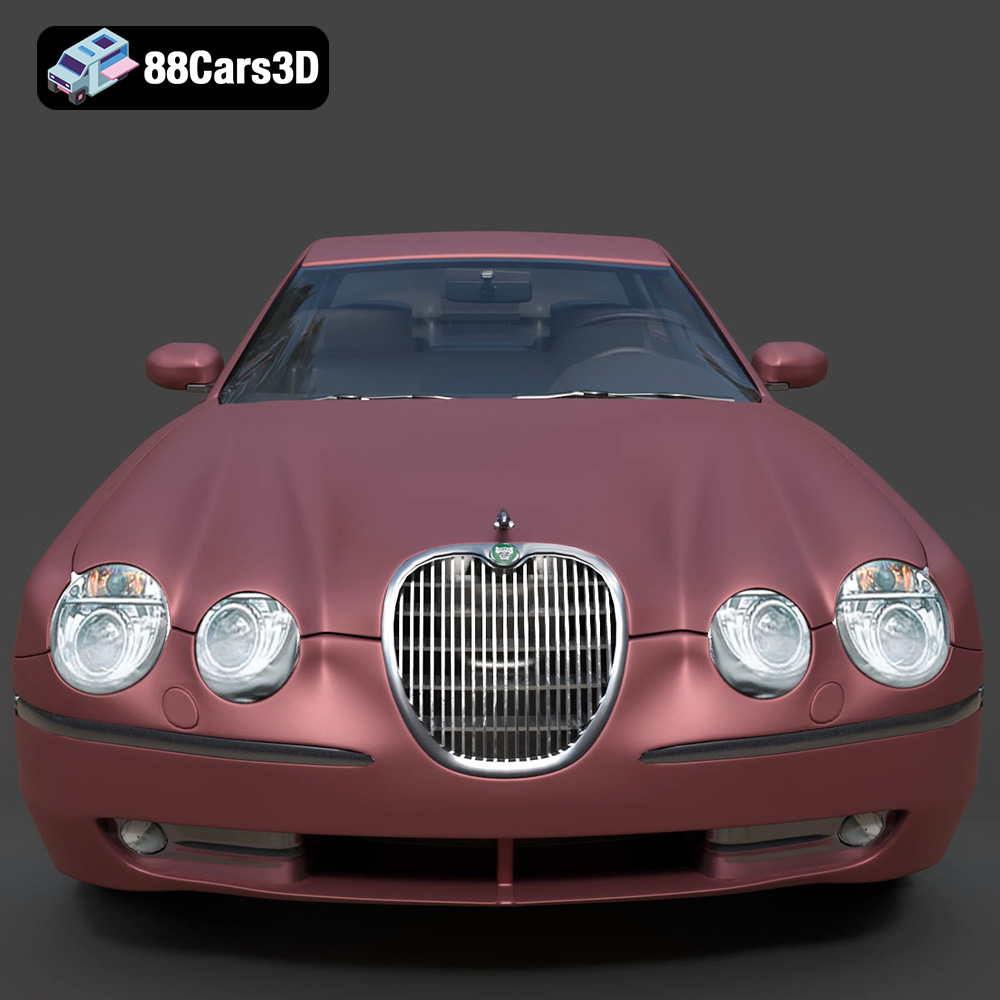
For professionals seeking a versatile and technically sound asset, the Jaguar S-Type Sedan 3D Model represents a benchmark in quality. This asset, available on 88cars3d.com, is engineered not only for aesthetic appeal—capturing the iconic lines of the luxury sedan—but also for seamless integration into diverse production pipelines, from cinematic advertising renders in 3ds Max to low-latency simulations in Unreal Engine.
This comprehensive technical guide explores how professional studios leverage such high-quality 3D car models. We will delve into the technical specifications, file format considerations, and detailed workflows necessary to utilize the Jaguar S-Type asset across the most demanding applications in visualization and interactive media.
Understanding 3D Model File Formats: The Backbone of Pipeline Interoperability
One of the defining characteristics of a truly professional 3D asset, like the Jaguar S-Type Sedan, is the breadth of its provided file formats. A single geometry set needs to serve the often contradictory demands of high-polygon visualization, real-time performance, and physical prototyping. Selecting the correct format is crucial for maintaining integrity and efficiency across different software ecosystems.
The Native and Universal Formats
The core of any flexible asset package lies in its native scene files and universal exchange formats:
- .blend (Blender): This fully editable Blender scene file provides the most flexibility for artists utilizing the open-source platform. It often includes the complete material setup (ready for Cycles or Eevee), lighting rigs, and hierarchical object structure, allowing for deep modifications, rigging, or custom animation before export.
- .max (3ds Max): For professionals rooted in animation and high-end visualization, the .max file is essential. It provides access to the original scene setup, including native V-Ray or Corona materials, specific modifiers, and organizational layers that are crucial for complex automotive rendering projects, ensuring that the initial setup mirrors the developer’s intent.
- .obj (Universal Object): The reliable workhorse of 3D exchange, the .obj format is compatible with nearly every 3D application on the market. It stores geometry (vertices, normals, UV coordinates) but is limited as it typically does not contain complex material data, animations, or camera information. It serves as an excellent foundational mesh for artists who prefer to rebuild shaders natively in proprietary software like Houdini or Cinema 4D.
Real-Time and Engine-Optimized Assets
When developing game assets or interactive content, file size, scene scale, and material definition transfer are paramount:
- .fbx (Filmbox): The industry standard for transferring 3D data into real-time engines like Unreal and Unity. .fbx supports mesh data, PBR material assignments (via metadata), rigging, skeletal animation, and Level of Detail (LOD) group definitions. It is critical for ensuring the Jaguar S-Type model transfers smoothly with the correct orientation and scale into a virtual environment.
- .unreal (Unreal Engine): This format often signifies a pre-configured asset pipeline specifically tailored for the Unreal ecosystem. This typically means the asset has already been imported, optimized, had its materials calibrated using the Unreal physical material shader, and possibly includes optimized collision meshes (UCX), saving developers significant setup time.
Specialized Formats for Emerging Technologies
Modern usage extends beyond the desktop renderer, necessitating formats optimized for efficiency and physical output:
- .glb (GL Transmission Format Binary): This format is highly optimized for delivery across AR, VR, and browser-based visualization platforms. Being binary, it embeds geometry, materials, and textures into a single, compact file, making the Jaguar S-Type instantly viewable in augmented reality apps or web configurators without complex loading dependencies.
- .stl (Stereolithography): Required for physical prototyping and 3D printing. The .stl format represents surface geometry using a mesh of triangular facets. It is used when a designer needs to physically print a scale model of the S-Type body shell or specific internal components. The mesh must be “manifold” (watertight) for reliable slicing.
- .ply (Polygon File Format): Often used for precision mesh data generated from 3D scanning or for engineering analysis. .ply files can store various data fields associated with vertices and faces (like color, transparency, or confidence data), making them useful for CAD applications or for comparison against real-world dimensions.
Technical Deep Dive: Geometry, UV Mapping, and PBR Texturing
The true value of a professional 3D car model, such as the Jaguar S-Type Sedan, lies beneath the surface in its meticulous construction. Achieving high-end automotive rendering results requires clean topology and adherence to Physically Based Rendering (PBR) standards.
Optimized Topology for Subdivision Surfaces
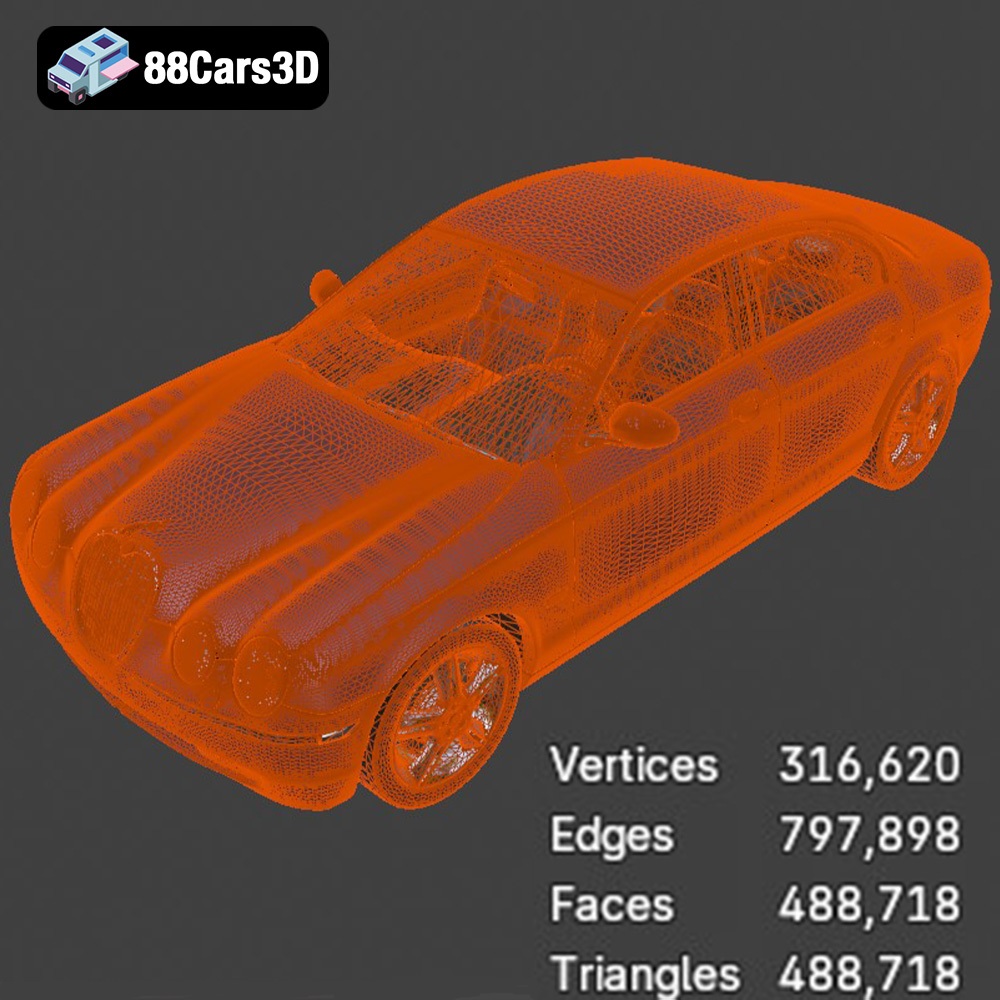
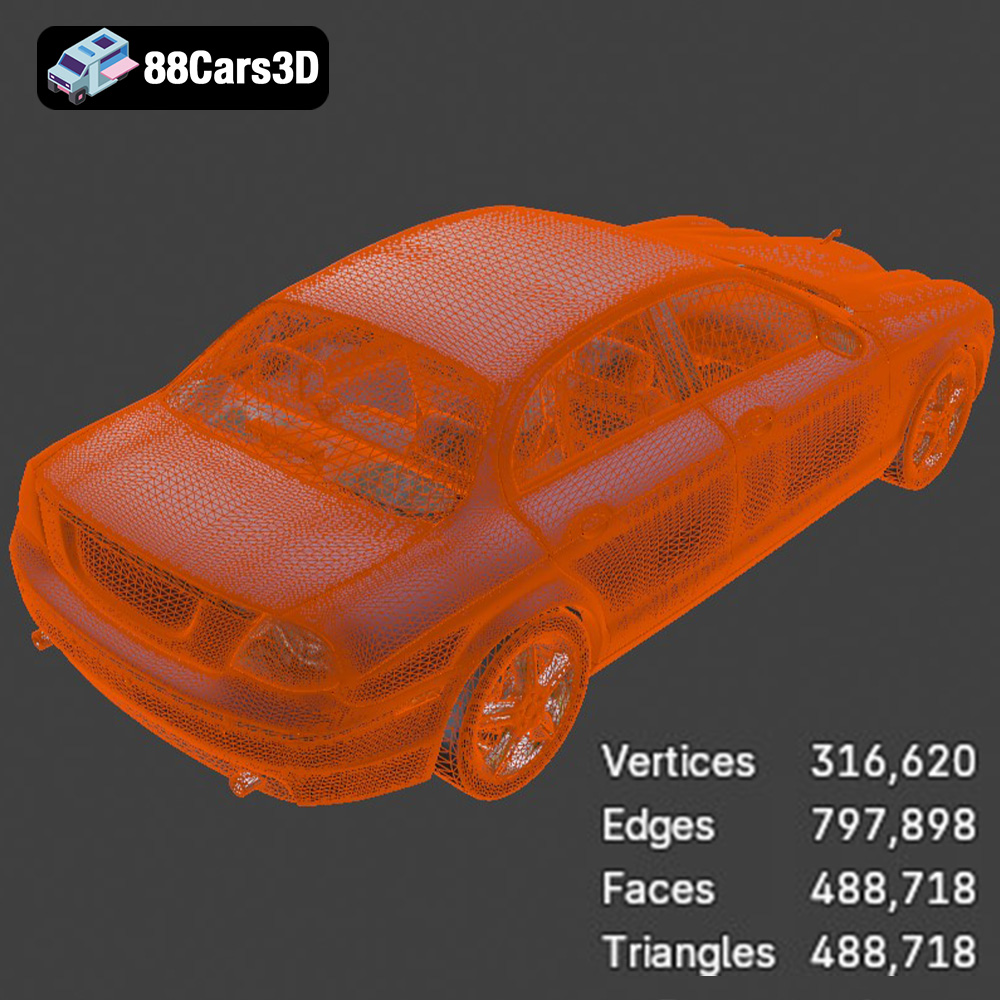
Luxury sedan bodywork is defined by expansive, smooth curves. Poor topology—triangles, poles, or stretched quads—will manifest as ugly pinching or faceting when rendered under close scrutiny. The geometry of a high-quality model must be built predominantly on clean quadrilateral polygons (quads).
- Edge Flow Precision: Clean edge loops must follow the curvature and major panel lines of the vehicle. This is crucial for applying subdivision surfaces (like Catmull-Clark), which smoothly interpolate the mesh. A well-modeled asset ensures that even close-up shots of the S-Type’s iconic grill or fender lines remain flawlessly smooth.
- Polygon Efficiency vs. Detail: Professional 3D car models balance detail (poly count) against performance. While a cinematic render might utilize millions of polygons post-subdivision, the base mesh must be optimized. This model provides an efficient base mesh, allowing users to control the final vertex count suitable for either high-end visualization or lighter real-time use.
PBR Material Consistency and Realism
Photorealism in modern rendering relies heavily on PBR workflows. These material definitions mimic how light behaves in the real world, ensuring the asset looks correct regardless of the scene’s lighting environment.
- Texture Set Calibration: The S-Type model uses dedicated texture sets (Albedo/Base Color, Roughness, Metallic, Normal, and sometimes Ambient Occlusion maps). For the car paint, complex multi-layered shaders simulating clear coat, reflective metallic flakes, and subsurface scattering are often necessary, especially in 3ds Max workflows.
- Interior Fidelity: The interior elements—leather upholstery, wood trim, dashboard plastics—each require uniquely calibrated PBR maps. The accuracy of these maps dictates whether the rendered visualization achieves the high standards expected in automotive advertising.
Cinematic Rendering Mastery: Leveraging the Model in 3ds Max and Blender
For advertising, concept presentation, and high-resolution visuals, the goal is photorealistic perfection. Utilizing native scene files like .max and .blend provides the highest control over lighting, materials, and camera work.
Advanced Shading and Lighting in 3ds Max V-Ray
3ds Max remains a powerhouse for intricate architectural and automotive visualization. To showcase the Jaguar S-Type effectively, specialized techniques are employed:
- Layered Car Paint Shader: Creating convincing car paint requires a multi-layered V-Ray or Corona material. This involves a diffuse base layer, a metallic base (simulating the flakes), and a glossy clear coat layer driven by high IOR (Index of Refraction) and complex Fresnel falloff.
- HDRI Environment Integration: Professional automotive rendering rarely uses simple three-point lighting. Instead, High Dynamic Range Images (HDRIs) captured from real environments (e.g., a sunny highway, a professional studio) are used to provide physically accurate, complex reflections that define the shape and material of the vehicle body.
Workflow and Look Development in Blender Cycles
Blender artists leveraging the .blend file can quickly integrate the S-Type into their workflow using the powerful Cycles rendering engine.
- Non-Destructive Material Setup: Utilizing Blender’s node-based shading system allows for non-destructive experimentation with metallic roughness values and color variations. The flexibility of the Cycles material system enables immediate customization of the paint finish, from deep gloss to matte wraps, critical for client feedback rounds.
- Evolving with Eevee: For fast preview renders, Blender’s real-time Eevee engine can quickly simulate the final look, dramatically speeding up the look development phase before committing to long Cycles path tracing renders.
Real-Time Integration: Optimizing 3D Car Models for Game Engines
The demand for high-quality game assets has risen dramatically, driven by titles requiring cinematic fidelity and interactive AR/VR applications. The Jaguar S-Type Sedan 3D Model, provided with .fbx and .unreal formats, is built to meet these rigorous real-time performance standards.
LOD Implementation for Seamless Performance
Level of Detail (LOD) systems are mandatory for any high-poly asset used in a large, interactive world. As the player or camera moves away from the Jaguar S-Type, the mesh complexity must decrease to free up GPU resources.
- LOD Generation Strategies: The primary cinematic mesh (LOD 0) may have 80,000+ polygons. This must be systematically reduced to LOD 1 (40k), LOD 2 (15k), and LOD 3 (5k) without noticeable visual degradation. Tools within Unreal Engine or dedicated DCC packages are used to automatically or manually generate these simplified meshes, which is essential for maximizing frame rates when populating a scene with multiple 3D car models.
- Draw Call Reduction: Optimization goes beyond poly count. The S-Type model must have its components organized to minimize draw calls—merging small, non-moving elements like bolts and badges into single materials where possible to improve rendering efficiency.
Setting Up Physics, Collision, and Interaction
In a game environment, the car must interact realistically with the world. This requires precise physics and collision setup.
- Collision Mesh (UCX): Real-time engines cannot calculate physics accurately on a detailed, high-poly mesh. Simple, convex collision geometry (often labeled UCX_ prefix in FBX exports) must be created. For the S-Type, this includes a simplified body hull and separate wheel collision spheres.
- Rigging for Suspension and Animation: While the Jaguar S-Type Sedan is a static model, its professional construction facilitates immediate rigging. Suspension components, door hinges, and steering mechanisms are separated into distinct objects, allowing developers to quickly add animation bones for driving physics, opening doors, and interactive customization.
Beyond Visualization: Prototyping, AR/VR, and Simulation Applications
The versatility provided by the expansive file format offering allows the Jaguar S-Type asset to transcend traditional marketing visualization, moving into specialized technical fields.
Interactive AR/VR Experiences via .glb
Augmented and Virtual Reality demand the absolute highest level of optimization, often requiring the model to run smoothly on mobile hardware or standalone headsets like the Meta Quest. This is where the .glb format shines.
- Web-Based Configurator Deployment: Using the compact .glb format, the Jaguar S-Type can be integrated into web viewers (e.g., Three.js, Babylon.js) for interactive color changing, interior viewing, or even placement into a user’s environment via a smartphone camera. Performance is paramount, necessitating careful texture compression and optimized geometry suited for these low-memory contexts.
- Scale and Orientation in XR: Ensuring the model is imported at the correct metric scale (1 unit = 1 meter) is a subtle but critical step in AR/VR development to prevent visual discomfort or incorrect physical presence when viewing the vehicle.
Preparing for 3D Printing and Prototyping
When physical prototyping is required—perhaps testing aftermarket components or creating scale models—the .stl and .ply formats become invaluable.
- Manifold Geometry Check: Before sending the .stl file to a slicer, the mesh integrity must be verified. All surfaces must be completely closed and watertight (manifold) to ensure the 3D printer software can accurately calculate volume and tool paths. Professional 3D car models are constructed to minimize internal geometry and non-manifold edges.
- Wall Thickness Considerations: Depending on the scale and printing method (SLA, FDM), walls must meet minimum thickness requirements (e.g., 1.5mm). Adjustments to the S-Type’s thinner features (like antennae or side mirrors) might be necessary to guarantee successful physical output.
Conclusion: Elevating Your Automotive Digital Assets
The successful execution of any high-stakes project—be it a multi-million dollar automotive advertising campaign, a next-generation racing simulator, or a corporate AR training tool—is fundamentally dependent on the quality of its foundational assets. The Jaguar S-Type Sedan 3D Model exemplifies the precision, optimization, and pipeline flexibility required in today’s demanding technical landscape.
By providing meticulously crafted geometry, accurate PBR materials, and an extensive range of dedicated file formats (.max, .blend, .fbx, .unreal, .glb, etc.), this asset minimizes conversion time and pipeline friction. Whether you are aiming for definitive automotive rendering brilliance or seamless integration as real-time game assets, utilizing professional resources saves hundreds of hours of modeling and optimization work.
Explore this and other technically superior 3D car models by visiting 88cars3d.com, your trusted marketplace for high-fidelity vehicle assets designed to elevate professional digital production.
Featured 3D Model
Jaguar S-Type Sedan 3D Model
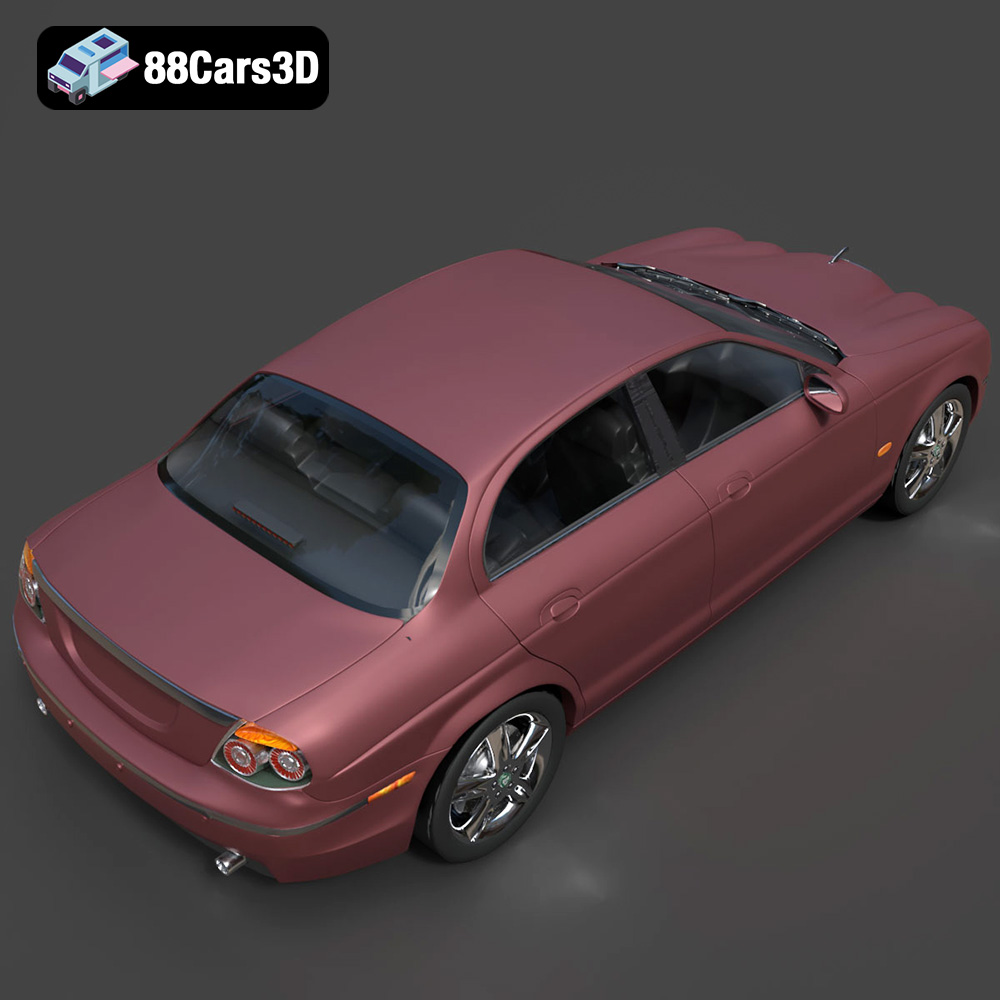
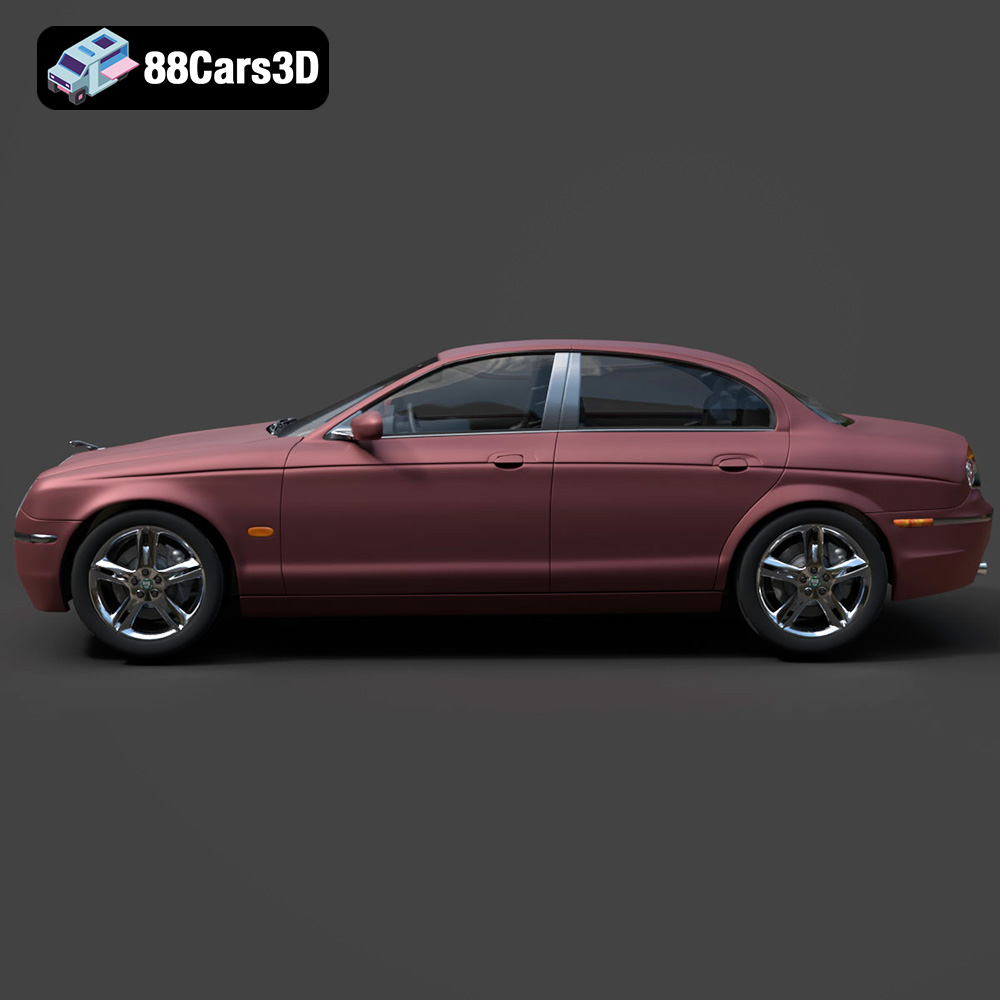
Experience automotive visualization excellence with this detailed 3D model of the Jaguar S-Type Sedan. This asset is meticulously crafted to ensure accurate proportions and authentic replication of the iconic luxury sedan, making it an essential addition to any professional 3D library. This model features clean, optimized geometry suitable for demanding production environments. All components, including the exterior body, wheels, and interior elements, are realistically textured and mapped using PBR (Physically Based Rendering) materials. The structure is built with precision, providing an efficient foundation for rigging, animation, and close-up visualizations.
$18.99
Product Image Gallery