

The automotive industry has always been at the forefront of innovation, not just in vehicle design and engineering, but also in how it presents its creations to the world. Gone are the days when static renders and conventional video tours were sufficient to capture the imagination of discerning customers. Today, the demand is for dynamic, immersive, and truly interactive experiences that allow potential buyers and enthusiasts to connect with a vehicle on a deeply personal level. This shift is powered by real-time rendering technologies, and at the heart of this revolution stands Unreal Engine.
Unreal Engine has transcended its origins in game development to become the quintessential tool for photorealistic visualization across various industries, including film, architecture, and crucially, automotive. Its capabilities for rendering stunning visuals in real-time, coupled with robust tools for interactivity and cinematic production, make it an unparalleled platform for automotive marketing. Imagine allowing a customer to virtually step inside a car, customize its every detail, drive it through realistic environments, or even project it into their driveway via augmented reality – all in breathtaking fidelity. This is the promise Unreal Engine delivers.
This comprehensive guide will take you through the intricacies of leveraging Unreal Engine for cutting-edge automotive marketing. We’ll explore everything from setting up your project and integrating high-quality 3D car models (like those found on 88cars3d.com) to crafting photorealistic materials and lighting, building interactive configurators with Blueprint, and optimizing for immersive AR/VR experiences. Whether you’re an automotive designer, a 3D artist, a game developer, or a marketing professional, you’ll discover how to unlock the full potential of Unreal Engine to create unforgettable automotive visualization experiences.
Laying the Foundation: Project Setup and Asset Integration
Embarking on an automotive visualization project in Unreal Engine begins with a solid foundation. Proper project setup and efficient asset integration are paramount for both visual fidelity and optimal performance. Understanding these initial steps ensures a smooth workflow and lays the groundwork for creating truly compelling interactive experiences.
Initial Unreal Engine Project Configuration
When starting a new project, selecting the right template is crucial. While a ‘Blank’ project offers maximum flexibility, templates like ‘Automotive, Product Design & Manufacturing’ or ‘Architectural Visualization’ often come pre-configured with relevant plugins, rendering settings, and starter content that can save significant time. Key plugins to activate include Datasmith for CAD import, Virtual Production Utilities for advanced setups, and potentially Alembic for complex animations. Diving into project settings, navigate to the ‘Rendering’ section. Here, you’ll want to ensure features like Lumen Global Illumination and Reflections are enabled for dynamic, realistic lighting. Adjusting the default post-processing settings can also provide a better starting point for visual quality, such as enabling screen space reflections and ambient occlusion. For robust performance, especially on less powerful hardware or for AR/VR applications, consider setting the ‘Scalability’ settings to a balanced preset or manually fine-tuning individual quality levels. Remember to save your project frequently to avoid losing progress, particularly when dealing with large automotive assets.
Importing and Optimizing High-Quality 3D Car Models
The quality of your 3D car model directly impacts the final visual outcome. Platforms like 88cars3d.com offer professionally prepared 3D car models specifically optimized for Unreal Engine, featuring clean topology, proper UVs, and PBR-ready materials. When sourcing models, look for standard formats like FBX or USD (Universal Scene Description), which maintain crucial data like hierarchies, UVs, and even basic materials upon import. For complex CAD data (e.g., from SolidWorks, Catia, or Rhino), Datasmith is an invaluable tool. It allows direct import of CAD files, preserving scene hierarchy, metadata, and intelligently converting materials. This means components like doors, wheels, and interior parts remain separate entities, facilitating interactive customization. Upon import, immediately check the model’s scale and pivot points. An incorrect scale can lead to issues with lighting and physics, while a misplaced pivot point complicates animations and interactions. Perform an initial optimization pass: remove any unseen geometry (e.g., engine parts if only the exterior is visible), check for excessive polygon counts (though Nanite mitigates this significantly), and ensure UV maps are correctly laid out for texture application without stretching or distortion. Clean topology is fundamental for efficient rendering, subdivision, and seamless material application, making models from reputable sources like 88cars3d.com a solid investment.
Crafting Visual Fidelity: Materials, Textures, and Lighting
Photorealism in automotive visualization is an art form, meticulously crafted through the interplay of physically accurate materials, high-resolution textures, and sophisticated lighting. Unreal Engine provides an extensive suite of tools to achieve this, allowing artists to replicate the intricate surface properties of real-world vehicles with stunning accuracy.
Mastering Physically Based Rendering (PBR) Materials
At the core of modern rendering is Physically Based Rendering (PBR), a methodology that aims to simulate how light interacts with surfaces in the real world. In Unreal Engine’s Material Editor, PBR is achieved by defining properties like Base Color (Albedo), Normal Map for surface detail, Roughness for micro-surface imperfections, Metallic to distinguish between dielectrics and conductors, and Ambient Occlusion for localized shadows. For automotive applications, this translates into crafting highly specialized materials. Car paint, for instance, is not a simple color; it requires a complex shader setup to simulate a clear coat layer, metallic flakes, and subtle reflections. This often involves blending multiple layers, using Fresnel effects, and intricate mask textures. Tire rubber needs distinct roughness variations and normal maps to convey its texture, while glass demands accurate transmission, refraction, and reflection properties, often utilizing a separate translucent material. Creating master materials with exposed parameters allows for efficient variations through Material Instances. This means you can create one complex car paint material and then easily create instances to change colors, flake density, or clear coat thickness without recompiling shaders. For optimal visual quality, texture resolutions of 4K or even 8K are common for hero vehicle assets, ensuring crisp details even up close. Proper UV mapping is non-negotiable; complex models from 88cars3d.com typically come with production-ready UVs, but custom parts might require manual unwrapping to prevent texture stretching or seams.
Dynamic Real-Time Lighting with Lumen and Global Illumination
Realistic lighting is arguably the single most impactful factor in achieving photorealism. Unreal Engine’s Lumen Global Illumination system is a game-changer, providing dynamic, real-time indirect lighting and reflections without the need for baked lightmaps. This allows for instant iterative changes to lighting setups and environments, which is invaluable for automotive configurators or virtual production stages. Lumen’s settings, accessible in the project settings and post-processing volumes, allow you to balance quality and performance, from high-fidelity ray-traced reflections to optimized software-based solutions. Alongside Lumen, traditional lighting types remain essential: a Directional Light simulates the sun, a Sky Light captures the environment’s ambient illumination (often driven by an HDRI backdrop for accurate real-world lighting and reflections), and Spot Lights or Rect Lights can be used to emphasize specific features or simulate studio lighting setups. For even greater realism, especially in enclosed environments, judicious use of Post-Processing Volumes is critical. These allow fine-tuning exposure, color grading, bloom for bright light sources, screen space ambient occlusion (SSAO), and depth of field for cinematic focus. For scenarios where Lumen isn’t used or for specific baked lighting needs (e.g., AR/VR), Lightmass and Reflection Captures are still vital for capturing accurate bounced light and reflections, providing a robust lighting solution for any automotive scene. Further detailed information on Unreal Engine’s lighting features can be found at the official Unreal Engine learning portal.
Unleashing Interactivity with Blueprint and Advanced Features
Beyond static beauty, the true power of Unreal Engine for automotive marketing lies in its ability to create rich, interactive experiences. Blueprint visual scripting makes this accessibility a reality, while advanced rendering technologies like Nanite ensure that visual detail remains uncompromised, regardless of model complexity.
Blueprint Visual Scripting for Automotive Configurators
Blueprint Visual Scripting is Unreal Engine’s powerful node-based scripting system, enabling artists and designers to create complex interactive logic without writing a single line of code. For automotive configurators, Blueprint is indispensable. Imagine a customer interacting with a virtual car: changing its paint color, swapping out wheel designs, opening doors, or toggling interior trim options. Each of these actions can be driven by Blueprint. For instance, changing a car’s color might involve a UI button triggering an event in the car’s Blueprint, which then dynamically updates a material instance parameter (e.g., ‘PaintColor’) on the car’s body mesh. Swapping wheels could involve hiding one static mesh and making another visible, or even swapping entire Blueprint components. Utilizing Event Dispatchers and Blueprint Interfaces allows for modular and scalable interactions, where different parts of the car or UI elements can communicate efficiently. Data structures, such as Data Tables or custom Structs, can be used to manage hundreds of configuration options (colors, materials, accessories), making it easy to add new choices without rebuilding core logic. A typical workflow involves creating a main ‘Car_BP’ that manages all customizable components. UI elements (buttons, sliders) then call functions or trigger events within this ‘Car_BP’ to execute changes. This empowers marketers to provide customers with an unparalleled level of personalization, directly translating into increased engagement and buying intent.
Leveraging Nanite and LODs for Performance and Detail
One of Unreal Engine 5’s most groundbreaking features for high-fidelity assets is Nanite, its virtualized geometry system. Nanite allows artists to import and render incredibly high-polygon models – assets with millions or even billions of triangles – directly into the engine without noticeable performance degradation. For automotive visualization, this is revolutionary. Intricately detailed car models, complete with high-res interior components, engine bays, and complex exterior geometries, can be brought in without manual polygon reduction. Nanite intelligently streams and processes only the necessary detail based on camera distance, making it ideal for hero assets where every curve and surface needs to be perfectly represented. Enabling Nanite on a static mesh is as simple as checking a box in the mesh’s details panel. However, not all assets benefit from Nanite, and it has certain limitations (e.g., no support for skeletal animation on Nanite meshes directly). This is where traditional Levels of Detail (LODs) remain crucial. For background elements, deformable meshes, or older assets, manually created or automatically generated LODs are vital for managing polygon counts and draw calls. An effective LOD strategy ensures that objects further from the camera switch to lower-polygon versions, drastically improving performance. Combining Nanite for hero vehicles with traditional LODs for environmental props and distant cars provides a powerful hybrid approach to maintaining visual quality across an entire scene while ensuring smooth real-time rendering, especially important for demanding applications like AR/VR.
Immersive Experiences: Virtual Production, AR/VR, and Cinematics
Unreal Engine doesn’t just create interactive product showcases; it enables entirely new paradigms for automotive marketing, from dynamic virtual photo shoots to interactive augmented reality experiences and stunning cinematic presentations. These immersive applications redefine how brands connect with their audience.
Virtual Production Workflows for Automotive Marketing
Virtual Production (VP), traditionally used in film and television, is rapidly being adopted by the automotive industry for marketing and visualization. The concept of In-Camera VFX (ICVFX) using large LED walls is particularly impactful. Instead of shooting a physical car on a greenscreen and compositing it later, a real car can be placed in front of an LED wall displaying a dynamic Unreal Engine environment. This provides realistic, real-time reflections and lighting on the car’s surface, creating incredibly believable shots that are difficult to distinguish from real-world photography. Unreal Engine’s nDisplay system allows for seamless synchronization of content across multiple LED panels, creating expansive virtual backdrops. Live Link facilitates integration with physical camera tracking systems, allowing the virtual environment on the LED wall to react to the camera’s movements, maintaining correct perspective and parallax. This means a director can virtually “drive” a car through any environment imaginable, from urban streets to exotic landscapes, capturing the perfect shot without ever leaving the studio. It streamlines the creative process, reduces costs associated with location shoots, and offers unparalleled flexibility for iteration and experimentation, creating content previously only achievable through extensive post-production.
Optimizing for AR/VR Automotive Applications
Augmented Reality (AR) and Virtual Reality (VR) offer deeply immersive ways for customers to experience a vehicle. Whether it’s a virtual showroom in VR or placing a car in one’s driveway via AR, performance optimization is paramount. Unlike traditional desktop rendering, AR/VR demands extremely high and consistent frame rates (e.g., 90+ FPS for VR) to prevent motion sickness and ensure a smooth experience. This necessitates a rigorous approach to optimization. Strategies include using Forward Shading over deferred rendering for better VR performance, baking static lighting (Lightmass) and reflections where dynamic lighting isn’t strictly necessary, and aggressive LOD management to ensure polygon counts are minimal. Instancing duplicate objects (like wheels) can significantly reduce draw calls. Texture memory must be managed carefully, using efficient compression formats. For AR specifically, features like Unreal Engine’s ARCore/ARKit integration allow developers to anchor virtual cars into the real world. Interaction paradigms also shift: hand tracking, gaze interaction, and intuitive controller inputs become crucial. AR/VR automotive applications provide unprecedented ways for customers to explore design, customize features, and virtually “test drive” vehicles, pushing the boundaries of interactive product visualization and sales tools. Developers can find extensive resources on optimizing for these platforms on the official Unreal Engine documentation website.
Crafting Cinematic Narratives with Sequencer
While interactivity is key, cinematic showcases remain a powerful marketing tool. Unreal Engine’s Sequencer is a full-featured, non-linear editor that allows you to choreograph every aspect of an automotive short film, trailer, or product reveal. You can keyframe camera movements, animate car components (doors opening, wheels turning, suspension reacting), and even adjust material parameters over time to show off features like adaptive lighting or transforming paint jobs. Integrating Niagara, Unreal Engine’s advanced particle system, allows for realistic visual effects like tire smoke, dust kicked up by wheels, or even environmental elements like rain or fog, adding further immersion. Sequencer facilitates precise control over timing, pacing, and camera work, allowing creators to tell compelling stories around their vehicles. Once the cinematic sequence is complete, the Render Movie Queue enables high-quality offline renders, producing stunning videos in various formats (e.g., EXR for film production, ProRes for marketing deliverables) with advanced settings like anti-aliasing and motion blur, ensuring your automotive visuals are truly broadcast-ready.
Advanced Realism and Physics for Dynamic Experiences
Achieving a truly realistic automotive experience in Unreal Engine extends beyond static visualization. Integrating believable physics, particularly for vehicle dynamics, and constructing detailed, convincing environments elevates the immersion, allowing users to interact with cars in a truly dynamic way.
Realistic Physics Simulation and Vehicle Dynamics
For any interactive experience that involves driving or dynamic movement, realistic physics are paramount. Unreal Engine’s Chaos Vehicles system provides a robust framework for simulating vehicle dynamics, offering a significant upgrade from previous physics implementations. Setting up a vehicle involves defining wheel configurations (tire radius, friction, suspension travel), engine properties (torque curves, RPM limits, gearing), and transmission settings. These parameters are crucial for tuning the vehicle’s handling characteristics, allowing for a realistic feel, whether it’s a nimble sports car or a heavy-duty truck. Blueprint visual scripting then ties these physics systems into player input or AI control, enabling interactive driving experiences within your automotive scene. You can implement throttle and brake inputs, steering controls, and even features like anti-lock braking systems or traction control through Blueprint logic interacting with the Chaos Vehicle components. Beyond just movement, integrating particle effects with vehicle physics – such as dynamic tire marks, dust clouds generated by skidding tires, or water splashes – further enhances realism. These dynamic interactions make the virtual experience feel tangible, allowing potential customers to get a sense of the vehicle’s performance and character, reinforcing the authenticity of the product.
Environment Building and Asset Management for Automotive Scenes
A stunning car deserves an equally stunning environment. Whether it’s a sleek virtual showroom, a picturesque mountain road, or a bustling urban street, the environment plays a crucial role in framing the vehicle and setting the mood. Unreal Engine makes environment building highly efficient through various tools. Integrating Quixel Megascans assets directly into your project provides access to a vast library of high-fidelity 3D scans, including realistic roads, terrains, vegetation, and props, complete with PBR textures. This allows for rapid creation of incredibly detailed and believable scenes. Modular environment design, where components like road sections, building facades, and landscape elements are created as reusable modules, facilitates rapid iteration and scalability. Careful attention to asset management and consistent naming conventions within Unreal Engine is vital, especially in large projects. Grouping assets by type (meshes, textures, materials) and using clear hierarchical folders keeps the project organized and collaborative. Furthermore, Data Layers are an essential tool for managing complexity in large automotive scenes. They allow you to toggle the visibility of different parts of your environment (e.g., day/night versions, different architectural styles, or various props) without physically deleting them, offering unparalleled flexibility for showcasing cars in multiple contexts and streamlining project development and versioning. This comprehensive approach to environment creation ensures that the car is not just a standalone model, but an integrated part of a captivating virtual world.
Conclusion
Unreal Engine has definitively transformed the landscape of automotive marketing and visualization. By embracing its formidable real-time rendering capabilities, intricate PBR material systems, dynamic lighting solutions like Lumen, and robust interactivity tools such as Blueprint, automotive brands can move beyond static presentations to deliver deeply engaging and personalized experiences. From showcasing the minutiae of a vehicle’s design with Nanite’s unparalleled detail to allowing customers to configure their dream car in a virtual showroom or even experience it in their own driveway via AR, the possibilities are virtually limitless. We’ve explored the foundational steps of project setup, the nuances of material and lighting creation, the power of Blueprint for interactive configurators, and how advanced features like Virtual Production and Sequencer can craft cinematic narratives that captivate audiences.
The journey into high-fidelity automotive visualization demands precision, optimization, and access to quality assets. This is where resources like 88cars3d.com become invaluable, providing professionally prepared 3D car models that serve as the perfect starting point for your Unreal Engine projects. By leveraging optimized assets and adhering to industry best practices in performance and content creation, you can ensure your interactive experiences are not only visually stunning but also run smoothly across various platforms.
The future of automotive marketing is undoubtedly real-time and interactive. By mastering Unreal Engine, you’re not just creating images or videos; you’re crafting immersive worlds where vehicles come alive, fostering a deeper connection between the product and the consumer. The time to innovate is now, and Unreal Engine provides all the tools you need to drive that innovation forward.
Featured 3D Car Models

Elite Future Mobility: EV & Autonomous SUV Bundle (4 High-End 3D Models)3D Printable STL
Download the Elite Future Mobility Bundle featuring 4 highly optimized 3D models: Tesla Model S, Avatr 11, Li L9, and Zoox Robotaxi. Perfect for ArchViz, Smart City renders, and game dev. Optimized for Unreal Engine and Blender. Includes .fbx, .obj, and .max formats.
Price: $99

German Luxury & Performance Bundle – High-End 3D Vehicle Collection3D Printable STL
🚗 5 Iconic German Cars (BMW M4 G82, M5 CS, X3, 1 Series & Mercedes E-Class). ✅ Optimized for ArchViz: Ready for Corona & V-Ray. 💰 Save €71 with this limited-time collection! 🚀 Instant Download after purchase.
Price: $119

Extreme Off-Road & Survival 3D Models Bundle (4-in-1 Pack)3D Printable STL
Download the Extreme Off-Road & Survival 3D Models Bundle! Includes the Brabus 800 Adventure, Dodge Ram Bigfoot, Spec Truck, and a Caravan. Save over €210 on this premium 4-in-1 off-grid vehicle pack for ArchViz and game development.
Price: $149.99

Heavy Duty & Commercial Logistics 3D Models Bundle (4-in-1 Pack)3D Printable STL
Download the Heavy Duty & Commercial Logistics 3D Models Bundle! Includes the Ford Sterling, Caterpillar CT680, Mercedes Citaro Bus, and Vito Van. Save over €130 on this massive, game-ready 4-in-1 industrial vehicle pack.
Price: $109.99

The Ultimate Garage Props & Custom Motorcycles 3D Models Bundle 3D Printable STL
Download the Ultimate Custom Motorcycles 3D Models Bundle. Includes a Custom Chopper, Ducati 916 Café Fighter, Harley XR1200X, and BMW K100. Perfect premium props for luxury ArchViz garages. Save over €250 today!
Price: $159.99

Japanese Legends: JDM Street Racing 3D Models Bundle (5-in-1 Pack) Nissan Mitsubishi Honda Mazda Toyota 3D Printable STL
Download the ultimate JDM Street Racing 3D Models Bundle! Includes the Nissan GT-R, Toyota Supra, Mazda RX-7, Lancer Evo IX, and Honda NSX. Save big on this highly optimized, game-ready 5-in-1 Japanese legend car pack.
Price: $129.99

American Muscle & Classics Pack 4 in 1 Ford Dodge Chevrolet 3D Printable STL
Download the ultimate American Muscle & Cinematic Classics 3D Models Bundle! Includes the Dodge Charger ’68, Mustang Eleanor GT500, Camaro Z28 ’79, and a custom ’69 Mustang. Save over €240 on this game-ready, premium 4-in-1 pack.
Price: $149.99

Everyday City Traffic Essentials pack 5in1 Hyundai Kia Volkswagen Toyota Ford 3D Printable STL
Download the Everyday City Traffic 3D Models Bundle. Includes the VW Golf, Kia Picanto, Hyundai Tucson, Toyota Yaris, and a DHL Ford Transit Van. Save big on this 5-in-1 pack, perfectly optimized for realistic ArchViz streets and game traffic.
Price: $99.99
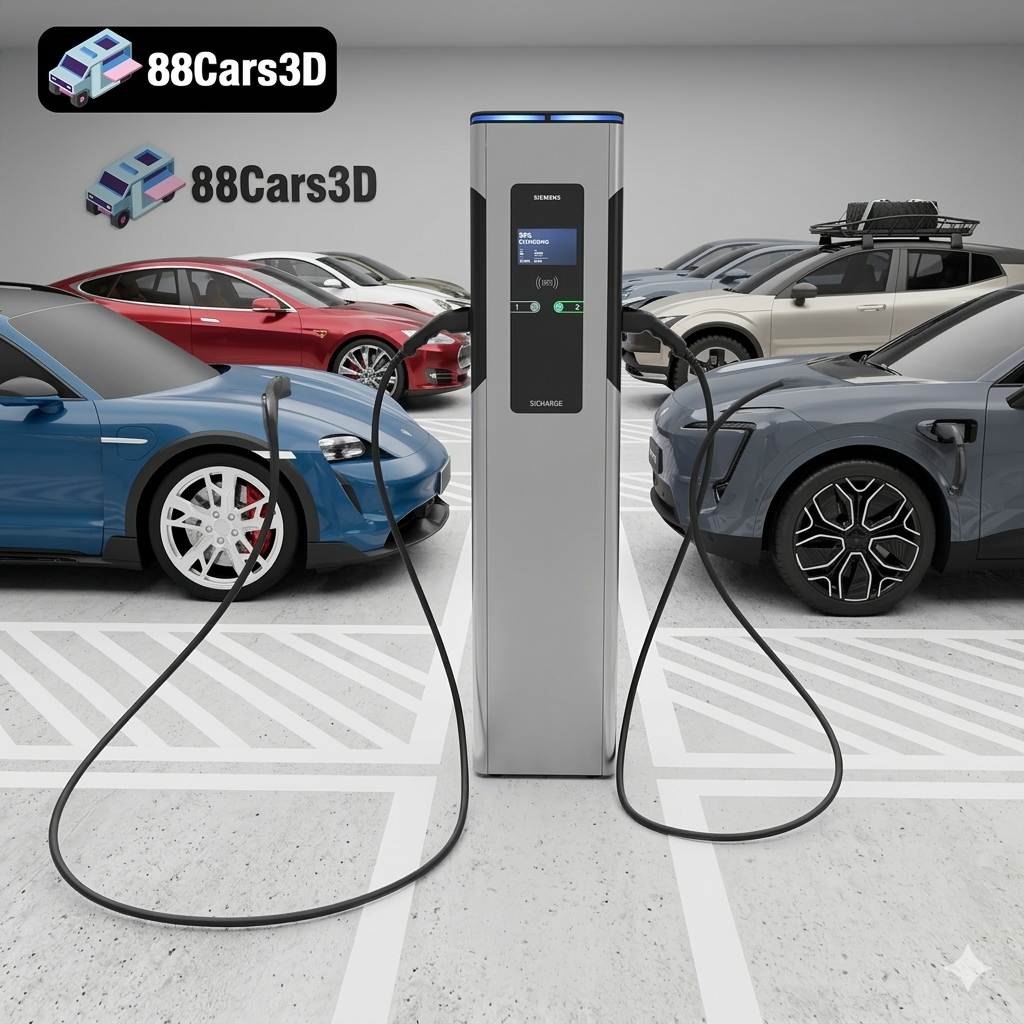
The Future of Mobility: Smart City EV 3D Models Bundle (5-in-1 Pack) Volvo Tesla AVATR Porsche 3D Printable STL
Download the Future of Mobility EV 3D Models Bundle. Includes the Volvo EX30, Tesla Model S, AVATR 11, Porsche Taycan, and a Siemens EV Charger. Save big on this highly optimized 5-in-1 pack for ArchViz and game development!
Price: $89.99

Ultimate German Luxury ArchViz Pack BMW Mercedes Porsche Audi3D Printable STL
Download the Ultimate German Luxury Cars 3D Models Bundle. Includes the Porsche 911 GT3, Audi RS7, BMW M4 F82, and Mercedes-Benz G63 AMG. Save over 50% on this premium 4-in-1 pack! Highly optimized for ArchViz, rendering, and game development.
Price: $129.99
