The Engine of Imagination: Why High-Quality 3D Car Models Drive Innovation Across Industries
In today’s visually-driven world, the demand for stunning, high-fidelity 3D assets is insatiable, and nowhere is this more evident than in the automotive sector. From breathtaking advertising campaigns and immersive game experiences to precise engineering visualizations and cutting-edge AR/VR applications, high-quality 3D car models are the foundational elements that bring digital concepts to life. These aren’t just pretty pictures; they are complex digital blueprints that demand technical prowess, meticulous attention to detail, and a deep understanding of diverse industry pipelines. For professionals seeking an unparalleled collection of meticulously crafted vehicles, 88cars3d.com stands as a premier destination, offering models engineered for peak performance in any demanding project.
This comprehensive guide delves into the technical intricacies of working with 3D car models, exploring everything from essential file formats and advanced automotive rendering techniques to optimization strategies for game assets and innovative applications in emerging technologies. We’ll unpack the workflows, specifications, and real-world considerations that separate good models from truly exceptional ones, providing insights valuable for artists, developers, engineers, and designers alike.
The Foundation of Digital Automotive Excellence: Why Quality 3D Car Models Matter
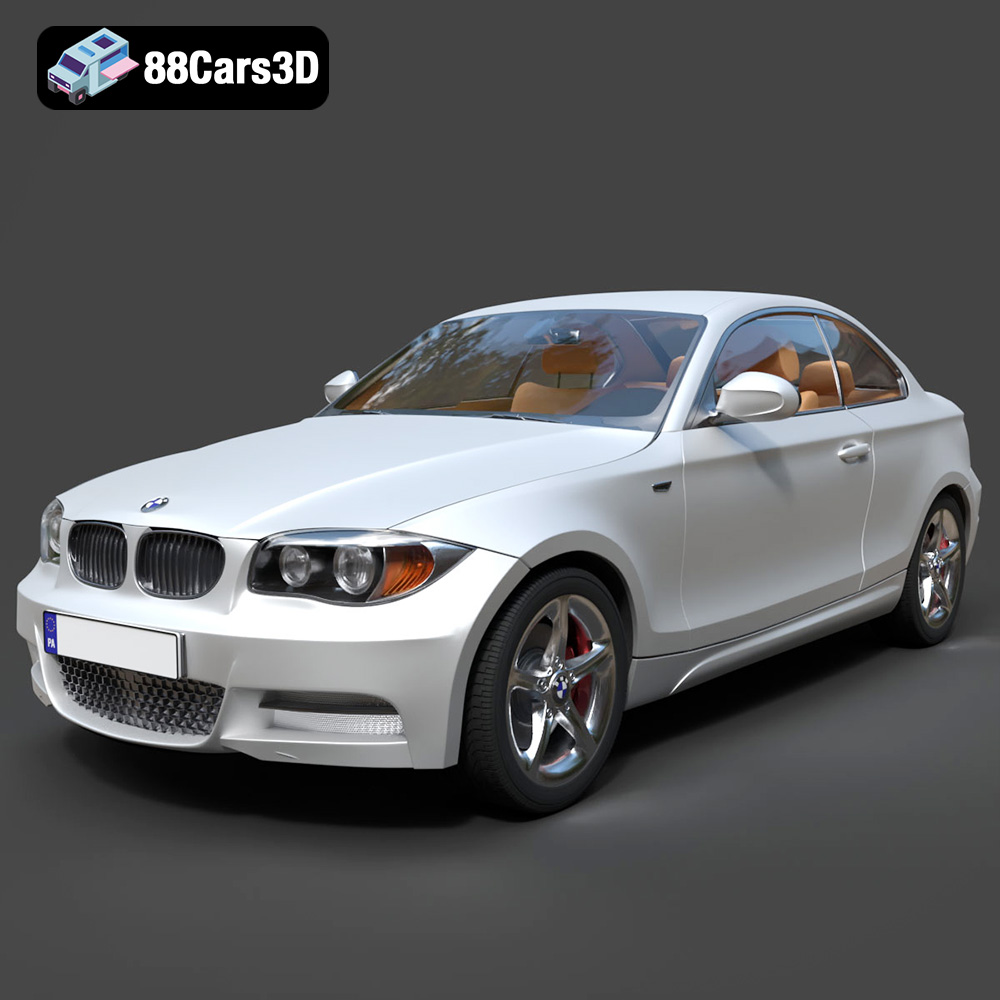
The caliber of a 3D car model directly impacts the success and authenticity of any project. Whether it’s a sleek sports car destined for a commercial or a rugged off-roader integrated into a virtual world, the underlying mesh, textures, and material definitions must be robust, accurate, and optimized for their intended use. Investing in superior models from sources like 88cars3d.com translates directly into efficiency, visual fidelity, and flexibility in various production scenarios.
Precision in Design and Visualization
For automotive designers and engineers, 3D car models are more than just representations; they are critical tools for iteration, analysis, and communication. High-precision models allow for detailed design reviews, aerodynamic simulations, ergonomic studies, and virtual prototyping long before physical components are manufactured. Every curve, every panel gap, and every material surface must adhere to stringent real-world specifications. This level of accuracy is paramount for client presentations, where photorealistic renders can sway critical decisions, and for engineering teams needing to validate complex assemblies in a digital environment. Accurate topology ensures that surfaces deform correctly during animation or when subjected to environmental stresses in simulation.
Efficiency in Production Pipelines
In fast-paced production environments, time is a precious commodity. Starting with a pre-built, high-quality 3D car model significantly reduces development cycles. Instead of spending countless hours on modeling from scratch, artists can immediately focus on lighting, texturing, rigging, or integration. A well-constructed model comes with clean topology, properly unwrapped UVs, and often, PBR-ready materials, drastically streamlining the downstream workflow. This efficiency is critical for meeting tight deadlines in advertising, film production, and game development, allowing teams to allocate resources to more creative aspects of a project rather than foundational asset creation.
Meeting Diverse Industry Demands
The applications for 3D car models span a vast spectrum of industries, each with its unique technical requirements. A model suitable for a cinematic render might be too heavy for a mobile game, while a model optimized for 3D printing requires different topological considerations. High-quality asset providers understand these nuances, offering models that are either highly versatile or specifically tailored for particular pipelines. This adaptability is key for agencies, studios, and individual artists who need assets that can transition seamlessly between different software packages and end-use platforms, ensuring consistency and quality across an entire project ecosystem.
Understanding 3D Model File Formats
Navigating the world of 3D assets requires a solid understanding of various file formats, each designed with specific purposes and offering unique advantages. The choice of format can profoundly impact compatibility, workflow efficiency, and the ultimate quality and usability of your 3D car models. Selecting the right format is critical, whether you’re aiming for stunning automotive rendering, integrating game assets, or preparing for physical production. Here’s a detailed look at common formats available for high-quality models from platforms like 88cars3d.com:
Native and Editable Formats
- .blend (Blender Scene): This is Blender’s native file format, storing an entire Blender scene including geometry, materials, textures, lighting, cameras, animations, and even physics simulations. It’s incredibly powerful for users working within the Blender ecosystem, offering full editability. Artists can access all modifiers, node-based material setups (cycles, Eevee), and intricate rigging information. This format is ideal for deep customization, adjustments to the model’s topology, or leveraging Blender’s extensive toolset for rendering and animation. Its comprehensive nature means it often contains more data than stripped-down exchange formats, providing maximum flexibility for those who wish to delve into the model’s construction.
- .max (3ds Max Project): Similar to .blend, .max is the native file format for Autodesk 3ds Max. It encapsulates a complete 3ds Max scene, including complex object hierarchies, modifier stacks, sophisticated material definitions (V-Ray, Corona, Arnold), lighting rigs, camera setups, and advanced animation data. For professionals rooted in the 3ds Max pipeline, this format offers unparalleled control and fidelity. It ensures that all original scene elements, parameters, and render settings are preserved, making it the format of choice for high-end visualization, animation, and complex architectural rendering where 3ds Max is the primary tool.
Universal and Exchange Formats
- .fbx (Filmbox): Developed by Autodesk, FBX is arguably the most widely adopted 3D exchange format, especially prominent in game development and animation. It supports geometry, materials, textures, animation, rigging, and even light and camera information. Its robustness and ability to carry complex data make it ideal for transferring assets between different 3D software packages (e.g., 3ds Max to Unreal Engine, Blender to Unity). FBX files can embed textures, ensuring a self-contained asset. When working with 3D car models for real-time engines, FBX is the go-to choice due to its efficient handling of PBR (Physically Based Rendering) workflows and animation data, making it a cornerstone for creating high-quality game assets.
- .obj (Wavefront OBJ): A venerable and highly compatible format, OBJ is a simpler alternative to FBX, primarily storing geometry (vertices, normals, UVs, faces) and groups. Material definitions are typically stored in a companion .mtl (Material Template Library) file, which references texture maps. While it lacks support for animation and rigging, its universality makes it excellent for static model exchange between almost any 3D software. For basic 3D car models where geometry and UVs are the primary concern, and you plan to define materials and lighting in your target application, OBJ remains a reliable choice. It’s also often used as a fallback when more complex formats fail or are not supported.
- .glb (GL Transmission Format – Binary): GLB is the binary version of glTF, an open-standard, royalty-free format designed for efficient transmission and loading of 3D scenes and models by engines and applications. It’s particularly optimized for web-based 3D, AR (Augmented Reality), and VR (Virtual Reality) experiences. A GLB file is a self-contained package that embeds textures and other assets directly, making it highly portable and fast to load. For showcasing 3D car models in interactive web viewers or deploying them in mobile AR applications, GLB offers excellent performance and ease of use, prioritizing speed and compact file size without sacrificing visual quality.
- .ply (Polygon File Format): Often associated with 3D scanning and reverse engineering, PLY is a versatile format capable of storing a wide range of properties, including color, transparency, surface normals, and texture coordinates, in addition to geometry. It supports both triangular and polygonal faces. PLY files are particularly valued for their precision and ability to handle point cloud data, making them suitable for scientific visualization, CAD applications, and situations where detailed mesh information beyond basic geometry is critical. While less common for artist-created models, it is invaluable when working with scanned data of real-world vehicles.
Specialized Formats
- .stl (Stereolithography): STL is the standard format for 3D printing. It represents a 3D model as a series of connected triangles, describing only the surface geometry of an object without color, texture, or other properties. The primary concern for STL files is that the mesh must be “watertight” (manifold) – meaning it has no holes, non-manifold edges, or inverted normals – to ensure a physically printable object. For designers looking to transform their digital 3D car models into physical prototypes or collectibles, preparing the model for export as an STL with correct scaling and mesh integrity is paramount.
- .unreal (Unreal Engine-ready Asset): While “.unreal” isn’t a single file extension in the same way .fbx or .obj are, it represents a category of assets specifically prepared and optimized for seamless integration into Unreal Engine projects. When you acquire an “Unreal-ready” 3D car model from 88cars3d.com, it typically means the asset package includes highly optimized FBX files, correctly authored PBR textures (base color, normal, roughness, metallic, ambient occlusion), and often, pre-configured material instances and blueprints tailored for Unreal Engine’s rendering pipeline. These assets are structured to leverage Unreal’s features, such as LODs (Levels of Detail), collision meshes, and physically accurate shading, minimizing setup time and maximizing performance within the engine environment. This ensures developers can drop high-fidelity game assets directly into their scenes with minimal further processing.
Mastering Automotive Rendering for Photorealistic Results
Achieving photorealistic automotive rendering is an art form that blends technical proficiency with an acute eye for detail. It’s about more than just a well-modeled car; it’s about recreating the subtle interplay of light, reflections, and materials that define a vehicle’s presence. From studio setups to dynamic outdoor scenes, every element must contribute to the illusion of reality.
Advanced Shading and Texturing Techniques
The skin of a 3D car model – its materials and textures – is where realism truly begins. Modern rendering relies heavily on Physically Based Rendering (PBR) workflows, where materials like car paint, glass, chrome, and rubber are defined by real-world physical properties (base color/albedo, metallic, roughness, normal, ambient occlusion). Car paint, for instance, often requires complex layered shaders to accurately simulate metallic flakes, clear coat reflections, and subtle depth. Carbon fiber demands detailed normal and displacement maps alongside anisotropic reflections to capture its distinctive weave. Glass and transparent plastics require precise refraction and absorption settings, often combined with subtle grime and imperfections to break up perfect digital clarity. Tools like Substance Painter and Mari are invaluable for creating the intricate texture sets necessary for such demanding assets.
Lighting Setups for Maximum Impact
Lighting is arguably the most critical component of a compelling render. For automotive visuals, common setups include studio HDRIs (High Dynamic Range Images) for clean, controlled reflections and soft global illumination, or outdoor HDRIs coupled with supplementary area lights and sun/sky systems for natural environments. The goal is to highlight the car’s contours, emphasize its design language, and create dramatic reflections that showcase its form. Rim lighting can separate the vehicle from the background, while carefully placed fill lights can reduce harsh shadows. Using unbiased renderers like V-Ray, Corona Renderer, or Blender Cycles allows for physically accurate light simulation, making the entire scene react realistically to light sources and surfaces. Experimentation with different HDRI environments is key to finding the perfect mood and reflection characteristics for your 3D car models.
Post-Processing and Compositing Workflows
No render is truly complete without post-processing. This final stage in software like Adobe Photoshop or Foundry Nuke elevates a raw render to a polished, presentation-ready image. Techniques include color grading to set the mood, adding subtle depth of field for cinematic focus, incorporating lens flares or chromatic aberration for artistic effect, and overlaying atmospheric elements like dust or haze. Compositing multiple render passes (e.g., beauty, reflections, shadows, ambient occlusion, Z-depth) provides granular control over each aspect of the image, allowing for non-destructive adjustments and refinements. The careful application of these post-production touches can dramatically enhance the perceived realism and emotional impact of your automotive rendering, transforming a good render into an exceptional one.
Optimizing 3D Car Models for Game Development and Real-Time Applications
Creating compelling game assets, especially detailed vehicles, presents a unique set of challenges. Unlike pre-rendered cinematics, real-time engines demand assets that look fantastic while performing flawlessly at high frame rates. This delicate balance requires meticulous optimization at every stage, from modeling to engine integration.
Balancing Visual Fidelity with Performance (Poly Count, LODs)
The core challenge in game development is maintaining visual quality within strict performance budgets. High-fidelity 3D car models, boasting millions of polygons for offline rendering, are far too heavy for real-time engines. The solution involves creating optimized meshes with significantly lower poly counts, often through manual retopology or automated tools that preserve key details. A critical technique is the implementation of Levels of Detail (LODs). This means having multiple versions of the same model, each with a progressively lower polygon count. The engine automatically switches between these LODs based on the car’s distance from the camera. A car far in the distance might use a 5,000-poly model, while one up close could use a 100,000-poly version. Proper LODs are essential for maintaining smooth frame rates without sacrificing visual fidelity where it matters most. Additionally, collision meshes, which are simplified proxy geometries, handle physics interactions without burdening the engine with full model complexity.
Efficient UV Mapping and PBR Texturing for Game Assets
Efficient UV mapping is foundational for optimal texture display and performance in game engines. Clean, non-overlapping UV layouts minimize texture distortion and allow for effective texture atlas packing, reducing draw calls. For game assets, PBR (Physically Based Rendering) texturing is standard, utilizing maps like Albedo/Base Color, Metallic, Roughness, Normal, and Ambient Occlusion. These textures are often baked from a high-polygon model onto the low-polygon game mesh, capturing intricate details without adding geometry. Textures should be optimized in resolution (e.g., 2048×2048 or 4096×4096 depending on detail and proximity) and compressed appropriately for the target platform. Tools like Substance Painter are invaluable for this workflow, allowing artists to paint directly onto 3D models and generate all necessary PBR maps efficiently.
Integration into Game Engines (Unreal Engine, Unity)
Integrating 3D car models into game engines like Unreal Engine or Unity involves more than just importing an FBX file. It requires configuring materials, setting up skeletal meshes for animation (e.g., wheels, doors), creating physical assets for collision and handling, and often, developing custom blueprints or scripts for interactive elements. For Unreal Engine, this typically involves importing an FBX, creating PBR material instances from your textures, setting up LODs, and configuring physics assets. Advanced setups might involve creating custom vehicle blueprints that integrate with the engine’s physics system, allowing for realistic driving mechanics, damage models, and interactive components. Optimizing materials for performance (e.g., using masked materials for perforations instead of actual geometry, minimizing shader complexity) and ensuring efficient batching of draw calls are also crucial steps in the integration process to achieve optimal frame rates for your game assets.
Beyond the Screen: 3D Car Models in AR/VR and 3D Printing
The utility of high-quality 3D car models extends far beyond traditional screens, finding innovative applications in immersive augmented reality (AR) and virtual reality (VR) experiences, as well as the tangible world of 3D printing. These emerging fields leverage the fidelity of digital assets in exciting new ways, each with its own set of technical considerations.
Preparing Models for Immersive Experiences
AR and VR environments demand real-time performance and visual clarity, often on mobile devices or dedicated headsets with varying computational power. This means 3D car models must be exceptionally optimized for low poly counts, efficient draw calls, and streamlined material setups. Models for AR/VR typically require baked lighting solutions (lightmaps) to avoid expensive real-time global illumination calculations. Textures should be carefully managed, often packed into atlases to reduce memory footprint and improve rendering efficiency. Furthermore, scaling is paramount; a car model needs to be accurately scaled to real-world dimensions to feel convincing in an immersive space. User interaction, such as opening doors or changing paint colors, also needs to be meticulously planned and implemented with optimized animations and scripts. The .glb format, discussed earlier, is particularly well-suited for web-based AR/VR applications due to its compact, self-contained nature.
Specific Considerations for Physical Production
Translating a digital 3D car model into a physical object via 3D printing introduces a different set of technical demands. The primary concern is creating a “watertight” or “manifold” mesh, meaning every edge connects exactly two faces, and there are no holes, self-intersections, or inverted normals. The model’s thickness also becomes crucial; extremely thin walls in the digital model might be too fragile or simply unprintable in the physical world. Internal geometry must be carefully managed to avoid unnecessary material usage and potential printing failures. Support structures, necessary for printing overhangs, must be considered during the model’s preparation. Furthermore, understanding the limitations and capabilities of different 3D printing technologies (FDM, SLA, SLS) and materials (plastics, resins, metals) will influence how the model is prepared and sliced. For example, a highly detailed model might require a resin printer (SLA) for fine features, while a larger, less intricate model could be printed with an FDM machine. For 3D printing, models are almost universally exported to the .stl format, which purely describes the geometry without color or texture information.
Case Studies: Real-World Applications of High-Fidelity 3D Car Models
The versatility of high-quality 3D car models is best illustrated through their successful application in diverse professional scenarios. From captivating marketing campaigns to cutting-edge interactive experiences, these digital assets prove invaluable.
Automotive Advertising Campaign
Imagine a global luxury car manufacturer launching its latest electric vehicle. Instead of costly and logistically complex physical photoshoots in exotic locations, the marketing team opts for a fully CG (Computer Graphics) campaign. They source a meticulously detailed 3D car model from a reputable provider like 88cars3d.com. This high-polygon model, complete with advanced PBR materials for paint, chrome, and interior fabrics, is imported into a rendering package like 3ds Max with V-Ray or Corona. Artists then craft multiple virtual scenes: the car gleaming under a futuristic cityscape, effortlessly navigating a serene mountain pass, or showcasing its luxurious interior with precise lighting. The flexibility of 3D allows for infinite camera angles, lighting conditions, and environment changes at a fraction of the cost and time of traditional photography. The resulting photorealistic renders and animations are indistinguishable from reality, powerfully conveying the vehicle’s elegance and innovation to a worldwide audience, all thanks to a robust digital asset and sophisticated automotive rendering techniques.
Next-Generation Racing Game Development
A leading game studio is developing a highly anticipated open-world racing title. To achieve unprecedented realism, they require hundreds of unique vehicles, each with authentic handling and visual fidelity. Purchasing pre-optimized 3D car models, ready for game engines, from a specialist marketplace significantly accelerates their production. For each car, the studio receives a low-poly mesh with multiple LODs, an optimized UV layout, and a full set of PBR texture maps (Albedo, Normal, Metallic, Roughness, AO) baked from a high-poly master. These assets are then seamlessly imported into Unreal Engine. Engine artists configure the materials, integrate custom skeletal meshes for interactive elements (wheels, suspension, doors, bonnets), and set up robust collision meshes. Blueprints are then created to define vehicle physics, damage models, and customizable paint jobs. The ability to quickly integrate these high-quality game assets allows the development team to focus on core gameplay mechanics and engine optimization, delivering an immersive and visually stunning driving experience without sacrificing performance.
Architectural Visualization Integration
An architectural firm is creating a high-impact visualization for a new residential complex, showcasing a luxurious multi-car garage as a key selling point. To populate the scene and add a touch of aspirational lifestyle, they need several high-end vehicles. Instead of creating generic placeholders, they acquire detailed 3D car models. These models are carefully placed within the architectural scene, interacting with the environment’s lighting and reflections. The photorealistic textures and intricate detailing of the cars enhance the overall believability of the visualization. The models’ accurate dimensions and proportions ensure they fit naturally within the garage space, giving potential buyers a tangible sense of scale and luxury. The quality of these external assets significantly elevates the firm’s presentation, demonstrating how specialized 3D models can enrich even seemingly unrelated visualization projects.
Conclusion: Powering Your Creative Vision with Premium 3D Car Models
The digital automotive landscape is dynamic, demanding a blend of artistic vision and technical precision. From the initial spark of concept design to the final polished render or immersive game experience, the quality of your 3D car models forms the bedrock of success. Understanding file formats, mastering advanced automotive rendering techniques, and skillfully optimizing game assets are not merely technical hurdles but opportunities to elevate your projects to new heights of realism and engagement.
The insights shared in this guide underscore the critical importance of robust, versatile, and meticulously crafted 3D assets. For professionals and studios seeking to streamline their workflows and achieve unparalleled visual excellence, investing in premium models is a strategic advantage. Resources like 88cars3d.com are dedicated to providing the high-quality, technically sound 3D car models necessary to meet these diverse industry demands, empowering creators to realize their most ambitious visions. Embrace the power of expertly crafted digital assets and drive your projects forward with confidence.
Featured 3D Car Models






Japanese Legends: JDM Street Racing 3D Models Bundle (5-in-1 Pack) Nissan Mitsubishi Honda Mazda Toyota 3D Printable STL
Price: $129.99


Everyday City Traffic Essentials pack 5in1 Hyundai Kia Volkswagen Toyota Ford 3D Printable STL
Price: $99.99

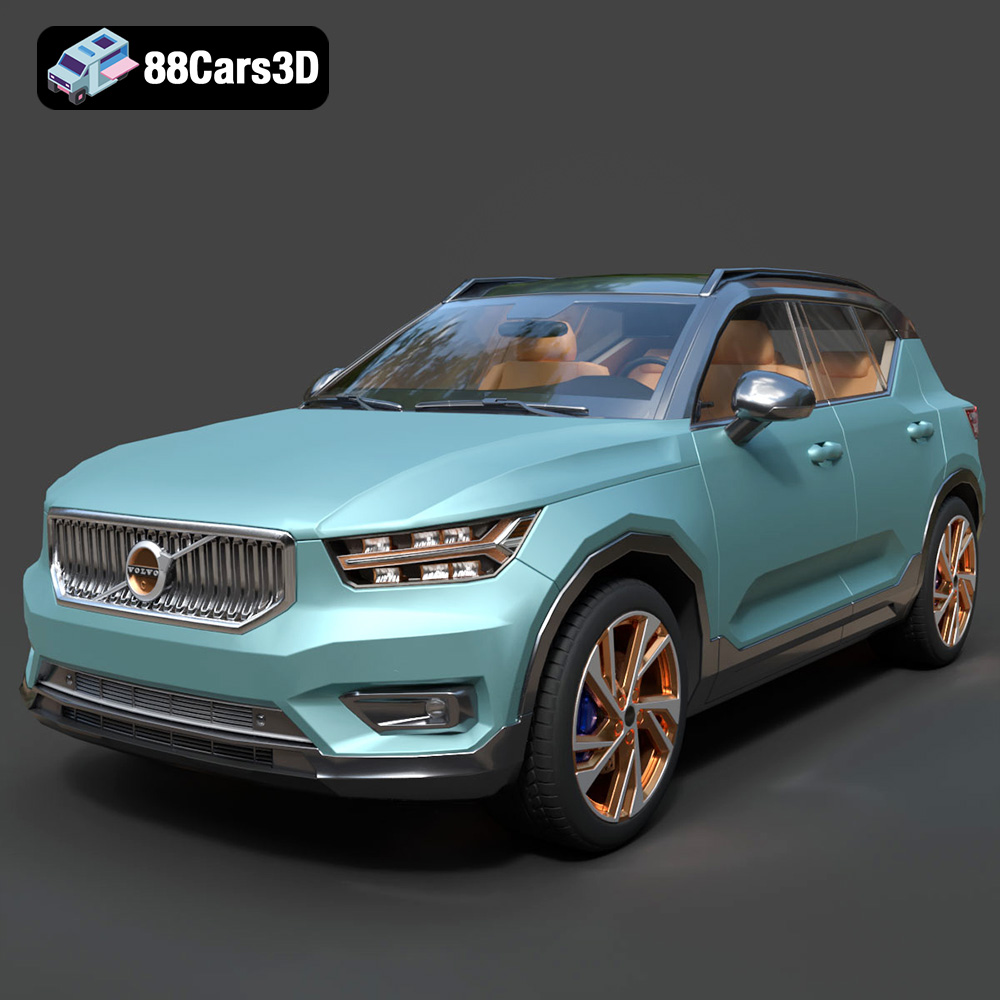
The Future of Mobility: Smart City EV 3D Models Bundle (5-in-1 Pack) Volvo Tesla AVATR Porsche 3D Printable STL
Price: $89.99