The Engine Under the Hood: Mastering 3D Car Models for Photorealism and Performance
In the dynamic world of digital content creation, the demand for incredibly realistic and performant 3D car models has never been higher. From blockbuster video games and high-fidelity automotive configurators to cinematic advertisements and cutting-edge AR/VR experiences, the quality of a vehicle asset can make or break a project. Achieving true photorealism and seamless integration requires a deep understanding of modeling principles, texturing workflows, rendering techniques, and optimization strategies. At 88cars3d.com, we understand these complexities, providing artists and developers with the pristine foundations they need to excel. This comprehensive guide delves into the technical intricacies of working with 3D car models, offering insights that bridge the gap between artistic vision and technical execution.
The Foundation of Digital Automotive Excellence: Why High-Quality 3D Car Models Matter
The pursuit of perfection in digital automotive visualization begins with the model itself. A meticulously crafted 3D car model is more than just a collection of polygons; it’s a digital sculpture, engineered for both aesthetic appeal and functional performance across diverse applications.
Precision in Design and Visualization
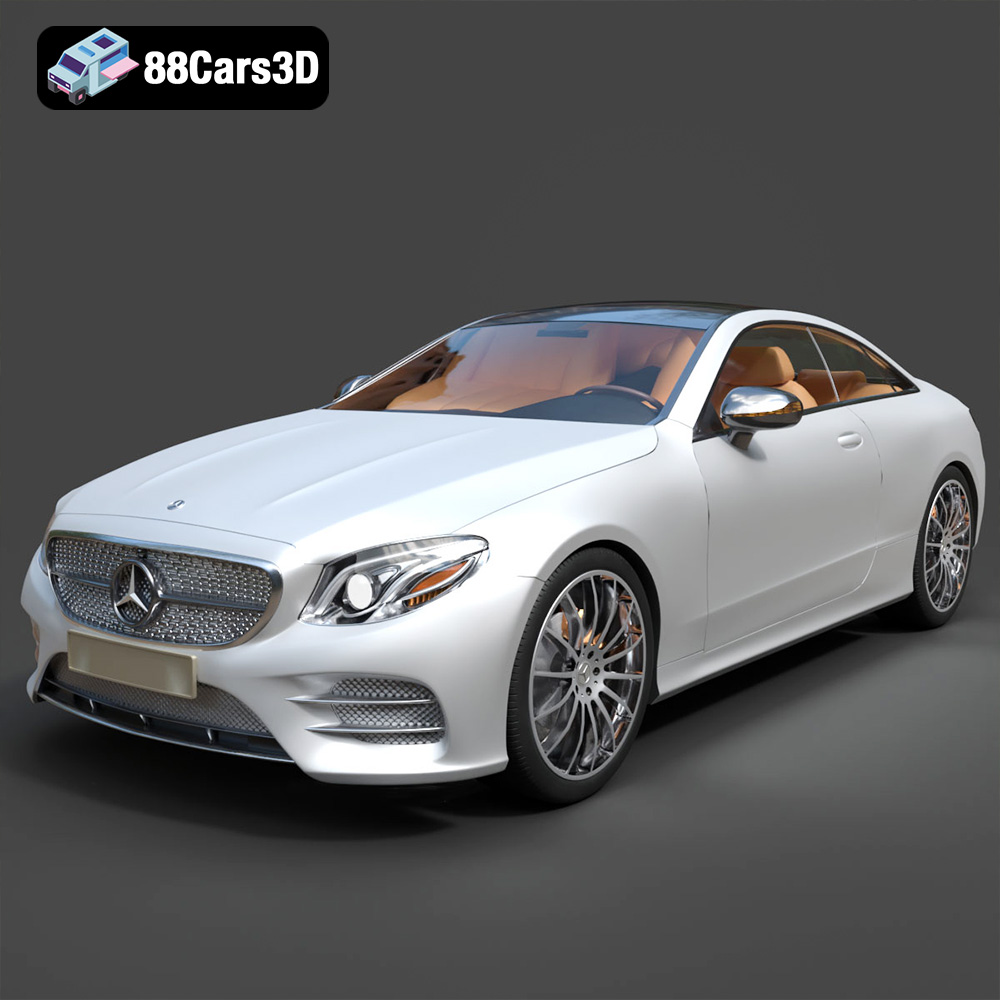
For automotive rendering, advertising, and architectural visualization, the car often serves as a focal point or a critical environmental element. Its accuracy in form, surface detail, and material representation directly impacts the believability of the entire scene. High-quality models feature:
- Accurate Topology: Clean quad-based meshes are essential for smooth subdivision, deformation, and texture mapping. Poor topology can lead to artifacts, pinching, and difficulties in UV unwrapping.
- Authentic Proportions: Replicating the real-world dimensions and nuanced curves of a vehicle demands careful attention to reference material, ensuring the digital counterpart is indistinguishable from its physical inspiration.
- Detailed Components: Beyond the main body, intricate details like brake calipers, exhaust tips, headlights, and interior elements add layers of realism, transforming a generic shape into a recognizable, high-fidelity vehicle.
Performance in Interactive Experiences
Game development, real-time simulations, and AR/VR applications demand a different kind of precision – one focused on efficiency. While visual fidelity is paramount, the model must also be optimized to run smoothly within strict performance budgets. This involves balancing polygon count with visual detail, implementing efficient UV layouts, and preparing models with appropriate levels of detail (LODs). A poorly optimized model, regardless of its visual quality, can cause significant frame rate drops, degrading the user experience.
The Cost of Compromise
Investing in high-quality 3D car models upfront saves invaluable time and resources in the long run. Attempting to “fix” a low-quality model – one with bad topology, messy UVs, or incomplete details – often takes more effort than building a new one from scratch. Reworks, extended production cycles, and performance bottlenecks are common pitfalls associated with substandard assets, ultimately impacting project deadlines and budgets.
Understanding 3D Model File Formats
Navigating the diverse landscape of 3D software and application environments requires a solid grasp of various file formats. Each format serves a specific purpose, offering unique advantages for different stages of the 3D pipeline, from initial modeling to final deployment. Choosing the correct format ensures compatibility, preserves data integrity, and streamlines workflows.
Blender’s Native Power: The .blend Format
The `.blend` file is Blender’s native format, encapsulating an entire Blender scene with all its objects, materials, textures, animations, lighting, and camera setups. It’s ideal for artists working exclusively within the Blender ecosystem, providing a complete, editable project file. For those acquiring assets for Blender, this format guarantees full editability and easy modification without data loss, offering the most comprehensive scene information. Its open nature makes it highly versatile within Blender itself.
Industry Standard Interchange: .fbx for Real-time and More
Developed by Autodesk, the `.fbx` (Filmbox) format is widely recognized as the industry-standard interchange format, particularly for game development and animation. It efficiently transfers 3D models, animation data, cameras, and lighting information between different software packages like 3ds Max, Maya, Blender, Unity, and Unreal Engine. Key benefits include support for animation, rigging, and complex scene hierarchies, making it indispensable for real-time pipelines. When exporting to `.fbx`, it’s crucial to consider settings like ASCII vs. Binary, embedded media, and smoothing groups to ensure correct import into the target application.
The Universal Mesh: .obj’s Enduring Legacy
The `.obj` (Wavefront OBJ) format is one of the oldest and most widely supported 3D file formats. It’s a universal standard for exchanging geometric data – vertices, normals, UV coordinates, and faces – across virtually all 3D software. While it doesn’t support animation, rigging, or scene data, its simplicity and widespread compatibility make it an excellent choice for static mesh transfer. `.obj` files are often accompanied by an `.mtl` (Material Template Library) file, which defines basic material properties like color and texture map paths. It’s a robust choice for cross-software compatibility, especially when the goal is purely mesh transfer.
Web-Optimized for Modern Experiences: .glb for AR/VR
`.glb` (GL Transmission Format Binary) is the binary version of `glTF` (Graphics Language Transmission Format). It’s rapidly becoming the standard for 3D web content, AR (Augmented Reality), and VR (Virtual Reality) due to its efficiency and compactness. A single `.glb` file bundles the 3D model, textures, animations, and PBR (Physically Based Rendering) materials into one self-contained asset. This optimization makes it perfect for fast loading and rendering in browsers and mobile AR/VR applications, minimizing requests and maximizing performance.
Bringing Digital to Physical: .stl for 3D Printing
The `.stl` (Standard Tessellation Language or Stereolithography) format is the de facto standard for 3D printing. It represents a 3D model as a collection of unconnected triangular facets, defining only the surface geometry without color, texture, or other advanced properties. Its simplicity allows 3D printers and slicing software to accurately interpret the model’s shape for fabrication. When preparing a model for `.stl` export, ensuring it’s “watertight” (no holes or non-manifold geometry) is critical for successful printing.
Precision Data Capture: .ply for Scans and CAD
The `.ply` (Polygon File Format) format is commonly used for storing 3D data from 3D scanners, CAD software, and other scientific applications. It’s more versatile than `.stl` as it can store not only polygonal mesh data but also color, transparency, normals, texture coordinates, and other properties associated with each vertex or face. This makes it suitable for complex data representations and precise analysis, especially where color and additional per-vertex information are crucial.
Unreal Engine’s Native Asset: The .unreal Format
While there isn’t a single `.unreal` *mesh* format in the same way as `.blend` or `.max`, Unreal Engine itself packages and stores assets in proprietary formats once imported. The typical workflow involves importing `.fbx` files (or other formats like `.obj` for static meshes) into the Unreal Editor. Once imported, Unreal converts these into its internal asset format, which is then stored within the `.uasset` file structure in your project’s Content Browser. The `.unreal` moniker often refers to assets that have been specifically prepared and configured within the engine, meaning they are fully set up with materials, LODs, collision, and blueprints, ready for immediate use in an Unreal Engine project. This essentially represents an engine-ready asset, optimized and integrated.
3ds Max Ecosystem: The .max Project File
The `.max` format is the native file type for Autodesk 3ds Max. Similar to Blender’s `.blend`, it saves the entire scene, including geometry, materials, textures, lighting, cameras, animation, and modifier stacks. It provides the most comprehensive and editable version of a model for users working within 3ds Max, allowing full control over every aspect of the asset. For complex scene setups, animation, or rendering within 3ds Max, the `.max` file is the go-to format.
Mastering Automotive Rendering: Crafting Photorealistic Visuals
Achieving photorealistic automotive renders is an art form that blends technical proficiency with an keen eye for detail. It’s about more than just a pretty model; it’s about recreating the subtle interplay of light, material, and environment.
PBR Materials and Texturing Workflows
Physically Based Rendering (PBR) has become the gold standard for realistic material representation. It simulates how light behaves in the real world, requiring specific texture maps to define material properties accurately:
- Albedo (Base Color): The inherent color of the material, free from lighting information.
- Roughness: Determines how diffused or sharp reflections are (a shiny car paint has low roughness, matte plastic has high roughness).
- Metallic: Indicates if a material is a metal (values near 1) or a dielectric (values near 0).
- Normal Map: Adds fine surface detail without increasing polygon count, simulating bumps and grooves.
- Ambient Occlusion (AO): Simulates soft shadows where surfaces are close together, enhancing perceived depth.
Workflows often involve tools like Substance Painter and Substance Designer for creating complex, layered PBR materials, allowing artists to procedurally generate dirt, scratches, and wear with incredible realism.
Lighting Techniques for Automotive Beauty
Lighting is paramount in automotive rendering. It defines the mood, highlights the car’s curves, and brings out the material properties.
- HDRI (High Dynamic Range Image) Lighting: A staple for realistic environments. An HDRI captures real-world light information, providing complex reflections and natural global illumination that make the car look truly integrated into the scene.
- Studio Lighting Setups: For product shots and detailed close-ups, virtual studio setups with softboxes, rim lights, and fill lights are common. These allow precise control over reflections and highlights, emphasizing the car’s design.
- Ray Tracing: Modern rendering engines and GPUs leverage ray tracing to simulate light paths with unprecedented accuracy, resulting in incredibly realistic reflections, refractions, and global illumination. This technology is revolutionizing real-time and offline rendering alike.
Post-Production for Polish
Even the best render can be elevated through careful post-production. This final stage involves using image editing software (like Photoshop or Affinity Photo) to apply:
- Color Grading: Adjusting the overall color balance, contrast, and mood to achieve a cinematic look.
- Depth of Field: Simulating lens blur to draw attention to the car and separate it from the background.
- Lens Effects: Adding subtle flares, chromatic aberration, or vignetting to mimic real camera optics.
- Sharpening and Noise Reduction: Enhancing detail and cleaning up any digital artifacts.
Optimizing 3D Car Models for Game Development
Game engines like Unreal Engine and Unity demand highly optimized assets to maintain high frame rates and a smooth user experience. The process of preparing 3D car models for real-time applications is a specialized skill.
Polygon Budgets and Level of Detail (LODs) Strategies
Every polygon counts in a game environment. Developers adhere to strict polygon budgets per asset to ensure performance. High-detail models sourced for rendering often exceed these budgets.
- Polygon Reduction: Techniques like decimation are used to reduce face count while preserving as much visual detail as possible.
- Level of Detail (LOD): This critical optimization involves creating multiple versions of the same model, each with progressively lower polygon counts. The game engine dynamically switches between these LODs based on the camera’s distance to the object. A car far in the distance might use an LOD with only a few thousand polygons, while a close-up view uses the highest detail model.
Efficient UV Mapping and Atlas Creation
Efficient UVs are crucial for both visual quality and performance.
- Non-Overlapping UVs: For unique details and baked lighting, UV islands must not overlap.
- Texture Atlases: Combining multiple smaller textures (e.g., for different car parts like wheels, interior, body) into a single, larger texture map (an atlas) reduces draw calls in the game engine, significantly improving performance.
Collision Meshes and Physics Assets
Game cars need to interact realistically with their environment.
- Collision Meshes: Simplified, often convex, meshes are created specifically for collision detection. These are far less complex than the render mesh and are used to determine where the car hits other objects or the ground.
- Physics Assets: For complex interactions like deformation, suspension, and vehicle dynamics, detailed physics assets are created. These often involve jointed bodies (e.g., for wheels, body, and chassis) and constraint systems that simulate real-world physics.
Integration into Game Engines (Unreal Engine & Unity pipelines)
Once optimized, 3D car models are imported into game engines.
- Unreal Engine Workflow: `.fbx` files are typically imported, and the engine automatically creates static meshes. Materials are then set up using Unreal’s powerful node-based material editor, utilizing PBR textures. LODs are configured, collision meshes are assigned, and physics assets are built. Vehicles can then be incorporated into Unreal’s Chaos Vehicle system for realistic handling.
- Unity Workflow: Similar to Unreal, `.fbx` is the preferred format. Unity’s material system supports PBR workflows. Assets are dragged into the scene, components like Mesh Renderer, Collider, and Rigidbody are added, and vehicle physics scripts are implemented to control movement and interaction.
Beyond the Screen: AR, VR, and 3D Printing Applications
The utility of high-quality 3D car models extends far beyond traditional rendering and gaming, embracing new frontiers in immersive technologies and physical fabrication.
Immersive Experiences with Real-time Car Models
Augmented Reality (AR) and Virtual Reality (VR) platforms are transforming how we interact with products. 3D car models are central to these experiences:
- Virtual Showrooms: Customers can explore cars in a virtual environment, examining interiors, changing colors, and even “driving” them from the comfort of their home.
- AR Configurators: Using a smartphone or tablet, users can place a full-scale 3D car model into their real-world environment, walking around it, opening doors, and customizing features, offering an unprecedented level of interaction before purchase. Optimized `.glb` models are frequently used here due to their web and mobile friendliness.
Prototyping and Manufacturing with 3D Printed Vehicles
3D printing offers a tangible bridge between the digital and physical. High-precision 3D car models, particularly those suitable for the `.stl` format, are used for:
- Rapid Prototyping: Designers can quickly print scaled models of new car designs, allowing for physical evaluation of aesthetics and ergonomics long before full-scale production.
- Concept Models: Creating detailed physical representations for presentations, marketing materials, or even personal collections.
- Parts Fabrication: In some cases, specific non-critical components or custom accessories for real vehicles can be 3D printed directly from digital models.
Interactive Configurators and Virtual Showrooms
The automotive industry heavily relies on 3D car models to sell and showcase vehicles. Interactive online configurators allow potential buyers to customize every aspect of a car, from paint color and wheel design to interior trim and optional extras, all rendered in real-time. These highly detailed, often web-based (using formats like `.glb`), experiences are powered by optimized 3D assets that respond dynamically to user choices, providing a deeply personalized shopping journey.
Building Your Digital Garage: Sourcing and Integrating Premium Assets
For many projects, creating a highly detailed 3D car model from scratch is a significant undertaking, requiring specialized skills and considerable time. This is where sourcing production-ready assets becomes a strategic advantage.
The Value of Pre-Made, Production-Ready Models
Purchasing high-quality 3D car models from reputable marketplaces like 88cars3d.com offers several key benefits:
- Time-Saving: Instantly access complex, ready-to-use models without the lengthy modeling and texturing process.
- Cost-Effective: Often, the cost of purchasing a pre-made asset is significantly less than the labor required to create one from zero, especially for independent studios or freelancers.
- Guaranteed Quality: Reputable sources ensure models are professionally crafted with clean topology, PBR materials, and often come with various levels of detail and multiple file formats, streamlining integration.
- Variety: Access to a vast library of vehicles, from classic muscle cars to cutting-edge electric vehicles and heavy machinery, providing options for diverse project needs.
Customization and Pipeline Integration
Even purchased models often require some level of customization to fit specific project requirements. This could involve:
- Material Tweaks: Adjusting PBR values, color variations, or adding specific brand decals.
- LOD Generation: Creating additional LODs if the provided ones don’t perfectly match the game’s budget.
- Rigging and Animation: Setting up custom rigs for specific animations (e.g., opening doors, suspension compression) that might not be included in the base model.
- Collision Mesh Refinement: Adapting or creating custom collision geometry for particular physics interactions.
Case Study Snippets
Consider an independent game studio developing an open-world racing title. Instead of spending months modeling dozens of vehicles, they license a collection of high-quality 3D car models from 88cars3d.com. These models, provided in `.fbx` format with multiple LODs and PBR textures, are quickly imported into Unreal Engine. The studio then focuses its development resources on gameplay mechanics, track design, and unique features, knowing their vehicle assets are visually stunning and performance-optimized.
Similarly, an architectural visualization firm tasked with showcasing a new luxury home project needs to populate the driveway with a high-end vehicle. By acquiring a `.max` or `.fbx` file of a specific car model, they can effortlessly integrate it into their 3ds Max scene, apply their chosen renderer (like V-Ray or Corona), and achieve a photorealistic result that enhances the overall presentation, without diverting their internal artists to model a complex car from scratch.
Conclusion
The journey from a digital concept to a photorealistic render or a high-performance game asset is intricate and demanding. High-quality 3D car models are the fundamental building blocks that empower artists and developers to create breathtaking visuals and immersive experiences. Understanding the nuances of modeling, texturing, rendering, and optimization, alongside the appropriate file formats, is essential for success in this rapidly evolving field. Whether you’re aiming for cinematic realism, real-time performance, or tangible 3D prints, the right assets and technical knowledge will drive your projects forward. By leveraging expertly crafted 3D car models, you equip yourself with the tools to innovate, impress, and deliver unparalleled digital automotive content.
Featured 3D Car Models






Japanese Legends: JDM Street Racing 3D Models Bundle (5-in-1 Pack) Nissan Mitsubishi Honda Mazda Toyota 3D Printable STL
Price: $129.99


Everyday City Traffic Essentials pack 5in1 Hyundai Kia Volkswagen Toyota Ford 3D Printable STL
Price: $99.99

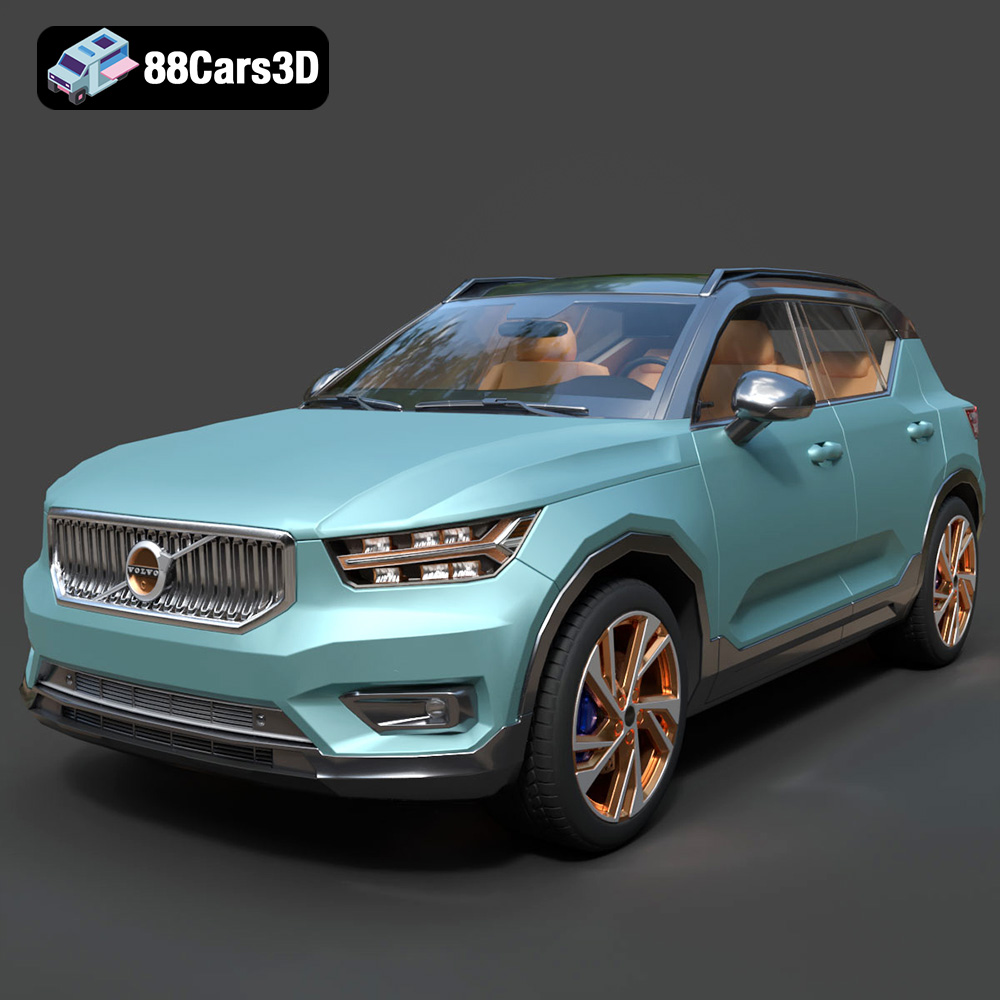
The Future of Mobility: Smart City EV 3D Models Bundle (5-in-1 Pack) Volvo Tesla AVATR Porsche 3D Printable STL
Price: $89.99